Life

  • Still 5 more Lessons of Wisdom from the Peaceful Warrior

    Peaceful Warrior doesn’t seem to stop amazing me everytime I watch it. Depending on what state of mind you are in, this movie presents you different insights from the wonderful dialogue delivery and scenes depicted in the movie. For me, this movie is much more than just a movie, it is a piece of art – a wonderfully scripted and executed version of the book – The Way of the Peaceful Warrior

    Start Looking Inside for Answers
    Traditionally we have always looked for answers to our questions in the outside world. We do so by seeking knowledge, advice, different tools, technologies and products from the outside world. But after a momentarily phase of satisfaction, we tend to come to the same questions sooner or later. This movie, at various different points, depicts that the answers to the most difficult of our questions actually lie inside, which is very difficult and confronting for most of us to believe. But if we start seeking inside and getting present to everything in a totally new way, we can be amazed by the things we discover. I guess this power we get from the inside is the same stuff highlighted by different religions and philosophers and spiritual leaders, albeit in very different ways.

    Keep a Good Sense of Humor about Ourself
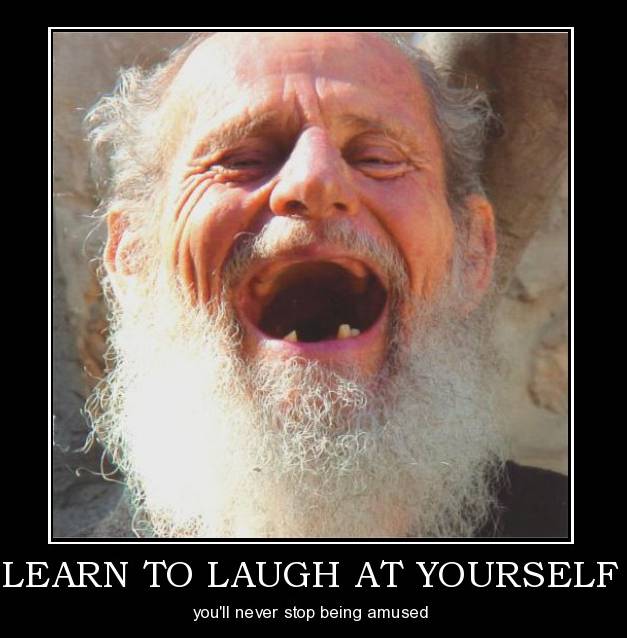
    A wonderful strength to have is to keep a good sense of humor, especially about ourselves. Many times we end up taking our lives too seriously in the quest of goals and achievements, and miss a lot of fun and happiness in the process. Having a good sense of humor about ourselves certainly helps take things lightly and not let them become stress or tension. If we can laugh at ourselves, we can blunt out the edges of jokes targeted at us, and everyone can have some good fun. Life is too short to take yourself too seriously, and if you can be the reason for some good laughs, you should be proud you are proving helpful in providing others a few moments of happiness.

    When a person can no longer laugh at himself, it is time for others to laugh at him. —Thomas Szasz
    When a person can no longer laugh at himself, it is time for others to laugh at him. —Thomas Szasz

    If you Get what you Want, You Suffer. If you Don’t, you still Suffer
    The biggest lie we say to ourselves is – “If I get this result, or achieve that goal, I will be happy.” When we tie our happiness to the outcome of our goals, like most humans do, we suffer when we don’t get what we want. But even if we get what we want, we still suffer, because then there are bigger goals and milestones waiting as time moves on. Time doesn’t stop at the instant where we won something and are jubilant, and since time always moves on, we can’t hold on to that victory. The whole cycle repeats itself over and over again.

    Life is beautiful in its surprises and unpredictability. We can never predict what is going to happen or not, but if we tie ourselves to ONE goal or result, we will miss all other unexpected results and joys life will throw in the way. Being in a space of being ‘not sure‘ what to find will allow us to welcome everything that comes our way. And this is a fact, whether we accept it or not. It is true that we will never have control over what happens to us in the future. It is the JOURNEY what brings us happiness, not the DESTINATION.

    Life is about Absolute Vulnerability
    This movie depicts wonderfully that true courage lies not in victory or perfection, but in absolute vulnerability. The ability to step out of our comfort zones and get into zones where we are fully vulnerable will decide how alive we feel in every moment. It is also very often called as ‘living on the edge‘ when we are aware of every step and every breath we take with our full attention without letting the unnecessary clutter of the past and the future getting in the way. And it needs courage to live life like that, and can lead to a truly amazing experience of life, rather than just living for results and achievements.

    There is No Starting or Stopping, Only Doing
    When Socrates asks Dan to resume his training after the accident, Dan had no clue how was that even possible, or where to start? To this Socrates said, “There is no starting or stopping, only doing.” The only thing we have, and will always have, is “right now“. Everything else we think we have or aspire to have is just an illusion. Right NOW, this moment is the only reality, and in this reality there is no starting or stopping, but only doing. If we can pay all attention to our doing and throw out everything else in our mind, we can achieve a new level of performance in what we are actually doing and will most likely end up producing amazing results.

  • What is Reality?

    In my experience over the last 28 years of education, work, entrepreneurship, social activism and living in Delhi, Jaipur and now Bangalore, I have seen my beliefs change many times. My idea of right and wrong, how to treat people, how to earn money, how to live life have all gone through tremendous changes as I have met different people from all age groups, occupations and different sections of society. Politicians, armymen, social activists, judges, entrepreneurs, economists, software engineers, students, artists, police officers, government employees, senior citizens, foreigners and more – It has been a wonderful experience meeting and interacting with them.

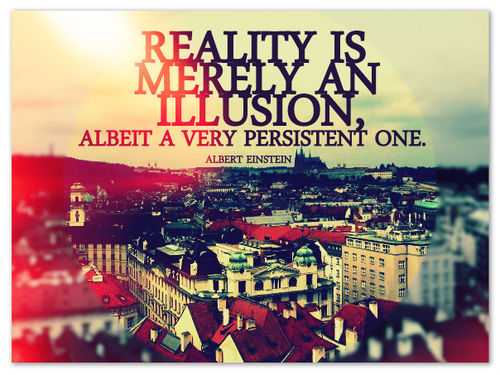
    As I have seen varying point of views about all topics from different people, I sometime wonder what reality is? What is wrong for one person is only right for another? Most of us are very narrow in thought and limited in our circle of education and employment, and these two areas shape our thoughts and emotions. I wonder at the powerful meaning this simple quote by Einstein captures –
    Reality is merely an illusion, albeit a very persistent one.
    realityPhilosophers like Immanual Kant and John Locke, both suggested centuries ago that reality is something we construct for ourselves. I somehow wonder – Is the world we see while awake any different in perception from the world we see (dream) while asleep? Everything is created as an image in our minds, whether our eyes are open or closed. In dreams too, we see and interact with people, we have emotions like anger, love and they appear very real to us until we wake up. Dreams can make us scared, sweat like we would do with normal emotions, all while asleep.

    The illusion comes, and many problems of life, when we start believing what we see as the ‘ultimate reality‘ rather than just one frame of reference our mind has decided to show us. Indian philosophers in the past have spoke of this as ‘Maya‘. It says that we deceive ourselves when we think that the objects we see are the objects themselves.

    Most of our reality is shaped by our senses of vision, sound, touch, smell and taste. And it is scientifically proven that our senses can only comprehend a fraction of the physical realities of light, sound, etc. Furthermore, there are many more realities which we have no way (or senses) to understand and measure like magnetic field and electric charges. Other animals sometimes can detect these in varying quantities, like dogs have a better sense of smell and sound.

    Another example to highlight that everything we say and believe as truth is only an illusion is the “Earth is a sphere” discovery. In ancient times, it was believed that the earth is flat. It was so much a part of everyone’s reality that ships used to go a certain distance in the ocean and then come back due to the fear of falling off the surface of the earth. Everything we believe and see right now is nothing different from this example.

    I would even say that the concepts of space and time are totally shaped by our mind, even when it is very ‘real‘ to us with scientific proof. But we can’t hold space and time like we can hold a table or a chair, and so they are more about some concepts we have created rather than an ‘absolute truth’. Now contemporary physics have begun to validate this viewpoint too, though I will need to spend more time researching to make a credible claim on that.

    As human beings, we are conditioned to see our culture, language, politics, religion as reality, which is only an illusion. This illusion is then passed on from generation to generation. Without even knowing, we spend all our lives driven by this ‘reality’. It takes real courage to question and challenge these beliefs and assumptions and bring in a more mature perspective on how to lead our lives.

    I will end with this powerful quote around the same question I started with – What is Reality?

    What we call reality is an agreement that people have arrived at to make life more livable. ~Louise Nevelson
  • How to Get Back Up after a Bad Day – Part 1?

    We all have such days, when we are a little sad and depressed, and the bed seems more inviting than the desk. It might happen when you are not happy with the outcomes from your business or a relationship. This post is about how to get back up when you are having such a day. And believe me, you can. We all can.

    I believe all such illusions of a sad day are created by the mind when it gets in the scarcity complex, which says that there is not enough money, love, or something else for everyone on this planet. A scarcity complex implies that life is a game of compromises and if someone wins, then someone else has to loose.

    The opposite of scarcity is abundance. And I believe the easiest way to get back up after a bad day is to realize that there is in fact an abundance of everything on this planet. Losing money doesn’t mean you can’t win it again, losing a loved one doesn’t mean you will never be loved again, and so on. Seeing in our minds that there is enough in this world for everyone creates an opening for all negative emotions to slip away and make way for all good that is waiting for us. Here are 5 simple ways you can bounce back

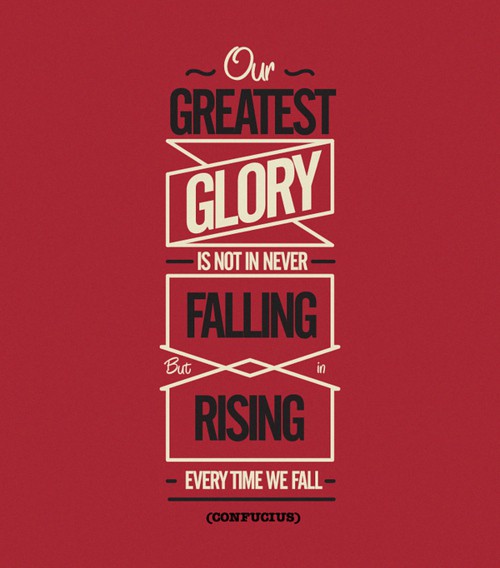
    It's not whether you get knocked down, it's whether you get up. Vince Lombardi
    It's not whether you get knocked down, it's whether you get up. Vince Lombardi

    1. Make a list, and mark items off it
    It is always a good feeling to mark items off your list. So make a list of getting things done, and write even the smallest of tasks, like making that phone call or creating a plan. If a task is too big, break it into small items. Then take the first steps of these actions and tick them off the list. One by one.

    2. Exercise
    Don’t sit on your couch or lie in the bed. Instead, go out and take a walk, jog and burn some sweat. Exercise is the best way to releasing chemicals (or hormones) that naturally make you feel better. You deserve to be happy, and not sad. Recognize your self-worth, and acknowledge yourself for it. Don’t worry, as worry blocks all the good waiting to come. Let go of the worry and open the gates to what the world is waiting to give you right now.

    3. Rejuvenate, Refresh
    Take a break. If you have been working or stressed out lately, take a break. Take a day off to just relax. Drive off to a place amid nature, and relax. Play some sport, or read that book you always wanted to read. Just shut the whole world of stress out for one day. And believe me, no hell will break loose. The world will be just fine with you having a good chilled out day.

    4. Laugh
    Don’t find reasons to smile and laugh. Just laugh. And keep on laughing regularly. And make others laugh. People never forget those who make them laugh. Laughing is the best way to add value to others. By laughing you will not only solve your problems, but of others too. And never forget to give yourself a pat on the back for that. You laughed, because it was your choice. And it always will be.

    5. Trust and Give
    Share your ideas for free. Trust people instinctively. Rather than fear the worst case scenario, trust that the best case will turn out to be true. Give with the trust that you will get manifold of what you give. Give not only money, but your energy, time, smile, gratitude and sincere love to others around you.

  • Either You Do It or Not, There is no Trying

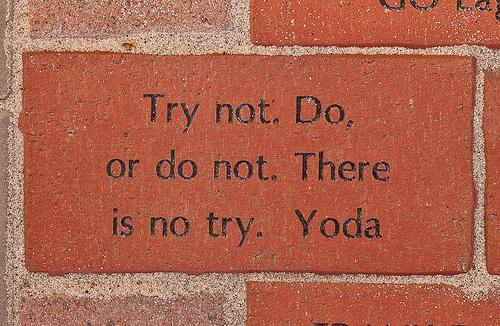
    Have you ever ‘tried‘ to do something? Think about it for a moment, how can one actually ‘try‘ to do anything? Because if you succeed in your intention, you would have done it, and if you failed, you would not have done it. But where did the ‘try‘ go?

    If you are not getting what I am proposing, let us try a simple exercise. You must have your mobile phone somewhere lying near you. Just try to pick it. Yes, seriously! Try to pick it up. Have you picked it up? No, no no.. I didn’t ask you to pick it up. I only asked you to try to pick it up. After some time you will realize that you just can’t ‘try‘ to pick it up. There is either picking it up or not picking. There is no trying.

    Having established that there is no such thing as trying, why is this word so common in our day to day lives? Why is it that this word is often associated with the ‘doing’ of things? I would guess that ‘try’ or ‘trying something’ is another of the commonly used phrases we use in our daily lives without even being conscious about it. It is just like the ‘Thank God it’s Monday‘ example I illustrated earlier. Using the word ‘try’ is just an escape route our sub-conscious mind takes and helps us justify our actions (or lack of them) later on.

    Reasons and Justifications
    Remember any instance where couldn’t do something you ‘tried’ to do. After the failed attempt, we often find ourselves using the word ‘try‘ to justify the same to others and to ourselves too. We never ‘tried’ to do anything, as it is something which can’t be done. But we have our reasons and justifications to defend ourselves with. Lets be honest and accept that we are only fooling ourselves and nobody else by falling into the trap of trying and following it up by reasons. I am not saying there is something wrong if you don’t accomplish a task, but to take responsibility and not hide behind the ‘try’.

    Just Do It
    Nike has got the perfect message in their tagline – Just Do It! We should let go of all the trying we do and get into the world of doing. The difference in the ‘doing‘ world is that the focus is on being in action. In the ‘trying’ world, there is a lot of thinking and analysis involved, but in the doing world, there is either success or failure in the ‘doing’. There is no successful ‘trying’, only successful ‘doing’. And as we are stopped by different obstacles (which will naturally come), being in the ‘doing’ world will not give us any reasons and justifications to fall back on and instead we will spend our energy on how to actually ‘do’ the task. There is always growth in the doing world.

    What to do in the face of obstacles?
    If we are doing something worthwhile, there will obviously be some hurdles on the way. Instead of focusing on the hurdles, we should strive to just learn our lessons and doing the same thing with a different approach. Now it is very easy to fall into the trap of such words again. So don’t ‘try’ to overcome the obstacles, just overcome them 🙂

  • Two more Tragic Myths of the Time we Live in

    Starting from where I left in my previous article about the Top Three Myths of the time we live in, I am going to present two more such myths in this article. It furthers on the same principle that nothing is fixed despite our attempts to see reality through culture, belief systems and processes. And how, if we can see the world free of these myths, can we live whole heartedly and enjoy the thrill of living with the various emotions and anxieties it has to bring, rather than resisting it. So below are listed two more tragic myths of these times –

    Live / Contribute for Others
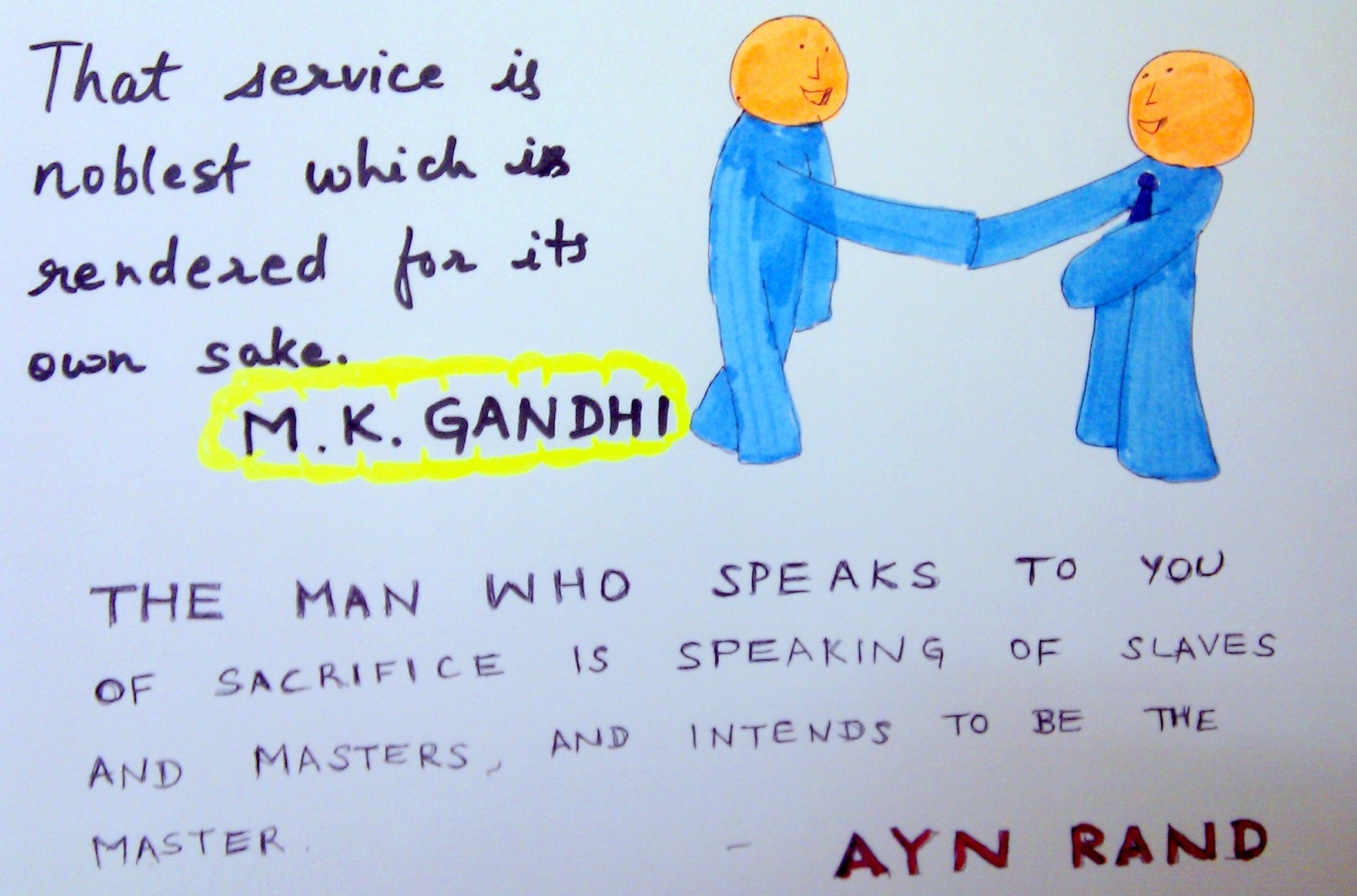
    We live in a world where ‘social good‘ and ‘sacrificing‘ oneself for another has become noble virtues. And being selfish and doing something only for your own pleasure invite scathing comments and looks from the so-called society. By getting stuck in the myth of seeking approval of the world, we often risk losing ourselves and that can lead to a life without joy and fulfillment even when it might look good to the ‘others‘.

    The highest value a man should strive for is pride and confidence in what he is doing. It is your own respect, and you have to earn it. If you are not happy, it is the biggest dis-service you are doing to the human race. Isn’t it strange that it is called noble to do something for the good of others, but the same happiness becomes devilish when we seek it ourselves? Why is it bad to provide yourself with some fun and pleasure, and good to give the same pleasure to others?

    I believe the best thing a human being can do for others is to live his life the best he can to fulfill his own desires. And it is a big myth – to do something which should look good in the eyes of the ‘others’, first it should look good in your eyes. And if nobody else sees it the way you are seeing, go ahead and do it because it is your life and not theirs.

    (P.S. – I am not against service to others and standing for other’s rights, but I believe the best way of doing that is not by sacrificing anything in our lives. Instead I believe that standing for our own happiness and desires is the first step to feel really free to to do any kind of service. I will write what service means to me in another article.)

    Service
    Service

    Love and relationships are two-way streets
    One of the biggest myths which we turn into reasons later on to back out is that love and relationships are two-way streets and they expect something in return. And here I am referring to the love between any two individuals, as brothers, father-son, friends and not just romantic love. Loving someone is the purest joy a human being can experience, yet “being loved” in return is a myth. In the modern society, we have all become so driven by materialistic desires that loving and respecting another being just like ourselves has become rare. We are constantly looking for reasons of why not to love someone, rather than the other way around?

    Loving someone unilaterally without any expectations is a virtue which results in the purest forms of happiness. By loving someone, we are declaring our love for ourself first and it makes us grow in many different ways. Loving somebody is the purest form of being human I would say. It will rejuvenate your mind, energize your body and nourish your soul. And it is no tragedy if the love is not appreciated or reciprocated. You are loving someone because you want to love, not because you want to “be loved“.

    (P.S. – Again, that does not mean otherwise. A two way relationship will always be more fulfilling and satisfying. My only point is that it is not the condition of love.)

    Conclusion
    In our side of the world (eastern), the illusion formed by these myths is termed “Maya“. We make everything real which we perceive by our senses, for example, if we see, feel, hear and smell something, it is very ‘real‘ for us rather than just an imagination created by our mind based on senses. For eg – If all doctors say that someone is not going to live more than 1 year due to some critical disease, it becomes reality for us, rather than just the illusion which our thoughts have created because doctors are meant to be experts in their fields.

  • Ten Frank and Straight from the Gut Tips If You are Angry at Someone

    1. If you are angry, irritated or frustrated, seal your mouth. Don’t say anything, don’t send any email, text to anyone. No-one wants to hear about your misery. The best thing I can think of is go out and take a walk. Maybe exercise. Take that anger out and burn it in the form of sweat.

    2. You are angry because of your emotions, not because of what someone else did. Your emotions are your responsibility. Own up to it. You made yourself angry, so don’t blame anybody else for it. And only you can stop being so.

    3. If you happen to open your mouth, do not raise your voice. Do not make threats. Do not make expressions to show your anger. Do not play the ‘sympathy‘ card.

    4. Don’t drink or smoke. It will only make things worse.

    Resentment is like taking poison and waiting for the other person to die. ~Malachy McCourt
    Resentment is like taking poison and waiting for the other person to die. ~Malachy McCourt

    5. Learn to respect others opinions, even if you disagree. Even if you think they are wrong, even if you can prove they are wrong. Respect their opinions.

    6. If you said or did something you shouldn’t have, apologize. If you said or did something which you know is right but the other person got hurt, still apologize. (Not for being right, but for hurting someone else’s feelings)

    7. Listen. Listen. Listen. And understand.

    8. You have nothing to prove to anybody. Accept what you get and what you didn’t get. And move ahead. Maybe come back later to fight another day.

    9. Don’t assume things for others. If you have a doubt, ask. But don’t make stories in your head.

    10. If you still have any thoughts, write it down on paper. Then read it again and see if they are still valid. Cut off what is not important.

  • How can we break the safety wall?

    Some seven months back I wrote an article about why we should break the safety walls around us to be happy. After the wonderful response I got from that article, I have taken some steps like quitting my job and starting up on my own again. Lately I felt that I was again getting caught in a comfort zone which was stopping me from playing a big game. And that’s what led me to reading that article again today, and I decided to follow it up with this article giving my views on – How to break the safety walls?

    Start Small
    If you want to do something in an area, the best way is to just start it in whatever little way you can. Do anything in that direction, and then continue doing it, step by step. Soon, you will see that all the resistance will give way as you get into a habit. Once that happens, take another small step forward and let that become comfortable over a period of time. This is beautifully summed up by this quote by Martin Luther King Jr“If you can’t fly then run, if you can’t run then walk, if you can’t walk then crawl, but whatever you do you have to keep moving forward.”

    The brick walls are there for a reason. The brick walls are not there to keep us out; the brick walls are there to give us a chance to show how badly we want something. - Randy Pausch
    The brick walls are not there to keep us out; the brick walls are there to give us a chance to show how badly we want something. – Randy Pausch

    Be Who You Are
    Each one of us have something unique – it could be a talent, skill, way of being or something else. Never loose that. Do what you like to do. Say what you want to say. Be authentic. Smile when you are happy. Cry when you are sad. Don’t wear a mask. Be authentic.

    Let Go of the Dark Glasses
    We all have our filters through which we see the world. Whenever we start something new and look beyond our safety walls, these filters act as dark glasses and cloud our view of the future. Thoughts like ‘not possible’, ‘very difficult’, ‘can’t be done’ are all a result of these dark glasses. Be aware of such thoughts whenever they pop up in your head, and let go of them. Recognize them as just your thoughts and not the reality, and you are free of them.

    Don’t Pull Yourself Down
    When you take a step beyond the comfort zone, the ground is bound to feel a little shaky and the road a little foggy. There are bound to be breakthroughs and breakdowns on the way, but never pull yourself down at the first sight of a breakdown. Don’t get into arguments like – “Am I worth it?”, “Can I do it?” Many times this happens very subconsciously, so be conscious at all times, and catch yourself whenever you start pulling yourself down, and get back up. Clear your mind of the clutter and focus on doing rather than thinking about doing.

    Have Fun
    Doing something new doesn’t have to be boring or serious. Just continue having fun while you move into the unconquered zone, and never let your artistic spirit die. Listen to music, indulge in some painting or sketching, watch your favorite team play, cook your favourite dish, or travel to that destination you always wanted to. Laugh often, jump and play like a child and always keep a smile on your face.

  • Things That Do Not Matter vs People Who Matter

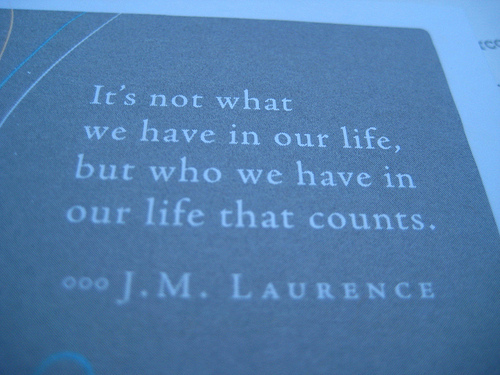
    In our day to day lives, we very often loose the bigger perspective and be consumed by many small issues which don’t matter too much in the long term. In the heat of the moment, it is not uncommon for people to see other people with a ‘what can you do for me?‘ attitude only. Placing undue attention on materialistic things weakens our ability to see the value of basic human to human bonding. There is also a famous quote by Spencer W. Kimball

    “Love people, not things; use things, not people. ”

    If we take the bigger perspective of life into the picture, people are always more important than anything materialistic. All materialistic things have been created by humans only and never has any materialistic thing created a human being. Remembering the value of human life and relationships can help us realize that things can always be replaced – houses can be rebuilt, lost possessions can be regained but the people in our lives are not replaceable. And during tough times, it is always the people in our lives who help us weather the storms and never our possessions. Yet in our good times, how easy it becomes to become attached to our jobs, money and ‘what we can buy‘ when the real joys of life are always free.

    "People were created to be loved, Things were created to be used, The reason the world is in chaos, is because things are being loved, and people are being used."
    "People were created to be loved, Things were created to be used, The reason the world is in chaos, is because things are being loved, and people are being used."

    Decide What is Important, the Person or the Matter
    Before getting into any conversation, we should always ask ourselves “Who is more important, the person or the task at hand?” and then never forget this during the conversation. There might be times when our ego can drive us to say mean things which could harm the relationship, even if we get the desired outcome. But is it worth it? And at what cost? It is very important to recognize when we are driven by our ego, and then STOP.

    What if we are right?
    Even if we strongly believe that what we are saying is right, we should not hurt the other person’s ego by trying to prove him wrong, or acting in an aggressive and rude manner. What one ego is saying can never be countered by the ego of another, but the other person can always be brought to reason by being compassionate and patient. The point I am trying to make is that if we realize that the conversation is driven by ego, we should allow the other person to get away with it, in the better interests of the relationship. Sooner or later, that person will realize it too.

    Materialistic Things are Important too
    All this is not to suggest that we should stop using our brain to design and manufacture new machines, factories, industries, ideas and services. All these materialistic things have been the greatest achievement of human beings. In the last two centuries, first with the industrial revolution (factories, cars, electricity, assembly lines) and the progress in science we made with that, and now with the knowledge revolution (computers, internet, globalization) we have totally changed the quality of human life on earth. So while materialistic things must be the output of our ever growing and creative mind, but they are only created to serve us and make our lives better, not the other way round.

    In conclusion, love for others creates happiness for us and for others too. It’s easy to believe that money and things bring happiness, but they don’t. Happiness is a habit, and not an outcome of something. It is therefore much wiser to love people and use things, than to love things and use people.

  • I thought, But

    	All the art of living lies in a fine mingling of letting go and holding on.” – Havelock Ellis
    All the art of living lies in a fine mingling of letting go and holding on.” – Havelock Ellis

    I thought I could forget you,
    How foolish was I?
    I was ready to bid adieu,
    But then you passed by!!

    I thought I would not miss you,
    But from inside I felt empty!
    As I didn’t even knew,
    You were now a part of me!!

    I thought I could move forward,
    Without ever turning to look back!
    It soon became very awkward,
    As you were part of every flashback!!

    I thought it would be alright,
    And I will find a new path to tread!
    But something just didn’t feel right,
    As every time you smiled my heart bled!!

    I thought it was just a crush,
    And it would pass away like a flu!
    But just your thought makes me blush,
    And I know my heart whispers – “I love you!”!!

    I thought I could let you go,
    And that it would be an easy choice!
    But I never stopped hearing the echo,
    And feeling like when I first heard your voice!!

  • What does ‘Work is Worship’ means and what our work can be?

    Work is where we spend most of our lives, especially in these super competitive times and in a tough economy. Most of us work for around 50-60 hours per week (at a minimum), which makes it around 108 to 130 days every year. The only other activity we do as much as work is sleeping. Thus work and sleep each takes around 33% or one-third of all our days in a year. In many surveys (here and here and here) organized by universities and other institutions around the world, it is known that most people (more than 50% of them) are not happy in their work and seek life outside of it, ie, in the 33% or one-third of the remaining time they have.

    If time is our most important resource, think about it this way – We are giving two-thirds of our time away daily, and spend the rest one-third left thinking why we have so little time left. It is like giving a tax of 66% on our time. Now imagine giving back two-thirds of every salary away, and keeping only the one-third for ourselves. If we imagine this situation, we will feel anger, frustration and all other kinds of emotions. It is the same with time, but we don’t realize it because in our perspective money is something more real and substantive (which we can hold, see in our bank account) but time looks like a never-ending resource. But time does have a limit, and every minute you are not spending living your life, it is akin to giving away money. Imagine yourself giving away money physically every time you feel you spent any time which can be termed as ‘not living your life‘.

    A popular and old proverb says that “Work is Worship“. It looks good only as a proverb and something very unreal in the times we live in. The common (and agreed about) perspective about work looks at it only as a tool to earn some money or achievement or reward so as to live your life in the spare time you have left. In this article, I am presenting another perspective on work according to which our work is a vehicle, a chance, an opportunity for each one of us to express ourselves and shine like a light and set an example for the whole world.

    Karmanye Vadhikaraste Ma Phaleshu Kadachana
    Karmanye Vadhikaraste Ma Phaleshu Kadachana – The sanskrit phrase in Gita which translates to "You have a right to perform your prescribed action, but you are not entitled to the fruits of your action." is also on the same lines

    Have you watched Sachin Tendulkar walk into a stadium to play (which is his work)? How does the audience respond to that? Every time he walks in to bat, he gets a standing ovation from the audience and they stand and applaud. I guess this is what the adage – Work is Worship means, which is beautifully expressed in the way a Sachin Tendulkar or a Rahul Dravid bats. Before I divert to cricket, let me get back to the topic here. Now imagine every time you walk into your office, everybody notices and gives a standing ovation to you. Everybody recognizes the champion in you that has come to work for producing some amazing results which others will only dream about and watch from the stands.

    Just changing the perspective can change everything about how we see our work, and what and how much it can contribute to our life. It is not something where we spend one-third of our time to get some money to spend in the remaining one-third. Instead, work is a platform where we can unveil the very best in ourselves. Work itself is our life, it is our chance to grow and become all we ever wanted to be. It is the most important, and the best thing in our lives, we shouldn’t miss or waste even a single second of it. It is a vehicle to become all that we ever wanted to become, and to have the life we always wanted to have. Life happens inside of work, not outside it.

    I will end with a very powerful quote by James A. Michener –
    “The master in the art of living makes little distinction between his work and his play, his labor and his leisure, his mind and his body, his information and his recreation, his love and his religion. He hardly knows which is which. He simply pursues his vision of excellence at whatever he does, leaving others to decide whether he is working or playing. To him he’s always doing both. ”

  • Every Obstacle has an Opportunity Hidden beneath it

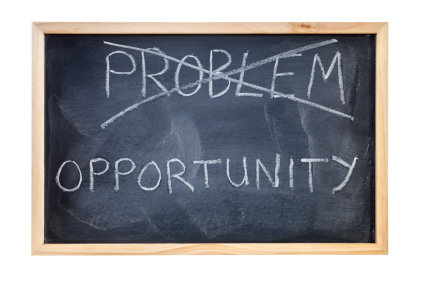
    The only people I have ever known to have no problems are in the cemetery, says Dr. Norman Vincent Peale. If this reality hasn’t hit you in the face, let me make it clear – If you are alive, you will have problems and obstacles in your life. It is as much a truth as the air we breathe, and the earth we walk on. Yet we live all our lives avoiding problems or solving them. What an irony?

    When Lance Armstrong says that cancer was the best thing that ever happened to him, and that if he would have to choose between his Tour de France wins and cancer, he would choose cancer, he is saying a lot. He won the Tour de France seven times after recovering from cancer to give a light of hope to the millions of cancer patients out there, and his tryst with cancer has given him the purpose of his life, the LiveStrong Foundation.

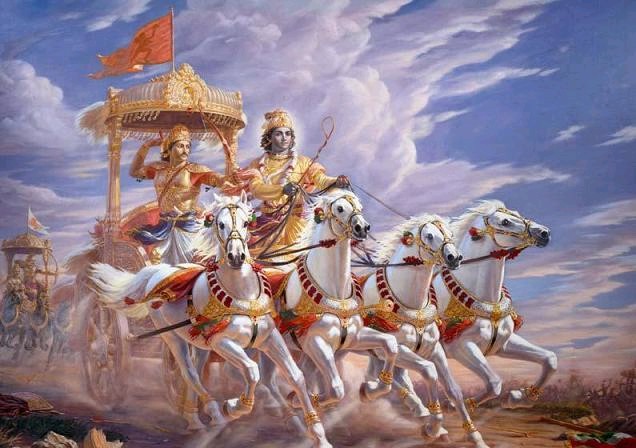
    Even in the Mahabharata, Krishna saw fighting as an opportunity which Arjuna saw as a problem. The way we see the problem is the real problem, and if every time we face a problem we ask ourselves – “What is the opportunity here?”, we can open closed doors of new opportunities which can enliven us and the people around us.

    If we can learn to do this everytime, our life is taken care of
    If we can learn to do this everytime, our life is taken care of

    Let’s take an example. In the current tough economy, let’s say one is out of a job. It might look as a problem, but we can ask “What is the opportunity here?”. What are the answers we can get? Being without a job could actually be an opportunity to start a business, or to go back to study or take some time off to travel. When we are in a job, we are often too stuck in our comfort zone that we don’t even look at what all we are capable of. But when we are shocked by some so-called problem, we often are forced to do what we never thought we could, and that always leaves behind a better version of us.

    If I look back at my life, the best things have come out from the times which I have considered my worst. Whether it was the dissatisfaction at work which led me to create Sukip and SaleRaja, or later the failure of SaleRaja which led me to writing which has now led me to another entrepreneurial venture (CricketRadius), the times which I have considered my worst at one time have given me the best results.

    In times when we think the whole world is against us, what we need is the maturity to seek the hidden opportunity. We also need the patience which will allow us to wait and bide time till we can see the opportunity hidden in that obstacle. We might not be able to see the opportunity at that time, but if we can show faith in life, we will only come out stronger and better prepared for the future. I will end with this quote by John Ruskin –
    “The highest reward for man’s toil is not what he gets for it, but what he becomes by it.”

  • Who are the lucky ones?

    As I have talked about my getting back to entrepreneurship with a few of my friends and colleagues over the last month, there is one common reply which I have heard, “You are very lucky. You are doing what you like.” If I take a peek back down the years, I myself remember saying these same words to people at different times. If we look around, we will find this phrase being used frequently by people to express their feelings when they see someone else doing what they would also like to, but can’t due to some reasons.

    Hearing this phrase over the last few weeks got me thinking. Am I (or some people) really lucky to be doing what I am doing today? What I realized was that it is totally not the case. Only I know how much scary the decision was to leave a reliable monthly source of income and bet on something which had more chances of failing than succeeding. Only I know how it feels to explain to relatives the merit and logic behind this decision of mine. And only I know the consequences which I might have to bear if things don’t go as planned.

    Who are the lucky ones?
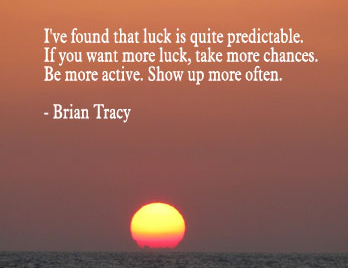
    Who are the lucky ones?

    But at the end of the day, it is a simple choice. A choice of choosing one way or the other. One choice (the safer one) can leave us where we are most of the times, in our comfort zones, and cushioned from all bad things by our EMS – equal monthly salaries. At the same time we will always envy those few (seemingly) brave souls who we see have taken the more adventurous route. But if you take this route, you are betting against odds on your ability to weather the rough storm which lies ahead. Some times you are delighted and excited, yet at other times you are frustrated, disappointed, angry and scared, all within a period of a few hours.

    Coming back to the original question – Who are the lucky ones? There are a lot of times in our lives which we can term as turning points, and it is the choices we make during these times decide which way our life turns next. We all have such times and such choices in our lives, irrespective of country, caste, gender or religion. And what we choose to do during such times defines and decides how lucky or unlucky our life turns out to be. There are obviously consequences of whatever choices we make, or not make, as not choosing something is also a choice.

    The phrase ‘You are very lucky‘ is just one of many phrases we use in our daily lives to make certain things easily believable, or as an escape from a seemingly tough path. By saying ‘You are lucky‘, we are implying that we are not. And this happens, like in other such cases, very unconsciously without we even being really aware of it. By implying that we are not lucky, we have no reason to even ponder any alternate choice for us. This is another instance of how our language and the words we use shape our reality.

    Chad Helsttter has said on choices: “The end result of your life here on earth will always be the sum total of the choices you made while you were here.” And how true this statement is. The lucky ones are simply those who exercise the different choices that life presents to them. We all have been that person at some point of time, yet we are not most of the time. So the only real way to be lucky is to take our choices when they come, and be ready to face the consequences which might come as a result of choosing a certain path.

  • Observe and Learn instead of Watching and Studying

    Have you ever felt that you are zipping past through life in such a hurry that you don’t even get the time to enjoy the journey? Have you ever rushed to your destination amid traffic and the person you went to meet asks you “Did you notice the amazing new park they build along the way?” And you have no idea about the road, the different buildings you passed by or the different people around you while you were on the way.

    This is how most of us are in life. Too busy in reaching the destination that we miss the journey altogether. We would not remember even the smallest things about the journey, forget about enjoying the ride!! But why so? Obviously our eyes were open and on the road the whole way? So we watched everything that was along the way, but we can’t remember a thing. Maybe our mind was so occupied in other things that we missed the beauty of that moment. We were just watching and not observing.

    Another way of being is to live fully in the moment and observing. So the next time you are driving through traffic, observe the trees on the road beside you, observe the cloud pattern above you and listen to the birds chirping and making a pattern overhead. Observe people around you, and you might see a young couple walking hand in hand, or a kid playing with his mom in the car next to you, or the conductor issuing tickets to passengers in the bus ahead of you.

    Where are you living your life?
    Where are you living your life?

    We normally don’t do this because it seems like a futile exercise. What will we gain from it? There doesn’t seem to be anything ‘productive‘ about it. But sometimes sitting peacefully and observing is all we need to clear our mind of all the unnecessary thoughts of our daily life. It is more like getting out of our own body and watching people pass through their life as we do mostly. We will observe our rationalizations, our reasons, and a reflection of ourself in the people around us. We will realize how small issues and thoughts control us over the period of a day. How small problems turn into big frustrations and how we become driven by them instead of letting them go? Just by observing and doing nothing, we can see our problems in a totally different perspective.

    The same goes for reading and studying. We are packed with so much information these days as there are news, articles and videos coming along our way every second. Many of us are studying very hard to clear that exam or to get that dream job. We might even be doing an extra evening or distance learning course with our work. The purpose of education is learning, but often it gets limited to reading and studying and we miss the most important part – learning. I believe that the biggest teacher is life, and that there is no need to go to college or attend lectures or read books if you really want to learn. In the world around us, there are many examples of such people. Every second of our life, every person we meet can teach us something. But only if we are open to learn from all such opportunities.

    It can make a lot of difference in our days if we observe instead of watching, and learn instead of studying or reading. For example, we take the same steps of stairs every day to reach our doorstep, and we watch it daily. Maybe we have seen it hundreds of times. But how many of us can tell how many stairs are there till the door? If we really stay open to the inputs received by our senses (and not just our vision), we can let in a lot more than we do now. But we walk around with dark glasses on our eyes and headphones in our ears and miss everything this beautiful world has to offer. And then we go out seeking the same beauty or knowledge in books.

    In the next few days and weeks, observe and be aware of your senses and I bet you will be surprised to see the difference it makes to the quality of your life.

  • Let go of the need to be right

    If I have to pick up one thing I learned in the last few years which has made the most impact on me, I would not hesitate to say it has been the way I see and judge things to be right and wrong. We all have a strong sense of righteousness about certain matters in our life. It could be related to how we live our lives, or how we run our business or something else. It could be in matters as big as relationships and business, and as small as being a vegetarian or speaking the truth. Letting go of my perception of what I thought was right (and wrong) in this world has been the best thing I have done (and have to do every single day).

    There is no right or wrong
    When a child is born, there is no right or wrong for her. But as she grows up in this world, based on her parents, surroundings, culture, religion and numerous other factors she begins to develop a sense of right and wrong. Everything she does has to conform to these norms and she starts to despise everyone who doesn’t conform to those standards. This is very evident when people of different religions clash with each other, or people from different cultures find it difficult to stay and work together. Only if they realized that they are doing exactly the same as the other side, the only thing difference is their view of what is right and what is not? And that if they had been born and brought up in the opposite side, they would have turned out exactly as the person on the other side.

    Your beliefs are not you
    As a child grows up, he begins to associate himself with thoughts such as his gender, his possessions, nationality, race, religion, and later on, education and profession. We also associate ourselves with roles such as son, a brother, a parent, a friend and so on. There are many other such things which give identity to each one of us as we grow up. But the biggest problem arises when we start identifying ourselves with these labels. We are not our gender, nationality, religion or the different roles we play. We relate all these to ourselves by using words like ‘I, me, mine‘, but what is very important to realize here is that all these are just labels and not the real us. A child doesn’t have any such labels, and see how happy we are as children. But as we grow, we start associating ourselves with these labels and they become a part of us. What if one were to loose his nationality, religion, job, education? How would one react? People would go crazy because the things they have worked so hard to identify themselves with during their life has suddenly disappeared. Because they mistake these labels to be themselves rather than just what they are – ‘labels’.

    Choose being kind over being right, and you'll be right every time. - Richard Carlson
    Choose being kind over being right, and you'll be right every time. – Richard Carlson

    Is being righteous wrong?
    As I am advocating the need to let go of certain ideas about what is right and wrong, having such beliefs is not ‘wrong‘ in itself. What is important is to see them for what actually are, just our beliefs and not mistake them with ourselves? It is our ego (which is very very unconscious in nature) that makes us identify ourselves with things and beliefs. Once we see these beliefs as just beliefs, we can free ourselves from this trap. When this reality hits upon us, we may even laugh in disbelief. Because due to this illusion of mixing our beliefs with ourselves, men have fought wars, killed each other and continue to do so.

    Nobody ever achieved anything by being right
    So the next time you feel the urge to prove someone wrong and want to take pride in being ‘right‘, just realize that your ego is owning you in such moments. Once you are present to this, the ego loses its hold over you and you will feel free and light. It is the same reason that sometimes the poorest of people seem really happy (because they don’t have anything left to identify themselves with). It is also the same reason some people reach great heights after hitting bottom, when they are taken away of their so-called possessions and realize the futility of all of them in the first place.

    So the next time you are caught in a clash of opinions, remember that these are only opinions and the unconscious ego at play. People don’t defend their opinions, they defend their identities. Sometimes, it means to take a step backwards, saying sorry even when you are not at fault, because you can see the bigger things at play (the fight of egos). Seeing people separate from their egos and built-up identities can free us from this trap of proving ourselves right and we can move on to more productive things in life.

  • Five ways that worked for me to give up anger and hatred?

    Like I said in my previous two articles on anger and forgiveness, you cannot enjoy life fully if you are carrying a grudge against someone. Forgiveness is about cleansing ourselves of the poison anger is. Forgiveness is moving on. Also, I pointed out what forgiveness is not. It is not absolving someone of a crime, and it not something good you do for the other person but for yourself. While it is all easy to say from a third person point of view, it can be immensely difficult to let go of the anger when actually faced with a situation ourselves.

    Below I am listing five ways which have worked for me to give up my anger and hatred towards a specific person or situation –

    1. Taking a time out
    The most important factor here is time. Nobody expects a father to forgive the killer of his son immediately. His anger is rightfully justified. However, after a few months, he can. After an incident which has left us angry, the most important thing that has worked for me is to take a time out. Keep a distance from the person or situation you are angry at for a few days by doing something else or going somewhere else. This time away will help us see things in perspective and prevent us from doing something which we might regret later.

    2. Genuine effort to understand the other person? What would I do if in their shoes?
    After a cool off period and when you are at peace with yourself and not burning with rage, we all can make a genuine effort to understand the other person. What would you have done had you been in their shoes? Do you understand the other side fully? Under what circumstances they did what they did? If we can wisely try to see the other person’s point of view, we can understand their predicament better and maybe even empathize with the person on the other side.

    grudge 3. Focus on the kind of person I want to be
    Even if I am burning with anger, another thing which has worked for me is asking the question “What is the kind of person I want to be?“. Even if I have been wronged, do I want to be the person to spend my time and energy in staying angry and punishing the wrong-doer. Or do I want to be the person to love those who have harmed me and wishing for their wellness? After all, every religion asks us to love our enemies. As Buddha said, “Hatred does not cease by hatred, but only by love; this is the eternal rule.”

    4. Taking a walk and doing something I love alone
    You can not look from the other side’s perspective and try to understand their situation if you are not at peace with yourself. If you want to develop compassion, the first thing you need is being at peace. I try to take a long walk alone, or just sit with my eyes closed for some time. Spending some time in silence and just with my thoughts makes it easier for me to let go and forgive not only the other side, but myself too. Because my anger is doing more harm to me than the other person, the sooner I stop being a prisoner of the past the better it would be.

    5. Communicate
    If there is anything unspoken between me and the other party, I let it out. If the opposing party is not accessible or I might not be able to express it fully in front of him/her, I write my thoughts in an email / letter. Whether I send the letter is again, my choice, but I think it is very important to write down and express my thoughts. I express why I was angry, and that I give up my anger. I express about how difficult it has been for me, and how I have tried to see from the other person’s point of view. Once I write this letter, I go over it two or three times and strike off the lines which I think are not necessary. Doing this a couple of times makes me feel at peace with myself.

    In the end, it is very important to realize that it is nobody else who makes us angry. It is our thoughts and feelings which do so, and which are always in our control. In the same way nobody can else can stop you from being angry, only you can do that.

anger anna hazare bangalore business challenge coaching conflict conversation corruption Cricket culture dandi march emotions energy friends fun gandhi giving gold growth hope india jan lokpal bill language leadership lessons Life listening love moment mother movie new year people perspective poem sachin tendulkar saleraja trust values walk waste women words world cup