anger

  • How To Respond To Anger Like The Adults We Are Supposed To Be?

    In my previous article on anger, we saw that anger hides what we care about. If we look deeper and take the time to introspect, anger can tell us what we really value, and which value has been violated that resulted in the anger. Anger can communicate a lot of important information, but only if we are willing to listen.

    Can you control the emotion of anger? NO. Can you control how you respond to it? YES

    Life is unpredictable, and you can’t stop yourself from getting angry or frustrated at times, but can you control how you respond to it?

    Do you think you can’t control your reaction when angry?

    The truth is that anger is not the culprit behind this feeling of helplessness. It is our inability to understand and handle it. We banish anger and put a leash around it – by terming it as wrong, immoral, bad to talk about, bad to feel, etc. Rarely do we educate ourselves and our children about what anger really is and how to deal with it.

    Anger has a lot of energy, and it is up to us to use it destructively or productively. We can allow anger to reveal the love and care beneath it. We can allow anger to strengthen ourselves and our relationships. To do this we have to be willing to be vulnerable and listen to our anger. And there is a lot of power in that vulnerability.

    “Remember not only to say the right thing in the right place, but far more difficult still, to leave unsaid the wrong thing at the tempting moment.”

    ― Benjamin Franklin

    The Primitive Way of Responding To Anger

    There are 2 primitive ways of responding to anger:-

    1. Suppression

    People respond to anger in different ways. You can suppress it, try to hide it, or you can just go silent and not say anything. If you do that, it leads to stress, bad health and can be the cause of major diseases in the future. And suppression never really works because people around us can see we are angry or frustrated. People close to us can always see through our masks. When we suppress our anger and other emotions, we lose the vitality of life. Suppressing anger is like drinking poison and then expecting somebody else will die. Even if we can suppress anger very well, it keeps on building inside us and will end up in an explosion sooner or later. The more we suppress the bigger the explosion will be.

    2. Explosion

    The second way people react to anger is by exploding and causing a lot of damage. The damage can be to yourself, to the people around you, and to your relationships. When you explode in anger, you can lose control and get carried away. And an out of control human being is a very dangerous thing. In such a situation, we often end up doing something which we regret later. This could range from saying harsh words to using physical violence to harm ourselves or others.

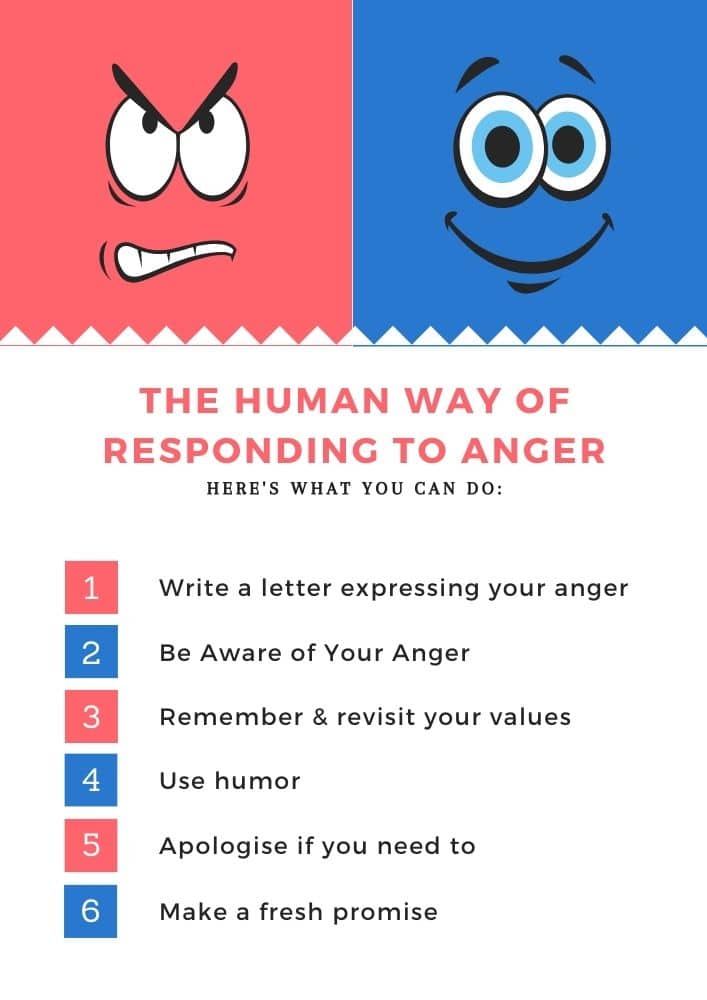
    The Human Way of Responding To Anger

    We may be primates, but we need not be primitive. One thing that separates our species from other animals is that we can choose our response despite our circumstances. We, as human beings, have the capability to go beyond our impulsive emotional reaction to choose a reaction that suits our long term needs better. The primitive way of reacting to anger does give a short term instant gratification, but it can cause long term damage.

    The perfect way to express anger is to express it according to our values, and it is also the key to releasing the positive energy of anger. The earlier we can express our anger, the less damaging it will be – for us and the people around us. You can’t always control if something will irritate and frustrate you, but you can always control how you respond to it. Don’t focus on what made you angry, focus on how you want to react. Let’s see how can we do that.

    1. Controlled Explosions

    To manage our anger better, we can have mini controlled explosions. Just like bomb squads do controlled explosions to limit the damage of an unexploded bomb, we can express our rage by shouting or screaming in private. We can write a letter where we can express our anger and vent out everything we are keeping bottled inside us. Obviously, we should never send this letter, and it makes sense to just destroy it afterward. Just the act of writing what you feel will make you feel better. These are not perfect solutions, they can still help us to defuse an otherwise alarming situation.

    2. In The Heat of The Moment – Be Aware of Your Anger

    What we can do in the heat of the moment is to be aware of our anger and not get sucked into reacting impulsively. We can focus on our breathing, and on what is happening in our body because of the anger. There are often physical symptoms of anger like a racing heart, and being present to these changes can help reduce them. You always have the power to choose how to respond to anger, and you do that by being present to and taking control of what is happening in your body.
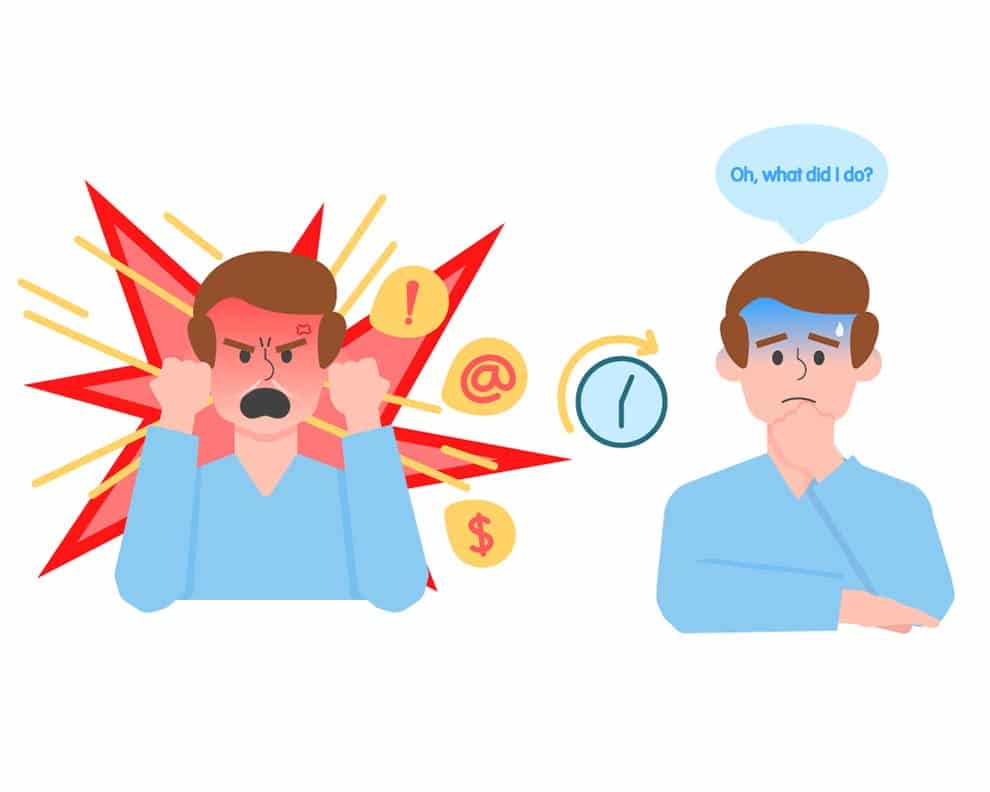
    One way of being aware of what is going on in your body without reacting is to detach ourselves from the situation. You can take a break from whatever you are doing – take a walk and get yourself moving. If you’re inside a building, try to get outside and get some fresh air. Within a few minutes, you will start to feel better. Moving our body physically reduces stress and the level of the stress hormone – cortisol. It has been clinically proven that exercise improves not just our bodily metabolism, but also our spirits. A little exercise can prevent things from going outside of your control.

    3. What To Do When You Have Calmed Down?

    Every now and then it is important to remember and revisit our values. As they will determine how you want to act in the face of anger. A good question to ask yourself is – How do you want to act in anger so that you don’t regret it later on?

    We can learn to communicate and express our anger in a way we can be proud of. We can do that by not jumping to conclusions when our emotions are triggered. Research has proven that we don’t make good decisions when we are angry or in a heightened emotional state. Hence, it would be prudent not to believe what comes to our mind in such a state. We can make better decisions by slowing down, sleeping over it, and giving it time before making any life-changing decisions.

    “Speak when you are angry and you will make the best speech you will ever regret.”

    ― Ambrose Bierce

    Once we are calmer, we can listen to what others have to say without getting defensive. Everyone is entitled to their point of view, no matter how different it is from ours. It is very important to let others make their own choices, and not force our opinions on them. When you do that, people naturally tend to push back creating further friction and frustration.

    To make the most of the energy present in anger, we should remind ourselves of our values and seek win-win solutions together with people. Commit to finding a mutually agreeable solution rather than winning your argument and proving yourself right. At such moments, it is important to work with people, not against each other. Even if you prove yourself right or win an argument, give others an opportunity to save face.

    Don’t embarrass or humiliate people even when you know you’re right. Seek solutions where two plus two become five, where the sum is greater than the sum of the parts.

    4. Using Humor

    Humor is another way to defuse anger. The more you suppress or hide anger, the stronger it gets on the inside. Humor can help you look at a situation lightly, and help others relax too. The humor that comes out of deep emotional suffering can help you build connections with people. Humor loosens the grip of anger on our bodies and brings a smile to our face, which can be seen as diametrically opposite of anger.

    Humor allows us to see the big picture and the comedy in life. While life can be and is often painful, humor can prevent us from taking ourselves too seriously. Most stand-up comedians know this well, and that is they joke about our biggest challenges and problems. Laughing at a problem or a tough situation not only heals our bodies and souls but also empowers us for the future. Humor gives you power over your anger, instead of letting your anger have all the power.

    The best type of humor is self-deprecating humor. Don’t take yourself too seriously. Anger can hide our blind spots, which when seen from a different perspective, can make you laugh. And above all, it feels a lot better to laugh than to hate and cuss.

    “Anger is an acid that can do more harm to the vessel in which it is stored than to anything on which it is poured.”

    ― Mark Twain

    What To Do If Damage Has Already Been Done?

    Sometimes we can’t stop ourselves from venting in anger, and it is already too late for the above steps. In that case, it is important to apologize and fix the damage – as soon as we can see it.
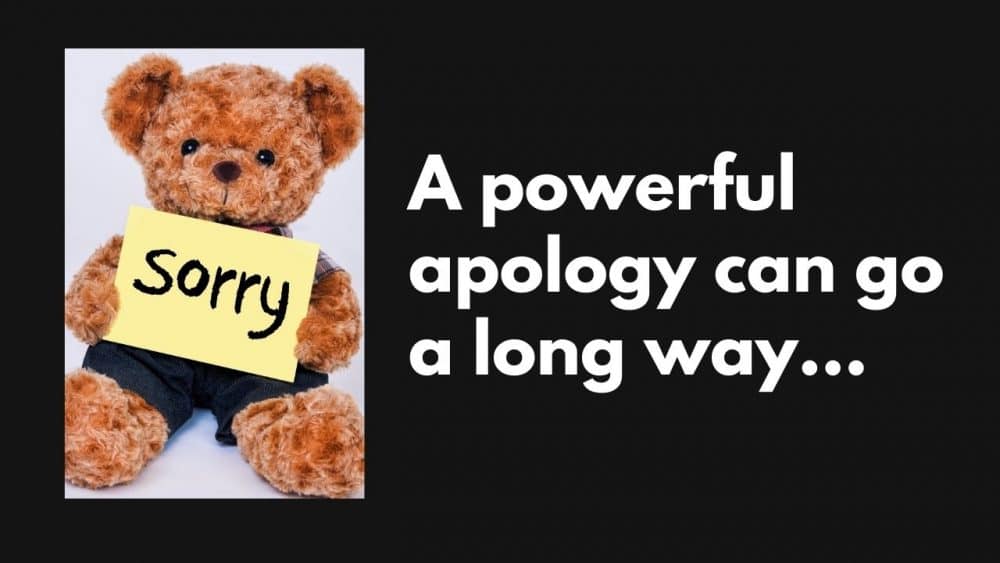
    A powerful apology can go a long way

    A Powerful Apology

    A powerful apology is sincere, responsible, and makes amends for the future. You express your apology by saying what are you sorry for. Clearly state what happened and how you reacted to anger. Take full responsibility for what you did without blaming anyone else, the situation, or the emotion. It’s very powerful, though not easy, to say, “There’s no excuse for my behavior, and I take full responsibility for how I acted.” However, do it only if you can do it sincerely. There is nothing more offending than an insincere apology. If you are still holding a grudge, it can further damage the relationship.

    Once you have apologized sincerely, give the other person the choice to accept your apology or not. Be patient. You can never force an apology onto others. People might take time to come around and trust you again. Or they never might. Be ok with it. Own what you did and its consequences.

    The last step is to make a fresh and sincere promise to make amends. What will you do differently the next time? How will you clean up the mess caused by your anger? It is often a good idea to ask the offended person what you can do to undo the damage. Make a sincere promise and then live up to it. You will lose trust if you mess up again. People are often willing to give everyone a second chance. But a third chance is rare.

    In conclusion, anger can be poetically beautiful if we can see its value. Anger is an emotion that connects us all. Its what makes us human and everyone gets angry at one point or another. We can learn to see the lighter side of it, laugh over our mistakes, and learn from them. At the same time, it is important to realize that anger is just another natural human emotion and we should not beat ourselves over it. Instead, if we can make a powerful apology and live up to our promises, it can be a wonderful opportunity to use the energy of anger to strengthen your relationships and to set an example for others to follow.
    Resources

    1. https://www.apa.org/helpcenter/recognize-anger
    2. https://www.ncbi.nlm.nih.gov/pmc/articles/PMC5681963/
    3. https://ggia.berkeley.edu/practice/making_an_effective_apology
  • Why Anger Is The Most Compassionate Human Emotion? And 3 Ways to Use it Productively?

    “Anger is the deepest form of compassion,” poet and philosopher David Whyte wrote.

    Most people do not associate anger with compassion. In fact, at first glance, it looks and feels like the exact opposite of compassion. But as with most emotions, the more attention we pay, the more aware we can be of what our anger is trying to tell us. In this article, I want to present a different take on anger – seeing anger as the most compassionate human emotion. Taking this unusual perspective about anger can reveal a lot of useful insights. Let’s get started.

    On the surface, anger looks like an ugly emotion. The feeling of an intense fire that threatens to burn not just the target of the rage but also ourselves. We have all been through that. It is in those moments when we know we are going to explode, but can do very little to stop it — that we realize the energy of anger. Often we end up spending it destructively (shouting, hand waving, punching a wall).

    Every 2 weeks I share my most valuable learnings from living life fully in my Deploy Yourself Newsletter. Sign up now to download a workbook with 164 Powerful Questions which I use daily in my work and coaching. Allow these questions to transform your life and leadership.

    What is Anger?

    Anger is a natural human emotion. Anger is one of our most primitive biological responses, and everybody experiences it. Anger is a legitimate emotion, and there is nothing wrong with it. As my mom used to say, anger is our inability to deal with what we care about, and the vulnerability that comes along with it. We get angry when we don’t know how to react (to events around us) normally.

    A lot of people see anger as a negative emotion. I wouldn’t categorize anger as negative. Instead, anger can be our guiding light. It can be a mobilization force to deploy ourselves in the face of circumstances. Every time we can do that, it strengthens and helps us behave in a way we can be proud of. Seen this way, anger is a very useful emotion.

    Anger is very useful to avoid and navigate fear and threat when our survival is at stake. The human species would not have survived unless it had been for anger. I’ve never met a human being who doesn’t feel anger. Everybody gets angry at some point in their life. People might have different thresholds for anger. People might react to anger in different ways, but everyone gets angry.

    Anger from Psychological Point of View

    Anger is a secondary emotion. What that means is that it can hide more emotions behind it. For example, anger can hide frustration, sadness, or even grief behind it. Anger is also not a static emotion. Your anger can range from mere irritation, on the one hand, to rage on the other hand. Anger can be triggered suddenly or it can linger deep inside yourself.

    Physical Manifestation of Anger

    Everyone reacts differently to anger, but there are some common physiological changes associated with it. It causes our heart rate and blood pressure to go up, and we feel an adrenaline rush when we get angry. We get a sudden rush of energy and an impulse to react in a particular way – banging our fists, cursing, shouting, venting, throwing things, etc.

    Anger is harmful to your health. It causes stress and anxiety, and it can cause long term harm like heart attack and depression. It is not only harmful to our own health, but it is also harmful to people around us, and our relationships. In anger, we tend to lose control, and we can do things that we might regret later. If we look back in our lives we can all see moments of anger where people have left a trail of destruction behind them.

    Neuroscience Point of View

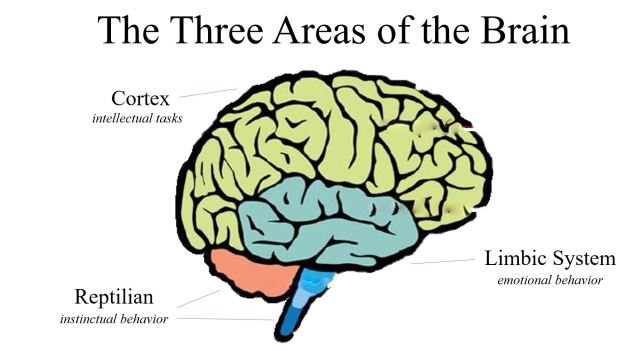
    The primary function of our brain is to ensure our survival. When it comes to emotions and how we operate on a day to day basis, our brain comprises of 3 partsthe Neocortex (the thinking brain), the Limbic System (the feeling brain), and the Basal Ganglia (the reptilian brain). The Amygdala is the deepest and most critical part of the limbic system. It is most commonly activated when dealing with intense emotions. It triggers what is called the fight or flight response.

    Research proves that when we are emotionally overwhelmed and experience a threat to our physical or psychological safety, our amygdala is triggered before our neocortex (the reasoning part of our brain) even knows about it. When this happens, the amygdala decides our behavior (the fight or flight response) and it is called an “Amygdala Hijack”.

    Anger Short Circuits Our Brain

    This is what happens when we experience physical symptoms like a racing heart, sweating palms, or a shaking body — even in situations with no physical threat. Our ages-old survival mechanism kicks off and makes us react to things primitively before the rational brain has time to think things over.

    This is one of the reasons emotions are good messengers but very bad masters. Our anger can tell us a lot about what we care about, but if we let it take over, it can short circuit the thinking part of our brain. When that happens, we react rather than respond to the situation.

    “The truth will set you free, but first it will piss you off.” ― Joe Klaas

    At the same time, just like any emotion anger can tell us a lot about ourselves. Anger has the power to clarify our thinking and reveal our moral lighthouses. But only if we are willing to listen. There are 3 ways we can use anger productively rather than let it destroy us and our relationships:-

    1) Listening To Anger Reveals What We Care About

    If we pause and reflect, anger can reveal what we deeply care about. For example – I once got angry at my manager. After reflection, I came to understand that the anger was not against the manager but against unfair behaviour. Once I realized that I was able to respond in a better way, and it revealed one of my deepest values to me – fairness and justice.

    The more attention we pay, the more we can be aware of what our anger is trying to tell us. Anger can be our guiding light and a force to deploy ourselves in the world around us in a healthy and productive way rather than destructively. As I mentioned earlier anger is a secondary emotion. It hides many emotions behind it, but we can look deeper and figure out what those emotions are.

    One way we can listen to what anger is trying to tell us is by separating facts from stories and assumptions which we might have made. Our minds can fool us easily. A thought comes into our mind after something happens, and we believe it to be true. In such moments, we can instead stop and validate each assumption which our mind is making before believing it. Whether it is true or not, or is it a story?

    Anger can show us the way ahead, and what needs to change. Because anger tells us what is not okay, what we should not do, or that a deeper investigation is required, about something which is bothering us.

    2) Anger Is An Opportunity To Practice Emotional Intelligence

    In the heat of anger, we stop listening. We are only burning in rage. But after the immediate impulse of the anger is gone, it is an opportunity to practice emotional intelligence. And as with all skills. It gets better with practice and time.

    Anger always comes along with a temptation to react. But seen another way, every time we get angry, it is an opportunity to express ourselves in a way that we can be proud of. Venting out in anger can certainly give us immediate relief, but we often end up damaging relationships and our reputation in the process. Not giving in to that impulse is an opportunity to practice emotional intelligence.

    You might think that when angry, you can’t stop yourself from reacting. And this is why you hate being angry. But the truth is that anger is not the culprit here. Instead, it is you who lacks the ability to understand, reflect, and act responsibly in the face of your anger. Anger provides us with an opportunity to use the energy of our anger productively. When we do so, we strengthen relationships and build a strong reputation backed by responsible behaviour.

    3) Anger is Love, and It Shows Your Commitment

    We often get the most frustrated and angry at those whom we love or care deeply about. The opposite of love is not hate or anger, it is indifference. So when we see people in love fighting, it is not that the relationship is going downhill. Instead, it is a sign that the relationship has a lot of care and sincerity that is often expressed in anger. To expect anger to not arise in love is to not understand love at all.

    You get angry because you care. You get angry because you love somebody, because you love a cause or because you love a certain value. You get angry because you want to reach an important goal or you see a possibility in the future. Something happened which violates that commitment you have to the person or to the cause or to the future goal. That is what makes you angry, and that is what we need to discover.

    Have you noticed that when you are angry, you cannot think of anything else? It is because anger brings tremendous clarity with it, and forces you to focus on the current moment. If we can honor our anger instead of denying it, we can usee its energy. This energy arises because we feel vulnerable in love. If we can see it for what it is, we can use the force of anger to enrich the love which is at the root of anger in the first place.

    Every time you are angry at someone you care about, take a moment to celebrate your commitment to the person or the relationship. Your response can change massively if you keep this commitment in mind in that moment of heat. Your anger is there to serve you and your relationships, but only if you are willing to pause and listen. You get angry because you love. Allow this love to strengthen the relationship rather than weaken it.

    Conclusion

    Understanding anger on a deeper level can be poetically beautiful. Once you learn to stop acting out impulsively and express your anger keeping love and care as the underlying commitment; you can channel it to nurture the relationship. We all feel anger, so in a way, anger connects us all. It is what makes us human.


    References

    1. Amygdala Hijack and the Fight or Flight Response
    2. How to Turn Your Brain from Anger to Compassion

brain care coaching commitment communication conflict conflicts conversation culture deployyourself deploy yourself emotional intelligence emotions empathy energy feedback freedom future gold habits hope john maxwell language leadership lessons listening performance perspective preparation productive productivity psychological safety purpose questions relationships resolution ryan holiday seth godin simon sinek strengths struggle team trust values words