Ever since I found my cricket archives collection at my Delhi home which was gathering dust for over 10 years, I have been going through them and recalling some of the old memories I had of important moments in cricket history. These moments mark important milestones in cricketing history and I am going to share three of them here.
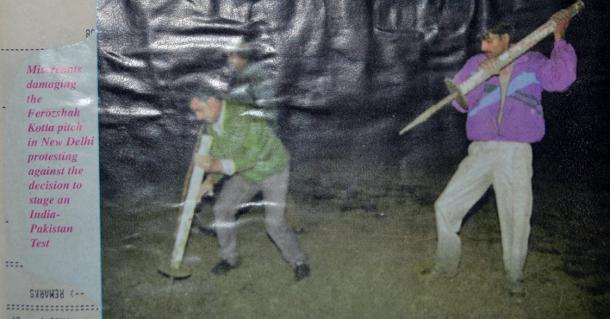
The Shiv Sainiks damaging the Kotla pitch
Kotla Pitch Fiasco before Indo-Pak Test Match
In what was a major fiasco for security agencies, Shiv Sainiks damaged the pitch at the Feroz Shah Kotla stadium in early January 1999 just before the start of the first Test Match. It is to be recalled that this was the first Pakistan tour after a long time and there were a lot of politics and emotions involved. The match was later moved to Madras with the second match scheduled for Delhi (the one where Kumble took all 10 wickets in an innings). Here this picture captures the Shiv Sainiks damaging the pitch in the middle of the night.
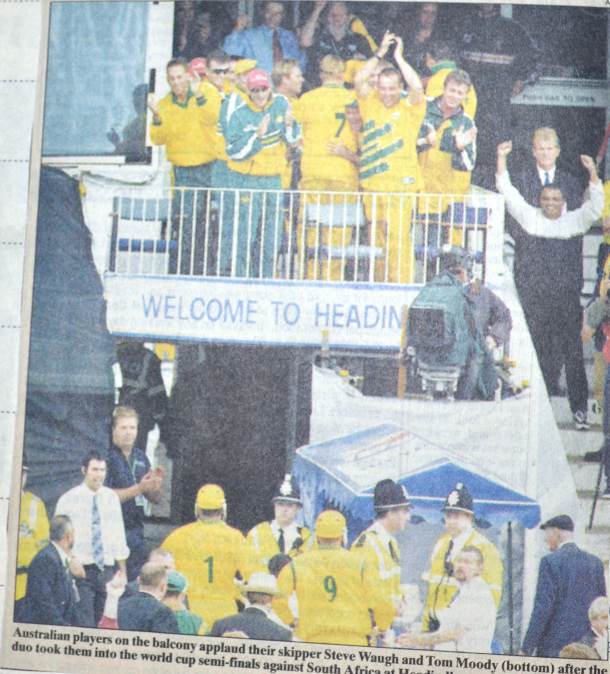
Australian team celebrating after the chokers choked
1999 World Cup Semi Final
Nobody can forget the 1999 World Cup semi final between Australia and South Africa which was dramatically tied leading to Australia entering the finals. It is to be recalled that South Africa needed 9 runs to win in the final over with Lance Klusener, the best player and the man of the series in that world cup. Klusener hammered first two balls of the over for boundaries, with a South African win looking almost certain. As Steve Waugh brought all his fielders in, there was almost a run out on the third ball, which eventually materialized on the 4th ball. With this being the last wicket, the match ended in a tie. See the video here, and as you can see, the South Africans choked, like they have done many times.
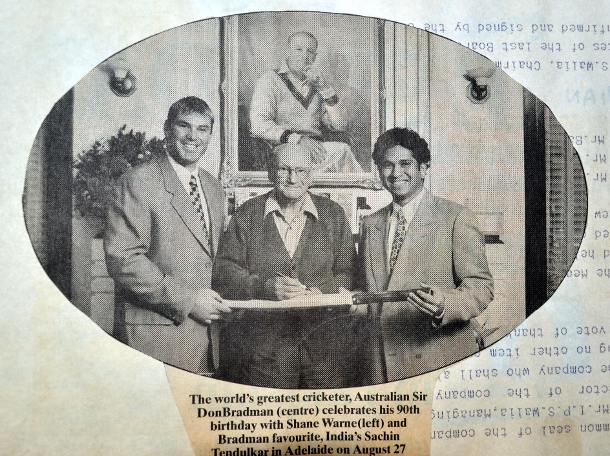
Sir Donald Bradman with Sachin and Warne
Sachin and Warne meeting Bradman in 1998
It became a talk of the whole country when Bradman’s wife saw Sachin play on television and reminded Bradman of how much Sachin resembled him. After that, Bradman invited Sachin and Shane Warne to come visit him, and their pictures were splashed all over the newspapers. (I cut one of those :P) Coming to what happened during their discussions, read the snippet below. To put this visit in perspective, Sachin was 25 years at that time.
Bradman asked Tendulkar whether he moved before the ball left the bowler’s hand. To which the younger batsman rather modestly replied, “I don’t know.” With a glint in his eyes, Sir Donald tapped Tendulkar’s shoulder: “I think you do. You begin your movement before the bowler balls, otherwise you wouldn’t have the time to play the kind of shots you do.”
I have been hearing many questions in the minds of people regarding the ongoing movement against corruption. In this post, I have tried to document and answer (according to my thinking) some of the most frequently asked questions. These questions have been asked on social media websites or on my blog on the articles I have written related to the Anna Hazare led movement.
Q – I do not identify myself with no corruption. Can those lakhs of people pledge on their life that they will never ever engage in corruption?
A – It is very important to see people who give bribes (for small/individual corruption) as victims and not culprits.. I think most of the us will prefer not giving bribe if work can be done without it. Big corporate and large scale corruption is another matter altogether. They use corruption for their own advantage, while the common man mostly has to shelve money to get something which is his/her right, like getting the passport, or a birth or marriage certificate, etc.
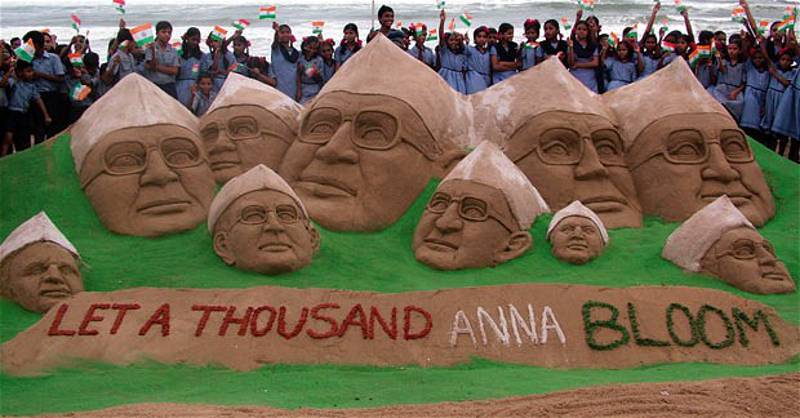
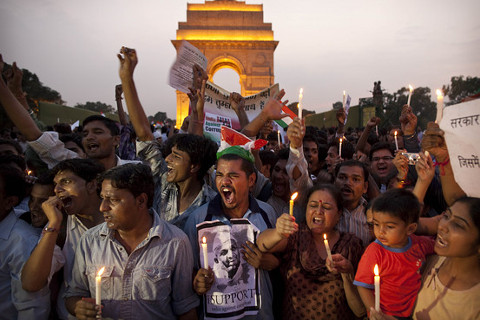
People supported in their own unique ways
Q – It’s a part of our mindset. Its more of a psychology thing. It can be reduced, but never totally eradicated.
A – Yes, it is a part of mindset and can’t be totally eradicated. But it can be reduced from 90% to say 10-20%.. And to do so, it means people will have to be disciplined (not jumping red lights, wearing helmets, following rules, etc) and might have to suffer some hardships or harassments in the short term. But we need to take these in our strides for long term benefits.
Q – The only factor that prevents corruption is fear. Until that is very strong, it cannot stop. My only wish is Jan lok pal bill will instill the fear in the hearts of corrupt people, of strict punishment. If not then I think it wont prove worthy..
A – I agree. Corruption is a high profit and low risk business now… A strong law will make it low profit high risk business… If this happens most people will automatically become non-corrupt… It’s simple human psychology to not indulge in high risk activities. See what happened in Hong Kong..
Q – Its a vicious circle. Who will make the law ? What if the lawmakers are themselves corrupt ? What if the Jan Lok Pal Bill committee members are themselves corrupt ? Who will preside over them ? What if they are corrupt too ?
A -The government / parliament has to make the law.. I agree the lawmakers are themselves corrupt and hence they will make law only under public pressure.. They will make it only if they know that people will not vote for them if they don’t make this law… We saw a glimpse of that in the current protests… and thats why keeping public pressure is VERY important… Infact I would say that, Public Pressure is not only important but also necessary in a democracy…
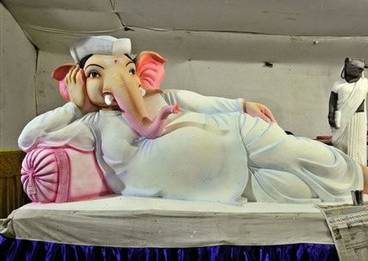
Ganesha Chaturthi idol like Anna
Q – Can a single law stop corruption?
A – The answer is YES and NO. A single law can act as a strong deterrent for people who want to indulge in corrupt activities. It can reduce the corruption levels considerably by turning corruption into a low profit high risk business, but it can’t eradicate corruption totally, for sure. We need to work on three areas in parallel if we want to reduce corruption –
1. Punishment for corrupt – Jan Lokpal Bill will serve this purpose.
2. Education : Moral and Legal – We need to spread moral awareness among our youth, preferably from the school level, about why is it bad to indulge in corruption, and how it can harm ourselves, the society and the country in the long term. We need to bring up our children in an environment of high moral standards.
3. Constant modifications of laws and processes – We are in a democracy, and we can always made amendments to laws, systems and processes if we feel the need to. There should be constant monitoring of laws and systems already in place, and constant modifications to them must be suggested and implemented to reduce the possibility of anybody indulging in corruption. Examples are putting CVC and CBI under Lokpal, implementing Citizen’s Charter, etc
Q – These methods of protests are undemocratic?
A – Actually, this was the biggest win of the democratic process!! What we saw was parliament doing what the public wants.. that is what democracy is all about. A little public pressure is always required for a democracy to work properly. But it’s just half the battle won, if the government backtracks on this commitment, this movement will spread across every nook and corner of the country and they won’t get any votes in 2014… What was heartening was seeing even the opposition engaging in proper debates and not just adjournment drama as even they have a responsibility in a democracy.. and the failure of the opposition was the reason in the first place why someone like Anna got such huge following from the people… If the protests by the people made the government take corruption seriously and even made the opposition work sincerely, how can this be against democracy!!
Q – Are we expecting a ”Nayak” movie scenario where thousands of government and corrupt people would be affected?? Can we expect govt. services to be reliable and affordable rather than private sectors? Can we see common man benefitting and in what areas??
A – Considering the levels at which corruption has seeped into our babudom, it won’t be a surprise if a large number of officials are suspended or penalized after Lokpal becomes official. But it would be foolish to believe that change will happen overnight and corruption will disappear. Even after Lokpal Bill, it will take a long time (in years) to eradicate the cancer of corruption from our society. Even Lokpal will have its loopholes and limitations which would need to plugged by further amendments to the law as and when required. Expecting government services to be better than private sector is another matter as a lot more than corruption need to be tamed for that. Government companies need to be run by CEOs in a professional manner rather than politicians and babus for that to happen. The common man will certainly benefit, and in every area, directly or indirectly, as he won’t have to shell out money as bribes, and secondly, his tax money will be properly used in public services which will come to benefit him sooner or later.
There is no hiding the fact that corruption is prevalent everywhere in India, with babus, bureaucrats and politicians sitting at the top of the list of ‘most corrupt people‘. Corruption has become the elephant in the room, which everybody knows you have to face at every walk of life, but nobody wants to discuss it or stand for a solution. We have to pay bribes to get your birth certificate, marriage certificate, death certificate and everything that comes in between.
New Malls, New Brands for a New Middle Class
I guess corruption seeped into our social fabric during the pre-1991 era when Nehruvian methods were followed and every big industry was a public sector company. State Bank of India, Bhel, LIC, BSNL, Indian Oil, NTPC and ONGC became the companies where everybody wanted a job, for it provided job security and ‘under the table‘ earning options too. People working in these companies formed the Indian middle class during the pre-liberalization era.
But after the economic reforms of 1991, competition opened up and many foreign companies set up shop in India. It also led to the emergence of the service economy with the booming of the BPO and IT sectors. A lot of youngsters started earning handsome salaries and a chance to travel abroad was no more a luxury. In the last 20 years, this population has become the new middle class. Compared to the previous middle class, these set of people are more young and ambitious, they speak fluent English, buy foreign brands and earn good salaries without any ‘under the table’ options. They work hard in a competitive but (mostly) honest environment to earn their living.
In a way, what happened after the 90s was that the middle class of people working in PSUs were replaced by the middle class of people working in the new service based economy. While the people in governance – the politicians and the babus remained the same. Very clearly, there was (and is) a disconnect between the governed and the government. With Parliament sessions shown live on TV, there are enough reasons for this new middle class to get frustrated with the politicians.
The protesters were mostly from the educated middle class
So when Anna Hazare, Arvind Kejriwal, Kiran Bedi, Prashant Bhushan and others started this movement against corruption, they just caught the right nerves of this middle class. They gave the middle class a ray of hope out of the otherwise hopeless situation they felt they were in. And with their youth and the ‘josh‘ (enthusiasm) it brings with it, they joined the movement in thousands and poured on the streets. Suddenly the sleeping, lazy, not caring about the country middle class awakened and to utter surprise of many, protested for a corruption free India.
Due to this disconnect between the government and the people, the government was caught totally unaware that where did this huge support to Anna Hazare came from. This middle class might be only 20-30% (and growing) of our population but even that means tens of crores of people, which is a big enough number for any government to take notice. And going forward, this middle class is only going to increase in number and become very critical to the political fortunes of those in power.
These are my views about why and how the government was caught unaware and committed harakiri by arresting Hazare and later releasing him in panic. And I think this educated and aware middle class will have a huge say in deciding the way our government create policies in the years and decades to come. Our politicians can no longer ignore the educated middle class as they have done for the last 50 years. Because, leave the protests and fasts alone, we are still a democracy, and as many Congress leaders have said in arrogance, “The public can throw them out in the next elections“.
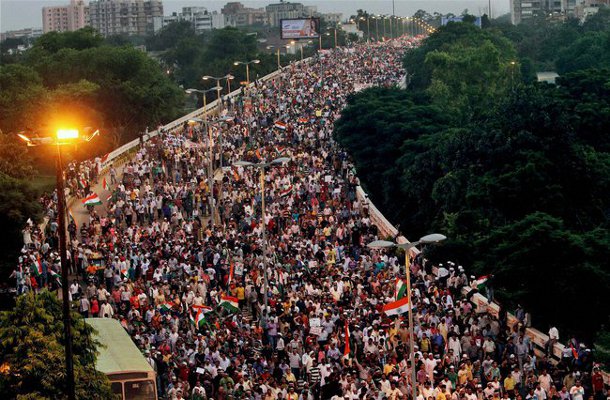
In my previous article, I had a doubt about how the public will react to Anna’s second fast unto death. I was more skeptical about the response to his Jail Bharo call. But I am glad all my skepticism has been proved wrong. The public has responded, and how. Tens of thousands of people have come out on the streets in support of Anna Hazare. People have courted arrests in hundreds and in Delhi, police has to convert a stadium into a jail to keep those arrested. There were around 100,000 people marching to India Gate in Delhi and around Azad Maidan in Mumbai. Now can the government arrest them all?
I am really glad that the public has risen to the call given by Anna Hazare. But what is special about Anna Hazare that he has galvanized the whole nation when most of us didn’t know him at all a few months ago. How is one man able to dictate terms to the government? How has he cut across the social and economic divides of the populace which is so deeply entrenched in our society?
History of Work Done
He is an ex-army man who fought in the 1965 Indo-Pak war and later build his village into a model village, self sustained and free of all social ills. People from all over the world have come to see the amazing work he has done. He has not married and devoted his entire life to his village, and later in his fight against corruption. After that he has fought corruption in Maharashtra and he was one of the active crusader behind forcing the Maharashtra government to bring in the Maharashtra RTI act, one of the first in the country. He has given his life for the service of the nation since the last 35-40 years..
Clean Image
He has devoted his life to social activism, mostly in Maharashtra. He developed his village Ralegan Sidhi into a model village which people from all over the world come to see. It is considered a model of self sustainable living and of environmental conservation. The World Bank Group has concluded that the village was transformed from a degraded village in extreme poverty to one of the richest in the country.
More than a lakh people march from India Gate to Ramlila Grounds on 21 Aug
No Personal Assets or Motives
Anna Hazare lives in a small room attached to a temple in his village since 1975. He has no assets and has a bank balance of Rs 67,000. Whatever land he has is being used for development purposes for his village. His only source of income is the pension which he gets from the Army. He has devoted his life for the betterment of his village, and after that fighting against corruption. He has never done anything for his personal motives.
Gandhian Principles
What is most heartening is to see Anna Hazare following Gandhian principles and using the same methods of fasting and Satyagraha for his cause. In a generation which has come to doubt Gandhi and the relevance of his principles in modern times, this was ample proof of the relevance of his methods irrespective of time and generations. He has called to our souls in the same peaceful manner that Gandhiji did.
Given Hope to Millions of Frustrated Indians
More than anything else, the one reason why Anna has resonated with the masses is because he has given hope to millions of frustrated Indians. Everybody knows there is corruption in every nook and corner of the country. But the BIGGEST problem is that nobody can do anything about it. Everybody is helpless in the regard that there is nobody to complaint, and even if they complaint, they end up being harassed by the same people. Anna has given people hope and shown them a way which might lead to a corruption free India. That is why he caught the government totally unaware!!
It won’t be wrong to say that Anna Hazare has come as the Messenger of Hope in the current state of our country. He has managed to turn all the cynicism and pessimism into an enthusiastic and optimistic revolution by the people of India.
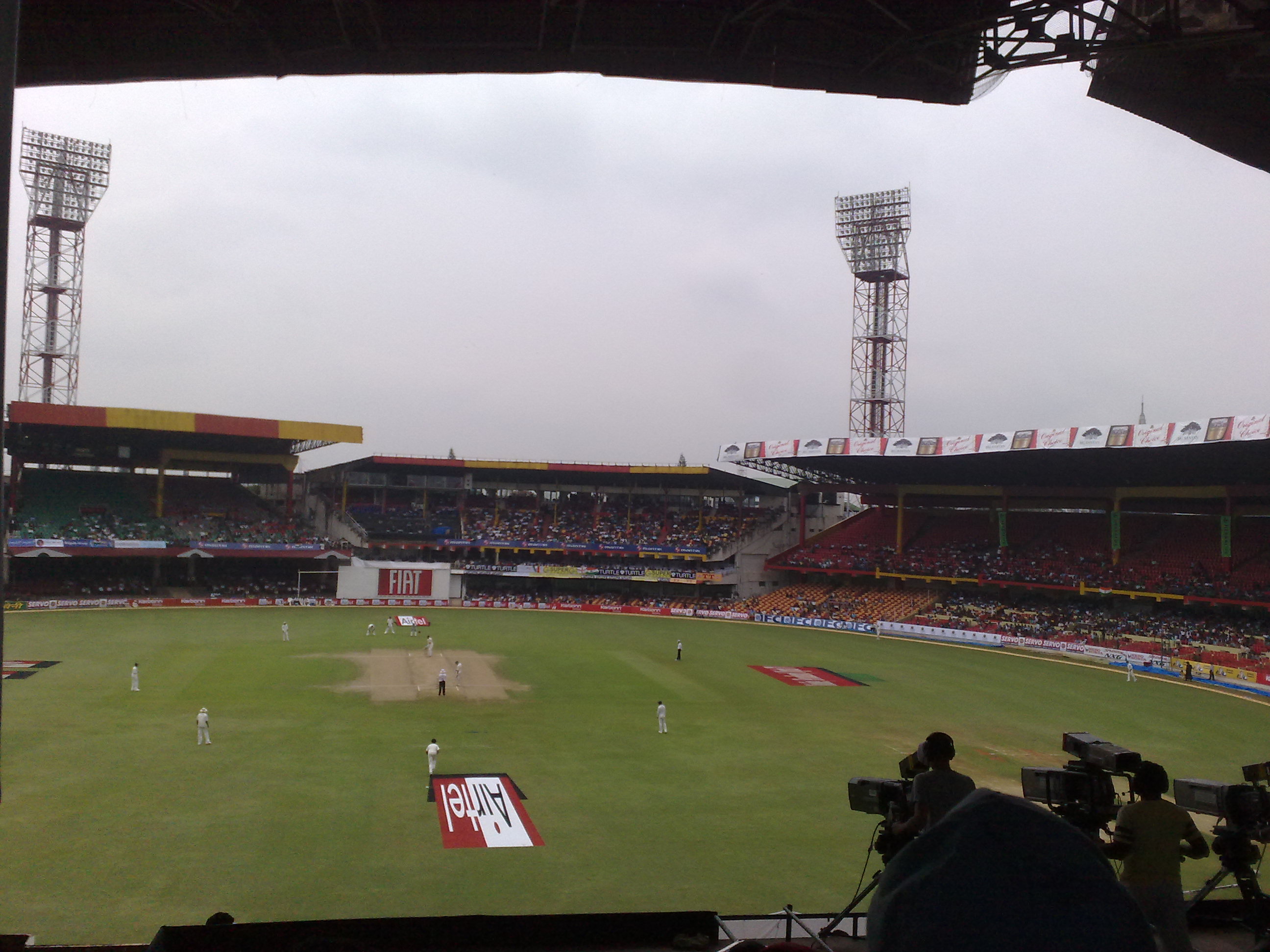
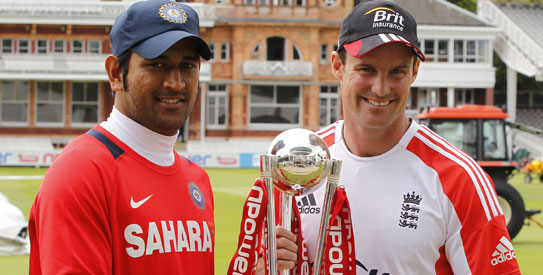
This series is certainly the most awaited series for quite some time for me. If the India v Australia series last year was legendary (where I watched two days of test cricket in a stadium), and the India v South Africa series was termed as the clash of the titans, this series has the anticipation like none. Maybe it is because of the landmarks which the first test of the series marks, as this would be the 2000th Test Match ever played and the 100th between India and England. Sachin Tendulkar will be looking to complete a century of centuries and it will be Duncan Fletcher’s 100th test as coach.
Apart from that, there is also the fact that the No 1 spot is on stake in this series. The first match at Lords also marks the return of Dravid to his debut ground 15 years after, when he sparkled with a 95 alongside another debutant Saurav Ganguly who scored a century that day. The number 1 team playing the number 3 team, who defeated Australia easily in the Ashes, in their home ground should make it a cracker of a series. Add to it the fact that there are 4 test matches in a series after a long time will make for a evenly and toughly fought battle between these two teams.
Watching a test match sitting in a jam-packed stadium was super fun
History of India in England
If you see the last three series India have played in England, it has marked the emergence of Dravid and Ganguly in 1996 where India lost 1-0, it marked the promotion of Dravid into the league of greatness in the 2002 series where he scored 602 runs in 6 innings at an average of 100+ and the series proved to the world that the Indian middle order is the best in the world. Add to this emergence of Zaheer Khan and Harbhajan Singh ably supporting Anil Kumble in this series. It also marked the emergence of Saurav Ganguly as an enigmatic leader who showed the world that he is here to stay. The 4 test series in 2002 was tied 1-1, an achievement at that time.
When India came back to England in 2007, they were led by Rahul Dravid. And if Ajit Agarkar managed to hit a century at Lords in 2002, it was Anil Kumble’s turn in 2007. We won the series 1-0 that year, mostly due to team unity and partnerships and not any big individual performances. With Anil Kumble being India’s only centurion in the series, the more important stats are that India scored 14 half centuries and had 16 half century partnerships in the series, making sure England never got two quick wickets.
Waiting to watch them in action
Will this series live up to the hype?
This series will be the first time many Indian players play on England soil, as indeed it will be the last time Laxman, Dravid and Tendulkar will be seen playing in England. Add to that the non-availability of Sehwag, the most destructive opening batsman in world cricket today, and you have a series on your hands. England are perhaps in their best form of the moment, and most of their players are fit and in good form. India have been slow starters abroad, and playing England at home will not be easy. But I hope for a tightly fought series, and it will a tough test for players from both the sides as they will be facing quality opposition and that might just bring out the best in them resulting in a truly scintillating display of Test Cricket.
Key Players
For India, a lot of depends on how well Gautam Gambhir adapts to England where he has never played before. With Sehwag not playing, the responsibility on Dravid and Laxman will be more to cushion in case of collapses and pressure situations. How Ishant Sharma, Zaheer Khan and Harbhajan Singh bowl to Strauss, Trott and Peterson will decide who will hold the honors at the end of the day.
For England, James Anderson, Chris Tremlett and Graeme Swann will lead their attack and test the Indian batsman to the max. India should not take Swann lightly as he is the best spinner in the world as per ICC rankings and will be no pushover. The form of Strauss and Trott has been amazing over the last two years and dismissing them will take a real test of skill and patience for the Indian bowlers.
If the umpiring is upto the mark and the weather does not play spoilsport, we might witness on of the most competitive series in recent times. Let the best team win.
Sometime back, I had written an article on “Why India’s rural development is important for the nation?”. Now, through this article, I want to stress why our urban development is as important too. We have come a long way since independence in terms of urban economy growth. Urban economy now contributes upto 70% to the nation’s GDP, while this figure was 30% in 1960. In the last 50 years, all over the world cities has risen to become hubs of economic activity and certainly future growth is going to come from our cities.
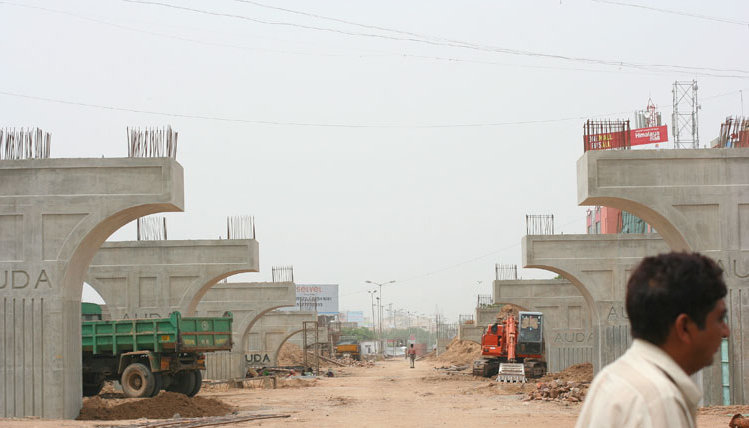
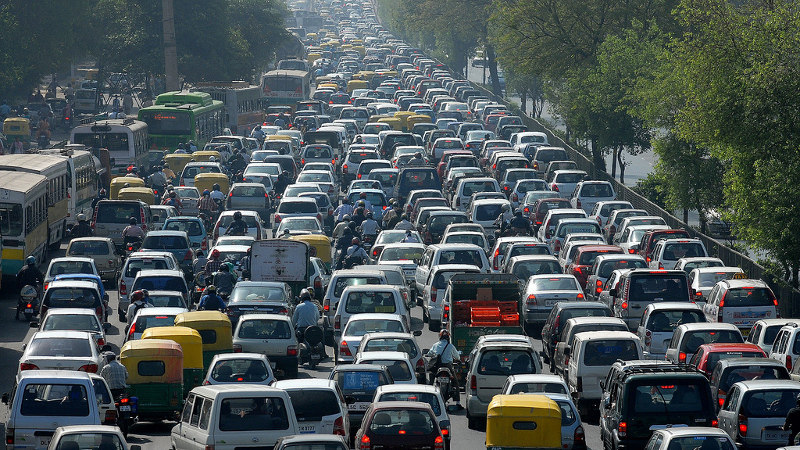
But unfortunately, the growth and expansion of Indian cities has been unplanned and haphazard. Our cities today face challenges in meeting the demands of infrastructure and resources. The demand for clean water exceeds the supply by about 30%. Waste management systems are almost non-existent, and if they are there, heavily over-stressed with over 40% waste going uncollected. Eco-friendly waste disposal methods are only a dream and even government agencies and engineers are totally unaware about their technicalities. Around 22% of urban population lives in slums and around 25% is below the poverty line. Traffic congestion and pollution has increased like never before.
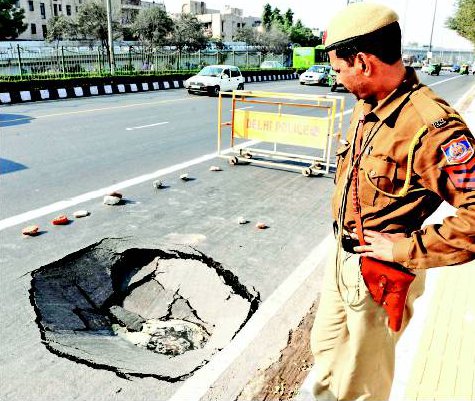
Infrastructure growth is one of the biggest challenges India faces today
Clearly, we need to change not only the way our cities are managed, but also how they are planned. Planning for future cities and management of current cities only will result in livable cities which will have decent quality of life and equal opportunities to all citizens. Firstly, we should provide fast and low cost infrastructure for residents like housing, hospitals, schooling, transport and commercial centres. There should also be a provision of how to grow this infrastructure as cities grow in the future.
We must encourage high rise and high density cities to accommodate the continuous migration from villages to cities. While we have seen growth in apartments in cities like Noida, Gurgaon and Bangalore, most of them are for the upper middle class. There is an urgent need for builders to build affordable low cost housing solutions. The government can help the builders by providing tax rebates as incentives.
A normal scenario in all Indian cities
If we improve our roads and transport standards, our cities can grow horizontally as traveling time will reduce. Transport is like the backbone of a city. Poor transport limits mobility of its people which in turn hamper economic growth. Road capacity must be enhanced but it is not enough in itself. Road transport has to be supplemented by development of mass transit systems like metro rail, mono rail and bus services. Road widening and introducing separate lanes for buses is an important step which is required today in almost every city of India. Other transit systems like metro rail should be integrated with bus services like Hong Kong and Tokyo, as this will reduce travel times and improve efficiency for business and economy.
Undoubtedly, there is a lot to do to improve urban infrastructure, and huge amounts of money will be required to do this. It is impossible for the government to all of this by itself. It is therefore imperative private sector be involved heavily in infrastructure development activities with the government playing the role of a regulator. In Thailand and Malaysia, even sanitation systems are managed by private operators. Why can’t the same model work here? A lot of policy changes will also be required to change how local governments and municipal bodies work. The Mayor of a city is elected by councillors, and is powerless. The mayor should be elected directly by the people and should be given powers to manage and run cities efficiently.
Are we providing equal opportunities to all?
To make sure all these systems work in a transparent and efficient manner, we must introduce ratings of municipalities of different cities, and some sort of comparative performance measurement system for officers. All this information should be in the public domain and open to scrutiny by the media and public. E-governance needs to be introduced and systems such as MIS (Management Information Systems) can be used to collate all information and improve efficiency of all services. How we manage our cities today will decide how our country will shape up tomorrow. We need to turn our cities into truly sustainable engines of growth for the whole country.
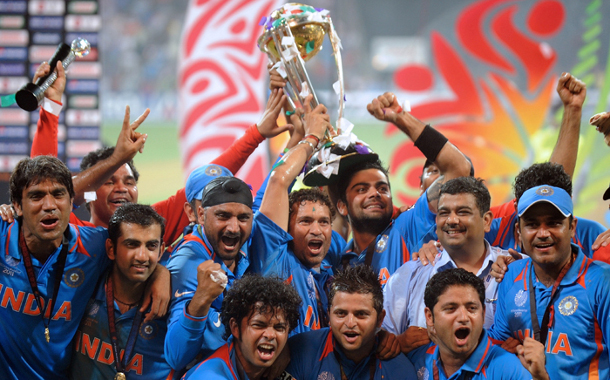
This was the World Cup everybody hoped for after the debacle in 2007. With India, Pakistan and Sri Lanka reaching the last four, and an Indian victory, the ICC could not have asked for a better script. This World Cup will also be remembered for a dream of a billion people getting fulfilled, and Sachin Tendulkar getting this one final jewel in his bag of crowns, which was no secret. India won the World Cup after 28 years, putting Dhoni right among the top when it comes to captaincy greats.
This World Cup will also be known for some extraordinary and unexpected performances from few players, like how Pakistan rallied behind Shahid Afridi the bowler to surprise many and reaching the semis, or how Yuvraj marked his comeback with superb all round performance which won him four man of match and the man of the series award. It was also marked by the clear end of Australian dominance in ODI cricket. England proved the most entertaining team of the tournament, losing to Ireland and then winning against South Africa, who in-fact, did a deja-vu by confirming their ‘chokers’ tag by losing to New Zealand in the quarters.
Indian team after the victory
How my predictions fared? I predicted India and Australia as favorites before the World Cup and India took home the trophy. However, my other predictions were not upto the mark and you can see below how they fared –
Most sixes in single over – I predicted two overs where all balls will be hit for sixes but this World Cup did not produce even a single such over.
Most sixes in an innings by a team – New Zealand hit 13 sixes in the game against Pakistan while I predicted 25.. Did the bowlers bowl too well?
Most sixes in an innings by a player – Ross Taylor hit 7 sixes in the above said game, while I predicted 10.
Most sixes by a player in tournament – Ross Taylor hit 14 sixes, the highest in the tournament while my prediction stood at 25
Fastest Fifty – 23 balls by Kieron Pollard v Netherlands, very close to my prediction of 20 balls
Fastest Century – 50 balls by Kevin O Brien of Ireland v England. This was one hell of a knock which shook England and bettered my prediction of 65 balls.
Highest total – 370/4 by India in the first match against Bangladesh was the highest total, and no team managing to get more than 400 as I predicted. The associate teams seems to have improved.
Highest Individual Score – 175 by Sehwag, again in the first game itself and the 200* by God still remain the highest score in an ODI.
Hat Tricks – Here I was right on the target with Lasith Malinga and Kemar Roach providing the two instances of hat-tricks in this world cup.
Most Wickets – Afridi and Zaheer Khan took 21 wickets each while I predicted 22-25 wickets. Afridi came from no-where and proved to be the best and most intelligent bowler on the subcontinent pitches.
Most Runs – Dilshan emerged the top scored with 500 runs with Sachin following behind with 482 runs. My prediction of 650 runs was way off the mark here.
Strike Rates with runs over 300 – Again as I predicted, Sehwag made 380 runs at a strike rate of 122 to emerge the player with the highest strike rate with more than 300 runs.
Other notable stats
Apart from the above predictions, there were some other important statistics which need a mention. They are :-
Highest run rate in any World Cup – This World Cup saw the average run rate of 5.03, which was the first time it has crossed 5 in all World Cup history.
Highest number of centuries – This World Cup saw 24 centuries which was the highest ever in any World Cup, surpassing the 21 in the 2003 World Cup.
Yuvraj Singh scored 362 runs and took 15 wickets, grabbing four man of the match awards, only the third player after Arvinda De Silva and Lance Klusener to do so. He was only the fourth player and second Indian after Kapil Dev to achieve the doulbe of 300 runs and ten wickets in a single WC.
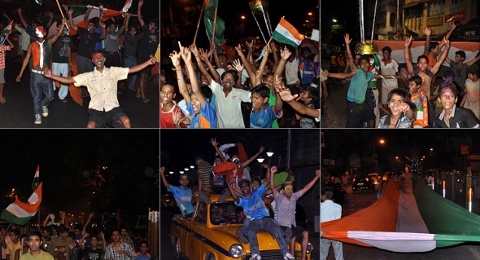
People came out on the roads to celebrate
Overall, it was a world cup where spinners came into their own. They opened the bowling attacks quite regularly with every team, and also featured among the major wicket takers. All that can attributed to the slow pitches of the subcontinent aided by the fact that this was the end of a season. Pakistan and South Africa were the best bowling units in the World Cup, and India and Sri Lanka the best batting units. In the end, it was cricket that won and that is what matters.
Today, over 35% of our population is below the age of 20. By 2020, it is expected that 325 million people in India will reach working age, which will be the largest in the world. This will come at a time when the rest of the developed world will be faced with an ageing population. It is estimated that by 2020, US will be short of 17 million people of working age, China by 10 million, Japan by 9 million and Russia by 6 million. At the same time, India will have a surplus of 47 million working people. Even when compared to developing countries, Brazil’s working population is set to grow by 12%, China’s by 1%, Russia’s will decline by 18%, while ours will grow by 30%. This is the reason Goldman Sachs predicted that only India can maintain a 5% growth rate until 2050.
But are our youth unemployable?
Economic growth require not just a large working population, but people who are trained and skilled to work in different industries. Many industries have remarked that people coming out of colleges and universities in India are not employable and they have to give them skills training before they start their work. This adds strain on the industry. Our adult illiteracy levels are also a big concern, which stands at 39%. 25 million children are out of school in India, out of a total of 100 million out of school children in the world. We need to work on our policies to make sure those who are still in school and colleges get the best education and be ready for their opportunity when it arrives.
Youngistan – Will it mean a boon or a bane for us?
Demands of this population
With a huge working population will also come a huge consumption boom, as it has happened in China. China accounts for 20% of world’s consumption of aluminum, 35% of the global demand of steel and coal, and 45% of the worldwide cement purchase. The future demands of China and India’s population will put a lot of burden to the resources of these two countries. How these two countries manage resources like water, cultivable land, oil and energy needs will be critical. The demands on the environment cannot be overlooked either. If we follow the same model as followed by American and European development, environmental deterioration will end up destroying the whole planet. Global Warming is already a big problem. The challenge for India will not only be economic growth, but also make it sustainable and bearable for the environment.
Taking care of our population Our infrastructure today is no way capable of taking proper care of our ever increasing population. Human development must go hand in hand with population growth. More than 25% of our urban population lives without sanitation and 24% lives without access to tap water. We need 66,000 primary schools and 3000 new health centres every year to cater to our population growth. Food production also has to be increased by 3% every year to meet their needs.
We can’t ignore the ill-effects of population growth
India cannot afford to ignore what will happen with unsustainable economic and population growth. We need to use our technological skills and replace our age-old systems with innovations to reduce the resource burden. We need innovative and sustainable solutions in energy, transportation, sanitation, manufacturing, and agriculture. We are a nation of great talent, and we stand before times which might be our big opportunity to take the leap in the world order but we also face significant challenges. If we take all this into consideration NOW, and frame policies and act responsibly, I am sure we are capable of transforming this huge young population into a boon rather than a bane.
Sports can often highlight the need for values like teamwork, honesty, transparency similar to the way these values are needed in life. Sports can end up uniting an otherwise divided crowd cheering for a team. The joy and pride when thousands of people celebrate together, click photographs of the national tricolor flying high after a sports victory is indescribable. Chak De India was one such movie which depicts the values it takes to build a match-winning team and what it takes to achieve something which at one point didn’t seem possible. I will list down five lessons from Chak De India, which are very relevant in the Indian context.
1. We are Indians first
We have to see ourselves as Indians first, above any affiliations with state, caste, language, religion, etc. When we seek to achieve something for India and from a national sense, our affiliations with caste, state, etc will only create divisions and barriers which will hinder our objective. If we have to keep our focus on the goal, we have to remove all other distractions from our mind.
2. Discipline
Discipline is like the spinal column which holds the whole body together. Discipline has to be a component of one’s daily lives in the discharge of one’s duties. It is required at the personal level, then at the level of society and institutions. Discipline is something which unites a country or society. It means waking up on time, not breaking the traffic rules while going to office, treating others with respect and care, and using your words wisely.
There is a lot to learn from Chak De India
3. Play our role
All of us have an individual role to play according to our merits. We might have a larger objective and vision as part of a country, society or team but we will have a very specific role to play for which we are best suited. It is important we focus our total undivided energy in fulfilling this role enthusiastically while keeping the larger picture in mind. If everybody does their own task as it is supposed to be done, all our dreams for our nation will be easily achieved.
4. National Interest over Personal Interest
We have to put the interest of the nation above our personal interests in order to achieve results over a longer period of time. We will have to overcome our ego and personal biases if we have to achieve something for the nation. We have a limited time on earth, but the nation will outlive us, and we have to see that our actions fulfill this vision even after we are gone.
5. Short Term vs Long Term
It is very important to see how our actions are important in the long term too. We might have to take some steps, which don’t look so fruitful in the short term but are valuable in the long term. In other words, we will have to make some short term sacrifices for long term glory. Long term values like patience, loyalty, trust, credibility and honesty are very important in this regard.
Missile technology has underwent great progress over the last half a century. We have supersonic missiles, missiles which can be launched from sea, air or land, intercontinental ballistic missiles and missiles which can launch nuclear warheads too. But if the delivery system of a missile fails, even the best missile is just a crap of steel, doesn’t serve its purpose, and can be dangerous to the party it was supposed to benefit.
Similarly, we might have the best government driven by the best constitution which was drafted by BR Ambedkar and other such eminent people, but if the delivery system fails, all that becomes a bunch of people sitting in large buildings creating a lot of waste, which defeats the original purpose of having a government and constitution. Most would agree that democracy has failed us, but it is important to know how much?
Most of our government departments are plagued by inefficiency and unaccountability. There is no transparency in the process and babus misuse their privileges giving rise to corruption. Election process is easily rigged by political parties who often give money or freebies for votes. Poor people, instead of seeing elections as their opportunity to elect the right people to ensure long-term growth for themselves, see elections as one chance to turn the bribe taker to bribe giver and rig their votes for short term monetary gains. If elections are not fair, the whole foundation of democracy shakes.
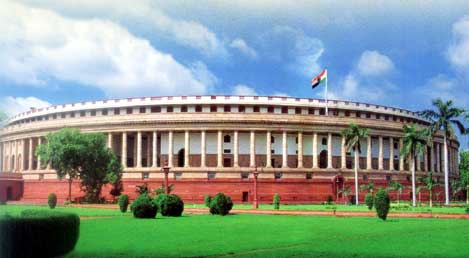
The Epicentre of Democracy – Indian Parliament
Due to the large amount of money doled out in elections, politicians and bureaucrats (hand-chosen by politicians) engage in corruption once in power to recover the money, giving rise to scams. Indirectly, it also leads to loss of confidence from industry and tax payers. It harms the public eventually, but people are too ignorant or too cynical to realize that. This led to a flawed democratic system which is existing in India today and continuing as such. Any change in the system has to be done by politicians themselves and as corruption has seeped into the highest levels, it is understandable why they don’t change the laws and rules.
Again applying the metaphor of a missile to a government, when a government fails to do its function, it becomes a very dangerous weapon in the hands of those in power. What is supposed to be for the people, by the people and of the people turns into something harmful to people itself. This defeats the very purpose of having a democratic government.
If you are thinking what am I trying to imply, think what would you do if you know a missile has lost control and can fall anywhere with disastrous consequences. You will look for ways to protect yourself, try to shot down the missile, or simply go mad and crazy. So why not the same in the case of failed governance? Why don’t we try to protect ourselves? Why don’t we get angry? Why don’t we go crazy?
I can write more, but I am leaving it here as an open question. Leave your replies, and I will make sure to respond to them as best as I can.
We, as a nation, stand today in a moment of reckoning. We are at a fortunate junction where our actions will decide the course our nation and 1.2 billion people will take in the coming decades and centuries. If India’s history were to be written 200 years later, what we do in the next few years will certainly play a very important role. We have broken from the shackles of the license raj and taken the flight of globalization and economic growth. We are expected to be third largest economy soon. But at the same time, we are plagued by many social evils like poverty, illiteracy, corruption, etc. Whether and how we act in this moment of reckoning will decide whether we rise like a phoenix in the 21st century or again loose the opportunity to reclaim the title of “Sone ki Chidiya“.
We have a feel good mentality about our future now. Incomes are rising, jobs are plenty, multinationals have set up shops in different cities and amenities are galore if you want to go out for eating, recreation or just fun. We are one of the fastest growing economies in the world, and our companies like Reliance, TCS, Infosys are going multinational. Our engineers are behind many technological innovations in developed countries, and we are being seen as a knowledge powerhouse. American President Barack Obama has publicly asked American kids to study hard or they risk loosing their jobs to Indians (and Chinese). We have made our mark in the filed of telecom, space technology, medicine, defense, and have also started to make an international impact in arts and sports.
However, having said that, we are grappling with many problems which are deep rooted in our system because of our colonial roots and the closed economy system from 1950-1990. Our economic growth has still left a large part of the population untouched. We have got problems of poverty, illiteracy, unemployment, corruption, rising prices, social inequality and terrorism. We are one of the poorest countries in the world, where more people have access to mobile phones than a toilet. The middle and higher classes use drinking water for flushing toilets too, and the lowest segments of society don’t even have access to clean drinking water. The condition of women is still poor. More than 50% are illiterate, and there are still social ills like dowry, child marriage, female infanticide prevalent in society. Our public services are breaking under the strain of bureaucracy and inefficiency.
Can we keep the optimism alive?
With majority of our population being young, and the kind of confidence they see for their future, I believe we have everything to change the situation around. The youth have to see this as a moment of reckoning, where the actions we take today will decide the future course our nation takes. We can feel the optimism an average Indian has in the way he goes about his daily routine, with aspirations in his mind and hope in his vision. The Indian today wants to grab a piece of this growth, a piece of future, and provide a better future for himself and his family, and indirectly, for the nation too.
So when our history is written 200 years down the lane, what our generation did with this opportunity will decide the course India takes. We have missed opportunities in the past, and we might miss this one too if we let our skepticism and cynicism about the current state of affairs overcome the very basic human ability, to strive despite of problems and shortcomings. History might say India had a golden opportunity to shine and lead a new world but instead it dig its own grave and continued to grapple with its problems. Or history might witness the rise of India, again, after the period of colonization and slow growth for 60 years, into a prosperous society and economy which will lead the world order in matters of importance. We have already shown leadership to the world in the area of trade reforms and environment concerns, and there is no doubt why we can’t give this world the direction it is looking so badly for.
We, as Indians, place great importance on our family and the value system a family carries. The kind of sacrifices our parents have made for us, and the struggles we go through for the well being of the family are unheard of in the West and forms a big part of the contemporary Indian society. However, we care much less about our community, society and others in general. In the West, we see a mutual respect for each other and proactive attitude towards problems in the society. In this post, I am going to speculate on these seemingly different approaches and what could be the approach the Indian of the future should follow to ensure the best future for himself and his country.
We belong to a culture where deep rooted family values are an integral part. Parents consider it their duty to take care of their children until they stand on their own feet. After that too, there is a strong bond between parents and children. Children too consider their duty to take care of their parents in old age. This ensures a strong emotional bond and support structure for the whole family to lend on each other during difficult times or hardships and to share the happiness and celebrations during good times. The way an Indian family comes together during a wedding or on festivals is a sight in itself. Brothers and sisters share a bond which is based on trust and respect. Elder brother is treated as a father figure and there is a huge connect between brothers and sisters symbolized beautifully by festivals like Raksha Bandhan. Marriage is held to be a sacred union, and it is expected to last over seven births. I can proudly say I am part of such a country and this is the heritage I have inherited.
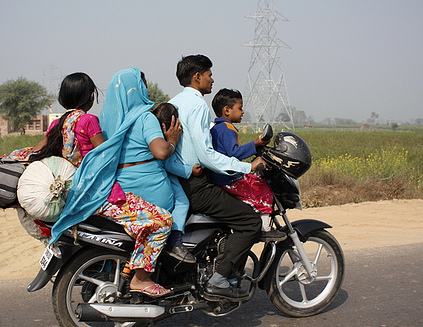
A typical Indian family
However, when it comes to society, we have a totally indifferent attitude. We keep our homes clean and tidy but throw the garbage on the roads everywhere we go. We litter in public spaces as per our convenience (I have seen people litter on the road right outside public toilets.) We don’t care to follow rules of the land, whether they are traffic rules or any other. We take pride in breaking rules and getting away by paying bribes. We do not realize the cost to society when we put our personal interest ahead of the interest of society. And we don’t realize that we can’t be happy and prosperous unless we live in a happy and prosperous society.
Apathy in addressing common problems is another issue. We turn a blind eye towards most of the problems plaguing our society. We behave as if they don’t exist. Or even if we care, very little of us actually do something about it. Our attitude is “It is not our job“. One reason for this could be that we have been ruled by foreigners for a very long time. And we think that public or societal issues are the responsibility of the government or the ruler and not of the citizens. Maybe we are not used to making decisions on our own. We always have somebody else to take the decisions for us. Currently, this role is of the government, and unfortunately, due to corruption and inefficiency, not much decision making happens there. Our tragedy is that we don’t make these decisions, neither do we stand up and make the government accountable for that they are responsible for.
Mutual respect towards another human being is an integral part of western culture. We have created so many divisions in society and we treat each other very differently. We look down upon people based on their caste, state, or worse, on the type of work they do. People doing physical work like laborers, plumbers, etc share equal respect in the western society but we treat them shabbily. I think that irrespective of their importance, people should be held accountable for what they do. Be it a plumber or a politician, he should be accountable for what he does. A plumber does not have the right to not do his work because people don’t treat him well, nor does a politician should abandon his duties because nobody can touch him. This works both ways.
My point here is that the root of our problems lie in a lack of duty towards the society. In other words, when we place the larger good over our personal good and act accordingly, we will make significant progress. After all, our values related to our families are something the whole world envy us for. If we take the same values and apply to our lives outside of home, we can do wonders, for ourselves and for others too. After all, a good and prosperous society will benefit us only in the end. Mahatama Gandhi said that “Be the change we wish to see in the world“, and I also remember one of the earliest lessons from my parents – “Treat others as you would like others to treat you“. Let us become responsible citizens and make our cities and our country a great place to live in.
We have to extend our value system towards our family and spread it out in the society. We are all good people, for we take care of our families that we should be proud of. The whole world looks up to us for our family value system. The Indian joint family have mesmerized the west for a long time. Let us take a step forward and also turn into good citizens. Citizens who know their responsibilities towards the society, towards the problems that we face, towards the rule of the land and towards fellow human beings. I will end up with this quote from Winston Churchill – “Responsibility is the price of greatness.”
81 years after Gandhiji did the Dandi March to shake the British Empire, it’s happening again. Concerned citizens of India all over the world are marching in over 80 cities against corruption in India. Corruption has become the new colonialist in India. The politicians, bureaucrats and other officials are engaging in corruption without fear or shame. They have exploited the democratic system and the huge poverty in India to their advantage. It has become almost impossible to remove them from their offices, leave alone punish them or recover the money lost due to corruption. The demand and objective of this Dandi March 2 is to pressurize the Indian government into enacting the ‘Jan Lokpal Bill‘ which has been advocated by noted social activists like Anna Hazare, Kiran Bedi, Arvind Kejriwal, and others.
Walk together against corruption
Dandi March 2 is happening all over the globe. Check out here and find out if it is happening in your city. If not, you can take the lead in organizing a small march in your own city. Remember, it is the collective intention of Indians marching in different cities that will help put pressure on the government to take action. Here are five reasons why you should join the Dandi March II walk happening in your city –
1. Enough is Enough
While you have been busy eating popcorn and watching that latest movie on television, our politicians have been eating our hard earned money we have paid as tax. They have sat in parliament, assemblies, offices and framed laws and made systems which make it easy for them to continue their brazen acts of corruption. They have neglected the complaints which few people have raised against them, and used the law, the police, and even the mafia to deter and scare such people. It is time that YOU wake up and demand accountability for YOUR money.
2. Sheer volume of corruption
The 2G scam has rocked the telecom ministry in the Indian government, and even the Indian Prime Minister has taken a flak from the Supreme Court. The amount of Rs 1,76,000 crore which the exchequer lost due to the 2G scam is mind boggling. The Commonwealth Games last year became a game of corruption with the whole international media being witness to the ‘tamasha’ going on. This has brought India widespread negative publicity and shame all over the world. It’s time to reclaim OUR pride from these looters.
3. Gandhi’s dream
Corruption is everywhere
Gandhi did not only dream of an Independent India, but also an India free of poverty. He dreamt of an India of equal opportunities to one and all, and equal right to justice irrespective of one’s social standing. Now our politicians, bureaucrats and babus ask for and take bribes openly sitting in a room with Gandhi’s portrait hanging there. It’s time we realize why we call Gandhi the Father of the Nation, and what we all owe to him, our Independence. Go ask your grandparents what it was living in an India which was not free. Just as a child can never repay his parents for showering him/her with life, we can never repay our freedom fighters what they have given us, our Independence. It is time we demand OUR Independence from corruption.
4. We live in a democracy
In the last few months, we have seen public protests uprooting governments in Islamic dictatorship nations of Tunisia and Egypt. These were countries where such mass protests are not allowed by law, but they could not stop people to get out of their homes for change. In our country, we are bestowed with a system to register our protest with the government under law. We have a moral obligation to go out and demand what is rightfully ours. It is also our duty as model citizens to put brakes on this practice of corruption which is eating our country from the inside. It is time for CHANGE.
5. The Future
I have always believed that this world is something we have borrowed from our next generations and before going we have to return it back to them. We should ought to return it back better than we inherited it. This was the vision every great mind has been inspired for. Gandhi dreamt for a free India for us. He himself lived only a few months in a free India before being assassinated. Many freedom fighters didn’t even see an Independent India when they died. They died for us. They struggled for us. Similarly, it is the future of a corruption free India which we have to see. In our vision, in our dreams, for our children and grand children. We have to get inspired from the dream of our future generations living in a just society. It is time to STAND for that dream.
We Indians do for our children what no other country or society does. Our parents sacrificed a lot for this future of ours which they saw back then. We will do the same for our children. We don’t want them to ask us later that – Why did you not give me education? Why did you not give me values to stand in this world? Let them not ask us – Why did not YOU leave me a just and equal society to live in?
It is time to hear that question NOW. It is time to STAND UP. It is time to WALK for the FUTURE.
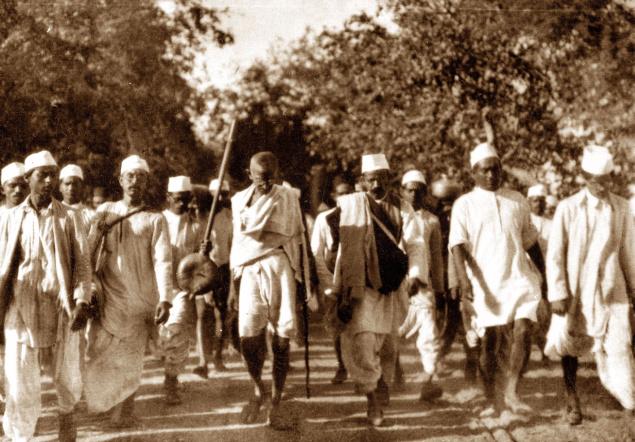
For all those who can recall their history lessons in school, Dandi March was a 24 day, 240 mile (390 km) march to produce salt without paying the tax. It is also known as Salt Satyagraha, led by Gandhi from his Sabarmati Ashram to the sea coast near Dandi. Dandi March was a very important part of the Indian Independence Movement. It was a non-violent protest against the British monopoly of salt in India, and it triggered the Civil Disobedience Movement later. It was done from 12 March to April 6, 1930.
Now, 81 years have passed as I write this today on 11 March 2011. We have been independent for over 63 years now, and economically independent for 20 years (since the 1991 economic reforms). But we are still not free socially. We are still not the India that Gandhiji dreamt of. An India without poverty and hunger, an India where everybody has equal opportunity to lead the kind of lives they want. We are still not free from corruption, which is one of the most menacing problems India faces in the 21st century. The Adarsh Society scam, Commonwealth Games scam and the 2G scam have rocked the nation in the recent months, causing the loss of over 60 billion dollars.
Dandi March 2 is a march organized by a group of NRIs living in the United States of America inspired by the original march by Gandhiji. It is a 240 mile walk in the US against corruption in India from 12 March to 26 March 2011. Starting at Martin Luther King Jr. Memorial Park, San Diego, California March 12, “Dandi March II” goes through Los Angeles and ends March 26 at Gandhi Statue, San Francisco. The dates coincide with the dates Gandhi did his historic march in 1930. Every major city in US, 10 cities in India and 8 other countries are organizing support events on 26 March to extend their support for the full 240 mile walk in US. The agenda is to push the government to enact Jan Lokpal Bill which is drafted to free India from the clutches of corruption by social activists like Kiran Bedi, Anna Hazare, Arvind Kejriwal, etc.
The 240 mile Dandi March was done in 1930
The support events on 26 March are being organized in cities like Bangalore, Coimbatore, Hyderabad, Chennai, Kakinada, Kolkata, Nagpur, Mumbai, Varanasi and Ahmedabad. In the US, Indians are walking in Atlanta, Boston, Chicago, Dallas, Detroit, Houston, New Jersey, Washington DC and Seattle, apart from the main march from San Diego to San Francisco. Internationally, support marches are happening in London, Singapore, Finland, Germany, etc. More information about the event can be found at http://www.dandimarch2.org. The route details for the full march can be found here and all the event details for different cities can be found here.
The facebook page for the march is http://www.facebook.com/DandiMarch2?sk=info where you can find all the important information about the march. The Bangalore support march on 26 March can be seen at http://www.facebook.com/event.php?eid=194657080556635 Accept the event invite to do your bit for a corruption free India. We are walking around 15 kms in Bangalore, join us for 1km, 2km, 5km or whatever is comfortable to you.
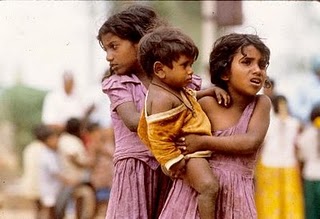
Recently when I was in Delhi and roaming about with a few friends in Connaught Place, an old lady beggar approached us for money. This is a common sight across our country in prominent tourist places. Not only is begging illegal and you could be fined a Rs 1000 for giving Re 1 to a beggar, I still remember the old Doordarshan clip asking not to encourage begging. However, it is very difficult not to give them a little money considering their condition. So this friend of mine took out a Rs 10 note and gave it to the old woman. What was wonderful to see after that was the joy of giving on my friend’s face. Her face lit up as she handed over the 10 rupee note so that it can make a difference in the old woman’s life. The woman blessed my friend with her aashirwaad and both parties went their way, feeling good about it.
What comes to your mind when you think of ‘aid‘? Wikipedia defines aid as a voluntary transfer of resources from one party to another, with the objective of benefiting the recipient party. The parties could be individuals, companies, or governments. It could range from giving money/food to a roadside beggar, the millions of dollars western governments provide to poor countries, or the subsidies our government provides to the poor for buying essential items like rice and wheat. The primary objective of any kind of aid is helping the recipient improve their living conditions and standard of life. There may be other diplomatic or political reasons as well but altruism remain the major motivator.
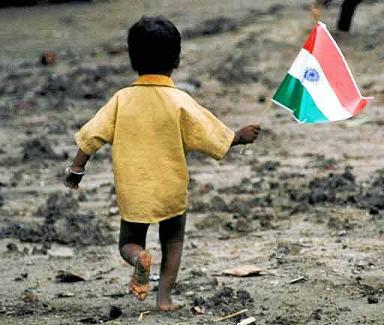
A common sight on streets of India
Now the point I want to propose is that aid actually does more harm than good to the recipient in its general form. Aid only helps in the short term, and leaves the recipient in need of more aid in the long term. This is basically a criticism from an economic point of view. Today many economists are arguing that aid actually harms the recipient party and discourage the development of the recipient. I also want to make clear that I am not against the idea of giving aid or providing help to the needy. I have always felt awe at individuals (like my friend in the above incident) or organisations who give their resources for the benefit of the less privileged. What I am arguing here is the mode of this altruism? I mention that because I think it is important to differentiate between the two.
Aid, in its most basic form, provides for basic human needs such as food and shelter. For example, you give money to a roadside beggar so that he/she can buy food and clothing which they are otherwise unable to afford due to lack of employment or any other source of income. The government might subsidize rice and wheat to benefit the poor who have very meagre income and are unable to afford them. Again, very noble objectives! But it is important to realize that the lack of money or certain resources is not the main problem, it is only the symptom of a much bigger problem. The bigger problem is of lack of opportunities or services to avail to improve a person’s standard of living. It ranges from the lack of access to education, training and employment to the lack of social justice and equality in the world.
When we give money and resources, we are focussing on the symptoms and not the underlying problem. It tends to make the recipient dependable on the aid and discourage any development effort to teach them new skills and enable them to seek food and money on their own merit, rather than charity. This can be illustrated by the continous sight of beggars who spend their daily collection and then are back in the same position hoping for more aid. This is also evident in people’s demand in many Indian states to remain below the poverty line because the prices of rice and wheat will increase if they cross over the BPL line. Many NGOs and social workers have also find out that ignorant villagers are discouraged from participating in development efforts by them if aid is made available by the government. Now that is an anticlimax. The same effect is seen not only in individuals but also on governments. Poor nations stand the risk of loosing foreign aid if they develop their economies on their own. Aid also encourages corruption and red-tapism in official matters making it more difficult for any development effort to actually happen.
I am not denying the fact that immediate aid can help save a family from starvation and death, neither the fact that both donor and recipient are happy when aid is actually exchanged. And it does help in the short term. But in the long term, it only ends up crippling the recipient and it also degrades the status of the recipient in the society. The donors don’t see them as capable of earning their own livelihood and the recipient loose their self-confidence and consider themselves lesser human beings at the mercy of the donors. This inequality is the root cause of many major problems prevalent in society today. Looking at another human being as more or less than ourselves is the cause of all evils, rituals and crimes that plague the society today.
What many, and I too, advocate is spending more money and resources in the building of long term institutions and organizations which can self-sustain without the need of aid in the long term and generate value for people and the society. This might mean spending money on building an institution rather than giving it to people for food who are obviously in need of it. This can never be an easy decision and even seem cruel, and I have always believed that tough decisions and bold leadership is required to create long term benefits and value which can sustain itself and empower the people to be independent of outside aid over a period of time.
An exemplary example of this could be the setting up of prominent educational institutions like IITs, IIMs and AIIMS right after the independence of India by the Jawaharlal Nehru government. After Independence, there were more pressing needs (of hunger, disease) the country was facing but Nehru had the vision that long term development needed exemplary scientists, engineers and doctors. And looking back in hindsight, it is these institutions which have produced people who have contributed in their respective fields, not just in India but also internationally. Another example is the opening up of the economy in 1991, which certainly was not an easy decision at that time. It opened up our markets to foreign competition by companies who were much ahead in technology and resources. It might have caused some hardships in the short term, but it also forced our entrepreneurs to compete with the best in the world by providing the best services to customers in India as well as abroad. Companies like Infosys and Bharti are examples of long term and sustainable value being created for Indian youth while providing world-class services to customers.
Based on the above explanation, what is required now from the Indian government and individuals is not just aid, but real effort to take bold decisions and contribute in a way that creates value even after the aid amount is over and even after the donor is gone. We are already compassionate towards the needy and their needs. This is clearly evident in the joy we get when we donate resources or give money to beggars or people in need. Going ahead, we need to look for the long term benefits and invest (not donate) our money in creating value in a way that empowers the people to take care of themselves and their families. This will give them a sense of belonging and equality with us who are more privileged to have the resources and opportunities that we have today. It will also be the more responsible and rightful thing to do for us in providing means of social and economic equality to our fellow brothers and sisters so that we can stand as equal citizens as India marches ahead in the 21st century.
I use cookies on this website to give you the most relevant experience and for analytics purposes. Any personal data collected will never be shared with any third party, or used to spam you. That is my promise. - Sumit By clicking “Accept”, you consent to the use of ALL the cookies.
This website uses cookies to improve your experience while you navigate through the website. Out of these, the cookies that are categorized as necessary are stored on your browser as they are essential for the working of basic functionalities of the website. We also use third-party cookies that help us analyze and understand how you use this website. These cookies will be stored in your browser only with your consent. You also have the option to opt-out of these cookies. But opting out of some of these cookies may affect your browsing experience.
Necessary cookies are absolutely essential for the website to function properly. This category only includes cookies that ensures basic functionalities and security features of the website. These cookies do not store any personal information.
Any cookies that may not be particularly necessary for the website to function and is used specifically to collect user personal data via analytics, ads, other embedded contents are termed as non-necessary cookies. It is mandatory to procure user consent prior to running these cookies on your website.