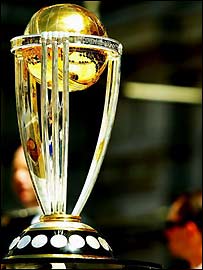
As the ICC World Cup starts in under two weeks on what are going to be batsman friendly pitches of the subcontinent, a lot of records are going to be broken and new ones made. Considering the small grounds of the subcontinent and the hot weather, it is expected that bowlers will take the heat and a lot of batting records are to be made. Below I am trying to predict some important statistics and records that this world cup might see. I will evaluate these figures again at the end of the world cup.
There are 14 teams participating this time in the World Cup hosted by India, Bangladesh and Sri Lanka. There will be 49 matches in total, two less than the 2007 world cup. The format will be similar to the 1996 World Cup, with a knockout round of quarter finals, semi finals and a final after the round robin league of two groups of 7 teams each. The tournament starts on 19th Feb 2011 and ends with the final on 2nd Apr 2011. Lets now get to the predictions…
Most sixes in a single over – I reckon there will be at least two overs during the tournament where all balls of the over will be hit for sixes. There was one such instance during the 2007 WC.
Most sixes in an innings by team – My bet is that there will be more than 25 sixes hit in one or more of the innings. India and SA hit 18 sixes in an innings in 2007 WC
Most sixes in an innings by 1 player – Ten, yes at least one player will 10 sixes in an innings in this WC. Watch out for Pathan, Afridi, Pollard and others
Most sixes in tournament – I think the tally will be around 25 sixes by any one player.
Fastest Fifty – 20 or less balls
Fastest 100 – 65 or less balls
Highest Total – My bet is there will be a minimum of five 400 plus innings in this WC
Highest Individual Score – I am sure Sachin’s 200 not out will be equaled or bettered in this WC, either by the GOD himself or somebody else.
Hat-Tricks – I am counting for only 1 or 2 hat tricks in this event due to the batsman friendly pitches
Most Wickets in WC – I think the top contenders are Steyn, Malinga, Muralitharan, Zaheer, Harbhajan, Anderson, Brett Lee and Sohail Tanvir with the highest number of wickets going to be between 22-25
Most Runs – My top bets are Sachin Tendulkar, Gambhir, Hashim Amla, Sangakara, Jayawardene, Misbah Ul Haq, J Trott, Shane Watson and Michael Hussey with the tally being somewhere between 650-700 runs
Best strike rate with runs over 300 – My bet is the highest strike rate for players scoring 300 or more runs to be about 125-135
My line up for the semi finals would be Australia v South Africa and India v England with Sri Lanka and Pakistan being wildcards, and Australia / India being my favorites to lift the trophy.
Now, after the cup is over I will again go over these predictions and compare them with the actual statistics. Obviously there will be some surprises, some new records created, some disappointing performances and some consistent ones. Let me know your comments on these predictions and we will see how they pan out over the whole tournament.
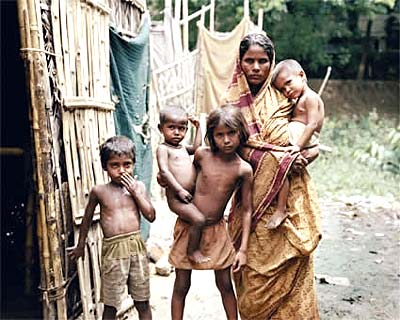
India lives in its villages, and while the cities have grown immensely over the last 20 years, rural areas have not seen that kind of development. For India’s economy to be strong, the rural economy needs to grow. Rural areas are still plagued by problems of malnourishment, illiteracy, unemployment and lack of basic infrastructure like schools, colleges, hospitals, sanitation, etc. This has led to youth moving out of villages to work in cities. This could be compared to the brain drain from India to US. Our villages need to grow in tandem with cities and standard of life has to improve there for inclusive growth to happen. If rural India is poor, India is poor.
Poverty in Rural India
India lives in many generations, and visiting rural areas very easily shows that they lag behind cities by decades. While we have latest services and products available in our cities now, villagers are still coping with age old products. It is easy to see the rising disconnect between cities and villages. Some examples are –
While we have international fully air conditioned schools in our cities, the schools in villages still don’t have benches and chairs, leave alone computers. We have a huge shortage of teachers in rural areas, and the school drop out rate is huge.
In cities, we have wide roads, flyovers and underpasses while many villages still don’t have proper roads. Urban-rural road links can play a vital role in rural growth.
Employment opportunities are hardly there in villages which forces youth to move to cities creating imbalance in the ecosystem and leaving the villages deprived.
While we may have numerous hospitals, nursing homes and medical facilities in cities, villages neither have health awareness nor health facilities. See the condition of major hospitals like AIIMS to know how many villagers have to flock to cities for even basic treatments.
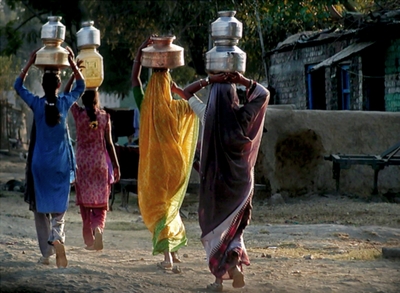
Women fetching water from kilometers away
Apart from the above options, villages need to have –
Proper land reforms to make sure land is held, owned, cultivated, irrigated to make the most efficient use and maximum output.
Rural credit – Banking services need to be popularized and credit should be available for basic services like agriculture.
Electrification – Many villages still receive only 2 to 6 hours of electricity per day which needs to drastically improve to empower the villages of India.
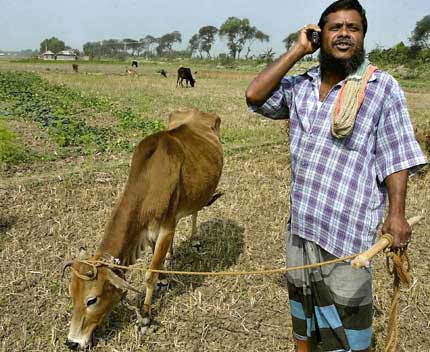
Mobiles have empowered rural India
Basically, what we need is to empower the rural people by providing them education and proper health care. They need to have infrastructure like electricity and water so that they are free from the cycle of droughts and floods. We need to give them self-employment so that they want to stay in villages instead of migrating in cities. There is a need to empower the villagers, and not just supporting them by food subsidies, loan waivers which end up crippling them. India will grow only when rural India marches hand in hand with cities in the twenty first century.
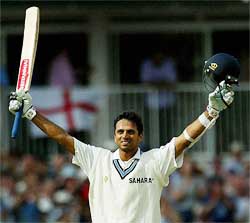
UnderApplauded… Is that even a word? Even if it is not, I have coined it now, and its suits perfectly for someone who is also known as “The Wall”, Rahul Dravid!! Now let me explain why I say so… BECAUSE —
He is the player who has faced ball after ball over the last 14 years with levels of concentration not many can match. You need to see him sweat during a match to understand his concentration levels. Right in the beginning of his career, he batted 541 minutes in the first innings of this match and followed it with another knock in second innings while the rest struggled to put bat to ball.
He is the player who have been criticized by viewers and critics everytime he has got out cheaply but he has never used his mouth to answer them. Neither does he need to, as his bat is enough. Not many people have hit centuries in both innings of a test match, and he has done it twice. (vs Pakistan and New Zealand) Only Gavaskar has done it thrice.
He is the player who has stood alone on bouncing tracks alone while all his distinguished mates have struggled and got out. Still he is never acknowledged for the numerous matches he has won and SAVED India. I can never forget the second innings of this match where his 27 not out is not less than a century (on that wicket). Or see this match at the Sabina Park, Kingston, Jamaica where he stood as a rock in both innings and made sure India won a series (first overseas series victory in 20 years) in West Indies. A match-winning captain’s hand in the second-innings of a historic away-series deciding Test on a minefield. Now beat that!!
In many pitches that appeared to have landmines buried on a good length, Rahul Dravid has waged a war. Ducking, weaving, blocking, watching partners come and go, jabbing, leaving, ducking, weaving… Not many have batted for more than 600 minutes (like here when he scored a double when all others struggled to get even a fifty.
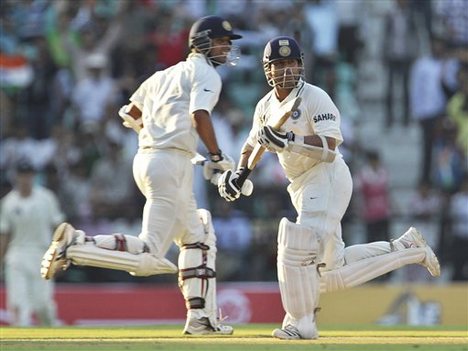
He is the player who has formed the platform around which many big names have hit knocks of a lifetime. May it be Sehwag’s triple century , or Laxman’s 280, or during many of Sachin’s tons, he was the player at the other end. Cricket is a game of partnerships, and he has shared 19 century partnerships with Sachin (a world record), 11 with Laxman, 10 with Ganguly and 10 with Sehwag. If you compare the accolades all of these players have got and compare it to Dravid’s, you will know why I call him the most UnderApplauded batsman..
World Record century partnerships between Sachin & Dravid
He is perhaps the only player who averages more abroad than at home (55 to 50), yet he is never credited for the numerous matches India have started winning abroad over the last 15 years. Ask any bowler and he will name Dravid in the top 3 of “most difficult to dismiss” players, and yet he is the first to be dismissed by the viewers and critics!!
He is the only player left who is a classical batsman. Perhaps the most complete batsman playing the game today, and perhaps the last. He is the person who you would want to watch if you need a definition of batting. Yet he is measured by his strike rate more than the runs his partners have scored in his company.
He is the player who has totally transformed his game for one-day cricket and T20 cricket, yet he is pulled by critics for playing slow. Ask his teammates what freedom and confidence they have in playing their shots just knowing that Rahul Dravid is standing at the other end! He has kept wickets in ODIs to maintain the team balance, been the vice-captain of the team at the same time, scored runs consistently and yet never have expressed himself or demanded any attention. Without anybody noticing, he has amassed more than 10,000 runs in ODIs too.
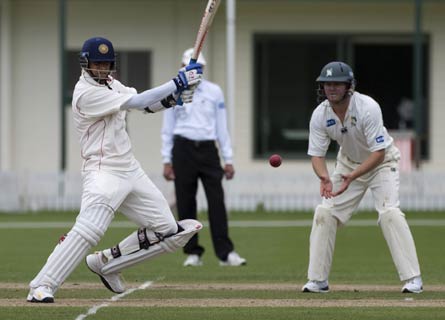
His shots define how they should be played
While many people still believe he was never suited for ODI’s, he has 11 century partnerships with each of Sachin and Ganguly. Then why do we regard Sachin and Ganguly as the best one day players ever to play for India, and totally forget Dravid’s contribution in that.
If Ganguly, Sachin, Sehwag and Laxman have a natural talent and genius, Dravid has compensated for it with sheer hard work and levels of concentration that are almost yogic. Not many can bat for 835 minutes (its not a typo) like he did in this epic match in Adelaide, or when he batted for 12 hours for his 270 in this match. Not to mention the Adelaide victory was the first for India in a generation and the Pakistan series ended up being India’s first ever series win there.
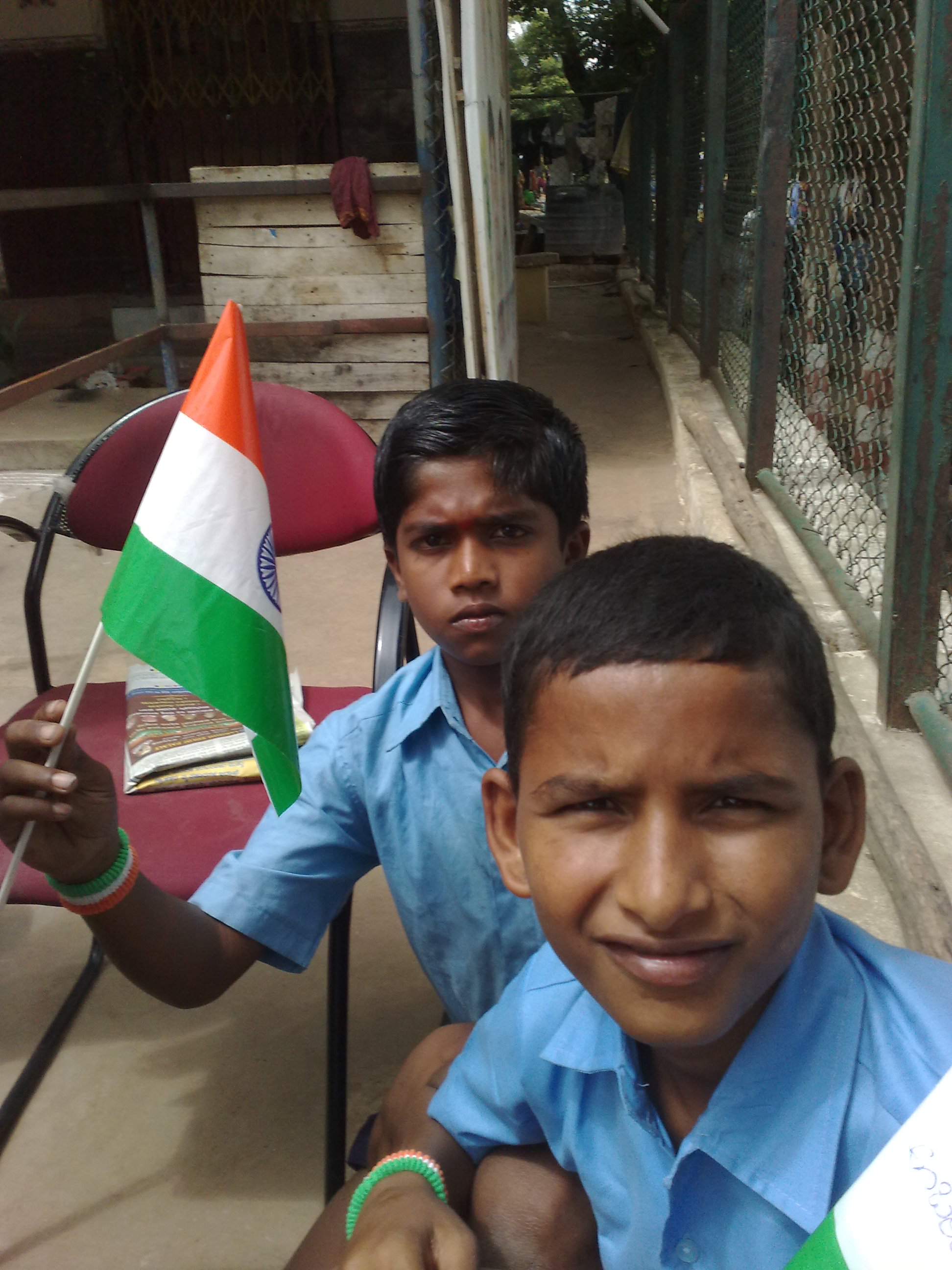
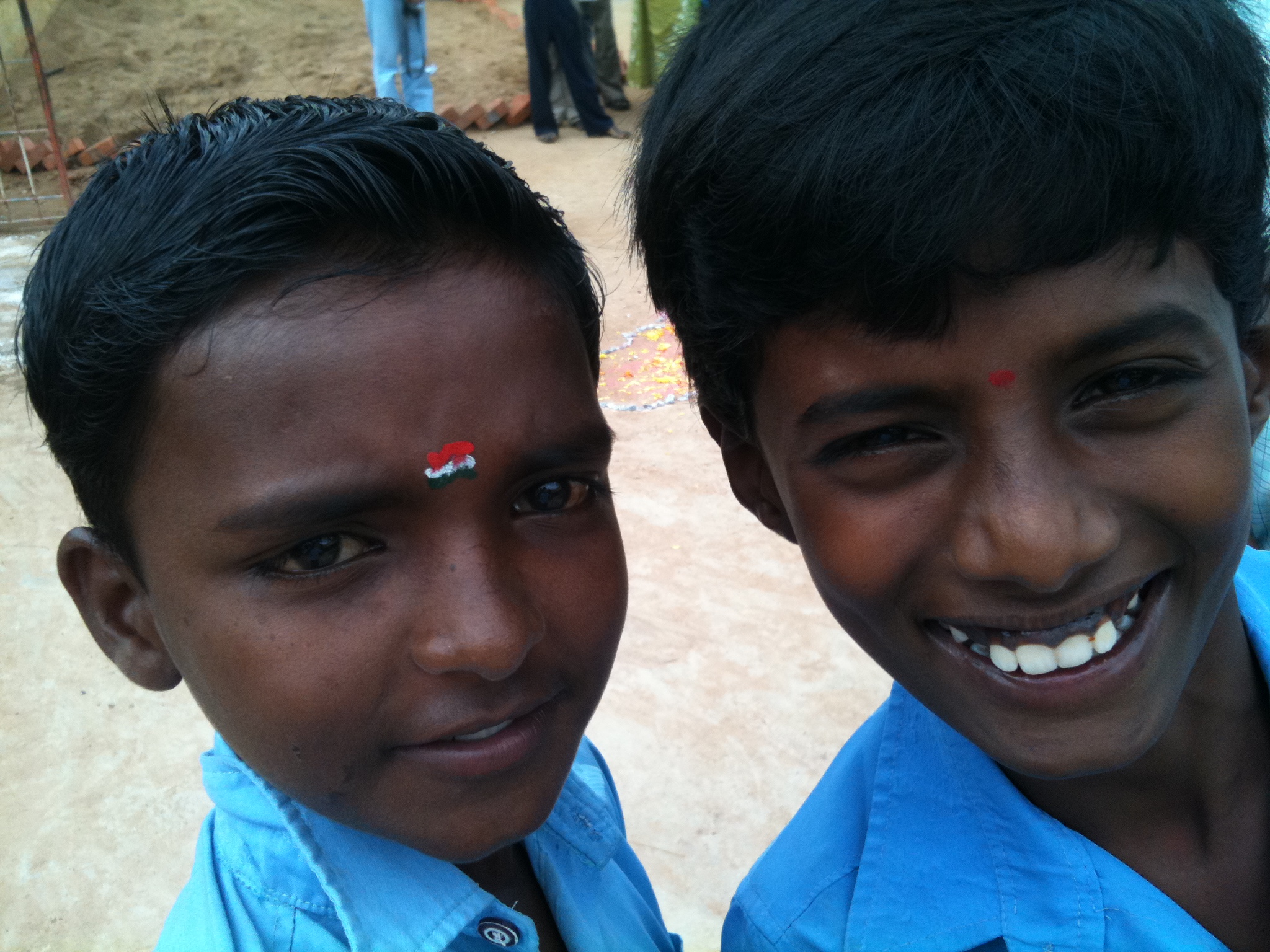
Independence Day comes every year on the 15th of August, and this was the 26th time I witnessed it. Over the last few years, it has been awaited more for the holiday it brings than for the occasion. During the school days, there would be flag hoisting ceremonies and some functions highlighting the patriotic sentiments. Back home, there would be patriotic songs and movies playing on television. In the last year 5 years, it was only just another holiday. But this year was different! One of the best Independence Days I have had for a long long time.
Unity in Diversity
I have been volunteering as part of YEFI (Yahoo Employee Foundation Initiative) to teach English to school kids in a school which is partially funded and supported by Yahoo. More than the teaching itself, it is the interaction with the kids, most of whom belong to poor families, which has been a wonderful experience so far. Most of the kids speak only Kannada, Tamil or Telugu and neither Hindi nor English, so I thought communicating with them would be a big problem. But let me tell you, you don’t need a language to interact with kids. Kids are always natural and self expressed, and they often remind us of the fact that we were once like them!! And interacting / having fun with them on Saturdays for two hours really takes care of all the tension / stress one has in life.
Getting Ready for the Occasion
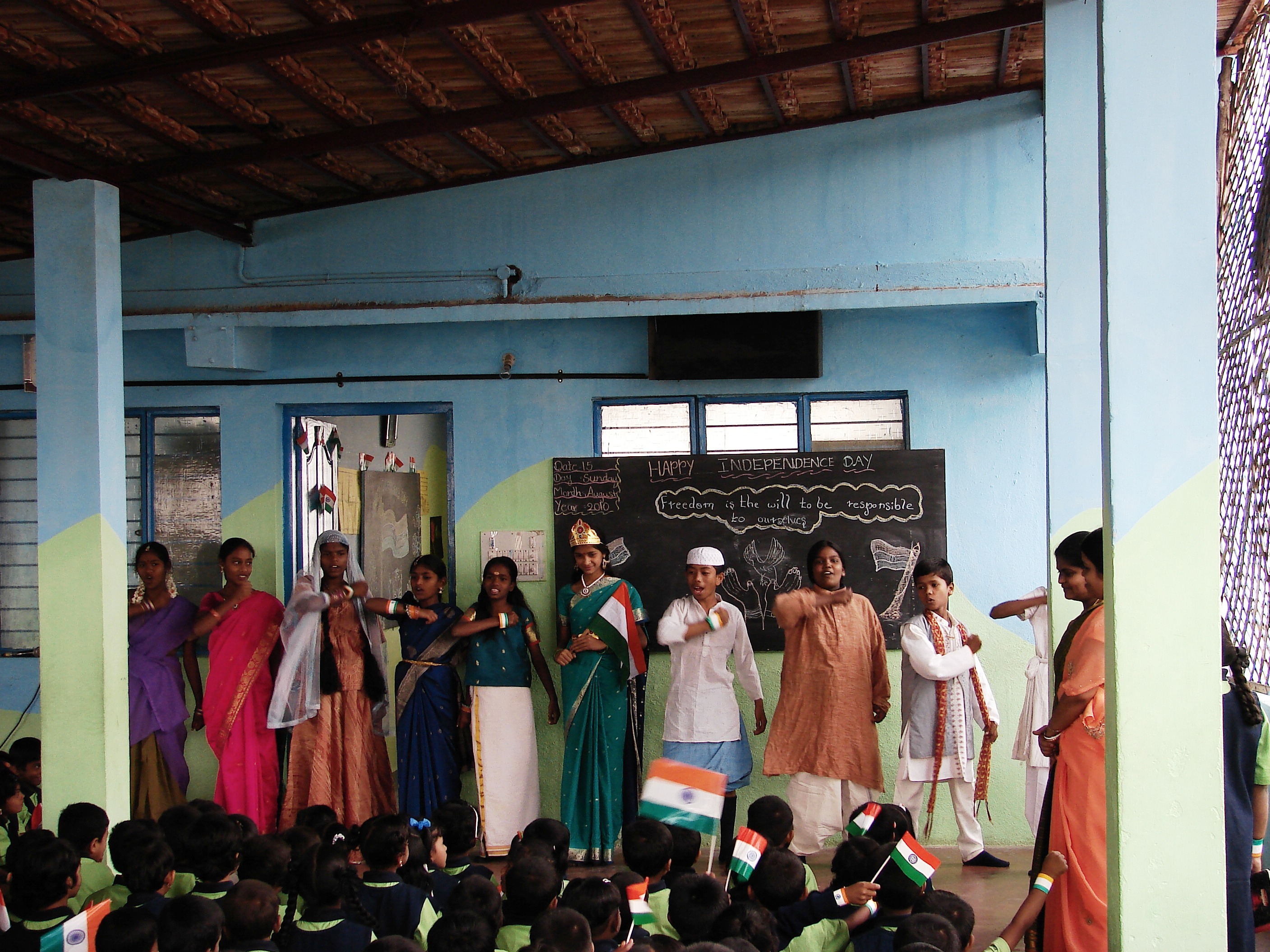
This Independence Day fell on a Sunday, and we decided to visit the school for the customary Independence Day prayers and some events to mark the day. We first went to a Parikrama school, which is funded totally by Yahoo. When we reached the school the program had already started. There was a dance highlighting the different religions in India and the “Unity in Diversity” theme. Then there were few patriotic poems in Kannada but I still managed to get the crux of it 😉 Then the teacher called all of us to the front and we had some interaction with the students. Then we were given “Happy Independence Day” greeting cards made by the students themselves. This was their special way of welcoming us and treating us on the special occasion. My card read “Happy Independence Day, Sumit Anna” (Anna is brother in Kannada)
The Tricolor Flying HighThe Father of the Nation
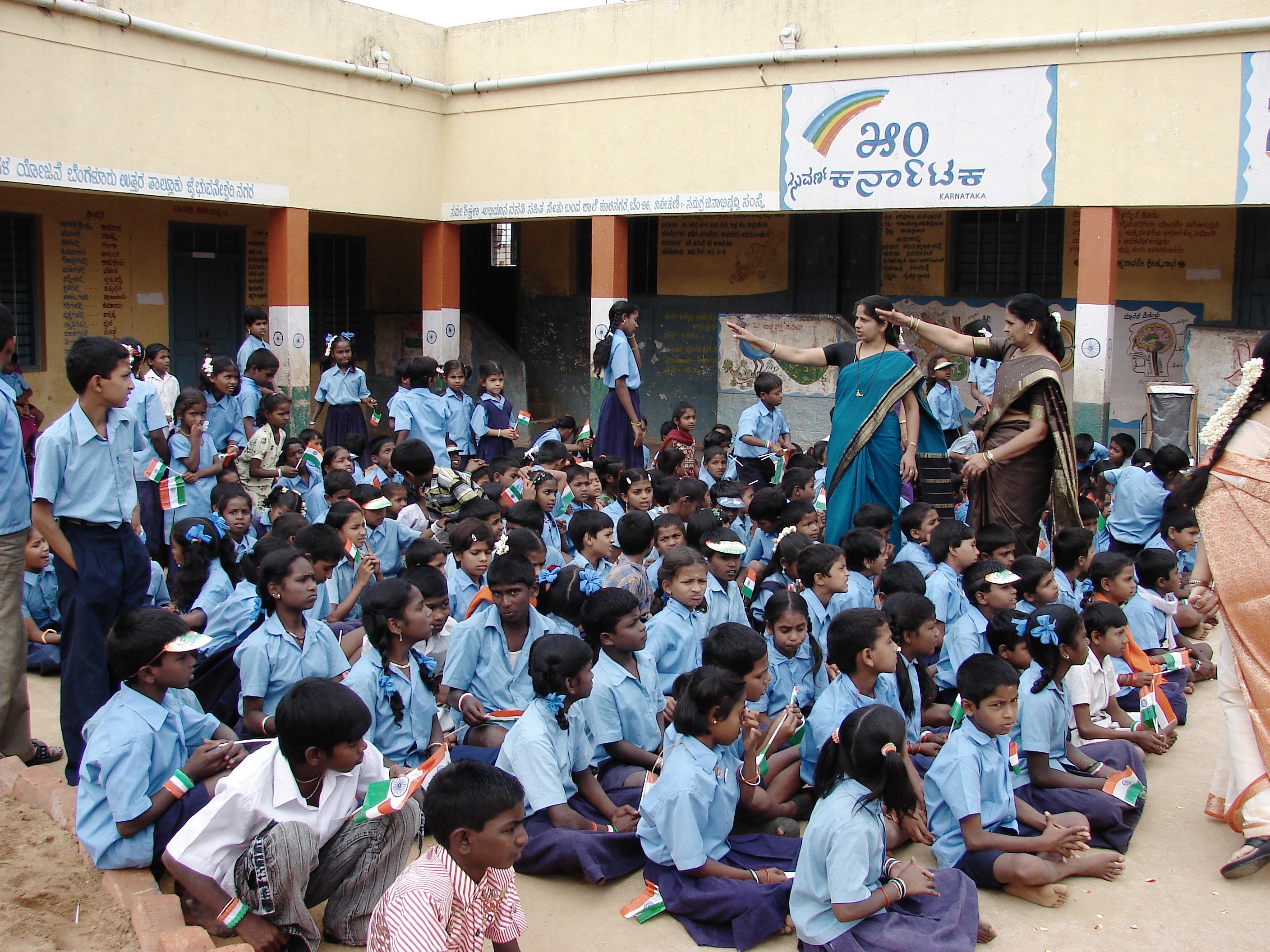
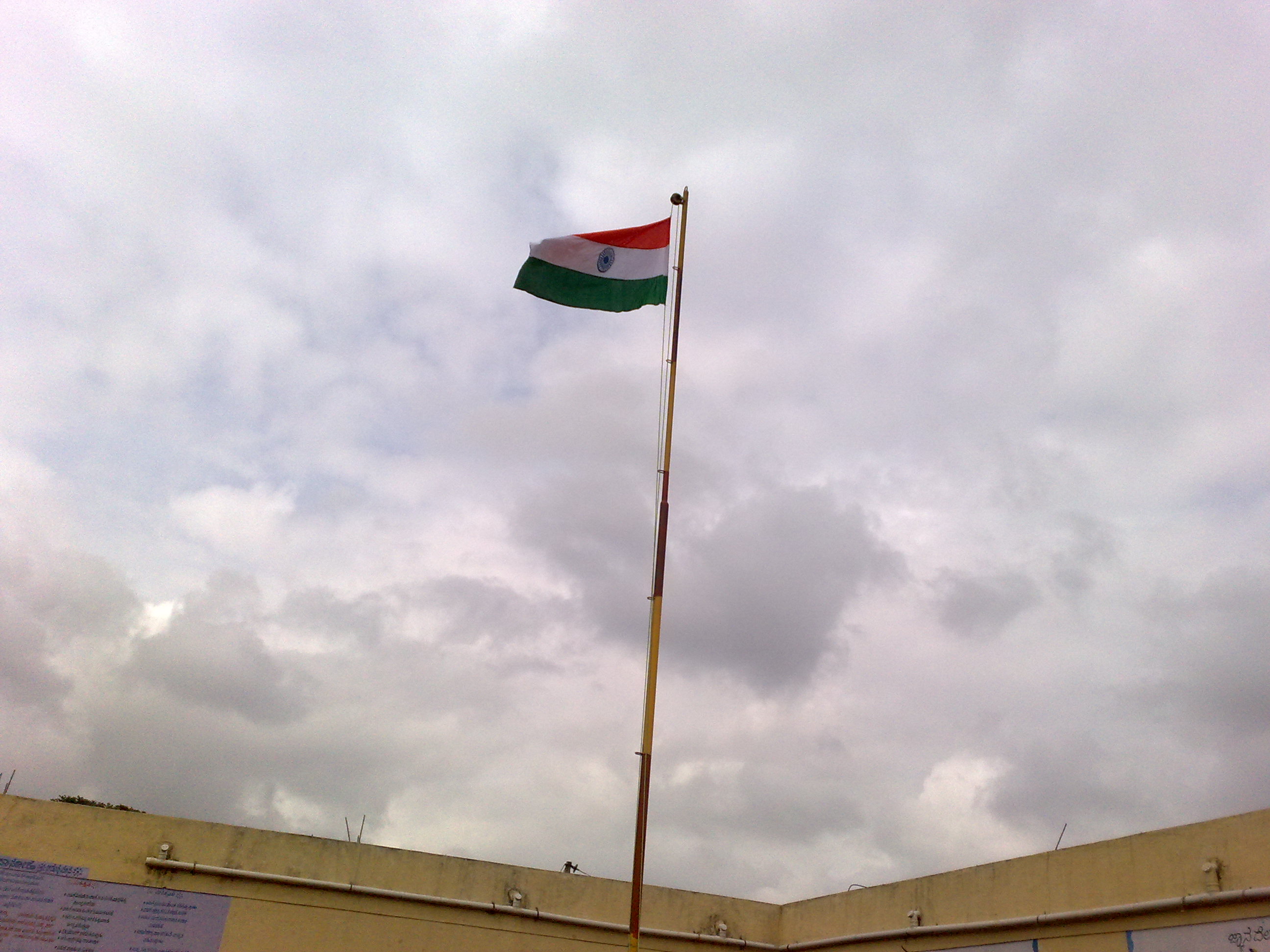
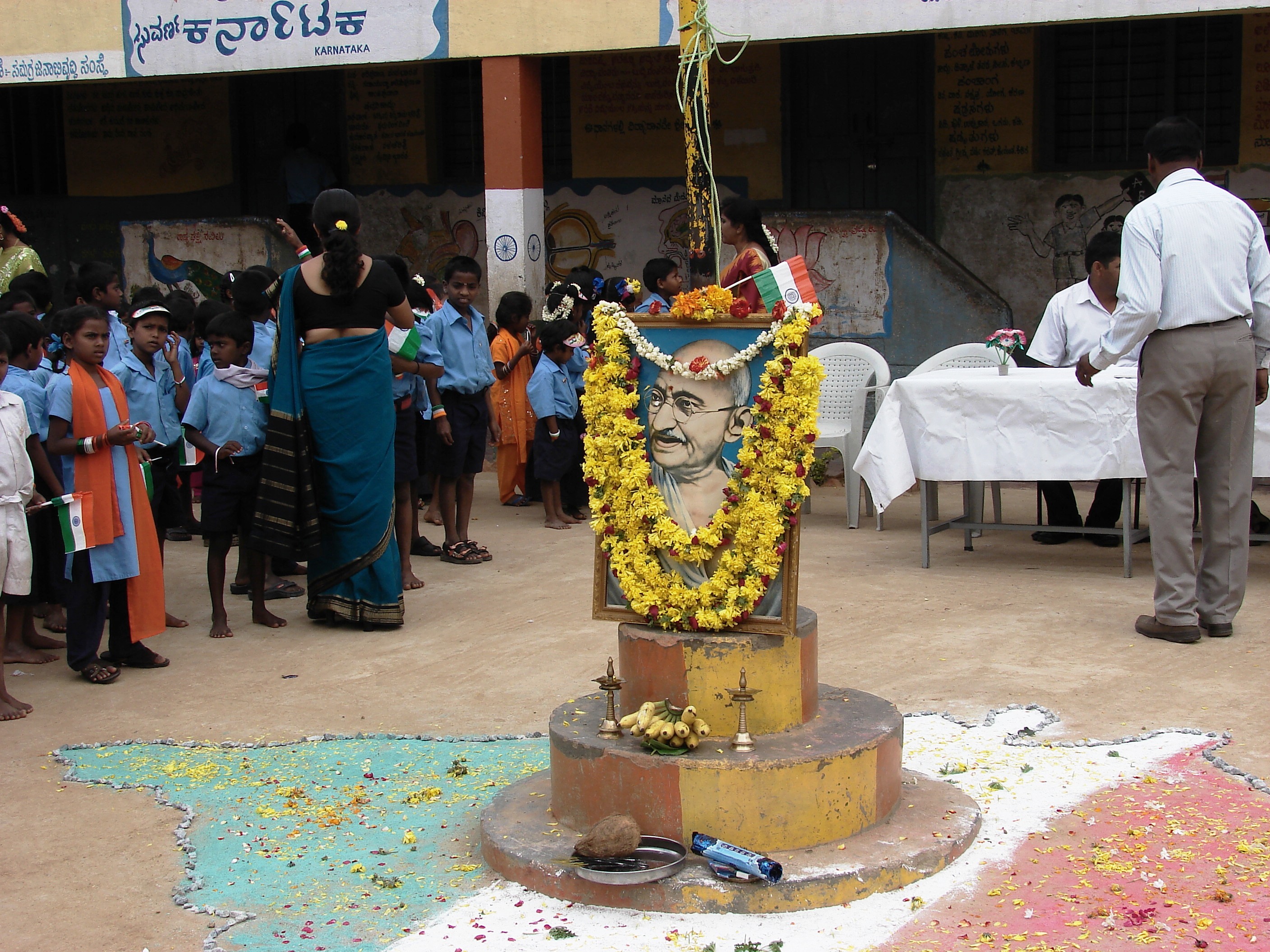
After this, we left for the government school where I had been volunteering. They were preparing for the flag hoisting ceremony when we reached there. They had marked the ground with the Indian Map, and placed the flag pole in the middle of it. On the side there was a portrait of Mahatama Gandhi. Soon the teachers started an Aarti for the Father of the Nation. It was a wonderful feeling witnessing this. After the Aarti, the flag was hoisted by the Headmaster which was followed by “Jana Gana Mana”. After this, we were given roses by the school authorities to mark the day. As I knew quite a few kids of the classes I have taught in my previous visits, we interacted with the kids for some time before leaving.
Kids and Innocence on their faces
Kids are free of the biases, prejudices and political agendas that cloud our point of view, they see things as they are and fully express themselves without the fear of feedback, which is an ability we lose somewhere as we grow up. They know the real meaning of love, be it for fellow human beings or for the country. They are innocent and open to life fully. There is more for adults to learn from children than the other way round. Whether they are playing marbles in the sand, or just riding their tricycle, or playing with toys, they put every bit of their energy into it. Watching them, and interacting with them is something I have always cherished. I would recommend nobody should lose touch with children. Take a moment to ask yourself when was the last time you played around with children, and if the answer is more than a month, I will suggest you find a way to indulge yourself with kids, be it with the son of a friend, or a neighbor, or anybody else.
After I was back home, I realized what a wonderful time I had. With time, we have started to treat our festivals only as holidays and forgotten the festivities associated with them. But this year, I actually saw people celebrating our Independence Day with pride and honor. The way it was supposed to be, the way it should be – the most important festival of our free country. Let us keep the spirit of this country alive. Jai Hind!!
Often called the Lifeline of the Nation,
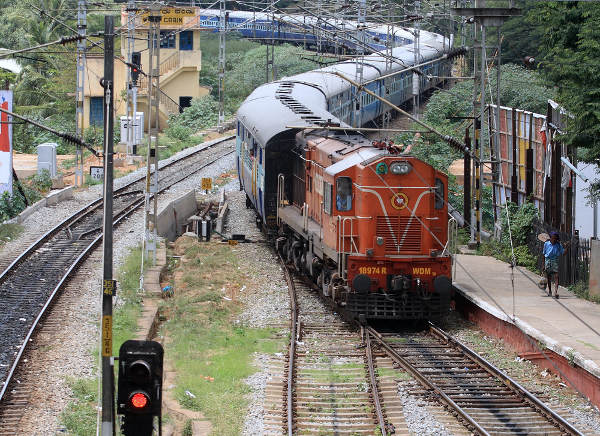
Indian Railways runs more than 14,300 trains!
It carries over 13 million passengers daily,
Across hills, tunnels, rivers, lakes and plains!!
With 1.6 million employees under its rolls,
IR is one of the world’s largest employer!
Traveling across the country in its 63,000 kms of tracks,
You are bound to have more adventure than Tom Sawyer!!
A Train in Indian Railways
Trains run from North to South, East to West,
Across the length and breadth of the country!
Jammu to Kanyakumari is 4751kms,
Is covered by Himsagar Express in 66 hrs, albeit slowly!!
The Railways was a legacy of the British,
And we have come a long way since then!
We have new tracks, trains and coaches,
And technology’s presence is felt even in the engine!!
But while the world has zipped away,
With the high speed and maglev trains!
We continue to live in the British era,
And our trains still run as if enslaved in chains!!
The TGV in France runs at more than 250 km/hour,
Chinese high speed trains exceed speeds of more than 350 km/hour!
Maglev trains are already being tested at 450 km/hour,
With our fastest running at 90, the experience really turns sour!!
My father points out that in the 80s,
Karnataka Express used to take 36 hrs between Delhi – Bangalore!
Now 25 years later it takes 40 hrs,
Surely not something worth writing about in Indian Railways brochure!!
Most stations are outdated and overcrowded,
Trains themselves are rusted, in gross disrepair and dirty!
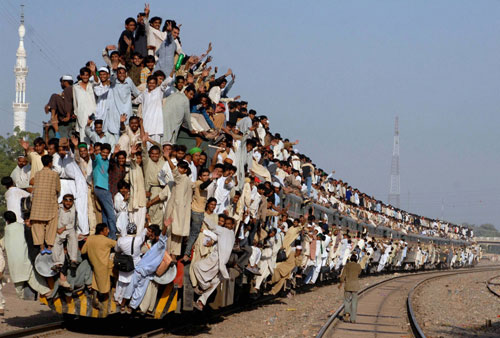
People hang outside the windows and even on the roof,
Which makes for nice photographs, but at the cost of safety!!
A typical sight on Indian Railways
Communication and signaling equipment is outdated,
No surprises that 83% of all accidents result from human error!
The whole infrastructure is old and crumbling,
Add to that the problems of corruption, naxalism and terror!!
There is no doubt that Indian Railways needs to be better managed,
We need solutions, problems are not going to disappear if we just duck!
Considering the size and scale of operations its not going to be easy,
The authorities needs to tighten their belts, and let us wish them “Best of Luck”!!
In the 80’s, there was terror in Punjab. Then there have been continuous terror incidents in Kashmir from the late 80s and early 90s. But the 21st century brought with it a new kind of terror in India. Terrorists now managed serial blasts all across India, and also carried out personal fidayeen attacks in many cities of India. Apart from the terror attacks, there has been religious violence in Gujarat and continuous attacks on Churches across states. There has been violence in Mumbai over North Indians, in Rajasthan over Gujjars demanding a lower SC status, in Punjab over Dera Sacha Sauda, and then there is Naxalism in West Bengal, Jharkhand, Chattisgarh, Andhra Pradesh, Orissa, Bihar, and many other states. So what happened to the idea of a Safe India?
Terrorism have took a new turn in the last decade. Terrorists now dared to attack the Red Fort in 2000, the Parliament in 2001 and the AkshardhamTemple in Gujarat in 2002. There have been bus/car bombings in Mumbai in 2003, serial blasts in Delhi in 2005, serial attacks in Varanasi in 2006, bombings at Mecca Masjid, Hyderabad in 2007, serial attacks in Delhi, Jaipur, Bangalore, Ahmedabad in 2008 plus the 26 Nov Mumbai terror attacks the same year. Terrorists have managed to attack us by sea and land alike. They have come from across the border and there have been home grown Indian Mujahideen as well. There have been bomb blasts at popular markets and fidayeen attacks at religious places.
Apart from terrorism, we have seen the Gujarat riots of 2002, attacks on Churches in Orissa and Karnataka in 2007 and 2008 and many other small incidents. There has been caste violence in Maharashtra over the issue of North Indians and in Rajasthan when Gujjars wanted a lower status to get more reservation. It sounds strange somebody resorting to violence to get a lower status, but it is true. There have been incidents in Punjab over the Dera Sacha Sauda and later over the killing of a Dera leader Ramanand in Vienna. Attacks againstdalits have also continued to take place throughout India over the last decade.
Naxalism is active among 220 districts and 20 states of India. According to RAW, there are 20,000 armed Naxalites in India. Even Prime Minister Manmohan Singh have regarded them as the biggest internal threat to India. According to reports, more than 6000 people have died due to Naxalism in the last two decades. There are regular attacks on police stations and slaughter of officials by Naxalites in these areas. Coming to the original question, is India safe as a state considering the violence in the last decade. Why can’t we feel safe even in our own country? There is fear of Pakistan based terror, home grown terror, religious violence, caste based violence and naxalism.
So what has gone wrong in the last decade as the idea of a safe India has gone for a toss. We have one of the largest armies in the world, yet we are the most unsafe country it seems. We are going places, our GDP growth rate is the fastest after China, yet we cannot guarantee the safety of our own citizens. Everything India has achieved over the last decade has been because of its private sector while the government has continued to be slow and disappoint ever since. We can only hope this situation will improve and our elected representatives take their tasks seriously before it is too late. I just want to be safe in my own country, Is this too much to ask?
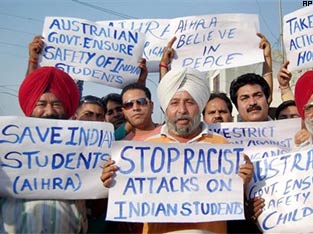
It has been almost a year now since the Indian media has been blasting Australians for racial attacks on Indians down under. After all, it makes for good news which people watch. And who cares for the facts!! It it sells, then show it on prime-time TV or make it front page news… and people will watch too. But do we try to wait and understand what actually is Racism, and is it racism what is happening in Australia?
Racism is defined as “any discrimination or prejudice based on race“. Going by this definition of racism, is it not racism when political parties like MNS and Shiv Sena protests, most of the times violently, against North Indians? Is it not racism when we have reservations for certain “backward” classes for the last 60 years? Is it not racism when we have many temples in our country where non-Hindus are not allowed? In the Sabarimala Shrine in Kerala, women between the age 6-60 are not allowed inside. There are even some shrines where men are not allowed.
Dalits, who represent 16 percent of India’s 1.1 billion population are often beaten or killed for using a well or worshipping at a temple reserved for upper castes. Recently, a temple in Orissa performed purification (washing of temple floors and throwing away holy offerings) because a minister from a lower caste visited the temple. Former Prime Minister Indira Gandhi was also not allowed entry in the famous Jagannath Temple of Puri because she had married a Parsi and become an outcast.
Now, the question to ask is “Is this not racism?“. We are discriminating people of our own country based on caste, subcaste, sex or the state they belong to. India is a secular country and the caste system is long gone, but there are frequent reports of villagers torching two lovers because they eloped / married out of their caste. The North East population have always complained of being treated like non-Indians in their own country. Why is Indian media silent on this? Why is there so much noise and hoopla about what is happening in Australia?
The problem with Indian media is it is driven by politics and money. Blaming Australia is easy because they can’t hit back. And everybody can blame Australia easily it provides for good dinner talk. In short, it sells!! Media has enormous power to shape perceptions and stories on crime, corruption, terrorism usually dominate news channels, which are more than 70 in number and in more than 10 languages. We all have friends, relatives living in Australia and if you ever ask them, they will always describe Australians as very sweet and polite people. Australian authorities have expressed their concern at Indian media publishing stories without justifying the facts. They have maintained that all the attacks are not racial in nature. But do we care? Does facts really matter in front of TRP ratings???
I would say it is time for some self-introspection before pointing fingers at others. And it is high time the government controls the media for publishing mindless stories without justifying facts. I have always believed that Media is the fourth pillar of a democratic country after Judiciary, Executive and Legislative and an irresponsible media can hurt a lot. There are enough genuine stories to cover in our country to cover. News channels should cover and show stories of hope, inspiration, knowledge rather than crime, greed, corruption. Media can shape the public opinion and influence politics.
And as with everything powerful, I am always reminded of the quote from the movie Spiderman – “With great powers, come great responsibility!!”
It has been almost a year now since the Indian media has been blasting Australians for racial attacks on Indians down under. After all, it makes for good news which people watch. And who cares for the facts!! It it sells, then show it on prime-time TV or make it front page news… and people will watch too. But do we try to wait and understand what actually is Racism, and is it racism what is happening in Australia?
Racism is defined as “any discrimination or prejudice based on race”. Going by this definition of racism, is it not racism when political parties like MNS and Shiv Sena protests, most of the times violently, against North Indians? Is it not racism when we have reservations for certain “backward” classes for the last 60 years? Is it not racism when we have many temples in our country where non-Hindus are not allowed? In the Sabarimala Shrine in Kerala, women between the age 6-60 are not allowed inside. There are even some shrines where men are not allowed.
Dalits, who represent 16 percent of India’s 1.1 billion population are often beaten or killed for using a well or worshipping at a temple reserved for upper castes. Recently, a temple in Orissa performed purification (washing of temple floors and throwing away holy offerings) because a minister from a lower caste visited the temple. Former Prime Minister Indira Gandhi was also not allowed entry in the famous Jagannath Temple of Puri because she had married a Parsi and become an outcast.
Now, the question to ask is “Is this not racism?”. We are discriminating people of our own country based on caste, subcaste, sex or the state they belong to. India is a secular country and the caste system is long gone, but there are frequent reports of villagers torching two lovers because they eloped / married somebody out of their caste. The North East population have always complained of being treated like non-Indians in their own country. Why is Indian media silent on this? Why is there so much noise and hoopla about what is happening in Australia?
The problem with Indian media is it is driven by politics and money. Blaming Australia is easy because they can’t hit back. And everybody can blame Australia easily it provides for good dinner talk. In short, it sells!! Media has enormous power to shape perceptions and stories on crime, corruption, terrorism usually dominate news channels, which are more than 70 in number and in more than 10 languages. We all have friends, relatives living in Australia and if you ever ask them, they will always describe Australians as very sweet and polite people. Australian authorities have expressed their concern at Indian media publishing stories without justifying the facts. They have maintained that all the attacks are not racial in nature. But do we care? Does facts really matter in front of TRP ratings???
I would say it is time for some self-introspection before pointing fingers at others. And it is high time the government controls the media for publishing mindless stories without justifying facts. I have always believed that Media is the fourth pillar of a democratic country after Judiciary, Executive and Legislative and an irresponsible media can hurt a lot. There are enough genuine stories to cover in our country to cover. News channels should cover and show stories of hope, inspiration, knowledge rather than crime, greed, corruption. Media can shape the public opinion and influence politics.
And as with everything powerful, I am always reminded of the quote from the movie Spiderman – “With great powers, come great responsibility!!”
I use cookies on this website to give you the most relevant experience and for analytics purposes. Any personal data collected will never be shared with any third party, or used to spam you. That is my promise. - Sumit By clicking “Accept”, you consent to the use of ALL the cookies.
This website uses cookies to improve your experience while you navigate through the website. Out of these, the cookies that are categorized as necessary are stored on your browser as they are essential for the working of basic functionalities of the website. We also use third-party cookies that help us analyze and understand how you use this website. These cookies will be stored in your browser only with your consent. You also have the option to opt-out of these cookies. But opting out of some of these cookies may affect your browsing experience.
Necessary cookies are absolutely essential for the website to function properly. This category only includes cookies that ensures basic functionalities and security features of the website. These cookies do not store any personal information.
Any cookies that may not be particularly necessary for the website to function and is used specifically to collect user personal data via analytics, ads, other embedded contents are termed as non-necessary cookies. It is mandatory to procure user consent prior to running these cookies on your website.