people

  • Do You Know the People Behind Your Colleagues? And 5 Reasons Why It Matters

    I stood next to my car door, stunned and frozen in place. I had just walked out of my workplace to leave when a stranger walked up to me and casually handed me a large, white envelope. Divorce papers.

    My children were waiting at a friend’s house for me to fetch them. My mother was in the hospital, and I’d promised to visit that day. I also had a huge work project that needed to be completed.

    How was I going to balance my busy personal life with a crumbling marriage and a high-pressure job?

    Fast forward to six months later. I’m sitting in my office. My new corner office.

    A week ago, I was promoted to the head of my department. I’m living in a new, beautiful home. My kids are happy, healthy, and staying with their dad for the week. My mom is doing better, and I am about to head home, have a glass of wine, and relax.

    How did I even get here? I ask myself.

    As I sit in quiet contemplation, I spot Martha walking past the office window. She smiles and gives me a small wave, both of which I return.

    That’s how I got here. The support of good people, who, until six months ago, were just colleagues. When my life fell apart, they stepped up and helped me through it.

    I offer up a silent thanks for the people who were no longer just colleagues, but friends and loved ones. Without them, who knows where I would be right now.
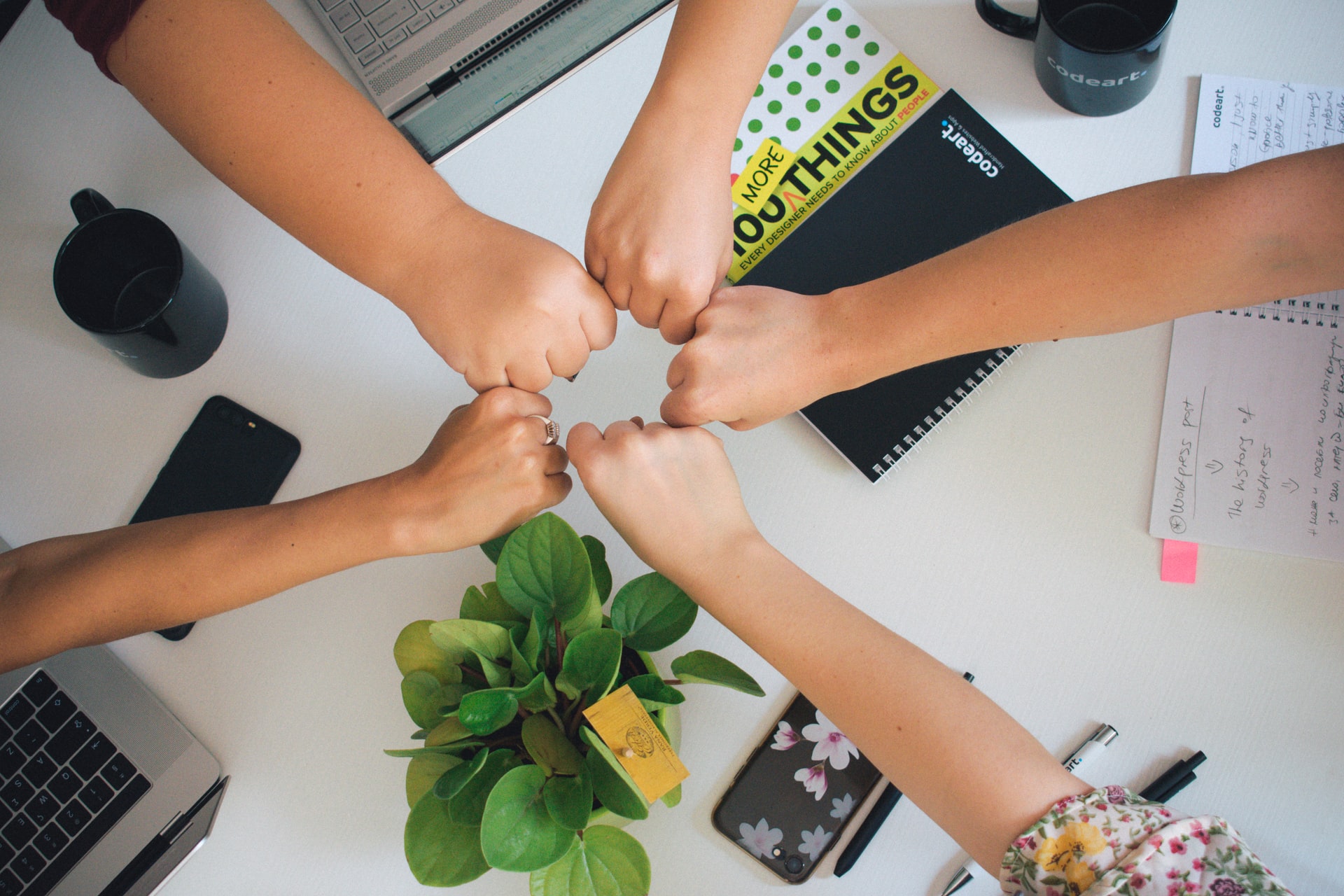
    How Well Do You Know The People You Work With
    How Well Do You Know The People You Work With

    No matter where you work, you spend most of your time at the office.

    We all know what difference a good and a bad culture make in the workplace (1). The general mood at work affects people’s happiness as well as health.

    There are five main reasons why people leave their current place of work (2). They are:

    • Poor leadership
    • Low salaries
    • Change of career goals
    • No career progression
    • Managers taking credit for their employees’ work (No appreciation)

    When people feel they are treated like resources and not human beings, they don’t like it very much. We all know how it feels like to be treated like machines, hired to just get a job done, and nothing else.

    Tools or People?

    Being treated like tools doesn’t make for a happy mood in the office. Irrespective of where we work and the kind of work we do, we all live very parallel lives. We are all humans – and we are all someone’s children, siblings, parents, spouses, employees, colleagues, and friends. This is true for everybody, no matter what their position at work.

    Modern workplaces are often designed to treat humans as resources or machines to get the maximum out of them, but all of us are more than a tool to be used for a purpose.

    Why Should You Know Your Colleagues Better?

    Well, you don’t have to. But if you do, it will help you make better decisions, create a happier working environment, and be more productive at whatever you do at work. This is especially important if you manage a team of people, as you can have a massive jump in productivity by having a simple paradigm shift of knowing your colleagues better.

    Team dynamics are important, and once you understand that each person’s productivity is tied into everyone else’s productivity, you’ll start to realize how important it is to know them a little deeper – as human beings and not just as cogs of a machine.

    Making Friends At Work Can Make a Huge Difference To Your Wellbeing

    Why Digging Deeper Is Important?

    Would you be able to tell if one of your colleagues was having a bad day (3)? And do you know that just asking that can make a big difference?

    The dynamics of the team you work in are often complex. Everyone has their own likes and dislikes, work ethics, different approaches, and opinions about all kinds of topics. By understanding the people you work with a little deeper, you’ll find it easier to connect and work with your team members.

    Apart from the productivity gain, it’s also great to have friends at work, so that you can discuss things other than work.

    Humanizing Colleagues

    Research today shows that your job becomes more fun and satisfying if you know your colleagues on a personal level. (4)

    We often forget that our team members are human as well and that they have other things going on in their lives. A colleague may, for example, be going through a divorce, or dealing with a sick family member, which would have a massive impact on their work. (5)

    We all have different ways of coping with tragedies, break-ups, and life’s other frustrations. You may have noticed some of the following signs with one of your colleagues:

    • They seem to be distracted, and there’s a sudden increase in errors in their work.
    • They may be unable to focus on tasks, which leads to poor decision-making.
    • They may be taking more time off work.
    • Their health seems to be suffering.
    • They look stressed (6).

    When you see any of these signs, think about how you would feel if you were in their situation? What type of support would you want? If you know your colleagues well, it will be easier for you to be supportive. It will also be easier for them to open up and find a safe space to share.

    You are working in a company and doing business. But you are doing it with people (employees), and for people (customers). If you do not know the people working with you, it becomes all abstract. What is the point of doing business or work, if you can’t connect with people working alongside you on a deeper level?

    “Too many companies believe people are interchangeable. Truly gifted people never are. They have unique talents. Such people cannot be forced into roles they are not suited for, nor should they be. Effective leaders allow great people to do the work they were born to do.” – Warren Bennis
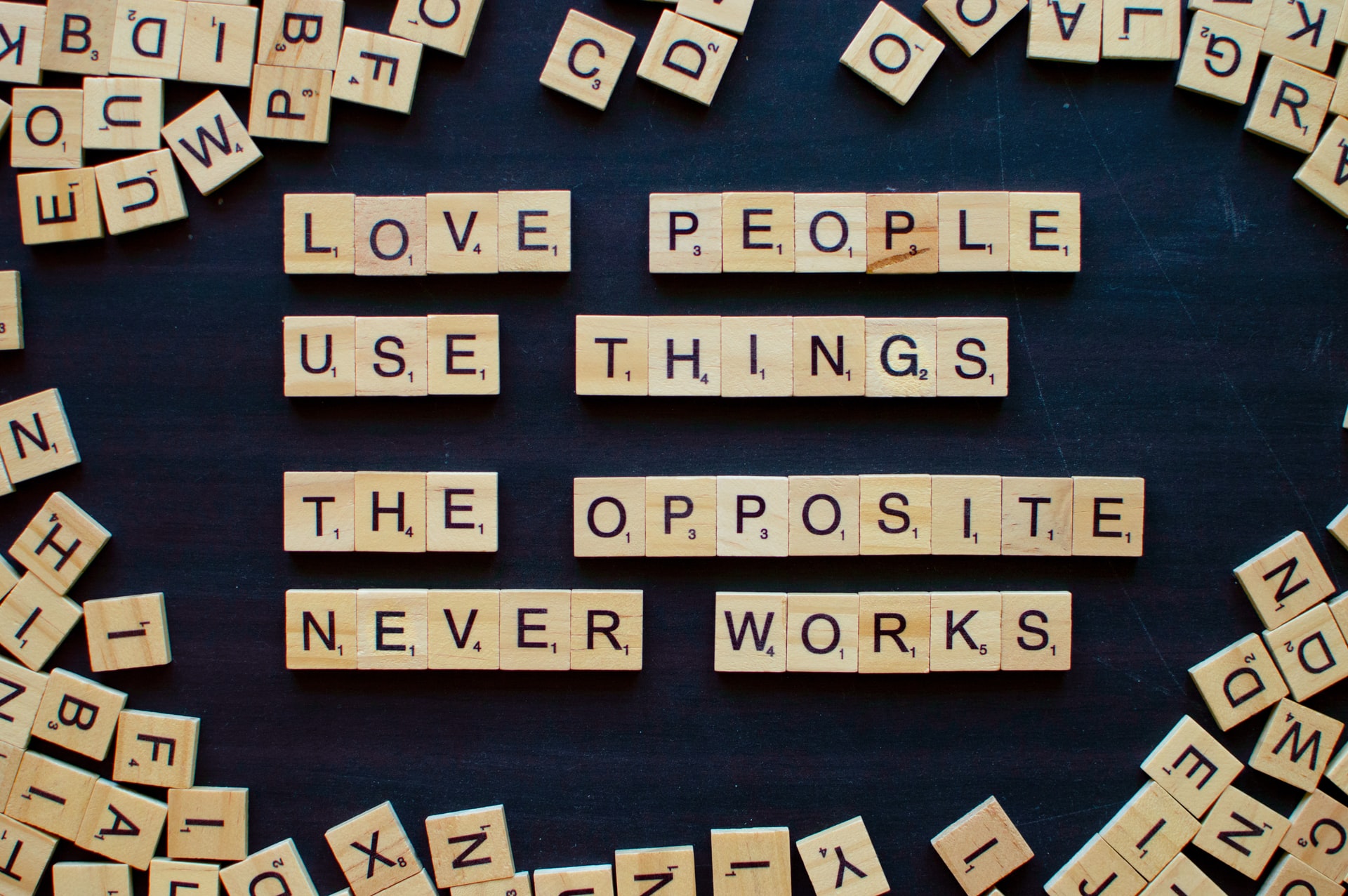
    Love People Use Things

    5 Reasons Knowing The People Behind Your Colleagues Matters

    Getting to know your colleagues personally provides the following benefits:

    1. Makes It Easier to Learn From Others

    Knowing the people behind your colleagues leads to better teamwork. And better teamwork increases the opportunity to learn from each other, as well as coming up with creative solutions.

    2. Decreased Stress Levels At Work

    If you are hating every moment at work, you will be stressed and it will impact your happiness and productivity. The same applies to your colleagues.

    Knowing your colleagues better allows you to support each other and offer a helping hand or a shoulder to lean on. If you are going into the office knowing that you have a supportive team and can have a cup of coffee and talk about what’s bothering you, your stress levels will decrease.

    Less stress at work means more productivity and fun. Which in turn leads to people staying in companies longer.

    3. Increased Sense of Responsibility & Quality of Work

    Having a deeper connection with the people you work with increases our sense of responsibility towards each other and commitment towards the business.

    When you have a closer relationship with your colleagues, you make decisions taking into account the bigger picture. Improved decision making leads to better work quality, which is a win-win for everyone.

    4. Aliveness and Joy

    If we are treated like machines in the workplace, we lose our sense of aliveness. Making an effort to get to know people better gives everyone space to be themselves.

    This affects not only office dynamics, but it spills over to how you deal with people in your lives. Everyone feels better when there’s joy and fun in the office.

    5. Increased Wellbeing In and Out of the Office

    When one area of life is difficult, everything else feels worse. Similarly, if you can improve the quality of your life at work, it spills over into your home life too.

    You are healthier, happier, and more productive if you work with friends and not just colleagues. Despite the hardships or challenges you face at work, you will remember and cherish these moments as you were in the company of friends.
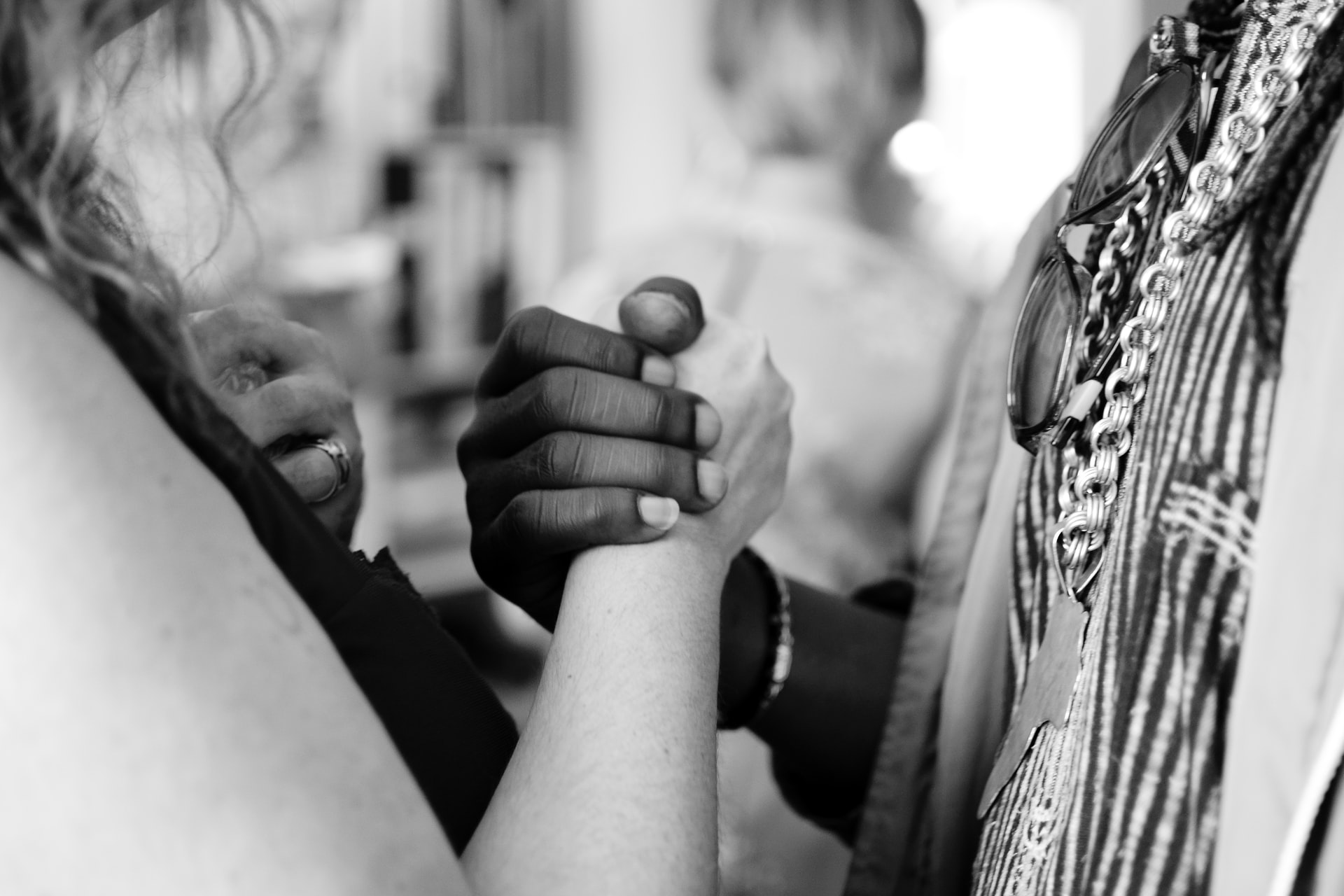
    “Stop taking care of your career. Start taking care of your people. And if you do that, they won’t let you fail.” - Jim Collins
    “Stop taking care of your career. Start taking care of your people. And if you do that, they won’t let you fail.” – Jim Collins

    Conclusion

    If you don’t know the people behind our colleagues, what are you working for? Economic growth, profits, revenues, market share? All those terms become very abstract and disconnected when you don’t work with people you enjoy spending time with.

    With your work, you serve the clients and customers of your business. By knowing your colleagues better, you can directly serve the very people in your office, which leads to all the benefits listed above.

    Are you being treated like a resource or a machine? Are you treating others in your office that way? Now is the time to rethink that and get to know your colleagues as human beings. You will be surprised at the difference it can make – both inside and outside of work.
  • 10 Quick Tips on How to Make Investments in People – the ‘only’ thing that matters

    Sometimes back I wrote about why people are the best investment we can ever do. Today I was thinking of how simple it is to make a conscious effort to show people they matter to us. I came up with these 10 simple points to show the people in our life what they mean to us –


    Very true
    Very true

    1. Ask for their opinion on something important to us. It will give us some valuable ideas and leave them feeling valued.
    2. Thank him/her for something they did for us, now or in the past.
    3. Show interest in their lives, and look if there is any way we can contribute.
    4. Respect their time. Always be the first one to reach for a meeting. Never make them wait.
    5. Don’t do anything else while talking to them directly or over the phone. Give them your full attention.
    6. Apologize when you make a mistake. Ask what can you do to make it up to them?
    7. Show your faith in them, even when they themselves don’t. Tell him/her – “I believe in you”.
    8. Share your dreams, plans, crazy ideas with them. And listen to theirs.
    9. Celebrate their successes and victories.
    10. Make what is important to them, important to you

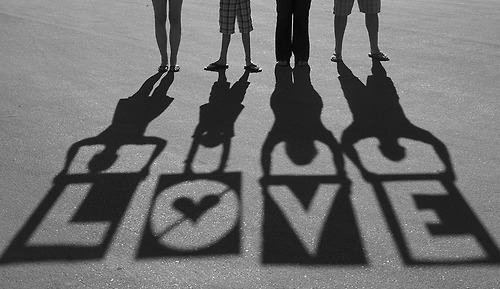
    If you have to do only thing, love people
    If you have to do only one thing, love people

    Life is about relationships and not things. And a strong relationships is built day by day, like any strong building or organization. So let’s make daily efforts to show people that they are special and we care about them.

    P.S.These are not a set of tips we can use to manipulate others. Believe me, people are smart enough to sense out the fake from the real and genuine.

  • Things That Do Not Matter vs People Who Matter

    In our day to day lives, we very often loose the bigger perspective and be consumed by many small issues which don’t matter too much in the long term. In the heat of the moment, it is not uncommon for people to see other people with a ‘what can you do for me?‘ attitude only. Placing undue attention on materialistic things weakens our ability to see the value of basic human to human bonding. There is also a famous quote by Spencer W. Kimball

    “Love people, not things; use things, not people. ”

    If we take the bigger perspective of life into the picture, people are always more important than anything materialistic. All materialistic things have been created by humans only and never has any materialistic thing created a human being. Remembering the value of human life and relationships can help us realize that things can always be replaced – houses can be rebuilt, lost possessions can be regained but the people in our lives are not replaceable. And during tough times, it is always the people in our lives who help us weather the storms and never our possessions. Yet in our good times, how easy it becomes to become attached to our jobs, money and ‘what we can buy‘ when the real joys of life are always free.

    "People were created to be loved, Things were created to be used, The reason the world is in chaos, is because things are being loved, and people are being used."
    "People were created to be loved, Things were created to be used, The reason the world is in chaos, is because things are being loved, and people are being used."

    Decide What is Important, the Person or the Matter
    Before getting into any conversation, we should always ask ourselves “Who is more important, the person or the task at hand?” and then never forget this during the conversation. There might be times when our ego can drive us to say mean things which could harm the relationship, even if we get the desired outcome. But is it worth it? And at what cost? It is very important to recognize when we are driven by our ego, and then STOP.

    What if we are right?
    Even if we strongly believe that what we are saying is right, we should not hurt the other person’s ego by trying to prove him wrong, or acting in an aggressive and rude manner. What one ego is saying can never be countered by the ego of another, but the other person can always be brought to reason by being compassionate and patient. The point I am trying to make is that if we realize that the conversation is driven by ego, we should allow the other person to get away with it, in the better interests of the relationship. Sooner or later, that person will realize it too.

    Materialistic Things are Important too
    All this is not to suggest that we should stop using our brain to design and manufacture new machines, factories, industries, ideas and services. All these materialistic things have been the greatest achievement of human beings. In the last two centuries, first with the industrial revolution (factories, cars, electricity, assembly lines) and the progress in science we made with that, and now with the knowledge revolution (computers, internet, globalization) we have totally changed the quality of human life on earth. So while materialistic things must be the output of our ever growing and creative mind, but they are only created to serve us and make our lives better, not the other way round.

    In conclusion, love for others creates happiness for us and for others too. It’s easy to believe that money and things bring happiness, but they don’t. Happiness is a habit, and not an outcome of something. It is therefore much wiser to love people and use things, than to love things and use people.

  • Let go of the need to be right

    If I have to pick up one thing I learned in the last few years which has made the most impact on me, I would not hesitate to say it has been the way I see and judge things to be right and wrong. We all have a strong sense of righteousness about certain matters in our life. It could be related to how we live our lives, or how we run our business or something else. It could be in matters as big as relationships and business, and as small as being a vegetarian or speaking the truth. Letting go of my perception of what I thought was right (and wrong) in this world has been the best thing I have done (and have to do every single day).

    There is no right or wrong
    When a child is born, there is no right or wrong for her. But as she grows up in this world, based on her parents, surroundings, culture, religion and numerous other factors she begins to develop a sense of right and wrong. Everything she does has to conform to these norms and she starts to despise everyone who doesn’t conform to those standards. This is very evident when people of different religions clash with each other, or people from different cultures find it difficult to stay and work together. Only if they realized that they are doing exactly the same as the other side, the only thing difference is their view of what is right and what is not? And that if they had been born and brought up in the opposite side, they would have turned out exactly as the person on the other side.

    Your beliefs are not you
    As a child grows up, he begins to associate himself with thoughts such as his gender, his possessions, nationality, race, religion, and later on, education and profession. We also associate ourselves with roles such as son, a brother, a parent, a friend and so on. There are many other such things which give identity to each one of us as we grow up. But the biggest problem arises when we start identifying ourselves with these labels. We are not our gender, nationality, religion or the different roles we play. We relate all these to ourselves by using words like ‘I, me, mine‘, but what is very important to realize here is that all these are just labels and not the real us. A child doesn’t have any such labels, and see how happy we are as children. But as we grow, we start associating ourselves with these labels and they become a part of us. What if one were to loose his nationality, religion, job, education? How would one react? People would go crazy because the things they have worked so hard to identify themselves with during their life has suddenly disappeared. Because they mistake these labels to be themselves rather than just what they are – ‘labels’.

    Choose being kind over being right, and you'll be right every time. - Richard Carlson
    Choose being kind over being right, and you'll be right every time. – Richard Carlson

    Is being righteous wrong?
    As I am advocating the need to let go of certain ideas about what is right and wrong, having such beliefs is not ‘wrong‘ in itself. What is important is to see them for what actually are, just our beliefs and not mistake them with ourselves? It is our ego (which is very very unconscious in nature) that makes us identify ourselves with things and beliefs. Once we see these beliefs as just beliefs, we can free ourselves from this trap. When this reality hits upon us, we may even laugh in disbelief. Because due to this illusion of mixing our beliefs with ourselves, men have fought wars, killed each other and continue to do so.

    Nobody ever achieved anything by being right
    So the next time you feel the urge to prove someone wrong and want to take pride in being ‘right‘, just realize that your ego is owning you in such moments. Once you are present to this, the ego loses its hold over you and you will feel free and light. It is the same reason that sometimes the poorest of people seem really happy (because they don’t have anything left to identify themselves with). It is also the same reason some people reach great heights after hitting bottom, when they are taken away of their so-called possessions and realize the futility of all of them in the first place.

    So the next time you are caught in a clash of opinions, remember that these are only opinions and the unconscious ego at play. People don’t defend their opinions, they defend their identities. Sometimes, it means to take a step backwards, saying sorry even when you are not at fault, because you can see the bigger things at play (the fight of egos). Seeing people separate from their egos and built-up identities can free us from this trap of proving ourselves right and we can move on to more productive things in life.

  • People are the best investment

    Throughout my life, I have seen my parents struggle for money due to some business decisions gone wrong or for health reasons. Due to this, we never had money to spend on anything which was ‘not necessary‘. Most of what my parents earned were spent in our (the two brothers) education and other long term investments, and rarely on movies, entertainment or traveling. Maybe due to this lack of financial resources, all of us made up for that by focussing on little things like spending quality time together, always helping anyone who is in need and getting connected with people on a personal level. I have seen and observed my father chatting and getting along very well with one and all. I very vividly remember my father taking me to his office sometimes and everybody, from the security guard to the peon to the street vendors outside to the receptionist inside, greeting him warmly. It felt like my father was friends with everyone in the building. This article is about people, and how they are the best investment opportunity for us.

    Acknowledging and Greeting

    Normally, as we go through our life we tend to focus only on what is important and ignore everything else. Think about how many people we passed through today from the time we left our home till we reached office. And to how many of these people did we stopped and said “Good Morning”. It is such a simple thing to do, and a good morning wish leaves both parties smiling, still we ignore it most of the times. Very often we forget that how good it feels when somebody appreciates us and believes in our abilities. So isn’t it natural that we should thrive to do the same to others?

    It Always Come Back

    We invest our time and money in our jobs, stocks, mutual funds and real estate. We buy cars, phones and other gadgets and take pride in owning them. But I have always believed that the best investment we can make in are people. You might or might not get your returns from the stock market or the real estate market, but investing in people always come back. If somebody needs our time and attention, nothing can be a bigger investment for us to help that person with honesty and compassion. There is no better sight in this world than seeing somebody smile and knowing that we are the reason behind it, that we could be of some help. And even if we talk in terms of returns, investment on people always tend to come back in life, and in proportions we can’t imagine. I am a witness to how many different unknown people have come forward to help my parents in times of need, without even their asking for it.


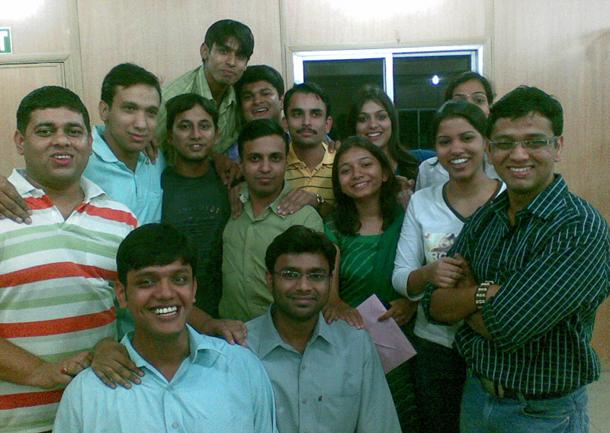
    Myself and friends at Noida in 2008
    Myself and friends at Noida in 2008

    It is a Challenge, but a Very Rewarding One

    Now it is easy to say that we must invest in people, but it can get really challenging and daunting in real life. Many times we will come across people who are very easy to ignore, or who trigger our temper and we might want to shout and yell at them. But on the other hand, empowering someone and taking time to listen to them can sometimes surprise even them. Many a time people will realize this and thank you for the extra effort you are putting, and that is always a very rewarding experience.

    Have Fun, make Them Laugh

    If we try to remember the times when we have been angry, upset, frustrated or just unhappy, we will realize that we have been taking things too seriously. All the life’s so called problems occur mostly when we are lost in a moment and lose the bigger perspective. If we look at things in perspective, an annoying boss in office might not be as important in the picture of your ‘whole life‘ as important as we might have made him/her. So it’s always good to loosen up, and treat people as human beings first, rather than good or bad resources. Have some fun, crack some jokes and laugh. For many, this period of fun might be the best part of their day, and you can be glad you were a part of it.

    Be Genuine, Truthful and Trustworthy

    All what I have written above is not some trick and people are smart enough to find out whether you genuinely mean your affection or if you are bluffing. So what I am advocating is to really become the person who cares about others, whom others can trust and who doesn’t break promises. It takes effort to ingrain these features in our character, but if we can do that, we will reap the rewards. As I said before, compared to our bank balance, stock portfolio or real estate, if our investment in people start giving results, it can dwarf all other investments we might have.

  • How my biggest strength was stopping me from achieving results?

    Time Management and prioritizing things have always been one of my biggest strength. First, as a student, and later as a professional, I have always tried to be ahead of time, and plan things in advance. I can’t remember how it started, maybe I just inherited this from my parents or my knack of doing something ‘extra‘ always made me manage my time properly. However, in the last one year, I have realized how this strength of mine has stopped me in achieving more and better results, and what I had to do to not let this strength become a barrier.

    The earliest example of time management in my life came from my parents. I still remember my mother used to wake me up at 6 AM every morning while I was 7-8 years old and how my parents made me study for 30 mins every morning before leaving for school. The same used to continue after coming back from school with homework in the afternoon, some playtime in the evening followed by one hour of TV at night. I think the same planning of time carried on when I went to college in Jaipur and later when I started my career at Noida.

    Now, as a student, and as a professional who was just starting his career, most of the work I did was individual in nature. It means I had the responsibility of doing something on my own, and I always enjoyed it as I was good at prioritizing and scheduling my time. Most of the success I tasted at work was primarily because of my ability to manage my time and schedule. All this was going well till I started handling the 99acres tech team. This moved me into a leadership role for the first time and I was responsible for the work of the whole team, and it was a team job rather than an individual job.

    Are your strengths becoming your weakness?
    Are your strengths becoming your weakness?

    During that one year in Noida, I found that I made good friends and had a good relationship with people who were good in their work and finished their tasks timely. On the other hand, I felt anger and frustration whenever someone was unable to complete their work timely. I started treating both sets of people differently. In other words, I enjoyed working with people who shared the same traits of time management and resented working with whom ‘I considered‘ poor performers. At that time, however, I was totally unaware that this was stopping me from achieving more results.

    Only in the last one year, when I have taken some projects in the social space, like Waste Management and Anti-Corruption, that I have realized how my biggest strength was stopping me from achieving results. As my work grew from personal to interacting with people and teams, it was obvious (not to me 😉 ) that there would be differences in the way people think and work. Different people will be good at different skills, and for the success of any task or project, it is very important to leverage the complementary skills of people so that the output is bigger than the sum of its parts. Instead, what I was doing is aligning people with same sets of strengths and weaknesses together, making the project difficult and more prone to failure.

    When I finally realized that how easily I used to get worried and upset when somebody did not replied in time, or doesn’t do what I expected him/her to do, I made a conscious effort not to let this become a show-stopper for the project, and for me. It was not easy in the beginning, as I was more concerned with somebody not replying in time rather than thinking about the project as a whole. The day I stopped seeing this behavior as ‘it should not be happening‘, life became a lot easier and I realized how this way of being has impacted my previous projects too.

    Once I realized this, I started building systems, structures and processes that provide necessary help to the people to empower them so that delays can be avoided, or their impact be cushioned at best. This helped in creating a win-win scenario with the team working together with each member contributing in his/her own way and without any resentment, worries, etc. There is still a long way to go for me in this area, and I think the best learning will come when I encounter such situations in future, and how I choose to react to them.

  • 5 examples to show how our environment influence our behaviour?

    Our behaviour is the most important thing. The way we interact with others, react to situations and go through our daily chores eventually makes us the person we are. Be it our work life or personal life, our surroundings shape our thoughts and our actions originate from our thoughts. Our actions / behaviour actually shape the way people think about us, or whether we succeed or fail. For example, having lived in both Bangalore and Delhi, I can say the weather does have a big effect on me. It is much easy to get angry / shout at one and all in the sultry hot delhi weather. Even if you are not angry, it is very easy to lose your temper on the slightest provocation. But if you are greeted by a cool breeze whenever you get out (as in Bangalore), you tend to become happy even if you were in a bad mood earlier. The point is, our surroundings, whether natural or chosen, tend to have an effect on our personality and our day to day behaviour.

    I am listing 5 examples how we can choose to surround ourselves with different things and how can it bring out our best or worst –

    1. Want to be creative, surround yourself with art – If you are in a job where you are required to come up with creative ideas or just want to improve your creativity, surround yourself with art. Keep in touch with what is happening in the art world, and look out for creative advertisements, paintings, or any other form of art. Slowly, you will start appreciating work of other creative people and get your mind working. You will desire to do something on the same lines, and this will get you started. And continuously following up on different forms of art can give you ideas which you can apply in your area of interest.

    2. If you live near or visit places where you will find fast food restaurants or advertisements about fast food, you will end up craving for that burger or french fries. Burger and French Fries do taste good (though not healthy) so our mouth will start lickering and our subconscious mind will want us to have it. And if you are hungry at that time, the craving might get to you and you might end up eating fast food instead of doing what you should be. I am thinking of going to a MacDonald today as I am writing this piece, and I need to move on to the next point before I head to grab my fries. (Unfortunately, a MacD joint is just across the street where I live)

    3. Expose yourself to metrics about your work or business or performance and you’ll work to improve them. Metrics, and depicting them by graphs and other forms of pictorial representation give us a sense of how we are doing and how we should be doing. If we keep track of such metrics, we will work on improving them. It is the same reason schools and colleges have marks or grades so that people know what to measure and how to improve on those metrics. Collecting metrics is a qualitative way of improving stuff that is otherwise difficult to measure, and hence easy to ignore. If you want to improve something, find a way to measure it and surround yourself with info about it and you will see yourself working to improve it.

    4. If you see a lot of negative emotions in your daily life, you will tend to react to situations with a negative bend of mind. If you see people getting angry at each other, you might end up justifying their actions and find reasons to get angry yourself. If you fear something, then thinking about it or being in a vicinity which reminds you of your fear, you will tend up acting more reluctantly on matters you would have been confident otherwise. So if you tend to be around people experiencing negative emotions like frustation, worry, anger, disappointment, be aware that they can spread to you very easily.

    5. If you ineract with people making smart decisions, you will also take interest in it and learn from them. You will slowly and surely be able to understand how to handle different situations and how to go about in your decision making process. Your thought process will start reflecting the people who you spend time with. You will understand why they took a certain decision and will try to learn from it.
    Eventually, it is a choice of how we choose our surroundings. If you want a change in yourself, then just spend time with people / situations where you see that change. This holds true for both negative and positive thoughts.

anger anna hazare bangalore business challenge coaching conflict conversation corruption Cricket culture dandi march emotions energy friends fun gandhi giving gold growth hope india jan lokpal bill language leadership lessons Life listening love moment mother movie new year people perspective poem sachin tendulkar saleraja trust values walk waste women words world cup