Deploy Yourself

  • Are You Making These 3 Momentum-Killing Mistakes That Keep Success Just Out of Reach?

    The Truth About Why Some Founders Thrive While Others Just Survive

    Have you ever wondered why some entrepreneurs seem to generate unstoppable momentum while others stay stuck in endless cycles of hard work with little progress?

    I’ve spent years working with founders and discovered something remarkable: success isn’t about working harder or even smarter. It’s about momentum – that magical force that makes progress feel almost effortless once you have it.

    But here’s the painful truth many founders face: You can work incredibly hard and still have zero momentum.

    You know the feeling. You’re putting in the hours. You’re making the calls. You’re building the product. Yet somehow, success still feels just out of reach – like you’re pushing a boulder uphill that never quite reaches the top.

    If that sounds familiar, you’re likely making one (or all) of the three critical momentum-killing mistakes that plague even the smartest entrepreneurs – including me.

    Let me walk you through them – and show you exactly how to start fixing them.

    Momentum-Killing Mistake #1: Your Dreams Are Too Safe

    “Most people don’t set goals based on what they truly desire. Instead, they set goals based on what feels achievable.”

    Here’s a question that changed everything for one of my clients: Who decides what’s possible for you?

    Is it:

    • Your current circumstances?
    • What you think you can achieve?
    • Your available resources?
    • Your past experiences?
    • What others have told you is “realistic”?

    If you answered yes to any of these, you’ve found your first momentum-killer.

    The Painful Reality:

    When you set “reasonable” goals based on what feels achievable right now, you’re actually programming yourself for mediocrity. Your brain and your team will only generate enough energy to reach that “reasonable” target.

    I worked with a founder who kept setting “ambitious but realistic” revenue goals of 15% growth year-over-year. His team always hit those targets… and never exceeded them.

    When I pushed him to set a goal that actually scared him (tripling revenue in 18 months), something remarkable happened. His team immediately began thinking differently. They stopped tweaking their existing approach and started completely reimagining their business model.

    The result? They hit that “unrealistic” goal in 24 months.

    The Quick Fix:

    Ask yourself this question: “If I knew I couldn’t fail, what would I actually want to create?”

    Write down that answer without filtering it through the lens of your current resources, skills, or circumstances.

    Then ask: “What would need to be true for this to become reality?”

    This simple shift puts you back in the driver’s seat. Instead of letting current limitations dictate your future, you’re declaring what you want and then figuring out how to get there.

    Remember: Elon Musk didn’t wait until he had all the resources to revolutionize space travel. He declared his vision first, then figured out how to make it happen.

    Momentum-Killing Mistake #2: You’ve Become a Spectator in Your Own Story

    “Why does a pen fall? You could say, ‘Because of gravity.’ And you’d be right, but that answer leaves you as a spectator in your own life.”

    Let me ask you something uncomfortable: When things don’t go as planned in your business, what’s your first explanation?

    • “The market conditions changed.”
    • “The economy is tough right now.”
    • “Our competitors undercut us.”
    • “The team just isn’t executing.”

    These explanations might be technically true. But they’re also the exact reason you’re stuck.

    The Painful Reality:

    Every time you explain results using factors outside your control, you mentally position yourself as a powerless spectator rather than an active creator of your circumstances.

    I worked with a founder who constantly blamed “slow decision-making processes in enterprise clients” for missed sales targets. His explanation was perfectly reasonable – and completely useless for creating change.

    When we shifted his perspective to “I haven’t created enough urgency in our sales process,” everything transformed. He developed a new approach that compressed the sales cycle by 64% and achieved their MRR goal in just 6 weeks – which initially he wanted to achieve in 1 year.

    The circumstances hadn’t changed. His relationship to them had.

    The Quick Fix:

    Next time something doesn’t go as planned, ask yourself:

    “How am I creating or allowing this result?”

    This isn’t about blaming yourself. It’s about reclaiming your power.

    For every challenge you’re facing, find the part you own:

    • Revenue down? “I haven’t found the right message for the current market.”
    • Team not performing? “I haven’t created clear enough promises they have given freely to me.”
    • Product not selling? “I haven’t truly connected with what customers need right now.”

    This simple reframing transforms you from spectator to player – from someone watching life happen to someone making it happen.
    Momentum-Killing Mistake #3: Your Communication Lacks Crisp Clarity

    “Imagine walking into a restaurant and telling the waiter, ‘I want healthy food.’ What are they supposed to do with that?”

    Here’s a brutal truth many founders miss: Vague communication kills momentum faster than almost anything else.

    If you regularly use phrases like:

    • “As soon as possible”
    • “Best quality”
    • “Good results”
    • “More growth”
    • “Better performance”

    …then you’ve identified your third momentum-killer.

    The Painful Reality:

    When you communicate in fuzzy, imprecise language, you create three devastating problems:

    1. Team misalignment: Everyone interprets your words differently, creating confusion and conflicting efforts.
    2. Wasted energy: Your team spends precious time trying to figure out what success actually looks like.
    3. Frustration cycles: Work gets redone multiple times because the target keeps shifting.

    I worked with a founder who kept telling his product team to make their app “more user-friendly.” After three months and countless revisions, everyone was frustrated.

    When we got specific – “Reduce the steps to complete a purchase from 7 to 3 by April 15th” – the team delivered in just two weeks.

    The difference? Crystal clear communication that left no room for interpretation.

    The Quick Fix:

    Imagine every word costs you $100. How would that change what you say?

    For every goal or request, apply this three-part test:

    1. Specific outcome: What exactly should be different when complete?
    2. Clear timeline: By when precisely?
    3. Success measure: How will we know we’ve succeeded?

    Instead of “increase engagement,” say “increase daily active users from 3,000 to 5,000 by March 31st.”

    Instead of “improve quality,” say “reduce customer-reported bugs by 75% by the end of Q2.”

    This level of clarity creates immediate momentum because everyone knows exactly where they’re going and when they need to arrive.

    The Momentum Transformation

    When you fix these three mistakes, something remarkable happens. Instead of pushing harder for incremental gains, you create a momentum engine that pulls you forward.

    One founder I worked with implemented these three shifts and saw more progress in 90 days than in the previous two years. His words: “It feels like we finally have the wind at our backs instead of in our faces.”

    Ready to create unstoppable momentum in your business? Here’s your 7-day plan:

    Day 1: Write down your boldest, most exciting vision without filtering it through current limitations.

    Day 2: For your biggest current challenge, identify how you’re creating or allowing it.

    Day 3: Rewrite your top three business goals using the specific outcome/timeline/measure format.

    Days 4-6: Share these with your team and refine them together.

    Day 7: Commit to one “unreasonable” action that could create a breakthrough.

    What Happens Next?

    Founders who complete this 7-day process typically experience:

    • Greater team alignment and energy
    • Faster decision-making
    • Clearer priorities
    • And most importantly – momentum that makes each week more productive than the last

    Will it be easy? No. Will it be worth it? Absolutely.

    Remember, the difference between thriving and merely surviving isn’t how hard you work – it’s whether you have momentum working for you or against you.

    Which will you choose?


    Ready to create unstoppable momentum in your business? This is just the beginning. For a deeper dive into creating momentum, join our 5-day Immediate Momentum Challenge where we’ll work through these principles in detail. Sign up now and get immediate access to simple and immediately actionable bonuses and goodies even before the Challenge starts.


  • Issue #88, 3 Oct 2023 – The Simple Art of Long-Term Success (simple is not always easy)

    Welcome to the Deploy Yourself Newsletter, where I gently provoke you to show you your own power. This newsletter is an invitation to your leadership. You can also read this issue online.

    Hey,

    The Simple Art of Long-Term Success

    Do you ever wonder what sets apart those who achieve lasting success from those who fall short?

    Since I grew up not having much, I have been fascinated by the above question since childhood.

    In my teens and early twenties, I got enthralled by our usual definitions of success – work hard, push ourselves and others, do not show weakness, do whatever it takes and become ruthless.

    On this journey, I tasted success and met many successful people who have “made it”.

    And yet, I never found real happiness, satisfaction or joy.

    And when I dug deeper into the lives of those who were successful, I found them miserable – and yes, I am talking about millionaires and even a few billionaires.

    It’s time to shift our perspective and adopt a mindset that guarantees long-term success – which is not just about results but also the kind of life we live. If we are not joyful, healthy, feel proud, and take meaning from what we do every day, is it even success?

    In my book, it is DEFINITELY not that.

    You can stop reading if that is a success for you.

    Today, I want to challenge you to think differently about your success and embrace a few simple strategies that will propel you to new heights.

    Here’s my winning formula for success (the way I define it):

    1. Goals: Decades – Set your sights on grand, audacious goals that span decades. Think beyond immediate gains and envision the legacy you want to create. And it has to matter to you on a deeper personal level. Powerful goals which you do not care about create SCAMS, not a LIFE.
    2. Strategy: Yearly – Craft a strategic roadmap that aligns with your long-term vision. Each year, evaluate and adjust your trajectory to stay on course. The reason to think yearly is to measure progress, not to become rigid and never change.
    3. Tactics: Quarterly – Break down your strategy into actionable quarterly plans. Stay agile and adapt as needed, keeping your finger on the pulse of the ever-changing business landscape. Live life in powerful chunks of 90 days.
    4. Effort: Daily – Success is not an overnight phenomenon; it requires consistent daily effort. Commit yourself to relentless execution and discipline, even on the toughest days. Practice over performance.

    The above will help you outlast everybody. This is how you defy the odds.

    In a world filled with those seeking instant gratification and quick wins, keep it simple and plan for the long haul.

    While others come and go, you’ll remain steadfast, building momentum with each passing day.

    As I said it, it is SIMPLE.

    BUT

    SIMPLE is not the same as EASY

    Consistent daily action is where the rubber meets the road.

    Where in your life will you start applying the above?

    Hit reply to share your answers.

    I read and respond to every reply.

    Fascinating Articles & Stories

    One

    New interviews on the Choosing Leadership podcast

    Since I have not written to you for 2 weeks, here are all the interviews that have been published since then on the podcast.

    Bookmark them and listen at your leisure.

    1. I learned from Abhinav & Raghav Aggarwal that “You are the sum of all the things you do daily”
    2. I learned from Michael McFall that “It is on YOU to earn the right to lead”
    3. I learned from Sanjay Kaul that “I’m not here by design, I am here by default.”
    4. I learned from Stefany Barker that “Things are hard, but they can be under control”

    Two

    Curated resources for your leadership

    Here are my best finds from all over the internet for your leadership. Make yourself tea/coffee as you read, listen and learn.

    Pro-tip – Listen and read the below about YOU – not about the author. (reply back and ask if you do not understand what that means)

    That’s it for now. If you have any questions or feedback, or if you are new and want to introduce yourself, hit reply. I read and respond to every reply. All the best,

    Sumit

    P.S. – I am looking to interview more inspirational leaders on my podcast. If you know anyone I should interview, make an introduction.

    (Twitter) @SumitGupta
    (LinkedIn) Connect

  • The Benefits of Silence for a productive and meaningful life

    Let me start with a story to illustrate the benefits of silence

    There was an old man whose most beloved possession was a watch left to him by his late wife. He treasured the timepiece and had it on his person wherever he went. 

    One day, in anticipation of his grandchildren arriving for a visit, he was cleaning out the spare room when he misplaced his watch. His grandchildren arrived to find him distraught and offered to help search the room. 

    With four children and two adults combing the room, it seemed ever more cluttered and crowded than before, and the watch was still not found. As the others left the room, shaking their heads, the youngest child remained and simply sat on a chair and waited. 

    A few moments passed and he walked out of the room with the watch in his hand! Overjoyed, his grandfather asked how he’d found it. The boy replied, I sat in silence and listened for the tick-tock to lead me to it.” 

    Every 2 weeks I share my most valuable learnings from living life fully in my Deploy Yourself Newsletter. Sign up now to download a workbook with 164 Powerful Questions which I use daily in my work and coaching. Allow these questions to transform your life and leadership.

    “To a mind that is still the whole universe surrenders.” ― Lao Tzu     

    Silence is a difficult thing to justify in today’s world (1). Technology has progressed to the point where we are living action-packed lives. If the phone isn’t ringing, notifications aren’t beeping, and we aren’t watching the latest news, there’s an overwhelming sense of missing out on something important. 

    Have we forgotten the concept and benefits of silence? As the old adage “Silence is golden” says, it was once considered to be a valuable thing. In recent years and in our fast-paced lives, this has changed. 

    Have our lives become so busy that we have no time for silent moments? Or are we so afraid of silence that we purposely keep our lives filled with noise? 

    The Benefits of Silence 

    If you consider silence to be the absence of noise, it can be a little odd to think that something that essentially isn’t even a thing can have benefits. It’s true, though! 

    Here are 9 benefits of silence in our lives: 

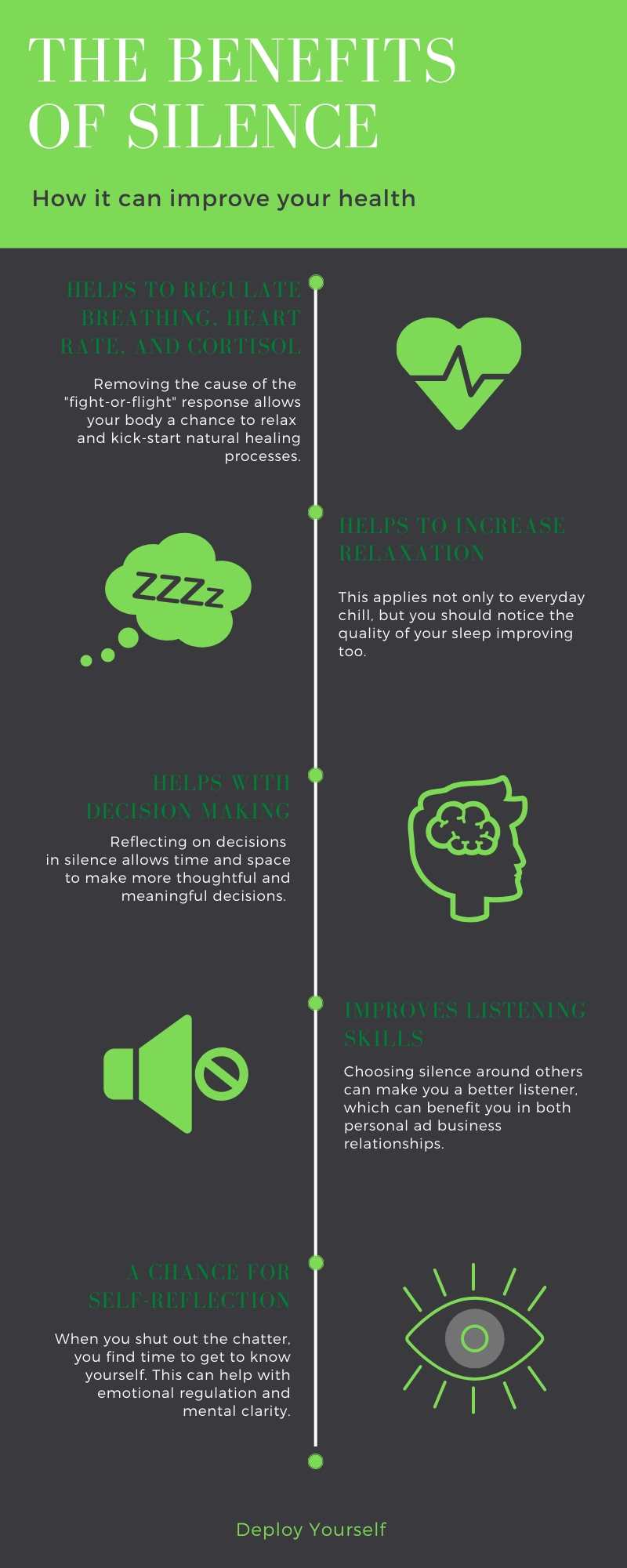
    1. Calmer Mind & Body 

    When you remove the noise stress from your life, it gives your fight-or-flight response a chance to calm down. Your heart rate starts to slow down, your blood pressure lowers, and blood circulation improves (6). 

    When your body is in alert mode, it’s waiting to do take action to survive a threatening situation. With sound always around us, we find ourselves in a constant wired-up state. 

    Once the noise causing the stress is removed and you finally relax into silence, your body is free to do what it would normally do, and balance itself once again. As research has shown, even 5 or 10 minutes of silence can have a positive effect on the body (7). 

    2. Relaxation

    If you’ve ever been on the verge of falling asleep and been woken by a sudden but small sound, you’ll understand how noise can affect relaxation. 

    Placing yourself in silence allows you to be fully present in the moment. No distractions can break your silence when you can’t hear anything! 

    3. Awareness In Decision Making 

    Silence invites reflection, and reflection allows you to make more thoughtful and meaningful decisions (8). It’s easier to become aware of the consequences of particular situations when you have uninterrupted time to think about them – and by uninterrupted, I mean free from technology, chatter, and noise. 

    4. Improved Listening Skills 

    Silence doesn’t only need to be practised when one is alone. Remain silent when around others and you will be surprised at what all you hear! Learning how to bring silence into your life can help improve listening skills (9) – something that is a valuable skill in both personal and business relationships. 

    5. Self-Reflection 

    When you’re constantly bombarded by outside information, it can be hard to know what lies inside us. Many of us simply don’t have time for introspection, and yet becoming self-aware has so many benefits – from mastering your emotions to being more comfortable in your own company. 

    Spending time in silence allows for space to know yourself in the calm of a restless mind (10) There’s a reason even Bill Gates (11) takes a few weeks off every year to spend alone in silence. 

    6. Enhanced Creativity 

    You may be surprised to know that negative emotions can ruin creativity (12). Considering that noise can be an irritation and cause painful physical symptoms, too much noise can cause us to lose our creative spark. 

    Doing creative work in silence can be a great way of stimulating your creative streak. Also, removing one of the five senses (in this case, hearing) can cause the others to become more sensitive, which could flow over into artistic work. 

    7. Improved Sleep Quality 

    Considering the positive effects silence can have – a calmer mind, a healthier body, and improved relationships and communication – it’s no wonder you’ll get better sleep if you have more silence in your life. 

    If you can make your sleeping environment as quiet as possible, you’ll also fall asleep faster and have less chance of being woken by small sounds. 

    8. Increased Focus 

    You learn to be aware of your own thoughts and emotions in silence. This, in turn, leads to being more focused. When we’ve become used to the quiet, it gets easier to direct our mind to whatever we want or need to focus on at the time. 

    Also, outside noise is a distraction! It’s hard to work properly when you’re always being interrupted by sounds. Bringing in silence can improve your focus, and even if you’re still working in a noisy environment, you will not be as bothered by the noise. 

    9. Healing of Mind & Body 

    When your body is no longer in fight-or-flight mode, you’re more relaxed, making better decisions, have a creative outlet, are learning about yourself, and getting better sleep. Your body and mind begin to heal in silence. 

    Studies have suggested that the brain actually grows when we spend time in silence.

    Why We Struggle With Being Silent 

    If you stop and listen, you’ll notice being surrounded by a lot of noise every moment. Traffic, crowds, the chatter of a conversation, phones ringing, that music coming from somewhere… There’s always some sound. Even at night, when most people consider it to be “silent”, there is a surprising amount of sound.

    The more technologically advanced we become, the less silent the world around us is (2). Every sound has a purpose. The TV in the background makes sure you don’t feel so alone. Music in your back pocket means that you have something to see you through every mood. The zing of the phone means someone has made contact with you. 

    This “usefulness” of sound highlights a prominent modern-world issue – the fact that we’ve evolved to want instant gratification in everything we do, from fun to work to relationships. Why? 

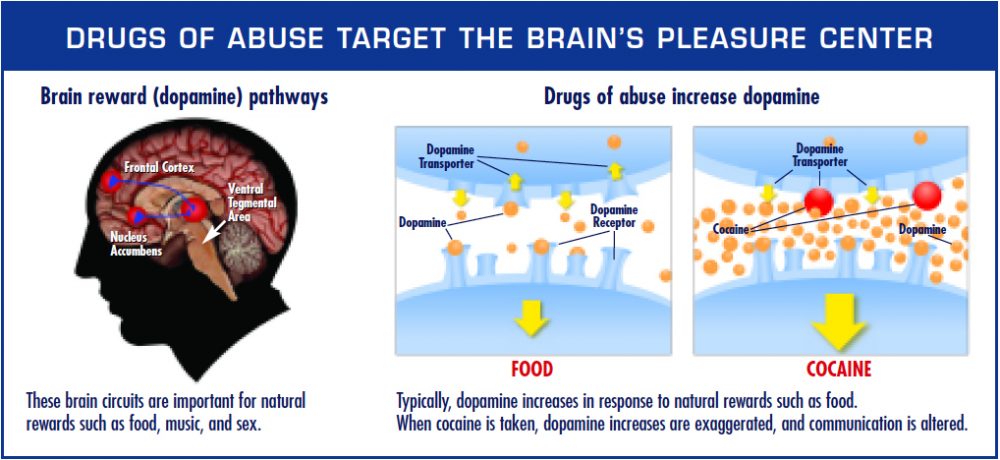
    Whether it’s the first bite of that hamburger, the satisfaction of being liked by someone you just met, or the chime of your phone when a message comes through, that feeling of instant gratification sets off a rush of dopamine (3) that makes you feel good. 

    In the past, drugs and food were the big dopamine spikers – you can see the effects both have in the picture above. Today, the ping of a phone or the pop-up of an email has the same effect on our brains.

    There is no instant gratification with silence—and that’s the biggest reason we struggle to deal with it today. 

    Because of this, it has become something that almost doesn’t exist anymore. When we do encounter it, we don’t know what to do with it. It’s far easier for us to break the silence than to sit through it. 

    The Harmful Effects of Noise 

    You may be surprised to know that silence has some amazing benefits. To really understand the significance of this, you need to understand how noise affects us in everyday life. 

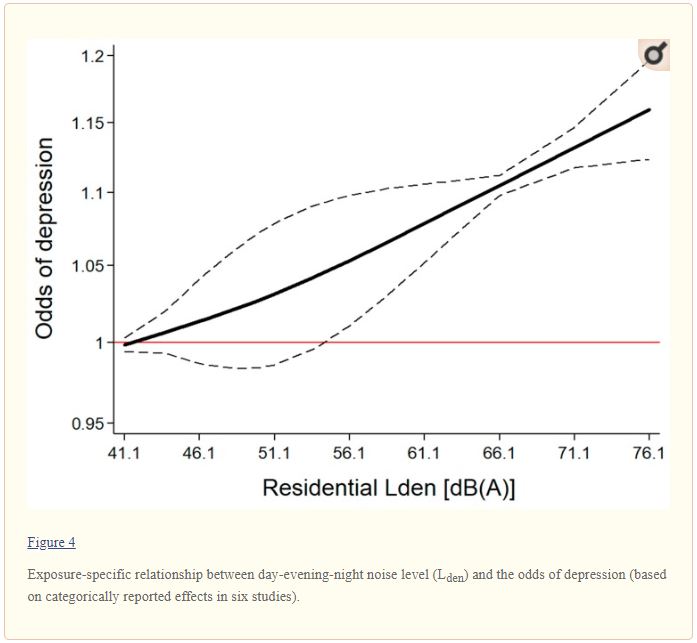
    Studies have shown that people living in areas with high noise levels are more likely to suffer from increased stress levels, depression, and heart conditions (4). 

    Imagine living next to a train stop. You constantly hear the crowd’s chatter, the loudspeaker calling for passengers, and the train arriving, squeaking and rumbling on the tracks. There are some specific problems that come into play here, such as: 

    • Your sleep is constantly disrupted, so you’re not getting enough rest (ie. the body and mind are not healing as they should). 
    • Your communication with your family may be more difficult, leading to misunderstandings and conflict. 
    • Children may struggle to learn correctly, as their hearing is impaired. 

    Your response to external audio stimuli is actually an important survival mechanism (true for both loud, sudden sound, and more constant background noise (5). The problem is that when you are always surrounded by noise, your fight-or-flight response never really backs down. 

    “Paradoxically, the ability to be alone is the condition for the ability to love.”

    —Erich Fromm

    Incorporating periods of silence into your life regularly can be a sort of therapy to reduce stress and start bringing some forgotten goldenness to your days! 

    How To Add More Silence To Your Day 

    It’s not hard to add a few minutes of silence to your day. A pair of noise-cancelling headphones is also one way to experience silence in a noisy world. 

    “Nothing, to my way of thinking, is better proof of a well-ordered mind than a man’s ability to stop just where he is and pass some time in his own company.” ― Seneca

    1. Meditation 

    Don’t be fooled into thinking meditation is a New Age or monks-only thing. It’s a wonderful, meaningful activity (13) to clear your mind, balance your emotions, and prepare yourself for the day (or reflect on the day passed). 

    Taking 5 minutes every morning to focus on your breathing and become aware of your surroundings is a great way to spend just a short time in silence. 

    2. Exercise 

    Exercise can be a way to spend some silent time daily. Focusing on how your body feels, or which muscles are moving is a way of meditating. 

    This is a perfect opportunity to spend some time in silence. Put your headphones on and concentrate on your exercise, with no external distraction. 

    3. Listening 

    We have conversations every day! Whether you’re talking to your parents, your children, your pets, or your colleagues, this is also the perfect time to go shhh. 

    Take care to really listen – not just hear. Make an effort to not speak unless necessary. You may be surprised at how much you listen. 

    4. Silent Breaks 

    Taking intentional silent breaks during your day can be a mood-saver. Just 5 to 10 minutes of distance from the hustle and bustle of work can be enough to relax and reframe your mind. 

    Take your silent breaks where you need them. Your colleagues and family may find you more relaxed once you start taking regular silent breaks during the day.

    5. Journaling 

    Journaling can be a very therapeutic exercise (15), and is another great exercise to be silent and reflect. When I do it, I prefer doing my journaling in the evening before bed. This allows me the opportunity to reflect on the day. 

    Journaling in silence allows you to focus entirely on what you’re writing. The act of writing paired with calming silence can be effective in bringing peace to the mind. 

    6. Nature 

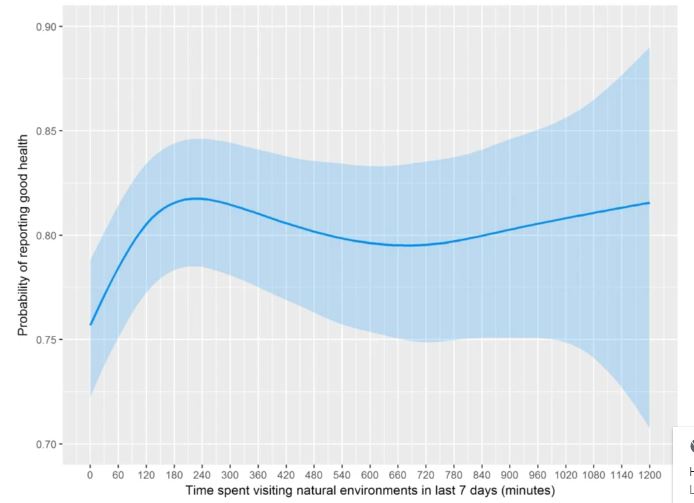
    A daily walk in nature has proven health benefits (16). It’s also a lovely environment in which to practice being silent. While this may be different from the concept of true silence, listening to the sounds of nature is a different form of meditation. After moving to Amsterdam, I start taking regular walks of the city during the day. Today these 5-15 minute walks are my favourite moments of the day.

    7. Reading 

    Reading is one of those activities that can transport one’s mind to another place. You only need to read a few pages a day without background noise to get an effective mini-meditation! 

    When Not To Be Silent 

    Although silence can add a new meaning to your life, there are some cases when staying silent can do more harm than help.

    1. In The Face Of Injustice 

    “Bad men need nothing more to compass their ends, than that good men should look on and do nothing.” ― John Stuart Mill 

    When you do, or say nothing, you may as well not be there. Silence serves no good purpose in the face of injustice. Speaking up when something isn’t right can be hard to do – there is often very real risk involved – but we all must speak up against wrong. 

    Silence benefits nobody in this case. Speaking up not only provides support to someone who may need it, but it also allows you the opportunity to grow emotionally and build courage. 

    2. When Your Conscience Tells You to Speak Up 

    Everyone has a conscience (17) – that feeling deep inside that tells you the difference between right and wrong. 

    When you practice silence often, you will be more in touch with your conscience. When your conscience tells you to speak out, there’s usually a good reason – and you should listen. 

    “It is a sin to be silent when it is your duty to protest.”

    Abraham Lincoln

    Conclusion 

    The World Health Organization recently gave noise pollution the unsavoury description of being a “modern plague” (18). It’s very clear that the constant barrage of noise we’re subjected to, whether overwhelming or subtle, has an effect on the way your brain operates – and in turn, your quality of life. 

    The fact is, your health is negatively impacted by the amount of noise you’re exposed to every day. The good news is that it isn’t hard to start taking a few small steps to increase the silent moments in life. You’ll start to see the positive change and the benefits of silence almost immediately. 

    Have you found it challenging dealing with noise in your life? Share your struggles with noise and your own ways to add silence in your life in the comments… 

  • The Choice of Responsibility, And How Is It Different From Accountability?

    “Politicians are of no use.” 

    “Bureaucrats just slow everyone down.”

    “The new CEO is no good. Look at what he did in his previous company.”

    While the above sentences don’t directly mention “responsibility”, all of them are blaming people for not taking responsibility for what they are accountable for. These kinds of statements are all too common in the world we live in today. 

    Most people talk about “responsibility” lightly, and it is thrown around in random conversations. It can cause a lot of blame, grudges, and grievances because someone else has not been “responsible”. Yet, when it comes to ourselves and our own responsibilities, we rarely stop to think about what “responsibility” means, what it demands from us, and what is the price of accepting responsibility or not.

    In this article, I want to share my thoughts about what accepting responsibility means, and how accountability and responsibility are different – especially for leaders. 

    Years ago, I was approached by a colleague who wanted my help in setting up an alumni program for the company we were working for. Here is how the conversation went:-

    I – “Why do you want to set up this program?”

    He – “Because there is no such program for our alumni currently.”

    I – “Has management given you this task to create such a program?”

    He – “No, they haven’t. I hope to convince them soon though.”

    I – “If the management is not interested, then why are you making this up?”

    He – “I just told you – for our alumni to have a way to connect, support and help each other in the future.”

    I – “If you are not responsible for this project, then why do you want to pick up this additional burden?”

    He – “I have benefited from alumni networks of my previous companies. And it sucks when I see that we don’t have one. I am not accountable for creating this network, but I choose responsibility for it because this matters to me. It is not a burden, it is a choice and a privilege.”

    What Is Accountability?

    The above conversation led me to distinguish responsibility from accountability – which I have seen is confusing for most people. Accountability is simply being answerable for certain results which you have committed/promised to produce. Responsibility, on the other hand, is a choice. You can take (or choose) responsibility even without any agreement or promise.

    Let me elaborate. When you take on a role or make an agreement, you are accountable for certain results and outcomes. For example – If you become a team leader at work, then you are accountable for all results the team produces, as well as other intangibles like culture, relationships, etc which impact and influence those results. 

    You can be accountable for something without accepting responsibility for it. I often meet people who are accountable for their team and its results, and yet they refuse to take full responsibility for it. They continue to blame others and act like a victim despite having made an explicit commitment towards producing those results.

    What is Responsibility?

    Responsibility is our ability to respond to any given situation. And we always have this ability, though whether to use it or not remains our choice. To be responsible means to acknowledge that you are responsible “not” for the situation you find yourselves in, but for acting in the face of the situation.

    Responsibility doesn’t mean you are “responsible” for all the situations, circumstances, and challenges in your life. However, it does mean that you choose to fix the situation and move in the direction of your desired results.

    Embracing responsibility will demand a shift in behaviour compared to the normal way of doing things. When you understand what accepting responsibility means, you can’t make excuses or play the victim. Instead, it demands that you stand up and do whatever is needed to produce the results you have taken responsibility for.

    Responsibility Is A Privilege And A Choice

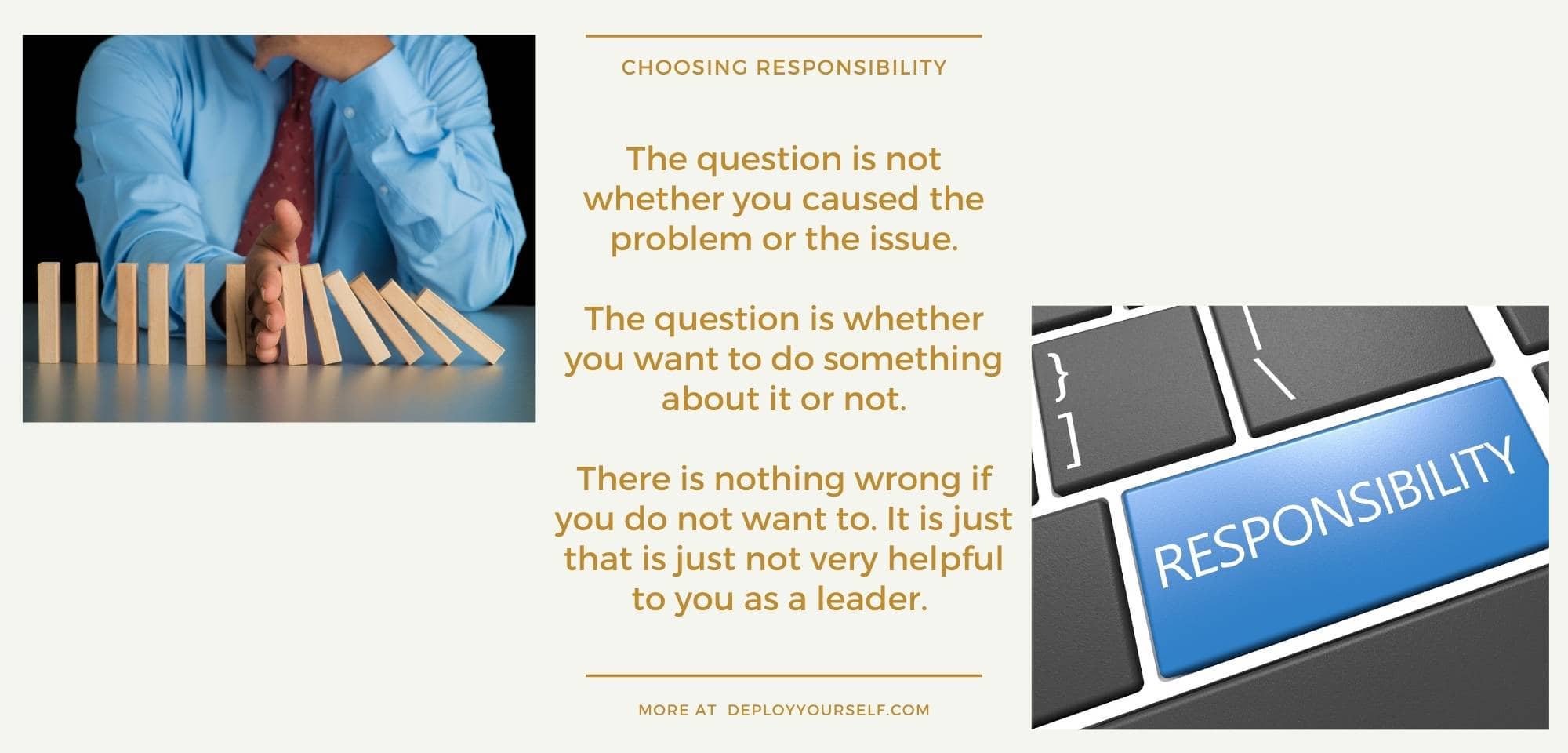
    Responsibility means looking at your contribution to the problem. Why do you have to do that? Well, you don’t. If you don’t want to. That is why I want to repeat that responsibility is a choice, and it is perfectly ok to not choose responsibility in a given situation. There is nothing wrong with not choosing responsibility. It is just not effective for leadership and producing results.

    However, acknowledging that responsibility is a choice gives you the freedom and power to move forward despite the circumstances of your life. If I pick up my phone and drop it, it will fall on the ground. Why did the phone fell? Did it fell because of “gravity”? Or did it fell because I dropped it? 

    Both the above reasons are true. Taking responsibility is to choose the second answer. The phone fell because I dropped it. Yes, there is gravity, and it would not be wrong to say that the phone fell because of gravity. But at the same time, it would not be very powerful when it comes to taking action and doing something about it. 

    Acknowledging that the phone fell because you dropped it gives you the power to do something about it. That is what I mean by looking at your contribution to the problem. How did you contribute to the situation you find yourselves in? What could you have done earlier to prevent the situation? What could you do now to move towards creating the result you want to create?

    While this may seem like a burden, responsibility is a privilege. It is not taking or accepting the “blame” for the situation. You are not responsible for the circumstances or situation you find yourself in. However, you can choose responsibility in the face of your circumstances. 

    “Do what you can, with what you have, where you are.” ― Theodore Roosevelt

    Responsibility is Results Oriented

    You take responsibility to produce the results that matter to you. Not to look good or to prove you are a good leader. Not because it is the right or fair thing to do. Responsibility is always oriented towards a particular result you want to produce in the future. You choose responsibility because it will help you and your teams move toward that result. As simple as that. 

    In any given situation, we can choose what actions to take so that it moves us forward towards our desired results. Or we can choose those actions which come easily to us or are more comfortable to us and our peers. Responsibility is about accepting that you always have the choice to choose your actions. Responsibility allows you to do something to solve the problem.

    Choosing responsibility doesn’t mean that you have to have all the answers. You do not have to know the entire way to the results you desire. Responsibility includes acknowledging uncertainty and finding the way to where you want to do. Responsibility means starting on a journey even when you don’t know the complete route to your destination.

    Choosing responsibility also doesn’t mean that you become “heroic” and can now trump any challenge. Responsibility includes acknowledging your humanness and limitations. It includes asking for help when required, seeking an apology when you make a mistake, and renegotiating a previous commitment that you know will not be kept.

    Responsibility is Always Unconditional (You Can’t Play Victim)

    “Did you see what he just did? He just messed up the whole assembly line.”

    “Let us help him identify his error and prevent production and supply chain problems down the line.”

    “Wait. Why do you want to do that? We are not responsible for that. He messed it up. Let him pay the price.”

    “It’s not about who is responsible. It is about who suffers in the future. If the production is delayed, then our customers suffer. Our company will suffer, and as a result, all of us (employees) will suffer. We must take action to avoid future problems.”

    “But we didn’t cause the problem. It is not our fault.”

    “You are right. And doing something about it doesn’t mean accepting responsibility for causing the problem. It just means that we do what is necessary now to create the results that we say we want in the future – which in this case is on-time delivery to our customers to keep our commitments.”

    It is so easy to go into blame when things don’t go as expected or planned. Blame is part of the culture in many workplaces. When things go wrong, fingers are pointed as people look to escape responsibility (often subconsciously). Unfortunately, this could destroy opportunities for individual and team learning, growth, and success. However, if you accept responsibility, you can’t play the victim anymore. 

    It is important to clarify that accepting responsibility doesn’t mean you go on to blame yourself instead. No blame means you do not get to blame somebody else (your manager, wife, friend, colleague), something else (your company, traffic, circumstances), or yourself.

    This means that when mistakes and setbacks happen, you have to take ownership of the results produced and not produced instead of passing the buck. Taking responsibility will put you on a path of problem-solving rather than an endless game of blame and guilt that offers no solutions. It will require you to identify what you can do now.

    Pointing fingers rarely solves anything. The energy you waste by blaming others is better spent on finding solutions. When a leader plays the victim card, they risk being marginalized and ignored. Blame also leads to mistrust in the team. People don’t feel safe and have to constantly watch over their shoulders. 

    When you distance yourself by claiming that the situation was out of your control or it is not your job, you miss out on the opportunity to exercise your choice. You relinquish your power as a leader. There is no time for excuses when you choose responsibility as you would instead be looking for what to do next. Each time you take responsibility, you become better at exercising choice (to focus on the future and not the past) and inspire the rest of your team to do the same.

    The Opposite of Responsibility – Blame and Judgement 

    Every time you blame others, you refuse to acknowledge your contribution to the problem. Blaming and judging others incentivizes people to deny ownership and inhibits learning and growth. The opposite of responsibility is not irresponsibility or indifference. The opposite of responsibility is accusing and blaming something else, someone else, or yourself.

    Like a drug, blame only gives you temporary relief and then leaves you in a state of righteousness and inaction. It fails to address the problem from a long-term perspective and can even exacerbate the situation. In the worst-case scenario, it prevents the team from performing by creating distrust. Blame focuses on only the symptoms while it ignores the deep underlying problems.

    Blame looks to simplify the situation by finding someone or something to blame when the reality of human interaction is much more complex and everyone plays a part in whatever failure or success a team achieves or not. Taking responsibility discourages the culture of blame and judgment and promotes introspection, growth, and learning. 

    Blame pulls people apart while taking responsibility brings them together. You not only boost your immediate performance but also contribute to improving your organization’s long-term health.

    You Are A Bystander or A Victim When You Do Not Take Responsibility

    If you do not choose responsibility then you are either a bystander or a victim. For example – If I am worried about climate change but decide not to take responsibility to make things better, then I am a bystander. Nobody is going to hold me accountable for climate change (as I have no official accountability for it).

    However, if I have official accountability for managing climate change due to my position, for example, as a head of a state, then I become a victim if I do not choose responsibility for climate change. In an official role, people will hold me accountable for the results I have committed to or they expect me to deliver. The only choice I have is whether to choose responsibility or not. If I do not choose responsibility, I automatically become a victim.

    Responsibility Requires You To Focus on the Future At All Times

    After surveying thousands of people on the subject of leadership qualities, Barry Posner and Jim Kouzes found that forward-thinking is the most admired trait in leaders after honesty. Being responsible means focusing on the future and what you can do in the present moment to move your team/company towards the future you aspire. 

    Mistakes and setbacks are part of work-life and will happen along the way, but dwelling on the past distracts from the only thing you can impact – the present moment. Instead of wasting time and energy assigning blame, concentrate on learning from the mistakes and do what you can do to offer solutions to ensure the mistake doesn’t happen again.  

    Being responsible demands you to focus on the future and not endlessly stay stuck in thinking about what happened in the past – whether it was 5 minutes ago or 5 years ago. The past has a way of holding you back when you dwell on it for too long. 

    As Soren Kierkegaard once said, “Life can only be understood backwards, but it must be lived forwards.”

    Thinking about the future we want to create, and exploring ways to get there together with the team saves time that would have otherwise been lost blaming yourself or others. It also helps prevent similar problems in the future.

    Where are we going? How will we get there? What do we need to do to move from point A to point B, given the state we are in currently? These are some of the questions you should ask yourself if you want to choose responsibility.

    You Can Choose To Be Responsible For More Than What You Are Accountable For

    You can always take responsibility for your team, department, or company even if you are just an individual contributor. Every team is bound to experience challenges along the journey. For example, when individuals with varying viewpoints, skills and knowledge come together, conflict is inevitable. 

    As a team member, you are not accountable for the entire team’s performance. That is the team leader’s accountability. But you can always choose that responsibility and act in the interest of the entire team. If you do that (and take care to not step on others’ feet while doing so), you will soon find yourself in the job you voluntarily choose to be responsible for.

    Ask yourself – Where are you resigned or disempowered in your life? Where do you feel emotions like frustration, apathy, or a lack of engagement in your life? Whenever I ask myself this question, I find out that I am not taking responsibility where I feel a lack of energy or empowerment. 

    Ask yourself the above questions and see what emerges? Are you not taking responsibility in areas where you feel disempowered? What could be some alternate choices in those areas that could allow you to move towards the future, no matter how unlikely or difficult that might be? Responsibility is not having all the answers to fix what you face. It is about taking the next action that you can take in that direction.

    “Everything can be taken from a man but one thing: the last of the human freedoms—to choose one’s attitude in any given set of circumstances, to choose one’s own way.” ― Viktor E. Frankl

    Final Thoughts

    There will always be friction, no matter what you are trying to achieve. But it can either grind you down or give you energy. When you choose to be responsible, friction will never demotivate you. Instead, it will encourage you to learn, grow and set a high bar for yourself as well as for others around you.

    Accepting responsibility for our actions is a choice. It often leads to joy, satisfaction, pride, and peace regardless of the outcome. When things are going as planned, you will be more satisfied knowing that your hard work had a role to play in it. Also, when things don’t work as expected, you will accept what is so, learn from the mistakes, and continue on the journey. 

  • 5 Steps To Deploy Yourself And Live An Authentic Life

    A lot of us, especially in our youthful days, struggle with how to deploy ourselves in the world. Instead of being true to ourselves and charting our own unique course, we tend to follow paths that others have decided on our behalf. However, if we take the long-term view, taking the path less traveled and Deploying Ourselves can make all the difference in the long run.

    Unfortunately, most of us prefer to stay in our comfort zones instead of striving to become the best version of ourselves. In this article, I will share 5 things that you are probably not doing but which could help you thrive and not just survive.

    To get fulfillment in life, we must understand who we are and lead an authentic life – one that is based on our values, and that utilizes our strengths and talents. The following are five key things that you can do to take charge of your life and Deploy Yourself.

    1. Understand Yourself – Your Values, Emotions, Desires, Strengths, and Weaknesses

    The first step towards Deploying Yourself is to understand what you care about and what is important to you. Identifying your unique set of values can be the first step towards building self-awareness. Often in life, most of us don’t know what we care about and what matters to us. As a result, we end up accepting the standards and values which other people (parents, society, culture, etc) decide for us. However, trying to live your life by others’ standards is akin to surrendering your own will and judgment.

    On the other hand, understanding your own values and being bold enough to follow them enables your unique light to shine upon the world. Looking back at history, it is clear that people who succeed in business or career are those who choose the path less trodden and follow their own path. Steve Jobs, Apple’s former CEO and co-founder is one example. His unique ideas went against the grain, and this transformed the tech world.

    A big part of understanding yourself also means becoming aware of your emotions and desires. What makes you angry, happy, or sad? What gives meaning to your days and weeks? What do you crave? If you wish to master yourself, you must learn to pay attention to what your emotions and desires are trying to tell you.

    Learning about your strengths and weaknesses enables you to choose a path that aligns with your talents and abilities. Research has proven that we can do much more productive and produce better results when we try to build upon our strengths rather than improve or fix our weaknesses.

    “There is no passion to be found playing small — in settling for a life that is less than the one you are capable of living.” – Nelson Mandela

    2. Realise that You are Unique and Special, Just Like Everyone Else

    No two human beings are like. Each one of us has unique talents and skills that enable us to succeed in our careers and life. All of us have activities that fill us up with joy and satisfaction, whenever we are doing them. Unfortunately, most of us are not comfortable in our own skin, especially when our uniqueness takes us against the norms of society or of our peers. People too often hate that they are different from everybody else and try too hard to become someone they are not.

    Failing to embrace your true self could stem from a desire to fit in with the crowd. What you should understand is that no two people are the same, just like no two flowers or no two birds are the same. Everyone has their own journey. And frankly, the world would be such a boring place if everybody was the same.

    Instead of worrying about what others think, be ok with the fact that no matter what you do, someone somewhere will still find fault in you. If you are always comparing yourself to others and are trying to please everybody, you are allowing yourself to be deployed by others. Having a few people in your life who love you for who you are is better than having many friends who love you for who you pretend to be.

    Martha Graham said, “There is a vitality, a life force, energy, a quickening that is translated through you into action, and because there is only one of you in all time, this expression is unique. And if you block it, it will never exist through any other medium and will be lost.” 

    3. Get Out of Your Comfort Zone, Live on the Edge That’s Where the Real “You” Lies

    If you want to become the best version of yourself, you must be willing to get out of your comfort zone. That means pushing yourself to the edge and not being afraid to take risks. Often what stops us from learning new things are the mental limitations we put on ourselves because of fear of going beyond the comfort zone. Being afraid shrinks our vision and cripples our abilities to try out new possibilities, take new actions, and explore new learning pathways.

    The best thing to do is acknowledge the presence of fear – for it is trying to tell you that the path you are moving towards is meaningful for you. Often the things you are most afraid of have the biggest potential to transform your life. So, instead of cowering when confronted by your fears, move towards them and stay at the edge of learning and new possibilities.

    Remember what Bruce Lee once said, ” Courage is not the absence of fear. It is the ability to act in the presence of fear.”

    Accept that fear is a natural and essential factor for growth to happen. Whenever you summon the confidence to step out of your comfort zone and face your fears head-on, subsequent stumbling blocks will look like stepping stones. Progress becomes faster and obstacles become easier because of the momentum you gain progressively. That is what Jim Collins describes as the Flywheel effect.

    If you are given the task of rotating a heavy flywheel mounted on an axle, making the first turn takes a lot of time and effort. But after each successive turn, the wheel will start to pick up speed and momentum. Soon, the wheel’s weight will start working in your favor. Progressively, the effort you put in will be compounded as the wheel turns faster and faster. 

    “To be yourself in a world that is constantly trying to make you something else is the greatest accomplishment.”
    ― Ralph Waldo Emerson

    4. Lead Yourself – Take Control of Your Desires, Emotions, Body and not Be a Slave to Them

    Our emotions can impede our ability to think and act rationally if we allow ourselves to be overwhelmed by them. Most of us have, at some point, let our feelings cloud our judgment and ended up doing something that we regretted almost immediately. Emotions tell us what we care about, but reacting to them impulsively only boosts our ego by giving us instant gratification. This type of behavior feels good in the short term but is detrimental in the long term. 

    The good news is that emotions can be beneficial if you learn how to use them instead of trying to suppress them. Suppressing emotions only results in explosions later on and the emotion continues to keep building up inside. Instead of bottling up your emotions, pay attention to how you feel in your body and what your emotions are trying to tell you. 

    For instance – I once got angry when I got passed up for promotion. An impulsive reaction to that might be letting my frustration, but when I listened, my emotions were telling me that I cared for hard-work and fairness. When you understand your emotions and the motivation behind them, you can embrace them without letting them take the wheel.

    Sometimes your emotions can hold you captive and control your life. They can dictate your actions and prevent you from Deploying Yourself. As Aristotle noted, “I count him braver who overcomes his desires than him who conquers his enemies; for the hardest victory is over self.”

    Desire is insatiable. Once you feed it, it only expands. It disappears temporarily only to come back stronger. Therefore, you cannot overcome them by simply resisting. The key to Deploying Yourself lies in acknowledging your short-term desires and long-term cares and then taking action to take care of your cares.

    For example, do you feed your desire as a way to mask something deeper and much more valuable? Addressing those important issues could help get to the root of the problem, even though that process is usually not very comfortable. If you understand your urges and what fuels them, you will be able to Deploy Yourself instead of being deployed by them.

    5. Stand Up and Speak Up for Yourself and Your Values

    In life, we come across situations that call on us to take a stand for ourselves and what we believe in. Unfortunately, most of the time we struggle with growing a backbone and standing our ground. Any reasonable person wants to avoid conflict whenever possible. That’s understandable. However, being too accommodating can make you a pushover and prevent you from Deploying Yourself. 

    Never leave things unsaid if it is your true self-expression. Irrespective of the circumstances and what happens to you, you always have a choice to express yourself fully in a way that makes you proud. When you express yourself aligned with your values, you will feel good in your body. You will feel aliveness and meaning, even if others’ don’t agree. Sometimes it can be saying something as simple as “No.” Other times, it might mean writing a letter to give ourselves space to express our views authentically.

    Overcome the fear that is holding you back from Deploying Yourself in life. Give it time as you build this new muscle with practice. It won’t happen overnight. But once you start putting your point across without being overly defensive or accommodating, people will be more willing to hear from you. You can start by taking small steps and starting slow. For example, you can tell the person who cuts the line to move back to the start of the line, firmly but politely.

    Standing up for yourself doesn’t mean being aggressive. It is having the courage to stand in the authenticity of your opinion and believing in your self-worth. So, when the situation demands it, stand up and speak up for what you believe. You will find yourself becoming more comfortable in your own skin with time as you build the muscle of Deploying Yourself.

    Final Thoughts

    Take some time to pause and think about what do you really care about. Don’t shy away from asking yourself the hard questions. If you only follow what everyone is doing, you can easily get lost in the crowd. But once you identify your unique set of values, cares, and strengths, and understand your emotions and desires, it can guide you into understanding and deploying yourself.

    History is awash with examples of great individuals and leaders who dared to dream. Their unique ideas managed to change the course of their life while also making a significant impact in their respective fields. If you do the five essential things listed above, you will gain the confidence and assurance needed to chart your unique path instead of following the crowd.

  • How To Use Both Conscious and Subconscious Mind to Maximise Creativity And Solve Our Biggest Problems?

    We would all agree that our mind is our most important asset. The human brain is often called the most sophisticated machine in the universe. Everything we do is only possible because of our brains. Be it writing a letter, loving our family members, playing a game, preparing a presentation, or planning for the future – none of these tasks are possible without our brains. Yet isn’t it surprising that our brain doesn’t come with an owner’s guide? Also, our education rarely teaches us how to make the best use of our brains.

    Scientists have come to know a lot about the human body in the last century, which has improved medical science and human quality of life by leaps and bounds. The kind of life we all live today is better than the lives lived by the kings and presidents a century ago. Isn’t it amazing? Yet, for all the medical discoveries, we still know very little about the human brain. And whatever little we know about our brains, the content has not made it to our textbooks and education.

    Either at school or at work, nobody educates us about how our mind works, which is a pity. Even though a lot is unknown about how our mind works, there has been considerable progress in neuroscience in the last two decades. If the average human being knows about what we now know about our brains, I believe we can vastly increase our performance in all aspects of our lives. After all, understanding how our mind works is the first step towards using it in the most effective way.

    Conscious and Subconscious Minds

    Our mind is often categorized into two categories – the conscious and the subconscious. Everywhere where we use rational thought, we are using our conscious mind. For example – we are using our conscious mind when we apply logic to solve a math problem. Similarly, we use our conscious mind when we use our intellect to plan for the future. It is our conscious mind that leads us to speak, write, move our body, or plan. We use our conscious mind whenever “we” decide to do something.

    The subconscious mind, on the other hand, is where our intuition lies. This is the part of the mind where all our memories and past experiences lie. This is the part of the mind which knows how to breathe, how our vital organs function without our making any decisions. It is through our subconscious mind that we form beliefs and intuition about what is happening around us. Our subconscious mind is where our feelings and emotions originate.

    We might think that when we develop ideas and solve problems, it is only our conscious mind at work. But our subconscious mind also plays a big role in the background. This is the part of the mind’s functioning which most people are unaware of. At the same time, this is exactly the information which can make us much more productive if we were to know how it works.

    “The subconscious mind is ruled by suggestion, it accepts all suggestions – it does not argue with you – it fulfils your wishes.” – Joseph Murphy

    Accidental Discoveries

    We have used our intellect to achieve great things for humanity in the last 70 years. However, a lot of scientific discoveries and achievements have been accidental, or not what the scientists were working towards. Even in our lives, we can see that trying too hard to solve a problem can lead to frustration sometimes, yet when we step aside and do something else we can suddenly see the solution. This kind of idea generation and making connections between different ideas are a result of our intuitive and subconscious processes. For example –

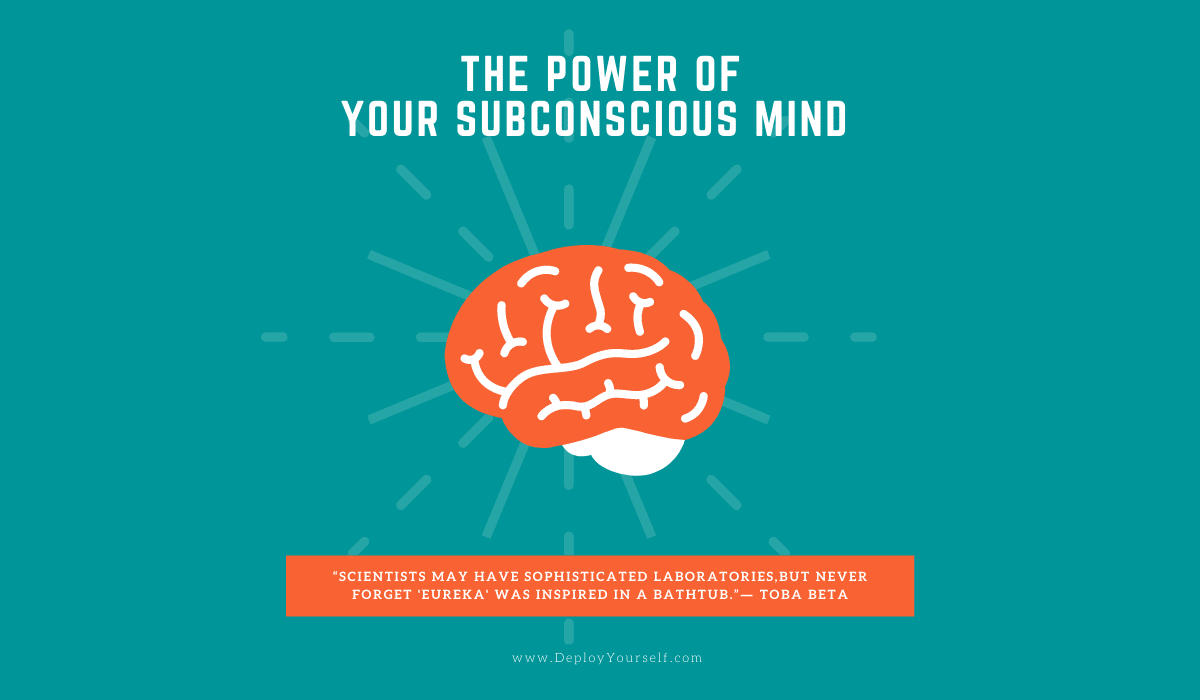
    1. Archimedes discovered the principle of buoyancy while bathing at his home.
    2. The fall of the apple on Newton’s head leading to the discovery of gravitation is probably the most well known eureka moment in history.
    3. Einstein’s idea of general relativity came to him while working as a clerk in the patent office in Bern
    4. Niels Bohr said that he developed his atomic theory based on a dream he had.

    In science, these accidental discoveries are often called “Eureka” moments, and they look unpredictable on the surface. But if we look deeper, we can see the common threads across many such eureka moments. One such common element is taking a break from whatever problem you have been working on and doing something else for a while. Focussing on something else for a while gives our brains a break which can yield novel insights.

    “If you realized how powerful your thoughts are, you would never think a negative thought.” – Anonymous

    How to Engage Your Subconscious Mind

    Scientists have discovered that taking long walks in nature is one such mind wandering activity that can generate creative insights for problem solvers. There is evidence that spending just a few minutes outside in nature can improve people’s moods and generate positive emotions, which in turn can improve our intuitive idea generation.

    Negative emotions like stress and anxiety which are the result of focussing on a problem too hard, can on the other hand stifle creativity. If we want to be more creative, it helps to not take things too seriously from time to time and to loosen up and allow our minds to wander.

    The subconscious mind delves on certain ideas and concepts and perceives information in a manner that the established logical thought process cannot. Therefore, insights are most common when a person is taking a break and not using the conscious mind. There are times when the conscious brain hits a mental impasse – a point where they hit a block. At these times, insight – a sudden stroke of genius or a perfect solution – breaks the impasse.

    We should all allow ourselves to be surprised by the power of our subconscious mind, and let work flow from the deep confines of our subconscious. When I write articles or poems I often get stuck. What I have noticed in those moments is that no matter how hard I try it is almost impossible to force myself to write. At the same time, if I take a break and do something else for a while, I suddenly feel an urge to write and am then able to complete the article or poem in no time. I have written a few poems which later I had no idea how I wrote it.

    In the book “Daily Rituals: How Artists Work”, the author Mason Curry has researched and shown that many creative artists do their best work in short bursts interspersed by breaks which often included long walks in nature. By taking regular replenishing breaks, we can also use our subconscious mind to our advantage. When we do so, we turn off our rational brain and give ourselves the freedom to wander off-topic. This often results in new idea generation and pattern recognition which we would not have done otherwise.

  • How to Powerfully Step into the New Year 2026

    I think it was 1989 when I, for the first time, realized that the 1st of January was a special day. The biggest change for me, one that always took a few weeks to get used to, was to write 1990 instead of 1989 in our school notebooks daily. While the whole world celebrated and wished each other on the 1st of Jan, nothing much else seemed to have changed (for me).

    Very soon, as we stand at the cusp of another new year (2026), 36 years have passed since then. Though the fact still remains that nothing much changes between Dec 31 and 1 Jan, if we look at the last 36 years, then we can no doubt say that the whole world and each of our individual lives have changed immensely.

    While we may not always notice and acknowledge it, change is the only constant in life. A New Year is our annual reminder that the time has come to move on and prepare ourselves for the changes coming.

    Today I want to ponder and write about how to powerfully step into the new year so that we are not surprised or shocked by the changes it will bring along. Over the years I have realized that we might very well let the years slide by without much attention; there always comes a time when we are made aware, often not subtly, that time has moved on.

    So read on if you prefer to enter the new year on your own terms, or skip this article if you feel a new year is too insignificant an event to trouble your brain cells.

    1. Complete The Current Year (2025)


    The first step before starting anything new is to complete what you are doing now. Just like we put the first foot down before lifting the other one while jogging, just like we get our raw vegetables and spices ready before cooking our food, it is imperative that we finish 2025 before we even start thinking about 2026. If we ignore this first step, the result will be the same when we start cooking a delicious dish only to realize later we never got the required ingredients.

    What I mean by completing the current year is taking some dedicated time before the new year to –


    1. Introspect your goals (if any) at the start of the year and make peace with where you are now.
    2. Celebrate your achievements (big and small) and laugh about your failures (missed opportunities)
    3. Reflect upon what you have learned, and how you have changed or grown over the year.
    4. Free your mind from the grip of the difficult people and hard situations you have encountered this year.
    5. Apologize if you realize you have been a difficult person in someone else’s life.
    6. Give up any blame, regret or shame gathered this year. There will be new to collect in 2026 🙂
    7. Thank and express gratitude to everyone who has made a difference in your life.

    2. Know Yourself


    The next step before moving ahead is to take some time to know yourself better. That doesn’t mean finding out your blood group or body weight or exam grades or other people’s predictions about your future but rather looking deep inside yourself to discover your deepest values and motivations. You can do so by answering questions such as –


    1. What are your deepest motivations? What have you always wanted to do?
    2. What are you really passionate about? Is there something worth devoting your life to?
    3. What drives your actions and decisions? What are the values you hold most dearly?
    4. What makes you really happy or angry?
    5. Who are your biggest inspirations in life, and who are the people you can’t stand? Why?

    Answering these questions is anything but simple and there can never be final answers to them. But if we take time and ponder over them and come up with some ideas, we will know ourselves better than anybody else (our parents, friends, grades, achievements, money) can tell us about.

    3. Where do you want to be in the next 5 or 10 years?


    The next step is to think about the future and exercise your imagination muscles. Think about the kind of person you want to be in the next 3, 5, or 10 years. This might seem too far ahead in the future, but it doesn’t take long for these years to roll by. Just think about how quickly the last 10 years have passed by. Imagining your own future can feel a bit strange and uncomfortable at first, but soon it will become a lot of fun – just like a game.

    Do not let this question overwhelm you (which it can), and instead, play it like a game and see what you come up with.

    While you imagine your future, think about your deepest desires and ambitions. What do you want to accomplish that will give you the most satisfaction? What changes do you want to see in yourself, your family, your society, your company, your city, and your country?

    What are the dreams that you haven’t even dreamt yet? How do you want people to relate to you after 10 years? In this step, you do not need concrete answers, but a vague image of where you want to be. The intention of this exercise is to get you thinking about your future, the actual answers you come up with are not so relevant.

    4. Decide milestones or checkpoints on the way

    The next step is to identify milestones for the next 1 year for the ambitions which you discovered in the previous step. Don’t let this step scare you. You don’t have to decide on milestones for each one of your ambitions – you can choose a few which are the most important to you. Also don’t worry or bother about “how” you will reach your milestones as you have the whole year to think about that.

    These milestones will serve as checkpoints which will measure your progress towards your long-term ambitions. These milestones can be broken down into quarterly and monthly milestones depending on what you prefer. The only thing to take care of while marking these milestones is to make sure they can be observed and measured by anyone easily and are not vague.

    Make sure to be clear about what you want to achieve, when and where you will achieve that and with whom. The more numbers you can use the better this step will be in its fruitfulness, and it is best to avoid vague words like soon, sometime, in a few weeks, improvement, better, more, etc.

    In the above two steps, it is very important to also include and keep time for recreation, fun, sports, and other forms of entertainment. The whole idea of this exercise is to be more aware of yourself and prepared for the coming year, and it is very important to not take it too seriously and think only about work and professional stuff. If you are a movie buff and want to watch 100 movies or visit a few movie festivals next year, plan your milestones for it.

    With the above four steps, you can step into the new year and make a powerful “start“. Of course, that doesn’t mean that your life will pan out exactly as you imagined or that the next year is going to be your best year. It just doesn’t work that way. But knowing where you want to go is always better than hoping to get “somewhere”.

    I can write another article about what you can do in the new year to make sure you hit your milestones, but we must always remember that change is the only constant in life, and it can come up in unexpected ways and mess up our plans anytime. But having messed up plans is still better than having no plans at all, and we can repeat the above process anytime to plan afresh for the future – we need not wait for the next “New Year” to repeat this process.

  • 5 Valuable Life Lessons Struggle and Hardship Teaches You

    When faced with difficulties as human beings, our natural reaction is to avoid the situation rather than power through it. Years of evolution have wired our brains to seek the comfort of the familiar and avoid the discomfort that comes with new and challenging experiences. 

    When you experience fear, whether physical or psychological, the part of the brain responsible for dealing with emotions (limbic system) is triggered before the reasoning part of the brain (neocortex). Overwhelming fear triggers a fight or flight response that makes you act before you think. 

    Subconscious reactions are necessary for your survival. But they can also be an impediment when there’s no actual danger or when the situation calls for an appropriate response rather than a spontaneous reaction.

    Emotions can teach you a lot about yourself, but you should never allow them to take control of your responses. Hasty responses such as outbursts of anger make it difficult to have meaningful relationships, handle conflicts, and communicate effectively.

    Every 2 weeks I share my most valuable learnings from living life fully in my Deploy Yourself Newsletter. Sign up now to download a workbook with 164 Powerful Questions which I use daily in my work and coaching. Allow these questions to transform your life and leadership.

    Although avoiding struggle is a natural biological response, it is also ironic because struggle can teach us many valuable lessons. Struggle builds character, makes you stronger, and enables you to grow in all aspects of your life. Nobody wakes up in the morning hoping to struggle, but the struggle can provide you with valuable life lessons. 

    5 Lessons Struggle Teaches You That Are Valuable In Life

    Every cloud has a silver lining. Going through a difficult phase in life can be immensely valuable if you face it with an attitude of perseverance and patience. The following are 5 valuable lessons struggle teaches you.

    1. Resourcefulness

    Resourcefulness is the ability to look for and utilize available resources to attain a certain objective. Achieving your set goals may seem impossible when resources are limited, but this is also an opportunity to be resourceful and make the best of what you have.

    Persevering in times of struggle enables you to think outside the box and try new approaches to dealing with the problem. Rising above the struggle of limited opportunities will teach you to be more resourceful and enhance your problem-solving skills for the future.

    “Success is not about your resources. It’s about how resourceful you are with what you have.” – Tony Robbins

    When you grow up in a family with little money, the only choice you have is to find creative solutions to make ends meet. For example, when I was growing up I remember how my mother used any spare paper for taking notes and math practice, any spare cloth for making clothes, or to utilize a pencil till it disappears by attaching it to pen handles. 

    Being resourceful will not only help you achieve your goals but will also help you manage stressful situations better. According to a research conducted to examine the impact of learned resourcefulness on the relationship between academic stress and academic performance, highly resourceful students were found to be better at managing academic stress. 

    The study which sampled 141 university students revealed that academic stress negatively impacted the students’ academic grades. However, the stress had no impact on students who showed high resourcefulness.

    The frustration you experience when struggling with a problem can open up your mind to alternative ideas and solutions. When the methods you’re using are not helping you find a solution, you are bound to try other ideas you wouldn’t have thought of had things been sailing smoothly. 

    You may even try things you had initially ignored. Struggle can bring out the hidden creative genius within you, enabling you to see a problem from a new angle. You tend to remain in your comfort zone and take less risk when everything is going well.

    The best way to learn resourcefulness is to look beyond your struggle and approach problems from a new perspective. By not giving up when problems seem difficult, you can learn from mistakes along the way. This is the common formula that highly successful people like Walt Disney, Richard Branson, etc have utilized in their respective careers.

    2. Struggle Teaches You Prioritization and Helps You Realize What Is Really Important

    Prioritization means choosing what matters most. When you face multiple tasks and responsibilities in life, they will compete for both your time and resources. Although everything may seem important, not every task requires your urgent attention. 

    Learning to prioritize will save time you would have wasted going back and forth between tasks. Prioritizing is a skill that needs constant practice. It requires you to know what matters and recognizing what should be put on the back burner. Facing struggles in life will teach you to let go of things that don’t add value and to value what is really important.

    When your financial situation is favorable, you will find joy engaging in activities such as going to the club, shopping, traveling, dining in restaurants, and going to events. When you’re facing struggle, however, you may not see these activities as high priority ones. You will more likely direct your resources (time, attention, money) to more important activities.

    Instead of eating out, you will start cooking. Instead of going to the club, you will consider a more intimate gathering of friends in your house. Rather than buying things you don’t need, you will learn to appreciate what you have in life. Little by little, you will realize you don’t really need fancy stuff to be happy and learn to appreciate the simple things.

    When you’re dealing with adversity, how you adapt or cope will determine whether you bounce back quickly or not. Self-awareness is crucial to developing emotional intelligence. Learning to monitor your thoughts and emotions will help you understand yourself better and be at peace with who you are.

    When dealing with life struggles, the important thing is to make taking care of yourself physically and emotionally, your first priority. Physical self-care includes getting enough sleep, eating healthy, and engaging in physical activities. Emotional self-care tips include self-acceptance and learning to appreciate yourself and your needs. Put on your oxygen mask first.

    3. Struggle Makes You More Confident and Humble in Your Ability to Weather the Storms

    The story of the struggling butterfly paints a perfect picture of how struggles are an integral part of life. It shows how difficulties along the way help strengthen your resolve and brace you for bigger storms ahead.

    A gardener saw a butterfly laying some eggs and took an interest in a particular egg. He began to notice the egg moving and shaking a little. Here was an opportunity to see life brought forth before his eyes, and he watched for hours as the egg began to expand. Cracks started to develop, and he could see the head and antennae as the pupa struggled to come out of the egg.

    As he saw the struggling little creature, he took mercy on it and decided to help it by breaking the egg with his forceps. Long story short, the pupa did make it out of the egg, but it never grew to become a fully-fledged butterfly. Denying it, the struggle of breaking out of the egg on its own made it weak, and it died after four weeks.

    Just like the young pupa, your life struggles are only building your confidence and preparing you for tougher challenges ahead. If you take the easy way out, you will enjoy instant gratification but limit your own growth. Embracing your circumstances will make you stronger and help you appreciate life more. As you face struggles, you will learn your strengths and weaknesses. You will also learn to accept things you can’t control.

    Oliver Wendell Holmes once said, “A mind that is stretched by a new experience can never go back to its old dimensions,” and he was right.

    Going through challenges in life requires both physical and mental strength. Although you can’t control what happens to you, you can change your attitude and choose your response. Changing how you look at things will enable you to master change instead of allowing it to master you. Mastering change will make you more confident and less afraid of what life throws your way.

    Henry Ford once said, “Whether you think you can or think you can’t—you’re right”. A study published in a journal of the Association for Psychological Science supports this statement. According to the study, people who believe they could learn from their mistakes fare better than others after making mistakes. Your attitude determines your level of success.

    “The harder the conflict, the more glorious the triumph. What we obtain too cheap, we esteem too lightly; it is dearness only that gives everything its value. I love the man that can smile in trouble, that can gather strength from distress and grow.”

    ― Thomas Paine

    4. Struggle, if You Never Forget It, Can Help You Stay Grounded

    Change and uncertainty can make you feel like things are spinning out of control. When things are bad, keeping a calm head is a challenge as your mind is constantly racing. If you lack experience in dealing with difficult situations, you can easily get lost in the maze. The current Coronavirus pandemic is a perfect example of how change and uncertainty can lead to fear and panic. It has taught us that everyone reacts differently in challenging situations.

    While the pandemic is a challenge, it is also an opportunity. If you’re able to stay grounded, you will emerge out of the crisis stronger and able to overcome similar challenges in the future. The coronavirus crisis has not made the world unpredictable. It has only revealed how uncertain and unpredictable life is.

    Challenges and change are inevitable. The best you can do is embrace them and allow them to become your teacher. Tackling challenging situations will keep you grounded as you recognize that there’s always room for improvement and more to learn.

    The story of Abraham Lincoln can teach us many life lessons. But most of all, it teaches us the importance of being humble. Lincoln is arguably one of the most iconic presidents of the United States and is revered for his modesty and deep-seated humility. He was a leader who was willing to admit his shortcomings, accept his mistakes, and learn from them.

    Lincoln’s road to the white house was riddled with failures and disappointments. As a child, his family was forced to move out of their home because of land disputes, and his mother died shortly after when he was merely nine years old. He tried his hand at business and failed multiple times and experienced financial struggles that drove him to the verge of mental dissipation.

    Yet despite all his failures, he still managed to stand on his feet, dust himself up and take charge of his destiny. He sought to improve his life through constant learning and self-reflection. When the going gets tough, being fully present will help keep you grounded. Take control of your emotions and focus your mind and energy on things you can control. 

    5. Struggle Imbibes in You a Respecting and Helpful Attitude Towards Our Fellow Beings

    Experiencing adversity in life can make you more respectful and helpful towards others. If you have experienced pain, it is easier to understand another person’s pain. According to Dr. Sood, adversity breeds compassion. Several studies have revealed that experiencing hardships is a catalyst for developing empathy for others. These studies show that people with low socioeconomic status develop feelings of compassion when responding to the suffering of others.

    They are also able to determine the emotional state of others with better accuracy. Such individuals also exhibited more prosocial behavior and have more motivation to connect with others compared to their counterparts with higher socioeconomic status.

    “The struggle of life is one of our greatest blessings. It makes us patient, sensitive, and Godlike…” – Helen Keller

    Battling life struggles gives you valuable experience. You can understand situations and people better as you compare their battles with your own experiences. When you meet people in a similar predicament, you are in a better position to help since you have walked the same path before. You will also feel closer to people with whom you have experienced struggles together. For instance, buddies who served in the army together will experience a special bond.

    Oprah Winfrey experienced a tumultuous childhood. She was raised by her grandmother, whose only ambition for her granddaughter was for her to become a domestic worker. She was first raped by her 19-year-old cousin at the tender age of nine and would experience other instances of sexual abuse at the hands of men over the years. Despite her traumatic experiences, she has gone on to become one of the richest and influential women leaders of our time and is widely recognized for her deep compassion.

    Final Word

    Throwing resources at a problem often covers up inefficiencies and prevents creative solutions. According to research, people who struggle with a problem without seeking assistance from others record better performance the second time they face the obstacle than those who didn’t struggle. Experts refer to this phenomenon as a productive failure

    When you experience hardships and failures, there’s no reason for feeling pessimistic or depressed. Take each obstacle as an opportunity to learn more and improve yourself. Identify where you made a mistake and make adjustments to prevent the problem from recurring in the future.

    If you find yourself in a difficult situation with no end in sight, you’re exactly where you need to be. Hard work and persistence during this trying period will toughen you up, build your character, and enhance your relationship with other people. Struggle (whether of our choice or not) can help us discover much more about ourselves and what we are capable of.

  • 8 Things Leaders Can Do To Create a High Trust, High Engagement, and High-Performance Team

    Many people have a rather simplistic view of how people and teams perform. People don’t perform based on their abilities alone. Any person’s performance is the sum total of their own abilities and effort plus the prevalent culture in the company (and team). A high-trust and high engagement culture can enhance performance just like bad culture can degrade performance

    Engagement and trust are incredibly important facets of a high-performance team yet according to Gallup, employee engagement is now at an all-time low. The benefits of high engagement at work are numerous. Here are some of the key advantages of an engaged workforce:

    • A more positive job outlook
    • Willingness to share opinions
    • Readiness to ask for help when needed
    • The inclination to offer alternative solutions
    • Eagerness to achieve more and improve on a personal level
    • Providing guidance for colleagues
    • Understanding the importance of their contributions

    Conversely, disengaged employees tend to :

    • Become easily frustrated
    • Develop unclear/unrealistic expectations
    • Feel undervalued and demotivated
    • Become complacent and disinterested
    • Fail to understand the importance of their contributions

    It is estimated that just over half of workers in America (and an even higher proportion worldwide) are not engaged in their jobs. The figure for engaged employees worldwide could be as low as 13% (Crabtree, 2013). Therefore, It is clear that it is within a company’s interests to increase engagement and trust in order to boost team performance.

    8 Things Leaders Can Do To Increase Trust, Engagement, and Performance

    1.  Prioritise Trust and Relationships Over Tasks and Projects

    Too many companies believe people are interchangeable, and treat them as just resources to get work done. That is why most work conversations revolve around what we do – the tasks, projects, deadlines, budgeting, strategy, etc. I believe we are missing a trick here if only focus on the tasks, and ignore the relationships between people who do these tasks.

    Good leaders understand that it is the people and the relationships among them which decide the quality of work done. Hence they focus on building strong relationships and creating a culture where trust, honesty, and accountability are prioritized.

    Leaders build strong relationships by understanding people’s deepest beliefs and ambitions, by coaching them to figure out their values and empowering them by setting relevant milestones and then providing support along the way. This way the relationship becomes the bedrock of everything being done and the conversations shift from being project-based to relationship-based.

    Gallup found that people who have a good friend in the workplace are more likely to be satisfied. With good relationships, precious time and energy that would have been spent in fixing bad relationships and solving conflicts is now instead spent productively. This results not just in increased wellbeing but also increased business productivity.

    2.  Give People Control of Their Work

    Giving people more control over their day-to-day decisions and work is a fantastic way to improve engagement. Autonomy creates accountability and accountability leads to engagement (Saragih, 2011).

    Good leaders allow people to have a greater say in their work and they become more involved and engaged by extension. Nobody likes to be told what to do. Nobody likes to be micromanaged. We hire people after extensive interviews. I think we disrespect their skills when we don’t listen to them.

    Resisting the temptation to micromanage and involve yourself in every task can be difficult. Allowing your people to do what they do best without interference will, however, lead to better results in the long-run. Provide them the assurance and freedom they need and desire to do their job. Give them ownership, so the work is theirs, not yours. This makes their tasks, their projects, and their responsibilities more meaningful.

    3.  Promote a Growth Mindset

    Mistakes are unavoidable when chasing big goals but how you deal with them can make a world of difference. Instead of viewing mistakes as negative, strong leaders see them as an opportunity to learn. This begins by showing your own vulnerabilities as a leader. If you make a mistake, it’s important to admit it. Be willing to accept feedback on your performance and then use the information for positive change.

    Strong leaders promote a “growth mindset” among their people. This growth mindset is based on the belief that your basic qualities are things you can cultivate through your efforts. As Carol Dweck, who studies human motivation, says in her book Mindset : The New Psychology of Success, “The passion for stretching yourself and sticking to it, even (or especially) when it’s not going well, is the hallmark of the growth mindset. This is the mindset that allows people to thrive during some of the most challenging times in their lives.”

    With the growth mindset, people become students for life and see each success and failure as opportunities to learn. With this attitude, everything becomes a journey and people avoid getting stuck in defeating self-talk like “I can’t do this.”, or “This is beyond my abilities”.

    Strong leaders create a growth mindset by promoting a culture where people are not blamed for mistakes and failures, which will eventually happen. Instead these are seen as learning opportunities so that the same mistakes are not repeated in the future.

    4.  Develop People Based on Their Strengths

    Have you worked in a company or with a manager where every conversation focussed on what you are not doing well, and what you need to do to improve your weaknesses? Have you been asked to create measurable goals to show progress in an area where you have not been doing so well? How does it feel when your manager talks about your weakness in every 1-on-1?

    If you are like most people, you will find this experience extremely frustrating. As human beings, there are always skills that we do well and some skills where we don’t do as well. Focussing on weaknesses brings our fears, insecurity, and anxiety to the fore, and impairs learning and growth.

    In a massive study by Gallup involving 1.2 million employees across 22 organizations in seven industries and 45 countries, it was found that focussing on strengths leads to increased sales, profits, high engagement for employees, and safety. By focusing on weaknesses, the true potential of employees where they can shine and do their best work is often neglected.

    Researchers have also found that receiving praise releases dopamine, which is the chemical associated with rewards in our brain. Praise basically tells our brain “Do that again.” This is why, when good work is praised and recognized, people will tend to do more of the same in the future.

    Praise works best when it is specific and not vague. So instead of praising someone’s work as “brilliant” or “wonderful”, be more specific in appreciating the effort. Below are some specific examples of praise done well :

    • “I liked how you have used juxtapositions to add humor to your sentences.”
    • “I loved the report, especially the solid research you did and can be seen in the statistics you presented.”

    “If you focus on people’s weaknesses, they lose confidence.”

    ― Tom Rath

    5.  Balance Performance and Wellbeing

    Performance needs to be balanced with employees’ health and wellbeing for the best results. Overworking employees leads to a decline in engagement and performance over time. Instead, good leaders encourage days off, reduce overtime, and allow weekends off to ensure people get enough rest to recover and come back fresh to work every week.

    Overworking will have detrimental effects on your employees’ physical and mental health in the long-run (Wong, Chan & Ngan, 2019). It goes without saying that this is not a good outcome. Your people’s health and wellbeing should be your number one concern, as it can impact everything the business does.

    There are no winners when people are overworked and it is bad for the long-term success of your company. Managers should encourage people to focus on their health by providing and promoting adequate health insurance, healthy food, and sports facilities – whether inside or outside the physical space of organizations.

    Just like overplanting plants drain the soil of all its nutrients and lead to failed crops, overworking people leads to sick employees and poor work performance.

    6.  Create A Safe Space Where Employees Feel Comfortable

    The working environment you create is vital to the performance of your team. Employees should feel comfortable to voice concerns, open up, and make suggestions. They should not fear repercussions for taking initiative or speaking up. Everyone should be aware that they are working in a safe space absent of blame or retaliation.

    Organizational behavioral scientist Amy Edmondson defines psychological safety as “a shared belief held by members of a team that the team is safe for interpersonal risk-taking.” Psychologically safe teams understand and give the opportunity for people to stand out because of their uniqueness, rather than attempting to fit people in boxes (or roles, titles, etc).

    In a safe environment, you don’t have to wear a mask and can be completely honest about what you know and what you don’t. When you do that, others step in to help and close the gaps in skill and knowledge, leading to faster learning and better execution. This is leaps and bounds better than the alternative – when people fake knowing something they don’t, and this leads to mistakes or other faults down the line.

    Some ways in which you can create a safe and comfortable workspace include:

    • Listen to and take action based on inputs and feedback provided by your team.
    • Remove blame and punishing people from your culture. Instead, focus on learning from mistakes.
    • Delegate decision making and remove unnecessary processes and approvals. Let your team own their own decisions.
    • Lead by example by sharing your own vulnerabilities.
    • Ask for support from your team when you need help. Show them that this doesn’t make you weak. It only shows you are human.

    “Teamwork begins by building trust. And the only way to do that is to overcome our need for invulnerability.” – Patrick Lencioni

    7.  Define Team Purpose, Vision, and Values

    The ‘why’ is arguably more important than the ‘what’ and the ‘how’. In more specific terms, the purpose, vision, and values behind a project have the potential to influence its success as much as the details of the project itself.

    Continuously offering reminders of the bigger picture when working on daily tasks is key. People are motivated by meaning and this concept is perfectly illustrated by Dan Ariely. Research has shown that acknowledgment or meaning behind work, even in small quantities, is associated with more engagement and higher ownership.

    Ariely research indicated that not only are people motivated by meaning, but they are also aware of this. When asked to predict their output for two conditions of varying acknowledgment, participants correctly predicted a greater output in the meaning condition. Perhaps most interestingly, it has been suggested that even if you like something, you are still demotivated by a lack of meaning.

    Everyone wants to contribute to something bigger than themselves and make a difference. Strong leaders show people how their work impacts the customer and the wider benefits to the industry/society. A wonderful example of this is the below story –

    During a visit to the NASA space center in 1962, President John F. Kennedy noticed a janitor carrying a broom. He interrupted his tour, walked over to the man, and said, “Hi, I’m Jack Kennedy. What are you doing?”

    “Well, Mr. President,” the janitor responded, “I’m helping put a man on the moon.”

    “Coming together is a beginning, staying together is progress, and working together is success.” – Henry Ford

    8.  Use Simple Language to Make Expectations Clear

    Corporate language is known for being unnecessarily complicated and boring. Cutting down on corporate jargon increases engagement, transparency, and understanding. Often, simple and clear statements will get the point across. Corporate jargon is unpopular and often confusing, so use it sparingly, if at all. There is research to suggests that plain and simple language is effective in a business setting.

    Leaders should stop using complicated language or hiding behind jargon. Trust people and share information openly. Let people ask anything about everything. Transparent communication involves people in problem-solving and they see the team’s or the company’s problems as their own. And, you never know where a good solution to your biggest challenges might come from.

    A few simple tips for clearer language in the workplace are –

    • Use shorter sentences
    • Make your most important point first
    • Use headings and bullet points to make your message easier to skim
    • Keep your target audience in mind when communicating
    • Use visuals aids like graphs and chart to make it easier for people

    “When corporate executives get really excited, they leverage their learnings against comprehension to revolutionize English.”

    ― Tanya Thompson

    Conclusion

    Treating your employees as just employees will make them just employees. Treating them as people will unlock their full potential by creating more trust, higher engagement, and better performance.

    Finding out what your employees need and providing the opportunities to access them is one of your primary goals as a leader. Create stronger relationships, communicate transparently and regularly, and encourage participation. These are all key to an engaged and trusting workforce, that will perform better as a result.

    The single best way to increase performance is to create a culture that enables people to do their best work. Culture should enable performance, rather than stand in its way. By using the 8 things presented in this article, leaders can ensure people feel connected to the larger vision of the organization and supported by peers, subordinates, and leaders.

    References

    1. Historic Drop in Employee Engagement Follows Record Rise
    2. Worldwide, 13% of Employees Are Engaged at Work
    3. The “IKEA Effect”: When Labor Leads to Love Working Paper
    4. THE FUTURE WORKPLACE
    5. Inbound Recruiting: HubSpot’s Approach to Employer Branding
    6. The Effect of Long Working Hours and Overtime on Occupational Health: A Meta-Analysis of Evidence from 1998 to 2018
    7. How to Create Safe Spaces at Work
    8. If We All Hate Business Jargon, Why Do We Keep Using It?
    9. Why Plain Language is Good for Business –
    10. (PDF) The Effects of Job Autonomy on Work Outcomes: Self Efficacy as an Intervening Variable
    11. Trust Employees: 3 studies showing the power of trust in the workplace
  • Want To Improve Performance? Before Giving Feedback, Give People These Four Things

    Do you use feedback as a tool to improve performance? If your answer is yes, you are not alone. Most managers see (and use) feedback, most of which is negative or critical, as a tool to improve performance. If you give positive feedback too along with the negative (the sh*t sandwich), we all know that people tend to focus on the negative and ignore the positive. If it helps, remember the last time you received a mix of positive and negative feedback? How did it feel?

    There is a story about Abraham Lincoln in his biography by David Herbert Donald that captures the futility of negative feedback. Lincoln would write letters to those that he had strong feedback for (like a Civil War general who was failing). Rather than letting the heat of the moment get the best of him, he would never send these letters and instead keep them to himself. He would much later give a response that showed more empathy and was more effective.

    Feedback Has Its Place

    In this article, I want to argue that feedback is important, but it has its place. There are more powerful tools any leader can use to improve performance and keep people motivated and engaged. These tools are acknowledgment, attention, opportunity, and caring.

    The four things mentioned below focus on the future, while feedback is glued to the past. And they must be done before and more often than giving feedback. People don’t need (just) feedback. Here are the 4 things they need if you want to improve performance:-

    “Too many companies believe people are interchangeable. Truly gifted people never are. They have unique talents. Such people cannot be forced into roles they are not suited for, nor should they be. Effective leaders allow great people to do the work they were born to do.” – Warren Bennis

    1. They Need Acknowledgement

      Good leaders see people for who they are (values), what they bring to the table (skills), and where they want to go (future ambitions). They understand and listen to them as human beings, and not just for the role they were hired for. This creates psychological safety, which is the first step needed for people to perform without fear and apprehensions. Good leaders trust people by default, and that creates a solid foundation for all future performances.

      As a leader, your biggest job is to create an environment where people can do their best work. By listening to people about their dreams, fears, and ambitions, leaders can sure people look forward to coming to work each day. In addition to helping with business productivity, it will also impact the well-being of employees.

      When leaders communicate transparently, authentically, and check in regularly to ask what people need, it deepens engagement and instills confidence as people know that their leaders have their back.

      “People change by feeling good, not by feeling bad.” – BJ Fogg
    2. They Need Positive Attention

      Strong leaders believe in their people and their abilities, often more than people themselves do. When someone does a job well, good leaders notice and let their people know. Research has repeatedly proven that positive attention is more powerful than negative attention to improving performance. Nobody shows up at work to do a job poorly, and if we only focus on moments of mistakes and failures, we are killing the enormous potential for good that people have.

      Good leaders understand that performance is not static, and everyone makes mistakes or fails to do a “perfect” job occasionally. Strong leaders focus on what people do well and not on their shortcomings, and understand that positive attention leads to engagement and exponential performance in the future.

      For example – A simple email showcasing major accomplishments or any behavior you want to encourage can go a long way in setting the right example.
    3. They Need Opportunity

      People need opportunities to contribute to something bigger than themselves. It is a common human desire to belong and contribute to a larger cause or mission. Leaders need to keep this in mind when they find and present work opportunities for people.

      If work doesn’t provide a way for your employees to belong and contribute, people will get bored and leave, or get used to mediocrity, which is even worse. The question every leader must ask themselves is – Can I give people the opportunity to do the work of their lives?
    4. They Need Caring

      Above everything else, people need caring. We all have a need to belong, to love, and to be loved by others. Good leaders know this and care for those around them like a fellow soldier. They enrich their relationship in every moment, by every word they say and every action they take.

      A caring leader notices small changes and inquires about people’s wellbeing and growth. Strong leaders demonstrate their care by coaching people to find their own way, which builds confidence and momentum as people take on and complete challenging projects. A good leader knows what their people care about, and she shows her care by taking care of that.

      For example – many companies offer the option for people to work flexible hours or to work from home, while others have an on-premises creche facility to better support employees who are parents.

    “Treat a man as he appears to be, and you make him worse. But treat a man as if he were what he potentially could be, and you make him what he should be.”

    — Johann Wolfgang von Goethe

    Conclusion

    Leading with care is a forward-looking and long term strategy to improve engagement and performance. Leaders need to focus on their people’s strengths and develop them, instead of “fixing” them with feedback.

    If you are a leader, focus on what people can do, versus what they can’t do, and you will see completely new opportunities for them. Spend your time and attention on what people do well, and that will give you the leverage to produce exponential results. Strong leaders understand that taking care of people is in alignment with (and not against) business results.

    Resources

    1. https://www.verywellmind.com/what-is-the-need-to-belong-2795393
    2. https://www.tonyrobbins.com/mind-meaning/do-you-need-to-feel-significant/
    3. https://globalleadershipfoundation.com/the-caring-leader/
  • 6 Reasons People Are So Unhappy At Work

    According to this study cited in Forbes, more than half of the US workforce is unhappy. Gallup surveys show that nearly two-thirds of employees are disengaged at work. In my own experience of the last 15 years and the numerous stories I have heard from people in multiple countries, I have heard and witnessed the same.

    Why do we wait for Fridays and not Mondays? Irrespective of where we work, why do we think that our ‘real life‘ starts after work in the evenings and on the weekends? Why is work usually associated with stress and not joy? Why do we have to use our time after work to recover from what happened at work? Why can’t work be fun, satisfying, and enriching? Why can’t work nourish and enrich our lives, rather than making us sick?

    I think the current state of work, and the continuous stress and exasperation associated with it, is because of the below 6 reasons:

    1. New Work, Old Practices

    We are still managing our teams and people like we did over a hundred years ago. We continue to use the same systems and processes for employee motivation and performance management which were used for manual and rote work in factories.

    People are no longer operating assembly lines. And the tasks they do are not what can be done by following step by step instructions. The over a century-old process we continue to use today can result in obedience and compliance but never in engagement and loyalty. In the factories, there was never a concern for people’s mental and physical health, as everyone was replaceable.

    The current management theories have evolved from the Scientific Management movement by Frederick Taylor over a century ago. This method focussed on efficiency and achieved performance improvements by standardizing processes, paying for productivity, and continuous monitoring of factory workers.

    Today, when people rarely work in factories, and when we use our minds more than our hands to work, the scientific management philosophy fails to value the people as individuals. This results in psychologically unsafe environments, where cognitive work is inhibited rather than encouraged. If we continue to use the old management practices in the current age, motivation, productivity, and workplace satisfaction will continue to suffer.

    “There is little success where there is little laughter.” – Andrew Carnegie

    2. Treating People Like Tools And Resources

    We have totally ignored the fact that the work we do today is highly creative and knowledge-based, and doesn’t resemble how we used to work just 3 or 4 decades ago. This leads to people being treated as tools and resources, and nobody likes to work in a place where they are treated like a machine.

    People need to be led, and that begins by caring for them, listening to them, and working together to create a trustworthy and psychologically safe environment. Good leaders and companies understand that, and they show their “care” by caring for what their people care about. This has resulted in many employee-friendly practices in companies like Google, Whole Foods, Tata Group, Starbucks, etc which we unheard of just a few decades ago.

    These companies understand that employees are their most important stakeholders and not replaceable like tools and machines. They also realise that a totally new level of commitment and productivity is unleashed when people care about their work and see them as owners rather than workers.

    3. Lack of Leadership

    People today crave freedom and autonomy, and they want to work in a place where they are cared for. They want to be part of a larger vision, and to make a difference. They want to feel proud of what they do and how they do it. The sooner leaders of all companies understand this, the sooner we can create a workforce that is not only highly productive but also healthier and happier.

    People today want to be acknowledged and appreciated for the hard work and effort they put in. 79 percent of people who quit their jobs cite ‘lack of appreciation’ as their reason for leaving. Good leaders show genuine appreciation, warmth, and gratitude for employees’ hard work, and never treat their employees like “resources”.

    People don’t need feedback (which leaders and managers are always ready to provide). Instead, they need attention, acknowledgment, and autonomy to do their work without unnecessary rules or supervision. Good leaders create a culture driven by universal principles that permeate the culture of the company, and where everyone sees beyond the ‘productivity at all costs’ mantra.

    “When people are financially invested, they want a return. When people are emotionally invested, they want to contribute.” Simon Sinek

    4. No Or Very Little Management Training

    In a recent study, 58 percent of managers said they didn’t receive any management training. This leads to the sad reality of bad management. Most of the managers found in the industry today don’t know how to lead. A Harvard Business Review survey reveals that people trust strangers more than their own boss. Isn’t that not only disappointing but also sad?

    Understanding human behavior and basic psychology is not rocket science, yet it appears so. In the last few decades, we have created highly sophisticated interview systems to interview knowledge workers like software engineers, product owners, data scientists, etc. Yet we continue to hire or promote people to management without any specific training and qualification criteria.

    It is no doubt people hate and lack trust in their managers when they are rarely trained in basic concepts like emotional intelligence, human psychology, and the various cognitive biases that form the basis of every decision we make. Any decision a leader or manager can impact the productivity of tens or hundreds of people, and hence it is imperative that we train and educate our managers in the latest behavioral and psychological research.

    5. Lack Of Downtime

    Many of us work in companies where time off is discouraged by peer pressure or because of a fear of falling behind. Because of this people don’t take the leaves they are entitled to and pile up work which they often continue in the evenings or on weekends. All of this results in an unsustainable health impact over the long term, leading to stress and burnout.

    Research has shown that productivity declines beyond a certain number of hours worked per week, and more hours doesn’t mean more output. People sit in offices and continue working from home to maintain appearances, which slowly takes its toll on mental health and people’s quality of life.

    Adopting a less hectic schedule and allowing people to prioritize personal time can improve ‘flow’ and productivity at work, not to mention health and well being. Some companies are already taking steps (like banning after-work emails) to discourage the always-available culture to help people relax and recover from any stress gathered during the day.

    Downtime allows people to be more productive, not less, as people come back rejuvenated for another day of “deep work.”

    “Most people chase success at work, thinking that will make them happy. The truth is that happiness at work will make you successful.”
    – Alexander Kjerulf

    6. Unhealthy Eating Practices

    You can’t be happy in an unhealthy body. Yet the way we work encourages many bad eating habits. In many modern workplaces, sugary drinks like cookies, chocolates, cakes, cold drinks, candies, etc are available on every floor – for free. Due to the constant rush of never-ending meetings or tight deadlines, people tend to eat unhealthy food, which they often bring to their desks. Many even skip lunch and just gulp one caffeine drink after another to get through the day.

    This constant pressure during the day often leads to smoking and alcohol intake during the evening hours to relieve stress, which further impacts the quality of sleep. All of this leads to a vicious circle of unhealthy eating and sleeping practices which results in people gaining weight and explains the increased presence of heart disease and diabetes in our society today.

    Research has shown that workplace canteens ‘treat’ employees with foods like pizza, soft drinks, brownies, and pies. They are filled with salt, sugar, fat, and a lot of empty calories. Over time, this adds up and results in a multitude of diseases and long-term health impacts. Just one high-fat meal, research has shown, can turn healthy red blood cells into small spiky cells, which leads to heart disease.

    It goes without saying that food has a direct impact on our cognitive abilities and productivity. It is much easier to munch on chips and cola when we are mentally drained as our self-control ability also goes down with mental tiredness. Companies and leaders can help ease this double whammy by encouraging healthy food options that will lead to more motivation, energy, and productivity; rather than leading to diseases like obesity, type 2 diabetes, and heart ailments.

    Conclusion

    Factors like lack of health insurance, erratic shifts, job security, lack of autonomy and freedom at work, etc will continue to make people not just unhappy and unproductive, but also physically and mentally sick. Research indicates that being exposed to these factors contributes to about 120,000 excess deaths per year in the United States alone.

    An unhappy workforce causes employee disengagement and low morale, which undermines stock prices, profitability, productivity, and innovation. It is not good for anybody, yet companies continue to use these practices. Companies need to see employees as equal (if not more important) stakeholders to their customers and shareholders and treat them as such.

    As long as business leaders continue to treat people like tools, people will continue to be unhappy at work. There is enough research today to show that creative ideas flow easily and we are better at problem-solving and decision-making in a happier state of mind. Watch the “Happiness at Work” documentary below to find out how work pressures have continued to affect our health and well-being.

    References

  • 5 Simple (But Not Easy) Steps Every Manager Can Take To Improve Work Culture

    If you are lucky enough to be someone’s employer, then you have a moral obligation to make sure people do look forward to coming to work in the morning. – John Mackey

    I have been leading teams for 12 years in companies such as Yahoo, Booking.com, etc in India and Europe. When I look over the last 12 years, I get a smile on my face on recalling how foolish I was to think that I had it all figured out. I used to believe management and leadership is only common sense, and that I do not need any special training or knowledge for it.

    Today, while I still believe that leadership is a lot of common sense, but I couldn’t be more wrong about how easy or hard would be. As it is said, the one thing about common sense is that it is not so common. One of my biggest learnings about leadership is that while the concepts behind it are simple and age-old, they are not easy to actually implement in real life. What I found is that even with all the leadership knowledge, these skills can desert you when you need it the most.

    What I learned is that human psychology and our evolution driven behavior patterns are hard to undo. Our ego, various cognitive biases, and our desire to look good in front of others can fool us easily. These very human traits can make us behave in ways that are diagonally opposite to our deepest held beliefs and values.

    Leadership is like a muscle. The more you practice and use it, the stronger it gets. Without practice, all the leadership knowledge is only as useful as the knowledge of nutrition while we keep on eating fast food. Below are 5 ways leaders and managers can positively influence the work culture of their teams and companies:-

    1. Make Human Health A Priority

    Good management starts with taking “care” of your people. As managers, we should all ask ourselves – how well do we know our people? Do we know what they “care” about? And then we should make it a priority to take care of what they care about. If we know that, we can match work projects and assignments to employees better. This leads to motivation, growth, and success for both the company and the employee.

    Managers should actively discourage bad practices like working late and on weekends, and encourage people to focus on their health by providing and promoting adequate health insurance, healthy food, and sports facilities – whether inside or outside the physical space of organizations.

    “Customers will never love a company until the employees love it first.” – Simon Sinek

    2. Create Psychological Safety

    No productive work is possible if people don’t feel safe at work. If you have to put a mask at work and are not free to say what you feel, it creates a lot of friction and stress. Thus creating an environment of psychological safety is very important for any manager. Your biggest job is to create an environment of respect and accountability, where people have fun and express themselves freely by continuously moving forward towards the team’s goals.

    3. Train Managers to Coach People

    If you are a manager, you are a coach by default. You don’t have a choice in being their coach as people will approach you anyways. When they are demotivated, when they have a conflict, or when they need help for any other reason; it is your responsibility to listen, understand their concerns, and then coach them to align their personal motivations with the team’s shared purpose and goals.

    How well you coach people will be directly proportional to the results the team produces. Investing in learning these skills and making coaching a priority can be your best investment ever.

    4. Increase Job Autonomy

    Nobody likes to be told what to do. Nobody likes to be micromanaged. We hire people after extensive interviews which test them on their skills. I think we disrespect the same skills when we don’t listen to them.

    As managers, it is important to give people a say in how they want to work. Once people have everything they need to do their job, managers should get out of their way and not stand over their shoulders.

    5. Honest and Transparent Communication

    Finally, we should treat our employees like adults. We should be honest and share what is going on in the company – even if it means sharing bad news. This builds trust and makes it more likely that people will stand by you in times of adversity.

    Leaders should stop using complicated language or hiding behind jargon. Share documents openly. Let people ask anything about everything. Transparent communication involves people in problem-solving and they see the team’s or the company’s problems as their own. And, you never know where a good solution to your biggest challenges might come from.

    Employees who believe that management is concerned about them as a whole person — not just an employee — are more productive, more satisfied, more fulfilled. Satisfied employees mean satisfied customers, which leads to profitability. — Anne M. Mulcahy

    Everyone wants to contribute and feel like they belong to a company. People come to work to fulfill this basic human desire to be useful. Everyone wants to be acknowledged for doing a job well. Leaders should create environments that enable people to do that, and not make it difficult for them.

    References

    1. https://rework.withgoogle.com/guides/understanding-team-effectiveness/steps/foster-psychological-safety/
    2. https://www.researchgate.net/publication/335690856_Work_Engagement_Trust_and_Respect_to_Engage_your_People
    3. https://hbr.org/2018/11/if-your-employees-arent-speaking-up-blame-company-culture
    4. https://www.researchgate.net/publication/255625175_Putting_People_First_for_Organizational_Success
    5. https://www.worldcat.org/title/which-comes-first-organizational-culture-or-performance-a-longitudinal-study-of-causal-priority-with-automobile-dealerships/oclc/5811616905&referer=brief_results
  • How To Respond To Anger Like The Adults We Are Supposed To Be?

    In my previous article on anger, we saw that anger hides what we care about. If we look deeper and take the time to introspect, anger can tell us what we really value, and which value has been violated that resulted in the anger. Anger can communicate a lot of important information, but only if we are willing to listen.

    Can you control the emotion of anger? NO. Can you control how you respond to it? YES

    Life is unpredictable, and you can’t stop yourself from getting angry or frustrated at times, but can you control how you respond to it?

    Do you think you can’t control your reaction when angry?

    The truth is that anger is not the culprit behind this feeling of helplessness. It is our inability to understand and handle it. We banish anger and put a leash around it – by terming it as wrong, immoral, bad to talk about, bad to feel, etc. Rarely do we educate ourselves and our children about what anger really is and how to deal with it.

    Anger has a lot of energy, and it is up to us to use it destructively or productively. We can allow anger to reveal the love and care beneath it. We can allow anger to strengthen ourselves and our relationships. To do this we have to be willing to be vulnerable and listen to our anger. And there is a lot of power in that vulnerability.

    “Remember not only to say the right thing in the right place, but far more difficult still, to leave unsaid the wrong thing at the tempting moment.”

    ― Benjamin Franklin

    The Primitive Way of Responding To Anger

    There are 2 primitive ways of responding to anger:-

    1. Suppression

    People respond to anger in different ways. You can suppress it, try to hide it, or you can just go silent and not say anything. If you do that, it leads to stress, bad health and can be the cause of major diseases in the future. And suppression never really works because people around us can see we are angry or frustrated. People close to us can always see through our masks. When we suppress our anger and other emotions, we lose the vitality of life. Suppressing anger is like drinking poison and then expecting somebody else will die. Even if we can suppress anger very well, it keeps on building inside us and will end up in an explosion sooner or later. The more we suppress the bigger the explosion will be.

    2. Explosion

    The second way people react to anger is by exploding and causing a lot of damage. The damage can be to yourself, to the people around you, and to your relationships. When you explode in anger, you can lose control and get carried away. And an out of control human being is a very dangerous thing. In such a situation, we often end up doing something which we regret later. This could range from saying harsh words to using physical violence to harm ourselves or others.

    The Human Way of Responding To Anger

    We may be primates, but we need not be primitive. One thing that separates our species from other animals is that we can choose our response despite our circumstances. We, as human beings, have the capability to go beyond our impulsive emotional reaction to choose a reaction that suits our long term needs better. The primitive way of reacting to anger does give a short term instant gratification, but it can cause long term damage.

    The perfect way to express anger is to express it according to our values, and it is also the key to releasing the positive energy of anger. The earlier we can express our anger, the less damaging it will be – for us and the people around us. You can’t always control if something will irritate and frustrate you, but you can always control how you respond to it. Don’t focus on what made you angry, focus on how you want to react. Let’s see how can we do that.

    1. Controlled Explosions

    To manage our anger better, we can have mini controlled explosions. Just like bomb squads do controlled explosions to limit the damage of an unexploded bomb, we can express our rage by shouting or screaming in private. We can write a letter where we can express our anger and vent out everything we are keeping bottled inside us. Obviously, we should never send this letter, and it makes sense to just destroy it afterward. Just the act of writing what you feel will make you feel better. These are not perfect solutions, they can still help us to defuse an otherwise alarming situation.

    2. In The Heat of The Moment – Be Aware of Your Anger

    What we can do in the heat of the moment is to be aware of our anger and not get sucked into reacting impulsively. We can focus on our breathing, and on what is happening in our body because of the anger. There are often physical symptoms of anger like a racing heart, and being present to these changes can help reduce them. You always have the power to choose how to respond to anger, and you do that by being present to and taking control of what is happening in your body.

    One way of being aware of what is going on in your body without reacting is to detach ourselves from the situation. You can take a break from whatever you are doing – take a walk and get yourself moving. If you’re inside a building, try to get outside and get some fresh air. Within a few minutes, you will start to feel better. Moving our body physically reduces stress and the level of the stress hormone – cortisol. It has been clinically proven that exercise improves not just our bodily metabolism, but also our spirits. A little exercise can prevent things from going outside of your control.

    3. What To Do When You Have Calmed Down?

    Every now and then it is important to remember and revisit our values. As they will determine how you want to act in the face of anger. A good question to ask yourself is – How do you want to act in anger so that you don’t regret it later on?

    We can learn to communicate and express our anger in a way we can be proud of. We can do that by not jumping to conclusions when our emotions are triggered. Research has proven that we don’t make good decisions when we are angry or in a heightened emotional state. Hence, it would be prudent not to believe what comes to our mind in such a state. We can make better decisions by slowing down, sleeping over it, and giving it time before making any life-changing decisions.

    “Speak when you are angry and you will make the best speech you will ever regret.”

    ― Ambrose Bierce

    Once we are calmer, we can listen to what others have to say without getting defensive. Everyone is entitled to their point of view, no matter how different it is from ours. It is very important to let others make their own choices, and not force our opinions on them. When you do that, people naturally tend to push back creating further friction and frustration.

    To make the most of the energy present in anger, we should remind ourselves of our values and seek win-win solutions together with people. Commit to finding a mutually agreeable solution rather than winning your argument and proving yourself right. At such moments, it is important to work with people, not against each other. Even if you prove yourself right or win an argument, give others an opportunity to save face.

    Don’t embarrass or humiliate people even when you know you’re right. Seek solutions where two plus two become five, where the sum is greater than the sum of the parts.
    4. Using Humor

    Humor is another way to defuse anger. The more you suppress or hide anger, the stronger it gets on the inside. Humor can help you look at a situation lightly, and help others relax too. The humor that comes out of deep emotional suffering can help you build connections with people. Humor loosens the grip of anger on our bodies and brings a smile to our face, which can be seen as diametrically opposite of anger.

    Humor allows us to see the big picture and the comedy in life. While life can be and is often painful, humor can prevent us from taking ourselves too seriously. Most stand-up comedians know this well, and that is they joke about our biggest challenges and problems. Laughing at a problem or a tough situation not only heals our bodies and souls but also empowers us for the future. Humor gives you power over your anger, instead of letting your anger have all the power.

    The best type of humor is self-deprecating humor. Don’t take yourself too seriously. Anger can hide our blind spots, which when seen from a different perspective, can make you laugh. And above all, it feels a lot better to laugh than to hate and cuss.

    “Anger is an acid that can do more harm to the vessel in which it is stored than to anything on which it is poured.”

    ― Mark Twain

    What To Do If Damage Has Already Been Done?

    Sometimes we can’t stop ourselves from venting in anger, and it is already too late for the above steps. In that case, it is important to apologize and fix the damage – as soon as we can see it.

    A powerful apology can go a long way

    A Powerful Apology

    A powerful apology is sincere, responsible, and makes amends for the future. You express your apology by saying what are you sorry for. Clearly state what happened and how you reacted to anger. Take full responsibility for what you did without blaming anyone else, the situation, or the emotion. It’s very powerful, though not easy, to say, “There’s no excuse for my behavior, and I take full responsibility for how I acted.” However, do it only if you can do it sincerely. There is nothing more offending than an insincere apology. If you are still holding a grudge, it can further damage the relationship.

    Once you have apologized sincerely, give the other person the choice to accept your apology or not. Be patient. You can never force an apology onto others. People might take time to come around and trust you again. Or they never might. Be ok with it. Own what you did and its consequences.

    The last step is to make a fresh and sincere promise to make amends. What will you do differently the next time? How will you clean up the mess caused by your anger? It is often a good idea to ask the offended person what you can do to undo the damage. Make a sincere promise and then live up to it. You will lose trust if you mess up again. People are often willing to give everyone a second chance. But a third chance is rare.

    In conclusion, anger can be poetically beautiful if we can see its value. Anger is an emotion that connects us all. Its what makes us human and everyone gets angry at one point or another. We can learn to see the lighter side of it, laugh over our mistakes, and learn from them. At the same time, it is important to realize that anger is just another natural human emotion and we should not beat ourselves over it. Instead, if we can make a powerful apology and live up to our promises, it can be a wonderful opportunity to use the energy of anger to strengthen your relationships and to set an example for others to follow.

    Resources

    1. https://www.apa.org/helpcenter/recognize-anger
    2. https://www.ncbi.nlm.nih.gov/pmc/articles/PMC5681963/
    3. https://ggia.berkeley.edu/practice/making_an_effective_apology
  • Why True Joy and Real Happiness Doesn’t Come from Winning But From A Dignified Struggle?

    Winning and Losing Is Everywhere

    Most of us grow up in this world in a culture where the idea of winning and losing is omnipresent. Movies often celebrate the victory of the good over the evil. We cheer for our teams in sports when they win. We strive to get better grades in school and outsmart each other. We aim to get admitted to the best universities and find jobs in the best companies to one-up our peers.

    Add to this the constant stream of news and media which only seems to focus on big wins or failure. No wonder most of us grow up believing that winning is what we should aim for, and that is what will give us true joy and happiness.

    We are so obsessed with winning that we try to see everything in our lives as a game that we have to win. So our career becomes a game, which restaurant we go to dinner becomes a game, which schools our kids go to becomes a game, how big a house to buy becomes a game, and so on.

    We take great pleasure and stoke our egos whenever we outsmart our peers in such “games” of everyday life. Winning in friends and family circles could mean having the latest gadgets, drinking the most beers, or some other weird definition of a “game“. But no matter how you see it, winning and losing is everywhere.

    True Joy Doesn’t Come from Winning But From A Dignified Struggle
    True Joy Doesn’t Come from Winning But From A Dignified Struggle

    How Much Can You Win Anyways? And Is It All Worth It?

    Winning is rare though because if everyone is playing games in different areas of life, there can be only so many winners. And even for those who “win” the big games of life, happiness often remains elusive. I have seen people win big in sports, career, or friends and yet end up feeling empty, meaningless, and drained.

    Have you ever felt something similar? Like you feel nothing after you get what you have been working towards all this while. If I reflect on my life I can certainly see some such empty victories. Acing an exam in my high school, nailing a job interview, getting promoted ahead of others, buying a house, finishing many an important work project are some which come to mind. Even though I might have celebrated after each of these “victories“, it never led to long term happiness or joy.

    What Causes Real Joy and Satisfaction?

    Yet there are moments in my life when I have felt true joy and a deep sense of satisfaction, irrespective of whether I have found victory in the end or not. There have been moments when I have felt completely exhausted and confused, and yet, felt surprisingly alive and content. For example – the 2.5 years I spent working on my startup SaleRaja was immensely satisfying despite it not being a commercial success. Similarly, I still remember the hard work I did during the first few years of my working career in 99acres as immensely joyful despite there being a mix of failures and successes.

    In the last 5 years, I have spent countless hours roaming the streets of Amsterdam photographing the city without any intention of achieving an objective or a goal. These long hours of walking have given me tremendous joy and satisfaction as I learned a lot, despite it being physically painful on many occasions. I will never forget the 2 hours I walked in Amsterdam in -8 degree Celcius weather in Feb 2018. Despite the tremendous discomfort of the bone-chilling cold, I still look at the photos I took that day with pride and joy.

    “The harder the conflict, the more glorious the triumph. What we obtain too cheap, we esteem too lightly; it is dearness only that gives everything its value. I love the man that can smile in trouble, that can gather strength from distress and grow.”

    ― Thomas Paine

    If Winning Doesn’t Make You Happy, Then What Does?

    Over the years, I have realized that it is never just winning that makes us happy. It is always overcoming obstacles while going through a period of struggle or discomfort which leaves us feeling joyful and satisfied. Research has also shown that we are at our most blissful state when we are up against a difficult challenge.

    When we push our boundaries and focus completely on learning from setbacks encountered, we get into a state of “flow“. Being in this state enhances our ability to focus, and is characterized by the release of dopamine and norepinephrine. In other words, we enjoy the most when we are swept away and lose track of time while working on a hard challenge.

    If you reflect back on your life and think of moments where you grew dramatically, either in one specific skill or as a person, you will recognize that the growth came out of a situation where you overcame something challenging. It would be a period where you got a bit roughed up and took a few blows, but yet persisted and eventually made it through.

    And when you came out on the other side, you were a different / better person. You grew not just in your abilities or skills, but also in your confidence and wisdom. If you have had such an experience you know what living to its fullest really means.

    Success comes from knowing that you did your best to become the best that you are capable of becoming - John Wooden

    It’s Not What You Get. It’s What You Become

    I must add that the joy or the bliss of the state of flow comes not from the challenge of winning, but from the challenge of doing what is hard but at the same time worthwhile. So stop tackling challenges that are too easy. Pick up a project or a game which you are excited about, and one which will be challenging for you. Then work hard and push yourself to the limits of your abilities.

    You might feel frustrated, tired, and confused at times, and yet you will notice being completely alive. The end result is immaterial to this joy I am talking about. It is more about playing and loving the process that brings us joy.

    The best outcome of success when you go through a dignified struggle is never what you get out of it. The best outcome of going through such a challenge is what you become out of it. The medal, the bonus, and the adrenaline rush at the podium often go away in a fleeting moment. But your enhanced skills, abilities, and confidence will stay with you for the rest of your lives. And not just that, it will get compounded as you play more big games in the future.

    “This is the true joy in life, the being used for a purpose recognized by yourself as a mighty one; the being thoroughly worn out before you are thrown on the scrap heap; the being a force of Nature instead of a feverish selfish little clod of ailments and grievances complaining that the world will not devote itself to making you happy.”

    ― George Bernard Shaw

    This is Why We Admire The Underdogs

    Going after a hard but meaningful goal, even with struggles on the way, is the reason we admire people who have gone through difficult challenges and overcome them in their personal or professional lives. It is the reason we rejoice when we see our favorite player or team come from behind and win a game. It is the reason we root for those who get knocks on their flesh and bones in sports and still carry on.

    It is the reason we remember those players who have had short careers but were full of challenges and who came out bruised on the other side. It is the reason we cheer and cry for firefighters and police officers who die on the job rescuing or saving someone else.

    So What Can You Do?

    If you are playing too safe or lacking meaning and joy in your life, you know what to do. Your big game is out there waiting for you. You just need to embrace the challenge and go after a problem that would be worth dedicating your time and effort. It might not be easy, it might even be scary and challenging, but the process of overcoming those challenges is exactly what will make it worthwhile and leave you with true joy and fascination. It is never too late to start playing.

    I will end with a question.

    What in your life is “on hold”? What have you been waiting for?


  • 3 Ways Strong Leaders Manage Intimidating Employees With Poise and Confidence

    If you are a leader or manage a team, it is not uncommon to come across someone in your team who intimidates you. This might be because they are better than you in a particular skill and that brings your insecurities to the fore. Or it might be because the person might be overly assertive, has temperament issues and you are trying to avoid conflict.

    The first of the above reasons above to feel intimidated is a good one. You should always have people in your team who are better than you in certain skills. That is what makes a strong team. On the other hand, if you never feel intimidated by the expertise of people in your team, maybe you are not hiring the right people.

    The second reason, though, if left unaddressed, can have a massive impact on the culture and performance of the whole team. As human beings, we all tend to psychologically avoid conflict and create harmony. But overly aggressive people can take advantage of that unless you know where to draw the line.

    “The most beautiful thing you can wear is confidence.” – Blake Lively

    Below are 3 situations in which we, as leaders, might have to deal with and manage an intimidating employee:-

    Situation 1 – Employee Has Skillset That You Don’t Have

    Good managers hire people who are better than them in different skillsets, so they know it is nothing to feel insecure about. When they do feel insecure (which they will feel because it is human nature to do so) they are self-aware to recognize it in themselves. They are then brave to be vulnerable and share the same with the employee (or the entire team).

    A good leader will ask the employee to share his/her expertise and lead in this niche area, while the leader can provide support when required to help them do their job. This will make the employee feel good about their skill and give them opportunities and encouragement to grow further.

    If they still feel intimidated or feel they can’t understand what the employee is talking about, a good leader will ask the employee to be understanding and explain things slowly and in simpler language. They also make it clear that learning to do so will help the employee build much-needed skills to communicate their ideas to a more general audience.

    Good leaders are confident and not weak or fidgety. They understand everyone brings different skillets to the table, and are comfortable in their own skin.

    Situation 2 – Employee Has Anger Issues and Sometimes Explodes

    Good leaders make it clear that exploding in anger and saying unworthy things or using bad language is not acceptable, irrespective of how good people are at their job. They make it clear that doing so repeatedly will have consequences, even leading to dismissal. And strong managers keep their word and are strong enough to take disciplinary action when required.

    They do so because they know that tolerating bad behavior sets the wrong example and can be detrimental to the culture and morale of the team. If this happens, then it is very difficult to fix and can impact the performance of the entire team.

    Know Your Values. Know What You Stand For
    Know Your Values. Know What You Stand For

    Having said that, good managers are empathetic and listen attentively to the source of the anger. They get to the root of the problem and fix any process or other issues that might cause frustration for people, and the anger to arise in the first place. Just being a disciplinarian without being supportive never works.

    Ideally, a good leader should notice any build-up of emotions in his/her people during regular interactions and 1-on-1’s and take action before the emotions lead to an explosion in anger. The best time to repair damage from an emotional storm is before the storm, not after it.

    Good managers coach their people to handle their emotions in a way that is constructive – without suppressing or exploding. They understand that emotional intelligence is an important skill, and take an emotional outburst as a teaching/coaching opportunity to help others step up their Emotional Intelligence game.

    Situation 3 – Employee Doesn’t Listen Because They Think They Know Better

    Good managers create workplaces where listening and respecting each other for their skills is an important value. Even if people know better, they are expected to listen to different opinions with empathy and express themselves without attitude or arrogance.

    Good leaders don’t tolerate awesome jerks, and let people know that they are accountable for how they do their work, and not just what they do. They are strong enough to take action when required and understand that tolerating a jerk never works in the long term as it destroys team culture.

    On the other side, good managers know that everyone has different styles of communication. They give people the freedom to express themselves in their own unique way as long as they don’t cross certain boundaries. They give others a chance to improve or adapt their communication so that it does not hurt the culture of the team.

    Good managers help/coach others to be better communicators. Everyone can have different styles of communication, but the objective remains the same – to express themselves, to persuade others, or to share an important message. Everyone can learn to become better communicators as it will help them do their jobs more effectively.

    “Because one believes in oneself, one doesn’t try to convince others. Because one is content with oneself, one doesn’t need others’ approval. Because one accepts oneself, the whole world accepts him or her.” – Lao Tzu

    Conclusion

    Doing all of the above is only possible when a strong leader knows their values and what they stand for. Being comfortable in your own skin is the first step in deciding when to intervene and when to let people do what they want. As a leader, it is always a fine line between autonomy and management.

    You want to give your team maximum autonomy and keep the management and control to a minimum. It helps to get the team involved proactively to jointly come up with team values and preferred ways to communicate. People are more likely to follow any guidelines and boundaries if they themselves created them.

    Once these values are clear to everyone, good leaders lead by example. They live by and uphold these values – even if that means having uncomfortable conversations at times. If you are new to leadership, it might be uncomfortable to do so, but soon you learn to handle such situations with the poise and confidence of a strong leader.

brain care coaching commitment communication conflict conflicts conversation culture deployyourself deploy yourself emotional intelligence emotions empathy energy feedback freedom future gold habits hope john maxwell language leadership lessons listening performance perspective preparation productive productivity psychological safety purpose questions relationships resolution ryan holiday seth godin simon sinek strengths struggle team trust values words