Book Review

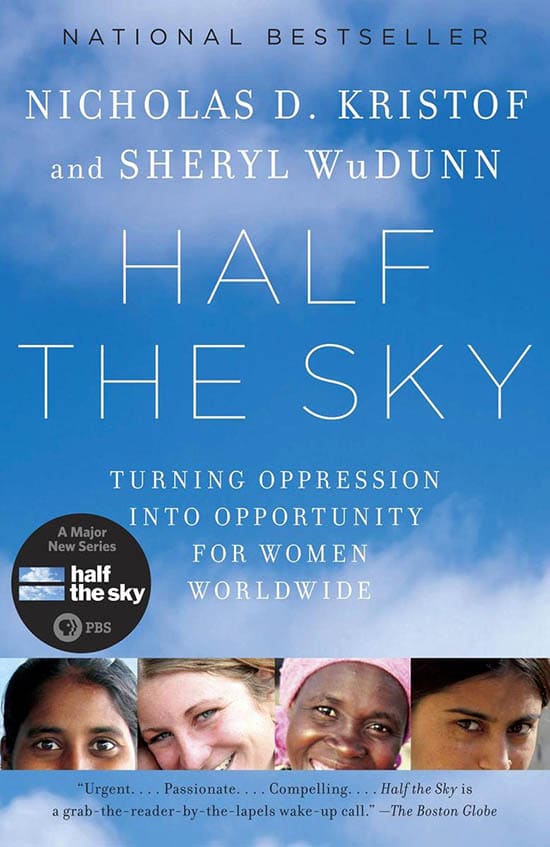
  • Half The Sky by Nicholas D Kristof – Book Summary & Review

    Uplifting The Better Half

    Gender equality, the world over is a serious concern that needs radical amends. Women all over the world have been subject to crimes such as human trafficking, sexual and domestic violence, and slavery. The roots of these evils are sown deep into a misogynistic, worldwide culture.

    Half The Sky by Nicholas D Kristof addresses these gender-biased and inequality issues, how certain actions taken in the modern world actually worsen them, and what can be done to right the wrongs against women. It also outlines how women, the biggest untapped source in the world, can actually help in creating a better tomorrow, and what the world stands to gain from it.

    The “Discounted humans”

    The female gender has bared the brunt of centuries of inequality. The number of women trafficked into brothels every year keeps increasing, and is even higher than the 18th and 19th century Africans who were forced into slavery.

    How is this possible in today’s modern world where education for all in most countries is a mandate, and perceptions surrounding women equality, seem to appear important?

    Firstly, it is essential to understand the difference between sex slavery and prostitution. Prostitution is voluntary whereas sex slavery is forced. Prostitutes the world over are most commonly pressured into it due to economic and financial pressures, while sex slaves are physically forced. They are beaten, their spirits broken, and are subjected to about fifteen hours a day, seven days a week of unpaid, humiliating work – all to satisfy the needs of men.

    While China has the largest number of prostitutes, India has the largest number of sex slaves. Sex slavery is an implicit contract to uphold the virtues of upper-class women by allowing men to trample on the virtues of the lower class.

    The perception of women (especially lower class and peasant) as discounted humans causes border officers in India to allow slaves and their traffickers to get into the country. While there are tighter rules and stricter punishments for terrorism, smuggled weapons and private goods, the belief that prostitution is an inevitable cause that lets the men have an easy outlet for their physical needs and keeps good, middle and upper-class Indian girls safe by the sacrifice of these slaves, is the reason that people get away with these atrocities even today.
    The Movement Needs Momentum

    The very premise that prostitution is ok if it is legalized and regulated is wrong. Yet there are those who find it utterly and inherently degrading. 

    Zach Hunter, the leader of LC2LC – Loose Change To Loosen Chains – a campaign against modern slavery run by students, started the campaign when he was only in the 7th grade. The world needs more crusaders like Hunter.

    However, the campaigns against sex slavery the world over need to be unified. Despite there being a consensus that forced prostitution is incorrect, opinions are still divided over consented prostitution among adults. There are laws of legalization and regulation to reduce the ill effects of prostitution such as AIDS and underage recruitment. However, the world needs to have stricter monitoring and crackdowns on brothels, provide victims with rehabilitation, opportunities to work and a more active part played by social services. 

    The worry isn’t rescuing victims of forced prostitution from brothels. That is the easier part. The challenge is to stop the rescued victims from going back. The social stigma that follows these victims once they are out and addiction to drugs are some of the major challenges that need to be addressed and rectified.

    For example, a Cambodian brothel worker Srey Momm was rescued by the world Assistance for Cambodia many times. She would end up going back to a life of prostitution because she was addicted to the methamphetamine easily available to her there.

    These women need a strong support system. To prevent them from getting back into prostitution the world has to firstly, invest in their education, and secondly provide them with a strong support system. This means that strong local women have to be educated and made capable of supporting the rehabilitated prostitutes. Most importantly, these women have to be able to let go of the belief that they are feminine only if they are submissive.

    Sexism And Misogyny Are Deeply Rooted

    The fact that misogyny is so deeply rooted in the weave of human culture, it is very difficult to bring about a meaningful change.

    To sound off some facts – 

    • Girls aged 14 and 15 years get killed more by male violence than traffic accidents, war, malaria and cancer put together.
    • Sexism is perpetuated not only by males, but by women in communities too.
    • More brothels are run by women.
    • In some communities, mothers feed their sons before their daughters, while in others, girls are genitally mutilated.
    • Women themselves opine that they deserve to get beaten by male member of their family, if they are not obedient.
    • In countries like Congo, young male soldiers believe that soldiers have a right to rape.
    • Rape and violence towards women occur due to more than just opportunism and male libidos.

    There are many such examples that prove how deeply misogyny is rooted in human culture. Misogyny can only be undone with education and strong local leadership. However, on the ground, it is easier said than done.

    In one of the regions in Nigeria, it was a tradition that the males would manage cash crops and the women would look after the staples. A UN project gave the local women a new type of cassava that resulted in better yield and was a cash crop that helped them make more money. Soon, the men took over the crop sales and used the money for beer, leaving the women poorer than they were before the project started.

    Such initiative, unfortunately, end up doing more harm than good, as foreigners do not know or understand these local traditions. 

    Socio-Biological Reasons For Maternal Mortality

    Maternal mortality is a bigger concern than it is projected. In fact, an alarmingly large number of women world-over die due to childbirth.

    While many effective solutions to avoid maternal mortality are cheaper and even less complicated, in many cases, they are not even implemented because people aren’t aware of them.

    A study conducted revealed, that by simply providing girls with a $6 uniform every 18 months, chances of staying in school and thus, chances of pregnancy decreased. Furthermore, keeping these girls in school for longer delayed chances of early marriage, enabling them to bear children at an appropriate age and more safely.

    In Ethiopia, a 21-year-old was left crippled with a fistula, leaking faeces and urine during childbirth. She lost her baby, and her husband and parents had no money to treat her condition. Though they had saved some money to take her by bus to a hospital, the passengers refused to let them on due to the smell. For two years she was left curled up in a separate hut. Eventually, her husband left her. The parents then sold all their belongings and managed to save $250 to hire a car to take her to the hospital. She underwent painful therapy and surgeries to correct her bent legs and fistula.

    Lack of education, infrastructure, rural health regards and the general disregard for women are some of the main causes for maternal mortality. Had Segaye, and the people surrounding her been educated and had more respect for women, she would not have been in pain for two long years.

    How Religion Affects Gender Inequality

    The religions of the world have equally contributed to gender inequality. While they aren’t misogynists in particular they do not have any measures in place to address the rising gender inequality all around the world.

    For instance, in many Christian countries, the ‘God Gulf’, or the secular liberals and conservative Christians that square off abortions shapes family planning amongst the Christian population. Moreover, the ban on abortion and lack of funding lead to unwanted and unsafe pregnancies and illegal and unsafe abortions, increasing the death rate among women and girls. This is true for all religions that denounce abortions. 

    For instance, in Sub-Saharan Africa, one out of 150 unsafe abortions result in death. In Islamic countries, women have to endure honour killings, which adds to the skewed gender ratios.

    A surprising fact is that when Muhammad introduced Islam in the 7th Century, it was more progressive than Christianity was. The fact that the Quran reads more literally than the Torah or the Bible, it is harder for Muslims to shrug off gender inequality and discrimination in their Holy Book than it is for Christians or Jews.

    The earlier deep-rooted ties that Islam had to slavery, were eventually eradicated. Similarly, it is possible for Muslims to offer women complete emancipation. Islamic feminists thus argue that the religion can continue its progressive spirit and help women rise. Albeit slowly, the Muslim leaders are now realizing that discrimination against women prevents them from tapping into a formidable, unexploited resource – women.

    Education Is The Only Way

    There is a lot that needs to be done in order to eradicate gender inequality and empower women all over the world. While education is a vital necessity to empower women and ensure that they get integrated into the economy of the world, education involves more than simply putting up more schools for women.

    Studies have found that iodine deficiencies among children can actually take off 10-15 points from a child’s IQ. Ensuring that children get iodized salt can prevent brain damage. Moreover, the reason that girls drop out of school after puberty is due to the use of cloth pads, which increase the risks of spotting and possible leaks. Such girls get embarrassed to attend school and skip it altogether. Providing them with better feminine hygiene products such as tampons and pads can reduce the school drop-out rates among girls. These simpler solutions can be easily implemented along with education.

    Movements for improving gender equality need to follow certain guidelines. 

    • The gap between the conservatives and the liberals needs to be bridged to link the God gulf with the need for gender equality.
    • Humanitarian communities should stop exaggerating their findings. This has led to other being sceptical of what they have to say.
    • Financing local projects and women volunteers needs encouragement.
    • The narrow-mindedness with respect to human life has to be eliminated. If there is a value to the life of unborn foetuses, there has to be a value for the life of those young mothers who are at risk of sex-slavery. Women, whether in the US or in Asia, should have the same status.

    These are just a few ideas. The impact of media – television and advertising – can be used to educate women, improve children health and even create a just society.

    Conclusion

    The evils of gender inequality and oppression against women are still by and large prevalent in the world today. Women are subjected to sex slavery, trafficking, and violence.

    It is thus necessary to empower women through education and other means if the human potential of women is to be harnessed to make the world a better place. There has to be equality for all – men and women.
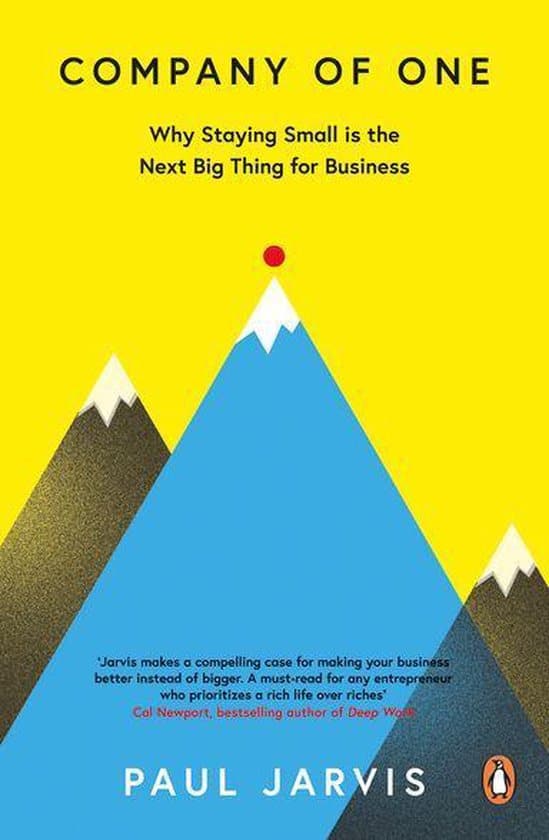
  • Company Of One by Paul Jarvis – Book Review & Summary

    Who doesn’t want to live the BIG dream? The Amazons, Apples, and Microsofts of the world are truly shining beacons that beckon every entrepreneur and charm them enough to want to pursue BIG successes.

    At the same time, it isn’t everyone’s cup of tea. And it shouldn’t be. While it’s true that reaching out for the moon is a goal that every entrepreneur aims for, thinking about success this way can be daunting. Playing in the big markets, managing an ever-increasing large organization, and spending a life pursuing the ‘bigger is better’ dream is indeed, the sacrifice of a lifetime.

    Company Of One (2019) by Paul Jarvis looks at an alternative to the conventional pursuits of success. The philosophy places a higher value on having less over more, staying small rather than making it big and prizing niche over the mass. It shows how small-scale business enterprises today, trump being a global giant, offer more freedom, independence, and enough wealth to live a life where friends, family, hobbies, and quality time are equally important.

    A Holistic View Of Life

    The mantra of modern capitalism is ‘more’. Consumers want more products, businesses want to sell more products, make more money, and have more profit. It’s a never-ending, insatiable desire for growth and consumption.

    There is, however, small, a shift in this trend. Many consumers are focusing on limited consumption. Businesses too are now seeking a more sustainable, stable, and satiable approach to growth. These exceptions are focusing on earning just enough to enable employees and owners to live comfortably, with autonomy, and freedom to do what they want along with their work. They revolve around the employees, rather than making their employees revolve around the goals of the business.

    Such companies, whether they are single owner-operator enterprises, or have a strength of a few hundred employees, are called companies of one. These are the companies that make the individual the unit of measure of the business.

    Companies of one set growth limits as opposed to conventional businesses that have an ever-escalating scale of growth. For instance, Psychotactics, a consultancy services firm run by Sean D’Souza, limits itself to a $ 500,000 per year profit. While it could make more money, D’Souza purposefully restricts its growth.

    Why??

    An ever-escalating scale of growth needs more production, more customer sales lead to more employees, bureaucracy, and infrastructure. This inadvertently translates to more exhaustion, more work time and oversight. With more growth, one has less autonomy, lesser free time, and even lesser comfort. After all, rapper Notorious B.I.G. got it right – more money, more problems!!

    And that defeats the purpose of the ideology of the company of one.

    D’Souza would rather be spending more time with his kids on vacations and making enough to keep comfortable and keep taking those vacations!!

    Not Free-lance Employment, Neither A Traditional Small Business

    Companies of one differ from both, traditional small businesses and free-lance self-employment. For example, most small businesses are limited successes and want to aim higher. They want to grow, expand and, they, by definition, believe in the ‘bigger is better’ mantra, seizing any given opportunity for growth and profits.

    Companies of one, on the other hand, don’t leap at opportunities for growth if they have met their profit targets. Achieving, and sustaining their self-defined levels of income are v the very definitions of their success.

    However, both, small businesses, and companies of one have a similarity. They both look for profit by investing a certain amount of time and money, once.  For instance, the investment could mean an upfront expense of labour into making a product or service. Once done, they reap the benefits and profits from that product without needing to do much further, thus repeatedly earning from it.

    Freelancers, on the other hand, stop generating income as soon as they stop working. Their income depends on work per hour, or per piece. A freelancer’s income depends on the time put in. They have a one-time contract with their clients, and unlike companies of one, they do not repeatedly earn from one project. The owner of a company of one could be vacationing while still reaping the benefits of a project that was done months ago.

    However, freelancing is often a stepping-stone to becoming a company of one.

    Starting A Company Of One

     Let us now get into the process of starting a company of one – step-by-step – and discuss goals, strategies, and distinguishing features.

    1. Not Quitting The Day Job

    It is often seen that companies of one emerge from side gigs. That said, quitting one’s day job isn’t really a good idea. Before the company of one becomes a sustainable success, one must be able to sustain oneself. Diving headlong into the company of one before it becomes a full-fledged business could get excruciatingly expensive, and defeat the purpose of starting a company of one altogether.

    Take, for example, Tom Fishburne, a marketing executive of 20 years and owner of Marketoonist, his company of one based out of his Marin County, California home.

    He started pursuing his childhood hobby of cartooning for fun. Soon, he started taking on small gigs, drawing for clients during his free time. He built a solid roster of clients and built a runway buffer (saved up enough to sustain living expenses in case he had a few slow months). Only after he achieved that, did he finally dive headlong into cartooning and quit his marketing job.

    Seven years into pursuing small gigs, he started making 2-3 times more than he did as a marketing executive. Furthermore, he not only changed a hobby he loved into a business but also enjoyed plenty of time with his family.

    Today, Fishburne runs Marketoonist with his wife. They do employ freelancers, but only on an ‘as-needed’ basis. While they have a waiting list of clients too, they prefer to keep it comfortable. They do not want to expand into a giant with satellite offices.

    We can learn a very important fact from Tom. The point where growth means to make unacceptable sacrifices in life is the point where the company of one has reached its growth limit.

    2. Work Should Be Passion

    Most business writers and speakers advise budding entrepreneurs to follow their passions. However, it isn’t always the case that one finds their passion easily. Additionally, not everyone’s passion is an ‘in-demand’, financially viable, and marketable skill. In fact, most passions are often out of sync with market demands.

    How does one then, find the side gig that can become a company if one?

    A study conducted by Robert Vallerand, a professor of psychology at the University of Quebec in 2003, asked a few students, “What’s your passion?” Most of the students answered music, art, or sports instead of their majors. Considering that these three fields make up only 3% of all the jobs available, pursuing them as passions is futile for starting a company of one.

    What most of these students needed to keep in mind, is that while football might be a passion, becoming the next Ronaldo would be a distant dream. It is the same for other passions that make up minuscule percentages of the successful ‘company of one’ markets.

    The questions that need to be answered then, are – “What is it that I’m already good at, that people would be willing to pay for?”, or “What could I get better at and make it a marketable skill?”

    Paul Jarvis, though not feeling passion for web designing, had become extremely good at it, and sharpened his skill sets to start a company of one. In due course, he got better at it, began to feel satisfied with his work, and was enthusiastic to do more. That feeling was a form of passion.

    Hence, it is vital that one understands the marketability of one’s passion and can turn work (or something one is decently good at) into a passion.

    3. Finding A Niche

    There are two common assumptions made in the business. First, the larger the number of people who want the product or service, the better it is. Secondly, people often believe that the bigger the market, the number of potential customers will be bigger.

    However, the catch with that is – while appealing to a larger target audience, the product or service needs to be more generic. This can end up diminishing the allure of the product or service.

    For instance, when Starbucks initially started out, they positioned themselves as a chain of coffee shops that gave people the experience of a local coffee boutique. However, by the mid-2000s, that experience became bland as they started expanding with coffee shops on every street, sandwiches, fancy beverages, CDs and more. The high-quality coffee experience suffered, and they had to scale back shutting about 900 stores. They had to refocus on their niche, original branding.

    What is important to remember is that the number of competitors increases in larger markets. Finding a niche thus is essential. It is easier to connect with, and gain the trust of a select few with specific needs, and create a tailored product that customers will be willing to pay a premium for.

    4. Personality And Simplicity Have Power

    Simplicity and personality are extremely important when one wants to narrow their focus and appeal to the niche.

    Consider Casper – a small company that sells mattresses. While they have tapped into a huge market, what sets them apart is the fact that they,

    a. Target only the younger audience, who prefer to buy online rather than go through the hassles of physically visiting the store, and

    b. They only offer 3 styles of mattresses.

    This has helped them to do both, narrow their target audience as well as offer their customers simplified options. Their proposition is straightforward – buy online, without hassles, and if one doesn’t like the product after using it for 100 days, it can be returned with a full refund.

    The second strategy – personality – involves using the uniqueness of personality and integrating it with the message that surrounds the service or product. That involves everything from communication with customers, advertising, branding, right down to the designing. The trick is to keep it simple, yet unique. For example, an entrepreneur could take a simple adjective like ‘loyal’ that best describes himself, and then put a unique spin on it that brings out an authentic expression of what the product stands for.

    This helps when despite the niche market one targets, there could be bigger, more established players in the field. Personality is unique. Hence, even though a competitor can replicate the product, they can’t replicate their personality.

    5. Establishing A Relationship With The Audience

    Once the product is developed with a unique personality, the next step is to reach out to the audience and convince them that the service or product is worth their money.

    While it’s easier said than done, there is a lot that goes into establishing a relationship with the customer. Understanding what the customers need is a vital step towards being able to fulfil those needs.

    One of the ways to reach out to potential customers is to offer them a no-strings-attached, free consultancy. For example, a web designer looking to start a company of one should start by looking for people who need a web designer and understand exactly what they want. Additionally, one can learn about their past experiences with web designers they have worked with before. This helps in getting vital information about the current market, how and where customers look for web designers, why they hire particular people, and what objectives do they want fulfilled from the web designer they hire. It also gives an insight into what accounts for a bad experience, and what do customers expect.

    This information can then be analyzed and used to position one’s own product. However, at this point, the aim is still to get to know the customer market and to build a relationship, not to make money. Moreover, one should remember that having collected the information, the aim at this point is to answer questions and help in small meaningful ways, and not to design the website for free altogether.

    Such ‘mini’ consultations work in two ways.

    a. By helping the customers understand what they should look for, what’s good and what’s not, and

    b. At the same time, gathering information about the customers’ needs, wants, and experiences.

    It’s a give and takes relationship, where both parties end up helping each other, without the need for any monetary transaction. Indeed, when the time comes for the customer to actually look for paid web-designing services, the customer is going to turn to someone they already know is an authority on the subject – the web designer who helped them with ‘free’ consultancy in the first place!

    6. Inexpensive, Quick Profit, Without Large Investment

    With the passion found, the product design, and the relationship with the audience established, it is time to think about spending, and making money. So ideally, one starts to look for office space, make business cards and quit that day job.

    However, the company of one is still at its embryonic stage, and it is too early to start thinking about making ‘real’ money.

    The most important thing budding entrepreneurs should think of is how to avoid large investments. Technology, today, has made it easier to bypass many large investments that were earlier necessary. For example, several free analytics software available has made it easier to collate valuable data without the need of hiring a cyber guru. Similarly, remote contractors can help in providing services that an entire IT department could do.

    The idea is to think small. If the plan needs larger investments, it defeats the purpose of a company of one. Expensive investments are features of small traditional start-ups that aim for ever-increasing profits in the future. Companies of one aim at getting profits as cost-effectively and as quickly as possible, without the need to increase the returns year on year.

    Once the entrepreneur falls into the trap of wanting ever-increasing profits, it becomes difficult to avoid external investors’ money, which leads to loss of freedom, autonomy, and independence.

    In fact, not needing large investments is good for a company of one. That is because the more money one invests to set up the company, the larger are the upfront costs, making it necessary that the revenue generated is higher and faster to break even. Similarly, if the company spends more time setting up, it takes the company more time to start generating revenue faster.

    Instead, the company of one should focus on spending just enough for a saleable product or service, which is just enough to set the ball rolling. The profits then grow through the snowball effect, gradually.

    7. The Snowball Effect

    With a few projects or sales in hand, the company of one begins its first steps towards its goal. These few clients or sales, lead to a few more, who in turn start recommending the services or products to other customers. This gradual build of a customer base called is the snowball effect.

    Consider the case of Ugmonk, a highly successful yet small clothing company started by Jeff Sheldon. He started the company on a $2000 loan, making about 200 T-shirts of only 4 designs. These T-shirts sold out quickly, encouraging a second and the third run of sales. Sheldon paid back his loan and almost immediately started making a profit.

    While continuing his day job, Sheldon re-invested his profit into the production of more garments, at absolutely zero investment. He ran Ugmonk out of the apartment for 2 years, and only invested in a warehouse much later when he really needed to.

    The point is, it’s ok to make large investments, but it is vital to make them at the right time, only if they are essential, and only if the revenue allows it. Trying to anticipate everything that the company might need in the future and jumping towards those purchases and investments defeats the purpose of keeping it small, capping expenditure and growth.

    An owner of a company of one additionally needs to be a jack-of-all, often doing the jobs that customer support, marketing, and accounts do, if the snowball effect must work.

    8. Customer Retention And Service

    The small size of a company of one is its competitive edge. It makes room for adding a personal touch to a service or product, especially when it comes to communicating with customers and clients. It is this personal touch that keeps them coming back.

    When it comes to customer service, it is the most important mantra of running a successful company – big or small. People value good customer service and are willing to drop a product if they have a bad experience with it.

    Some large companies, while also at risk of losing their personal touch due to customer service, don’t mind it at times. They follow a churn and burn strategy, wherein they aim at getting as many customers as possible, wring as much revenue out of them as fast as they can; and if the customer is dissatisfied, well, they move on to getting the next set of customers, without bothering about why the previous ones were dissatisfied.

    The churn and burn strategy, however, doesn’t serve the purpose for a company of one. Apart from it being a question of ethics, it also is a matter of cost. According to research by Econsultancy and Responsys, it cost five times more to bring in new customers than to keep old ones. Moreover, happy customers are more likely to refer the company to others. In fact, word-of-mouth referrals are the most important way companies of one acquire new customers. Burning those bridges is surely an expensive affair!

    Conclusion

    Companies of one are the smart way to run a business today. While the aim is to stay small and make manageable profits rather than ever-increasing ones, the upside is a higher level of independence and a better work-life balance.

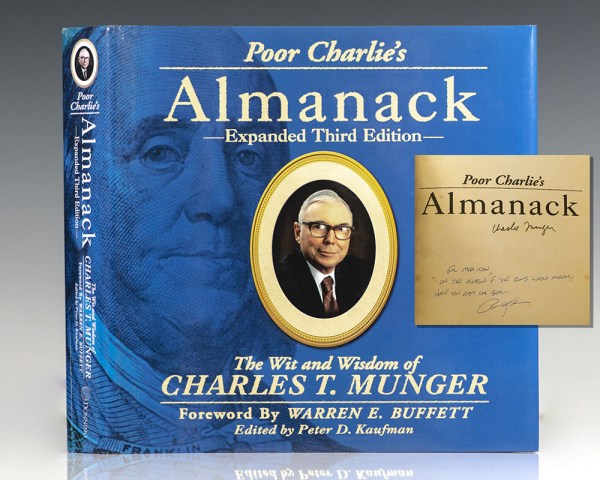
  • Poor Charlie’s Almanack by Peter D. Kaufman – Book Review & Summary

    Charlie Munger And What Makes A Good Investor

    A devoted philanthropist, a dedicated and highly disciplined investor, and a down-to-earth reclusive billionaire are possibly the most uncommon adjectives put together to describe one of the world’s billionaires – especially in today’s flashy ‘Insta-era’. Charles Munger, the Vice Chairman of Berkshire Hathaway is one of the world’s wealthiest businessmen, sans the social media displays of wealth and power.

    Poor Charlie’s Alamanck (2005), by Peter D. Kaufman, is a window into Munger’s investment philosophies, that have gained the company millions of dollars. Additionally, his inspiring ‘etiquettes’ towards keeping numbers honest, sticking to principles, a deep belief and trust in Wall Street, and his dedication to paying taxes rather than having money in tax havens, is proof of how his principles are not just about doing the right thing, but also about how they are actually good for business.

    A Strong Work Ethic And Philanthropy

    Munger, as a youth, worked in a grocery store that was run by Warren Buffet’s grandfather. With a 12-hour, no-breaks shift, he would earn $2. However, it was this gruelling experience that instilled in him a work ethic that stuck with him through the journey of his career from a  grocery stacker to a billionaire.

    His single-minded focus on his work and his ability to tune out distractions (albeit having 8 children at home) is fondly remembered by his children even today. In fact, his son William Borthwick remembers how his father worked hard to instil his work ethic in his children. 

    Borthwick remembers the time when his job was to drive into town, to pick up the housekeeper and collect the newspaper. The journey involved taking a short boat ride and then driving into town. One stormy day, Borthwick, focussing on the weather, forgot the newspaper. Munger sent him back out in the storm to get it! This lesson in getting a job done right the first time, though harsh, was effective, teaching Borthwick to do his work effectively at the outset.

    Munger was a strict father, yes, but his dedication to caring for his children, and his commitment to their education and careers, have left them with fond memories.

    Growing up during the Great Depression, Munger was a first-hand witness to poverty. His experiences as a child instilled a need to help others around him. Along with his wife Nancy, Munger has made valuable contributions to hospitals and universities, supported a number of causes like Planned Parenthood. Munger believes that as it is important to work hard, it is equally important to give back.

    An Unconventional Academic Career

    Munger sought knowledge wherever and whenever he could. As a child, his parents always encouraged reading. As a teen, Munger would spend hours in the library of a doctor family friend, where he would immerse himself in medical journals. Thus began his fascination with medicine and science.

    In college, he decided to pursue mathematics and later physics at the University of Michigan. Munger believes that his ability to apply logical theory and solve complex problems evolved during this period. However, his education was interrupted by World War II, and after his sophomore year, Munger joined the Army Air Corps. He was sent to the University of New Mexico to study engineering and science to become a pilot. Next, he studied meteorology at the California Institute of Technology.

    In 1946, after he was discharged as an officer from the Army Air Corps, his education was a patchwork of sorts. Having studied different subjects in many prestigious institutes, Munger still did not have a degree in anything! At this point in his educational career, Munger, with a little help from a family friend, applied and got through Harvard Law. Munger’s intellect and IQ, and his achievement of the magna cum laude proved that having a bachelor’s degree really didn’t matter!

    World War II, albeit a disruption in Munger’s education, was a blessing in disguise. It led Munger down an unconventional path towards independence and original thinking that have been valuable to him through his life!

    The Beginnings Of A Career In Investments

    After graduating, Munger joined a Californian law firm and thus began his prosperous career, and had founded Munger, Tolles, and Olson, a successful law firm. However, Munger still wanted more. He was restless as he didn’t want to settle for a career in law. He wanted to apply his intellect and skills in other areas too.

    In 1959, Munger returned to Omaha to wrap up his father’s estate after his death. Later, he attended a dinner with some family friends, who had also invited Warren Buffet. Buffet, at 29, was passionate about investing and business and was a perfect match for Munger’s intellectual curiosity. They hit it off instantly. What started as a dinner conversation that fateful night, turned into a partnership that has lasted more than half a century!

    Warren Buffet managed to convince Munger that his skills would be best used in the fields of investment and finance. Finally, after gradually extricating himself from his firm in 1965, he started his own investment partnership with a law colleague. Munger found success in that venture too. However, he decided that he would rather build his wealth through owning stock in company holdings, than managing funds directly for investors.

    He finally joined Buffet at Berkshire Hathaway, making it one of the most respected investment companies in the world. The companies spectacular successes are evidence of Munger’s unique contributions, derived from his training in math, physics and law, to run a tight, scrupulous, and clean business. While Buffet, for his part, keeps Munger on his feet by giving Munger a myriad of intellectual challenges.  

    Today, well into their nineties, Buffet and Munger are still at the top of the investing game!

    Commitment, Principles, And High Ethical Standards

    In the world of business, finance, and investing, unethical people and practices are rampant! Wall Street too, has seen its fair share of crooks. Movies like The Wolf Of Wall Street open only a small window into how bad the situation can really get!

    On the other hand, there are principled investors like Charlie Munger, and hence companies like Berkshire Hathaway, that believe in and keep their investing practices righteous. Considering Berkshire Hathaway is a mammoth organization of 175,000 employees, it has had very few scandals or litigations, enabling clients to put their trust in the company. Moreover, with strict principles like Munger’s, practices such as insider trading or doctoring books are simply crushed out!

    The temptation and pressure are enormous, as investors need to build the trust of clients and show that they can add true value to portfolios. Many even break the law by cutting corners. The frequency of such practices has, in fact, made it a norm, where investors and managers rationalize the practices with excuses. It is the same with tax evasion. In fact, even big conglomerates like Amazon set up headquarters in tax havens such as The British Isles or Dublin to avoid paying taxes.

    Munger, however, has no patience for such ‘socially accepted’ ways of law-breaking. He is strict with Berkshire Hathaway employees and shareholders to refrain from grey areas and law-breaking. The company has maintained its reputation where others like Enron have been tainted with scandal.

    Despite Munger’s strict vigil, there have, however, been close calls. 

    Berkshire Hathaway had once invested in a bank, Salomon Brothers. The bank, despite advice and warning from Munger and Buffet, chose to conduct business with the notorious fraud Robert Maxwell. The disastrous allegiance and its repercussions further cemented Munger belief in partnering with those who are aligned with the ethical standards he has.

    Munger’s Foresight Saved Berkshire Hathaway Damage

    Munger’s belief in ethics is especially notable in the 2008 Global Financial Crisis. Even before the crisis hit, Munger was vocal about ‘creative accounting’ and accountants who fudged clients books. He called it the ‘moral decay of corporate accounting firms’, where principled firms shifted their moral compasses to help clients fudge books to get ‘filthy rich’. He has seen principled companies from his youth lose their ethical standards and find loopholes in the law.

    According to Munger, accounting for derivatives is perhaps one of the most unethical practices. It involves creating financial contracts based on a speculated value of an underlying asset. For example, student loans are bundled and sold to investors based on projected values in future, when debtors will pay up, rather than clear, established values of the present. This practice is what makes derivatives risky, especially if the debtors don’t pay, rendering the contracts worthless.

    Munger knew the danger that speculation and derivatives posed. He also warned that companies practising it should be prepared for a ‘significant blow-up’. Munger’s words were prescient of the 2008 crisis. When housing prices crashed, debtors were unable to pay off loans, derivatives were rendered worthless, and the market crashed.

    Berkshire Hathaway was one of the only companies to emerge unscathed, due to Munger’s strict rules surrounding unethical creative accounting. His resistance to unethical practices proved to be a blessing.

    What Makes A Good Investor: Accepting Mistakes

    Munger has always had a zero-tolerance policy against liars. Above all, he values honesty the most. At the same time, he has always had a pragmatic view towards mistakes. In fact, one of his favourite stories is about how one of the financial officers in his company made a mistake that cost the company thousands of dollars. As soon as the officer realised his mistake, he headed to the president and owned up.

    At that point, while the president agreed that it was costly oversight, he let the officer keep his job because the officer had, rather than a cover-up, owned his mistake. What mattered most was that the officer had learnt from the mistake he made.

    Munger believes in practising what he preaches. And true to his belief, he admits to having made a number of errors through his investing career, especially ‘errors of omission’ – failing to buy enough stock or not recognising a valuable investment opportunity. For instance, one of the errors include not investing in Walmart, a decision that cost them over billions of dollars, just because they thought the stocks were too costly then.

    Another example of oversight was when Munger and Buffet, both, nearly declined to invest in See’s Company – a high-quality confectionery company – due to its high pricing and did not recognize its value. However, after a colleague made them see the value of quality, they changed their minds. The ‘in-the-nick-of-time’ investment turned out to be a lucrative one, earning them more than $2 billion in profits.

    Munger’s ability to change his mind in situations such as these is one of his key assets. In fact, Munger sees ideas like tools. If a new one is more useful, discard the old one. He has the ability to not take it personally when a colleague or employee disagrees with his opinion. Munger demonstrates the fact that only those who are strong and confident are able to own up to their mistakes.

    What Makes A Good Investor: Focus And Patience

    Charlie Munger believes that patience is one of the most important qualities an investor should have. 

    Buffet and Munger are, in fact, known to wait patiently for a good opportunity. Once they find it, (for example, undervalued stock in a company they predict will be profitable) they pounce, buying large parts of the company. Once they own shares, they keep those shares, and at times for decades.

    Such a ‘wait and watch’ investment style isn’t exciting enough, but has proven to be lucrative time and again. For example, after the 1987 stock crash, they saw an opportunity to acquire Coca-Cola stock at a very good price. Though the market was down and the value of Coca-Cola’s stock value had sunk, they knew that the value would eventually recover due to the solid brand value of the company. 

    They invested around $1.3 billion, making Berkshire Hathaway the biggest shareholder. Those shares are worth more than 8 billion today, proving that patience and focus pay back big!

    Many investment companies apply a strategy called diversification, which involves hedging bets and investing smaller amounts in a wider range of companies. Berkshire Hathaway, however, prefers quality over quantity. They invest in a smaller number of companies and hence are able to hold a majority stake. This gives them more influence over the decision in those companies. Munger also advocates that when one chooses to invest wisely, one need not have a broad portfolio. Ten solid quality companies are better than a mix of a dozen over and under-achievers.

    Munger’s investment policy is akin to the proverbial slow tortoise rather than the fast hare. Though it doesn’t look glamourous from the outside, the results speak for themselves.

    What Makes A Good Investor: The Ability To Draw On Diverse Mental Models

    Let’s consider a workman with only a hammer as a tool to work with. Because of the limited options he has, the workman starts to see bludgeoning as the only possible solution to fix every task or problem he encounters.

    Munger often uses this parable to explain the fact that an investor with only one way, or tool, to approach a problem, will suffer in the longer run. He will try to fit every reality to suit his ‘only known’ approach. In order to be successful, one has to have a broad range of tools from different disciplines. Using different approaches give one the mental acuity that is required to adapt ones thinking to different problems.

    The problem is that the Harvards’ of the world often train in only one discipline, with different departments of academia fighting for superiority. This is detrimental. However, if one considers how pilots are trained to think out of the box and apply mental agility to different problems encountered in theory and in practical application, all while updating their knowledge base throughout their lives, it becomes evident that applying one school of thought or one manner of problem-solving to everything one encounters is not the route to success.

    Pilots are trained to make mental inventory ‘checklists’, of all possible problems that they could encounter and all possible solutions that they could apply. This practice helps pilots in considering counterintuitive possibilities and thus, encourages mental agility.

    Similarly, if young investors were to perceive their education in this manner, by constantly applying multidisciplinary knowledge while updating their skills regularly, and conducting mental checklists, they would become more adept at making good judgements and solving complex problems. They would simply be more successful at thinking.

    What Makes A Good Investor: Understanding Psychological imitations

    A good investor should have sound knowledge of psychology, and above else, a good understanding of the limitations of their own thinking. Humans are sadly, easily manipulated by the subconscious, have blind spots and limited knowledge. It is the reason why advertising works so well!

    In order to combat the limitations of one’s own psychology while investing, Munger suggests a ‘two-track analysis’. It involves taking a step back first and then rationally considering all data available. What are the real risks involved? What are the possible benefits of investing?

    Next, one has to consider the psychological factors that could be influencing, at a subconscious level, one decision as an investor, that could be leading to conclusions but are actually incorrect. For instance, is the investor drawn to the company because the management is flattering? Or has the investor drawn conclusions about the company based on prejudices or feelings of antipathy, that could lead him to turn down an otherwise sound investment opportunity?

    Having an understanding of what one doesn’t know can be a good thing. It can be used to one’s advantage. For instance, Buffet and Munger have a defined ‘circle of competence’ which they use to decide while qualifying an investment. On principle, they do not invest in ‘high-tech industries’ such as internet-based offerings or computers as they do not have much knowledge about them. While this has closed them off to some very lucrative opportunities, it also has saved them from possible huge losses.

    One can, of course, broaden one’s circle of competence, however, within reason. Essentially, a person can gain more knowledge about law and specialize in one area. However, if one doesn’t know how to play tennis at all, one cant acquire championship skills very fast. The trick is to understand the difference between the two!

    What Makes A Good Investor: Spotting The Crest Of The Wave

    The investor Benjamin Graham pioneered the strategy of value investing, wherein he calculated the value of a company if it were to be sold privately he then divided the price by the number of shares available. He would deem investing in the company worthwhile if those shares were on the market for not more than one-fifth of the company’s actual value. 

    This strategy has been successfully applied by many investors including Berkshire Hathaway. However, such companies are failing often. Munger believes in using another strategy. He finds investing in good companies, rather than looking for companies that have gone bust, far more lucrative.

    How then, can one define and spot a good company?

    According to Munger, one has to consider several important factors.

    1. Management

    The management of a company is an essential factor to consider, as a good manager can completely turn a company around. For example, Jack Welch had a tough policy for General Electric (GE). He would dictate that if any division of the company wasn’t first or second on whichever market they were in, he would shut it down. This policy was brutal and even controversial, but ambitious and good for the health of the company. Hence, GE was good for investors!

    1. Product Placing

    The second important factor is how the product of the company is placed in the market. Products with strong and established international distribution networks and unparalleled brand recognition like Gillette and Coca-Cola are infallible. Additionally, companies like Gillette that invests in the most cutting-edge tech are able to maintain their competitive edge in the market.

    While both, good management and product, are essential to make a sound investment, the best way to make a skyrocketing successful investment is to find a company that is poised for success, at the crest of the wave. A company like Microsoft, at the beginning of the PC boom, was poised for success, had the savvy and skill to capitalize on its positions. Such a company is akin to a surfer’s dream wave!

    Conclusion

    Charlie Munger’s mantras for investment success have made him the success he is today. He staunchly believes that good investors need to be cool-headed, focus on quality investments rather than quantity, uphold their principles and ethics and guard them with the highest priority, have patience and above all have an understanding of what makes a good investment. 

  • Just Listen (2009) by Mark Goulston – Book Summary & Review

    Listening To Communicate

    Communication lies at the very crux of human social interactions. Whether it is getting a point across among a group of friends, being able to give a successful presentation or having an effective one-on-one conversation with one’s boss, one needs to get the opposite party to listen and understand what is being said. For that to happen, one has to have the ability to get people invested or ‘buy in’ into what one is saying.

    More often than not, people tend to get caught up in themselves, losing the ability to communicate effectively. Just Listen (2009) by Mark Goulston is an effective guide, combining techniques of persuasion and listening skills that help understand how to get others to listen, by listening to them.

    Listening Initiates Progress By Helping To Overcome Resistance

    Let’s begin with a hypothetical scenario. Steve is standing on the ledge of a high-rise, threatening suicide. While the authorities have surrounded the perimeter of the building, Lieutenant Williams, a negotiator approaches Steve to convince him against taking the plunge. He tells Steve that he can get help to deal with whatever problems he is facing and there are better options than hurting himself. 

    Unfortunately, Williams’ offer for help angers Steve and he rejects Williams’ offer for help by responding angrily. Why does Steve respond in this manner?

    The problem lies in how Williams communicated with Steve. Rather than listening to or understanding the problems Steve is facing, he offers help that he feels is needed. 

    Next, imagine Lieutenant Brown approaching Steve. He listens to what Steve has to say, and then responds by saying, “You must be feeling like this is the only option you have left.”

    Brown coaxes Steve to discuss more the problems he is facing. As he gets Steve to talk more, he helps Steve calm down and become more aware that there are other options apart from suicide.

    What Lieutenant Brown has done is give Steve a listening ear, hear him out while he gets his frustrations out, and empathize with him. What this scenario brings forth is the fact that often, people simply want someone to listen to them, rather than give solutions. 

    People tend to approach any conversation they have as though they are rational arguments. However, any type of argument is counterproductive to effective communication. They always create some form of resistance. Hence it is essential to firstly, not approach any conversation with a perception of arguing – rational or otherwise. Instead one has to listen to get others to listen.

    Mirroring Emotions

    Mirroring emotions, or, reciprocating, acknowledging and recognizing the emotions of those one engages with is programmed into the human brain. Cells in the brain called mirror neurons help to understand and experience the emotions that we see others emoting. A classic experience is the need to tear up while watching an emotional death scene in a movie. This happens because the mirror neurons help the brain perceive and understand the emotions in the scene.

    The researcher V.S. Ramachandran even called mirror neurons ‘empathy neurons’. It is in fact believed that these could be the basis for human empathy. These neurons are also responsible for the human ability to appease, satisfy expectations, and seek the approval of others.

    For example, when a teacher realises that her students are dozing off, it is the mirror neurons that make her chirp up and announce a five-minute break.

    On the other hand, when feelings are not reciprocated with empathy, one is less likely to feel connected with others. Research has shown that a deficit develops in the mirror neuron receptors when mirrored emotions aren’t mirrored back. This deficit causes feelings of loneliness and disconnection.

    Sadly, technology and the increase in impersonal communication via emails and messages, and because people today do not have the time to form communications, people do not mirror each other as they used to earlier.

    Listening Relies On The Rational 

    The human brain is divided into three layers, or thinking parts, that each experience the world differently.

    The first layer, the reptilian layer, is reactive to the immediate situation and primitive. It is responsible for the fight-or-flight responses and doesn’t take time to think about or analyse situations. It takes action. Sometimes, the reptilian layer doesn’t act at all. It experiences a deer-in-the-headlights reaction and freezes up.

    The second layer is the mammalian layer. Being more evolved, it is responsible for one’s emotions. It is the home of one’s inner drama queen! It is in this layer where all the powerful emotions such as love, anger, grief, joy, pleasure, jealousy and sadness arise.

    The third layer is the rational, reasoning layer which is responsible for analysing the data that it collects from mammalian and reptilian layers. It then develops the next logical steps. This layer is the inner Mr Spock, always carefully weighing options and then making decisions on the course of action.

    Everyone uses these layers in their brain while reacting to the world around them. Hence, in a conversation, if one wants the opposite person to be receptive to what they are saying, it is important to make sure that the person is thinking with the same layer.

    Ensuring The Use Of The Rational Brain

    We established that in order to have a rational conversation, it is essential that both parties in a conversation are using the same brain layer. However, before that, one has to be sure that they themselves have their emotions under control to get the opposite person to listen. Strong emotions such as fear, jealousy, panic, or anger can hinder one’s ability to reason. 

    US Secretary of State Colin Powell was once asked to comment on his wife’s admission to a mental institution in front of 8000 people. Instead of reacting in anger, he composed himself and replied, “Excuse me – the person you love more than anyone is living in hell, and you don’t do whatever you can to get her out? Do you have a problem with that, sir?”

    This ability of Powell’s to remain calm in the face of an explosive question only added to his reputation as a leader.

    That said, not everyone has the ability to remain calm and composed all the time. However, it is lucky that one can regain composure by accessing the rational layer by simply acknowledging panic or threat.

    In any threatening situation, the rational layer of the brain shuts down, and the amygdala – which controls the emotional aspects of the brain – takes over. Threats can also trigger flight-or-fight responses, letting instincts and emotional responses take control.

    In such situations, expressing emotions out loud helps in putting the situation into perspective, and one gets an opportunity to calm down and think. research has also shown that simply speaking out fears, or naming threats helps cool down the amygdala, cause the reptilian brain to cede and let rationality take over.

    That said, it is as important for one to let the opposite person have the space and time to address fears, cool down, and think. A rational brain in control always lets a person be more open to listening.

    Displaying Vulnerability Can Help

    One needs others to connect and respond to the emotions one feels. They need to have the chance to mirror those emotions in order to identify. Hence, when one is able to accept and show their vulnerability – emotions such as fear, helplessness, grief – others respond to those and identify with them. Vulnerability is a great tool to become a good communicator, and hiding vulnerable emotions won’t help others to understand the situation one is in.

    For example, if a person is nervous and ashamed about being nervous while delivering a presentation, he is most likely to respond negatively or in anger if anyone makes an insensitive remark at that moment. The other person is most likely to mirror the emotion of anger, without understanding the underlying reason.

    If the person would have been open about his vulnerability, the colleague will probably be able to empathize and respond, with kind words to help boost confidence. Similarly, giving others space to show their own vulnerability will enable one to understand what is actually the root cause of the person problem.

    It is additionally important for managers and leaders to be able to recognise and address vulnerability shown by employees. Approaching them and letting them discuss their feelings, and giving them a listening ear, will most likely help to gain trust and show that they are cared for – an important skill for communication in times when stress at the workplace is high.

    Levelling With Others For An Open Dialogue

    When trying to get others invested in what one has to say, talking and opening about oneself is a great tool to get others to respond and interact. Creating an atmosphere of equality in a conversation helps create stronger bonds.

    One of the ways to do this is the Side-by-Side approach, where one asks questions during a shared moment, and then follows with deeper questions to strengthen the connection.

    For example, during a rather mundane drive to school, a father breaks the silence by asking his son which of his friends is most likely to get into trouble later in life. Surprised, the son thinks for a moment, and replies, “John”.

    The father askes why did his son pick out John, to which the son replies, “His parents are divorced, and he has already been in trouble.” After a few minutes of silence, the father asks, “What would you do when you see John in trouble?”

     The conversation continues from there and the father and son duo discuss what can get kids into trouble, how can they be helped and so on.

    The father, rather than questioning the son about his grades and getting stony replies, engaged his son in an interesting conversation and got to understand his son’s views on friendship, loyalty, and generally what his son considers right and wrong.

     Thus demonstrating an interest in other lives can get them to open up. Reaching down to their level is vital as it makes others feel valued.

    Practising Empathy

    Empathy is intrinsic to listening. However, while it is a known powerful tool, it isn’t intuitive. One has to practice displaying empathy to make conversation partners feel valued.

    One can use the following guide to practice empathy.

    1. The first one has to identify and attach an emotion to what the conversation partner is displaying. Let’s say the conversation partner is displaying anger.
    2. Next, it is important to ask outright if the emotion is correctly perceived. One can say, “I’m sensing you are angry. Am I right? If not, what are you feeling?”
    3. Once the emotion is identified, one has to judge the level and depth of the emotion. One outrightly can ask, “How angry are you?” More often than not, this question gets an emotional response. One has to be patient and allow the person time to answer (and calm down if needed).
    4. The next one has to extract the reason for the emotional display by asking, “Why are you angry?”
    5. Once the reason is obtained, one should show the conversation partner a willingness to help, and that one cares about their feelings. This can be done by saying, “What can be done to make you feel better?”, or, “How can I help to make you feel better or calm down?”

    A demonstration of empathy always helps others feels valued and cared for. Moreover, it gives the person time to think rationally, calm down and connect, making way for a great conversation, where both parties are heard.

    Conclusion

    Listening is a vital skill to have in any scenario. However, in order to get others to listen, one has to listen to them first. The brain’s mirror neurons are responsible for empathy and need to be mirrored back for one to feel what others are feeling. Moreover, one has to make sure that they themselves, and their conversation partners are using the same rational brain while conversing. This will help establish and strengthen the connection between the two parties and make way for effective communication where both parties hear and are heard.

  • Brave by Margie Warrell – Book Summary & Review

    Being Brave Everyday

    More often than not, people let fear take control and prevent them from achieving their full potential. Letting fear get the better, people often miss out on great opportunities that come by. The fear of the unknown can be terrifying, surely, but giving in to fear could make one miss out on a dream job, overlook a possible love interest, or even start one’s own business.

    Margie Warrell’s Brave (2015) is a guide to being brave. It delves into strategies that one can apply to take day-to-day actions more courageously, and tap into ones full potential to thrive, succeed, and achieve. It discusses how fear stops people from living a fulfilled life, and how each individual can use certain tools to have the courage to get what they want to make their life better.

    Face Your Fears

    Facing one’s fears and taking action despite feeling fear makes a person stronger.

    At the age of 13, when Warrell asked her son Ben what he wanted to do, he excitedly replied, “Sky-jumping.” While Warrell was scared for her son, and so was Ben, he did jump, putting aside his fear. This got Warrell thinking that the fact her son was able to overcome his fear was beneficial for his personality development.

    Simply overcoming fear helps in strengthening one’s courage muscles. The trick to increase and strengthen one’s bravery and courage levels is to start small, with day-to-day actions.

    For example, a socially awkward person who fears cooking can start small by inviting a few friends for dinner.

    Every time one is reluctant to do something or take a particular action, one should note it down. Accepting and being aware that one is fearful of something is the first step towards building confidence and strength. It means one is accepting of the fact that they are afraid of the fear of rejection or failure.

    Once the fear is identified, one should immediately take action, practically, without dilly-dallying. So one can begin by thinking about what one would want to do in the next few months if they felt really brave. Next, break down the associated fears with each challenge.

    For example, a person who is afraid of public speaking might realize that it is not the act of speaking that is scary, but the possibility of failure, or others judgement that actually gives them the jitters.

    The next step is to apply positive thinking. The person can then imagine what giving a successful speech looks and feel like. By imagining a positive outcome of what the person fears, he will be able to understand how it feels to move out of the comfort zone and will help in promoting the person to make a move towards facing fears.

    Resist Conformity And Being True To Oneself

    Being true to oneself and fighting off conformity pays. 

    A friend of the author, Carly Findlay, had a skin condition called ichthyosis, which resulted in her having a reddish skin tone, and no eyelashes or eyebrows. As a teen, this condition would often make her feel awkward around people, as she would stand out in a crowd.

    Findlay learned to embrace her condition, made her differences her strength, and today, she is an advocate for those who do not fit into what people consider ‘normal’. Findlay learned to accept her differences and to not fear rejection.

    Many people face a fear of rejection because they might be different from the normal, either due to their sexuality, appearance, or interests. But being true to oneself results in others accepting a person’s uniqueness. Moreover, one can truly be happy without needing to hide oneself.

    This is especially true for children who do not conform to the stereotyped gender roles. If a boy has an interest in fashion, repressing his passion just so that he fits with the other boys around him, will result not only in hiding his talents but also making the boy unhappy deep down. Trying to fit within the norm, will lead to failure.

    Acceptance of one’s own uniqueness leads to more natural behaviour, and more often than not others respond more positively to a true person.

    Speak Out About What Matters

    Fear keeps one from saying out loud the things that matter most.

    Consider the life of Malala Yousafzai. Born in Pakistan in 1997, she was an advocate for girls’ education from a very young age. However, the influence of the Taliban in her region prevented women from being educated. By 2012, Yousafzai’s resistance to the Taliban, and her advocacy made her a target. A Taliban gunman shot her in the head. Miraculously, she survived, continued her fight for education, and went on to win the Nobel Peace Prize.

    Yousafzai spoke for what mattered most to her, despite the danger to her life. People often are afraid to speak their minds, especially when in a group. Later, they regret not speaking up when they had the chance to. While they are not brave enough to stand up for their own beliefs at that moment, in the long run, they feel as if they have betrayed their own values.

    This sense of betrayal is the cost of keeping silent, and it can be avoided. It is as simple as standing up for what one believes in. However, first, one has to be absolutely clear about what they believe in.

    People often miss out on knowing and understanding their own beliefs clearly. If they articulate their crystal clear beliefs to themselves, they will be better at defending those beliefs.

    For example, a person who finds racist and homophobic jokes distasteful, might not speak up against them because they have not clearly articulated to themselves, or dissected what amounts to discrimination in their dictionary.

    The person can read more about the subject of why discrimination is on race, gender, or sexuality is unforgivable. This will prepare the person to defend their point of view and become more confident to express their views when the time comes. 

    The Basic Rules Of Speaking Up

    Speaking up is difficult and needs bravery.

    A few years ago, the author had the opportunity to work with a US Army colonel. Experiencing the battlefield, the colonel knew what courage is. However, when he was later dispatched to a pentagon office job, he realised that his job needed a different type of courage. He needed the courage to communicate clearly or even question his superiors. 

    Most people tend to avoid topics that touch a nerve in conversations, out of the fear of rejection. Speaking up about such topics needs bravery and courage too.

    Consider an employee who is afraid to speak up about the fact she has been overlooked repeatedly for a promotion, despite her excellent work history. While her fear of approaching her boss keeps her silent, not being able to speak up honestly will make her resentful in the longer run.

    She has a simple solution – to speak up honestly, and share her thoughts and feelings. However, this needs to be done properly. Blurting out or blasting off the pent up feelings will get her nowhere.

    She needs to strategize and clarify first that she is putting forth a perspective, and not demanding a promotion. She needs to calmly communicate her feelings, make room for empathy and be open to hearing others perspectives as well.

    Furthermore, she will need to understand the importance of keeping a person’s actions separate from the individual itself.

    That said, she couldn’t say that it is ‘unfair’ that she has been overlooked for a promotion. That would imply that she thinks her employer is unfair, and that she won’t be able to see any decision taken by the employer as anything but unfair. This would be counterproductive and she would never be able to shake off her feeling of uneasiness.

    Hence it is vital to not be judgemental of an individual but to be able to separate their actions from the individual.

    Advocate For One’s Own Abilities

    It is important for one to be one’s own advocate in order to succeed in today’s harsh, modern world.

    Competition is rife in these modern times, and while humility is a valued virtue, it doesn’t always pay. Whether it is being the best at school, being the best dancer in class, or vying for the topmost position at work, people are pitted against each other to prove they are the best.

    Those who cannot advocate themselves, or their abilities, get left behind. Even a qualified person, with the best abilities, gets trampled over if another less qualified person can show himself in a good light.

    Advocating for oneself doesn’t mean that one has to be a braggart or resort to lying. However, it is important that one has the ability to present their skills and accomplishments in an appropriate way. One has to be professional about it while conveying the information to the right people at the right time. 

    Broadcasting ones own abilities might feel self-centred or egotistical, however, it is important to be able to tell others what one brings to the table. One has to think about what one can offer and research companies or jobs that can best use those skills to their fullest. The train of thought should run towards – how can these skills and abilities best help others, and where.

    Thinking about oneself in these terms will make it easier and less uncomfortable about conveying and praise one’s own skills.

    It is also important that one clearly understands which field they can work in best. Thus, when the time comes, advocating one’s own skills in that field is a passionate and genuine endeavour. This genuineness will enable others to view one in the good light that they wish people to see them in.

    Make A Decision And Stick To It

    Making a decision and sticking to it is important, especially during uncertain times. 

    The times we live in today are very uncertain. For example, while it was easier to keep a job for decades earlier, today the uncertainty of times makes it difficult for anyone to stick to one job for long. On average, a person moves through 6 to 7 jobs in a career span instead of 2 or 3.

    Moreover, change isn’t predictable. Who could have predicted two decades ago that that salary margins would be so huge today? This flux makes it tough to predict the future and make decisions.

    During the early years of their marriage, the author, and her husband Andrew, would spend a lot of time trying to figure out what direction Andrew could take his career in. They even thought that Margie could look for a second career in order to be able to look after the children. Eventually, they realised that there were too many unpredictable factors to forecast their lives and make a sound decision. It took time for them to accept it, but they gave up the futile exercise.

    Decision-making is stressful, however, trudging through it, making a decision in an unpredictable future can be productive and brave. Counterintuitive as it may seem, the stress that arises out of indecisiveness is far worse than making an informed decision.

    Additionally, it is important that when faced with a conundrum of decision-making, one has to find a common ground, rather than overdoing it and letting it consume you, or simply putting hands up in the air and giving up. For example, while trying to decide between a new job offer and one’s current position, it is surely important to think about it, weigh in the pros and cons, and make a final decision.

    Finally, once the decision is made, it is as important to stick with it. Perfection doesn’t exist in this flawed world. Attempting to pursue perfection could only lead to a horde of missed opportunities.

    Seeking Help Is A Sign Of Bravery

    Seeking help from others is a sign of strength and bravery.

    A friend of the author, Mona, worked in a high-power job in Dallas. As a working mother, she would pull all-nighters and be accustomed to others needing her help. She was, unfortunately, diagnosed with breast cancer.

    Battling her condition, she now needed help from others. While as an independent, strong woman, she had difficulty accepting it initially; she learned that when in need of support from others, it is important to be able to ask for it. She also understood that it was futile to feel guilty about seeking help.

    We are brought up to be strong individuals, and to be as self-reliant as we can, and seeking help is often seen as a weakness. But the real strength lies in asking for help, accepting one’s fragility, and showing one’s vulnerability to others.

    The other benefit of accepting is that one needs help in understanding how the power of community works towards making an individual success as a part of a collective. After all, no one is alone, and one succeeds only when one accepts that there are others too, who have contributed to one’s success.

    Accept Grief And Sadness

    Grief, loss, and sadness are a part of life. It is best to accept it and make efforts to move on.

    Trying to hide the pain of loss, or sadness, doesn’t get one anywhere. It is a difficult process, yes, but trying to mask the pain only leads one down the path of destruction. There are numerous instances where people resort to drugs, or alcohol abuse simply to hide from the pain they feel.

    Such behaviours are mere distractions that seem to numb the pain for the short term. But in the longer run, letting oneself experience grief, helps one truly overcome it, rather than being stuck in a state of denial and doing more harm than help.

    Letting grief take its time, helps one accept the situation and be able to deal with it better. It is thus important to give sadness full attention, take time to process those feelings and eventually, be able to move past it and let it go.

    Many cancer survivors, in fact, state that getting cancer was the best thing that happened to them. Many have been able to get a new, fresh perspective in life, value friends, family, and life itself more, and even understand what is most important in their life. Acceptance of grief and the ability to emerge stronger on the other side makes one braver.

    Conclusion

    Being brave isn’t about taking risks or making huge decisions. It is about how one is able to handle simple day-to-day problems and issues, and come out stronger on the other side.

    Being brave begins with stepping out of one comfort bubble, and exercising one courage muscles. Bravery comes in many different forms, whether it is accepting grief and loss, accepting that one needs help, advocating for oneself, speaking up, or sticking with a decision made in tough times.

  • Blueprint (2019) by Nicholas A. Christakis – Book Summary & Review

    The Social Suite OF Behaviour

    Human psychology and social behaviour, much similar to the physical aspects of being human, are evolutionary. Human culture, friendship, relationships and even emotions such as love seem universally similar across cultures. Despite differences in race, gender, nationality or religion, humans are genetically predestined to behave in a particular manner.

    Professor Nicholas A. Christakis’ Blueprint (2019), explores these similarities and shows how the evolutionary past is linked to the present.

    The Blueprint Of Social behaviour

    A universal blueprint for social behaviour is encoded in our genes. These instinctive genetics have helped form cultures and societies. As a child, Christakis and his brother were the only two Greek children on the Turkish Island of Büyükada. They quickly made friends with the local boys on the island, spent long afternoons playing, and even waged war on rival groups. Years later, Christakis reflected on these cross-cultural friendships. How did a group of children form close friendships despite having so many cultural and linguistic differences?

    According to Christakis, his childhood friendships can be attributed to the mental manual of social skills, instincts and tendencies, which guide the behaviour of every human being. These universal traits are responsible for people across different cultures coming together to form groups as small as Turkish and Greek boys playing together, or huge societies and sovereigns of a million people.

    Christakis called these traits the social suite of human behaviour, including tendencies to form friendships, to learn from and teach each other and even to love.

    This social suite also forms a predisposition to favouritism. For example, in a study conducted in 2011, it was seen that children wearing red t-shits were favoured to mingle with and liked other children wearing the same colour. They even discriminated against those children wearing other colours. The researchers found prejudice was there even when the children were told that colours were given out randomly. This showed that humans have an affinity for ‘likeness’.

    At the same time, humans are born with the ability to develop and recognize individual identities. Without this ability, there would be no discrimination, no preferences, and hence, the base of human social behaviour – love and friendships – would never exist.

    How The Social Suite Works

    Understanding how the social suite works, whether it is an inbuilt evolutionary adaptation or simply spontaneous reactions to situations, is difficult without conducting social experiments. However, such experiments would require raising individuals in an environment without any social set-up, without any pre-existing society, and would be life-long experiments, which would be ethically illegal.

    However, studying shipwreck survivors can get us as close to understanding the working of the social suite.

    Shipwreck survivors land on deserted islands that have no social infrastructure, or human establishments. In 1864, two ships, the Invercauld and the Grafton crashed on two different sides of a New Zealand island – Auckland Island – just off the coast of the mainland, not knowing that the other crew was there on the other side. The survival strategies of both crews were very different.

    The survivors of the Grafton helped each other to survive. They ensured every man survived, worked together, and cooperated with each other in order to survive. They made a makeshift school and learnt from and taught each other while they waited to be rescued. All the Grafton survivors who were washed ashore survived.

    The crew of the Invercauld on the other hand, left the weak men behind to die. They continually split up, deserted their sick, and were even known to eat one of their crew members. By the time they were rescued, only 3 members of 19 survivors of the crew remained alive.

    As opposed to the crew of the Invercauld, the crew of the Grafton displayed and used the full social suite of behaviour. This proved that the social suite of behaviours is evolutionarily advantageous for survival. This blueprint of behaviours that are genetically universal to all humans helps in guiding behaviours in environments that are outside the norm.

    The Blueprint Of Relationships, Monogamy And Love

    Love is a universal human emotion. It is a deep emotional connection that transcends mere sexual attraction. However, according to experts, love for a sexual partner was in fact an evolutionary accident.

    Originally, love as emotion was felt and expressed only towards one’s offspring. However, the emotional affinity, over time, extended to include mates and sexual partners too. Such evolution, where an adaptation is repurposed to another is called exaptation. The exaptation of human love from offspring to mates is similar to the evolution of flight amongst birds. It is believed that birds first grew feathers to keep their bodies warm. These feathers, later repurpose and evolved to be useful for flight.

    The reason for the exaptation of love could have been to ensure that a family stayed together, to ensure the survival of an offspring, especially during pregnancy and child-rearing.

    The human communities, earlier, were polygynous, and monogamy as a practice is only about two thousand years old. What made humans switch from polygyny to monogamy?

    According to anthropologists, certain benefits and advantages of monogamy helped keep communities and societies safe. In polygyny, often men are left without wives. These men, leading unattached lives were less invested and leaned towards antisocial behaviour such as theft, violence and rape. This would destabilize a community and make it less productive. An example of this is seen in communities in China. Sex-selective abortions have led to a skewed gender ratio, and single men tend to lead more violent lives and die younger.

    Monogamy on the other hand ensures that every man has a partner and that they lead longer attached, and more invested lives.

    The Friendship Blueprint

    Another universal human feature is friendship. The core values of friendship, namely, mutual aid, affection and trust, are seen in almost all human cultures. Acceptance of one’s vulnerabilities is another universal friendship trait. For instance, one would not mind getting teased by a friend, because deep down, one knows that the friend means no harm.

    However, there are some traits of friendship that aren’t universal. For example, in 2005, when George W. Bush was seen holding hands with the Crown Prince Abdullah of Saudi Arabia, many Americans were surprised. However, his act was seen as a natural gesture of friendship by the Saudi Arabians.

    In the United States, sharing personal information and regularly socializing are considered traits of a friendship. However, in some other regions, physical contact is a natural friendly gesture.

    The definitions and traits of friendships differ from culture to culture. But why do humans engage in friendship at all?

    Developing and maintaining friendships too have an evolutionary past. The early humans regularly faced threats such as illness, injury, lack of food, dangerous weather and predators. These threats were primarily threats to the survival of their offspring and people then needed to fall back on friends in their time of need. To some extent, this need exists even today, where one needs the help of genuine friends in times of need.

    Techniques Of studying Cooperative Behaviour

    The Amazon Mechanical Turk, a software system that enabled Amazon to hire thousands of part-time workers for small online tasks, was developed in 2005. It made recruitment and payroll according to work done easier. 

    The Turk system, social scientists soon realized, was ideal to set up artificial communities of users and to study their responses – in groups as well as individually – for tasks set by researchers. It was an exciting opportunity to explore and study the social suite of behaviours, and how the users would display these universal behaviours online. They could even study how the new online environment prompted users to behave in new ways.

    When Christakis and his team were studying cooperation – one of the most distinctive human traits – the results were illuminating.

    In one of the experiments, 40 different social networks, with randomly placed users were created. Each user in every network had a unique set of neighbours. One individual from every network was given a sum of money and was told to either give it to a neighbour or keep it to themselves. If the individual decided to give the money to the neighbour, the sum would be doubled, leaving the individual significantly poorer than the neighbour.

    They were also informed that in the next round, the neighbour could choose to reciprocate. In this round too,  the money would be doubled. Thus each network was given a choice to cooperate and make more money or to not cooperate and make lesser.

    In some networks where everyone donated money to their neighbours, cooperation was seen as the norm. however, in networks where only one person kept all the money, defection was rife.

    This experiment showed that while cooperation is a natural human behavioural trait, it can perish under certain conditions due to its fragile nature.

    Social Tendencies In Other Species

    Uncomfortable as it may seem, studies have shown that the animal’s humans experiment on and eat share many features of the social suite that humans have. Right from 1964, when the French surgeon Alain Carpentier successfully used valves transplanted from pigs in cardiovascular surgery, the world of science has been observing subtler similarities between animals and humans.

    Evidence has shown that gorillas have their own language, rats can feel empathy and elephants have friendships among them. The study on South American capuchin monkeys showed that they have parallels with human behaviour. These primates, for example, exhibit the human trait of accepting vulnerability in front of their friends. They are known to put their fingers into other monkeys’ mouths, allowing them to gently bite down on their fingers.

    These commonalities are attributed to evolutionary convergence, a process where different species arrive at the same evolutionary adaptations separately. Bats and birds for example separately evolved for flight. Apes, humans, and whales, for instance separately evolved to exhibit social traits such as social learning, cooperation and recognizing individual identities.

    The reason for these similarities is attributed to the fact that these species have evolved in almost identical social environments.

    Despite the differences between the physical environments, mammals such as elephants, whales, apes and humans evolved to survive. They needed to interact, live and grow in the presence of other members of the same species. Essentially, species that were able to socialize, exhibit behavioural traits such as cooperation, friendship and trust were able to adapt better to their environments and hence pass down their genes for social behaviours. Most social offsprings of these species were better able to survive. This natural selection, eventually, helped optimal social behaviour emerge. This optimal, survivalist behaviour is comprised of the social suite, developing separately at different times among different species all over the world.

    How Culture And Genetics Helped Humans Tame Their Hostile Planet

    Evolution and adaptation have enabled humans to live in extreme conditions from the freezing Arctic to the sweltering Amazon rainforests. This evolution and adaptation have been possible as genes have endowed humans to develop culture.

    Evolutionarily, culture is ‘ the knowledge that is transmitted from one person to another, within a group, influencing individual behaviour.’ Moreover, culture itself is an evolutionary adaptation, wherein due to natural selection, genes have helped humans to create culture.

    Genetics has made it possible for humans to have a long life, thus enabling humans to pass down information from generation to generation. Additionally, certain human psychological traits such as the tendency to mimic the behaviour of elders, and the desire for conformity between individuals, are tailor-made for culture to thrive.

    Culture, akin to natural selection can evolve and adapt to the environment it needs to respond to. Great ideas emerge stronger than mediocre ones, becoming a part of the ongoing culture of a group, is similar to how genetic mutations can have survivalist advantages. Culture is, hence, critical for human survival.

    Going back to the shipwreck survivors, many of these European adventurers perished due to a lack of cultural knowledge of their environments. Those who contacted the local human establishments in these unknown places had far better chances of survival. The natives had the knowledge of their specific environments, knew how to survive it and shared this invaluable information with those who were lost, increasing their chances of survival.

    Conclusion

    Humans, irrespective of their physical environments, share a set of social tendencies and traits known as the social suite of behaviours. Cooperation, the ability to learn, friendships and loving relationships, and have mutual trust are all part of this social suite.

    While the social suite is intrinsic to adaptation and survival, the human aptitude for developing and preserving culture is equally important for the survival of the human species. Together, they form the blueprint of human social behaviour.

  • The Black Swan by Nassim Nicholas Taleb – Book Summary & Review

    Understanding Black Swan Events

    Often, humans lack the ability to define or understand randomness and give in to decision-making methods that heavily rely on intuition. The human perception of randomness and intuitions while making predictions and decisions can result in profound consequences individually, and as a society, often at the expense of accuracy.

    Nassim Nicholas Taleb coins the term ‘Black Swans’ to describe events that are thought to be impossible, yet redefine one’s understanding of the world. In his 2010 work, The Black Swan, Taleb points out these seemingly random events and their pitfalls. It is a guide to understanding one’s own shortcomings while making logical decisions and predictions, recognizing the human desire to fit information into easy-to-understand narratives as an outcome of clouded judgement, making better use of ignorance, and why it is detrimental to cling to one’s beliefs.

    Black Swans

    Humans are wired to derive meaning from all the information available in the environment. This ability to compartmentalize any stimuli received into meaningful information has led to understanding science and creating scientific methods, complex mathematical models and even philosophizing the nature of the being.

    However, these accomplishments do not indicate that humans are actually good at it. In fact, humans are predisposed to be narrow-minded and cling to their beliefs of how the world functions.

    The constant evolution and growth of human knowledge is a dogmatic approach that makes no sense. For example, doctors and scientists were supremely confident about their knowledge of medicine, just about two hundred years ago. Today, that very confidence they have seems ludicrous.

    A dogmatic approach to beliefs makes humans blind to anything that falls outside the paradigms of what is believed to be true and can result in massive surprises. More often than not, the surprise generates not from the randomness of the event or information, but from the fact that human perceptions and outlook is too narrow to accept it. These surprises are the ‘Black Swans’ that propel humans to fundamentally reconsider their beliefs and perceptions of the world.

    The term is derived from a very simple event. Earlier, people assumed that all swans were white. This led to all imaginations, depictions,  and associations of ‘swanness’ to the colour white. However, when they discovered the black swan, it fundamentally changed their understanding of what all a swan could be.

    It is thus necessary to accept that not all events are white swans, and not all events have the same outcome as previously experienced or take the course as previously believed.

    The Earth-Shattering Consequences Of Black Swans

    Let’s look at an example of what a ‘black swan’ event is. John always places his bets on his favourite horse Rocket. For about 3 to 4 races, her track record, her build, the skill of her jockey, as well as the lack of competition, has made Rocket a safe bet.

    With this in mind, John gambles everything on a sure-shot win once again. However, when the pistol is fired, Rocket refuses to budge from her place at all. Such a surprising turn of events is a classic example of a black swan event. Even though John had all the information, and had placed his bets carefully, he lost everything!

    On the other hand, the owner of the horse, Mr Wallis, knew that Rocket had been acting up the previous evening, and had placed his bets on another horse. The same black swan event had no effect on Mr Wallis, because he simply had a piece of information John did not.

    Black Swan events affect everyone in different ways. The deciding factor on how a black swan event will affect someone depends on the information one possesses. Simply put, the more information one has, the likely the person is to be affected by such an event.

    Moreover, Black Swan events differ in terms of the scale of their impact too. They can affect individuals, as well as whole communities and societies too. They can change the course of how the whole world works, impacting different areas of society such as theology, physics, and philosophy. Copernicus’ proposition that the Earth is not the centre of the universe has challenged not only the historical belief of the people but also the historical belief of the Bible itself and thus the authority of the ruling Catholics.

    This Black Swan event impacted Copernicus as an individual, as well as established a new beginning of belief for European society.

    How Logical Fallacies Fool

    Human beliefs are based on the information acquired in the past. Humans tend to create narratives because past experiences are seen as an indication of the future. This tendency is a fallacy that does not consider unknown factors that could throw curveballs into the belief system and leave humans open to making mistakes.

    Turkeys living on a farm are fed, watered, and cared for by the farmer. Accustomed to the past experiences, they are oblivious to the fact that the next day, they would be Thanksgiving dinner, eaten by the very people why fed and cared for them.

    Humans are like those turkeys on the farm, believing in the fallacy that predicting the future based on past experiences works. Thus such fallacies can lead to dire consequences.

    The concept of Confirmation Bias is one such fallacy, wherein people tend to look for evidence to support their own beliefs, to the extent that they even tend to ignore evidence that contradicts their beliefs. Humans tend to not only ignore contradictory evidence, but they are also unlikely to accept it and even look for sources that could help undermine the contradiction.

    People who think that climate change is a conspiracy theory, are likely to get upset if they see the documentary called “The Undeniable Evidence for a Changing Climate,”. In fact, they are more likely to search the internet for information on ‘climate change hoax’ rather than “evidence for and against climate change.”

    Belief in such fallacies is sewn into the very nature of humans. They are bad habits that aren’t easily shaken off.

    Accurate Predictions Are Difficult Due To The Way The Brain Categorizes Information

    The human brain evolved to survive the wild, adapt fast and learn to deal with danger quickly. Today, the inherent danger has been replaced by complexities. Hence, the way the brain evolved to categorize information to survive the danger, is practically useless today.

    The Narrative Fallacy, where humans use linear narratives to describe situations is an example of how humans incorrectly categorize information. According to this method of information categorization, the brain selects only the information it considered important out of the tons of information it is bombarded with daily, to make sense of it. For example, the brain chooses to remember what food was eaten for breakfast rather than remember different types of cars it saw on the way to work.

    Moreover, the brain tries to turn all the unconnected bits of information retained into coherent narratives. For example, a person selects only those events in their life that seem important and arrange them in order if she wants to reflect on how she became who she is. So this person connects her love for music because she remembers her mother singing to her every night before bed.

    This method of creating connected, coherent, narratives, however, doesn’t give one a meaningful understanding of how the world works. It doesn’t take into account the infinite reasons that could have contributed to any one event. It only considers the past. The fact of the matter is that even the tiniest, most insignificant event could have massive, unpredictable consequences.

    Differentiating Between Scalable And Non-Scalable Information

    Humans, unfortunately, do not have the ability to differentiate between different types of information, despite inventing many models and methods of categorizing it. However, understanding the difference, especially between scalable and non-scalable information is crucial.

    Non-scalable information like weight and height of the body has definite, statistical lower and upper limits. For example, while a person can weigh 1000 pounds, it is impossible for anyone to have a weight of 10,000 pounds. These physical limitations make it possible for people to make meaningful predictions and averages.

    Scalable information, on the other hand, such as the distribution of wealth and sales, is abstract. There are no limits to how much sales a digital album could make if sold on iTunes. The sales numbers on digital platforms are not determined by the number of physical copies manufactured. Furthermore, for online transactions, one isn’t limited by physical currency to prevent one from selling a possible billion digital albums online.

    To get an accurate picture of how the world works, understanding the difference between scalable and non-scalable information is important. Applying the rules of scalable data to non-scalable information only leads to errors.

    For instance, to measure the wealth of the population of England, one has to simply work out the per-capita income, by adding the total income and dividing it by the number of citizens.

    But since wealth is scalable data, and there is a possibility of a small percentage of the population having a large amount of wealth, using per-capita to calculate the total wealth could result in inaccurate outcomes.

    Overconfidence In Beliefs

    Humans are, by nature risk-averse. Thus, to be safe from harm, people try to assess and manage the possibility of risk. People try to measure risk as accurately as possible, all while trying to not miss out on opportunities.

    To do this, people evaluate possible risks and then measure the probability of these risks materializing. For example, while buying insurance, people try to choose a policy that gives protection from the worst-case scenario, yet not is a waste of money. People try to make this informed decision by measuring the threat of accidents or disease against the consequences if those do happen.

    Unfortunately, humans fall prey to ludic fallacy,  a tendency to be overconfident of knowing all the possible risks that they need to be protected from. They tend to handle risk like they would a game, with probabilities and a set of rules that are pre-determined before they actually play it.

    This approach is based on the ludic fallacy. For example, for casinos, the major threats might not be thieves or lucky gamblers. Threats to the casino could be utterly unpredictable, like an employee that fails to submit the casino earnings to the IRS, or a kidnapping of the casino owners child.

    The fact of the matter is, that no matter how much one tries to assess or calculate the accuracy in risk, there is too much uncertainty to factor in every bit of it.

    Ignorance Is Not Always Bliss

    There are two contradicting thoughts, ‘knowledge is power’ and, ‘ignorance is bliss’. While both have their merits depending on the situation, it is far better to be aware of what one doesn’t know.

    Focusing only on the knowledge one has can limit one’s perception of all possibilities, in any event, creating the perfect base for black swan events. Consider a person in the US in 1929. This person plans to purchase stocks in a company and has been studying the market trends from 1920 to 1928. While he assesses the highs and lows of the market in the past 8 years, he notices that the trend is generally upwards. He then invests all his savings in the market. The next day, however, the market crashes and he loses everything.

    This person focused only on the information he had about the past 8 years. Had he noticed the trends of booms and busts from a little ahead in time, he would have probably been better prepared.

    Poker players, especially the good ones, have an understanding of what they don’t know. For example, they know the rules of the game, they know the cards they hold, and they are also aware of the fact that the opponent could have better cards than they do. However, they are also aware of information that they don’t know such as, the opponent’s strategy and how much the opponent can stand to lose.

    By simply being aware of what they don’t know, they are able to strategize and make a better assessment of risks in playing their hand.

    Understanding Limitations Leads to Better Choices

    We have established that it is necessary to have a good understanding of the tools one uses to make predictions. However, it is far more important to understand the limitations of those tools. 

    While knowing limitations isn’t a sure-shot strategy to escape the consequences of every blunder it can help in reducing the number of bad decisions one makes. For example, a person who is aware that he is subject to cognitive bias finds it easier to recognize that he is only looking for information that confirms his beliefs.

    Thus if one understands that humans have a tendency to organize everything into casual, neat narratives and that this helps to simplify the complexity of the world, one will be more likely to look for more information that enables one to get a better view of the whole picture.

    Even a small amount of this kind of critical analysis, and knowing one’s own shortcomings can give a person an edge over others. For example, if one is aware that there could be unforeseeable risks in an opportunity, one will be careful to not heavily invest in it, even if it seems extremely promising.

    One can at least, mitigate the damage of ignorance, even if one cannot understand the complexity of the world or win over seeming randomness.

    Conclusion

    Humans are bad at making predictions. They have full confidence in the knowledge and underestimate their ignorance. Humans need to understand that Black Swan events occur due to over-reliance on seemingly sensible methods, their inability to define or understand randomness and even the basic human biology that leads to bad decisions.

    Nothing can truly prepare one from Black Swan events that can change the course of one’s life or even the world. However, simply being aware can make all the difference!

  • Wired for Story by Lisa Cron – Book Summary & Review

    Writing To Attract The Brain

    Storytelling is an art. Moreover, writing compelling stories that appeal to an audience, intrigue them, and keep them coming back for more, is a science. Writers today, have a clear advantage over the writers of the past. They have science on their side and can use the power of brain science to write better, compelling stories.

    Wired for Story (2012) by Lisa Cron delves into the human brain to understand what type of narratives appeal to the human brain, and how writers can tap into some of the fundamental techniques that can make their readers come back for more!

    The Evolution of The Love For Storytelling

    Why do humans love stories? 

    Stories have been a part of humanity since the beginning. Exchanging stories was the most effective manner of communicating lifesaving information that human ancestors had. Humans thus evolved to pay attention to stories, which was hardwired into the human brain, enabling humans to visualize the future, and even prepare for it.

    When a story captivates a person, it is because dopamine, a neurotransmitter gets released in the brain, causing interest and concentration to heighten. This process is also attributed to evolution.

    To understand how this process worked, imagine a Stone Aged man telling another how his child ate some red berries nearby and almost died. Hearing this, the second man might have learned how to keep his own children away from those berries and out of danger.

    To get a deeper understanding of this evolutionary practice, modern neuroscience helps by stripping it down further. It shows that the brain processes the information in the story like real life and becomes a stimulating learning experience. Such stories teach how to ward off danger without even experiencing it oneself.

    Hence, in ancient times, learning that approaching a tiger is dangerous through a story is better than approaching itself and finding out for real. While both, listening to a story and facing reality teaches the same lesson, hearing a story is far less dangerous.

    This ability of stories to educate is relevant and endures even today – an ability that modern-day writers can use to their advantage.

    Focus Filters Out Unnecessary Information

    Why does one lose interest in a story?

    More often than not, a story without a plot, one that has an aimlessly meandering narrative fails to captivate attention. Furthermore, it is tough to find a good story without a plot.

    To create an engaging, great story, it needs to have an explicit focus that consists of the following three factors.

    • The Protagonists Issue: The protagonist needs to have a main desire. In Hamlet, the protagonist’s issue murder of the hero’s father, the investigation surrounding it, and the protagonists need to know what happened.
    • Theme: The theme of the story communicates humanness. The themes in Hamlet would be depression, madness, and sanity.
    • Plot: The third factor is the plot, or the protagonist’s quest to reach a goal. Everything unexpected that leads to Hamlet’s death, surmises the plot.

    In a story, all the information needs to adhere to one of the three factors, without any superfluous information. Why?

    The human brain gets flooded with about 11 million pieces of information every second! And it is able to process only 5 to 7! Hence, the focus is vital to a story being relevant and providing important information to the brain. Without this focus, the brain struggles to process the amount of information, filter out what is important resulting in a drop in dopamine levels. The brain then loses interest in the story. 

    Hence, without a clear focus, Hamlet would have been just a random compilation of facts about Medieval Denmark.

    Empathizing With Emotions

    The human personality is believed to have two sides. One side corresponds with rationality, reasoning, and decision-making, and the other side corresponds to emotions, intuitions and judgement.

    While many think that smart decisions need to stem only from rationality, neuroscience has proved that the emotional side is as important. Antonio Damasio, a neuroscientist, studied a man who had a brain tumour. The tumour had rendered the man incapable of feeling emotions. In fact, while he scored high on a number of IQ tests, without his emotional capabilities, he could not make decisions – as simple as choosing a pen – at all.

    Hence writers need to be able to satisfy the emotional side of their readers and empathize with them to get engaged in the story. This can be achieved by putting the readers in the protagonist’s shoes so that they can experience, and feel exactly what the protagonist feels.

    In order to do this, writers can describe how the protagonist reacts to emotions. For example, describing how the hero paces back and forth in a room describe his anxious state, or how his face turning ghostly pale can describe a feeling of fear.

    Another way is to reveal to the reader’s information that the protagonist doesn’t know. For example, a murderer hiding inside his house, as the protagonist approaches it, will give the readers a look into how the protagonist will feel in the near future. Additionally, writers can also use narrators to show the protagonists thoughts and feelings.

    A Clear Internal Goal

    In order to captivate the readers, a writer needs to give the protagonist a clear goal. 

    The mirror neurons in the human brain are responsible for making a story or a situation compelling. For example, a reader reads that the protagonist is fumbling with the keys to open the door, without knowing that there is a murderer inside, the same areas of the reader’s brain get activated if the reader was in the same situation as the protagonist.

    How do mirror neurons in the reader’s brain connect with a protagonist’s goal?

    If the reader did not know or understand the goal of the protagonist, the reader won’t be able to understand the behaviour, feelings, and emotions the protagonist feels in that situation. While reading, without understanding how the protagonist will feel when he finally encounters the murderer and how will he escape.

    Protagonists’ goals can be of two types – internal and external goals. Consider an example. In the movie Die Hard, John McClane’s goal is to stop a gang of terrorists from killing everyone at the Nakatomi Plaza. His other goal is to get back with his ex-wife Holly.

    In this situation, stopping the terrorists would be McClane’s external goals, which are goals that need to be completed in the outside world. 

    On the other hand, winning his ex-wife back are McClane’s internal goals. A protagonist needs to realize internal goals in order to evolve as a person. These are the goals that readers most identify with and are vital to the protagonist’s story. They should be crystal clear to the readers.

    While on one hand, readers won’t really be able to identify with feelings the protagonist feels while fighting terrorists, they will surely be able to identify with personal internal goals of trying to win back a loved one.

    External goals are used to make a plot intriguing and exciting. However, they should not dominate the story.

    Specifics That Help Readers Engage And Imagine

    The human brain has evolved with the amazing ability to mentally create images. That said, images are extremely vital, and stories must have abstract ideas and central concepts.

    The images that people mentally create a model of a world wherein they can imagine their actions without any consequences they would face in the real world.

    According to Damasio, the entire human consciousness is filled with images, making them crucial to a story. For example, Einstein was able to bring to reality his abstract concept of the Theory of relativity by remembering how he would visualize himself riding a beam of light in his childhood.

    For writers, using imagery brings forth an advantage. Generalities do not create specific imagery in a readers mind. A story with too many generalities results in the reader’s brain drifting off, making the story conceptually difficult to grasp. This leads to a drop in the levels of dopamine, and the reader loses interest in the story.

    Consider the following pieces of information– 

    1. In the United States, about 2500 people perish in house fires.
    2. David rushed inside his smoke-filled house, finding his mother trapped under the collapsed roof, screaming. As he fought to reach her through the flames, she looked towards him and whispered, “I love you, son.”

    Here, the second piece of information helps create an image. The specifics and details given help readers visualize the situation and the reader immediately gets involved in the story. The first sentence, however, being a general fact doesn’t create any imagery, making it difficult for the brain to relate to it.

    The Desire To Look For Patterns

    The human brain has evolved to look for patterns in places where none exist. In fact, it hates randomness. This evolution took place to break down the complex surrounding world – a useful tool to be able to rapidly predict subsequent actions.

    For example, when a cave dweller first saw a mammoth lower its head before charging would have learned that another mammoth is prepared for charging when it lowered its head.

    Thus the evolution to seek patterns has an impact on storytelling too. Humans fundamentally assume that everything is the start of a pattern or a setup, and expect the following payoff. Hence everything that signifies an action in the future in a story is a setup.

    For example, when Q shows James Bond a number of gadgets, it is a setup for the future action in the story. When Bond uses one of the gadgets against the villain, it is the payoff.

    For a story to be effective, the path that links the setup and the payoff should be clear, concise and quick enough. For example, if a setup is introduced at the beginning of the story and reappears only at the fag end of it, the payoff might not be as effective or satisfying enough.

    However, when the writer breaks the expected pattern in the story, he can get the readers attention. This is because anything that deviates from the pattern can be shocking and intriguing.

    Practising Makes Storytelling Intuitive

    The brain functions at its best when it works alongside intuition. For example, when asked how many letters of ‘e’ are there in the word ‘entrepreneur’, the brain immediately tries to visualize the word. Sometimes, when the brain can’t remember the spelling, overthinking tends to decrease its performance.

    According to Herbert Simons, the Nobel Laureate, a person takes about 10 years to excel at a subject. After 10 years, the brain internalized about 50,000 bits of knowledge, enabling it to process these bits automatically. One doesn’t need to actively think about them to recall them.

    For example, an expert tennis player, after years of practice, can estimate the speed, bounce, and direction of the ball without thinking about it.

    How does this connect to writing?

    In order to develop the necessary skills for writing a good, compelling story, it has to be rewritten over and over again. Practising writing the story makes it intuitive, thus making the story better with every new draft. Michael Ardnt had reworked the story of Little Miss Sunshine over a hundred times before the final award-winning screenplay was written.

    Almost all great novels and stories have been rewritten a number of times. After all, all first drafts are shit!

    Conclusion

    Writers today have the advantage of brain science to write compelling, intriguing, great stories. Whether it is to understand when and why the brain releases dopamine, how mirror neurons work to make the reader experience the feelings of a protagonist, or how the brain functions best alongside intuition, they need to understand how and why the brain reacts to stories, and use writing techniques that exploit the brain’s manner of processing information.

  • Radical Candor by Kim Scott – Book Review & Summary

    Candid Leader

    A leader is expected to have many virtues. Being candid is possibly one of the most important ones. While different people respond to different types of leaders, it is the boss who can combine bluntness with empathy and be direct and caring at the same time, who can establish the best possible relationship with his employees.

    Radical Candor (2017) by Kim Scott builds the case for leaders with radical candor, guides towards creating an environment that brings out the best ideas and gives an insightful approach to the best management practices that make a kickass leader.

    Developing Beneficial And Strong Relationships 

    Not every manager or leader heads to work with a feeling of excitement about leading the team through another day of great work. However, a manager with radical candor certainly approaches the workplace with a positive attitude most of the days.

    Practising radical candor involves two main principles.

    1. Personally caring about employees, and,
    2. Instilling challenge in their work.

    These two principles are at the crux of developing trusting relationships with team members. While different people react differently, and have unique personalities, using radical candor works for just about any type of employee.

    As a leader, one has to be personally invested in the growth and success of the employees. This entails proving that one genuinely cares about all that is happening in the employee’s life. It includes sharing, opening up and talking to the employee about more than just work and business. Not everyone believes it but a good work relationship is a very personal one.

    Secondly, a good leader should be able to challenge employees, if and when they are meeting expectations.

    While this can be a little tough to achieve, especially since candor and a direct approach might not seem like caring behaviour, the ability of a leader to challenge the team is a hallmark of a good leader who cares.

    Being candid has several benefits for the performance and the culture of an organization, just as being direct and honest does. With honesty and a direct approach, a leader can open up the channels of communication with the team, making the acceptance and reciprocation of feedback easier.

    Such an open culture of being candid, where employees can freely discuss with the leader and amongst themselves, will soon spread through the workplace, creating an efficient, healthy and productive work environment.

    Balancing Honesty And Directness Without Offending

    Managers often face defensive or aggressive behaviour after giving out constructive feedback, despite all good intentions. Being honest and direct, without seeming offensive is a skill. A leader has to be able to help and guide the employee while doling out criticisms, without sounding mean.

    When Scott started as a manager at Google, her boss was adept at giving feedback with radical candor. Once, after Scott gave a presentation, her manager called her aside to give her constructive feedback. At first, her manager began to honestly compliment her for being able to handle the questions from the audience. Only after lauding her presentation, did she call out the fact that Scott used “um…” too often.

    When Scott didn’t think of it as too important at first, her boss explained that using ‘um’ too often tends to make a person sound dumb, which was not the case with Scott.

    Scott’s boss made her point clear and complimented Scott at the same time. After that, Scott took efforts to improve her speech with a coach. Such feedback is radical candor at its best!

    Scott’s boss was direct, open, and honest, without discouraging Scott or discounting the success of the presentation. Her boss encouraged Scott to improve, without sugarcoating the criticism. The boss also didn’t wait to give feedback, enabling Scott to start working on improving immediately.

    Being open, direct, and honest about both, the positive and the negative ensured that Scott didn’t consider it a personal attack.

    The Pitfalls Of Lazy, Fearful, Or Overly Aggressive Management

    Meryl Streep did a beautiful depiction of Vogue’s Anna Wintour in The Devil Wears Prada. It is the perfect example of a toxic work environment, and the leadership shown in the movie is exactly the opposite of what radical candor aims at.

    Radical candor, as explained earlier, is about caring for employees. Honesty and directness do not justify being obnoxiously aggressive or being humiliating while doling out criticisms. Such behaviour can only destroy morale, create enemies, and encourage employees to quit.

    That said, given a choice of being a friendly boss who can honestly give critical assessments to the employees or being an unpopular asshole who is painfully honest and direct, it’s better to choose the latter. After all, directness and honesty are far better for the organization and everyone involved.

    Leaders should also be careful to avoid ruinous empathy and manipulative insincerity. While manipulative insincerity is a result of not caring enough to challenge employees, it shows that a manager is lazy. For example, a manipulative, insincere manager will tell an employee who has given a poor presentation that it was adequate, just because it is easier than having discussions over points of improvement.

    On the other hand, a manager who has ruinous empathy will avoid conflict out of fear of hurting the employee’s feelings. However, in both cases, the employee loses out on constructive criticism that could have enabled him to improve. This will only result in further deterioration of the employee’s performance, leading to the employee getting fired for non-performance.

    Providing Professional Development

    A fulfilling job that drives genuine passion in employees, is a job found in utopia. In reality, work is tedious. Moreover, it isn’t a manager’s responsibility to make it easier for anyone.

    Motivating employees doesn’t include sugarcoating the difficulties. Moreover, while a meaningful job, a purpose to fulfil can inspire employees to do their best, manufacturing a false sense of purpose and meaning can only backfire.

    At Google, when Scott was a manager, she tried to convince her staff that their work was important to the creative worker. She would give her team pep talks. However, one of her employees saw through the façade and approached her honestly. He told her that it would do better if she was true to the team and told them clearly that their work was at times unfulfilling and tedious. Scott realised that there’s no shame in admitting that at times, jobs have only one purpose – and that’s to make money!

    Hence, telling employees that working hard will bring satisfaction and that good work is acknowledged, rather than trying to alleviate their existential dilemmas’ is much better than giving them phoney motivational talks.

    Leaders should rather provide employees with tools to help them grow as professionals, and give them a clear perspective of their careers. To do this, leaders and managers should be able to identify and differentiate between 3 kinds of employees – 

    • The Superstar employees, who need to be challenged, and given opportunities to raise the ladder to meet their full potential.
    • The Rockstar employees, who will do great work as long as they have the stability and the time to shine at their work, thus offering a steadier presence in the team, and,
    • The Falling Star employees, those who are unable to perform consistently, even after getting chances to improve.

    The Firing Experience

    Firing an employee is probably the toughest job a leader has. When an employee falls under the ‘Falling star’ category, leaders need to ensure that firing the employee is but the last resort left. This is because; firing an employee has several repercussions. 

    Losing a job puts an employee in an incredibly tough situation. There are many aspects of the employees’ lives and even the organization that gets impacted. While, for the employee, it could mean loss of a source of income, the strain on his marital and/or family life, and even losing out on health insurance, for the employer, it means making a radical change to the team and the way it works, and even tackling the effects the firing will have on the other members of the team.

    It is thus the leader’s job to ensure that an employee is let go for the right reasons, and the leader is seen as an honest and caring manager, despite the negativity surrounding the incident.

    The leader thus should account for the following points before firing any employee – 

    • Making clear efforts to try and improve the employees’ performance.
    • Using radical candor to directly and honestly tell them that they indeed do good work, but certain areas need a lot of improvement.
    • Avoid personal attacks at all costs.
    • Keep in mind the negative effects the bad employee has on the overall working of the team.
    • Consider a second and even a third opinion before making the move.

    Once all these points are taken into consideration, then the person can be let go. The leaders or manager, however, should have a clear plan chalked out as to how, when and where the employee will be fired. After all, the act must reflect well on the manager/leader, as being honest and working towards the best of the team as a whole.

    Collaborative Leadership

    Leadership should always be collaborative. Rather than viewing leadership as an opportunity to boss over people, it should be an opportunity to work with talented minds. Often, managers mistakenly think that it’s their job to tell people what to do. This leads to mistakes. 

    Apple’s Steve Jobs knew that he couldn’t always be right. He relied on his team to challenge his ideas and speak up if they disagreed. Moreover, once, he was even furious with an employee who let him win the argument when the employee was right. Jobs went ahead and told the employee that it was his duty to correct Jobs when he was wrong, not back down in any argument when the employee was right, and avoid such mistakes.

    Leading a team without giving orders seems like a paradox. However, collaborative leadership is the best way to make a team successful. There are four steps to practice collaborative leadership successfully.

    • Listen to the team – Listening to what members of the team have to say is the first step in collaborative leadership. It ensures that the team members feel safe to discuss and even disagree with the boss, leading to great collaborative ideas.
    • Time and space for ideas – The second step involves giving team members enough time and space to develop their ideas so that they aren’t shot down and are understood by others in the team.
    • Allowing healthy debates – Leaders should encourage healthy debates for every idea that is presented by a team member. These ideas become great only when everyone in the team agrees that it will work.
    • Pushing the idea ahead – The final step in collaborative leadership involves the leader or manager convincing other executives in the company that the idea of the team is worth taking ahead. Then it is the responsibility of the manager to execute the idea.

    This process of collaborative leadership should be applied over and over again to all ideas and discussions.

    Listening Loudly, Or Quietly

    A leader should know when to speak, yet, having listening skills are as important. When it comes to listening, depending on the personality, the leader has two ways to choose from.

    • Listening Quietly – Listening quietly helps get honest opinions from team members. Additionally, it works best for leaders who prefer to let others talk. 

    Apple’s CEO Tim Cook is notorious for being painfully silent and letting another talk. This provides the team encouragement, opportunity, and the freedom to speak their mind

    To practice quiet listening, managers need to be quiet for at least 10 minutes per hour of a conversation, and patiently listen to what others have to say. It is often seen that managers interrupt others to give their opinions. This results in the person talking to change their ideas or thoughts to align with what the manager has said. By doing this, managers can never get an honest opinion.

    • Listening Loudly – Leaders that have confrontational personalities can opt to listen loudly. Steve Jobs was adept at practising loud listening. He would make a strong point, and then encourage his team to give stronger inputs to keep the discussions going.

    Listening loudly pushes people to respond. It is a great method to get the shy employees to give their inputs. Loud listening needs the manager to instil confidence in the team to open up. Thus, a manager will have to be positive to opinions that come forth, even if the manager does not agree. 

    Loud listening aims to get employees to speak up and challenge the points the manager puts forth.

    Listening is a great skill. It helps in promoting a creative and effective team. Finally, it gives managers a way to help move the careers of the team members ahead.

    Discussions that Help Reveal True Motives

    Every employee has a dream to realize and achieve. It is thus the responsibility of the manager to help individuals realistically approach these dreams and achieve them.

    Leaders should be able to talk openly and listen effectively to be able to grasp the aspirations of team members. This helps employees know that their leader is personally invested in their growth and is willing to direct them towards the right path.

    Google’s Director of Sales, Russ Laraway would conduct career talks to keep the team motivated. During a discussion with an employee, Sarah, Russ found that she was a little hesitant, and not completely honest with him when she mentioned that she aspired to become a boss like him one day. On further probing, he found that her dream for the future was to own a Spirulina farm.

    Russ discussed Sarah’s upbringing and got her to talk about her main motivators. He found that she wanted to help the environment and become a financially independent leader.

    These discussions helped Laraway focus on helping Sarah develop her management skills so that her current job could help prepare her for managing her dream farm.

    A leader needs to be able to identify the important motivators and dreams in their employees’ lives. To do this, leaders can use 3 types of conversations – 

    • The life story conversation – This involves helping employees open up about everything in their life that has to lead to their current position. This helps in identifying what motivates the employee.
    • The dream job conversation – This discussion involves finding out their biggest career desires.
    • The 18-month plan conversation – This discussion focuses on the immediate future of the employee. It helps a leader identify everything that needs to be done, to keep the employee on the right track.

    These conversations help in identifying motivators and keeping employees highly motivated to achieve great things.

    Conclusion

    Being a great leader and a boss needs radical candor. Practising it can help a leader be truly honest and direct with team members. Moreover, it helps in challenging them to perform and achieve great things.

    Practising radical candor also involves being personally invested in, and genuinely caring about the welfare, growth, and success of the employee. A leader should additionally practice collaborative leadership to ensure that are constructively receptive and to bring out the best in the team.

  • Work Rules! by Laszlo Bock – Book Review & Summary

    Being The Best Employer There Ever Was

    Workplace to some of the world’s brightest minds, Google is one of the worlds most successful and powerful companies. It is a dream job for many. 

    But what makes Google the best place to work?

    Google’s consistent ranking at being the best employer in the world isn’t just because it means working in a powerful company, or because it brings in a fat lot of stock options. It’s much more than that!

    It is the consistent hard work put in by one of the world’s most innovative HR departments, Google’s People Operations, and its mastermind Laszlo Bock, head of People Operations and a champion of Google’s in-house culture. ‘Work Rules!’ (2015), delves into what consistently makes Google the best employer in the world.

    Mission, Transparency, And Voice

    Google has a powerful yet simple mission – “to organize the world’s information and make it universally accessible and useful.”

    Rather than imparting a commercial meaning, the mission gives a profoundly moral sense to the work the employees do. Every bit of work done at Google makes it possible for users worldwide to find the information they need through the search engine.

    It is different from other typical mission statements like ‘becoming the market leader’. Such statements, once achieved, serve no actual inspirational purpose. Google’s mission statement has no ceiling, and thus, inspires employees to constantly search for new ways to organize information.

    Transparency is another key tenet of the culture one finds at Google.  Any employee at Google can access everything, right from product launch initiatives, to other employees weekly reports, in addition to their projects.

    Every week, the CEO of Google updates the whole company on the ongoing events of the past week and encourages a Q&A session for half an hour after. This ensures that everyone knows who is working on what, who the go-to person for any particular project is, and that no work is doubled-up unnecessarily.

    Google ensures that it gives each employee a voice. They essentially value the inputs of each employee, ensuring that they have a say in how the company is run. Most of the company’s practices have originated from employees.

    Looking Beyond Degrees

    There are two primary ways to get exceptional employees – either hire the best or train the average ones. At Google, they prefer to hire the best!

    Any average company, according to the Corporate Executive Board, pays around $450 for hiring and $600 for training. Considering a worst-case scenario, after hiring, a great employee could perform at a mediocre level. However, the worst-case scenario of hiring an average candidate is that they drain training resources and they perform low to boot. Comparing the scenarios, it’s obvious what most companies are doing wrong!

    At Google, a lot of time and resources are invested to find the right candidate. Google hires only 5000 a year out of the 1 to 3 million applications they get each year. With an admission rate of 0.25%, they are extremely scrupulous for a reason.

    Initially, Google only hired about a hundred employees per year from a pool of only Ivy League candidates. Over time, Google realised that a number of their best weren’t the ones from these illustrious institutions. They soon started looking for candidates who showed more promise in overcoming obstacles and were more resilient.

    They looked for people who were better than them and hired those who could make everyone around them successful. Thus, they carefully sift through the best performers.

    For example, the VP of People Development at Google, Karen May, actually had turned Google down repeatedly for four years, when she owned her HR consulting firm. Google persisted and waited patiently until she finally agreed to join the team.

    Let The People Run The Show

    Most companies are contradictory when it comes to their expectations from employees. While on one hand, companies expect employees to show autonomy and initiative, they have managers who control the employees’ salary, workload, day-offs, promotions, etc.

    At Google, everyone’s the same. They have reduced bureaucratic hierarchy and have liquidated status symbols. Every employee, from a new hire to the executives, gets the same support, resources; funding, etc. Furthermore, there are only 4 levels at Google, individual contributor, manager, director, and VP.

    Google has a culture where managers are trained to lead their teams through inspiration. If any employee has aspirations to become a VP, the employee has to first show the skills by leading their team and project to success.

    Every project, though run by the employees, has a final decision-maker. At Google, rather than having managers make these decisions, they rely on data. This ensures that the decision-making process is transparent, unbiased and in alignment with one of Google’s core principles – “Don’t politick. Use data.”

    This core principle also helps in addressing sensitive topics such as rumours and gossip, as well. 

    For example, the VP of Google used data to prove that promotions at Google are unbiased. When rumours that working in the headquarters would guarantee a faster promotion were doing the rounds, she used data to prove that promotion rates at the HQ were the same as any other Google office.

    Transparency through data management and open discussions makes it easy to hand over power to the people, leading to the best ideas.

    Seize The Best And The Worst!

    Looking at the performance curve of most companies, one finds that the best and the worst make the two ends of the curve, while the rest of the chunk – the average performers – make up the middle. Additionally, one sees a classic pattern where the minority of the top performers give the majority of the successes in the company, whereas the rest simply tag behind these successes.

    The poor performers in any company are often let go, and new hires replace them. These new hires, unfortunately, need to be trained, and there is no guarantee of their performance either. Most companies focus on training and bringing the average middle chunk up to mark, often ignoring the top performers, and not utilizing their skills to the maximum.

    What does Google do differently?

    Google keeps its focus on the top performers, studies these people who are familiar with best practices, and helps those who need to improve. Rather than focus on the best practices of other companies, Google works to study and analyse their own, a proven tactic from Harvard professor Boris Groysberg’s research that shows high performance is contextual.

    Google’s PiLab, or People and Innovation Lab, is their internal research team that helps the company study the best practices within the company.

    PiLab’s Project Oxygen proved that top engineer performance needs a great manager. It showed that engineers who had great managers performed 5% to 18% better than ones with weak managers. The project also identified best management practices so that the knowledge could be shared with all managers and help improve weak ones.

    In addition to this, the bottom 5% performers at Google are regularly identified and offered training to improve and even opportunities to re-fit into other roles. Google goes a step ahead because they know that poor performance can also be a result of a lack of motivation or skill, stemming from personal issues.

    Using The Best In-house Resources For Training

    In 2011, American companies spent an annual $156.2 billion on training programs. As seen earlier, most of the amount spent on training employees often goes to waste. There are several reasons why this happens.

    Firstly, training is designed and imparted by the wrong people. Secondly, they are too general to serve a specific purpose, and thirdly, the training results don’t get analysed to effectively measure successes.

    While the general understanding is that it takes about 10000 hours to master any skill, according to Anders Erricson research, it is best to divide the needed skills into smaller tasks and aim for a specific improvement one by one, via feedback, correction and repetition.

    The global consultancy firm, McKinsey sends their second-year consultants for an Engagement Leadership Workshop, training them to deal with irate customers. During the training, the participants are taught the basic rules and then are asked to role-play the scenario. Next, they are shown the video of their role-play and are encouraged to observe and discuss. This process is repeated till every desired outcome is seen in the behaviours of the consultants.

    While the training is expensive, it helps consultants retain the specific skills to deal with irate customers and imbibes excellent skills. They measure the success of the training, not through money or time spent in training, but through changes and improvement in consultant behaviour.

    At Google, while they apply a similar principle, they also look for trainers within the company itself. For example, they seek out the best performing sales manager to impart sales training to sales reps.

    This tactic has a two-pronged purpose – to save training costs, as well as create a close-knit community and culture within the company.

    The Benefits Of Unfair Pay And Rewarding Failure

    Rewarding failure and unfair compensation are often seen as an absolute no! Then why does Google do it sometimes?

    Compensation is a touchy matter. In most companies, compensations have ‘fair’ and ‘position-wise limits. Often, these salary caps also have regulations such as not having more than a 20% difference between salaries for similar positions, strapped to compensation. The result is often the top performers looking for better compensation in other companies.

    Google understands this issue. Hence, they sometimes pay ‘unfairly’. For example, one may find that a junior top performer at Google gets paid more than an average performer in a senior role. Or, one employee may receive $10000 as a stock award, while another in the same position might get awarded $1 million in stock.

    Another tactic Google employs to retain employees is by offering them an experience rather than money. They learned the effectiveness of this tactic the hard way.

    Google had, in 2004, introduced a Founders award for performance. That year, they awarded $12 million to two teams. The next year, $45 million was divided as an award between 11 teams. However, this monetary award had quite the opposite effect that it should have. Employees started looking for other jobs, where the possibilities of getting a generous reward were higher.

    This experience made them realise that rather than just monetary rewards, awarding employees with experiences such as a paid vacation, or a dinner for 2, helped create memories, and was more effective at retaining employees.

    Additionally, Google also rewards employees when it is least expected.

    One of the teams that had worked on their real-time collaboration tool Google Wave for two years chose to forgo their bonuses and opt for a higher compensation via stocks if Wave succeeded. Wave, however, failed. But the team was awarded bonuses nevertheless. 

    Google knew that the team had put in hard work, and understood that efforts towards hard work, innovation, and wanting to explore the unknown should be rewarded, even if the project fails.

    Confronting The Dark Side Of Culture

    Google is known best for empowering its employees. It is furthermore successful because it believes in transparency, and gives its employees a voice. However, sometimes, these very best practices can backfire. Google, nevertheless, knows how to handle these.

    For instance, Google had at least one major leak per year. These leaks are investigated, and the party who is responsible for the leak – whether by accident or by design – is fired. Upholding their values of transparency and openness, the company then lets every employee know what was leaked, who did it, and what happened to the person involved. Considering maintaining their values, the price of a leak is very small.

    Another issue Google sometimes faces is the huge influx of ideas that result from their culture of fostering innovative thinking. More often than not, these ideas have to be culled, or adjusted to keep the company running. For example, between 2006 and 2009, Google had released about 250 products, which were later discontinued.

    It is the responsibility of the CEO, Larry Page to conduct an annual spring-cleaning, to weed out waning products, or products that are getting outperformed, or ones that don’t have good market prospects. The company additionally, is open about why the product got culled. This helps the company maintain its direction and focus, retain managers whose ideas get shelved, and not antagonize them.

    Another dark side of culture that Google experienced was when one employee was unhappy with the cafeteria using smaller plates. In protest, he and some other employees started throwing forks in the trash can and even threw food at the cafeteria staff.

    Next, when the company introduced Meatless Mondays to promote employee health, one employee threatened to move to Facebook, Microsoft, or Twitter via an anonymous survey. Google shared this survey with the employees. Many employees were embarrassed by the actions of the person and this led to a reduction in levels of abuse.

    This was an example of how even perks and benefits can turn sour. The point is that a company should know how to handle these dark sides of culture.

    Conclusion

    Google is consistently ranked the best employer for a reason. The strategies and tactics they employ help in creating a people’s company and maintaining success.

    Having a ‘ceiling less‘ mission, nurturing values of transparency and openness, giving employees a voice, looking beyond degrees while hiring, encouraging the top performers and giving the bottom ones a chance, using the best in-house trainers, using pay benefits and rewards wisely and understanding that having a great culture can backfire and how to deal with it, are just some of the strategies that make Google the place to be!

  • Ikigai by Hector Garcia Puigcerver and Francesc Miralles

    Achieving Longevity Through Ikigai

    Okinawa, an island in Japan, has the highest concentration of centenarians. They practice, and believe in the concept of Ikigai – roughly translated to ‘the reason for living’. Ikigai is their secret to longevity, in addition to attaining a deep, fulfilling sense of happiness.

    Finding purpose in one’s life, a deep sense of happiness, along with living a healthy, long life, is something that everyone wishes to achieve. Hector Garcia Puigcerver and Francesc Miralles’ Ikigai (2016) is a guide that delves into the wisdom of the Japanese culture and helps one find their ‘Ikigai’ while giving a few health tips along the way.

    What Is Ikigai

    Ikigai not only means one’s reason for living. It can also mean one’s inner motivation towards any professional activity, and one’s ability to attain a high level of specialization and attention to detail in their daily work. Ikigai is often described as a confluence of four notions – 

    • What one is passionate about
    • Where one’s skills lie
    • How one can earn a living, and
    • What the world needs

    According to many Okinawans, everyone is born to fulfil their Ikigai, however, some find it earlier and quickly, while some take time to understand and seek it.

    Those who follow the rules of Ikigai, are highly motivated and committed to their Ikigai, and hence, are able to unlock the secrets of longevity. Many Okinawans are able to remain active late in their lives. Their belief and pursuit of Ikigai keep them engaged for long, as they are simply able to translate their motivations and their passions into whatever they do.

    Simply put, if one’s job is their Ikigai, then one shouldn’t retire. Or if one’s hobby is one’s Ikigai, then it should never be given up!

    According to studies conducted on Okinawan centenarians, the level of commitment Okinawans have to their Ikigai and that they have engaged minds, are the reasons they have lower rates of heart diseases and dementia.

    An Active, Low-Stress Mind

    It is common knowledge that ageing gracefully is the result of having a healthy body and mind. However, most people tend to neglect the health of their minds.

    Physiologically, a lack of mental work results in weakening of the brain neural connections, just as living a sedentary life impacts the body. According to neuroscientist Shlomo Breznitz, the elderly tend to lose the flexibility of their brains because they refuse to try out new things and get trapped in routines and patterns. 

    Hence exercising the brain too is extremely vital to maintain good mental health. While mind games such as cards or chess help, what one really needs to exercise the brain is social interaction. An active mind that has exposure to many enriching activities, interaction with friends and family, etc. is a healthy mind.

    In addition to having an active mind, avoiding stress is important. Stress is the key reason why the body and the mind experience unnecessary wear and tear. Stress increases the possibility of premature ageing.

    A study conducted at the Heidelberg University had a young doctor undergo a few strenuous job interviews, wherein he was asked to solve complicated mathematical questions. After the interviews, his blood sample taken indicated the presence of stress-induced antibodies, as though his body was fighting a viral or bacterial infection.

    His body had reacted to the stress, where its immune response was aimed at wiping away the threat. However, in the absence of any viral or bacterial threat, the antibodies were attacking healthy cells, causing the body to age faster.

    It is thus important to be able to calm the mind and body down, avoid stress, practice techniques such as mindfulness or yoga, and even exercise to improve one’s longevity. 

    The Morita Therapy

    In the fast-paced modern world, stress, burnouts, and anxiety are on the rise. Japan itself sees an increase in these due to the intense working culture the country has adopted.

    The Japanese, however, have a tool called the Morita therapy, which can be practised world-over to cope and reduce anxiety, stress, and burnouts.

    Invented by the psychotherapist and Buddhist practitioner Soma Morita, the technique addressed and dealt with obsessions, compulsions, and chronic anxiety.

    Unlike other therapies that focus on positive thinking, Morita therapy works by asking patients to address and accept their emotions and feelings, without trying to change them. Next, patients are asked to take particular actions to form new emotions, replacing old ones gradually.

    The therapy has 4 stages. The first stage is one of absolute rest, where patients are asked to lie down in bed for about a week, without talking to anyone or having any exposure to media. They have to simply observe their emotions as they come and go. Their only contact is a small amount of supervision by the psychotherapist.

    The second stage involves integrating repetitive activities into their daily routines, such as breathing exercises, diary writing, or taking walks.

    The third stage increases the level of these activities, wherein they become more creative and physical. Activities such as painting, woodcutting, etc., and the increase in the level of activity and physical engagement, produce new feelings in patients and they begin to feel equanimity and joy due to the engagement.

    In stage four, the patient re-engages with the world with a new sense of purpose and calmness.

    The Morita therapy is a form of cleansing that proves that if one gets plenty of space and rest from distractions in life, one will be able to focus attention on things that are important.

    Immersing Oneself In A State Of Flow

    A state of flow refers to a state of concentration and enjoyment that is so deep that one gets completely immersed into the activity, even losing a track of time itself. Psychologist Mihaly Csikszentmihalyi coined the term in 1970. 

    Getting immersed in any activity enables one to achieve such a state, where the activity itself becomes the source of one’s enjoyment. Such activities, as opposed to hedonistic ones that people indulge in to get rid of boredom, such as substance abuse, overindulgence in entertainment media and even overeating, should be prioritized. These activities help increase longevity.

    The state of flow is universal to all cultures and helps one to focus on a single activity for a prolonged period of time. Chess players, painters, etc often experience such a state of flow. Ikigai can also produce a similar state of flow. Hence if one’s occupation doesn’t, then it is essential that one indulge in a hobby that does.

    The level of difficulty of the activity at hand is intrinsic to achieving a state of flow. For example, if the activity is too easy, then one can get easily distracted and bored. Similarly, with an activity that is too tough, one gets stressed out and tends to give up. Both scenarios can hinder a person from attaining a state of flow, and hence, it is essential to calibrate the level of difficulty of the activity indulged in.

    One has to keep innovating, lookout for new and interesting things to do and keep calibrating the levels of difficulty to achieve flow.

    Get Recommendations From The Experienced

    We now know that some habits can increase longevity. However, understanding how to really have a longer life is best known by those who are already living it. The Okinawan centenarians have some simple tips on how to get about increasing longevity. According to these old-timers, one should – 

    • Worry about things in life as little as you possibly can.
    • Greet everyone, even strangers, with an open heart and a smile.
    • Having a sunny disposition will ensure that one always has loved ones and friends near – a type of simulation that will keep one younger.
    • Stop worrying about the things that cant be changed.
    • Enjoy whatever one has in life rather than fretting over what one doesn’t.
    • Cultivate good habits such as getting up early. Early risers tend to have more time to themselves, are happier and healthier.
    • One should grow one’s own vegetables, and cook one’s own food. The benefits of a farm-to-table habit are many-fold.
    • Finally, maintain friendships, visit neighbours, and be socially engaged.

    By following these tips, one can live a healthier, happier life and thus have better chances at longevity.

    The Okinawan Diet

    It is obvious knowledge that maintaining a healthy diet is one of the secrets to longevity. Makoto Suzuki, a heart specialist from Ryukyus University in Okinawa, conducted research on the Okinawan diet.

    He found that firstly, the Okinawans consume a variety of foods, having as many as 206 different types of food regularly. While the base of their diet consists of grains – essentially noodles and rice, it also includes a variety of herbs and spices, about 5 separate portions of fruits and vegetables every day. They strive to ensure that their plate has all the colours of the rainbow.

    Moreover, the Okinawans use salt and sugar sparingly, eating about 60% and 50% fewer amounts of sugar and salt respectively than the other Japanese natives (who have a relatively healthier diet than the rest of the world already!)

    Along with variety in their diet, the Okinawans also place importance on portion size. They believe that one should stop eating when one is about 80% full – essentially, remain a little hungry. This concept is called the hara hachi bu.  They achieve this by either avoiding dessert or reducing the portions they consume. They control their portion size by using smaller plates and instinctively eat less.

    Even according to modern sciences, calorie-reduction has shown benefits. Consuming lesser calories helps limit the level of insulin-like growth factor 1 – a protein that is known to age cells faster. Thus eating lesser amounts is intrinsic to longevity.

    Foods Rich In Anti-Oxidants

    It is the age of the super-foods. Diet today is an essential form of medication. Some of the foods consumed by the Japanese are great for rejuvenation and longevity.

    The Japanese regularly consume green tea. Green tea is full of antioxidants and helps promote longevity. The Okinawans regularly consume green tea, as, unlike other teas, it is unfermented and air-dried, thus retaining anti-oxidants and other active elements. It is known to reduce bad cholesterol, improve circulation, help regulate blood sugar levels, and even fight off infections.

    Another option is white tea. White tea has a higher level of anti-oxidants, and when boosted with jasmine, both green and white tea improves immunity and cardiovascular health.

    The Okinawans also eat shikuwasa, a type of citrus fruit that is loaded with antioxidants, containing about 40% more of nobiletin than other citrus fruits such as lemons and oranges. The fruit is highly acidic and is used in diluted quantities in a number of Okinawan dishes.

    Traditional Okinawan foods might not be available to everyone. Hence it is best to increase one’s consumption of anti-oxidant rich foods such as broccoli, apricots, salmon, strawberries, etc.

    Ensuring Movement

    Humans have evolved to move. Unfortunately, in the past few decades, humans have inched closer to sedentary lives, increasing the number and the chances of lifestyle diseases.

    Being physically active, even in the smallest of ways, have numerous health benefits. The Okinawan centenarians aren’t big on physical activities such as sports and fitness, however, are known to incorporate movement into their lives in the simplest of ways.

    The Okinawans walk. They walk in their gardens and in the neighbourhood. They ensure that they are constantly on the move, whether it is to get up, and sing karaoke at a bar, or spend time with grandchildren in their gardens. Their activities aren’t always intense, however, they never stop.

    Even modern sciences have proved that sitting idly can adversely impact health. According to Gavin Bradley, a health expert, the body’s metabolism slows down after just sitting for half an hour. Sitting for more than two hours results in a drop in the levels of good cholesterol, and disrupts the digestion of fat. Thankfully, moving around for just five minutes after a half an hour sit-down can help offset these effects.

    The Okinawans and native Japanese practice a concentrated form of exercise known as Radio Taiso, a basic form of warm-up. Originally broadcasted on the radio, Radio Taiso involves simple exercises, for example, lifting the arms above the head and bringing them down in circular movements. 

    These exercises are performed in the morning and even throughout the day. The Okinawans have incorporated these in schools, old-age homes and even in some workplaces, and gather as a community to perform them. The exercises help to gently warm up the muscles and joints of different parts of the body, keeping the body active and incorporating movement.

    Conclusion

    Living a long healthy life isn’t difficult. Like the Okinawans of Japan, everyone can work towards leading a healthier, happier life by practising Ikigai, finding one’s flow, reducing stress, maintaining a simple yet healthy diet and incorporating movement in life. Achieving longevity isn’t about a concentrated effort. It is about incorporating simplicity in life and truly loving whatever one has.

  • Extreme Ownership by Jocko Willink and Leif Babin

    Lessons In Leadership

    There are many lessons one can learn from the leadership tactics of the Navy SEAL commanders. The complex combat situations of life and death that they deal with have underlying principles that can be applied to modern-day business.

    Leaders in the tough business world have to take charge, make difficult decisions in difficult situations, and apply many strategies, much like commanders need to on the field. 

    Extreme Ownership (2015) by Jocko Willink and Leif Babin, two Navy SEAL task unit leaders, discusses these strategies that leaders in the business world can apply to overcome even the most challenging business battles.

    Taking Responsibility For Failures

     Every leader, just as every team, whether it is in the navy or in the corporate world makes mistakes. However, what separates good leaders from others is their willingness to take responsibility for their own failures, as well as those their teams make.

    Jocko Willink, one of the authors, and a SEAL task unit commander in 2012 were in Ramadi, Iraq when he and his unit encountered heavy firing. What was initially thought of as firing from the mujahedeen, turned out to be firing from another SEAL unit. The chaos of the cross-firing led to the death of one of the soldiers.

    Willink came forth and took the responsibility for the consequences. Owning up was what actually saved his job and he was allowed to keep command of the unit.

    During SEAL training, when teams underperform or fail, many commanders are known to place blame on either the scenario itself, subordinates, or the troop itself. Commanders like Willink who man up and shoulder responsibility for the failure consider criticisms as constructive and make detailed notes from their failures to make improvements in strategy and in their leadership abilities.

    Willink knew from the worst-case scenario training that he and his team undergo, that it is often during such training that a commanders attitude becomes apparent. He also understood from experience that when a bad commander places blame on others and the situations, the attitude of blaming passes on to other members in the unit. This, more often than not, results in the entire team becoming incapable and ineffectual. 

    On the other hand, subordinates of commanders who take responsibility for the failure of their team and their own actions, tend to show attributes akin to their commanders, ensuring that initiative and accountability flow down the chain of command.

    Understanding The Importance Of Every Mission

    A leader has to truly believe and fully understand the objectives of any project, task, or mission. In times, where an order or an objective seems questionable, a leader has to consider how it strategically aligns with the larger goals of the organization, and have a wider outlook of its actual implications for the future.

    Willink once received an order from his commanders that his unit – impeccable and elite – would be fighting alongside a newly trained Iraqi Army. Feeling that the Iraqi teams were often poorly trained and equipped, and sometimes, known to be disloyal to their American counterparts, his first reaction was, “Hell No!”

    He, however, kept his feelings to himself. He knew he had to find out why was the move implemented. He found that the move was actually a strategic one, as the involvement of the Iraqi army was intentional. It would eventually enable the US forces to withdraw their armies from the country.

    With this understanding, he was able to truly believe in the mission and went ahead with discussing the move with his team. He was able to convince the team as well, and the team was able to carry out their orders with full commitment.

    Had Willink shared his reservations with his team early on, he would have not only faced backlash, but an unconvinced team would have failed the mission too.

    A leader is a part of something much bigger than himself and his team. Hence, if a leader does not understand a given directive, it is his responsibility to seek the right answers from those higher up. While questioning superiors can be daunting, securing the understanding of why an order is given an amount to not carrying out one’s responsibilities.

    Allies Are Not Competition

    For a leader, it is vital that he always considers and covers all possible options. While one eye has to be focused on the mission, one should be on covering the broader aspects, including other teams that could well offer strategic support. A leader has to understand that other teams within the same organization are too, working towards the same goal in the broader sense. They aren’t the competition.

    While co-author Leif Babin was in Ramadi, he found himself and his unit deep inside the enemy territory without any backup. He had no option but to risk his team and walk across the city in broad daylight, with high chances of enemy attack.

    While Babin and his unit made it to safety, Babin later realised that there was another SEAL unit close by. His myopic focus on the objectives of ‘evacuation without injury’ had led to consider one of the most fundamental tactics of ‘cover and move’. This SEAL tactic means that one has to work as a team and support all others to achieve the overall mission.

    Babin had completely missed considering the positions of the other units and how their assistance could have prevented him from endangering his team unnecessarily.

    In another instance, while Babin worked as a business consultant, he noticed that there was a rife competition within different teams of the same company. It is thus vital for leaders to understand and check such inter-organizational competition and remind the teams that they all work towards the same objective. The competition always lies outside the team.

    Setting And Acting On Clear Priorities

    One of the most important characteristics of good leaders is the ability to remain calm, even in the toughest of situations. At times, when there are more fires burning than one can put out, trying to tackle all issues simultaneously never helps. 

    In such cases, leaders should use the ‘prioritize and execute’ principle. Here, leaders should be able to make quick decisions on what issues take the topmost priority and then act on them.

    Once in Ramadi, Babin’s team had moved on to what seemed the roof of a building, after exiting from the one beside it. the roof, however, was not a roof, but a tarp, resulting in one soldier falling through the covering and injuring himself 20 feet below. The unit was deep in enemy territory, exposed, vulnerable without backup and faced an enemy bomb at the exit of the building.

    Babin was faced with multiple issues to focus on. However, his ‘prioritize and execute’ training principle helped him make the best possible decision. Babin saw that security was his first priority, reaching the wounded soldier his second, and getting a headcount of his unit’s men was the third. Despite the pressure, he was able to think calmly, assess the scenario, and take actions according to priority.

    In the corporate world too, leaders need to calmly assess their tasks based on priority, communicate with their teams in a concise and simple manner, take key inputs from the higher command if any on the plan, and finally, focus the team into executing it. however, leaders should also keep in mind that priorities can shift, and communicating with the team about these changes is vital.

    Identifying And Mitigating Risks Ahead Of Time

    Leaders have the responsibility to plan for success. However, without identifying, quantifying, and mitigating all possible potential risks, success is elusive. Drafting out comprehensive contingency plans for all tasks at hand, and communicating these clearly to the team, help in not only reducing risks but also preparing the team for any plan that derails, at any point of time during execution.

    While in Iraq, Babin received intelligence just before an operation to rescue an Iraqi hostage held by the Al-Qaeda, that the hostage was surrounded by explosives and guarded by bunker machine guns. The risk level of the operation instantly skyrocketed. However, Babin had already factored in the risks of the mission and moved forward as planned.

    Babin, had, even before he knew the danger existed, estimated the potential risks of the operation into his comprehensive plans. Communicating the newly developed situation to his troops was simple due diligence. His thorough planning enabled him to execute as planned, without needing to change or postpone the operations due to the changed circumstances.

    Preparedness is essential to any mission or project. Babin, in fact, always uses this situation as an example during training for new SEAL recruits. He often asks them, “Would they still go ahead with the mission after such risks come to light?” The right answer for this question is always, “Yes.”

    Leaders should also be aware of the fact that despite all preparedness, some risks can’t be mitigated. In such scenarios, leaders should then focus first on the risks that can be controlled.

    Giving Superiors The Information They Need

    Questioning about one’s operation plans from superiors can sometimes come across as interference. At times, it can even seem like the top boss isn’t giving the leader and his team enough support. However, leaders should realize that it is always better to maintain good relations with superiors. Moreover, good leaders are aware of the fact that it is their responsibility to ensure that superiors have the correct critical information about the operation plans so that they can give their full support to decisions.

    In Iraq, when Babin and Willink were SEAL unit commanders, Babin often approached Willink, complaining about the emails sent by their commanding officer. He felt the questions directed towards him by his commanding officer were stupid, pestering and a waste of his time.

    Willink, however, explained that these questions were coming to him because he wasn’t taking the responsibility to provide the commanding officer with sufficient updates and details of his plans.

    Babin eventually realized that these questions were aimed at getting the necessary information the officer needed to approve the plans, pass them up the chain of command for final approval, and make it possible for Babin to execute them. Babin also learned that he needed to check his own attitude and ensure that clear, highly detailed plan documents were sent to his superiors.

    Being a good leader amounts to being able to influence both, those up and down the chain of command.

    Conclusion

    The learning one gets from the experiences of Willink and Babin as SEAL unit commanders are – 

    • Good leaders always take responsibility for their failures.
    • They understand that every project or mission is important even when it doesn’t seem so.
    • They understand that all teams within the organization are allies and not the competition.
    • Good leaders must set clear priorities and act upon them.
    • Risks should be identified, quantified, and mitigated well ahead of time.
    • It is the responsibility of the leader to ensure that superiors get detailed information to help the execution of any plan.

    Whether in the military, or the corporate world, leaders that take extreme ownership are the ones who find success.

  • How Not To Be Wrong by Jordan Ellenberg

    The Math In Life

    Mathematics is intrinsic to nature. Moreover, it is at the base of all human behaviour and an intuitive reflection of human thinking. We apply a number of mathematical tools in our daily life, without even realising it. A science of common sense, math touches our lives in a deeply profound manner.

    How Not To Be Wrong by Jordan Ellenberg, explains the way mathematicians think, how math is deeply woven in our lives, how to use it to solve the different problems we encounter, and most importantly, how we can avoid making mistakes while applying the tools of math in life. It shows the path to finding correct solutions and how not to be wrong!

    The Science Of Common Sense And Not Being Wrong

    People often find math challenging. More often than not, most people think that the complicated problems they were expected to solve in school were irrelevant in the real life. However, it is a fact that one never stops using math. Math is often the basis of finding solutions to different problems in life. Only, it is not called ‘math’.

    Mathematics is the science of common sense and not being wrong.

    During WWII, a number of American planes returned from Europe, ridden with bullet holes. It was however observed that the planes’ fuselage had more bullet holes than the engine. 

    The obvious suggestion from military advisers was to strengthen the fuselage with better armour. However, one young mathematician suggested strengthening the engine armour. He was able to see what the military advisers did not. 

    He deduced that the planes that did not survive and come back were the ones that were hit on the engine. He deduced that with stronger engine armour, more planes would survive. Their myopia of focussing on what survived rather than on improving areas that were the actual problem is a logical-mathematical error called ‘survivorship bias’. While the problem might not have presented itself as a mathematical one, it was.

    Furthermore, mathematics is derived from common sense and a reflection of what we already know intuitively. For example, everyone knows that 5+2 is the same as 2+5. It is so obvious, that it becomes difficult to explain. The understanding that one has of this from childhood, is a reflection of the basic definition of math being commutative, where for any value of a and b, a+b = b+a.

    Simplifying With Linearity

    While learning math, everyone follows one basic principle – make a difficult problem easier, and then solve the easier problem, hoping that it is close enough to the difficult problem.

    In geometry, things with straight lines are considered linear, whereas curves are nonlinear. Tough problems can be broken down into easier ones by assuming they have linearity.

    From the perspective of an ant that is walking around a big circle, it would think that it is walking in a straight line. If one was to zoom in closer on a part of the curve of the circle, it would look like a straight line, thus showing that a curve of a circle is actually similar to a straight line bent at very slight angles.

    If one had to measure the area of the circle, one could insert a square in the centre of the circle, with each corner touching the circle. Then one can measure the area of the square. Next, one can insert a number of polygons in the remaining areas, calculate the area of those polygons, and ascertain an approximation of the circle’s areas by just using straight lines.

    The idea is to simplify the problem with linearity.

    Linearity is often used in statistics. A mathematical relation can be seen even in calculating voting preferences or salary levels. For example, the statistic that shows, for every extra $10,000 a person makes, the person is 3% more likely to vote republican. This is an example of Linear Regression and is often used to compare how different observations can be related (like voting preference and salary level).

    Linearity helps in finding approximations of any data taken as a whole and making it simpler to understand and apply in real life.

    How Probability Theory Helps

    Theories are built based on data collected through observations. However, drawing conclusions from observational data can be precarious as it can also come about by chance. 

    For example, a neuroscientist, in 2009, showed pictures of people to a dead fish. The fish’s brain activity showed that it responded correctly to the emotions displayed by the people in the photos. While the whole experiment was a gag, the scientist proved that research data can come about by chance.

    When brain scans are performed, scientists divide the scans into thousands of pieces called voxels, corresponding to different parts of the brain. These scans, even if it is of a dead fish, will measure some amount of ‘noise’ in every voxel. Considering the number of voxels that are created, the chances of even one voxel responding to any stimulus are very high.

    However, it is not always clear that the observational data has been acquired by chance. Hence the Probability Theory comes into use. 

    Consider a scientist is testing a new drug to cure a disease. He uses a mathematical tool called the null hypothesis significance test. In this tool, the scientist will first start with a null hypothesis – an assumption of what will happen in the first test conducted. The null hypothesis of the first test will be that the drug does nothing at all.

    Then, the scientist will consider the deviations of the data observed in the experiment. The scientists will also consider the probability of the data coming by chance. This probability is called its p-value. Considering p = 00.5, if the probability is lesser, then the data is considered significant, statistically.

    If the data is statistically significant, then the scientist can be 95% sure that the new drug has the desired effect.

    Probability, Expected value, And Risk

    Probability doesn’t ascertain the future outcome in an uncertain situation. But it can help in understanding what one can expect. 

    For instance, the probability theory can be applied to understand a likely outcome when one places a bet. If a person buys a lottery, he can use probability by determining its expected value. Thus to calculate the lottery ticket expected value, he will have to consider each and every possible outcome, multiply the chances of each and every outcome with the ticket value, given that outcome, and add up the results.

    Let us say the ticket has only 2 outcomes – winning and losing. At a cost of $1 a ticket, there are 10 million tickets in circulation, and the winning ticket is worth $6 million. Thus based on calculations, the ticket expected value is 60 cents, and on average, the person should expect a loss of 40 cents every time he plays the lottery.

    The concept of expected value is applied while pricing life insurance or stock options.

    Expected value, however, doesn’t consider risk. For example, given an option, would one rather receive $50,00 or place a bet where the odds are either to lose $100,00 or gain $200,000?

    Here, while the expected value in both cases is the same, the outcome of losing in the second option is far worse than not placing a bet at all. Expected value tends to hide the fact that a bet also has a tangible risk.

    Thus a risky investment is a good bet only if one has the ability to cover probable losses, and one should always consider the risks in any bet before placing it.

    The Regression Effect

    The regression effect states that if a variable produces an unlikely outcome, the next outcome will tend to be closer to the mean.

    Consider the trend where a novelists second book doesn’t garner as much success as the first book does. This phenomenon can be attributed to the regression effect, for anything that involves randomness. For example, while short people have short children, the children of very short people arent likely to be very short. Instead, their height will be closer to average.

    The height of a person depends on many factors including genes. Factors such as eating habits, health, exercising preferences and even chance affect height. It is thus highly unlikely that the external factors affecting the children mirror those of the parents.

    The regression effect is, however, not recognised often. In 1976, the British Medical Journal published a paper mentioning that bran helps regulate the digestive system. However, participants with a fast digestion rate on one day showed a slower rate the next day, and vice versa for those with slow digestion rates.

    The effects of regression proved that the effects of bran on digestion might not be remarkable after all. Thus researchers have to be careful and consider the effects of regression, especially for any biological phenomena.

    Linearity Of Regression

    We have seen that Linearity of Regression can be used to understand the correlation between variables. While it is an important tool in statistics, it cannot be used for every set of data. Used incorrectly, it can produce results that can mislead the whole observation.

    The linear regression of any data set can be plotted on a graph. Then, one finds the line that passes closest to all the reference points plotted. This method only makes sense if all the plotted points are already generally linear.

    For instance, the curve path a missile follows when fired seems like a line if one segment of that curve is zoomed upon. This can be used to predict where the missile would be in a few seconds, but it isn’t possible to clearly indicate where it would land, as linear regression doesn’t account for the curvature of its path. Zooming out from the path segment, its curvature indicates nonlinearity and can’t be described by one line anymore.

    Applying linear regression to nonlinear observations will produce incorrect results. In 2008, the Journal Obesity published a paper that claimed all Americans would be obese by 2048.

    What the researchers of the paper had done was to apply the concept of linear regression to a graph that plotted the percentage of obesity against time. The graph crossed 100% at 2048, and estimated that 109% of Americans would be obese by 2060!

    Thus, trends such as obesity cannot be plotted linearly as they tend to produce curved graphs over longer periods of time. 

    Incorrect Probability Calculations And Misused Data

    Professor John Ioannidis, in 2005, published a paper “Why Most Published Research Findings are False.” The paper had made some valid points.

    The paper stated that chance can lead to insignificant observations passing a statistical significance test. For example, while considering the genetics of a person while calculating the probability of the person getting schizophrenia, it is sure that some genes get passed on, but it is unclear which genes do.

    Out of about 100,000 genes, 10 could be related to schizophrenia. Moreover, even with the most commonly used significance test of 95%, about 5% of the genes will pass by mere chance. Calculating the numbers, 5% amounts to 5,000 genes, which isn’t a result specific enough to mean anything significant.

    The paper also stated that the results of unsuccessful studies don’t get published, hence resulting in disproportionate attention given to the results of successful tests. Consider that 20 labs, conduct tests to check if green jellybeans can cause acne. Of these 20, 19 labs don’t find any significance to the claim and don’t publish their results. But that lab that finds successful statistically significant results is more likely to publish the study. 

    The paper also stated that scientists tend to tweak the data to be able to get statistically significant results.

    If 95%certainty is needed for a study to be even considered as statistically significant, and if gets a 94% certainty for the experiments conducted, it would be deemed insignificant for just one percentage point.

    In such cases, researchers are known to tweak the data by just a little so that the study can be deemed statistically significant. This happens not because the researchers have ill intentions to cheat, but because they deeply believe in their hypothesis.

    The Problem With “Public Opinion”

    How is a vague concept such as public opinion measured? While polls are the tools used to measure public opinions, there are problems with the accuracy of the results.

    Why?

    Public opinion is based on what a majority thinks. Considering that every individual can have contradicting opinions and these change from time to time, the results will also change, thus invalidating the precious “public opinion.”

    For example, CBS News, in Jan 2011, claimed that according to a poll conducted, 77% of the respondents thought that the best way to address the Federal Budget is to cut spending. However, a month later, Pew Research conducted a poll where people were asked their opinions on 13 different categories of government spending. The results in 11 of the categories showed that people actually supported spending.

    Another issue is of majority.

    The rule of majority works when respondents have only 2 options to choose from. When there are more options, the responses get divided differently, leading to completely different results. 

    For example, in a poll conducted in October 2010, about 52% of the respondents opposed the U.S. Affordable Care Act, while 41% supported it. however, when the responses were broken down into detail, only 37% wanted the health care bill repealed, 10% wanted the law weakened, and 15% wanted to leave the bill as it was. About 36% opined that it should be expanded to change the system even more.

    Such scenarios can be seen in elections as well. During the 2000 Presidential election, while George Bush had 4885% of the Florida vote, Al Gore had 48.84%, whereas Ralph Nader had 1.6%.

    This clearly indicated that Bush was the winner. However, it can also be said that all those who voted for Nader would have prefered Gore instead of Bush if they hadn’t had another choice. It indicated that out of a hundred per cent, 51% did not want Bush to win, which would have led to a completely different scenario.

    Conclusion

    Mathematics and mathematical ideas can be applied to daily life. They can be used to draw accurate conclusions of unmeasurable concepts. The mathematical tools that can be used, are derived from common sense and one learns how to not make mistakes, whether it is to find the probability of winning the lottery, getting life insurance or even researching a cure for an illness!

  • Founders At Work by Jessica Livingston – Book Summary & Review

    The Start Of The Start-ups

    Today’s economy is all about start-ups. The 1990s saw a massive boom in the start-up segment, which resulted in the ‘.com’ bubble bursting. By the early 2000s, many companies had collapsed due to a lack of funding. This gave rise to a number of smaller start-up companies that focused on user-based content. They were all part of the Web 2.0 movement.

    Jessica Livingston, the author of Founders At Work (2007) had interviewed a number of founders of these start-up companies such as Blogger.com, Flickr, and Hotmail – and about 30 influential US start-ups, from the days of the early Web 2.0 generation. She learned about the trials and tribulations they faced while making their dreams a reality.

    The stories of these pioneering founders are still relevant in today’s times, despite the fact that technology has zoomed far, far ahead. Her book discusses a few business mantras that aren’t commonly discussed and guides entrepreneurs towards understanding the past, the stories that have made history while charting a course towards a successful future.

    Ideas Change

    One of the commonalities Livingston noticed during her interviews is that a number of successful start-ups had products and ideas that were completely different from the original ones they started with.

    One such example is PayPal. When Max Levchin started out, he was originally working on emulator software for a hand-held computer similar to the Palm Pilot in the late 1990s. The software would make multiple passwords and multiple device systems obsolete. However, the market wasn’t that big.

    Levchin thought that users mostly needed secure credit card information. This led to creating software that enabled users to securely ‘beam’ money between two Palm Pilot devices. However, the software maxed out when they managed to get 12,000 users only. They however noticed that their online money transfer demo on the website had attracted about 1.5 million users. Thus PayPal’s web-based money transfer was born.

    Once they shifted focus to online web-based transfers, they started getting about 20,000 users a day. This eventually led to eBay purchasing PayPal for $1.5 billion in 2002.

    Another example comes from Bloggers.com. Founder Evan Williams and his team of partners were working on making project management software in 1999 and had started Pyra Labs. Their blog was only one of the tools they were working on.

    However, the tool they created made it far easier for anyone to log in, write, and publish their work for everyone to see from any computer. The tool had no connection to project management, and Williams was almost broke. Yet, determination and the tool’s fan following made Blogger.com a success, eventually gaining millions of users and formidable revenue. Google then acquired Blogger.com in 2003.

    The Difficulties Of Innovative Ideas

    While innovative ideas are great for start-ups, the difficulty with them is that is not that often well received by others, at least not in the initial stages of the business. people could find them a little tricky or confusing, especially if they involve spending funds.

    Steve Perlman’s innovative WebTV idea was at first difficult to comprehend and even execute. In 1995, Perlman was a known name for helping Apple develop its first colour display MAC already, and his ideas for an interactive TV seemed difficult to sell. 

    His idea was brilliant, yet at times when TV didn’t have program guides even, an interactive TV seemed far-fetched as there was no hardware to support it. Moreover, the absence of interactive content in the market to prove that there even was a market for such hardware was tough.

    The people he approached just weren’t convinced that people would want to do anything more than just change channels on their TV’s. Perlman however, proved the naysayer’s wrong, and after Microsoft purchased his idea, the new MSNTV generated $1.3 billion in revenue in its first 8 years.

    In 1996, email accounts were primarily given by one’s employer. Additionally, firewalls would prevent people from accessing their email from anywhere outside the internal network of the workplace.

    Sabeer Bhatia and Jack Smith, the founders of Hotmail, understood the benefits of accessing their emails from any web browser. While the idea was a great one, it was rejected by many investors. One investor, however, gave them just enough funding so that they could bring their idea to fruition.

    Their smart idea of adding a link at the bottom of their Hotmail website started garnering about 5000 users per day, resulting in 7 million subscribers in just one year. Soon, Hotmail was acquired by Microsoft for $400 million, and the rest they say is history!

    A Great Team Is Better Than A Great Idea

    Start-ups often succeed because of a great idea. However, most of the successful start-ups have succeeded because of the great team behind their great idea. At times, many businesses don’t have an idea, to begin with at all.

    An early web-search tool, Excite, was started by Joe Kraus and his five friends in 1993. He and his team proved that a great team is better than a great idea. Sharing similar passions with his Stanford University friends, Kraus knew it was but a matter of time before they pooled their intelligence to come up with a great idea for a business.

    It was during one of the brainstorming sessions that they understood that people needed to have an easier way to search for the hoard of digital information that was being published. Initially, they focused on digital encyclopaedias but realised the real money was on the web. They got around to developing a tool that could scale to search massive databases. With a $3 million financing, Excite became the primary tool used for search in the then-dominant browser – Netscape.

    Similarly, in 1996, Arthur van Hoff and his three other colleagues from Sun Microsystems had teamed up together. While they had no idea, to begin with, they were all a part of developing Sun’s Java programming language. Each of them decided to invest $25,000 into their own business venture.

    Van Hoff trusted his team to be able to quickly pivot from one idea to another. He also knew that not all first ideas get accepted. Finally, van Hoff and his team came up with Marimba, a subscription-based software distribution model. The model enabled faster software updates for everyone all over the world simultaneously, a boon for large companies like Morgan Stanley.

    Thus, Van Hoff’s belief in the ability of his team to pivot quickly was far more important than their ideas.

    The Value Of A Personal Project

    Many ideas have become successful mainly because they were solutions to problems personally faced by founders. While Hotmail is an important example, Yahoo is the most famous example of how a personal project can become highly valuable.

    Jerry Yang and David Filo, two Stanford grad students, made a collection of online footnotes in the form of web links, to make references easier for their PhD thesis papers. This site of references grew fast with new links and categories getting added, with suggestions from enthusiastic fans. The site’s popularity was increasing at such speed that Yang and Filo roped in Tim Brady, their friend, to write up a business plan. Thus Yahoo was born.

    What started as a hobby, soon became a real business garnering $1 million. In 1996, Yahoo went public, it went on to become one of the pioneering empires.

    Around the late 1990s and early 2000s, finding things on the Internet wasn’t as easy as it is today. Joshua Schachter, then a Morgan Stanley analyst, began a collection of online bookmarks in the late 1990s. By 2001, he had gathered around 20,000 bookmarks with the help of suggested links from others.

    Schachter then needed to keep his huge collection of bookmarks organized. He started using short categorical descriptions with tagged links such as ‘food’, ‘math’, etc. As soon as he made this collection public on a server, he gathered around 30,000 users within a year. Its popularity got him a $1 million funding. Soon the site deli.icio.us, which was created by Schachter to address his personal organization issues, was purchased in 2005 by Yahoo for a whopping $30 million.

    Keeping It Simple Is The Best

    Often, the best solutions are the simple ones, like Schachter’s descriptive tags for the organization of data. Even for Apple, simplicity has been the basis of all their business solutions.

    During the nascent stages, when Steve Wozniak worked out of his apartment, his focus was always to generate more and better outcomes by working with lesser. For example, as a high schooler, he would take gadgets apart and try to put them together using as few parts as possible. He would try to make things work more elegantly with lesser parts and cheaper costs.

    For Wozniak, entrepreneurship entailed creating things with limited resources, all while trying to make them better than what was available in the markets.

    Philip Greenspun, the founder of ArsDigita, used a similar thought process in 1997 while starting his web design company. Many companies started requesting him to build their company websites after he developed the popular community site called Photo.net.

    As he worked on more projects, he developed and published a free design framework that anyone could use, called the ArsDigita Community System. In 1998, after his book Database Backed Websites was published, the request for web designing work increased.

    The aim of Greenspun’s business was two-fold – to offer clean, quick and simple design solutions and to change the perception that people held of programmers from mere human robots who wrote code, to problem solvers. ArsDigita, with an annual growth of 500 per cent was working for clients such as Hearst Publications and Levis.

    However, too much growth, too fast, can also prove to be a liability. As soon as Greenspun opened his doors to venture capitalists, all founders, but one of them, were squeezed out. The new leadership wanted the start-up to become an expensive and slow company like IBM. ArsdDigita collapsed and became an example of the disadvantages of venture capitalism.

    Keeping it small and simple is sometimes better than trying to get big!

    The Disadvantages Of Investors And Venture Capitalists Funding

    Opening the doors to more investors and venture capitalists sure has its disadvantages. Like Greenspun learned it the hard way, venture capitalists come with their fair share of strings attached. More often than not, it involves either handing over company shares, or a percentage of the profits made by the company. In addition to that, one has to deal with the investor-approved executives that come in.

    For a start-up, staying in control of the business is paramount, even if it means reducing cost or even finding ways to avoid involving investors.

    Joel Spolsky, the founder of Fog Creek Software, understood the issues faced by ArsDigita. Thus, while he focused on planning his company on the lines of ArsDigita, he also focused on avoiding those same mistakes Greenspun had made.

    Building on the philosophy Greenspun followed at ArsDigita, Spolsky too, wanted to build a company that not only had great programmers but also had an environment that respected them. His office was designed to make sure that programmers were comfortable, with their own office, comfortable chairs, first-class travel, four weeks of annual vacations, etc.

    Such comforts and expenses are often deemed unnecessary by investors. Hence, Spolsky planned his business to avoid venture capital. He founded a bug-tracking software called FogBugz. Additionally, he even understood a vital aspect of software sales – that software can appear more valuable if it has a higher cost. Therefore, when he increased the cost of his software to $999, he ended up selling more units.

    Many founders opine that another way to avoid investors and venture capitalists is to stay cheap. The co-founder of Viaweb, Paul Graham who designed the startup incubator, the Y Combinator, advises that for every bit of investor money one makes, one is at the mercy of others, and has lesser autonomy.

    Be Honest With Products That People Need

    The most important aspect of any business is the customer. Hence the most common advice most founders give is to listen to the customer and focus on creating real value for them.

    This was the ideology that Paul Graham believed in. “Make something people want”, was in fact, printed on the Y Combinator t-shirts too. He believed that every business should focus on making people happy and that happiness can then be converted into profits.

    Graham also believed in honesty. Along with co-founder Robert Morris, he decided to make the best e-commerce software available. With their focus firmly placed on customer satisfaction and on the quality of competitor products, they were able to, with all honesty, claim that their software was indeed the best!

    It’s simple. When an entrepreneur is honest about the fact their product or service is the best available, the customer will know that it is the truth. Additionally, if one doesn’t have what it takes to be a great salesperson, truth and honesty are the best backings one can have to win over clients. After all, it is tough to compare or put a price on honesty.

    For Graham, salesmanship was never a natural ability. However, he saw that his honesty about his product was a very persuasive and valuable quality. He knew that truth and honesty can overpower any amount of natural salesmanship virtue!

    It Is All About Timing

    The success of any start-up also depends on the timing. If the product or the service enters the market just at the right time as it did with Flickr, the chances of success shoot up.

    Flickr’s founders Caterina Fake and Stuart Butterfield, her husband, hadn’t really planned for the idea of Flickr. As with many other companies, Flickr wasn’t the original idea they started out with. In 2002, they were working on a videogame based on the popular pet game Tamagotchi. Called Game Neverending, the game involved a feature that enabled players to share their photos with each other. In the process, Fake started working on a feature that eventually enabled players to share their photos on a webpage.

    While other photosharing programs were already doing the rounds, by 2004, the social media wave had already hit with Friendster, Myspace, and personal blogs, making photo-sharing popular with users. At the same time, digital photography had also made it easier for users to post their photos online.

    The timing, according to Fake was just right for Flickr. Back then, services such as Shutterfly were online paid printing services, with a very small market. Had Flickr been their main project, the research data would have suggested that there was no market for a tool that enabled people to simply share photos on the web, without making prints.

    Soon, however, the market shifted towards photo-sharing becoming the main ‘fun’ activity on the web. The addition of personal blogging made the idea of sharing personal photos publically more comfortable, thus making the time of arrival of Flickr just right!

    Conclusion

    The decades between the late 1970s and the early 2000s indicated a huge paradigm shift for start-ups. With the focus firmly on user-generated content, start-ups had their business plans set.

    The experience of the founders of the most successful start-ups of that era is valuable, relevant lessons for any start-up trying to place their footsteps firmly in the industry even today.

  • Be Obsessed Or Be Average by Grant Cardone – Book Summary & Review

    Obsession

    Being the best, having a great ambition, and succeeding at whatever endeavours one chooses in life, is what most people are taught to achieve, right from childhood. Contrarily, that the final fruits of years of hard work should lead to a comfortable retirement package, tucked away in a peaceful retirement home, is the goal that people end up reaching out for. 

    Why?

    The answer is that people have a fear of failure and rejection, and a lack of ambition, to continue on the path of achieving goals.

    Be Obsessed Or Be Average (2016) by Grant Cardone, explains that a quiet retirement need not be the only ambition in life. It guides towards leading life to its fullest. It shows how passion and obsession are powerful enough to unlock the unlimited rewards of ambition.

    Being Obsessed

    When one feels that they are on the verge of burnout, and feel completely depleted of energy to continue work, one essentially has two choices – 

    1. Taking a break, or
    2. Becoming obsessed

    For an average person, taking a break is the most likely choice. However, giving up at that moment and taking a break doesn’t help to achieve the set goal, or even moving to the next step. In such a scenario, one needs a push towards achieving goals. That push comes from being obsessed.

    What truly helps during burnout is to reaffirm the purpose of achieving that goal. For example, when Cardone reached the age of forty, he started feeling stressed out and tired. His travels required him to be crisscrossing the country to deliver talks, and when there was a holiday in the US, he would book talks in Canada. This often led to Cardone not knowing which country or state he was in when he woke up on his flights.

    At this point, Cardone realised that delivering talks all over the country wasn’t his goal. His real obsession was with becoming the greatest salesman on earth, and being a public speaker had distracted him from that goal. He decided to write down and reassert his goals in life. He felt rejuvenated the moment he cleared his mind and focussed on his goal.

    Cardone found that being obsessed is the key to achieving true balance and unlocking energy.

    Balance isn’t about relaxing and taking time off. It’s about stabilizing while achieving career and professional goals, health and wealth goals and family and personal goals at the same time. 

    To do this, one needs to work hard, with the passion that accompanies obsession, each and every moment.

    Keeping Obsessions Fresh and Consistent

    Achieving set goals consistently needs passion and obsession. Consider a person has realised what he is passionate about. He is able to meet goals or inch closer to them faster than expected. In this scenario, it is easy for the person to think they have time to start on the next goal, or meet the goal, and to take some time off, before the last mile. 

    He has to push ahead, keep obsessing about the next big thing, or things. Only then can the person achieve consistent great success. One has to set future more audacious goals consistently, and consistently push towards achieving them.

    Furthermore, goals should drive one towards a limitless future. Setting an end goal, like achieving a lavish retirement life won’t keep one obsessed. Such goals do not excite a person to work towards achieving goals each and every day!

    Endless ambitions fuel a person’s motivation each day. This ultimately leads to an exceptional life. For example, if a person achieves the goal of becoming a millionaire, the next big goal should be to become a billionaire. 

    Thinking about how he can fund charitable organizations with the billions he is able to achieve, is the kind of forward-thinking he should have to get obsessed, to get motivated, and to be passionate in life, consistently

    Aiming High

    Being obsessed and passionate consistently helps in setting a goal. But even billionaires cannot predict the course of life and how they are actually going to achieve the goal. How do they achieve their goals then?

    The trick is to make a promise to achieve a goal ten times higher than what they can actually achieve and then push themselves and their teams to reach it.

    Setting a high aim helps in giving one that necessary push and rise to the challenge.

    All the major decisions one makes in life need one to dive in and then figure how to swim along the way. For example, one can plan to have a child and have big plans of raising them right. However, there is no guarantee that things pan out exactly as planned. One has to learn parenting as one experiences it.

    This principle applied to goals as well.

    For example, almost every Apple product released in the market has had flaws. However, Apple places importance on the values of innovation, being bold and being the next big thing. Hence rather than wasting time on testing, and probably lose the opportunity to be the pioneers in the industry, they innovate and make corrections with new versions as they see how their products perform in the market, this is what has made Apple one of the greatest successes in the world.

    Sometimes, being first is better than being perfect!

    Belief and trust in one dream and the ability to achieve are important as well. The New England Patriots football team has won 5 Super Bowls after Robert Kraft took over as the owner of the Patriots in 1995. Despite the team struggling, Robert Kraft made a bold promise to win the Super Bowl. His bold vision, motivation and obsession with winning enabled the players to give more than their hundred per cent to each game of each season. Additionally, even fans place their belief in the team. The teams $3.2 billion worth is proof of that fact.

    Hence, aiming high, and having confidence in one’s ability to get there is as important.

    Embracing Fears

    Aiming high can create a sense of fear too. However, fear is good. It needs to be embraced and understood, as it is an important prerequisite of success.

    Fear is of two types – 

    1. Fear of rejection
    2. Fear of failure

    It is vital to be able to deal with both types of failure if one has to achieve success.

    As J.K Rowling addressed the 2008 Harvard University graduating class, she said, “What makes you great in life is being brave enough to fail. So if you never fail, you will never live.

    Rowling’s Harry Potter was rejected by no less than 12 publishers before it was accepted by one. It was her perseverance that led to around 12 million copies getting sold! If Rowling had let her fear stop her, Harry Potter would not have existed today!

    Being afraid isn’t bad.  It only means that one is moving ahead and pushing oneself. One starts getting too comfortable in their position if they do not feel fear now and then. It means that one is stagnating and does not have any more room to grow. Then, perhaps it is time to move to a bigger pond, and not simply be a big fish in a small pond.

    Fear is also useful when it comes to beating out the competition. When one embraces fear, one creates the right mindset, which could lead to a psychological advantage.

    Following the economic collapse of 2008, Cardone found his biggest breakthrough. While everybody was facing the fear of the unstable future, Cardone decided to use it as an incentive to be more aggressive in getting sales and making more public appearances, expanding to other markets. This move paid off very well.

    Use Money To Grow

    Growth is always a yardstick by which one measures growth. The smart thing to do, therefore, is to put one money and energy into expansion. This strategy helps in cornering the market.  This strategy also implies that spending should have more importance than saving because the money that is spent on growth is more money than simply sitting in the savings account.

    Additionally, this strategy also amounts to good tax sense. While profits get taxed, any money reinvested in one’s own company does not get taxed, which means that the money that is spent in expansion is more valuable.

    It thus makes more sense to be on the lookout for growth and expansion opportunities, as well as explore new markets and new avenues. The author’s recommendation is to reinvest about 30-40% of one’s profits in expansion opportunities.

    Sometimes, finding expansion opportunities can get difficult. In such cases, one should spend those profits on publicity. As the saying goes, ‘any publicity is good,’ and any amount invested in advertising and marketing never goes to waste. The right publicity increases visibility, and one becomes a household name. Then, the earlier, ‘hard to find expansion opportunities come knocking at the door!

    However, one has to be careful to not become a ‘one-man-show. One has to work with and guide the whole team to success. According to Cardone, about 75% of the companies in the US today are one-man shows, with an average annual profit of a meagre $44,000. On the other hand companies such as Apple and Microsoft with 200,00 and 100,000 strong staff tell another story of success.

    Cardone too learned the limits of being a one-man-show the hard way. He realised that real success comes when there is a strong team to help earn the money and that work has to be delegated. That’s when he started hiring more employees and the company truly began to grow.

    Haters Can Be used To Fuel One’s Obsession

    Anyone who is successful has a fair share of ‘nay-sayers’. Moreover, these critics and competitors can be studied and anticipated, which helps in preparing oneself against them.

    Social media, today, provides these critics with many platforms to criticize. The manner to deal with them is to use the attention and be thankful for it, rather than trying to shut it down.

    As mentioned earlier, there is nothing such as bad publicity. Critics can thus be counted as free publicity. Essentially, the more haters one has, the more successful one is! No one is interested in picking at an unknown or insignificant business. Trolling and vehement criticisms are targeted only to those who are seen as worthy in the market.

    Additionally, haters and critics make one more resilient. They help one build a thicker skin and make one more passionate to prove them wrong. Used well, the opinions of haters can actually help one to make improvements in their own product or business. It’s as simple as the fact that the bully who picked on you in high school, made you the better person you are today!

    It is also important to remember that ‘nay-sayers’ can also exist with one’s own team and hold one back from being obsessed and following passions. The answer to dealing with them is to instil a company-wide culture of obsession.

    Instilling A Company-wide Obsessive Culture

    Leaders have to focus and be obsessed with efficiency and keeping everyone in the team on track, more than just generating profits. That entails making unpopular decisions too, and if it is needed, literally controlling the conversations as well. 

     As a leader, one has to ensure that everyone in the team is on the same page about the goals of the company, and are as passionate and obsessed. At any point, if a leader feels that a team member isn’t up to standards, or a client isn’t properly advised, it is alright for the leader to step in and close the gap.

    There are many other ways of instilling obsession among team members. Leaders should make team members aware that they are personally interested and aware of every aspect of the business.

    Cardone regularly recognises the work of every individual. He sends personal messages by recording videos on his phone and sending it to his team. Such personal touches ensure commitment from team members, which over time becomes an obsession to perform and bring inefficiency.

    However, a leader’s control over the team begins with being ruthless when it comes to hiring the right people and firing the wrong ones.

    When an individual is hired for a role, a formal agreement is made between the company and the individual to be paid according to a standard of work expected and to be treated fairly. Thus, if an employee does not keep up their end of the deal, one should not feel bad to let them go and hiring someone who will honour that deal.

    Building an obsessive team is a leaders job, and thus the leader has to strike a balance between being ruthless and clearly stating out what is expected from team members, clearing out any dead-weight such as non-performers so that the rest of the team is aligned with respect to efficiency, and using recognition with personal touches to instil pride, passion and obsession among team members.

    Conclusion

    Achieving great success requires obsession. One has to be consistently passionate and keep oneself motivated to push ahead to achieve. This can be done by raising the bar high and embracing one’s fears and using those fears to an advantage.

    Furthermore, one has to understand that in order to succeed, one has to think of haters as fuel that feeds the obsession, and finally, one has to create a passion for obsession and efficiency among team members.