
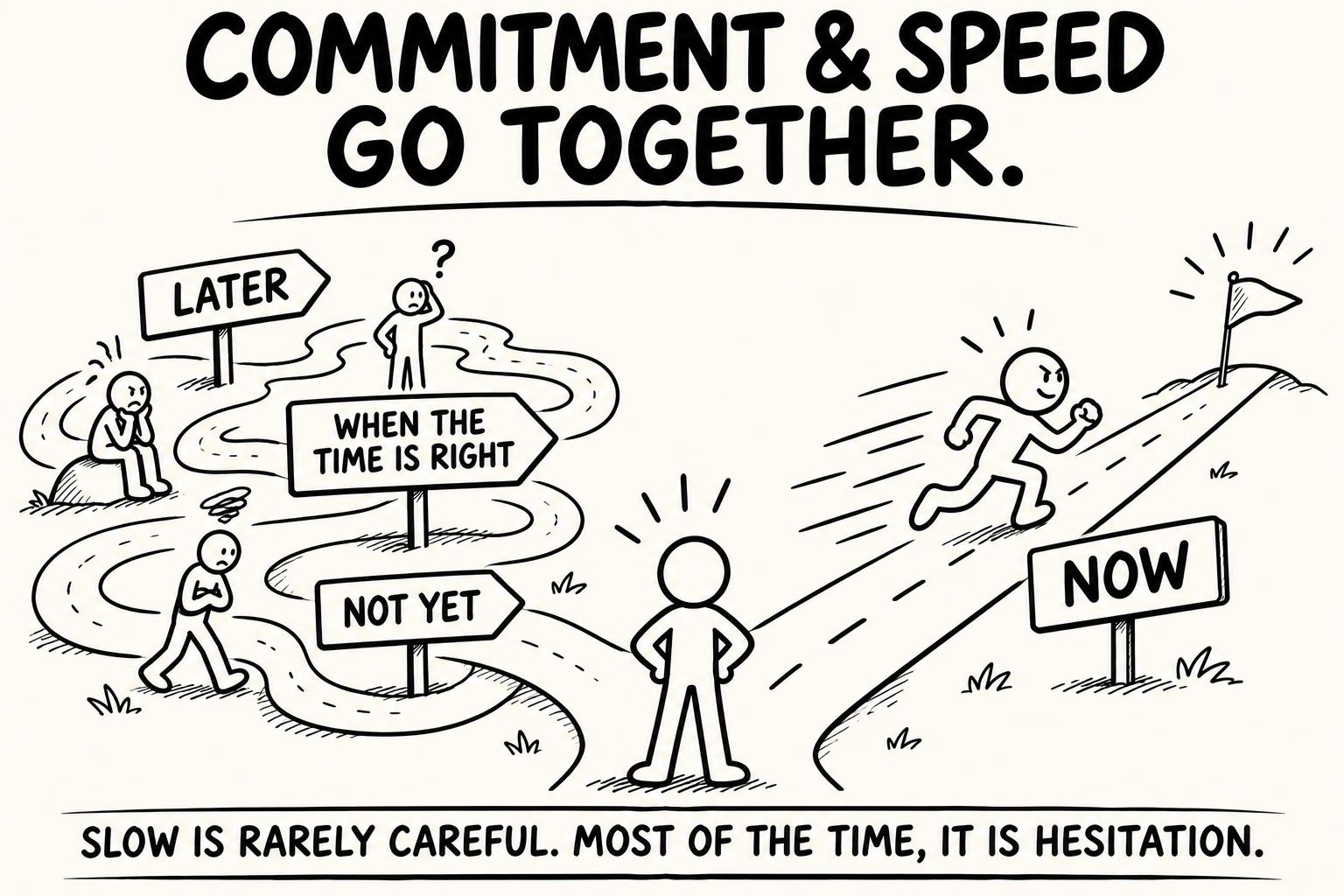
We think slow is being careful. Most of the time, it is just indecisiveness and hesitation.
Over the last few years, I have learned one lesson from both the people on my podcast and working side by side with some of the best entrepreneurs I know. It is:
Speed matters more than almost anything else when it comes to producing results.
One word. Speed.
Solve for Speed
The argument is simple. If you solve for speed, you solve for almost everything else a business cares about.
- Speed gets you better people. You cannot move fast with a weak team. The best people hate waiting.
- Speed forces truth. When you move fast, you get direct feedback from the market and those around you.
- Speed forces focus. Ten people on one thing beats ten people on ten things.
- Speed forces quality. Rework is slow. Speed requires high quality, even if it takes longer in the short term, so that outsized results happen fast in the long run.
- Speed creates ownership. Waiting for permission is slow. When people have to act, they have to take ownership of their decisions, learn from mistakes, and iterate.
Any team moves at the speed of the slowest decision maker.
Slow Is Rarely Careful
In my work with founder-CEOs, I rarely see slowness caused by a lack of information. Or a lack of skill. I see it caused by a lack of commitment. (this is not judgement or blame. this is simply true of most human beings)
When we are not fully committed, we deliberate. One more meeting. One more night to “think it through.” We call it being prudent. I wrote about this in The Power of Going All In – holding back rarely looks like holding back. It looks like being careful.
In a recent Immediate Momentum Challenge, I said it like this: “Commitment is acting now. Convenience is waiting for the right time.“
There is always a reason the right time is not today. Your brain wants to keep you safe. Anything bold, or anything you have not done before, always has a good reason to wait.
Speed Asks You to Be Unreasonable
Werner Erhard put this better than anyone I know. He said your power is a function of velocity – the rate at which you turn your intentions into reality. And most of us slow ourselves down in two ways.
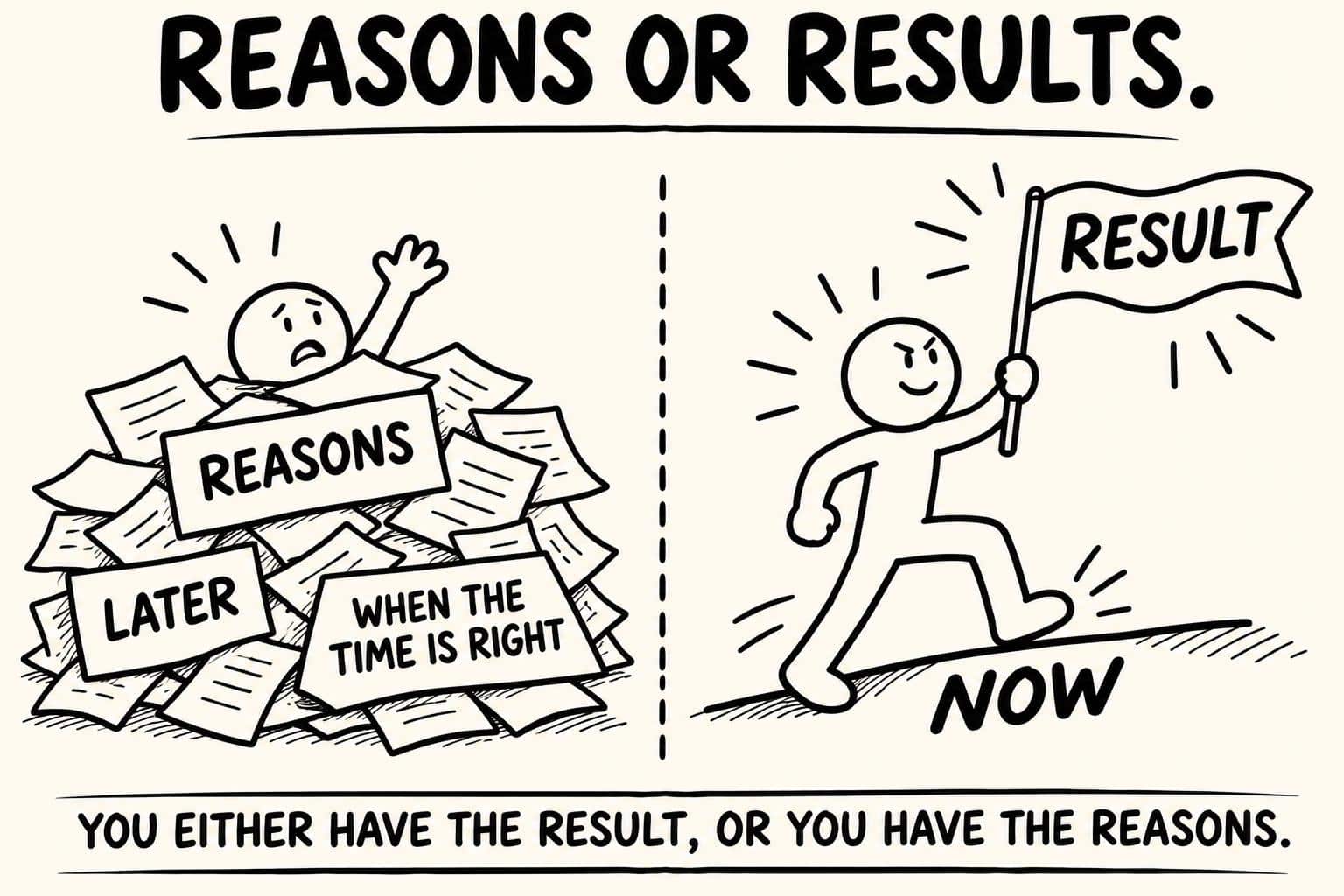
The first is being reasonable. When we act from reasons, we slow down. We add stories, explanations and justifications. We make things more complicated than they need to be. Reasons feel responsible. But there is no speed in them, and no power.
Results are black and white. You either have the result, or you have the reasons why not. A person of power does not deal in reasons. They do what they have to do for results, and demand the same from those around them. That is why speed requires being unreasonable. Not reckless. Not careless. Just unwilling to let a good reason stand between you and the next action/conversation in front of you.
The second is time. Now never seems like the right time. The right time is always later. “After we hire the right person.” “When the market settles.” “Once we have all the facts.” “When the plan is ready.”
Now is the only time you actually have. And now will never feel like the right time. So you may as well act now. You might not get to be right. You will get to be powerful. Most people wait for the decisive moment, while people of power are decisive in the moment. (as Erhard said)
Research backs this up. Stanford professor Kathleen Eisenhardt studied how executive teams in fast-moving tech companies made big decisions. She expected the fast teams to cut corners. They did not. The fast teams used more information than the slow ones, and looked at more options at the same time. And the fast teams performed better. They were not careless. They just did not wait for the right time.
Speed is what commitment looks like from the outside.
The clearest example I know is Mike Cassidy. He has started and sold five companies in five different industries. In a 2010 talk, he called speed the primary business strategy.
- Same-day money. At Direct Hit, he pitched an investor at 8:15 in the morning and had a term sheet by 4:30 that afternoon. They opened an office 11 days later. About 500 days after launch, Ask Jeeves bought the company for roughly $500 million.
- Fix the date, not the plan. He does not ask engineers “how long will it take?” He asks, “in three months, what can we build?”
Not one of these is a productivity hack. It is a natural outcome of commitment made before the evidence. I see the same thing in my own work.
- Zero to 17 people in four months. One founder I work with raised money to start his company within two months. Within about four months, starting from nothing, he had a team of more than 17 people.
- Revenue doubled in six to eight weeks. This has happened with several companies I have supported. One company I am working with right now is likely to grow its revenue 10x in about twelve months.
- My own life. For two years, I waited & did not believe I could coach a CEO. Once I stopped waiting, I was working with six CEOs within six months, and six more in the next six. Soon I was working with 12 to 15 companies at the same time, so many that I had to slow down. From not believing I could coach one CEO, to 12-15 companies in under a year. From the outside, that looks like massive speed. From the inside, it was commitment.
Without Commitment, Speed Kills
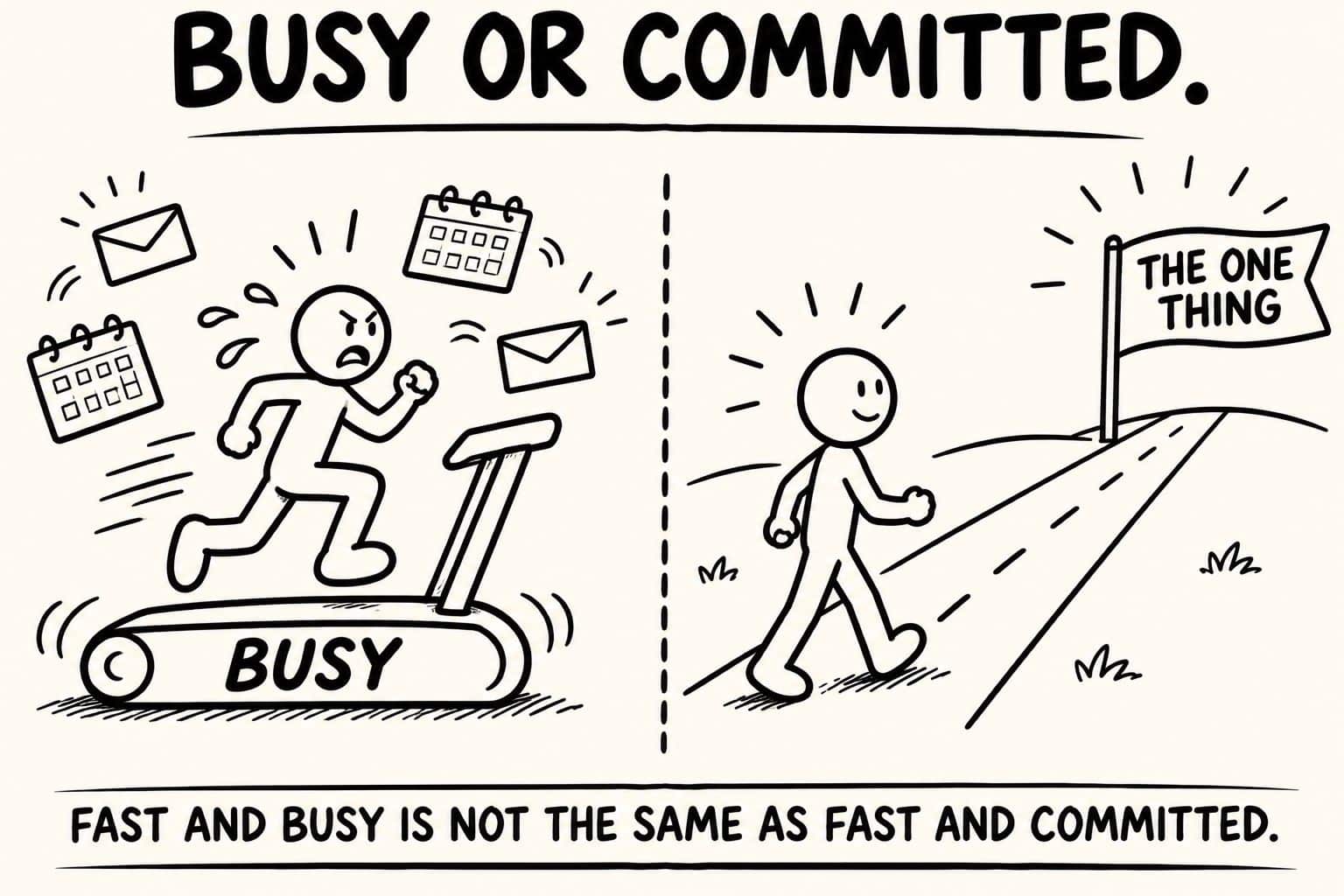
Speed without commitment is just activity. Without commitment, people will run fast on everything except the one thing that matters. The hard conversation. The big ask. The person who you know needs to go. Speed without purpose, direction, and commitment will only keep you running in place. To move forward with speed, you have to slow down internally – to get clear on what you care about & where you are heading – before you act externally with urgency.
Be careful, as “Speed” can become a hiding place too. You can be very fast at everything that doesn’t matter. Speed at the right things takes courage. Speed at anything is too convenient. Slow down to get clear on what you are committed to. Then act now with a maniacal sense of urgency.
Commitment Creates Speed
After two days with his team, one founder told me: “Two months of work done in two days.” A CTO at another company said they achieved a year’s worth of work in two days. Nothing about those people changed in 48 hours. Same skills. Same market. Same budget. What changed was the level of commitment in the room.
A team of 23 senior leaders once took one hour out of an offsite and called potential clients, current clients, vendors whom they had been hesitating to call and got 44 yeses to their requests – just because they went beyond reasons and simply asked for what they wanted.
A group of founders recently asked me how to close big deals faster. I told them: if you want 100 crores (~$11M) in deals, you can get it in 24 hours. But you will have to be the person who makes those calls, gets those meetings and forces those conversations in 24 hours. The bigger your commitment, the fewer “ifs and buts” you can afford.
This is also why commitment has to come first, before the results show up. I wrote about that in The Stone in Your Shoe. And why being judged is the price of moving fast, which I covered in Why The Best Leaders Get Judged, And Move Fast Anyway.
Commitment is raw, messy and one-way. If you want it perfect and polished first, it is not commitment. It is being convenient in your comfort zone, which is just being human. (More on that in Good Enough is the Enemy of Greatness.)
Speed Feeds the Commitment
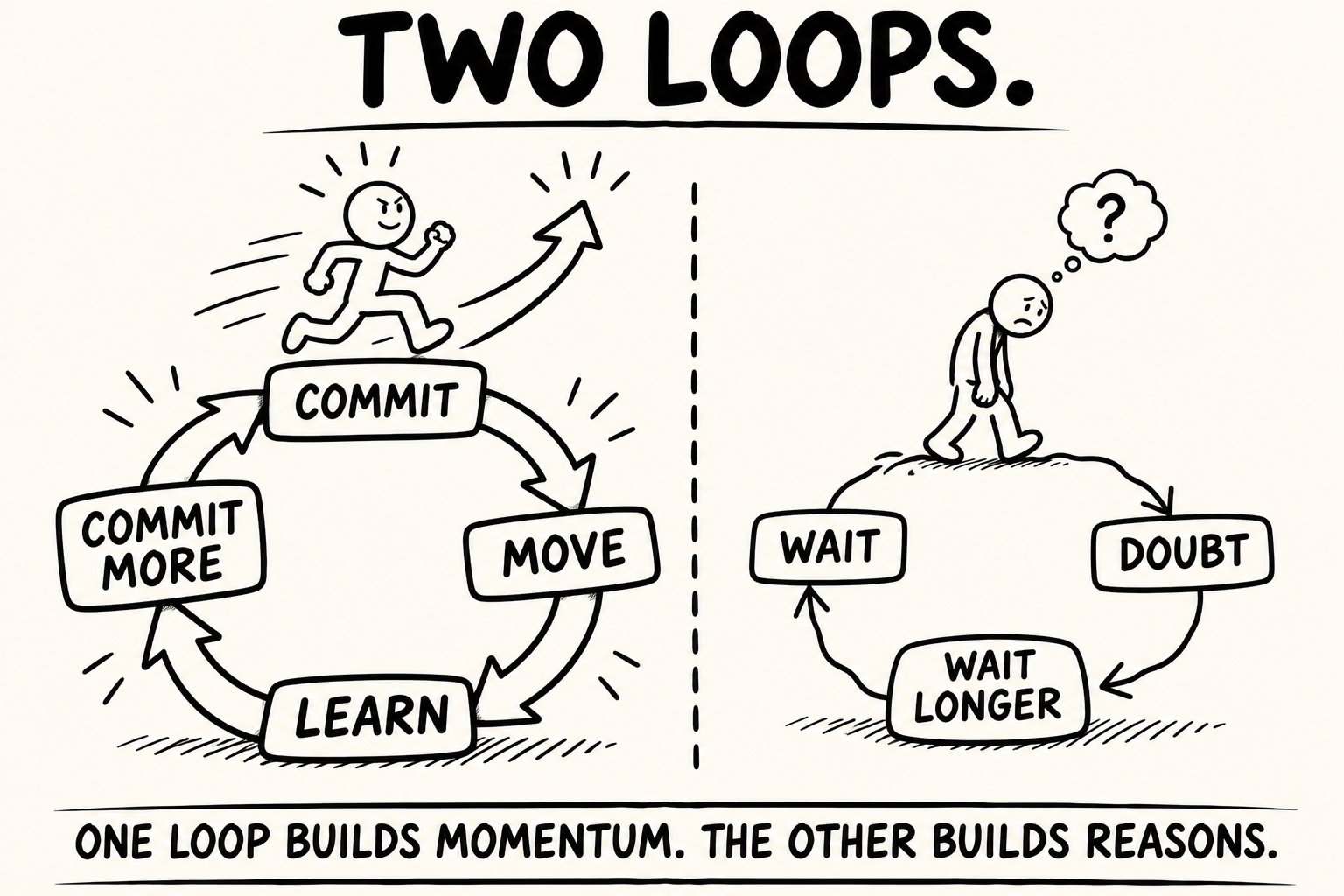
Here is the part that surprised me most in my own life. Once you commit and move, you get feedback fast. You see something work, or you see it fail and fix it. Either way, you start to believe. And belief makes it easier to commit even more.
Hesitation runs the same loop backwards. The longer you wait, the bigger the thing looks. The bigger it looks, the longer you wait. Commitment and speed are not two different values. They are one loop. Commit, move, learn, commit more.
The Practice
Try this for seven days – on repeat.
- Find the slow decision. Name one decision you or your team have been sitting on for more than a week.
- Drop the reasons. Write down every reason you have for waiting. Next to each one, ask: is this a result, or a reason? Then write: “I am committed to ___, starting now.” No conditions.
- Have the next conversation or take the next bold action that the commitment demands from you (not what is comfortable or familiar).
Speed is what commitment looks like. So ask yourself: what are you committed to?
Then move. NOW. It is the only time your future gets created.
If you wait, ask yourself: what future is getting created by waiting?
If you act, ask yourself: what future is getting created by this action?
Sources
- Hormozi, A. Once You Understand This, Business Becomes Embarrassingly Simple. His case for speed as the single organising value of a company. https://youtu.be/rRI0iH-cpjg
- Cassidy, M. (2010). Speed As THE Primary Business Strategy. Talk on how he built and sold Direct Hit, Xfire and other startups at speed. Transcript via A Letter a Day. https://aletteraday.substack.com/p/letter-217-mike-cassidy-2010
- Eisenhardt, K. M. (1989). “Making Fast Strategic Decisions in High-Velocity Environments.” Academy of Management Journal. Fast decision makers used more information and weighed more options than slow ones, and performed better. https://doi.org/10.2307/256434
Leave a Reply