
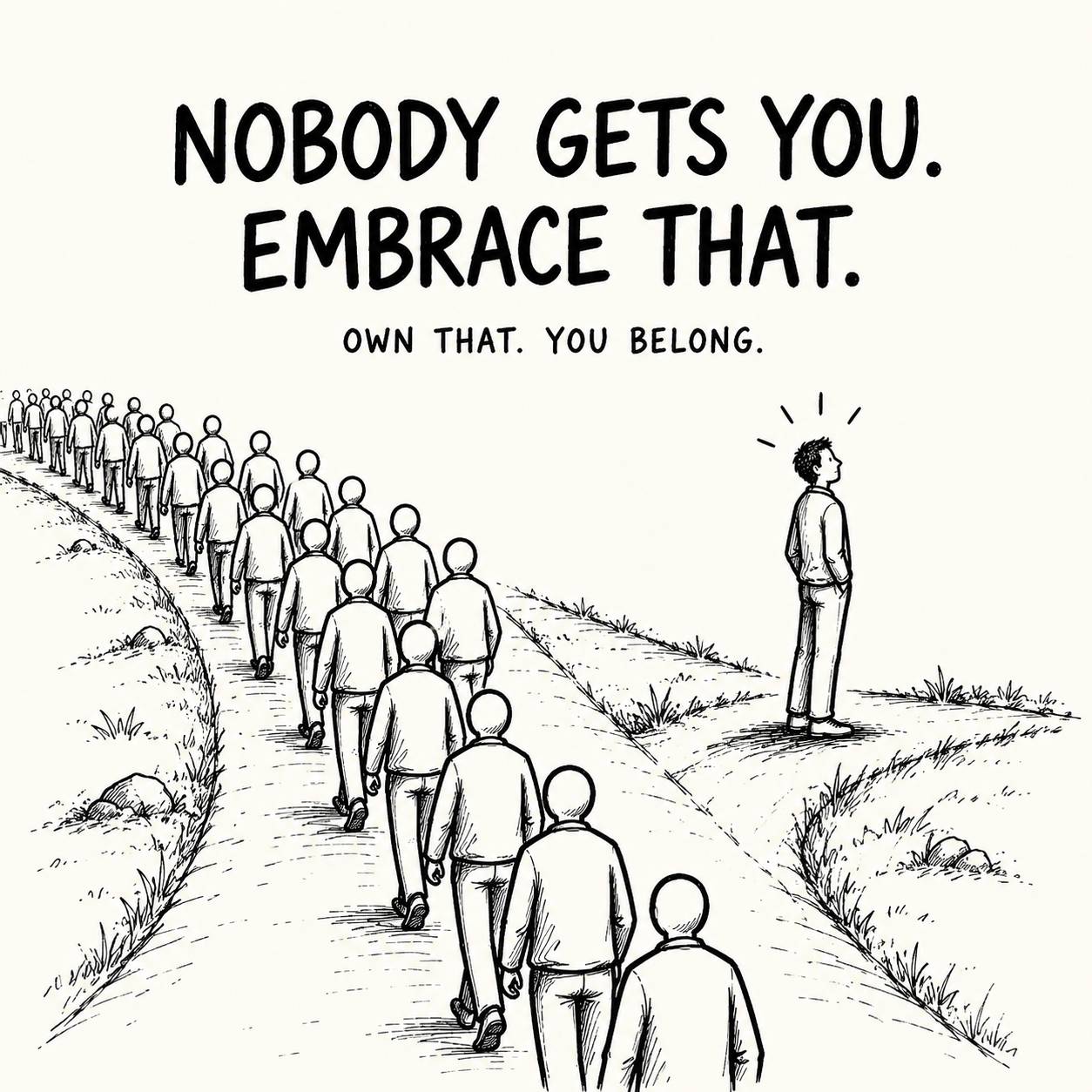
For most of my life, I wanted to be understood more than any result or achievement. I wanted to fit in.
Growing up in India with limited means, watching my parents sacrifice everything so I could go to a “good” school, I already felt out of place before I understood what the word meant. All my schoolmates were from a different economic bracket. We lived very different lives. Our stories from home were so different – like they would tell me where they went for summer vacation while I never went to even see a movie during my 14 years of schooling.
There was a completely different rhythm in my head compared to those around me. I would sit in a room full of people and think five steps ahead of the conversation. So I made myself smaller and explained everything more, so that I could fit in and not stand out.
That ache followed me into a sixteen-year engineering career that looked, on paper, like everything a good Indian man should want. And it followed me long after I walked away from it too. Why can’t they just get me? What is wrong with me that I have to keep explaining myself? Why am I like this? That question ran quietly under almost everything I built, for decades.
It only recently changed. Not because people finally understood me. Because I gave myself full permission to just be me without anybody else’s understanding.
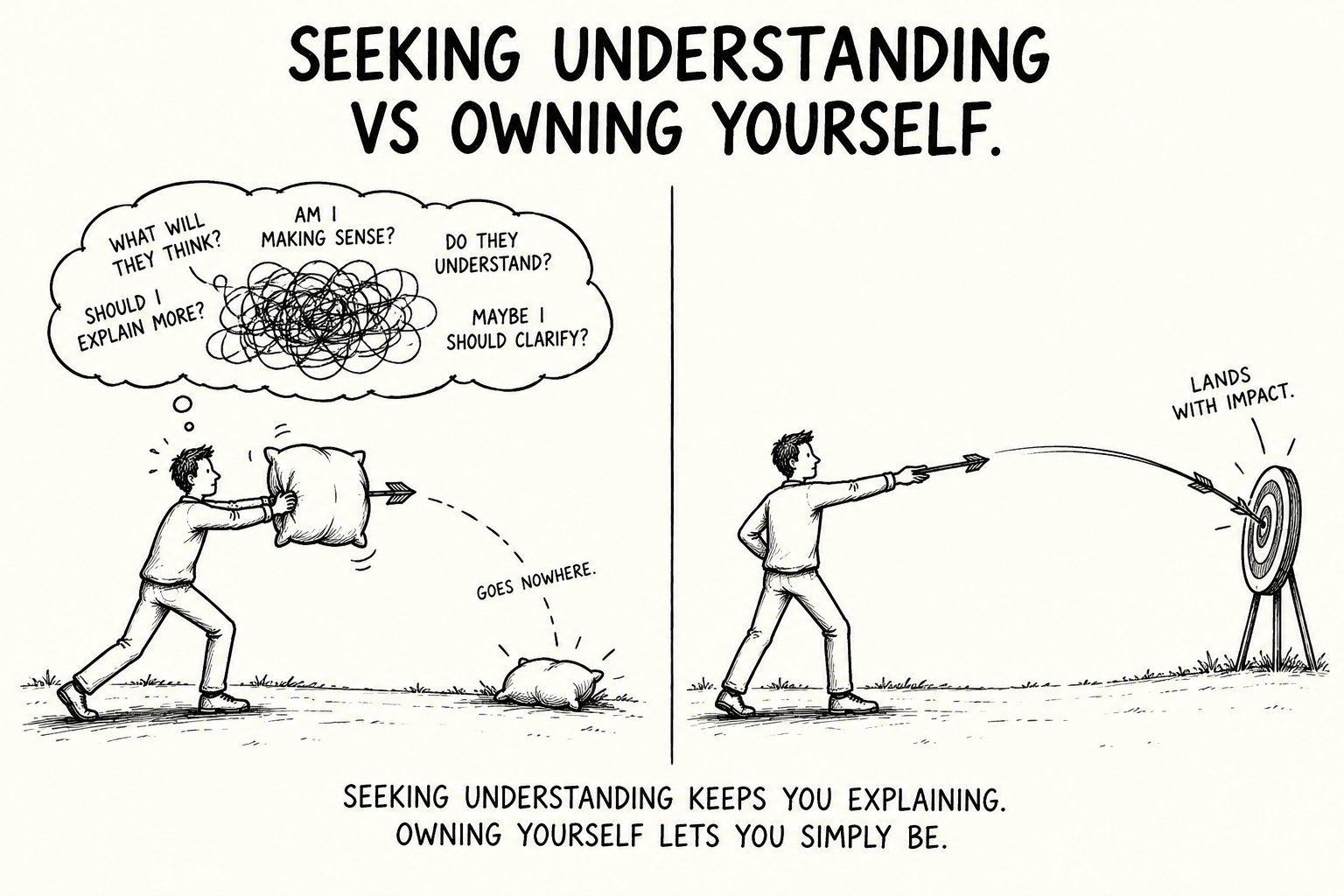
Seeking understanding keeps you explaining. Owning yourself lets you simply be.
The Question I Ask Founders
I sit with entrepreneurs most weeks who have built something real. They are sharp, strategic, and can see around corners nobody else can.
When I ask a question to such a leader that could be answered in one sentence, they wrap it in five minutes of explanation, context, and justification first. I often tell them: if you have an arrow, the edge of that arrow has power. It can pierce anything. But you are wrapping your arrow in a pillow before you shoot it. By the time it lands, it has no power left.
Underneath the padding was a single belief: nobody understands me, so I either have to make them understand, or I don’t belong. That is a very hard place to stand. Like never being on solid ground, always checking where the next landmine might be.
Let me ask you this: If you were a Nobel prize winning scientist, at that level of excellence, and you went home to your family, to a dinner party, would you want people there to fully understand you?
No
Could they, even if you wanted them to?
No.
And does that mean something is wrong with you?
You already know the answer.
Two Ways We Cope
Here is what I have seen in leader after leader, and in myself. When you believe nobody understands you, you reach for one of two moves, and both are traps.
The first is over-explaining. You pad every point, add every justification, use your intelligence to build a case for yourself instead of simply stating what you know. It looks like thoroughness. It is actually a plea: please get me.
The second is detachment. You give up trying. You stop caring whether they follow, you go cold, you disengage from people who could have mattered. It looks like strength. It is actually the other side of the same coin.
Both come from living life from: understand me. Whether you are chasing it or punishing people for not giving it to you, you are still asking the world for something only you can give yourself.
I know this one intimately, because I have used both. I have talked for ten minutes when one sentence would have done the job, hoping the extra words would finally make someone see it. And I have gone cold on people I loved, telling myself I didn’t need them to get it, when really I was just tired of wanting to fit in and be understood.
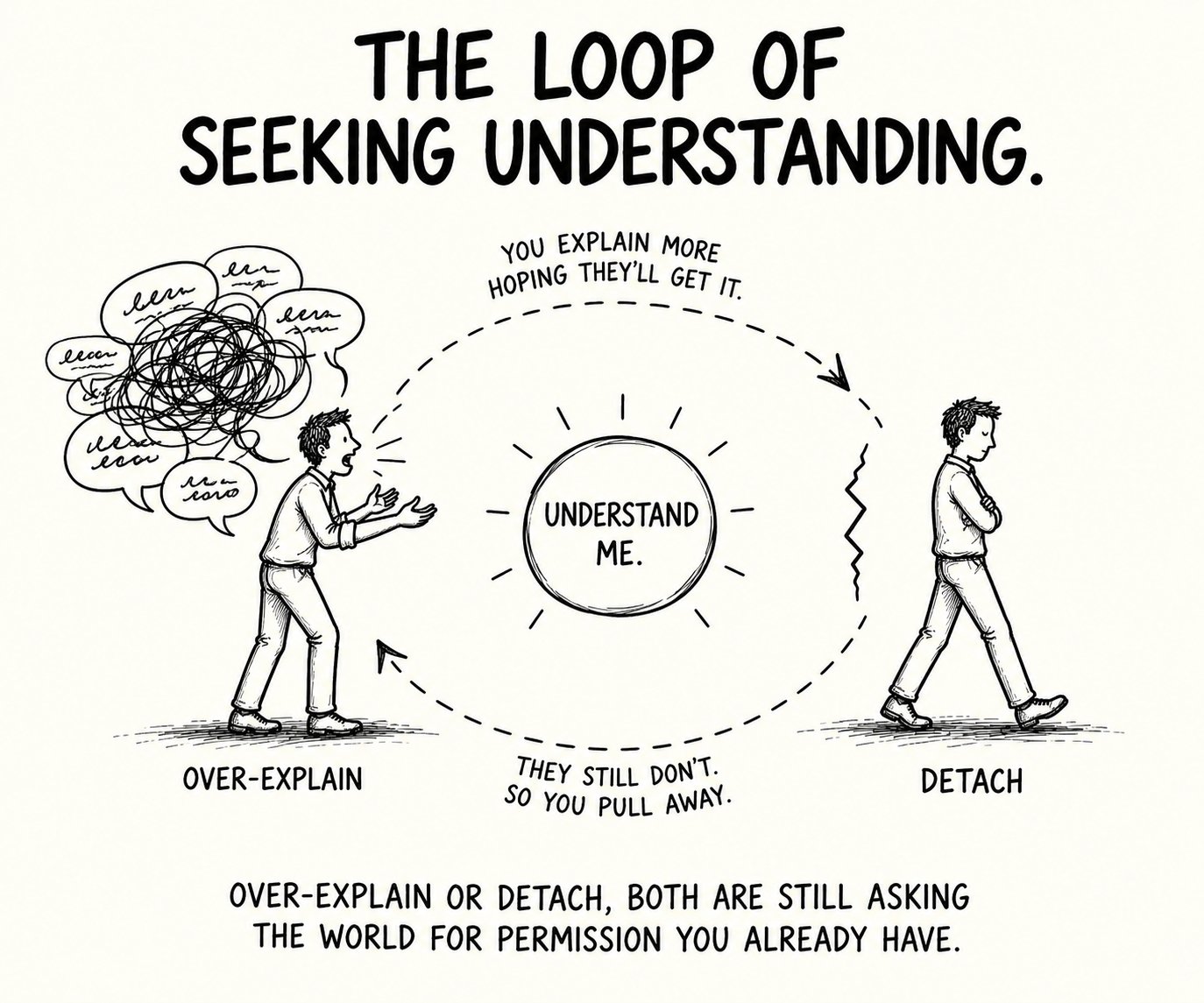
Over-explain or detach — both are still asking the world for permission you already have.
The Cost Of Fitting In
Here is what it costs you: frustration, feeling like you don’t belong, feeling a lack of solid ground beneath you – because you want people to understand your brilliance, to see the world the way you see it, and when they don’t, something in you contracts. You dilute your power. And you are left with a low, constant hum underneath everything: something must be wrong with me.
I grew up with that hum. Double-checking, triple-checking a thought before I said it out loud, certain the mistake was mine before anybody even said anything. That voice said – fit in, do what is expected of you, settle down, don’t raise your hand.
There is real research behind why this cuts so deep. The psychologists Roy Baumeister and Mark Leary called the need to belong “a fundamental human motivation,” as basic to us as food or safety. We are wired for it. Which is exactly why the pull to shrink yourself into something the group can digest is so strong, and so old. Solomon Asch showed decades earlier that people will deny what their own eyes see, out loud, just to match the group around them. Fitting in isn’t a character flaw. It’s biology working exactly as designed – to keep us safe within our communities. Which is precisely why the people who did anything extraordinary had to work against it.
You Are Not For Everyone
Look at anyone who ever changed something real, and you will see the same pattern. Einstein spent years being questioned and misunderstood before his theories were proven. The first person to run a mile in under four minutes was, by some accounts, ridiculed by his own running community before the record fell and the “impossible” barrier was rewritten for everyone after him.
Steve Jobs and Elon Musk are, by nearly every account of the people who worked closest with them, difficult in ways that would get most people fired from any company that claims to have “values.” And yet ask the people who built their careers standing next to them, and many will tell you the same strange thing: I could never work with that person again, and everything I have is because of them.
They felt it too – the loneliness, the shunning by their own peers, the accusation of arrogance. The difference is what they did with it. They didn’t wait for the world to understand them before they built. They built anyway, often misunderstood the entire time.
The psychologist Abraham Maslow studied the most self-actualized people he could find and noticed something almost every one of them shared: what he called a resistance to enculturation. They respected the culture they lived in. They simply refused to be shaped entirely by it. That is not arrogance. That is the price of admission for doing anything nobody has done before you.
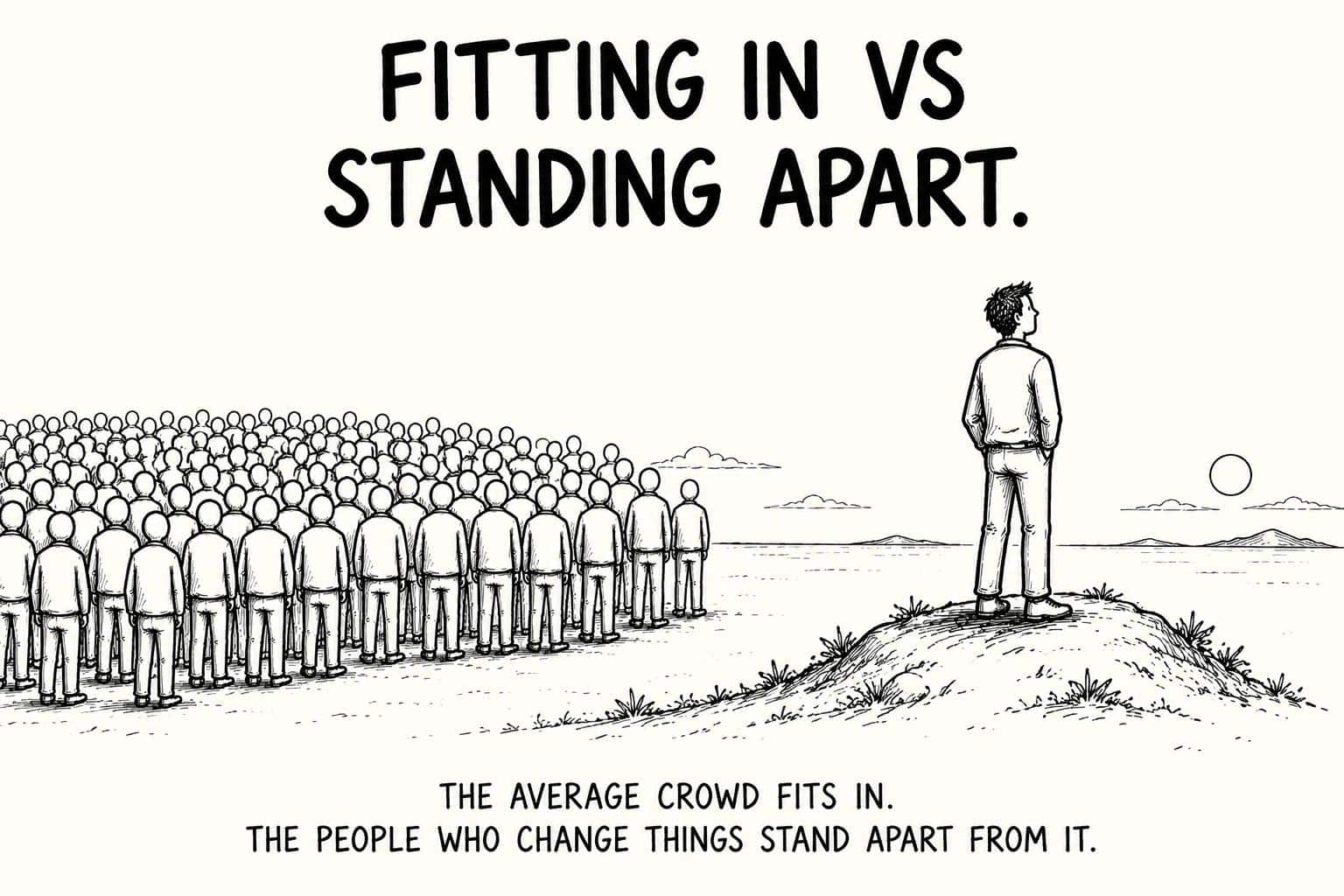
The average crowd fits in. The people who change things stand apart from it.
Weirdness Is Data, Not Damage
I sit across from founders who are not just chasing a win. They want total domination of their category – if they allow themselves to say it.
Sit with people like that long enough and you notice the same traits over and over. They take risks the average person would call reckless. They can sound completely irrational about a belief, look at an established industry and say I can do that better, and then actually do it.
None of that is normal. It was never supposed to. Almost every one of them felt different from their peers long before any of it paid off.
The best entrepreneurs – who not only have success but also enjoy it – stop needing their competitors, their critics, to see it their way at all. No emotional charge. No case to make. They understand, own and appreciate their own raw talent, and that is enough for them.
They can answer without flinching what makes them different and what makes them stand out.
My Own Permission
Here is what I have have to tell myself more times than I can count: my understanding of myself is enough. Everybody else’s understanding is optional.
Read that slowly, because it is not the same as not caring about people. I care about people more than almost anything. It means I stop making their opinion of me a condition for my own peace. If they get it, wonderful. If they never do, that is genuinely none of my business anymore.
The moment I actually lived this, instead of just believing it as an idea, something shifted that no achievement had ever given me. Immense peace – because I was no longer auditioning in life. Permission to express – because I stopped diluting myself. Power – because an arrow thrown without the padding lands exactly where you aimed it. And grounding – because for the first time, the ground I stood on was myself, not the shifting opinion of others.
A Nobel prize winning scientist does not go looking for family and friends who fully grasp the science. They go looking for a few rare people who can walk beside them anyway, and they let that be enough. Not because they stopped loving the people who don’t get it. Because they stopped needing them to.
You are not broken because nobody understands you. You are simply further down a road most people haven’t walked yet. That was never a problem. It is what makes you special.
The Practice
This is something you practice, moment after moment.
Catch the need to belong. Notice the next time you explain something three sentences longer than it needed. Ask yourself: am I informing, or am I begging to be understood?
Catch the detachment. Notice the next time you go cold on someone instead of expressing yourself.
Speak your truth as it is. Pick one conversation this week where you would normally pad your point. Say it in one sentence instead. Let the silence after it sit there, unexplained.
Name your Nobel question. Write down one belief, decision, or direction that you have never fully explained to anyone, because you were sure they wouldn’t get it. Notice: has waiting for their understanding actually stopped you from moving?
Speak it out loud. my understanding of myself is enough. Anybody else’s appreciation is optional.
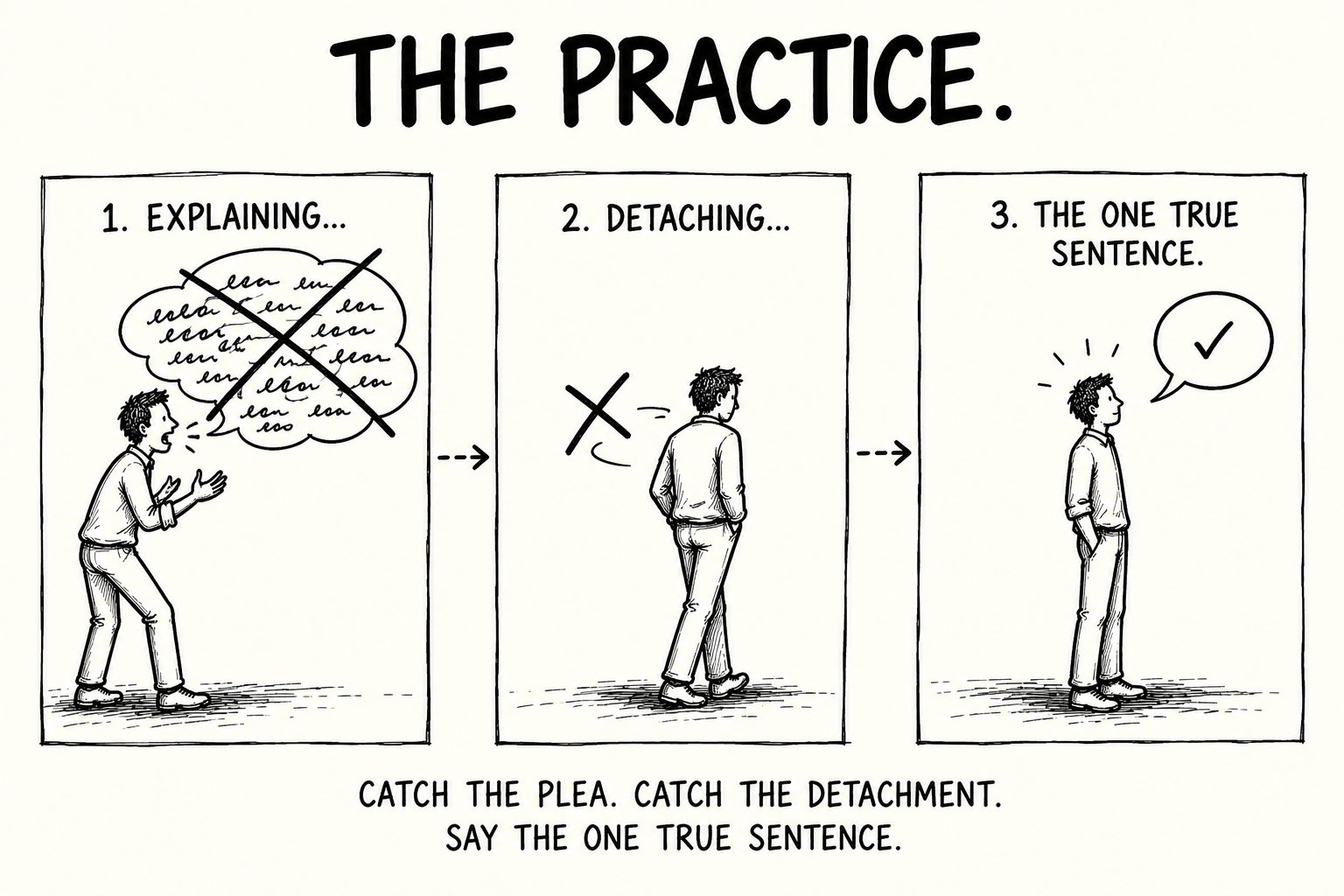
Catch the plea. Catch the detachment. Say the one true sentence, and make their understanding optional.
You Belong Here
I spent most of my life believing that belonging meant being understood. It doesn’t. Belonging is what happens the moment you stop needing a verdict from anyone else, including the people you love most, and you simply stand exactly who you are.
No Nobel prize winning scientist expects their family to grasp the physics. That would be absurd. No founder building something nobody has built before can wait for others to catch up before they move. And no version of you that is genuinely one of a kind was ever going to be fully understood by people still standing where you used to stand.
Because, my friend, you already belong. And that is enough.
Sources
- Baumeister, R. F., & Leary, M. R. (1995). “The Need to Belong: Desire for Interpersonal Attachments as a Fundamental Human Motivation.” Psychological Bulletin. https://en.wikipedia.org/wiki/Belongingness
- Asch, S. (1951). The Asch conformity experiments: how far people will bend their own perception to match the group. https://en.wikipedia.org/wiki/Asch_conformity_experiments
- Maslow, A. H. (1943, 1954). A Theory of Human Motivation / Motivation and Personality. Self-actualized people show “resistance to enculturation” — respecting culture without being fully shaped by it. https://en.wikipedia.org/wiki/Self-actualization
Leave a Reply