
Here is something you do about 20,000 times a day and have probably never practiced: breathing.
How long can you hold your breath? Most people quit around 44 seconds. The world record is 11 minutes 54 seconds. These people have no second set of lungs. They have learned to relax, to read what the body is saying, and to ignore the signals that don’t matter. Then they have practiced & repeated it for years.
Now let us take the marathon. The average finisher takes about 4 hours 30 minutes. In April 2026, Sabastian Sawe ran 1:59:30 in London, two and a half hours faster. And the average only counts people who finished. The ones on the couch (most people on the planet) aren’t in the data.
Now let’s look at surgeons. In a 2013 study in the New England Journal of Medicine, surgeons were rated on skill by their peers. Patients of the lowest-rated surgeons had complications 14.5% of the time. Patients of the highest-rated: 5.2%. Nearly three times the harm.
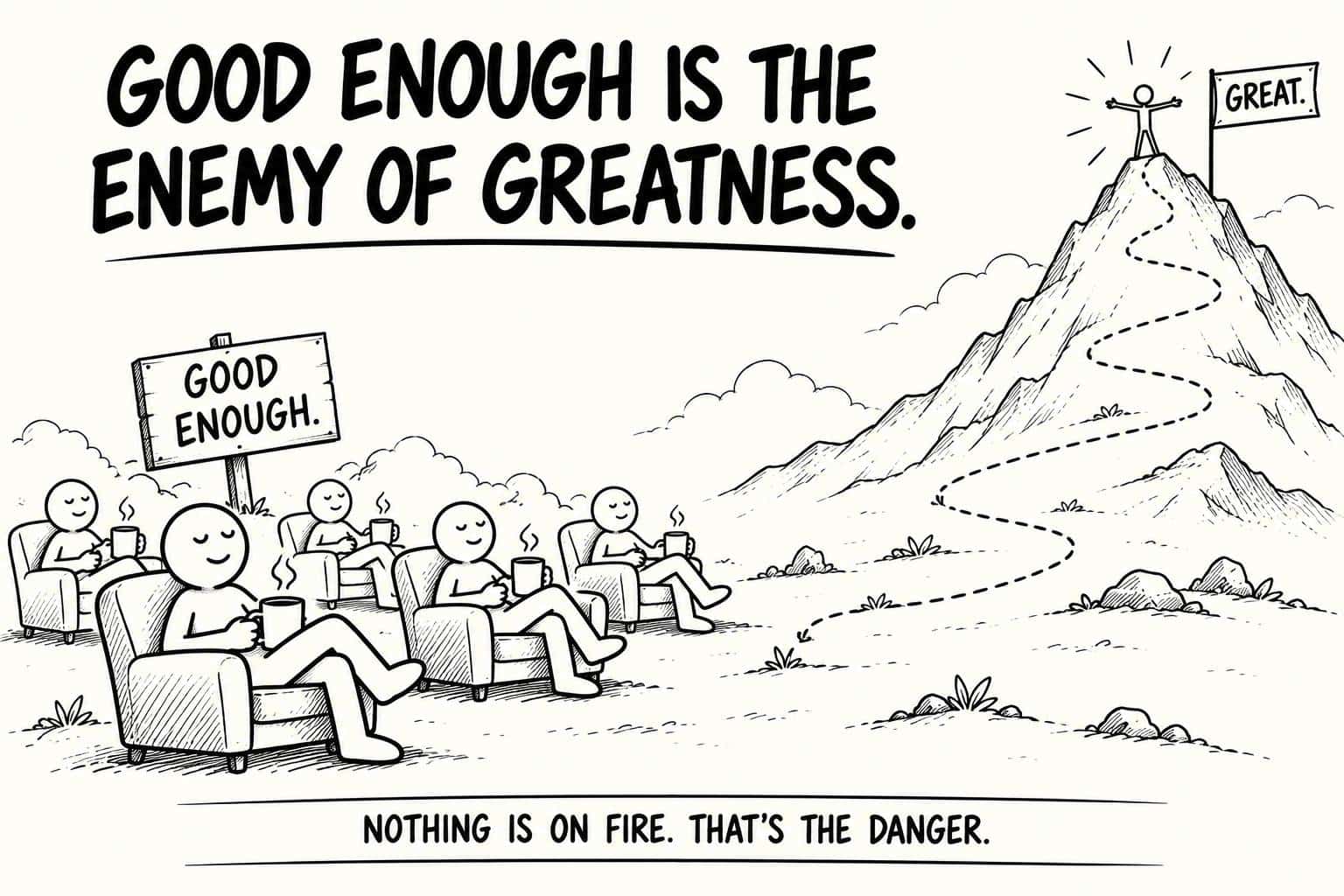
The point here is that being good enough or average is nothing to be proud of. Yet most people settle at “good enough”. Getting to the average feels safe because everyone around you is standing there too. And nobody questions you for being average because that would mean they have to admit their own settling for the average.
If you notice any discipline, you will realise that good enough is nowhere close to best or great. They are vastly apart. Most people can never grasp what best looks like because they have never experienced, seen or heard of the best. And when you do, it is almost always dismissed because it doesn’t fit in the mental models of the “average”.
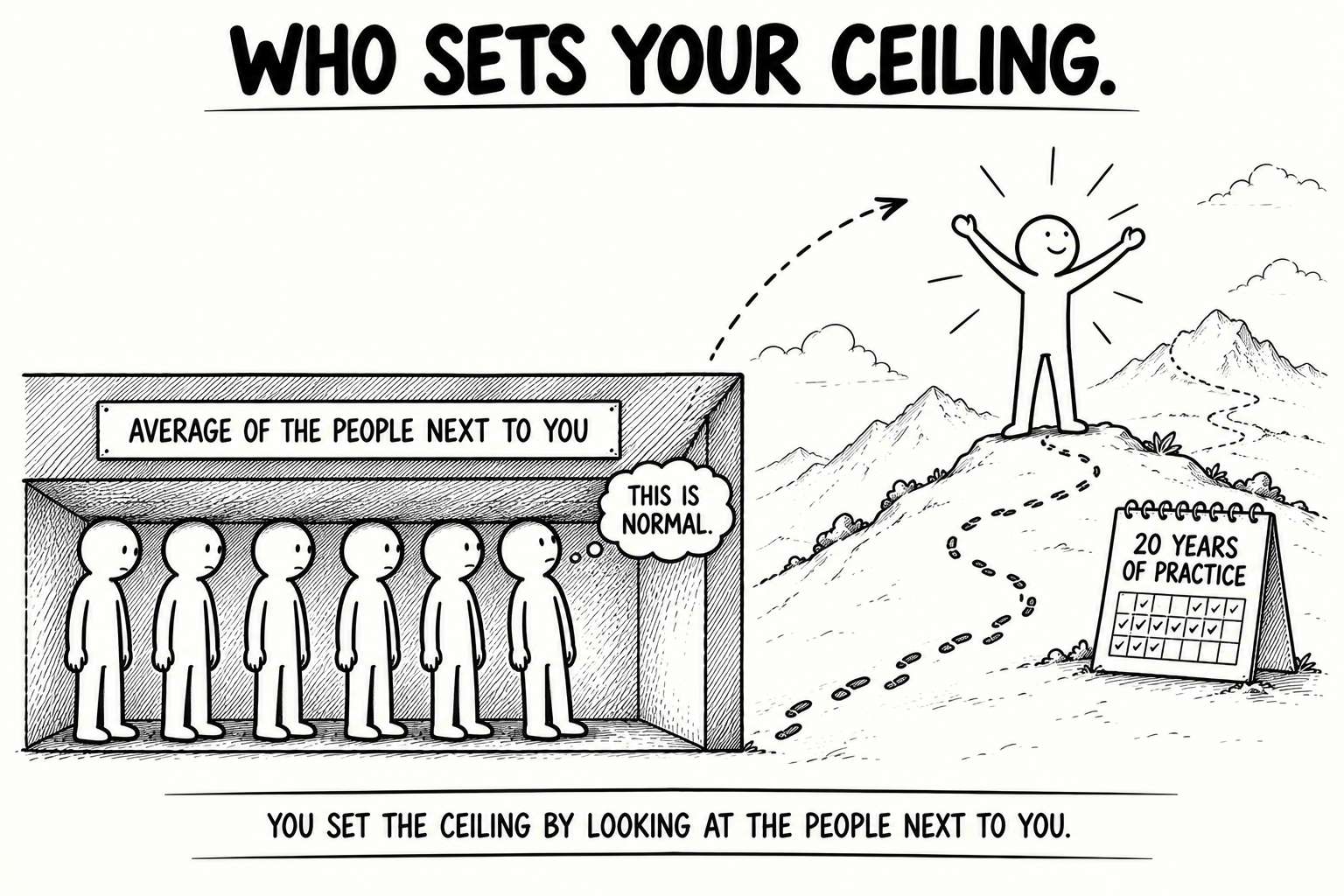
Why average feels normal
Take chess. A solid 1500-rated player has studied openings, played hundreds of games, and beats every casual player you know. If they play Magnus Carlsen at his peak rating of 2882, they score about one point in 2,800 games. Play one game a day, and they might steal a draw in year four. A win, in year eight. Maybe. Same story in hockey. Wayne Gretzky had 1,963 career assists. The second-highest scorer in history, Jaromir Jagr, has 1,921 total points.
You can only imagine the level of excellence you’ve personally experienced. Once you see what the truly excellent can do, you realise how ordinary the ordinary was.
You see “average” or “good enough” everywhere around you. It is what you see every day. That does not mean it is normal. That does not mean it is your limit. That does not mean that is the most you can aim for. That does not mean you can not dream, aim, and go for something much beyond the “normal”.
It is only when you see the exceptional ones, be it in business or sports or health, that you realise how mediocre or awful “good enough” is. So, I would ask you this, from one entrepreneur to another: where have you settled for “good enough” without ever finding out what excellence looks like?
The gap is easier to bridge than it sounds
We make this mistake everywhere. We try something a few times, see how hard it is, look at the other amateurs near us, and give up. Meanwhile, someone has spent twenty years pushing the capability far past what anyone expected. If we can learn from that person and apply even 30% of what they know, we could probably double or triple our performance.
I’m not suggesting to work harder or do more. As Warren Buffett says, “busy is the new stupid”. Gary Keller and Jay Papasan, in The ONE Thing, name the lie behind it: that everything matters equally. Spread yourself across everything, and everything gets good enough. The gap between average and great is rarely more hours. It’s a few simple habits, done on purpose, repeated long enough that they compound and become who you are.
There is more in every area of your life
Breathing, running and surgery are just the easy ones to measure. The same gap is true for almost everything else you do – whether competitive or not. For each area below, find what average or good enough looks like, what excellence looks like, and the one habit that gets you there – especially with 10,000 repetitions with deliberate feedback & learning loops.
| Area | Average / Good Enough | Excellence | The habit |
|---|---|---|---|
| Breathing | Shallow chest breaths through 200 emails a day | A body that slows down or speeds up (in breathing) on command | Practising 5-second inhales and exhales throughout the day |
| Being present | Laptop open, half your brain elsewhere | One person at a time, full attention, as nobody else exists for you except that person | Being aware of exactly what you are thinking at any given moment. (all distractions off) |
| Loving your loved ones | “Love you” typed on the way to the next thing, sporadic moments of frustration, anger or indifference | The true, kind thing said out loud or expressed in a thoughtful gesture. Boundaries established cleanly when they need to. | Gestures of appreciation or the expression of love to those who matter to you – deliberately & without reason. |
| Boldness and ambition | A reasonable & safe goal – one you already know how to achieve | A goal that requires you to outgrow yourself. You put a lot at stake when you aim big. If it doesn’t embarrass you a little, it’s too small | Declare your bold & impossible goal to one person this week. Then take one action towards it. |
| Negotiation and conversations | Waiting for your turn to talk | One more question than feels necessary. Listening to the person as they have never been before, and making a bold offer to move forward or a clean NO to disengage. | Ask “what would make this a great outcome for you?” Then stay quiet Say “NO” when it doesn’t meet your standards. |
| A stand bigger than you | A mission statement on a wall | A stand or purpose so big you’d be willing to die for and put your reputation and money on the line. | Take a stand for who your company serves beyond its customers. Mean it. Hold yourself and others accountable to it. |
| Your team & family | A quarterly review and exchanging emails otherwise. Missing your children’s childhood. | People feeling seen, heard and acknowledged for the work they do and feel pride in the journey they are on. A family that can lean on you and that you can lean on. | Weekly team meetings, monthly 1-on-1s, time for interacting as human beings and not just business professionals. Regular quality time with family. |
| Your health | Coffee, a packed calendar, sleepless nights, stress, then calling it commitment | Your body treated as the temple the company depends on. You are rested, calm, and a force of nature when it comes to focused execution. | Body movement, sleep, and slowing down scheduled in the calendar. Defend them like your biggest client |
You need no new degree. No new strategy. No extra hour in the day. The same life, run to a higher standard, leads to excellence.
What greatness asks of you
- Repetition. Nobody gets great at breathing on one lucky day. The freediver, the surgeon, the marathoner and the founder who succeed beyond imagination all do the boring thing again tomorrow. Pick a habit so small you can’t fail at it. They are boringly consistent.
- Raise one standard. Not everything. The few things that matter most. Prepare for the meeting like it’s the one that changes your life. Say the thing that must be said instead of what is convenient to speak. The more you raise standards, the more you simplify. And the more you simplify, the more your impact multiplies.
- Refuse the normal. Say NO to normal hours, normal burnout, a normal team that’s mostly checked out. Normal is what happens when nobody points out the elephant in the room. Say “not here.”
- Be willing to stand out. Excellence is visible. People will stare, and some will judge. Convenience keeps you comfortable and unnoticed. Commitment is doing it anyway. That permits others to do the same.
Why I’m telling you this
I’m an introvert. I grew up in India, became an engineer, and spent 16 years in a lucrative tech career. I used to think I knew what sacrifice meant. Sixteen years in tech, working across continents, climbing the ladder: I thought sacrifice was working late, missing dinner, giving up weekends. I was wrong. Real sacrifice is deeper, meaningful, and scarier.
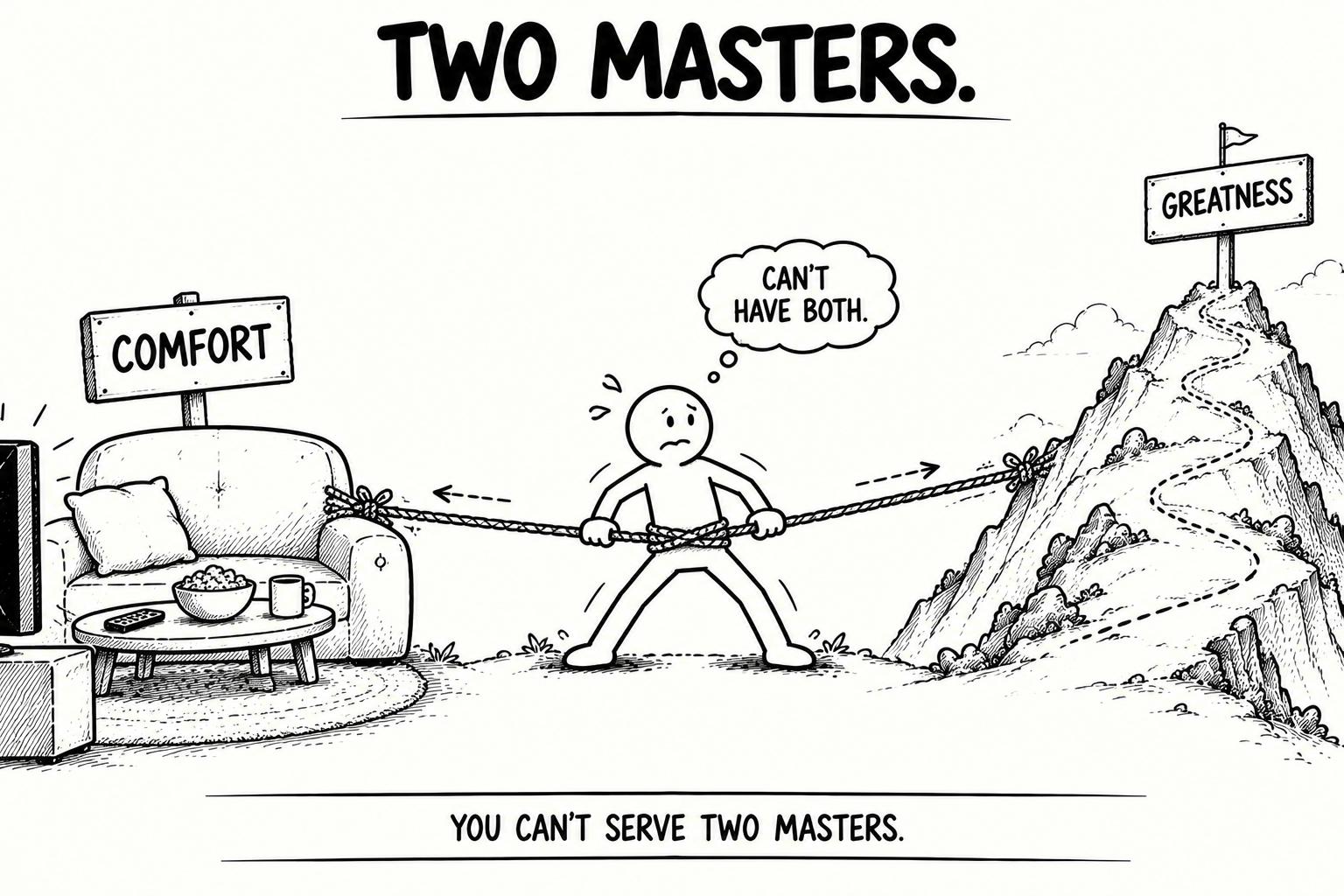
Here is what I eventually had to admit. I told myself I wanted to make a real impact. But deep down I was committed to being safe. To being liked. To not rocking the boat. To having all the answers before I started. That commitment to comfort was killing my greatness before it had a chance to breathe.
I was making great money, and I was miserable. By every external measure, I was successful, and I felt empty, almost dead inside. Sitting in front of a computer doing the thing I was very good at felt like not being alive. So I started before I was ready. When I first began speaking about leadership, I was terrified. I would shake in front of people. I had imposter syndrome so bad I could barely function. I kept going anyway, and I discovered my limits were not even close to where I thought they were.
If you run a company, this matters beyond you. Your team doesn’t copy your values statement. They copy your standards. Raise your standards, and you raise the ceiling for everyone who works for you.
My stand
My life is a stand for human excellence, and against mediocrity. I love people, including the ones who are settling, because I spent years as one of them. I’m against the quiet agreement that “good enough” is what a human life is for. I held back on my own dreams for a long time, until it was suffocating. I don’t want that for you.
So here is my personal call. Dream. Become more. Not to achieve anything. Not to get somewhere. Not to prove yourself to a parent, a rival or the person in the mirror. Do it because that is what a human being is: something that can keep growing. This life was handed to you. Becoming more is simply how you say thank you.
Nothing is wrong with you today. You are enough. You are not behind. And you are still capable of far more than you have let yourself see. Both are true at the same time.
What are you really committed to?
To be honest, ask yourself: what are you actually committed to? (because you can’t serve two masters)
- You say you want to build a billion-dollar company. Are you committed to what it takes, or to looking like you’re building one?
- You say you want a workplace that nourishes people. Are you committed to the hard conversations that make it possible, or to being the nice boss who avoids conflict?
- You say you want to change your industry. Are you willing to be misunderstood for years while you do it, or do you need to be liked by the people who represent everything you want to change?
You can’t be committed to greatness and to comfort at the same time. You can’t be committed to impact and to being liked by everyone. Most people try to have both and end up with neither. Keller calls the perfectly balanced life a myth: greatness goes lopsided on purpose. Just counterbalance it, and don’t pay with your health or the people you love.
Greatness is built the unglamorous way. Find one sacred routine that nobody will applaud you for, and do it every day, for months, then years. For me, it has been a daily practice of creating myself from the ground up, several times a day. Not because it’s magic. Because it is what it took. Do it first, before the distractions begin. Keller suggests protecting a block of about four hours for it.
As any athlete will tell you, greatness isn’t built in the big moments. It’s built in the space between them, in the thousand small choices nobody sees.
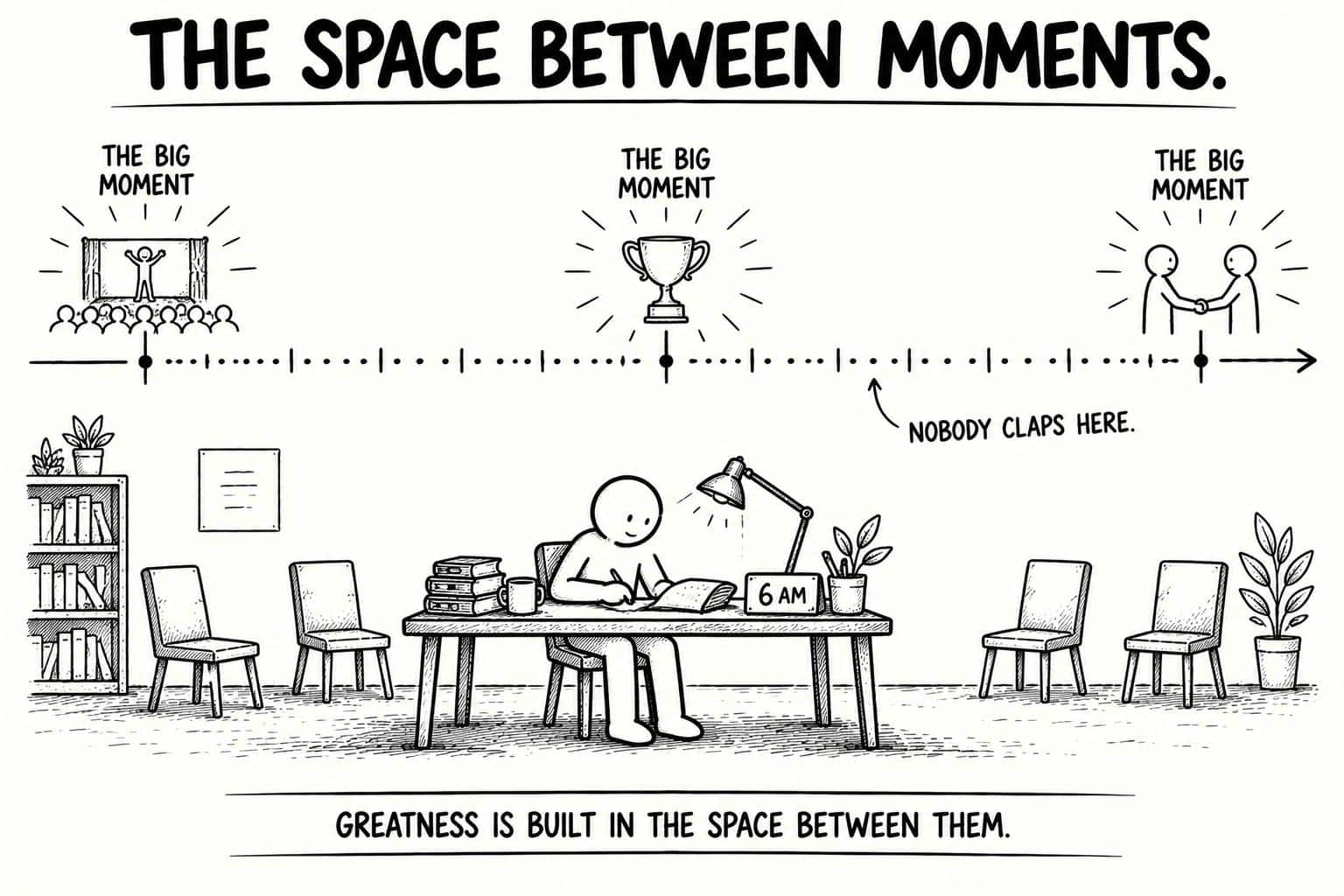
Greatness also requires you to accept that you can not control outcomes, and often it requires you to play a longer game than your ego likes. To look stupid or clueless for a while. To commit to outcomes you might never see, and to find peace in the process, not just the outcome. And sometimes to be lonely for a stretch. I was. That loneliness isn’t a bug. It’s where you learn to stand for something even when your legs are shaking. It is where you build character.
Then watch for the sneakiest trap: fear of success. If you really become what you’re capable of, you can’t hide anymore. You can’t play small. So many of us get to the edge of the breakthrough and quietly sabotage it, because staying stuck is familiar.
The price is high. I won’t lie to you. But the cost and regret of not paying it is higher. The world doesn’t need a watered-down, safe version of you. It needs the full, unreasonable one. Not tomorrow. Not when you feel ready. NOW. Your greatness has been waiting for your entire life. The only question is whether you’re finally ready to choose it.
Do this today
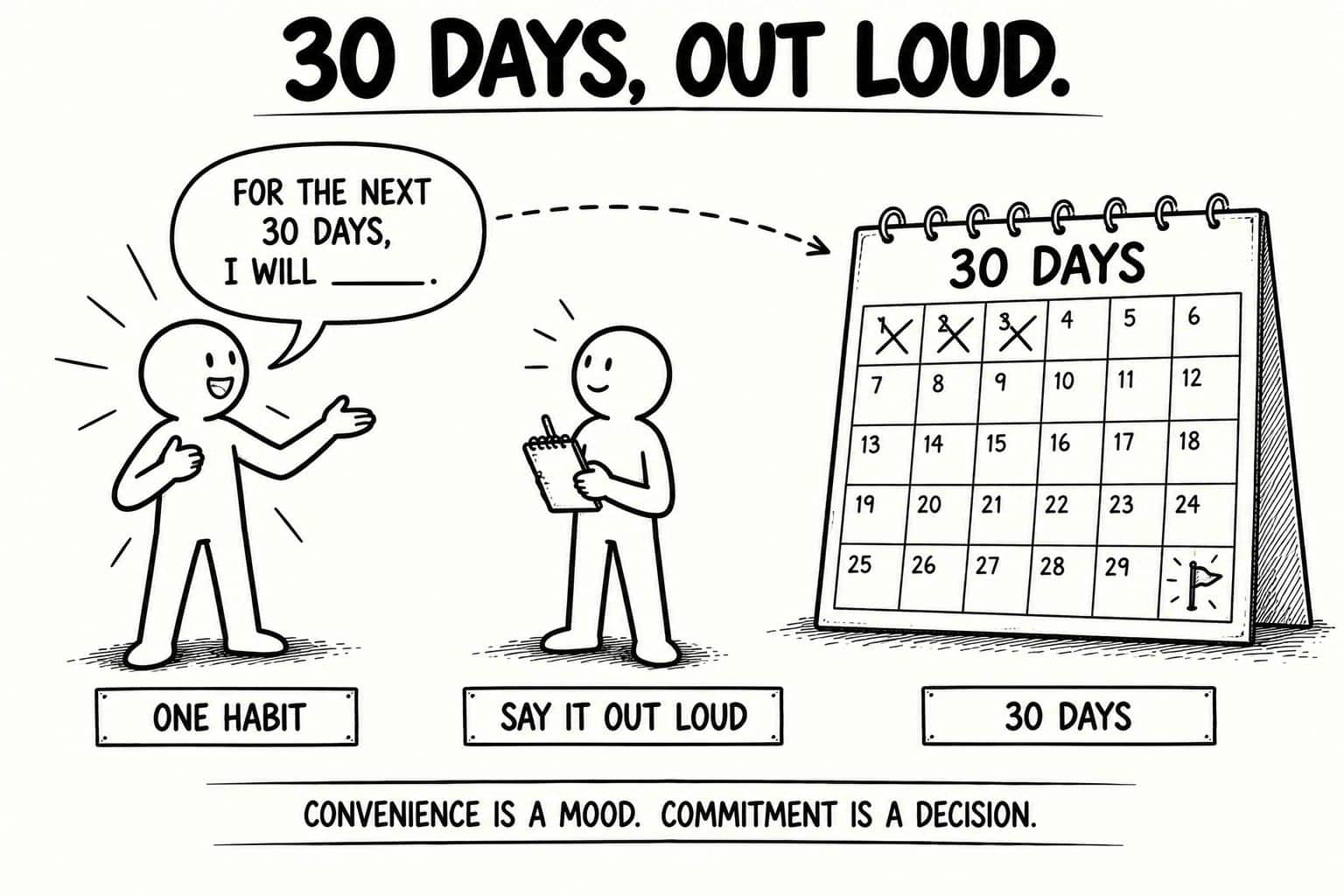
Start with Keller’s question: What is the one habit that would make everything else easier or unnecessary? Pick it from the table above. Give it 30 days to start. Then say it out loud to another human: “For the next 30 days, I will ___.”
Saying it aloud is the point. It turns convenience (I’ll try when things calm down) into commitment (by this date, watch me).
Habits take about 66 days on average to stick (a UCL study found a range of 18 to 254), and one missed day doesn’t undo you. And they take around 3000 days until they become part of who you are – almost automatic and unconscious.
Good enough is comfortable. It’s also the quietest way to waste a life.
So… who do you want to be?
Leave a Reply