June 2020

  • The 7 Most Powerful Investments You Can Make. They Are Not What You Think

    What comes to your mind when you are asked about the most powerful investments you should make? Is it stocks? Is it bonds? Or a new house? Real estate is the safest investment, you might have heard.

    If you ask me, I would say, neither!

    Over the course of my life, with its few successes and numerous failures, I have come to see another type of investment that will give you the maximum returns – investing in yourself.

    All of us want to lead a life of high quality and success, isn’t it? We all want to be satisfied and productive.

    Most of the time when we talk or think about investing, we limit our thoughts to financial investing and to maximize our monetary returns. We believe doing so will maximize the quality of our lives in the long term.

    All that is good thinking, but I have discovered that there are some simple investments we can make in ourselves which we tend to miss or neglect. And for most of these are not even financial. You don’t need to have money to do this kind of investing.

    “Investing in yourself is the best thing you can do. If you’ve got talents, no one can take them from you.” — Warren Buffett

    Investing in yourself is a continuous process. The effort and time you put in to invest in yourself consistently will determine the quality of life you would be leading in the future.

    Below are the 7 most powerful investments you can make:-

    1. Reading Books

    I have discovered books to be like ‘power banks‘ that revitalize the human mind. They pack knowledge, wisdom, and valuable lessons from people who have lived life before us.

    My favorite books are often memoirs of successful people from different fields like business, sports, politics, activism, art, etc. Reading them gives you a whole new perspective of how they looked at life, and their struggles and achievements.

    Books can lead you to locations you have never been to. For example – reading Theodore Roosevelt’s biography by Edmund Morris took me to New York in the late 1800s and early 1900s. They can give you many interesting ideas you never would have thought of otherwise, as you relate and compare your own life to the protagonist of the book.

    Take some time out each day to read books. Audiobooks are also available these days and you can tune into your favorite book even when you are on the move. Reading for just 10 minutes daily would help you finish around 15-20 books every year. Does that sound too difficult?

    2. Foundational Knowledge of How The World Works

    The most successful people are used to thinking and reasoning from First Principles. Some notable example thinkers are inventor Johannes Gutenberg, the Greek philosopher Aristotle, and entrepreneur Elon Musk – the founder of SpaceX and Tesla.

    First Principles Thinking starts with learning about the essentials which are always true – in the world we live in, and how the people in it operate. Subjects like physics, math, economics, and psychology are the foundation of how our world works.

    The laws of physics define how the material world behaves, psychology tells you how human beings behave and how irrational we can be, economics defines how the financial world behaves – the world of money and markets which affect us all, and math is often the foundation of every kind of reasoning and logic.

    Investing time in knowing and understanding these basic foundational subjects, irrespective of your job or industry, will help you make better decisions for you and the people around you.

    You wouldn’t go to a new city without looking at its map. So why would you want to interact with people, handle your money, and live in this physical world without the basic knowledge of psychology, economics, math, and physics?

    “An investment in knowledge pays the best interest.” – Benjamin Franklin

    3. Nurturing ‘Positive’ Habits

    By ‘positive’ habits, I mean the habits that serve you and help you achieve what you want to achieve. As most people do, I have been setting goals for myself – both at work and personal – for most of my life. And as most people discover at some point, I now realize that goals (like new year resolutions) never work – at least not as well as we expect them to.

    Neuroscience and psychology research proves that habits are better than goals when we look for iterative and long term results. Goals require willpower and discipline, and still, the desired result might not be in our control. On the other hand, habits are totally in our control and take little motivation as they become part of our routine.

    The best thing about habits is that once formed, they run in the background without taking our mental cycles, just like many software programs run in the background on your computer. This leaves us free to focus on other important things.

    Habits powerfully influence our behavior. And because of the fact that they work as part of our subconscious, bad habits can be just as damaging as good habits can be beneficial.

    “Habits are powerful but delicate. They can emerge outside our consciousness or can be deliberately designed. They often occur without our permission but can be reshaped by fiddling with their parts. They shape our lives far more than we realize—they are so strong, in fact, that they cause our brains to cling to them at the exclusion of all else, including common sense.” – Charles Duhigg

    Some of the ‘positive’ habits that have been very beneficial to me are:-

    • The habit of reading books in every 5 or 10-minute gap I found in my day, instead of making a goal to read 20 books in a year. Now, I automatically default to reading whenever I have a little time and finish over 40-50 books every year.
    • The habit of writing for 30 minutes as soon as I get up in the morning, vs making a goal of writing 2 articles every week. Writing is still the most painful task I do (from a willpower point of view), and having this simple daily habit means now I don’t worry about the number of articles and just focus on writing right after getting up. Usually, the 30 minutes stretch to 60 minutes, and I have been pretty happy with the outcome.
    • The habit of exercising for at least half an hour every day, instead of making goals like running a marathon or so. Be it walking, cycling, or simple exercises in my living room, I am happy now as long as I do 30 minutes of it. In addition to the attached health benefits, this has broken the monotony of everyday life.

    Invest in Yourself
    Invest in Yourself

    4. Communication and Interpersonal Skills

    No matter what we do for a living, we all work with other human beings. Learning to communicate better is one investment we can all make, and it will produce compounded results over time.

    Understanding how human beings behave, and what it takes to convince, persuade, and influence people is as fundamental a skill as any.

    Make a habit of listening to people and giving them the value they deserve. Understand where they are coming from. Make them feel important. Learn how to put the message across, how to talk to different types of people, and how to express yourself with clarity and purpose.

    Let go of the habit of blaming others or yourself when you mess up. Own up and apologize if you need it. Build the foundations that strengthen every relationship. Focus on relationships instead of negotiating when you talk.

    5. Writing Skills

    Writing could be private (a journal) or public (a blog, book, etc). It is not only a skill to communicate and express yourself, but also to think. As you put your thoughts to paper, it helps you to clarify your thinking and form a comprehensive picture of the topic at hand.

    Research shows that writing makes you healthier and happier. It helps you deal with various difficulties life throws in a way you can be proud of. Writing about what makes you grateful helps your mental health and makes you look at life more cheerfully.

    Powerful Investments in Life

    6. Trusting People by Default

    Trust people when you first meet them. Rather than fear the worst-case scenario, have faith that the best case will turn out to be true.

    Give your energy, time, gratitude, and appreciation to people around you. See it as an investment – in people. Investment in people always tends to come back in life, and in proportions we can’t imagine.

    “Everyone thinks of changing the world, but no one thinks of changing himself.” ― Leo Tolstoy

    7. Knowing What You Stand For

    Just like ships need a compass and a lighthouse to navigate in vast oceans, we all need to understand what we stand for, to guide us in difficult times. Our deepest held values, standards, and boundaries can be that guide and keep us in check.

    When we accept the standards and values others’ have set for us, we surrender our own will and judgment. By figuring out what we stand for, we allow our unique light to shine upon the world.

    Conclusion

    As you must have realized, the above-mentioned ‘investments’ do not cost you much (money). You do not need to spend money to make any of these investments. But, you need to be consistent and invest “brick-by-brick” with your time.

    References

    1. The Health Benefits of Writing about Life Goals – Laura A. King, 2001
    2. Top 11 Scientific Benefits of Writing [INFOGRAPHIC]
    3. Have You Discovered Your Leadership Lighthouse? Why Should You?
  • Why Unreasonable Goals Are Better For Your Growth And Success?

    Have you ever achieved something you aimed for still felt like “meh”? Do you feel “empty” on the inside despite being successful by usual standards? Here is how to achieve meaningful success by overcoming our deep psychological need to play it safe.

    If you have ever done any writing on a computer, you would have relied on copy and paste. It’s hard to imagine a life without it, as manually erasing and retyping would substantially add to the time and effort of writing.

    We have Larry Tesler to thank for the copy and paste functionality. He passed away in February this year, after a very successful career that involved, among other things, the development of the copy-paste functionality in the 1970s.

    Larry was intent on making computers user friendly. He started his career at Xerox before making a move to Apple to work with Steve Jobs for 17 years and later spent time with Amazon and Yahoo.

    His success can be attributed in large part to his mindset. Larry set unreasonable goals for himself. While it’s safe to say he achieved his vision of making computers user friendly, he failed at other goals—such as solving Fermat’s Theorem.

    In an interview in 2013, Larry said, “as is my personality, if I ever hear somebody say something’s impossible or extremely difficult, almost impossible, it’s a challenge and I always try to do it.“

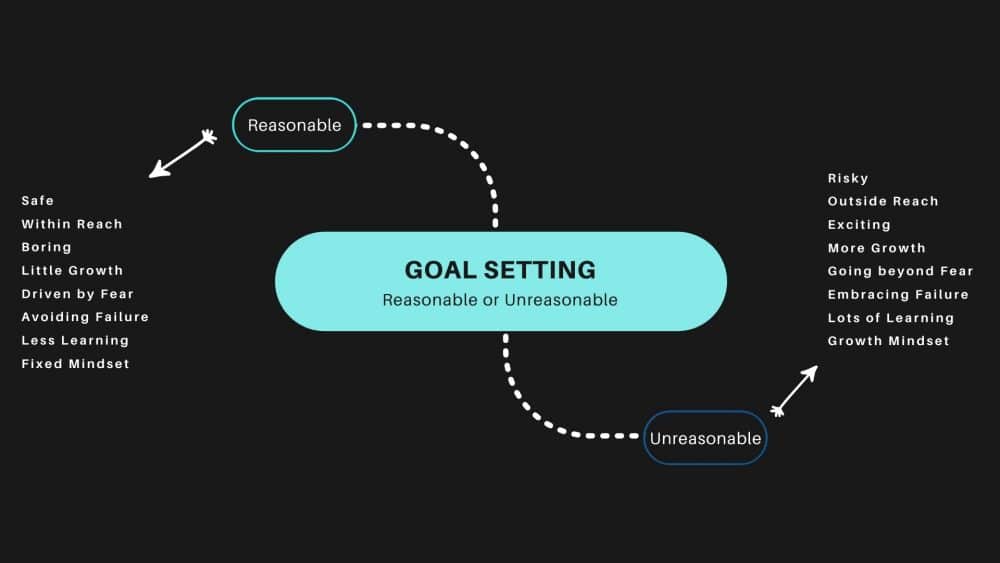
    While setting reasonable goals makes it more likely that we will succeed, it also means we are less likely to reach the height of your ability. If we can learn one lesson from Larry Tesler, it should be to go after what we find unreasonable.

    If you do this, there will be failures, but with the right attitude, those failures can be avenues for learning and future growth. 

    “I would just try to do anything that couldn’t be done and learned a lot along the way,” Larry said, “and when I was younger I hardly ever accomplished anything that was in that category but trying taught me a lot.” – Larry Tesler

    Larry Tesler
    Larry Tesler

    We Aim For What We Think We Can Achieve

    We all have our definitions of what is reasonable and what is not. 

    At first sight, it seems silly to aim for goals you doubt you can achieve. You know what’s reasonable and what is not, and you set reasonable goals for yourself.

    This sounds like a fine approach, but is it?

    Setting unreasonable goals could, in fact, be the better choice. That means aiming for what you think is unreasonable, looking at your reasonable goals and raising the bar a few notches.

    When setting goals you’re easily capable of achieving, you avoid chances of failure but also avoid reaching your full potential. It was Robert Browning who said that “a man’s reach should exceed his grasp.” 

    If you aren’t pushing yourself further than you think your abilities can take you, those abilities won’t grow and develop. You are capable of more than you think. 

    It only is by pushing yourself outside of your comfort zone that you grow. To escape the safety of your comfort zone, you have to risk failure.

    “The greater danger for most of us lies not in setting our aim too high and falling short, but in setting our aim too low, and achieving our mark.” – Michelangelo 

    Why Do We Underestimate Ourselves?

    What if we are capable of achieving much more than we think? Wouldn’t it be a pity if we never found out, and keep aiming too low.

    1. Risk Aversion

    Several factors hold us back from pursuing unreasonable goals. One such factor is risk aversion—opting for a sure thing rather than taking a chance for larger payoffs. 

    Psychologist Daniel Kahneman pioneered research into how people make decisions under uncertainty and risk. He won the Nobel Prize in economics for his work developing what’s known as Prospect Theory.

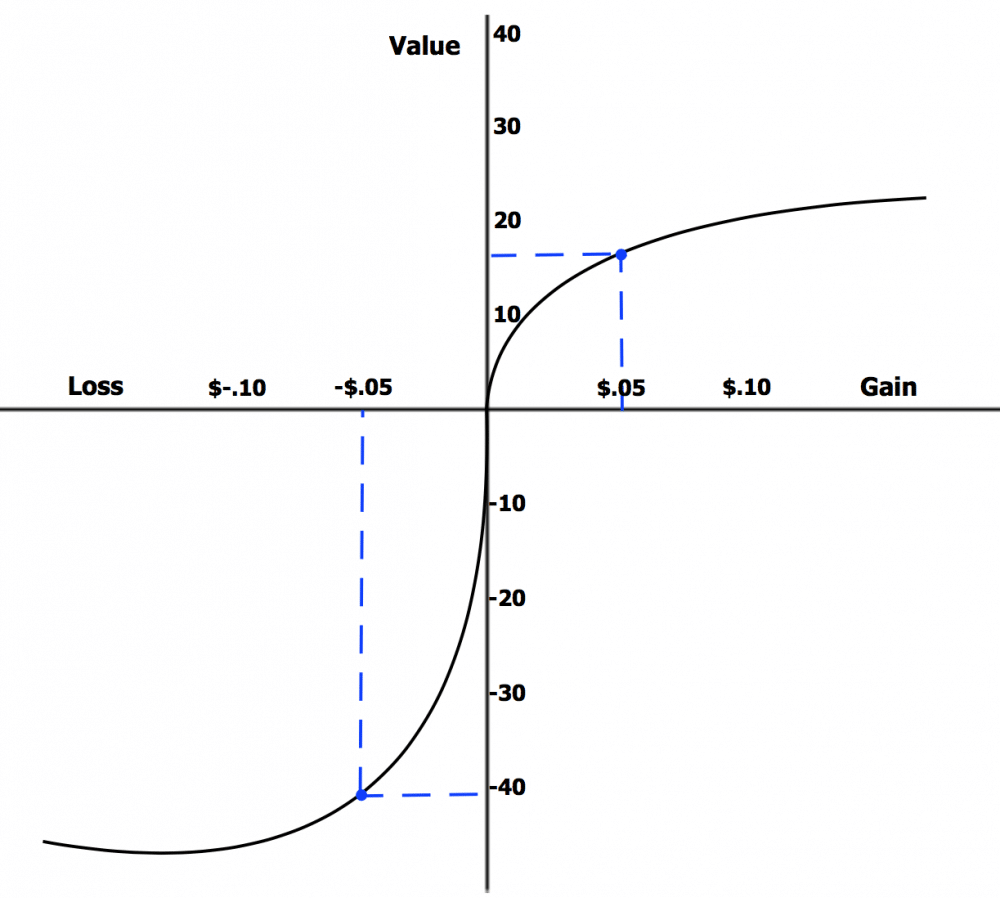
    Kahneman found that losing hurts more than gaining the equivalent amount feels good. He wrote in his book Thinking Fast and Slow, “People who lose suffer more than people who merely fail to gain.”

    For instance, imagine someone offered you a gamble on a coin-flip. If it’s heads, you win $100, if it’s tails, you lose $100. Would you take the bet? Most people decline.

    What if heads win you $120, while tails still only cost you $100? In this case, the numbers are in your favor, and yet many people still say no. Kahneman has said that often people won’t accept the bet until the potential winnings are twice as high as what we might lose.

    Loss Or Risk Aversion
    Risk Aversion

    Strangely, it feels better to not lose $100 than to gain $120.

    The problem here is it creates a bias towards the status quo. People don’t take chances that they’re not completely confident in, because they are afraid of losing.

    While this example uses money, the effects can occur throughout other domains of life, including the goals you set for yourself. Because of this, we tend to underestimate our abilities and what we can achieve over a long period of sustained effort and hard work.

    2. Impostor Syndrome

    Imposter syndrome is a feeling that we will soon be discovered as incompetent and fraudulent, even when we are fully capable. Today, impostor syndrome is recognized as experienced by most people. 

    It is accompanied by feelings of self-doubt, sabotaging our own success, underestimating our skills, and attributing our success to luck when we do well. This causes constant anxiety and can lead to depression.

    Impostor Syndrome along with our past failures results in fear and insecurity which causes us to aim too low. 

    Going Beyond Our Reasons & Justifications

    All of us can go beyond our reasons and justifications and surprise ourselves with better results than what we hoped for. But to do this we have to overcome the fear holding us back.

    You have to ask yourself what is more important – your commitment to your task (or your business/project) or your reasons and justifications. If your commitment is more important, then why not shoot for the stars?

    “Dream more than others think practical. Expect more than others think possible. Care more than others think wise.” – Howard Schultz

    If you aim too high and then miss, even then you might reach beyond what you originally thought was within reason. If you shoot for the stars and miss, you still land up near the moon. 

    In other words, if you aim for 10 and reach a 7, it is still better than the 5 you were aiming for before. When you aim big and achieve what you never thought was possible, you also build up confidence and learn to live with and overcome your fears.

    Seeing Failure As A Necessity for Success

    Failing to reach a goal can create feelings of doubt and inadequacy. It is our choice whether we see failure as a stumbling block or a stepping stone. 

    When you can’t see the positives of failure, you risk going down a spiral of negativity and setting reasonable goals again. However, by changing your mindset, you can make failures work to your advantage.

    It’s essential to realize that failure is necessary for success. As counterintuitive as that sounds, failures often provide a lot of useful lessons if we seek the right feedback.

    “I have not failed. I’ve just found 10,000 ways that won’t work.”  ― Thomas A. Edison

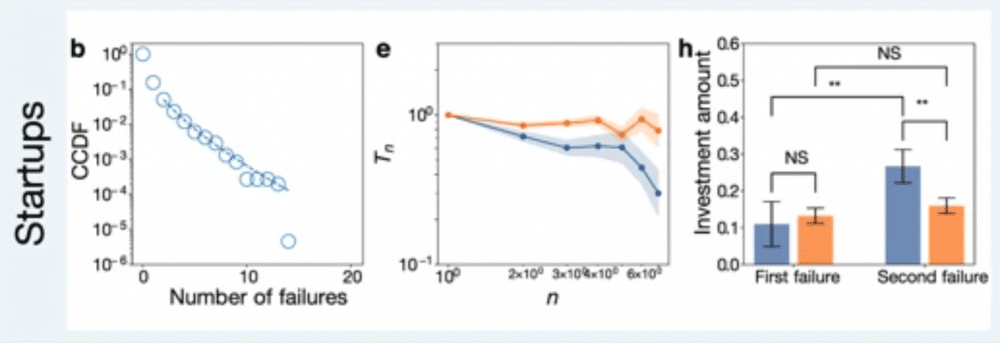
    “Every winner begins as a loser,” says Dashun Wang, who ran a study that found failure was an important ingredient to success. But it wasn’t just failure, the key was to learn from them.

    Failure Is an Important Ingredient to Success
    Failure Is an Important Ingredient to Success

    “You have to figure out what worked and what didn’t, and then focus on what needs to be improved instead of thrashing around and changing everything,” said Wang.

    Failures are often greater learning experiences than successes. You can learn from them to take a step forward rather than backward. 

    Most people focus on the successes and the successful. They look at what successful people like Steve Jobs or Bill Gates do right. When we look at others, we only look at success—this is the survivorship bias—but almost every successful person failed first.

    Every business person, scientist, and artist experienced failures and made mistakes before achieving what they did. 

    “Success is not final, failure is not fatal: it is the courage to continue that counts.” ― Winston S. Churchill

    People who achieve their unreasonable goals persevere through fear and uncertainty. They don’t ignore their failures, instead, they learn from them. If you can learn from your failures, you can use failure to your advantage. 

    It’s Not What We Get, It’s What We Become

    The real outcome of any sincere attempt at an ambitious goal is not what we get out of it, but what we become out of it. After aiming for unreasonable goals (irrespective of the result) we are left with more knowledge and lessons. That itself is a good reward.

    If you can look at things this way, going after unreasonable goals will leave you wiser and more experienced, even if you fall short. That’s the most important outcome of any unreasonable endeavor – the fact that we come out much better off than before.

    In short, the most important benefit of going for unreasonable goals is that it will help you expand as a person.

    Many people “achieve” a lot and still feel empty. If you, however, go after meaningful and unreasonable goals, then irrespective of the outcome, you achieve meaning and growth, which compounds over time and leads to greater results too. 

    Material successes and results fade over time. You can even lose your money and possessions. But you can never lose what you have become – the lessons you have learned, the laughs you have had, and the satisfaction from knowing you gave it your all.

    In conclusion, you should set goals big enough that they scare you. If your goals are not scary, you need to be a bit more unreasonable with them. 

    With this mindset, going after unreasonable goals might be very rewarding, and playing it safe can be dangerous as you miss out on the most important thing – expanding yourselves.

    Unreasonable Goals

  • Issue #3, 25 June 2020

    Welcome to the Deploy Yourself Newsletter. Every two weeks I share about what impactful coaching and leadership look like. I also share the most insightful lessons and stories I encountered in the last two weeks. You can also read this issue online.

    .

    Are You Playing To Win, or Not To Lose?

    These are not the easiest of times, and when fear takes hold, we often start to play life not to lose, rather than playing to win. This is a common theme (Playing to Win vs Playing Not to Lose) which comes up often in my coaching sessions.

    When we play not to lose, it can certainly help us survive, but it rarely allows us to thrive and express ourselves fully. Left to continue over the long term, it eats at the confidence, aliveness, and joy we experience each day.

    Think about an area of life where you are playing not to lose? Now, wonder how would it feel like to “play to win” – with excitement, energy, and freedom?

    Take a moment to pause and listen to your heart, and see how it feels. You might feel fear and discomfort of the unknown. And that right there is your opportunity to create a life that matters. That, right there, is also an opportunity for coaching.

    How might it feel to go beyond the walls of fear? Outside of these walls, what I have found is that there are opportunities rather than dangers, there is excitement rather than boredom and joy rather than frustrations. 

    If you can identify any such walls in your own life, click Reply now and I will help you figure out a way to see and experience life beyond them.

    Also, read my article on Why We Should Break the Safety Wall Around Us?

    .

    Articles and Stories Which Have Fascinated Me

    .

    One

    “We are all fallible. Everyone feels nihilistic sometimes. Everyone lacks conviction with their life choices sometimes. Everyone falls off on their habits. The diaries of the most successful humans in history are filled with frustration and self-doubt.

    Off-days and slumps can be prevented but never completely eliminated. In order to overcome getting stuck, we must both expect and accept that it will happen from time to time. Through attention and practice, we can limit their damage and duration when slumps do occur.

    When our train is headed off the rails, how can we get ourselves back on the track? I will share some tested techniques for preventing yourself from getting unstuck as well as how to quickly intervene when it does happen.”

    From an article titled A Guide to Getting Unstuck by Chris Sparks

    .

    Two

    Knowing What You Stand For

    Just like ships need a compass and a lighthouse to navigate in vast oceans, we all need to understand what we stand for, to guide us in difficult times. Our deepest held values, standards, and boundaries can be that guide and keep us in check.

    When we accept the standards and values others’ have set for us, we surrender our own will and judgment. By figuring out what we stand for, we allow our unique light to shine upon the world.

    An article from my desk – Have You Discovered Your Leadership Lighthouse? Why Should You?

    .

    Three

    My take on the book Creativity, Inc by Ed Catmull – The CoFounder of Pixar

    “Catmull has given insights into what it takes to run a creative organization. This book has explained in detail how Pixar rolled out one blockbuster after another, and how its internal processes works which resulted in churning out these blockbusters.

    He describes how many failed storyboards it takes before one is accepted to be made into a final movie. For Finding Nemo it was 43, for Ratatouille it was 69 and a whopping 98 for Wall-E.

    He goes into detail on what it takes for people to be open to having their ideas shot down as often as Pixar does. This book shows what it takes to create a culture where it is safe to fail and everyone has the freedom to try out new and crazy ideas.

    The book also has a chapter on Steve Jobs, which was a bonus to me. I wasn’t expecting to read about Steve Jobs, and Ed Catmull presents a very different take on him than in other reading materials out there.”

    That’s it for now. If you have any questions, just hit reply and we can have a chat. All the best,

    Sumit

    (Twitter) @SumitGupta
    (LinkedIn) Connect

  • 51 Powerful Questions to Ask in Different Situations, and The Art of Asking Powerful Questions

    After leading teams for the last decade and a half, if there is one skill that has made the biggest difference in my ability to improve individual and team performance, it has been my ability to Ask Powerful Questions.

    This is not to say that other skills like listening, emotional intelligence, and conflict resolution are not important – they certainly are. But asking powerful questions is that precise and sharp tool that opens up so many options for leadership and coaching which aren’t available otherwise.

    Whenever I find myself in a logjam — a difficult or a tricky situation — I go over my ever-expanding list of powerful questions, and I always find a way out by asking one or more of these questions.

    Below are different situations and the exact powerful questions you can ask in each of these situations. Before diving into the list, let’s spend some time thinking about what powerful questions really are, and what makes a question powerful?

    What are Powerful Questions?

    • Powerful Questions are not what you hear normally. A powerful question comes up as an unexpected surprise to the listener and stops them in their tracks. For example – “How are you doing?” is not a powerful question. Instead “What was your favorite moment thus far today?” is one such powerful question.
    • We have well-rehearsed and scripted answers for the usual questions from our colleagues, friends, and leaders. Powerful Questions makes one think and come up with original answers. If a question makes you think about your life, priorities, values, etc, it is a powerful question.
    • Powerful Questions goes deep into topics people don’t normally think or talk about. They don’t linger on the surface where there is emotional safety. Instead, powerful questions force you to be vulnerable. It requires some courage to face the discomfort of answering a Powerful Question.
    • Powerful Questions can lead to deep and valuable insights. They take longer to answer, but they often end up revealing something important about yourself which you were not aware of before. I am still enjoying the benefits of many such valuable insights when others have asked me powerful questions in the past.

    Now that we have covered what powerful questions are, let us go over some questions which you can use in different situations. They can become your most important tool to influence people and produce results. To download an even more comprehensive list of 164 Powerful Questions, fill in the form below.

    “I would rather have questions that can’t be answered than answers that can’t be questioned.”

    ― Richard Feynman

    Purpose – To Measure Your Own Effectiveness as a Leader

    Whom to Ask – Yourself

    Powerful Questions:-

    1. Do my reports regularly bring their biggest challenges to my attention?
    2. Would my reports gladly work for me again?
    3. Do my reports feel I have helped them grow by providing challenging opportunities?
    4. Do my reports say that I have supported and coached them whenever they have felt stuck or challenged?
    5. Do my reports trust me when I make a promise? Can they count on me?

    Purpose – To Create a Motivated, Engaged, and Empowered team.

    Whom To Ask – Each Individual In Your Team. You are looking for a resounding “YES”

    Powerful Questions:-

    1. Do you know what is expected of you at work?
    2. Do you have what (tools, resources, etc) you need to do your work right?
    3. At work, do you have the opportunity to do what you do best every day?
    4. In the last seven days, have you received recognition or praise for good work?
    5. Does your supervisor or someone at work seem to care about you as a person?
    6. Is there someone at work who encourages your development?
    7. At work, do your opinions seem to count/matter?
    8. Does the mission/purpose of your company make you feel your work is important?
    9. Are your co-workers committed to doing quality work?
    10. Do you have a best friend at work?
    11. In the last six months, have you talked to someone about your progress?
    12. This last year, have you had opportunities at work to learn and grow?

    Powerful Questions Quote

    Purpose – Help People Find Their Inner Purpose

    Whom to Ask – Each Individual In Your Team

    Powerful Questions:-

    1. What are you good at doing? What have you gotten noticed for throughout your career?
    2. What do you enjoy? What do you look forward to doing? What energizes you? What do you love about your work?
    3. What feels most useful? What kind of work makes you proud? Which of your tasks are most critical?
    4. What are your highest priorities in life? Where does work fit in?
    5. What creates a sense of forward momentum? What are you learning now that will be useful in the future? Where do you see yourself headed next? What are you doing today that will help you achieve your long term goals?
    6. How do you relate to others? What would a team of your favorite people look like? How does your work enhance your family and social connections?
    7. What word do you want people to use to describe you? Do they describe you this way now?
    8. What is “on hold” in your life? What is that you want to do someday / one day? What are you waiting for?
    9. What is the one thing you would regret if you never did anything about it?
    10. What do you want your legacy to be? What do you want people to say at your funeral?

    Purpose – To Understand Your Employees as Human Beings and to Take Care of Their Motivation, Engagement, and Growth

    Whom to Ask – Each Individual In Your Team

    Powerful Questions:-

    1. What motivated you to be part of this company and team in the first place?
    2. How do you hope to personally and professionally benefit from working on this project?
    3. If you were to receive a lifetime achievement award, what would you want to be recognized for?
    4. What is important to you outside of the work environment — family, vacations, adventure, faith?
    5. What are a couple of the most defining events from your personal narrative — both good and challenging — that have defined who you are and you behave today?
    6. How do you take care of yourself?
    7. How do you like to be rewarded most — with extra bonus cash, extra vacation time, public recognition, title promotion?
    8. Where would you like to be in 3, 5, and 10 years?
    9. What do you do for fun?

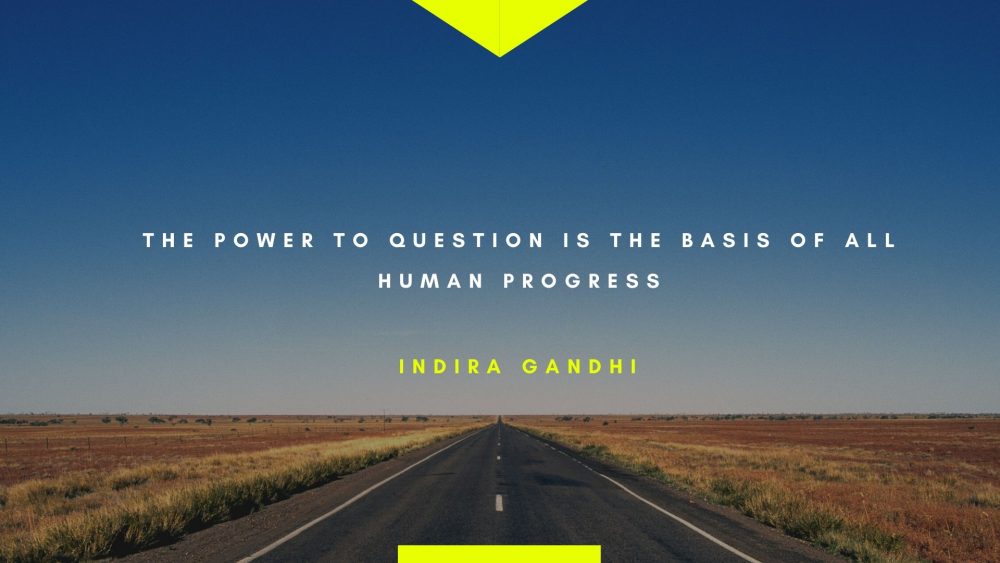
    “The power to question is the basis of all human progress.” – Indira Gandhi

    Purpose – To Coach People. To Get Them To See And Remove The Roadblocks In Their Way

    Whom to Ask – Each Individual In Your Team

    Powerful Questions:-

    1. What would success look like?
    2. What would tell you that you’ve reached your goal?
    3. What is holding you back? What is in the way?
    4. What concerns you? What might be the unintended consequences?
    5. What are your options? What else can you try?
    6. Who else needs to be involved? Who can help you?
    7. What is the one step you can take today?
    8. What is your back up plan?

    Purpose – To Ask People In Your 1-on-1’s

    Whom To Ask – The Person Sitting Next To You

    Powerful Questions:-

    1. Tell me something I don’t know about you?
    2. What are you excited about? What are you worried about?
    3. What did you do recently that you are proud of?
    4. When was the last time you laughed at work?
    5. What do you do after work? What are your hobbies?
    6. What in your life is ‘on hold’? Until you lose weight, until you retire, etc. What are you waiting for?
    7. If you were in my position, what would you do differently?

    “You can tell whether a man is clever by his answers. You can tell whether a man is wise by his questions.” – Naguib Mahfouz

    What To Do With The Answers?

    The above questions can be provocative and open up new pathways for people which weren’t available before. These questions might force people to look at things differently, and they can build on the answers to create a long-lasting impact. The process of asking these questions can be painful at times, but the rewards are significant and worth it.

    Powerful Questions lead people to clarity in thought and swiftness in action. These questions are generally open-ended and increase the possibility of new learnings, fresh perspectives, and bold action.

    Journalist and author Warren Berger has written two wonderful books on the topic of questioning – The Book of Beautiful Questions and A More Beautiful Question. He argues that one of the most powerful forces for igniting change in business and in our daily lives is a simple, under-appreciated tool – asking deep and imaginative questions with the curiosity of a child.

  • Why Anger Is The Most Compassionate Human Emotion? And 3 Ways to Use it Productively?

    “Anger is the deepest form of compassion,” poet and philosopher David Whyte wrote.

    Most people do not associate anger with compassion. In fact, at first glance, it looks and feels like the exact opposite of compassion. But as with most emotions, the more attention we pay, the more aware we can be of what our anger is trying to tell us. In this article, I want to present a different take on anger – seeing anger as the most compassionate human emotion. Taking this unusual perspective about anger can reveal a lot of useful insights. Let’s get started.

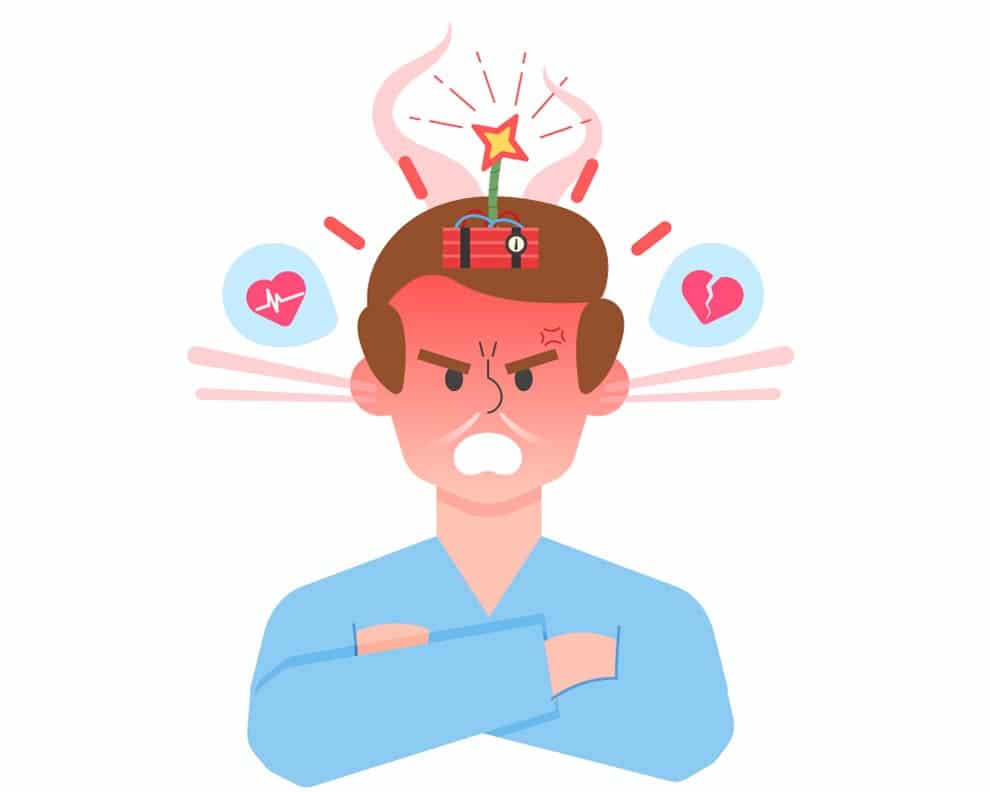
    On the surface, anger looks like an ugly emotion. The feeling of an intense fire that threatens to burn not just the target of the rage but also ourselves. We have all been through that. It is in those moments when we know we are going to explode, but can do very little to stop it — that we realize the energy of anger. Often we end up spending it destructively (shouting, hand waving, punching a wall).

    Every 2 weeks I share my most valuable learnings from living life fully in my Deploy Yourself Newsletter. Sign up now to download a workbook with 164 Powerful Questions which I use daily in my work and coaching. Allow these questions to transform your life and leadership.

    What is Anger?

    Anger is a natural human emotion. Anger is one of our most primitive biological responses, and everybody experiences it. Anger is a legitimate emotion, and there is nothing wrong with it. As my mom used to say, anger is our inability to deal with what we care about, and the vulnerability that comes along with it. We get angry when we don’t know how to react (to events around us) normally.

    A lot of people see anger as a negative emotion. I wouldn’t categorize anger as negative. Instead, anger can be our guiding light. It can be a mobilization force to deploy ourselves in the face of circumstances. Every time we can do that, it strengthens and helps us behave in a way we can be proud of. Seen this way, anger is a very useful emotion.

    Anger is very useful to avoid and navigate fear and threat when our survival is at stake. The human species would not have survived unless it had been for anger. I’ve never met a human being who doesn’t feel anger. Everybody gets angry at some point in their life. People might have different thresholds for anger. People might react to anger in different ways, but everyone gets angry.

    Anger from Psychological Point of View

    Anger is a secondary emotion. What that means is that it can hide more emotions behind it. For example, anger can hide frustration, sadness, or even grief behind it. Anger is also not a static emotion. Your anger can range from mere irritation, on the one hand, to rage on the other hand. Anger can be triggered suddenly or it can linger deep inside yourself.

    Physical Manifestation of Anger

    Everyone reacts differently to anger, but there are some common physiological changes associated with it. It causes our heart rate and blood pressure to go up, and we feel an adrenaline rush when we get angry. We get a sudden rush of energy and an impulse to react in a particular way – banging our fists, cursing, shouting, venting, throwing things, etc.

    Anger is harmful to your health. It causes stress and anxiety, and it can cause long term harm like heart attack and depression. It is not only harmful to our own health, but it is also harmful to people around us, and our relationships. In anger, we tend to lose control, and we can do things that we might regret later. If we look back in our lives we can all see moments of anger where people have left a trail of destruction behind them.

    Neuroscience Point of View

    The primary function of our brain is to ensure our survival. When it comes to emotions and how we operate on a day to day basis, our brain comprises of 3 partsthe Neocortex (the thinking brain), the Limbic System (the feeling brain), and the Basal Ganglia (the reptilian brain). The Amygdala is the deepest and most critical part of the limbic system. It is most commonly activated when dealing with intense emotions. It triggers what is called the fight or flight response.

    Research proves that when we are emotionally overwhelmed and experience a threat to our physical or psychological safety, our amygdala is triggered before our neocortex (the reasoning part of our brain) even knows about it. When this happens, the amygdala decides our behavior (the fight or flight response) and it is called an “Amygdala Hijack”.

    Anger Short Circuits Our Brain

    This is what happens when we experience physical symptoms like a racing heart, sweating palms, or a shaking body — even in situations with no physical threat. Our ages-old survival mechanism kicks off and makes us react to things primitively before the rational brain has time to think things over.

    This is one of the reasons emotions are good messengers but very bad masters. Our anger can tell us a lot about what we care about, but if we let it take over, it can short circuit the thinking part of our brain. When that happens, we react rather than respond to the situation.

    “The truth will set you free, but first it will piss you off.” ― Joe Klaas

    At the same time, just like any emotion anger can tell us a lot about ourselves. Anger has the power to clarify our thinking and reveal our moral lighthouses. But only if we are willing to listen. There are 3 ways we can use anger productively rather than let it destroy us and our relationships:-

    1) Listening To Anger Reveals What We Care About

    If we pause and reflect, anger can reveal what we deeply care about. For example – I once got angry at my manager. After reflection, I came to understand that the anger was not against the manager but against unfair behaviour. Once I realized that I was able to respond in a better way, and it revealed one of my deepest values to me – fairness and justice.

    The more attention we pay, the more we can be aware of what our anger is trying to tell us. Anger can be our guiding light and a force to deploy ourselves in the world around us in a healthy and productive way rather than destructively. As I mentioned earlier anger is a secondary emotion. It hides many emotions behind it, but we can look deeper and figure out what those emotions are.

    One way we can listen to what anger is trying to tell us is by separating facts from stories and assumptions which we might have made. Our minds can fool us easily. A thought comes into our mind after something happens, and we believe it to be true. In such moments, we can instead stop and validate each assumption which our mind is making before believing it. Whether it is true or not, or is it a story?

    Anger can show us the way ahead, and what needs to change. Because anger tells us what is not okay, what we should not do, or that a deeper investigation is required, about something which is bothering us.

    2) Anger Is An Opportunity To Practice Emotional Intelligence

    In the heat of anger, we stop listening. We are only burning in rage. But after the immediate impulse of the anger is gone, it is an opportunity to practice emotional intelligence. And as with all skills. It gets better with practice and time.

    Anger always comes along with a temptation to react. But seen another way, every time we get angry, it is an opportunity to express ourselves in a way that we can be proud of. Venting out in anger can certainly give us immediate relief, but we often end up damaging relationships and our reputation in the process. Not giving in to that impulse is an opportunity to practice emotional intelligence.

    You might think that when angry, you can’t stop yourself from reacting. And this is why you hate being angry. But the truth is that anger is not the culprit here. Instead, it is you who lacks the ability to understand, reflect, and act responsibly in the face of your anger. Anger provides us with an opportunity to use the energy of our anger productively. When we do so, we strengthen relationships and build a strong reputation backed by responsible behaviour.

    3) Anger is Love, and It Shows Your Commitment

    We often get the most frustrated and angry at those whom we love or care deeply about. The opposite of love is not hate or anger, it is indifference. So when we see people in love fighting, it is not that the relationship is going downhill. Instead, it is a sign that the relationship has a lot of care and sincerity that is often expressed in anger. To expect anger to not arise in love is to not understand love at all.

    You get angry because you care. You get angry because you love somebody, because you love a cause or because you love a certain value. You get angry because you want to reach an important goal or you see a possibility in the future. Something happened which violates that commitment you have to the person or to the cause or to the future goal. That is what makes you angry, and that is what we need to discover.

    Have you noticed that when you are angry, you cannot think of anything else? It is because anger brings tremendous clarity with it, and forces you to focus on the current moment. If we can honor our anger instead of denying it, we can usee its energy. This energy arises because we feel vulnerable in love. If we can see it for what it is, we can use the force of anger to enrich the love which is at the root of anger in the first place.

    Every time you are angry at someone you care about, take a moment to celebrate your commitment to the person or the relationship. Your response can change massively if you keep this commitment in mind in that moment of heat. Your anger is there to serve you and your relationships, but only if you are willing to pause and listen. You get angry because you love. Allow this love to strengthen the relationship rather than weaken it.

    Conclusion

    Understanding anger on a deeper level can be poetically beautiful. Once you learn to stop acting out impulsively and express your anger keeping love and care as the underlying commitment; you can channel it to nurture the relationship. We all feel anger, so in a way, anger connects us all. It is what makes us human.


    References

    1. Amygdala Hijack and the Fight or Flight Response
    2. How to Turn Your Brain from Anger to Compassion
  • Why Our Emotions Can Be Overwhelming? Learn the Neuroscience behind Emotions, and 5 Steps to Deal with Them Effectively

    We all have been in situations where our emotions have overwhelmed us. We all have done something in the heat of the moment that we regretted later. In such situations, our emotions can affect our ability to think and act rationally. We find ourselves unable to think clearly in such a state, and every passing second feels like an added burden. Why does this happen? What can we do to prevent it?

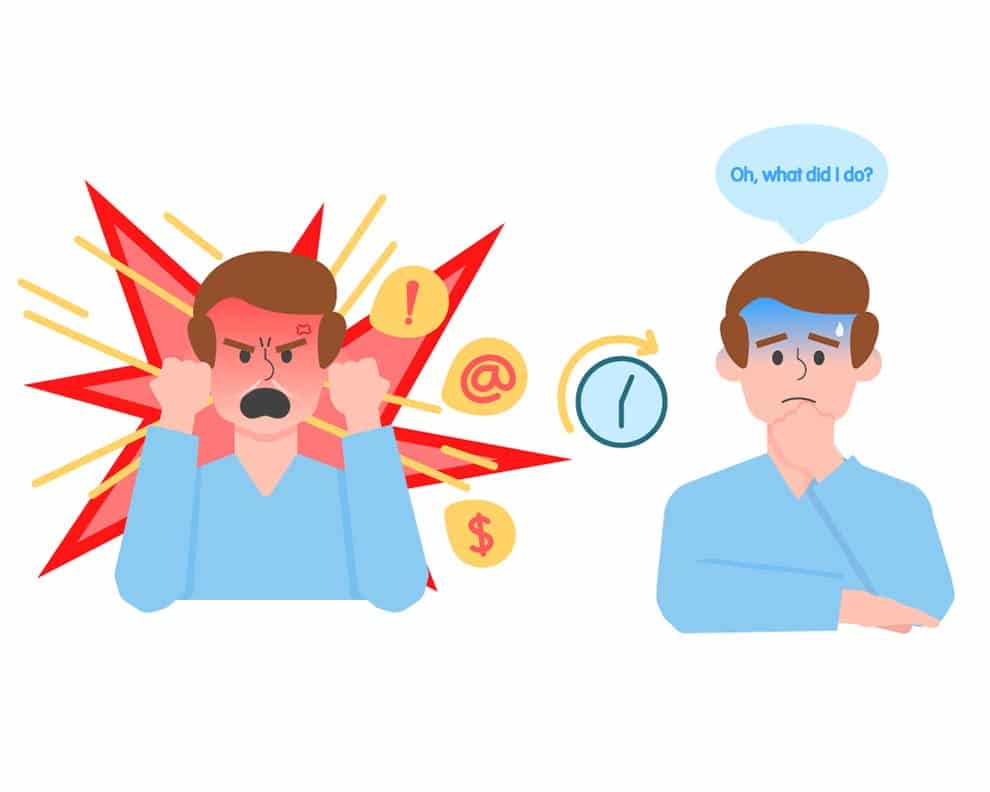
    Since emotions is a topic most people find difficult to talk about with others, it is very common for people to suffer alone in a state of emotional overwhelm. And when it gets too much, we often explode – saying or doing stuff which only makes things worse, and which we end up regretting later on. We all remember the Zidane’s head butt in the 2006 Football World Cup Finals in front of 28 million TV viewers. Zidane’s aggressive reaction got him kicked out of the game, France lost the match and the World Cup, and he later ended regretting up and apologizing for what he did.

    So what is it about emotions that can cause such reactions? And if everyone experiences this at some point in their lives, why is there no available literature or material which can be of help in such situations? It was to find an answer to this very question and to understand our brains better that I started a new journey (or exploration) around 2010. This journey has over the decade involved doing multiple trainings, reading hundreds of books, undergoing courses in psychology and neuroscience, and experimenting and trying out what I learned in my own personal life.

    Understand Science Based Facts About Emotions and Ease Your Shoulders of Their Burden
    Regret After An Emotional Reaction – We All Have Been There

    This article is an attempt to share what I learned about our brains and emotions in simple and easy to understand language, so that the next time any of us feel emotional overwhelm, we know what is happening inside our brain, and how to deal with it better.

    The Neuroscience Behind Emotions

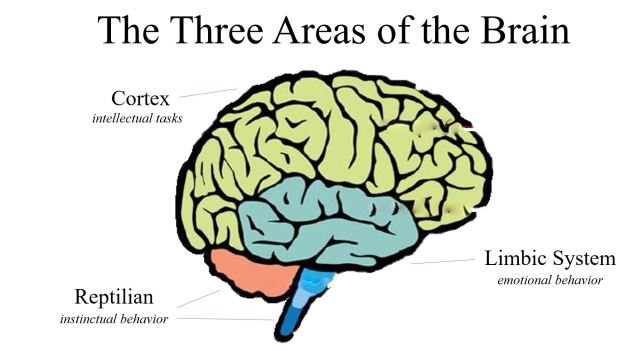
    The primary function of our brains is to ensure our survival. When it comes to emotions and how we operate on a day to day basis, our brain can be divided mainly into 3 parts. These three parts of the brain are:-

    • The Neocortex is the part of the brain where we think consciously and use reason to find our way around problems. When we make logical decisions about the pros and cons of a matter, we are using our neocortex. This is the biggest part of our brains, which is unlike other animals. In most other animals, the neocortex is either very small or completely missing. This is our conscious mind.
    • The Limbic System is the part of the brain which deals with emotions, behavior, motivation, memories, and sensory information. The amygdala (which we will come to later) is a part of the limbic system. The limbic system controls the functions necessary for our survival and self-preservation – both physical and psychological. All our emotions and matters of the heart have a lot to do with our limbic system. This is our subconscious mind.
    • Basal Ganglia is that part of the brain which is responsible for voluntary movements of our body which we don’t think consciously about – like our eye movements, how our internal organs work, and so on. For people with damage to their Basal Ganglia, it is difficult to control their speech and posture. When we instinctively know how to catch a ball or use a scissor, we are using our basal ganglia. It is our unconscious mind.

    Three Areas Of The Brain
    The Three Parts Of The Brain

    The Amygdala Hijack

    The Amygdala is the deepest and most critical part of the limbic system. So much of our emotions and behavior are controlled by our amygdala that I am surprised this is not part of our elementary education. It is most commonly known for dealing with fear and triggering what is called the fight or flight response. Research says that when we are emotionally overwhelmed and experience fear (to our physical or psychological safety or to our identity), our amygdala is triggered before our neocortex (the reasoning part of our brain) even knows about it. When this happens, the amygdala decides our behavior (the fight or flight response) and it is called the “Amygdala Hijack”.

    This kind of immediate response triggered by the amygdala can be very useful when we see a tiger coming our way in the forest. It is the amygdala which makes us run without thinking rationally about the pros and cons of running. In those moments, you want to immediately react to ensure survival. The amygdala makes sure that happens. However, it is not only physical fear like seeing a snake or a tiger that can trigger our amygdala. Experiencing anxiety and surprise can also trigger our amygdala, even when there is no physical threat to our well being. In the world we live in today, our amygdala is mostly triggered to ensure our psychological safety rather than our physical safety.

    Our brains have evolved such that our emotions can provide us with what to do without us having to think about it. During an amygdala hijack, it takes over the brain and we immediately react without consulting the thinking part of the brain. It triggers the release of hormones like adrenaline (epinephrine) and cortisol. This is what happens when we explode in anger, or when we experience physical symptoms of fear like a racing heart, sweating palms, or a shaking body even in situations with no physical threat. This survival mechanism makes us react to things before the rational brain has time to think things over.

    This is one of the reasons emotions are good messengers (in the sense that they can tell us a lot) but very bad masters. Our emotions can tell us a lot about what we care about, but if we let them take over, they can short circuit the thinking part of our brain. When that happens, we react rather than respond to the situation, and the resulting action might cause us harm or regret in the future.

    Suppressing our emotions can cause a lot of damage
    Suppressing our emotions can cause a lot of damage

    Why Do Emotions Hijack our Behaviour and Actions?

    Our brain is always in the process of survival. This survival doesn’t necessarily have to be physical in nature, it can also be emotional. For example – We can experience intense emotions (and an amygdala hijack) when our identity gets hurt. It can happen when we hear something about ourselves which we don’t want to hear or discover some truth which was hidden from us for long. When this happens, we feel fear the same way as we would on seeing a tiger.

    With fear, a fight or flight response is triggered. This is why people fight and kill each other over football matches. This is why people have very strong arguments and express hate and anger over seemingly trivial matters. In all such instances, the reptilian part of our brain takes over and it tries to do its most important job – to survive. The amygdala cuts off the neocortex, which is what makes the human brain stand apart from other animals.

    Needless to say, this kind of living is very effective for surviving, but not so much for thriving in the modern world. It is very difficult to have effective conversations, deal with conflict, and engage emotionally with people around us if we see everything as a threat.

    The good news is that an amygdala hijack is temporary. It can feel scary and helpless, but there are ways to deal with it better. We can do so by understanding how our brain works and planning proactively. When we do so, we develop our emotional intelligence and reduce the frequency of our fight and flight responses.

    Steps to Deal with an Amygdala Hijack

    The Fight or Flight Response
    The Fight or Flight Response

    1. Prevention – The best way to deal with an amygdala hijack is to prevent it from happening. You do that by understanding how our brains and emotions work, and then developing emotional intelligence to pay attention to our emotions as they arise. It is true that emotions bring with them a temptation to react. But it is also true that there is a gap between that temptation and our action. By being more mindful of our emotions, we can learn and train ourselves to engage our neocortex before being sucked into reacting to a particular emotion. You can do that by following step 2.
    2. Don’t Ignore the Emotion. Label and Acknowledge It – If we name the emotions as we experience them, it can help to engage the thinking part of our brain and give us the space to choose our response. Just saying out loud that “I am feeling anger” creates a gap for you to avoid being sucked into an impulsive response. If the emotion is too overwhelming, we can at least ask for a timeout and excuse ourselves from the situation. Once we understand the emotion better, we can come back to deal with the situation in a way we can be proud of.
    3. Understand The Story – Every emotion has a valuable story behind it which can help us understand ourselves better. Understanding what the emotion trying to tell us can reveal our values to us, which can further guide us in deciding a conscious way to respond to it. We can do this self-examination by asking some powerful questions (why am I angry? what do I want? which of my values has been violated? what about this bothers me?) which will also help us develop emotional intelligence.
    4. Creating Space – Once we take a time out and see things in perspective, we can choose better thoughts. We can ask ourselves questions like — Will this issue still matter in a month? In a year? Over time this reduces the probability of having a fight or flight response, as we learn to train ourselves to interrupt the amygdala hijack before it sucks us into any damaging action.
    5. Connect with Our Values and Proactively Decide Our Response – Every emotional reaction can be a good opportunity for us to discover what kind of person we want to be? What are the values we believe in? What is the behavior that we must exhibit to close the gap between our actions today and the ideal way we could have behaved? Whatever actions we take, we have to live with them for the rest of our lives. Our values and purpose will help us choose our actions wisely.

    Whether we manage to deal with an amygdala hijack effectively or not, we can later reflect and use the experience to understand ourselves better. We can recognize and accept our imperfections, and forgive ourselves and others when we need to. This way, we can turn emotions into positive energy and work together for a higher purpose instead of just satisfying our egos. That would be thriving at life instead of just surviving it.

    Resources and References

    1. https://www.psychologytoday.com/files/attachments/51483/handling-the-hijack.pdf
    2. Goleman, D. Emotional Intelligence: Why It Can Matter More Than IQ. New York: Bantam Books, 1995.
    3. Nadler, R.S. Leaders’ Playbook: How to Apply Emotional IntelligenceKeys to Great Leadership, Santa Barbara: Psyccess Press, 2007
    4. How Only Being Able to Use Logic to Make Decisions Destroyed a Man’s Life
    5. What Happens During An Amygdala Hijack
  • Discover 10 Myths and Realities about Emotions, and How That Will Turbo Charge Your Emotional Intelligence And Change Your Life?

    Improve your communication skills by discovering how science has busted these 10 myths about emotions. Tap into the deep psyche of human emotions and stop them from holding you back in life. Read this article and understand how it can help you become a more empathetic colleague or leader.

    Emotions can be a touchy topic to talk about. Because of the fact that people rarely talk about emotions and feelings, it is very common for people to hold wrong and misguided beliefs about emotions. If I look back, I can see that I spent the first five years of my career living in emotional darkness. It was only when I found myself in a leadership training and the topic of emotions came up that I realized my blind spots.

    “The highest forms of understanding we can achieve are laughter and human compassion.”

    ― Richard P. Feynman

    Ever since, I have done multiple trainings and read hundreds of books on human psychology, behavior, and the neuroscience behind it, which has revealed a previously hidden world to me. I can’t even begin to express what a vast difference that has made to my performance and wellbeing.

    When people don’t understand how to deal with anger, jealousy, anxiety, and other complex emotions; there is no way they can help themselves and those around them address these emotions. Educating oneself about the scientific and proven truths about emotions is the first step to take any further steps to support and empower people.

    Understand Science Based Facts About Emotions and Ease Your Shoulders of Their Burden
    Understand Science-Based Facts About Emotions and Ease Your Shoulders of Their Burden

    Below are the 10 Myths:-

    1. Weak People Get Emotional, Strong People Don’t – Emotions are as natural as breathing. Every human being has the full range of emotions – joy, anger, sadness, surprise, happiness, frustration, and more. If you are a human being, you will experience these emotions at some point in your lives. The first myth, which is almost accepted as an unspoken truth in society, is that only weak people get emotional. What I have learned is that nothing can be further from the truth. Being aware of our emotions and expressing them consciously demonstrates strength, not weakness.
    2. Showing Emotions is Unprofessional – People are often crucified for showing emotions, especially in the workplace. “Real men don’t show emotions” — We all have been encouraged to hide their emotions or suck it up. This not only impacts our health and well being but also prevents important conversations from taking place. Every emotion tells us what we care about, and to not express them is to miss an opportunity to resolve the underlying matter.
    3. Being Angry or Upset is Wrong – I believe anger is one of the most compassionate human emotion. The more attention we pay to our anger, the more aware we can be of what it is trying to tell us. There are no right and wrong emotions. There are no positive and negative emotions. Our emotions are always valid, and an inevitable part of being human. There is nothing wrong with feeling frustration and anger. It only becomes a problem when we don’t know do what to do with our anger.
    4. We Can’t Control Our Actions When Dealing With Emotions Like Anger, etc – While getting angry or emotional might be natural, we always have a choice to choose our action in the face of our emotions. Over time I have learned that we can always witness our emotions as they arise instead of being sucked into their gravitational power. Although it might feel very tempting to respond impulsively when we face intense emotions, we can always calm ourselves and choose our response consciously.
    5. We Should Suppress Our Emotions – Allowing us to experience the full range of emotions can be overwhelming, but never allowing them to surface has an even bigger impact. Just like tying a wild horse only infuriates him, repressing our emotions never works. When we do so, we end up suffering inside while putting up a brave face on the outside. By suppressing emotions, we are bound to explode sooner or later. It also results in stress which ends up impacting our health in the long term. Emotions need to be expressed, without suppression or explosion.

      Every Human Being Experiences the Full Range of Emotions
      Every Human Being Experiences the Full Range of Emotions
    6. Venting Makes Us Feel Better – Sometimes people give advice to vent out our emotions, especially when dealing with anger and frustration. This is a commonly held misconception that venting out makes you feel better. Instead what it often does is traps us into a certain way of thinking and rationalizing that might be difficult to get out of. Research shows that venting out to our friends about our boss, or venting our anger out on a punching bag rarely helps. The only thing that actually helps is to consciously choose to address what the emotion is trying to tell us, and then express ourselves in a way we can be proud of.
    7. Others Are Responsible For Our Emotions. We Have No Control Over Them – There are different factors that can trigger our emotions. We often feel helpless when dealing with emotions. What we don’t realize is that dealing with emotions is a skill, and just like any other skill, it can be practiced and improved. Playing victim and blaming others for our emotions might be an easy way out, but seeing this myth for what it is could be the first step to building emotional muscle. As we get to know more about ourselves, we learn our emotional triggers and become more skilled in expressing emotions in a way that we can be proud of.
    8. Negative Emotions (sadness, anger, frustration) Happen to Bad People – There is nothing negative about emotions like sadness and anger just like there is nothing positive about joy and happiness. Emotions are neutral and a part of being human. It is just that we tend to associate and label emotions as positive or negative based on how pleasant or comfortable they make us feel. If I experience fear, sadness, shame, anger, or frustration that doesn’t mean that I am good or bad. There is nothing to be ashamed or scared about if you are experiencing these emotions.
    9. Emotions Are Not Important. We Can Live Without Them. – Many people believe that emotions only make them weak and lead them towards bad decisions, so they decide to not feel anything at all. They go inside their shell and act like they are all rational. Nothing could be further from the truth. Research has proven that emotions are integral to making decisions, and it is emotions that help us choose one choice over another when making decisions. If we were to have no emotions, we would not be able to make any decisions at all. Besides the decision making aspect, we will miss out on joy, love, happiness, excitement, and fun if we choose to live without being emotional. Would such a life be even worth living?
    10. Emotions Suprise Us by Coming Out Of The Blue – There are always warning signs before an emotional storm, though we might not always be aware of them. We can always look out for symptoms for bottled up emotions to suddenly explode. We all have emotional triggers which we are not aware of. With the right effort, we can understand these triggers and increase our self-awareness. With enough practice, we can always learn to identify these signs of emotional distress (in ourselves and others) before it gets too late and difficult to recover from them.

    I feel that we do our best work when we are emotionally engaged. Only when we can separate the above myths from the realities about emotions, we can reflect upon and listen to what they are telling us. We can then act in a way that is consistent with our values and long term objectives. When we think of emotions this way, we can turn them into a strength rather than a weakness.

    “Man suffers only because he takes seriously what the gods made for fun.”

    ― Alan W. Watts

  • Issue #2, 11 June 2020

    Welcome to the Deploy Yourself Newsletter. Every two weeks I share about what impactful coaching and leadership look like. I also share the most insightful lessons and stories I encountered in the last two weeks. You can also read this issue online.

    .

    On Empathy

    Throughout our lives, we learn many skills that are drilled into us through regular tests, projects, and repetition. But Empathy is never taught in our schools and colleges, and yet it might be our most important ability as human beings – the ability to walk in another person’s shoes.

    Imagine witnessing someone get a paper cut — you not only sympathize with their pain, but you might also wince, or draw your own hand back involuntarily. Imagine having goosebumps and feeling sorry for someone who just made a fool of themselves in public. That is empathy – to feel the pain, joy, or suffering of another as if it were your own.

    As human beings, it is natural to have a differing point of view on a subject. But conflicts don’t occur because of different perspectives. They occur because of our inability to acknowledge the other person’s point of view. It is a lack of empathy that leads to conflicts and arguments, which are all too common in the world around us.

    Friction should be between points of view, not between people, and certainly not between communities and nations. It is empathy that allows us to be OK with friction and celebrate our differences. Stepping into another person’s shoes is the necessary first step we must take to engage in productive conversations, iron out our differences without making things personal, and reach a win-win solution/agreement.

    Like any skill, empathy can be learned. Here is how you can do so:-

    • Pay Attention – Be fully present without distractions when in the company of others.
    • Active Listening – Stop thinking about what you’re going to say next and just take in what the other person is saying.
    • Don’t Interrupt – Even with the best intentions, saying things like, ‘It’ll get better,’ or ‘It’s not that bad’ diminish the other person’s problems and may cause them to shut down. Avoid doing that.
    • Make It About them, Not You – Resist the urge to speak. Use filler words like “umm”, “and”, and “tell me more” to hear them out fully before speaking.
    • Be Open and Vulnerable – Empathy is a two-way street. We make these connections by sharing our own vulnerabilities and struggles. Don’t be afraid to open up.

    To explore this topic more, read my articles on Understanding Conflicts, The Importance of Listening, and The Five Different Perspectives.

    .

    Articles and Stories Which Have Fascinated Me

    .

    One

    “The best way to break a bad habit is to make it impossible to do. And the best way to create a good habit is to automate it so you never have to think about it again. Here are some examples –

    • Nutrition: Use smaller plates to reduce caloric intake.
    • Sleep: Remove your television from your bedroom.
    • Productivity: Delete games and social media apps from your phone.
    • Focus: Permanently set your phone in Do Not Disturb mode.”

    From an article titled How to Automate a Habit and Never Think About It Again by James Clear.

    .

    Two

    The 12 Transformations 

    1. From blaming to owning: stop acting like a mere victim of circumstances out of your control and take charge of your life. (Responsibility)
    2. From winning to meaning: stop pursuing only competitive goals and realize that happiness comes from pursuing a noble purpose through ethical means. (Wisdom)
    3. From knowing to learning: stop trying to prove that you’re always right and open up to new possibilities. (Humility)
    4. From judging to understanding: stop seeing people through your mental filters and put yourself in their shoes. (Compassion)
    5. From avoiding to confronting: stop suppressing uncomfortable information and face reality. (Courage)
    6. From pleasing to truth-telling: stop altering your story to be liked by others and start telling the truth to be liked by yourself. (Honesty)
    7. From controlling to considering: stop telling people what to do and take into account what they want to do. (Respect)
    8. From taking to trading: stop negotiating win-lose and look for ways in which everybody can be better off through an exchange. (Creativity)
    9. From defaulting to delivering: stop defrauding your creditors and honor your promises unconditionally. (Integrity)
    10. From indulging to investing: stop seeking immediate gratification and postpone pleasure for the sake of happiness. (Discipline)
    11. From complying to committing: stop obeying as if you had no choice and choose to do what you do fully. (Commitment)
    12. From bossing to leading: stop managing people through external rewards and punishments and inspire them with a dignifying purpose. (Vision)

    From Conscious Business: How to Build Value Through Values by Fred Kofman

    .

    Three

    My take on the Book Shoe Dog by Phil Knight – the Founder of Nike

    “This must be one of the best business memoirs written. It is one of my favorite autobiographies, and I have read a lot of them. Shoe Dog by Phil Knight will make you sit up and take note of the drama, your eyes will tear up because of the ups and downs, and you will be left enthralled by his passion which led to the creation of Nike.

    It goes deep into the formation of Nike and the personality of the author, who bares his soul open with his honest writing. Shoe Dog is an epic tale of faith, commitment, failure, triumph, hard-earned wisdom, and love.”

    That’s it for now. All the best,

    Sumit

    (Twitter) @SumitGupta
    (LinkedIn) Connect

  • Do You Know the People Behind Your Colleagues? And 5 Reasons Why It Matters

    I stood next to my car door, stunned and frozen in place. I had just walked out of my workplace to leave when a stranger walked up to me and casually handed me a large, white envelope. Divorce papers.

    My children were waiting at a friend’s house for me to fetch them. My mother was in the hospital, and I’d promised to visit that day. I also had a huge work project that needed to be completed.

    How was I going to balance my busy personal life with a crumbling marriage and a high-pressure job?

    Fast forward to six months later. I’m sitting in my office. My new corner office.

    A week ago, I was promoted to the head of my department. I’m living in a new, beautiful home. My kids are happy, healthy, and staying with their dad for the week. My mom is doing better, and I am about to head home, have a glass of wine, and relax.

    How did I even get here? I ask myself.

    As I sit in quiet contemplation, I spot Martha walking past the office window. She smiles and gives me a small wave, both of which I return.

    That’s how I got here. The support of good people, who, until six months ago, were just colleagues. When my life fell apart, they stepped up and helped me through it.

    I offer up a silent thanks for the people who were no longer just colleagues, but friends and loved ones. Without them, who knows where I would be right now.

    How Well Do You Know The People You Work With
    How Well Do You Know The People You Work With

    No matter where you work, you spend most of your time at the office.

    We all know what difference a good and a bad culture make in the workplace (1). The general mood at work affects people’s happiness as well as health.

    There are five main reasons why people leave their current place of work (2). They are:

    • Poor leadership
    • Low salaries
    • Change of career goals
    • No career progression
    • Managers taking credit for their employees’ work (No appreciation)

    When people feel they are treated like resources and not human beings, they don’t like it very much. We all know how it feels like to be treated like machines, hired to just get a job done, and nothing else.

    Tools or People?

    Being treated like tools doesn’t make for a happy mood in the office. Irrespective of where we work and the kind of work we do, we all live very parallel lives. We are all humans – and we are all someone’s children, siblings, parents, spouses, employees, colleagues, and friends. This is true for everybody, no matter what their position at work.

    Modern workplaces are often designed to treat humans as resources or machines to get the maximum out of them, but all of us are more than a tool to be used for a purpose.

    Why Should You Know Your Colleagues Better?

    Well, you don’t have to. But if you do, it will help you make better decisions, create a happier working environment, and be more productive at whatever you do at work. This is especially important if you manage a team of people, as you can have a massive jump in productivity by having a simple paradigm shift of knowing your colleagues better.

    Team dynamics are important, and once you understand that each person’s productivity is tied into everyone else’s productivity, you’ll start to realize how important it is to know them a little deeper – as human beings and not just as cogs of a machine.

    Making Friends At Work Can Make a Huge Difference To Your Wellbeing

    Why Digging Deeper Is Important?

    Would you be able to tell if one of your colleagues was having a bad day (3)? And do you know that just asking that can make a big difference?

    The dynamics of the team you work in are often complex. Everyone has their own likes and dislikes, work ethics, different approaches, and opinions about all kinds of topics. By understanding the people you work with a little deeper, you’ll find it easier to connect and work with your team members.

    Apart from the productivity gain, it’s also great to have friends at work, so that you can discuss things other than work.

    Humanizing Colleagues

    Research today shows that your job becomes more fun and satisfying if you know your colleagues on a personal level. (4)

    We often forget that our team members are human as well and that they have other things going on in their lives. A colleague may, for example, be going through a divorce, or dealing with a sick family member, which would have a massive impact on their work. (5)

    We all have different ways of coping with tragedies, break-ups, and life’s other frustrations. You may have noticed some of the following signs with one of your colleagues:

    • They seem to be distracted, and there’s a sudden increase in errors in their work.
    • They may be unable to focus on tasks, which leads to poor decision-making.
    • They may be taking more time off work.
    • Their health seems to be suffering.
    • They look stressed (6).

    When you see any of these signs, think about how you would feel if you were in their situation? What type of support would you want? If you know your colleagues well, it will be easier for you to be supportive. It will also be easier for them to open up and find a safe space to share.

    You are working in a company and doing business. But you are doing it with people (employees), and for people (customers). If you do not know the people working with you, it becomes all abstract. What is the point of doing business or work, if you can’t connect with people working alongside you on a deeper level?

    “Too many companies believe people are interchangeable. Truly gifted people never are. They have unique talents. Such people cannot be forced into roles they are not suited for, nor should they be. Effective leaders allow great people to do the work they were born to do.” – Warren Bennis

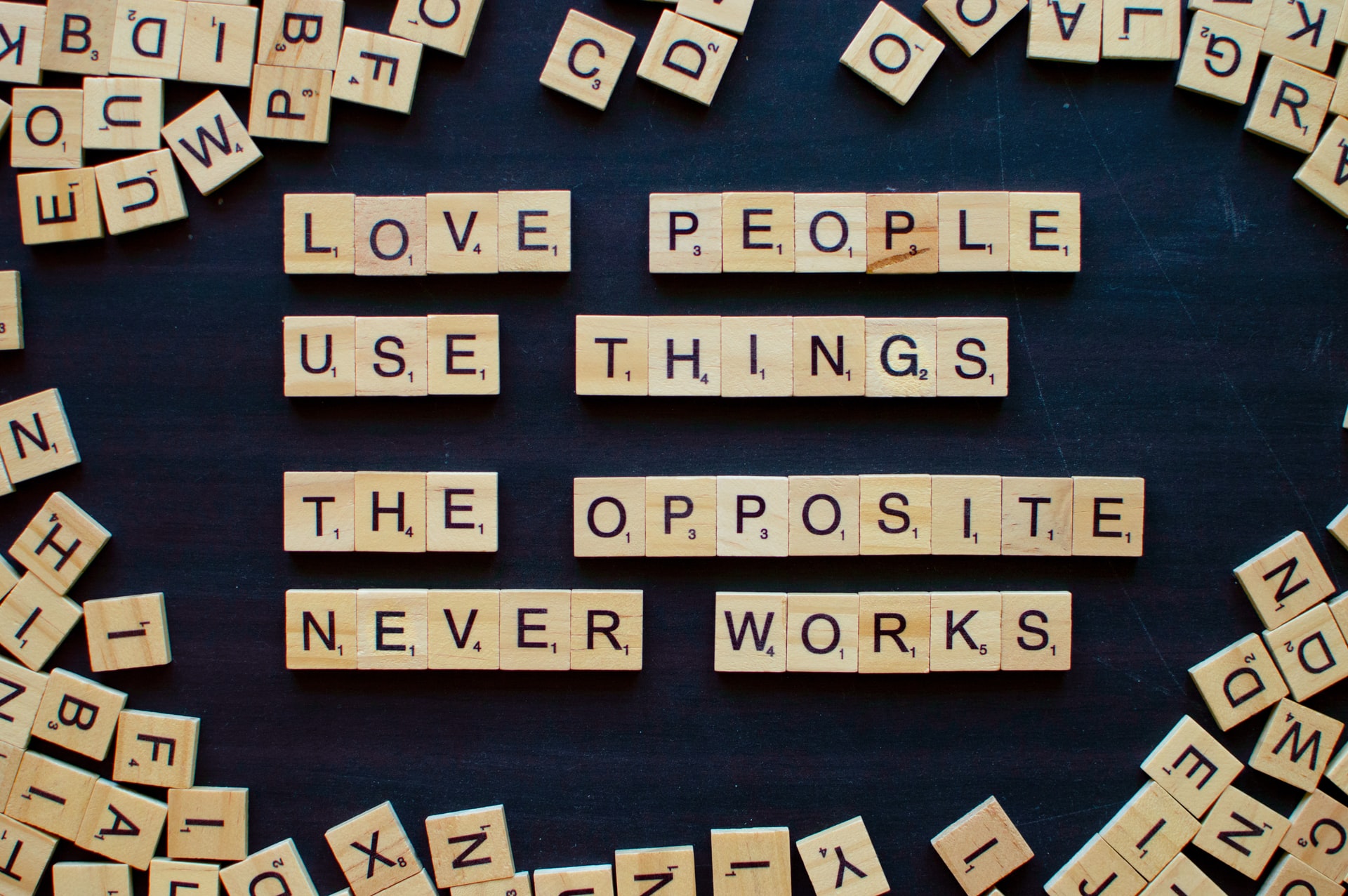
    Love People Use Things

    5 Reasons Knowing The People Behind Your Colleagues Matters

    Getting to know your colleagues personally provides the following benefits:

    1. Makes It Easier to Learn From Others

    Knowing the people behind your colleagues leads to better teamwork. And better teamwork increases the opportunity to learn from each other, as well as coming up with creative solutions.

    2. Decreased Stress Levels At Work

    If you are hating every moment at work, you will be stressed and it will impact your happiness and productivity. The same applies to your colleagues.

    Knowing your colleagues better allows you to support each other and offer a helping hand or a shoulder to lean on. If you are going into the office knowing that you have a supportive team and can have a cup of coffee and talk about what’s bothering you, your stress levels will decrease.

    Less stress at work means more productivity and fun. Which in turn leads to people staying in companies longer.

    3. Increased Sense of Responsibility & Quality of Work

    Having a deeper connection with the people you work with increases our sense of responsibility towards each other and commitment towards the business.

    When you have a closer relationship with your colleagues, you make decisions taking into account the bigger picture. Improved decision making leads to better work quality, which is a win-win for everyone.

    4. Aliveness and Joy

    If we are treated like machines in the workplace, we lose our sense of aliveness. Making an effort to get to know people better gives everyone space to be themselves.

    This affects not only office dynamics, but it spills over to how you deal with people in your lives. Everyone feels better when there’s joy and fun in the office.

    5. Increased Wellbeing In and Out of the Office

    When one area of life is difficult, everything else feels worse. Similarly, if you can improve the quality of your life at work, it spills over into your home life too.

    You are healthier, happier, and more productive if you work with friends and not just colleagues. Despite the hardships or challenges you face at work, you will remember and cherish these moments as you were in the company of friends.

    “Stop taking care of your career. Start taking care of your people. And if you do that, they won’t let you fail.” - Jim Collins
    “Stop taking care of your career. Start taking care of your people. And if you do that, they won’t let you fail.” – Jim Collins

    Conclusion

    If you don’t know the people behind our colleagues, what are you working for? Economic growth, profits, revenues, market share? All those terms become very abstract and disconnected when you don’t work with people you enjoy spending time with.

    With your work, you serve the clients and customers of your business. By knowing your colleagues better, you can directly serve the very people in your office, which leads to all the benefits listed above.

    Are you being treated like a resource or a machine? Are you treating others in your office that way? Now is the time to rethink that and get to know your colleagues as human beings. You will be surprised at the difference it can make – both inside and outside of work.

  • Give Yourself Permission To Focus on the Journey Instead of the Destination. Here’s How It Can Fill Your Days With Joy and Satisfaction?

    During a 3200 meter race in 2012, Arden McMath collapsed due to exhaustion. Instead of continuing past her and finishing one spot ahead, fellow runner Meghan Vogel stopped to give Arden a hand. Meghan draped Arden’s arm over her shoulders, and supported her the last 50 meters to the finish line. When they crossed, Meghan ensured Arden finished before her, and in the process, ensuring she finished last overall.

    Despite being at the bottom of the standings, Meghan was a winner that day, she finished a champion. With the crowd watching the events unfold, Meghan’s sportsmanship won over many hearts. It’s a testament to how the first place is not the only way to triumph.

    Arden McMath and Meghan Vogel Finishing Their Race Together
    Arden McMath and Meghan Vogel Finishing Their Race Together

    Winning Is Not The Only Thing That Matters

    We all know that winning is important, be it in sports or life. It is, after all, the reward at the end of the race that initially attracts most competitors.

    Today I want to highlight something beyond winning, something which is even more important—the journey. As you can see in the above story, winning is not the only thing that matters. Meghan was a winner that day despite finishing last.

    You can see this in all sports. You don’t only support the best players or teams. You don’t only cheer for the winners. You cheer for the people that play with integrity and give it their all. (See an infographic with the main points of this article at the end.)

    Even those that come in last are cheered when they play the game with the right attitude. You’ll find that most sports have awards not only for winning but for many other aspects of the game. There are trophies and awards handed out for sportsmanship in almost every sport.

    Sports stars are not only athletes. They are role-models. Apart from their performance, it is their attitude and behavior that makes them so.

    It’s Not the Dog in the Fight, It’s the Fight In The Dog

    Over 50 years before Meghan helped Arden to the finish line, a similar thing occurred in the 1956 Australian National Championships.

    Runner Ron Clarke got in a tangle when another runner inadvertently clipped his heels. Clarke had been leading the race but at this point fell to the ground, and was leaped over by those runners just behind him.

    One of those to initially jump over him was John Landy. Unfortunately in his attempt to avoid Ron, John’s shoe clipped and cut Ron’s arm. Rather than continue on, John—who was a favorite for the race and expected to appear in the nearing Olympic Games—stopped to check on Clarke. After helping him up, the two continued the race. John, even after stopping to help, made up the deficit and won the race.

    But it was not the win that John was remembered for. His gesture of sportsmanship was so well-received that a sculpture of the moment was made, and remains to this day in Olympic Park, Melbourne. Clarke, in his autobiography, wrote:

    “Within seconds the whole field was jumping over me or running wide. Then John did a foolish, but a typically thoughtful thing – he came back to say he was sorry and see if I was alright. The mile title, his bid for the world record, even the approaching Olympics… all were forgotten as the champion made his spontaneous gesture to the raw stripling floundering in the cinders.”

    We must always keep our eye on the prize, but play the game with all our hearts. The reward or goal at the end shouldn’t distract us from the process of playing the game itself. If John Landy or Meghan Vogel had been too focused on the white stripe at the end of the track, it’s unlikely they would be as well-remembered or respected as they are today.

    A game well played is an attribute worth admiring in itself. And playing the game doesn’t happen in the moment of winning or losing, it happens in every moment before that. This is the reason we all cheer for an athlete who lost but gave it everything.

    There Is No Shame In Losing When You Have Given Your Best

    There is no shame in losing when you know you have given your best. In life as well as in sports, it is the spirit of the game that people admire, not just the results produced.

    If we only focus on the result, it is easy to miss the process which leads to those results in the first place. We all reveal, identify, and discover ourselves through the process, as that is where we spent most of our time.
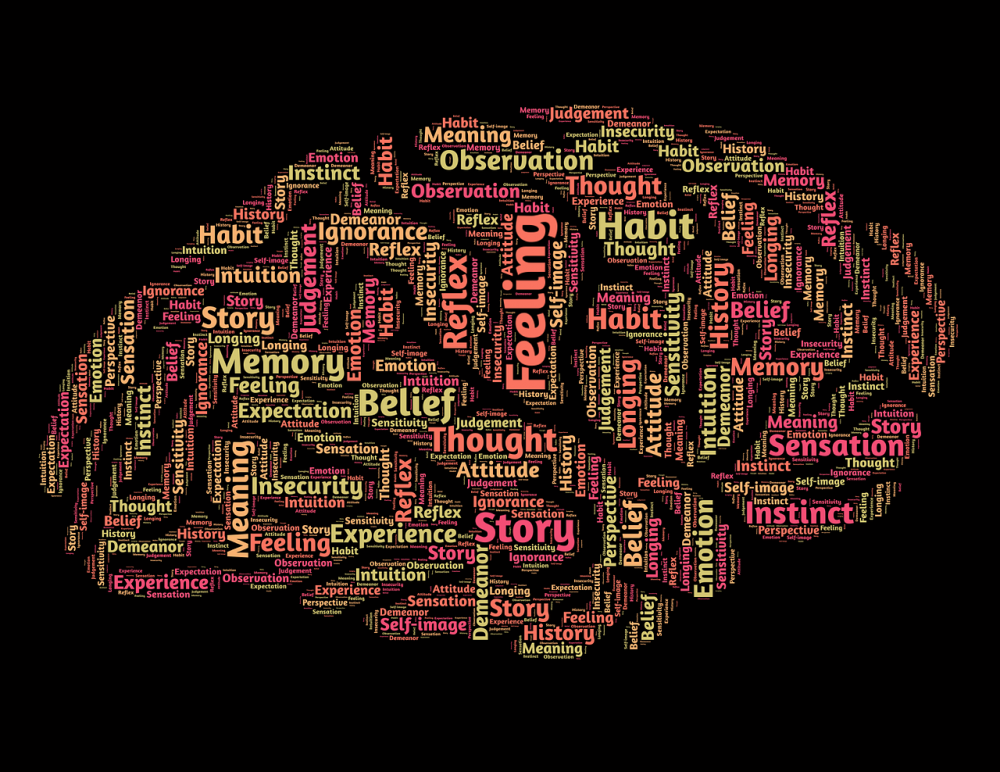
    The finish line is a fraction of the total time we invest. When you switch from only enjoying the rewards at the end to relishing the entire process, more of your life becomes meaningful and enjoyable.

    Growth is a continuous process, not something that happens only in brief moments of time. Most of our life is spent in between the wins and the losses, the ups and the downs, and the start and the finish. Happiness is fleeting, and if you only expect yourself to be happy when you reach certain goals, it will leave you disappointed and frustrated most of the time.

    There are two reasons why our happiness from these moments quickly fades:

    • The first is that positive emotions fade after the moment of success or victory. While we might be joyous and celebrate for a time, the shine wears off and we return to a baseline state.
    • The second is that our aspirations continually grow. We don’t reach a goal and decide to completely stop. We soon turn our attention to something else. A new goal takes hold, and the struggle begins again.

    The result is that after we achieve a goal, we enjoy it for a moment before moving onto the next thing. It is part of what psychologists call hedonic adaptation, and occurs for both positive and negative events—the emotions never last, you always return to the baseline. 

    Goals Don’t Create Or Sustain Happiness

    They have value because they give us a direction, and they’re trackable and measurable. But only focusing on them places a lot of pressure on us. When we do achieve them, the positive effect is over all-too-soon. Then it’s on to the next thing, with the pressure back on.

    This is not a healthy way to live or grow. However, there is an alternative, which is to give more of our attention to the journey instead of the destination.

    For The Love Of The Challenge

    If you are only focused on what you want, the process will be an obstacle. If you think of the process as a problem, you’ll do anything to find a short cut, and get straight to the prize, reward, or good feeling, without the challenge.

    There are times when removing a challenge will help you. You use calculators and washing machines to achieve goals that you don’t want to waste your time and effort on. Because you want to save your effort for more important tasks.

    But when it comes to our most important goals, there are no shortcuts. If there were, it would defeat the purpose. Growth happens and life derives its meaning in the process. It’s what happens when you respond to the challenge, not when you reach the end result.

    Philosopher and mathematician Bertrand Russel wrote that removing challenges from life is a sure way to remove happiness, not increase it. You need the struggle, the obstacles, and the challenges to overcome. That’s how you improve and derive meaning and joy.

    Our most significant lessons and outcomes in life do not come from winning, but from giving our best in a dignified struggle. The joy of a race won or a business victory lasts only a few seconds, while the satisfaction of discovering something deep and true about ourselves lasts a lifetime.

    When you pour effort into an activity, you do so because of love for what you’re doing. When behavioral economist Dan Ariely and others had participants build IKEA products or origami, their creations were often of poor quality. But their creators loved them and expected to be paid much more for their products than anybody was willing to pay.  From an outsider’s perspective, each person’s creation could be viewed as a failed attempt, especially when compared to expert creations. But to each individual, the time and effort that went into what they built ensured they held it in high regard.

    When you’re not busy trying to compete with other people or claim a reward, and simply focus your energy on the task itself, the outcome will be positive and meaningful no matter your level of success.

    How To Change Your Perspective 

    You don’t know who you will be in the future. You don’t know whether you will even reach the destination when you’re still on the journey. But you do know who you are now, the direction in which you want to go, and the kind of effort you want to put in. Setting your sights on the future can distract you from what happens in the here and the now. Every distant goal begins with taking action now, so it is important to focus on your present actions. Winning a race depends on taking action now. 

    World-class sports stars do not just walk out on the track and win, they practice day and night for years. There is a long and arduous process that happens behind the scenes. You need similar processes and habits driving you. And you need to cherish them, even when they get repetitive or painful.

    This means changing your focus from your big goals to your system of daily habits and processes. Goals are something you go after, habits and processes define who you are. Goals are future bound, but processes are in the here and now.

    By creating habits, you can make lasting changes in the way you show up for life. Instead of reverting back to your past self when you reach your goal, you will continue the behavior. Your goal becomes another point on a journey of continuous improvement. 

    Research suggests that a simple change of perspective can help us do this. In six studies by Szu-Chi Huang and Jennifer Aaker, of over 1600 people from different cultures and backgrounds, they found that construing goals as a journey led to continuing the behavior that attained the goal. They write that:

    “The journey metaphor may have helped people think more about the actions they took during the journey, where they started out, and all the ups and downs along the way, leading to the feeling of growth. These thoughts could also contribute to an increased perception that the actions they took were instrumental and should be continued.”

    If you want to lose weight, and you succeed, there’s little stopping you from falling back into old habits and putting the weight back on. Treating the process as the most important element ensures we don’t regress after a goal is achieved but continue on the journey. 

    There is another benefit to thinking in terms of a journey—the scale of the goal is less likely to deter you. 

    Before you start on your journey, a goal that seems insurmountable might stop you from acting at all. A goal that seems easy could have you put it off. By changing your perspective and focusing on what you can do now, and what processes will help, you win even when the goal is missed

    Hence you should learn to enjoy and appreciate each moment in the journey towards the destination. Relish the challenge. When we know we have given our best, we never regret it in the end. That is success beyond success. There is no better joy or satisfaction in life than knowing you did the best you could.

    It Is The Journey, Not The Destination

    Goals are just dots on a map and often miss the story of how you got there. And everybody cares deeply about their story. You don’t skip to the end of movies or books to read about the happy ending, because it’s the process that is most appealing. It’s the difficult stuff that reels you in, the trials and tribulations, the conflicts and resolutions.

    In any story, there are unexpected twists and turns. If you’re too focused on the future, you’ll miss opportunities to do something good and meaningful now. When someone falls (like in the story I started this article with), you’ll be too concerned with your goal to stop and help them up.

    Real winners are not identified by the medals hanging around their necks, or the plaques on their walls, or their names in the record books—real winners are embodiments of qualities like determination, sacrifice, grit, integrity, effort, and heart.

    It’s how they respond to the challenge, not the final result. It’s their journey, not the destination. And right now, you’re on your journey. There will be good times and there will be tough times, and it’s what you do in each of those that count. 

    Watch the video of the story (Meghan and Arden) I started this article with below. Every time I watch it, it gives me goosebumps and leaves me a little teary-eyed. And as you can see, Meghan’s act of sportsmanship that day continues to inspire people even today.

    If that is not what success is, then I don’t know what is.

  • 15 Timeless and Valuable Lessons Learned After 15 Years of Working Professionally

    I started to work professionally in 2005, and very soon it will be 15 years. Over this decade and a half, it has been a wild journey working in over 8 different companies across 2 continents, including 2 companies that I started. I have seen ups and downs and worked with people and teams from all over the world. I also dabbled in social activism while I was in Bangalore. Organizing the Dandi March 2 in 2011 and then co-founding and running a not for profit organization for a couple of years was an experience in itself.

    Ever since moving to Amsterdam in late 2014, I have traveled and experienced life in Europe and attempted to express myself through my photography. Training and establishing myself as a photographer has come with exposure to the world of journalism, media, and photography which was totally alien to me before. In the process, I have met and interacted with a lot of remarkable people from the world of photojournalism and news. That has given me a tremendous perspective in addition to my other life as a software leader.

    There Can Be Joy In Overcoming Suffering
    There Can Be Joy In Overcoming Suffering

    Below are 15 timeless lessons I have learned over the last 15 years.

    1. Good Days Pass, And Bad Ones Too. In the last 15 years, I have had many good days where I have thumped my fist or felt extremely proud and satisfied. At the same time, I also have had my share of bad days where I have been shaken to the core. Yet if there is one timeless lesson which I have learned is that time stops for no one, and whether good or bad, days pass and take along with them their impressive highs as well as their depressive lows. If I compare my current self to my past self, I can say that the highs and the lows are more moderated now, and you won’t see me fist-pumping on a good day or getting anxious and sad on a bad day.

      “No man has been shattered by the blows of Fortune unless he was first deceived by her favors.” – Seneca

    2. Process Over Outcome. When I started working, nothing but success mattered to me. And I defined success as external results – good marks in exams, high output at work, more business revenue, and so on. I wanted to reach these success milestones so badly that many times I even cut corners for them. Not to say that external success or results are not important, but today I view success very differently. Now I define success as doing the best I am capable of doing irrespective of the results they produce and expressing myself fully while doing so. I have learned to value the process over the outcome, and the journey rather than the destination. This has made me slow down and appreciate the people and the valuable relationships I build along the way.
    3. If Something Is Important to You, You Must Work to Make it Happen. Outcomes and results don’t happen by themselves. Don’t wait for “one day” or the “future”. Nothing worthwhile is accomplished without discipline, hard work, and patience. Play the game seeking whatever outcome you are seeking, take the risks that are required, and acknowledge the roses and bricks that come along the way. I am not saying it will be easy, but if it is a journey you must take, I can assure you that the roses and the bricks will be worth their weight in gold.
    4. In Seeking Worthwhile Goals, There May Be Suffering. But there can be Joy in Suffering. Life is not about playing it safe or avoiding pain and suffering. Every path of learning and growth require (or demand) some suffering which will make us more resilient, mature, and strong eventually. There can be joy going through a painful moment – from the satisfaction of giving your best and acting according to your values. On the other side of suffering, you will find yourself stronger and more resilient, and that will prepare you for journeys that lie ahead.
    5. Believe in Yourself, and Act with Confidence. Self-confidence is one of the most important criteria when it comes to influence, leadership, and success. Yet most highly skilled people I have met have been unsure about their abilities. I still see myself struggling with self-doubt a lot. While there is nothing wrong with doubt, and we all feel the presence of doubt, it should not stop us from acting with conviction when required. We must always take the “healthy” doubt into consideration, consider different opinions and perspectives, and then speak and act with confidence.
    6. We Should Not Let Confidence Blind Us. When we are challenged, we must check your assumptions, listen to feedback, and adjust course if necessary. Sometimes it is necessary to kill our favorite ideas, and overconfidence should not come in the way of doing that. Learning to listen to different perspectives, considering opposing ideas, and questioning our assumptions can save us many troubles in the future. It will not only make us better decision-makers but also enrich our relationships with people around us.
    7. Think Long Term – For the first 8 years of my career, I only focused on short term goals and chased immediate results. However, when I look back, I see that I have missed so many opportunities to create impact just because I was too impatient to stick and persevere with an idea/project/company over time. Today I know that success comes from playing iterated games over an extended period of time. Compounded results are behind every single success or human achievement. It is no surprise Einstein called it (Compound Interest) the 8th wonder of the world.from Pixabay
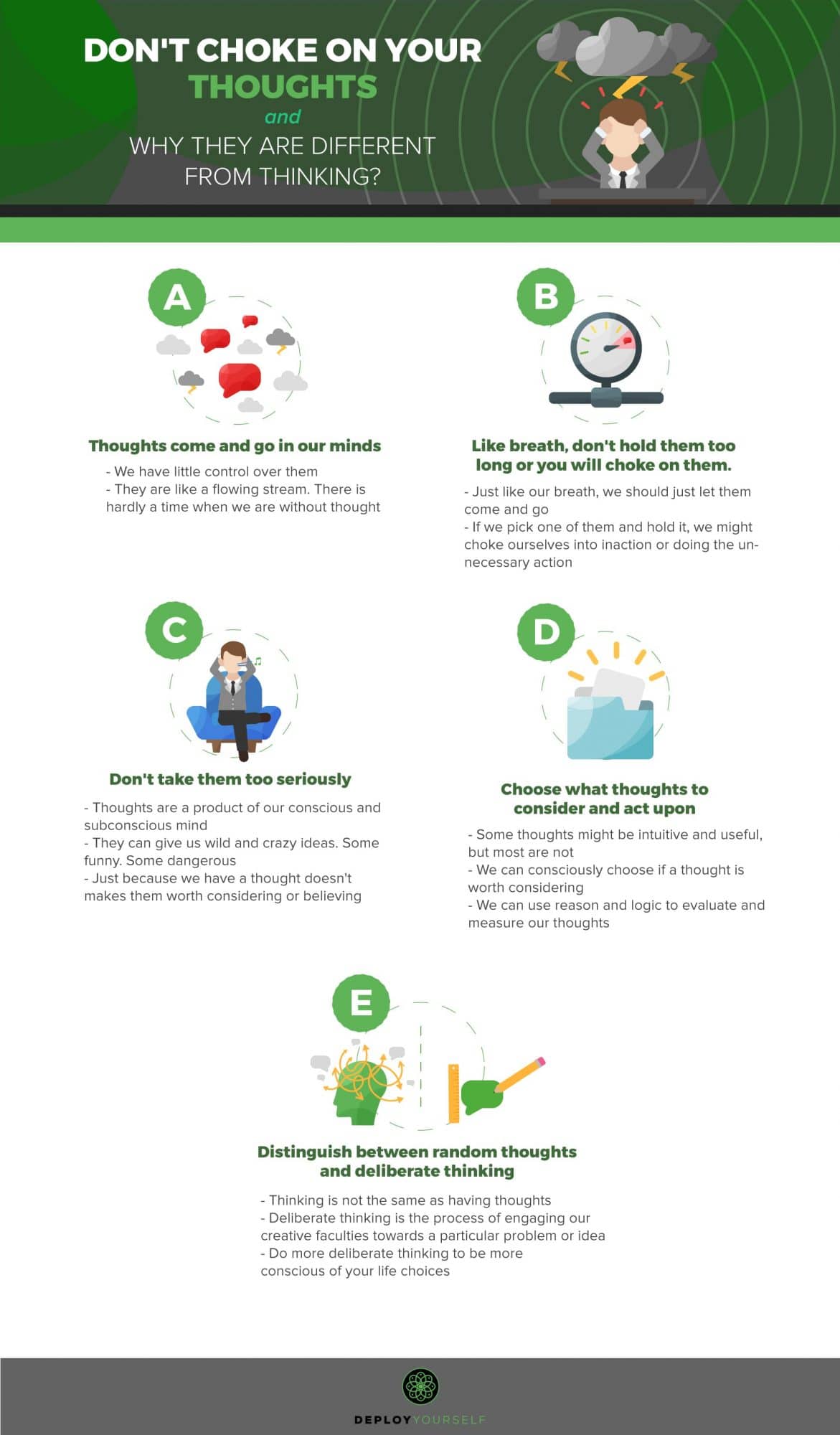

    8. Business is about People (customers, employees, partners) and not things (profits, markets, revenue). As I have worked with different companies, both big and small, I have found myself in meetings about markets, financials, strategies, and competition. Very often we end up giving secondary importance to the people involved – customers, employees, other stakeholders, etc. Today I believe that empowering our people (employees) might be our most important job as leaders to produce business results which end up serving another set of people – our customers. Focusing on the people involved can help us simplify the complicated in business, and strip out the necessary from the superfluous.
    9. We Are All Flawed. We are wrong more often than we think we are. One of my most revealing insights has been how often human beings run on autopilot without even realizing so. We think we are in control of our actions and feelings, but in reality, they are shaped subconsciously by our past experiences, emotions, and cognitive biases. We all put up a brave face in front of others, but we are all dealing with self-doubt and are yearning to be acknowledged by others.

      “Character, like a photograph, develops in darkness.” — Yousuf Karsh

    10. Don’t Work for People You Don’t Share Values With. Life is too short for not having a good time at what you are doing. Find places to work where you can be yourself, and the work gives you joy rather than suck the life out of you. However, don’t confuse this with facing discomfort that always comes with growth. There must always be some learning curve (decide your slope yourself) which will come with some pain and suffering. That only means you are growing to become a better version of yourself.
    11. Don’t Wait for Retirement or Some Time In The Future To Do What You Always Wanted To Do. What is on hold in your life? If you are waiting for tomorrow, remember that it never comes. Find time to do it today, and fill a little bit of each day with one such activity. For me, it has been writing articles, doing poetry, learning the French and Dutch languages, reading books, learning and practicing photography, traveling, social activism, or following my curiosity and expanding my knowledge in previously unknown subjects like coaching, neuroscience, history, psychology, human rights, urban design, deep learning, and so on. To reiterate, find what is on hold in your life, and make space for it.
    12. The Most Powerful Phrase at work, and in Life is “I Don’t Know”. However, it is very difficult to say. Acknowledging that there is something we don’t know is the first step in seeing reality as it is, and opens up the pathways for future learning. We all need to overcome our insecurities and inner fears and be brave enough to acknowledge our “not knowing” something. Once you acknowledge that you don’t know it, you earn yourself the freedom to act like a beginner and take whatever actions are required.
    13. Guard Your Time, and Only Fill it up with Life-Enriching activities. Time is your most valuable resource. Set boundaries for what you are willing to do and not, and enforce them in your life. Saying No can be intimidating, but people will respect you for it. Cut off your TV consumption as it is the easiest way to be sucked into wasting time mindlessly. Instead spend that time doing exercise, reading, or writing – which are all life-enriching activities.
    14. Always Be A Student. Keep on learning. Always update yourself in your core skills to stay up-to-date with the latest developments. But also spend some time learning a bit about a subject outside of your core expertise. Over time this can add up to a lot, and open up previously unknown career opportunities.
    15. The Only Person you can Change or Control is Yourself. Focus on yourself and not on changing others. Ask yourself the hard questions and introspect when you need to. Constantly revisit your values and beliefs, and build up the courage to act accordingly. And last but not the least, take care of your body. It needs rest to replenish and rejuvenate between sprints of hard work. Give it the gift of rest to live more sustainably.
    16. Do Different Things, which you would never do otherwise, just for the heck of it. Explore life. It will give you perspective and respect for different ways of life. Every once in a while, let others decide things for you. Or when an unexpected event happens, take it as an opportunity to dance with life and go with the flow instead of resisting it. You never know what you might end up discovering.

      “The tragedy of life is what dies inside a man while he lives.”  ― Albert Einstein

    17. Life is Uncertain and you will be disappointed if you want your expectations to be precise and true. That is why you end up with 17 lessons in this article instead of the 15 I promised.
  • Why We Must Be Careful Not To Choke On Your Thoughts? And How Our Thoughts Are Different From Deliberate Thinking?

    “It is not enough to be busy. So are the ants. The question is: What are we busy about?”

    — Henry David Thoreau

    Have you ever found yourself lying awake at night trying to get some sleep, only to discover that you are caught in a seemingly endless loop of random thoughts?

    “I’ve got that big presentation so I should probably leave early tomorrow…what’s traffic going to be like, I wonder?… Is my blue shirt clean?…that reminds me, I need to buy laundry detergent…I hope my presentation goes well…that Larry at the office is a funny guy…Whatever happened to ‘The Simpsons?’ It just isn’t that funny anymore, not like Larry…”

    And so on and so forth, rinse and repeat.

    If you’re not careful, you can choke on this never-ending stream of random thoughts. So much so that it can block the rest of your thinking.

    That can prevent you from focusing on what you need to be focused on, and applying clear, deliberate thinking to the problems you face and the goals you’re trying to achieve.

    That’s what today’s article is about, the danger of choking on your random thoughts. And the difference between random, fleeting ideas that go through everyone’s mind, and deliberate thinking.

    Why So Serious?

    We must note take our random, passing thoughts too seriously. As a product of both the conscious and subconscious parts of our minds, these fleeting thoughts are disconnected and random much more than they are profound or interesting.

    They can give us wild and crazy ideas. Some of those ideas are funny, like the aforementioned random thoughts about co-workers, friends, places we’ve been, etc.

    Some random thoughts can be dangerous too. For instance, it’s easy to get lost in entertaining fantasies about your ideal life rather than doing the concrete work necessary to achieve it. If you get stuck with such fantasies you might let yourself procrastinate and never do the action required to reach that future state. This is one reason we must learn to let them pass like a flowing stream rather than hanging on to them.

    “It is the mark of an educated mind to be able to entertain a thought without accepting it.”

    – Aristotle

    Always remember that just because we have a thought doesn’t make it worth considering or believing. This is where it becomes important to think deliberately.

    Thoughts Come and Go

    We all have thoughts going through our minds all the time. There is very little we can do about them. Some psychologists suggest that this constant noise of random thoughts running through our minds is the very reason TV is so popular: we watch TV so we don’t have to listen to ourselves think for a little while.

    These thoughts are like a flowing stream. If you live near a river you become accustomed to the sound of the water flowing. Similarly, there is hardly a time when we are without thought. But much like with the water in a flowing stream — or with our every breath — we have to learn to let these thoughts flow on. We have to learn to let them go.

    That’s because these random thoughts are often useless, and seldom worth paying attention to. Like a breath, you can’t hold onto them for too long or you will choke on them and not get time to think about anything important deliberately. Just like our breath, we should let these thoughts come and go.

    Continuing to ponder over these thoughts can deprive us of the time and space needed to consciously examine our life, goals, and plans. By obsessing over our thoughts, we lose the opportunity to think deliberately.

    Studies show that experts rely much more on deliberate thinking — and that it helps them to make superior decisions.

    You Have The Choice 

    While your flowing stream of thoughts is bound to continue for the rest of our lives, you can choose which thoughts to consider and act upon. It’s up to you to decide which thoughts to look at more closely, and which ones to ignore and let drift on downstream.

    Some thoughts might be useful, but most are not. Consciously choosing if a thought is worth considering is a vital step in learning to think deliberately. Just because you got a thought, it doesn’t mean you have to ponder over it. You can use reason and logic to evaluate and measure your thoughts, and then decide which ones are worth thinking about further.

    “To a mind that is still the whole universe surrenders.”

    ― Lao Tzu

    What Is Deliberate Thinking?

    A deliberate thinker goes beyond the surface. To think deliberately means you must dig deeper than your preconceived notions and fully analyze a problem. Deliberate thinking is a process as opposed to shallow thinking, which is often just an assumption or an untested opinion.

    You must look at the future and higher-order consequences. This means a deliberate thinker assesses not only the immediate outcome but also considers what possible consequences today’s decisions might have on tomorrow’s events.

    A deliberate thinker seeks out potential chains of events that might not be too obvious. By thinking deliberately and taking the time to examine a problem, you can figure out hidden connections that might not be obvious at first, and assess them.

    Identify the real problem. Shallow thinking happens when people grasp at the easiest answer — an answer that is often wrong or incomplete. Deliberate thinking takes the time to really look at a problem fully. It gets to the root of it rather than settle for a convenient answer that is more often than not unhelpful.

    Develop a step by step approach. Deliberate thinking means you can assess and analyze not only the problem you face, but also break down the solutions in a logical, step by step manner, and apply them.

    Random Thoughts vs Deliberate Thinking

    As we have seen, thinking is not the same as having thoughts. Everyone has thoughts all the time, but not everyone thinks. Deliberate thinking is the process of engaging our creative faculties towards a particular problem or idea.

    There are ways you can train your mind to think more deliberately. Here are a few steps toward becoming a more deliberate thinker:

    • Write down your major goals – You must know what you really want. For each of your objectives, write out clear, honest sub-goals that will get you closer to the final objective.
    • Take lots of notes – Every great idea in the world came from a kernel of an idea, from a seed. So while lots of thoughts are useless, not all of them are. Keep a journal and take notes as your thoughts come before you forget them. When you come across any that show promise, apply deliberate thought, and develop them further.
    • Order your physical space – It often helps with deliberate thinking to set aside a “thinking place.” Carve yourself out a physical place for you where you can think with clarity and without distractions
    • Exercise – Psychologists and doctors say that exercise helps us to think more clearly. A recent study from the University of British Columbia shows that regular exercise increases the heart rate and improves our thinking skills. Next time you’re stuck on a problem, take a break and go on a short run or a quick walk instead.
    • Reserve time for deliberate thinking every day: Be sure to set aside some time where you can concentrate on your problems and challenges each day.

    To conclude, we can either choke on the random, flowing thoughts and not have time and space to think about anything else.

    Or we can do more deliberate thinking to be more conscious of our life choices and results. As with most things, the choice is ours.

  • Can We Walk in Another Person’s Shoes? Why Empathy Might Be The Most Important Human Ability?

    On a recent archaeological dig in Man Bac in what is now northern Vietnam, a team of researchers made a remarkable discovery. While unearthing the remains of some Stone Age people who were buried 4,000 years ago, they discovered one young man who had been placed in his grave differently from the others: he was curled in the fetal position.

    It turned out he was laid to rest as he lived. Further examination showed that this man suffered from a rare congenital disease that fused the vertebrae of his spine. It would have left him paralyzed from the waist down from the time he was a small child.

    Yet the scientists concluded that this young man lived a good ten years past his adolescence. That means that for years, perhaps decades, others had to care for him, feed him, keep him clean, and keep him safe from danger.

    Why is this significant? Because this young man’s life and death show us the essence of what it means to ‘walk in someone else’s shoes.’ This profoundly disabled young man lived into his 20s only because others in his little tribe had empathy for him: they imagined what it might be like to be him, they chose to feel his pain, and they chose to experience the difficulty of his life.

    And then they chose to care for him since he couldn’t care for himself.

    That is walking in someone else’s shoes. That is the beating heart of empathy.

    Every 2 weeks I share my most valuable learnings from living life fully in my Deploy Yourself Newsletter. Sign up now to download a workbook with 164 Powerful Questions which I use daily in my work and coaching. Allow these questions to transform your life and leadership.

    What Do We Mean By Walking in Another Person’s Shoes?

    To walk in someone else’s shoes is to make an effort to grasp their point of view emotionally.

    Empathy‘ is the ability to recognize and understand the feelings and thoughts of another person.

    Perhaps most importantly, walking in another person’s shoes is the ability to not only see the world from their perspective but to feel it as if you were them.

    The Ability To Walk In Someone Else’s Shoes

    Sadly, empathy isn’t taught very well in our schools and workplaces. This is strange given that developing empathy has always been recognized as an important part of human development.

    Throughout our lives, we learn many skills that are drilled into us through regular tests, projects, and repetition. But in my experience, I’ve found that it isn’t always the formal skills – the ones like math, history, and physics – that are the most important.

    Formal Skills vs. Informal Skills

    After going through 21 years of education and now 15 years of work experience, I have learned that while the skills taught in formal education are important, the most crucial skills I have used to succeed in my career and life were never taught to me in an educational setting.

    Like most people, I was not even aware that there were other skills that I needed in order to succeed. As many of us do, I was running blind without even knowing that this blind spot was hampering my growth and success. I’ve since learned that there are a few vital informal skills that we can develop, skills that put a powerful compass in our hands to help us navigate the difficult seas of the modern workplace – and life in general.

    Vital Informal Skills

    Why Are These Skills So Important?

    Of course, having the kinds of skills we learn in school and later in the workplace are important. However, knowing how to actually achieve your goals while working together with multiple people within your company is a different matter altogether.

    A lack of empathy not only hampers our ability to be productive in the workplace, but it is also foundational to rational decision-making, building lasting relationships, and distinguishing between right and wrong.

    Without empathy, that one particular, critical skill in your tool kit – one that often doesn’t appear on a CV – you are likely to face an uphill battle in anything you’re trying to accomplish.

    “When you show deep empathy toward others, their defensive energy goes down, and positive energy replaces it. That’s when you can get more creative in solving problems.”

    – Stephen Covey

    I Hear You, I See You, I Feel You.

    To walk in another person’s shoes is to shift perspective, and to see and feel the world as another sees and feels it. The word feel in the previous statement is very important, important enough that we must take a closer look at it.

    What I mean by feeling as another person is that you must learn to not only see things intellectually from someone else’s point of view but also to feel the same emotions that the other person feels. This might mean feeling scared, tearful, or elated depending on the situation, and understanding on a profound level what has made the other person feel this way.

    Researchers have found that when we feel another person suffering, it activates not only the visual cortex in the brain but also our emotions and physical sensory receptors. Imagine witnessing someone get a paper cut: you not only sympathize with their pain, but you might also wince, or draw your own hand back involuntarily. You can almost feel the slice happening to you.

    Developing and nurturing these empathetic abilities rather than shying away from them is like a secret weapon when it comes to working with other people. It’s a foundational component of what made us human in the first place – just ask our Stone Age friend from Man Bac in Vietnam.

    So what is it that prevents us from fully understanding what another person is feeling? Why can’t we listen deeply?

    That’s because we’ve already filtered it out.

    Listening Filters, Empathy and Your Truth

    Empathy has deep roots in our evolution as a species. Developmental psychologists say that empathetic behaviors like altruistic helping and comforting others who appear to be in distress emerge in children as young as 12 months! Thus, empathy is built into who and what we are.

    However, as we get older, it becomes more and more difficult for us to be empathetic with others.

    All of us see the world differently based on our listening filters. We select what to pay attention to and what to ignore, often subconsciously, based on our particular set of experiences and knowledge. Our parents, friends, culture, values, beliefs, expectations, moods, and prejudices all combine to form such filters. These filters help each one of us create our own perceived reality and affect every decision we make.

    The important thing to realize here is that the “truth” we form by the above process is only “our” truth and not the absolute truth. Throughout any interaction, understanding that others’ perceptions of the world are equally valid as ours is key to gaining any level of understanding with them.

    Everyone has a right to form their own perception based on how they experience the world around them. Indeed, if you stop and think about our listening filters, we quickly realize that it would be literally impossible for two people to share the same “truth” in the deepest sense.

    Once we understand that our apparent “truth” is only a perspective, it allows us to view the same situation differently and accommodate someone else’s point of view. This is the foundation of empathy and is of immeasurable help in resolving conflicts.

    “Physics isn’t the most important thing. Love is.”

    ― Richard P. Feynman

    Perspective and Conflict

    Conflicts don’t occur because of different perceptions, not exactly. Rather, conflicts occur because of our inability to step outside of our own perspective and acknowledge the other person’s point of view. If you can’t take a moment to walk in another person’s shoes, how on earth are you going to reach any kind of accord or understanding with them?

    And this is why I believe that seeing and understanding different points of view is a superpower for those who possess it. Friction should be between points of view, not between people, and certainly not between organizations and nations. Empathy allows us to escape unnecessary stress from friction in relationships.

    President John F. Kennedy famously brought in advisers from profoundly different backgrounds and political persuasions in order to guarantee he would get the widest possible variety of perspectives. After a pair of advisers went on a fact-finding mission to Vietnam in the early years of the conflict there and came back with wildly differing tales of what the conditions were like on the ground, Kennedy famously quipped, “You both went to the same country?”

    When it comes to our own lives, it’s vital to remember that we can all be in the same country, even standing in the same room, but nonetheless perceive our surroundings in profoundly different ways.

    Celebrating Difference, Loving Friction

    Every great human accomplishment has come out of differing opinions and the energy generated by healthy friction. Seeing things from different perspectives can allow us to create something better than anyone could on their own.

    Taking the time to step into the other person’s shoes is the very necessary first step we must take to engage in productive conversations, iron out our differences without making things personal, and reach a win-win solution/agreement. To not do so out of defensiveness or fear is to invite unnecessary conflict and misunderstanding.

    How to Build Empathy

    Like any skill, empathy can be learned and it gets better over time with practice. Here is how you can do so:-

    • Pay Attention – Be fully present without distractions when in the company of others.
    • Active Listening – Stop thinking about what you’re going to say next and just take in what the other person is saying.
    • Don’t Interrupt – Even with the best intentions, saying things like, ‘It’ll get better,’ or ‘It’s not that bad’ diminish the other person’s problems and may cause them to shut down. Avoid doing that.
    • Make It About them, Not You – Resist the urge to speak. Use filler words like “umm”, “and”, and “tell me more” to hear them out fully before speaking.
    • Be Open and Vulnerable – Empathy is a two-way street. We make these connections by sharing our own vulnerabilities and struggles. Don’t be afraid to open up.

    You Can Be Right and Still Be Wrong.

    In the end, we must ask ourselves this question – Do we want to be right, or effective?

    And this is the question that can be answered by seeing things from another’s point of view.

    Do we want to be right and prove others wrong and secure a personal victory?

    Or is it more important to be effective in dealing with the topic at hand, even with the different points of view we might have?

    Once we learn to choose the latter, we can take meaningful steps towards reaching solutions and agreements that are more positive and inclusive than any individual point of view. Developing the ability to empathize and to approach life from this perspective will result in consistently better results for not only you but for everyone around you.

    Now that’s what I call a real superpower.