Society

My views about the society

  • Five Values exemplified in the book “Banker to the Poor” by Muhhamad Yunus

    Among some of the best books that I have read is ‘Banker to the Poor‘ (buy from Flipkart or Amazon) by Muhammad Yunus. It is the story of how he created Grameen Bank with the vision of easy credit availability to those who need it the most. It is a fascinating read, and it is impossible not to take something away from it. He saw a vision, and against all odds, ran Grameen as a business and gave micro-credit to the world. He changed the way the world looked at banking. Apart from the economics, he and Grameen Bank has had a huge social impact in Bangladesh, with millions of households being empowered to live a life they love. For his efforts, Muhammad Yunus was awarded the Nobel Peace Prize in 2006.

    There are many traditional human values which have been exemplified in this book, and by Grameen Bank and Muhammad Yunus. These are the values which are common to most successful people, most winners alike, be it in the field of sports, business, politics, or social change. I am listing below the five basic values which the story of Grameen and Mr Yunus very clearly demonstrate –

    1. Vision

    Muhammad Yunus describes the poverty situation in Bangladesh in this book as “There are many ways for people to die, but somehow dying of starvation is the most unacceptable of all. It happens in slow motion. Second by second, the distance between life and death becomes smaller and smaller, until the two are in such close proximity that one can hardly tell the difference.” He started the Grameen Bank and his microlending experiments with a vision to eradicate this poverty, from his country and from this world. He saw credit as a very basic human right, and went to provide it to the poorest of the poor. He saw the vision of a poverty free world where credit was easily available to those who are most in need of it. He had this vision in Bangladesh, an Islamic country where business and money is looked down upon. Most of his borrowers are women, even when the purdah is still prevalent in rural Bangladesh. He started a bank when nobody in Bangladesh supported him. But he had a vision, and no obstacle can deter him from his vision.
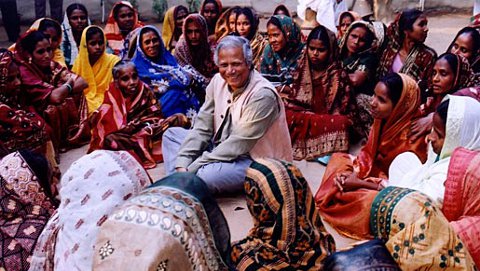
    Yunus with his borrowers
    Yunus with his borrowers

    2. Patience

    There is a famous quote by Gordon Livingston, “Only bad things happen quickly. Virtually all the happiness-producing processes in our lives take time, usually a long time: learning new things, changing old behaviors, building satisfying relationships, raising children. This is why patience and determination are among life’s primary virtues. ” You will not find a better example which demonstrates patience than the story of Grameen Bank. Muhammad Yunus started his experiments in 1974, starting with a $27 loan to 42 people. He continued his experiment from village to village asking the government banks for help only to find closed doors. The Grameen Bank was established only in 1983 and he had to face several hurdles from the government and big banks every step of the way. It was only due to his patience and determination that he turned his dream into a reality.

    3. Perseverance

    The initial days of his micro-lending experiments were rocky. Nobody believed that he can do what he was saying, and his numbers always fell on deaf ears. He never got funds from the government banks, and Grameen was formally formed only in 1983 after years of perseverance. He continuously had to execute his pilot projects on a bigger and bigger scale just to prove his concept, which he did without frustration and anger. He turned conventional banking practices upside down by lending to the poorest, people who have no collateral and to women who form now 98% of the bank’s lending population. Inspite of all this, he persevered and continued his efforts. He changed his strategies, tactics, and goals over and over, but he never changed or give up on his vision.
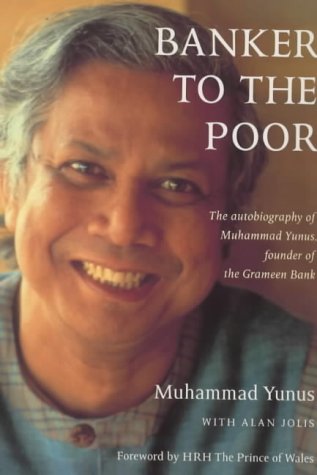
    The story of Yunus and Grameen Bank
    The story of Yunus and Grameen Bank

    4. Adherence to Principles

    Right from the start, Yunus created a culture of hard work, integrity and simplicity for all his employees. He mentions in the book how his branch managers go out into villages and talk to people about their problems and not just about their business. Simplicity is evident in Grameen branches all over Bangladesh. The pay is minimal to the employees and they have to undergo a training living with the poorest. He created the Sixteen Decisions, which asked borrowers to modify their traditional ways of living. The 16 decisions are –

    1. We shall follow and advance the 4 principles of the Grameen Bank – discipline, unity, courage, and hard work – in all walks of our lives.
    2. Prosperity we shall bring to our families
    3. We shall not live in a dilapidated house. We shall repair our houses and work toward constructing new houses at the earliest opportunity.
    4. We shall grow vegetables all year round. We shall eat plenty of them and sell the surplus.
    5. During the plantation season, we shall plant as many seedlings as possible
    6. We shall plan to keep our families small. We shall minimize expenditures. We shall look after our health.
    7. We shall educate our children and ensure that they can earn to pay for their education.
    8. We shall always keep our children and the environment clean
    9. We shall build and use pit latrines
    10. We shall drink water from tube wells. If they are not available, we shall boil water or use alum to purify it.
    11. We shall not take any dowry at our sons’ weddings; neither shall we give any dowry at our daughter’s wedding. We shall keep the center free from the curse of the dowry. We shall not practice child marriage.
    12. We shall not commit any injustice, and we will oppose anyone who tries to do so.
    13. We shall collectively undertake larger investments for higher incomes
    14. We shall always be ready to help each other. If anyone is in difficulty, we shall all help him or her.
    15. If we come to know of any breach of discipline in any center, we shall all go there and help restore discipline
    16. We shall introduce physical exercises in all our centers. We shall take part in all social activities collectively.

    These principles, along with the credit from Grameen, empowered the villagers day after day to live up the vision of Muhammad Yunus of a poverty free future.

    5. Innovation

    All through his fight for micro-credit to the poorest and his journey with Grameen Bank, Muhammad Yunus challenged traditional practices and continuously innovated to find a way through the different challenges he faced. One of his innovation was to focus on lending to women, as they are more likely to think about the benefit to the whole family. All this in a Bangladesh where women were not even allowed to touch money. Whatever traditional banks did, he did the opposite. He loaned to the poorest of the poor, he loaned to people in groups, not individually. He gave loans without any collateral or security, and without paperwork. He simplified loan repayments by weekly meetings of self-help groups. By all these innovations, Grameen and Mr Yunus effected a paradigm shift in the financial banking system.

    P.S. – See all my favorite books here

  • Volunteering, What It Can Do For You?

    Volunteering has a meaningful impact on your community. It contributes to the overall social and economic health of the community, as people are engaged positively into contributing for disadvantaged sections of society. It could range from visiting the sick, planting a tree or advocating for human rights. But apart from the benefits to the society, we most often miss the benefits it can have for the person who is volunteering. Here are some ways how volunteering can benefit you –

    Learn new Skills
    Volunteering can help us learn more skills and makes us aware of our hidden skills. We can help organize a fundraising event, do an awareness event, or teach students in a school. By doing this we can improve our goal setting, planning or budgeting skills. It also helps us to improve our decision making skills and contribute to personal change by affecting our beliefs about day to day behavior of people. If you always had a hobby and you wanted to know if you should pursue it, you can volunteer with your skills to see for yourself whether you enjoy doing it or not, or where you stand in that skill. For example, taking initiatives like ‘No Waste‘ and ‘Dandi March‘ has certainly made a huge difference to my people management and leadership skills.

    Volunteer for Yourself
    Volunteer for Yourself

    Sense of Fulfillment
    When we volunteer, we give our time and skills generously by choice. There is no anxiety and stress as we have made the decision all by ourself. Therefore, volunteering gives us the highest level of accomplishment and a sense of fulfillment. Whenever I have helped others, I have always felt joy and I think it is the same with all human beings. Even after working on something physically stressful while volunteering, people always feel stress-free, relaxed and more alive after doing it. And irrespective of the outcome, the knowledge of contributing to a good cause is always rewarding.

    Wider Perspective
    In our busy day to day lives, volunteering can help us create some stability in our lives. The confidence and experience gained from volunteering can be helpful in seeing workplace issues in a different perspective. We discover new traits of our personality and can reach for new levels of performance at the workplace too. For me, meeting people from different age groups and different professions has given me the ability to put my world in perspective with so much other stuff happening which I was totally unaware of earlier. It has also helped me improve my social and interpersonal skills. Volunteering can help anybody get out of the ‘rat race’ and create a balance in their lives.

    Connecting with others
    When you volunteer, you will meet new people from different walks and segments of the society. These contacts can be valuable in establishing business contacts or for seeking employment in the future. Meeting people and making new friends increase the feeling of relatedness with the community, and is rewarding intrinsically. People and societies depend on each other for survival but commercialism and consumerism have seen people getting more and more individualistic. What better way to connect and give something back to your community than volunteering.

    Nobody can do everything, but everyone can do something
    Nobody can do everything, but everyone can do something

    “A candle loses nothing by lighting another” is a popular quote by James Keller. We can not give something (out of free will) without getting something in return. When we give our time and skills to another, it is like lighting a candle. We don’t lose anything, but gain more light (knowledge). Volunteering always leaves us richer in spirit, happiness, skills and takes away your problems, stress and anxiety. If you have not spend time volunteering till now, do so. It is certainly one of the things you must experience sooner than later. For volunteering opportunities, see this initiative (Pick A Fight) I am taking with a few of my friends.

  • Introducing Pick A Fight

    “Although the world is full of suffering, it is full also of the overcoming of it”Helen Keller

    Today, we are living in a world full of joy and sorrows. While, at one end, we are making new progress with every passing day with breakthroughs in science and technology, we are still struggling from grave problems like poverty, corruption, child abuse, etc. All of us are fighting our own battle. A fight for survival, to earn more money, to ensure a better future for our family, and so on. Many individuals and organizations are also fighting for the greater good and issues which affect all of us as a society.

    Pick a fight, Make a difference
    Pick a fight, Make a difference

    Pick a Fight is a platform to connect those who are fighting for a cause and looking for help with people who are willing to help. A fight could be an NGO fighting for women empowerment, a company working towards green drives like sapling planting, an individual taking an initiative in his locality, apartment, etc or a group of people (RWA, friends) who have come together to fight for some cause.

    If you want to help and stand for a cause, Pick a Fight is the place to be. We aspire to have all the information of different fights people are fighting for.  It will be the one stop destination to seek help and offer help. Help could be in the form of giving your time to volunteer, giving away resources like old clothes or books, or donating money towards a cause.

    Pick a Fight is the brainchild of Anupama Sharma, a software professional working in Bangalore. Here is what she has to say, in her own words –

    “I had just come back from a wonderful day at an orphanage and was narrating the event to a friend when he exclaimed that he would have loved to be a part of it. He asked me the address of the orphanage and was surprised to find out that he had been living close to the orphanage all these years and did not even knew about it. That is when it occurred to me that there are ample people who want to help and many others who need help, and I saw that as an opportunity to connect them. Very soon two of my friends joined me, and I am sure many more will join in the coming days. Our objective is to create a new culture of giving and helping through PickaFight.”

    I will be helping her to make Pick a Fight a success and inculcate a new culture of giving and helping. If you want to be a part of it or contribute in any way, contact Anupama at anupama@pickafight.in, Ketan at ketan@pickafight.in or myself at sumit@pickafight.in

    You can find Pick A Fight on Facebook and Twitter. Like / Follow these pages to stay updated about our activities. Our website is all set for a launch on 15 May.

  • Why India’s urban development is important for the nation?

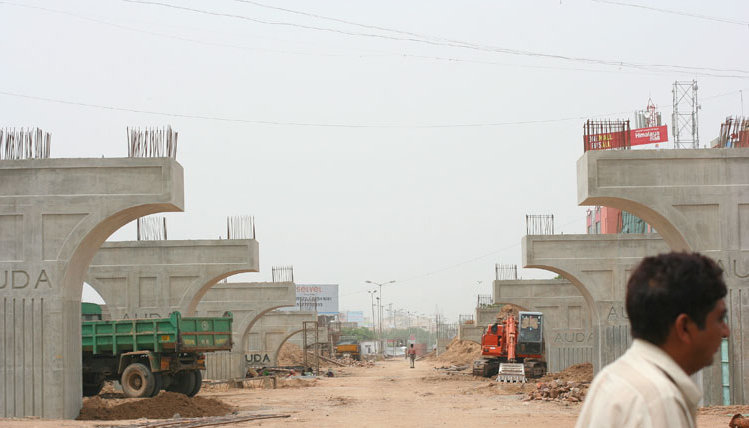
    Sometime back, I had written an article on “Why India’s rural development is important for the nation?”. Now, through this article, I want to stress why our urban development is as important too. We have come a long way since independence in terms of urban economy growth. Urban economy now contributes upto 70% to the nation’s GDP, while this figure was 30% in 1960. In the last 50 years, all over the world cities has risen to become hubs of economic activity and certainly future growth is going to come from our cities.

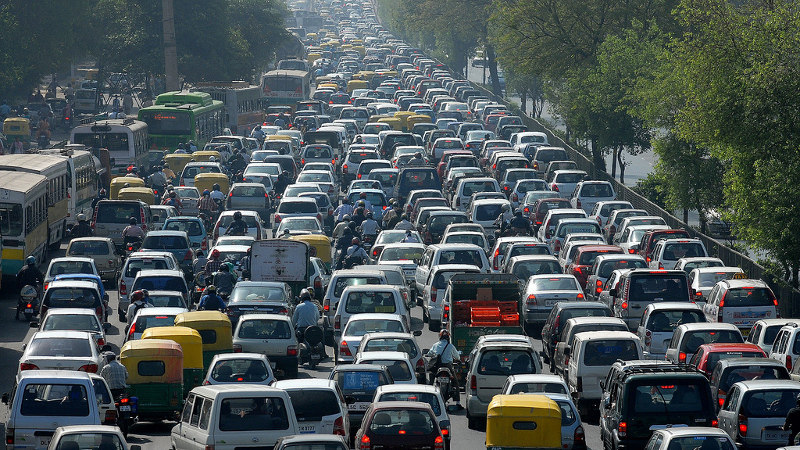
    But unfortunately, the growth and expansion of Indian cities has been unplanned and haphazard. Our cities today face challenges in meeting the demands of infrastructure and resources. The demand for clean water exceeds the supply by about 30%. Waste management systems are almost non-existent, and if they are there, heavily over-stressed with over 40% waste going uncollected. Eco-friendly waste disposal methods are only a dream and even government agencies and engineers are totally unaware about their technicalities. Around 22% of urban population lives in slums and around 25% is below the poverty line. Traffic congestion and pollution has increased like never before.

    Infrastructure growth is one of the biggest challenges India faces today
    Infrastructure growth is one of the biggest challenges India faces today

    Clearly, we need to change not only the way our cities are managed, but also how they are planned. Planning for future cities and management of current cities only will result in livable cities which will have decent quality of life and equal opportunities to all citizens. Firstly, we should provide fast and low cost infrastructure for residents like housing, hospitals, schooling, transport and commercial centres. There should also be a provision of how to grow this infrastructure as cities grow in the future.

    We must encourage high rise and high density cities to accommodate the continuous migration from villages to cities. While we have seen growth in apartments in cities like Noida, Gurgaon and Bangalore, most of them are for the upper middle class. There is an urgent need for builders to build affordable low cost housing solutions. The government can help the builders by providing tax rebates as incentives.

    A normal scenario in all Indian cities
    A normal scenario in all Indian cities

    If we improve our roads and transport standards, our cities can grow horizontally as traveling time will reduce. Transport is like the backbone of a city. Poor transport limits mobility of its people which in turn hamper economic growth. Road capacity must be enhanced but it is not enough in itself. Road transport has to be supplemented by development of mass transit systems like metro rail, mono rail and bus services. Road widening and introducing separate lanes for buses is an important step which is required today in almost every city of India. Other transit systems like metro rail should be integrated with bus services like Hong Kong and Tokyo, as this will reduce travel times and improve efficiency for business and economy.

    Undoubtedly, there is a lot to do to improve urban infrastructure, and huge amounts of money will be required to do this. It is impossible for the government to all of this by itself. It is therefore imperative private sector be involved heavily in infrastructure development activities with the government playing the role of a regulator. In Thailand and Malaysia, even sanitation systems are managed by private operators. Why can’t the same model work here? A lot of policy changes will also be required to change how local governments and municipal bodies work. The Mayor of a city is elected by councillors, and is powerless. The mayor should be elected directly by the people and should be given powers to manage and run cities efficiently.

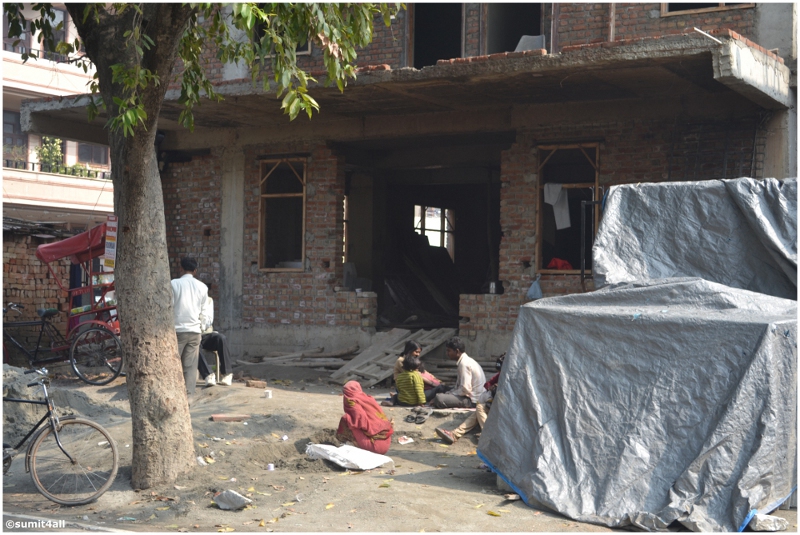
    Are we providing equal opportunities to all?
    Are we providing equal opportunities to all?

    To make sure all these systems work in a transparent and efficient manner, we must introduce ratings of municipalities of different cities, and some sort of comparative performance measurement system for officers. All this information should be in the public domain and open to scrutiny by the media and public. E-governance needs to be introduced and systems such as MIS (Management Information Systems) can be used to collate all information and improve efficiency of all services. How we manage our cities today will decide how our country will shape up tomorrow. We need to turn our cities into truly sustainable engines of growth for the whole country.

  • The Truth about India’s Young Population, and how it can be a boon or a bane?

    Today, over 35% of our population is below the age of 20. By 2020, it is expected that 325 million people in India will reach working age, which will be the largest in the world. This will come at a time when the rest of the developed world will be faced with an ageing population. It is estimated that by 2020, US will be short of 17 million people of working age, China by 10 million, Japan by 9 million and Russia by 6 million. At the same time, India will have a surplus of 47 million working people. Even when compared to developing countries, Brazil’s working population is set to grow by 12%, China’s by 1%, Russia’s will decline by 18%, while ours will grow by 30%. This is the reason Goldman Sachs predicted that only India can maintain a 5% growth rate until 2050.

    But are our youth unemployable?
    Economic growth require not just a large working population, but people who are trained and skilled to work in different industries. Many industries have remarked that people coming out of colleges and universities in India are not employable and they have to give them skills training before they start their work. This adds strain on the industry. Our adult illiteracy levels are also a big concern, which stands at 39%. 25 million children are out of school in India, out of a total of 100 million out of school children in the world. We need to work on our policies to make sure those who are still in school and colleges get the best education and be ready for their opportunity when it arrives.

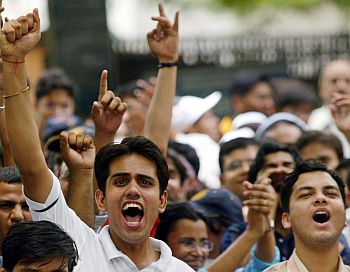
    Youngistan - Will it mean a boon or a bane for us?
    Youngistan – Will it mean a boon or a bane for us?

    Demands of this population
    With a huge working population will also come a huge consumption boom, as it has happened in China. China accounts for 20% of world’s consumption of aluminum, 35% of the global demand of steel and coal, and 45% of the worldwide cement purchase. The future demands of China and India’s population will put a lot of burden to the resources of these two countries. How these two countries manage resources like water, cultivable land, oil and energy needs will be critical. The demands on the environment cannot be overlooked either. If we follow the same model as followed by American and European development, environmental deterioration will end up destroying the whole planet. Global Warming is already a big problem. The challenge for India will not only be economic growth, but also make it sustainable and bearable for the environment.

    Taking care of our population
    Our infrastructure today is no way capable of taking proper care of our ever increasing population. Human development must go hand in hand with population growth. More than 25% of our urban population lives without sanitation and 24% lives without access to tap water. We need 66,000 primary schools and 3000 new health centres every year to cater to our population growth. Food production also has to be increased by 3% every year to meet their needs.

    We can’t ignore the ill-effects of population growth
    India cannot afford to ignore what will happen with unsustainable economic and population growth. We need to use our technological skills and replace our age-old systems with innovations to reduce the resource burden. We need innovative and sustainable solutions in energy, transportation, sanitation, manufacturing, and agriculture. We are a nation of great talent, and we stand before times which might be our big opportunity to take the leap in the world order but we also face significant challenges. If we take all this into consideration NOW, and frame policies and act responsibly, I am sure we are capable of transforming this huge young population into a boon rather than a bane.

  • India after 200 years

    We, as a nation, stand today in a moment of reckoning. We are at a fortunate junction where our actions will decide the course our nation and 1.2 billion people will take in the coming decades and centuries. If India’s history were to be written 200 years later, what we do in the next few years will certainly play a very important role. We have broken from the shackles of the license raj and taken the flight of globalization and economic growth. We are expected to be third largest economy soon. But at the same time, we are plagued by many social evils like poverty, illiteracy, corruption, etc. Whether and how we act in this moment of reckoning will decide whether we rise like a phoenix in the 21st century or again loose the opportunity to reclaim the title of “Sone ki Chidiya“.

    We have a feel good mentality about our future now. Incomes are rising, jobs are plenty, multinationals have set up shops in different cities and amenities are galore if you want to go out for eating, recreation or just fun. We are one of the fastest growing economies in the world, and our companies like Reliance, TCS, Infosys are going multinational. Our engineers are behind many technological innovations in developed countries, and we are being seen as a knowledge powerhouse. American President Barack Obama has publicly asked American kids to study hard or they risk loosing their jobs to Indians (and Chinese). We have made our mark in the filed of telecom, space technology, medicine, defense, and have also started to make an international impact in arts and sports.

    However, having said that, we are grappling with many problems which are deep rooted in our system because of our colonial roots and the closed economy system from 1950-1990. Our economic growth has still left a large part of the population untouched. We have got problems of poverty, illiteracy, unemployment, corruption, rising prices, social inequality and terrorism. We are one of the poorest countries in the world, where more people have access to mobile phones than a toilet. The middle and higher classes use drinking water for flushing toilets too, and the lowest segments of society don’t even have access to clean drinking water. The condition of women is still poor. More than 50% are illiterate, and there are still social ills like dowry, child marriage, female infanticide prevalent in society. Our public services are breaking under the strain of bureaucracy and inefficiency.

    Can we keep the optimism alive?
    Can we keep the optimism alive?

    With majority of our population being young, and the kind of confidence they see for their future, I believe we have everything to change the situation around. The youth have to see this as a moment of reckoning, where the actions we take today will decide the future course our nation takes. We can feel the optimism an average Indian has in the way he goes about his daily routine, with aspirations in his mind and hope in his vision. The Indian today wants to grab a piece of this growth, a piece of future, and provide a better future for himself and his family, and indirectly, for the nation too.

    So when our history is written 200 years down the lane, what our generation did with this opportunity will decide the course India takes. We have missed opportunities in the past, and we might miss this one too if we let our skepticism and cynicism about the current state of affairs overcome the very basic human ability, to strive despite of problems and shortcomings. History might say India had a golden opportunity to shine and lead a new world but instead it dig its own grave and continued to grapple with its problems. Or history might witness the rise of India, again, after the period of colonization and slow growth for 60 years, into a prosperous society and economy which will lead the world order in matters of importance. We have already shown leadership to the world in the area of trade reforms and environment concerns, and there is no doubt why we can’t give this world the direction it is looking so badly for.

  • How corruption disappeared from Hong Kong?

    If Hong Kong can change, why can't we?
    If Hong Kong can change, why can't we?

    Corruption exists in many countries and societies today. While the corruption problems faced by each country may be different and each country might need special practices, laws, etc to suit the local environment, it is believed that corruption in all parts of the world stem from common causes and some common approaches might be able to root it out. The story of Hong Kong is one example which comes in mind.

    In the 1950s and 1960s, Hong Kong was riddled with corruption in the same way as we are now. It was a way of life and people had come to accept it as normal. From law enforcement agencies to government offices, judiciary to local elections, corruption was everywhere. Black money was in circulation and mafia ruled the roost with local police in their pockets. The situation seemed as hopeless and the government seemed powerless to do anything. The same can be said of today’s India. Note – You can find answers to your questions about the recent anti-corruption movement in India here.

    However, in the early 1970s, Hong Kong was undergoing through significant economic growth. The aspirations of people were rising, and corruption was one of the major problems they were sick of. One event led to another and public protests followed which turned into a national outcry. The Independent Commission Against Corruption (ICAC) was formed in 1974. The ICAC focussed on three main areas, investigation, prevention and education.

    ICAC’s most important activity is of receiving and investigating complaints. Complaints can be received from a 24 hour hot line number or from other sources. The legal framework was setup in a way to give ICAC ample powers to do its job effectively. For example, ICAC can examine bank accounts and business documents. Suspects might be asked to disclose their assets, income, etc. ICAC can arrest any person suspected of committing a corruption offense. At the same time, there were checks and balances to ensure the ICAC is accountable. The powers mentioned above are subject to the scrutiny of judiciary. ICAC is also answerable to any questions about its functioning that anybody might have.

    The second activity of ICAC is to examine systems in organizations and proposing anti-corruption measures. This has led to increased transparency and accountability in public systems, lending weight to the principle that “Prevention is better than cure”.

    The third important activity is to spread awareness and educate people about the role of the ICAC. This activity also helps gather public support for any anti-corruption related programmes using media. ICAC officials visit schools, colleges to interact with the youth and explain them about the anti-bribery laws, and other codes of conduct to prevent corruption from society.

    So how is Hong Kong today? It is regarded as one of the most cleanest and corruption free places in the world today. It provides a compelling example that changing the rules can defeat corruption. In 1977, 38% of population thought that corruption was widespread, by 1982 only 8% did. ICAC, backed by a strong will to tackle corruption from the government, using both rules and education as weapons, was able to dramatically reduce corruption and change public attitude towards the menace. Transparency International now rates Hong Kong ahead of countries like UK, USA and Japan in its list of least corrupt places.

    Read this speech of the former head of ICAC, Mr Tony Kwok Man-wai to know more about what led to the success of ICAC.

  • Messenger of hope

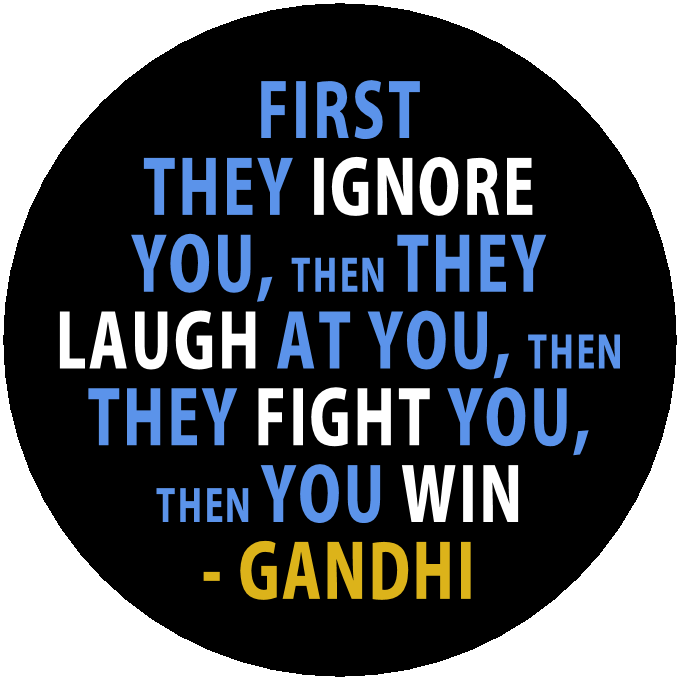
    They have ignored us, had their share of laughs and now they are fighting us, Victory is near
    They have ignored us, had their share of laughs and now they are fighting us, Victory is near

    The whole country has come together,
    As people fast with their countrymen!
    Anna Hazare’s fast is getting bigger,
    For all our dreams about India, Amen!!

    The World Cup win united us,
    As people came out on the roads!!
    Corruption is something serious,
    It is high time public anger explodes!!

    It is only an act of sacrifice,
    No point in just being angry!
    A small act of yours will suffice,
    For one day, just stay hungry!!

    Make the people around you aware,
    And let the corrupt see we are awake!
    Let them find a place to hide somewhere,
    To their activities let us put a brake!!

    It is our country, our money,
    Will not let it go down the slope!
    Let us all support Annaji fully,
    For he is our messenger of hope!!

  • Five reasons why thousands are fasting with Anna Hazare?

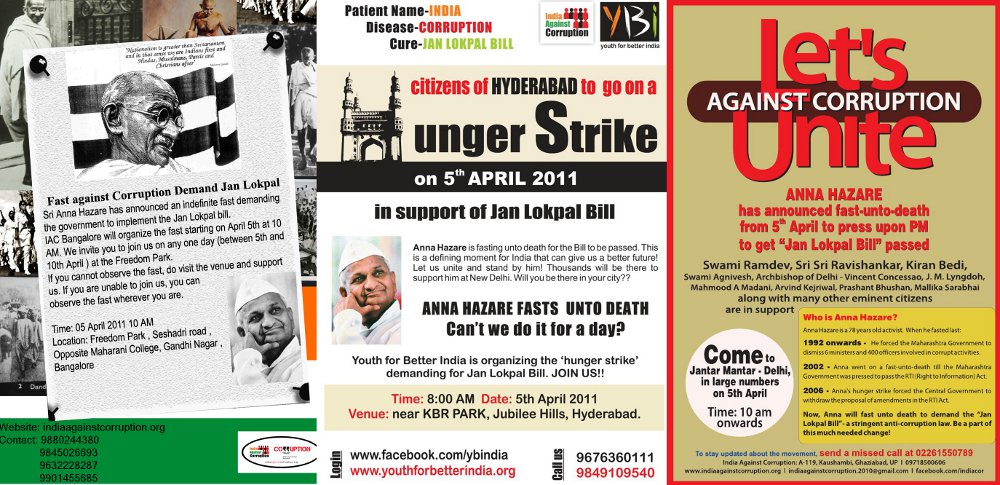
    Anna Hazare began his fast unto death yesterday in support of a stronger Jan Lokpal Bill to fight corruption. He is fasting in front of Jantar Mantar, Delhi and asking the government to create a joint committee with top members from the government and civil society to draft the bill. In support, thousands of people from over 400 cities in India and abroad are sitting on similar fasts. A few members are sitting on a fast unto death while many are doing relay fasting. People from all backgrounds, students, professionals, activists, are participating in the fast for one cause, a stronger anti-corruption bill. Many people are fasting from their work or home in support of Anna ji.

    The media coverage of his fast has been very good and heartening to see. It will surely help in spreading awareness about the issue to the general public. Here are five reasons I think thousands have joined in support of “India Against Corruption” and why you should also join and contribute to this movement.

    1. Fast for your country
    We all fast, at different times, for our religion, some festival or for someone. Fasting holds a very important place in our culture, and we take pride in our traditions. This time, thousands are fasting for the country. People from different religions, castes, states have come together to fast for a disease which affects all of us, corruption. In these days, we rarely get to see the face of united India. We recently saw when the whole country celebrated the World Cup triumph and there were celebrations on the streets. Let us get behind Anna Hazare and fast for our country in the same spirit, and I have no doubt corruption (or any other issue) will be gone in no time if India unites and all Indians stand up for a just society.

    2. Anna is doing this for us at 73 years
    “At 73 years, Anna is not fasting for himself, he is fasting for the future of my kid. I will myself fast on 5th April for a day and ask my 5 year daughter also to skip a meal.” Rakesh, a software engineer said. And very rightly so, if Anna Hazare can fast until death for a corruption free future for us and our children, can’t we join him for one day in support. Seeing more and more people behind him will give Anna and India Against Corruption movement a lot of courage and confidence. It is also a chance for all of us to show we care about our future, the future of our kids and a corruption free India.

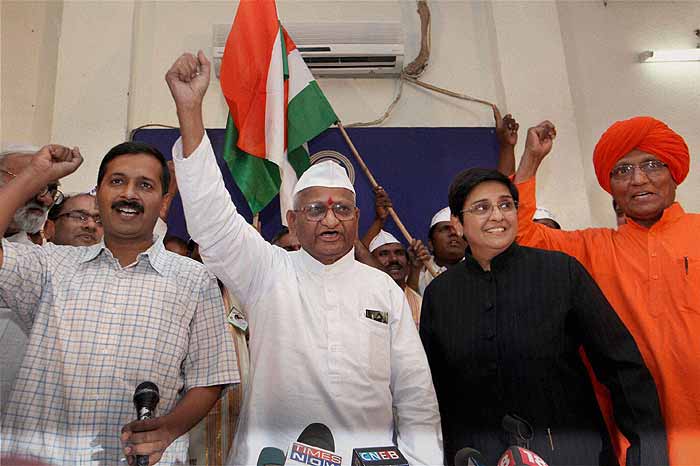
    Anna Hazare, with Arvind Kejriwal and Kiran Bedi
    Anna Hazare, with Arvind Kejriwal and Kiran Bedi

    3. Spreading awareness
    By fasting for one day, two days, alternate days, or whatever time and duration you are comfortable with, you can spread awareness among people around you about India Against Corruption movement. You can be a part of this movement by saying “I fast with Anna Hazare against corruption.” You can share and post about it on your mail, status messages on facebook, twitter, etc. We need more and more people behind this to put pressure on the government to bring a strong anti-corruption law, and each one of us can do our bit for it.

    4. We only need a decent environment to live in
    Most of us don’t want to be involved in politics or public affairs. And that is why we choose a government. We only need a fair society to live in. We need good roads to travel, good schools for our children, buses and trains for us to travel. We ask for nothing more. We are decent people only asking for a decent environment to live in. And we deserve it. The current environment has been polluted by corruption and the government has not taken steps to curb it. It is high time we realize our duties as citizens and peacefully demand what we deserve.

    5. Corruption can, and must, end
    Most of us see corruption as a problem which is deep rooted in our society and which can’t be eradicated. But history is proof that if committed citizens come together for change, anything is possible. The case of Hong Kong is one major example. Hong Kong was so corrupt during the 1960s that it was an open secret and a way of life. And the government seemed powerless to do anything about it. But in the early 1970s, one event after another triggered off a storm of public protests and a powerful and independent agency was setup to deal with corruption. The Independent Commission Against Corruption, or ICAC, was created in 1974 and now Hong Kong is one of the most cleanest and corruption free cities to work in. Similarly, it might look there is no end to the problem today, but seeing in perspective, this is our time to act and be the cause in the matter of a corruption free society.

    So participate in the fast, for whatever duration you like and be a part of the movement. Spread the word to your friends, family, colleagues, neighbors, everyone. I will end with this quote by Edward Abbey – “A patriot must always be ready to defend his country against his government“.

  • Fast with Anna

    He is going on a fast unto death,
    Anna Hazare has declared!
    Let us say with our every breath,
    The corrupt will not be spared!!

    We demand the Jan Lokpal Bill,
    Will not settle for anything less!
    Let them not test our will,
    It is time our problems they redress!!

    All of us have come together,
    And fasting on 5th Apr/16th Aug in unity!
    Sacrificing our meals for the future,
    We demand retribution for the guilty!!

    It is the Ramlila Maidan in Delhi,
    And the Freedom Park in Bangalore!
    Join the fast venue in your city,
    To show you care, and will not ignore!!

    Or fast at your workplace,
    And wear a badge for the cause!
    Invite others you see and face,
    High time we replace the old laws!!

    By fasting in every town and city,
    It is time to make a statement!
    By taking collective action we,
    Will turn this fast into a movement!!

    Fast in whichever city you are
    Fast in whichever city you are
  • Interesting take on crime against women?

    I recently read this article about high crime rates in Delhi against women. The author has taken an interesting viewpoint by proposing that bad parenting of the male child is responsible for rapes. “Parents bring up their sons as though they are reincarnation of the God Emperor”, she says..

    I am pasting the article below. I somewhat agree with what she has to say. Our social fabric and family and social values are woven in such a way that the female is always considered inferior to the male child. What do you think? Enter your views in the comments below.

    Is society / family values responsible for crime against women?
    Is society / family values responsible for crime against women?
  • What was it while walking during Dandi March 2 in Bangalore?

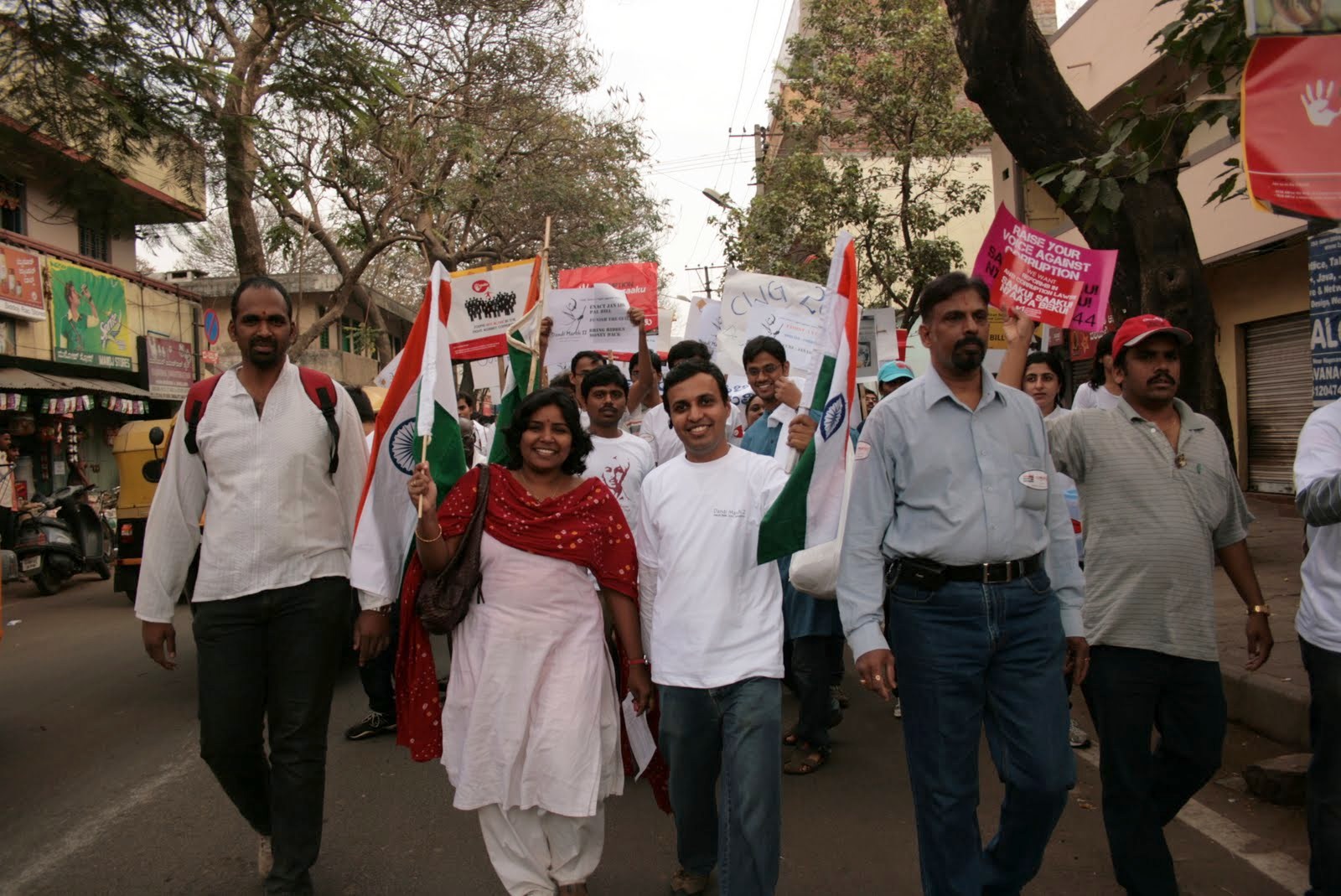
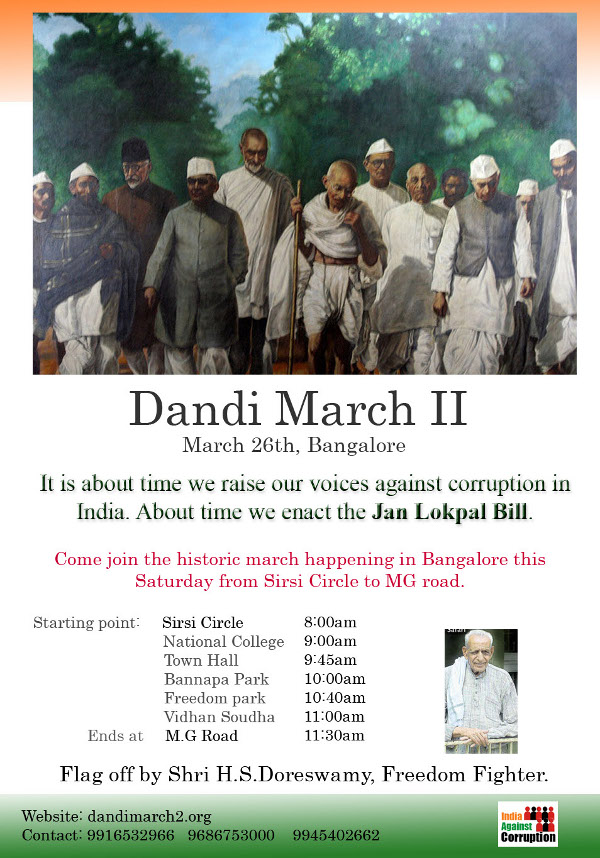
    As you know, Dandi March II walk was held in Bangalore on 26 March 2011 in support of the Jan Lokpal Bill. Over 400 people walked over a distance of 11 km under 4 hours. To my surprise, many people walked the full distance, completely overcoming the physical boundaries. After the march, I asked a few of them to detail how / what it was like while they walked? What did they feel? Anything which they wanted to share. I have got replies from a few of them and I am sharing them below.

    Prasann Garg (walked full distance)
    At least for me, It was first time experience of participating in any such event. And really felt the best way to start the weekend despite little pain in the legs. Honestly speaking, I was expecting little more younger people there considering the number of people from middle or above aged participated. When I heard about this Dandi March 2, like every other person, I also felt how it is going to help ? And once we finished it, it felt we achieved a lot. One thing is for sure, it was never to blame the government or bring down the government. We are well aware such things can’t happen. But it was a great way to show the awareness. At least we made our political leaders realize the mood and understanding of the common man. This is the best thing we could have ever achieved through this Dandi march.

    I don’t remember, how many times I have used this Vande Matram and Bharat Mata ki Jai once I finished my schooling. Probably never. Probably we are loosing all these things. Feels like as if these thing are only for school children. We need to have more and more such events to keep it alive within us.

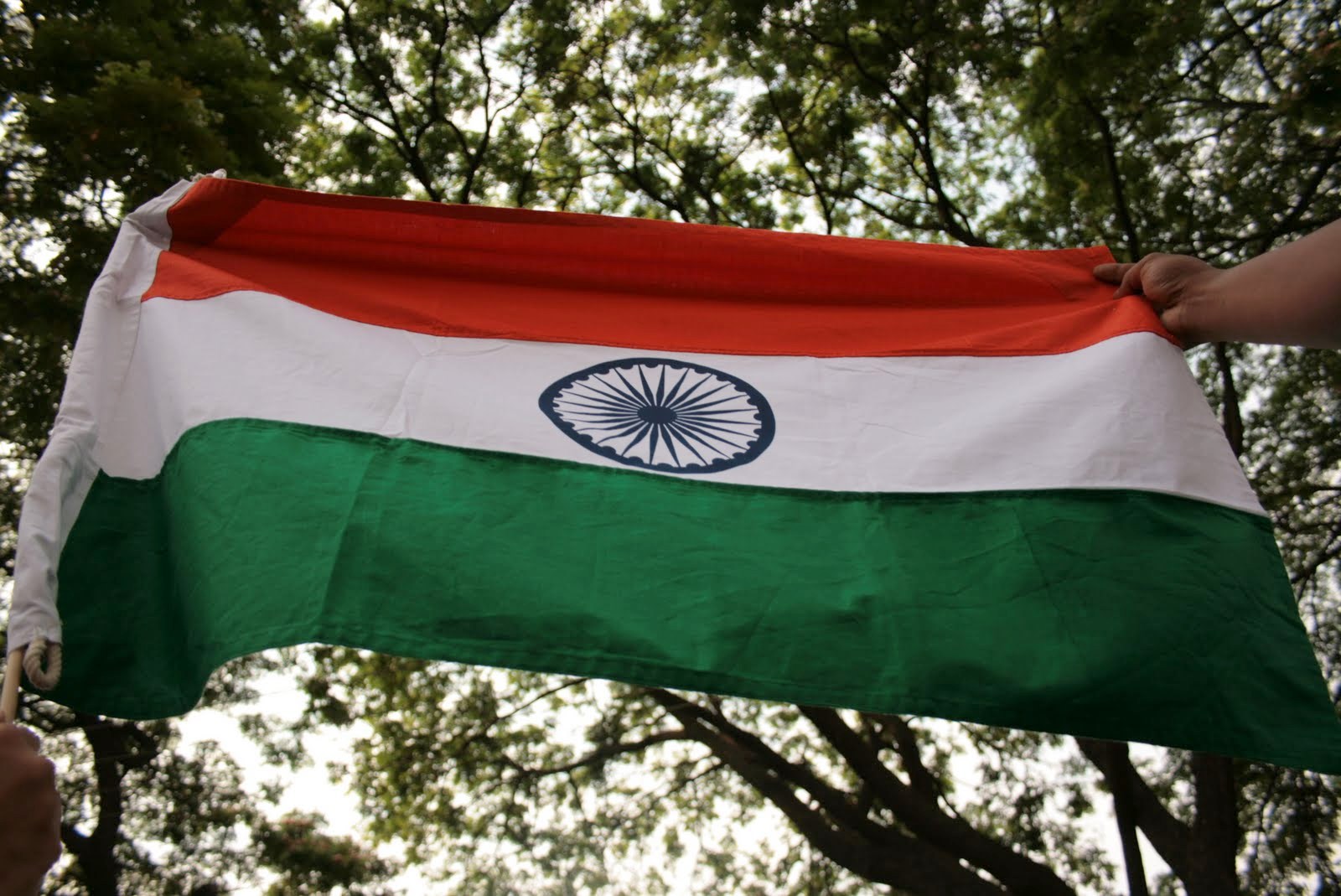
    My favorite four colors, and they make for the best picture when put in this order
    My favorite four colors, and they make for the best picture when put in this order

    Sandeep Khurana (walked full distance)

    I have been to many government offices including police stations. At almost all places I was asked bribe, either directly or indirectly. Corruption is quite deep rooted in our society. The biggest issue is that we as a society have learned to live with it. This should change. We are entitled to corruption free governance. When there was a call to be part of peaceful Dandi March in Bangalore in Saturday 26th march, 2011, I decided to participate. It was quite interesting to see a couple of foreigners there too. It was quite a spiritual experience for myself. While being in that march, I kept asking myself about what I expect to change in India and why and how my being here can help to bring about this change.

    People like shop owners, passers by, small vendors etc were quite curious to see such peaceful march against corruption. Since they do suffer because of it, the pamphlets given to them by volunteers were keenly taken and immediately read. When evil thinks that it can go on forever then there comes a time when good has to rise and defeat it. It has been happening since the beginning and it will happen again.

    Shashank Teotia (walked full distance)
    Do we think one day the sky will open and the clouds will part to drop a messiah who will fix our problems? While we are Facebooking and retweeting, the corrupt cash registers are ringing and people are selling the country to the dogs and if we don’t sit up and do something as a group, there will be a day when some power hungry corrupt official will snuff us out. One by one. Do you think your blood will boil then?

    I went to the Dandi March organised in Bangalore and there were at a point maximum 400 people in it. 400? I am not taking anything away from the fact that there were honest people out there in the sun, trying to make themselves heard but seriously.. 400 is not a number which will dent. And a dent is not enough. Do you want to join those 400 and make it 40000 or are you one of those who will just click on the *Like* button or perhaps *Share* and believe that it is contribution enough?

    The choice, my dear friends, is ours and frankly, so is the consequence.

    Maybe I was also a regular guy who had never participated in a rally before. Trust me, it may feel a little awkward at first, but when I cried Vande Mataram with 400 other Indians, it did something good to me. Just participate for that feeling. You will get addicted for life.

    I have also asked other friends who walked to share their experiences with me. I will update this post as soon as I get those. If you want to share your experience, you can mail it me – sumit4all[at]gmail.com

  • We walk for change!!

    It was a sight to see,
    And a moment to experience!
    Just a walk, nothing fancy,
    When people walked out of conscience!!

    Flagged off by a freedom fighter,
    We took a route embedded in history!
    400 awake citizens walked together,
    On a day which was hot and sunny!!

    The heat was no match to our will,
    For we were united against corruption!
    We marched for the Jan Lokpal Bill,
    And demanded it for the whole nation!!

    We walked for change
    We walked for change

    There were people across cultures,
    Students & professionals, young and old!
    Seeking punishment for the vultures,
    A new age dawns, this is the threshold!!

    Four hours and eleven kilometers,
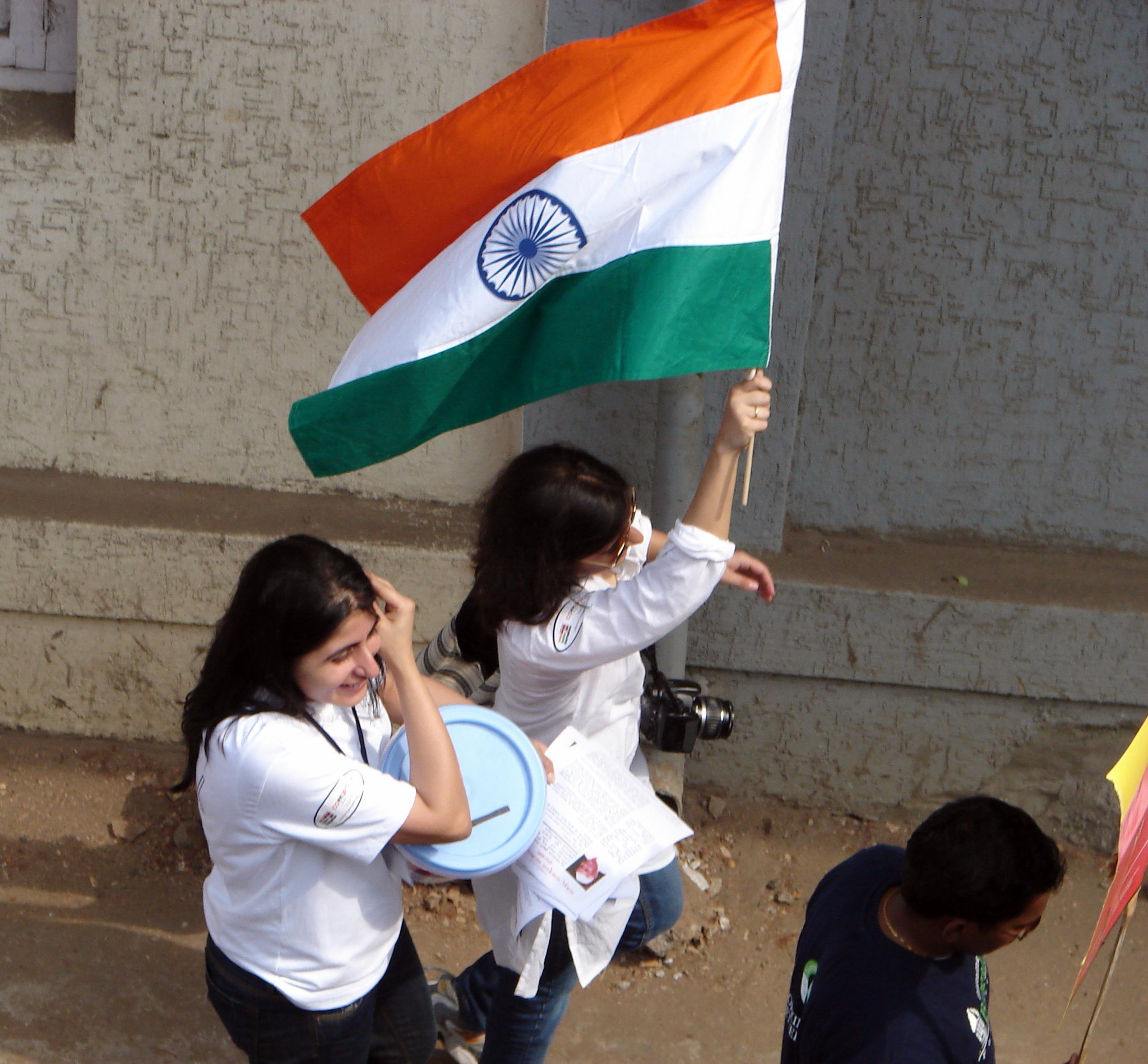
    Posters, slogans and the flying tricolor!
    The knife of the money launderers,
    Will not be allowed to go any deeper!!

    Many joined us on the way,
    Knowing the end is far, but in range!
    Our country you will not betray,
    We walk in peace, but for change!!

  • When spirit overcame the boundaries of physical limitations..

    “People from IT profession are normally busy and get up late on Saturdays, weren’t you surprised to see 400 people turn up for the Dandi March 2?”, a journalist asked me yesterday. My reply was “Considering the kind of response we got leading upto the event, I was surprised to see ‘only‘ 400 people turn up”. But there was one thing which surprised me, around 200-250 people walked the full distance of 11 km which took around 4 hours. Considering the weather which was quite hot (despite a light drizzle the previous evening), I watched as many people kept on walking despite having pain and discomfort in their legs. I think the joy and excitement of being a part of something good diminished the physical.

    So how did I get these IT professionals to ‘pick their lazy asses’ (as another friend put it) and walk for the country. Frankly speaking, I did nothing but spread the word about what we are doing and why? I think we all feel for the rampant corruption in India today and are frustrated because of it. We (IT professionals) don’t always seem to care because it doesn’t really pinch us directly, and we see no hope from the prevalent situation. That builds on the resignation and cynicism about the current situation in India. Also we don’t see any options to show our frustration and anger in a collective way. So I think this walk against corruption caught the fancy of people and they were motivated enough to get up at 6 and reach the venue at 8 in the morning. After all, people are not lazy, it is the situations which call people into action, and Dandi March 2 was one such opportunity to show they care for their country.

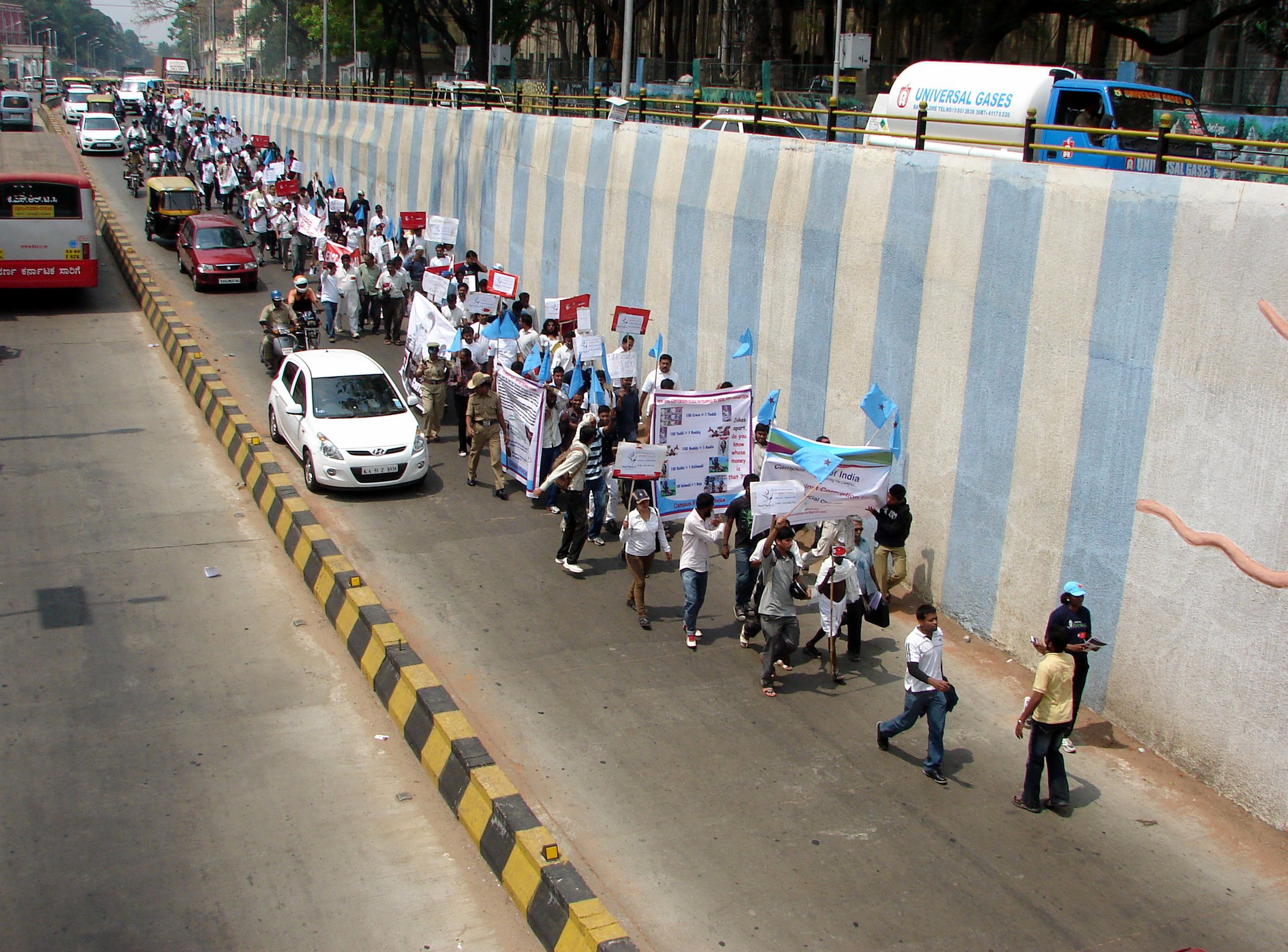
    The queue of people walking stretched to around 1 km at its longest
    The queue of people walking stretched to around 1 km at its longest

    But what surprised me more than the 400 people turning up was the number of people who walked the full distance. I walk a lot, so I know it is not easy to walk more than 5-6 kms in one stretch if one is not exercising regularly. That too under the hot blazing sun in temperatures around 35 degree celcius. I had many of my friends and colleagues walk during the march, and I was totally surprised with almost all of them walking the full distance. What’s ironical is they disregarded my advice of leaving after a few kms and continued to march despite many of them having pain, cramps and discomfort in their legs. After all, it is the spirit which matters. And like my friend Tripti, who was on painkillers for the last two days put it, “I will not regret it at all, if something fruitful comes out of this”. It is about hope, hope for change, for a better tomorrow which propelled people to walk together to show they care.

    This is what Kishan, a fellow Yahoo has to say
    “I decided to act and became the part of the Dandi March II held on 26 March 2011. I reached the staring point at 08:00 AM and realized the enthusiasm of each and every person there. The feeling was very special and i was remembering each and every freedom fighter of India. I was realizing how it actually feels when you decide to lead from front or be the part of it. We started the march and we finished it without having any sort of pain. It was all enthusiasm which was driving us to make it happen successfully. That was the time when I realized one fact that ‘Don’t wait for the change, instead be the change’”.

    The future is bright without doubt
    The future is bright without doubt

    Seeing such participation and commitment from people towards the cause of a corruption free India, I have no doubt we have a great future ahead of us. We might be plagued by many problems right now, and there might seem to be no end to the tunnel, but this Saturday we saw and witnessed the light at the end of it. It might take some time getting to the end of the tunnel, but considering the enthusiasm in the youth of today, I am sure it will turn into a collective movement with people from all walks of life joining.

  • Let us Walk

    Working hard all day,
    We all earn whatever we do!
    Every month we get our pay,
    Where it goes do we have any clue?

    A big part is deducted as tax,
    To be used to run the country!
    While we sit back and relax,
    Our money becomes a mystery!!

    It is meant to be spent on the needy,
    And to build roads, bridges and dams!!
    Instead it fills the pockets of the greedy,
    Leading to frauds, rackets and scams!!

    How long will we be silent,
    Till when can we shut our eyes?
    Its time to stop acting decent,
    Like the phoenix let us all rise!!

    Let us be a little mad,
    Nothing wrong in being angry!
    All our money if we add,
    Can feed all who are hungry!!

    It is time to rise from our sleep,
    And demonstrate we will take no more!
    They have burnt our pockets deep,
    This is our time to show them the door!!

    Together if we all stand,
    We can give them a big shock!
    So holding hand in hand,
    Let us walk, let us WALK!!

    Dandi March II against corruption
    Dandi March II – in more than 50 cities on 26 March

anger anna hazare bangalore business challenge coaching conflict conversation corruption Cricket culture dandi march emotions energy friends fun gandhi giving gold growth hope india jan lokpal bill language leadership lessons Life listening love moment mother movie new year people perspective poem sachin tendulkar saleraja trust values walk waste women words world cup