Society

My views about the society

  • Coronavirus – Reminding Us of Our Shared Humanity, Our Imminent Mortality, and Why Our Choice Still Matters?

    Our Shared Humanity

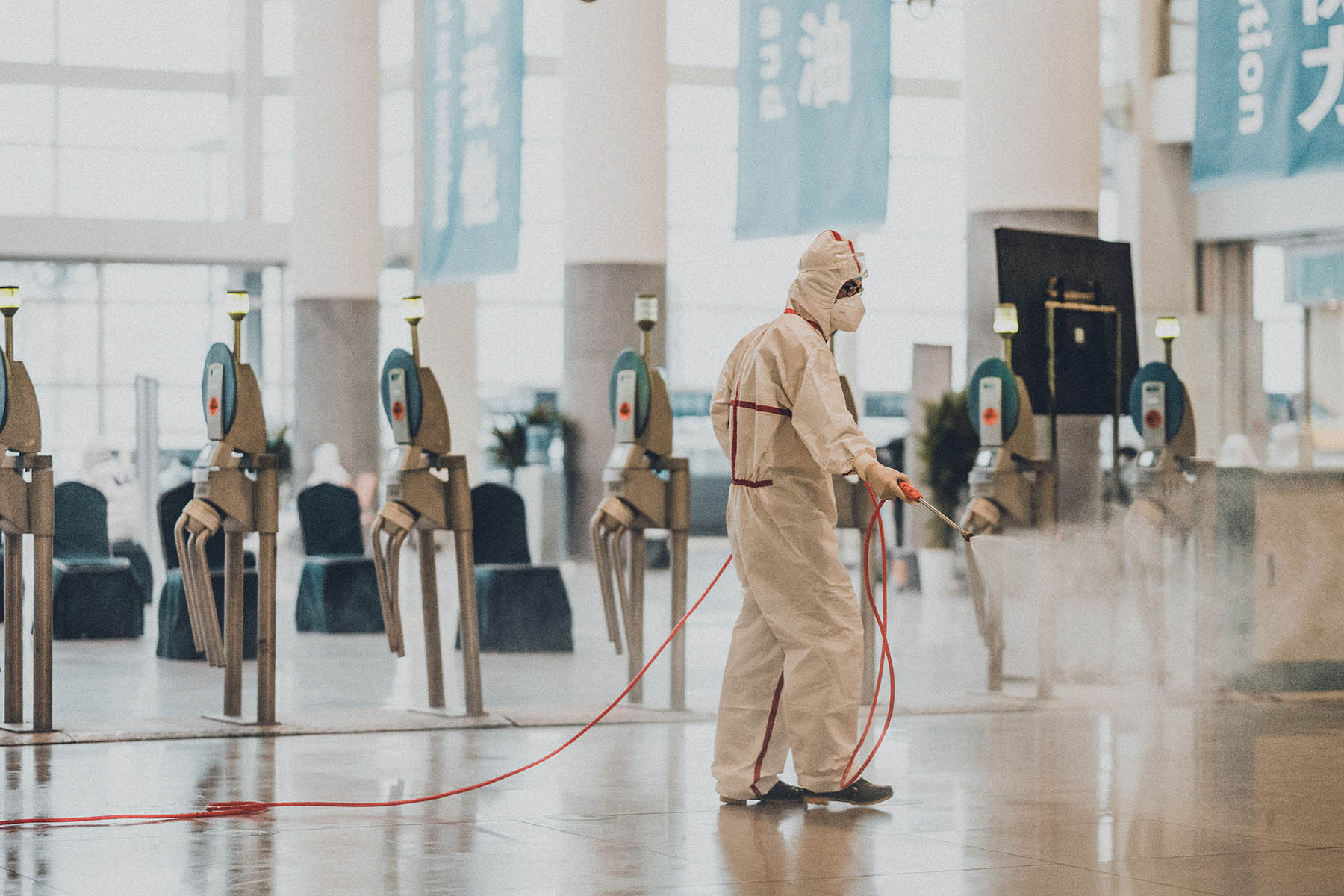
    The outbreak of the new Coronavirus (SARS-COV-2) has brought a crisis unlike any other in recent history. This could be the first crisis after World War 2 to impact the entire human population.

    If nothing else, this outbreak is a reminder of our shared humanity. This virus has not distinguished between race, religion, skin color or nationality as it has crossed borders and infected millions.

    This reminds us all that we are all together in our fight for survival on this planet. Ironically, this pandemic has distracted us from infighting and showed us how meaningless our arguments, conflicts and wars are.

    Yet, there is nothing new about it. It is the same old story which our species has witnessed many times in the past. Though this is the first time in history that such a pandemic has struck after a gap of almost a century. Isn’t that something to feel good about?

    History Repeats Itself

    When an unknown disease strikes and leaves people sick and dead in no time, the way we humans react has not changed. We panic. Doctors are baffled as health systems crumble under pressure. Fear helps rumours and conspiracy theories spread.

    By the time governments (or kingdoms in earlier times) realise what is happening, steps taken are already too few and too late. Some succeed, others not so much. Criticism of decisions abound. Events are cancelled. Travel is restricted. People stay at home because of fears – both real and imagined. Trade vanishes and economies plunge.

    This has been as true today as it was during the Spanish Flu of 1918, or the Antonine Plague of 165, or the Bubonic Plague (Black Death) from 1346, the London Plague of 1665, or several cholera pandemics in the 18th and 19th centuries.

    As the current pandemic (COVID-19) spreads, we must also be aware of our blessings compared to the past. Never before in human history have we known so much about diseases, viruses and bacteria; about the human body and treatments, medicines and vaccination. And that makes us better prepared than we ever have been to tackle a pandemic like this.

    When disaster struck in earlier pandemics, we were left to the whims of godmen and quacks, who described diseases as a curse from the gods and prescribed treatments ranging from animal sacrifice to bloodletting, which often did more harm than good.

    If we compare that to the kind of specialised care we receive today in our hospitals equipped with highly skilled doctors, and machines like ventilators, ECMOs, etc; we should really be counting our blessings.
    Is This The Worst Crises of My Life?
    Is This The Worst Crises of My Life?

    Our Imminent Mortality

    This pandemic also reminds us where we are all headed – towards death. No one, irrespective of where we live or what religion or race we belong to, is spared from our shared destination.

    While we know a lot about our bodies and the world now, this crisis is a reminder that there is still a lot which is outside our control. We can’t take our health systems, our medical knowledge, and our bodies for granted – for the unknown natural disaster or a new virus can strike anytime.

    Being aware of how little we actually control in our lives and how easily all that we crave and desire can be swept away can give us a new perspective on life, a perspective which can shape each decision and action we take from now on.

    It would be a terrible waste if we only experience the worst of humanity in this crisis – the fear, the hatred, the panic, the anxiety, and the selfishness; and ignore the other side of the coin – which is how a crisis like this also bring virtues of kindness, service, courage, humility and companionship to the surface.

    We Have A Choice

    When this crisis is over, and it will be soon, the world will not waste time to resume all the economic activity. We will get busy with our jobs and other trivial stuff we used to do before it.

    This crisis will leave us wounded yet wise, hopeful yet cautious, and perhaps most importantly – helpless yet also empowered to see and make the brave choices when we have to.

    The choice to look beyond the valleys of fear and darkness; and up towards the peaks of hope and light.

    The choice to go deeper than our fear and anxiety of the unknown; and to see through the light at the end of the tunnel.

    The choice to think for ourselves critically and rationally; and to ignore the rumours, naysayers and the fear mongers.

    The choice to ignore those making noise and breaking things; and to join those who are making attempts to repair things.

    The choice to decide whom to give our attention – to the media which sensationalise and is toxic for our mental health, or to the rare few who enrich us with facts, hope and a pathway for moving ahead despite of how difficult that path might be.

    References :-
    1. https://viktor.doklist.com/ultimate-summary-for-friends-and-family-science-and-global-situation-about-covid-19/
    2. https://www.theatlantic.com/ideas/archive/2020/03/were-not-facing-second-spanish-flu/607354/
    3. https://dailystoic.com/marcus-aurelius-leadership-during-a-pandemic/

  • Five Things We are Not Teaching Our Children

    We live in a world today where we have luxuries available which has never been available for any previous generation. Today we can travel to any part of the world within a matter of hours (and not months), we can talk and interact with our friends and family real time anywhere on the planet, and that too free over the internet. We live in a world where information about any topic is readily available on our handheld device or computer. We have GPS in our phones and in our vehicles and can never get lost. Companies have employees working in different countries and time zones collaboratively. Globalization is truly upon us.

    With our children and next generation growing up in environments where they get access to a laptop and smartphone before they access books, where they get access to video games before learning what sports and games really are, don’t you think our children are missing some very important life skills which all previous generations had the opportunity to experience? In an ever busy and fast paced world where everybody is running, don’t you think we are missing out on life? Below are five skills which I think our younger generation is being deprived of :-

    1. Simple Living and Self Sustainable Communities
    While we have the latest cars and metro systems in our cities today, and can get pre-cooked food home delivered free to our homes, which is ready to eat after a few seconds in the microwave, aren’t we depriving our children of basic human activities like walking amidst nature (be it a park or a road) or the thrill of growing our own vegetables and then the excitement of the art of cooking with different masalas and ingredients. In the modern world, we have turned many such arts (cooking, walking, gardening) into just products available over the shelf. But can we also buy the lessons and values one gets doing these simple activities?

    Life is simple. It was never meant to be globalized. We have commercialized our lives in the wave of consumerism like never before. Man doesn’t need more than water and fresh fruits and vegetables to survive, yet why our definition of drinking has more of Coke, Pepsi, Budweiser instead of just plain water? Why our definition of eating involves going out to a fast food joint and gulping on that latest pizza or burger? For kids growing up in this environment, aren’t they missing the values of self-help, sharing and community. Globalisation has brought a lot of good and prosperity in this world, but there is a world possible without it, and our kids need to know that.

    Isn't something eery about this pic?
    Isn’t something eery about this pic?

    2. Our Ancient Treasures of Knowledge
    Coming to our education systems and the kind of knowledge we are giving our students, we have the best in class international schools with air conditioned rooms and global syllabus available today to ‘better’ prepare them for the ‘changing’ world. While we teach all about modern mathematics, technology, science and all about which careers to pick and what businesses to join, what happened to our ancient treasures of knowledge which I feel could form a very strong backbone for whatever careers they choose? The ancient treasures of our religion, of our society, the different mythological tales and the invaluable lessons in them. Why are we not teaching the treasure of wisdom found in our Vedas, Gitas, Qurans and Bibles to our children?

    3. Dignity of Self and All
    We live in a fast paced world and society where stepping over others is as common as passing people on the street or at work without even having the time to say ‘hi’. How many of us have people around us with whom we work and interact daily (our co-workers, grocery shop-keepers, maids, neighbors) but hardly know anything about their lives? Stepping over others in the race to be successful is considered fair, and big scandals and scams are reported everywhere, from politics to business. The same is true for us – we are riddled with stress, worry and depression over a small loss in business or money. What happened to the value of dignity of a human being? Are we teaching our children (and ourselves) that we are not defined by our money or possessions, and that while they may be important, an abundance of them doesn’t make us any richer or better than any other human being? And in the same vein, the lack of man made stuff like money, status and possessions does not take away anybody else’s dignity and make them smaller or less privileged than those who have them?

    4. Creativity
    In this world of cut copy paste where everything is available ready made and pre-packaged, the future generation is missing out on the art of assembling things together and creating something new and useful. Rather the consumerism society we live in today focuses more on use and throw. The art of creativity, of thinking of a hundred new ideas and then having fun while trying them out is what makes us prepare our muscles for the tough times, but the question we need to ask is – Is our younger generation learning this skill?

    5. Discipline
    I think we are giving our children all the wrong ideas of which rules to follow and which not (not by telling them, but by the experience they have). By growing up in a capitalist economy where everyone is in a race to get ahead, we have all seen the numerous scandals, and the ever prevailing corruption in our day to day activities. By living our lives in a certain way, perhaps we are not setting the right example for our future generations to lead their lives in a disciplined way. We are not teaching them what their rights are, and how to fight for them in a dignified manner rather than taking the easy way out.

  • Top Four Lessons Learned from the Pick a Fight Journey so far

    It has been almost 10 months now since Pick a Fight came into being, and it has been a pretty amazing journey so far. Starting very small working with just a few NGOs in Bangalore and doing a few events, we have now seen three events in Delhi in the last few months. There have been many lessons learned along the way, and I am sure many more are yet to be discovered as we have plans to go pan-India in the year ahead. Here are the top four lessons, in the broader sense, that I have personally taken from the journey so far.

    All Human Beings are Equal
    After seeing the amazing work being done by numerous NGOs and the great people behind them, and even many individuals who are fighting for their chosen causes alone, I have realized that they are not any different than any one of us. I totally believe in this quote by Napoleon Hill – “What the mind of man can conceive and believe, it can achieve”. Each one of us, and yes, each one of us, can achieve what we can dream. There is no human bigger than any other human, and in the same vein, there is none small than another. A social leader is no better (in potential) than a criminal. There is none any more good than anyone else, and neither is there anyone bad. We were all born equal, and we all die equal.

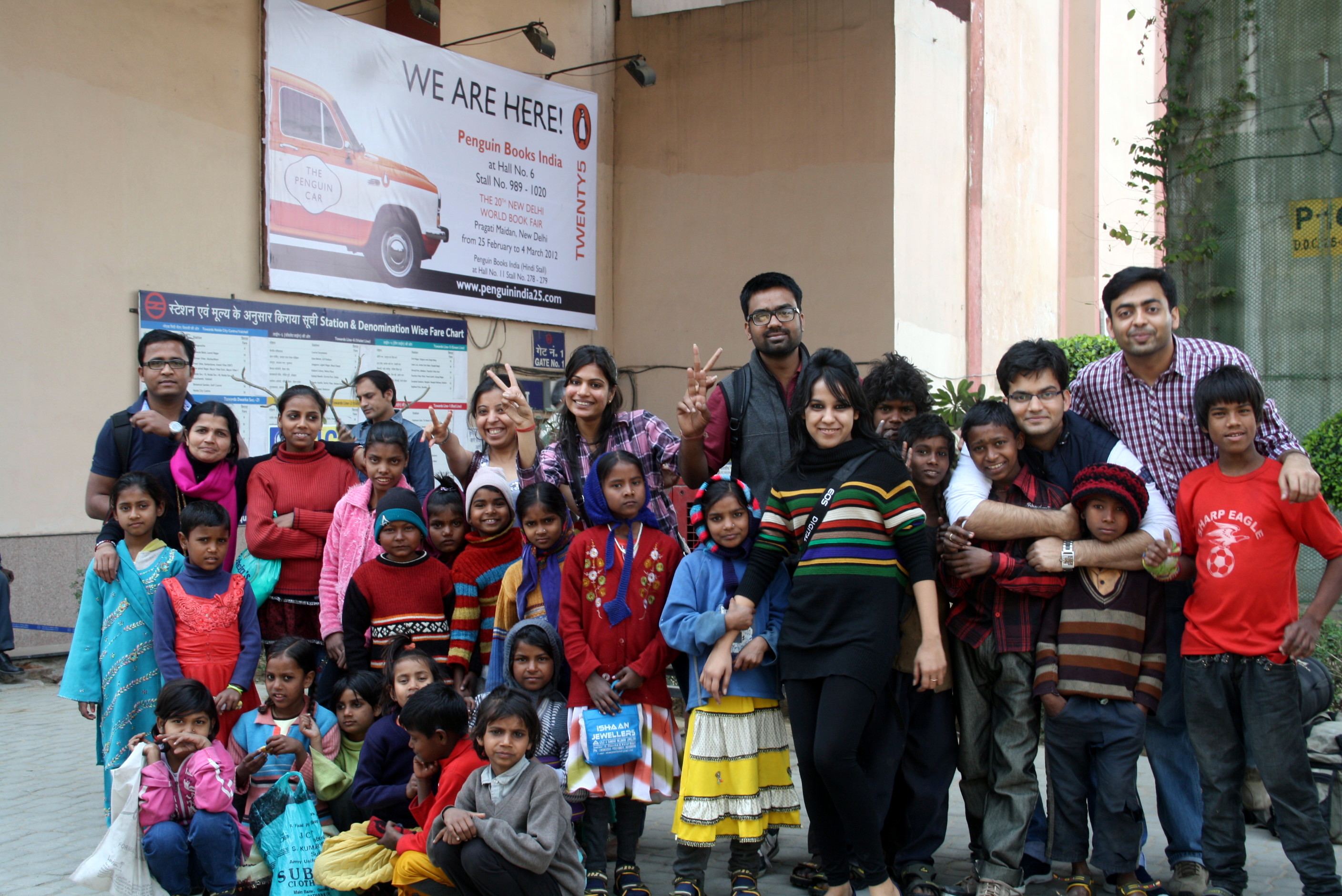
    A pic from a picnic Pick a Fight organized to the Delhi Zoo for kids of NGO Protsahan
    A pic from a picnic Pick a Fight organized to the Delhi Zoo for kids of NGO Protsahan

    Empowerment is Needed, not Help
    You must already be asking – If everyone is equal, why do some produce results and some don’t? Well, there are two aspects to this question which need answering. Let me elaborate –
    a) Results are a matter of Perception
    What you see as results might be very different from what any other person sees it as? You might believe in social activism and see its protagonists as examples. Another person might regard business leadership and results as the only good result that there is. While others might see art (writing, painting, movies) as the real expression of human potential and some others might see achievements in the sporting arena as worthwhile. So the first thing to understand when you feel, think or say that person XYZ is not producing results is that they are not producing results by YOUR definition of results. They might be producing results by their own or by others definition of it.
    b) What is Empowerment?
    If everyone is equal and capable of doing amazing things, the only thing needed is empowerment, and not any support, help or aid. Words like support, help and aid, by definition makes the receiver smaller than the giver in some aspect. While charity is good and no doubt needed (for fire-fighting), it doesn’t provide any long term solution. Instead aid has the negative effect of making the receiver dependent on future help from the giver. Empowerment is, in contrast, making the other person realize their own potential and that they are not any less than anybody else in the world. In fact, I would say that we can’t really give someone anything they already have, and the potential to produce amazing results falls in that category. What empowerment does, and what its role is to show people the path and taking away their mind and skill blocks which might be preventing them from realizing their full potential as a human being. Let me repeat for clarification, empowerment is more about taking the perceived barriers away, rather than helping or giving someone something.

    Actions and Consequences
    When people realize their potential and the amazing things they can do, they will invariably take risks and play bigger games in life. Now, when you expand your playing field and take on bigger challenges, you are bound to face some hurdles or failures (if I may call them so). These hurdles are the real test of your greatness, and you must see them not as pointers to you being weak or incapable, but as a consequences of the bigger game you are playing. It is a part of the game, and since you have chosen your actions, you must accept the consequences of it with full responsibility too. In short, you should change the meaning of hurdles in your dictionary as – ‘one step closer in the direction you are heading‘.

    Having fun and being happy is the most important
    When I say above – ‘one step closer’, it doesn’t mean that you tie your happiness to some end result. We can, and must have goals, but we should never tie our happiness to the result of those goals. Whether we reach the destination or not, it doesn’t matter (in terms of happiness). We should learn to be happy NOW, because that is the only moment we ever have. In fact, I would say that it is the happiness in people which produces great results, rather than the other way round.

  • Giving for Charity and Philanthropy, and the role Technology can play in it

    Giving, or philanthropy, is nothing new. It has been going on for ages. People, institutions and governments have been donating money and resources to their families and their communities since thousands of years. But today, as we move into the 21st century, we are more connected with each other than ever before in the history of mankind. Through technology solutions like the internet, mobile phones and other connected devices, the whole world is more united than it ever was.

    The topic of this article is to discuss and debate the role technology will play in giving and philanthropy in the coming decades. There have already been some examples of how technology can help connect people from different parts of the world and promote giving in unique ways that wasn’t possible even 20 years ago. Kiva, DonorsChoose and Kickstarter are just a few of the examples who have come up in developed countries like the US and the UK and connected donors from these countries to small entrepreneurs in countries like Mexico, India, China and from Africa.

    One difference which we can credit technology for is moving giving from a local to a global landscape. Traditionally, giving and philanthropy has been limited to your local communities. But now it is possible for you to be earning a handsome income living in New York while supporting three projects in Brazil, India and Kenya, all at the same time. See this amazing visualization of what happens when 620,000 lenders fund 615,000 entrepreneurs, students and other microfinance borrowers around the world.

    See the below video to see how Kiva works

    Apart from dedicated giving networks and organizations like Kiva, the advent of social networking and smart phones have helped in spreading information and news about various giving opportunities around the world. They have been effective in spreading these news like wildfire where traditional media would not have been effective, and have also managed to raise large amounts of money by getting small contributions from individuals like you and me.

    In the developing world, where smart phones and internet are still not readily available, it has not stopped people from devising new and innovative ways to develop technological solutions using just sms and phone calls. SMS has been used to gather people together and spreading news about an event to a large number of people. SMS based solutions, like a farmer turning ON and OFF his tubewell, just by sending an SMS rather than walking 5km in his field, are also making a big value addition in the lives of people.

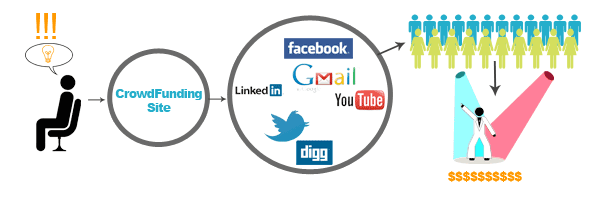
    How crowd-funding works?
    How crowd-funding works?

    Even with all that, I would say that we have just seen the tip of the iceberg in using technology to facilitate giving. There are a lot of imaginative ideas being developed as I write this article. For example, PlayMob, a tech company launched its GiverBoard platform designed for charities and game developers, linking them to design giving opportunities within the game itself. And it is not asking gamers to give donations, but has linked charity with buying products within the game itself that supports a good cause.

    Going into the 21st century, it would be interesting to see new innovative and disruptive attempts to create networks and platforms for doing good, and not just by providing a technology solution to fundraising. If we are able to inculcate giving and doing good into our daily activities rather than creating separate fundraising platforms, it would connect a lot more people, generate a lot more money and resources, and make businesses and people feel good about the business and transactions they are doing.

    I am waiting to hear news about such disruptive solutions popping up in different parts of the world in the coming decades. I am waiting for not just the Giving world to change for the better, but also for the time when our daily activities leave us feeling good and grateful for our contribution.

  • Is the Innovation ladder leaning against the right wall?

    Innovation is defined as the creation of better or more effective products, technologies or ideas that makes life easier for its customers and solves a problem in the process. Innovation is the buzz word these days in business circles and the use of technology in designing innovative solutions across different sectors has never been more pronounced before.

    If you see innovation discussions happening these days, most people will list the iPhone and the iPad, Facebook, the Sony Walkman and other technology related stuff on the top of their list. While such innovations have captured the media attention and earned a lot of money and market share for the respective companies behind them, there is another kind of innovation happening in the world. This new kind of innovation is happening in developing countries, even in villages, but it is not being covered by media, not being distributed across markets and countries, and not being talked about as much as iPad and other similar products.

    While the first kind of innovation is mostly happening for business reasons and are focussing on making life more comfortable for its users (and not necessarily solving any critical problems), the second kind of innovation is happening mostly sporadically but for solving serious problems like hunger and poverty. In the first scenario, life would have continued for people as usual even if the innovation hasn’t happened (albeit in a less efficient way) while in the second scenario, there would have been serious issues of disease, health and death (and they have been) in the absence of the said innovation.

    An example of the second kind of innovation is a simple Tippy Tap, which is a low cost, low tech, low water usage device to promote hand washing with soap. While most of the world talk about solving problems like accessing emails on the go, do we realize that 3.5 million children under the age of 5 die each year of diarrheal and respiratory infections, with 1000 deaths in India daily. Do not think I have put an extra zero, there are indeed thousand deaths daily. Now that is a real problem, purely avoidable just by washing hands with soap, and Tippy Tap intends to solve this problem. Now you decide what is a bigger, or better, or more needed innovation. (See how to build a Tippy Tap)

    Are we solving the right problems?
    Are we solving the right problems?

    While we can always term the iPad, Facebook and other such technological innovations as innovations, they don’t solve any big or critical problems. You can call them innovations as a new approach to markets but not for problem solving. They focus on the opportunity and the market size, but NOT on any real problem. If we look more, most of the time real problem solvers are not from the business sector but they could be local people, academicians, social workers or just plain anybody. While the only innovation highlighted by the media has been done by businessmen. Now I don’t think anybody believes only businessmen can innovate!

    I am in no way trying to discredit technological innovations, as the Sony Walkman revolutionized the music industry by allowing people to carry music on the go. But nobody complaint about the need of a portable music player, and it did not solve any problem. Similarly, Amazon did not solve any problem. People had been shopping offline for ages, and nobody complained. Yet Amazon changed the way shopping is done forever, and there are 100s of Amazon clones coming up everyday. Users never asked for a social network before Facebook, neither did they ask for online video sharing or a service to tweet what they were doing every second. But all these are hugely successful products now.

    Mahatama Gandhi said that “I will give you a talisman. Whenever you are in doubt, or when the self becomes too much with you, apply the following test. Recall the face of the poorest and the weakest man [woman] whom you may have seen, and ask yourself, if the step you contemplate is going to be of any use to him [her]. Will he [she] gain anything by it? Will it restore him [her] to a control over his [her] own life and destiny? In other words, will it lead to swaraj [freedom] for the hungry and spiritually starving millions? Then you will find your doubts and your self melt away.” If we follow his simple words in our day to day actions, we will see real innovation.

    The question I am asking here is that either all the commercial innovation happening is not innovation at all, and if they are, is the innovation ladder is leading against the wrong wall as of now? As most of the problem solvers or real innovators are not from the business world, we  need to provide them with skills straining, investment and venture capital help, advice about R&D and intellectual property rights, and the right guidance to be able to scale their innovative solutions so that they make a dent to a ‘real‘ problem.

  • Pick a Fight – How we do it, and what all have we done so far?

    It has been 4-5 months now since the seeds were sown for  Pick a Fight, and I think its time to summarize how we work, what have we done so far, and what’s next in the coming months? The last 4-5 months have been really wonderful. We have met and connected with so many amazing people, some fighting for a cause and some willing to contribute to different fights in the society. The Anna Hazare led anti-corruption movement just showed that ‘we care‘ about our country and will come out to fight if the right options are available.

    How we work?

    We have found out that people always want to help others, as, either aware or unaware, that gives human beings the most satisfaction and a sense of fulfillment. But most people don’t know where to go and whom to approach to volunteer their services or resources. After this, another important factor is lack of trust that whether their resources are being used for the right purposes or not. This is not strange considering the amount of corruption in India, even in the NGO sector.

    So when we take care of finding opportunities where different people can contribute, and making sure their help is utilized as they intended it to be, people are more than willing to help. We have people from Kashmir to Karnataka, from New York to Hyderabad who are volunteering their time and using their skills for our requirements.

    We have formed different teams in cities like Bangalore, Mumbai and Delhi and for different work categories such as design, communication, technical work, etc. People come up with new ideas, meet and discuss them and partner with different NGOs and try to help them in whatever way they need help. In all, there are around 40-50 people who have come forward with their willingness to contribute.

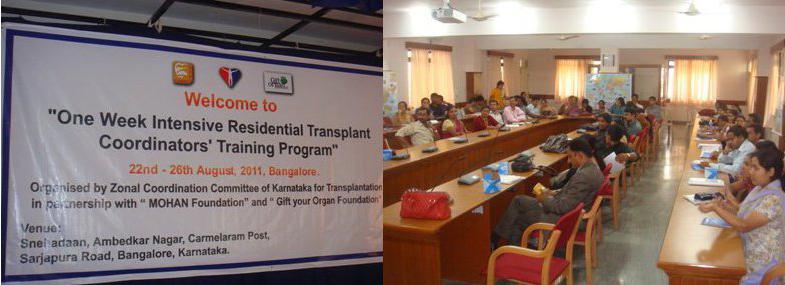
    A week long transplant coordinators training program by Gift Your Organ
    A week long transplant coordinators training program by Gift Your Organ

    What have we done so far?

    Gift Your Organ is a NGO promoting Organ Donation. They recently held a 5 day training program for transplant co-ordinators of different hospitals in Bangalore where 60 people from all over the country participated. We helped them in designing the brochures for this event. Apart from that, they want to hold awareness sessions in schools, colleges and companies to spread awareness about Organ Donation. We are reaching out to our network to help arrange this for them.

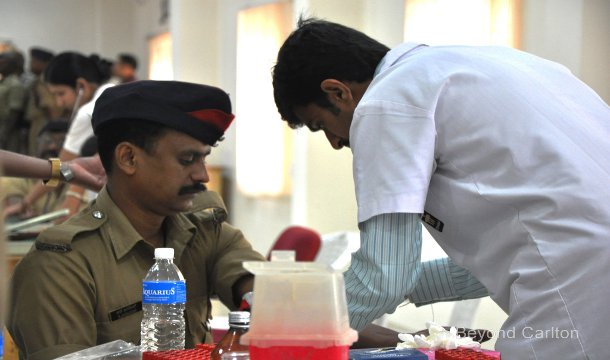
    Beyond Carlton is a NGO working in the area of fire safety. They work with the fire department to ensure proper awareness among people about fire safety. They approached us for help regarding promotion using social media and for their website. We have connected them to a social media strategist who is devising a strategy for them right now. Also, a web design company has volunteered to design their website totally free of cost. We are glad we are able to contribute to their cause.

    Apart from the above two, we have also helped a few orphanages find some teachers to teach the students and have asked people to go spend some time in old age homes. We have also initiated Waste Management activities in 3-4 apartments in Bangalore since we started, as an extension of the No-Waste initiative I started last year.

    Beyond Carlton organized a free medical camp for firemen and their families at Manipal Hospital
    Beyond Carlton organized a free medical camp for firemen and their families at Manipal Hospital

    What’s Next?

    We already have a functional team in Bangalore and are building teams in Mumbai and Delhi as we speak. So if you want to join our team in any of these cities, or take up forming a new team in your city, do contact me at sumit@pickafight.in or call me at 9916532966. I will get you started and make sure your help is channeled in a proper way to make a difference.

    If you don’t want to join actively at this time, you can always join us on Facebook, Twitter and LinkedIn to keep updated with whatever we are doing. Lets say Gift Your Organ wants to have a awareness event, and you can connect us with the right people in your company. This way, you can contribute to a cause without having to be an active part of it. So do join us on these platforms and stay updated.

    So let us all do our bit. And as Mother Teresa said, “It is not the magnitude of our actions but the amount of love that is put into them that matters.”

  • Can we become a Hazare or a Gandhi? That would solve much more than corruption

    We have seen a tremendous response to the peaceful protests triggered by Anna Hazare’s indefinite fast. People from all over the country, and even Indians living abroad, have shown their support for Anna Hazare and Jan Lokpal Bill by peacefully assembling and holding protest marches. He has united India across religions, caste, language or any other divisive factor. It is heartening to see India united for something other than cricket.

    The number of people who have protested have been humungous by any standards. In Delhi and Mumbai each, more than a lakh people marched on 21 Aug 2011. Even in Bangalore, I have been hearing news of around 25000 or more people assembling daily. Similar stories are coming from other cities too, even smaller ones. While I don’t doubt that Anna has immensely resonated with the masses and given hope to millions of frustrated Indians, I also feel that going to a protest site is a very ‘easy and convenient‘ way of showing one’s support to Anna. A real test of commitment to Anna and his Gandhian methods of protest would be if we inculcate many of his preachings in our daily life.

    Anna’s protest has been based on Gandhian principles of fasting and satyagraha. He has advocated the right of citizens to protest peacefully. He has asked people to pray for the ministers and the government. Gandhi ji also used fasting as a tool for punishing oneself so as to melt the hearts of your opponent and win him over to your side. But a big question to ask is, “Can the common man live by these principles?”

    Truth

    Can we truly live by Gandhian principles?
    Can we truly live by Gandhian principles?

    Gandhi’s whole philosophy is based on truth. In our everyday lives this would translate to questions like these

    • Can we live our lives truthfully and honestly, at home and at work, in public and in private, with friends and with family?
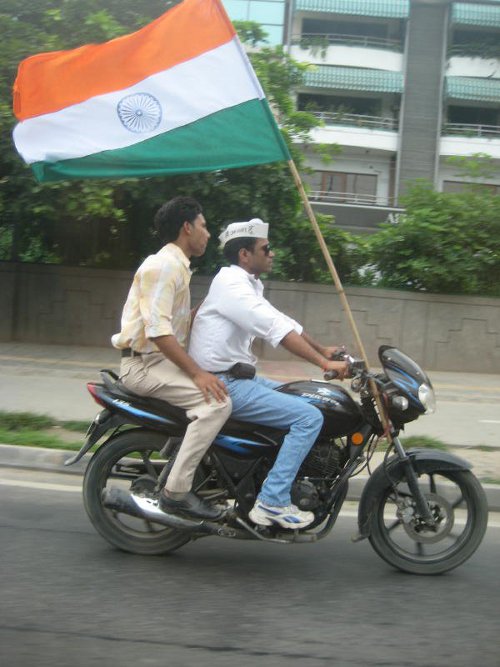
    • Can we pledge to follow the rules of the law and live like ideal citizens? Can we wear helmets every time we go out on a two-wheeler and can we not jump signals even if the roads are empty? (In the current movement, I have seen people on two-wheelers carrying the tricolor but without a helmet..)

    Sacrifice

    Gandhian methods of satyagraha and living a simple life resonates from the principle of sacrifice as a means to purify the opponent. In real life, this principle would translate to questions like –

    • Can we pledge to not give any bribe to a cop, babu or a politician?
    • Are we ready to suffer delays and other harassments which might occur when we refuse to pay bribes?
    • Are we ready to sacrifice our personal comfort for the greater goal of a just society?
    • Can we persist making these sacrifices and suffering even while others around us might not be doing so?

    Love the Opponent

    According to Gandhi, non-violence doesn’t only mean such in action, it is also meant in thoughts and words. To understand this, we need to ask ourselves questions like –

    • Can we truly remove the thoughts of hatred from our minds for those who have been unfair to us?
    • Can we love everyone alike, even our opponents, and demonstrate it in thought, word and deed?
    • Can we hate the sin and not the sinner, and stand up against the sin but continue to love and forgive the sinner?
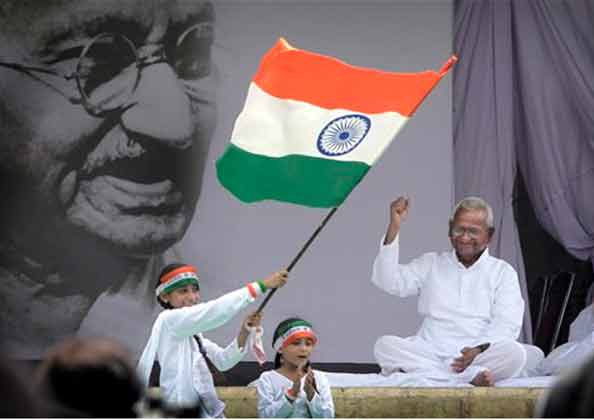
    Hazare, Gandhi and the Tiranga Waving Kids - Perfect Pic
    Hazare, Gandhi and the Tiranga Waving Kids – A Perfect Pic

    Equality and No Discrimination

    The whole of Gandhi’s life and Anna Hazare’s work in Maharashtra has emphasized on the removal of untouchability and discrimination on basis of caste, language and social factors. The people of Ralegan Sidhi (Anna’s village) call it as a family and not as a village.

    • Can we treat our fellow citizens as brothers and sisters and part of the same family?
    • Can we look beyond our caste, language, economic status and love and treat each other alike?
    • Are we ready to practice what Gandhi said, that we are all children of the same God, and any kind of discrimination would be reprehensible to Him?

    What I am trying to say that while it is very easy and convenient to show and voice our support in Anna Hazare in a rally, it would be very demanding and challenging to practice what Anna is following in his daily life. We might have to suffer some short term difficulties and make some sacrifices, but we all know in our hearts that the long term benefits of such a life are always good and more fulfilling. And leave alone corruption, we would remove all or most of the ills that plague our society if we live by the principles by which Anna, and other Gandhi followers live by.

    There is a famous Chinese proverb which I think has a very deep meaning which says – “Laws control the lesser man. Right conduct controls the greater one.” Can we answer YES to the questions I have listed above? Please leave your views and responses as comments below.. If there are any other questions you might want to add to the list, add them as comments too 🙂

  • 5 Reasons why Anna Resonates with the Masses

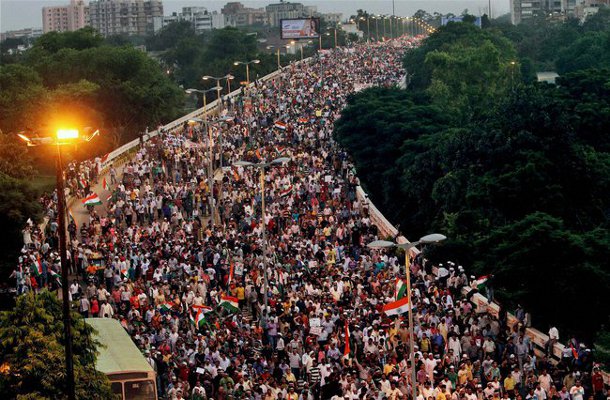
    In my previous article, I had a doubt about how the public will react to Anna’s second fast unto death. I was more skeptical about the response to his Jail Bharo call. But I am glad all my skepticism has been proved wrong. The public has responded, and how. Tens of thousands of people have come out on the streets in support of Anna Hazare. People have courted arrests in hundreds and in Delhi, police has to convert a stadium into a jail to keep those arrested. There were around 100,000 people marching to India Gate in Delhi and around Azad Maidan in Mumbai. Now can the government arrest them all?

    I am really glad that the public has risen to the call given by Anna Hazare. But what is special about Anna Hazare that he has galvanized the whole nation when most of us didn’t know him at all a few months ago. How is one man able to dictate terms to the government? How has he cut across the social and economic divides of the populace which is so deeply entrenched in our society?

    History of Work Done

    He is an ex-army man who fought in the 1965 Indo-Pak war and later build his village into a model village, self sustained and free of all social ills. People from all over the world have come to see the amazing work he has done. He has not married and devoted his entire life to his village, and later in his fight against corruption. After that he has fought corruption in Maharashtra and he was one of the active crusader behind forcing the Maharashtra government to bring in the Maharashtra RTI act, one of the first in the country. He has given his life for the service of the nation since the last 35-40 years..

    Clean Image

    He has devoted his life to social activism, mostly in Maharashtra. He developed his village Ralegan Sidhi into a model village which people from all over the world come to see. It is considered a model of self sustainable living and of environmental conservation. The World Bank Group has concluded that the village was transformed from a degraded village in extreme poverty to one of the richest in the country.

    More than a lakh people march from India Gate to Ramlila Grounds on 21 Aug
    More than a lakh people march from India Gate to Ramlila Grounds on 21 Aug

    No Personal Assets or Motives

    Anna Hazare lives in a small room attached to a temple in his village since 1975. He has no assets and has a bank balance of Rs 67,000. Whatever land he has is being used for development purposes for his village. His only source of income is the pension which he gets from the Army. He has devoted his life for the betterment of his village, and after that fighting against corruption. He has never done anything for his personal motives.

    Gandhian Principles

    What is most heartening is to see Anna Hazare following Gandhian principles and using the same methods of fasting and Satyagraha for his cause. In a generation which has come to doubt Gandhi and the relevance of his principles in modern times, this was ample proof of the relevance of his methods irrespective of time and generations. He has called to our souls in the same peaceful manner that Gandhiji did.

    Given Hope to Millions of Frustrated Indians

    More than anything else, the one reason why Anna has resonated with the masses is because he has given hope to millions of frustrated Indians. Everybody knows there is corruption in every nook and corner of the country. But the BIGGEST problem is that nobody can do anything about it. Everybody is helpless in the regard that there is nobody to complaint, and even if they complaint, they end up being harassed by the same people. Anna has given people hope and shown them a way which might lead to a corruption free India. That is why he caught the government totally unaware!!

    It won’t be wrong to say that Anna Hazare has come as the Messenger of Hope in the current state of our country. He has managed to turn all the cynicism and pessimism into an enthusiastic and optimistic revolution by the people of India.

  • Wah Re India

    We are the largest democracy,
    With proud we proclaim this fact!
    Our economic growth is big news,
    As is the huge investments we attract!!

    I absolutely love my country,
    As it never fails to amaze me!
    At times both tragic and amusing,
    Its stories are nothing less than filmy!!

    We can vote at age eighteen,
    And elect our representative!
    Yet we can’t drink below age 25,
    Who can explain this law’s motive??

    Everyday is an irony in India
    Everyday is an irony in India

    We have the right to free speech,
    But isn’t it a grave misconception!
    As public order, and even morality,
    Can be grounds for police action!!

    Among one of the basic human rights,
    Is the right to peaceful & free assembly!
    But the arbitrary use of Section 144,
    Shows the government wants to be bossy!!

    Millions go without food daily,
    How can anyone miss the contrast?
    When the govt. ignores the hungry,
    And denies Anna the permission to fast !!

  • The Fight Against Corruption and for Jan Lokpal Bill – Part II

    In April, the government agreed to a joint drafting committee for a Lokpal Bill as they were ‘bound by duty‘ of the people to do so. They promised to discuss the points raised by Anna Hazare, Arvind Kejriwal and others and present a Lokpal Bill in the monsoon session of the parliament. August is here, four months have passed since Anna Hazare galvanized the whole nation with his fast, but has the last four months been anything but a hogwash by our politicians?

    The talks never got anywhere because both sides blamed each other before and after every round of talks. The demand for televising the talks was never accepted by the government. Even after numerous round of talks, there was no consensus on the various contentious points of the Jan Lokpal Bill. This was very visible in the press conferences by both parties after every round of fresh talks. It was clear there was no trust between the two sides of the drafting committee, from the very beginning. Without mutual trust and respect, expecting a positive outcome from the committee was like expecting Tom and Jerry to become friends because they were on TV.

    Finally, the government is ready to present a Lokpal Bill in the parliament. A bill which cannot tackle or investigate any of the serious corruption cases we have seen in recent times. It will not have jurisdiction to investigate the Commonwealth Games scam, Bellary mining scam or the Adarsh society scam as it can’t prosecute state government officials. It can’t investigate the 2G scam as PM and his office has been kept out of it. It can’t take your complaint for corruption against your traffic police officer, or the magistrate, or the collector in your district. Under it, you can not complain against any babu who refuses to process your file or pay you your pension without taking a cut from it.

    Are you? Will you?
    Are you? Will you?

    The United Nations Convention Against Corruption (UNCAC) clearly mentions the terms based on which a country’s anti-corruption body should work. It asks for an independent body, which the Lokpal will not be because the CBI’s anti-vigilance wing will continue to function as usual, and under the government. Moreover, the Lokpal will be appointed by government officials themselves, creating a huge conflict of interest. If the government only wants to create a Lokpal for top level bureaucracy, how has the action over the last few months serve the public and the day to day corruption which everybody has to face.

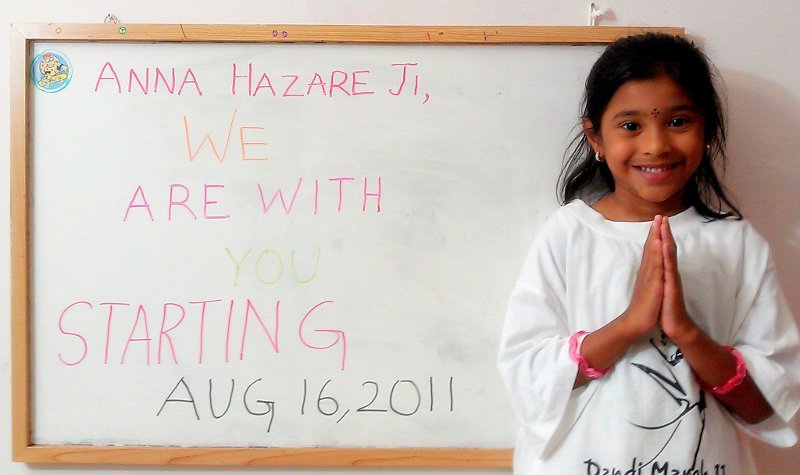
    Has the government here played both sides very cleverly to its own advantage? Did the setting up of a committee only a hogwash to dispel the growing public anger in support of Anna Hazare’s movement? Was it only to give an impression that ‘we care’ whereas the ground situation has hardly changed in the last few months? Is the government not trying to suppress Anna Hazare’s threat for a fast again by imposing section 144 in Delhi and refusing permission to his fast from Aug 16? Will they arrest him and force feed him? Will they not even allow an agitation to start this time?

    But more importantly, the question is what will the public do? The government can put section 144 in Delhi, but not in every street of the country. They can arrest Anna Hazare, Arvind Kejriwal and Kiran Bedi, but can they arrest millions of people if they come out on the streets on Aug 16. Will the public again dispel this movement as ‘it will never work’ and go back to living their pity lives. As the next few weeks before Aug 16 pass, everybody needs to ask themselves just one question, “Do we want to support Anna Hazare while discussing with friends over coffee and watching him on TV, or do we have the balls to go out on the streets to really stand for what Anna Hazare is fighting for?

    And who is Anna Hazare fighting for, not for himself, but for us. Have we even lost the dignity to support the person who is fighting selflessly for us, or are our souls so dead already that we can dismiss Anna Hazare by terming his entire movement a ‘publicity exercise’??

    I will end with a quote by Henry Louis Mencken – ” It is hard to believe that a man is telling the truth when you know that you would lie if you were in his place.”

  • First Meeting of Pick a Fight, a memorable experience..

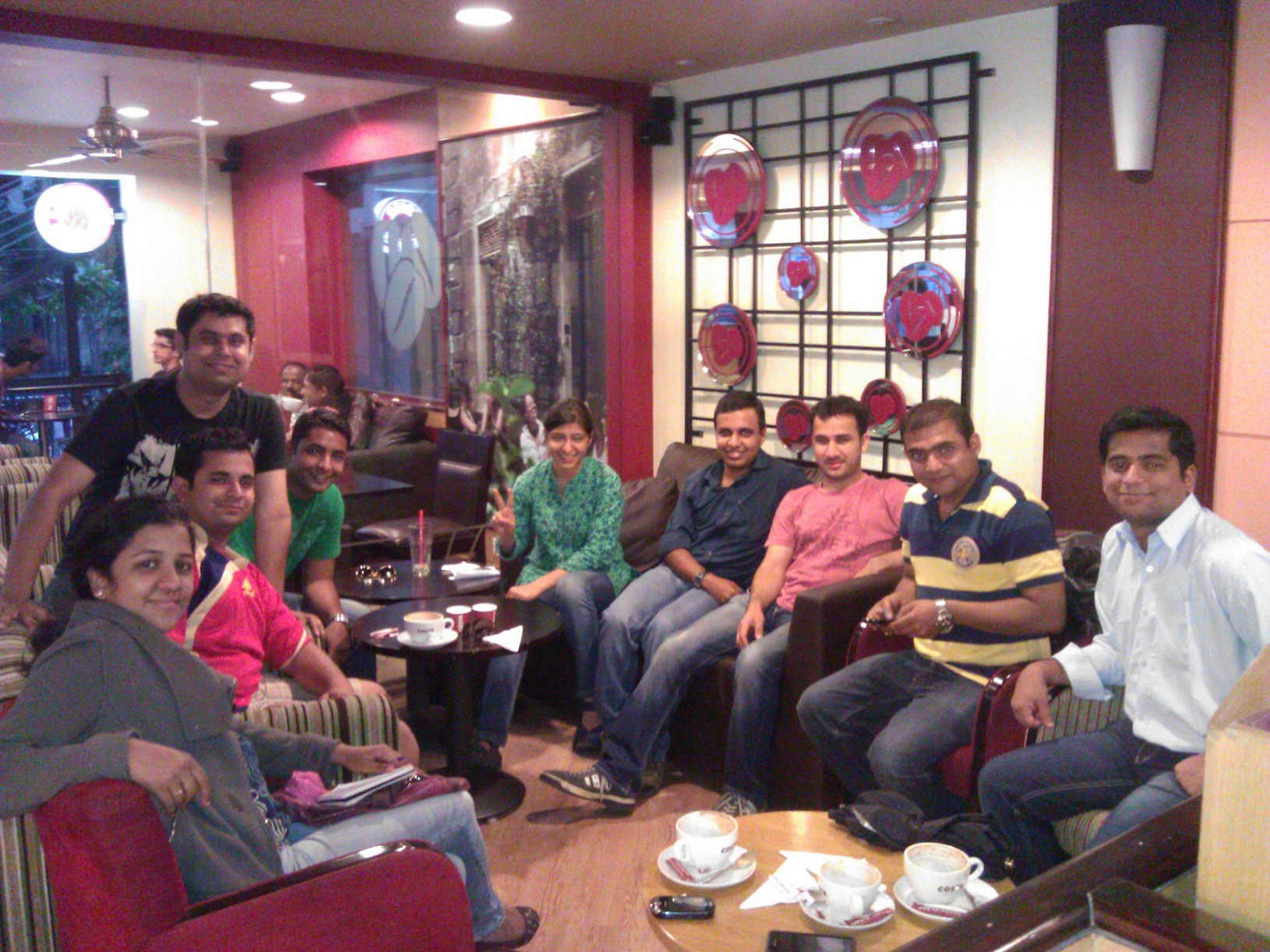
    Last Sunday (24 Jul) we had our first meeting of everyone who volunteered to join our team in Bangalore. Till now, we have been working on developing the website and asking people to join. We already had discussions with a few NGOs / fights and this meeting was the starting point for our on-the-ground operations in Bangalore. I was absolutely delighted to see 10 people turning up and contributing with their ideas, opinions and suggestions for Pick a Fight.

    What was amazing to see was the enthusiasm among everyone as each of us shared about the volunteering they have already done. Ayush recalled several activities he has been a part of while being associated with his company. Pavithra told us about a few NGOs she had visited. She also told us about her ‘India Innoventor‘ project which she is very keen to start. Rinkesh mentioned about a place where he went with Ayush once for volunteering. Others shared their experiences too. It was wonderful to hear about all these experiences.

    We shared about the fights/causes we already have on-board with Pick A Fight. Anupama spoke about an orphanage cum school which she visited and interacted with recently. She spoke about the requirements of teachers (to teach Maths, English) and of funds for the orphanage. We also explained the purpose behind Gift Your Organ, whose founder we met a few weeks ago, who have taken on the cause of organ donation to make sure nobody dies for a lack of an organ donor. I also mentioned about Beyond Carlton, a fire safety and awareness movement started by the father of a 23 old victim in the Carlton Towers fire tragedy which happened in Feb 2010.

    One of the common areas where these NGOs can utilize our help is spreading awareness. Whether the cause is about organ donation or fire safety or recycling, the awareness factor among the common man is quite low. For example, in UK, 25% of the population have pledged their organs and they are very unhappy about the figure. There are no official figures in India, but the number won’t be even 0.25%. Another way to help these NGOs would be by connecting them to volunteers who are willing to spend a few hours every week with them, teaching kids or spending some time with senior citizens.

    A good start, but this is going to be marathon, not a sprint
    A good start, but this is going to be marathon, not a sprint

    Fundraising is another common area where most NGOs need help. But it is also something which will be most challenging. There have been many instances where NGOs have been used as a front to siphon off money, and hence credibility and accountability becomes a big issue. The challenge will be to connect different causes and bring them on a common and reliable platform which they can use to raise funds for their activities. We will also have to make sure that the money is used for the advertised purposes and not for any other activities.

    We surely have a long way to go, and there will be many challenges along the way. While it was great to see the enthusiasm and energy of all the participants, we would need to be very patient at times when things are moving slowly or not as planned. We would have to keep one eye on the long term vision and not get distracted by small obstacles along the way. It will also be critical to keep our focus on the activity at hand and try to give the best possible service to the NGO / cause we are working with.

    At the end of the meeting, we all agreed that we would need to grow our network to include like minded individuals across sectors, industries and companies. As more and more NGOs begin to reach out to us, the important thing will be to be ready for them when they approach us. Very soon we will start ground campaigns on organ donation, fire safety, waste management, among others and it will be critical to have a big network to reach out to as and when we need their support.

    So let’s get together, let’s spread the word about our activities and plans, and let’s make a difference. If you have taken part in any volunteering activity, write an article or share a story with us. If you have not yet joined us on facebook and linkedin, do so now. In this way you can stay updated about our activities and help with any if you are in a position to do so. Also invite your friends and colleagues to be a part of these communities and engage in conversations.

    The road might not be easy. The destination might not be clearly visible. But let us all take the first step, and then the second, third, and so on… Cheers!!

  • Challenges before Pick A Fight and Philanthropy in India

    We have got a pretty decent start to Pick A Fight. We made the Pick a Fight website live on 15 May, and have been making continuous updates on it since then. We have been covered by MyBangalore.com, Bangalore Mirror and Deccan Chronicle as far as media coverage goes. More than 20 people have volunteered to join our team to help with Pick A Fight activities. We have started working with a few fights and on-the-ground activities / campaigns will start soon.

    Having said that, giving and philanthropy in India is still in the very nascent stages. The world leader in philanthropy is US which contributes about 2.2% of its GDP whereas India only contributes 0.6% of its GDP to philanthropy. Most of the philanthropy in the west is from individuals while individual contribution is just 10% of India’s. So why has giving not picked up in India? What are the challenges before us? Can our philanthropy standards keep pace continuous economic growth?

    Red Tapism

    The way our government and bureaucracy works, there is a lot left to be desired if you consider the effectiveness of work happening. Many of the laws and regulations are outdated. Taking permissions and certificates is a slow process and can take up to a year in many cases. Add to them the problem of corruption and this hampers the intentions of people even if they are willing to help otherwise.

    Trust

    Apart from our families, we have a very small circle of trust. Especially when it comes to matters of money, we tend to see everybody with suspicion rather than trust. Most of the giving today is facilitated by government agencies and NGOs and other agencies in the non-government sector, where unfortunately, the levels of corruption is too high for anybody to feel trustworthy donating to them.

    Accountability

    Officers and people holding offices in our government and bureaucracy are rarely held accountable for their duties. It is very easy for them to go back on their promises and duties without fear of any penalty, loss of pay or punishment. This kind of attitude further discourages people and organizations to give their money and resources to philanthropy.

    Challenges Ahead
    Challenges Ahead for Pick a Fight

    Measuring Social Impact

    If we somehow ignore the above three factors and consider all the work which is happening in the social sector, it is very difficult to measure the social impact of philanthropic efforts of India. There are no set standards or benchmarks to compare to. It is very difficult to measure how many households have come out of poverty, or how many people have improved their standards of living due to a particular philanthropic effort.

    Considering that Pick a Fight and other philanthropic efforts have to work in an environment consisting of the above four factors, it is surely going to be a challenge. Getting the trust of people, and holding ourselves accountable for whatever tasks we take up is going to be the key for creating a sustainable giving movement in India.

    We will also need to devise ways of measuring the social impact we are causing. The work we do might have social, economic and environmental impact but measuring them is very important for them to be properly acknowledged by one and all. “What can be measured can be improved” goes a popular saying. Knowing how well you are achieving your objectives can help you plan better for the future. It also highlights the importance of the work we do, to our partners, customers, staff and volunteers, donors or to a government agency.

    Although it is not easy or well defined how to measure social benefit, its importance should be evident to all. Only by constantly making efforts in this direction keeping in mind the interests of our various stakeholders will help us in creating a new culture of giving and promoting philanthropy in India.

  • The Beauty of Indian Monsoon

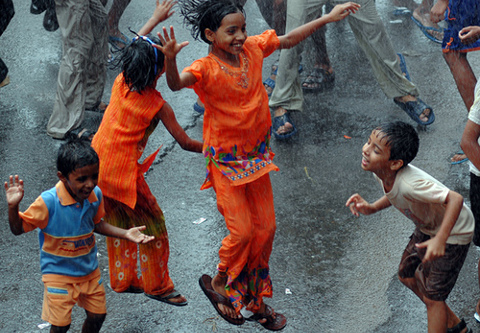
    Kids enjoying the rains
    Kids enjoying the rains

    When the earth gets wet,
    All sorrows when one forgets!
    It is that time of the year again,
    When you want to walk in the rain!!

    When the fields are green,
    Every face has a new sheen!
    You will forget your every pain,
    When clouds roar and it starts to rain!!

    When the rivers rise and swell,
    Tales of joy when everybody tells!
    There is no dream you can’t attain,
    When your spirit is inspired by the rain!!

    When kids love to dance and play,
    When all emotions are on display!
    Nobody loses, and everybody gains,
    The rainbow is above, and below it rains!!

    When the young get romantic,
    As the weather sings its latest lyric!
    The mood is difficult to explain,
    When the sky is grey, and it rains!!

    Monsoon in India is not just a season,
    To lips waiting to smile it gives a reason!
    What it means to many is hard to explain,
    It is best felt by getting drenched in the rain!!

  • What was the need for Pick a Fight?

    As many of you know, I am working on my latest initiative, which we have named “Pick a Fight“. The aim is to become a one stop destination to connect anyone who is fighting for a cause and looking for help with anyone who is willing to contribute in terms of money, time or resources. But why? Why have we started this? What was the need for such an initiative? In this article I will dwell on this question in detail.

    George Bernard Shaw once said –

    “The worst sin toward our fellow creatures is not to hate them, but to be indifferent to them: that’s the essence of inhumanity”

    Today, as we live in a 21st century India which is economically progressing at a brisk pace, the question we need to ask ourselves is, “Do we care about our fellow countrymen who have been deprived of this growth?”, “Does it hurt us when we see news of crime against women and elderly?”, “Do we care about our society in the same way as we care about our family?” You might answer yes or no to these questions, but nobody can deny the fact that real (inclusive) and sustainable growth cannot happen if there is no social and economic equality and a large number of our people are still hungry and unemployed. A society cannot be called prosperous unless it takes good care of its weak and underprivileged populace.

    Creating a Culture of Giving

    I have always been proud of how much we Indians care for our family members, how much we sacrifice and give for the happiness of our family. But outside of family, our giving is very limited. Being very religious people, most of our giving outside our family is confined to religion. But unfortunately, all that has not made its way to the needy and for development purposes. We give money and gold in huge amounts to Gods and temples, but surprisingly, we don’t give for the values and teachings that these Gods stand for. Pick a Fight aims to create giving as a culture to promote values and ideals preached in all major religions.

    See Giving as an Investment in Social Change

    We need to see giving as an investment in social change rather than just an outgo of time and money. Giving for social change is like an investment which will come back to benefit us and our future generations. It is not for someone else’s benefit, it is for everybody’s, including ours, benefit. With Pick A Fight, we aim to provide options for people willing to give so that they are aware of the difference and social impact they are making.

    Giving for Social Change
    Giving for Social Change

    Giving for Development Assistance rather than Charity

    Giving can take two forms. One option is giving for charity, like feeding a hungry person or giving medicines to those who can’t afford them. Another form of giving is to give for a development process, like for an employment program or for education, which enables the receiver to empower him/herself and improve his/her living standards so that he/she doesn’t need the donor from the next time. A perfect proverb to highlight this point is – “Give a man a fish and you feed him for a day. Teach a man to fish and you feed him for a lifetime”. We need to move our giving to the second form which builds long term sustainable growth for the recipient.

    No Common Platform

    India has over 3 million NGOs working on a myriad of issues. But there is no extensive repository or listing directory available for donors to search based on their state, area of interest, etc. (There are few like NGOPost, GiveIndia, but they are limited in their operations and reach) We intend to fill that gap with Pick a Fight as we grow. Apart from that, a common platform can also be used for communication between different stakeholders. NGOs can share their best practices from different causes they are working on, and people can share stories of hope and courage to encourage and inspire others. Sharing resources and knowledge on a common platform will be instrumental in shaping the future of India.

    We are the Privileged, and have the Responsibility

    We are the privileged section of the population to grow up in the last 20 years when India has seen economic progress. We are also the ones who have been directly benefited by this growth and the reforms after 1991 have made a considerable impact in our lifestyles. But there is still a large part of our population who have missed it. It is our responsibility to take the decisive steps required to make them a part of this growth so that they also contribute to the economy for the next phase of growth.

    So this was the reasoning behind starting Pick a Fight. After all, we export our software all over the word and are known for it. It is time we use our software and technical skills to help our own people and country. And Pick a Fight is still in its infancy, we would need a lot of support from all parts of the country to make it a success. We would also need a lot more initiatives by privileged people like me and you to ignite the next wave of growth and send a ripple of hope across the nation.

  • Pick a Fight – A poem

    It is time
    It is time

    Life is so great,
    Why should you wait?
    You are a hero,
    Go show some bravo!
    The light will shine bright,
    If we decide to pick a fight!!

    Few of us are not so lucky,
    Want to make them happy?
    Then this is your chance,
    Their dreams we can enhance!
    The possibilities are infinite,
    Let us all pick a fight!!

    This is your life’s journey,
    Are you going to live it fully?
    Find out what interests you,
    We have a lot on our menu!!
    Let your hopes rise like a kite,
    Big or small, but pick a fight!!

    You can make a difference,
    Light the world with brilliance!
    Step outside of your shadow,
    But don’t wait for tomorrow!
    A new fire let us today ignite,
    This is our chance to pick a fight!!

    It’s time to welcome the new,
    If not me and you, then who?
    Let us create a new future,
    Which is sweet and not bitter!
    Together we must all unite,
    Now is the time to pick a fight!!

    P.S. – Visit http://www.pickafight.in for more details..

anger anna hazare bangalore business challenge coaching conflict conversation corruption Cricket culture dandi march emotions energy friends fun gandhi giving gold growth hope india jan lokpal bill language leadership lessons Life listening love moment mother movie new year people perspective poem sachin tendulkar saleraja trust values walk waste women words world cup