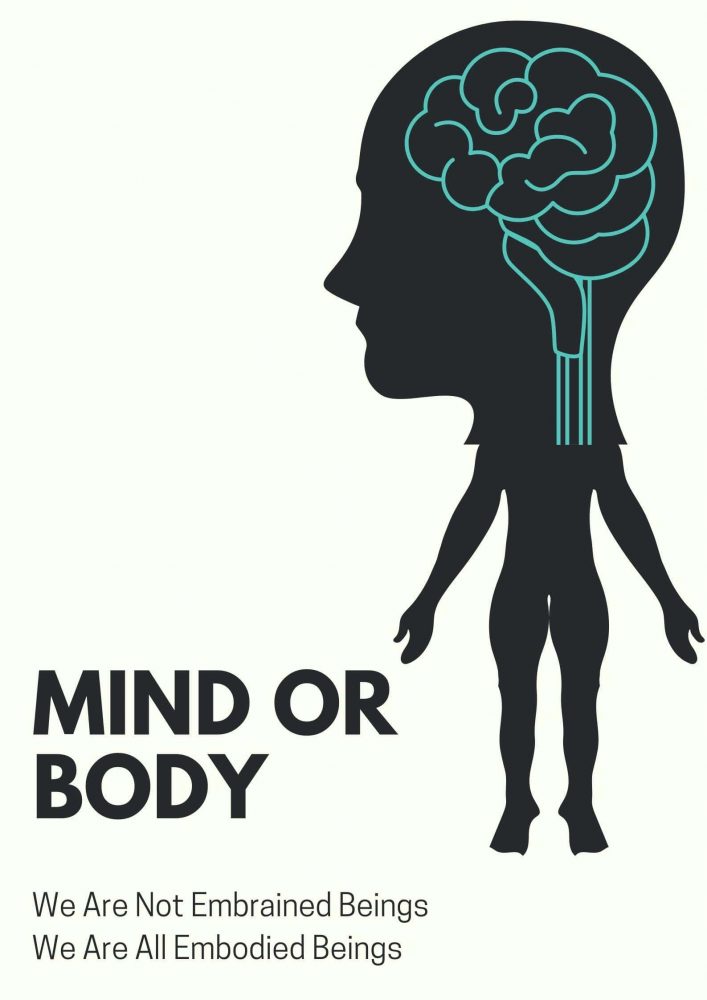
I have always taken pride in my analytical and logic-driven reasoning skills. As a child, I remember myself not being physically strong. Sports was never a priority in the culture I grew up in, and we never had the finances to focus on any sports training anyways. As a natural corollary of that, I focussed on reading and studies. I vividly remember falling in love with mathematics, and I could sometimes solve complex problems in my head. That was probably when I started living in my head and forgot that I also had a body.
This focus amplified when I stumbled into computer programming. The first time I used a computer, it was to program using BASIC and to play a game called DAVE. I must have been 13 years old back then. A few years later, my joy had no limits when my father bought a computer for me when I turned 15. It started a fascination with logic, reasoning, and programming that has shaped most of my work life.
If I was not good at sports earlier, I totally stopped doing any physical activity once I had a computer at home. I spend my nights and days learning to program and making small and large projects – first for myself and then for some small companies. I carried this analytical mindset with great pride wherever I went and never bothered to consider that I also have a body – except as a vehicle for my head and thinking brain.
Understanding Emotions Led Me To My Body
My learning and research around emotional intelligence led me to focus and notice my body. Have you ever experienced having “cold feet” or a “hair raising” experience? If yes, you are not alone as every emotion brings with it a physiological response in your body.
Our bodies react to external events first before our thinking brain has a chance to reflect on them. These responses might range from tension in your neck, back, or any other part of the body. For example – Sadness is associated with pain in the heart and numbness or stillness in the lower part of the body. Anger is associated with fast and shallow breathing and reddening of your face.
Other ways your body reacts to external events include your heart beating faster, turning pale, smiling, sighing, sweating, getting goosebumps, and so on. These physiological responses show that emotions are not only in our brains but that they have a presence and origin in the entire human body.
Noticing and becoming aware of our bodies becomes very relevant when it comes to communication skills as our words only constitute 7% of it. The rest of it is communicated via our tone of voice and our body. Do you notice small shifts in your and others’ bodies (gestures, hand movements, eye contact, facial expressions) while communicating? Do you notice the tone, volume, and fluency of voice change as different emotions play their part in the background?
Our body is not just there to carry our head. It is the source of everything we do
Discovering My Body At Newfield Network’s Coaching Program
In 2019, when I signed up for the Newfield Network’s Coaching Program, I discovered the role of our body in everything we do, and especially our leadership. Our body and associated physiology, our thoughts and language, and our emotions determine how we see the world, and every action we take henceforth.
Our language, emotions, and body are the coloured glasses we all wear and through which we view the world. And making changes in our language, emotions, and body are our access to see the world differently and open up new possibilities. Modern neuroscience has shown that the body influences the brain just as much as the brain influences the human body. If we get into a posture of confidence and put a smile on our faces, it is impossible to feel depressed. Alternately, if we get into a slouched and depressive posture, it is impossible to be cheerful and joyful.
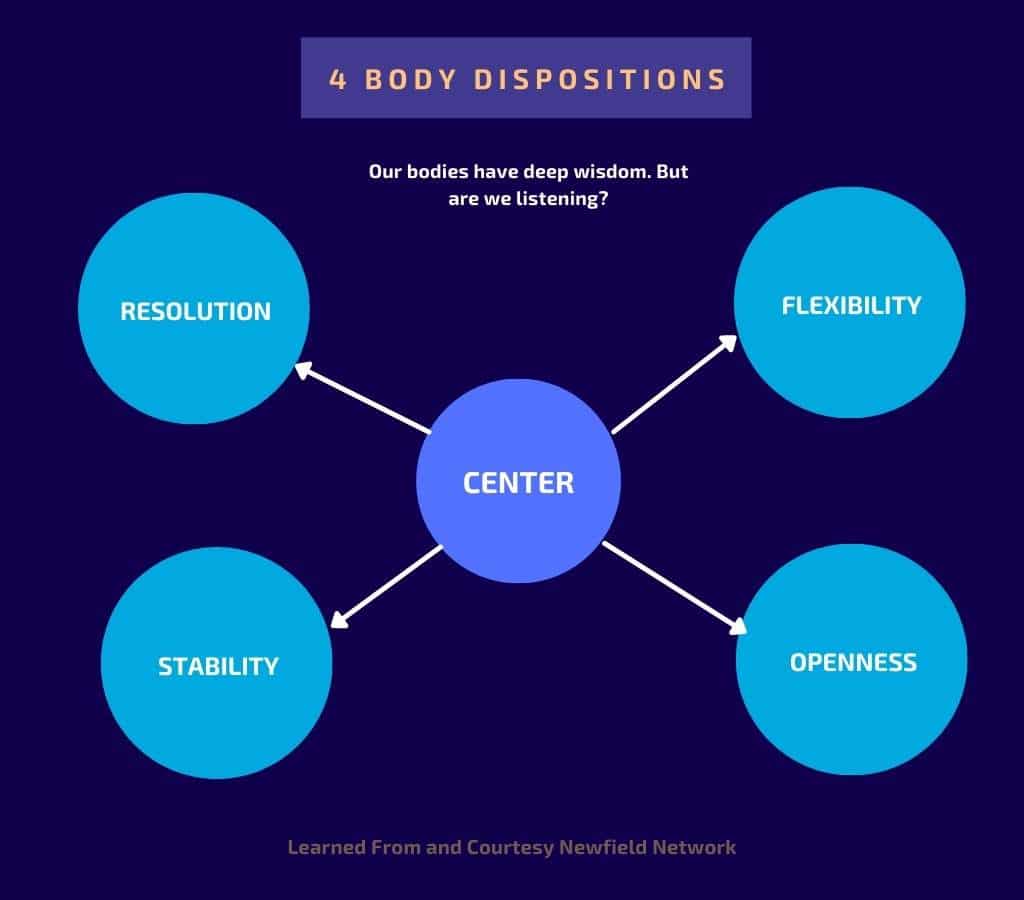
It was at Newfield that I was introduced to the 4 body dispositions or archetypes. Before we talk about them, let’s understand the neutral state which is called the CENTER. Being in CENTER allows us to choose to move to any of the other 4 body dispositions. Being in CENTER is our foundational and grounded state as human beings. Center means we are aware of what is happening in our bodies. Are we tense or relaxed? Are we hot or cold? Are we balanced or not?
“Life is always better in your body. Get out of your mind.” ― Lebo Grand
The 4 Body Dispositions
The 4 Body Dispositions (see them as choices) are different ways we can shape our bodies. With each body disposition, we see the world in a different way, and it shapes every conversation we have. Unless we are aware of them, we usually are comfortable in only a few of these body dispositions. These 4 body dispositions are Resolution, Flexibility, Stability, and Openness.
Resolution is the body disposition when we are singularly focussed on getting something done. We feel tight and determined in our bodies, and are ready to take clear and decisive action. This is the disposition of a warrior.
This is a position when you are ready to sprint. You place one foot in front of the other and are ready to move ahead and take decisive action. This disposition also keeps you away from distractions as your vision is focused. We all use this disposition in times of emergencies and crises situations.
Flexibility is the body disposition when we are open to trying out new things and brainstorm new ideas. In this body disposition, we are moving our bodies, our hands and our feet as required. It can be said that in flexibility we are in a dance with what is happening around us. This is the disposition of a dancer or a magician.
In this disposition, we are playful and open to trying different approaches and seeing different perspectives. We are ready and open to moving from one idea to the other. We can listen and speculate with others, even if their views are very different from ours.
The 4 Body Dispositions
Stability is the body disposition when you feel grounded by the weight of your feet on the ground. Stability is standing in our own dignity, knowing what we stand for, and not be easily shaken or moved by what is happening around us. This is the disposition of a king or queen.
In this body disposition, we align our head, shoulders, hips and legs in a straight vertical line. You speak firmly and confidently in this disposition and are aware of your own standards and boundaries.
Openness is the body disposition when we open up our chests and arms in a warm embrace of what is in front of us. It is a disposition of vulnerability, tenderness, trust, and love. This is the disposition of a lover.
In this disposition, your eyes are soft and you make eye contact with whom you are speaking. Your smile is genuine and your voice soft. It is as if when you are inviting someone to your world with open arms.
These four body dispositions determine how we carry ourselves and how we use our bodies. By default, our body is shaped by our past life experiences and cultural influences. However, we all have the ability to change and shift our bodies, and with it the way we communicate and show up in the world.
Some of us might spend most of our time in resolution, while for some of us it would be openness. For me, before I discovered this work, I realised that I used to spend most of my time in Stability and Openness without moving into Resolution and Flexibility, even when it was required. Ask yourself :
In what body disposition do you spend most of your time?
In what body disposition would you like to be more in?
What new possibilities could open up for you from those new body dispositions?
The 4 Body Dispositions
The Relevance of Your Body To Leadership
As leaders, we should be committed to our responsibilities and our commitments rather than the way we are used to being. If a leader identifies themselves as goals-focussed (resolute) and a situation demands them to listen and be open to ideas, can they bring forth an open body in that situation? Alternatively, if a leader is always empathetic and open by nature, can they switch to a more resolute posture when the situation demands so?
Leaders need to think of themselves as not just their brains but the whole person – which includes all their emotions, conversations, and the foundation of it all – their body. Leadership presence is to be aware of your own body first and then of others around you.
Having the view that my personality/identity is fixed and can’t change is an immature way of leadership. Imagine how effective it would be to learn to shift your body, and with it your emotions and communication to suit the situation. Instead of being “one type” of leader, you could show up as the leader which your team and organisation needs at any given point. The question is – will your personal style and comfort level limit your leadership, or will you transcend your default body dispositions towards one of your choice?
Deepening My Awareness and Learning With Strozzi Institute
In 2021 as I write this, I am continuing to know more about our own body (with relation to leadership) from the Strozzi Institute. I am slowly discovering the difference between academic knowledge and embodied knowledge. I am learning that leadership is a full-body contact sport, rather than just an analytical or rational one. I am discovering what Richard Strozzi has written in his book The Leadership Dojo, “The body we are will be the type of leader we are”.
Painters have a brush, digital artists use Photoshop, and musicians have their instruments to produce their results. Similarly, leaders have language – to produce results in their teams and organisations via having verbal communication.
Ask yourself- What do leaders do all day? If you observe leaders operating during a workday via a neutral third party like a camera, you will only observe them having conversations. Leaders have conversations all day. Leaders get paid to have effective conversations. As a corollary, leaders produce all results through prior conversations. The results that work for them, the results that are ineffective, and the results that are totally missing, all are the result of prior conversations.
In the realm of leadership, words are not merely vehicles for communication—they are instruments of action and catalysts for change. The philosophy of language introduced by J.L. Austin and expanded by John Searle reveals a profound truth: when we speak, we do not simply describe reality; we actively shape it. This insight offers transformative potential for leaders seeking to make a meaningful difference in their organizations and in the world.
We normally don’t see language as the most important leadership “resource”. This is because normally language’s role is seen as only to describe and communicate. However, language does not only describe and help us communicate. Language generates and creates our world. Our verbal conversations determine and create our experiences, our emotions, our possibilities, our problems, our opportunities, and so on. If you ponder over this fact, the implications are staggering.
If you don’t like how things are, change it! You’re not a tree. ― Jim Rohn
The speech act theory was introduced by J.L. Austin (How to Do Things With Words, 1962) and later developed by J.R. Searle. Most of what I have learned about language and words as your most powerful leadership tool comes from the work done by them and developed further by people like Fernando Flores, Rafael Echeverria, Julio Olalla, Robert Dunham, and others. This new model considers the way we use words and language as a type of action rather than just a medium to share and express information.
In this article, I attempt to show how language is not just a passive activity but instead a very powerful tool for shaping our future. Since leaders shape their future and of their teams and organisation, I found this directly applicable to producing results as a leader. I have used this view of language to produce highly effective teams – both in my role as a leader in several IT companies and also in my role as a leadership coach with my coachees.
One of the quickest ways to improve your way of being is to change the words you use, to others and to yourself. When I say words, it includes the spoken words and the unspoken thoughts too. Just by changing the words we use, we can release a lot of tension and create joy. Speak words that profit others, depict hope, courage, and inspiration and create positive images. Then notice the difference in how your surroundings and people react. This includes and goes much beyond what we normally understand as verbal and nonverbal communication.
The Six Speech Acts
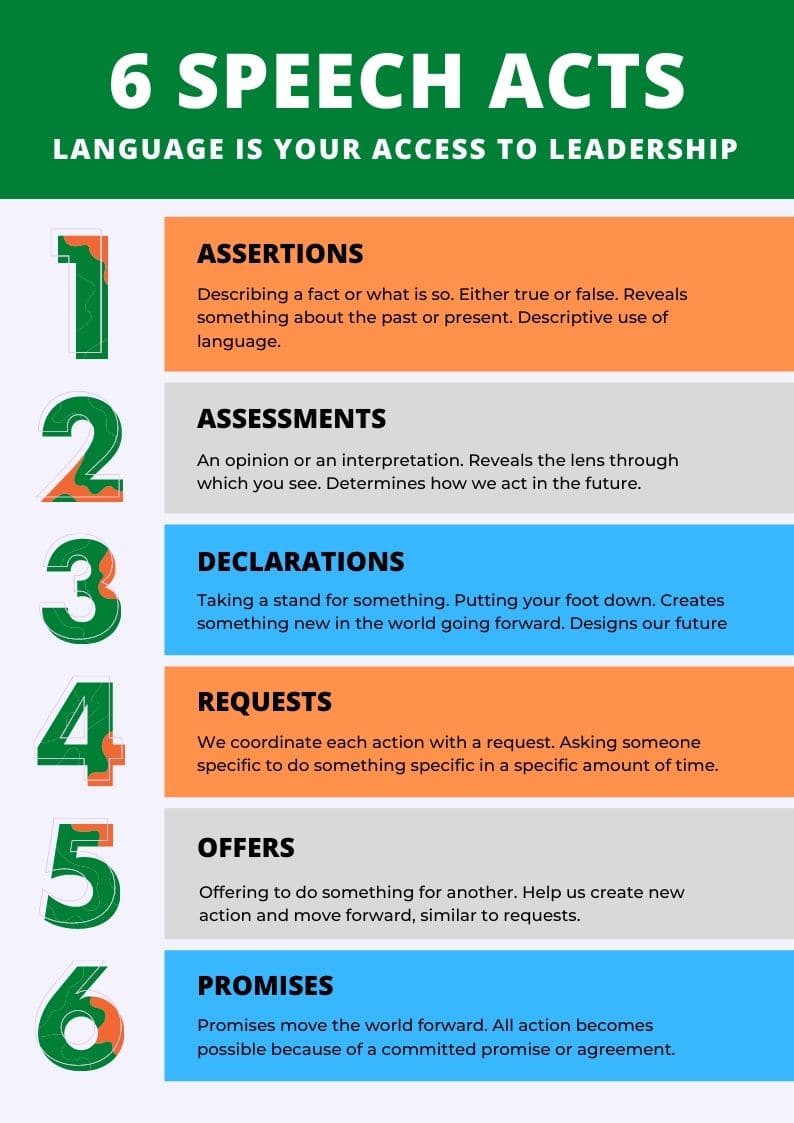
The speech acts theory says that every conversation that we have involves the below 6 speech acts. We always use these speech acts, though we might not be aware of the distinctions between them. As human beings, we can not not use them. They are:
Assertions,
Assessments,
Declarations,
Requests,
Offers and
Promises
Assertions
Assertions are the facts and events which we can objectively identify in the world. This would be something a camera would observe – just the raw facts without adding any interpretations or judgements over it. For example – His height is 165 cm, He came to the meeting 15 minutes late, She is the CEO of XYZ Corporation are all facts that can be verified as true or false. However, he is tall (or short), he is reliable (or not), and she is a good (or bad) leader are not facts. They are the speech act that follows below – Assessments.
Assertions describe something about the past or the present, and it is where language is most descriptive. It is the job of a leader to separate assertions from assessments. Leaders are paid to make the distinction between the two so that they can trust their decisions and not get lost in action arising from ungrounded assessments.
Assessments
Assessments are opinions, judgements, or interpretations of assertions. They are never true or false, as different people can interpret the same event another way. However, they can be grounded or ungrounded, which means finding enough evidence and reasons to trust an assessment.
Assessments reveal something about the one making the assessment. It reveals the lens through which we see and observe the world. Since assessments are subjective, you can always find someone with the opposite assessment as yours. Our assessments directly impact the way we see the world and how we act or do not act in the future, and in that sense, it is a “generative” use of language and verbal communication.
Examples of assessments are – “He is not disciplined, I am a slow learner, and she is so clumsy”. It is normal to confuse assertions with assessments. This confusion causes not only personal suffering but can also hurt individual and team performance in organisations. Making grounded assessments are directly related to the amount of value any leader offers in an organisation. Knowing which assessments are not helpful, and then dropping them, is one of the characteristics of a sound leader.
“Things are as they are. Looking out into the universe at night, we make no comparisons between right and wrong stars, nor between well and badly arranged constellations.”
― Alan W. Watts
Declarations
Declarations are a powerful leadership move because we create the world we see through our declarations. While we are describing the world when using assertions, we create and form our own reality when we use declarations. Declarations help us design the future, and that makes them a powerful leadership move. The below are examples of some declarations:-
You are guilty of the crime
You are fired
From now on, we will hire employees only after 5 rounds of interviews.
All men and women will be judged by their character rather than the colour of their skin.
We will put a man on the moon by the end of this decade.
“Whether you say you can, or say you can’t — either way, you are right!”
Think about the declarations you have consciously or subconsciously made in the past, and the impact it has had on your life? Think about a declaration which you can make which can transform your team or organisation? What is stopping you from making such a declaration?
Declarations are a powerful tool leaders use to create a new future and inspire people to take action towards realising that future. Leaders make declarations that will take them and their organisations where they want to go. Making powerful declarations might be uncomfortable and uneasy, but all leaders use the leverage of declarations to shift the current situation to where they want to take their teams and organisations.
Of all speech acts, declarations possess the most direct power to transform reality. When used with proper authority and in appropriate contexts, declarations instantly create new states of affairs.
When a board chair declares, “The motion passes,” when a CEO declares, “We are entering the healthcare market,” or when a team leader declares, “This project is now our top priority”—these declarations don’t describe change; they create it.
Leadership Applications:
Direction-setting: Make clear declarations about strategic priorities. (“I declare customer experience our primary focus for the coming year.”)
Status-changing: Use formal declarations to mark significant transitions. (“I hereby appoint you as the new project lead with full authority to make necessary decisions.”)
Crisis-managing: Make clarifying declarations during uncertainty. (“I declare this a situation requiring our emergency protocol, effective immediately.”)
Requests
Requests need no introduction. We make them every day – of ourselves and of others. Requests are how we get anything done in interpersonal relationships and communication. Every result you have today is a result of a request (or offer or promise) that you made previously. If you want to produce a result in your life that you currently desire, one question to ask yourself is – “What are the requests that I am not making to produce the result that I want?”
The ability to make clear, compelling requests is perhaps the most fundamental leadership skill. Effective requests don’t simply ask for action—they create the possibility for coordinated achievement that wouldn’t otherwise exist.
For example – “Can you help me?” is a very powerful request and yet so many leaders find it so difficult to make it because of the vulnerability it requires. Requests help us move forward. Every time we are stuck, the answer is in a request which you have not made yet.
A request creates a future that would not have happened otherwise. When you request your friend for a meeting, it creates a new future (the meeting) as soon as your friend says Yes. Requests propel future action. All of this may sound simple, but it is not trivial because while there is nothing new in making requests, so many of us are unaware of what makes a request effective or ineffective.
Effective requests have the below elements :
A committed speaker – Are you serious when making the request?
A committed listener – Is the person you are making the request to listening and committed?
Conditions of satisfaction – What are the exact requirements for the successful fulfilment of the request? Or have you left it vague or open to interpretation?
Time – As soon as possible, soon, urgently are not acceptable answers. Time has to be specific – like 9 am tomorrow, or by the end of day 20th September.
Context – Why are you making the request? What is the context behind it? Have you shared it with the listener?
How are you making the request? What is the mood and emotion behind the request? The same request when you are angry and when you are happy are two different requests, and will likely produce two different results.
Ineffective leaders make ambiguous requests, disguise commands as requests, or fail to establish clear conditions for satisfaction. Powerful requests respect autonomy while clearly articulating desired outcomes.
Offers
Offers are similar to requests except that you offer to do something for the other person rather than requesting them to do something. Both requests and offers become a Promise when the other person says YES. For example – “Can I prepare you tea?”, “Do you want me to finish the rest of the work?”, and “I can attend that meeting instead of you if you would like me to?” are all offers.
Offers propose potential actions or resources that the speaker is willing to provide to benefit others.
How Leaders Use Offers:
While requests seek action from others, offers extend possibilities. Leaders who master the art of making genuine offers create environments rich with opportunity and support.
Promises
We make a request or an offer with the intention of getting a trustworthy declaration “YES” from the other person. When an offer or a request is accepted, it becomes a promise. We swim in a sea of promises every day. Promises are what makes the world operate the way it does. On the other hand, any breakdown in coordination is also a result of weak and ineffective promises.
Promises commit the speaker to future courses of action, creating obligations and expectations.
Promises power all business organisations, all trade and purchases, and even simple actions like taking a vacation together involve a myriad of promises. Promises, when managed well, strengthen relationships, produce expected results, and can build a strong reputation. On the other hand, broken and mismanaged promises can lead to broken trust and relationships, breakdowns in results, and can destroy reputations.
When promises are broken, everybody involves pays a cost. The role of leadership involves making bold and trustworthy promises and also seeking reliable promises from your teams and peers. Our organisations and the world we live in can be seen as a network of promises, agreements, and commitments.
Every promise a leader makes or breaks shapes the environment of trust within their organization. Promises aren’t simply commitments to actions—they’re the fundamental building blocks of organizational integrity.
When a CEO promises that no layoffs will occur despite financial pressure, that promise doesn’t just predict the future—it creates a covenant that will either build or destroy trust depending on how it’s honored. When a team leader promises to support a risky initiative, that promise creates psychological safety that enables innovation.
Conclusion
Language allows us to not just verbally communicate but also reference the past and imagine and coordinate action for the future. In a way, language is the way we make the past and the future actionable in the present. Without language, we would have no way to imagine a future, inspire a vision, manage commitments, and coordinate successes and failures along the way.
Seen this way, language and the words we use become the most powerful tool we use as leaders to create all results in our life. It is through language that we create trust and strong relationships. It is through language that we manage complex and complicated projects. It is through language that we inspire and motivate others. Through language, we make all our results meaningful to us and the people around us. If you are a leader, language is your most powerful tool as a leader.
Through mastery of these six fundamental speech acts, leaders can move beyond mere communication to the active creation of new organizational and social realities.
The most influential leaders in history—from Martin Luther King Jr. to Steve Jobs, from Nelson Mandela to Angela Merkel—understood intuitively that words don’t just describe the world; they create it. Their assertions shaped how people understood reality. Their assessments established what mattered. Their requests mobilized action. Their offers created opportunity. Their promises built trust. And their declarations transformed institutions.
For those who aspire to make a meaningful difference in their organizations and in the world, developing mastery of these six speech acts isn’t merely a communication strategy—it’s the fundamental practice of leadership itself. In a very real sense, the leader’s voice doesn’t just describe the future; properly used, it creates it.
Every team is different as human beings are complex. And organizations can be even more complex. If the team members do not gel and work together effectively, problems can arise very quickly or they can slowly simmer under the surface. Talk about missed deadlines, infighting, declining productivity, poor customer service, etc. All of these have a bearing on the team’s output and the company’s bottom line.
Finding the right people is the first step in building a high-performing team. However, bringing several talented individuals together under one roof is not enough to make an effective team. So what can you do to ensure the group of people becomes an effective unit which works together? Here are 7 common attributes of highly effective teams, and how to build such a team?
1. Good Leadership
Leadership has less to do with positions and more to do with the ability to influence. Today, leadership is no longer reserved for those at the top. Everyone has within them the ability to become a leader in their own sphere.
Effective teams don’t necessarily have one great leader. Instead, they promote a culture of leadership. That doesn’t mean multiple people competing to become leaders. It is about each individual playing their part and supporting each other for the benefit of the team.
Every team needs a north star—a clear and shared vision. Each member should know the direction and purpose behind what they are doing. A team without a united vision is like a group of chickens with a lot of energy. They will continuously be busy running around but never make any progress.
Therefore, a team should first co-create the shared vision, objectives, and outcomes before undertaking a project. Moreover, the vision should be restated often. It is not enough to engrain it on the door or post it on the website.
According to research by Rungway, 52% of employees don’t know their company’s vision. The same research shows employees want to be involved more in actualizing the company’s vision and values. Even when working on different facets of a project, team members should know the end goal.
When the team is involved in setting goals and objectives, they are more willing to rally behind them. As John F. Kennedy noted, “Effort and courage are not enough without purpose and direction”.
It is hard to focus when multiple needs are competing for your attention. And when the team is overloaded with tasks, chances are that people will struggle with one thing or another. With so many buttons to push and levers to pull, the team can get easily frustrated.
Do You Know Your Own and Your Team’s True North?
Highly effective teams navigate these muddy waters by focusing and prioritizing. Establishing priorities ensures that set goals are met on time. Unfortunately, it is human nature to want to accomplish everything at the same time. However, that is a surefire way of producing shoddy work.
Instead, it is better to prioritize your tasks according to their importance and urgency. That will involve listing down all your goals, and then deciding how long you would like to spend on each goal.
However, keep in mind that goals are not the actual actions taken, but rather the metrics you intend on hitting. Those metrics are what allow you to know whether the team is moving in the right direction. As such, to get closer to achieving those metrics, you must determine what projects need to be fulfilled first to get there.
So, how do you go about prioritizing projects?
Simply choose the 3 most important priorities and start working on them. People work better with clear and attainable goals. Therefore, choose 3 projects that will allow you to make a significant advancement towards a longer-term goal, and then set deadlines for their completion.
By putting the team’s focus on a few defined priorities, you will evade the all-too-common syndrome of spreading yourself thin trying to accomplish everything at the same time.
A good leader also understands the critical role shared values, standards, and boundaries play in the development of a high-performing team. This is because it is impossible to sustain high-performance standards without shared values.
Shared values ensure that your team does not always depend on you or policies to tell them what to do. Those values guide their behavior. The former EVP at Advanced Micro Devices, Tim McCoy, put it best, “values tell you what to do when you do not know what to do.”
A good example of how shared values can have a monumental impact on a team’s success is the Mayo Clinic. During the Civil War, a group of individuals known as the “Mayo Family” formed a medical practice whose entire operation was guided by two primary values:
The only interest to be considered is the patient’s best interests
Nobody is big or good enough to be independent of others
Guided by those values, the Mayo Clinic has gone on to become one of the world’s most reputable nonprofit hospital systems, with a net worth of around $17 billion.
Collaborate with your team to develop a set of values and standards to uphold. Those values should act as moral and operational compasses. In other words, they should guide the behaviors of the team.
In addition to shared values and standards, it is crucial to establish boundaries within the team. Boundaries prevent conflict within the team. Conflict (not disagreement, which is natural and healthy) is one of the biggest deterrents to productivity. With boundaries, everyone knows what is considered acceptable behavior, and what is not.
One of the most critical benefits of setting boundaries is the clear expectations that come with it. When everyone knows what is considered acceptable, they are more likely to uphold those standards.
Do you know your values? Does your team know theirs?
2. Working Together and Collaborating
It might look safe to work with people who don’t ask a lot of questions. Effective teams understand that such behavior hinders collaboration. Instead, successful teams embrace challenging each other in a space of trust and psychological safety.
Good teams focus on tackling the problems together. They share knowledge across different departments, which enables the organization to adopt a unified approach in handling issues.
Collaboration brings unique skill sets and mindsets together to create a team that can overcome any obstacles together. A highly effective team understands and leverages each individual member’s strengths to create momentum.
Highly effective teams understand that friction is natural when working with others. They welcome the friction and use its energy to enhance relationships and improve productivity rather than the other way around. Strong teams work together rather than against each other.
3. Performing Team Rituals
Outside the workplace, rituals are often used to unite, motivate and rally people behind a common cause. A good example is an annual family holiday that brings everyone together. Rituals also have a place in the organization.
Apart from defining the team’s culture, they increase employee engagement and help create lasting bonds between individual members.
Employees in an organization work together for more than eight hours a day. That means they see and spend more time with their colleagues than they do with friends and family. It is imperative that they build strong bonds when working and also in their social lives.
Celebrating rituals such as birthdays by bringing a cake and holding parties is a great way to create and foster long-lasting bonds.
Many organizations insist that fun is ingrained in their culture. But many often struggle to create an environment where workers are truly happy. Like everything else, fun needs to be structured. Otherwise, it will get lost in the busyness of daily life.
Think about lunch outings, comedy nights, and beach days. A team that has fun together is more productive. That’s because work is likely to be less stressful and frustrating when you are having fun. Downtime decreases and job satisfaction and loyalty increases with fun.
Apart from celebrating wins and forging lasting relationships, some rituals also promote growth. For instance, having regular brainstorming or knowledge-sharing sessions enables each member to share their skills and talents.
Participating in weakly share-outs, team-bonding events, and daily scrums can also help the team become more productive, creative, and adaptable.
Do people feel safe enough to be vulnerable and collaborate freely?
4. Safe Environment
According to a study by Google, psychological safety is one of the most vital dynamics that sets effective teams apart. Employees should be free to be who they are. And they should share their ideas and opinions without feeling insecure or afraid.
When a team member shares an idea in a meeting or opens up to a colleague about a bad experience, they are taking risks. Therefore, they need to feel safe enough to take the risk. If they can’t open up, they will end up putting a mask at work. Doing so drains a lot of productive energy which could otherwise be used for productive work.
Individuals should be able to ask questions without feeling lost. Granted, it is natural to want to protect one’s personal image. After all, no one wants to look like a fool in front of colleagues. However, when there is psychological safety, everyone supports you. When everyone feels free to look like a fool, there is so much possibility of awareness about matters which are otherwise never spoken about.
Even in the face of disagreements, everyone in an effective team knows they are on the same side. It is easier to share ideas, admit to mistakes, collaborate, and resolve any underlying conflicts. Consequently, it makes the team more productive.
With technological growth and increasing pressure to perform, people are finding it hard to make personal connections and friendships in the workplace. In fact, there is growing disconnectedness.
The importance of meaningful connections and deep conversations cannot be overstated. Research has demonstrated that having high-quality connections in the workplace leads to more creativity and resilience.
5. Open, Honest, and Trust-Filled Communication
Although the advent of technology has made communication faster, it has led to an information overload that has made it harder to communicate. Nowadays, you have to sift through countless emails and attend regular meetings to get information.
The annual total estimated cost of poor communication in the corporate scene is as high as $37 billion. Such losses can be mitigated by fostering honest communication. Open dialogue is the only way a team can achieve more than the sum of its parts.
Open communication allows everyone to have a voice. When employees know their opinion counts, they feel a great sense of ownership. They are also more willing to positively contribute to the organization’s success. The manner and frequency of communication also matter. The more freely and often the team communicates the more comfortable people are in sharing their ideas and insights.
It is through communication that ideas are birthed and nurtured. A team where members are not communicating encourages wrong assumptions. That’s because everyone is forced to join the dots alone.
As a result, many arrive at the wrong conclusions. For instance, when discussing growth, some may be thinking about market share while others may be referring to revenue. It is only through open communication that such differences can be brought to light.
Sometimes communicating means offering constructive criticism. Highly effective teams create an environment that encourages members to offer honest feedback. Although nobody likes to be criticized, there is no learning without honest feedback. And in a safe environment, feedback doesn’t look like a threat.
Don’t make people wear emotional armor at work
6. They Embrace Empathy
A team that cares for each other performs better. And highly effective teams value empathetic listening and compassionate conversations.
Often in movies, when the ship goes down, the captain and crew are ready to sacrifice their lives to save others. That is only possible because they know they are part of something bigger than themselves.
Likewise, in highly effective teams employees are willing to come together and take one for the team. They shelve their own self-interests and put the needs of the organization and their team ahead of their own. And that is only possible with empathy and care for others.
Empathy is the ability to put yourself in someone else’s shoes. It is a deep and compassionate understanding of what others are going through.
Without empathy, organizations and individuals run the risk of becoming too self-absorbed. This can affect all aspects of the business and the team’s productivity as well as their well-being.
According to a study by Google called Project Oxygen, employees prefer managers who care about their well-being than those with technical skills. When leaders and team members embrace empathy, everybody feels appreciated and valued.
Consequently, this creates trust and fosters high performance among individuals. Although it is not natural for most people to generate empathy, it is an emotional competence that anyone can learn.
Real Diversity Is When People Think Differently
7. Diverse Team Composition
One of the greatest advantages of working as a team is being around people with varying skills and talents. It doesn’t matter who does what, so long as the team has all the right skills. Highly effective teams include a diverse set of people who complement one another in talent, thinking, and personalities.
Diversity is not only about gender, ethnicity, and skin color. Real diversity is having people in the team who think and act differently. People who don’t just look different, but are so from the inside. When such people come together in a safe environment where they feel safe to speak up, wonders can happen.
A team’s main priority is to achieve the organization’s goals and objectives. Therefore, having someone who makes the team great is more valuable than a great individual. No matter how skilled a person is, they are not important if they don’t contribute to the overall strengths of the team.
What exact roles belong on each team depends on what a team’s goals and purpose are. Highly effective teams create a platform where individuals can both absorb and teach. No matter how talented or experienced one is, there is always room for learning.
Working alongside other equally talented individuals in diverse fields is a great way to learn and share knowledge and skills.
Final Thoughts
To create a high-performing team, good leadership is paramount. Without a clear and set-out vision, a team will only be groping in the dark. Collaboration is also key. The silo mentality fails to capitalize on the advantages of pooling different skill sets together to tackle problems. Honest communication, team rituals, and embracing empathy help create a fertile ground for such collaboration. But it takes a diverse team composition to make any meaningful impact.
Building a successful team might sound simple, but implementing the above takes practice, which is not easy. To succeed, team members need to share and jointly own the team’s goals and objectives. They must also put the team’s needs ahead of their own. Moreover, everybody should be free to be who they are. They should feel safe to share their ideas and opinions without fear of judgment. As I said, simple, but not easy.
In recent times, there has been a drastic shift in how organizations around the world view 1-on-1 meetings. For a long time, communication between managers and their employees typically revolved around either occasional over-the-desk check-ins or group meetings.
Without a regularly scheduled 1-on-1 meeting, employees don’t have an option for expressing their concerns openly. Without one-on-one meetings, the manager also does not get to know their employee well enough.
However, changes in work culture in the 21st century have called for a shift in this trend. For example, more and more employees are seeking fulfilment from their jobs rather than just a salary. One-on-one meetings have been found to be one of the most effective ways of listening to people’s concerns, understanding them as individuals, and giving them opportunities for growth and fulfilment.
According to a Harvard Business Review report, employees who have limited one-to-one time with their managers tend to have higher disengagement rates compared to those who do. In fact, employees who get more one-on-ones with their bosses are 67% less likely to experience disengagement.
One-on-one conversations with your employees, therefore, are critical to boosting engagement and productivity in the workplace. When I first became a manager, having a 1-on-1 meeting was not even a strict requirement for my role. And now, I see managers being reprimanded for not having 1-on-1 meetings in companies regularly.
In this article, we will cover
Best practices and guidelines to follow when it comes to one-on-one meetings.
What is the purpose of one-to-one meetings
Questions to ask in one to one meetings
How Often Should You Have 1-on-1s?
Where should you have your one-on-one meetings?
Advantages of 1-on-1 meetings
How to Prepare for One to One Meetings
Common Misconceptions about One-on-One Meetings
General Guidelines
Before you head into any one-on-one meeting with an employee or subordinate, keep the following things in mind:
Do your homework well. Go well-prepared for the meeting. Review any notes from the past meetings, go over any action points to follow up, and go over the agenda if you have pre-decided that.
Go into the meeting devoid of any judgment, bias, or emotional overwhelm from how your day has gone so far. In fact, go into the meeting thinking of your employee as a superstar. Take a minute or two of silence and deep breathing before the meeting to ground yourself in your values, and enter into the meeting in a mood of relaxation and possibilities.
Do it at regular time intervals (weekly/bi-weekly). Do not wait for the quarter or the year to end to meet your employees. Do it regularly. Your people are your most important asset. Time spent with them is your best investment.
Be humble and polite. You work together, not against each other. Collaborate and communicate openly. If you have disagreements, welcome them and use the energy in them to create win-win results rather than conflict and friction.
Listen attentively so that you do not miss anything. Avoid potential distractions and give your full attention to your employee. Make eye contact and talk with the employee like he/she is the most important person in your life. Put your mobile, laptop, and other devices aside.
One-on-One Meetings – How To Prepare, Questions To Ask, And Other Best Practices
What Are 1on1s for? (Purpose)
One-on-ones are the regular conversations that a manager has with their employee. Essentially, they are meetings with a mix of formal and informal talk. They can happen anywhere and at any time. Experts recommend making them as frequent as possible.
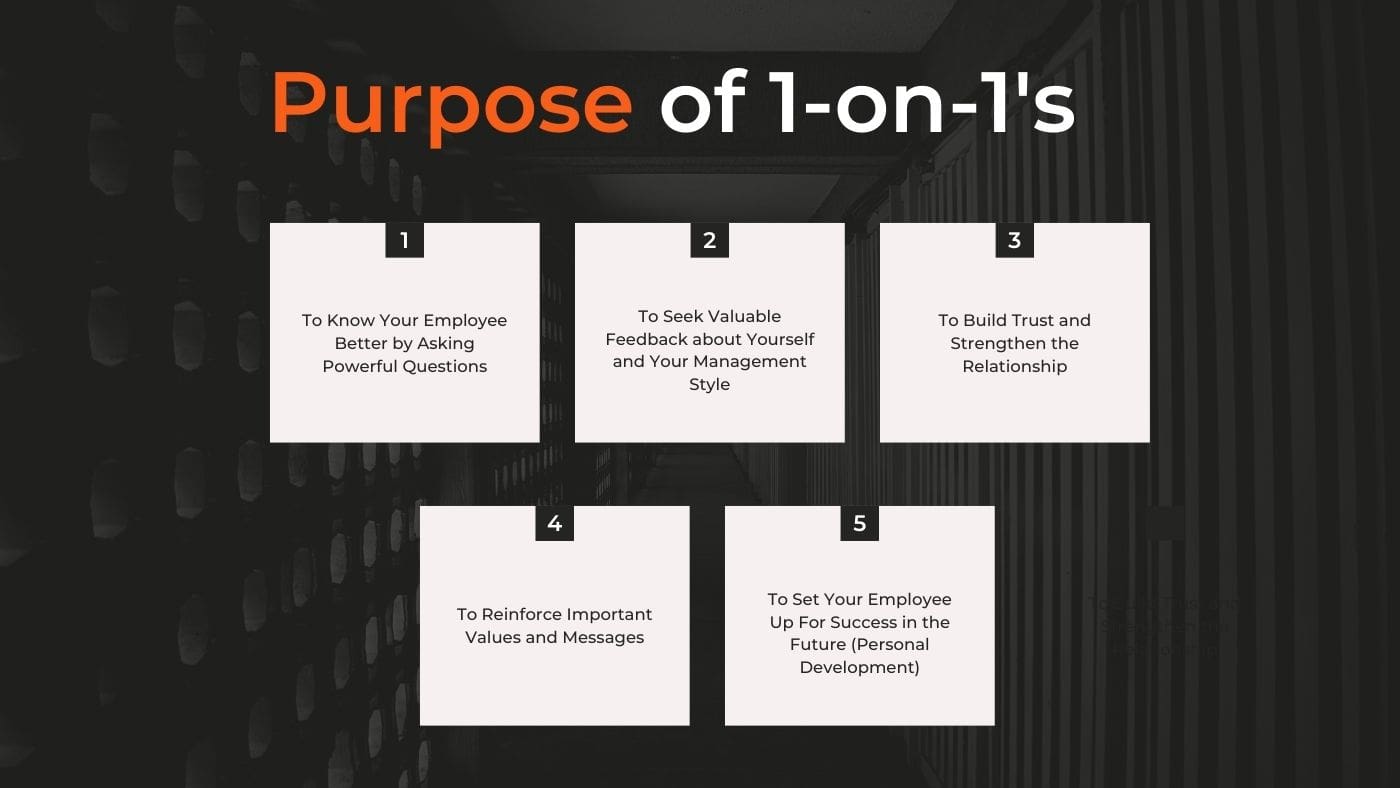
Many leaders view these meetings as performance conversations and use them to get status updates. While one-on-ones are an excellent way of discussing goals and performance in real-time, they offer you a platform for achieving so much more, including:
1. To Know Your Employee Better by Asking Powerful Questions
As a leader, you expect your people to do their job. However, it is your job to provide them with the support they need to not only execute their tasks perfectly but also to reach their full potential.
Unfortunately, that can be difficult to achieve if you do not know your employees on an individual basis. This is why one-on-ones are necessary, as they allow you to have a good read of a person’s strengths, weaknesses, values, and principles.
For example, even among people with similar skill sets, you will find that they have different ways of working – because of their past experiences. Therefore, by finding out what excites each person, you will be able to delegate tasks more strategically, thus improving the team’s overall productivity.
In addition to allowing you to know your employees better, powerful questions show that you care for your employees, which, as mentioned, improves their engagement tremendously. Care comes first, engagement second. That is why I strongly believe that you have to be a good human being to be a good leader.
Consider asking the following powerfulquestions during your one-on-ones, in addition to whatever else you might have prepared:
What makes you stand out?
What do you do after work? What are your hobbies?
What are your highest priorities in life?
Where does work fit in?
What are your future aspirations?
What makes you special?
What are you most excited about?
What does success look like to you?
Do you feel that your work is recognised and valued?
What motivates you to work each day?
How often do you use your strengths at work?
What’re your preferred means of communication? How can we align best?
How can we work your challenges out together?
Is there anything blocking you?
Is any part of your job unclear or without transparency?
What could I do to help us work better?
What feedback do you have for me? Both positive and negative?
What could I be doing better as your leader?
What skills/areas would you like to improve upon?
What have you learned recently?
What can I do to make you more successful and happy?
How do you find your team?
Do you think we are headed in the right direction?
What’s the biggest problem we are facing?
What is the one opportunity for our company that we should not miss?
How do I know when you are annoyed?
What were your priorities since we last met?
How is your work/life balance?
What are your hobbies? Do you take time out for them?
Tell me about your weekend
Was this meeting helpful? How can we improve in the future?
Based on the answers, you will be in a better position to set them up on the best path to realizing their full potential. The only purpose of work doesn’t have to be to fulfil the team’s goals and increase productivity. Work can also be fulfilling, nourishing, and enriching for your people. The only question is – do you provide that opportunity or not?
Purpose of One on One Meetings
2. To Seek Valuable Feedback about Yourself and Your Management Style
Employee feedback is one of the most under-utilized tools by managers or team leaders. It is unfortunate that most leaders and managers fall prey to the idea that listening and accepting critical feedback is a weakness. Instead, it is the only way for you to grow.
Leaders who think of themselves as bosses, superior, or better usually also find it difficult to listen to critical feedback. They think their job is to tell their employees how to do their job.
However, such a mindset can be incredibly costly. How expensive, you ask? In a survey titled “The Cost of Poor Communications,” which involved over 400 companies and more than 100,000 employees, each company lost an average of $62.4 million per year to poor communication with employees.
The importance of seeking feedback from your team members can therefore not be overemphasized. Let go of the fear of being critiqued, as that fear will only wall you off from valuable input that could help you grow and change your perspective.
Therefore, during your one-on-ones, encourage the employee to share some input regarding what they think about your leadership style, as well as what they think you could do better. Of course, this does not mean that their feedback is a true reflection of your performance as a leader. But if you notice a recurring theme in the feedback from different employees, you will need to reflect on it and address any underlying issues.
Most importantly, asking for feedback tells your employees that their opinion is valued by the organization, and that goes a long way in boosting engagement.
3. To Build Trust and Strengthen the Relationship
According to a study by Gallup, people who have close friends at their workplace can be up to 7 times as engaged at work compared to those who do not. While this does not necessarily mean that you should become everyone’s BFF at work, the value of developing closer relationships with your employees is undeniable.
For starters, humans are social creatures, meaning that we thrive when we are close to those around us. Considering that the average human spends one-third of their lives at work, enhancing the quality of your relationships with your colleagues is not only important for better cooperation but also for enhancing the overall quality of your life.
When your employees are more comfortable around you, they will be more willing to listen to your ideas, in addition to voicing their own opinions and suggestions. This will create an environment where teamwork takes precedence over everything else, thus improving everyone’s productivity tremendously.
4. To Reinforce Important Values and Messages
Every company has core values that it holds dear. An organization’s core values are its lifeline, as they not only create an identity for the company but also attract individuals who share similar values.
It is important for leaders and managers to keep repeating and reinforcing these values so they people remember what they are working towards. According to Seetec, having a concrete set of core values is one of the best ways of keeping your employees motivated and engaged, hence resulting in better performance and productivity.
This is because when people believe in and respect the company’s values, they gain greater clarity regarding their role in the company. One-on-ones offer you the perfect platform for reinforcing these values. Remind them of any expectations, boundaries, or ethics that they are supposed to uphold in order to be in compliance with the organization’s values. At the same, acknowledge and celebrate people when they act according to the company’s values.
5. To Set Your Employee Up For Success in the Future (Personal Development)
I believe one of our main roles as leaders is to help people achieve their full potential. Therefore, use the one-on-ones to discuss the employee’s progress and career aspirations. To make these goals tangible, work together to create both short-term and long-term goals for the employee.
Short-term goals encompass the objectives the employees look to accomplish within a month or a quarter, while long-term goals are the strategic milestones they look to achieve within 6 months or a year. You can also create a vision for 5 years or even 20 years into the future. It can be tremendously powerful when done well.
The short-term goal is climbing the ladder of personal growth, while the long-term goals and vision help to ensure the ladder is leaning against the right wall. Long-term planning is more to set the direction rather than being specific. That is why it is ok if long-term goals are vague, but short-term goals work best when they are time-bound and specific.
How Often Should You Have 1-on-1s?
To some managers, having these meetings on a monthly basis sounds reasonable. However, when you consider all the activities that can happen at work in a month, you will find that four weeks are too long a time to wait.
For example, an employee might be experiencing a challenge, and it can quickly become a big issue if you address it a month later. On the other hand, the employee can accomplish several important milestones within a month if you can support and guide them along the way.
What’s more, if we assume that you are meeting them only once every month for an hour, you will only have spent a total of 12 hours together after one year. That is not nearly enough time to forge a good relationship with anyone.
So how much time should you dedicate to one-on-one meetings? There isn’t a definite answer to this question. Consider the following factors when deciding the appropriate frequency for your one-on-ones:
1. Team Size
If you are managing a team of five or less, consider meeting each member weekly or twice a month for 45-60 minutes. If you have more than five direct reports, you can shorten the length of those meetings to 30 minutes.
Don’t focus too much on the length of these meetings when you are starting out. The goal is to have a better understanding of your employees without burdening them with formalities. Therefore don’t make them longer than necessary.
2. Task-Relevant Maturity
If the employee is still new to their role, they will require more help and guidance than someone who has been on the job longer. With new team members, consider meeting them on a weekly basis. Experienced employees, on the other hand, can do with twice a month meetings.
3. How Frequently You Work with Them
Teams operate differently, with some working more closely than others do. If you rarely interact and work independently with people as part of your daily job, twice a month one-to-ones are more appropriate. On the other hand, if you work closely with your team members, a weekly one-to-one is a better fit.
One on One Meetings – Where To Have Them?
Mix it Up When it comes to Meeting Location
Now that you have chosen the frequency at which you will be meeting your employees for one-on-ones, you might probably be wondering about the ideal location to hold those meetings.
Whether it is having lunch together or going for a walk, it does not matter as long as you meet your objective – of creating a safe space where you can talk about anything openly and honestly. However, you do not want those meetings to feel like a chore to both of you. Therefore, consider trying out different settings.
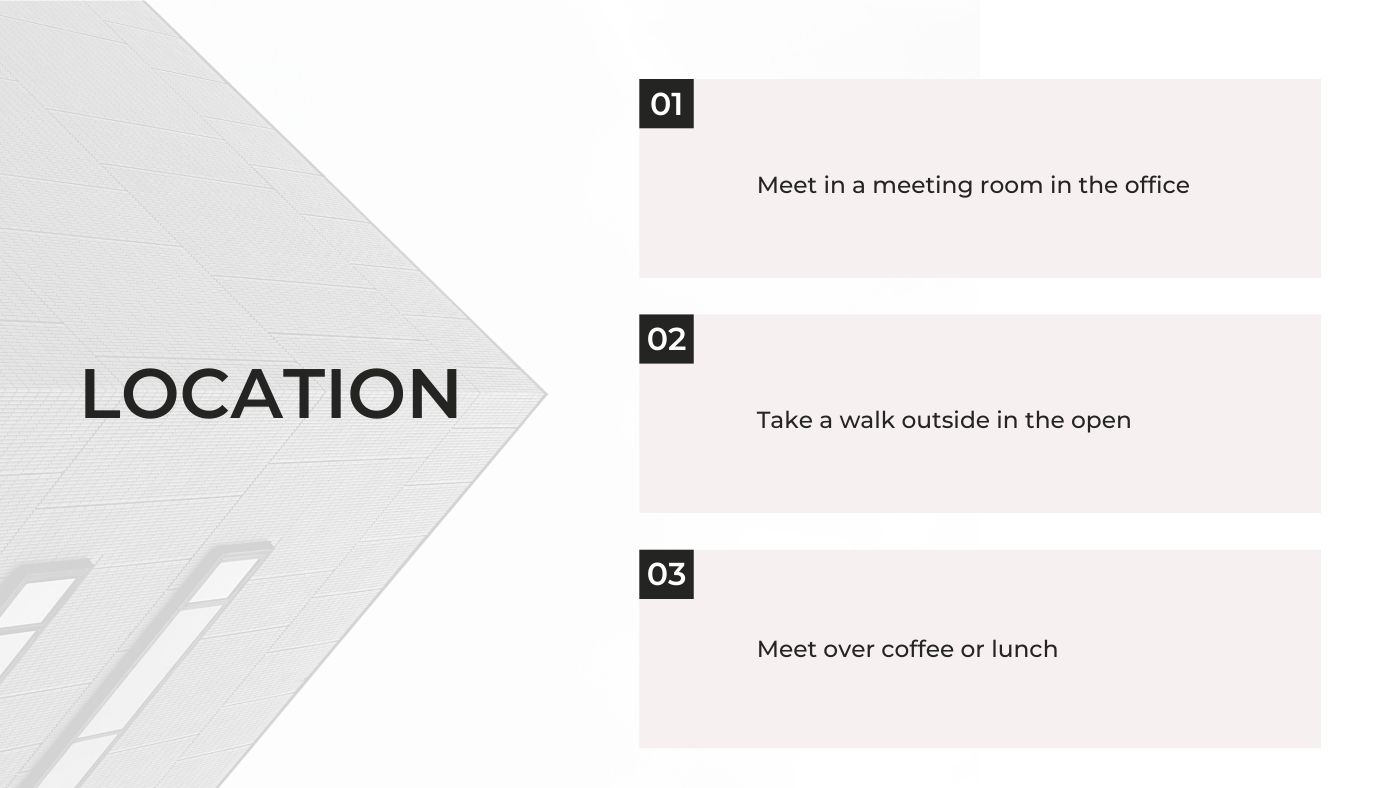
The most common settings for one-on-ones with direct reports include:
1. Meeting at the Office
The benefit of holding one-on-one meetings at the office is the safe and quiet environment it provides you. It allows the person to be more comfortable, thus allowing them to express themselves more freely and privately.
Office meetings, however, do have their drawbacks. For example, it might feel too official, causing the employee to be more reserved than you would like. Office environments and cultures can become too toxic or negative, and that can shadow your whole conversation if you are not mindful about that.
2. Taking a Walk Outside
Holding a one-on-one outside while walking can be incredibly impactful. According to some studies, a person’s creativity can increase by up to 60% during walks. As such, you are more likely to have better conversations when you meet outside as compared to closed doors.
What’s more, walking eliminates the tension that typically comes with facing each other across the table. When the body is moving, it is easier to be flexible with ideas and opinions rather than getting stuck in arguments.
Another benefit of outdoor one-on-ones is they allow you to be comfortable with silence. Therefore, those moments where you both pause to think will not feel as awkward.
Meeting outside in the open also makes it easy to start casual conversations. Sometimes, it is those ‘filler’ conversations that end up being the most insightful and can reveal deep desires and motivations.
However, walking one-on-ones might not always be ideal. For example, you might keep running into people you know. If you feel like a walking meeting is a good option, consider doing it in a place with few distractions, such as a park. Avoid busy places with noise.
3. Meeting at a Restaurant or Coffee Shop
The main benefit of holding a one-on-one while eating or drinking coffee is that it makes you relate on a more personal level. Consider doing this if you are looking to know an employee better and willing to have a casual conversation.
The main issue with this meeting style, however, is that it can be too distracting. A cafeteria is not the ideal place to discuss sensitive issues or make strategic plans, so make sure you choose the meeting venue based on the agenda of the meeting.
One on One Meetings – The Best Tool For Managers
Advantages of 1-on-1s
Unfortunately, some managers still do not have one-on-one meetings frequently enough. They hold them only when it is unavoidable. Some even avoid them entirely.
Nevertheless, one-on-one meetings are extremely important. Below are a few reasons why you should have them regularly.
1. They Boost Productivity
One of the biggest reasons for having these kinds of meetings is their positive impact on work quality and productivity. It sounds like a paradox to me when a manager tells me he has no time for 1-on-1 meetings. My next question to them usually is “So you have no time to increase the productivity of your team?”
In his book, “High Output Management,” Andy Grove argues that meeting your employees regularly gives you the opportunity to not only coach them but also to help you develop a common information base, thus allowing the team to be in sync at all times leading to better results.
You have to remember that employees are not equal when it comes to prioritizing tasks, with some not having the necessary experience to know which tasks bring the highest ROI. By scheduling regular one-on-ones, therefore, you will be able to set clear priorities with all your people.
One-on-one meetings also boost your own productivity. This is because they allow you to address all the pertinent issues effectively, thus reducing the incidences of your direct reports popping in for a “quick question or an emergency.”
On his Managers Tools podcast, Mark Horstman says, “One of the first things you will notice once you start holding regular one-on-ones is the significant reduction in the number of questions that you receive per week. However, it is not because things are not running as they should, but people have learned that they can wait for the one-on-one to bring any queries to your attention.”
Buffer, Inc., the company behind the Buffer software application that provides social media accounts management tools, decided to get rid of their managers, suffering a tremendous blow in engagement and productivity in the process. They soon discovered that managers were not only necessary but also one-on-one meetings were incredibly effective in fixing things and improving productivity.
2. To Improve Employee Engagement and Forge Better Work Relationships
Building healthy relationships takes a while. For example, you cannot expect to have a good relationship with your significant other (or friend) if you rarely communicate. The same goes for work relationships; you need to see and talk to your employees regularly to build strong relationships.
Frequent one-on-one meetings are one of the best tools managers can use to build better relationships. In fact, one-on-ones have been found to be so effective that companies such as Adobe, Deloitte, IBM, and Microsoft have ditched their annual reviews, replacing them with frequent check-ins.
One-on-ones are also incredibly effective at boosting engagement and retention. According to a Gallup report, employees who meet with their managers regularly are up to three times more likely to be engaged in their work as compared to those who do not.
It comes as no surprise, therefore, that Ben Horowitz, CEO of Andreessen Horowitz (a Silicon Valley venture capital firm), was willing to fire two of his managers when he found out that they had not been conducting one-on-one meetings.
3. They Can Help You Identify and Address Problems Proactively
A one-on-one is one of the best tools you can use to identify potential problems, allowing you to solve them in time before they become an emergency.
Conflict between employees is bound to happen when people work together. However, if it is not solved in time, it can turn messy, impeding your team’s culture and productivity. One-on-one conversations allow you to pick up on any potential seeds of conflict, frustration, and disengagement.
If you are a leader or a manager, do not fit your 1-on-1 meetings in the rest of your work. Fit the rest of your work with your schedule for 1-on-1 meetings. They come first, not second to anything else you might consider “real work”.
Praise More Than Criticise
How to Prepare for One to One Meetings
Keep the following things in mind when preparing for a one-on-one with your employee:
Make it About Them
One of the main goals of a one-to-one meeting is to make your employees feel appreciated, in addition to getting to know them better. Therefore, the meeting’s talking points should be centered on them, discussing things such as:
How they feel about work
Challenges they are facing
Their suggestions on how to make the workplace better
Some employees are reserved or introverted, hesitating to open up. This is why you should ask employee-centric questions, as these will allow them to be more expressive.
Most importantly, however, be a good listener. A good listener is one that listens to understand, not to reply. Good listening skills are a sign of maturity and humility and allow you to pinpoint potential issues early. What’s more, showing genuine interest in your employees reveals to them that you care about their welfare, thus strengthening your bond.
Take Notes
Regardless of how good your listening skills are, there is always a chance that you might forget an important point or two. This is why it is good practice to take notes during or after the meeting.
Note down action points, what you talked about, and any issues to bring up the next time. Doing that will allow you to review the important discussion points before your next meeting, thus allowing you to address any issues in future meetings.
Be Open-Minded
If the conversation in a 1-on-1 meeting becomes somewhat casual, do not feel like it is inappropriate. Casual conversation lightens up the mood, allowing your employee to feel more relaxed.
Employees are more expressive when they are feeling comfortable. Besides, the goal is to establish healthier relationships and not just focus on results, projects, and deadlines. They go together, as you might have already realized if you have been leading people for a while.
Ask Them to Prepare an Agenda
It takes two to tango; therefore, ask people to prepare talking points for the meeting. Let them know that the one-on-one is their meeting with you, not yours with them.
Have Your Agenda As Well
The employee owns the 1-on-1 meeting, but make sure you add your points to the agenda as well. If important issues like career development, employee motivation, engagement, trust, progress on goals need discussion, make sure to bring them up.
De-Stress Before the Meeting
A one-on-one will be of no use if you are not in the right mood. You want your employee to know that you are genuinely glad that you are spending some time with them. That is what will get them to open up.
Therefore, consider taking a 2-minute silent break before the meeting to relax. Consider meditating or performing breathing exercises during that period if you are stressed out. When you walk into a 1-on-1 meeting, be ready to put your full attention on the person in front of you.
Enter the meeting thinking about your employee like a superhero.
Your meeting will be more fruitful if you go into the meeting with a positive mindset. In fact, be enthusiastic about the meeting, which is why it is critical that you first de-stress before heading into a one-on-one.
A positive, upbeat mood goes a long way in relieving any potential tension an employee might have when meeting their boss. It also would help tremendously if you gave them the same type of respect and attention that you give your colleagues or superiors.
Respecting people is not only good for engagement and productivity, it is also a human thing to do. It should not require any convincing from anyone for you to respect your employees. Treat them with respect and give them the attention they deserve.
Avoid distraction. Make Eye-Contact
Think about it, how would you feel if your manager barely looked at you during a one-on-one meeting? Chances are you would feel disrespected or insignificant even if nothing demeaning was said to you.
This is because eye contact is one of the most fundamental forms of body language. Maintaining eye contact when talking to someone indicates that you are not only paying attention but also that you care about what they have to say.
One of the biggest barriers to effective communication today is our phones, laptops, and other devices. While it might seem harmless, looking at your devices while talking to someone is incredibly disrespectful. Avoid such subtle and often unintended signs of disrespect.
Leave on a Positive Note
As mentioned, one of the primary reasons for doing one-on-ones is to improve employee engagement. A one-on-one achieves that by bridging the gap between managers and their employees. Therefore, it is crucial that the meeting ends on a positive note.
Even if you have to deliver bad news or bring up a difficult issue, frame that as a learning opportunity for both yourself and your employee in the meeting. Mistakes and failures can be stepping stones or stumbling blocks. It is your responsibility to help people see seemingly bad outcomes as a stepping stone for them.
Take Care Of People
Common Misconceptions about One-on-One Meetings
The following are 3 common misconceptions about one-on-ones.
1. One-on-Ones are Easy
If you have never held a one-on-one before, you might assume that they are easy since all you have to do is talk. However, dealing with different people and their problems and emotions can be challenging and might even be frustrating at times.
As with any other skill, listening and effective communication takes time to master. Therefore, even though the first few one-on-ones might feel awkward, keep going. Invest in your learning and learn to coach by asking better questions. You will soon get the hang of it.
2. They Might Breed Unrealistic Expectations
Considering how employee-centric these meetings are, some managers fear that they might breed unrealistic expectations. They start asking questions such as, “What if the employees start asking for things we cannot deliver?”
Nonetheless, that should not stop you from holding one-on-ones. The goal of the meeting is to clarify expectations. Both parties get to communicate what they want or expect from one another. Therefore, let your employees know that they can always make their needs known. However, not all of them can be met. Be open, honest, and straight.
It is not your job as a manager to say nice things to your employees. It is your job to care for them and to ensure their growth, productivity, and development. Don’t beat around the bush. If you have something to say, say it the way it is.
3. The Manager Should Have it All Figured Out
Managers often stress themselves up thinking that they should have all the answers. Nonetheless, that should not be the case, as you are human after all. Answer what you can while promising to look into what you do not know.
Even if you make mistakes, don’t be too hard on yourself. You are not superhuman, and expecting too much will only put you under pressure. Forgive yourself when you mess things up. Take responsibility and apologize to the responsible parties. Make fresh promises if you need to.
Conclusion
One-on-one meetings are one of the most powerful tools you have as a leader and manager. This is because they give you the opportunity to know people better, build better relationships, and go on an inspiring journey together. A journey that can be challenging, fun, and at the same time, fulfilling.
Many people view leadership with a narrow lens – as simply directing others to meet certain goals. However, leadership is not a role; it is a mindset. It is about taking a stand and operating from a place of responsibility in all situations – and that includes the possibility of making mistakes and stumbling on the way.
A good illustration of why having a leadership mindset is crucial is the King’s Cross Subway Station fire in Central London on November 18, 1987. On that fateful day, commuters noticed a pile of burning papers on the tracks and alerted the ticket-collecting staff. However, due to policies, the staffers were not permitted to leave their workstations, so someone alerted their supervisor, who also alerted their manager.
As that message was making its way up the chain of command, so was the fire. As fate would have it, the paint used on the tunnels was flammable. When the fire reached one of those tunnels, it left 31 people dead and injured about 100.
Looking back at it, it was a failure in leadership that caused that tragedy. If the ticket collectors had taken action immediately, the fire would have been quelled sooner. The same would have happened if each supervisor had not decided that “it was not their job.” And, of course, anyone could have stepped up as a “leader” to strip off the old flammable paint.
In short, if only one person had taken charge and shown leadership qualities, 31 souls would not have been lost.
But why is it so difficult for people to act as leaders? Why are leadership skills so rare? One reason is that organizations tend to value processes more than doing what is right. People justify not doing what they knew was the right thing because they were supposed to do something else or it was someone else’s job according to the process book.
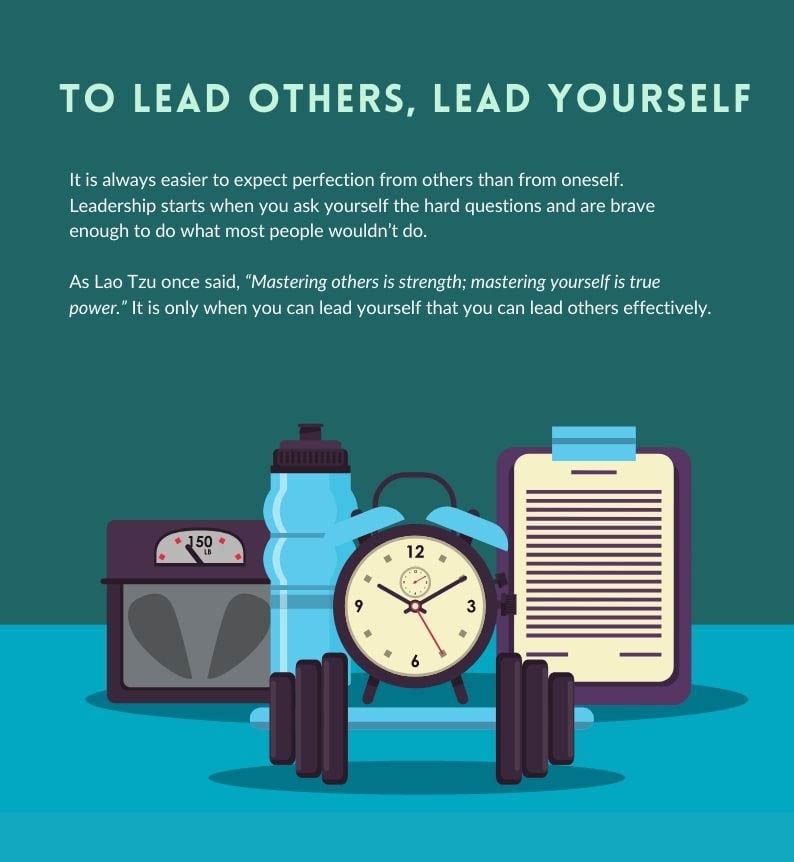
A lack of leadership traits and qualities is also a reflection of the lack of deeper inner work among aspiring leaders. It is always easier to expect perfection from others than from oneself. Leadership takes commitment, integrity, and standing for something larger than oneself. And often people have good reasons for not doing what they know is the right thing to do.
Leadership starts from reflection and focussing inwards. Leadership starts when you ask yourself the hard questions and are brave enough to do what most people wouldn’t do. As Lao Tzu once said, “Mastering others is strength; mastering yourself is true power.” It is only when you can lead yourself that you can lead others effectively.
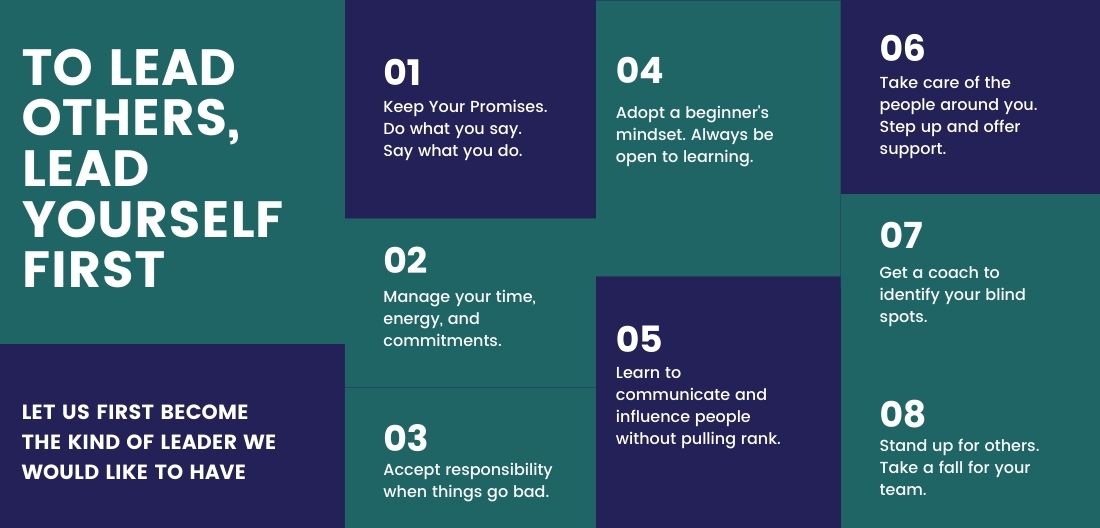
Are you leading yourself effectively? Here are 8 leadership traits and qualities to do so :-
1. Keep Your Promises. Do What You Say. Say What You Do.
This boils down to a simple question – Are you trustworthy? Can people rely on you?
“Gain a modest reputation for being unreliable and you will never be asked to do a thing.” – Paul Theroux.
In the past, a promise and a handshake are all people had to do to seal a deal. These days, however, you have to sign all kinds of papers to be held accountable for your promises. Why is this the case? Unreliability is almost the norm today.
The ability to keep promises and its positive effects can be far-reaching. Keeping your promises is the definition of integrity. In his bestseller, The 7 Habits of Highly Effective People, Stephen R. Covey defines integrity as “Making reality conform to your words.” This means going above and beyond to see to it that your promises are not mere words.
Being a person of integrity has a huge impact on your leadership ability:
It allows others to trust you
It allows you to influence others without pulling rank
The impact of your leadership increases with your influence
Considering how honouring promises is a critical skill for leadership success, why do some leaders struggle with keeping their word?
One of the main reasons for broken promises today is the need to please people. Afraid to disappoint, many people find it difficult to say no and say YES even when they are not willing to fully stand behind their promise.
Other reasons include:
Not realizing that you either made or implied a promise
Losing enthusiasm upon realizing how difficult keeping that promise is
Lacking the strength to follow through
The consequences of not being able to keep your promises to yourself and others can be severe. For starters, you will have low self-esteem because you cannot trust yourself to keep your word. Secondly, people will not be enthusiastic about working with or collaborating with you.
How to Keep Your Promises
We all break promises occasionally. To keep that at a minimum, consider the following:
Think First Before Committing
Most broken promises stem from impulsive decisions or an inability to say no. It is wiser to think first before agreeing to anything. Check whether you have the ability, resources, and time needed to deliver something. If you are in doubt, either decline the request politely or negotiate an alternative promise. The skill to say NO is a very important but often ignored leadership quality.
Be Principled
This means having integrity as one of the values you hold dear. This means that you will never allow yourself to go back on your word.
Your credibility as a leader rests on your integrity. Remember, there is no trust without integrity. If your team cannot trust your decisions, you will have an incredibly difficult time leading them to success.
Lead Yourself First – The Most Important Leadership Quality
2. Manage Your Time, Energy, and Commitments. Be Ambitious. But Don’t Take On More Than You Can Handle
You cannot lead others effectively if you are having a difficult time leading yourself. This means having the skill to prioritize goals and holding yourself accountable for their accomplishment.
As a leader, the ability to manage your time, emotions, and attention while maintaining an objective view of your strengths and weaknesses is arguably the most important factor of success. Effective leaders are exceptional at balancing their lives.
The following tips should help you manage yourself more effectively:
Be Organized
Start with keeping your work area neat. According to research, working in a clean office improves productivity dramatically. This is because the brain focuses better when there is less clutter around. Moreover, the simple act of cleaning gives you a sense of accomplishment, thus setting up the rest of your day for success. The proper organization allows you to plan, prioritize, and act on your goals more effectively.
Set Goals
Setting goals is the process of determining your objectives in a clear and well-defined way, as well as creating an action plan for achieving them. This allows you to be strategic in your actions instead of winging them. You will be less likely to mismanage yourself when you are following a set plan.
Manage Stress
Stressors often waylay us, as emotions can be overwhelming at times. For example, without effective stress management, a fight with your significant other in the morning could see you have a bad day at work.
One of the hallmarks of a strong leader is their ability to maintain calm during a storm. They are able to focus on their objectives regardless of their emotions. Unfortunately, no one is born a stoic. Emotional Intelligence is achieved by learning how to control one’s emotions.
Be Accountable
Take ownership of your thoughts, time, and actions. In the workplace, this means accepting responsibility for your team’s performance. One of the best ways of exercising accountability is by assigning deadlines to yourself and doing whatever it takes to honour them.
“A person who refuses to manage himself and discipline his flesh will be disciplined and taught by life itself.” – Sunday Adelaja.
3. Accept Responsibility When Things Go Bad. Don’t Blame Others
Unfortunately, we live in a society where people like to take credit for success while passing blame for failure. You see it with politicians all the time. Perhaps, they feel like admitting that they made a mistake will mean losing credibility.
However, that mindset is detrimental to growth. How can you address a problem effectively if no one is willing to take responsibility? As a leader, if things go wrong under your watch, you should have no hesitation to look within and address what needs to be improved. After all, you are the one in charge.
While the words responsibility and accountability are often used interchangeably, when it comes to their influence on your mindset, they are quite different.
Accountability means being willing to accept the outcome of a project. As such, all you need to do is simply deliver the bare minimum. Accountability is often given by others and an external authority.
Responsibility, on the other hand, is a choice. It is a leadership trait as well as a mindset. It means taking it upon yourself to not only see the project through but also that it is a success. A responsible leader, therefore, will never be comfortable with delivering the bare minimum. They are proud when the organization succeeds and are willing to take the blame when their team under-delivers.
If there is a problem, take it upon yourself to solve it. Do not assume that someone else will. The same goes for decisions. You do not have to wait for authority from someone else. Responsibility is a choice.
Be Result-Driven
Your effectiveness as a leader ultimately depends on your team’s results. Therefore, instead of focusing on pleasing your team, focus on supporting them on their tasks. In case the desired results fail to materialize, go back to the drawing board and identify the pitfalls, and then come up with a new strategy.
Accept Criticism
You are not perfect; nobody is. This means that you will make mistakes occasionally. Accept any criticism that comes your way without becoming attached. Review the feedback and then make amends.
Protect Your Subordinates
This means acting as a buffer between senior management and your team. If senior management is making unreasonable demands, do not pass down those directives without expressing your authentic voice. Irrespective of the outcome, it will build trust if you stand by your values and fight for them.
Ensure Your Team Always Has Resources
Do not hesitate to ask for the resources your team needs. This will allow your department to run like a well-oiled machine. Go seek help and find those resources if your team is lacking.
Hold Others Accountable
Ensure that every member is working towards the team’s goal. Do not incentivize individual performance over team goals. Do this by holding them accountable for their team spirit. Let your people know that they are not only responsible for their own goals but also for the entire team.
4. Adopt a beginner’s mindset and always be open to learning
“I know that I know nothing” – Socrates.
To Socrates, the beginning of wisdom was accepting that you are an empty vessel. As a result, you will always be a beginner and hungry for learning.
Great leaders understand that they do not have all the solutions. As such, they have an insatiable curiosity for learning, as that is what helps them grow.
This means taking advice even from your subordinates, which is something many people simply cannot do.
We are living in an incredibly fast-paced world. This means that what worked last year might not work this year. Therefore, continuously learning is the only way to prevent yourself from becoming obsolete.
5. Learn to communicate clearly and influence people by the weight of your arguments and not your rank
If there is something that most great leaders have in common, it is their ability to communicate and influence others. To get things done, you must know how to put your message across in a clear and convincing manner.
The most underrated communication skill is simply silence. Just listen. Great leaders do more listening than talking. By actively listening, they get to understand the other person’s perspective. Listening allows you to take care of others’ priorities and interests as well as taking care of the organization’s needs.
The benefits of active listening are tremendous. For starters, it is a demonstration of respect, as it shows that you value the other party’s ideas or opinions. This not only helps you construct good arguments but also builds trust.
6. Take care of the people around you. Step up to support colleagues if they need help.
Good leaders know that the health and wellness of their people play a critical role in the success of the organization. Productivity and wellbeing are not mutually exclusive, and strong leaders create an environment where people can express themselves freely.
As a result, they take it upon themselves to be supportive of their colleagues. This means offering mentorship or guidance whenever necessary. Good leaders also create a healthy environment where everyone flourishes.
“Leadership without support is like trying to make bricks without enough straw. True leaders reinforce their ideas and plans with strategic partnerships, alliances, and supportive audiences.” ~Reed Markham
7. Ask for regular feedback to identify your blind spots. Ask for help when you need to. Work with a Coach
Many leaders become so enamoured with the titles that they feel they are beyond asking for feedback. To them, not asking for feedback allows them to avoid criticism.
However, you will never be effective as a leader if you are more concerned about yourself than with the well-being of your team. This is because effective leadership comes from problem-solving as a team, not you solving everybody else’s problems.
Strong leaders are humble enough to acknowledge their limitations. As such, it is not beneath them to ask for feedback from their colleagues. What’s more, being humble makes you more relatable with your team members. Asking for feedback and hearing the honest truth is a very critical leadership skill and quality that can make all the difference.
Strong leaders work with a coach to identify their own blind spots. A coach can help you remove your own mental blocks and see possibilities that were hidden to you before.
8. Be selfless. Stand up for others. Take a fall for your team or your colleague. Speak your mind when it is what you believe, even at the risk of loss of reputation
Are you willing to stick your neck out for your team? Good leaders will have their team’s back no matter what. If the ship is sinking, they will be the last ones to leave.
Why is it important for a leader to be selfless? It is for the simple reason that your team looks up to you. According to the CEO of Michael Hyatt & Company, “Leaders replicate themselves, whether they like it or not. Your followers will adopt your habits and behaviours.” Therefore, if you want your team to act selflessly, you must be selfless in your actions.
One leadership trait present in courageous leaders is to speak their minds out. They express themselves fully and speak up for their values and standards, and are willing to take a fall for the team if speaking up means doing so. Strong leaders do not just follow orders from above. They follow their inner voice and listen to their conscience when making choices and decisions.
Conclusion
Mahatma Gandhi challenged us to be the change we want to see in the world. When it comes to becoming a better leader, you must be the change you want to see in your team, as well as in your communities and organizations. Before leading others, you must lead yourself.
While there are enough leadership experts, there isn’t any one-size-fits-all manual for leadership. That is because every team is different, every employee is different, and every leader is different. Leadership by definition means working with people, and people are more unpredictable and inconsistent than we might like to believe.
It is easier to cause damage as a leader by ignorance than it is to improve performance by deliberate intervention. Here are 6 things that you must avoid doing if you want to be a successful leader.
1. Do not accept mediocrity or low standards. Whatever standards you accept will become the norm.
In your desire to please people or avoid conflict, if you end up accepting low standards, then you are not doing justice to anyone in the team. People will fall down to the level of performance you expect from them.
In addition, nothing pisses high performers more than lowering your standards. If you let your standards slide, the first people to get frustrated and demotivated would be your best performers. If you continue to tolerate mediocrity, the high performers will soon start looking for other jobs.
Use the below guidelines when looking to raise performance standards in your team:
Lead by Example
Are you maintaining high standards in your own work? Your team is always looking up to you for guidance and motivation, modeling their performance to yours. Therefore, if you are not performing at a high level, you will likely notice the same in your employees. As such, model your behavior and performance to what you want to see in your team.
Make Your Expectations Clear
Making your expectations clear is one way of ensuring that people uphold high standards. This will allow you to hold everyone accountable to your expectations. Make sure people have deadlines and milestones for the various stages in the assignment. Moreover, have a clear and precise way of measuring performance standards.
Appreciate
Compliment high performers for a job well done. Doing this not only boosts that individual’s confidence but also communicates your standards to the rest of the team.
Coach
If a particular employee is performing poorly, try to determine what the barriers to their success are. Set small, achievable goals and provide support along the way. Make sure to acknowledge even the smallest of improvements. More often than not, you can help the employee improve their own performance by coaching them to see their own potential.
As former U.S. Secretary of State Colin Powell tastefully put it, “The more you tolerate mediocrity in other people, the more mediocre you become.” Therefore, as a leader, you should not only hold yourself to high standards but also ensure that your employees are doing the same.
6 Things You Must Not Do As a Leader To Ensure High Team Performance
2. Don’t treat people with disrespect. Even when they mess up.
How do you feel when someone disrespects you? Chances are you are not going to be too excited about collaborating with them. In the workspace, unfortunately, some leaders feel that their position allows them to treat their subordinates with disrespect.
Whether it is saying good morning to the janitor or cleaning up after yourself, showing respect goes a long way. The following are some of the benefits of being a respectful leader:
Increasing Job Satisfaction
According to a 2014 survey done by the Society for Human Resources, up to 72% of the survey participants rated respectful treatment as being the most important contributor to job satisfaction. Employees who love their jobs are more productive since they want to be there. The reverse is also true; employees who are not treated with respect tend to have more conflicts at work, in addition to being more likely to miss work.
Increasing Employee Engagement
According to findings from a Gallup study involving more than 350,000 employees in the U.S., only 30% of the participants felt engaged with their jobs.
One of the easiest ways of increasing engagement is by treating people with respect. As mentioned earlier, employees consider respect to be the most important behavior in a leader. Therefore, by treating them well, they will be more likely to make your vision a reality.
Minimizing Conflict in the Workspace
Mutual respect creates a positive work environment and reduces gossiping, harassment, and other types of negativity. This ensures people work collaboratively and there are healthy disagreements rather than friction and conflict.
Reducing Stress
By treating your staff with respect, they will be more comfortable, as they do not have to worry about being ridiculed or humiliated. Being stress-free not only increases engagement but also goes a long way in promoting their mental well-being.
Improving Collaboration
Collaborative meetings often give birth to big ideas. When employees feel respected, they won’t shy away from sharing ideas. If employees always have to watch out for being humiliated or ridiculed, they tend to keep their ideas to themselves. This not only hurts them but also the entire organisation.
Disrespecting anyone, leave alone the people helping you to realize your goals, is a behavior that has no place in the 21st century. Nothing good comes from such behavior except pleasing the so-called leader’s ego.
3. Don’t force people to commit to deadlines or take on work that would mean spending time away from their families or ignoring their health.
Working during the weekend has become the norm in some countries. A survey of 1000 working Americans found that up to 67% of the participants typically worked during weekends, with 63% revealing that their employers expect them to do so.
This means that the typical boss sets deadlines that require their employees to work on weekends, which leaves them little time to spend with their families or embark on activities that refresh them both physically and mentally.
Sick or worn-out employees are hardly the most productive workers. As such, it is important to allow them time to reset. According to psychoanalyst, performance coach, and author of “Be Fearless: Change Your Life In 28 Days,” Jonathan Alpert, “Reset time is critical, as it allows them to recharge and redirect their energy to other interests.”
Pushing people to work in their free time might lead to short term productivity benefits, but it leads to nothing but harm in the long term. Not only the business suffers due to a lack of engagement and productivity, but people’s health and well-being also take a hit.
The Challenge of Leadership
4. Don’t put profits over employee well-being. Don’t push people to stress and burnout
Employees are people, not machines, meaning that they are susceptible to burnout. Human beings need regular periods of rest, rejuvenation, and play to recharge their batteries. Good leaders understand this and give their people the flexibility to work at their own pace. They encourage people to take their vacation days and make sure they stay energized and happy instead of only focussing on productivity.
Employee well-being and profits are not mutually exclusive. Often the most productive companies over the long run are those which prioritize employee well-being over profits. If your team has to meet unrealistic expectations, your team will be forced to cut corners and rush work. As a result, you will end up with low quality output.
Low Employee Morale
Hitting set targets is a big morale booster. However, if the goal is simply unattainable, people start feeling like they are not capable of achieving set goals. This can dampen their motivation, self-esteem, and productivity.
Increased Turnover
If an employee feels like they are not capable of meeting your expectations, they are likely to resign and look for other options, resulting in a loss of valuable expertise.
5. Don’t bias your decisions because of who and what you like.
Conflict among employees is bound to happen in the workplace. As a leader, it is your job to make decisions free of any bias or favoritism.
While most misunderstandings usually end up with the parties involved solving it among themselves, sometimes they don’t. It is in such cases where you have to step in with proper conflict management skills.
However, leaders often find themselves struggling to stay impartial when solving disputes, sometimes showing bias. This is because, as humans, we tend to take sides with opinions that resonate strongly with ours. Therefore, if the grievances of one of the parties in conflict have opinions you identify with, you might find yourself showing bias to their side of the story.
The effects of being partial when solving conflicts can be far-reaching. For starters, you undermine your own integrity as a leader. And then, you risk losing the respect of the rest of the team.
It is very important to hear the contrary position to what you believe in. This will make all sides feel heard, and you might even discover some new information that might change your mind.
6. Don’t micromanage. Trust people and let them do the work they were hired for.
Micromanaging is extremely detrimental to productivity, as it signifies distrust, thereby causing over-dependence and stress. According to Forbes Coaches Council, micromanaged teams are typically rebellious or incapable of making independent decisions.
As a leader, the last thing you want is to have people who are not confident in their abilities, as you will have to hold their hand every step of the way. The lack of belief in their skills coupled with the time lost verifying everything with you is the perfect recipe for wastage of energy and effort.
Instead of micromanaging, therefore, be a leader and trust people to do the job they were hired for. Give them the training and support required to do their jobs, and then get out of their way.
Conclusion
While there are a lot of guides on what to do as a leader, these above 6 things are a simple reminder of what you should not do. Sometimes it is easier to cause damage to team morale and engagement with one small misstep. If you keep the above guidelines in mind, you will set the foundation for a strong team.
Does your manager focus only on your weaknesses and never talks about your strengths? You are not alone. According to Gallup, only one out of 3 employees would say they have the freedom to do what they excel at every day. That’s because many managers tend to focus more on fixing their employees’ mistakes than promoting a strengths-based culture.
Gallup’s research has proved that using a strength-based approach to better what workers are already good at creates more engaged employees and increases your organization’s productivity immensely.
Gallup further suggests that learning programs focused on fixing weaknesses are fundamentally flawed since they seek to make employees who they are not. There is, therefore, a fundamental need for organizations to look at themselves in the mirror to see if they are doing things right.
You Are Enough, And Perfect The Way You Are
4 Reasons to Run Away If Your Manager Focuses on Weaknesses
Everybody loves to be appreciated for what they excel or are good at. If your manager only focuses on your weaknesses rather than what you are good at, it will lead to friction and demotivation over time. The following are some reasons why you shouldn’t try fixing people.
1. Fixing People doesn’t Work
Gallup found that 22% of employees with managers who focus on their weaknesses are actively disengaged compared to only one percent for employees with managers who concentrate on strengths. When you focus on weaknesses, you create friction since nobody appreciates when their flaws are put under the spotlight.
This leads to demotivation and consequently, decreased productivity. Some employees could also choose to find employment elsewhere where their strengths are appreciated more.
2. Focusing on Weaknesses Ignores Strengths
A 2016 study found that people tend to see weaknesses as more malleable than strength. That would explain why many managers are still trying to fix mistakes. However, focusing on weaknesses blinds a manager from seeing the potential in their employees. They, therefore, miss out on opportunities to better what their workers are already good at.
Strengths can be improved too, and developing them creates extraordinary room for growth. Managers should identify their employees’ natural talents and invest their time and energy in turning them into super strengths.
3. Everybody Has Weaknesses
No human being is perfect, and yet everyone is. Unfortunately, some managers still hold on to the unrealistic goal of perfecting their employees by eliminating their weaknesses. It would be better to accept people for whom they are instead of wasting time on fixing weaknesses.
Faults will always be present; the challenge is to look beyond them. Instead of looking at the bad, which not only wastes time but also creates friction, managers should concentrate on making what their workers are already good at better.
4. Focussing On Weaknesses Says “I Know Better”
Developing trust and accountability in the workplace is essential. Instead of fixing weaknesses, leaders need to “care” for their people by trusting their employees’ ability to deliver on expectations.
In another research, Gallup found that managers contribute to 70% of the variance in their worker’s engagement levels. Fixing people takes an “I know better” attitude. Instead of imposing their standards, managers should lend their ear to their employees and work with them to see where learning is needed.
“If you spend your life trying to be good at everything, you will never be great at anything.”
― Tom Rath
Be Comfortable In Your Own Skin
6 Advantages of Strengths-based Leadership
Regardless of what you believe in, the truth is that focusing on the weaknesses of your employees will not get you far. The following are advantages of strength-based leadership and management.
1. Faster Growth in Learning new Skills and Jobs
Improving your employee’s strengths makes them a lot more of what they truly are. When you focus your energy on improving people’s natural abilities, you will realize that they can achieve even what you thought they couldn’t.
It is, therefore, important to assign roles based on employees’ strengths. A strength-based approach will enable employees to acquire new skills and learn new jobs faster. They are also more likely to be successful in their roles.
2. Better Productivity
When your employees get a chance to concentrate on their strengths every day, you get a better return on time and effort invested. According to Gallup’s data, employees who work on areas of strengths are 7.8% more productive.
Additionally, concentrating on your team’s strengths daily increases your employees’ productivity levels by 12.5%. Maximizing strengths in the workplace also positively impacts the health of your workforce resulting in fewer sick days. This will improve the company’s bottom line in the process.
3. Better Attitude and Mental Health.
When you play to your employees’ strengths, work becomes fun instead of a source of stress. If your workers spend more hours in a day using their strengths, they are less likely to experience mental health issues such as anger, sadness, worry, anxiety, and stress.
36% of those who use their strengths for 10 hours everyday experience stress. According to a study, this number rises to 52% for people who use their strengths only three hours a day. If you choose a strengths-based approach, your workers will experience an increase in positive emotions. They are likely to be happier and to have a positive attitude about work.
4. Higher Engagement in the Organisation
As a manager, you have the responsibility to provide opportunities for employees to use their strengths. By placing employees in roles where they can be at their best every day, you can empower them to get even better at their strengths. When your workers are more engaged, it leads to higher productivity.
According to Gallup, managers who encourage their employees to use their talents are six times more likely to foster engagement. Moreover, 61% of employees whose managers adopt a strength-based approach in the workplace are engaged. This is double the average number of workers who are engaged in the entire United States (30%).
5. Building Strengths is Faster and Easier than Improving Weaknesses
Building strengths is straightforward and faster than trying to fix weaknesses. There will be less friction because your employees are more likely to get on board, and it requires less time and effort because they are already good at what they do; you’re only making them better.
On the other hand, your workers will be more reluctant to make significant changes, especially if the change swims against the tide of their natural talents. Therefore, that approach can be a long and hard journey that ends up being frustrating and unrewarding.
6. People Stay in Companies Longer When the Focus is on Strengths
A strengths-based approach makes people feel valued. As a result, they will be more engaged, productive, and less likely to leave the organization. However, if you choose to focus on fixing weaknesses, your people will be less satisfied and productive and will have a higher chance of leaving the company for another job that puts their talents to better use.
“If you focus on people’s weaknesses, they lose confidence.”
Conclusion
The importance of a strength-based approach in the workplace cannot be overstated. As a leader or manager, you should take the steps required to create a culture that focuses on developing strengths rather than eliminating flaws.
Begin by identifying the strengths of your employees, and help them align their talents to what their roles demand.
All employees have areas of strengths (and weaknesses). You should always seek to develop these strengths by assigning roles based on abilities, incorporating strengths in performance evaluations and career conversations, and encouraging workers to set goals based on what they excel at. Focusing on strengths creates good opportunities for success for both the employee and the organization’s bottom line.
A lot of my coaching work involves working with people to figure out what their deepest held values are, and what they consider important in life. It is often surprising that many people have no idea what their values are. And that included me too for a long long time. If I introspect, I realize that I had never thought of my values before I started being coached back in 2010.
I often wonder why we don’t know our values as adult human beings? Why don’t we know what is important to us and what we care for? Why don’t we know our worth? It seems to be an important question, yet most of us face this question by accident, and not by design.
It is difficult to understand why our current education system doesn’t place a lot of emphasis on character formation. I am not talking about someone telling you about right and wrong. What I mean by character formation is encouraging people to think for themselves and make their own decisions about what they care about or not?
Shouldn’t this be at the center of our formal education? We teach all about different subjects to children but fail to teach them how to discover their values and how to be the kind of person they want to be? Unless people don’t know what they care for, how will they know their worth and standing in life?
I sometimes wonder what is the job of the school or the teacher? Is it to drill a specific lesson into the pupil’s heads or to prepare them for life with values, lessons, and tools that they can use in good and bad times alike? Who will teach our kids about resilience, empathy, care, and collaboration instead of only knowledge, chasing success, competition, and ambition?
This kind of teaching is severely missing from our educational system. How is one supposed to act in our dynamic and chaotic world if we don’t even know our values? Unfortunately, the problem goes beyond our schools or the education system. We seem to live in a culture that has forgotten the importance of having values. However, this wasn’t always the case.
“Knowing others is intelligence; knowing yourself is true wisdom. Mastering others is strength; mastering yourself is true power.”
LAO TZU, Tao Te Ching
Why Do We Glorify Achievement Over Values?
In his book, The Road to Character, David Brooks argues that society took a turn for the worse somewhere in the mid-20th century when the focus shifted to individualism and self-desire. As a result, modern society seems to have lost touch with our values. Our culture now glorifies achievement at the expense of character development, and parents are not spared either. Instead of imparting values to their children, they focus on report cards and career progression as they seek glory in their children’s success.
Teens today think it’s more important to have money. Out of all the teenagers surveyed from 2005 to 2007, 62% thought it was important to have lots of money in life. Compare this to just 44% between 1976 and 1978. During the 1970s, close to 49% of teenagers expected to earn more money than their folks. This number rose to 60% by the 2000s.
But as the desire for wealth increases, teenagers rarely demonstrate a great work ethic. During the late 1970s, a quarter of the teenagers surveyed admitted they were not willing to work hard for results. A few decades later, this figure had jumped to 39%.
Focus on Eulogy Virtues Instead of Resume Virtues
Resume virtues are those qualities that make us seem competent at our jobs. On the other hand, eulogy virtues are values we would want people to associate us with after we are gone. If you want to live a meaningful and satisfying life, stop thinking too much about yourself, your skills, and your possessions. Instead of focusing on the never-ending climb of achievement, focus on the inner struggles that challenge you to fight your own daemons, and grow the courage to go after what really makes you alive.
The very belief that we can control life is the biggest lie that we tell ourselves. Life, by its very nature, is messy and unpredictable. Good and bad things will happen to you. Your education, job, the country you live in, or any other reason which gives you the illusion of safety, is a very bad armor against life.
Embrace the uncertainty of life and experience real FREEDOM. Go out and play. Learn a new language. Take a new job, or live in different cities/countries and soak in different cultures. Write, paint, or do anything else that makes you experience life rather than draining the life out of you.
Don’t try to be nice or do what is expected. Don’t live for the gallery. Be authentic. For a change, LIVE for YOURSELF. And you can’t do that unless you know what your values are, what is important or not important, and what you stand for? In short, unless you know your own worth?
“Those who have a ‘why’ to live, can bear with almost any ‘how’.”
― Viktor E. Frankl
Accept Your Flaws
We must not kid ourselves. Perfection is an illusion. As human beings, we are innately flawed. However, we should always strive to be better. Our imperfections are not something to be fixed. Instead, our imperfections (strengths and weaknesses) make us the unique human being that we are. We are perfect in our imperfections.
Pride and overconfidence trick you into thinking you are better than who you are. When dealing with your own imperfection, you need to be humble. For instance, you must accept you can’t know it all and that you may never know some things. Perfect knowledge is unachievable. However, you can leverage the experience you gain and your unique strengths, skills, and values to go after what you really care about.
Find a Purpose
It is not possible to have a fulfilling life unless you take care of what you care about. Stop searching for happiness since it is not something you should crave for as a means to its own end. Instead, live an intentional life. Joy and satisfaction is a byproduct of going after what is really important to you – irrespective of whether you succeed or fail at your efforts. When you go after your calling, it gives your life meaning, and joy and aliveness will naturally follow.
I like this definition of success by John Wooden the most, “Success is peace of mind that is the direct result of self-satisfaction in knowing you did your best to become the best that you are capable of becoming.” Knowing what your values are and what is important to you is more important than what you choose to do.
When you connect to the things that matter most, you experience true joy. Otherwise, you may end up doubting yourself and questioning why you are doing what you are doing, even when you achieve success by society’s standards.
Research was conducted among Stanford University students who were heading home for the winter break. They were each asked to keep a daily journal. Some of them were asked to write down their most important values and how they were connected to the events of the day. Others were asked to write down the positive events that occurred throughout the day.
The results were startling. Those students who jotted down their personal values were healthier, fell sick less often, and had more energy and a better attitude than the students who wrote down the positive events in their life. These findings have been replicated in subsequent studies. In his book, The Upside of Stress, Stanford professor Kelly McGonigal argues that writing about our values has short term and long term benefits for our health, mental attitude, and social life.
Importance of Knowing Your Values
Self-awareness begins with knowing what makes you tick, and what is most important to you. The following are some benefits to be gained from knowing your worth – your values and what you stand for.
It Breeds Maturity
Knowing your values may not lead to fame or fortune, but it will foster maturity and help you stay grounded. When you become mature, you focus on becoming better than your own previous self rather than comparing yourself to others. You move from fragmentation to centeredness. As a consequence, the restlessness disappears, and the confusion about the meaning and purpose of life dies down.
They Help You Find Your Purpose
Do you know your purpose in life? As it turns out, this is not the case for most of us. It is only after identifying your values that you can begin to understand this purpose. You won’t know what you want out of life if you don’t figure out what is important to you. The first step is always to ask yourself this question – What do you care about? And the second question which can take you to your purpose is – How can you take care of what you care about?
They Regulate Behavior
Values are principles that guide and regulate our behaviour without it oscillating between extremes. When you’re faced with a difficult situation, it is natural to react impulsively. You can use your values to determine your actions in moments of crisis. Your values can serve as a moral lighthouse in those tough times. Self-awareness will ensure you behave in a manner that matches what you aspire to be at your core.
“Human knowledge and skills alone cannot lead humanity to a happy and dignified life. Humanity has every reason to place the proclaimers of high moral standards and values above the discoverers of objective truth.” – Albert Einstein
They are Valuable in Decision Making
Emotions and struggles tend to cloud our judgment if we are not aware of what we stand for. When faced with important life decisions, it would be important to stop and consider how someone who shares your values would approach the situation? As a result, you are more likely to make clear-headed decisions rather than emotionally charged ones.
They Help You Identify What is Important
We are constantly distracted by so many things these days. In our consumerism-driven society, we are bombarded with advertisements, notifications, and information constantly.
Identifying your values will help you clear out the clutter. It will help you clear the mud from the water allowing you to see clearly. You can then focus your time and energy on what matters and brings value, satisfaction, and aliveness into your life.
They Help You Choose the Right Career
With so many options available, it can be hard to figure out what you want to pursue in life. However, choosing a career path is easy when you know what matters to you most. Perhaps you value interactions and forging meaningful relationships more than endlessly chasing after results. Perhaps you value just the opposite. Knowing what you stand for, and what matters to you, will help you consciously take your life and career forward, rather than just drifting with the flow.
They Help You Develop a Sense of Self
Knowing your values and worth shapes your beliefs. It enables you to develop strong opinions about key subjects. You can’t just believe what your parents or friends believe and want you to believe. You have to figure out what you truly stand for so you can be your authentic self around others. In both good times and bad, your values can serve as a moral compass always guiding you to your north star.
They Impact Your Overall Happiness
At the end of the day, knowing your values brings joy into your life. When you take action aligned with your values and to take care of what you care about, the result will be a more meaningful and happier life. When you are able to do so, you will find aliveness, joy, and satisfaction even if you have to face some tough challenges on the way.
Conclusion
As adults, we must dig deeper, introspect, and ask ourselves the tough questions to know our values. Identifying what is important to you will enable you to live a more meaningful life. You will be able to find your purpose, make the right decisions, navigate through tough situations, and choose the right career path.
Ultimately, values will help you develop a sense of self, shape your character, improve your confidence, and increase your overall happiness. When you know your worth, you know where you stand and where to draw a line.
Middle management is usually the weakest link in the chain of every organization. A study that gathered data from the most unengaged employees found that middle-level managers form the biggest bulk of the bottom five percent.
The results are startling, considering they play a key role crucial to the company’s success. They have a direct impact on the well-being of their employees and act as communication conduits for senior managers. When senior management fully supports and trains their middle-level managers, they can bring positive change in the organization.
However, companies that fail to fully involve mid-level managers while expecting them to implement policies they didn’t have a hand in creating will not achieve their set goals. In many organizations, these managers and their employees are dissatisfied and disengaged. The following are some reasons why.
They Are Rarely Trained To Do Their Job And Have Badly Trained Managers Themselves
Middle managers are rarely trained to do their job. According to a study by learning innovator Grovo that involved over 500 middle-level managers from various industries, 98% of surveyed managers felt leaders at their organizations need more training in issues such as time management, employee turnover, professional development, conflict resolution, and project management.
Even when present, management training is usually ineffective. The large volume of information makes it almost impossible to remember and apply, and companies rarely do follow-ups to reinforce the training.
Top-level managers lack training too. According to a Professor of Management at Vanderbilt Owen Graduate School of Management Ray Friedman, how middle managers treat their subordinates reflects how their bosses treat them. So when their bosses are not properly trained, the effect is felt at all levels. When middle managers have a healthy relationship with their bosses, the effects are passed down the layers.
There is Increased Pressure to Perform
Middle managers are constantly under pressure to perform, which leaves no time for learning. It’s no wonder that a study found that they are the most depressed group in many organizations. The role that middle managers play has undergone major transformations over the last few decades.
The downsizing, cost-cutting, and restructuring that happen during times of crisis affect middle managers more since they are often blamed for the slack. Apart from the layoffs, middle-level management has experienced major changes that have led to new demands concerning behavior, skills, and competencies. Managers are now expected to become mentors and coaches for their people, and there is increased pressure to perform more than ever.
They are Always in Meetings
Middle managers find it hard and exhausting to context-switch across different domains, functions, and skill sets as they go from one meeting to another. This frustration is aggravated when the middle manager is constantly inundated with meetings with no breathing space in their schedules.
Being in meetings the whole day leaves no time for thinking and casually connecting with people. Managers who spend most of their time attending meetings tend to lose touch with the people they manage over time.
Empower Your Middle Managers To Build Strong Bonds At Every Level
How to Train and Grow Your Managers?
Your company’s bottom line depends on the caliber of managers you have. The way they manage directly impacts the engagement, motivation, and productivity of your people. The buck stops with them. It, therefore, makes sense to help them become excellent at their jobs. The following are a few ideas.
1. Educate Them About Their Role
Many managers rarely have a clue of what their role entails as nobody told them what people expect from them and they only had bad examples to follow themselves. Part of the reason is that the majority of managers were promoted to the position after excelling in their previous assignments, and not because they were good in management.
However, management is a different role altogether and requires a unique set of soft skills that experience in previous roles can’t provide. Such skills include listening, accountability, building relationships, the ability to make sound decisions, and motivating others. Therefore, if your organization is willing to entrust people with management positions, it should also be willing to invest in educating the managers on what is expected of them.
2. Train them To Be Better Coaches and Communicators
A manager’s role primarily involves dealing with people and having conversations. In fact, it would not be wrong to say that leaders get paid to have effective conversations. You should, therefore, educate them to become better coaches and communicators. Proper communication is clear, transparent, and consistent, and it plays a key role in clarifying expectations, building relationships, managing conflict, and giving honest feedback.
Coaching enables leaders to support their employees to identify their blind spots and confidently go after ambitious goals. Instead of acting as gatekeepers who stand between the frontline employees and their growth, managers should coach their team members to constantly learn and fulfill their potential in their respective roles.
However, employee development is a continuous process, and you should not do it once or twice a year to tick off an item on a checklist. Coaching should happen regularly at frequent intervals.
3. Build Trust
As a leader, you should have very high character and integrity expectations from your managers. Trust is essential for effective leadership since it makes your team feel a sense of belonging and encourages people to work towards a collective purpose.
According to the Harvard Business Review, employees working in high-trust environments are 76% more engaged and report a 50% higher productivity rate. Without trust, everything else falls apart.
Building trust is an ongoing process. When you establish trust with your managers, you should continually nurture it by being transparent, owning mistakes, seeking out feedback, and giving credit where it’s due.
“We look for three things when we hire people. We look for intelligence, we look for initiative or energy, and we look for integrity. And if they don’t have the latter, the first two will kill you, because if you’re going to get someone without integrity, you want them lazy and dumb.” – Warren Buffett
4. Be transparent
Your manager is an essential communication link between top-level management and frontline employees. They provide executives with valuable information about the day-to-day workings of the organization and ensure that information from senior management gets to the employees.
If the organization fails to bring middle managers onboard by not sharing valuable information with them, the employees will also be out of touch with the organization’s goals and objectives. You should always share honest and transparent information such as company values, mission, goals, progress, successes, and setbacks with your managers so that they can pass it along to the frontline workers.
Knowing how to communicate is especially important in our ever-changing and dynamic world. The next crisis – a financial crisis or a pandemic as we have seen in 2020, could just be around the corner. Do you managers what essential messages to communicate when the times get tough?
Do You Realise That Your Middle Management Is The Most Important Link In The Chain?
5. Use a Strengths-Based Approach To Career Development
Every manager has weaknesses, but they also have innate strengths. Although you should not ignore the weaknesses, studies have shown that focusing on strengths rather than trying to fix mistakes creates more engaged employees and is better for the company’s bottom line.
Strong leaders allow their managers to manage based on their strengths and support them in areas of their weaknesses. Focusing on weaknesses erodes trust and creates friction. On the other hand, a strengths-based approach leads to faster growth and high positivity in the workplace.
6. Get Each Manager a Coach
Today’s employees prefer the opportunity for personal growth to financial growth. And over the long term, there is no financial growth possible without personal growth. People no longer want a boss who dictates what to do without giving regular feedback. Instead, people expect a manager who can coach them, value them, and help them build their strengths. A strong leader involves their employees in setting goals and expectations and communicates more openly, honestly, and frequently.
As Gallup found out, the number one reason why many employees switch jobs is career growth opportunities. A coach will help your managers grow and see their blind spots. They can give practical advice on how to offer emotionally intelligent support and help them build confidence while dealing with challenges and setbacks which every manager faces.
Conclusion
Effective middle-management is critical for your organization’s success. Your manager is responsible for setting goals, motivating employees, and ensuring that the company’s day-to-day activities run smoothly. And as a leader, it is upon you to ensure that they have the necessary tools required to keep your employees engaged and productivity high.
This includes giving them the right training to prepare them for their role, building trust, being transparent, and dealing with change. Proper training should educate managers on the importance of their role and teach them to become better coaches and communicators. It should also be current and regularly updated with the latest research and findings, and focus on improving your manager’s strengths rather than fixing their weaknesses.
As a leader, my most important meetings are my 1-on-1’s with my direct reports. It is the single best investment of my time, and yet I have seen most leaders clueless about its importance.
These 20 questionswill help you turn your 1-on-1 meetings into sources of insights and connection. Insights into the desires and fears of the human being sitting beside you, and an opportunity to create a real human connection based on care, impact, and meaning.
There is nothing more powerful than asking the right question at the right time. Powerful questions like these can become your prized tools of leverage as a leader and coach. Here they go :
One Powerful Question Can Transform Your Life
Tell me something I don’t know about you?
This question never ceases to amaze me. It is such an open-ended question that the answers you get surprises you. This question can reveal a lot that you might not be aware of, about the other person. This question works wonderfully whether you are talking to somebody who is new in your team, or to someone whom you have known for years.
Where do you want to be in the next 1, 5, and 10 years?
This question provides a window into people’s dreams. You might have to ask a few questions to uncover them, but once you get to know where somebody wants to be in the future, you can use that knowledge as leverage when you assign work to them. This can help you to allow them to do the best work of their lives.
What are you excited about?
What are you worried about?
These two questions will tell you what the other person cares about. Questions like this will reveal what is important to them in their lives – whether it is their family, their health, a particular hobby, sports, or something else.
The answer to these questions will help you better deal with future situations when they are overly excited or worried. You will be able to understand what happened that caused them to be excited or worried.
If you were to donate everything you have to a cause or charity, which would it be?
What one word do you want people to use to describe you? What word do you think people currently use?
The above two questions will make people reveal their most important values. Asking them to come up with one word can be very challenging but it can reveal something very deep and meaningful in their life.
What did you do recently that you are proud of?
This question will reveal a recent act which the person is proud of. It will reveal what the person values, and will also help them connect with their own values, which often people are unaware of.
Are You Asking Enough Powerful Questions – To Yourself and Your Team?
When was the last time you told a lie? Why? What would have happened if you had told the truth?
We all tell lies – in different areas of our lives. And there is nothing right or wrong about them. However, I feel that a totally different outcome/result could be possible if we were to tell the truth in such circumstances.
Asking this question can reveal hidden possibilities in people’s futures which they themselves might have closed doors on. It shows people alternate options that would become available for people if they were to choose courage over comfort the next time.
What do you want to do that you will be proud of in 5 years’ time?
We can all work just for the sake of work. Or we can do work which we can remember decades down the line. Work that makes us proud, work that makes an impact, and work that makes a difference. This question will help you figure this out.
How are you special? What makes you stand out?
I believe we all are unique in our own ways. We all have our strengths and things we do well. However, our work likes to put us into boxes of pre-defined roles and responsibilities.
As a leader, it is very important to understand what makes each person tick in your team, and what is unique about them? This will help you find work for them that are suited to their strengths, and they have the best chance of succeeding.
When was the last time you stepped out of your comfort zone? What was the result?
This is another question that touches on the idea of courage. This question can reveal what someone has been missing out on because of a lack of courage. I have seen that when asked this question, people see hidden opportunities for themselves in the future if they were to gather the courage to step out of their comfort zones.
Tell me about your biggest failure in life? Biggest success? What did you learn from the experience?
We all learn from ups and downs in life. There are moments in everyone’s life when we are forced to re-evaluate our life priorities. Moments like these, which are called ‘crucibles’ by Bill George, the author of Discover Your True North, can reveal a lot about what we value and who we are.
When was the last time you laughed at work?
If the answer to this question is “too long ago”, you know as a leader you have your task cut out. You need to do something to make the environment more fun. Always being busy at work can make life boring if you don’t have friends at work.
Life is always more fun, and work is more productive if we have people with whom we can laugh.
If you had the opportunity to get a message across to a large group of people, what would you say?
Everyone has a message inside of them dying to get out. Everyone wants to say something which they don’t because of certain societal pressures or internal battles.
Asking this question will help you get that message out, and if you can create a culture where people can express themselves fully without pretensions, engagement and productivity will go up by many notches.
What would your day look like if money was not a concern?
Often people feel powerless and trapped by money. I have felt that way for a long time, and I have seen that asking this question forces people to think for themselves about what their world would look like if money was not a concern. Ask this question and be amazed by the answers people give.
Who do you look up to? Who are your mentors, both those you know personally and those who inspire you from afar?
We all have people in life who inspire us and whom we look up to. These could be people we have met, like our parents or our teachers. Or these could be people whom we have known and heard from far, as someone from politics or business. Knowing who people look up to can give an insight into their values and ideals.
What do you do after work? What are your hobbies?
People have a life after work, and knowing about what keeps them busy at work can help you get a better picture of their personality. I have found that talking to people about their hobbies, and motivating them to do more of it, can increase their engagement and productivity at work.
What are your highest priorities in life? Where does work fit in?
We all have priorities in life other than work like family, health, a hobby, or volunteering. For some people, work is the number one priority, while for others it is not. Knowing where work fits in someone’s life priorities can help you communicate and coach them accordingly.
As a child, what did you want to do when you grew up?
What in your life is ‘on hold’? Until you lose weight, until you retire, etc. What are you waiting for?
The above two questions try to bring to the surface deep desires which we might have given up on. We all dream a lot as children but give those dreams up when we are faced with the reality of adult life. However, it doesn’t have to be so, and tapping into those dreams can be a great source of motivation and satisfaction.
All of us have something in life which we plan to do “one day”. These items are usually on hold and we are waiting for some ideal condition to be met. Asking this question will help you understand people better, and connect with them on a deeper level.
According to research by Gallup, the most common reason why people leave their jobs is bad managers and bosses. The study, which questioned more than one million working Americans, revealed that 75% of workers who left their jobs did so because of their managers and not necessarily the position itself. No matter how many perks a position offers, people often quit when they don’t enjoy a healthy working relationship with their boss.
Most people get promoted to management because they did well at their previous non-management job. Just because you excelled in your individual contributor role doesn’t mean you can seamlessly transfer over those skills to a management role. For instance, when an all-star football player becomes a manager after retirement, success is not always replicated in their new role.
People often forget that management is a totally separate role. Yet, most people are promoted or rewarded with a “management role” for succeeding in their previous role. The skills required to manage a football player or a software engineer are different from being a good football player or a good software engineer.
Do Managers Even Know What People Expect From Them?
However, a bad manager is not a bad person. They are just unaware and trapped between a rock and a hard place. Managers are rarely trained or educated about how to do their job well. It’s no wonder that they end up managing people like they were managed. Most of them don’t even understand what management is and what people expect from them.
Transitioning from an individual role to a manager is one of the most challenging moves you can make in the corporate world. Becoming a manager comes with new responsibilities and requires a new perspective about work and the people involved. It also requires you to form new types of relationships with your former peers, your new colleagues, and other stakeholders.
Nobody shows new managers how to develop a leadership style that is authentic as well as results-driven. Such disregard for management skills can derail an individual’s career and negatively affect the organization’s productivity. Great managers don’t happen by accident. They learn from their mistakes and invest in developing their skills. I have worked with many great managers myself, and below is what I have learned about people’s expectations from their managers.
A List of 8 Expectations From Managers That Employees Have
While it is almost never voiced, employees have certain expectations from their managers. The following are expectations you must fulfil when managing any group of people.
1. Trustworthiness
Employees want a trustworthy manager. If you don’t measure up, you will not get their best efforts. Trust is the bedrock of any organization’s success because it makes a big part of the organizational culture. Employees are more likely to actualize goals set by leaders they trust and are honest about what is happening in the organization. The best way of developing trust is leading by example and becoming a role model. Be the kind of manager you would expect to have.
It is easy to bark orders and tell people what to do or how to behave, but you can’t get away with preaching water and drinking wine. If you expect your people to be accountable, you need to hold yourself to a higher standard. So be the first one to uphold company values and hold others accountable who don’t. And yes, don’t consider your position as a license to slack off or use company resources for your own gain.
Find Out What Great Managers Do
2. Vision
Employees expect managers to have a clear vision and know where the team is heading. This gives meaning and purpose to their work. Having a purpose motivates and inspires people to keep going in spite of the circumstances – which can be chaotic and dynamic. When faced with obstacles, they are less likely to get demotivated. Your vision, therefore, should be strong enough to carry your team through the tough times that will eventually come.
Visionary leadership provides clarity, as people will look up to you for providing direction. You need to spend time with the team regularly to discuss, revisit, or reshape the team’s purpose. Ensuring each member understands the team’s purpose and their role in the team will empower them to prioritize their tasks effectively.
Everyone wants to contribute to something bigger than themselves and make a difference. Strong leaders and great managers show people how their work impacts the customer and the wider benefits to the industry/society.
“When corporate executives get really excited, they leverage their learnings against comprehension to revolutionize English.”
― Tanya Thompson
3. Effective Communication
Effective communication leads to high employee engagement. Therefore, it is imperative to be clear, consistent, and transparent when communicating. Leaders should stop using complicated language or hiding behind jargon. Trust people and share information openly.
For instance, if you promote an employee, you might want to clarify why you made the choice. Likewise, if there has been a change in strategy, you might want to inform them how the change will impact the team’s objectives. The aim here is to filter out the unnecessary noise around the main message, which could be anything from corporate jargon that could cloud the message to a funny anecdote for the wrong audience.
Transparent communication is essential for building trust within your team. You should, therefore, communicate with your team openly and honestly. Share what you know when you know it to avoid rumors and misinformation. And when there are no clear answers, communicate the same.
You should also clarify when the information is subject to change and update it when it does. When you communicate openly and honestly, the message gets home, and employees will consider you more credible and trustworthy.
4. Psychological Safety
Make work fun by bringing the team together and creating a safe space where people can be themselves. Building a psychologically safe and inclusive team culture will encourage your employees to voice their opinions without fearing judgment. It will build stronger relationships that foster better collaboration. Moreover, it will inspire creativity and innovation. Consequently, you will have increased employee engagement and even higher performance.
You can create a psychologically safe environment in the workplace by embracing mistakes. Instead of calling out your employees when they err, give them permission to try and fail and allow them to come up with out-of-the-box ideas and solutions. This will create a culture that encourages learning from mistakes. Such freedom to experiment will also make work both educational and fun. In a safe environment, you don’t have to wear a mask and can be completely honest about what you know and what you don’t.
Strong Leaders create a strong foundation for their team to flourish
5. Career and Professional Development Support
Employees need continuous career and professional development support beyond the once or twice per year performance cycle. A year is too long a time to wait for feedback, and such evaluation is rarely based on data. Managers also often take a one-sided approach, taking it upon themselves to decide how good or bad an employee did.
Continuous career and professional development demand that you meet with your employees frequently. It is helpful to inform your employees about your shared goals and objectives and what milestones they need to reach within reasonable time frames. You may want to have frequent team meetings and one-on-one sessions.
Such meetings should be conversational. Instead of repeating what you already know, ask how the employee is fairing, and how you can help them get better. People are mostly unaware of how they can grow in their careers, and as a coach, you can help them figure this out. These conversations help provide clarity on how best to make meaningful progress.
6. Coaching
Employees don’t want someone who just expects results without providing any resources or coaching support. So if you want better results, perhaps it’s time to roll up those sleeves and start coaching. Great managers see coaching as essential to their employees’ growth and development. It helps them become a better version of themselves. Check-in with each member of your team regularly and schedule one-on-ones no matter how busy you are. Use those meetings to learn about their challenges and help people see and overcome their own blind spots.
Coach people first before offering advice. Coaching enables long term behavior change, while advice is short term. The truth is people already have the answers to their challenges within themselves. Your only task is to help them learn how to find theirs. As a manager, you can see coaching as a tool to empower your people – helping you to take a hands-off approach. Coaching creates a space for people to express their feelings and validate their ideas. It says to them: I see you, I hear you, and I value you.
“If you focus on people’s weaknesses, they lose confidence.”
― Tom Rath
7. Strengths-Based Development
Too often, managers focus on an employee’s weaknesses. However, this approach drains people, and research has proven that strengths-based management works better. Understandably, no employee appreciates it when a manager highlights their weaknesses while ignoring their strengths. At the end of the day, people expect recognition and praise. Accordingly, you have to identify your employee’s talents and passions and focus your energy on improving them.
You can start by delegating responsibilities based on strengths. When your employees are doing what they are good at, they will be intrinsically motivated, and their performance will improve as a result. When evaluating this performance, center your performance review conversations on their strengths and how to better them. Also, do not forget to encourage them to align their goals with their strengths.
Focusing on weaknesses creates friction which leads to demotivation. Everyone has weaknesses. Who doesn’t? Stop making everyone into the “perfect” this or that. Accept people for who they are. Fixing people takes an “I know better” attitude. Instead “care” for your people. Great managers work together with people to see where learning is needed, rather than imposing their own standards. Focussing on strengths lead to work becoming more fun, in addition to enhanced productivity and employee well-being.
Strong Managers Know What People Expect From Them
8. Autonomy in Work and Decision Making
A modern employee wants a leader who can coach them and not someone to tell them what to do. Micromanagement often kills motivation and engagement. Checking up on your team members at every chance you get lets them know you lack confidence in their skills and abilities. So instead of telling them what to do, let them take the lead on tasks. And when they get stuck on a project, guide them to figure out the solutions by themselves instead of providing all the answers.
If you hope to inspire your employees to be the best they can be, allow them to make decisions for themselves. For instance, let them decide how best to get their work done. At the end of the day, all that matters is that they create value for the company. Allowing your people to do what they do best without interference will, however, lead to better results in the long-run.
In an environment where people are free to make mistakes and failure is embraced as a learning opportunity, employees feel comfortable when trying new things. Give them ownership, so the work is theirs, not yours. This makes their tasks, their projects, and their responsibilities more meaningful.
Conclusion
When you are a manager, there is an initial belief that your team will naturally respect you and follow your lead, but nothing could be farther from the truth. On the contrary, it is your actions as a leader that will lead to high productivity, respect, and trust.
If you can’t live by your ideals and your company’s values, you will lose their trust and respect. While management isn’t about you, you must be able to manage yourself first before you can manage others. Ultimately, you want to inspire people and expand their capacity beyond what even they think is possible.
I have a confession to make – I know almost nothing about people management and motivation. The more I learn about leadership and what motivates people to do their best work, the more I realise how little I know.
Although few managers would admit they lack the skills required to do their job, the reality is that most don’t have a clue. According to Gallup, organisations fail to choose the right person for the job 82% of the time.
In their book, “What I didn’t learn in Business School: How Strategy Works in the Real World,” Barney and Trish assert that the biggest challenges people face when starting in management roles involve building trust and learning to motivate people with varying backgrounds. In a managerial position, the surprises never stop because there’s always something to learn. Here is why more managers should admit that they don’t have a clue.
1. Management Is An Art As Well As A Science
Nobody knows how to do management well. Gallup estimates that only one in ten employees have the skills required to become a manager. Another two out of ten possess some of these skills and can get there with the right training. While there are ways you can learn management in a scientific manner which is practical and measurable, a huge aspect of dealing with people is instinctive and like art. You know a good leader when you see one, but you can’t always explain their actions rationally.
Clearly, good managers are rare. The five core talents associated with management include: motivating employees, asserting oneself to overcome obstacles, creating a culture of accountability, building solid relationships, and making unbiased decisions for the company. With many organisations choosing to hire managers for reasons other than talent, the majority of managers are way in over their heads.
2. Human Psychology and Behavior Can Surprise You
Human psychology and behaviour is complex and difficult to predict. When you’re dealing with people, accept that surprises will happen. As a manager, you will encounter situations you haven’t experienced before. Researchers are discovering new and surprising elements of human psychology every day.
If you are a manager, the least you can do is admit that you have a lot more to learn. Human behaviour is unpredictable and still a mystery in many ways. While we have made great progress in the last 2 centuries, there are many elements which are still not understood about why we behave the way we do.
3. Management is Learnt Through Experience
You don’t learn the most important management skills in school. Formal education on management is not a good predictor of success in the workplace. Admittedly, we have all learned to be managers from our experiences.
In their research paper, “Leadership: Experience is the Best Teacher,” Robert Thomas and Peter Cheese propose an experience-based approach in developing leaders rather than formal classes and programs that are hardly linked to career development or business goals.
They base their conclusions on a previous Accenture study that surveyed leaders under the age of 35 and over the age of 75. The study found that leaders learn more about leadership from work and life experiences than from leadership development courses and MBA programs.
Leadership and management is like riding a bike. No matter how many books you read on biking, you start to learn how to ride a bike once you get on an actual bike and start biking.
Getting People Together Aligned on Common Values Is What Management and Leadership Is
Be Humble And Acknowledge How Little You Know
In a culture where confidence is praised and mistakes ridiculed, admitting your ignorance may seem unnatural. But as one study found out, intellectually humble people are more motivated to learn. To become a better manager, you must be ready to admit you know little about leading and motivating people. Then you can focus your energy on learning and gaining more experience.
“Saying I Don’t Know” Opens the Door to Learning and Growth
Accepting you don’t know something opens the door to learning and growth. Admitting you have shortcomings sets you on a path of knowledge seeking. As Nobel Prize winner Subrahmanyan Chandrasekhar remarked, “Believing that you must be right, in other words, lacking intellectual humility-can actually stymie discovery, learning, and progress.”
Having a growth mindset means that intelligence can be improved over time. If you believe that intelligence is permanent, however, you will rarely seek learning opportunities.
10 Prerequisites to Have Before Managing and Leading People
In my experience, I have learned that there are 10 skills which are pre-requisites before you start managing people. They are:
1. Self-Leadership
Successful leaders manage themselves first before managing others. The first step to better self-management is self-awareness. This involves introspection and reflection to understand your values, strengths, and weaknesses in the most objective manner. Having a deeper understanding of your own self can help you identify your shortcomings and empathise more with other people.
Self-leadership means learning to manage your emotions instead of letting them manage you. For instance, instead of losing your temper when a situation gets out of hand, you can listen to your emotions and address the issue according to your values. Emotions can teach you a lot about yourself, but they should not dictate your responses.
You must also learn how to manage your time and energy. This will enhance your productivity and, consequently, inspire your employees to follow your lead. Your relationship with your team will be determined more by your trustworthiness than by any other skill or talent you might possess. Trust is the foundation of leadership, and you build trust by leading yourself first – by holding yourself accountable for what you demand from your team.
2. Optimism and Positive Outlook
Positivity is a key ingredient of success in the workplace. It improves interactions in the workplace and can benefit your organisation’s bottom line. If you hope to inspire positivity, you have to exhibit it first.
For example, when experiencing a failure, choose to focus on the brighter side of things instead of complaining. Cheer at the prospect of learning something new and start seeing challenges as opportunities to grow. When you embody positivity, your team will emulate your attitude.
In the chaotic world of business, it is very easy to feel cynical and resigned. Managers who see the world with optimism and can see and communicate a better future for their team and organisations will actually end up creating that future.
3. Relationship Building
Employees who have a best friend at work are seven times more likely to be engaged in their work. While you shouldn’t go around making everyone your best friend, research has shown that creating healthy working relationships can lead to more engagement and higher profitability.
If you don’t trust each other in your team, you will waste a lot of time politicking and backbiting. Hence building strong relationships based on trust and mutual respect is an essential pre-requisite before stepping into management. Leaders build strong relationships by understanding people’s deepest beliefs and ambitions, by coaching them to figure out their values and empowering them by setting relevant milestones and then providing support along the way.
To create an environment of trust in the workplace, you must trust first and at times give your people the benefit of the doubt. When problems arise, be ready to hear their side of the story and try to see things from their perspective. You must also always communicate openly and honestly, even if you have to share bad news.
4. Fair and Balanced Decision Making
Good managers take time to ensure they are acting fairly. But inevitably, some people will deem your decisions to be fair while others will not. Be clear about your decisions and why you are making them anyway.
For example, if you promote one employee over another, be open about why you made that choice and convey your reasons in a clear and concise manner.
Although sometimes it’s okay to follow your gut, your business decisions should be based on facts, figures, and metrics related to your organization’s goals and objectives. Data-driven decision making leads tofairness and objectivity.
At the same time, you should know your own and your organisation’s values, and never make decisions that go against them. Strong managers stand by these values and lead by example – even when it leads to short term negative economic impact.
5. Resilience, Patience and Perseverance
While passion makes you start, it is persistence that carries you through. Ups and downs are not just part of life but work too. If you can handle the pressure and keep powering through, you will face reality with staunchness and look for creative solutions instead of crying out in despair.
Granted, setbacks will occur, but persistence will get you past the speed bumps. The key to remaining steadfast and persistent is keeping your eyes on the right priorities and laying down simple action plans. It is like when you are driving at night with your car’s headlights on. You can only see a little bit ahead, but you have faith that you will reach your destination this way.
6. Demand and Hold Yourself and Others Accountable
Being accountable means taking responsibility not just for your own work but also for that of your team. To be a good manager, you must accept the blame when things go wrong instead of passing the buck.
Employees look up to those in authority. If you are always taking responsibility for your actions and that of your team, you will inspire confidence and discourage the “me first” attitude in the team. A strong leader knows how to manage any intimidating employee with poise and confidence.
7. Clear Communication
A big part of management is clear and transparent communication. If you fail to communicate clearly and accurately, you will create confusion. Sharing the correct information (even if it means sharing bad news) will help you connect with and persuade others, and to make them listen to your ideas.
We should treat our employees like adults. To become a more effective communicator, learn to use both verbal and nonverbal communication well. For example, nodding and maintaining an open body posture is equally important as the words you use.
Leaders should stop using complicated language or hiding behind jargon. Share documents openly. Let people ask anything about everything. Transparent communication involves people in problem-solving and they see the team’s or the company’s problems as their own.
8. Valuing Teamwork
Success is almost always a result of collaboration and not the work of one individual. Teamwork fosters productivity by bringing together multiple perspectives, experiences, and skillsets.
A good manager always puts the team ahead of individuals when it comes to making decisions. A team of 5 superstars doesn’t necessarily make a good team, and a strong manager knows better than to tolerate awesome jerks (high-performing people who behave arrogantly).
9. Coach People to Be More Empowered
A good manager knows how to coach people to help them chart their own destiny and make independent choices. Coaching not only solves the problem but also helps people grow. When you help people think things through, that leads to long-term behavior change. As a coach, you empower and help people build their own critical thinking and problem-solving skills.
The role of the coach is to help the coachee think without any shackles and decide for themselves what to do. Coaching starts with being curious and asking powerful questions. Coaching creates a space for people to express their feelings and validate their ideas. It says to them: I see you, I hear you, and I value you.
How well you coach people will be directly proportional to the results the team produces. Investing in learning these skills and making coaching a priority will be your best investment ever.
10. Teach “Management” as Part of Your Role
If you have managers reporting to you, teach them how to do their job well. Since so few managers are trained on how to do their job well, most people learn from their own managers. As a manager, teaching (combined with coaching as mentioned above) others how to manage is an inescapable part of your job.
Conclusion
The road to becoming a good manager is not smooth, and the best way to learn is through doing. And if you’re like me and everybody else, you are bound to make many mistakes along the way. The ten prerequisites listed above are important lessons I have learned from bad bosses and being a leader myself. Today, I believe that leadership is standing for something bigger than yourselves, and any leadership and management role must not be taken lightly.
In summary, a good manager is self-driven and always maintains a positive look on life. They recognise that teamwork is necessary for success and will inspire others by leading from the front. Instead of passing the buck, they will take responsibility for their team’s actions. And all the time, they will make fair and balanced decisions.
Your manager is most likely a bad fit for being in a managerial role. I was a bad fit too when I got promoted to management as nobody told me that management is a completely different role that requires a new set of skills.
People get promoted to management when they are good at their current jobs. I got promoted to management this way too. However, this is a flawed strategy, and it leads to multiple problems in the future. Both new managers and their teams tend to suffer a lack of happiness and productivity when that happens.
Promoting people based on their success in their previous role fails because of three main reasons.
1. Management is a Totally Different Role
Management is a different role altogether, not an extension of your current “individual contributor” role. Yet, most people are promoted or rewarded with a “management role” for succeeding in their previous role. Organisations must recognise the difference between being a manager and being good at a certain role, and that the skills required for both are completely different.
According to Gallup, the best managers have a unique set of skills. They know how to make sound decisions, build trusting relationships, motivate their team, overcome obstacles, and create a culture of accountability. Managers without these skills often turn to manipulative tactics and unhealthy office politics when they face challenges in the workplace.
Transitioning from an individual role to a manager is one of the most challenging moves you can make in the corporate world. Becoming a manager comes with new responsibilities and requires a new perspective about work and the people involved. It also requires you to form new types of relationships with your former peers, your new colleagues, and other stakeholders.
2. New Managers Rarely Have a Clue What Good Management Looks Like
New managers usually have no idea what it means to be a manager and only have bad examples to follow from their own untrained managers. According to a study by Grovo, a whopping 98% of managers feel that they need the training to learn how to handle critical issues such as conflict resolution, professional development, time management, employee turnover, and project management. 87% of middle managers who participated in the study wish they had been trained after landing their first management role.
A manager wears many hats in the workplace, depending on the situation. Therefore, being a manager calls for an entirely different set of skills as opposed to technical ones. Leaders should stop underestimating the complexity of the role.
As long as organisations think they can throw in anyone into a management role without preparation, both new managers and their teams will continue to suffer. This results in a lack of trust, high levels of stress and conflict, and a negative impact on workplace culture and productivity.
3. Most Managers are Never Trained
Managers (new and old) never learn the skills required for their new role before getting promoted. Nobody shows them how to develop a leadership style that is authentic as well as results-driven. Such disregard for management skills can derail an individual’s career and negatively affect the organisation’s productivity.
It’s no wonder that most managers who receive no training fail or struggle in their first few years. Those who are lucky to survive pick up undesirable habits that are often difficult to change later on. These habits could hinder their teams’ productivity as well as well-being.
If an organisation trusts you enough to offer you a managerial position, it should also provide you with the right training and support to help you succeed in the role. Management fundamentals such as motivating people, assigning responsibilities, growing your team members professionally, coaching them, decision-making, giving and asking for feedback, team-building, and evaluating performance, can be easily passed down from experienced managers to new ones.
Were You Promoted To Management Because You Did Well At Your Previous Role?
What Should Happen Instead?
Traditional methods of promoting managers create disengaged managers and frustrated teams.Engagement is strongly linked to business outcomes, including profitability, productivity, and customer ratings. Engaged employees are more likely to foster innovation and promote growth in a company.
So what should be done instead when it comes to promoting new managers? There are 3 steps organisations and leaders can take to make sure new managers start on the right footing:-
1. Management Roles Should Not Be Handed Out As A “Reward”
A popular myth is that if an employee is good at their current job, they will naturally succeed at managing others doing the same job. Nothing could be further from the truth. You need a different skillset from that of a persuasive salesman to become a good sales manager, for example.
Of course, top performers need to be rewarded for their work. But they don’t necessarily have to be rewarded with managerial roles. Top performers are vital to a company’s performance. They deserve rewards like higher pay and bonuses, whether they serve as managers or in front-line roles.
There is nothing wrong if they get more pay than their own managers in higher positions. When organisations associate compensation with managerial status, they back themselves into a corner since employees will start competing for roles for which they don’t qualify.
Dangling the managerial role as a carrot result in skewed incentives. People who have no interest or talent for building strong teams will end up in management roles. This leads to a vicious cycle of bad management, poor workplace culture, and limited employee performance.
2. Those Who Wish To Be Managers Should Get Trained To Understand What Is Good Management
The organisation should train and educate people interested in management to understand what makes a good manager. A management role should not be seen as the end result of good performance, which usually leads to a fixed mindset and overconfidence. Instead, it should be seen as a new beginning with lots of learning ahead. New managers should be humble. curious, and approach their new roles with a growth mindset.
Companies should invest in their managers by providing them with the right tools, resources, and support they need to hone their management skills and refine their strengths. Good managers are always looking to improve themselves, and organisations should provide the right environment for growth. This can be done through mentorship, coaching, conferences, or providing opportunities for online learning.
New managers often try to prove they deserve the promotion. But since they are new at it, they’re usually not sure how to do this. They will thus concentrate on doing as much as possible on their own, just like they did in their previous role.
But the DIY attitude is a mark of poor leadership and leads to burnouts. To be a successful manager, first-timers must be taught to let go of their old habits. The best manager succeeds by empowering their team and delegating work, thus creating trust and autonomy in the team.
A new manager must listen to and acknowledge their team members’ needs. They need to lead by example and continuously strive to create an environment that allows their teams to do the best work possible.
Make Sure You Start The Journey of Leadership On The Right Footing
3. Workers Who Exhibit Managerial Traits Should Get Promoted
Organisations that hire/promote people to management roles based on strong desire and relevant skills have a better chance of ensuring success. These managers would be better at engaging employees to create productive teams as they will be using skills which they are already good at, instead of learning them from scratch..
Therefore, people who want to move into management and show strength in relevant skills should get management positions. These skills are motivating people, clear communication, overcoming challenges and obstacles, fostering accountability, building strong relationships, and good decision making.
A talented manager will motivate themselves and members of their team to continually become better and deliver higher results. When challenges and obstacles emerge along the way, they will overcome them by learning new skills and humbly acknowledging their mistakes when required.
They will take responsibility for the successes and failures of their team and develop structures and processes to hold their people accountable. They understand the importance of building strong relationships with and among their team members.
Instead of following their intuition when dealing with complex issues, they will analyse, think ahead, and successfully balance competing interests to arrive at a decision. They will end up not only creating better business results, but also a growth-oriented culture and strong relationships on the way.
Conclusion
Organizations should desist from promoting their managers based on the level of experience they have in the company or the success they had in previous roles. Instead, people who exhibit the unique skills and desire to be a manager should get the job.
Management is a special responsibility that requires abilities different from other roles. This includes strong communication skills, making sound decisions, building relationships, being accountable, and motivating others.
Organisations should not assume that new managers know what they are doing because they were good at their previous job. Instead, they should continually educate their managers and help them overcome the challenges they may be going through in their new roles.
Culture plays a key role in determining an organization’s overall performance. It determines how employees interact with others within and outside the organization and give them a sense of direction. Ironically, executives rarely give culture the attention it deserves, and the consequences are always detrimental. If you fail to shape your culture, the culture will shape you and your business results.
If your culture is working against your organization’s goals and objectives, you may need to change your style of doing things. One sign of a bad culture you should look out for is the tendency to assign blame. When something goes wrong, the default in blame culture for many is to point fingers. Instead of trying to understand the problem, they direct their attention to finding the culprit in an attempt to get the problem off their shoulders. However, the culture of blame only succeeds in sweeping the problem under the carpet and never at fostering accountability.
Blame And Finger Pointing Doesn’t Work
Why Blame Doesn’t Work
Accountability is taking responsibility for the outcome, whether positive or negative. On the other hand, blame only takes shortcuts by closing the mind and quashing the need to understand the system better and finding the root cause. Such narrow thinking shifts focus away from the actual problem to the individual, failing to acknowledge the role the bigger system and culture played in what happened.
Blame culture is more about ego-pleasing and getting the weight off your shoulders (psychologically) instead of the accountability of the person being blamed. Assigning blame shifts the responsibility from yourself to others, boosting your ego. When you attribute a good outcome to your personal characteristics, you get a confidence boost. Also, by attributing a bad outcome to the failure of outside forces, you protect your self-esteem and absolve yourself.
Blame stops learning, as people get defensive and hold onto their positions. As a consequence, both the individual and the organization do not enjoy the benefits of learning from their mistakes. In a culture of blame, people start hiding mistakes, which is even worse. On the other hand, accountability means recognizing that anybody can err and viewing mistakes as opportunities for learning and growing.
Reducing the problem to the fault of one individual is trying to simplify a complex issue without seeing the bigger picture. This is what blame does. It focuses on the past and not on the future with the aim of punishing the offender in the hope that they will rectify their behaviour. Conversely, accountability is forward-thinking. It means taking responsibility for the successes and the failures and learning from the mistakes to better your results in the future.
Blame also destroys trust and psychological safety in the workplace and makes people recoil back to their cocoons. It makes people fear their leaders and each other, creating mistrust. The fear takes away an employee’s confidence making it harder for them to take any initiative. As a result, they lack the courage to handle obstacles. Additionally, when people spend their time defending their turf and pointing fingers, they waste valuable time and hinder cooperation.
A hallmark of a healthy creative culture is that its people feel free to share ideas, opinions, and criticisms. Lack of candor, if unchecked, ultimately leads to dysfunctional environments.
— Ed Catmull, President of Pixar
From Blame Culture to Accountability: How to Get There
As you must have realized by now, it is critical to creating a culture of accountability in any organization. The following are 6 steps to take your team culture from blame to accountability.
1. Create Trust and Psychological Safety
Creating a safe environment is the first step in creating trust and psychological safety. When people feel safe, trust builds, and people interact with each other without being suspicious. This interaction breeds cooperation, which is key to an organization’s success. Without trust, it is difficult to bring people together.
Employees who enjoy psychological safety in the workplace will be more open about their mistakes and more willing to learn from them. They will perform their duties and responsibilities without fear and judgment, taking the organization a step closer to achieving its objectives.
Gordon Bethune joined Continental Airlines when the company was losing hundreds of millions and successfully transformed it into a respectable leader in the airline business. He advises CEOs to take over the responsibility of creating a safe working environment for their employees. In his time at continental, Gordon always took the time to visit his employees in their crew room or the baggage room.
Focusing on the person instead of the problem shifts attention away from the real issue and prevents learning. Once you identify the culprit, the next step is usually how to deal with them. As a result, further inquiry into the problem ceases, hampering effective problem-solving. Finger-pointing denies the organization information about the reality on the ground and makes decision making impossible.
When you focus on accountability, you don’t assign blame to individuals. Instead, you view mistakes as opportunities to facilitate learning and growth and encourage constructive conversations that seek to find the root of the problem. People appreciate this and are more willing to share and discuss their mistakes and challenges in such an environment.
Akio Morita was an innovator and co-founder of Sony. When speaking about his success at the company, he highlighted communication as one important ingredient for success. One of his popular quotes reads: “I believe one of the reasons we went through such a remarkable growth period was that we had this atmosphere of free discussion.” Morita also created a culture of accountability by trusting in his employees’ ability—he believed that everyone had creative abilities.
3. Be Curious. Ask Questions To Figure Out Why The Problem Happened?
A blame culture will tempt people to ask, “Who did it?” but a culture of accountability encourages people to find out the root of the problem by asking more important questions related to the problem. For example, they will ask, “Why did it happen?” “What did we ignore?’’ What could we have done to prevent this?’’
You need to be constantly curious (and not jump to conclusions). Asking these questions encourages openness and inspires constructive engagement. Consequently, it spurs meaningful conversations and encourages a collective approach to addressing the problem from happening again in the future.
Accountability focuses on addressing the problem from a system’s perspective that will enable you to identify flaws in the system, which may not be obvious at first glance. When holding accountability conversations, be clear about your intentions from the onset and remember to focus on inquiry rather than an inquisition. Also, encourage everyone to accept the role they played in the system.
Pixar’s Ed Catmull attributes his company’s (Pixar) success to feedback. The company makes films through a deeply collaborative process that hinges on productive feedback. Such feedback is based on trust and focuses on moving the project forward rather than expressing personal opinions.
4. Build and Practice Emotional Intelligence
Anger is a natural emotional response that you have when something goes wrong or when you experience unfairness and injustice. Although it is an involuntary response, you can always listen to what it has to say, and then respond in a way you can be proud of. Otherwise, the emotion can consume you, making you do things you will later regret. For instance, anger can make you lash out at others unfairly.
Instead of aggravating the problem, remain calm and focus your energy on addressing the problem. Always demonstrate this to set the right example for your team. It is important for them to know that assigning blame is destructive in the workplace. Coach them to deal with their anger and frustrations without blaming others.
When conflict situations arise in the workplace, people tend to justify their behaviour and point of view while failing to consider the other person’s side of the story to escape blame. However, it is your responsibility to discourage this trend in your organization. You can achieve this goal by creating a safe environment that values empathy over blame. Always encourage your team members tolisten first, and then express their concerns without holding back.
Alan Mulally exceeded expectations when he turned around Ford Motor from a company that was progressively going out of business to a giant that dominated the industry. He realized that teamwork was the only way out of the mess and led by example in appreciating everyone’s contribution. He also encouraged his team to open up about their failures and support each other.
5. Make It Better
After identifying the problem, you need to figure out what you can do to prevent it from recurring. Ask yourself what you could have done to prevent the problem? After looking inward, engage your team and work together to find what you can tweak in the processes, tools, and systems to prevent a similar problem in the future.
Sometimes problems arise due to a lack of clear expectations. Take this opportunity to communicate your expectations clearly and concisely. If your team does not fully understand their roles and responsibilities, go through them again together. You also need to review their progress constantly and provide regular feedback.
Steve Jobs, who co-founded Apple from his mother’s garage, faced an ouster in 1985. When he came back to Apple in 1997, the company was struggling to survive, and its stock prices had taken a dip. Instead of blaming others for his exit, he used his unique vision and ideas to turn the company around. By the time he died, Apple’s stocks had increased by more than 9,000%.
6. As a Leader, Take Responsibility for Your Team’s Actions
A good leader will accept blame when things go wrong and pass along the credit when things go right. When others face problems, they will learn by using each mistake as an opportunity. Before pointing fingers, they will ask themselves what they could have done differently. If someone slips up, they will offer their support and create a more robust system. Instead of throwing people under the bus, they realize that everyone is human and can make a mistake.
As a leader, the buck stops with you. If you lead by example, you can encourage your team not to fear mistakes but to view them as opportunities to learn and grow. You will also inspire them to emulate your actions, which will include taking responsibility for their mistakes. But if you are constantly pointing fingers, you will lose their trust and respect. You have to lead by example.
Blame Statements
When blame is prevalent in your team culture, you will hear people make statements (either out loud or to themselves) like the below:
Who did this? This is wrong and should not have happened. Let’s find out who did it.
This is completely wrong. You should not have done this.
This is your fault and there will be consequences.
I made a mistake but I won’t say anything and try to hide it, otherwise, I might face repercussions.
Accountability Statements
When your team culture is one of accountability, you will hear people say:
How can we make sure that this kind of mistake doesn’t happen again? What processes/systems can be changed?
What can we learn from this situation?
What was really the cause of this? Do we know the root cause? How do we plan to fix the problem?
I made this mistake. I want to share with everyone so that no one makes this mistake and can learn from my experience.
Conclusion
Blame culture creates divisions and separates people and teams. It also causes mistrust between employees and creates an environment of fear. Consequently, it makes it harder for the organization to achieve its goals. Fear also paralyzes workers, making them reluctant to take new initiatives.
Accountability culture brings everyone together as part of a bigger whole. It encourages people to take blows for each other as comrades and friends rather than as competitors. Since it addresses mistakes from a systems point of view, identifying flaws and rectifying them becomes easier.
People perform best when they feel safe and don’t have to watch over their shoulders. These days, uncertainty looms in almost every element of our lives. Hence, creating a safe workplace for people is in the best interest of any organization.
At work, the greatest threat people perceive these days is harm to their psychological identity – which stops them from sharing their opinions and ideas. For this reason, it’s important for leaders and managers to create psychological safety in the workplace.
When people have to wear a mask at work and can’t be who they really are, how can you expect any creative thinking or productivity? It is simply not possible to do your best in a place where you have to watch over your shoulders all the time.
She calls Psychological Safety “A shared belief held by members of a team that the team is safe for interpersonal risk-taking,” adding that, “It describes a team climate characterized by interpersonal trust and mutual respect in which people are comfortable being themselves.”
Psychological Safety is achieved when people feel they will face no negative consequence for expressing themselves fully. An organization that does not attempt to create psychological safety will risk creating an unsafe environment with low trust and engagement.
Why Is Psychological Safety Important?
Psychological Safety makes it easier for the thinking and feeling parts of our brain to stay active without triggering the amygdala. The amygdala is the most primitive part of our brain, which controls our flight or fight response, and is activated when we feel fear.
What happens at work should not trigger our primitive biological fear and flight response. However, it often does. In my experience leading teams since 2008 across different continents, I have learned that managers can take the below 6 steps to create psychological safety in their teams:
Psychological Safety Comes Before Performance
1.) Begin With Trust And Respect (Not Suspicion)
Imagine entering a space for the first time to meet people who view you with skepticism. A good example is a job interview. If the interviewer sends the signal that you are unskilled until you prove otherwise, you can easily feel threatened, even frightened. This is on top of the nerves you are already carrying to the interview.
Now, think of it in reverse. Imagine an interviewer who projects immediate trust and respect. They thank you for the opportunity to interview you, compliment your achievements, and note some highlights from your resume.
Naturally, that will put you at ease and help you relax. At the same time, the interview will also go more smoothly, as the interviewee is relaxed and able to interact sincerely.
Let’s take another example. Consider that you are a team leader at the beginning of a project. If you begin by assuming everyone in the room have the skills to achieve the goal (trust), and you project that everyone’s role is valuable (respect), the team will feel safer. The project can begin with freshness and excitement.
Conversely, if you view people with suspicion before work has even started, it will create a culture that is neither psychologically safe nor productive. If you start a project by reviewing previous mistakes, stressing the importance of achieving an outcome, or risk being penalized, you communicate a lack of trust and suspicion.
The Neuroscience of Trust, And Treating People Like Adults
The latest neuroscience research has found that the hormone oxytocin reduces fear and increases trust and empathy in the workplace. If you are wondering why trust is important, it leads to 74% less stress, 106% more energy at work, 50% higher productivity, 13% fewer sick days, 76% more engagement, 29% more life satisfaction, and 40% less burnout.
Beginning with trust and respect is not only a more effective means of creating psychological safety, but it also improves your chances of success. Below are 6 simple ways I have found to foster trust and improve performance. This is especially important if you are in a managerial position.
Give recognition immediately after a task well done
Give people autonomy to decide how they do their work
Flexible job responsibilities based on people’s strengths and project requirements
Transparency in communication
Caring about the whole person, and not just the employee
Being vulnerable and sharing honestly
You cultivate trust by setting a clear direction, giving people what they need to see it through, and getting out of their way. It’s not about being easy on your employees or expecting less from them. High-trust leaders hold people accountable but without micromanaging them. They treat people like responsible adults.
“Too many companies believe people are interchangeable. Truly gifted people never are. They have unique talents. Such people cannot be forced into roles they are not suited for, nor should they be. Effective leaders allow great people to do the work they were born to do.” – Warren Bennis
2.) Listen Empathetically
Your people will have concerns. They will have questions that are not only related to a project or task but also questions coming from a deeper search for security. You need to be aware of this in order to practice empathetic listening.
To create Psychological Safety, you must demonstrate that you care for the entire human being before you, not just the role they play in the organization. And this requires empathy.
For example, you can ask “You don’t seem yourself today. Would you like to take a break and chat?”, or “I would hate to see you burn out. Are you taking care of yourself? Is there anything I can do?”. Simple statements like these can go a long way in showing your care for people as human beings.
A few words, said at the right time, can make a world of difference. And we all have the power to make a difference by practicing empathetic listening and noticing emotional cues. You never know what your support at the right moment might mean for someone else.
Can You Be Yourself At Work?
3.) See Conflict As An Opportunity To Find Out What People Care About
Conflicts are a natural order of life, and if we step back and see the bigger picture, there is nothing unexpected around them. They are inevitable when we work with people who think differently. If you don’t see any conflicts, perhaps people are not speaking up enough, and that is a bigger problem for any society or organization.
Conflicts are about different perspectives, and each perspective is valid for the one holding it. A perspective becomes right or wrong only when we get attached to a particular point of view. The only question is – Can we channel the energy in conflicts into productive conversations that can lead to creative solutions and better results?
Don’t Rush. Use Disagreements To Strengthen People
Yet when conflict arises between employees or within a team, you might look at it as an obstacle in need of a quick resolution so that the “real work” can continue. This approach can do more harm than good, as it can keep you from listening empathetically with respect and trust.
Use conflict and disagreements to go deep into what people care about, and bring it out in a way that builds self-awareness and strengthens people. Disagreements occur because people care about their work. Keep the focus on the “care”, not on the “disagreement”.
Attack The Problem. Not Each Other
Instead of criticizing each other in a conflict, begin by communicating that you notice how much they care. This will allow you to confront the problem, not each other.
Help people understand that different perspectives are natural. Promote mutual respect and flexibility. Clarify confusion by stressing the need for healthy friction and working towards shared goals and values.
Help People See Different Perspectives
Look at any problem or dispute as an attempt to build a bridge between two sides of a river. Perhaps one employee wants it of wood while another wants metal. Both of these employees share one thing in common: the desire to build a bridge.
Perhaps the one who wants wood has material costs in mind, while the employee who wants metal is thinking about longevity. Neither employee wants a bad bridge, and neither employee wants the bridge to fail.
This is important to note. The conflict is part of the process of building a bridge. It is not an obstacle to bridge building. The same thing is true of any project you might undertake: disagreement is inevitable, and can result in a better end result.
People feel psychologically safe when their ideas are heard as possibilities versus obstacles. When disagreements are managed in the context of completing a project collaboratively, the end result is often better than what anyone side could come up with.
Disagreement can lead to innovation, especially if you tell people, “Ok, I see we are worried about cost and longevity. Is there a way we can use to build a bridge that is both cost-effective and durable?”
This question does not dismiss the core of the idea presented by people. Instead, it shows that employees’ concerns are valued, and it encourages the kind of thinking that can lead to an even better bridge.
The focus is not on “winning” or “losing” an argument. It is on seeing conflict as a bedrock upon which great successes and deep relationships can be built.
4.) Embrace The Unique Creativity of People
The fact of the matter is that most people are risk-averse and biased against creativity. When confronted with unique ideas, people’s natural biases, regular habits, and old expectations can lead them to dismiss a valid, innovative idea simply because, at first glance, it seems weird.
Among the greatest obstacles to building Psychological Safety comes from trying to fit or mold employees into particular roles, especially when these roles don’t allow for flexibility.
Accountants calculate, lawyers argue, and coders program. At the same time, coders calculate, accountants argue, and lawyers program much more often than most would think.
Give people the flexibility to bring their own unique skills and experience to the table. Do not dismiss a marketing idea only because it is coming from an engineer, or vice-versa. You might have engineers and marketers, but do not chain them in their roles that you ignore valuable ideas when people express their unique selves.
Can You Be Yourself At Work?
5.) Provide Feedback More Often
Yearly and half-yearly performance reviews are of limited value and usually stressful. By their nature, they can stress your employees in ways similar to a job interview. This is especially true when an employee has received little to no feedback in the rest of the year, has worked on a project that may not have turned out as expected, or found oneself in the middle of a disagreement that saw one of their ideas rejected.
Giving feedback regularly (every few weeks) gives people an accurate understanding of how they are doing at work, and what needs to change/improve. In our fast-changing and dynamic world, you need to give people continuous feedback to stay on top of things.
Ongoing feedback reinforces the right behavior soon after it happens, rather than waiting for the end of the year. It is more casual, and people are more at ease, in comparison to a yearly process which is also tied to compensation.
It helps clear expectations on a regular basis, and allow for any course-correction sooner than later. This reduces stress, prevents waste of energy and repeated work, and improves productivity and employee confidence.
The feedback they receive will be more applicable to their immediate work, and increase employee engagement and hence productivity, instead of causing stress and burnout.
6.) Coach by Asking Questions
During one-on-one meetings or informal conversations with employees, be curious and ask questions – about their lives, desires, and ambitions. Powerful questions allow people to think deeply and come up with original answers.
Questions that go deep help connect people with their intrinsic motivation and their values. “I’m wondering what inspired you to think of the idea you presented at the last meeting.” These kinds of curious statements show leadership is listening and paying attention.
Asking questions creates space for people to express their feelings and validate their ideas. It says to them: I see you, I hear you, and I value you. Powerful open-ended questions take longer to answer, but they often end up revealing something important about yourself which you were not aware of before.
Some examples of powerful questions are :
What is “on hold” in your life? What do you want to do someday? What are you waiting for?
How do you hope to personally and professionally benefit from working on this project?
Define what your perfect day would look like?
What is your best experience in life so far? What is your worst?
Conclusion
The best work happens in an environment of trust and respect for people who are different and think differently. People feel valued not only when their success is celebrated but also when they’re acknowledged for their humanity and ideas.
A disagreement is not an obstacle to work but part of work. Employees who sense that disagreements are welcome at work will feel safer and offer insights more often.
I use cookies on this website to give you the most relevant experience and for analytics purposes. Any personal data collected will never be shared with any third party, or used to spam you. That is my promise. - Sumit By clicking “Accept”, you consent to the use of ALL the cookies.
This website uses cookies to improve your experience while you navigate through the website. Out of these, the cookies that are categorized as necessary are stored on your browser as they are essential for the working of basic functionalities of the website. We also use third-party cookies that help us analyze and understand how you use this website. These cookies will be stored in your browser only with your consent. You also have the option to opt-out of these cookies. But opting out of some of these cookies may affect your browsing experience.
Necessary cookies are absolutely essential for the website to function properly. This category only includes cookies that ensures basic functionalities and security features of the website. These cookies do not store any personal information.
Any cookies that may not be particularly necessary for the website to function and is used specifically to collect user personal data via analytics, ads, other embedded contents are termed as non-necessary cookies. It is mandatory to procure user consent prior to running these cookies on your website.