failure

  • Why Unreasonable Goals Are Better For Your Growth And Success?

    Have you ever achieved something you aimed for still felt like “meh”? Do you feel “empty” on the inside despite being successful by usual standards? Here is how to achieve meaningful success by overcoming our deep psychological need to play it safe.

    If you have ever done any writing on a computer, you would have relied on copy and paste. It’s hard to imagine a life without it, as manually erasing and retyping would substantially add to the time and effort of writing.

    We have Larry Tesler to thank for the copy and paste functionality. He passed away in February this year, after a very successful career that involved, among other things, the development of the copy-paste functionality in the 1970s.

    Larry was intent on making computers user friendly. He started his career at Xerox before making a move to Apple to work with Steve Jobs for 17 years and later spent time with Amazon and Yahoo.

    His success can be attributed in large part to his mindset. Larry set unreasonable goals for himself. While it’s safe to say he achieved his vision of making computers user friendly, he failed at other goals—such as solving Fermat’s Theorem.

    In an interview in 2013, Larry said, “as is my personality, if I ever hear somebody say something’s impossible or extremely difficult, almost impossible, it’s a challenge and I always try to do it.“

    While setting reasonable goals makes it more likely that we will succeed, it also means we are less likely to reach the height of your ability. If we can learn one lesson from Larry Tesler, it should be to go after what we find unreasonable.

    If you do this, there will be failures, but with the right attitude, those failures can be avenues for learning and future growth. 

    “I would just try to do anything that couldn’t be done and learned a lot along the way,” Larry said, “and when I was younger I hardly ever accomplished anything that was in that category but trying taught me a lot.” – Larry Tesler

    Larry Tesler
    Larry Tesler

    We Aim For What We Think We Can Achieve

    We all have our definitions of what is reasonable and what is not. 

    At first sight, it seems silly to aim for goals you doubt you can achieve. You know what’s reasonable and what is not, and you set reasonable goals for yourself.

    This sounds like a fine approach, but is it?

    Setting unreasonable goals could, in fact, be the better choice. That means aiming for what you think is unreasonable, looking at your reasonable goals and raising the bar a few notches.

    When setting goals you’re easily capable of achieving, you avoid chances of failure but also avoid reaching your full potential. It was Robert Browning who said that “a man’s reach should exceed his grasp.” 

    If you aren’t pushing yourself further than you think your abilities can take you, those abilities won’t grow and develop. You are capable of more than you think. 

    It only is by pushing yourself outside of your comfort zone that you grow. To escape the safety of your comfort zone, you have to risk failure.

    “The greater danger for most of us lies not in setting our aim too high and falling short, but in setting our aim too low, and achieving our mark.” – Michelangelo 

    Why Do We Underestimate Ourselves?

    What if we are capable of achieving much more than we think? Wouldn’t it be a pity if we never found out, and keep aiming too low.

    1. Risk Aversion

    Several factors hold us back from pursuing unreasonable goals. One such factor is risk aversion—opting for a sure thing rather than taking a chance for larger payoffs. 

    Psychologist Daniel Kahneman pioneered research into how people make decisions under uncertainty and risk. He won the Nobel Prize in economics for his work developing what’s known as Prospect Theory.

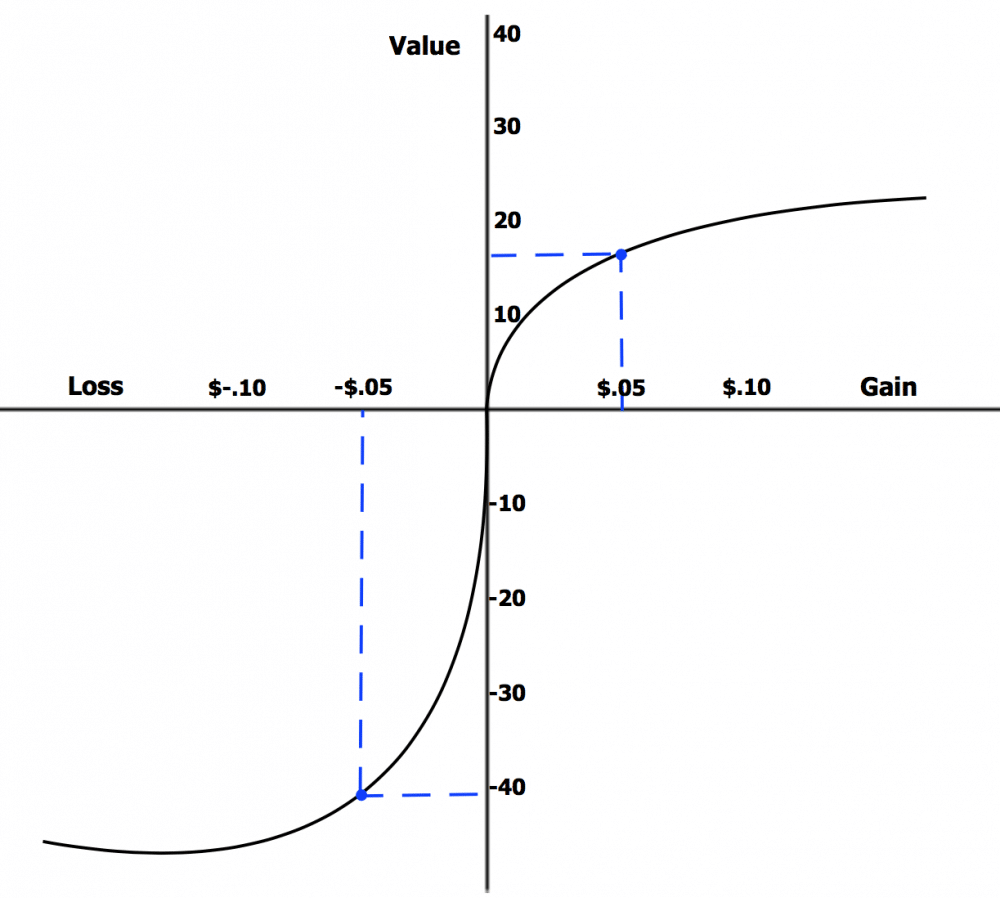
    Kahneman found that losing hurts more than gaining the equivalent amount feels good. He wrote in his book Thinking Fast and Slow, “People who lose suffer more than people who merely fail to gain.”

    For instance, imagine someone offered you a gamble on a coin-flip. If it’s heads, you win $100, if it’s tails, you lose $100. Would you take the bet? Most people decline.

    What if heads win you $120, while tails still only cost you $100? In this case, the numbers are in your favor, and yet many people still say no. Kahneman has said that often people won’t accept the bet until the potential winnings are twice as high as what we might lose.
    Loss Or Risk Aversion
    Risk Aversion

    Strangely, it feels better to not lose $100 than to gain $120.

    The problem here is it creates a bias towards the status quo. People don’t take chances that they’re not completely confident in, because they are afraid of losing.

    While this example uses money, the effects can occur throughout other domains of life, including the goals you set for yourself. Because of this, we tend to underestimate our abilities and what we can achieve over a long period of sustained effort and hard work.

    2. Impostor Syndrome

    Imposter syndrome is a feeling that we will soon be discovered as incompetent and fraudulent, even when we are fully capable. Today, impostor syndrome is recognized as experienced by most people. 

    It is accompanied by feelings of self-doubt, sabotaging our own success, underestimating our skills, and attributing our success to luck when we do well. This causes constant anxiety and can lead to depression.

    Impostor Syndrome along with our past failures results in fear and insecurity which causes us to aim too low. 

    Going Beyond Our Reasons & Justifications

    All of us can go beyond our reasons and justifications and surprise ourselves with better results than what we hoped for. But to do this we have to overcome the fear holding us back.

    You have to ask yourself what is more important – your commitment to your task (or your business/project) or your reasons and justifications. If your commitment is more important, then why not shoot for the stars?

    “Dream more than others think practical. Expect more than others think possible. Care more than others think wise.” – Howard Schultz

    If you aim too high and then miss, even then you might reach beyond what you originally thought was within reason. If you shoot for the stars and miss, you still land up near the moon. 

    In other words, if you aim for 10 and reach a 7, it is still better than the 5 you were aiming for before. When you aim big and achieve what you never thought was possible, you also build up confidence and learn to live with and overcome your fears.

    Seeing Failure As A Necessity for Success

    Failing to reach a goal can create feelings of doubt and inadequacy. It is our choice whether we see failure as a stumbling block or a stepping stone. 

    When you can’t see the positives of failure, you risk going down a spiral of negativity and setting reasonable goals again. However, by changing your mindset, you can make failures work to your advantage.

    It’s essential to realize that failure is necessary for success. As counterintuitive as that sounds, failures often provide a lot of useful lessons if we seek the right feedback.

    “I have not failed. I’ve just found 10,000 ways that won’t work.”  ― Thomas A. Edison

    “Every winner begins as a loser,” says Dashun Wang, who ran a study that found failure was an important ingredient to success. But it wasn’t just failure, the key was to learn from them.
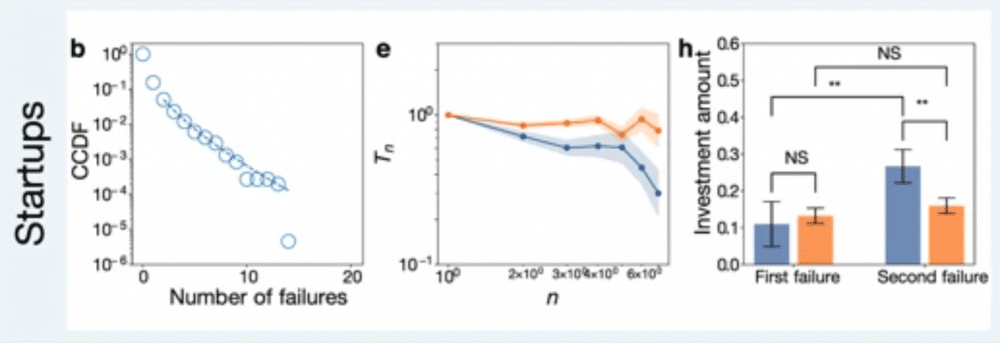
    Failure Is an Important Ingredient to Success
    Failure Is an Important Ingredient to Success

    “You have to figure out what worked and what didn’t, and then focus on what needs to be improved instead of thrashing around and changing everything,” said Wang.

    Failures are often greater learning experiences than successes. You can learn from them to take a step forward rather than backward. 

    Most people focus on the successes and the successful. They look at what successful people like Steve Jobs or Bill Gates do right. When we look at others, we only look at success—this is the survivorship bias—but almost every successful person failed first.

    Every business person, scientist, and artist experienced failures and made mistakes before achieving what they did. 

    “Success is not final, failure is not fatal: it is the courage to continue that counts.” ― Winston S. Churchill

    People who achieve their unreasonable goals persevere through fear and uncertainty. They don’t ignore their failures, instead, they learn from them. If you can learn from your failures, you can use failure to your advantage. 

    It’s Not What We Get, It’s What We Become

    The real outcome of any sincere attempt at an ambitious goal is not what we get out of it, but what we become out of it. After aiming for unreasonable goals (irrespective of the result) we are left with more knowledge and lessons. That itself is a good reward.

    If you can look at things this way, going after unreasonable goals will leave you wiser and more experienced, even if you fall short. That’s the most important outcome of any unreasonable endeavor – the fact that we come out much better off than before.

    In short, the most important benefit of going for unreasonable goals is that it will help you expand as a person.

    Many people “achieve” a lot and still feel empty. If you, however, go after meaningful and unreasonable goals, then irrespective of the outcome, you achieve meaning and growth, which compounds over time and leads to greater results too. 

    Material successes and results fade over time. You can even lose your money and possessions. But you can never lose what you have become – the lessons you have learned, the laughs you have had, and the satisfaction from knowing you gave it your all.

    In conclusion, you should set goals big enough that they scare you. If your goals are not scary, you need to be a bit more unreasonable with them. 

    With this mindset, going after unreasonable goals might be very rewarding, and playing it safe can be dangerous as you miss out on the most important thing – expanding yourselves.
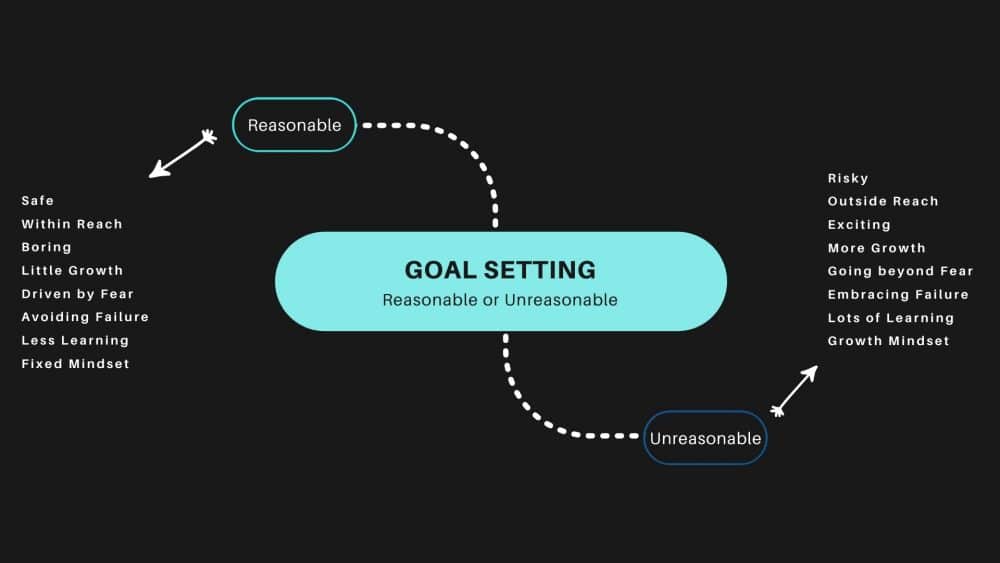
    Unreasonable Goals

  • In Business – Don’t Take Care, Take a Chance

    As I have written in some of my previous articles, what distinguishes great people and organizations is not how they succeed, but how they fail. Great organizations (especially dealing with innovation) are about taking risks to do things that haven’t been done before. And like with any experiment – you know there are going to be more failures than successes. That is the definition of innovation. If the odds were higher and success was almost certain in every one of two cases or so, every Tom, Dick and Harry would be doing it.

    Take Intelligent Risks
    We live in a world of risks, and we live in a world of failure. Entire industries like venture capital, portfolio management and insurance work on the model of taking intelligent bets and risks, and making the few big wins count more than the numerous failures. So rather than eliminating risks, we should take intelligent risks and learn to eliminate the uncertainties. Because without risks, there is no moving ahead.

    Look Far Ahead – The Bigger Perspective
    When you look at the big picture you will realize that when you fail you are not finished. Failure doesn’t mean a full stop, it just means a temporary barrier on your way to wherever your vision is going to take you. Failures build our character amid immense challenges, and that is an incredible muscle to build for tough times. Over the period of a long journey, the definition of failure changes for most people, and we start becoming much less scared of it.

    Be Ok with the Fear of Failure
    What is lacking in the current environment is the concept of constructive failure, by which I mean the ability of doing things and failing, then learning from the mistakes and iterating until you reach the milestone of success. Failures can by compared to the lighting lamps on the way to every success story. Being able to take failure as an asset is a unique trait. When you really learn is when you are confronted with failure.

    Dont Live Life, Be Alive
    Many people say you can learn from the failure of others, but there is only limited knowledge and experience you can gain from reading books and listening to others. You can’t relive the experience of falling from a bike by reading about it. So in terms of failure, if we ‘really’ want to learn the lessons and want our time and money’s worth from failure, they better be our own. There are some experiences which must be felt if you have to learn the lessons with them, and there are no short cuts.
    Infact, most of the success stories we know today are also stories of many more failures which are never highlighted by the media. To give a few examples, Henry Ford failed in five businesses before starting the Ford Motor Company and Soichiro Honda was turned down by Toyota for a job and was jobless for some time before he started making his own scooters at home. Walt Disney was fired by a newspaper for a “lack of imagination” before he started Disney. To stress the point that innovation in business is similar to experiments by scientists, we have the examples of Thomas Edison and the Wright Brothers. We will have examples in art, politics and sports too of such people, and some names that come to mind are Winston Churchill, Oprah Winfrey, Steven Spielberg, JK Rowling, Elvis Presley and Michael Jordan.

  • 8 More Lessons from SaleRaja and other start-ups I have been associated with

    Recently I wrote about some of the important lessons I learned after working with SaleRaja and other startups. I was pondering over this article and I realized I can think of many more points which I can write about. So below are 8 more lessons which I came up after reflecting on those days spend building some amazing products with SaleRaja, InfoEdge and Jivox.

    8. Spend wisely

    As a startup your balance sheet will be in the red in the first few years as you build the infrastructure, teams and systems for the future. Hence it is very important to monitor and control what you spend and for what purpose. Even if you have secured funding, you never know which way the economy turns in the future. The point is to always have cash in the bank to act as a cushion in tough times.

    9. Networking

    Big corporations are people independent, i.e. , they never depend heavily on any one or a few people for their business to survive. It is because of this that they can hire in big numbers, and even fire people easily in hard times. In startups though, the commitment to the company by employees is very important. Similarly, each employee is very critical to the company and it can’t afford losing an employee as it might impact their business. Due to this, the hiring in startups (at least the initial hirings) normally happen through networking and personal contacts as trust in the employee – employer relationship is very critical for startups. And networking is not only useful in hiring but in other business aspects too.

    Beginning is Half Done
    Beginning is Half Done

    10. Have Fun Along the Way

    I have always believed in the idea that if we love what we do, it is not work but more like play. And while doing different tasks during a typical day, it is very important to have fun and not get too serious. A team of people working who smile and have fun with each other in a casual atmosphere will always have more productivity. So in your team, play some games, pull somebody’s leg, take out time for discussions other than work, or whatever, but don’t miss to have FUN. This might be an exaggeration, but see what happened during a night out in my first job.

    11. Do everything – customer service to sales to coding

    As a co-founder or starting member of a startup, you should try to do everything to get a pulse of the whole business. That would mean doing coding with your engineers, being involved with your marketing team, going out on sales calls with your sales team and also hearing customer complaints and feedback. This will keep you well informed of what is happening in the whole ecosystem around your business and will help you make better decisions.

    12. Do your Business Ethically

    It is important to follow both the legal and ethical laws of the land where you operate your business. Being ethical will help you in fostering a long term relationship with your customers. Any success that is attained without the foundation of ethics is bound to be short lived, as lies and scams tend to come out sooner or later. The primary objective of business is not just to maximize profits, but it is also to be a responsible citizen in a just society and working in a way that benefits all its stakeholders.

    13. Make Mistakes, but Don’t Repeat

    It is only human to make mistakes, and as you start a new business, you will also make few. But the important lesson here is to not keep repeating them. We must take enough risks for our business to grow, but also be wise enough to learn from our mistakes and not repeat them. We just need to make ‘new and better‘ mistakes going into the future. As for me, I am really glad for the mistakes I have made.

    14. Mature with Time, but Don’t Grow up..

    As our business grows and we reap success, we grow more mature and this maturity starts reflecting in our daily lives as well as our business decisions. But as a startup, it is very important not to loose what makes you special in the first place. It is always good to be a little crazy, keep having fun along the way and not get too serious. It is ok to risk, and it is ok to fail.

    15. Don’t accept Failure as an Option

    One of the most important word you have to stop listening when starting something new is ‘NO‘. So no matter what, in the face of a NOs, keep on finding new ways of achieving the objective, but never give up. Try out a lot of things, and go with the things that work. When things are not going well, take a break, do something which inspires you, but after that, get back to it with relentless persistence. Remember, failure is not an option.

  • Five lessons I have learned from failure

    We all are human beings, we plan new things, we try them out, sometimes we succeed, and sometimes we fail. Although we always want to succeed and see failure as something which was ‘not expected‘ to happen, failures are inevitable along the way. And more often not, failures teach us more than any success can. Failure is often related with negative emotions. I want to challenge that negativity. Failures have taught me a lot and brought me where I am today. Even me writing this blog post is the result of failed attempt to do so in the past. Let me list down the five most important lessons I have learned from failure :-

    1. Nobody is Special
    If you think you are extra-talented, or very hard working and dedicated, it doesn’t matter. YOU WILL FAIL. Nobody is a guaranteed winner. We all are human, and like all humans, we will make mistakes too. So if we have any sense of being superior, better than others in skills or knowledge, we should give that up now before life hits us with reality. The only person who does not fail is the one who never tries anything. Many venture capitalists, when looking for a business to invest into, look for leaders who have started and failed before, because they know they are more likely to succeed in the future.

    2. Nobody can do everything perfectly
    No matter how much multi-tasking we can do or in however many fields we are an expert, we can’t do everything perfectly all the time. There is a saying that an expert is merely someone who has failed more than anyone else in that field. Michael Jordan, considered one of the greatest basketball players of all time, says that he has succeeded because of his constant failure. He lost almost 300 games and missed over 9000 shots, which is more than an average NBA player even plays in. He says he has used failure as motivation for his success. So no matter how good we are, we will need help from others to do what we want to do.

    One of my favorite quotes about life
    One of my favorite quotes about life

    3. Plan for the worst case scenario
    When taking upon something, I have learned that we must always prepare for the worst case scenario. What I mean is we should always have a Plan B and Plan C ready in case of when Plan A doesn’t work. And more often than not, you will need these backup plans. There is no point wondering over why Plan A did not work out as expected. It is more wise to learn our lessons from it, and move on to Plan B. The famous author Denis Waitley once said “Expect the best, plan for the worst, and prepare to be surprised.” That says it all!

    4. No matter how successful in the past, we will fail again
    When we taste success, our self confidence increases and we move ahead with more ambitious plans. At a time when everything has been going well and successes have been coming along on the way, a failure can be even more devastating. It can leave us in the ‘This can’t happen to me‘ state very easily as we were, more than ever, expecting a success now. The point is no matter how successful you have been in the past, you will fail again in the future. That is life, because successes don’t lead you to more successes, but failures do. Even the best of businessmen fail continuously as they expand their businesses. The only difference is that they welcome the failures and see them as stepping stones rather than stumbling blocks, in their way.

    5. Failures are good, they lead to success
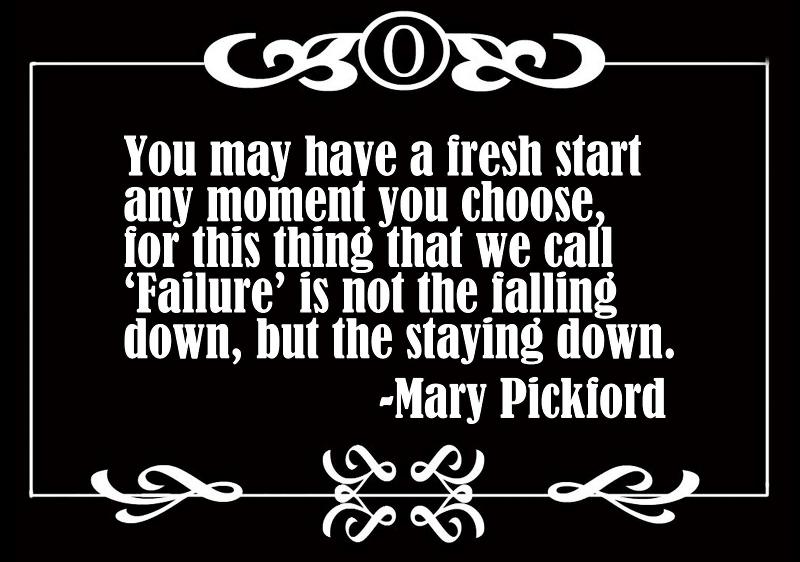
    It might seem very ironical, but failures are good. Let me repeat again, Failures are Good. The only thing important is how we perceive it. There is a huge difference when a man says to himself, “I have failed three times“, to when he says, “I am a failure“. For it is said that failure is not the falling down, but the staying down. Thomas Edison, considered the greatest inventor of his time, kept on failing but he continued to try and try and try. He tried so many times that it took him 10,000 attempts to invent the light bulb. But we can see the positive outlook we should have towards failure when he said, ‘I have not failed. I have just found 9,999 ways that do not work.’

    So let us try. Then try again. Then fail again. Fail better. Fail forward.. towards success!!

anger anna hazare bangalore business challenge coaching conflict conversation corruption Cricket culture dandi march emotions energy friends fun gandhi giving gold growth hope india jan lokpal bill language leadership lessons Life listening love moment mother movie new year people perspective poem sachin tendulkar saleraja trust values walk waste women words world cup