
Newsletter

The Deploy Yourself Newsletter

  • Issue #11, 15 Oct 2020

    Welcome to the Deploy Yourself Newsletter. Every two weeks I share about what impactful coaching and leadership look like. I also share the most insightful lessons and stories I encountered in the last two weeks. You can also read this issue online.

    I Sent YOU!! – A Poem

    I was talking today to a long-time friend of mine, and he reminded me of this poem I wrote more than 9 years ago (in Sep 2011). This was much before the idea of Deploy Yourself was born. Yet when I think of my articles and poetry from that time (which can be found on www.sumit4all.com), the central theme seems to be the same – of deploying ourselves or empowering those around us, of being able to see with new eyes and to realize how powerful we are to create change in the world around us.

    Here it goes:-

    I knew a young man,
    Energetic and ambitious!
    He grew up in struggle,
    Like in mud grows a lotus!!

    He had big dreams for himself,
    And ahead he went with full steam!
    But he always used to wonder,
    Why the world is so extreme??

    At times he saw people confused,
    Worrying about what ‘all‘ to eat?
    Yet at other times he saw the poor,
    Wondering about ‘what‘ to eat??

    He could never understand,
    How could this be even possible?
    If all are children of the same God,
    How can one, and other not be special??

    He used to think in disbelief,
    Why doesn’t God do anything?
    If he has all the power,
    For what is he waiting??

    One night in his dream he saw God,
    He asked how can this be true?
    There is so much misery around,
    Why doesn’t He come to the rescue??

    God said He has done his work,
    The man asked, “What did you DO?”
    To this God laughed and said,
    “Can’t you see my child, I sent YOU !!”

    P.S. – while the poem mentions God, it is not religious in nature. The central theme of the poem, if there is one, is empowerment.

    If what you read above made you realize something deep, hit reply, and share the insight that you had?

    Articles and Stories Which Have Fascinated Me

    One

    As A Leader, Can You See And Treat Your People As Superheroes?

    Showing belief in someone can be powerful. It is so easy to judge, doubt, and belittle people that honest belief in someone’s abilities can be refreshing and empowering.

    Treating your people as superheroes can instill a lot of confidence in people. Believing that an employee is capable of much more than their current performance can help change your actions and words in many subtle ways. These small changes are reflected in your body language and tone of voice, and give people confidence and belief in their own abilities, freeing them of any doubts and insecurities.

    It is said that people perform at the level their leaders expect them to, and the first step to improve the performance of your people is by changing how you look at them – with judgment and feedback, or with wonder, curiosity, and awe. See them as superheroes, and they will perform like one.

    From How to Expand the Capacity of Your People and Enable Them to Do More Than They Think They Are Capable of? – An Article From My Desk

    Two

    I don’t know. I need help. I made a mistake. I’m sorry.

    I recently finished reading The Fearless Organization: Creating Psychological Safety in the Workplace for Learning, Innovation, and Growth by Amy Edmonson in which she writes about the importance of psychological safety in the modern knowledge-work economy. She writes:

    A few simple, uncommon, powerful phrases that anyone can utter to make the workplace feel just a tiny bit more psychologically safe: I don’t know. I need help. I made a mistake. I’m sorry.

    She adds that the “failure of an employee to speak up in a crucial moment cannot be seen. This is true whether that employee is on the front lines of customer service or sitting next to you in the executive board room. And because not offering an idea is an invisible act, it’s hard to engage in real-time course correction. This means that psychologically safe workplaces have a powerful advantage in competitive industries.”

    To me the words “I don’t know. I need help. I made a mistake. I’m sorry.” signal a turning point as it acknowledges the lack of certain skill or knowledge and open pathways to learning which are closed otherwise. Yet in most companies, these words are very hard, almost impossible for anyone to say.

    From the book The Fearless Organization: Creating Psychological Safety in the Workplace for Learning, Innovation, and Growth by Amy Edmonson

    That’s it for now. If you have any questions, just hit reply. All the best,

    Sumit

    (Twitter) @SumitGupta
    (LinkedIn) Connect
  • Issue #10, 1 Oct 2020

    Welcome to the Deploy Yourself Newsletter. Every two weeks I share about what impactful coaching and leadership look like. I also share the most insightful lessons and stories I encountered in the last two weeks. You can also read this issue online.

    Do More Of This, Less Of That

    I am sure the below points will help you be a little less busy, and appreciate the wonder of this moment a little more.

    • Praise people more, criticize them less
    • Give people credit more, blame them less
    • Make your decisions yourself more, give advice to others less
    • Use both emotion and reason to make wise decisions more, make only rational or only emotional decisions less
    • Listen to others more, ask for others’ understanding less (or later)
    • Say Thank You more often, Gossip less
    • Appreciate what you have more, feel envious about what you don’t have less

    If what you read above made you realize something deep, hit reply, and share the insight that you had?

    Articles and Stories Which Have Fascinated Me

    One

    It Is What You Leave Behind That Defines Success.

    Government houses seldom came with fences. Mother and I collected twigs and built a small fence. After lunch, my mother would never sleep. She would take her kitchen utensils and with those she and I would dig the rocky, white ant infested surrounding. We planted flowering bushes. The white ants destroyed them. My mother brought ash from her chulha and mixed it in the earth and we planted the seedlings all over again. This time, they bloomed. At that time, my father’s transfer order came. A few neighbors told my mother why she was taking so much pain to beautify a government house, why she was planting seeds that would only benefit the next occupant. My mother replied that it did not matter to her that she would not see the flowers in full bloom. She said, “I have to create a bloom in a desert and whenever I am given a new place, I must leave it more beautiful than what I had inherited”.

    That was my first lesson in success. It is not about what you create for yourself, it is what you leave behind that defines success.

    From Go Kiss The World – A Wonderful Commencement Speech by Subroto Bagchi in 2006

    Two

    You Are Not The Work You Do; You Are The Person You Are.

    Author Toni Morrison shares a lesson from her father:

    “…one day, alone in the kitchen with my father, I let drop a few whines about the job. I gave him details, examples of what troubled me, yet although he listened intently, I saw no sympathy in his eyes. No “Oh, you poor little thing.”

    Perhaps he understood that what I wanted was a solution to the job, not an escape from it. In any case, he put down his cup of coffee and said, “Listen. You don’t live there. You live here. With your people. Go to work. Get your money. And come on home.”

    That was what he said. This was what I heard:

    1. Whatever the work is, do it well—not for the boss but for yourself.
    2. You make the job; it doesn’t make you.
    3. Your real life is with us, your family.
    4. You are not the work you do; you are the person you are.

    I have worked for all sorts of people since then, geniuses and morons, quick-witted and dull, bighearted and narrow. I’ve had many kinds of jobs, but since that conversation with my father I have never considered the level of labor to be the measure of myself, and I have never placed the security of a job above the value of home.”

    From the article The Work You Do, The Person You Are by Toni Morrison

    That’s it for now. If you have any questions, just hit reply. All the best,

    Sumit

    (Twitter) @SumitGupta
    (LinkedIn) Connect
  • Issue #9, 17 Sep 2020

    [et_pb_section admin_label=”section”] [et_pb_row admin_label=”row”] [et_pb_column type=”4_4″][et_pb_text admin_label=”Text”]

    Welcome to the Deploy Yourself Newsletter. Every two weeks I share about what impactful coaching and leadership look like. I also share the most insightful lessons and stories I encountered in the last two weeks. You can also read this issue online.

    Why Are You Doing What You Are Doing?

    “I got so busy doing that I forgot why I was doing it in the first place. It took me 13 years to realize that I was doing the wrong thing,” said my friend recently to me.

    I was surprised as I have always considered this friend very successful and someone who always knew what he wanted, and then went for it. He got good grades in school, went to a top engineering college, and later went on to work in some big companies like Amazon and Google. Then, he did his MBA from a top school, which was like a cherry on the cake (his resume).

    To me, and to everyone else, his life and career looked like the perfect career. Yet this is what he has to say about his choices :

    “I got so busy in chasing the new promotion, the new job, the new project that I forgot why I was doing what I was doing. I got so busy doing what I (or others around me) thought was the right thing to do; that I never stopped to think what was it that I was trying to create or achieve in the world. As I chased and won over challenges, I lost connection with my purpose, and that sucked all energy, joy, and fun from my life.

    It was only later I realized what really makes me happy, and what I have been putting on hold. When I connected with that (he left his job to practice farming and solving farmer’s problems in his village), I found a power that is grounded in values and purpose and is not superficial and arrogant.

    I realized that asking myself this question – Why are you doing what you are doing? – helped me let go of the attachment to the life others have chosen for me. The answer to this question helped me get reconnected to what I really wanted to do, and what gives me joy and satisfaction, even if that is hard and painful at times. “

    Everyone wants to be successful. But few people take the time and energy to define the success they want. We owe it to ourselves to break this cycle and ask ourselves “Why am I doing what I am doing?” Success is about stepping back and asking yourself What do I really want? What, if I didn’t do, I will regret forever?

    If what you read above made you realize something deep, hit reply, and share the insight that you had? .

    Articles and Stories Which Have Fascinated Me

    One

    “Make Your Bed” – A Speech By Admiral William H. McRaven

    “If you make your bed every morning you will have accomplished the first task of the day. It will give you a small sense of pride, and it will encourage you to do another task and another and another. By the end of the day, that one task completed will have turned into many tasks completed. Making your bed will also reinforce the fact that little things in life matter. If you can’t do the little things right, you will never do the big things right.

    And, if by chance you have a miserable day, you will come home to a bed that is made — that you made — and a made bed gives you encouragement that tomorrow will be better.

    If you want to change the world, start off by making your bed.”

    From Make Your Bed – a speech that was delivered as the commencement address to the graduates of The University of Texas at Austin on May 17, 2014.

    Two

    The 7 Most Powerful Investments You Can Make. They Are Not What You Think

    Most of the time when we talk or think about investing, we limit our thoughts to financial investing and to maximize our monetary returns. We believe doing so will maximize the quality of our lives in the long term.

    All that is good thinking, but I have discovered that there are some simple investments we can make in ourselves which we tend to miss or neglect. And for most of these are not even financial. You don’t need to have money to do this kind of investing.

    Below are the 7 most powerful investments you can make:-

    1. Reading Books
    2. Foundational Knowledge of How The World Works
    3. Nurturing Positive Habits
    4. Communication Skills
    5. Writing Skills
    6. Trusting People First
    7. Knowing What You Stand For

    From an article from my desk titled The 7 Most Powerful Investments You Can Make. They Are Not What You Think

    That’s it for now. If you have any questions, just hit reply. All the best,

    Sumit

    (Twitter) @SumitGupta
    (LinkedIn) Connect
    [/et_pb_text][/et_pb_column] [/et_pb_row] [/et_pb_section]
  • Issue #8, 3 Sep 2020

    Welcome to the Deploy Yourself Newsletter. Every two weeks I share about what impactful coaching and leadership look like. I also share the most insightful lessons and stories I encountered in the last two weeks. You can also read this issue online.

    Things That Stop Us From Achieving What We Really Want

    • Not saying NO to unimportant things so that we can focus on the most imp ones
    • Eating and drinking poorly
    • Playing the victim – Blaming instead of taking responsibility
    • Letting news and social media turn into a dopamine addiction
    • Not surrounding ourselves with people who inspire and challenge us, and not afraid to tell the truth to our face

    If what you read above made you realize something deep, hit reply, and share the insight that you had? .

    Articles and Stories Which Have Fascinated Me

    One

    20 Books That All Leaders Should Read In 2020

    ” I’m constantly surprised by the number of leaders and managers who say they’re too busy to read. Leaders who don’t have time to read are leaders who don’t make time to learn.

    Organizational pyschologist at Wharton, Adam Grant, selects 20 books that could have a lasting impact on you this year

    The major themes are problem-solving, relationships, rhythms of work and life, identity, and happiness.”

    From World Economic Forum – 20 books that all leaders should read in 2020

    Two

    Reasonable or Unreasonable? What Kind of Goals Do You Set?

    We all have our definitions of what is reasonable and what is not.  At first sight, it seems silly to aim for goals you doubt you can achieve. You know what’s reasonable and what is not, and you set reasonable goals for yourself.

    This sounds like a fine approach, but is it?

    Setting unreasonable goals could, in fact, be the better choice. We constantly underestimate our abilities due to risk aversion and impostor syndrome – which has been proven by research.

    After aiming for unreasonable goals (irrespective of the result) we are left with more knowledge and lessons. That itself is a good reward. If you can look at things this way, going after unreasonable goals will leave you wiser and more experienced, even if you fall short.

    In short, the most important benefit of going for unreasonable goals is that it will help you expand as a person.

    From an article from my desk titled Why Unreasonable Goals Are Better For Your Growth And Success?

    Three

    68 Bits of Unsolicited Advice by Kevin Kelly

    Published earlier this year, you must read this – 68 Bits of Unsolicited Advice. If you prefer to watch in on video, he also recorded himself and is now available on Youtube.

    That’s it for now. If you have any questions, just hit reply. All the best,

    Sumit

    (Twitter) @SumitGupta
    (LinkedIn) Connect

  • Issue #7, 20 Aug 2020

    Welcome to the Deploy Yourself Newsletter. Every two weeks I share about what impactful coaching and leadership look like. I also share the most insightful lessons and stories I encountered in the last two weeks. You can also read this issue online.

    .

    Love People, Not Things; Use Things, Not People

    The above line is the first line of every notebook I use, whether digital or physical. It is a simple reminder that I started using a while ago to remind myself of my deepest value – love and care. Today when I was thinking about the central message for this newsletter, this line was sitting on top of my digital notebook and staring at me. So here we go – Love People, Not Things. Use Things, Not People.

    If we look at the big picture, people are always more important than things. All materialistic things have been created by humans. Never has any materialistic thing created a human being. Things can always be replaced – houses can be rebuilt, lost possessions can be regained but the people in our lives are never replaceable.

    During tough times, it is always the people in our lives who help us weather the storms and never our possessions. Yet how easy it is to get attached to our jobs, money, and ‘what we can buy‘ when the real joys of life are always free?

    Progress in science, technology, and industry has completely transformed the quality of life we live today. But it is important to remember that all materialistic progress was only created to serve us and make our lives better, not the other way round.

    If what you read above made you realize something deep, hit reply, and share the insight that you had?

    .

    Articles and Stories Which Have Fascinated Me

    .

    One

    What Your Coworkers Need Right Now Is Compassion?

    “My coworkers and I don’t see the world in the exact same way and that’s OK.

    We have different ways of coping with uncertainty, grief, and stress.

    They are under pressures that I don’t always see and can’t fully understand (and probably aren’t entirely my business).

    It’s not helpful to me or to them to compare our challenges.

    We are all doing the best we can.

    It’s not always easy to be patient and understanding, especially with everything going on. But I’m going to keep trying because it’s what my coworkers and I deserve.”

    From an article on HBR titled What Your Coworkers Need Right Now Is Compassion

    .

    Two

    Why Empathy Might Be The Most Important Human Ability?

    To walk in another person’s shoes is to shift perspective, and to see and feel the world as another sees and feels it.  What I mean by feeling as another person is that you must learn to not only see things intellectually from someone else’s point of view but also to feel the same emotions that the other person feels. This might mean feeling scared, tearful, or elated depending on the situation, and understanding on a profound level what has made the other person feel this way.

    Researchers have found that when we feel another person suffering, it activates not only the visual cortex in the brain but also our emotions and physical sensory receptors. Imagine witnessing someone get a paper cut: you not only sympathize with their pain, but you might also wince, or draw your own hand back involuntarily. You can almost feel the slice happening to you.

    Conflicts don’t occur because of different perceptions, not exactly. Rather, conflicts occur because of our inability to step outside of our own perspective and acknowledge the other person’s point of view. And this is why I believe that seeing and understanding different points of view is a superpower for those who possess it. Friction should be between points of view, not between people. Empathy allows us to escape unnecessary stress from friction in relationships.

    From an article from my desk titled Can We Walk In Another Person’s Shoes?

    .

    Three

    “Of all the things that sustain a leader over time, love is the most lasting. It’s hard to imagine leaders getting up day after day, putting in the long hours and hard work it takes to make extraordinary things happen, without having their hearts in it.

    The best-kept secret of successful leaders is love: staying in love with leading, with the people who do the work, with what their organizations provide, and with those who honor the organization by using its products and services. Leadership is not an affair of the head. Leadership is an affair of the heart.”

    From one of the most powerful leadership book I have read – The Leadership Challenge by James M. Kouzes and Barry Z. Posner

    That’s it for now. If you have any questions, just hit reply. All the best,

    Sumit

    (Twitter) @SumitGupta
    (LinkedIn) Connect

  • Issue #6, 6 Aug 2020

    Welcome to the Deploy Yourself Newsletter. Every two weeks I share about what impactful coaching and leadership look like. I also share the most insightful lessons and stories I encountered in the last two weeks. You can also read this issue online.

    .

    Are You Looking For The Right Things?

    A person wanted to move to a new town with his family so he visited the local gas station in the new town and asked the attendant “What kind of people live in this town?”

    “Well”, the attendant replied, “what kind of people live back where you are from?”

    The visitor replied, “They are selfish, mean and dishonest”.

    The attendant answered, “You will find the people here like that, too.”

    A few days later another man stopped by the gas station with the same question. “I am thinking of moving here. What kind of people live around here?”

    Again the attendant asked, “Well, what kind of people live back where you are from?”

    The man thought for a moment and said, “I found them to be kind, decent, and honest.”

    The gas station attendant answered, “You will find the people here like that, too.”

    Isn’t it so true? You often find what you go looking for. Are you looking for the right things – in the people around you, in the company you work for, in your neighbors, or in your politicians? 

    If this story struck a chord with you or made you realize something deep, hit reply, and share the insight that you had?

    .

    Articles and Stories Which Have Fascinated Me

    .

    One

    7 Empathetic Questions To Ask At Work to Understand And Support Your Colleagues

    I have often been surprised by how much we can hide beneath our fake smiles and phony appearances. As a leader, the ability to uncover the hidden and provide support can be the difference between success and failure.

    One way to uncover important issues is to ask powerful questions regularly. These questions require original answers which often leads to introspection and being vulnerable. Below are 7 such Empathetic Questions which you can ask:-

    1. “You don’t seem yourself today. Would you like to take a break and chat?”

    2. If you notice someone angry or frustrated, you can calmly say – “You sound upset. Is that because of something I did? Let me know if I can help anyway.”

    3. “What can I do to help? How can I (or the organization) support you?” You can ask this question when you see a person sad or dejected.

    4. If you know someone is going through a personal crisis, you can politely ask. “I know you are going through a tough time. If you want to talk about it, I am willing to hear you out and help in any way possible?”

    5. “I can’t even imagine how hard it must be for you. I want you to know that I and the organisation appreciate the way you have responded to the situation. If there is anything else I can do to support you, let me know?”

    6. “I am sorry for what you are going through right now. I know you are a fighter and will come back stronger from this. Can I be of any help?“

    7. “I would hate to see you burn out. Are you taking care of yourself? Is there anything I can do?”

    From my article titled 7 Empathetic Questions To Ask At Work to Understand And Support Your Colleagues

    .

    Two

    Good Enough Is Just Fine

    Good Enough is not shitty work. It’s not a half-assed attempt to create something just to get it out there. It’s not about releasing work that you know needed more time and thought. Instead, Good Enough is when you’ve done the hard work to get it to 95%, but you understand that it’s okay to let it go. It’s the ability to recognize that 100% is a construct of the mind, and pursuing it will take you away from exploring other areas of interest.

    Good Enough is when you know that the work isn’t perfect, but it still respects the intellect of your audience. It’s not exactly what you envisioned, but it’s still damn good enough to deserve their investment of attention. As a creator, you will never feel that your work is complete. You can only get it to a point where it feels right to let it go. And letting go is the only way to start something else that will further your creative progress.

    Good Enough is what allows us to move on and try again.

    From an article titled Good Enough Is Just Fine by Lawrence Yeo

    .


    That’s it for now. If you have any questions, just hit reply. All the best,

    Sumit

    (Twitter) @SumitGupta
    (LinkedIn) Connect

  • Issue #5, 23 July 2020

    Welcome to the Deploy Yourself Newsletter. Every two weeks I share about what impactful coaching and leadership look like. I also share the most insightful lessons and stories I encountered in the last two weeks. You can also read this issue online.

    .

    The Neuroscience of Trust, And Treating People Like Adults

    The latest neuroscience research has found that the hormone oxytocin reduces fear and increases trust and empathy in the workplace. If you are wondering why trust is important, it leads to 74% less stress, 106% more energy at work, 50% higher productivity, 13% fewer sick days, 76% more engagement, 29% more life satisfaction, and 40% less burnout.

    Below are some simple ways I have found in my research to foster trust and improve performance. This is especially important if you are in a managerial position.

    1. Give recognition immediately after a task well done
    2. Give people autonomy to decide how they do their work
    3. Flexible job responsibilities based on people’s strengths and project requirements
    4. Transparency in communication
    5. Caring about the whole person, and not just the employee
    6. Being vulnerable and sharing

    You cultivate trust by setting a clear direction, giving people what they need to see it through, and getting out of their way. It’s not about being easy on your employees or expecting less from them. High-trust leaders hold people accountable but without micromanaging them. They treat people like responsible adults.

    If you are a manager, what one small step you can take right now, right after reading this email, to increase the trust among your teammates?

    If you are not a manager and work in a low trust environment, hit reply and I can share what has worked for me when I have dealt with similar situations.

    .

    Articles and Stories Which Have Fascinated Me

    .

    One

    How To Overcome Negative Emotions And Create Positive Energy?

    This one is from my desk. Read this article to understand how can we process human emotional waste. Just like the waste generated in our households and cities is processed to create energy, we must process our emotional waste too. If we know how to deal with our emotions, they can be used to move towards meaningful goals that lead to joy and fulfillment.

    Just like crude oil can turn to fuel used to drive vehicles, our toxic emotions like anger, frustration, resignation, etc can also be turned into fuel to power something beneficial in our lives.

    From my article titled How Can We Overcome Negative Emotions And Create Positive Energy To Achieve Joy And Fulfilment?

    .

    Two

    Why We Sleep Review

    I just finished reading the book “Why We Sleep: The New Science of Sleep and Dreams” by neuroscientist Matthew Walker, and was completely fascinated by the book. I knew sleep was important, but I never knew it was “this” important. It impacts everything we do – from our physical and mental health, learning, memory, decision making, creativity, and productivity. In this book, Matt Walker explains the new science that is rapidly solving this age-old mystery of what happens when we sleep.

    Bill Gates calls this book one of his favorites, which he says took him a little longer than usual to finish — ironically, because he kept following Walker’s advice to put down the book a bit earlier than he was used to, so he could get a better night’s sleep.

    I found this a must-read book about the importance of sleep and the dangers of a lack of it. And it contains stunning information I have never read anywhere else. I always prefer to read science-related books that are written by scientists, and this book does not disappoint.

    .

    Three

    How to Take Back Your Power at Work

    “Reclaiming your power means you stop behaving in ways that make your stomach twist and churn. You stop putting up with some jerk executive berating you and others in the room. You stop living in fear in the office.

    When I reclaimed my power, I started sharing my thoughts and opinions, even when I knew they weren’t popular. I began asking the tough questions others were afraid to ask because they were afraid of losing their jobs. I spoke up even when the senior exec across the table would shout and curse at me.

    Powerful people get as much, if not more, out of their jobs as they are putting in. When that balance changes or someone tries to make them give up their power, they move on quickly.

    When you’re powerful and talented, opportunities continually flow your way. You will always be in the position to call the shots at work when you know that you can land a new job at any time.

    Don’t let any company or boss take that freedom away from you.”

    From an article titled How to Take Back Your Power at Work by Larry Cornett

    .

    That’s it for now. If you have any questions, just hit reply. All the best,

    Sumit

    (Twitter) @SumitGupta
    (LinkedIn) Connect

  • Issue #4, 9 July 2020

    Welcome to the Deploy Yourself Newsletter. Every two weeks I share about what impactful coaching and leadership look like. I also share the most insightful lessons and stories I encountered in the last two weeks. You can also read this issue online.

    .

    What In Your Life Is “On Hold”?

    What feels impossible right now, but deep down, it’s what you really want?

    We all have ambitions or goals which are on hold because we are waiting for the perfect day. From my neuroscience and psychology research, I have seen that change is a complicated idea for human beings. We will go to any extent to resist change.

    Tomorrow will not be the perfect day you have been waiting for. No new sunrise can bring that change. Instead what you need is a change of mentality. A different way of looking at the world.

    You have things in the “I will do it someday” category only because you don’t want to risk failure. But what if you succeed? What if you are capable of much more than you think?

    What if instead of playing safe, waiting and resisting change is the riskiest bet of all? Think again, are you afraid of failure? Or of your success?

    Achieving success means you are entering uncharted territory. You are putting yourself out there to be criticized. It’s only human to wonder whether you’ll be up to the challenge, and that creates anxiety that holds you back.

    So ask yourself – what if you can pull it off?

    What lies are you telling yourself which are holding you back? What if that “someday” which you have been waiting for is today?

    What one small step you can take right now, right after reading this email, to move a tiny bit towards your goal?

    Before your brain (feeling anxiety?) gives you another reason to procrastinate, hit reply, and send me your big ambition, and what tiny action are you going to take today?

    .

    Articles and Stories Which Have Fascinated Me

    .

    One

    The Value of Journaling

    “I don’t journal with anyone else in mind.

    I don’t ever think about a reader or worry about making sure I’ve explained something clearly enough for a stranger to understand.

    It’s really all about me releasing stress, filling myself with gratitude, celebrating my small accomplishments with healthy choices, processing things that are confusing, and getting clarity about what matters to me.

    I only think about “what do I need right now for this day?” I don’t think about how it looks, or how anyone else would experience the jumble of words.

    Sometimes I use the pages to doodle something I might make public, or paste ticket stubs, or pay attention to making my handwriting look cool, but I don’t worry about doing any of that consistently. I only do that if it feels like what I need that day.

    And so, most pages are just messy stream of consciousness rambles that leave me with what I was hoping for: feeling full of clarity, gratitude, and awe.

    I am a little biased, obviously, but for me, journaling feels like a magic elixir.

    From an article titled Reflections on Journaling for 25 Years by Crystal Ellefsen

    .

    Two

    Understand What Coaching Is Really Like

    This is important: We lie to ourselves. Don’t labor under the misapprehension that you do not.

    Physicist and total genius Richard Feynman once said:

    “The first principle is that you must not fool yourself and you are the easiest person to fool.”

    So expect a bumpy ride. It’s always you getting in the way of you. Your coach can’t help you if you don’t put in the work or if you’re not going to bare your soul and tell them the truth.

    I got a taste of my potential and for the first time in ages, I’m excited for what I can do. Nothing seems impossible anymore. It’s just whether or not I decide to try. And that alone is money in the bank.”

    From an article titled I Bought a Year of Tony Robbins Performance Coaching and Here’s What It’s Like

    .

    Three

    Make Stress Work For You

    “We can actually use stress to improve our health and well-being. Over a decade of research — ours and that of others — suggests that it’s not the type or amount of stress that determines its impact. Instead, it’s our mind-set about stress that matters most.

    Based on our experience working with Navy SEALs, college students and business leaders, these are the three steps to harnessing the benefits of stress while minimizing its harmful effects.

    1. Acknowledge Your Stress
    2. Own Your Stress
    3. Use Your Stress

    From an article titled In Stressful Times, Make Stress Work for You by Kari Leibowitz and Alia Crum in the NYT

    .

    That’s it for now. If you have any questions, just hit reply and we can have a chat. All the best,

    Sumit

    (Twitter) @SumitGupta
    (LinkedIn) Connect

  • Issue #3, 25 June 2020

    Welcome to the Deploy Yourself Newsletter. Every two weeks I share about what impactful coaching and leadership look like. I also share the most insightful lessons and stories I encountered in the last two weeks. You can also read this issue online.

    .

    Are You Playing To Win, or Not To Lose?

    These are not the easiest of times, and when fear takes hold, we often start to play life not to lose, rather than playing to win. This is a common theme (Playing to Win vs Playing Not to Lose) which comes up often in my coaching sessions.

    When we play not to lose, it can certainly help us survive, but it rarely allows us to thrive and express ourselves fully. Left to continue over the long term, it eats at the confidence, aliveness, and joy we experience each day.

    Think about an area of life where you are playing not to lose? Now, wonder how would it feel like to “play to win” – with excitement, energy, and freedom?

    Take a moment to pause and listen to your heart, and see how it feels. You might feel fear and discomfort of the unknown. And that right there is your opportunity to create a life that matters. That, right there, is also an opportunity for coaching.

    How might it feel to go beyond the walls of fear? Outside of these walls, what I have found is that there are opportunities rather than dangers, there is excitement rather than boredom and joy rather than frustrations. 

    If you can identify any such walls in your own life, click Reply now and I will help you figure out a way to see and experience life beyond them.

    Also, read my article on Why We Should Break the Safety Wall Around Us?

    .

    Articles and Stories Which Have Fascinated Me

    .

    One

    “We are all fallible. Everyone feels nihilistic sometimes. Everyone lacks conviction with their life choices sometimes. Everyone falls off on their habits. The diaries of the most successful humans in history are filled with frustration and self-doubt.

    Off-days and slumps can be prevented but never completely eliminated. In order to overcome getting stuck, we must both expect and accept that it will happen from time to time. Through attention and practice, we can limit their damage and duration when slumps do occur.

    When our train is headed off the rails, how can we get ourselves back on the track? I will share some tested techniques for preventing yourself from getting unstuck as well as how to quickly intervene when it does happen.”

    From an article titled A Guide to Getting Unstuck by Chris Sparks

    .

    Two

    Knowing What You Stand For

    Just like ships need a compass and a lighthouse to navigate in vast oceans, we all need to understand what we stand for, to guide us in difficult times. Our deepest held values, standards, and boundaries can be that guide and keep us in check.

    When we accept the standards and values others’ have set for us, we surrender our own will and judgment. By figuring out what we stand for, we allow our unique light to shine upon the world.

    An article from my desk – Have You Discovered Your Leadership Lighthouse? Why Should You?

    .

    Three

    My take on the book Creativity, Inc by Ed Catmull – The CoFounder of Pixar

    “Catmull has given insights into what it takes to run a creative organization. This book has explained in detail how Pixar rolled out one blockbuster after another, and how its internal processes works which resulted in churning out these blockbusters.

    He describes how many failed storyboards it takes before one is accepted to be made into a final movie. For Finding Nemo it was 43, for Ratatouille it was 69 and a whopping 98 for Wall-E.

    He goes into detail on what it takes for people to be open to having their ideas shot down as often as Pixar does. This book shows what it takes to create a culture where it is safe to fail and everyone has the freedom to try out new and crazy ideas.

    The book also has a chapter on Steve Jobs, which was a bonus to me. I wasn’t expecting to read about Steve Jobs, and Ed Catmull presents a very different take on him than in other reading materials out there.”

    That’s it for now. If you have any questions, just hit reply and we can have a chat. All the best,

    Sumit

    (Twitter) @SumitGupta
    (LinkedIn) Connect

  • Issue #2, 11 June 2020

    Welcome to the Deploy Yourself Newsletter. Every two weeks I share about what impactful coaching and leadership look like. I also share the most insightful lessons and stories I encountered in the last two weeks. You can also read this issue online.

    .

    On Empathy

    Throughout our lives, we learn many skills that are drilled into us through regular tests, projects, and repetition. But Empathy is never taught in our schools and colleges, and yet it might be our most important ability as human beings – the ability to walk in another person’s shoes.

    Imagine witnessing someone get a paper cut — you not only sympathize with their pain, but you might also wince, or draw your own hand back involuntarily. Imagine having goosebumps and feeling sorry for someone who just made a fool of themselves in public. That is empathy – to feel the pain, joy, or suffering of another as if it were your own.

    As human beings, it is natural to have a differing point of view on a subject. But conflicts don’t occur because of different perspectives. They occur because of our inability to acknowledge the other person’s point of view. It is a lack of empathy that leads to conflicts and arguments, which are all too common in the world around us.

    Friction should be between points of view, not between people, and certainly not between communities and nations. It is empathy that allows us to be OK with friction and celebrate our differences. Stepping into another person’s shoes is the necessary first step we must take to engage in productive conversations, iron out our differences without making things personal, and reach a win-win solution/agreement.

    Like any skill, empathy can be learned. Here is how you can do so:-

    • Pay Attention – Be fully present without distractions when in the company of others.
    • Active Listening – Stop thinking about what you’re going to say next and just take in what the other person is saying.
    • Don’t Interrupt – Even with the best intentions, saying things like, ‘It’ll get better,’ or ‘It’s not that bad’ diminish the other person’s problems and may cause them to shut down. Avoid doing that.
    • Make It About them, Not You – Resist the urge to speak. Use filler words like “umm”, “and”, and “tell me more” to hear them out fully before speaking.
    • Be Open and Vulnerable – Empathy is a two-way street. We make these connections by sharing our own vulnerabilities and struggles. Don’t be afraid to open up.

    To explore this topic more, read my articles on Understanding Conflicts, The Importance of Listening, and The Five Different Perspectives.

    .

    Articles and Stories Which Have Fascinated Me

    .

    One

    “The best way to break a bad habit is to make it impossible to do. And the best way to create a good habit is to automate it so you never have to think about it again. Here are some examples –

    • Nutrition: Use smaller plates to reduce caloric intake.
    • Sleep: Remove your television from your bedroom.
    • Productivity: Delete games and social media apps from your phone.
    • Focus: Permanently set your phone in Do Not Disturb mode.”

    From an article titled How to Automate a Habit and Never Think About It Again by James Clear.

    .

    Two

    The 12 Transformations 

    1. From blaming to owning: stop acting like a mere victim of circumstances out of your control and take charge of your life. (Responsibility)
    2. From winning to meaning: stop pursuing only competitive goals and realize that happiness comes from pursuing a noble purpose through ethical means. (Wisdom)
    3. From knowing to learning: stop trying to prove that you’re always right and open up to new possibilities. (Humility)
    4. From judging to understanding: stop seeing people through your mental filters and put yourself in their shoes. (Compassion)
    5. From avoiding to confronting: stop suppressing uncomfortable information and face reality. (Courage)
    6. From pleasing to truth-telling: stop altering your story to be liked by others and start telling the truth to be liked by yourself. (Honesty)
    7. From controlling to considering: stop telling people what to do and take into account what they want to do. (Respect)
    8. From taking to trading: stop negotiating win-lose and look for ways in which everybody can be better off through an exchange. (Creativity)
    9. From defaulting to delivering: stop defrauding your creditors and honor your promises unconditionally. (Integrity)
    10. From indulging to investing: stop seeking immediate gratification and postpone pleasure for the sake of happiness. (Discipline)
    11. From complying to committing: stop obeying as if you had no choice and choose to do what you do fully. (Commitment)
    12. From bossing to leading: stop managing people through external rewards and punishments and inspire them with a dignifying purpose. (Vision)

    From Conscious Business: How to Build Value Through Values by Fred Kofman

    .

    Three

    My take on the Book Shoe Dog by Phil Knight – the Founder of Nike

    “This must be one of the best business memoirs written. It is one of my favorite autobiographies, and I have read a lot of them. Shoe Dog by Phil Knight will make you sit up and take note of the drama, your eyes will tear up because of the ups and downs, and you will be left enthralled by his passion which led to the creation of Nike.

    It goes deep into the formation of Nike and the personality of the author, who bares his soul open with his honest writing. Shoe Dog is an epic tale of faith, commitment, failure, triumph, hard-earned wisdom, and love.”

    That’s it for now. All the best,

    Sumit

    (Twitter) @SumitGupta
    (LinkedIn) Connect

  • Issue #1, 28 May 2020

    Welcome to the Deploy Yourself Newsletter by Sumit Gupta. Every two weeks I share about the most valuable books, articles, and stories I encounter. I start each newsletter with my thoughts on coaching and leadership — the two topics which have fascinated me since 2008. You can also read this issue online.


    On Coaching

    It was 2008, and this was the first time I was working with a coach. I was new to the job and unsure about the task at hand, but somehow the coach showed me a lot of confidence. He said he saw POTENTIAL in me. Ever since, I have been enthralled by the concept of Potential – and its role in enhancing performance. Over the last decade I have come to discover and believe that potential in human beings is a very malleable and elastic concept.

    As a leader and a coach over the last decade, I have seen so much untapped potential in people I have worked with. This has taken on a journey to find ways to uncover and unleash this potential, and this process starts with a vote of confidence in your coachee, just like my coach did with me in 2008. Needless to say, I did quite well in that project. As Goethe once said “If We Treat People as If They Were What They Ought To Be, We Help Them Become What They Are Capable of Becoming”. This (seeing potential) has become my maxim for coaching ever since.

    And there can be no better explanation of this simple concept of POTENTIAL than in this blurry video of Viktor Frankl.

    The Most Valuable Stuff I Have Read Recently

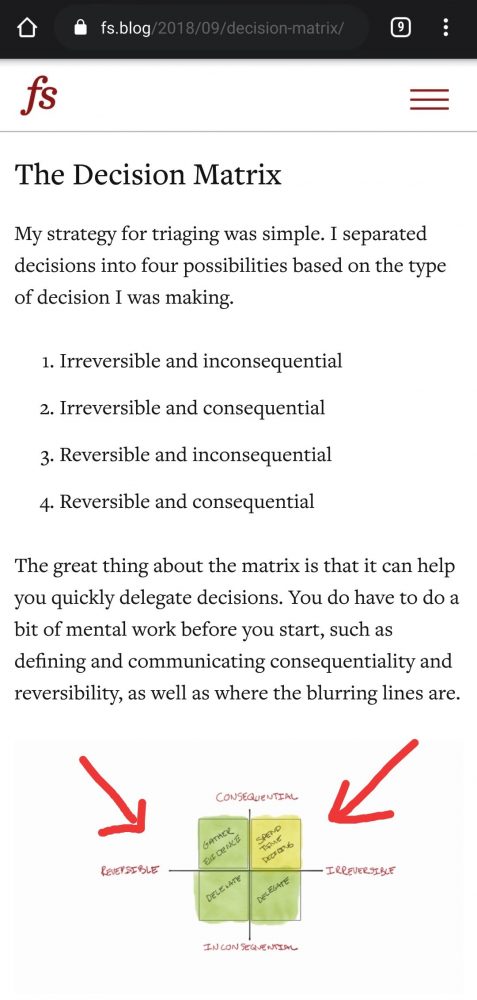
    1. An Article on Prioritization – The Decision Matrix

    The Decision Matrix

    2. A list of Psychology Concepts Described in Tweets

    These are core human behaviors that play out in all relationships. While the author writes them from the therapy viewpoint, I have found them very useful from the coaching and leadership point of view too.

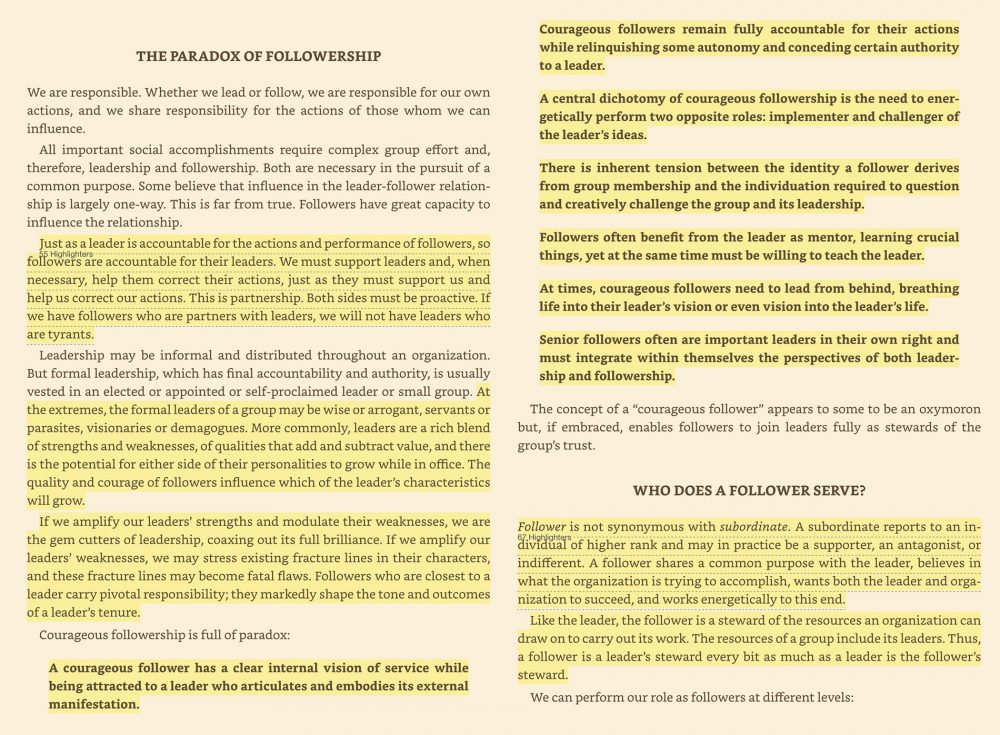
    3. The Paradox of Courageous Followership

    Stories Which Have Fascinated Me

    1. Abraham Wald’s Story from World War II

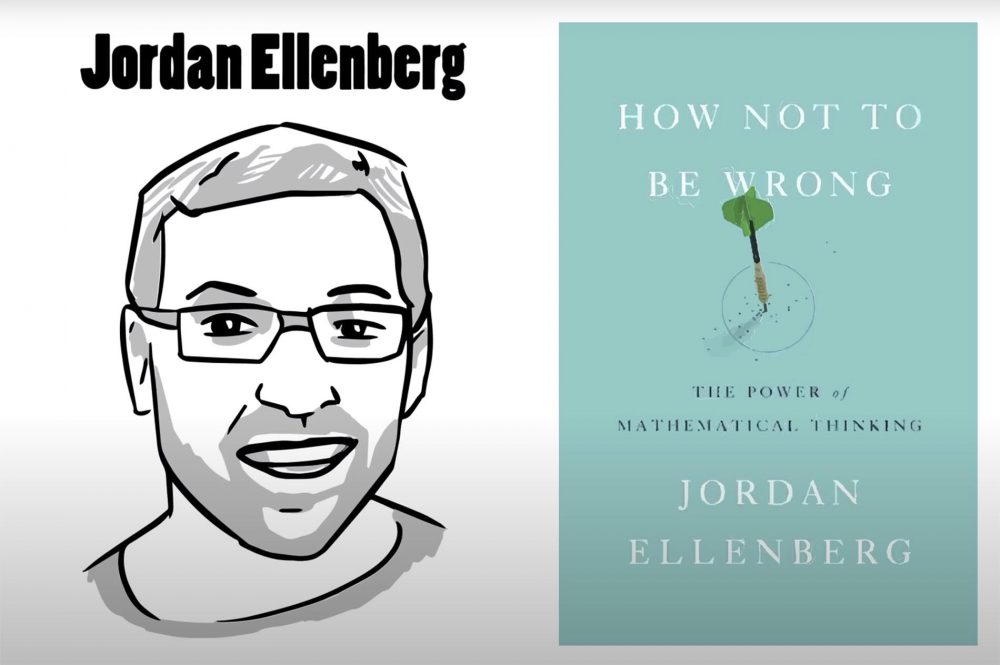
    Watch this video on youtube to know more about this fascinating story of Abraham Wald which I read in the book “How Not To Be Wrong“. The book itself is a wonderful read. It unveils the hidden beauty and logic of the world and shows that math touches everything we do.

    How Not To Be Wrong

    2. The Two Sides of Rafael Nadal

    The book Rafa by Rafael Nadal, John Carlin shows the different sides of Rafael Nadal – the tennis champion and the human being, and how they are completely at odds with each other. Rafa the human being is insecure, indecisive, is scared of the dark and is fond of his tightly knit family life. Rafa the champion, on the other hand is decisive, ruthless, and the epitome of endurance. It was a fascinating read.

    Rafa

    That’s it for now. All the best,

    Sumit