Book Review

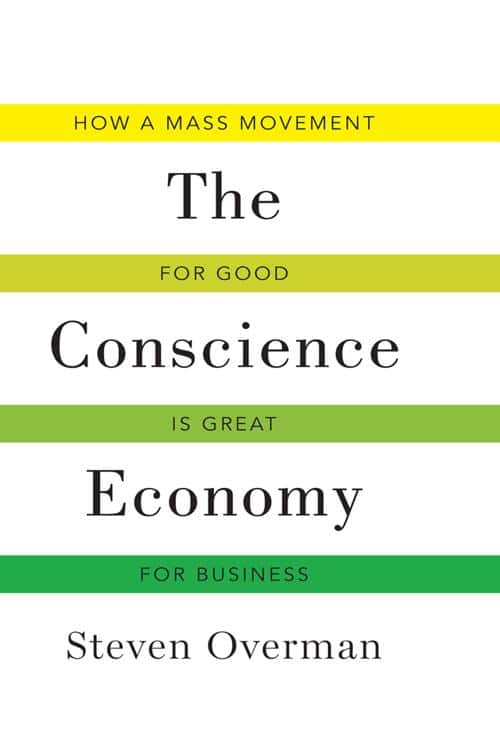
  • The Conscience Economy (2014) by Steven Overman – Book Review & Summary

    Business In The Conscience Culture

    Technology has brought the world closer, turning it into a global village. Hyperconnectivity has had implications on all walks of life, more so on the worldwide economy. Businesses need to realign their strategies and principles in order to move along with these changes.

    The Conscience Economy (2014) by Steven Overman discusses these changes and their implications on brands and business and guides on how to win over constantly connected consumers, who are more outspoken and discerning.

    It focuses on how today’s consumers are highly aware and well informed about ethics, and how businesses need to be vigilant of the news about their businesses doing the rounds.

    Finally, it shows the way to win over these acutely aware customers, by not obsessing with the bottom lines, increasing responsibility towards the planet, and never lying to them.

    Naughty Is Just Passé

    The stereotype of the bad businessman reached its peak in the twentieth century. Businessmen who would go to any lengths to win profits and cut costs, irrespective of the ethical implications, were admired for their bravado, with the mass media praising laurels.

    However, today, the next-gen is keen to make the world a better place. They care about how their lifestyle choices impact the environment. Companies, celebrities, and even individuals are willing to mobilize to ensure that quality of life and working conditions world-over improve.

    What has caused this change in perspective?

    Thanks to the information age and the Internet, people have more information available to them than they ever did before. People are aware of regulations regarding honest product labeling, and shoppers have information about everything they buy, right from production and manufacturing procedures to their energy efficiency. Today, people prefer to buy products that align with their morals and values.

    A high-priced, luxurious and prestigious, branded clothing will not sell if it has been made using child labor. In fact, today’s consumers will call out such practices on social media and will not shy from condemning brands and companies that resort to unethical practices in any form.

    Therefore, genuineness has become an even more prized value and companies are striving to uphold these, and care for the planet and humanity.
    Technology, Connectivity Lead To Empathy

    Sociological studies have shown that humanity takes about 40 years to fully embrace a new invention. For example, it took Edison’s 1880 invention – the light bulb – forty years to be used in public spaces in 1920. Similarly, only 40% of the public uses the Internet, which was invented in 1990.

    The Internet has changed lives all over the world radically and will continue to do so in the future when it is truly integrated into society. We are already seeing the radical effects of the Internet. In 2011, the youth of Egypt used the Internet to revolt; and mobilize a revolution that shocked its leaders, and allowed the whole world to witness it in real-time.

    Despite using the Internet for only 20 years, we are already seeing promising interactions between technology and traditional morality. Yet, humankind still has a lot to learn of the implications and advantages of hyperconnectivity in the coming decades. 

    Connectedness and conscience go hand-in-hand. For example, babies are not born with a conscience. They learn about ideas, fears, and hopes as they grow while connecting and forming social bonds with others. Every religion, parent, as well as the education system world over, teaches children how behavior affects others. It is these experiences that help the conscience grow and develop.

    The Information Age made the world smaller and has also made actions of people and companies alike have implications the world over. Increased connectivity has resulted in a stronger and more advanced conscience, creating conscience cultures that are shared all over the globe. This culture of empathy is spreading now and fast!

    Global Challenges And Their Solutions

    Climate change is an ongoing reality. Connectivity whether via news websites or simply connecting with friends and family overseas brings natural calamities on the other side of the world closer. It is difficult to ignore melting icebergs, drying rivers, and reservoirs because they affect everyone. Thus it is impossible to ignore the role each person plays in adding to the issues of global warming and climate change. For example, every time a person takes a flight somewhere, they add to global warming.

    Along with the environmental factors, there is a disintegration of internal health as well. Cheaply manufactured food items and processed foods add to problems such as obesity and other related illnesses. In fact, health and global warming are the most pressing news seen on mass media, social media, and online websites world-over. More information about all these concerns is available to everyone and the more people learn about them, the more they demand solutions, a fact that companies and businesses must remember.

    Due to this information available, the modern consumer is aware and concerned about the implications their lifestyle choices have locally, nationally as well as internationally. They seek these values in the companies making the products that support their lifestyle and are vigilant if these companies are unethical in any manner.

    Companies that are conscious and responsible about ethical implications, have strong values and prioritize good causes over profits are the ones that will be in demand and will thrive as opposed to unscrupulous companies.

    The Superseding Conscience Culture

    Culture, all over the world differs in subtle ways, adding to its complexity. If we consider the United Kingdom and the United States, despite the language being the same, they differ in crucial areas. For example, an enthusiastic manager with a cheerleader-like disposition will be considered a good leader in the US, while the same manager in the UK will be looked upon as excessive and having strange behavior.

    Additionally, cultures differ between generations too. For example, the difference in culture between Baby Boomers and their children is well known, as are the differences between Generation Y and X. Similarly, there is a clash between the established global culture and the newly emerging conscience culture.

    While both cultures emphasize on self-actualization, the differ radically in the way they each view themselves.

    The conscience culture sees the self as part of the collection due to its nature of connectivity with others. It views self-actualization as a collective process, i.e., improvement of others’ lives is seen as equally important as improving one’s own life. With this, emerges a prevailing belief that what is good for others, is also good for the individual.

    The differences between the conscience culture and the global established culture are most stark when it comes to the way they perceive the environment – its preservation and protection. The awareness of the younger conscience culture about the fragility of the environment and how volatile it has become is in contrast to the way the established culture perceived it – that they could rely on the environment to feed their needs.

    This awareness of the conscience culture is visible in their purchase decisions, where they are more conscious and prefer businesses and brands that environment-friendly.

    Catering To The Conscience Culture

    Businesses and brands, today, have to make changes to adapt and survive, as the conscience culture emerges and settles firmly. That said, understanding the needs of the conscientious customer by way of connecting increasingly shapes purchase decisions.  

    For example, given a choice between a brand that makes stylish products, and another, which works towards and supports sustainable development, and has won an award for design, the choice becomes obvious.  

    Branding orients people when there are a million options to choose from. Thus, if all products were to be of the same shape and color, without having any brand names, people would spend more time reading labels to differentiate and make a buying decision. 

    Brands, additionally, help people form attachments with manufacturers that are trustworthy and familiar, thus making the purchase process more efficient. Moreover, about 80% of buying decisions are devoid of reason or rationality and are highly influenced by emotions is clearly evident in the conscience culture.

    Brands, therefore, target these emotions by creating an image that appeals to the empathetic emotions of the consumers. The conscientious customer will, thus, seek brands that resonate with their personal values.

     Take, for example, a company that sells biodegradable bleach that not only kills germs, but also fights diseases, and protects the groundwater. This company additionally supports a health-related social enterprise overseas. Now comparing this brand to a brand of bleach that merely promises ‘whiter than white whites’, which brand will consumers prefer?

    Companies and brands will have to factor in this new awareness of the conscience culture, and the affinity to ethics, even if they are merely selling bleach!

    Social Engagement and CSR

    Any company or organization is interwoven in the fabric of society. The people in the social work in them, people buy from them and companies use natural resources to function. It is therefore seen that companies, which focus on giving back to society, thrive. 

    Corporate Social Responsibility or CSR saw its birth in the Industrial Revolution when the inhumane conditions in factories became the subject for many writers and poets. The government then made businesses, factories, and companies prove that they were indeed socially useful if they were to receive the charter of incorporation.

    However, it was in 1970 that CSR was considered an aspect of business, albeit a mere additional ‘nice thing’ to do alongside the business. Today, CSR is a vital strategy, as failure to be conscious of their responsibilities could lead to a damaged reputation in the conscience culture.

    CSR, as a ‘being nice’ concept will soon be out-dated, and giving back to the society will be an indelible part of a successful business.

    Matchmakers Of The Conscience Economy – The Marketing Division

    While the conscience culture means a number of changes for companies, it means revolutionizing marketing completely.

    Earlier, consumers had to be persuaded and even manipulated to buy. The famous 4 P’s of marketing – product, place, price, and promotion – were the front and center strategies that worked. However, in the conscience economy, these strategies will have the lesser meaning as marketing will need to be more interactive and accountable to convince people to buy. That said, marketing will have to be much more innovative.

    Marketing will tantamount to matchmaking, wherein the focus will lie on creating products that fit perfectly between the needs of customers and the interests of the business. 

    It will require an identifying relationship that will help build business value. Marketers will thus have to make efforts to understand what people – customers, employees, leaders, and innovators – want and expect from the company. This gives rise to the five C’s – context, conversation, clarity, cohesion, and creating reasons – new competencies to function in a new culture.

    To explain briefly, marketers will have to adapt to the customer’s context (understanding the customer’s mood, circumstance, location, etc.), converse with the customers to understand their values and needs in order to gain clarity about their wants. Next is to ensure cohesion between the company’s purpose, its brand image, and prospective companies. Finally, they have to create reasons for new conscious customers to buy, by encouraging existing customers or even employees to share meaningful stories.

    Conclusion

    The world has come closer to the Internet Age. People are more conscious of their surroundings, aware of their responsibilities towards the planet, and are unafraid to raise voices or empower others to raise voices against social injustice.

    This new conscience culture comprises intelligent and inquisitive buyers, who expect that the companies and brands they buy from and associate with are aware and conscious of the impact they have on the social and environmental challenges faced by the world. 

    Brands and companies too, have to go that extra mile and align themselves with these changes that are expected of them. In order to be successful, marketing and selling in the conscience economy will require a more vigilant approach to how actions of the business impact the world.
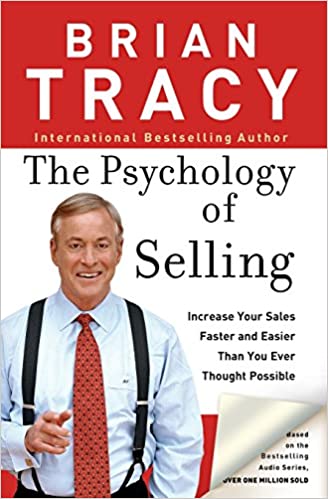

  • The Psychology of Selling by Brian Tracy – Book Summary & Review

    10 Lessons To Increase Your Sales By Sales Guru Brian Tracy

    We often come across wizards in the sales and marketing world. These are people who have a high success rate when it comes to their sales numbers. They excel in communication, have tons of self-confidence, and have an amazing ability to persuade and convince customers. 

    How do they do it? Is it a matter of natural-born talent? 

    Of course not! Anyone can be a good performer in sales. Just like any other skill, your ability to sell can be learned and improved.

    Brian Tracy in The Psychology of Selling (2004) attributes it as simply a matter of continuous learning and practising the following 10 psychology research-based techniques.

    I post one book summary every week. To not miss what I learn from the hundreds of books I read every year, subscribe to my bi-monthly Deploy Yourself newsletter and stay updated with the latest on leadership, culture change, and neuroscience.

    1. Activate The Subconscious

    One might ask, ‘What does the subconscious have to do with selling?’ Let’s see what Brian Tracy says in The Psychology of Selling.

    To be a successful salesperson, one can harness the power of the subconscious. Whatever we do consciously, our subconscious is always learning, analyzing, and working in the background. It functions even in our sleep.

    An effective way of activating the subconscious is to make to-do lists. To-do lists give the subconscious mind a context to work with. The most successful to-do lists involve not just a list of mundane jobs to complete through the day, but an exhaustive list of goals that a salesperson wants to achieve in the next week, month, year, etc.; it is important to write down the reason why one wants to achieve those goals.

    People who use goals and reason lists to activate their subconscious have been known to find greater motivation to fulfil goals. Simply because subconsciously, their brain is constantly focussed on achieving these goals in the background.

    Brian Tracy writes in the book that if salespeople focus on getting better in the below mentioned subpoints of selling, it will lead to “an extraordinary difference in income.”

    1. Prospecting
    2. Building rapport
    3. Identifying needs
    4. Presenting
    5. Answering objections
    6. Closing the sale
    7. Getting resales and referrals

    2. The Power of Positive Thoughts

    The subconscious mind does more for us than we think. It is a known fact that negative thoughts cause negative actions. A good salesperson uses affirmation to derive good performance. 

    For example, a person who thinks negatively about their ability to drive numbers subconsciously makes a mental picture of not being good at their work. They end up making mistakes that reinforce their belief about not being a good performer.

    3. Boost Your Self-Esteem

    It is essential to create a positive mental picture of yourself through positive affirmations. This helps in boosting self-esteem. Simply saying, ‘I am the best at my work, and I can succeed’ does wonders. To boost self-esteem, think positively about past success. This imbibes confidence to perform in any given situation. A person with positive self-esteem will always look for ways to repeat their success.

    4. Learning Constantly

    Every experience is an opportunity to learn. Successful people constantly apply their learnings to practical experiences immediately and make it a habit. It soon becomes a subconscious, natural process taking them closer to their goals.

    He also talks about some basic human needs which motivate people to buy anything. They are

    1. Money
    2. Security
    3. Being liked
    4. Status and prestige
    5. Health and fitness
    6. Praise and recognition
    7. Power, influence, and popularity
    8. Leading the field
    9. Love and companionship
    10. Personal growth
    11. Personal transformation

    5. The Power Of Reference Groups

    A person is judged by the company he keeps. This saying is especially true for successful people. They surround themselves with like-minded people, who have a high drive for success.

    Peers, mentors, and friends can have a very big role in influencing the way you think. A good salesperson uses positive reference groups to learn, exchange ideas, and support. Having a reference group of like-minded sales professionals can help you in learning best practices and techniques, and understand trends, and most importantly to boost your self-esteem and confidence.

    6. Customize Your Sales Pitch

    Every customer is different. A successful salesperson knows how to tailor their sales pitch to reflect what the customer is looking for.

    A good salesperson first reads (listens to) their customer and understands their requirements well. Their focus lies in tailoring their sales pitch to align the features of the product, with what their customer is looking for. This requires the skill of asking powerful questions and then listening. 

    Many people in sales hesitate to question their customers and focus on selling the product by emphasizing its features and USPs. Questioning helps in getting a clearer understanding of the customer’s needs and thought process. The aim is to tell the customer how they will personally benefit from the product rather than telling what the product is all about.

    7. The Impact of Social Recognition

    It is common knowledge that people buy things to improve their social status. A good salesperson understands the customer’s need for social recognition and builds their pitch on it. A successful sale is a result of a successful connection between the product and the emotional value it will have for the customer. Great salespeople use this emotional value and align it with the social status of the customer.

    8. Helping Customers Look Beyond Financial Consideration 

    We often hear of cases where the customer engages positively in a sale and then backs out. The author Brian Tracy says that this happens because every consumer is trading their financial safety with desire. 

    A good salesperson knows how to help the customer ease into their decision of buying. They need to help the customer convert their desire for the product into the need and prioritize their desire for the product over financial considerations.

    9. Tapping Into Emotional Anticipation

    It is indeed difficult to get a customer to look beyond financial considerations. A good salesperson uses the power of emotional anticipation to achieve their sale. Emotional anticipation can be tapped into by making a customer imagine themselves using the product.

    The salesperson must create a feeling of anticipation in the customer’s mind, which creates a desire to own the product. This has been proven by various studies.

     10. Building Trust

    Both the ability to look beyond financial considerations and building emotional anticipation rely on trust. At the onset, a customer always doubts the motives of the salesperson. They know that the goal is to sell the product. However, a successful salesperson earns the trust of the customer, which results in the customer trusting the product. Trust is created when there is authenticity in the salesperson and their words. Once the customer starts to trust, they will not only become loyal customers but also recommend the product to others in the future.

    To be successful in sales, one can keep the above learnings from the book close to their heart. Brian Tracy shows in the book The Psychology of Selling that winning in sales involves knowing these techniques well, and many sales and marketing gurus have been applying them to succeed consistently for a long time. “The Psychology of Selling: Increase Your Sales Faster and Easier Than You Ever Thought Possible,” must be on the must-read list for every sales professional.

    To sum it up, Brian Tracy shares the below 10 lessons for success in selling in this all-time classic sales book:

    1. Do what you love to do
    2. Decide exactly what you want
    3. Back your goal with persistence and determination
    4. Commit to lifelong learning
    5. Use your time well
    6. Follow the leader
    7. Character is everything
    8. Unlock your inborn creativity
    9. Practice the golden rule
    10. Pay the price of success
  • The Wisdom of Insecurity by Alan Watts – 5 Lessons

    The Wisdom of Insecurity penned by Alan Watts in 1951 brings forth the irony of modern life – that the pursuit of material happiness only leads to anxiety. Human beings are forgetting the purpose and the true pleasure of living in the present by dwelling in the mistakes of the past and the uncertainty of the future.

    As the age of consumerism reaches its peak, we are further away from the simple pleasures of life. We are lacking purpose and our lives aren’t fulfilling anymore. The book discusses 5 ways to live a better and more meaningful life.

    1. Religion Helps People Feel Fulfillment

    Religion, or rather the moral beliefs and practices that come with it, can have a grounding effect. The reassurance of an afterlife that guides a person to lead a virtuous life gives a sense of fulfilment. As the influence of organized religion declines, and as people move further away from religion, there is a gaping void left.

    This widening gap leads people to look for instant gratification from addictive behaviours like drugs and alcohol to make up for the lack of purpose or meaning in life. 

    2. Consumerism Is Just a Dangling Carrot

    With consumerism, the chase for gratification never ends. We keep looking for happiness in materialistic gains which never leads to fulfilment. While almost everyone in the Westernized society is constantly fighting to achieve their materialistic goals, very few understand that these are mere empty pursuits, only adding to the vicious cycle of wanting more.

    Consumerism is the proverbial dangling carrot that only adds to one’s anxieties, leaving them with a feeling of constant discontent. 

    3. Pain and Pleasure are Two Sides of the Same Coin

    Everyone wants to lead a happy and fulfilled life. At the same time, no one wants to experience tribulations. They spend their lives worrying about how to make it all easy and make the pain go away.

    It is essential to realize that pain and pleasure are two sides of the same coin. Without experiencing the painful moments of life and without facing tribulations, one cannot truly savour the satisfaction of happy times. Similarly, experiencing happiness gives us the motivation to go through the painful times in life, because we know that there will be joy ahead. 

    We must simply stop looking at pain and pleasure as negative or positive emotions and understand that both are a necessary part of life. We should move towards a perspective where we do not worry about avoiding the pain.

    4. Living In the Present

    We tend to either live in the past or the future, worrying about the things (especially the bad) that happened to us or about the things that we want in the future and how to get them. By doing this, we forget to live in the present. We deny and resist the experiences that we are living in now making it worse for ourselves.

    Our brain is wired to want to react to the emotions that we experience. Therefore dwelling on the pain of the past or worry of the future is natural. However, the trick is to stop acting impulsively in the face of emotions and experience them fully without judgment. That will keep us from worrying about them. At times, accepting the present and moving on is the solution.

    5. Listen To Your Body

    The constant overthinking that our brain does cheats us of other experiences that our body and our subconscious has to offer. A person’s full potential to lead a holistic life is defined by all these experiences and not only one. We have to slow down our constant thought processes.

    We tend to ignore the vital signs our bodies give us. We are often so disturbed and worried about our past and future that our sleeping patterns get affected. This is when our subconscious is working for us. This is the present that we need to pay attention to. We need to get out of our heads and let the natural and subconscious parts of our body (sleep, daydreaming, rest) do their magic.

    Key Message

    Our material pursuits only offer temporary gratification. Chasing after these will only lead us into the vicious cycle of wanting more and bringing us pain. Additionally, it is futile to keep focusing on the pain of the past and the anxiety of the future. We must accept that these insecurities are part of our life and focus on the present. Experiencing them will only enrich our lives. Life is never certain or safe, no matter how much we want it to be. Instead of focussing on that, we should focus on what is in our control and let everything else play out on its own.

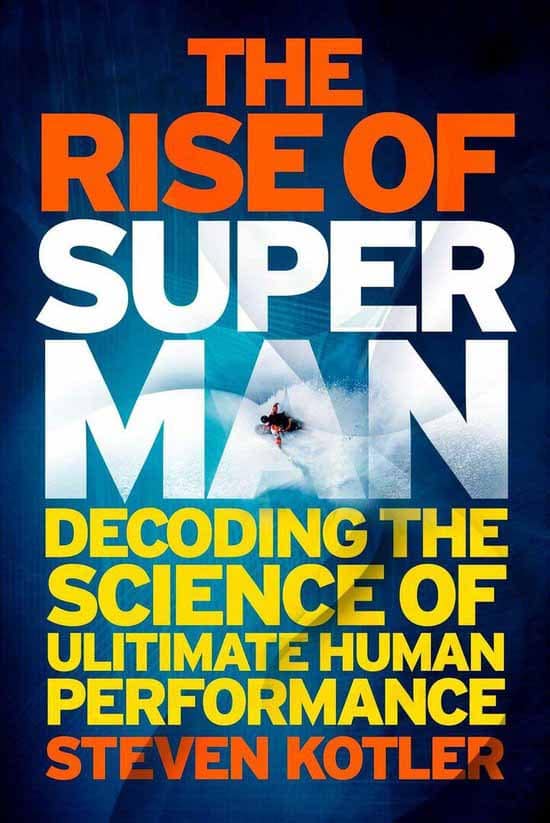
  • The Rise of Superman by Steven Kotler – Book Review & Summary

    Achieving Peak Performance With Flow

    Achieving a ‘state of flow’ is touted as a sure formula for success in any endeavor. It is a transcendental state wherein one is at the optimal best while truly enjoying the task at hand and achieving peak performance. The Rise of Superman by Steven Kotler offers an insight into how top performers in extreme sports can push boundaries, and achieve feats time and again. It examines the correlation between their peak performances and their ability to get into the ‘flowstate’ or ‘the zone’.

    With examples of performers from extreme sports, Kotler shows the connections between neurology and flow state, how to induce it, achieve it, and how to use it to enhance performances.

    What is the Flow State?

    The flow state is a state of the mind where the performance of an individual is at the peak. It is a state wherein the individual is completely immersed in the activity, task, or work at hand – so much so that the surrounding environment seems to melt away, making the experience profoundly spiritual.

    In the flow state, often, creative output and problem-solving capabilities are enhanced. When Laird Hamilton rode the ‘Millennium Wave’ off the Tahiti coast, he performed a ‘never-been-done-before’ move of placing his hands on the opposite side of his board in the water, to prevent himself from getting sucked into the hydraulic, just as the wave began to break near the coast ridden with reefs. This creative insight came to him because he was in a state of flow during the surf, without which, he would have died.

    Many describe the flow state as a spiritual experience, where they have heard the voice of their subconscious creative intuition.

    Dean Potter, the famous climber, attributes his success at climbing the Fitz Roy icy mountain (three times the size of New York’s Chrysler building), to his inner Voice that guided him. During his climb, he made 670 ‘correct moves’ without any equipment. Even one wrong move would have resulted in death.

    In the flow state, many have experienced the phenomenon ‘egoloss’, a sense of becoming one with their sport, where they cease to exist as individuals.

    Flow State And Neurochemistry

    The experience of ‘flow state is tied to neurochemistry. As an individual experiences flow, the brain releases chemicals that help augment the state and its experience.

    • Dopamine – Dopamine helps in sharpening one’s focus and finding new solutions. It helps the brain in adjusting signal-to-noise ratios, essentially to filter what is useful from all the information received. It also helps manage the feeling of excitement, desire, and engagement to explore and reward with the ‘good feeling’ for exploratory behaviour.
    • Norepinephrine – It boosts skill and helps in maintaining focus. It also increases blood sugar and thus energy. Norepinephrine is known to speed respiration and heart rate, making sure that the muscles don’t wear out. It also helps in increasing arousal, attention, and emotional control, keeping one focussed.
    • Anandamide – Combined with norepinephrine, anandamide boosts creativity, increases lateral thinking (the brain’s ability to make new connections), and helps reducing feelings of fear. This makes one more comfortable with testing new ideas.
    • Endorphins – Endorphins primarily relieve muscle pain, giving extreme athletes the ability to endure when they push their bodies to the limit. They are more powerful by a factor of one hundred than any medical morphine.
    • Serotonin – Serotonin is released in the body after one achieves the state of flow. It gives one the ‘afterglow’, and keeps one coming back for more

    The neurochemicals are vital in the experience of the flow state and are responsible for the ‘feeling’ itself, as well as the physical abilities that are connected with being in the flow state.

    Parts Of The Brain That ‘Switch Off’

    If the flow is a state of peak performance, the brain must work in overdrive, ensuring that the parts responsible for complex thought are whirring in action.

    However, on the contrary, some parts of the brain actually switch off during the flow state. This happens due to the process of transient hypofrontality, in which parts of the prefrontal cortex that controls complex thought shuts down. The superior frontal gyrus, responsible for introspection and self-awareness, begins to shut down when a person gets immersed in any task.

    Additionally, the orientation adjustment area that helps a person orient oneself in relation to their surrounding environment slows down as well. This leads to the feeling of ‘oneness’ during an intense flow state, for example, the feeling of being one with the universe during deep meditation.

    If the brain slows down or shuts down certain parts, what leads to peak performance?

    A decrease in self-awareness leads to less doubt and increased action on novel ideas. While it can be argued that in extreme situations, for example, living in the wilderness, will require extreme prudence, a decreased self-awareness is detrimental. However, in extreme sports, where split-second decisions are required to escape death, not being able to second-guess can have its pros.

    The lack of inhibition when these parts of the brain turn off, prove to be advantageous when success is dependent on creative split-second decision.

    Flow Means Engagement And Setting Achievable Goals

    Once a person experiences the flow state, it is natural to want to re-experience it. In order to recreate that experience, one must endure meeting the following conditions – 

    • Firstly, the activity itself should be its own reward, essentially, the task should be rewarding intrinsically. For example, a person who wants to run a marathon should firstly, love running, thereby feeling a sense of accomplishment even after a long run. This condition is essential for others to follow and help achieve the flow state.
    • Second, one needs to achieve a high level of absorption and concentration on the task at hand. One needs to be focused on the present moment to achieve this. Thus, while training for the marathon, the person will have to concentrate on his breathing to avoid thought that could distract.
    • Thirdly, the task should be challenging and not impossible to do. the task needs to have the right level of difficulty, without which, entering a state of concentration to achieve flow state is near impossible. Studies have placed a difficulty level of 4% higher than a person’s current skill level to successfully concentrate.
    • Once a person enters the flow state, they will need to achieve continuity. In order to continue to be in the state of flow, one has to have clear goals to maintain concentration. These goals have to be immediately attainable. They cannot be the same as the life goals one set. For example, if the person’s life goal is to run the marathon, then the immediate goal to maintain the concentration for the flow state could be keeping a track of the number of road signs he/she passes. Each sign passed becomes the immediate goal achieved.

    The Right Mindset

    What makes the top performers of extreme sports excel? Is it hard work and dedication, or natural talent?

    The way one chooses to answer these questions determines one’s ability to perform at the highest level. This brings up the difference between a fixed mindset and a growth mindset.

    • Fixed Mindset – A fixed mindset is a belief that skills and talent are innate, that one cannot change this fact, and that one has to work with a limited, predetermined level of skill. Such people think, ‘I wish I had the talent’, rather than, ‘What can I do to achieve that?’ 

    They perceive growth as futile by placing unnecessary limits on their ability and progress, making it harder for them to push themselves towards set goals. They believe that they can’t improve, and thus see little improvement.

    • Growth Mindset – People with a growth mindset, on the other hand, perceive talent and skill as results of determination and hard work. They are more open to the possible improvement and potential for growth. They are able to, thus, push themselves out of their comfort zones, and reach their true potential.

    An experiment conducted on fort race-car drivers showed that those who had a growth mindset entered flow states faster irrespective of the dangers and misfortunes they encountered and proved to be the top performers out of the group of forty as well.

    Thus approaching the flowstate with the right mindset is vital.

    Finding Like-Minded, Passionate People

    In order to make achieving and maintaining a flow state is to find like-minded people that share the same interests, or join a community that is as dedicated.

    Human neurology and the release of neurochemicals, thankfully make creating strong social bonds within communities of like-minded people easier along with enhancing performances. For example, a mountaineering group, which has nothing else in common but the intense climb ahead of them will have a strong social bond form within it. 

    This is because being part of a group that shares similar interests can help enhance performances. Moreover, neurochemicals have nothing whatsoever to do with the social backgrounds or political views of others.

    Individually, humans tend to attribute extraordinary achievements to flukes. In a group that shares similar interests, any extraordinary feat garners admiration and compliments that increase confidence, encouraging one to further push their limits in achieving the extraordinary.

    One of the world’s most extreme sports, double ski BASE-jumping was born from a simple bet. In the days when bungee jumping was new, a group called the Primal House had an ongoing bet. The one, who would come up with the best bungee trick, would win a $2 bill that was tacked to the wall. This bet soon grew to see the formation of BASE jumping and then to double ski BASE-jumping, which included BASE jumping and landing on a ski slope, skiing, and BASE jumping off the mountain again – all in one single move!

    Understanding Flow

    The mind is perhaps the least understood, most powerful tool humankind has. Its strength, still untapped, can be seen in nascent studies that have been conducted so far.

    In an experiment conducted to measure how visualization exercises affect one’s physical strength, participants were divided into 3 study groups. The first group included those who did nothing. The second was asked to increase strength with exercises, and the third group was asked to only visualize themselves doing exercises to build strength.

    While it was obvious that the second group showed the most results in terms of increase in strength, it was also found that the third group saw an increase in their strength by 35%, by merely visualizing.

    Even novel technologies have shown that neurology affects performance. Technologies such as fMRI and EEG, which measure blood flow and electrical brain activity respectively, have helped understand how the brain state, or the chemical configuration of the brain changes when one enters the flow state. 

    These technologies, such as the EEG-based unit BrainSport, are more widely available and compact enough, thus not needing athletes to visit labs to get reading. Additionally, they have reduced the need for anecdotal evidence to understand the how and why of flow, and have created a pool of information to help understand how to use flow.

    Pushing To Set The Bar Higher

    Humanity has the ability to push the limits and set higher milestones with each passing year. Moreover, with every milestone reached, or groundbreaking innovation made, humans learn something new about possibilities, and that the sky is the limit. This effect of learning is called the Roger Bannister Effect.

    Roger Bannister was the first person  – out of many who tried – to break the record of running an under a four-minute mile in 1954, clocking a 3 minute and 59.4 seconds. Bannister’s record was broken only two months later, and then twice again within 5 years. A high school student was able to break the record ten years later.

    This showed that Bannister broke the ‘under four-minute mile impossible run’ psychological barriers and changed the perceptions of what is achievable. People’s perception of what is achievable changes with every new milestone that is reached.

    In the 1999 X Games, Tony Hawk broke the records in skating by achieving the first-ever 900 tricks (2.5 turns in the air). Tom Schaar, broke the record in 2012 with 1080 (3 complete turns) at the mere age of 12.

    Schaar had the benefit of a long line of positive role models, and was able to look beyond possibilities. He, in other words, had a mindset of flow.

    Conclusion

    A flow state is a state of performing at one peak and doing the absolute best. It isn’t only attributed to talent but has its roots in neurochemistry. Everyone can harness it, because one will have more information on achieving flow in one’s respective field, than the person who achieves greatness before.

    The more information available, and the greater the knowledge on peak performances and flow, every next generation will be able to achieve amazing feats!

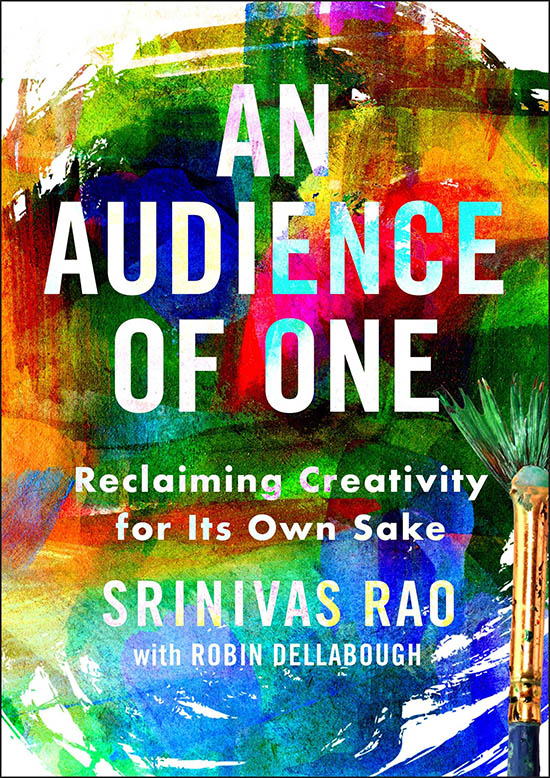
  • An Audience Of One by Srinivas Rao – Book Review & Summary

    Cultivating One’s Own Creative Voice

    Every individual has a creative impulse in them, albeit in varying degrees. However, everyone has also faced that little bit of hesitation in following their creative voices, either because there is another dissuading voice in the conscience that tells them, ‘What’s the point if you’re not going to make a career out of it, or its not going to get you money?’ Perhaps, many even have friends and family who have been that voice!

    Podcast guru Srinivas Rao, in his An Audience Of One, reinforces the positive thought that creativity is a reward in itself and that there is no satisfaction in trying to please others. With excerpts from his own life and from stories of creative and artists, he shows the rewards one can gain by pursuing their own creative impulses and that it is all about embracing one’s own vision by following a process that involves being true to oneself.

    He builds on the premise that creativity becomes stronger in a person the moment the person stops bothering about the potential audience. The moment creativity has an audience of one – essentially oneself – it blooms, becomes more personal and engaging, and thus has a higher potential of winning an audience of many.

    You Don’t Need Extra Validation

    With creativity, the dilemma of either appealing to what a wider audience wants or staying true to oneself always arises. However, when creativity is fuelled by the expectations of others, the creator is bound to be unhappy and dissatisfied with the creation. 

    Financial rewards, critical reviews, and audience accolades are all extrinsic motivators, or responses one has no control over. Whether others find the creative work boring or a masterpiece are personal opinions, which one can do nothing about. Thus by worrying over extrinsic motivators one only sets themselves up for disappointment. 

    Trying to make one’s creative work appealing to others always makes its way away from the originally intended vision one has for the creative work. Compromising on one’s own vision leads to regret, especially if the process of appealing to others doesn’t yield the desired results.

    The true reward of creativity is the satisfaction one gets when they follow their own vision and it becomes reality. The creator thus has discretion and control over their own work.

    David Bowie never created music to be famous. He in fact always stressed the importance of understanding why one feels the personal urge to be creative in the first place and aimed to create to-do something artistically important.

    The final reward of creativity is when a person’s creation is received well enough to encourage the person to continue creating, to continue doing what they love, and revel in the satisfaction of the creative process itself. 

    The Myth Of ‘Making It’

    Creativity that aims at monetary gains often leads to not only dissatisfying but also unsuccessful creations. This is because creativity with monetary pursuits lacks a strong personal vision. Thus, when one focuses on an audience of one – namely oneself – one ends up happier, with results that have a higher chance at garnering more fans. 

    The entire idea of ‘making it’, or reaching the final step of success (achieving fame and fortune), is a fickle friend. In today’s day and age, when attention spans are minimal, instant gratification is important and there are newer pursuits available to everyone at every nook and corner, the concept of ‘making it’ and resting on laurels is virtually impossible.

    To hone creativity and reap its benefits, one has to remember that the reward lies in the process and not the final outcome.

    Honing one’s own creativity takes time and requires patience for trial and error. Moreover, this experimentation should be done away from the public eye, as this process needs one to learn from mistakes and work on them to improve. For example, if a person has an eye for painting, without really trying a few times and refining techniques with practice, showcasing the first paintings to a large audience will definitely get harsh criticisms.

    Hence, it is essential to create for oneself, fail and learn from repeated failings to get a final, polished and refined creative, rather than chase the idea of ‘making it’.

    Embracing one’s creativity involves three main ways. These include three types of listening that will help in adding a more personal touch to the creative work and make it stronger. They are,

    • Listening to oneself, 
    • Listening to one’s environment, 
    • Listening to others. 

    Listening to Oneself: Trust, Presence, And Solitude 

    Listening to oneself needs trust, presence, and solitude.

    • Trust – Listening to oneself firstly involves trusting oneself and what one stands for. It means having confidence in one’s own values. To be sure of one’s own values, it is important to have answers to what makes one angry, excited, joyful, and what does one wants others to experience when they enter that world. One can also write a manifesto.
    • Presence – The habit of thinking about the future takes on away from the present. One then tends to miss out on the profound moment when creative inspirations hit and misses out on the experiences that will work.
    • Solitude – Cultivating solitude is another essential factor that helps to cultivate creativity. Often, when people indulge in self-judgment and criticism, they lost touch with the present. Criticism and creation did work together, and hence, it is vital to create a judgment-free headspace while cultivating solitude.

    The moments that one spends ‘thinking’ are a great way to embrace solitude. However, it isn’t as easy to put into practice. Therefore, one must make a deliberate effort to embrace and cultivate solitude. Some methods include meditation to connect with one’s inner voice, or even using noise-canceling headphones.

    Listening to Oneself: Listen To Your Body Too

    Creativity equals productivity. And to be productive, one must focus on overall well-being and health. Additionally, a healthy mind and a healthy body go hand-in-hand, and these are vital prerequisites of listening to oneself.

    For boosting one’s productivity and hence, one’s creativity, one needs to ensure that one gets a good amount of sleep. Additionally, it is proven that sleep in itself is productive. For example, dreams are long known to boost creativity. Thus, it helps to keep a dream journal, which can, in the long run, emerge as a source of inspiration and creative ideas.

    Another example of enhancing productivity while sleeping is to ask oneself an important question before sleeping. It is surprising, but often the answer to these questions comes while one is asleep.

    The next on the list of creativity-boosting essentials is maintaining a good diet. Foods that contain Omega 3’s and B vitamins are known to boost cognitive power, and thus help creativity. One can maintain productivity versus a diet chart to find what diet suits best. Take a note of the days when creative inspiration was highest and check what foods were consumed on those days. 

    The final pre-requisite is exercise. Exercise is proven to boost brain and brain energy by creating essential mitochondria. Additionally, exercise also makes way for solitude by giving one personal time and space for deep, meaningful thinking.

    Listening To One’s Environment

    The next type of listening is listening to one’s environment. This not only includes one’s immediate surroundings, but also the extended environment, including sights, sounds, and smells.

    To begin with, focus on physical space. Marie Kondo’s The Life-Changing Magic of Tidying Up discusses the process of decluttering the physical space in order to declutter the mind. How does one actually do it?

    To decide whether an object needs to be discarded or not, one should simply ask, “Do I love this? How does this enrich my life?’ The answers to these questions will help one understand whether that object needs to be discarded or not. Objects that one does not ‘love’ add to the clutter in the physical space.

    Additionally, it is found that natural spaces often do wonders for the psyche. A walk in the woods or near the ocean helps in gaining solitude and boosts deep thinking, as well as helps in keeping away from distractions such as technology and noise. Nature therapy has been linked to a reduction in the stress-causing hormone cortisol by 12%.

    In addition to removing ‘noise’, it is also found that ‘white noise’ helps in boosting one’s capacity for concentration. Certain types of music, especially instrumental music or music that are not lyrics-heavy are beneficial. On the other hand, for visual art such as paintings, music with lyrics often boost creative ideas. So artists even find that cultivating a musical habit – listening to the same music while creating – is beneficial too.

    Technology, especially smartphones are the biggest distractions today. Social media is built on the premise that users should be constantly logged on. The need to constantly check emails and messages can keep one from getting into the state of flow –or the state where one is completely immersed in their creation and enjoy it so much that they do not notice time flying by.

    Eliminating Distractions From The Environment

    Everyone knows how distracting smartphones are. But that doesn’t make people discard their phones and ignore emails. Therefore, what can be done to reduce distractions?

    Firstly, it should be kept in mind that people control devices, and not vice-versa. Therefore, one can opt to turn off notifications that keep pinging for attention, unsubscribe from mailers that are not needed. In fact, one should unsubscribe from everything, and then start over with adding and subscribing to only those apps and mailers that add value. Services such as Unroll.Me, are good options to de-clutter your virtual space.

    Another simpler way is to simply switch off the phone, or keep it in another room during the time of work. Scheduling an ‘unplugging time’ works wonders for creativity, whether one is currently working on a project or not. Tools such as RescueTime, Focus, or the Facebook News Feed Eradicator plug-in are helpful.

    Apart from technology, distractions also come in the form of people. Sometimes, there are people in one’s life who drain positivity by bringing others down. While it could be a difficult task to eliminate such people instantaneously, once such individuals are cut off, life will seem lighter.

    Distractions in one’s environment can be compared to food. In order to live a healthy life, one has to eliminate the junk that makes one feel insecure and bad.

    Productivity-Boosting Good Habits

    Cultivating creativity requires one to imbibe certain good habits. There are few methods one can inculcate good habits.

    • Certainty Anchor – A certainty anchor is a habit that ‘anchors’ the mind to get into the work mode. Often, due to distractions or unavoidable chaos in ones surrounding, focussing becomes a problem. Let’s say a painter has a habit of brewing a cup of coffee just before he gets to his studio to paint. Such simple habits in the day-to-day routine can act as signals to the mind to start focussing on the work that lies ahead.
    • Reduce decision Fatigue – The average human makes about 300 decisions in a day, ranging from what to eat to what to wear, cook, etc. The sheer number itself unknowingly causes cognitive fatigue. One can reduce the number of decisions in many ways to preserve energy for creativity. For example, Apple’s Steve Jobs had a set of clothes he always wore, thus reducing the time taken for deciding what to wear daily. Many creative people apply this method to reduce energy waste on non-creative thinking.
    • Understanding the gradual process – Habit formation doesn’t happen in a day. It is a gradual process that sets itself with the passage of time. For example, if a writer aims to write a thousand words per day, trying to reach the goal in one day, could result in failure, and he could give up completely without even giving it a second shot. Goals, like habits, should be given time and increased gradually in order to succeed. For example, the writer could begin with a paragraph per day and continue for a week. Then he could increase the limit to say, 500 words in the second, and then 1000 in the third and fourth week.

    Finally, one should keep in mind that it takes about an hour of focus to get into the state of flow. Therefore, one should make schedules accordingly. If the writer aims to write only for an hour, he could well be stopping his creative work just before the good stuff starts flowing in.

    Hear Others Out, But Always Stay True To Oneself

    The final listening type is listening to others. When it comes to creativity, listening to oneself is always on top of the list. However, it is important to hear out what others have to say too.

    That said, one has to keep in mind that when it comes to other’s opinions, it is wiser to surround oneself with good influences, essentially, people who help one succeed, rather than weigh them down with negativity.

    To do this, one can surround oneself with like-minded people, or join a community of creative individuals. Like-minded creative people not only provide inspiration and sound advice but also act as a safety net when one wishes to challenge oneself and take bolder steps. Forming a community or club can help streamline one’s network.

    The concept of a ‘lone creator’ is a myth. Almost every creative endeavor is a product of collaboration, whether it’s a movie director who works with a huge crew or a writer who needs an editor. It is important to remember that every piece of art has influences or traces of artists that came before, and thus it is essential to view influence as positive.

    At the same time, one has to take measured steps and be careful when it comes to influencing. Influence should always be positive and inspirational, else it often leads to plagiarism.

    Finally, one can take inspiration from any direction for their work. It isn’t necessary that to write a blog, one must go through other blogs for inspiration. Maybe, singling out artists from another creative line, such as sculptors or painters can help in giving one’s creative work uniqueness.

    Conclusion

    Creativity needs to be cultivated. Whether it is to pursue a creative career or to simply polish one’s own creative instincts, one should always create for an audience of one. 

    Cultivating creativity involves listening first to oneself, followed by paying attention to one’s surroundings, and then lastly, listening to the opinions of others. 

    One should always remember that cultivating one’s own creative voice always begins by staying true to oneself because only the audience one can lead to an audience of many!

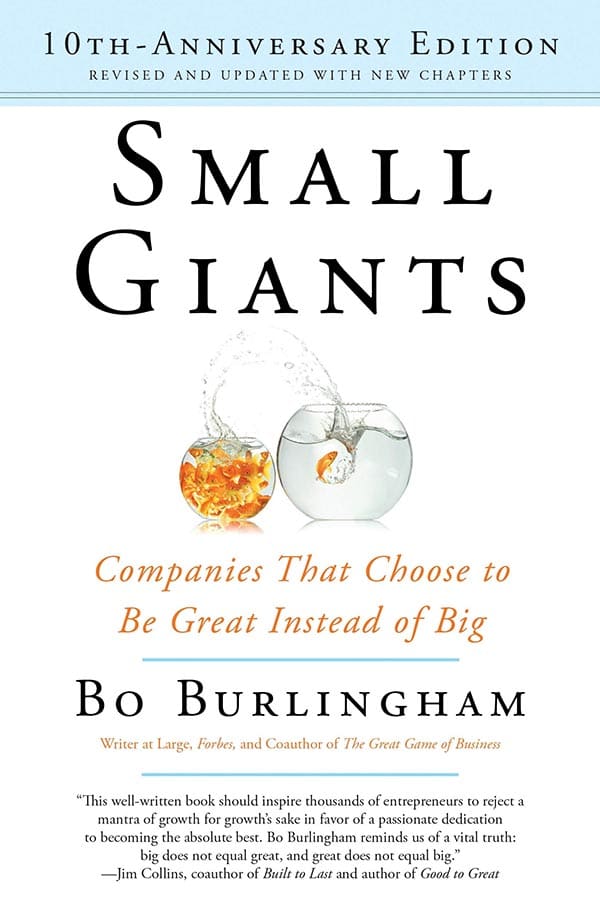
  • Small Giants by Bo Burlingham – Book Review & Summary

    Small And Successful

    The traditional business mantra of expansion through sales and a larger customer base doesn’t hold much merit in today’s economy. Growth is overrated, and many small businesses, driven by mere hearty enthusiasm are showing the way. Bo Burlingham’s Small Giants examines companies that have made it big by shifting the focus to quality and caring for their workforce.

    Choosing To Stay Small

    The emphasis and importance that CEO’s of big, publicly traded companies place on growth are evident in many interviews they have given. However, the trend is shifting. Many companies today are going against the tradition of expansion in order to stay true to their missions.

    Bill Butler, the owner of W. L. Butler Construction Inc., saw his company expanding rapidly between the 1970s and 1980s, and despite having annual sales of $20 million and 129 employees, he felt unhappy. 

    He realised that expansion only meant that he would not be able to have a personal connection with all of his employees. Thus with a focus on narrowing, he reduced his clientele from 25 to 10. He even let go of his largest client, who accounted for about 50% of his project value. This was a bold move to align his company with his personal mission of achieving personal relations with his employees.

    Anchor Brewing the Californian brewery has had not more than 50 employees for the past twenty years. This decision has not only led to fostering better relationships between employees but also allows them to see the outcomes of their hard work, faster.

    Smaller companies are able to foster a healthier work environment. Additionally, functions like customer service tend to be better due to higher levels of personal interaction. Employees and owners alike, can foster closer relations with clients and even know them by face and name, which is often difficult in huge corporations.

    Control And Passion

    Big corporations mostly have a large number of shareholders. When a company’s stock is in the hands of outside investors, it often becomes difficult to keep control of the company, as some of the oversight lies at the discretion of those shareholders. Hence, owners often prefer to keep the company stock in the hands of a few.

    Burlingham’s for example has only 4 ‘outside’ shareholders, who don’t directly work for the company. For small giants, ensuring control over the company, especially the stock, is crucial. This enables company owners to pursue their passions and focus attention on quality rather than profits.

    Anchor Brewing is dedicated to traditional methods of brewing. Their philosophy focuses on ensuring a quality beer rather than crunching profit numbers. Hence, they prefer to use copper kettles rather than stainless steel ones, and choose to ferment their beer in the naturally cold night air, rather than use ice. 

    While these methods take time and can prove to be a little more expensive than modern ones, they result in a better quality beer. For the company, better quality trumps profits any day.

    Zingerman’s Deli’s vision reads, ‘“to sell sandwiches so big you needed two hands to hold them and the dressing would roll down your forearms.” In order to stay true to their vision, they decided against franchising, as it would jeopardize quality, and go against their vision. Instead, they developed Zingerman’s Community of Businesses, a network of businesses working under the name, and having their own distinct identities. This move helped retain the passion for high-quality sandwiches.

    Staying Local

    The local community plays an important role in shaping a company. 

    If we consider a restaurant business, the local community is intrinsic to its success. Right from the staff it employs, the customers that visit the restaurant, to the dishes that are influenced by the geography of the location, the local food producers the restaurant depends on for fresh produce, etc. These factors amount to what the French call the ‘terroir’. ‘Terroir’ is an important factor that affects the success of the restaurant.

    Small giants depend on these factors. Furthermore, they are able to actively give back to the communities they are situated in.

    Ani DiFranco, the label owner of Righteous Babe Records, the Buffalo-based music label, helped rescue an old church in downtown Buffalo that was about to be demolished. She financed emergency repairs in the church and was allowed to set up her business inside the church, as a reward for her kindness towards the community.

    For small giants, such local interaction and community consciousness can pay back in many ways.

    Loyalty

    Loyalty is a valued virtue for small giants. They put the needs of their employees before profits. Moreover, they are able to do this purely because their focus doesn’t lie on expansion and growth like bigger corporations. Being small, they are able to create personal connections with employees, thereby harbouring an employee-centric work atmosphere.

    Michele Howard started working for ECCO, the shoe brand. With no education and a single mother of three, the experience she gained working as part-time manual labour, enabled her to later work full-time in the customer services department.

    By loaning money from the company’s pension account, she eventually bought a house for herself. In the following years, she became a shareholder by participating in the employee stock ownership plan that holds 58% of the company’s shares.

    Obert Tanner, the late owner of the O.C. Tanner Co., an HR consultancy that focuses on employee recognition, was known for engaging in personal conversations with employees. He knew the names of almost every employee in the 1700-employee organisation.

    He also arranged for 65% of his stock in the company to be transferred to a 100-year-old trust. This ensured that the company could never be merged, sold, or taken public. His endeavour helped guarantee employees their jobs.

    Such actions that instil loyalty among employees are rarely found in bigger corporations.

    The benefit of caring for employees strengthens loyalty. This can be seen at Artists Frame Service (AFS), a Chicago-based picture framing company. One of the managers was offered a $10000 raise to change jobs. However, the manager refused the offer because he felt the competitor did not treat employees as well as AFS did.

    Passionate Employees

    Small giants are known to punch passion in what they do and stand for. One often hears employees in bigger organizations complain that they are ‘faceless cogs in a machine, and don’t feel passionate for either the organization or the work they do.

    Small giants, on the other hand, work to cultivating an atmosphere that is motivating, meaningful, and exciting for their employees to work in. They imbue their organization with soul by encouraging employees to reflect on what they feel about the work atmosphere and why they value it.

    For instance, one of the employees at Clif Bar, the organic food company, summed up the soul of the organization in one sentence – “You got that engine running, baby, and the sky’s the limit!”

    Once again, not focussing on growth or profits makes employees of small giants intrinsically motivated and passionate about what they do. It is because these small companies started with a passion, the people who are hired are chosen because they share the same passion as the founders did.

    Zingerman’s Deli is a great example. The passion for cooking that employees have enables them to consider and understand factors – such as the smell of the food they serve – that many other businesses don’t.

    Such employees are the company’s biggest fans.

    Happy Just Where They Are

    The setting and location of a business are vital to how it impacts patrons. For example, the Mona Lisa would never have attained the fame it has if it wasn’t placed at the Louvre.

    Danny Meyer, the owner of Union Square Hospitality Group, the New York-based chain of restaurants, passed an opportunity to open branches in Las Vegas. He valued the setting of the restaurant and understood how it affects the dining experience.

    Understanding these factors is what makes small giants happily stay where they are and not run after expansion. However, the ability to create a strong network in one location, have partners who are essential to help maintain quality, and the time such endeavours need are other practical reasons why small giants prefer to stay put.

    Righteous Babe Records knew that staying put in Buffalo, which has a very low cost of living, would enable them to focus on developing a signature style rather than pursue profit generation. They understood that the competition in other cities would never have enabled them to find dedicated musicians or even build their style at the pace they did.

    Conclusion

    There certainly are benefits to running or working in a smaller company. The successes of many small giants can be credited to the fact that they do not focus on growth, expansion, and profits. Staying true to their ideals and passions, they are able to create a more cohesive work atmosphere and find individuals who truly care and are equally passionate about the company.

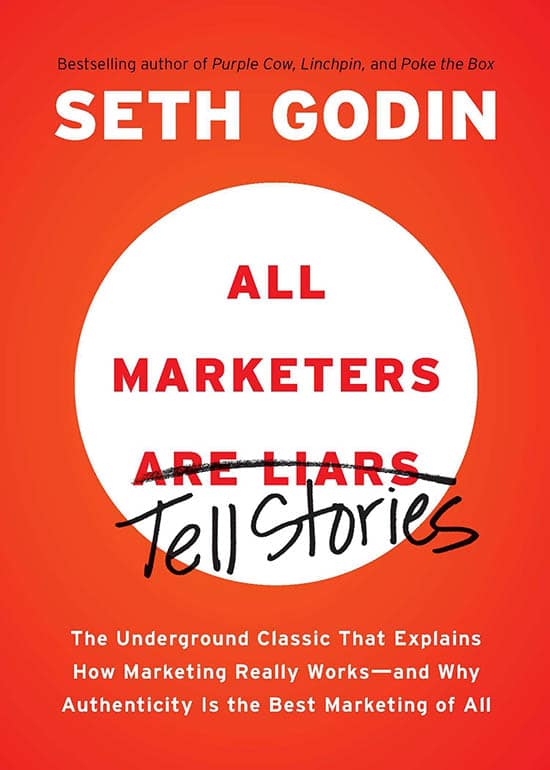
  • Unleashing the Ideavirus by Seth Godin – Book Review & Summary

    Ideavirus

    The decline of advertising in the Internet Age has made the marketing community see the need for a radically new, effective strategy of reaching customers. Seth Godin’s Unleashing the Ideavirus (2000) takes us through the concept of ‘going viral’, and what implications it has in ensuring a successful marketing campaign.

    Today, any content on the Internet can become contagious. Ideas, concepts, messages, ads, information, etc. can snowball to fame with everyone not only viewing the content but talking about it too. It spreads like a virus.

    Such virulence of content can mean big bucks for those in marketing. Simply imagine the potential of information that is viewed by millions and that spreads organically from customer to customer, without needing to empty out wallets on mainstream advertisements!

    The Ideal Conditions For An Ideavirus

    The basic concept of an ‘Ideavirus’ has been around for ages. The spread of ideas, information, education, and culture via person-to-person communication has indeed been the way throughout history. Even word-of-mouth marketing has been a well-used concept in the field of marketing for decades.

    However, with the advent of the Internet, the buzzword is ‘Ideavirus’. It is a science and an art, and everyone can learn to use it.

    While earlier, ideas, concepts, and information would spread via word-of-mouth, its spread was limited to smaller circles, the process was slow and the content would either die-out, or lose its charm before really becoming ‘the big news’.

    Today, it takes but one share of information, or an idea to reach hundreds and thousands of people. And each of the hundreds and thousands can share the information further to another hundred and thousands, exponentially expanding the reach of the information or idea. This is the word-of-mouse marketing!

    Additionally, culture is undergoing a transformation too. Earlier, people would value the tried, tested, and true, while today, the culture is shifting towards valuing the cutting-edge, and seeking new products and services. People crave to own the newest, latest product on offer, proving that the shift in culture has been a game-changer too.

    This new culture of valuing and craving newer products has made people more receptive to new information than it did earlier when people valued tried and tested products. It makes the concept of the ‘Ideavirus’ an ideal strategy in this Internet age.

    Increasingly Ineffective Advertising 

    Mainstream advertising, which was the star strategy in the latter half of the last century is slowly dying out. Whether it was the brilliance of well-timed TV or radio ad, a catchy jingle that was augmented by a huge strategically placed billboard, or the idea of reaching millions via a newspaper print ad, the underlying strategy was an interruption. It was to capture the attention of customers unaware, with an unwanted message.

    However, when customer’s attention is the aim of every marketer, the competition is fierce, especially with the increasing number of mediums in the form of social media platforms, websites, TV channels, or magazines available. Essentially, the same information and message are available everywhere, all at once. Moreover, the number of product options available to the customer has increased exponentially too.

    This combination of increased ads, products, and media has forced the customer to learn to tune out. Year-on-year, as this number increases, the value of advertising decreases whereas its inefficiency increases.

    Today, marketers need a shift in paradigm, where the focus lies not on getting customers to listen but encouraging talking about the product. That’s where, word-of-mouth and word-of-mouse marketing are needed, with an aim to unleash the Ideavirus.

    It’s Really, Actually Marketing An Idea

    Even the economy has seen a shift due to the decline of advertising. In this scenario, the concept of an Ideavirus becomes the key to a successful economy as well.

    Earlier, when the economy was simply either agrarian or industrial, churning out a good crop or manufacturing machines would rake in the cash. Today, the culture values intellectual property and ideas more than physical products. Ideas such as songs, software, websites, technologies, or even diets, are examples of intellectual property. Even physical products that are revolutionized with new ideas change the way people think. For example, Hotmail popularized the concept of free email. 

    Additionally, ideas also add value to physical products. For example, Nike’s Air Jordan’s are priced at a whopping $100 because of what the shoes represent and the way they have been branded, and not just their quality.

    There is no sure-fire formula for creating a veritable idea. Yet, it is certain that for an idea to be successful in today’s times, it has to spread, and spread exponentially for people to take notice and get persuaded.

    In other words, an idea is like a declaration or a manifesto of a product or a service, which conveys a novel way of doing something – no matter how small the idea could be in the grander scheme of things.

    Thus the main of marketing in the Internet Age is to spread a manifesto-like idea, within a sought-after target audience and try to reach as many within that target as possible. Moreover, if the idea spreads throughout the targeted segment, seemingly having a life of its own, it becomes an ‘Ideavirus’.

    Spreading The Ideavirus: Resonance

    For an idea to become an Ideavirus and spread, it has to be compelling enough to be worth spreading. However, ‘compelling’ is subjective, and which idea works, turns into a fad or a fashion, dies or makes a comeback, etc. requires marketers to have their finger on the pulse, have the understanding of what constitutes the ‘right moment’, have a great sense of timing and of course, an in-depth understanding of their target audience.

    The target audience is like a hive. A group of people, interconnected with common interests, ways of communicating, standards, rules, fashion, leaders, traditions, etc. Marketers should ideally, choose a hive and then create a tailored product to cater to that hive. Marketers can even choose to tap into a consumer group by creating a product that brings them together to form a hive.

    For example, the magazine Fast Company, first identified an untapped consumer group that wasn’t part of any hive and then launched their magazine. They targeted those who worked in mid to large-sized companies, with an ambition to succeed but limited by the slow pace of workplace bureaucracy. Fast Company achieved viral success by helping them become a hive. The magazine helped them form connections with like-minded people, and soon, a global network of support groups sprang up, which were Fast Company inspired.

    Therefore, getting one’s hive to be the pillars of marketing the product can help in unleashing the Ideavirus.

    Spreading The Ideavirus: Selecting A Hive

    Whether a marketer chooses to select a hive first and then tailors a product for it, or vice versa, selecting and targeting the right hive is vital.

    It is natural to want to go ‘guns blazing’ for the largest hive. However, the largest isn’t always the best, as marketing to a bigger hive makes spreading the message harder. The obvious reasons being, the fierce competition to reach the large hive. Getting one’s message through the noise becomes tougher.

    For example, trying to market an Ideavirus at a huge trade show such as the Consumer Electronics Show at Las Vegas will be a herculean task as compared to marketing it a smaller trade show like a DEMO conference.

    One of the biggest hazards of aiming for a big hive is that while trying to get the product to appeal to everyone, it might end up not attracting anyone. The smaller and more tightly knit the hive is the easier it will be to spread the message within the group. Additionally, it will be easier to tailor an idea to specific desires common to those in the hive. 

    To be able to successfully unleash an Ideavirus, one has to be able to reach the nearly whole hive. Thus, if one targets a big hive, even with the advantages of the Internet, it becomes virtually impossible for a company to reach the numbers needed for an Ideavirus. It is thus wiser to target a specific demographic or a specific segment of the population.

    Spreading The Ideavirus: Finding The ‘Sneezers’

    A virus needs spreaders. Similarly, an Ideavirus needs ‘sneezers’ within the hive. Therefore it is essential to take a closer look at the people who are part of the hive. These ‘sneezers’ are people or organizations that are habituated to telling others about a new idea.

    There are two types of sneezers – promiscuous sneezers, and powerful sneezers.

    • Promiscuous Sneezers – They are the people who are talkative and over-eager to share their new idea with anyone and everyone who is there to listen to them.
    • Powerful Sneezers – These are highly influential people who those in the hive hold in high esteem. For example, the publisher Warner Books, while promoting The Bridges of Madison County, reached out to the powerful sneezers of the hive of book readers, the independent bookstores.

    To make an idea an Ideavirus, one should have a good mix or promiscuous and powerful sneezers who will spread the Ideavirus in all directions.

    Spreading The Ideavirus: Recruiting The ‘Sneezers’

    Once the sneezers are identified, they have to be wooed and recruited into believing in the idea. Let’s understand how promiscuous and powerful sneezers work.

    • Promiscuous Sneezers – By comparison, promiscuous sneezers are not as selective about the ideas that they endorse and spread. They can be easily motivated with incentives, and thus are easily persuaded too. 

    However, because they are easily persuaded, their ‘sneezes’ can be less infectious. That said, within a hive, if a good number of promiscuous sneezers sneeze on a good number of people, many times, they can be effective in spreading the Ideavirus.

    With promiscuous sneezers, getting them to leave a review or signing them up for an affiliate program are the things that work.

    • Powerful Sneezers – Powerful sneezers have a very powerful and infectious sneeze. They are also extremely selective about the ideas they endorse and spread and are very difficult to trigger into spreading an idea. This is because the public perceives them as having integrity and relies on their selectivity, and their power depends on this very fact. If a powerful sneezer can be bribed with incentives, they will lose their integrity and hence, the trust of the public. 

    In order to court powerful sneezers, simply telling them about the idea isn’t going to suffice. These are the people who will need to be convinced with testimonials, prototypes, and free samples. They ask questions and will expect a one-on-one session where their questions need to be answered. 

    With powerful sneezers, there is no guarantee that they will spread the idea. However, without being infected you can be sure that they won’t spread the idea at all!

    Spreading The Ideavirus: Making It Easy To Spread

    If we look at an actual virus, its spread depends on how easy it is to spread it from one host to another. An Ideavirus works in the same manner. Its spread is smoother if it is easy to spread.

    For example, some services and products are so smooth that they spread when people simply use them. The instant Polaroid camera is a great example. When one takes a photo with it, the value of ‘instant’ is promoted instantly, as one sees the photo develop then and there.

    Conversely, some ideas are tough to spread. For example, for a reflexology therapist to promote his services, he will have to first tackle the fact that not many even know what reflexology is, which can be a difficult concept to explain, let alone spread.

    There are, however, ways to make a difficult idea easier and make its transmission smoother. The Toyota Prius for example, if marketed in the 1900s would have been difficult to convert into an Ideavirus, especially considering the fact that its technology would have been difficult to explain then. How would its makers have then marketed it?

    Firstly, it could have been given another name. Even when it debuted, people were confused whether its pronunciation was ‘Pree-us’ or ‘Pry-us’. Thus to even bring it up in conversation, the name of the product or service should be catchy and easy.

    Next, the makers would have needed to work on a design that appealed to the masses then. For example, designing it like the Volkswagon Beetle would have made it a billboard in itself!

    Finally, the makers would have needed to work on conveying the car’s ‘manifesto’ – of being a low fuel consumption, money-saving automobile. This could have been done by probably having a digital bumper sticker that would display the car’s mileage.

    Therefore, for an Ideavirus to spread, it has to be easy, and expressing its idea should be easy enough to persuade people to spread it.

    Conclusion

    With mainstream advertising on the decline, marketing now relies on the success of ideas and intellectual content, rather than simply physical products and services. These ideas become successful within an evolving economy when they become Ideaviruses and spread exponentially among the right people. 

    An Ideavirus, is essentially marketing an idea the right way, by connecting and creating hives of like-minded people, finding the effective sneezers within that hive, and most importantly making the idea easily spreadable to resonate with those in the hive.

  • Why Love Matters (2004) by Sue Gerhardt – Book Review & Summary

    The Social Brain And Babyhood

    What shapes us into the people we grow up to become? This question has had scientists and researchers drawing conclusions over nature, nurture, or both debates for more than a century. Is it one’s genes, or environment, that define who we grow up to be?

    Why Love Matters (2004) by Sue Gerhardt looks deep into the latest research in neuroscience, psychoanalysis, and biochemistry to give an insight into the early years of an individual are intrinsic to shaping the humans they become in later life.

    Her research brought up a new thought – that it is during the first two years of life that genetics and social environment work together to inscribe our personalities into the brain. How an individual is treated as an infant, creates permanent neurological patterns that stay with people for life. 

    Furthermore, it discusses the implications this new information has for parents.

    How The Brain Evolved

    Humans are social animals. As opposed to a tiger that remains a tiger whether it wanders alone in the forest, or is kept with other tigers in a zoo, social relations define humans. Essentially, it is the social brain that differentiates humans from animals.

    According to neuroscientists, humans have triune brains – that is three brains in one – that reflect a different stage of evolution.

    In the first stage of evolution, the brain development was similar to those of reptiles, which had a simple cognitive setup based on the brain stem allowing basic life functions like breathing. In the second stage, the brain evolved into a mammalian brain that developed around the reptilian brain, making way for basic emotions that helped in nurture. In the third stage, the human brain evolved further, where the cerebral cortex developed around the outer layers of the mammalian brain, making it a social brain, and giving humans their ‘human’ qualities.

    This social evolution of the brain allows humans to go beyond instinctive ways of behaving and gets activated when humans experience empathy, follow social cues, and control their emotions.

    This evolution enables humans to experience more than just primary emotions such as satisfaction, anger, and fear; intermediary emotions that are a diversification of the basic emotions, such as sadness, guilt, love, shame, pleasure, etc. can be experienced too.

    In a newborn baby, the brain relies on several systems to ensure survival. The functional nervous system helps it breathe, the visual system tracks movement, and a core consciousness in the brainstem enables it to react to sensory stimuli such as temperature. However, its social brain is not developed yet.

    Quality Of Social Interaction

    Babies don’t have the brain capacity to control their behavior, as their social brains are not developed. Thus, when parents try to ‘discipline’ a baby that is refusing to eat vegetables for over an hour, they can’t understand the parent’s frustration. It does not understand that eating the veggies will make the mother happy.

    The development of the social brain is a complex process. The orbitofrontal cortex, a key part of the social brain responsible for ‘emotional intelligence’ needs to develop. According to neuroscientist Daniel Goleman, without this part of the brain, social life gets impaired. People with injuries to the orbitofrontal cortex find it difficult to understand social and emotional cues, and could even be sociopathic.

    The orbitofrontal cortex develops and gets molded by one’s experiences in the formative years of childhood. The development of the brain that takes place due to experiences is called ‘experience dependency’, which can be attributed to evolution. Essentially, humans can learn to ‘fit into’ the culture they are born within and pick up the norms and rules of the culture. However, the brain’s plasticity, or its ability to be molded, makes it vulnerable to damage too.

    Harry Harlow the primate researcher conducted an experiment in the 1930s. He found that when a monkey is isolated for the first year of its life, it effectively becomes autistic. Thus sociability is dependent on social interaction.

    In recent research conducted in Romania, researchers who studied brain scans of orphaned three-year-old children born in the orphanage found that they had large empty spaces where the orbitofrontal cortices should have been found. Having little adult contact, these children had been neglected, proving that social deprivation in infancy led to permanent brain damage.

    Senses That Make Social Interaction Pleasurable For Babies

    A baby, before it learns about human culture, has to be invited into it. This invitation to participate depends on the interlinking of the biochemical in its brain and the behavior of caregivers. Together, these make social interaction pleasurable for a baby.

    Pleasurable social interactions help foster an infant’s cognitive development that in turn, strongholds the base for emotional control in adult life, as pleasure stimulates the orbitofrontal cortex. Hence, as long as parents take pleasure in the relationship with their babies, there is nothing to be concerned about.

    An infant first finds pleasure in the sense of touch. For example, when a father lovingly cradles his baby in his arms, the sense of warmth and safety has an immediate physiological effect. Firstly, the baby relaxes and its breathing slows down. Next, the baby’s nervous system and heart rate synchronize with the father’s. 

    These slow but sure physiological experiences are the foundations of human culture. They are the reason why, while comforting a bereaved person, we hug. They are also the reasons why a good massage helps relieve stress and tensions better than most other things.

    Looking, or visual sense is the next source of pleasure. A mother’s pupils dilate when she sees her baby up close. Thus, as the baby looks into its mother’s eyes, it ‘reads’ this dilation as pleasure, which triggers a biochemical chain reaction that is triggered by its aroused nervous system. As the infant’s heart rate increases, neurons release beta-endorphins – opioid-like molecules – into the orbitofrontal cortex region. These trigger a sense of pleasure, which regulates levels of glucose and insulin, stimulating neuron growth in turn.

    Simultaneously, dopamine is released in the prefrontal cortex by the brainstem, enhancing the uptake of glucose and promoting the growth of prefrontal brain tissue.

    This is a microscopic description of what happens when a baby feels pleasure. However, if we look at it from a social interaction standpoint, we can see that looking at a parent’s eyes is pleasurable for a baby, and the more it looks at its parents, the more its social brain grows.

    Social Patterns Determine The Brain’s Neural Network

    Our genes are essentially a blueprint or a sketch, rather than the actuals of structure. However, the process of building the structure also takes into consideration social inputs from the brain to determine how much of the genetic sketch is realized in the new individual.

    Humans are born with all the neurons they will ever have in their lifespans, and genes determine this. But as the baby grows, and its brain grows twice in size in the first year itself, these neurons require to be connected. Essentially, genetics and the baby’s social interaction factors combine to work out the shape of its brain.

    Between six to twelve months of a baby’s birth, cognitive construction is at its peak. By the end of this peak period, a dense network of cognitive possibilities emerges. Though still incomplete, it is the foundation that eventually becomes the mind.

    In the next phase, the brain begins ‘pruning’, or gets rid of those connections that are rarely used. Obsolete brain cells die, shrinking the vast network. According to the American neuroscientist Daniel Siegel, the brain works as an anticipating machine that helps in navigating the world around us by providing expectations of possible outcomes. Thus, a baby unconsciously starts noticing patterns as its brain starts categorizing experiences. The brain thus keeps the information that doesn’t help it navigate.

    For example, a baby registers that diaper changing is an unpleasant activity, as it registers that its mother wrinkles up her nose in disgust, every time she changes its diapers. The repetition leads to expectation.

    The Human Stress Response

    Stress, in any form, can be overwhelming and draining. While in conversation, it is often associated with having a tough day, or mostly being an integral part of adult life, it, in fact, is present throughout.

    Response to stress can be dated back to prehistoric ancestors and is an evolutionary reflex. When our ancestors faced life-threatening dangers, the brain released cortisol. Cortisol worked like a red signal to the other organs, to redirect all resources to deal with the emergency.

    While modern society is much safer, survival today encompasses social acceptance and status, which when threatened, leading to the release of cortisol, triggering the old stress response.

    Cortisol, in the short term, can be useful to help break down protein and fat, converting them into energy. While this extra energy can help in a life-threatening situation, or save one’s job by working extra hours, its long-term effects include damage to the immune system, if the spike in cortisol levels doesn’t normalize after some time. It is the reason why people who experience regular stress fall sick easily.

    While adults can, fortunately, find ways to reduce stress levels, babies cannot. And if caregivers do not manage these stress levels, continuous and/or high levels of stress can be damaging in the long term.

    Absence Of Parents Can Be Distressing

    Stressful situations can be unpredictable and/or uncontrollable. For babies, their entire existence is uncontrollable and unpredictable. Considering this, it is very stressful for babies. The only thing that babies can do to gain attention, whether they are hungry or cold, is cry. They cannot survive without their caregivers. Thus, when their desperate cries for attention are not answered, they feel profound powerlessness.

    According to neuroscientists, corticotropin release factor, or CRF, also described as a fear hormone is the body’s response to fear and can be linked with the fear babies feel when they are separated from caregivers.

    In the journal Biological Psychiatry, a 2002 published study showed higher levels of cortisol among mammals that are separated from their mothers at a young age. Thus, the cortisol levels increased in a squirrel monkey, every time it was separated from its mother. Even if it was only for five hours, the repeated separation led to an increase in its feedback sensitivity, resulting in its behavior changing to being clingier, less playful, and easily distressed. Studies suggest similar results among human babies with high levels of cortisol in early life. Additionally, it can lead to a reduced number of cortisol receptors that help in absorbing cortisol and managing its levels. Therefore, with lesser receptors, the ability of a person to manage stress reduces too.

    Moreover, babies that were held by their caregivers and experienced the pleasure of the sense of touch have a higher number of cortisol receptors, thus having an increased capacity for managing stress in adulthood.

    Stressed Children Have Stressed Parents

    An article published in Biological Psychiatry discussed a study wherein scientists subjected monkeys to ‘unpredictable foraging’ – a process where the mother did not know where the next meal would be from. Considering it was the mother’s duty to find food, it was more stressful than having less to eat. 

    However, scientists found that because the mother was often unavailable, looking for food, her young ones did not have her calming presence that helped them relax. Thus, the baby monkeys too had stress hormones flooded in their brains and were in a constant state of anxiety. 

    In humans too, a mother’s presence (or lack of) can have a profound biochemical effect on the stress levels in a baby. Often, when the quality of a caregiver’s presence is poor, either due to being mentally unavailable, or having an alcohol addiction, babies, despite being with their biological parents, have higher levels of cortisol and thus stress.

    The effect of stressed parents having stressed babies was perhaps seen in a study conducted by University of Wisconsin’s Marilyn Essex in 2002.

    She conducted regular tests measuring the levels of stress of a study group of 570 families, between the first five years of the birth of the children in those families. When she measured the children for levels of stress at 4.5 years, she found that children who were currently living with stressed-out mothers had higher levels of stress, only if the mothers had been stressed while they were infants too.

    It proved that as compared to babies with happy and easier baby hoods, babies with stressed childhoods are more likely to produce more cortisol under pressure, find it harder to face difficulties in later life, and experience tensions.

    Social Deprivation And Depression

    Babies that are protected from discomfort and that lead to happy peaceful babyhood, produce more cortisol receptors. However, without this, a baby’s brain develops an overactive stress response. While in the short-term it leads to permanent stress and very high levels of cortisol, in the long run, it could result in an anxious personality.

    With more cortisol receptors, the brain can easily clear up the stress hormones, which in turn makes it easier for the brain to stop producing cortisol when it is no longer needed and prevent long-term damage.

    When a baby with an overactive stress response system experiences stress, its brain gets over-flooded with cortisol and the cortisol receptors shut down. With the receptors shut down, the cortisol hormones stay in the brain for a longer than intended time, causing damage such as depression in adulthood.

    Impairment in the social brain can lead to lesser production of norepinephrine, which is required for concentration and sustained effort. Also, people with depression issues are known to have lower levels of norepinephrine. It is therefore tough for people suffering from depression to stop actions that are harmful.

    In addition to these, social deprivation in infancy is also linked with a permanent reduction in dopamine synapses. A child with happy babyhood has a lot of dopamine flowing in its orbitofrontal cortex. It learns new things because it feels positive about them and also learns to adapt to new challenges. But a child that lacks these synapses in the brain will not be able to focus on positive rewards well, will have less adaptability, and be more susceptible to depression.

    Conclusion

    This makes it clear that the more loved and protected children are in their babyhood, the more likely they are to lead happy adult lives.

    Proper growth of the social brain is vital and positive social interactions are instrumental for its growth. Nature – our biochemistry and genes – and nurture – the loving surroundings, caring parents, and attentive caregivers – are both equally vital in shaping the brains and thus the personality of a person. And this shaping takes place right from the time a baby is born.

  • This Is Marketing by Seth Godin – Book Summary & Review

    Effective Marketing In The Internet Age

    Marketing and advertising have been so closely related to each other. Additionally, for the traditional marketer, advertising is the center of the marketing universe. However, today, there is a clear shift in how both these are viewed, as well as how they work. The world of marketing needs to be revamped.

    Marketing, today, goes much beyond advertising, and advertising is now an accompaniment to other marketing strategies if not a dead-end for many. Marketing has taken a deeper meaning and needs a new approach.

    This Is Marketing (2018) by Seth Godin delves deeper into what marketing actually stands for today and how marketers and companies can align their marketing strategies with the new age!

    The Redundancy Of Mass Advertising

    Traditionally, mass advertising aimed at reaching the masses. Also known as ‘the Coca Cola method’, is focused on getting a lot of ads to reach as many people as they could, via different media, mostly print, radio, or television. The keyword was ‘mass’ and included mass media to reach the masses.

    Coca-Cola has, year after year flooded media with ads, with an aim to convince that everyone drinks coke. It was a great strategy in the 1960s when there were only 3 television channels broadcasting, and catching a slot on prime time reached millions. However, today, one has a million options right from channels on TV, to platforms such as Netflix and Amazon, and even different media such as smartphones, tablets, etc.

    The Internet has been a game-changer for marketing. While on one hand, it has proven to be the biggest mass medium that has connected millions across the globe, it also has proven to be the least massive, because people can customize their viewing, have personalized Facebook and Twitter feeds, and even have tailored Spotify and YouTube playlists.

    This splintering of mass media also resulted in the fracturing of mass culture that once surrounded mass media. Mad Men, which showcased the early world of advertising ran from 2007 to 2015. It adeptly narrated the shift and was itself an example of how media and the masses have changed. While it was touted to be a great show, it was reported that only 1% of the US population watched the show in actuality.

    The Features And Limitations Of Internet Advertising

    The Internet, like all other mediums, has its pros and cons. While it doesn’t provide the mass reach that a prime-time slot on a popular channel would earlier, it gives marketers the ability to target a precise group – a more effective strategy to reaching prospective customers.

    Websites such as Facebook, YouTube, and Google, can help one find the right demographic and reach them at the click of a button. Additionally, the Internet does not have limitations on geography, and customers, literally the world over, can be reached anytime. No need to wait for that prime-time program.

    Perhaps, the more useful feature of the Internet for marketers has been the ability to measure the success of their ads – a feature that advertisers back in 1960 could only dream of. Marketers can see the number of people their ad has reached, the number of people that clicked on it, and the number of people who purchased a product after viewing the ad. Thus marketers today are able to tweak content based on actuals and optimize their advertising budgets.

    However, the Internet has but one major drawback. It’s available to everyone, everyone uses it to measure the success of their ads, work with optimized budgets, and reach a targeted audience. Thus, the target audience is bombarded with a million ads, and finally, end up ignoring most ads even though they are the correct demographic targeted.

    There is a viable solution to this problem – Search Engine Optimization (SEO). Using optimized or the right keywords can help searches lead customers right to you. However, even this can be tough as not everyone can get the right mix of keywords that lands them on the first page of a search; and search engines, especially Google, yields so many pages with so many other competitors vying for the audience’s attention.

    There are however, other approaches to get the right marketing strategies in the Internet era.

    Make It Worth Buying

    To begin with, marketers should make their product ‘worth buying’, a feat that is easier said than done. While many would argue that this is in the hands of the designers, marketers play an essential role too. How?

    Take an example of a quarter-inch drill bit. No one wants to buy a quarter-inch drill for its own sake. They buy it for the hole it makes. At the same time, no one needs the quarter-inch hole in itself either. They need it for, perhaps, putting up wall shelves. 

    And why would people need wall shelves? To make their homes look tidy by organizing things, to have a little bit of semblance or organization in their environment, or even perhaps, to make their homes look good so that their visitors admire and respect them for the way they manage the look of their home.

    Therefore, the quarter-inch drill becomes only a tool to satisfying another need, a point that was made by Harvard’s marketing professor, Theodore Levitt.

    Similarly, effective marketing begins by understanding the underlying needs and wants of customers, which often lead to emotionally resonant aspirations like adventure, strength, belonging, freedom, etc. that are buried deep down. People buy a product when it can resonate with these aspirations.

    For example, when a man buys an SUV, he may have made his buying decisions on the premise that he can go off-roading with it. While he might never actually go off-roading, the mere promise of the ability is what attracts him. It perhaps resonates with his underlying need for adventure.

    Thus effective marketing begins at the designing and manufacturing stage, where our man with the SUV and his thirst for adventure is kept in mind to build a compelling product that helps identify with people’s aspirations.

    What Desire Means To The Target Audience

    Everyone has different needs and desires. Additionally, people define the same desires differently. For example, for one adventure could mean thrill, whereas, for another, it could mean travel.

    Every product embodies the definition of the desires it satisfies. More importantly, marketers should remember that their target audience shares that definition and desire. This target audience can further be classified into adopters and adapters.

    While adopters are thrilled by the prospect of trying new, innovative products, which they have never encountered before, adapters prefer the sense of security and comfort of familiarity. They tend to shy away from new products, preferring to use products that they are used to. Adapters, when given no choice, will adapt.

    For example, people who still use flip-phones will eventually, yet reluctantly adapt to smartphones.

    Marketing should first target adopters, because they will be excited to try out something new that offers them a novel way to fulfill their desires. Adapters, on the other hand, won’t be comfortable making changes to their already successful ways of fulfilling their desires and turning to something new that is unproven.

    For an initial target, adopters are the audiences to aim for, even if they make up the smallest viable market that can make a product profitable.

    How Personal Values Affect Buying Decisions

    In addition to deep-seated desires and needs, people also make buying decisions based on the things they care about while they pursue what they want. These are their personal values.

    For example, a person, wanting to satisfy the basic need of nutrition, will choose a snack based on the values that define him. Thus, if the person cares more about affordability and popularity, the choice would waver to the cheapest ‘big-name’ brand on the shelf. However, if health and sustainability are the values that influence the choice, then the person will opt for a local, organic brand.

    Each value can be paired with its opposite, forming the extremes of a spectrum, such as trendiness and old-fashionedness, professionalism and casualness, dependability and risk, etc.

    As a marketer, one can either choose the middle ground on the spectrum of values chosen or aim for an extreme. For example, a popular extreme for most marketers is affordability, as the value resonates with most buyers. However, one should also remember, that these safe or middle-ground values are where most products are marketed. The competition becomes fierce and thus it becomes difficult to stand out from the crowd, especially if the company is a start-up.

    It is often seen that the ‘smallest viable market’ lies at the extremes of the spectrums and isn’t overcrowded by many competitors. The trick to finding one’s smallest viable market is to probably try linking two opposite values together or have a combination of extreme values to reach out to.

    For example, the rock band Grateful Dead, despite having only one Top 40 Billboard hit from 1965 to 1995, became one of the most commercially successful rock bands in history. They chose two extremes in opposing musical values. They would give perform long jams at concerts giving the audience raw and loose music. However, their albums were 13 slickly produce, polished and concise, with songs that were cut shorter.

    They gained a die-hard fan following that comprised audiences from a core group. This led to them grossing more than $450 million in sales from records alone.

    The Tribe And Its Shared Worldview

    To find the smallest viable market for any product, marketers need to keep in mind that this very ‘core group’ of loyal customers already exists. It is simply a matter of showing these fans that the values governing their desires and needs connect with the products the marketer has on offer. Thus marketers have to find a way to connect all like-minded customers into a new ‘tribe’.

    A tribe can be defined as a group of people that share a similar worldview and have affiliations with each other. These affiliations, and their shared worldview, tell them how to pursue what they want, need, and desire.

     Thus, the next strategy is to create, connect, and lead tribes by telling them stories that match their worldviews. In order to tell a successful story, it has to put forth a promise in the language the tribe understands. 

    By appealing to the assumptions that lie at the base of the tribe’s worldview, the language of the story can make the promise believable. For example, JCPenney, the discount American departmental store, wanted to connect and create a tribe of shoppers who valued affordability and a desire to play above all. JCPenney put forth the promise that their customers’ need for bargain hunting and deals would be fulfilled. They made their promise feel believable with coupons, clearance sales, and discounts, held every other day; symbols that made the tribe associate JCPenney with bargains and deals.

    JCPenney also implicitly sent a message to the world, ‘this is how we are and how people like us do things’. The ‘we’ and ‘people like us’ bring the tribe closer.

    In 2011, when Ron Johnson took over as CEO of JCPenney, he got rid of the ‘coupons and bargains’ culture, because that was too tacky for a high-end store. This resulted in about a fifty percent drop in sales, as the bargain-hunters lost interest.

    Thus ignoring the shared worldview of the tribe and its symbols can indeed be a major misstep.

    Challenge Statuses And Create Tension

    The next step after creating and connecting with a tribe is to get them to actually go out and buy the product. Marketers have to create – within their customers – a pressure of discomfort, for which their product becomes the antidote. In other words, they have to create a sense of tension, which can be only relived with the purchase of your product.

    Every tribe has a hierarchy or a sense of hierarchy that dictates it. In this case, marketers can create tension by challenging the status of the members of the tribe, with respect to owning it, being a champion for it, or even having first-hand experience knowledge of the product, etc. Members of the tribe will feel their statuses challenged if they sense the threat of separation from the tribe. 

    Once a person feels part of a tribe, they don’t want to get left behind, especially when it changes direction or moves forward. Marketers should create this sense of ‘being part’ of the tribe by broadcasting this message to the members that the only way, is to adopt the product.

    Additionally, marketers have to understand the types of people who belong to the tribe. Members are of two types, depending on how they approach the status relationship.

    • Affiliation Approach: The members seeking affiliation within the tribe look for kinship and status within the hierarchy of the tribe. Such members respond to signals of popularity. For example, having celebrities attending the launch of the product is one way of attracting them.
    • Domination Approach: People of this category have three aims: to reach the top of the hierarchy of the tribe, to make their own group outrank other groups or a combination of the two. For them, signals of domination, and a “winner” attitude works best. Uber, for example, during its early days took on conflicts with competitors and even local governments, sending out the message to domination-oriented customers and investors.

    Expanding Beyond The Tribe

    The aim of all marketing is to keep expanding the customer base beyond the tribe, to the general public, unless the product is super-specialized for a niche customer. Thus, effective marketing requires marketers to build a bridge that helps the product spread to a larger audience. To do this, marketers have to have an understanding of how wide the gap between the tribe and the others is. 

    To a marketer, all the members of his tribe are essentially adopters, whereas the general public can be classified as adapters. Thus, due to the basic differences between these two groups of “disrupting the old way of doing things,” the product is a hit with adopters (fans) and not necessarily with the adapters (others). The trick is to build a bridge to the adapters or the general public using a strategy called the ‘network effect’.

    The network effect takes place when any product becomes more valuable as more and more people use it, setting a stage for a loop of positive feedback.

    An online collaboration platform for co-workers called Slack is a great example. In the initial stages, it had a small fan base of those interested in learning a new program that wasn’t used by others. Once this small base learned it, they started converting their co-workers into users, because the platform became more useful as more co-workers started using it. Soon, as its popularity increased, even adapters within the crowd, otherwise resistant to change, wanted to be part of the collaborations and conversations that others were having.

    Thus network effects can help a product reach the mainstream audience – and it will be the tribe, or the fans that help build that bridge.

    Conclusion

    The redundancy of mainstream advertising in today’s times has created the need for effective marketing strategies that keep up with the technological advancements of the Internet age.

    Strategies such as specializing products to the needs and wants of customers at the manufacturing and R&D stage itself, analyzing how needs desires, and values of buyers influence buying decisions, creating a tribe and aligning its shared worldview, and finally using network effects to expand to the mainstream audience.

  • All Marketers Are Liars by Seth Godin – Book Review & Summary

    Tell A Story Every Customer Wants To Hear

    Marketing, since the beginning has been all about telling a customer a story about a product, brand or company, that will entice and enamor him and ultimately result in a purchase. All Marketers Are Liars by Seth Godin aims at giving insights about the world of marketing, how marketers think, and above all, how telling customers stories that are meaningful and authentic, and should be aimed at creating lasting relationships.

    Additionally, it delves into marketing practices that – for better or worse – often rely on fibs and frauds in order to tap into the minds of consumers, and how these practices impact people.

    Marketing A Believable Story

    How can a story make marketing powerful?

    The fundamentals of good marketing are about telling customers a story that is believable. Let’s take the example of George Reidel. Reidel is a 10th generation glassblower. Apart from his other glass products, his wine glasses are popular to effect that people swear by their quality.

    Reidel believes in stories, and this belief makes his products connect with his consumers. He says that every wine has a message; and the glass through which a person drinks it, is the medium that conveys the message. While scientific comparisons have proved that there is no difference between other brands and Reidel, wine enthusiasts and experts world-over insist that wine tastes better in a Reidel glass.

    A story, is thus, powerful enough to change the taste of wine!

    Consumers all over the world today, buy what they want as opposed to what they need. And thus, marketers who cash in on the power of a story achieve success. Today, marketing sells if a story sells. Take an example of a woman who buys a pair of Puma shoes for $125. While these shoes were produced in China at a cost of a mere $3, her purchase is based on how the shoes make her look and feel, as opposed to the value or the comfort they offer.

    Feeling The Customers Worldview

    Each and every individual has their own needs and thus, their own worldview of what they want in life. This worldview is based on their own assumptions, biases, and values. Therefore, one’s upbringing, parents, school, current surrounding environment, as well as the different places he/she has resided in influence one’s worldview.

    For example, the impression of a person who has been cheated at a second-hand car dealership will have a different view than one who has had repeated success at buying cars at dealerships.

    Now while not all customers are the same, they aren’t entirely different either. For example, two people with similar environments and backgrounds will have similar worldviews – at least to some extent. Hence, it is the responsibility of a marketer to find the similarities and the similar people in the audience and market their story to them accordingly – a story that will resonate with this shared worldview.

    Thus, the group of new mothers will look for products that help prioritize the growth and safety of their babies, and stories that appeal to this common worldview will attract new mothers. For example, in 2004, Disney’s division Baby Einstein sold $150 million worth of videos to parents of newborns, who thought that the videos would make their babies smarter. It was a combination of a brand name, an aggressive campaign, and the common worldview of having the best for their babies that worked.

    Tailoring To The Worldview

    Once the common worldview of the target audience is known, marketers next need to create a story or a framework that matches that worldview and resonates with it meaningfully.

    Twinkies and Wonder Bread’s Interstate Bakeries went bankrupt when Dr. Atkin’s low-carb diet became famous. People wanted a healthier alternative for their children. Their worldview had changed!

    During that time, General Mills cashed in on this worldview and tweaked their story by aligning with the ‘carbohydrates are unhealthy’ worldview. They started using 100% whole grains in all their cereals.

    Therefore, in addition to understanding customers’ worldviews, marketers should also be able to identify those who are willing to shift their worldview and open to hearing a new story and tailor their messages accordingly.

    Thus, if the marketer of a salty snack has to change the perception/worldview of mothers who consider salty snacks unhealthy, they would have to create stories that shift the focus from the salty potato snack to ‘made with soy’, or say that they are low-fat, with healthy sea-salt, etc.

    Understanding How The Brain process New Information

    A shift of story focus amounts to new information that customers will have to understand and process. Thus, it is vital that marketers understand how the human brain works too and how consumers process information.

    Firstly, humans are attuned to change. Whenever they see something new, they immediately compare it with the information they already possess about that concept. The moment they notice the ‘new’, the brain works to process and understand the difference, and people look for explanations for the change because the brain becomes restless with the ‘newness’ and the randomness. Thus, for example, if a person sees a broken window, the brain instantly tried to find the explanation of what could have broken it and the eyes instinctively get directed to the floor in search of the object. 

    Therefore, for the target audience has to be able to wrap their brains around the new information the marketer gives them, the marketer has to be able to tell their story, or present the new information with authenticity. Authenticity will enable the customers to make sense of the shift in the worldview that is brought about by the story.

    The Resounding Impact Of Authentic Stories 

    Purchasing decisions rely on the judgment people make about the brand, company, story, campaign, product, etc. Therefore marketers have to ensure that their targeted customers make the right judgments about their product when they are first exposed to it.

    At the same time, there is a vast difference between a first product contact and a first product impression. While marketers often get confused between these two, the first contact is just that – the customer’s first contact with the product or brand. It isn’t necessary that the first contact gets a reaction from the customer, however, the first impression most certainly will – and will generate a meaningful reaction.

    For example, a new online e-commerce store sends out promotional emails to customers. This email will be the first contact. While some would ignore the email, any customer who makes a purchase and has a bad experience due to damaged delivery will have a first impression – and a negative one at that!

    It is impossible to ascertain when and how a product or brand can create a first impression. Thus it is essential that marketers endeavor to create a positive one. This can be achieved with authenticity. Authenticity is seen when the product, the message, the business, the marketers, and down to the last employee of the company are aligned with the story.

    For example, if a company has a great product and a great message, but the salespeople and staff are rude, neither will the message be coherent to the customer, nor will the story, or brand, or product seem authentic. Thus it is vital that all the first points of contact the customer have with the company/product/brand resonate with the message that needs to be conveyed.

    The Fine Line Between Fibs And Fraud, And Never Crossing It

    Marketing is rooted in understanding the irrationality of buying behavior. Consumers do not always make rational buying decisions. With the fight of want over need, everyone is guilty of buying an overpriced product or making a purchase without having proper information about price or quality.

    And marketers understand this well and exploit this irrationality to the fullest. Some marketers resort to using fibs and frauds to sell their products. While fibs can be small harmless leis that focus on making a story seem authentic, frauds are outright overt lies that do harm consumers.

    Reidel for example is a fibber. His ‘honest lie’ makes his products sell, despite scientific evidence that his wine glasses do not make wine taste better. The customers’ belief in his story makes his fib true.

    Nestle, for example, had committed fraud, some year ago, when they advertised that bottle-feeding is better than breastfeeding, a piece of information that has, according to UNICEF, inadvertently resulted in the deaths of a million babies. A simple shift in their target audience (new mothers who could not or had trouble breastfeeding) could have averted the disaster.

    Conclusion

    Telling a story – an authentic and a meaningful one – is a sure way to reach out to the right customers. Marketers have to understand the concept of ‘worldview’ and adjust it to fit it with the audience they wish to target. Additionally, they should be able to align every aspect of their business with the story they are telling their customers, and at the same time avoid fraudulent stories at all costs!

  • The Fearless Organization by Amy Edmonson – Book Summary & Review

    Nurturing Psychological Safety

    We are living in a knowledge economy where the next big idea and quick solutions become benchmarks for success. The motto of ‘work hard, work smart’ just doesn’t cut it anymore. Corporates are continually demanding more out of employees, whether it responding to ever-changing business needs or experimenting with ideas. It’s a dynamic as well as a demanding environment.

    Amy Edmondson’s The Fearless Organization (2018) is a guide to how one can build up the confidence to share their ideas in pursuit of success. It introduces the concept of ‘psychological safety’ and how leaders can incorporate it in their work culture to encourage openness, experimentation, and questions that will benefit the organization to learn and innovate.

    Through examples and research, it helps tackle the fear of failure, unapproachable superiors and judgemental colleagues.

    Worrying About Perceptions

    How often does it happen where employees keep ideas to themselves rather than risk others thinking that they are no good? The opinions and perceptions of others have, since childhood, thwarted many from sharing ideas and thoughts out of the fear of looking weak, silly, or even not cool enough. By the time one becomes an adult, restricting oneself from sharing ideas, posing questions and even concerns becomes a habit.

    Frances J. Milliken, Patricia Hewlin, and Elizabeth Morrison conducted a study in 2003 on people speaking up at the workplace. Their study found that about 85% of participants were unable to approach bosses about work concerns, mainly because they didn’t want their superiors to view them in a negative light.

    Business innovator, Nilofer Merchant though labelled a visionary by CNBC and winner of the Future Thinker Award by Thinkers50 in 2013, quoted in a 2011 Harvard Business Review article, ‘“I would rather keep my job by staying within the lines than say something and risk looking stupid.”

    The problem of the inability to speak up at work thus can affect even seemingly confident individuals. This problem is a disadvantage not only to individuals but to organizations too. Organizations lose out on innovative ideas, especially in an environment where success is proportional to innovation.

    Benefits Of Psychological Safety

    Consider an ideal scenario. An employee shares his idea in a meeting with the confidence that the bosses and colleagues respond well to it. They tell the employee if they like the idea, or give constructive feedback if the idea doesn’t hit the mark.

    Such an ability to confidently share ideas, make an error and even ask for help from colleagues without fear of negative feelings is psychological safety. The concept was first noticed by the author while studying medical errors in hospitals in the 1900s. While it was surprising to see so many medical errors, even from the best teams, a closer look revealed that they were not making more errors, but were open about them. These reports actually helped the hospitals to discuss better ways of working.

    Psychological safety also aids creativity and innovation. In a 2012 study conducted by Chi-Cheng Huang and Pin-Chen Jiang, two Taiwanese researchers studied 60 research and development teams, whose work encompassed creative, innovative and out-of-the-box thinking. They found that teams having psychological safety performed better than those where members were afraid of rejection.

    A New York Times article in 2016 shared Google’s research on what factors determined the best teams. The study too found that the most important factor is psychological safety.

    Working in a culturally diverse team with different personalities can be a tough order for innovation, which is difficult anyway. However, psychological safety makes it easier to work around these issues.

    It all comes down to communication. Professors Cristina Gibson and Jennifer Gibbs of the University of Australia and Rutgers University respectively studied innovation teams all over the world and found that communication was better and more open with psychological safety. The ability to openly share thoughts and work through them together enables teams to tackle challenges better.

    The Absence Of Psychological Safety

    Sadly fear is considered by many a good leadership quality. Often employees with harsh bosses tend to agree with them and not say anything about their mistakes or even keep mum about something noticeably wrong at the workplace due to fear.

    Such an atmosphere can have severe consequences, where people can resort to dangerous or extreme methods to get the work done.

    Wells Fargo, in 2015, was a leading bank in America with impressive community banking sales. Every customer had an average of 6 banking products, double the industry standard. However, these numbers were due to sketchy sales tactics and extremely pressurized employees who had a target of 8 products per customer. Open ridicule and even getting fired was the norm for those who didn’t meet targets.

    The fear of failure led employees to open accounts for customers without permission or lie about products being package deals. More than 2 million accounts and credit cards were set up in this manner, and when this was found out, Wells Fargo lost $180 million in settlements due to the scandal.

    Workplace fear prevents employees from being open about work challenges and stops organizations from finding solutions to them before it’s too late.

    While in the 1990’s Nokia was a global leader in cell phone manufacturing. However, by 2012, they had lost the spot in addition to 75% of the market share and about $2 billion in revenue. This happened because the executives in Nokia did not openly communicate the threat from companies such as Google and Apple. The engineers and managers were unable to tell the bosses that their products were unable to compete in the technological evolving market, making the organization miss the opportunity to innovate.

    Psychological safety, rather the absence of it can create huge losses to companies.

    Reframing And Redefining

    We need to change our perspective of failure. All through life, we are told to do our best. From school, university, right down to the workplace, people are encouraged to give it their best shot. No one discusses the virtues of failure.

    Being comfortable with failure is often the first step towards creating a fearless environment. People become more comfortable and open to taking risks and coming up with new ideas. Moreover, when bosses and managers encourage the thought of failure as a learning opportunity, employees become comfortable with discussing their mistakes too.

    Failure, though, being the opposite of what nay company wants to achieve, many organizations have found success in accepting it as a key part of the process. Ed Catmull, the co-founder of Pixar always tells his teams that every movie is a failure in its early stages. This makes them more open to feedback and reduces fear. Pixar, today, has made 15 of the 50 highest-grossing animated films of all time.

    Similarly, Christa Quarles, CEO of OpenTable, a restaurant reservation company, tells her team to fail early and often, so that they can come up with better strategies, quicker.

    Some colleges in the US including Smith College even offer courses to students to understand failure and accept it as a step towards learning.

    Along with failure, the practices of giving instructions and judging how well they are carried out need to be redefined too. In a fearless workplace, the leaders not only set goals and steer direction but also encourage employees to contribute with ideas.

    For example, the former CEO of Anglo American mining company Cynthia Caroll wanted to reduce the number of injuries and deaths caused due to mining. Rather than issue orders top-down, she chose to get insights from thousands of employees about safety. Implementing these ideas helped reduce mining deaths between 2006 and 2011 by an impressive 62%.

    Curiosity And Admitting Lack Of Knowledge

    The perception at the average workplace is that the boss knows best. Indeed, when leaders and bosses think they know it all, they tend to intimidate employees resulting in unwillingness to share ideas and insights.

    Hence, the next key factor of a fearless organization is to have leaders and bosses who are not only curious but also admit to not knowing it all. It shows employees that their bosses are open to learning from them, thus increasing their confidence to share thoughts, opinions, and knowledge.

    For example, Anne Mulchay, the former CEO of Xerox was very comfortable admitting to her employees that she didn’t have all the knowledge. This resulted in the employees having more confidence in sharing ideas to tackle challenges, bringing the company back from the brink of bankruptcy.

    To encourage such an environment, leaders have to ask questions that will show a genuine interest. Leaders should ask questions that push employees to reflect and think creatively, rather than just giving a ‘yes’ or ‘no’ answer. Furthermore, leaders should know and understand which questions suit which situations.

    For example, to widen one’s understanding, leaders should ask employees what they think is missing or include people with different perspectives to share thoughts. To gain a deeper understanding of an issue, leaders can ask employees to share the reason for their thinking and even share examples.

    Focus groups, workshops, and meetings can be used to create a culture of participation.

    Groupe Danone, the food company, started holding regular conferences to encourage idea sharing between different departments. This led to the employees not only get comfortable with sharing and generating new ideas, but they also became comfortable with asking for help.

    Feedback And Psychological safety

    Once people start sharing and giving inputs, the feedback they receive is essential to maintain psychological safety. If leaders don’t respond well to employees’ suggestions and do not give positive feedback, employees can easily get discouraged from trying again.

    Leaders should start with appreciating the courage of the employee who has shared an input, irrespective of whether the idea works or not. Thanking employees for their inputs helps maintain psychological safety.

    Just as inputs require the right responses, failure to needs specific and correct responses based on the situation. When a new idea fails, leaders should encourage them to share their experiences and their learning from failure. At Eli Lilly, the pharmaceutical company, failures are celebrated with parties. While it may seem extreme, it cements the idea of failure as positive and also ensures that employees don’t pursue the failed idea, wasting time and resources on something that isn’t going to work.

    It is also important that people learn to prevent failures. Foreseeing failure and taking steps to prevent it also amounts to learning. Putting certain systems in place and having training help achieve this. However, if failure is caused due to ignoring these set systems and boundaries, or by sidelining company values, fair consequences like suspensions, sanctions, or even firing is a fair response.

    Psychological safety is also dependent on employees knowing that certain failures will garner fair consequences and that they will always receive fair feedback.

    Anyone Can Help Create A Fearless Environment

    Often, not having the authority to change or improve certain things at the workplace, especially if they are visibly incorrect, can be frustrating. However, a fearless organizational culture enables employees to make small changes even if they aren’t in a position of authority.

    For example, one can ask colleagues that they are curious to know what their opinions are. One can slowly create a safe space for them to open up. Asking them for opinions regularly, directing questions to specific individuals, will help them speak their minds.

    Another tactic is to speak up at a meeting and hand over the baton to a colleague one knows has an opinion to offer, and pointedly ask them what they think.

    Actively creating an environment of listening is as important as getting colleagues to speak up. Giving a speaker respect and attentively listening to them, whether one agrees or not, can also help boost psychological safety. Showing interest and appreciation for their inputs helps, as does building on their ideas and giving feedback.

    Finally, asking for help when one needs it and letting colleagues know that help is available to them also safeguards psychological safety at the workplace. When people at the workplace know that help is always available and that their help is valued, they will be open to sharing ideas.

    Conclusion

    Today, sharing ideas to help innovate is one of the requirements to achieve success in the workplace. However, in a work culture where employees are afraid to share thoughts and ideas due to the fear of failure, achieving this can be a challenge.

    Therefore, it is essential that leaders and employees alike help create an environment conducive to sharing opinions, thoughts and ideas. Moreover, it is vital to encourage colleagues to accept and learn from failure. Giving positive feedback and letting colleagues know that help is always available and needed in turn will help nurture psychological safety, taking the individual as well the organization towards achieving success and reaching their full potential.

  • The Polymath (2019) by Waqas Ahmed – Book Summary & Review

    The Jack-Of-All-Trades

    There is a certain negativity surrounding the proverb ‘Jack of all trades, and master of none.’ However, is being a ‘Jack-of-all-trades’ really so bad?

    Evolution has made humans capable of nurturing various skills and abilities. By nature, humans are multi-talented and multi-faceted. However, the culture that prevails currently, pressurized us to focus on a single field of study and specialization. All through school, college, and university, a child is encouraged to choose a specialty and trudge down a single career path.

    The Polymath (2019), by Waqas Ahmed, takes a different route, explaining how hyper-specialization can stifle one’s creativity, development, and even self-fulfillment. It encourages people to trust in their polymathic qualities and their innate human potentials to work, learn, and think in varied ways and in multiple fields.

    Polymathy Leads To Realization Of One’s Full Human Potential

    Ahmed argues that humans are all inherently polymaths. If we zoom into the past, humans in the early societies needed to have practical generalist qualities. The need for survival in, and adaptation to a hostile environment meant that man had acquired a wide range of skills in order to keep safe from diseases, or not perish from starvation or even stay safe from predators and wild animals.

    The need for survival helped in developing skills and instincts that helped man heal, hunt, build safe structures of shelter, etc. These instinctive capabilities made humans polymathic, a trait that we can see naturally in children too.

    Children are able to play, sing, draw, read, etc. as a natural response to their curiosity to explore their surroundings and the world around them, and to understand it from multiple angles. Their abilities to be a naturally polymathic point to the inherent human polymathic capacities and the innate needs of humans to be able to express themselves in multiple spheres.

    The former Chief Technology Officer of Microsoft Nathan Myhrvold is a perfect example of a polymath. Media organizations at TED Conference have nicknamed him the ‘professional Jack of all trades’. In a 2007 TED Talk, he described how it was essential for him to pursue his polymathic capabilities, and how it helped him reach his full potential.

    Myhrvold is a techie, a wildlife photographer, a professional chef, and an inventor with multiple patents to his name!

    More Meaningful Contributions To Society

    If we scan through history, we will find that the people who have made some of the biggest contributions to society, were polymaths. Around 15 to 20 of the world’s most important scientists were polymaths.

    Shen Kuo, a remarkable scientist of the Chinese Song Dynasty had made major contributions in the fields of astronomy, mathematics, astrology, geology, and optics. He was the one who discovered that the compass actually points to the magnetic north pole and not the actual north. Kuo was, additionally, a keen statesman, an accomplished poet, a musician, and a painter too.

    UK’s erstwhile Prime Minister, Winston Churchill was another polymathic prodigy. He is famously known for the crucial role he played in defeating Hitler during the Second World War. However, he also was an accomplished writer and had received a Nobel Prize winner for  Literature in 1953. In fact, his many talents were integral to his success as a political genius.

    If we fast-forward to recent times, Apple’s Steve Jobs is a great example of a polymath. He was well known for his excellent grasp of all the aspects – right from IT, visual design, engineering, finance, to marketing, etc. And it was his polymathic ability to combine and process his knowledge in all these fields to revolutionize technology and people’s interaction with it.

    If a person plans to do something for saving the planet, the person will require an understanding of the advances in science and technology, know political policies and be able to grasp smart economics. Essentially, the person will need to have interconnected thinking.

    Why is specialization the focus then?

    The Cult Of Specialization

    The monotony of occupation hits everyone at some point in life. Specialized jobs make one crave variety, and today’s sedentary ‘desk job’ culture can lead to inhibition of one’s physical wellbeing. A sedentary lifestyle has led to over 30 million lost workdays in 2018 in the UK due to neck, back, and muscle problems.

    The physical manifestations of a sedentary lifestyle, stem from the fact that our bodies are made for movement and not for staying immobile in a chair for forty hours a week.

    A sedentary lifestyle can affect mental health too. There is evidence of people being unhappy in their jobs. In fact, a 2010 UK study revealed that a mere 20% of employees found contentment in their existing jobs, leaving a huge 80% discontented. A similar 2008 UK study showed that 50% of employees working felt disengaged or under-stimulated to work.

    Another survey that spanned 18 countries from Europe to South America, found workers feeling that their jobs were not challenging enough, breeding frustration.

    All these surveys point to the fact that unfulfilled desires for variety are the cause for disillusionment and unhappiness, and that people are seeking change and challenges in work.

    A study by The School of Life, an educational organization, established by author Alain de Botton, shows that these feelings of escaping monotony are very common. The study indicated that about 60% would choose to follow a different path if they were able to start their careers again. The same study found that about 20% found that they never had roles that really suited them.

    Sedentary lives, desk jobs, and specialization are limiting, mentally and physically draining, and lack challenge. These statistics are proof of the fact that today’s working culture isn’t really working!

    Limitations Of Specialization

    In sociobiologist, Desmond Morris’ book The Naked Ape, a comparative study of animals with a limited variety of habitation and diet, versus those who do not, found that the koalas of Eastern Australia, who have a limited diet of eucalyptus leaves available only in that region, are endangered.

    On the other hand, raccoons, which have a diet ranging from eggs to berries and can survive in weathers, mild and extreme, from regions ranging from Central to North America, have better chances of surviving.

    Evolutionary biology shows that the ‘generalist’ raccoon has better chances of survival than the ‘specialist’ koalas. Raccoon numbers are far more robust than the dwindling number of koalas.

    This is also true of humans. Polymaths or people with a wider skill range and varied talents are far better able to adapt and survive the volatile environment of today’s working world. Moreover, considering that jobs today are more insecure than they used to be earlier, the ‘job for life’ model that was shaped by the traditional culture is slowly but surely disappearing. Secure and sure jobs such as university teachers, today have less security than they did earlier.

    Yuval Noah Harari, the historian and bestselling author of 21 Lessons for the 21st Century also argues that adaptability is an essential trait for the employees of the future as the bonds of job security weaken due to the uncertainty of economic times.

    Additionally, the rise of artificial intelligence will add to the losses of jobs available. In the US itself, it is estimated that about 47% of jobs will be automated in the coming decades. Specialized tasks such as machine operation, data processing, and collection will face the most risks. Considering the inevitability of automation, those with jobs that require interconnected thinking will persevere, and those with polymathic skills whose occupations will be hard to define will survive the AI age.

    Developing A Polymathic Mind

    One can develop their minds to inculcate polymathic traits by developing traits such as individuality, curiosity and intelligence. 

    To begin with, one has to develop the unique individuality that lies within. The ancient Greek philosopher Hippias of Elis advocated the concept of Auterkeia –the ability to be self-sufficient and independent. It affirms the value of individuality as a polymathic virtue.

    American transcendentalist, poet, and polymath Ralph Waldo Emerson, nearly 2000 years later, emphasized the importance of individuality in his essay ‘Self Reliance’. He said that only by shunning conformity could a person uncover their true selves and embrace their individuality.

    The next trait that is essential is curiosity. Humans are evolutionarily predisposed to curiosity and search for knowledge. It is a trait that makes humans, humans, and uniquely capable of polymathy.

    Some of the world’s greatest polymaths are known for their endless capacity for curiosity. Leonardo da Vinci’s penchant for curiosity was the basis of his genius, as was Einstein’s. Both these geniuses were well-known polymaths.

    The third trait needed to develop a polymathic mind is intelligence. How does one develop intelligence, though? 

    Intelligence can be improved when one diversifies their interests and takes part in many activities. In other words,  polymathy itself helps in acquiring intelligence.

    Versatility, Creativity and Unity

    Life is full of changes and transformations. Everything, right from our bodies, to the environment and relationships, changes. When one embraces change, one develops the ability to be versatile, which is vital for developing a polymathic mind.

    The human brain is wired for change too. According to the neuroscientist David Eagleman, the neurons and their connections are dynamic, constantly evolving, or dying. They are constantly re-generating, responding to new experiences and new information received. Furthermore, exposure to new things keeps the brain young and refreshed.

    Exposure to new things, experiences and pursuits, and indulging the brain’s inherent capacity for change lead to more original ideas. Thus creativity, a vital trait for polymathy develops.

    Felipe Fernández-Armesto, the author of Ideas that Changed The World, writes that major creative breakthroughs happen when ideas and experiences from different fields are applied and synthesize into one idea. According to psychologist Robert Root-Bernstein’s study on polymaths showed that the ability for making creative breakthroughs was due to their broad fields of interest.

    Martin Kemp, the expert on Leonardo da Vinci, said that da Vinci never saw divisions between different fields of interest. This view of different fields not having any divisions is how polymaths think.

    For example, when Leonardo da Vinci was studying the anatomy of the heart, he was simultaneously thinking about how water flows, which led to him thinking about how hair curls. These different thoughts were actually linked by his interest in motion.

    Thus to be able to see the full picture, one has to unify different concepts in order to see things holistically.

    Education Should Encourage Children’s Innate Polymathic Capabilities

    The education system needs to encourage a child’s innate polymathic capabilities. Today’s education system has much to improve.

    Jared Diamond, the Anthropologist, studied children from indigenous cultures. In the traditional cultures of Papua New Guinea, he found that children do not attend classes. In fact, their education takes place as they interact and ‘play’ amongst each other and adults. Social life gives them knowledge and an unstructured manner of education gives them a holistic view of how to apply what they learn in real life.

    This approach, according to Diamond helps in nurturing a child’s innate creative polymathic abilities.

    Santiago Ramón y Cajal, the Nobel Prize winner in Medicine/Physiology in 1906, who was also a distinguished artist observed that a child’s talents are strengthened when its pursuits and interests are more varied. Therefore a non-structured, non-specialized, wide-ranged education, promotes polymathy and therefore helps consolidate a child’s innate abilities.

    Similarly, the 18th-century German poet, physician, and philosopher Friedrich Schiller advocated for a broader and more diverse education system for children, arguing that only with a broad-based learning – and not specialized education – could children achieve their full intellectual and creative potential.

    To understand the roots of the word ‘university, it is derived from the Latin ‘universitas’, meaning ‘universal’, or ‘whole. Thus holistic learning is the original purpose of higher education, where it brings together a wide range of disciplines and fields.

    Sadly, universities all over the world are pushing students towards specialization, completely neglecting the original purpose of bringing together ideas from broad fields of study. This practice inhibits creativity and curiosity.

    Pursuing Multiple Careers To Nurture Polymathy

    We never stop growing and learning in life. Even in adult life, one continues to grow and evolve as interests and experiences change.

    Embracing polymathy in adult life requires embracing varied interests. One can incorporate practicing polymathy in their professional life by making and actively seeking career changes. For example, Albert Schweitzer is a renowned philosopher and theologian, as well as a celebrated organist. Additionally, in his thirties, he decided to study medicine and became a physician in his later life.

    Similarly, Japan’s Takeshi Kitanoestablished himself as a filmmaker in his forties, before which he was known as a comedian. Rabindranath Tagore, one of India’s famous poets, was well in his sixties when he started painting. While these are examples of pursuing polymathy sequentially, one can turn to a portfolio career, that is simultaneously pursuing different careers, juggling a number of projects at the same time.

    Polymathic careers, according to author Barrie Hopson, who co-wrote 10 Steps to Creating a Portfolio Career, prove to be safety nets, especially where finances are concerned. 

    However, not many can juggle many projects at the same time. choosing a polymathic profession is then another option available. A career in journalism, for example, accommodates many fields from economy to entertainment to religion and politics, etc.

    Politics itself is a polymathic career, where one has the option of working in different departments such as art, education, economy, welfare, etc.

    Entrepreneurship also involves pursuing polymathy. For example, Apple’s Steve Jobs and Facebook’s Mark Zuckerberg, both needed to have an understanding of different aspects like consumer psychology and markets, technology, finance, marketing, design, etc. of creating successful brands.

    Conclusion

    Specialization is highly limiting. Fulfillment and success are highly dependant on one’s ability to function as a polymath, where one can embrace and hone a wide range of qualities, activities, interests, and inspirations. The trick is to be open to learning something new, take a calculated risk, or even simply educate oneself about topics that are out of one’s field of work.

    Being a Jack-of-all-trades can after all be lucrative!

  • Free Prize Inside by Seth Godin – Book Review & Summary

    Edgecraft

    We all have childhood memories of begging our parents to buy that particular brand of cereal simply to get the ‘free prize’ inside. While most elders thought it was a cheap gimmick adding to the junk in the house, for the children, it was nothing short of finding a treasure!

    While this marketing strategy had its ethical concerns of advertising to children, it still was a brilliant strategy that boosted sales without companies needing to change their core product, boost their advertising campaigns, and barely cost anything to boot. Such a  ‘free prize’ idea could skyrocket sales and make a brand, product, or service irresistible to customers, without today’s high expenses of marketing and advertising, minimum resources and risk are invaluable.

    Seth Godin’s Free Prize Inside (2004) delves into the power of small-scale innovations that can help marketers break through the white noise of advertising and make their products truly stand out.

    Big Innovations And Expensive Advertising Is Redundant

    Any product, service, or company that is at the brink of stagnancy resorts to the one thing that has earlier proved its mettle time and again – launching a major ad campaign.

    However, today, traditional advertising has lost its mojo. The reason is simple – too many adverts and alternative forms of media available as platforms for these ads are bombarding the consumer every second. It is thus natural that consumers simply tune out.

    Secondly, any company that wished to revamp its image and re-win customers would traditionally resort to a ‘big-innovation idea’. Such innovations would make the company or product a ‘one-of-a-kind’ in the market and rake in the customers and the moolah – at least until the competition would be able to catch up. The thought process here relies on the fact that the bigger the innovation, the bigger is the potential payoff. However, big innovations need big investments, and it is always a gamble considering the probability of the success of the innovation.

    Essentially, not every product becomes the iPod of its category. The higher the expenditure on the big innovation, the higher one raises the threshold for success, and in turn, the higher are the risks of failure.

    Small-scale Innovations Are More Suited For Today Economy

    Innovation is still the key to success. However, it is also believed that innovation needs a ‘big idea’. No one really gets excited with a small innovative change like a slightly better processing speed in a computer. However, does one need a revolutionary innovation to really grab the attention of customers?

    The answer to the question depends on how ‘revolutionary’ is defined. For example, Edison’s bulb was a revolutionary innovation of the time. However, since then, technology has advanced at a turbo speed, and thus an equivalent of Edison’s innovation today, would be a big-innovation idea, that would then increase the expense and thus success threshold and the risk of failure.

    However, thankfully, looking for small-scale innovations within one’s industry or product line are effective methods. For example, smarter smartphone pricing can go a long way in an already saturated market, or purple ketchup could do the trick! Such small-scale innovations are not only easy on the budget but also have higher achievement feasibility.

    Small-scale innovations, also known as soft innovations, are clever ideas that done need gigantic budgets or R&D. any organization can implement these with the right know-how. However, soft innovations can vary in innovativeness, and thus most of them aren’t very successful.

    Making The Soft-Innovation Succeed

    Considering most soft-innovations are a flash-in-the-pan, how does one ensure that the innovative idea has credibility for success?

     We have already seen that mainstream advertising today, doesn’t have the credibility it once did. Today, word-of-mouth is a more powerful medium. However, the challenge lies in getting customers to spread the word. And for that, one needs to have a remarkable and desirable product or service that people can’t resist talking about.

    For example, a ski resort that houses a great Mexican restaurant will piggyback on the word-of-mouth success of the restaurant. Ideally, the ski resort’s primary function – that is to provide visitors with a skiing experience – will function irrespective of the restaurant. Just like the toy in the cereal box, it is the great experience at the restaurant that will make the ski resort and the experience of the stay remarkable.

    The ‘added remarkability’ of the extras – like the toy in the cereal or the restaurant at the ski resort – gives people an experience. Customers crave an added valued experience more than simply a product or a service. Hence, the ‘free prize’, or the added experience of the extras often influence consumers’ buying decision.

    Therefore, marketers have to look for soft innovations that make a major difference to the actual product by adding remarkability. While these soft innovations become a ‘side benefit’ for customers, for the company, it is a boost in sales.

    Edgecraft

    Finding that perfect soft innovation that will boost sales and help the product stand out, all at a cheaper cost feels easier said than done. However, it is actually a simple strategy called edge craft, or simply put, the art of giving a product or services an edge.

    How does one give a product or a service an edge? Let’s consider a security services company. It could be challenging to make the service edgy.  Now imagine if the guards of the security company dress up in trench coats and shades like the characters of the movie The Matrix, as opposed to regular guards uniforms. All of a sudden you find that interests are piqued.

    Making a product or a service edgy requires taking aspects of the product or services as far as one can go in a new direction– or stretching it to the edges. Now anyone product could have many aspects and many edges defined. The marketer has to be able to identify these, select one of the aspects, and stake a position on it.

    If we consider a restaurant as a product and customer dining experience the aim, we can find innumerable aspects that can be changed and redefined, such as, the location, the menu, the décor, etc. let’s say, for example, the restaurant owner chooses to make the wait staff aspect edgy. He could choose to have all the staff dress up in cosplay, maybe hire only exceptionally good-looking staff, or hire only twins.

    The idea is to be as edgy and steer away from safe. Safe equals boring equals ‘doesn’t sell’!

    Thinking Outside the Box And Even Industry For That Edge

    Pursuing the concept of edge craft doesn’t need a lightbulb moment or a complicated brainstorming session. Edgecraft involves a simple process that gives marketers that push to finding the right edge to pursue.

    To start, pick any service, product, or business from any other industry from the one your product is from. From that sector or industry, pick a product/service that is achieving remarkable success due to an added edge.

    Let’s take an example of a hardware store that needs to find its edge. A few shops ahead of the store is a restaurant that has suddenly shot to fame due to its new weekly all-you-can-eat pepper chili night. What makes the restaurant popular all of sudden?  The chili pepper night is the obvious answer. However, if we look beyond the surface, we find that it the ‘excessiveness’, or the ‘all-you-can-eat’ offer that occurs only once a week that helps give the restaurant its edge.

    Now if the hardware store was to use the principle of excessiveness and apply it to their store, they could perhaps have an all-you-can-carry brick event for a reasonable cost of, probably, $9.

    Thus, using the context of a successful company/product/service from a completely different industry to apply to one’s product helps in giving it an edge.

    Imagination Is The Only Limit

    Technically, the numbers of edges one can apply to their product are infinite. One can take any adjective from a dictionary and use it to find an edge. While it isn’t possible to explore all of these edges, let us look at some that can put the process of ‘edgecraft’ into perspective.

    One edge for a marketer to start with is visibility that is, taking an invisible product or service and working on its visibility to customers. For example, a massage parlor can make their services (that are mostly invisible and happen inside personal rooms) visible, by putting chairs out and letting others see their customers relax while getting a head massage.

    This is a very literal example of visibility. Visibility can also be figurative and have a broader meaning. For example, trying to amp up the looks of an otherwise inconspicuous line of cars at a dealership to make them more visible to customers. 

    Conversely, one can use invisibility to make an otherwise visible product invisible – literally and figuratively. For example, the metal braces that were common in the yesteryears have given way to innovations that have made braces literally invisible by changing the material used.

    The contrasts between visibility and invisibility show that in edgecraft, it is possible to start with one edge, move on to a contradicting edge and finish at another different edge altogether.

    For example, a shoe store wanting to work on the edge of exclusivity can stretch from selling only a particular type of shoes, or better yet, have stores open for only two days a week. Such an edge can make the store seem intriguing to customers.

    The Main Obstacle

    Coming up with edgecraft is simple enough and one can come up with many ideas, especially for soft innovation. However many face the challenge of converting those ideas into reality, as the other members of the organization are going to have to adapt and absorb the new edges to the product too!

    While the idea seems veritable to a few, to some others it could be downright dumb and they could end up being skeptical, hesitant, or even absolutely hostile about it. While most of the pushback will be polite, it will still prove to be discouraging.

    However, it is best to remember, that others’ opposition to any novel idea is a reaction of their own fears towards change, rather than a personal attack on the idea itself. Hence, one should not back down, be disheartened, or discouraged. 

    Additionally, it does well to remember that along with irrational fears that people will have towards the idea; there will be some reasonable doubts as well. And there is always a way of dispelling these doubts.

    The Art Of Convincing: Is It Feasible?

    Every new idea will have its fair share of ‘yays’ and ‘nays’. However, whatever form resistance ones ideas face, convincing is key.

    Now to break through any resistance faced, one has to be able to gain leverage from the organization by developing a fulcrum to the resistance. Essentially one should position the idea by finding the pressure point that will help in levering the organization in favor.

    To this, one has to be well prepared with answers to any kind of questions that could be asked.

    To begin with simplest and the most important questions that is always the first is ‘Will it work?’

    As someone who is pitching a new edgy idea to the company, it is a no-brainer that the person will be ready with a slick, polished, tight and persuasive presentation that shows arguments in favor of the idea.

    However, it is not as simple either. And that is because the underlying question, of whether the idea will work cannot be answered without proving that the idea works – a prospect that impossible since it includes venturing into unknown territory.

    That said, one could get others to believe that the idea could work. And for that, one has to appeal to the emotional rather than the intellectual minds of others. In order to appeal to the emotional side, one has to be able to anchor the belief in others by showing them another time-tested example, along with the innovativeness of merging the two. 

    For example, Toyota took a revolutionary, hybrid-electric engine, put in a sedan, and turned a boring old car into the Prius!

    Another way of convincing others in the organization is to incorporate the organization’s way of doing things with the idea. For example, if the organization has a process of conducting focus groups to verify the probable success of a product, one could conduct a focus group to test out the idea, using the belief of others in the organizational process to convince them.

    The Art Of Convincing: Is It Worth Pursuing?

    Once others are convinced of the feasibility of the innovation, the next question that is bound to arise is, ‘Even if this is possible, will it be worth it after all?’

    In any organization, while the base goal is the same and people work towards it, everyone has their own goals. It is essential that while trying to pursue everyone associated with the decision of moving ahead with the soft innovation, one keep in mind these differences.

    Therefore, the convincing pitch has to be different for each, and it has to be aligned with what each of these members values. However, the biggest obstacle at this stage is to get these colleagues to steer away from their fear of the unknown. Essentially, they should be willing, if not comfortable, with getting out of their comfort zones. The feeling that ‘we’re not trailblazing, but we’re not in a bad place either needs to tackle.

    What one needs to realize, is that the ‘we’re ok for now’ status quo itself threatens the future of any company. Staying in the comfort zone, the unwillingness to take on challenges, and the fear of change are weaknesses that eventually erode a company’s chances of success. 

    It is this conundrum that one has to put forth and convince the others about. One has to make the other see that this is a way to strengthen the weaknesses that can bring the company down.

    The Art Of Convincing: The Final Push

    There is only one final bit of convincing left. Convincing them of the right leadership. Without convincing the others that you are worthy of leading the project, the project will only remain an idea.

    Proving oneself worthy of leadership, is ideally easier if one has a track record of leading and bringing projects to fruition. However, if this project is a first, then it is essential to push hard and work harder to convince people. After all, it’s easier for a Steven Spielberg to sell an idea to a production house than a first-time filmmaker!

    In order to convince, one has to start small. One can volunteer to take on small leadership roles for smaller tasks. From there on, one has to take on bigger projects that will show a wider range of leadership skills. The idea is to build a formidable reputation of leadership, a great asset when the day of the final presentation arrives.

    The final ingredient to add to convincing is to have oodles of confidence. In order to champion one’s idea, one has to sound, look and be a champion.

    Conclusion

    Small-scale soft innovations are the buzz in a time when big advertising and R&D budgets are out of reach. A soft innovation gives any product or service that extra edge and works like a charm – just like the ‘free prize’ inside a cereal box used to work.

    To give a product or service that extra edge, one should apply the principles of edgecraft that will surely give a boost to any product, to the sales, and eventually the business.

  • Smart People Should Build Things by Andrew Yang – Book Review & Summary

    Entrepreneurship: The Core Of A Flourishing Economy

    Given choices, most of today’s young college graduates choose careers in professional services. If we take a look at some of the topmost university graduates from elite colleges in the US, we find that they prefer to steer in the direction of law firms, banking and finance jobs and consultancies.

    Smart People Should Build Things by Andrew Yang discusses the how’s and why’s of this trend, how it is detrimental to the economy, why young graduates should opt for entrepreneurship, what budding entrepreneurs can do during their first foray into business, and how anyone can succeed holding the reins of entrepreneurship.

    Career Choices Today, Are Predictable

    All young students, at the end of their education, ask themselves, ‘What should my first job be?’ and ‘Where should I start?’

    Most students are left looking in the direction of professional services. Especially students from Ivy League universities, choices veer towards prestigious professional service companies in the legal, finance or management firms and consultancies. 

    The statistics paint a clear picture. On average, about 40% of graduates from Princeton opt for consulting or finance, while about 13% continue studies in law. Similarly, in 2011, 29% of graduating Harvard students chose finance or consulting, with 19% choosing law.

    The reasons for these choices are simple – prospects of high remunerations and a far more challenging work environment. Additionally, the formal and extremely tough and competitive application processes at these firms are well suited for students from elite universities. Being quite similar to the application processes the students have to go through to get into the elite universities themselves, they are prepared to endure a highly selective process.

    Moreover, it is common for students to influence their peers. Young students, when confused about career choices seek advice and follow friends, thus following each other, year-on-year, into the same careers. 

    As a student rightly put it, “When everyone around is appearing for banking interviews, it starts affective you after some time too.”

    How Professional Firms Attract

    The interest professional service firms have in recruiting the top of the class is an important factor that shapes students’ choices too. They invest heavily into top recruitments and compete with a fervour akin to a talent arms race. Goldman Sachs, for example, has its own room in the Columbia University careers office! They spend a whopping $50000 per recruit. Considering the number of universities recruiting with similar expenses, it amounts to billions of dollars spent per annum.

    The reason for such high expenditure is that firms have to fight to sift through the limited talent available

    Another attractive factor for students in the professional and personal growth that prestigious firms offer. Their marketing strategies are often more than direct – work with us for two years, and you will learn everything you need for any job!

    Many firms even claim that working with them, as management consultants will help new recruits develop skills that are necessary to pursue careers as lobbyists or investment bankers later on.

    Developing these ‘necessary skills’ whether it is creating sophisticated presentations or impeccable reports and models, and which can be applied to any role are attractive propositions for young students who are insecure about their career and need a starting point. Thus the claim by blue-chip companies that they train new recruits for ‘high-quality work’ appears veritable for young talent.

    A Great Opportunity, Or Golden Handcuffs?

    The attrition rate at the top-consulting firms can exceed 30%. This high rate of attrition can be attributed to a few reasons. Firstly, not everyone makes a good fit for the position they are chosen for. Secondly, the work pressure becomes difficult for most new entrants to cope with. Many have to work hard, work for incredulous hours, travel extensively, and work in intense corporate environments.

    Watching friends, peers and colleagues come and go can take a toll on the well-being of new entrants and cause stress and burnout.

    Leaving a high-flying job with a prestigious firm isn’t as easy as one may think. If an employee might manage to find a lucrative job with a smaller company, they end up encountering Golden Handcuffs.

    For example, leaving their jobs usually translates into accepting a decreased salary. More often than not, this entails making lifestyle adjustments such as vacations, cars, and even relationships at times. Additionally, one faces the perceived risks of changing career paths that become tougher as one spends more time at their consultancy jobs.

    Smaller and medium-sized companies tend to look for a completely different skill-set than top professional services companies. The analytical and theoretical approach that professional service companies prefer is not as valued by smaller companies as much as they value action-oriented approaches.

    The other issue with smaller and medium-sized companies is that, often, they do not require consultants, until the company reaches a certain size. 

    Considering start-ups, they often prefer to hire from known personal networks, or from other start-ups, where the recruit has hands-on experience with a similar set-up.

    Thus once a person is in, it becomes harder to shake off the golden handcuffs of a high-profile professional services company.

    Start-ups And The US Economy

    The discussion so far has centred on an individual perspective on professional service companies. But how do these companies and consultancies affect the economy?

    Evidence has indicated that a healthy economy depends on more than just a large number of highly specialized consultancies. It is actually start-ups that are imperative to accelerating national growth. A study conducted by the Kauffman Foundation has shown that new firms have accounted for all net job growths in the US between 1997 and 2005. Additionally, firms with lesser than 500 employees have accounted for 13 times more patents per employee in the US, than larger firms have.

    On the other hand, the benefits of large firms on the economy, like those in the financial sector are not as clear. For example, trading accounted for 63% of the revenue of Goldman Sachs in 2010. However, share trading doesn’t necessarily add economic value considering that one person’s win is another’s loss. It implies that the revenue earned was at the expense of other areas in the economy.

    Innovations prove to be far more beneficial to the economy. In 1982, half of all US companies were made up of businesses that were around for lesser than 5 years. This number came down to just over one-third in 2011. Additionally, in 2008, a majority of the working class in the US was employed in companies with more than 500 employees.

    This trend has resulted in the sidelining of the most productive areas of the economy. According to Bloomberg Businessweek, 2020 had about 176,000 underemployed or unemployed law school graduates.

    This proves that the role of smaller companies and innovation is far more important than imagined.

    Preparation and Perseverance

    How does one, therefore, get into action and start one’s own business to drive innovation?

    The first requirement to start a company is preparation. One has to be prepared for a load of frustration, ruined sleep patterns and months of thankless work. In addition, one has to follow 3 steps before one decides to quit their full-time job.

    1. Research – Firstly, one has to have thorough research conducted including knowing the market size, gain insights from potential customers and get information about competitors.
    2. Website – Build a website and create company mailing accounts.
    3. Recruit – At the onset, one has to recruit colleagues, friends, and family to believe in the idea. This can help secure staff, advisors, investors, and even co-founders.

    After the groundwork is laid, the next big barrier that first-time entrepreneurs encounter is getting the funding to get started. It is often the case that the processes of product development take double the time and money than planned. Recruiting for partners and employees is another time consuming and unpredictable effort.

    One has to be prepared to fail, time and again, until they hit jackpot. Here is where perseverance comes in. One has to persevere through disappointments and inevitable frustrations and trudge ahead.

    Rovio’s Angry Birds, when released was an instant success. However, the company had to endure lay-offs and wait for about 6 years before the game skyrocketed to success.

    Starting a new business is nothing less than a rollercoaster ride.

    Networking and Location

    Entrepreneurship isn’t a ‘lone-wolf game. Without a team, one cannot get very far. Even Apple started out with Steve Jobs and Steve Wozniak working as a team.

    While starting a business, networks perhaps play the most important role. Networking is intrinsic to finding valuable employees and even raising funds for the business. The author’s non-profit organization, Venture for America, aimed at helping young talent to gain start-up experience, also started with a lot of help from friends.

    The author had received a pass to an Economist conference from a friend who couldn’t attend it. At the conference, he met the CEO of LinkedIn Jeff Weiner and the CEO of Zappos, Tony Hsieh, whole in the future become integral to the success of VFA. While Weiner became a valuable advisor, Hseih spent $1 million on the venture.

    In addition to finding the right supporting people, start-ups also need the right location. For example, General Nano, the Cincinnati-based manufacturer of carbon nanotube material that makes aeroplanes more resistant to lightning strikes, chose Cincinnati as their base due to its proximity to military connections in the city and find potential buyers.

    Every location has its own focus and finding one that matches is essential.

    Affordability is another factor that influences location. For example, office space in New York is far more expensive than a non-traditional location like New Orleans. For example, Zappos.com works out of Las Vegas, and the affordability of the company only adds to its success.

    Start At A Lower Level

    Consider a possibility where it is difficult to start one’s own business. Joining a young, promising start-up is then the next best option one can choose. Joining a young company can enable a person to get a good responsible position, where personal contributions are noticed. Moreover, if the young start-up takes off and succeeds, the success is attributed to all employees, and the possibility of making it rich is higher.

    For example, no one might remember the sixth/seventh person who joined Google in its early days. However, it is sure that the person gained a lot of valuable experience and has made a considerable amount of money.

    It is, therefore, better to be a part of a start-up that is about to be a household name, and be within the first few employees who have struggled and contributed to its success, rather than joining the bandwagon of an already successful and established start-up.

    The yoghurt company Chobani has grown from purchasing a defunct yoghurt company in 2005 to a $1 billion revenue and more than 1000 employees. However, it is still the early few who get the credits for the success story.

    Joining a start-up also instils the resilience one needs to bounce back from a fall. The habits of building things and creating things are more easily acquired in a start-up than in a professional services company. Moreover, it is these habits that will help a person overcome and deal with the difficulties of entrepreneurship.

    During the collapse of the tech industry in 2001, one of the author’s friends had lost his company. However, rather than quit, he started another one that was acquired by Zynga later on, enabling him to recover losses.

    Understanding The Value Of Entrepreneurship

    It is unfortunate but true that many students with great potential and talent get trapped in careers. However, as the saying goes, it’s never too late to get them interested in the prospects of entrepreneurship.

    The question is, how to get them interested in it?

    It all begins with providing students with good role models. These models, or builders, need to be actively promoted by universities, public figures and media companies, where they are encouraged to share their stories of success with the younger generations.

    The University of Michigan holds an “entrepreneurial hour” where experienced and established entrepreneurs come and share their stories about their careers with students.

    Next, these ‘builders’ can be enlisted as mentors. Universities, law schools, and business schools can create lists of alumni entrepreneurs who can not only mentor young minds but also offer internships or paid apprentices. The Yale Entrepreneurial Institute is an example where such a program is offered by a successful university.

    In addition to this, entrepreneurship education needs to be improved as well as invested in. The aim should be to make it more real-world driven and action-oriented, producing real functioning contributors, and businesses.

    Conclusion

    If the US has to maintain its position as an economic powerhouse, it has to ensure that a strong entrepreneurial spirit is fostered among students. In an environment where innovation drives the economy, entrepreneurial mentorship and education is the need of the hour.

  • Wired to Create: Unraveling the Mysteries of the Creative Mind by Scott Barry Kaufman and Carolyn Gregoire – Book Review & Summary

    Nurturing Creativity 101

    Whenever we see creative people, we often think that they are simply born creative. We consider creativity to be an innate, natural trait that some have from birth, while others don’t have at all! We have drawn a bold line between these have’s and have not’s and never once think, that maybe creativity isn’t God-gifted and that it’s possible to nurture and develop creative traits.

    Scott Barry Kaufman and Carolyn Gregoire’s Wired to Create: Unraveling the Mysteries of the Creative Mind (2015), attempts to understand what creativity is, and how everyone can work towards developing their creative side. They delve into recent studies in psychology and neuroscience; look into the stories, habits, and practices of creative people to examine what it takes to boost one’s own creativity.

    What Makes Creative People Creative?

    Truthfully, it is difficult to pinpoint the exact traits that define creativity. Largely, it can be said that creative people have a vivid imagination, sensitivity, are open and intuitive in nature, are passionate, and daydream. However, according to psychologist Frank X. Barron’s 1960 research on famous, creative people, it is difficult to ascertain the one defining source that is the basis of a successful creative mind. His studies showed that having a higher IQ was only one of the many factors that contribute to creativity. 

    Creative minds are contradictory and paradoxical. This was proved in a study conducted on a group of writers. While they tested above average for psychopathology and mental illness, they measured above average for overall mental health too. This contradiction is perhaps reflected best by their messy, unstructured work habits.

    Psychologist Mihaly Csikszentmihalyi has noted that creative people seldom layout plans or schedules for their work. Instead, they follow the plan that is imposed on them by their work, proving that they have no rigid work pattern. For example, while Pablo Picasso worked on his masterpiece Guernica, he improvised, reworked, revised, and rethought as he painted, using some of his initial sketches and reworking on some others – only to discard them completely later on. While it led to a lot of ‘waste’ of time and effort, it also led to the masterpiece he created.

    Passion To Be Masters

    Literature and film have time and again stereotyped creative people as mathematical geniuses, whimsical painters, brilliant writers, etc. While this depiction can seem clichéd, they often reveal one trait that is common – passion. 

    This passion is deeply rooted within the personalities of creative minds. It is a product of a crystallizing experience; essentially, a pursuit of creative activity at some point in their life that has affected them deeply enough to become part of them.

    Jacqueline du Pré, the renowned cellist, for example, had her calling to playing the cello at the age of four. Though her talent and musical capabilities were evident in her Christmas carol singing and her nursery rhyme recitation, her crystallizing experience was when she first heard a cello. She told her mother, ‘That is the sound I want to make.”

    A crystallising experience gives way to a need for mastery. According to psychologist Ellen Winner, this need pushes creative people with great intensity to work towards the goal of mastery. American psychologist Martha J. Morelock studied uncommonly creative children and found that their brains craved engagement with what they were passionate about, which led to an intense focus on the subject. 

    Hence the dedication that is required to master the subject comes naturally, and isn’t as exhausting, since creative people need it for the satisfaction of a neurological need.

    A study conducted by E. Paul Torrence on creative children found that passions start developing in childhood, are already developed by the time children reach elementary school and increase as they reach adulthood.

     The study also showed that passion, when developed in childhood led to adult creativity. At the same time, academically successful children, without a developed passion weren’t as creative in adulthood.

    Perception And Sensitivity

    It is seen that highly creative people tend to have a sometimes shy, sensitive personality. This nature counterbalances their public personas. For example, a rock star that exudes oodles of charisma and confidence during a performance in front of the crowd might actually be sensitive by nature and be a quiet individual, once alone. 

    Psychologist Jennifer Grimes proved this, when she interviewed heavy metal musicians at a concert and found that they all had heightened, nuanced and rich perceptions of aural stimuli, partially stemming from their biological make–up. They were able to identify multiple layers to even simple sounds such as a bell.

    Such increased and predisposed sensitivity, according to psychologist Jerome Kagan, is found in 10-20% of infants who have hyperactive nervous systems. This sensitivity encourages creativity, making sensitive people more receptive to sensations and attentive to patterns and details. Psychologist Elaine Aron found that such sensitive people have a higher ability to process more information, fuelling creative output.

    At the same time, these sensitive individuals are lesser adept at filtering out unnecessary information from their surroundings. Essentially, unlike less sensitive people, sounds such as honking cars or footsteps easily distract sensitive people.

    Predisposition To New Experiences

    According to the author, the drive to explore, learn, and engage with the unfamiliar is a better indicator of creative success than divergent thinking, IQ, or any other psychological trait is. The longing for new experiences is neurologically wired into human nature.

    The need to explore the unfamiliar, physically and mentally, is called psychological plasticity, with dopamine at the crux. Dopamine is responsible for feelings of pleasure and happiness. Yet, one does not need to experience a happy or pleasant feeling to experience the rush of dopamine. Even simply thinking of a pleasant event can activate dopamine in the body. Additionally, people who have a higher level of dopamine in their bodies are known to experience vivid dreams, and vivid dreamers are known to be more receptive to new experiences.

    The unfamiliar and unknown also exposes people to new people, new ideas, and new connections. In his analysis, Dean Keith Simonton in 1997 showed that often, periods of creative achievements in different countries were preceded by periods of immigration. New places, new environment, exposure to new cultures and people, brought about opportunities and a conducive environment for creativity to grow and flourish.

    This proves that creativity is fuelled by the predisposition of individuals towards new experiences. And in turn, new experiences are vital for the nourishment of imagination, and for creative ideas to develop.

    Intuitive Thinking And Daydreaming

    Daydreaming is actually a way the conscious connects with the unconscious mind and discovers feelings and hidden thoughts. Carl Jung, the famous psychoanalyst often sought to daydream when he would experience emotional challenges. He would let his mind wander allowing a connection to be formed between his conscious and unconscious mind. This process called active imagination, helped him develop new ideas, solve problems and gain new perspectives.

    Apart from daydreaming, dual-process theories of cognition are another way to actively involve the unconscious mind. In this process, there are two types of thinking – 

    • Type 1 – This type of thinking doesn’t require inputs from the conscious mind and is automatic and quick processes, such as implicit learning and mental shortcuts, or emotion and intuition.
    • Type 2 – This includes deliberate, slow, and conscious cognitive efforts. Rationality, cause-and-effect thinking, and reflection are examples that are often referred to as ‘intelligence’.

    While traditionally both the thinking types were believed to work separately, Kaufman proposed in 2009 that both work simultaneously as a dual-process. Both, type 1 and 2 thinking can be seen in intelligent behaviors, with type 1 processes working in the background. Therefore, when the conscious mind isn’t actively solving a problem, intuition steps in, resulting in sudden revelations akin to Archimedes’ ‘Eureka’! 

    Embracing Solitude To Fuel Creativity

    People fulfill the need for solitude and space by going on solitary walks. In fact some of the world’s greatest thinkers – from Charles Darwin and Immanuel Kant to Virginia Woolf and William Wordsworth – all indulged in walking to achieve solitude and to promote thinking.

    The Buddhist monk Mathieu Richard wrote, ‘the outside silence opens the doors of the inner silence’.  Solitary walking has the ability to activate the unconscious and the lack of distractions gives way to ideas, images, and new connections that encourage creativity.

    However, walking isn’t the only way to embracing solitude and fuelling creativity. Ingmar Bergman, the filmmaker moved to a remote Swedish island called Faro in the Baltic Sea in pursuit of solitude. He grappled to come to terms with the difficulty of living alone. He later channeled this struggle into his films.

    The 16th Century French philosopher Michel de Montaigne believed that in order to be able to discover one’s inner voice and develop a unique perspective, it is crucial to remove oneself from the distractions of society and that one has to devote a sliver of life for oneself and indulge in reflection and personal relaxation.

    Turning The Tough Into Creative Growth

    The image of depressed, brooding, suffering artists, though a cliché, has its roots in reality. It is true that artists need to have a ‘suffering’ in order to achieve personal growth. 

    Researchers Lawrence Calhoun and Richard Tedeschi named it ‘post-traumatic growth’. There are more than 300 studies that prove posttraumatic growth and about 70% of the participants studied have had some positive psychological growth post-trauma. This phenomenon works because, in the wake of trauma, people tend to question established beliefs of who they are. Trauma forces people to reconstruct their world views completely, and lead to personal growth, despite being a very difficult process.

    Holocaust survivor Victor Frankl, transformed his suffering in the concentration camps by finding meaning amidst the horrors thus leading to personal growth. Finding meaning within trauma can make it more bearable. For creative artists, therefore, creative growth often stems from finding meaning in adversity and tough times.

    Marie Forgeard, a psychologist, interviewed more than 300 people whether they felt more creative after their life’s most stressful experiences, and found a link between increased creativity and adverse experiences. The study revealed that the more adverse or traumatic the experiences were, creativity increase was correspondingly higher, suggesting that creativity could be part of the natural healing process of the mind.

    For example, Paul Klee the painter started to work harder after discovering he had a terminal disease. Over the next year, he creates more than 1200 works of art, though his disease crippled his hands gradually. Some of these works were artistically groundbreaking.

    Thus, while people seek creativity in adversity, tough times in life give people the opportunity to recreate themselves.

    Increased Attentiveness Leads To Increased Creativity

    In today’s world where smartphones and devices take up more than eleven hours of the day of an average American, attentiveness is hard to come by. Yet, mindfulness or the state of being aware of the present can be achieved via meditation.

    Apple’s Steve Jobs meditated under Shunryu Suzuki, the author of Zen Mind, Beginner’s Mind. He found that his creativity was a result of the meditation that created a space in his head where intuition could thrive.

    Meditation, however, isn’t limited to sitting crossed-legged in an upright posture. It can be achieved in many ways. According to Jon Kabat-Zinn, the founder of the Mindfulness-Based Stress Reduction program, meditation is about living in the present, from one moment to the next, and making life really matter. ‘Why does one need meditation?’ is a more important question than figuring how to meditate. 

    Focus-attention meditation – the most common form – where one focuses attention on either the breath or the heartbeat is undoubtedly beneficial. However, it might not be the best form for everyone. According to psychologist Jonathan Schooler, focused-attention meditation could actually impede creative thinking.

    Another form – open-minded meditation – actually encourages the mind to wander and acknowledge any thoughts that could appear. This form de-emphasizes focus on any one thought or idea and thus could boost creativity.

    Lorenza Colzato, the cognitive psychologist conducted tests to prove the benefits of open-minded meditation. She made a group of open-minded meditators and focussed-attention meditators take two tests. While one test measured convergent thinking – one’s ability to give a single correct answer, the other measured divergent thinking – one’s ability to give multiple solutions to a problem. The open-minded meditation group, unsurprisingly, scored higher on the divergent thinking test.

    Breaking Habits Of Thought And Behaviour

    While it is beneficial to have a structured routine in the day, it has been proved that breaking or varying one’s daily routine or habits can boost creativity. Something as simple as having tea instead of the daily morning coffee, or reading a book rather than binge-watching Netflix can help break ‘ functional fixedness’ –a psychological term for the mind perceiving things in a set, single manner.

    Changing habits and challenging routines can be difficult. About 80% of adults find thinking differently exhausting and an unattainable goal. However, with breaking routine the effect lies in the effort.

    According to Hal Gregersen and Jeff Dyer, business professors, innovators put in 50% more effort and time into thinking differently, and it is the effort that yields results. Therefore, breaking habits or deviating from them is about forming new habits – a habit to be open to a different way of doing things and to new experiences.

    One of the ways to work towards creating this new habit is to change the way one sees success. Often, when people visualize success in the future they tend to get complacent. According to the science of motivation specialist Gabriel Oettingen, enjoying future success in the present decreases one’s motivation to actually achieve success. Achieving success then becomes even harder.

    Contrarily, visualizing both, the goal and the obstacles, or a process called mental contrasting is a better approach. For example, a person who wishes to lose weight should first visualize the goal and what achieving it might feel like. Next, the person should contrast it with the current situation and factor in any obstacles, such as food cravings, that could hinder the process. This method helps in visualizing obstacles that could arise and make the mind ready to strategize solutions for the obstacles.

    Risking Failure and Avoiding Conventional Thinking

    New methods of thinking require some amount of risk-taking. That said, it is a known fact that humans are, by nature, averse to risk-taking, creating routines, and resist creativity in others. Therefore, creativity is challenging, especially when unconventionality and risking failure is inevitable.

    16th Century philosopher, astronomer, and mathematician, Giordano Bruno is an extreme example. He was denounced as a heretic and exiled from Italy because his theory that the universe is infinite challenged the scientific belief of that time, that the earth is the center of the universe. However, he stuck to his theory, believed that the majority thought had no bearing on the actual truth, and thus, was burned at the stake.

    However, today, Bruno’s theory stands true and he is noted as a genius. Yet not all of his ideas were brilliant. This because, according to Dean Keith Simonson, the creativity of geniuses differs in quality. While some ideas a fantastic, others are utter failures. Yet what distinguishes them is their willingness to fail and face social rejection, all while having high productivity. They consider it a part and parcel of achieving success.

    Professor Sharon Kim of the John Hopkins University conducted an experiment where she placed students into two groups, where one group was given tasks needing an independent mindset and the second group was given tasks that needed a group-oriented mindset.

    She then asked all the students to draw an ‘unearthly’ creature from another planet. The first group, which had been given differentiation mindset tasks that made them feel unique, drew creatures that were stranger and more creative than the second group. This was because they were not afraid of the social consequences of depicting something that was original and bizarre.

    Conclusion

    Creativity isn’t an innate virtue, and neither does it arise out of a single set of experiences. the habits of creative minds are often paradoxical and contradictory. Creative people are intuitive by nature and have a vivid imagination. They are passionate and sensitive individuals. Additionally, creative people have a predisposition to new experiences and are solitary.

    Everyone can nurture their own creativity. One can use helpful strategies such as pursuing solitude to enhance creative thinking, finding meaning in adversity and trauma to cultivate it as a factor to increase creativity, paying attention to the present and to one’s conscious thought processes.

    Finally, in order to increase creativity, one has to be willing to break routine, avoid conventional thinking, and be willing to risk failure.