For the last two months, I have been interviewing leaders and sharing their leadership journeys in a mini-newsletter. As a subscriber to this (Deploy Yourself) newsletter, you will get the best-curated insights from these interviews in a mini-email like this one. I will send it in the gap week between two regular newsletters. You can also read this mini-issue online.
The Why
We all have a lot to learn from the stories of our leaders – of how they came to be where they are today. These are stories peers and friends don’t usually know, and my attempt is to give you an opportunity to learn from those who have already tasted success and made an impact.
Find out about the events from their lives that shaped them to be the person and leader they are. In the interview, they also share about the people who have influenced them the most in their leadership.
The Who(s)
Penelope. – “I have learnt to not agree to deadlines imposed upon me, rather negotiate and arrive at a mutually agreeable timescale”
Penelope is the Founder & Director of Stimulus, and she is passionate about empowering women, especially women from Black & Ethnic Minority backgrounds. In the interview, she opens up about her “chaotic childhood with limited choices” and how her mother inspired her to dream bigger. She describes herself as a “nobody from nowhere“, and she loves that “she can inspire other women“. In the interview, you will see that she is anything but ordinary.
She talks about how at times what people need is a champion in their corner so that they don’t have to face it alone. She shares the importance of delegating work, and the very important skill of saying NO often to prevent yourself from getting overwhelmed. She further adds, “Doing a simple grounding exercise at my desk helps calm my mind, as does a quick walk.“
Erno Hannink – “I understand that I can only control how I respond to things”
Erno Hannink is, in his own words, “a business coach, a podcast host, a footfall referee, a stoic“, among other things. He says, “At the age of 53, I have just gotten a clear picture of what the meaning of my life is. Maybe I am just at the beginning”. He says being a referee on Sundays keeps him fit and gives him the confidence to speak up.
He asks some thought-provoking questions like “Why do we ruin the planet just to make cheaper products and strive for more profit? I don’t understand why we underpay women and minorities all over the world and let other people work in circumstances that we would not do.”
He starts his day by writing down a list of 3 goals that he wants to accomplish each day. To reduce noise he keeps his phone on silent and does not read newspapers, or listen to, or watch the news. His goal each day is to Improve his wisdom, courage, justice, and temperance by 1%.
The interview with Erno poked me to reflect on my Leadership Lighthouse and the importance of knowing our own values. We talked about how little we actually control, and how realising that is liberating. When he talked about getting 1% better daily, the importance of compound interest in our growth was crystal clear for me.
Each one of us is on a leadership journey. Our journeys might not look alike. They might resemble more of a roller-coaster ride than a race track, and that is what makes each one of us special and unique in our own ways. I am deeply touched when someone takes the time to share their story with me. The leaders I work with are also left inspired when we listen to each other’s leadership journeys.
If you think that your leadership journey is worth sharing and would be valuable to others, reach out and allow me the privilege to interview you. If you would like to recommend someone else who I should interview, feel free to write to me. You can send me a message on LinkedIn or send me an email at sumit@deployyourself.com.
That’s all for this week! If you have any questions, don’t hesitate. Just hit reply.
Stress and depression are more common amongst people than we think. They can be the source of a number of mental and physical health problems. Unfortunately, many people resign to living with their stress, thinking there is no alternative.
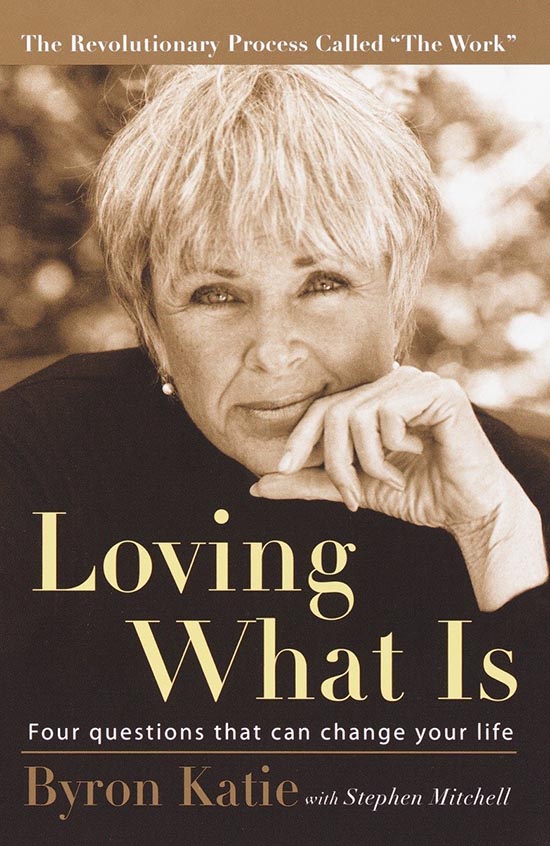
Loving What Is (2002) by Byron Katie shows that is an alternative. It explains and guides how one can overcome stress and conquer depression. It describes a practice called ‘The Work” – a simple-step method that helps in addressing, analysing, tackling, and dealing with issues related to depression and shows the way to lead a healthy and fulfilled life.
Putting Thoughts Into Perspective
One has to understand the source of stress and depression. More often than not, the source of these lies in one’s thoughts and thus, changing the way one thinks is key.
Let us consider a hypothetical situation. A person in a happy marriage starts thinking that his partner doesn’t love him anymore and that starts stressing him out. He tries to find ways to make his partner love him again. However, not seeing any change in his partner’s behaviour towards him, the person gets more stressed.
In this situation, it is the person’s interpretation of the events, and his assumption that his partner doesn’t love him, which is the cause of his stress. He may have read his partner’s behaviour incorrectly. Hence even a small act of his partner forgetting to kiss him goodbye at the door can seem magnified, stressing his interpretation and assumption.
Let us see how one can use the practice of ‘The Work’ in this scenario.
The first step is to write down the thoughts that cause stress. For example – ‘My partner doesn’t love me anymore.
Next, the person asks an important question – ‘Is this true?’ The person should revaluate his partner’s actions to understand if he isn’t being too rash in his judgement with the next question – ‘Am I absolutely sure?’
The person should then, put his partner’s actions into perspective and see if there are any other interpretations of her behaviour.
Then he should ask – ‘How am I reacting to this thought?’ Anxiety can prolong stress, causing one to get more paranoid with the thought.
Finally, the person should ask – ‘Who would I be without this thought’ More often than not the answer to this question is ‘a happier person’.
Penning down thoughts and putting them in perspective gives one a deeper understanding of their negative thoughts.
Loving What Is By Byron Katie
The Turnaround
Once thoughts are penned down and put into perspective, the next step is the ‘Turnaround’.
This step in ‘The Work’ focuses on turning thoughts around to understand one’s own situation, feelings, and discovering deeper truths about oneself.
In the earlier example, the person should approach the thoughts and feelings with another angle of perception. Maybe his partner really loves him and that he is the one who has got it all wrong.
Then the person should apply the aforementioned 4 questions to this thought and see the answers. This step will help the person gain a new perspective on his stress-causing problem.
In this manner, the person should consider all angles and possibilities and apply the questions to them. The insights gained in this question and answer session will help one discover the actual reasons behind the insecurity and the cause of stress.
It is however essential to remember that the practice of the ‘The Work’ only presents one with different options and possibilities. One has to follow the option that feels the truest.
What Can Be Changed
Considering the fact that the practice gives one options, it is vital that one understands which situations are in their control and which cant be changed at all.
For example, stressing over the fact that rains have delayed one from getting to work on time is futile. It is a reality that is beyond one control. The idea is to find acceptance of this fact.
Real-world problems like poverty, war, hunger, etc., are always out of the control of one single individual. While the anger and frustration one feels over these can be motivating, they can also drive one into the wall as easily.
Hence, one has to seek out the little things in life that one can change. Knowing that one can make a difference – even a small one – can be a very empowering feeling. Practising this overtime makes taking small, yet important actions easier and more natural. Finding satisfaction in being able to do or change something – no matter how small – is key.
Applying The Practice
This simple-step method can be applied to all aspects of life, whether it is relationships, career decisions or even managing finance.
For example, Bill is stressed due to his business. He feels that his partner isn’t competent enough to manage the work, especially work related to accounts. His feelings are creating tension between the two partners. Furthermore, he is getting more stressed due to them.
If Bill implements ‘The Work’ to his business situation, he could get down to the root cause of his stress. Turning his thoughts around could help him realize that while his partner is weak in some areas, he is a pro at others. Hence, even with his lack of skills in accounting, he could be an indispensable source.
Additionally, by turning his thoughts around, Bill would not only be able to reduce his stress, but he himself could also perform better at work.
Often the thoughts that trouble us might not seem as obvious, but upon analysing them, a simple and effective solution could reveal that is the thoughts that are the root cause of stress.
One must look for happiness, and ‘The Work’ is a great tool to find it.
Conclusion
Stress and depression can really throw one off balance. Negative emotions and thoughts can be put into perspective by applying the simple-step practice of ‘The Work’, and gain a deeper understanding of these. Mastering one’s thoughts can help in understanding how one interprets their own thoughts and can show the way to leading a happier, stress-free life.
This interview is part of a new series where leaders in influential positions share their leadership journey – how they got to where they are today. I believe we all have a lot to learn from our stories of where we started, our successes and struggles, and important lessons learned on the way.
This interview is with Penelope. She is the Founder & Director of Stimulus, a company that is committed to stimulating change and growth in individuals and organisations. She is passionate about empowering women, especially women from Black & Ethnic Minority backgrounds.
She has 17 years of experience in the Private and Social sectors working with organisations like Accenture IT Infrastructure Outsourcing, ADT Fire & Security UK&I and Lancashire Women. She is Chair of the Board of Trustees at Humraaz, a Clore Social Leadership fellow, an Animas accredited Transformational Coach and a member of The Chartered Quality Institute. You can find Penelope on LinkedIn here.
Share your backstory and how you got where you are today. Can you share one or two events (positive or negative) in life that shaped who you are as a person and leader?
I come from a working-class Anglo Indian family who lived paycheck to paycheck. I had a chaotic childhood with limited choices. Being a woman, living in India with no adult male in the family was challenging and restrictive. Despite our circumstances, my mother always had what felt like fanciful aspirations for me. I think this actually helped me dream a little bit bigger.
I experienced various kinds of abuse, which I learnt to cope with and compartmentalise from a young age. Surviving all of that made me believe that I had a greater destiny and purpose to fulfil. Why else would I have survived? This was crucial in helping me push past obstacles and to keep moving forward.
Penelope.
I started off training as a nurse, then worked in a call centre and then moved to an IT company, developed a passion and a career in quality management.
In my late 20s, I was certified in Six Sigma Green Belt, ISO 20k Internal Auditor and ITIL v2. Prior to this I only had a nursing diploma. These certifications opened doors for me and I worked hard at being a specialist in my area of work. Soon I was designing the quality function and managing a team that later grew to the Asia Pacific region.
The biggest lesson I learnt was that through education and hard work one can positively change one’s circumstances. It meant I was financially independent and that changed my life manifold. More importantly, I was respected and valued for the knowledge and experience I had.
What do you like about the work you do? What do you find most challenging?
I love that I am able to use my experiences, my journey to inspire other ordinary women like me. I am a nobody from nowhere, that’s how I always describe myself. I have no connections, no contacts, no family money, no paths paved for me to follow. In fact, my ancestors were kept anonymous i.e. no public records because of the stigma of being mixed race.
When I work with people, especially everyday women like me, irrespective of their circumstances I see in them the future person they want to be and I want to help them get there.
What are you passionate about? (or what dreams keep you up at night?)
It’s taken me a lot of trial and error to get to where I am. While I cannot change people’s destiny, I am passionate about being the person that stimulates their desire to achieve their dreams, to utilise the resources they already possess. Sometimes all they need is a champion in their corner so that they don’t have to face it alone.
I have a strong sense of fairness and cannot abide by anything that shifts power in favour of one person, one group to another. On occasion, this has been to the detriment of professional opportunities and relationships but I certainly sleep better knowing I’m being true to what I believe in.
How do you manage pressure and overwhelm?
I believe in designing and planning in detail, setting realistic timescales and expectations. I believe in working smart rather than being a slave to the 9-5. Working when I need to and giving myself permission to have planned and unplanned downtime by listening to what my mind and body is telling me.
Here’s what I know –
By sharing and delegating work, giving other team members the opportunity to try new work and to upskill helps share the workload while developing a team that is cross-skilled and collaborative.
I have learnt to not agree to deadlines imposed upon me, rather negotiate and arrive at a mutually agreeable timescale.
Having the right tools is key to managing your work.
When working on large and complex projects I chunk work using the Pomodoro technique, a time management system.
Communicating with all stakeholders is crucial.
Doing a simple grounding exercise at my desk helps calm my mind, as does a quick walk.
It’s important to remain pragmatic when approaching work, when it becomes emotive it will become overwhelming.
Developing a growth mindset has changed how I approach everything. For there is no failure, only learning opportunities.
None of this is easy, but I know this – the more you practice it, the easier it gets.
Who has had the most influence on your leadership? Share a story to illustrate your point.
My coach has had the most influence on my leadership. As I said early I believed I was destined for greater things, but I have no idea about the how, what, when, etc.
As part of a leadership programme I was on, I was offered 4 coaching sessions. The first time I spoke to my coach, it felt like the conversation I was waiting to have my whole life. She just accepted me for who I was. When she asked me what I was committed to and why. I was able to articulate what I’ve been thinking about for so long into a coherent commitment statement.
During that first conversation, I was excited, shy, embarrassed, passionate and hopeful. Every time I sounded doubtful and said, “No one will listen to me”, “I am a nobody”, “I have nothing to contribute” and all those limiting beliefs that surfaced, she asked me for the evidence that made these statements true. I did not have any.
One of the quality principles is evidence-based decision making, while I applied it at work, I now needed to apply it to my life. That was a turning point in believing in myself. As a coach and trainer, when my clients express limiting beliefs, I ask them this simple question, “What’s the evidence?”.
What are your goals or aspirations for this year?
I am committed to running my residential retreat “Still I Rise” at least once a year. I want to continue developing my company Stimulus because I believe in what I have to offer and even more so that my success will continue to be of inspiration to women like me. And the women it inspires, I want to be able to support them on their journeys. There are very few relatable role models for women who come from nothing, who work hard in silence, who are constantly overcoming many barriers and have to fight for their dreams to see the light of day, should they dare to dream.
The phrase ‘a good argument’ seems like an oxymoron. In fact, all children are taught from a very young age that arguments are not good and that it is best to avoid disagreements.
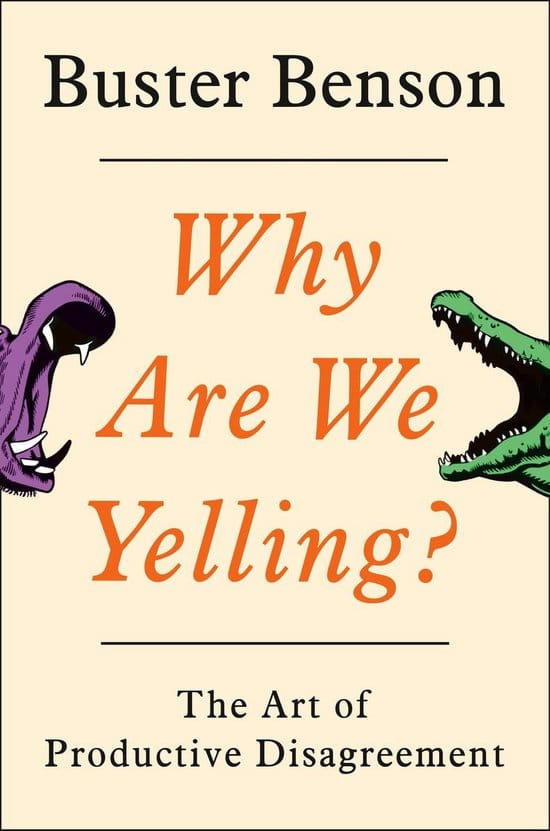
‘Why Are We Yelling?’ (2019) by Buster Benson provides a different view on arguments. Benson goes on to destigmatize the concept of arguing, stating that not all arguments are bad. He stresses the fact that arguments, only if unproductive, are detrimental, and that arguments can actually help improve personal relationships, broaden one’s outlook, and even help in performing better professionally. He encourages engaging in arguments as they can be crucial to opening up communication pathways and that they are a red flag indicating that something one cares deeply about is at stake.
He emphasises that arguments should be respectful and open. He also shows how being open to arguments and disagreements can bring out a positive change in people, making them not only less irritated with disagreements but also make them more perceptive to others perspectives.
Accepting Anxieties
In March 2019 the Internet lost its collective mind when it started bashing a Twitter user @alekkrautman for uploading a picture of a bagel sliced vertically rather than the traditional horizontal manner. Replies to the post reached a frenzy with people even stating, “Who told you this was okay?” and “First of all, how dare you”.
The question that arises is, what provoked an extreme response to such a simple matter? The correct way of slicing a bagel is a low-stake, light-hearted argument. However, it created heaps of anxiety among Twitter users.
One experiences anxiety when a valuable perspective is challenged and conflicts with a different viewpoint. Whether the stakes are low or high, anxiety is the basis of disagreements and is an unpleasant emotion. Hence it is humanly natural to experience angst, inciting dismissal and even downright attack.
Refusal of thoughtful engagement with matters that trigger anxiety can close the doors for any possible dialogue, growth, and even understanding, denying productive disagreement any opportunity to present itself.
Anxiety is individually unique. It is a complicated emotion that arises from a number of sources. For instance, two people disagreeing with each other could attach completely different anxieties to the same argument. Therefore, it is vital to categorize anxieties.
Anxieties of the head, which are related to rational thought and information.
Anxieties of the heart, which are related to emotions, and,
Anxieties of the hands, which are related to practicality and usefulness.
In a situation where parents of a 12-year-old, leaving for an adults-only party, are left in the lurch by their babysitter cancelling out last minute, one parent opines that its unsafe to leave the child alone at home, while the other argues that it is perfectly safe and legal to leave a 12-year-old alone at home. Here we can see that anxieties of the head and the heart are at odds, and the argument between the two can’t be resolved.
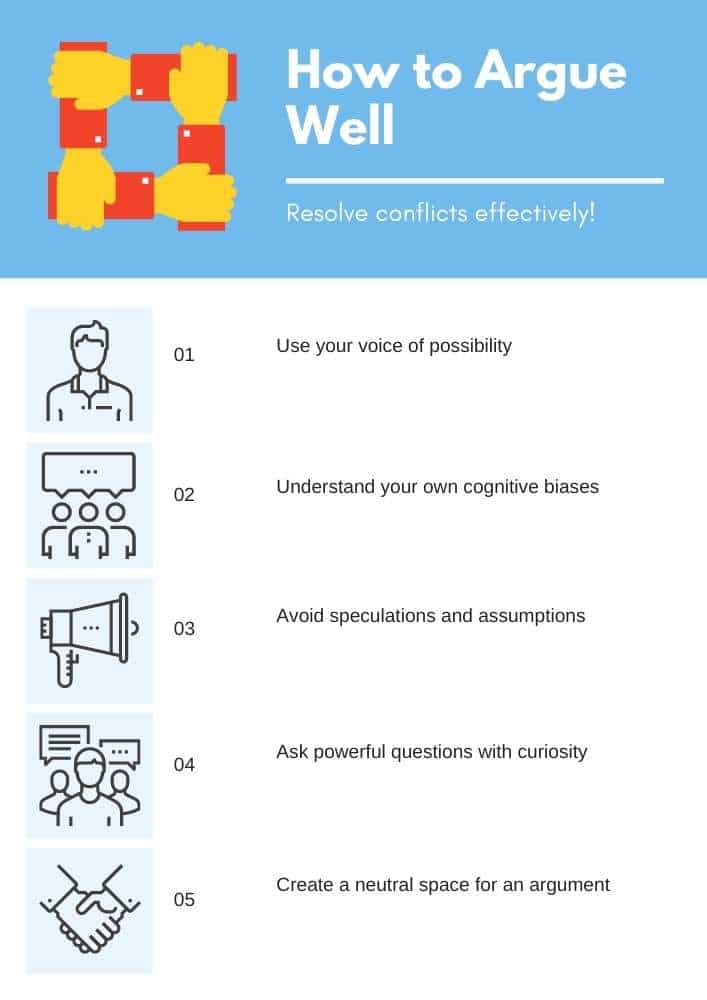
Hence with anxieties, it is better to productively disagree by creating awareness of one’s own anxieties, triggers, and understanding the source of an opponent’s anxieties by exercising empathy.
Why Are We Yelling?’ (2019) by Buster Benson
Hear Your Thoughts
Hot-button topics such as gun control, vaccinations, and climate change ruled the roost in 2019. Additionally, these topics seemed extremely polarized with a middle ground in short supply. One can place the blame on cognitive dissonance.
When one’s own perspective is contradicted by another belief or behaviour, it results in cognitive dissonance. The more gaps there are between 2 different perspectives or behaviours, the greater is the anxiety and cognitive dissonance. Thoughts and voices in one’s own head then try to assuage the anxiety felt. These voices can be categorized into 4 types.
Let’s consider the polarized debate surrounding vaccinations to understand these voices. Two people, for and against vaccinations, are at a headlock in an argument. While one opines that vaccinations should be made mandatory for public welfare, the other disagrees that parents should be given a choice to vaccinate or not. Their diametrically opposing views cause dissonance and thus anxiety.
Voice of power: The voice of power in both the opponents will want to shut down the argument completely and win the argument. The voice simply rejects the other opinion and doesn’t accept any other viewpoint.
Voice of reason: The voice of reason uses evidence and reasoning to win the argument. It even calls out the opponent to prove their point with proof, evidence, and reasoning. It has a ‘Bet you can’t prove and win it’ attitude.
Voice of avoidance: This voice simply chooses to stay away from the argument and steer clear from any discussion that challenges belief.
Voice of possibility: Here, the voice is open to dialogue. It views disagreements as an opportunity to understand a different perspective.
Out of the four types, the voice of possibility is ideally the best way out. It is open to understanding a different view and has the potential to make space for it. Nevertheless, it doesn’t mean that while using the voice of possibility, one has to accept another viewpoint or change one’s stance. It is simply more receptive to another perspective.
One should thus, listen, know, and understand the voices in one’s own head.
Facing Biases
Let’s understand how biases work. In a choice between a chocolate gelato and a pistachio flavoured one, a person who opts for the chocolate flavour has done so simply because they do not like the flavour of pistachio. Never having liked the pistachio flavour, the bias against the flavour helped in making a useful decision. Thus not all biases are bad. They help in sorting the enormous amounts of information directed at us.
However, biases can have negative consequences as well.
Daniel Kahneman used the term availability heuristic to describe the bias that is manifested as a mental shortcut. This bias dictates that when faced with a decision, a person only considers those options that first come to mind. Availability heuristics are individually unique and hence, any solution or strategy that seems easy for one could be difficult, or even downright dangerous to another. The problem arises when two availability heuristics clash.
In-group favouritism is another negative outcome of bias. Those who are considered ‘part of our group’ are often given the benefit of doubt. Such biases can become extremely toxic, especially in high-stake disagreements such as politically inclined arguments. People tend to then dismiss the views of those outside the group.
Such biases, while can result in saving time and energy in the right context, can make one’s worldview limited, and restrict one from engaging in productive disagreements.
Unfortunately, cognitive biases do not have a switch-on-off button. One has to proactively and honestly acknowledge one’s own bias. Moreover, one has to openly admit that their own biases can limit the objective viewing of others opinions. One has to truly be self-aware that their own biases aren’t getting the better of them.
Avoid Speculations
How a person understands one’s own perspective during an argument or a disagreement and inhabits it can be one’s strong point. On the other hand, making speculations about an opponent’s perspective can be a weakness. It is human nature to speculate, oversimplify, or even demonize an opponent’s view while trying to comprehend their perspective.
Let’s consider a hypothetical situation. Two friends, Sofia and Bob, have had an argument over the 2016 elections. While it was one of the most closely won and contentious elections of all time, many chose not to vote. Sofia, when she found that her friend Bob was one of those who chose not to vote, was quite angry.
Why? Sofia’s reasons for voting for her candidate were very clear. She believed passionately in the candidate and she presumed that knew exactly why Bob hadn’t voted. She thought he was unwilling, apathetic, and selfish towards his democratic duty to the country.
A few days later, Sofia – knowing well that she always respected Bob’s intelligence – started questioning her own perception of Bob’s unwillingness to vote. Wanting to know the reason behind his actions, she approached him.
Bob genuinely didn’t feel that any of the candidates were fit to do justice to the role. Hence, with a clear conscience, he chose to exercise his right to refrain from voting, considering his non-vote a protest.
Here, Sofia used her voice of possibility to reach out to Bob and understood his perspective, even though she didn’t agree with Bob’s decision. She understood the complexity behind Bob’s actions, and despite the argument, their friendship is still intact.
This example shows that speaking up for oneself and giving others a fair chance to do the same helps in understanding the reasoning behind one’s perspectives and actions – even when one agrees to disagree.
Questions Are Pathways
If we take the game of Battleship as an example, both players cannot see their opponent’s grid. By asking a series of questions, one has to locate the ships on the opponent’s grid and sink them.
In a similar manner, questions work as essential toolkits or pathways to having productive disagreements and solving them. Questions help in revealing anxieties, opening up perspectives, broadening understanding, inciting empathy, and at times, even helping to find solutions.
However, people tend to use questions poorly. People tend to ask closed questions during disagreements, which are aimed and calibrated at shutting down discussion and dialogue. Other times, people tend to ask questions that emphasise and validate their own perspectives. Essentially, during disagreements, people use the same strategy as the game of Battleship, aiming to sink the discussion completely and win.
People can use the questioning strategy they use in the game Twenty Questions instead. The aim of the game is to probe and ask powerful questions that will help reveal the thing the opponent is thinking about. The game works best when questions are open-ended, imaginative, and unexpected. It discourages participants to ask questions that have one single answer in mind.
Battleship questions, as opposed to the Twenty Questions strategy, hold an iron grip on the dialogue rather than open up space for positive disagreeing.
Consider two friends, one a committed sceptic and the other a believer of ghosts. In an ensuing conversation, the sceptic can ask, ‘What did you experience to believe in ghosts?’ rather than, ‘What proof do you have of the existence of ghosts?’ the second question, rather than ‘sinking the ship’, aims at illuminating the perspective of the believer.
A disagreement with a space to understand others perspectives can even foster closeness between friends. Such light-heartedness can be given to high-stake conversations such as political ones too. The key is to only ask the right questions.
How To Argue Well?
Choosing A Strong debate Partner
In debates, a strategy called nutpicking works wonders. The idea is to pick the opponent with the nuttiest, silliest arguments and then counter-argue that one by one. However, the strategy thwarts interpersonal communication, personal growth and one loses the opportunity to have a productive disagreement.
A productive disagreement needs another tactic. Choosing the wisest and most credible opponent and engaging with them in a challenging debate, actually proves to be a challenge in itself, resulting in a different, unexpected perspective of one’s own argument. On the other hand, challenges to one’s own argument could also lead to strengthening it and broadening one’s own horizons.
Such a level of the debate can also alert one to blind spots and loopholes in one’s own reasoning. A famous story by W.W. Jacobs, called ‘The Monkey’s Paw’, is a great example of why one has to guard against loopholes in one’s own logic.
In the story, a couple is given a magical monkey’s paw. They are told that the paw will grant them any wish, except for one catch. The paw will look for loopholes in the wish and grant the wish in a way different than the intention of the wisher.
The couple, ignoring the disclaimer, decided to try the magic of the paw. They wished for money enough to pay off all their debts. The very next day, their son gets killed in a workplace accident. The compensation they receive is exactly the amount that they require to pay off all debts!
In a debate, one has to seek their ‘monkey’s paw’ – an opponent so skilled that their own loopholes and flaws are highlighted. A debate is a truly challenging one, only when the opponent proves to be a worthy sparring partner!
Having A Neutral Environment
The surrounding environments of an argument are as vital as its content. Spaces are very important factors in influencing disagreements. If we look at a classroom setup, we find that debates happen face-to-face. Additionally, there are rules that students need to abide by and adhere to, and a teacher present to adjudicate.
On the other hand on social media, the consequences of the same topic discussed in a classroom set-up can be different. In such a setting, there is no authority to adjudicate or monitor responses. Social media is a more democratic space, yet more anarchic at the same time. Context can largely influence an argument.
Irrespective of location (classroom or social media) the best space for any arguments should be neutral.
Whether physical or mental, the space should allow for different perspectives and ideas.
Comfort in sharing opinions and in giving feedback is essential.
Additionally, there should be a culture of open discussion that allows acknowledgement of one’s biases and anxieties.
Controversial opinion or not, no participant should be removed from the group or forced to leave the space.
Joining and leaving should be of free will, and without explanations.
The space should be flexible, having a capacity of evolving like the participants.
For example, in a physical space, flexibility would mean that the participants could arrange and move furniture so as to make the space more agreeable for a debate.
A digital manifestation of a neutral space would include allowing participants to express themselves – by using emojis or developing an ‘internet-speak
The space should, finally, be adapting to fit the needs of participants.
A neutral space always harbours productive disagreements; hence creating a neutral space becomes essential.
Ignoring Doesn’t Help
Engaging in productive disagreements is easiest for benign issues, such as choosing a restaurant. It’s less easy, yet most productive for critical issues such as politics. However, ensuring a productive dialogue for hot-button topics such as gun control is most difficult. This is because, with ideas that incite extreme feelings or seem dangerous or repellent, it is extremely difficult to engage productively.
The first reaction to a seemingly abhorrent idea is to shut it down with a voice of avoidance. It is natural to not want to get involved in any way and feel it irresponsible to allow even a minute of existence to such ideas.
The truth of the matter is, that feeling this way or even ignoring such ideas doesn’t make them disappear. Unfortunately, shutting down any dialogue on radical and extreme issues only radicalizes them more.
In fact, when it comes to such hot-button dialogues, the best course of action is to accept the presence of dangerous ideas without endorsing them. One has to engage and consider the offending idea with all three categories the head, the heart, and the hands. In doing so, one can understand the logic and rationale that underpins it, emotionally get to the source of the anxiety, and understand how the idea can be useful, perhaps to strengthen one’s arguments against it.
Understanding the idea with the head will help in understanding how the opponent is thinking. Understanding the idea with the heart will help in asking open-ended questions giving an insight into the emotional core of the idea. Understanding the idea with the hands will help in clarifying its utility, allowing demystifying of the appeal of the idea to the opponent.
Conclusion
Unproductive disagreements do pose a clear threat to humanity, especially with hot-button topics. Unable to reach a conclusion on such issues could be catastrophic. Understanding productive disagreement is vital to healthy communication, connecting with others and clearly visualising a positive goal for ending arguments.
Hence, it is the need of the hour to have people who know how to argue well, argue productively, and productively disagree, where everyone wins!
Welcome to the Deploy Yourself Newsletter. Every two weeks I share what impactful leadership looks like to show your own power. I also share the most insightful lessons and stories I encountered in the last two weeks. You can also read this issue online.
Hey,
My Story – How losing my rock led me to become a rock for others?
I am sharing something very personal to me today. It has been 9 years since my mother passed away. I am still making sense of how every day without her has shaped me and continue to shape me.
I was 29 when my mother died. I am shaking while I type this because this is very vulnerable for me. It’s not that we did not have enough time together. It’s more that she never got to meet my wife and son. She never got to play with her grandson – one of the most joyful parts of life.
My mother was the center of my universe. In the last 9 years, there have been many instances when I have melted down thinking about her. There have been nights when I slept with wet eyes. Her whole life (at least the part I remember) was about her children. She shaped who I am and how I think. She was my rock.
My mother was deeply passionate about everything she did. The best word to describe her is the Hindi word “Junoon“. She had a “junoon” (passion bordering on obsession) about things. She would laugh and have loads of fun. At the same time, she would cry, get angry, and become sad at times. She was always there in the moment – fully alive, fully feeling her emotions, and fully expressing herself.
I would have her back in a second if I could, but losing her gave me a perspective on life that would not have been possible otherwise. She is still teaching me every day as I reflect back on what her passing away means for me and my future.
I have a unique appreciation of what I have because I already lost everything when my mother died. What else do I have to lose? This perspective makes it easy for me to take bold risks and see life as it is, not as I hope it should be.
Today I am living a life that I never imagined possible. I have travelled and photographed more than I ever hoped for. I have my wife and my son and I am doing each day what I want to do. I spend my time reading, writing, and in conversations with leaders who inspire me with their bold visions. Now, I am their rock. It took me a while to realise this, but I now know that my purpose is to be a rock to those who are creating a future I want to live in. That is my mother’s legacy.
I often say that I am ready to die. Realising that there is nothing more I need fills me up with a peaceful joy rather than sadness. It allows me to dream big for the future but not be attached to it. It allows me to spend each moment with the “junoon” (passion) of my mother without getting overwhelmed and disappointed with an unexpected outcome.
Losing my mother was a pain I can not describe, but I am thankful for what I am learning each day from it. It taught me not to take life for granted, and the importance of enjoying every day and each moment.
I wish my mother could see me now. And perhaps she can. I know how proud she was of me. And will continue to be. I will keep my mother’s memory alive by being a rock to those around me like she was for me.
What is your story? As I work with and interview leaders from all over the world, I realise that though our stories shape and influence us, they do not define us. They give us meaning and purpose, and what we do with that purpose is totally up to us. What events or people have shaped you to be the person that you are?
Articles and Stories Which Have Fascinated Me
One
Lessons from my 7 favourite leadership books
Reading a book is like having a conversation with the author. I have spent the last 10 years reading hundreds of autobiographies and other leadership books from people across industries and continents. Below are 7 of my favourites (in no particular order) and my lessons from them.
This is for you if you want to remember things well and improve your memory. The brain isn’t good at storing things but generating ideas. It also depends on what sort of things, but we tend to forget them anyway. If something is unique or interesting, it’s simpler to remember, right?
It’s simple to remember spatial information. You know where the nearest shop is and where to find the section with bread. Or, where the things are placed at home. Memory palaces is a system to connect information, to memorize and retain it better. It’s not exactly a particular place, because one may have multiple palaces. It’s a private space in your head where you remember where did you “put” some information.
While the method is prominent to memorize almost anything, it doesn’t help you understand the data. You won’t learn by only memorizing. What you do is having raw information. When you retrieve it, you can then explore it better. So, one may store ideas to retrieve them later for further “investigation”.
What do you need to create the first palace:
A place to store objects. A road, street, room, other familiar places.
An association with real-world information you want to remember. It may be absurd, but the connection is more important.
A connection between associations. These should be unique and funny, to better memorize a story.
The Benefits of Silence for a productive and meaningful life
There was an old man whose most beloved possession was a watch left to him by his late wife. He treasured the timepiece and had it on his person wherever he went.
One day, in anticipation of his grandchildren arriving for a visit, he was cleaning out the spare room when he misplaced his watch. His grandchildren arrived to find him distraught and offered to help search the room.
With four children and two adults combing the room, it seemed ever more cluttered and crowded than before, and the watch was still not found. As the others left the room, shaking their heads, the youngest child remained and simply sat on a chair and waited.
A few moments passed and he walked out of the room with the watch in his hand! Overjoyed, his grandfather asked how he’d found it. The boy replied, “I sat in silence and listened for the tick-tock to lead me to it.”
That’s it for now. If you have any questions or feedback, or just want to introduce yourself, hit reply. I read and respond to every reply. All the best,
This interview is part of a new series where leaders in influential positions share their leadership journey – how they got to where they are today. I believe we all have a lot to learn from our stories of where we started, our successes and struggles, and important lessons learned on the way.
This interview is with Erno Hannink. He helps entrepreneurs to accomplish their goals on time. He is a business coach, the independent external sparring and accountability partner for innovation in your company. He is a referee with KNVB, runs on plants, and says he is a stoic. He is also a podcast host of the Erno Hannink Show and The Entrepreneurs Bookcast. You can find Erno on LinkedIn here.
Share your backstory and how you got where you are today. Can you share one or two events (positive or negative) in life that shaped who you are as a person and leader?
How did I get to where I am today? At the age of 53, I have just gotten a clear picture of what the meaning of my life is. Maybe I am just at the beginning of my life, we will see. It is easy to look back and find the red thread in your life, but making long-term decisions that will have a big impact on your future is difficult. Sometimes this turned out a lot better than I expected and sometimes a lot worse.
A few moments in my life that I am grateful for today are my exec-MBA study, spending time with my children, the trip to Las Vegas, and starting a podcast.
Erno Hannink
During the executive MBA, I have learned to be curious, research, and share my findings. I still use this today in my blog, in the coaching, and for my podcast.
One of the activities with my kids when they were younger was being an assistant referee at their soccer matches. Today this means that I am a referee on Sunday for the KNVB, which keeps me fit and gives me the confidence to speak up, I go watch games of my daughter and visit games of BVB with my son.
The trip to CES in Las Vegas was a dream that I had for a long time. A project in 2008/2009 gave me the opportunity to do this. It resulted in meeting friends that I knew from social media. The trip was also the start of co-organizing the Social Media Club in the Netherlands and the first Dutch WordCamp. It also was the spark for my first published book and many more to follow.
Starting my podcast in 2015 was out of curiosity and it resulted in more than 300 conversations with entrepreneurs. Through the interviews, I learned to listen and ask better questions. Today I see this as an important part of the foundation of my business coaching.
What do you like about the work you do? What do you find most challenging?
The coaching of entrepreneurs is just great. Learning what they want to accomplish, finding the goals and tactics to get better results. Using what I have learned over the years to sharpen the ideas of the entrepreneur and ask tough questions. Being a sparring partner and having great conversations is what I like to do. Most challenging for me in this work is attracting more good entrepreneurs that want coaching.
What are you passionate about? (or what dreams keep you up at night?)
Social and ecological inequality is what keeps me up at night. Why do we ruin the planet just to make cheaper products and strive for more profit? I don’t understand why we underpay women and minorities all over the world and let other people work in circumstances that we would not do, just for a cheaper product so we can buy more. In the Western world, we already have so much.
How do you manage pressure and overwhelm?
To manage pressure and overwhelm I use a number of stoic tactics on a daily basis.
Journal
Write down 10 things that I am grateful for.
Understand that I can only control how I respond to things.
Improve my wisdom, courage, justice, and temperance by 1% every day.
My day starts with writing down a list of 3 goals that I want to accomplish today. When I work on one of the goals I focus just on that goal.
No notifications from apps on my phone, tablet, or computer. My phone is most of the time set to silent.
I don’t read newspapers, listen, or watch the news.
Who has had the most influence on your leadership? Share a story to illustrate your point.
Pieter van Osch had the most influence on my leadership. We are good friends, and we were in a study program in 2010 and a mastermind for 10 years together, we visited events together, he was my daily buddy for a few years, we take long walks every year and brainstorm. Today we are working together to bring the Rhineland way of working back to Dutch companies. He is a great trainer that doesn’t want to coach. I am a good business coach that doesn’t want to train. I have learned a lot from Pieter and love working with him.
What are your goals or aspirations for this year?
My goal for the coming year is to follow the process, like last year. Get 7-8 hours of sleep, get up early, read at least one page in a book, write and publish an article, run four times per week, interview entrepreneurs for my weekly podcast, publish a newsletter each month, publish a pocketbook each quarter, and coach entrepreneurs. For 2022 I have one extra goal, publish a book on impact decision making for entrepreneurs.
I do all this in order to increase awareness of social and ecological inequality and reduce it together with entrepreneurs.
The world functions on algorithms. Right from the computer and the smartphone in our hands, to the decisions we make, and while even finding a life partner, we use the power of algorithms to make like simpler, easier and much, much better.
Algorithms To Live By (2016) by Brian Christian and Tom Griffiths shows how we can use different algorithms in life and how these algorithms can be put to practical use in our daily lives.
Problem Solving
We already know that computers run on algorithms. Every output or problem it solves is due to an algorithm that is fed into it.
The term ‘algorithm’ actually dates back to the 9th century, when the Persian mathematician Muhammad al-Khwarizmi first coined it. However, they were used only about 4000 years ago during the Sumerian civilization. To define an algorithm, it is a ‘finite series of steps that help solve a problem’.
Thus, everything around us can be considered an algorithm. When we follow the instructions in a recipe or following the instructions of a board game– all can be considered as algorithms.
While jotting down a list of pros and cons to choosing a job or thinking systematically to make a decision, one uses intuitive algorithms. However, by nature, intuitive algorithms aren’t precise. For example, making a decision to start a new business venture is an algorithm, however, it is used in a time of uncertainty for comprehending the best outcome.
Hence though intuitive algorithms differ from mathematical algorithms, they serve the same purpose – to solve a problem. The criteria one puts in place while choosing an apartment and the step-by-step actions one takes to meet them require processes akin to a computer to solve problems and arrive at solutions.
Algorithms To Live By (2016) by Brian Christian and Tom Griffiths
The Optimal-Stopping Algorithm
Let’s consider searching for an apartment. One often finds it tough to decide when to keep searching or when to stop. One’s judgement is often clouded by the first apartment one sees, perceiving it as the best option available. However, the second option could seem better in retrospection. The optimal stopping algorithm can solve such a conundrum.
Mathematically, the optimal stopping algorithm looks at the first 37 out of 100 options, without choosing any. The idea is to then establish a standard that emerges. For example, the standard could be that an apartment that has 3 rooms, placed on floors above the fifth, etc. Out of the 37, the first apartment that meets the criteria should be considered. While it doesn’t guarantee the best option, the optimal odds are much better than simply guessing. This rule of 37 can be applied to practically anything.
Math unfortunately doesn’t indicate when one should stop. In a simple coin flip of a triple or nothing strategy, the bet triples with each flip, or one risks losing all that they have won. Thus if one starts with $4, with odds of fifty-fifty, one can either win $12 or lose it all. Averaging it out, one can expect to end up with $6. In the next round with $12, one can hope to win $18 on average and so on.
Hence, mathematics doesn’t tell when to stop betting if we consider odds and averages. Sooner or later, one can stand to lose all ending the betting game. A purely mathematical algorithm thus doesn’t help in every situation.
Multi-Armed Bandit Problems And Upper Confidence Bound Algorithm
At a slot machine in a casino, while many choose to wait to hit the jackpot eventually, others choose to explore different options and use the information to their advantage.
However, in other situations such as investing or dating, one faces the dilemma of how long to keep losing till one hits jackpot. How does one arrive at a winning strategy then?
These are multi-armed bandit problems in math and they can have many different answers. At the casino slot machines, the easiest approach to improving odds is “stay-win, lose-shift.” This, however, won’t always be the best strategy. The strategy states that one should stick to one machine till one loses. However, a one-time loss cannot be the indicator of how one’s luck turns out.
The Upper Confidence Boundalgorithm is a better option in such cases.
Using this algorithm, one chooses the machine that provides the best-expected value of playing. One thus chooses the machine with the biggest jackpot based on information from the jackpot counter. Then, one keeps track of how much one wins, and whether the wins are gradually increasing or decreasing than expected. If the outcome is continually disappointing, then one should move to the second-biggest jackpot slot machine and so on.
This algorithm considers that a good machine can still result in a loss, thus increasing one’s chances of winning.
Adaptive clinical trials in the pharmaceutical industry are also an example of how multi-armed bandit problems can be solved. During drug testing for ailments, doctors keep evaluating subjects and make on-the-fly changes to the testing plans. If the drug doesn’t seem to work, they immediately focus on another drug that worked too. They keep testing, trying, and eliminating even before the trials are over or before results are in.
Sorting Using The Bubble Sort, The Insertion Sort And The Merge Sort
Everyone has been through the situation where they are unable to find a file or books once they clean the mess in their office shelves. Not only do these take up a lot of time and energy, but leave one exasperated at not finding things when they are most needed. Algorithms can be applied to mundane chores like sorting files and books too.
The least efficient algorithm, the Bubble Sort, involves organizing one pair of things, one time, again and again, till everything is sorted. For instance, while alphabetically sorting books in a library, one can start with going through the shelves starting with “A”.
If there are two books starting with ‘A’ already in place, one puts them in alphabetical order. So ‘A Guide To Eating Right’ is placed before ‘Alice In Wonderland’. Then one comb through the entire collection, gathering books starting with ‘A’, and places them alphabetically before, after, or in between these two books. The same procedure is then used for all other alphabets.
This method is, however, extremely time and energy-consuming. One can then choose to use the Insertion Sort. In this method, one simply takes out all the books and puts them back, one by one, in the alphabetically right order as compared to the ones that have already been put in.
The third method, the Merge Sort algorithm, involves dividing all books into piles, sorting the piles alphabetically, and then putting them alphabetically in place by merging all the piles.
Data Organization
Computers sort and file data in a hard drive, or in a solid-state drive (SSD). Hard drives can store more data, whereas SSD’s are quicker and efficient in getting the data one requires. Today, there are devices that combine the advantages of both, thus helping in faster data retrieval and making more space to create archives. However, the most frequently used and most important data is stored in the upper layer of memory called the cache.
Computers are able to choose what data gets stored in the cache. It uses the algorithm Last Recently Used (LRU) that stores the information last used at the top of the cache. The LRU is an easy way for computers to guess which data will be needed most in the future.
This method thankfully can be used for letters, bills and other important papers too, that one needs to keep handy. This method is perfect for those who choose to keep clutter on their desk. The most important papers are already on the top of the desk!
The human brain works in a similar fashion too, when one has a tough time remembering unused information. Thus, for a presentation, or an exam, reading up notes right before one sleeps can make the information easily accessible.
Design algorithms for your life
Scheduling With Algorithms
Scheduling and organising one’s time is an effective strategy for success. Meeting, and remembering to meet deadlines on time can be a challenge. Algorithms can be used for this purpose as well.
The Earliest Due Date algorithm helps when one is juggling multiple tasks. It involves starting with the task that has the closest deadline.
Moore’s Algorithm is used when time is running out and one knows that all tasks cannot be completed in time. Moore’s algorithm involves skipping the tasks that will take the most time to complete, thereby, giving one more time to complete other tasks. With this method, overall, more tasks can be completed.
However, with these algorithms, one should be wary of priority inversion, where minor, unimportant tasks take up all the time, leaving one with no time for completing more important tasks. Additionally, one must remember that there are no quick-and-easy or sure-shot methods to solving the majority of the time-management, scheduling problems.
Moreover, one has to be careful that the actions of scheduling or organizing tasks themselves can take up a lot of one’s time.
Thankfully, there is a simple method one can use to get as much as possible done in the shortest amount of time. This method involves a lot of focus and ignoring any distractions such as texts or emails. The act of switching between work and mails or messages takes up time and energy, requiring the brain to start the thinking process afresh. Focus always helps finish work faster, without worrying about where to start.
Algorithms Can Help Predict Future Outcomes
While no one can accurately predict the future, algorithms can be used to predict probable outcomes. Known as forecasting, this method has its roots in 18th century England when Reverend Thomas Bayes found a basic way to predict the probability of future events such as drawing a winning lottery based on certain prior events.
For example, in lottery scratch tickets, one wants to understand what proportion of the tickets in circulation can offer a win for the 3 tickets purchased. According to the Reverend, one has to start by hypothesizing about the prevalence of winning tickets in circulation and using this as an assumption, one can calculate the probability of the results actually seen in the three tickets. Thus if all 3 tickets win, one can assume that all tickets in circulation offer a win – that is a 100% win all the time. If only half of the tickets win then one only has a 12.5% chance of winning.
The more information one gathers, the more precise the hypothesis is.
Over the years, math has given the world precise tools to make predictions. Those predictions then depend on the distribution pattern of a phenomenon. If we look at the bell curve that is modelled on normal distribution, it can be applied to many phenomena. For example, the bell curve assumes that in an age demographic, there are few very young or very old people, whereas most middle-aged people fall in the middle of the bell. Hence, a person will definitely not go on a blind date with people falling on either end of the bell curve’s spectrum.
Some other situations follow the power-law distribution. In this algorithm of averaging, one reaches the median average by having most observations fall below it, whereas the most enormous ones fall above. For instance, considering wealth distribution, there are more poor people in the world, whereas the lion’s share of the world’s wealth is in the hands of a select few!
Managing Data Overload And Exchanging Messages
Let’s consider a scenario where two generals, each standing atop two adjacent hills separated by a valley, plan to attack a city fortified by the valley. They need to communicate with each other about the exact time of their intended, coordinated attacks. If they send messengers across the valley, the messengers will get caught exposing their plan. How can they hence, communicate their plans to each other?
Computer scientists have been trying to solve such conundrums and find ways to communicate messages using algorithms. One such algorithm, the retransmitted till breakdown method, works by sending in messenger after messenger, until the message goes across, a method similar to when a person repeatedly calls or messages a friend until they get a reply.
Today, one faces different problems while getting messages across. For example, an error due to an overloaded server could stop messages from reaching the intended recipient.
The exponential backoff method can then prove to be helpful. If an overloaded server is blocking messages or emails, this method advises waiting, for say 2 minutes, instead of hitting the refresh button over and over again. If the same error occurs, double the waiting time to four minutes, and keep doubling the waiting time till the message goes through.
Ideally speaking, everyone should use the exponential backoff method. However, it is seen that the additive Increase, Multiplicative Decrease (AIMD) method is useful too. It helps one understand the maximum load of data a server can handle. The algorithm first sends one package of data, and then doubles the amount subsequently, till the point of overload.
It then pinpoints the limit just before the overload and after that, it sends the highest amount of data, increasing the load by just a tiny amount till the limit is reached.
Algorithms Help Guiding Decisions
A scenario in game theory best explains how algorithms can help predict what people will do in certain scenarios.
Let’s consider 2 bank robbers who have looted a bank, are called in for questioning and are placed in separate rooms. Both are aware that the cops don’t have enough evidence against them. If both keep shut, all the cops can do is give both a 1-year prison sentence on a lesser charge.
However, the police offer both the prisoners a deal to testify against the other. If the first robber testifies and the other remains quiet, the first robber goes free while the other gets a 10-year sentence. If both testify against each other, both get a 5-year sentence. How would 2 rational individuals respond to such a situation?
Rationally speaking, both would testify against each other, with the hope that the other remains silent. However, both testifying against each other becomes an inevitability. The maximum reward – the possibility of escaping a sentence – is what lures both the robbers and both testify against the other. While a five-year sentence is better than a ten-year sentence, it is still the cops who have a win-win situation.
Another algorithm called the mechanism design works to force a behaviour from people rather than give them options at all.
For instance, the company Evernote faced the problem of employees not availing of their vacation time. Being aware that well-rested employees are more productive than overworked ones, the company even offered a $1000 bonus to those who used their vacation time. However, that plan didn’t work either.
The mechanism design algorithm, if used in this case, simply takes away the option of using the vacation or not. It makes taking time off mandatory!
Limitations Of Algorithms
Algorithms can be used in many fields and they have proved to work well. However, it is imperative to know and understand that algorithms too have limitations.
Not all algorithms work all the time. for example, while understanding the cause of obesity, one has to consider a number of factors including, genetics, unhealthy lifestyles, lack of exercise, etc. Simply focusing on a diet won’t work. Hence one would need a complex algorithm than a simple one.
The complexity of an algorithm can be a limitation too. Applying algorithms to real-world problems can prove to be difficult. One has to factor in uncertainties and errors in data. One would ideally want to start with a sample data set, build an algorithm to make predictions, and even add variables and errors to make it perfect. This is called overfitting and can cause a problem when applying it to a different data sample.
Perfect algorithms don’t exist. The travelling salesman problem poses the question of how to find a single route between multiple points without requiring to go to any location more than once. If the designated area spans an entire country, the algorithm becomes complex, and there is no perfect solution. Hence the only choice is, relax one standard and settle with ‘good enough’ rather than ‘perfect’.
Conclusion
Algorithms aren’t limited to computers and mathematics. They can be used, and are used in day-to-day life. Humans are mostly unaware that they are applying an algorithm.
Algorithms help in problem-solving and contain a lot of wisdom that can help in making decisions. They can even help in predicting possible outcomes and help people enhance their general productivity.
As I shared briefly in last month’s newsletter, I will be interviewing leaders and sharing their leadership journeys in a mini-newsletter. As a subscriber to this (Deploy Yourself) newsletter, you will get the best-curated insights from these interviews in a mini-email like this one. I will send it in the gap week between two regular newsletters. You can also read this mini-issue online.
The Why
We all have a lot to learn from the stories of our leaders – of how they came to be where they are today. These are stories peers and friends don’t usually know, and my attempt is to give you an opportunity to learn from those who have already tasted success and made an impact.
Find out about the events from their lives that shaped them to be the person and leader they are. In the interview, they also share about the people who have influenced them the most in their leadership.
The Who(s)
Jay Richards – “I’m learning to rest and that I do not need to try and control everything!”
Jay Richards is the CEO and Co-Founder at Imagen Insights, which has build a community of 10,000 Gen Z from 57 countries. He shares his person story of always getting into trouble at school. Today he is providing young people with opportunities to shape their futures – that he finds so fulfilling.
He finds switching off the most challenging. He says he is learning to rest and that he does not need to try and control everything. He knows the importance of enjoying his evenings and weekends so he can stay healthy and at the top of his game. He also adds, “I keep my mind clear and healthy by regularly hitting the gym. I love Jiu-Jitsu as it gives me the headspace.”
Noah Miller is the Co-Founder & Chief Strategist at Rho Impact and he says about himself, “I consider myself a player-coach. Nothing gets me more fired up than joining a team of good people with even greater goals and stepping onto the field together. The world needs more teamwork. I am dedicated to making that happen.”
In the interview, he shares how he moved to Israel to start a social venture for improving Israeli and Palestinian relations. However, he found himself drafted into the Israel Defense Forces after the 2014 Gaza war. These two events had a significant impact on who he is today and the work he does.
He shares the one piece of leadership wisdom which he has not forgotten – “leadership isn’t about what you say and do. Leadership is about how you make people feel.” He shares more of his wisdom by saying, “one plays how they practice. I manage pressure bybeing prepared, confident in my team, and not sweating the small stuff (as most things in life are small).”
Each one of us is on a leadership journey. Our journeys might not look alike. They might resemble more of a roller-coaster ride than a race track, and that is what makes each one of us special and unique in our own ways. I am deeply touched when someone takes the time to share their story with me. The leaders I work with are also left inspired when we listen to each other’s leadership journeys.
If you think that your leadership journey is worth sharing and would be valuable to others, reach out and allow me the privilege to interview you. If you would like to recommend someone else who I should interview, feel free to write to me. You can send me a message on LinkedIn or send me an email at sumit@deployyourself.com.
That’s all for this week! If you have any questions, don’t hesitate. Just hit reply.
The workforce of any business or organization is its core. However, businesses and organisations are often uncaring and have nothing more than a ‘suggestion box’ to offer their employees. Rather than treating employees like mere ‘cogs in the machine’, caring for them like they are family can help companies reach the heights of success by helping employees reach their full potential and garner unparalleled loyalty of employees.
Everybody Matters (2015) by Bob Chapman and Raj Sisodia, chronicles Chapman’s search for the best leadership style and the quest for the best approach to business. It narrates how one businessman put his employees first, gave them room to innovate and sought business success.
Treating Employees Like Family
It is common to measure the success of a business by looking at the profits and the number of its sales. However, the true measure of a business’s success lies in the well being of its employees. Creating a work environment where employees are, first and foremost, happy, is essential.
Strong leadership, rather than stewardship, is the answer. It entails letting employees know that the company truly cares for their best interests. It requires more than just managerial skills. To make employees know that they are cared for, one has to actually go beyond merely acknowledging or recognizing productivity and take time out to tell them that their efforts are valued.
Leaders have to keep time aside for a one-on-one appreciation talk, perhaps as often as once a week. Such gratitude, especially when shown by leaders, instils a sense of security, fulfilment, and can even result in health benefits for the employees.
Such leadership is akin to good parenting, where a parent is constantly checking to ensure that all is well with their children. Questions such as – ‘Do you feel secure? Is your work meaningful for them? Do you feel fulfilled?’ can help.
Leaders who ask such questions themselves also find that they are actually responsible for the happiness of their employees. A workplace is after all like home, where security and safety are paramount.
Everybody Matters (2015) by Bob Chapman and Raj Sisodia
Creating Trust In The Management
Employees need to have faith and trust in the management. It is vital for their security and psychological safety. A motivational mission statement like a company charter is one way to do this. It clearly states out the values and goals of the company. However, a company charter that itself doesn’t make employees feel valued can leave them underappreciated and unhappy.
Leaders should reach out to their employees to create an impactful charter. As CEO of Barry Wehmiller, the manufacturing equipment supplier, co-author Bob Chapman clearly understood the importance of this. He sat down with his employees when he wrote the charter of his company ‘Guiding Principles of Leadership’. He included everyone’s input, thereby learning about their concerns as well as acknowledging their opinions.
Many employees had expressed their concern about a lack of trust between the management and the employees. He thus prominently advocated the creation of an environment of trust at the top of the charter.
Putting the words of the charter into action is the next important step. Chapman, therefore, worked towards backing his words. An employee was annoyed at the rule of set times for bathroom and coffee breaks. Chapman and his management, the very next day, started dismantling all rules and practices that were perceived as the management’s lack of trust in employees. He did away with time clocks and timed breaks. He showed employees that the management was listening.
This action helped forge trust between employees and the management.
Empower Employees To Make Their Own Decisions
Oppressive rules are the direct link to employee unhappiness. Top-down edicts lead to a lack of trust as well as stunt creativity, motivation for innovation and individuality.
Cultivating an environment of responsible freedom and designing the workplace in a manner that helps employees reach their full potential is vital. A goal-oriented approach called the ‘just enough’ method at Barry-Wehmiller gives employees a clear idea of what ‘winning’ is and what they should work to achieve.
‘Winning’ can be defined by a customer-oriented company, as scoring the best result on a customer satisfaction survey. Employees can then work towards achieving that goal. However, they should have the freedom to use their individual skills and talents. Moreover, the management should allow employees to use their own judgement to carry out tasks and achieve goals. This is empowerment.
At Barry-Wehmiller, a team of employees were allowed to choose a laser-cutting machine. What might have seemed like a simple decision was in fact one of their biggest purchase in the history of the department? It enabled garnering a sense of responsibility within employees to ensure that the machine was set up. Employees were willing to work even on weekends, learn and research about the machine. They were so thorough, that they knew more than the installation representative.
The empowering approach was even gathered praise by the Harvard Business School group that toured the company later on.
A Strong Cultural, Business Vision
A stagnating company is often the abode of unhappy employees. To change this, organizations should use visioning. Visioning entails visualising a path forward. It entails asking questions such as ‘Where is the company heading? And why is it heading there?’
The ‘why’ in the question pertains to the cultural vision of the company. It highlights the company’s higher purpose, reflecting on how the company plans to improve the lives of employees.
Design Group, the consulting company prioritized maintaining an inclusive work environment, over increasing the size of the company, as part of their cultural visioning.
While cultural visioning is one pillar, business visioning is the second pillar. A business vision answers the ‘where’ question and addresses how to achieve the goal set by the vision.
Design Group, over time, realised that the company still lacked momentum. They thus added a bold business vision of doubling the size of the company in a span of five years.
This ambitious business and inclusive cultural vision got the employees excited to be a part of a growing company with a bright future. It eventually led the company to achieve its business goal in not five but three years.
Celebrate Team Achievements
Leaders must understand that acknowledging hard work and achievements is a sure path to a happy employee. Additionally, when a team recognises and praises the effort of a colleague, employee morale gets boosted ten-fold.
At Barry-Wehmiller, awards as bestowed on employees through a system where employees nominate their peers for the awards. All nominees – irrespective of whether they get the award or not – get a letter of acknowledgement and praise. In fact, the letters are more appreciated by the employees than the awards themselves, as colleagues put a lot into just writing nomination letters. Such a system instils motivation and inspiration to improve, much more than what monetary incentives do.
Monetary incentives help with career orientation and aligning an employee’s goal with the company’s. On the other hand, creative and personal appreciations are uniquely memorable. When the System of awards was introduced at Barry-Wehmiller, the CEO also included a prize for the winner. The award winner would get to drive one of the CEO’s convertibles for a week. An excellent example of establishing and strong-holding trust!
With other innovations in the award program such as inviting the family of the award winner to be a part of the ceremony and celebration, the award ceremony is today, one of the most important celebrations at Barry-Wehmiller.
Conclusion
Business success is completely misunderstood. It isn’t a by-product of good leadership or high sales. It is in fact, attributed to happy, satisfied and content employees.
Organizations need to treat employees like family and truly care for them. Celebrating achievement in a meaningful manner, doing away with oppressive rules and giving employees the chance to be responsibly free, can skyrocket an organization to success. In addition, companies should provide employees with a strong cultural and business vision to achieve success.
This interview is part of a new series where leaders in influential positions share their leadership journey – how they got to where they are today. I believe we all have a lot to learn from our stories of where we started, our successes and struggles, and important lessons learned on the way.
This interview is with Noah Miller. Noah is the Co-Founder & Chief Strategist at Rho Impact. He says, “Systemic change is the ultimate team sport, and I consider myself a player-coach. Nothing gets me more fired up than joining a team of good people with even greater goals and stepping onto the field together. The world needs more teamwork. I am dedicated to making that happen”. You can find Noah on LinkedIn here.
Share your backstory and how you got where you are today. Can you share one or two events (positive or negative) in life that shaped who you are as a person and leader?
I am a Co-Founder and Chief Strategist at Rho Impact. We combine ESG advisory and customizable software and technology tools to address the key barriers to ESG planning, tracking, and reporting. I’m also the Founder and CEO of Calibrate Partners. We are a “no BS” network of boutique ESG firms that partner to support organizations around the world in adapting to the new normal of business.
Noah Miller
I began my career on the enterprise organizational development team at Vermont’s iconic Keurig-Green Mountain (GMCR), learning the art and science of making organizations more effective and their people more engaged. Since then, I’ve been an international social entrepreneur, professional athlete, army commander, sustainability director, OD director, ESG consultant, and entrepreneur.
Two complimentary events have had a significant impact on who I am today as a person and leader. The first event… I moved to Israel to start a social venture that used sport as a community development mechanism for improving Israeli and Palestinian relations. After several years of collaborating with the Palestinian community and civil society leaders, I was drafted into the Israel Defense Forces after the 2014 Gaza war.
These two events, from leading community development efforts to leading special forces soldiers, had a significant impact on who I am today and the work I do.
What do you like about the work you do? What do you find most challenging?
I like ESG work as I feel like it’s as close to G-d’s work as it comes. Helping organizations engage and address world challenges, as well as transitioning their business model to operate in a net-zero economy, is good for business, society, and the world at large.
The most challenging aspect of the work is that it is inherently complex, messy, and requires both the changing of hearts and minds as it does the changing of the business operations.
What are you passionate about? (or what dreams keep you up at night?)
Democratizing global access to impact expertise and tools, so that all organizations around the world are empowered to act, now.
How do you manage pressure and overwhelm?
After being a professional athlete and special forces soldier, I remember that one “plays how they practice.” I manage pressure by being prepared, confident in my team, and not sweating the small stuff (as most things in life are small).
Who has had the most influence on your leadership? Share a story to illustrate your point.
When I was undergoing the special forces close combat commander course in the Israel Defense Forces, I was way out of my league. Surrounded by native Israeli’s who had been serving in special forces units for several years, it was clear my battle was an uphill one.
After a poor performance in our evaluations (which occurred multiple times a day, every day) the leading officer of the course told me “leadership isn’t about what you say and do. Leadership is about how you make people feel.” I have never forgotten that experience or that message since.
What are your goals or aspirations for this year?
Scale Rho Impact into a globally recognized leader in expanding access to impact expertise and tooling, and advancing ESG performance in organizations around the world.
Welcome to the Deploy Yourself Newsletter. Every two weeks I share what impactful leadership looks like to show your own power. I also share the most insightful lessons and stories I encountered in the last two weeks. You can also read this issue online.
Hey,
Are you living into a Default or Created Future?
Most people are living into a default future and they don’t even realise it.
If you take the current trajectory of your life and extrapolate a few years, you can pretty much guess where you would be in 3, 5 or 10 years. A bigger house, a better job, a more luxurious car, a particular promotion or a title, and every one a few years older and wiser. The details might vary a little, but you can pretty much predict your future. This is called a “default” future, and it is totally dependent on your present reality (skills, conditions, resources).
On the other hand is a “created” future, where you literally dream and “create” a future that will best take care of what you care about. In this case, you do not start from what you have or what you think you can do and achieve. Instead, you start with a blank canvas and then paint a future that would make you completely alive, satisfied, and joyful. This is called a created future, and it is totally independent of your present reality (skills, conditions, resources).
Most of our actions and results are often determined by unconscious habits picked up in the past. For example – if you think you are introverted, you are more likely to choose engineering over acting or singing – even if you have always dreamt of becoming an actor or a singer. We plan and go after goals (and a future) that we think are “reasonable” considering what we think is possible or not. Even our dreams are filtered by our view of who we think we are, and what are our skills and capabilities.
Carl Jung said, “Until you make the unconscious conscious, it will direct your life and you will call it fate.”
What unconscious habits are directing your life and creating a “default” future for you? Where have you picked up these habits or traits – from your parents, education, company, culture, or past experiences?
Are you living your life in a way that is not much different from what people used to do years or even decades ago? Are you doing something the same way that you did as a child even though you that was more than enough time away to learn or shift any behaviour? What are some such unconscious and unexamined patterns that are running your life and determine your reality?
What has been the cost of living this way? What dreams and possibilities are not possible for you because of these old and unexamined habits? Do you have a dream which has been “on hold”? Have you been waiting for the right time or conditions (enough money, skills, time) for starting on your big dream?
Does your “default” future work for you? Does it fill your life with meaning, joy, and satisfaction?
If yes, that is wonderful and you can continue on your journey.
However, if your default future does not work for you, then what are you going to do about that?
And what is at stake here? It is your future. So your life is at stake. Isn’t it?
Last year, I realised that my default future was not working for me. So below is the future I created –
“In 5-10 years, I will be coaching the most influential and biggest changemakers in the world. I will coach billionaires, entrepreneurs, CEOs, top political leaders, social activists, Olympic athletes, Nobel winning scientists, etc and support these people to amplify the impact they want to make in the world.”
It has been 1 year since I created this future, and I am already coaching amazing social entrepreneurs, VPs in tech unicorns, one leader at the UN, and one millionaire entrepreneur. Granted, I am not coaching a billionaire yet 😉 but my 2021 future has been amazing considering where I was a year ago.
When you create a future from scratch, you take bold actions which you have never taken before. And you start feeling fully alive – and start experiencing complete joy and satisfaction – even if there are struggles or challenges along the way. Over time, you realise all that you previously thought impossible or unfeasible or “not for me” was just that – a thought.
First, you create the future, then the future creates you.
What future are you creating?
As the above questions, my coaching conversations are often not comfortable but they can be magical and transformative. If the above piqued your curiosity, write to me with your vision of a created future.I read and respond to every reply.
Articles and Stories Which Have Fascinated Me
One
Interviews with Lisa May, Antonio Potenza, and Katie Schwartz
As I shared in the last newsletter, I am interviewing leaders who have deployed themselves. I will share lessons from their leadership journeys in a separate mini-email in the gap week between each newsletter.
We all have a lot to learn from our stories of where we started, our successes and struggles, and important lessons learned on the way. These stories are often untold in the day to day busyness of life, and my attempt is to uncover that.
To read the interviews from leaders whom I have already interviewed, click below:
Understand why it is so easy to feel like a victim
In a polarized nation, victimhood is a badge of honor. It gives people strength. You only need to spend only a few minutes watching or reading the news, in any country, to hear and see victimhood raging.
The higher the TIV (Tendency toward Interpersonal Victimhood), the more you feel victimized in all of your interpersonal relations. So if you are in the middle of the scale, you might feel yourself as a victim in one relationship but not another, like with your boss, but not with your wife and friends. But the more you feel like the victim, the more you extend those feelings to all of your interpersonal relationships.
And then of course it can affect every aspect in your life. If you feel being victimized in your work, for example—we did a lot of experiments with the narratives of managers and workers—it means that you cannot let stand an offense by your boss, no matter how trivial.
If people learn about the four components of victimhood, and are conscious of these behaviors, they can better understand their intentions and motivations.
The first pillar is a relentless need for one’s victimhood to be clearly and unequivocally acknowledged by both the offender and the society at large.
The second is “moral elitism,” the conviction that the victim has the moral high ground, an “immaculate morality,” while “the other” is inherently immoral.
The third pillar is a lack of empathy, especially an inability to see life from another perspective, with the result that the victim feels entitled to act selfishly in response.
The fourth pillar is Rumination—a tendency to dwell on the details of an assault on self-esteem.
Why is walking so good for the brain (and for leadership)?
Going on a walk makes your mind wander in ways that neuroscience is only just coming to terms with. We may have heard by now how walking makes us feel good by releasing endorphins, lowers risk our of depression; increases cognitive functioning; strengthens memory; enhances creativity; and produces a protein essential for neuronal development and survival, synaptic plasticity, and cognitive function. It sounds great, but how are all these related?
A lot is happening to our bodies and brains on a walk, but one fascinating thing stands out. They are all related to an increase in what neuroscientists call “spontaneous cognitive fluctuations.” Researchers have also shown that our wandering bodies make our minds wander too. On a walk, our brain waves slow down. The underlying spontaneous fluctuations bubble up more easily, creating experiences of spontaneous thoughts and associations that seem to come from nowhere. We often call them “moments of inspiration.”
Reason is not the source of intelligence; it’s the product of it. Perhaps this is what those Greek philosophers understood and what we have forgotten. Recent studies on walking also show that walking with other people synchronizes their brain and bodily rhythms resulting in increased empathy, cooperation, and sharing. So walking may also be beneficial for everyone’s social and emotional education.
When we step into the world of commitment, we experience being calm, happy, at peace and confident, even in the face of harsh challenges. An interested person will get angry at an unexpected result, while a committed person will accept that fully, and take the next necessary action to stay committed to his goals without backing out.
A commitmentis a promise you make to yourself (more than anybody else) and then there are no excuses, but only results that matter. For example, a mother has a commitment to her child, and she will even go hungry to feed her child. A mother doesn’t demand fairness from her son, she just loves her, for that is her commitment, irrespective of the situation or whatever obstacles life throws in front of her. As they say, any obstacle will have to go over her dead body.
Being committed gives us the freedom of doing our best, yet being completely fine with the final result not being what we expected. No effort is a failure just because it doesn’t result in an expected outcome. It is a success if we gave our best!
That’s it for now. If you have any questions or feedback, or just want to introduce yourself, hit reply. I read and respond to every reply. All the best,
The human body is a wondrous miracle. From the way it functions as a whole, to the individual parts of the body, we never stop to think and consider how it works. Even scientists and doctors, who devote their lives to studying it, find it profoundly strange, complex, and even baffling at times.
The Body: A Guide for Occupants (2019), by Bill Bryson is an entertaining account of facts that try to explain the functioning of the human body. It helps discover more about the body, right from the various organs such as the heart and brain, down to the hormones that play a vital role in regulating emotions and the sex drive, how sleep plays an ambiguous, role in keeping one healthy. It tells us why it is tough to manage a diet, and what role millions of microbes, living on and inside us, play.
Moreover, it is a journey that each and everyone should embark on to understand their bodies better.
Can We Make A Human?
Scientists have been trying to figure out what would it take to create a human right from scratch.
The UK’s Royal Society of Chemistry took on a bizarre task in 2013 of estimating what it would take to build actor Benedict Cumberbatch. They calculated a requirement of 59 elements, with 6 elements – hydrogen, oxygen, carbon, nitrogen, calcium and phosphorous – needed in large quantities. They estimated a cost of £96,546.79, just for the elements, not counting labour and tax costs.
Another estimate by the US PBS network’s science program Nova estimated the cost of building a human at a mere $168 in 2012.
While the cost of elements can be debatable, it is the actual act of building a human that is still baffling. Even with all the necessary material at hand, how does one create life?
No one has been able to specify where life actually begins. While science has pegged the cell as the essential unit of life, it still cannot explain how they coordinate to make the body function, how the genes and chromosomes in the body have been transmitted from generation to generation in the DNA, how the body survives – like a machine – without needing many repairs for decades and how it runs only on water and food?
The fact that the human body is conscious is a wonder in itself, in addition to the fact that it had evolved from only a few cells in the ocean. The evolution of the human body is a series of wondrous accidents.
The Body: A Guide for Occupants (2019), by Bill Bryson
A Trillion Microbes
Apart from water and food that the body needs for survival, it would never have even existed without the trillion microbes on and inside it.
About 40,000 species of microbes live in and on our body, of which 900 live in the nostrils alone. The microbes inside the intestines and gut are especially important considering that they give the body 10% of calories by simply breaking down the food we consume. While the human body produces only 20 enzymes, microbes can produce about 10,000 digestive enzymes. The sum of all the microbes on the human body, or the microbiota, practically functions like an organ in itself.
The microbiota contains viruses too. San Diego State University’s Dana Willner states that the human body has about 174 viruses, of which we know only 10%. The microbiota furthermore contains archaea or single-celled microorganisms, which thankfully, do not cause any diseases. It also contains fungi (that have very little effect on the body), and protists (all other microscopic organisms).
Of the trillion microbes that reside, only 1451 are known to be harmful to the body. While it is a good ratio of harmful to harmless, the 1451 disease-causing microbes account for about one-third of all deaths.
Penicillin proved to be an invaluable antibiotic for humanity. Produced in bulk in the US during WWII, it was a fungus that was scraped off a cantaloupe, proving to be highly potent in killing bacteria. All the penicillin we have today descends from that one melon.
While its bacteria-killing function is brilliant, its very efficacy in killing microbes has also proven to be detrimental. Penicillin works on the bad bacteria, true. But it also kills the good bacteria the body needs. Additionally, since bacteria develop resistance over time, increased use of antibiotics render medications ineffective over time.
The real problem though lies in the fact that antibiotics are too commonly prescribed world-over. In the West, an average person receives antibiotics at least 5 to 20 times before reaching adulthood. Antibiotics are being prescribed to farm animals in large quantities too, adding to antibiotic resistance. This is a looming threat and humans are at the mercy of these microscopic organisms.
The Human Brain
There isn’t anything in the world that is more extraordinary than the human brain. The brain, hidden away inside the skull, is strangely soft and made up of 70-85% of water. It is unique and amazing both, by structure and function.
The saying that humans do not use more than 10% of their brains is a myth. Humans not only use the whole brain all the time but also spend about 20% of their entire energy on it. Babies use 65% of their entire energy to keep the brain functioning.
In terms of its size and material, it is no different from the brains of animals such as dogs or hamsters, but its efficiency and uniqueness are attributed to the 86 billion or so neurons it contains that form trillions of connections with each other.
The brain is divided into 3 main sections,
The Cerebrum – The home of all sensory processing, personality, and emotion, it is split into 2 hemispheres.
The Cerebellum – Containing more than half of the neurons in the brain, it is responsible for movement and balance.
The Brainstem – Connecting the brain to the spine and the rest of the body, the brainstem regulates functions such as breathing and sleeping.
The Hypothalamus – Peanut sized, it controls the chemical functions of the brain and regulates sexual drive, hunger, and thirst, and how we age.
Earlier in the 19th century, the disciplines of craniometry and phrenology emerged due to the belief of some scientists that the size and shape of one’s head can help deduce some aspects of one’s personality.
While these disciplines were termed bogus later on, it is still true that the human head has many amazing features. The head houses the organs responsible for the 3 key senses – sight, smell, and hearing, which are in turn processed by the brain.
The face has the amazing ability of expressivity. While there is a multitude of expressions, there are 6 universal ones, namely – pleasure, anger, disgust, fear, sorrow, and surprise. Without to ability to independently control the muscles that generate these emotions, no human can fake them.
The Heart And All That Flows Within
Ironically, the heart symbol that is a unanimous expression of love world-over, has no connection to the human heart whatsoever. There is nothing romantic about its shape and neither does it have any connections with emotion. Our notion of its placement to the left of the chest is wrong too.
Yet its remarkability lies in the single, crucial job it does – pumping blood through the body.
Placed more towards the centre, the heart beats an average of 3.5 billion times through an average lifespan and pumps about 260 litres of blood per hour. One powerful thrust of the heart sends blood down 4 feet on average, and then travels back up against gravity, carrying oxygen, transporting chemicals, killing pathogens, eliminating waste and regulating body temperature, all at once! It is a multifaceted function, and a complicated one too, enabling doctors to gain a lot of information through just one blood test.
Blood is made up of four main components.
Plasma is the main component of blood, containing various chemicals in 90% of water.
The red blood cells are the oxygen delivery boys.
White blood cells are the infection-fighting army.
Platelets help the blood clot and also help in regenerating tissue.
Today, we casually throw around sentences discussing blood transfusions, without realising how complex the procedures that doctors perform really are.
Earlier, blood treatments were emblematic of the lack of knowledge we had about blood. George Washington is an important example of this. During his treatment, doctors had let out about 40% of the blood within 2 days; while the world still thinks he died of a throat infection.
Today, our understanding of blood is much better, enabling us to transfuse, store, and even try to create artificial blood (though with little success). Medical advancements aside, we can rest in the knowledge that the heart will go on… pumping what some of the worlds finest cant completely reproduce yet!
Mysterious Hormones
Hormones are truly mysterious. Though they lie in one part of the body, they have the ability to cause effect in another part, by delivering chemicals to different parts of the body. Hormones are diverse and scientists have only recently begun studying them.
Diabetes is a classic example of how hormones affect the body. Diabetes is caused when the body is unable to produce enough insulin, making the body unable to regulate sugar. Diabetics before 1920 lived a death sentence, with stopping eating being the only defence.
In his book The Discovery of Insulin, Michael Bliss calls the discovery and the ability of scientists to produce insulin, a resurrection for all mankind. The effects of administered insulin were miraculous – a medical triumph.
Robert Waldow of Illinois is another example of the wonders of hormones. Being the tallest person that ever lived, Waldow was over 8 feet tall when he graduated and 8 feet 11 inches tall when he died at the age of 22 of a septic infection he caught due to his leg braces, meant to support his height. He kept growing taller due to a problem in his ‘baked bean-sized pituitary gland that produced too much growth hormone. It is amazing to think that such a small organ can have such huge effects.
Hormones are still a mystery to humankind. While some effects can be explained, many remain mysterious. Oxytocin, for example, is known for generating feelings of affection. However, it also helps direct contraction of the uterus during labour and also helps in facial recognition. The how and why of the connections of these tasks are still a mystery.
The Unique Skeleton
The human body has 206 bones. However, one in every eight people has a thirteenth rib. Additionally, the body also has sesamoid bones – or bones that are sesame-sized – near the hands, feet, and the rest of the body that aren’t counted.
We know for sure that the bones give the body structure, protect the inner organs, store chemicals, and make blood cells. However, in the early 2000s, it was discovered that bones also produce a hormone called osteocalcin, the reason why regular exercise also reduces the risks of Alzheimer’s.
The hand has 29 bones, 17 muscles, 123 named ligaments, and assorted arteries and nerves. Additionally, the forearm has 18 muscles that control these. The manner in which all these are connected and function is so amazing that Sir Charles Bell, the 19th-century Scottish surgeon called flexibility that ensues from these connections proof of divine creation.
While most primates have an opposable thumb, humans have a unique trio of muscles –the extensor pollicis brevis, flexor pollicis longus, and first volar interosseous of Henle – in the thumb that enables effective manipulation of tools.
Bipedal ability also makes humans uniquely different from primates, perhaps as important as the differences in the brain. Evolution, particularly of the long necks, suppler backs, and bigger knees than other primates has enabled humans to walk upright.
However, the same unique evolution of bipedal ability has evolved women to have narrower pelvises. Childbirth for humans is thus uniquely (and excruciatingly) painful and dangerous as compared to other primates.
Evolutionarily, humans are made for movement. Being hunter-gatherers and being on the move always for procuring food used up a lot of energy. Thus, we can’t digest food while exercising. A positive excuse for couch-slouchers if there was ever one!!
We Are What We Eat
The digestive system of the human body works primarily to kill all the harmful bacteria we ingest. The hydrochloric acid in the stomach kills microbes and helps in further softening the cooked food that is chewed. The food then progresses down to the intestines, where nutrients are absorbed, and bacteria break down fibre.
What isn’t useful comes out of the body as faeces. Faeces are made up of undigested fibre, dead cells from the blood and the intestine, dead bacteria. From all that we consume, that is all that is left. The body is adept at using everything else.
Eating, today, is considered more as a way of satisfying one’s gastronomic pleasures; however, the primary function of eating is to attain energy. Cooking food helps in extracting more energy from the food we eat. Additionally, we need to eat to ensure the body gets its nutrients such as vitamins and minerals from outside sources, as it cannot make these itself.
Today, the concept of dieting is immensely popular world-over. Despite the innumerable diet plans and methods available, dietary science is still flawed. The body needs the essential five – carbs, proteins, vitamins, minerals and fibre, and it is impossible to ascertain who needs how much of these as every person has a different body make and lifestyle.
However, there is one thing certain. Humans consume much more sugar than they need to. Considering all that the body uses from the food consumed, we need to stop and think – how much sugar are we letting the body consume.
The problem lies not only in the fast-food culture that has taken the world by storm. Even the average fruit has been enhanced and produced to taste sweeter. The WHO recommends only five teaspoons of added sugar a day as the upper limit for consumption. The fact that the average American consumes 22, counting the amount consumed in processed foods is alarming. The odds are certainly stacked against humans, and habits are to blame!
Sleeping Right
We spend about a third of our lifetime sleeping. No one has been able to pinpoint the importance of it. Yet, sleep does so much for the human body. It helps reset the immune system, hormones, our memories, and much, much more.
We lose consciousness when we sleep. While there must be a sound reason for it, no one really knows it. Sleep researcher Allen Rectschaffen, says that sleep either does something very important or is an evolutionary mistake of unique proportions.
There are many processes that help indicate sleeping time to the body. Along with the rods and cones in the eyes, it was discovered in 1999 that the eyes have a third photoreceptor – the photosensitive retinal ganglion cells. These detect brightness, telling the body when its night and day. These cells can also help some blind people know when light is switched on or off.
The body also has a number of internal circadian clocks – chemical mechanisms found in the pancreas to the kidneys, that respond to the time of the day. Different circadian cycles have their own schedules: one such cycle, for example, prescribes that our reflexes are best in the middle of the afternoon.
The pineal gland in the brain tracks seasons, similar to hibernating animals. This makes the body function differently in different seasons. The faster growth of hair in the summer is one such example.
In addition, stages of life have different circadian cycles. The amount of sleep a human need decreases as we age. A baby needs about 19 hours of sleep, whereas, it is commonly found that the elderly suffer from a lack of sleep. Young adults need more sleep than they usually get, and hence, teenagers seem to be lazier than their parents.
Women And Childbirth
Sexism has, unfortunately, affected gender sciences too. Women have been studied far lesser than men have. In fact, Nettie Stevens, the female scientist who discovered the Y chromosome that men have and women don’t, did not even get the credit for her discovery because a man discovered it too, roughly at the same time in 1905.
Until recently, a number of drug trials have excluded women due to the fact that menstrual cycles could skew their results. However, it is essential to account for menstruation in drug trial results. It is an important determiner why some drugs affect women differently.
While the male anatomy has been widely researched, the female anatomy is grossly under-researched. Menopause and menstruation were not studied at all.
Childbirth and pregnancy are under-researched too. For example, the placenta plays a vital role in the development of the foetus. It filters toxins, kills anything that could harm the foetus and even distributes hormones. Yet it is one of the least understood organs. Most of the problems women face during pregnancy result from problems in the placenta rather than the foetus itself.
Childbirth itself is miraculous and strange. Just as the womb drains away from the amniotic fluid, a baby’s heart and lungs start working. No one yet knows what triggers it.
A newborn baby’s head is, on average about an inch wider than the birth canal, owning to why childbirth is so excruciatingly painful.
Another wondrous thing about the body and childbirth can be seen in the long-term effects of birthing a baby naturally (through the birth canal) and via Caesarean section. Though still developing, research indicates that microbes present in the birth canal could be the reason why children delivered via the Caesarean section could have a greater chance of developing Type 1 diabetes and asthma. Exposure to a mother’s microbes may make a notable difference to the long-term health of individuals.
Fighting Diseases
We have treaded a long successful path when it comes to fighting diseases. In fact, 2011, a notable year in the history of fighting diseases, saw more deaths from non-communicable diseases than communicable ones. Deaths due to stroke and heart failure topped lists, whereas there were lesser deaths caused by viruses. This can be attributed to medical sciences as well as changes in lifestyle.
Earlier, communicable diseases wreaked hell on humanity. Diphtheria once killed as many as fifteen thousand people a year in the US alone. Today, deaths caused by diphtheria are rare. Medical sciences have been able to render smallpox – one of the world’s most rampant infectious diseases – extinct as of 1980.
Science knows about seven thousand non-communicable genetic diseases. Furthermore, there are some non-communicable diseases, which are extremely rare. pycnodysostosis is one such example, where the growth of the legs stops after puberty. There have been only 200 known cases so far. Diseases such as pycnodysostosis, due to their rarity aren’t studied as much and thus have no effective treatments.
Professor Daniel Leiberman of Harvard also names a category of diseases mismatch diseases. These diseases are caused due to the discrepancy between current lifestyles and the evolution of the human body to match the hunter-gatherer lifestyle of our ancestors. Cardiovascular diseases and Type 2 Diabetes are examples, where changes in lifestyles can help avoid them.
Another disease that instils fear among humans is cancer. The study of the uncontrollable division of cells that causes the body to attack itself is still in its nascent stages, despite having improved treatments year on year. Cancer, according to Neuroscientist Patrick Wall, is the ‘apogee of pointlessness’. The pain caused by cancer in the later stages, and chronic pain (though a veritable indication of danger) are examples of how the body, though wondrous and miraculous, can malfunction anytime.
The Inevitability Of Death
According to Harvard physiologist Lawrence Henderson, at some point between 1900 and 1912, the chances of a patient having a successful doctor’s visit improved by 50%. Medical progress kept improving from that point onwards.
British epidemiologist Thomas McKeon hypothesized that since the beginning of the 19th century, in addition to improvements in medicine; there was a clear improvement in living standards such as better sanitation, better diet (owing to the fact that railways facilitated the delivery of fresher food to many places). The decline in deaths caused by a number of diseases including measles and tuberculosis started even before the treatments were available.
Scientists still do not know why humans age. However, treatment for diseases is only a temporary solution to stave off death. The lifespan of an individual depends on a number of factors. However, according to Lieberman a person, on average, can live till the age of 80 following a healthy lifestyle. However, the chances of an individual living longer than that depend on genes.
There are many theories stating that today’ younger humans will be able to live 50% longer in the future. But we are still a long way from turning these theories into reality.
Conclusion
The human race has come a long way in discovering some of the secrets of the human body. Medical sciences have unlocked the mysteries of many functions of the body. Despite the discoveries and the knowledge we have gained, it still amounts to a mere drop in the vast ocean.
We still have much to learn and understand about the functioning of the human body, the diseases that affect us, and the world surrounding us.
This interview is part of a new series where leaders in influential positions share their leadership journey – how they got to where they are today. I believe we all have a lot to learn from our stories of where we started, our successes and struggles, and important lessons learned on the way.
This interview is with Jay Richards. Jay is the CEO and Co-Founder at Imagen Insights. Imagen Insights enables brands to crowdsource qualitative and quantitative feedback, ideas and insights from their community of 10,000 Gen Z from 57 countries. This helps them to build their branding, marketing and/or products using insights gained via the Imagen Insights platform within 72 hours. You can find Jay on LinkedIn here.
Share your backstory and how you got where you are today. Can you share one or two events (positive or negative) in life that shaped who you are as a person and leader?
Jay Richards
When I was in secondary school, I was good at being bad. I was always getting into trouble at school! Nonetheless, my business head and flair for entrepreneurial ideas were encouraging. That is what made me want to get a Business Studies degree, after which I started working in the City of London in Sales.
While working I wanted to do something with more purpose however, something to give back and to support current students. I initially started an incubator where I helped students fund business ideas. A few months later, I was contacted by the National Football League (NFL) who wanted to work with me to use my network with university and secondary school students to help them with marketing. We knew we would need something great to equip us for this scale of the project and as a result, my Co-Founder Cat Agostinho and I started Imagen Insights!
What do you like about the work you do? What do you find most challenging?
I love the fact that every single day we’re providing young people with opportunities to shape their futures – that is so fulfilling. We connect young people with brands to enable them to provide brutally honest feedback on their marketing and products and that can really make a difference to the worlds they grow up in.
I find switching off the most challenging. I’m getting better at this, but starting the business means I want to work on it all the time. I’m learning to rest and that I do not need to try and control everything. I have a great team working alongside me, I just have to be patient with myself and enjoy my evenings and weekends so I can stay healthy and at the top of my game.
What are you passionate about? (or what dreams keep you up at night?)
The unknown. It might sound strange but what excites me most (and keeps me awake sometimes) is what the future holds for me, for the business, and for our growth. It’s a super positive headspace to be in, to be excited about what is around the next corner as opposed to nervous about it. We’ve grown so quickly in such a short space of time and I’m proud of that.
How do you manage pressure and overwhelm?
It sounds simple but I keep my mind clear and healthy by regularly hitting the gym. I love Jiu-Jitsu as it gives me the headspace to concentrate on just this and to switch off from everything else – plus it’s such a disciplined sport – it keeps me cool and collected.
I’m also a what’s next person, and so to maintain focus on tasks at hand and to cope with multiple spinning plates and deadlines, I put everything work-related on a Trello board. Our team can all view each other’s boards too and so it’s super helpful for keeping track of all the great work we’re doing.
Who has had the most influence on your leadership?
My leadership qualities are most inspired by a public speaker called Judah Smith. He just loves people and wants everyone to leave better off after meeting him. His energy is just electric and I’m drawn to that. I love that about people because it rebounds onto others; leaders or not, someone who lights up a room when they enter, that is how I always strive to come across and it’s served me quite well along the way.
What are your goals or aspirations for this year?
We just want to keep doing what we’re doing and doing it well, helping to support the next generation. To do this we want to carry on growing our community – we have nearly 10,000 consultants now in 57 countries around the world. And of course, we want to continue working with more amazing brands along the way!
Technology has brought the world closer, turning it into a global village. Hyperconnectivity has had implications on all walks of life, more so on the worldwide economy. Businesses need to realign their strategies and principles in order to move along with these changes.
The Conscience Economy (2014) by Steven Overman discusses these changes and their implications on brands and business and guides on how to win over constantly connected consumers, who are more outspoken and discerning.
It focuses on how today’s consumers are highly aware and well informed about ethics, and how businesses need to be vigilant of the news about their businesses doing the rounds.
Finally, it shows the way to win over these acutely aware customers, by not obsessing with the bottom lines, increasing responsibility towards the planet, and never lying to them.
Naughty Is Just Passé
The stereotype of the bad businessman reached its peak in the twentieth century. Businessmen who would go to any lengths to win profits and cut costs, irrespective of the ethical implications, were admired for their bravado, with the mass media praising laurels.
However, today, the next-gen is keen to make the world a better place. They care about how their lifestyle choices impact the environment. Companies, celebrities, and even individuals are willing to mobilize to ensure that quality of life and working conditions world-over improve.
What has caused this change in perspective?
Thanks to the information age and the Internet, people have more information available to them than they ever did before. People are aware of regulations regarding honest product labeling, and shoppers have information about everything they buy, right from production and manufacturing procedures to their energy efficiency. Today, people prefer to buy products that align with their morals and values.
A high-priced, luxurious and prestigious, branded clothing will not sell if it has been made using child labor. In fact, today’s consumers will call out such practices on social media and will not shy from condemning brands and companies that resort to unethical practices in any form.
Therefore, genuineness has become an even more prized value and companies are striving to uphold these, and care for the planet and humanity.
The Conscience Economy (2014) by Steven Overman
Technology, Connectivity Lead To Empathy
Sociological studies have shown that humanity takes about 40 years to fully embrace a new invention. For example, it took Edison’s 1880 invention – the light bulb – forty years to be used in public spaces in 1920. Similarly, only 40% of the public uses the Internet, which was invented in 1990.
The Internet has changed lives all over the world radically and will continue to do so in the future when it is truly integrated into society. We are already seeing the radical effects of the Internet. In 2011, the youth of Egypt used the Internet to revolt; and mobilize a revolution that shocked its leaders, and allowed the whole world to witness it in real-time.
Despite using the Internet for only 20 years, we are already seeing promising interactions between technology and traditional morality. Yet, humankind still has a lot to learn of the implications and advantages of hyperconnectivity in the coming decades.
Connectedness and conscience go hand-in-hand. For example, babies are not born with a conscience. They learn about ideas, fears, and hopes as they grow while connecting and forming social bonds with others. Every religion, parent, as well as the education system world over, teaches children how behavior affects others. It is these experiences that help the conscience grow and develop.
The Information Age made the world smaller and has also made actions of people and companies alike have implications the world over. Increased connectivity has resulted in a stronger and more advanced conscience, creating conscience cultures that are shared all over the globe. This culture of empathy is spreading now and fast!
Global Challenges And Their Solutions
Climate change is an ongoing reality. Connectivity whether via news websites or simply connecting with friends and family overseas brings natural calamities on the other side of the world closer. It is difficult to ignore melting icebergs, drying rivers, and reservoirs because they affect everyone. Thus it is impossible to ignore the role each person plays in adding to the issues of global warming and climate change. For example, every time a person takes a flight somewhere, they add to global warming.
Along with the environmental factors, there is a disintegration of internal health as well. Cheaply manufactured food items and processed foods add to problems such as obesity and other related illnesses. In fact, health and global warming are the most pressing news seen on mass media, social media, and online websites world-over. More information about all these concerns is available to everyone and the more people learn about them, the more they demand solutions, a fact that companies and businesses must remember.
Due to this information available, the modern consumer is aware and concerned about the implications their lifestyle choices have locally, nationally as well as internationally. They seek these values in the companies making the products that support their lifestyle and are vigilant if these companies are unethical in any manner.
Companies that are conscious and responsible about ethical implications, have strong values and prioritize good causes over profits are the ones that will be in demand and will thrive as opposed to unscrupulous companies.
The Superseding Conscience Culture
Culture, all over the world differs in subtle ways, adding to its complexity. If we consider the United Kingdom and the United States, despite the language being the same, they differ in crucial areas. For example, an enthusiastic manager with a cheerleader-like disposition will be considered a good leader in the US, while the same manager in the UK will be looked upon as excessive and having strange behavior.
Additionally, cultures differ between generations too. For example, the difference in culture between Baby Boomers and their children is well known, as are the differences between Generation Y and X. Similarly, there is a clash between the established global culture and the newly emerging conscience culture.
While both cultures emphasize on self-actualization, the differ radically in the way they each view themselves.
The conscience culture sees the self as part of the collection due to its nature of connectivity with others. It views self-actualization as a collective process, i.e., improvement of others’ lives is seen as equally important as improving one’s own life. With this, emerges a prevailing belief that what is good for others, is also good for the individual.
The differences between the conscience culture and the global established culture are most stark when it comes to the way they perceive the environment – its preservation and protection. The awareness of the younger conscience culture about the fragility of the environment and how volatile it has become is in contrast to the way the established culture perceived it – that they could rely on the environment to feed their needs.
This awareness of the conscience culture is visible in their purchase decisions, where they are more conscious and prefer businesses and brands that environment-friendly.
Catering To The Conscience Culture
Businesses and brands, today, have to make changes to adapt and survive, as the conscience culture emerges and settles firmly. That said, understanding the needs of the conscientious customer by way of connecting increasingly shapes purchase decisions.
For example, given a choice between a brand that makes stylish products, and another, which works towards and supports sustainable development, and has won an award for design, the choice becomes obvious.
Branding orients people when there are a million options to choose from. Thus, if all products were to be of the same shape and color, without having any brand names, people would spend more time reading labels to differentiate and make a buying decision.
Brands, additionally, help people form attachments with manufacturers that are trustworthy and familiar, thus making the purchase process more efficient. Moreover, about 80% of buying decisions are devoid of reason or rationality and are highly influenced by emotions is clearly evident in the conscience culture.
Brands, therefore, target these emotions by creating an image that appeals to the empathetic emotions of the consumers. The conscientious customer will, thus, seek brands that resonate with their personal values.
Take, for example, a company that sells biodegradable bleach that not only kills germs, but also fights diseases, and protects the groundwater. This company additionally supports a health-related social enterprise overseas. Now comparing this brand to a brand of bleach that merely promises ‘whiter than white whites’, which brand will consumers prefer?
Companies and brands will have to factor in this new awareness of the conscience culture, and the affinity to ethics, even if they are merely selling bleach!
Social Engagement and CSR
Any company or organization is interwoven in the fabric of society. The people in the social work in them, people buy from them and companies use natural resources to function. It is therefore seen that companies, which focus on giving back to society, thrive.
Corporate Social Responsibility or CSR saw its birth in the Industrial Revolution when the inhumane conditions in factories became the subject for many writers and poets. The government then made businesses, factories, and companies prove that they were indeed socially useful if they were to receive the charter of incorporation.
However, it was in 1970 that CSR was considered an aspect of business, albeit a mere additional ‘nice thing’ to do alongside the business. Today, CSR is a vital strategy, as failure to be conscious of their responsibilities could lead to a damaged reputation in the conscience culture.
CSR, as a ‘being nice’ concept will soon be out-dated, and giving back to the society will be an indelible part of a successful business.
Matchmakers Of The Conscience Economy – The Marketing Division
While the conscience culture means a number of changes for companies, it means revolutionizing marketing completely.
Earlier, consumers had to be persuaded and even manipulated to buy. The famous 4 P’s of marketing – product, place, price, and promotion – were the front and center strategies that worked. However, in the conscience economy, these strategies will have the lesser meaning as marketing will need to be more interactive and accountable to convince people to buy. That said, marketing will have to be much more innovative.
Marketing will tantamount to matchmaking, wherein the focus will lie on creating products that fit perfectly between the needs of customers and the interests of the business.
It will require an identifying relationship that will help build business value. Marketers will thus have to make efforts to understand what people – customers, employees, leaders, and innovators – want and expect from the company. This gives rise to the five C’s – context, conversation, clarity, cohesion, and creating reasons – new competencies to function in a new culture.
To explain briefly, marketers will have to adapt to the customer’s context (understanding the customer’s mood, circumstance, location, etc.), converse with the customers to understand their values and needs in order to gain clarity about their wants. Next is to ensure cohesion between the company’s purpose, its brand image, and prospective companies. Finally, they have to create reasons for new conscious customers to buy, by encouraging existing customers or even employees to share meaningful stories.
Conclusion
The world has come closer to the Internet Age. People are more conscious of their surroundings, aware of their responsibilities towards the planet, and are unafraid to raise voices or empower others to raise voices against social injustice.
This new conscience culture comprises intelligent and inquisitive buyers, who expect that the companies and brands they buy from and associate with are aware and conscious of the impact they have on the social and environmental challenges faced by the world.
Brands and companies too, have to go that extra mile and align themselves with these changes that are expected of them. In order to be successful, marketing and selling in the conscience economy will require a more vigilant approach to how actions of the business impact the world.
10 Lessons To Increase Your Sales By Sales Guru Brian Tracy
We often come across wizards in the sales and marketing world. These are people who have a high success rate when it comes to their sales numbers. They excel in communication, have tons of self-confidence, and have an amazing ability to persuade and convince customers.
How do they do it? Is it a matter of natural-born talent?
Of course not! Anyone can be a good performer in sales. Just like any other skill, your ability to sell can be learned and improved.
Brian Tracy in The Psychology of Selling (2004) attributes it as simply a matter of continuous learning and practising the following 10 psychology research-based techniques.
One might ask, ‘What does the subconscious have to do with selling?’ Let’s see what Brian Tracy says in The Psychology of Selling.
To be a successful salesperson, one can harness the power of the subconscious. Whatever we do consciously, our subconscious is always learning, analyzing, and working in the background. It functions even in our sleep.
An effective way of activating the subconscious is to make to-do lists. To-do lists give the subconscious mind a context to work with. The most successful to-do lists involve not just a list of mundane jobs to complete through the day, but an exhaustive list of goals that a salesperson wants to achieve in the next week, month, year, etc.; it is important to write down the reason why one wants to achieve those goals.
People who use goals and reason lists to activate their subconscious have been known to find greater motivation to fulfil goals. Simply because subconsciously, their brain is constantly focussed on achieving these goals in the background.
Brian Tracy writes in the book that if salespeople focus on getting better in the below mentioned subpoints of selling, it will lead to “an extraordinary difference in income.”
Prospecting
Building rapport
Identifying needs
Presenting
Answering objections
Closing the sale
Getting resales and referrals
2. The Power of Positive Thoughts
The subconscious mind does more for us than we think. It is a known fact that negative thoughts cause negative actions. A good salesperson uses affirmation to derive good performance.
For example, a person who thinks negatively about their ability to drive numbers subconsciously makes a mental picture of not being good at their work. They end up making mistakes that reinforce their belief about not being a good performer.
3. Boost Your Self-Esteem
It is essential to create a positive mental picture of yourself through positive affirmations. This helps in boosting self-esteem. Simply saying, ‘I am the best at my work, and I can succeed’ does wonders. To boost self-esteem, think positively about past success. This imbibes confidence to perform in any given situation. A person with positive self-esteem will always look for ways to repeat their success.
4. Learning Constantly
Every experience is an opportunity to learn. Successful people constantly apply their learnings to practical experiences immediately and make it a habit. It soon becomes a subconscious, natural process taking them closer to their goals.
He also talks about some basic human needs which motivate people to buy anything. They are
Money
Security
Being liked
Status and prestige
Health and fitness
Praise and recognition
Power, influence, and popularity
Leading the field
Love and companionship
Personal growth
Personal transformation
5. The Power Of Reference Groups
A person is judged by the company he keeps. This saying is especially true for successful people. They surround themselves with like-minded people, who have a high drive for success.
Peers, mentors, and friends can have a very big role in influencing the way you think. A good salesperson uses positive reference groups to learn, exchange ideas, and support. Having a reference group of like-minded sales professionals can help you in learning best practices and techniques, and understand trends, and most importantly to boost your self-esteem and confidence.
6. Customize Your Sales Pitch
Every customer is different. A successful salesperson knows how to tailor their sales pitch to reflect what the customer is looking for.
A good salesperson first reads (listens to) their customer and understands their requirements well. Their focus lies in tailoring their sales pitch to align the features of the product, with what their customer is looking for. This requires the skill of asking powerful questions and then listening.
Many people in sales hesitate to question their customers and focus on selling the product by emphasizing its features and USPs. Questioning helps in getting a clearer understanding of the customer’s needs and thought process. The aim is to tell the customer how they will personally benefit from the product rather than telling what the product is all about.
7. The Impact of Social Recognition
It is common knowledge that people buy things to improve their social status. A good salesperson understands the customer’s need for social recognition and builds their pitch on it. A successful sale is a result of a successful connection between the product and the emotional value it will have for the customer. Great salespeople use this emotional value and align it with the social status of the customer.
We often hear of cases where the customer engages positively in a sale and then backs out. The author Brian Tracy says that this happens because every consumer is trading their financial safety with desire.
A good salesperson knows how to help the customer ease into their decision of buying. They need to help the customer convert their desire for the product into the need and prioritize their desire for the product over financial considerations.
9. Tapping Into Emotional Anticipation
It is indeed difficult to get a customer to look beyond financial considerations. A good salesperson uses the power of emotional anticipation to achieve their sale. Emotional anticipation can be tapped into by making a customer imagine themselves using the product.
The salesperson must create a feeling of anticipation in the customer’s mind, which creates a desire to own the product. This has been proven by various studies.
10. Building Trust
Both the ability to look beyond financial considerations and building emotional anticipation rely on trust. At the onset, a customer always doubts the motives of the salesperson. They know that the goal is to sell the product. However, a successful salesperson earns the trust of the customer, which results in the customer trusting the product. Trust is created when there is authenticity in the salesperson and their words. Once the customer starts to trust, they will not only become loyal customers but also recommend the product to others in the future.
To be successful in sales, one can keep the above learnings from the book close to their heart. Brian Tracy shows in the book The Psychology of Selling that winning in sales involves knowing these techniques well, and many sales and marketing gurus have been applying them to succeed consistently for a long time. “The Psychology of Selling: Increase Your Sales Faster and Easier Than You Ever Thought Possible,” must be on the must-read list for every sales professional.
To sum it up, Brian Tracy shares the below 10 lessons for success in selling in this all-time classic sales book:
I use cookies on this website to give you the most relevant experience and for analytics purposes. Any personal data collected will never be shared with any third party, or used to spam you. That is my promise. - Sumit By clicking “Accept”, you consent to the use of ALL the cookies.
This website uses cookies to improve your experience while you navigate through the website. Out of these, the cookies that are categorized as necessary are stored on your browser as they are essential for the working of basic functionalities of the website. We also use third-party cookies that help us analyze and understand how you use this website. These cookies will be stored in your browser only with your consent. You also have the option to opt-out of these cookies. But opting out of some of these cookies may affect your browsing experience.
Necessary cookies are absolutely essential for the website to function properly. This category only includes cookies that ensures basic functionalities and security features of the website. These cookies do not store any personal information.
Any cookies that may not be particularly necessary for the website to function and is used specifically to collect user personal data via analytics, ads, other embedded contents are termed as non-necessary cookies. It is mandatory to procure user consent prior to running these cookies on your website.