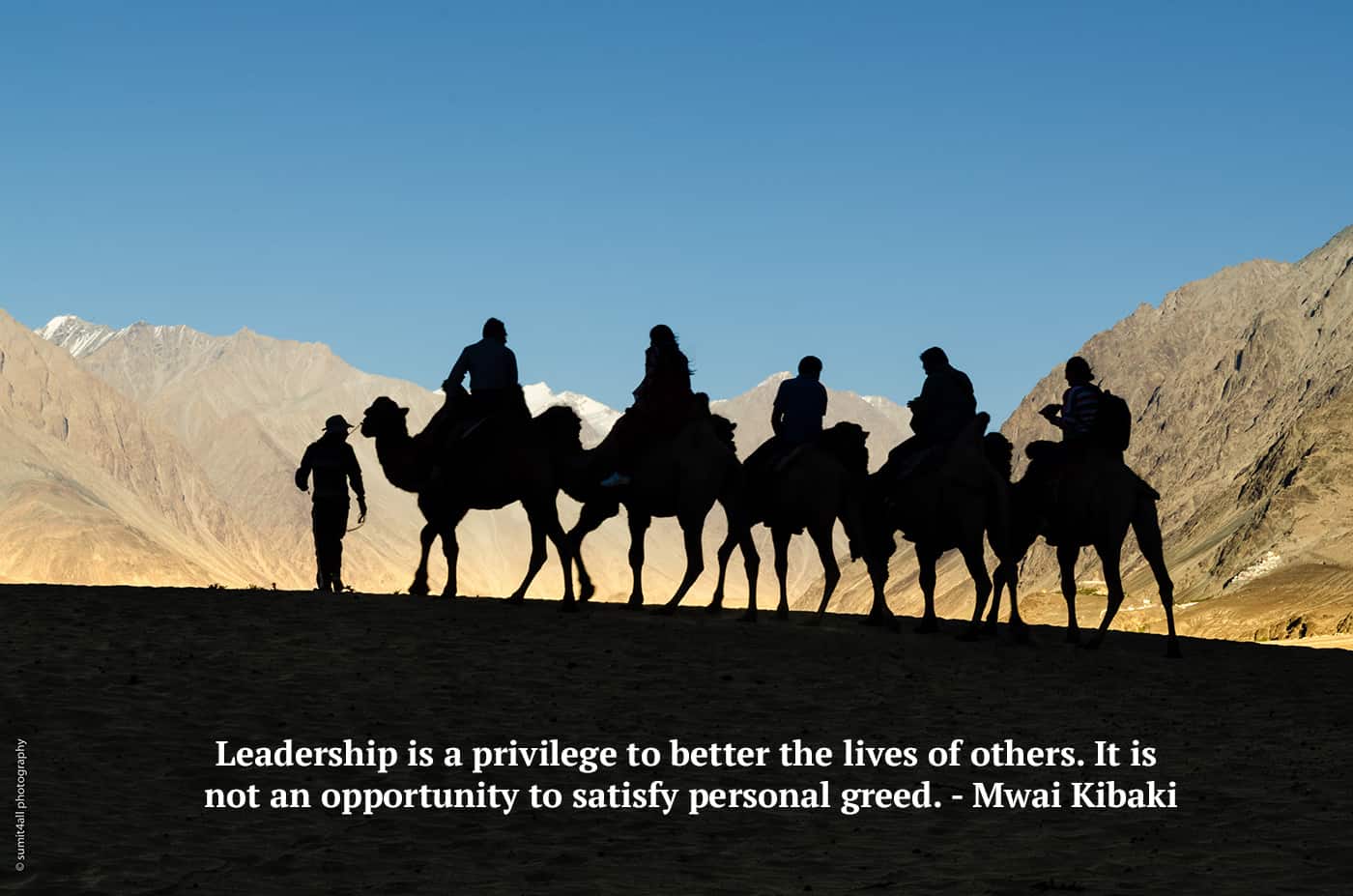
A leader I coach is the number two in her company. She helped build it over the last 20 years. She is a powerful leader. You can hear the strength in her voice within the first ten seconds. During a session, I asked her when she had last done something just for herself. That was when she went quiet. Either a holiday or a spa visit? Or something small and ordinary – a shirt, a book, an ice cream on a Tuesday because she felt like one?
She could not think of a single example. Not one, in twenty years. Family and team first – always ahead of herself. The same thing shows up in meetings. She has a clear point of view, but she wraps it in explanation before she says it, then softens it afterwards so nobody feels uncomfortable. She accommodates and takes care of everyone.
It is important to add here that there is nothing wrong with the above. The trust, togetherness and team spirit she has built is a testament to that.
I Never Bought One Either
I did not have to work hard to understand her. I just had to remember my own history. I grew up in India with one job: get my family out of poverty. Nobody had to explain it. I knew it early and never questioned it. So I did it. Engineering, a career, money that was spoken for before it reached my account. Every rupee had a place to go, and none of those places was me.
Then my mother became ill, and the plan got simpler still. Her care, the family, and work that paid for both. That was my whole life for years, and I did not think of it as sacrifice. It was just what was in front of me. Buying something for myself, for no reason other than wanting it, never came up. You might assume it was a temptation I nobly resisted. It was not. Doing something just for myself never appeared as an option at all.
And this is not a sad story. I took great pride and happiness in caring for others, as the leader above did. Nothing wrong with that. I was good at this. The family got out. My mother was looked after. Almost everything I set out to do, I did. That is exactly why it is worth talking about. It was not a failure I can point at and learn from. It was a success that quietly cost me something I did not know back then.
Service Is Incomplete If It Doesn’t Include You
Underneath all of this sits a belief most of us never examine: caring for yourself and caring for others sit on opposite ends of a see-saw. Take something for yourself, and the people you love get less of you. We learn it early, and we learn it as two boxes:
- Selfless – good. The child who shares the sweets is praised.
- Selfish – bad. The child who keeps them for themselves is told off.
Almost every family, tradition, school and religion teaches a version of it. For a child, that is reasonable.
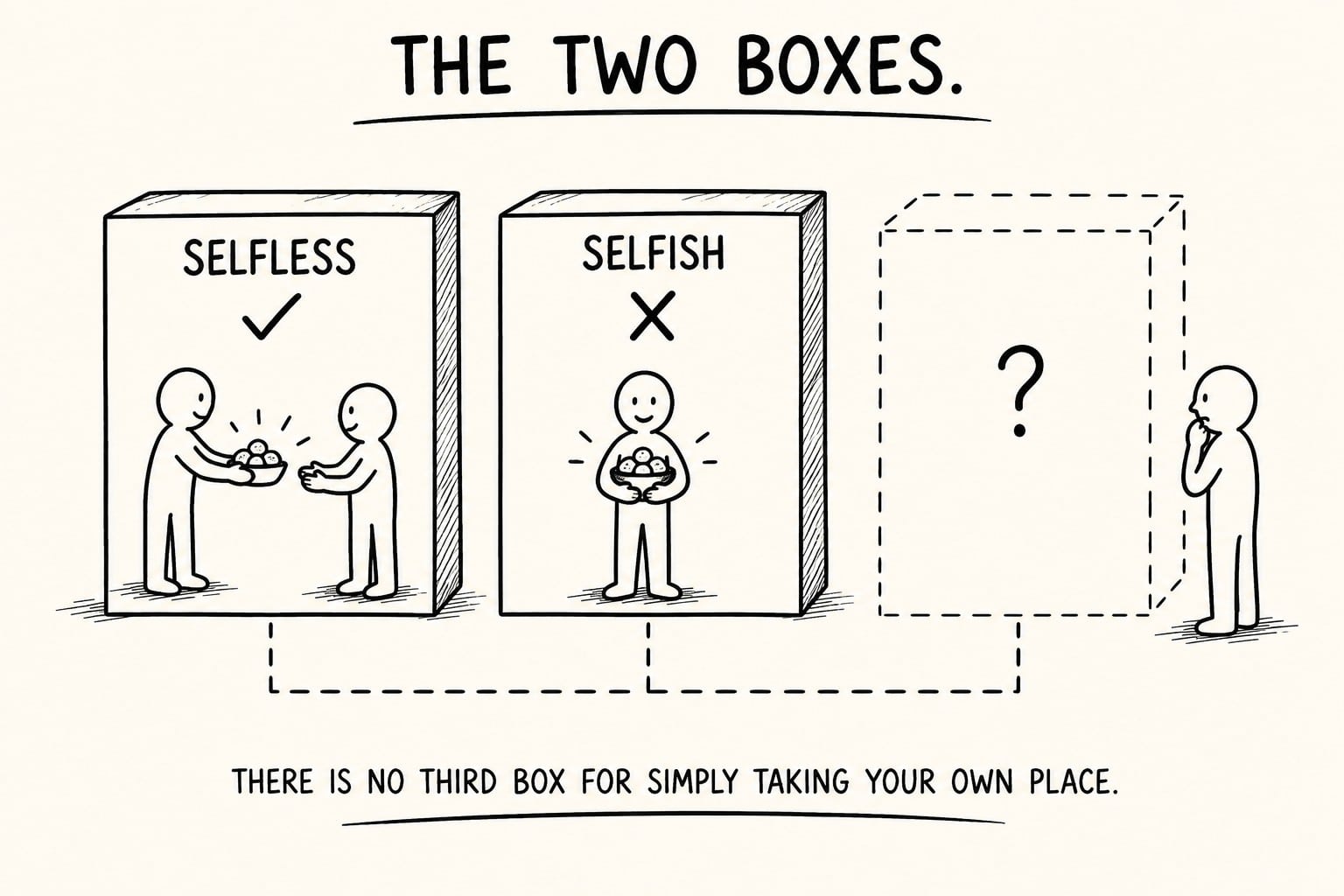
The problem is we never complete the narrative. We carry the same two boxes into adult life, so when a grown adult considers doing something for themselves, there is only one box available and it is the bad one:
- Taking the afternoon off feels selfish.
- Saying no feels selfish.
- Wanting something and saying so out loud feels selfish.
There is no third box for simply taking your own place in the group. You can hear it in the word itself. Selfless means without a self. We turned the absence of a person into a compliment, and told ourselves and others it was the highest anyone could be.
I do not think what I did for all those years was wrong. I think it was incomplete – the way a job done well but only three-quarters of the way through is incomplete.
When You Put Yourself First, The Team Gets Stronger
A team is not a container you serve from the outside. It is a group of people standing next to each other, and you are one of them. So is your family. Leave yourself out, and you have not been generous – you have made the group one person smaller and called it generosity. Picture a team where everyone puts others above themselves. Everyone is willing to compromise or stay silent because of somebody else. Everyone careful. Everyone guessing, padding or over-explaining their thoughts instead of simply saying what they think. It feels pleasant from the inside – calm meetings, no disagreements or conflicts. But:
- Decisions get made on a rough average of what everyone thought everyone else could tolerate.
- The disagreements do not disappear. They just stay hidden and grow into quiet resentment.
- The real objection surfaces eighteen months later, when it is far too late to act on.
I have watched companies lose years this way, and everyone involved was being kind.
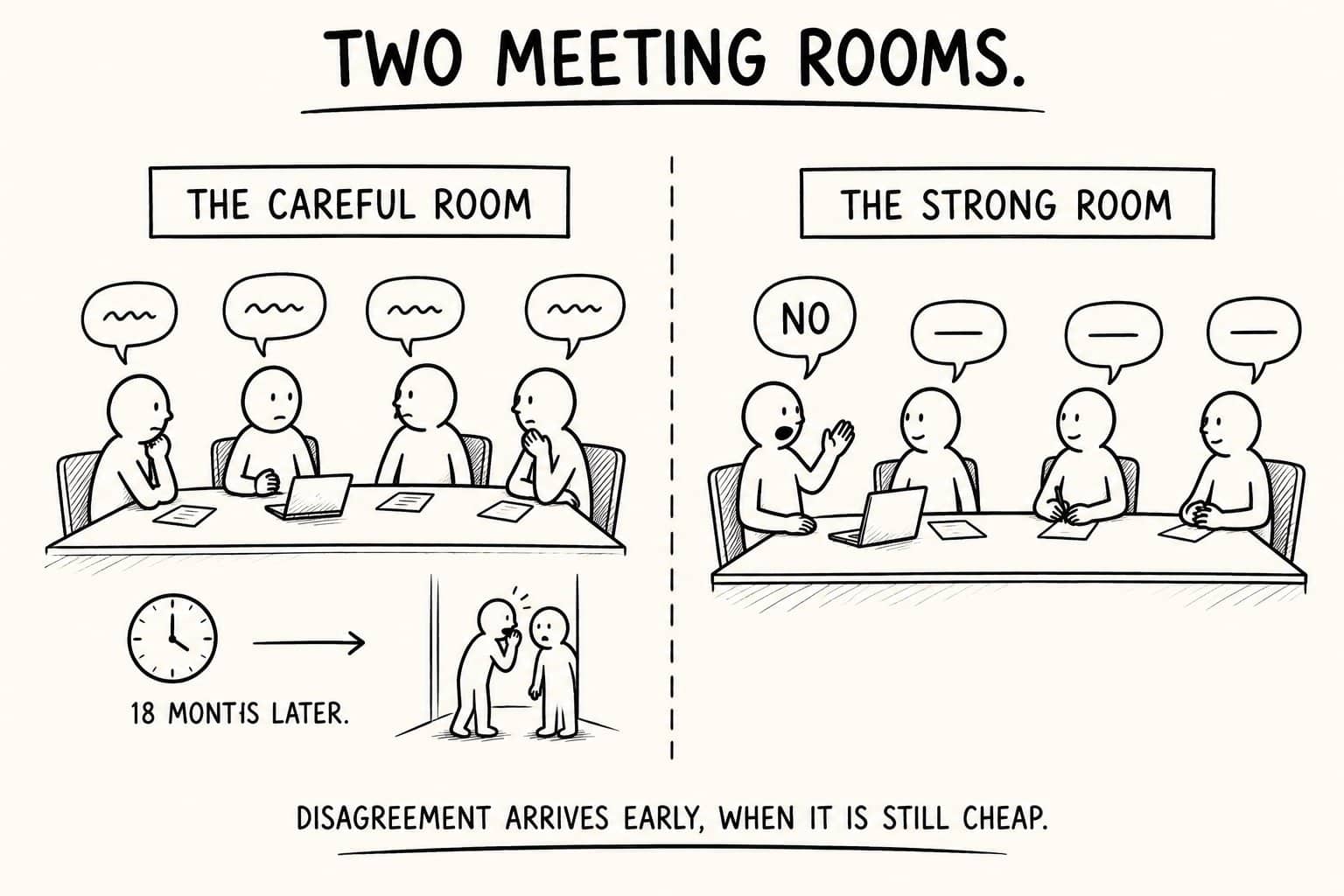
Now put strong individuals in that same room- people who say what they think without wrapping it first, and anyone can hear a hard no without treating it as rejection:
- Conversations get sharper and shorter.
- Disagreement arrives early, when it is cheap, instead of late, when it costs money.
- Nobody is quietly being responsible for anybody else’s reactions or happiness.
- Trust goes up, not down, because when YES and NO are spoken, you know it is real.
One thing I have to be clear about
Putting yourself first:
- does not mean ignoring other people.
- does not mean your needs matter more than theirs.
- does not mean you are more important, or go to the front of every queue.
A room full of people who think they are more important than everyone else is not a team either. That is a group of rivals together.
Putting yourself first means putting yourself on the same level as everyone else – starting with yourself. Equal. When you have spent your life below everyone else around you, moving up to equal feels like arrogance. It isn’t. It is complete leadership. You were counting everybody except yourself. Now you are counting everybody.
So you need both halves – strong individuals and genuine care between them. Most people reading this already have the second half in abundance. The first half is the one they were told off as bad, selfish or even immoral.
This Is Not Modern
None of this is modern, which is worth knowing. Hillel said two thousand years ago:
If I am not for myself, who will be for me? If I am only for myself, what am I?
The metta practice. You send kindness outwards, one person at a time, and the order never changes: yourself → someone you love → a stranger → a person you find difficult → everyone. That order is not there to be gentle with you. It is there because you cannot send out what you never received.
The research. Psychologist Vicki Helgeson compared two groups – people who care deeply and stay in the picture, and people who care just as deeply but leave themselves out entirely. The first group was healthier and happier. The second was linked with depression and worse health.
The Emptiness Nobody Warns You About
I did not work this out from a book. I worked it out by reaching the end of my own story and finding out what was there. Two things happened close together. The money became enough, and in 2012 my mother passed away. I had spent my whole life running at a finish line. I crossed it, and there was nothing on the other side.
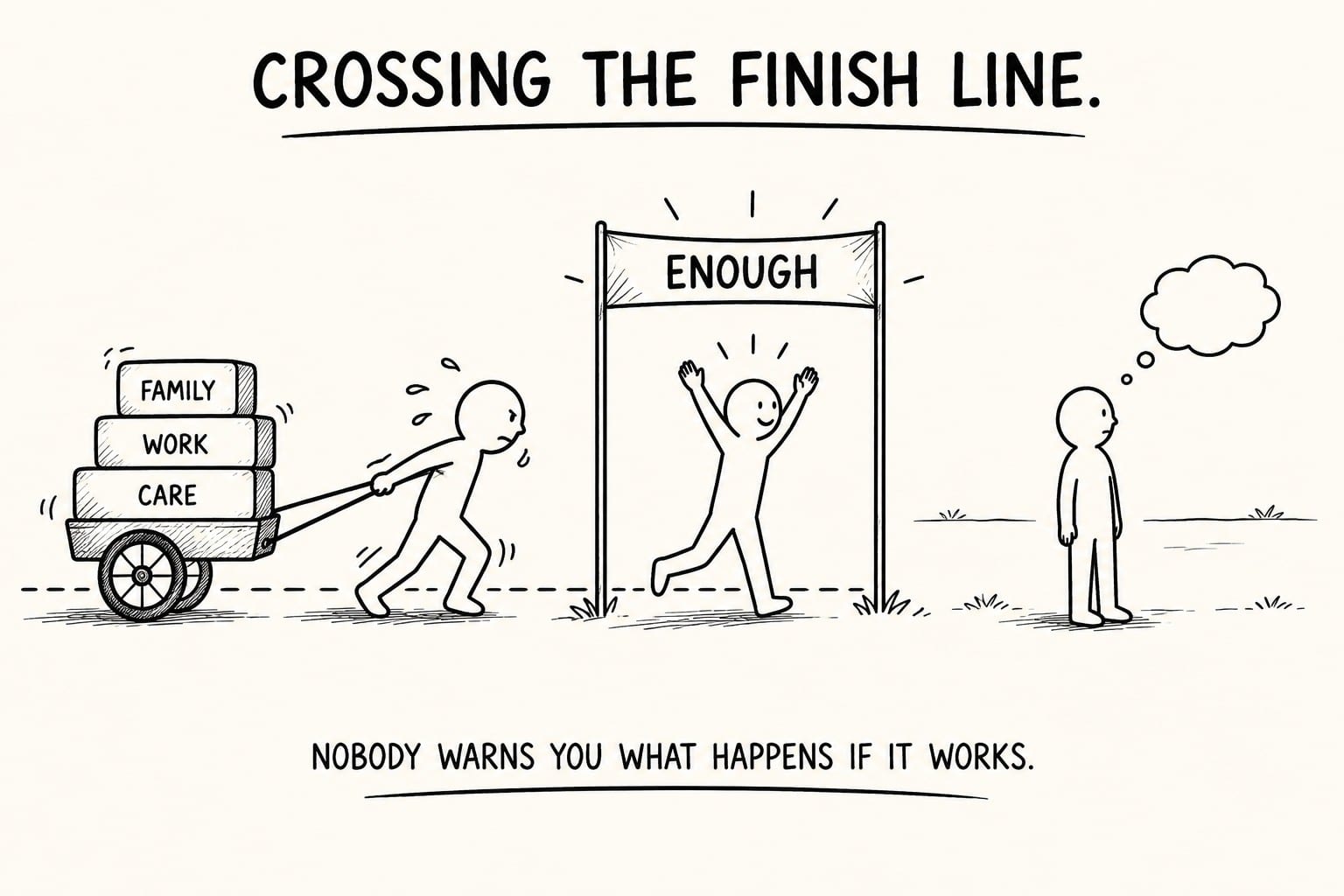
There was grief, and plenty of it. But underneath was something I could not name for years: I had built my entire life out of taking care of other people. My purpose came from them. My days were organised around them. My sense of who I was was what & how much I did for them. Take them away, and there was nobody left inside.
People will warn you that your plan might not work, that it will take longer than you think, that you may lose money and friends along the way. Nobody warns you what happens if it does work.
I had money. I had freedom. I had done the thing. And I could not have told you one thing I wanted for myself – not because the answer was painful or hidden, but because in more than thirty years the question had never come up.
I had not lost my purpose. I had never had one with ME in it.
I Put Myself First With 10GenPartners, And It Led To Powerful Relationships
When I started 10GenPartners, I made one decision deliberately: I would put myself first. (equal among others)
This is what it looks like in practice (this was not easy for me):
- I state my conditions at the start, instead of hoping people work them out and treat me well. For ex, I ask CEOs to commit to a full-year’s worth of meetings before we start. My weekends are purely for family and myself.
- If people are not on time or do not honour their promises, I do not continue working with them. Period. I make the same promises to those I work with.
- I choose who I want to work with, and who I do not. I say NO to everything else and do not accommodate or adjust at my own expense.
- I shaped the work around how I think, my values and how I want to spend my days – not around how this work is normally done.
- I stopped padding and sugar-coating. If I think it, I say it – as blunt and direct as I feel is appropriate for the conversation and person.
Sometimes that costs me a potential client in the first conversation. I am proud of that, because that person was almost always the wrong one for me. I state what is true, and then we decide if it is for us or not. It is much faster for everybody.
What I feared: fewer people would want to work with me.
What happened: the relationships got deeper, the teams got stronger, and we produced amazing business results.
The reason is simple. Every founder I partner with watches me say what I want, out loud, with no justification in front of it. After a while, they do the same. Then their leadership team catches on. Eventually, the layer below them.
You cannot teach people powerful leadership by putting yourself last. When you embody what you teach, that is leadership by example.
My own life changed too. I have a life on my terms now – the work with my portfolio companies, the photography, the people I love, the time. Not a careful balance of work and life. Work life balance is bullshit. What I have is all that I want, and all the time for work and family. Nothing sacrificed for anything else.
The Practice
I gave that leader one piece of homework. Here it is. Seven days is enough to notice something.
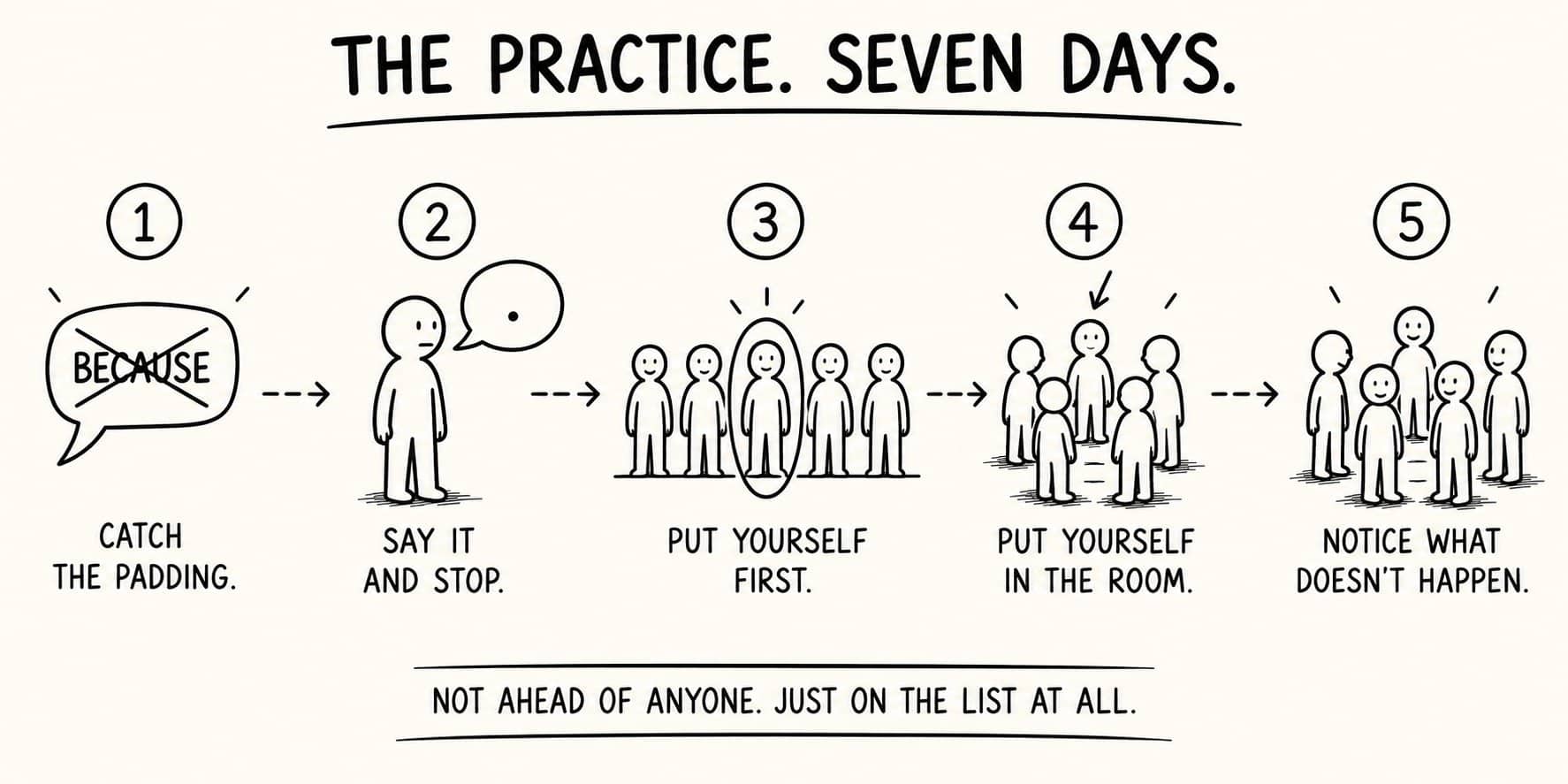
Catch yourself padding. Notice every time you accommodated or added an explanation to something you have already said – the extra because, the softening sentence at the end, the reason offered before anyone asked. Write it down. Noticing is where the habit starts to loosen.
Say one thing and leave it there. Once a day, say what you think and stop talking. No justification, no apology. It will feel rude the first few times. It is not rude. It is unfamiliar. Being direct is the kindest thing you can do.
Put yourself first. One small thing a week, for you, for no reason. Not ahead of anyone – just for you. Do not explain it to anyone, and try not to explain it to yourself.
Put yourself in the room. Before your next big decision, ask a question nobody has asked you in years: what do I want here? Answer that before you work out what everyone else needs.
Notice what does not happen. Watch the team over the following weeks. They will be fine. Nobody will be upset. Nothing falls over.
Nothing is being taken away from you here, and that is the part people miss. You are not being asked to care less about anyone. The care stays. The ability to read a room stays. Those were never the problem – they are the foundation. So put yourself first. Not because you have earned it – that is exactly the idea I want you to drop. The belief that you have to earn it is the whole thing we have been talking about. You deserve it.
You were never being selfish. You were just incomplete.
And there is no team without you in it.
Sources
- Helgeson, V. & Fritz, H. (1998). A Theory of Unmitigated Communion. Caring for others to the exclusion of the self, and what it costs. https://journals.sagepub.com/doi/10.1207/s15327957pspr0203_2
- Helgeson, V. & Fritz, H. (2008). Balancing concern for other with concern for self. https://pubmed.ncbi.nlm.nih.gov/18186712/
- Hillel the Elder. Pirkei Avot 1:14. https://en.wikipedia.org/wiki/Jewish_views_on_love
- Metta (loving-kindness) practice. Why the sequence begins with oneself. https://www.accesstoinsight.org/lib/authors/nanamoli/wheel007.html