reading

  • The 7 Most Powerful Investments You Can Make. They Are Not What You Think

    What comes to your mind when you are asked about the most powerful investments you should make? Is it stocks? Is it bonds? Or a new house? Real estate is the safest investment, you might have heard.

    If you ask me, I would say, neither!

    Over the course of my life, with its few successes and numerous failures, I have come to see another type of investment that will give you the maximum returns – investing in yourself.

    All of us want to lead a life of high quality and success, isn’t it? We all want to be satisfied and productive.

    Most of the time when we talk or think about investing, we limit our thoughts to financial investing and to maximize our monetary returns. We believe doing so will maximize the quality of our lives in the long term.

    All that is good thinking, but I have discovered that there are some simple investments we can make in ourselves which we tend to miss or neglect. And for most of these are not even financial. You don’t need to have money to do this kind of investing.

    “Investing in yourself is the best thing you can do. If you’ve got talents, no one can take them from you.” — Warren Buffett

    Investing in yourself is a continuous process. The effort and time you put in to invest in yourself consistently will determine the quality of life you would be leading in the future.

    Below are the 7 most powerful investments you can make:-

    1. Reading Books

    I have discovered books to be like ‘power banks‘ that revitalize the human mind. They pack knowledge, wisdom, and valuable lessons from people who have lived life before us.

    My favorite books are often memoirs of successful people from different fields like business, sports, politics, activism, art, etc. Reading them gives you a whole new perspective of how they looked at life, and their struggles and achievements.

    Books can lead you to locations you have never been to. For example – reading Theodore Roosevelt’s biography by Edmund Morris took me to New York in the late 1800s and early 1900s. They can give you many interesting ideas you never would have thought of otherwise, as you relate and compare your own life to the protagonist of the book.

    Take some time out each day to read books. Audiobooks are also available these days and you can tune into your favorite book even when you are on the move. Reading for just 10 minutes daily would help you finish around 15-20 books every year. Does that sound too difficult?

    2. Foundational Knowledge of How The World Works

    The most successful people are used to thinking and reasoning from First Principles. Some notable example thinkers are inventor Johannes Gutenberg, the Greek philosopher Aristotle, and entrepreneur Elon Musk – the founder of SpaceX and Tesla.

    First Principles Thinking starts with learning about the essentials which are always true – in the world we live in, and how the people in it operate. Subjects like physics, math, economics, and psychology are the foundation of how our world works.

    The laws of physics define how the material world behaves, psychology tells you how human beings behave and how irrational we can be, economics defines how the financial world behaves – the world of money and markets which affect us all, and math is often the foundation of every kind of reasoning and logic.

    Investing time in knowing and understanding these basic foundational subjects, irrespective of your job or industry, will help you make better decisions for you and the people around you.

    You wouldn’t go to a new city without looking at its map. So why would you want to interact with people, handle your money, and live in this physical world without the basic knowledge of psychology, economics, math, and physics?

    “An investment in knowledge pays the best interest.” – Benjamin Franklin

    3. Nurturing ‘Positive’ Habits

    By ‘positive’ habits, I mean the habits that serve you and help you achieve what you want to achieve. As most people do, I have been setting goals for myself – both at work and personal – for most of my life. And as most people discover at some point, I now realize that goals (like new year resolutions) never work – at least not as well as we expect them to.

    Neuroscience and psychology research proves that habits are better than goals when we look for iterative and long term results. Goals require willpower and discipline, and still, the desired result might not be in our control. On the other hand, habits are totally in our control and take little motivation as they become part of our routine.

    The best thing about habits is that once formed, they run in the background without taking our mental cycles, just like many software programs run in the background on your computer. This leaves us free to focus on other important things.

    Habits powerfully influence our behavior. And because of the fact that they work as part of our subconscious, bad habits can be just as damaging as good habits can be beneficial.

    “Habits are powerful but delicate. They can emerge outside our consciousness or can be deliberately designed. They often occur without our permission but can be reshaped by fiddling with their parts. They shape our lives far more than we realize—they are so strong, in fact, that they cause our brains to cling to them at the exclusion of all else, including common sense.” – Charles Duhigg

    Some of the ‘positive’ habits that have been very beneficial to me are:-

    • The habit of reading books in every 5 or 10-minute gap I found in my day, instead of making a goal to read 20 books in a year. Now, I automatically default to reading whenever I have a little time and finish over 40-50 books every year.
    • The habit of writing for 30 minutes as soon as I get up in the morning, vs making a goal of writing 2 articles every week. Writing is still the most painful task I do (from a willpower point of view), and having this simple daily habit means now I don’t worry about the number of articles and just focus on writing right after getting up. Usually, the 30 minutes stretch to 60 minutes, and I have been pretty happy with the outcome.
    • The habit of exercising for at least half an hour every day, instead of making goals like running a marathon or so. Be it walking, cycling, or simple exercises in my living room, I am happy now as long as I do 30 minutes of it. In addition to the attached health benefits, this has broken the monotony of everyday life.

    Invest in Yourself
    Invest in Yourself

    4. Communication and Interpersonal Skills

    No matter what we do for a living, we all work with other human beings. Learning to communicate better is one investment we can all make, and it will produce compounded results over time.

    Understanding how human beings behave, and what it takes to convince, persuade, and influence people is as fundamental a skill as any.

    Make a habit of listening to people and giving them the value they deserve. Understand where they are coming from. Make them feel important. Learn how to put the message across, how to talk to different types of people, and how to express yourself with clarity and purpose.

    Let go of the habit of blaming others or yourself when you mess up. Own up and apologize if you need it. Build the foundations that strengthen every relationship. Focus on relationships instead of negotiating when you talk.

    5. Writing Skills

    Writing could be private (a journal) or public (a blog, book, etc). It is not only a skill to communicate and express yourself, but also to think. As you put your thoughts to paper, it helps you to clarify your thinking and form a comprehensive picture of the topic at hand.

    Research shows that writing makes you healthier and happier. It helps you deal with various difficulties life throws in a way you can be proud of. Writing about what makes you grateful helps your mental health and makes you look at life more cheerfully.

    Powerful Investments in Life

    6. Trusting People by Default

    Trust people when you first meet them. Rather than fear the worst-case scenario, have faith that the best case will turn out to be true.

    Give your energy, time, gratitude, and appreciation to people around you. See it as an investment – in people. Investment in people always tends to come back in life, and in proportions we can’t imagine.

    “Everyone thinks of changing the world, but no one thinks of changing himself.” ― Leo Tolstoy

    7. Knowing What You Stand For

    Just like ships need a compass and a lighthouse to navigate in vast oceans, we all need to understand what we stand for, to guide us in difficult times. Our deepest held values, standards, and boundaries can be that guide and keep us in check.

    When we accept the standards and values others’ have set for us, we surrender our own will and judgment. By figuring out what we stand for, we allow our unique light to shine upon the world.

    Conclusion

    As you must have realized, the above-mentioned ‘investments’ do not cost you much (money). You do not need to spend money to make any of these investments. But, you need to be consistent and invest “brick-by-brick” with your time.
    References

    1. The Health Benefits of Writing about Life Goals – Laura A. King, 2001
    2. Top 11 Scientific Benefits of Writing [INFOGRAPHIC]
    3. Have You Discovered Your Leadership Lighthouse? Why Should You?
  • How to write regularly, and get better at it in 10 easy steps

    I have been writing on this blog for almost two years now, and as I have mentioned in a previous article, writing is not easy. From writing just a couple of articles a month in the beginning of 2010 to writing around 15 articles every month now, it has taken a lot of patience and hard work. There have been frustrations at not being able to finish a simple article over many days, and the pain of not liking what you have just finished writing. It still happens, and not all the articles or poems I come up are ready to post that instant. Sometimes I edit an article multiple times, and over several weeks before posting it.

    Today I am going to share some of my learnings from these last 20 months of writing, and what steps you can take if you aspire to write regularly, and become better at that. Even if you are not not writing now, these tips will help you get started and going. Since there are a lot of lessons I have learnt and I keep getting new insights everyday as I write more and more, I am going to write it down in multiple articles, but starting with 10 points which I feel the most important in this article. So here we go…

    1. Just Do It

    You will become a better writer by writing more, not by planning to write more. So, irrespective of the fact that whether you are tired or busy, whether it is sunny or cloudy outside, just put your butt down, and write. Let me say it again for more impact. Don’t Dream about writing, just WRITE.

    2. Feel It. Express it

    Write about something you feel and care about. Choose a topic or subject that gets your heart beating, whether it is music, sports, yoga, business or fiction. Writing is not about the language, it is about the subjects that bring out different emotions in you. And once you start writing on something close to your heart, you will be amazed to see how words flow out.

    3. Keep a Notebook

    Ideas don’t work on an on-call basis. You can’t call out for new ideas, topics or phrases when you want them. They can sprout up in your mind anytime, sometimes even in the middle of the night. So always keep notes, either offline or online, and note your thoughts and ideas, about a new topic or some interesting sentence or quote you might have just thought. When you actually sit down to write, refer to these notes to structure your article. An idea lost is an idea lost, and you can’t recall it again at will, so better note it down the first time.

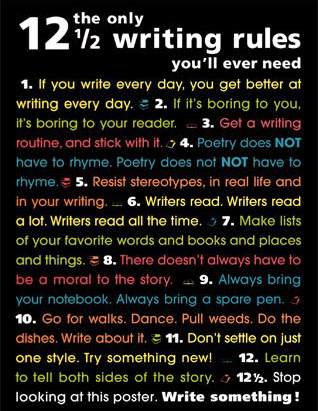
    The Rules of Writing by E L Doctorow
    The Rules of Writing by E L Doctorow

    4. Keep Patience

    You will not like everything you like. Sometimes even after sitting for an hour, you won’t be able to write much. But don’t loose patience. This is expected, and a part of the game. If you want to write good stuff, you have to empty your mind of all the rubbish. And when you write something which you don’t like, it is only this rubbish coming out. Now you must not loose hope and persevere because only after all the rubbish is gone, the good stuff will start coming out.

    5. Take Feedback

    Most often we are blinded to flaws in our writings, whether grammatical or structural, and it is always helpful to take feedback from a few people before publishing. What is more important is to take critical feedback and not just reject it, but work on it to make your article better. I would also like to take this opportunity to thank all those to whom I go for review whenever I finish writing something new.

    6. No Fear

    Let go of any fear you might have. Fear only results in you ‘not‘ writing. So be without fear, which I know, is impossible. But recognize your fears, and get over them rather than letting them overwhelm you. Let these fears drive your writing. Write badly if you must, but do write. Because if you write, you won and the fear lost.

    7. Keep Editing for Later

    When you start writing, very often you will feel that what you just wrote can be improved. But don’t be tempted and work on finishing the first draft of your article first, and keep all editing for later. Nobody is asking you to be perfect, so have the courage to write badly, but don’t stop writing unless you finish the first draft.

    8. Review and Edit Multiple Times

    One practice which has worked very well for me is to review my own writings multiple times, often separated by time intervals of atleast a day. After I finish writing the first draft of any article, I don’t review it immediately, but instead review it once for the next few days, and then post it. This helps me view the same article with a fresh mind every day and hence the changes (if any) I do make it better, instead of if I were to edit it just after I finished writing it.

    9. Maintain Discipline

    One of the most important practice you can bring to the table is being disciplined at writing. I write around 4 days a week now, and want to increase it to 6 days soon. But it is very important to keep writing regularly, even if you are writing only rubbish. Even if you are not in the mood. Even if you are tired, or exhausted, or whatever. Don’t let your reasons for not writing become greater than your discipline.

    10. Read a lot

    One sure shot way to improve your writing, and get new ideas to write about, is to read a lot. Read books, newspapers, and articles online. Most often I get the idea of a new blog topic after reading an article online or while reading a book. At this point, I just make a note of the topic and any bullet points which I might have, and come back to it later to write the full article. Due to reading, and keeping notes (see point 3 above) I always have a list of articles to write with some notes already in place.

  • 10 Things I am glad I had done (or do) in my life

    Below are the 10 things that I had done, or do in my life which I am really glad for. I am not saying I am perfect at these things, but I am getting better every passing day, and that is what matters. Read on…

    1. Accepting mistakes of others
    We all are human beings, and we do make mistakes. As important it is to accept our own mistakes, it is also important to accept others mistakes too. Anybody who does not make a mistake does not exist at all. So it is only wise to see other’s mistakes as just natural and move on with life. It has made my life much more joyful and easy whenever I have not passed my judgement on someone due to a past mistake. And it has helped whenever I treat a person positively irrespective of past experiences. Do to others what you expect them to do with you!

    2. Build and maintain self-discipline
    Before trying to manage others or to make a difference in the world, it is very important that we are able to manage ourselves. Whether deciding how much (and what) to eat, how much to party, or when to get up in the morning are all acts of self-discipline. If you want to get up early in the morning, you can’t delay sleeping in the night. It is as simple as that. It just boils down to resisting the temptation of that late night show on TV, or a few drinks with friends which will run late into the night. No doubt socialising with friends is important, but sometimes you need to learn to say “NO” (which is not easy, believe me) to focus on other important things which you have decided. Either you don’t decide to do a task (like morning exercise), but if you do decide, then self-discipline decides whether you do it or not.

    3. Started this blog
    Putting your thoughts to pen and paper (or keyboard and laptop) has helped me a lot. We all are social creatures, and discuss about sports, politics, religion, etc whenever we meet or talk. By putting my thoughts / views in writing, I really know what my thoughts are, and others can also come up and comment / participate in the discussion, regardless of geographical limitations. Apart from this, my writing skills has improved, and now I have new dream. A Dream of Writing a Book someday.

    4. Running SaleRaja for 2.5 years
    Starting a business of your own can help see the world as it is, free from the illusions which we don’t know (or choose to ignore) in our lives. In my experience of over 2.5 years of running SaleRaja, which were not very successful in terms of revenues and profits, but the learnings have been immense. It has made me even more resolved to come back to entrepreneurship, but now better prepared. Anyways, I only have one life and I don’t take it too seriously. I don’t want to save anything for my next life and want to experience everything in this life itself!! So, anybody looking for fun and adventure, I would surely recommend starting a business of your own, at least once in your lifetime.

    5. Learning French
    For those who don’t know, I know a little bit of French. I learned it for 18 months at the L’AF Delhi, and totally by accident. But I got more than I expected. Interacting with people from different backgrounds made my outlook towards life much more mature. There were businessmen, students, police officers, housewives and professionals in my batch, all learning about French and France. And learning a language is a channel to discover new worlds and improve your life skills. Moreover, learning a new language is always a challenge, and challenges and I go together.

    6. Reading Books
    Having started reading books regularly only in Jan 2010 (after college), I can say it is changing my views and thoughts on a lot of things. I would like to put an hour of reading daily an activity as important it is to exercise daily. Reading a book (I mostly read self-help, autobiographies, and business books) is like viewing a life from somebody else’s eyes. It gives you a perspective about life and people from another person’s point of view. I am going to continue with this habit forever, and in some 3-4 years, I am going to have my own library with a good collection of books.

    7. Making my own rules
    Most of the people live their life according to what is the norm, what everybody else is doing. It is assumed that you need to follow the so called rules, or “conventions” to get what you desire, be it your job, family or whatever it you may be wanting. But I beg to differ. Who says that I have to do what everybody else does? Intact, if I know the outcome of a task I am doing, what is the fun in doing it. I only have one life and I don’t want to live it the way other people want me to. I might encounter some failures or setbacks along the way, but that be it. The fun of not knowing where you are going only can get you what you normally can’t get. That is why I studied computers too much during my school days that other subjects suffered. That is why I started SaleRaja… And read “The Fountainhead” by Ayn Ryand if you need more.

    8. Helping others
    Helping other people, either those for whom I am responsible for, or somebody a total stranger, has always given me so much satisfaction that has never been matched by doing something for myself. I totally experienced a different kind of satisfaction (like I have never experienced before) when I was leading the 99acres team in Noida. It was a responsibility which I didn’t took seriously when I started, but it showed me shades of my character even I wasn’t aware of. Helping / Mentoring a new bunch of engineers right out of college changed me as a professional, and as a human being. I feel more connected with myself after that experience. I don’t think if there is a better feeling than knowing that somebody is smiling or sleeping peacefully because of you.

    9. Moving to Bangalore
    Bangalore has taught me a lot. In fact, I think moving to any new city will give some experiences and learning that can’t be attained otherwise. You get to interact with new people of different culture and language. A lot of my misconceptions of how things happen in life have cleared after moving to Bangalore. New places to travel and explore also add to your to-do list after relocating to a new city. In Bangalore, I have come to believe that honesty and integrity still exist in this world and you don’t have to be cruel or selfish to survive. It is often said that judge a society by how it treats its weaker sections. How the locals in Bangalore treat and respect women and elders is totally heart warming. I want to wander along the globe, moving to a new city every few years and keep on learning to be a better human being. Bangalore, your time is getting over soon 😉

    10. Living in today
    “The reason people find it so hard to be happy is because they always see the past better than it was, the present worse than it is, and the future less resolved than it will be.” Most people are either worried about their past or the future, missing the present in the process. It is important to understand that we can’t change anything what has happened in the past. Neither can we second guess the future. At best, we can make a plan and work for the best outcome. But if it does not, it is wise to learn the lessons from failures and move on. Love life. Love yourself. Living for today while having fun and making everybody involved in your life happier is what should be our goal for the day. Watch the movie “The Groundhog Day” to realize how we should live our lives. We all have only 24 hours in a day, and it is important to make them count.

anger anna hazare bangalore business challenge coaching conflict conversation corruption Cricket culture dandi march emotions energy friends fun gandhi giving gold growth hope india jan lokpal bill language leadership lessons Life listening love moment mother movie new year people perspective poem sachin tendulkar saleraja trust values walk waste women words world cup