Newsletter

The Deploy Yourself Newsletter

  • Issue #39.5, 16 Nov 2021 – Sumit interviews Jay Richards and Noah Miller

    Dear reader,

    The What

    As I shared briefly in last month’s newsletter, I will be interviewing leaders and sharing their leadership journeys in a mini-newsletter. As a subscriber to this (Deploy Yourself) newsletter, you will get the best-curated insights from these interviews in a mini-email like this one. I will send it in the gap week between two regular newsletters. You can also read this mini-issue online.

    The Why

    We all have a lot to learn from the stories of our leaders – of how they came to be where they are today. These are stories peers and friends don’t usually know, and my attempt is to give you an opportunity to learn from those who have already tasted success and made an impact.

    Find out about the events from their lives that shaped them to be the person and leader they are. In the interview, they also share about the people who have influenced them the most in their leadership.

    The Who(s)

    Jay Richards – “I’m learning to rest and that I do not need to try and control everything!”

    Jay Richards is the CEO and Co-Founder at Imagen Insights, which has build a community of 10,000 Gen Z from 57 countries. He shares his person story of always getting into trouble at school. Today he is providing young people with opportunities to shape their futures – that he finds so fulfilling.

    He finds switching off the most challenging. He says he is learning to rest and that he does not need to try and control everything. He knows the importance of enjoying his evenings and weekends so he can stay healthy and at the top of his game. He also adds, “I keep my mind clear and healthy by regularly hitting the gym. I love Jiu-Jitsu as it gives me the headspace.”

    Read the full interview here.

    Noah Miller – “One plays how they practice!

    Noah Miller is the Co-Founder & Chief Strategist at Rho Impact and he says about himself, “I consider myself a player-coach. Nothing gets me more fired up than joining a team of good people with even greater goals and stepping onto the field together. The world needs more teamwork. I am dedicated to making that happen.”

    In the interview, he shares how he moved to Israel to start a social venture for improving Israeli and Palestinian relations. However, he found himself drafted into the Israel Defense Forces after the 2014 Gaza war. These two events had a significant impact on who he is today and the work he does.

    He shares the one piece of leadership wisdom which he has not forgotten – “leadership isn’t about what you say and do. Leadership is about how you make people feel.” He shares more of his wisdom by saying, one plays how they practice. I manage pressure by being prepared, confident in my team, and not sweating the small stuff (as most things in life are small).”

    Read the full interview with Noah here.

    How can you contribute?

    Each one of us is on a leadership journey. Our journeys might not look alike. They might resemble more of a roller-coaster ride than a race track, and that is what makes each one of us special and unique in our own ways. I am deeply touched when someone takes the time to share their story with me. The leaders I work with are also left inspired when we listen to each other’s leadership journeys.

    If you think that your leadership journey is worth sharing and would be valuable to others, reach out and allow me the privilege to interview you. If you would like to recommend someone else who I should interview, feel free to write to me. You can send me a message on LinkedIn or send me an email at sumit@deployyourself.com.

    That’s all for this week! If you have any questions, don’t hesitate. Just hit reply.

    See you next week with the regular newsletter.

    With gratitude,

    Sumit

  • Issue #39, 9 Nov 2021 – Are you living into a Default or Created Future?

    Welcome to the Deploy Yourself Newsletter. Every two weeks I share what impactful leadership looks like to show your own power. I also share the most insightful lessons and stories I encountered in the last two weeks. You can also read this issue online.

    Hey,

    Are you living into a Default or Created Future?

    Most people are living into a default future and they don’t even realise it.

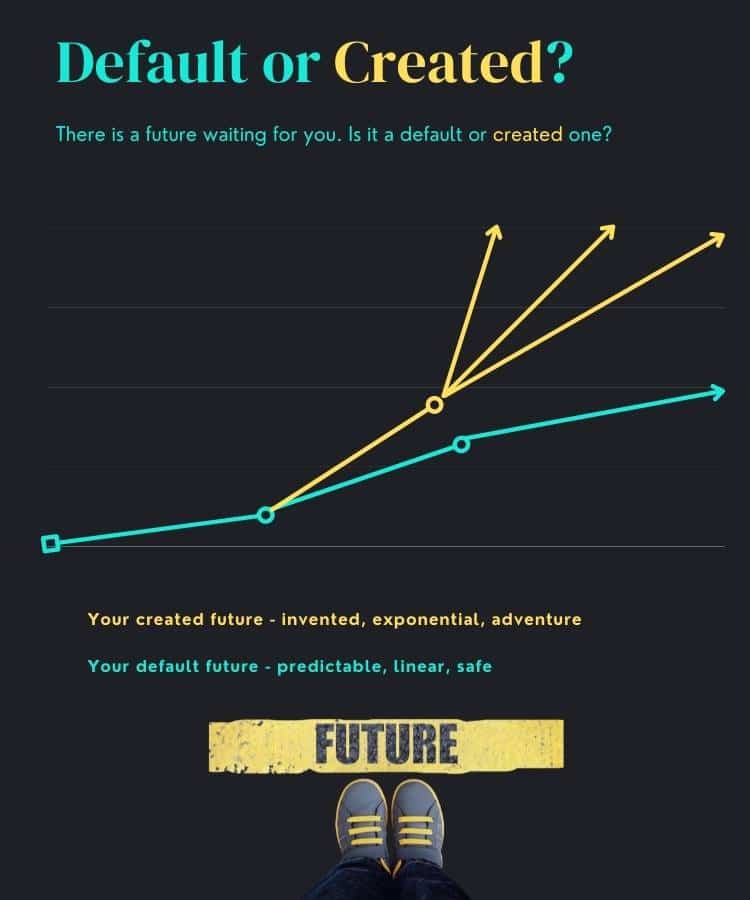
    If you take the current trajectory of your life and extrapolate a few years, you can pretty much guess where you would be in 3, 5 or 10 years. A bigger house, a better job, a more luxurious car, a particular promotion or a title, and every one a few years older and wiser. The details might vary a little, but you can pretty much predict your future. This is called a “default” future, and it is totally dependent on your present reality (skills, conditions, resources).

    On the other hand is a “created” future, where you literally dream and “create” a future that will best take care of what you care about. In this case, you do not start from what you have or what you think you can do and achieve. Instead, you start with a blank canvas and then paint a future that would make you completely alive, satisfied, and joyful. This is called a created future, and it is totally independent of your present reality (skills, conditions, resources).

    Most of our actions and results are often determined by unconscious habits picked up in the past. For example – if you think you are introverted, you are more likely to choose engineering over acting or singing – even if you have always dreamt of becoming an actor or a singer. We plan and go after goals (and a future) that we think are “reasonable” considering what we think is possible or not. Even our dreams are filtered by our view of who we think we are, and what are our skills and capabilities.

    Carl Jung said, “Until you make the unconscious conscious, it will direct your life and you will call it fate.”

    What unconscious habits are directing your life and creating a “default” future for you? Where have you picked up these habits or traits – from your parents, education, company, culture, or past experiences?

    Are you living your life in a way that is not much different from what people used to do years or even decades ago? Are you doing something the same way that you did as a child even though you that was more than enough time away to learn or shift any behaviour? What are some such unconscious and unexamined patterns that are running your life and determine your reality?

    What has been the cost of living this way? What dreams and possibilities are not possible for you because of these old and unexamined habits? Do you have a dream which has been “on hold”? Have you been waiting for the right time or conditions (enough money, skills, time) for starting on your big dream?

    Does your “default” future work for you? Does it fill your life with meaning, joy, and satisfaction?

    If yes, that is wonderful and you can continue on your journey.

    However, if your default future does not work for you, then what are you going to do about that?

    And what is at stake here? It is your future. So your life is at stake. Isn’t it?

    Last year, I realised that my default future was not working for me. So below is the future I created –

    “In 5-10 years, I will be coaching the most influential and biggest changemakers in the world. I will coach billionaires, entrepreneurs, CEOs, top political leaders, social activists, Olympic athletes, Nobel winning scientists, etc and support these people to amplify the impact they want to make in the world.”

    It has been 1 year since I created this future, and I am already coaching amazing social entrepreneurs, VPs in tech unicorns, one leader at the UN, and one millionaire entrepreneur. Granted, I am not coaching a billionaire yet 😉 but my 2021 future has been amazing considering where I was a year ago.

    When you create a future from scratch, you take bold actions which you have never taken before. And you start feeling fully alive – and start experiencing complete joy and satisfaction – even if there are struggles or challenges along the way. Over time, you realise all that you previously thought impossible or unfeasible or “not for me” was just that – a thought.

    First, you create the future, then the future creates you.

    What future are you creating?

    As the above questions, my coaching conversations are often not comfortable but they can be magical and transformative. If the above piqued your curiosity, write to me with your vision of a created future. I read and respond to every reply.

    Articles and Stories Which Have Fascinated Me

    One

    Interviews with Lisa May, Antonio Potenza, and Katie Schwartz

    As I shared in the last newsletter, I am interviewing leaders who have deployed themselves. I will share lessons from their leadership journeys in a separate mini-email in the gap week between each newsletter.

    We all have a lot to learn from our stories of where we started, our successes and struggles, and important lessons learned on the way. These stories are often untold in the day to day busyness of life, and my attempt is to uncover that.

    To read the interviews from leaders whom I have already interviewed, click below:

    1. Lisa May – “There’s a different way to lead and there’s a different way to serve!”
    2. Antonio Potenza – “Money has the power to be a force for good!”
    3. Katie Schwartz – “I want to be like Dale Carnegie for people with communication disorders!”

    Two

    Understand why it is so easy to feel like a victim

    In a polarized nation, victimhood is a badge of honor. It gives people strength. You only need to spend only a few minutes watching or reading the news, in any country, to hear and see victimhood raging. 

    The higher the TIV (Tendency toward Interpersonal Victimhood), the more you feel victimized in all of your interpersonal relations. So if you are in the middle of the scale, you might feel yourself as a victim in one relationship but not another, like with your boss, but not with your wife and friends. But the more you feel like the victim, the more you extend those feelings to all of your interpersonal relationships.

    And then of course it can affect every aspect in your life. If you feel being victimized in your work, for example—we did a lot of experiments with the narratives of managers and workers—it means that you cannot let stand an offense by your boss, no matter how trivial.

    If people learn about the four components of victimhood, and are conscious of these behaviors, they can better understand their intentions and motivations.

    1. The first pillar is a relentless need for one’s victimhood to be clearly and unequivocally acknowledged by both the offender and the society at large.
    2. The second is “moral elitism,” the conviction that the victim has the moral high ground, an “immaculate morality,” while “the other” is inherently immoral.
    3. The third pillar is a lack of empathy, especially an inability to see life from another perspective, with the result that the victim feels entitled to act selfishly in response.
    4. The fourth pillar is Rumination—a tendency to dwell on the details of an assault on self-esteem.

    From an article on Nautilus about getting to the core of feeling like a victim

    Three

    Why is walking so good for the brain (and for leadership)?

    Going on a walk makes your mind wander in ways that neuroscience is only just coming to terms with. We may have heard by now how walking makes us feel good by releasing endorphins, lowers risk our of depression; increases cognitive functioning; strengthens memory; enhances creativity; and produces a protein essential for neuronal development and survival, synaptic plasticity, and cognitive function. It sounds great, but how are all these related?

    A lot is happening to our bodies and brains on a walk, but one fascinating thing stands out. They are all related to an increase in what neuroscientists call “spontaneous cognitive fluctuations.” Researchers have also shown that our wandering bodies make our minds wander too. On a walk, our brain waves slow down. The underlying spontaneous fluctuations bubble up more easily, creating experiences of spontaneous thoughts and associations that seem to come from nowhere. We often call them “moments of inspiration.” 

    Reason is not the source of intelligence; it’s the product of it. Perhaps this is what those Greek philosophers understood and what we have forgotten. Recent studies on walking also show that walking with other people synchronizes their brain and bodily rhythms resulting in increased empathy, cooperation, and sharing. So walking may also be beneficial for everyone’s social and emotional education.

    From an article titled Why is walking so good for the brain?

    Four

    Are you Interested? or Are you Committed?

    When we step into the world of commitment, we experience being calm, happy, at peace and confident, even in the face of harsh challenges. An interested person will get angry at an unexpected result, while a committed person will accept that fully, and take the next necessary action to stay committed to his goals without backing out.

    A commitment is a promise you make to yourself (more than anybody else) and then there are no excuses, but only results that matter. For example, a mother has a commitment to her child, and she will even go hungry to feed her child. A mother doesn’t demand fairness from her son, she just loves her, for that is her commitment, irrespective of the situation or whatever obstacles life throws in front of her. As they say, any obstacle will have to go over her dead body.

    Being committed gives us the freedom of doing our best, yet being completely fine with the final result not being what we expected. No effort is a failure just because it doesn’t result in an expected outcome. It is a success if we gave our best!

    An article from my desk about the distinction between being interested and being committed.

    That’s it for now. If you have any questions or feedback, or just want to introduce yourself, hit reply. I read and respond to every reply. All the best,

    Sumit

    (Twitter) @SumitGupta
    (LinkedIn) Connect

  • Issue #38.5, 2 Nov 2021 – Sumit interviews Antonio Potenza & Lisa May

    Dear reader,

    The What

    As I shared briefly in last week’s newsletter, I will be interviewing leaders and sharing their leadership journeys in a mini-newsletter. As a subscriber to this (Deploy Yourself) newsletter, you will get the best-curated insights from these interviews in a mini-email like this one. I will send it in the gap week between two regular newsletters. You can also read this mini-issue online.

    The Why

    We all have a lot to learn from the stories of our leaders – of how they came to be where they are today. These are stories peers and friends don’t usually know, and my attempt is to give you an opportunity to learn from those who have already tasted success and made an impact.

    The Who(s)

    Antonio Potenza – “Money has the power to be a force for good!”

    Antonio Potenza is the CEO & Founder of Proodos Capital and the COO and Co-Founder of Fund4Impact. In this wide-ranging interview, Antonio talks about how he moved from creating shareholder value to creating stakeholder value. He shares how he shifted his perspective about money, took a sabbatical, went back to University for an MBA, and came back with a mission to give money a more positive connotation. In his own words, “Money has the power to be a force for good. Money is not bad per se, it’s what we do with it that makes all the difference.”

    He was also generous to share a personal story about her mother and her struggles to raise two children in a foreign land. He credits her for having the most influence on his leadership. He further adds, “My late father, whom I never met because he died in a car accident the day I was born, is another source of inspiration. I carry his name and what I know about him through the stories that I am told.”

    Antonio defines leadership as empowering others to grow, progress and allowing them to take on responsibility and accountability. Read the full interview here.

    Lisa May – “There’s a different way to lead and there’s a different way to serve!”

    Lisa May is the founder of Fülle – Holistic Leadership Development and her mission is to help busy executives maximize their fulfilment without sacrificing their success – or anything else that matters to them. In the interview, she talks about the moment when she was very successful by all standards and yet felt really empty inside.

    It was then she started going deep to understand what that really meant. She spent 5 to 10 years studying different philosophies, modalities and methodologies to put the pieces together. She realised that “I had become my achievements, my identity, and a lot of my worth and value as a human had been trained to be connected to milestones outcomes, performance. And that’s simply not true.”

    She now looks at leadership differently. She believes leaders can get out of their own way to live, lead, and serve better. And they can do that not out of pain and suffering and out of pushing and driving through, but out of a place of deep balance and inspiration. How lovely is that?

    She considers her dad the greatest influence in her life. She learned stamina and perseverance and true commitment to work from him. She adds, “But what I also saw in him is that he was able to be truly present with our family and with me at those pivotal points in my life where he could have been too busy and just pushing, pushing, pushing to keep going with the achievements. But he didn’t, he would stop and he would be present.”

    Read the full interview with Lisa here.

    How can you contribute?

    Each one of us is on a leadership journey. Our journeys might not look alike. They might resemble more of a roller-coaster ride than a race track, and that is what makes each one of us special and unique in our own ways. I am deeply touched when someone takes the time to share their story with me. The leaders I work with are also left inspired when we listen to each other’s leadership journeys.

    If you think that your leadership journey is worth sharing and would be valuable to others, reach out and allow me the privilege to interview you. If you would like to recommend someone else who I should interview, feel free to write to me about them. You can send me a message on LinkedIn or send me an email at sumit@deployyourself.com.

    That’s all for this week! If you have any questions, don’t hesitate. Just hit reply.

    See you next week with the regular newsletter.

    With gratitude,

    Sumit

  • Issue #38, 26 Oct 2021 – Make decisions thinking 20 years into the future

    Welcome to the Deploy Yourself Newsletter. Every two weeks I share what impactful leadership looks like to show your own power. I also share the most insightful lessons and stories I encountered in the last two weeks. You can also read this issue online.

    Hey,

    Make decisions thinking 20 years into the future

    We normally make decisions with an “If [this] then [that]” mindset. We look at what will happen immediately after making the decision. If we like that, we make the decision. Otherwise not. It is simple and easy.

    This is also called first-order thinking. It is like saying, “I will do this if it will lead to what I want tomorrow”. For example – If I switch jobs then I will make more money and buy a bigger house. Almost everybody makes decisions this way.

    The problem with the above is that we do not consider what might happen much later in the future depending on our decision. A powerful question to ask ourselves is – What can happen in 5,10, or 20 years if I make this decision? What can happen if I do not?

    This is called second-order thinking. It is when you think much ahead into the future, and look at the various possibilities much further ahead. For example – If I quit my job and start my company now, then I might be able to create employment and make a big difference in the world later down the line (even if the immediate future seems stormy).

    Extraordinary results come from seeing things that other people can’t see. And one way to do that is by looking at the impact of your decisions on not just tomorrow but also months and decades into the future. This will allow you to make powerful decisions that others can’t. Because you will be able to see what others don’t.

    You can start using second-order thinking by asking yourself :

    1. If I make this decision, what could happen as a result in a few weeks, months, and years?
    2. If I do not make this decision, what might be the likely future in a few weeks, months, and years?
    3. Could it be that the immediate result of this decision is negative, but the future results can be massively positive?

    Like the above, my coaching conversations are often not comfortable but they can be magical and transformative. If you want to make a massive impact with your leadership, I have only a few 1-on-1 coaching spots available for 2021.

    My challenge to you is to 10x whatever goals you are considering. Now, does that scare you? If yes, that is a good place for us to talk. Write to me. I read and respond to every reply.

    Articles and Stories Which Have Fascinated Me

    One

    “I want to be like Dale Carnegie for people with communication disorders!” – Katie Schwartz

    I interviewed Katie Schwartz who deployed herself and founded the Corporate Speech Pathology Network after she was fired from her job. In her own words, “My path towards leadership started with having a radical idea and thinking “Why can’t I do this?” The rest of my education in leadership came from the School of Hard Knocks, with a major in Trial and Error.”

    On managing pressure, she says “I take time for myself, my family and friends, and enjoy hobbies. I also prioritize tasks and limit my work hours, which can be a challenge when working from home. There is life beyond the computer screen!

    When I asked her who has had the most influence on her leadership, she said – “My mother has had the most influence on my leadership. As the co-leader of our large family, she made sure that each of us felt as if we mattered. She taught through example and through direct coaching, basic cooking skills, for example, and was quick to praise us when we learned a new skill. Too many leaders do not take the time to recognize each employee for what he or she is doing right for the organization.”

    Read the full interview on DeployYourself.com. To give you more value, I will be interviewing more leaders and sharing lessons from their leadership journeys in a separate email in the gap week between each newsletter.

    Two

    Leadership and Trust

    I publish new transformational articles from time to time. I thought I’d share with you three of my most popular articles on trust. Even if you’ve seen them before, you’ll find something new each time you read them:

    1. Want to improve performance? Before giving feedback, give people these four things
    2. 8 things leaders can do to create high trust, high engagement, and high-performance team
    3. 7 empathetic questions to ask at work to understand and support your colleagues

    Three

    Stanford researchers identify four causes for ‘Zoom fatigue’ and their simple fixes

    Popular video chat platforms have design flaws that exhaust the human mind and body. But there are easy ways to mitigate their effects. Four reasons why

    1) Excessive amounts of close-up eye contact is highly intense.

    Solution: Take Zoom out of the full-screen option and reduce the size of the Zoom window relative to the monitor to minimize face size, and use an external keyboard to allow an increase in the personal space bubble between oneself and the grid.

    2) Seeing yourself during video chats constantly in real-time is fatiguing.

    Solution: Use the “hide self-view” button, which one can access by right-clicking their own photo, once they see their face is framed properly in the video.

    3) Video chats dramatically reduce our usual mobility.

    Solution: An external camera farther away from the screen will allow you to pace and doodle in virtual meetings just like we do in real ones. And of course, turning one’s video off periodically during meetings is a good ground rule to set for groups, just to give oneself a brief nonverbal rest.

    4) The cognitive load is much higher in video chats.

    Solution: During long stretches of meetings, give yourself an “audio-only” break. “This is not simply you turning off your camera to take a break from having to be nonverbally active, but also turning your body away from the screen.”

    From an article on Stanford News on Zoom Fatigue

    That’s it for now. If you have any questions or feedback, or just want to introduce yourself, hit reply. I read and respond to every reply. All the best,

    Sumit

    (Twitter) @SumitGupta
    (LinkedIn) Connect
  • Issue #37, 12 Oct 2021 – Serve Your Family by Playing Big, Not Safe

    Welcome to the Deploy Yourself Newsletter. Every two weeks I share what impactful leadership looks like to show your own power. I also share the most insightful lessons and stories I encountered in the last two weeks. You can also read this issue online.

    Hey,

    Serve your family by playing big rather than playing safe

    He told me he was not playing BIG in life because of his family commitments. When we started coaching together, he genuinely believed he didn’t have any time to play any BIGGER than he was currently playing. Yet, the hope of one day being able to do so was clearly evident in his eyes. When we talked about his ambitions, his eyes lit up and his entire body came to life.

    Now, it is wonderful to be committed to your family. I totally get that and respect people who set healthy boundaries when it comes to their work. However, the story that you can not go after your dreams because you have family commitments is just that – a story. With this coachee of mine, we talked about him serving his family by playing BIG instead of playing safe.

    What if we can serve our families better by playing big rather than playing safe? What if we can serve our families by going after our passions and dreams instead of getting used to the mundaneness of everyday life?

    What if we give them an example rather than safety? What if we can live in a way that fills our every moment with joy, meaning, and aliveness? What would serve them better? What would serve you better?

    After a few months of life, he is playing BIGGER than ever and loving every moment of it. And he shares his successes, his struggles, and his learnings with his kids and wife after work. Both he and his family love the idea of serving by leaving an example?

    Just a few days ago, he (my coachee) proudly shared something his 9-year old daughter asked him. She said, “Dad, I am not being treated well at school by this one other girl. I am wondering how can I react in a way that I leave an example?”

    He told me that this was a PRICELESS moment for him. Irrespective of the results he produces in his own BIG dreams or not, he said the coaching has already been worth his investment.

    And that was a PRICELESS moment for me.

    PS – As a coach, my promise is to serve you and not to please you. These conversations are often not comfortable but they can be magical and transformative. If you want to make a massive impact with your leadership, I have only a few 1-on-1 coaching spots available for 2021.

    My challenge to you is to 10x whatever goals you are considering. Now, does that scare you? If yes, that is a good place for us to talk. Write to me. I read and respond to every reply.

    Articles and Stories Which Have Fascinated Me

    One

    Optimise for the right outcome – Joy

    Back when I was a consultant, we had this thing we called “solving for the answer.” We would take the outcome that the client wanted and try to build a model to solve for it.

    It’s easy to keep doing what you are doing out of habit and wait to see where it gets you. But picking an outcome – in this case, joy – changes the required inputs of your model completely. Those who have joy in their lives had this in common: 

    1. They know where they are meant to be
    2. They work and live in a state of flow
    3. They don’t know the answers, but they see the path they want to be on

    Some tactics I’ve found helpful for seeking joy:

    • Find people in your life who have joy and ask how they achieved it.
    • Look back at the moments when you’ve experienced joy and ask yourself what those situations all had in common.
    • Start with the outcome of joy and work backwards to where you are. What would it take for you to get from here to there? 

     As you write your own story, solve for joy, and the rest will follow. 

    From an article by Deb Lio – Solve for Joy

    Two

    Why Is This Idiot Running My Engineering Org?

    People tend to think that the biggest deciding factor in their career is their talent or skill, but I don’t believe that. The way you process risk and handle fear has more impact on what kind of career you have than any other single factor.

    A lot of getting people to perform well as their manager is about anticipating their decision making, and a lot of that is about understanding two things:

    • How are they incentivized?
    • How do they perceive and process risk?

    When you are the leader, you are the person who is held accountable for failure. The higher up you go, the more you are accountable for and the less you have control over it.

    No one is born knowing how to run a 1,000 person engineering organization. Eventually, you end up spending all your time trying to look busy, avoid responsibility and save face by scapegoating others. The end result of this is that it often feels like everyone at the top is maliciously incompetent.

    From an article about the lack of good leadership training by Marianne Bellotti – Why Is This Idiot Running My Engineering Org?

    Three

    Why do we glorify overwork and busyness?

    The tendency to devote ourselves to work and glamourise long-hours culture remains as pervasive as ever. New studies show that workers around the world are putting in an average of 9.2 hours of unpaid overtime per week – up from 7.3 hours just a year ago. Co-working spaces are filled with posters urging us to “rise and grind” or “hustle harder”. 

    Billionaire tech entrepreneurs advocate sacrificing sleep so that people can “change the world”. Millions of us overwork because somehow we think it’s exciting – a status symbol that puts us on the path to success, whether we define that by wealth or an Instagram post that makes it seem like we’re living a dream life with a dream job.

    These days, many people work long hours to pay off debt, to simply keep their jobs or to make that crucial next step up the ladder. Glamourising overwork has existed for decades, whether it’s been about glorifying prestigious jobs in fancy offices or hustling and grinding to pursue a passion.

    The World Health Organization defines burnout as a syndrome “resulting from chronic workplace stress that has not been successfully managed”, characterised by feelings of exhaustion, negative feelings about a job and reduced professional efficacy. We’re at a crossroads: we can prioritise our wellbeing, or prioritise sending an email at 0300 because it’ll impress the boss.

    Letting people work from home can only go so far in easing the burden – it has to be up to the workers to stop making burnout somehow desirable, and up to the companies to stop making the workers feel like they should.

    From an article on BBC by Bryan Lufkin

    That’s it for now. If you have any questions or feedback, or just want to introduce yourself, hit reply. I read and respond to every reply. All the best,

    Sumit

    (Twitter) @SumitGupta
    (LinkedIn) Connect
  • Issue #36, 28 Sep 2021 – She told me that she was not a good leader. I told her I am not buying that.

    Welcome to the Deploy Yourself Newsletter. Every two weeks I share what impactful leadership looks like to show your own power. I also share the most insightful lessons and stories I encountered in the last two weeks. You can also read this issue online.

    Hey,

    She told me that she was not a good leader. I told her I am not buying that.

    “I have been trying to prove myself my entire life”, she told me during our first coaching session.

    I often have similar conversations with high-performing leaders. I continued to listen to her story.

    “I experience guilt for letting myself down. I am constantly anxious that I will let my team down. I am struggling and each day feels like a lonely battle. I am not a good leader”, she added.

    I was really intrigued and surprised. You know, I had googled this leader before our conversation. Here is what I had found –

    “She has been a social entrepreneur and running her organisation for the last 7 years.

    Her enterprise is tackling a taboo and highly sensitive issue in a traditionally conservative society.

    She is all over the media for her accolades and the work her organisation has done.

    She has been awarded multiple awards and had been recognised by national and international organisations for her leadership.”

    And she told me she was not a good leader.

    I told her I understand her story but I am not buying into what she has been telling herself.

    I told her that “I see you for who you are”. I see told her she is one of the most inspiring leaders I know.

    I told her that I was anxious before our coaching conversation because of her accomplishments.

    We did some deep work in the 6 months I coached her to understand her emotions of guilt, shame, and fear. We worked together to channel her emotional energy into furthering her cause and her leadership. Considering the kind of challenges (including mental and physical harassment) she faces in her mission, she started asking for support and opening up to her team. She saw herself for the powerful leader that she was – which the outside world already knew.

    She is one of the most extraordinary leaders I know. I told her it is my privilege to coach and support her.

    Cheers, Sumit

    PS – As a coach, it is my job to serve people and not to please them. These conversations are often not comfortable or easy. But they can be magical and transformative. If you want to make a massive impact with your leadership and are brave enough to seek support, I have only a few 1-on-1 coaching spots available for 2021. Write to me. I read and respond to every reply.

    Articles and Stories Which Have Fascinated Me

    One

    5 Unconscious Ways We Limit Our Own Freedom

    Freedom is not something to be given by others. People are as free as they want to be. However, it is very easy to be un-free, and most of the time we do not even realize that we are limiting our own freedom.

    As Daniel Kahneman points out in the book “Thinking, Fast and Slow” our fast and unconscious thinking brain helps us survive by making quick decisions. It is then a paradox that the same part of our brain limits our freedom in so many ways before we can consciously intervene and make our own choices. Conscious thinking and reasoning are very tiring for our brains, and hence most of our decisions are made unconsciously or in our brain’s autopilot mode.

    Let’s find out 5 unconscious ways in which we limit our own freedom

    1. We are not clear about what we want.
    2. We are unaware of our own false stories and beliefs (like the person in the story above)
    3. We don’t execute our plans.
    4. We don’t aim big enough.
    5. We don’t ask for help when we need to.

    From an article from my desk – 5 Unconscious Ways We Limit Our Own Freedom

    Two

    Are Metrics Useful or Evil in Business?

    Organizations frequently waste effort by pursuing too many conflicting goals. Metrics focus efforts and get everyone on the same page. The power of ambitious goals to improve productivity has a long history in industrial psychology. Making the goals public both encourages alignment and makes people accountable for their outcomes.

    Doerr, for his part, concedes that it can be problematic when goal-setting becomes an obsession. To avoid the potential downsides of metrics, Doerr suggests:

    • Do not tie metrics to compensation.
    • Be willing to change your metrics if they turn out to measure the wrong thing.
    • When both quality and quantity matter, add more metrics to balance your current ones.

    Metrics both inspire effort and encourage corruption. They allow for progress on easily quantified goals and may be damaging to more qualitative ones. Like a potent medicine that cures disease and also creates side effects, each metric needs to be carefully considered in light of the trade-offs.

    From an article by Scott Young on Metrics

    Three

    My Biggest Learning in 2021 – Fear Is a Friend

    Leaders often see fear as an enemy. For most of my leadership journey, I have also seen fear as a weakness or something to overcome. However, in just the last few years I have come to believe that fear is our friend as a leader because of the below 3 reasons – 

    1. Fear tells you what is important to you. You do not feel fear about something you do not care about. Fear reveals what is important to you. As such, it is an important signal that you must not ignore. Seen this way, fear can guide you towards meaningful results over the long-term.
    2. Fear shows up at the edge of your skills. You do not experience fear because of what is up against you. You experience fear because you do not YET have the capacity to deal with it. Fear is an invitation to learning and growth. Once you take the next step and learn, your capacity to act will increase. You will still experience fear but only when you face the next level of challenge. 
    3. Fear invites you to manage risk. It stops you from doing stupid things. Fear tells what are the risks that lie ahead. It is an invitation to prepare and manage those risks, not to shy away from them.

    I used to say for the longest time that I could not act because I lacked courage. What I have realised after multiple leadership adventures is that courage is not the absence of fear but instead acting in the presence of it. 

    The opportunity for courage only arises in the presence of fear. There is no courage possible without fear. In other words, strong leadership is not possible without the constant companionship of fear. Fear has a lot of energy. You just have to learn to channel it in a constructive way.

    That’s it for now. If you have any questions or feedback, or just want to introduce yourself, hit reply. I read and respond to every reply. All the best,

    Sumit

    (Twitter) @SumitGupta
    (LinkedIn) Connect

  • Issue #35, 14 Sep 2021 – Are You Playing Too Small?

    Welcome to the Deploy Yourself Newsletter. Every two weeks I share what impactful leadership looks like to show your own power. I also share the most insightful lessons and stories I encountered in the last two weeks. You can also read this issue online.

    Hey,

    Are You Playing Too Small?

    You might know that it is dangerous to play big and take risks. Today I want to say that it is even more dangerous to play small.

    Ask yourself – why would you aim small when you can achieve something bigger? It just doesn’t make sense.

    We think you are scared of failure, but many times we are scared of our own greatness and success. We have allowed others to decide our limits too low in an illusion of safety.

    Abraham Maslow said, “We are generally afraid to become that which we can glimpse in our most perfect moments… We enjoy and even thrill to the godlike possibilities we see in ourselves… And yet we simultaneously shiver with weakness, awe, and fear before these very same possibilities.”

    What we are really scared of is that if we played big, we would have to accept responsibility. If we really played big, then we can’t hide behind our comfortable fears. When we dream and play big, then we are exposed to the unknown. Then we are out there swimming for ourselves. And that can be scary.

    But once we are out there, it can also be tremendously liberating. It can lift all the heaviness and stress that comes from not living the life we know we can. Once we are out there, we can feel complete aliveness and joy – even in the face of challenges.

    I invite you to swing for the fences. I invite you to believe that you are worthy of playing big. Give yourself the permission to play and LIVE big.

    Join me in this journey of playing BIG, swinging for the fences, and having fun along the way. Reply right now with your BIG DREAM which has been “on hold”… I read and respond to every reply.

    Articles and Stories Which Have Fascinated Me

    One

    What Efficient Mentorship Looks Like

    In the face of a pandemic with no end in sight, we must preserve our fuel supplies while we mentor others. Mentoring should not burn and drain energy. It can be fuel-efficient and effortless. Look for ways to communicate expectations, schedule effectively, and consolidate mentees. 

    A good place to start is clarifying the baseline expectations. To start, mentors must realize their own preferences. Consider your expectation of mentees’ responsibilities, then draft a document of standards and save it for future use.

    During your relationship, you can revisit the document together and optimize further. Provide context, informing the mentee that these standards will provide organization and leadership skills, and keep you, the mentor, focused on their larger needs.

    From an article on Harvard Business Review

    Two

    Reasons to step into a leadership role

    Here are 5 good reasons to seek a leadership role:

    1. Desire to have more impact
    2. An opportunity to build different skills
    3. Interest in watching others grow
    4. Desire to improve the environment
    5. Act as a Role Model

    Reasons not to seek a leadership role

    1. For the money
    2. For the power
    3. For fame

    From an article by Pat Kua on LeadDev

    Three

    A Few Resources For You

    Two weeks ago I thanked all of you by sharing 3 reports which I often share with my coachees. Thank you for all those who have written back to me. I am glad you have found these helpful. Today I am sharing one more report, titled Compassionate Conflicts – The Complete Guide To Harnessing The Energy In Conflicts Without Destroying Relationships.

    If you are a new subscriber and want access to the reports I shared the last time, just reply back.

    P.S. – If you know where you are headed, or if you have a dream which has been “on hold”, and if you want to discover how powerful you are, I invite you to my coaching programs. I am opening the last coaching group (4-6 people only) of 2021 in Nov. It’s a €4900 investment for one year – in your life and growth. Reply if keen.

    That’s it for now. If you have any questions or feedback, or just want to introduce yourself, hit reply. I read and respond to every reply. All the best,

    Sumit

    (Twitter) @SumitGupta
    (LinkedIn) Connect

  • Issue #34, 31 Aug 2021 – Look Ahead. Not Down

    Welcome to the Deploy Yourself Newsletter. Every two weeks I share what impactful leadership looks like to show your own power. I also share the most insightful lessons and stories I encountered in the last two weeks. You can also read this issue online.

    Hey,

    Look Ahead. Not Down

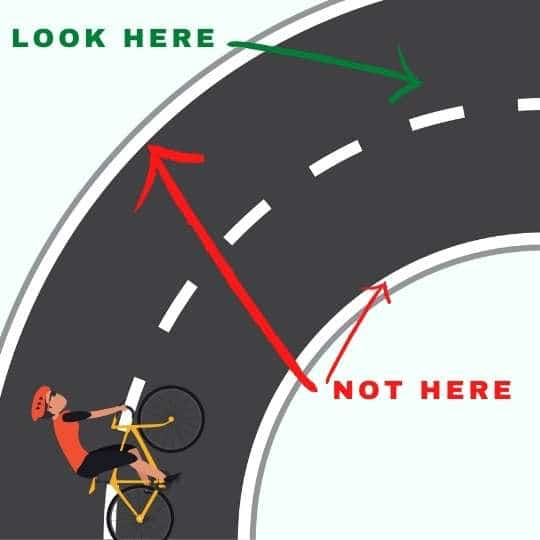
    When riding a bike, if you focus on the ground because of the fear of falling, you will go exactly there – on the ground. You will fall if you focus on the ground while biking. If you want to keep riding, you must keep looking at the horizon. You must keep looking in the direction you are headed, even if you experience fear.

    You go where you look. This is as important in cycling as it is in your life and leadership. One lesson I have learned in life is to reflect daily on where I am looking and where I am going. I regularly ask myself – Am I looking at my dreams and ambition? Am I looking at what I want to create? Or, am I looking at my obstacles and fears?

    This principle has worked well for me. Whenever I have managed to keep my attention on where I am headed, what I care about, and my deepest held values, I have found that things have gone well for me. On the other hand, I have had to face distrust, destroyed relationships, and missed opportunities when I have focused on my fears, insecurities, and anxiety.

    It’s true for cycling. It’s true for life. Look Ahead. Not Down. Keep your attention on where you want to go rather than what stands in the way.

    Where have you been focusing? Ahead or down. What is the future that lies ahead for you? What could be one tiny step you can take in that direction? I read and respond to every reply.

    Articles and Stories Which Have Fascinated Me

    One

    Check Up On Your Team’s Kids

    Checking up shows that you care. If there’s a mountain of stress being added to someone’s life, the least you can do is not pile on more. One of the most important ways to make your team feel supported is to acknowledge that they have a lot going on that you may not know about.

    Eyes are on you as a manager and standards are higher in emotionally charged moments – and that includes charged moments in your team’s lives, not just events related to work. So take a moment to check in with your team members if they have a sick child.

    It’s easy and can make a difference. The hardest part is remembering to do it, which is exactly why I’m writing this.

    From an article about managing team members who are parents

    Two

    It’s Part of the Game

    Falling and getting back up,
    That is how our life is setup
    When the night seems longer,
    It is only making us stronger
    Nothing is wrong, none should we blame,
    Because it is all part of the same game!!

    Hardships are life’s little tests,
    They are as real as our conquests
    Every fall and wound is like a teacher,
    The lesson is ours to find and discover
    In failing there should never be shame,
    For getting up is also a part of the game!

    Get back up, and dust off your clothes,
    Make the best of whatever life throws
    Take control, and be proud of who you are,
    See for yourself you can go how much far
    It’s again the time to play, to take a big aim,
    Hit or miss, it is all part of the game!!

    From a poem I wrote more than 10 years ago – It’s part of the game

    Three

    A Few Resources For You

    I want to thank all of you who have been reading this newsletter for the last 15 months. I hope it has added value to your lives. Please share any feedback as I am always looking for ways to improve these emails. As a show of gratitude, I want to share some research reports I often share with my coaching clients.

    These reports have been a result of my experience and research leading teams, making mistakes, and slowly growing in my own leadership. I hope you will find these valuable as well. These are :

    1. Care To Lead: Why There Is No Leading Without Caring (download here)
    2. The Listening Habit: The One Habit Which Enables All Others (download here)
    3. Fearless Feedback: Recognise Feedback For The Gift That It Is (download here)

    P.S. – If you know where you are headed, or if you have a dream which has been “on hold”, and if you want to discover how powerful you are, I invite you to my coaching programs. I am opening the last coaching group (4-6 people only) of 2021 in Nov. It’s a €4900 investment for one year – in your life and growth. Reply if keen.

    That’s it for now. If you have any questions or feedback, or just want to introduce yourself, hit reply. I read and respond to every reply. All the best,

    Sumit

    (Twitter) @SumitGupta
    (LinkedIn) Connect

  • Issue #33, 17 Aug 2021 – No One Can Do It For You

    Welcome to the Deploy Yourself Newsletter. Every two weeks I share what impactful leadership looks like to show your own power. I also share the most insightful lessons and stories I encountered in the last two weeks. You can also read this issue online.

    Hey,

    No One Can Live Your Life For You

    Every now and then, we all get surprised and knocked down by life. In those moments, we have a choice. To let our circumstances and what is “acceptable” decide our actions, or to choose to live our own way. There is nothing wrong with letting others dictate your choices, but it limits your leadership and possibilities.

    No one can make this choice for you. No one can live your life for you. When you get knocked down, you can let your heart out and get back up. Or you might not. The choice is yours. And why is this choice important? Because it is your life after all. Isn’t it?

    Whenever I have made the choice to live “my life”, I have been more alive, joyful, and satisfied than otherwise. Even if things don’t go as planned or there are obstacles on the way. Do you experience aliveness, meaning, and satisfaction in your day-to-day life? If not, what are you waiting for? Either way – the choice is yours.

    If you want to share a dream or idea which has been “on hold” in your life, reply to this email and share that. What could be one tiny step you can take in that direction? And see what happens. I read and respond to every reply.

    Articles and Stories Which Have Fascinated Me

    One

    How to do Long Term

    The long term is harder than most people imagine, which is why it’s more lucrative than many people assume. Everything worthwhile has a price, and the prices aren’t always obvious. To do long term effectively you have to come to terms with a few points.

    1. The long run is just a collection of short runs you have to put up with.
    2. Your belief in the long run isn’t enough. Your investors, coworkers, spouses, and friends have to sign up for the ride.
    3. Patience is often stubbornness in disguise.
    4. It’s hard to know how you’ll react to decline.
    5. Long term is less about time horizon and more about flexibility.

    And never forget Keynes: “In the long run we’re all dead.”

    Two

    7 Empathetic Questions To Ask At Work

    One of the most important tasks of a leader is to support her people with the challenges they face. However, in the pressure-filled and fast-paced routine of everyday work, the challenges each one of us face might not be easily identifiable.

    One way to uncover important issues is to ask powerful questions regularly. These questions require original answers which often leads to introspection and being vulnerable. I have found that asking powerful questions is a very important skill to develop as a leader.

    Below are 7 such Empathetic Questions which you can ask to understand others and provide any support they might need:-

    1. You don’t seem yourself today. Would you like to take a break and chat?
    2. You sound upset. Is that because of something I did? Let me know if I can help anyway.
    3. What can I do to help? How can I (or the organization) support you?
    4. I know you are going through a tough time. If you want to talk about it, I am willing to hear you out and help in any way possible?
    5. I can’t even imagine how hard it must be for you. I want you to know that I and the organisation appreciate the way you have responded to the situation. If there is anything else I can do to support you, let me know?
    6. I am sorry for what you are going through right now. I know you are a fighter and will come back stronger from this. Can I be of any help?
    7. I would hate to see you burn out. Are you taking care of yourself? Is there anything I can do?

    From an article from my desk – 7 Empathetic Questions To Ask At Work to Understand And Support Your Colleagues

    Three

    Documentary filmmaker Valarie Kaur on Listening

    “Deep listening is an act of surrender. We risk being changed by what we hear.

    When I really want to hear another person’s story, I try to leave my preconceptions at the door and draw close to their telling. I am always partially listening to the thoughts in my own head when others are speaking, so I consciously quiet my thoughts and begin to listen with my senses.

    Empathy is cognitive and emotional—to inhabit another person’s view of the world is to feel the world with them. But I also know that it’s okay if I don’t feel very much for them at all. I just need to feel safe enough to stay curious.

    The most critical part of listening is asking what is at stake for the other person. I try to understand what matters to them, not what I think matters. Sometimes I start to lose myself in their story. As soon as I notice feeling unmoored, I try to pull myself back into my body, like returning home. As Hannah Arendt says, ‘One trains one’s imagination to go visiting.’ When the story is done, we must return to our skin, our own worldview, and notice how we have been changed by our visit.”

    That’s it for now. If you have any questions or feedback, or just want to introduce yourself, hit reply. I read and respond to every reply. All the best,

    Sumit

    (Twitter) @SumitGupta
    (LinkedIn) Connect

  • Issue #32, 3 Aug 2021 – What dream keeps coming back to you?

    Welcome to the Deploy Yourself Newsletter. Every two weeks I share what impactful leadership looks like to show your own power. I also share the most insightful lessons and stories I encountered in the last two weeks. You can also read this issue online.

    Hey,

    What one dream or idea keeps coming back to you?

    Is there something you have wanted to do for a long time but never got around to it? Maybe it is a business you want to start or a hobby you have wanted to pick up. Maybe you want to start a restaurant, or perhaps a new relationship. But life happened, and the idea has been on hold.

    What is that telling you? As you wait for the “perfect moment” for your dream or idea, life is zipping past moment by moment. What are you waiting for? The perfect time, financial investment, more courage, or just a sign from the universe? Maybe this email is a sign.

    This question often comes up in my coaching sessions, and so many of them discover that it is much easier to move forward with their dream idea than they thought? They discover that the barriers that were stopping them from moving forward were actually much smaller than imagined.

    And they discover that life becomes so much meaningful and joyful when you pursue your dream idea, even if the road is not easy and there are struggles on the way.

    If you want to share your own dream or idea which keeps coming back to you, reply to this email. What might that be telling you? I read and respond to every reply.

    Articles and Stories Which Have Fascinated Me

    One

    5 Wrong Ideas About Work

    Here’s the list of wrong ideas:

    1. Work is the soul-sucking thing I do every day to get money.
    2. I need to do work I’m passionate about.
    3. I need to know exactly what I want to do with my life.
    4. I’m not qualified to do this work.
    5. I need this job because I need the money.

    Here’s the problem: These ideas can be right for some people, but wrong for others. The problem arises when it’s actually the wrong idea for you but you fail to see that. This means you get unnecessarily stuck by a self-limiting worldview that wasn’t actually true for you.

    What wrong ideas about work do you have?

    From an article titled Wrong Ideas About Work

    Two

    31 Important Things You Should Say ‘No’ to for a Happier Life

    Below are some of my favourites from the below-linked article. These are what I have learned to say “NO” to.

    1. Negative self-talk
    2. Perfection
    3. Comparing to others
    4. Useless long meetings
    5. Listening to complaints
    6. Toxic people
    7. Bad routines and habits

    From an article titled 31 Important Things You Should Say ‘No’ to for a Happier Life

    Three

    Maya Angelou on Growing Up

    “Most people don’t grow up. It’s too damn difficult. What happens is most people get older. That’s the truth of it. They honor their credit cards, they find parking spaces, they marry, they have the nerve to have children, but they don’t grow up. Not really. They get older. But to grow up costs the earth, the earth. It means you take responsibility for the time you take up, for the space you occupy. It’s serious business. And you find out what it costs us to love and to lose, to dare and to fail. And maybe even more, to succeed.”

    — Maya Angelou

    That’s it for now. If you have any questions or feedback, or just want to introduce yourself, hit reply. I read and respond to every reply. All the best,

    Sumit

    (Twitter) @SumitGupta
    (LinkedIn) Connect

  • Issue #31, 20 July 2021 – The 7 Paradoxes of Leadership

    Welcome to the Deploy Yourself Newsletter. Every two weeks I share what impactful leadership looks like to show your own power. I also share the most insightful lessons and stories I encountered in the last two weeks. You can also read this issue online.

    Hey,

    The 7 Paradoxes of Leadership

    In my decade long study of human behaviour and what makes a good leader, I have done a total turnaround of what I consider good leadership today. In the process, I have discovered 7 paradoxes of leadership that I have verified in my own career and seen successfully applied with my coachees.

    1. You build trust by trusting first. Not by asking for proof or reasons for trusting.
    2. Leadership is all about relationships. Everything else (results, goals, targets) come later.
    3. Fear is your friend. It tells you what is important to you. Beyond fear is growth.
    4. Stop trying to understand life. Live it. The more you learn, the more you realize how little you know.
    5. Failure is the path to success. The more you fail, the more you succeed.
    6. Authenticity is a strength. The more you accept your shortcomings, the more people will respect of you.
    7. The only certainty is that nothing is certain. Control and security are myths.

    If you want to share your own experiences of being on the journey of mastery, reply to this email. I read and respond to every reply.

    Articles and Stories Which Have Fascinated Me

    One

    5 Steps To Deploy Yourself And Live An Authentic Life

    We often tend to follow paths that others have decided on our behalf. However, taking the path less travelled and Deploying Ourselves can make all the difference in the long run. Let me share 5 things that you are probably not doing but which could help you find and create your own path.

    1. Understand Yourself – Your Values, Emotions, Desires, Strengths, and Weaknesses
    2. Realise that You are Unique and Special, Just Like Everyone Else
    3. Get Out of Your Comfort Zone, Live on the Edge That’s Where the Real “You” Lies
    4. Lead Yourself – Take Control of Your Desires, Emotions, Body and not Be a Slave to Them
    5. Stand Up and Speak Up for Yourself and Your Values

    From an article from my desk titled 5 Steps To Deploy Yourself And Live An Authentic Life

    Two

    10 Foundational Practices For A Good Life

    If you want to improve your life, where should you start? Here are 10 wonderful recommendations from Scott Young:-

    1. Establish an Airtight Productivity System.
    2. Exercise Every Weekday.
    3. Read 30 Minutes, Each Day.
    4. Journal Weekly.
    5. One Conversation Per Week with Someone Smarter Than You.
    6. Track Every Purchase.
    7. Fence In All Your Vices.
    8. Wake Up on Time Every Morning.
    9. Always Have a Major Project.
    10. One New Experience Each Week.

    From an article titled The 10 Foundational Practices for a Good Life

    Three

    Alan Watts on Reality

    “Things are as they are. Looking out into the universe at night, we make no comparisons between right and wrong stars, nor between well and badly arranged constellations.”

    ― Alan W. Watts

    That’s it for now. If you have any questions or feedback, or just want to introduce yourself, hit reply. I read and respond to every reply. All the best,

    Sumit

    (Twitter) @SumitGupta
    (LinkedIn) Connect

  • Issue #30, 6 July 2021 – A Master Is A Beginner Again

    Welcome to the Deploy Yourself Newsletter. Every two weeks I share what impactful leadership looks like to show your own power. I also share the most insightful lessons and stories I encountered in the last two weeks. You can also read this issue online.

    Hey,

    A Master Is A Beginner Again. An Expert Is Not.

    The difference between someone who is a master (at any skill) versus an expert is that the master is willing to look like a fool. The master is willing to play and learn like a beginner, while the expert is all serious and committed to not making any mistakes. A master continues to learn in a mood of lightness and curiosity, while the expert hinders their own learning in a mood of heaviness and seriousness.

    For the master – whether it is leadership or badminton or dance – there are no experts. There are only learners. The master’s journey is the journey of lifelong learning. And this journey never ends. The below are some enemies you might run into on your journey of mastery.

    1. Excessive use of external motivation (medals, bonuses) will slow you down when the going gets tough. Reconnecting with your values and purpose will put you back on the master’s path.
    2. Overcompetetiveness – What’s the point of a journey if it becomes too heavy and serious to enjoy the present moment. The ability to laugh at yourself when that happens puts you back on the journey.
    3. Perfectionism – Nothing is more destructive to creativity than setting standards so high that they pull you down rather than push you up. Mastery is not about getting it right all the time. It is about giving yourself permission to mess up every now and then.

    Are you a high performer? Do you see any of the above dark sides of being a high performer in yourself?

    Are you giving yourself permission to be a beginner again? Are you willing to look like a fool?

    If you want to share your own experiences of being on the journey of mastery, reply to this email. I read and respond to every reply.

    Articles and Stories Which Have Fascinated Me

    One

    20 Questions Every Manager Must Ask In 1-on-1’s

    As a leader, my most important meetings are my 1-on-1’s with my direct reports. It is the single best investment of my time. There is nothing more powerful than asking the right question at the right time. Powerful questions like these can become your prized tools of leverage as a leader and coach.

    1. Tell me something I don’t know about you?
    2. Where do you want to be in the next 1, 5, and 10 years?
    3. What are you excited about?
    4. What are you worried about?
    5. If you were to donate everything you have to a cause or charity, which would it be?
    6. What one word do you want people to use to describe you? What word do you think people currently use?
    7. What did you do recently that you are proud of?
    8. When was the last time you told a lie? Why? What would have happened if you had told the truth?
    9. What do you want to do that you will be proud of in 5 years’ time?
    10. How are you special? What makes you stand out?
    11. When was the last time you stepped out of your comfort zone? What was the result?
    12. Tell me about your biggest failure in life? Biggest success? What did you learn from the experience?
    13. When was the last time you laughed at work?
    14. If you had the opportunity to get a message across to a large group of people, what would you say?
    15. What would your day look like if money was not a concern?
    16. Who do you look up to? Who are your mentors, both those you know personally and those who inspire you from afar?
    17. What do you do after work? What are your hobbies?
    18. What are your highest priorities in life? Where does work fit in?
    19. As a child, what did you want to do when you grew up?
    20. What in your life is ‘on hold’? Until you lose weight, until you retire, etc. What are you waiting for?

    From an article from my desk titled 20 Questions Every Manager Must Ask In One-on-One’s To Help People Find And Do The Best Work Of Their Lives

    Two

    Michelle Obama on the messages are you practising?

    Michelle Obama speaks in this video about Impostor Syndrome, and how it is a lie that many of us have been (unconsciously) practising. Below are some messages from the video which I am taking on to practice regularly:-

    1. “You can’t count on someone else to give you self confidence.”
    2. ”You belong. Practice a different set of messages.”
    3. “You are waiting for somebody to tell you that you belong. I am telling you – You Belong”

    From a Michelle Obama video on youtube

    Three

    George Bernard Shaw on Happiness

    “We have no more right to consume happiness without producing it than to consume wealth without producing it.”

    ― George Bernard Shaw

    That’s it for now. If you have any questions or feedback, or just want to introduce yourself, hit reply. I read and respond to every reply. All the best,

    Sumit

    (Twitter) @SumitGupta
    (LinkedIn) Connect

  • Issue #29, 22 June 2021 – Get Out of Your Own Way

    Welcome to the Deploy Yourself Newsletter. Every two weeks I share what impactful leadership looks like to show your own power. I also share the most insightful lessons and stories I encountered in the last two weeks. You can also read this issue online.

    Hey,

    You Are Your Own Biggest Enemy

    The biggest challenge success brings is success itself. The strengths that made you successful in the past often become your biggest barrier in the future, as they stop you from seeing new ways of growing further. Every strength has a dark side, and you soon realize that what got you here won’t get you to the next level of success.

    This is why so many people are struggling to understand why doing MORE of what made them successful in the past just isn’t working anymore. What makes the problem worse is that this is often a blind spot for high performers. And it is scary when they realize this paradox. If you want to constantly make the “impossible” happen, you also have to constantly re-invent yourself – again and again.

    What stands in the way of your “impossible” goals is not something out there (money, people, skills, etc) but your own unexamined patterns of thinking. They are thoughts like – “I am an executioner, not a visionary.”, “I am a slow learner”, “I am an introvert.”, “I do not know how to do XYZ”, or “I am not smart/good/talented enough”. What might that be for you?

    The only enemy you need to worry about is you yourself. Because only you decide how small or big you dream. Only you decide when to quit and give up. Only you can decide what to do next – irrespective of your situation. And, it is only you who decides the way you experience the world, the emotions you experience, and the attitude you take as you move forward.

    Where are you being your biggest enemy? What dreams might be possible if you get out of your own way?

    If you want to share your impossible dreams and the thoughts that might be blocking you, reply to this email. I read and respond to every reply.

    Articles and Stories Which Have Fascinated Me

    One

    8 Reasons We Should Know Our Values, Worth, and Purpose

    I often wonder why we don’t know our values as adult human beings? Why don’t we know what is important to us and what we care for? Why don’t we know our worth? It seems to be an important question, yet most of us face this question by accident, and not by design.

    It is not possible to have a fulfilling life unless you take care of what you care about. When you connect to the things that matter most, you experience true joy. Otherwise, you may end up doubting yourself and questioning why you are doing what you are doing, even when you achieve success by society’s standards.

    Self-awareness begins with knowing what makes you tick, and what is most important to you. The following are some benefits to be gained from knowing your worth – your values and what you stand for.

    1. Knowing your values may not lead to fame or fortune, but it will foster maturity and help you stay grounded.
    2. Values Help You Find Your Purpose. You won’t know what you want out of life if you don’t figure out what is important to you.
    3. You can use your values to determine your actions in moments of crisis. Your values can serve as a moral lighthouse in those tough times.
    4. They are Valuable in Decision Making
    5. Identifying your values will help you clear out the clutter. It will help you clear the mud from the water allowing you to see clearly. You can then focus your time and energy on what matters and brings value, satisfaction, and aliveness into your life.
    6. They Help You Choose the Right Career. Knowing what you stand for, and what matters to you, will help you consciously take your life and career forward, rather than just drifting with the flow.
    7. Knowing your values and worth shapes your beliefs. It enables you to develop strong opinions about key subjects.
    8. When you take action aligned with your values and to take care of what you care about, the result will be a more meaningful and happier life.

    From an article from my desk titled 8 Reasons We Should Know Our Values, Worth, and Purpose

    Two

    How a Question May Be the Best Answer

    It is so easy to jump to “solution mode” and later find we have missed valuable insights, barriers, or perspectives. So I ask you – when posed with a question do you jump to the “answer” which is formulated from your own perspective, desires, and, priorities or do you hold in your response and ask another question?

    The below article poses a challenge to the reader when asked a question :-

    • Resist the temptation to answer immediately, instead take a breath and allow for a moment of pause which gives the other person permission to elaborate or clarify. Count slowly to 3 before responding.
    • Notice your own 125-400 rule, how accurately does your spoken word reflect your true thoughts and intentions? This will require insight and deep reflection. Does what you say reflect what you mean? Remember, the other person is not in your head and will only know the words you speak.

    From an article titled – How a Question May Be the Best Answer

    Three

    Gandhi on Changing The World vs Changing Ourselves

    As human beings, our greatness lies not so much in being able to remake the world — that is the myth of the atomic age — as in being able to remake ourselves.

    ~ Mahatma Gandhi

    That’s it for now. If you have any questions or feedback, or just want to introduce yourself, hit reply. I read and respond to every reply. All the best,

    Sumit

    (Twitter) @SumitGupta
    (LinkedIn) Connect

  • Issue #28, 8 June 2021 – Where To Focus Your Attention?

    Welcome to the Deploy Yourself Newsletter. Every two weeks I share what impactful leadership looks like to show your own power. I also share the most insightful lessons and stories I encountered in the last two weeks. You can also read this issue online.

    Hey,

    Where To Focus Our Attention?

    Our attention is like the blade of the sword for the warrior. Where a warrior points the blade of their swords determines their success or failure in war. Similarly, where we choose to point our attention determines the results (both quantitative and qualitative) we produce in life.

    So, where shall we put our attention at this moment? Do we put it on what is immediately in front of me (news, social media, etc), or what brings us long-term joy and satisfaction? Do we put it on the risks, pressures, fears, and uncertainties of the world around us (especially during covid)? Or, do we focus our attention on what is in our control – our efforts, our planning, our moods, and our attitude towards life? The choice is ours.

    We can also choose to move the attention needle depending on what stage we are at.

    If we are a beginner at something, we can focus our attention on execution so that we move fast and learn as much as possible.

    If we are at intermediate at something, we can focus our attention on creating a strategy and going after our goals in a more planned way.

    And if we are nearing expertise in a domain, we can focus our attention on the way we see the world, and if there is a way to see it differently. For the expert, focusing on the observer that they are is often the biggest leverage point they need.

    What is your biggest leverage point right now – in different areas of life? Are you focusing your attention to those leverage points? Or, are you letting your attention drift to whatever is in front of you right now?

    Your attention is the blade of your “leadership” sword. If you want to sharpen more or find out what would that mean for your life, reply to this email. I read and respond to every reply.

    Articles and Stories Which Have Fascinated Me

    One

    6 Things To Avoid As A Leader to Ensure High Team Performance

    It is easier to cause damage as a leader by ignorance than it is to improve performance by deliberate intervention. Here are 6 things that you must avoid doing if you want to be a successful leader. 

    1. Do not accept mediocrity or low standards. Whatever standards you accept will become the norm. 
    2. Don’t treat people with disrespect. Even when they mess up. 
    3. Don’t force people to commit to deadlines or take on work that would mean spending time away from their families or ignoring their health.
    4. Don’t put profits over employee well-being. Don’t push people to stress and burnout
    5. Don’t bias your decisions because of who and what you like. 
    6. Don’t micromanage. Trust people and let them do the work they were hired for.

    While there are a lot of guides on what to do as a leader, these above 6 things are a simple reminder of what you should not do. Sometimes it is easier to cause damage to team morale and engagement with one small misstep. If you keep the above guidelines in mind, you will set the foundation for a strong team.

    From an article from my desk titled 6 Things You Must Not Do As a Leader To Ensure High Team Performance

    Two

    100 Tips For A Better Life

    This article lists down simple guidelines for life (I also see them applicable to leadership) divided across categories such as possessions, productivity, health, success, relationship, and above all, joy. Below are some of my favorites:

    1. Done is better than perfect. 
    2. Reward yourself after completing challenges, even badly. 
    3. If you’re not that smart but can communicate ideas clearly, you have a great advantage over everybody who can’t communicate clearly.
    4. If you’re under 90, try things. 
    5. Compliment people more. Many people have trouble thinking of themselves as smart, or pretty, or kind unless told by someone else. You can help them out. 
    6. Don’t punish people for admitting they were wrong, you make it harder for them to improve. 
    7. Human mood and well-being are heavily influenced by simple things: Exercise, good sleep, light, being in nature.
    8. Bad things happen dramatically (a pandemic). Good things happen gradually (malaria deaths dropping annually) and don’t feel like ‘news’. Endeavor to keep track of the good things to avoid an inaccurate and dismal view of the world. 

    From an article on LessWrong – 100 Tips for a Better Life

    Three

    George Bernard Shaw on Living a Life That Burns Bright

    “This is the true joy in life: being used for a purpose recognized by yourself as a mighty one;

    being a force of nature instead of a feverish, selfish little clod of ailments and grievances complaining that the world will not devote itself to making you happy.

    I am of the opinion that my life belongs to the whole community, and as long as I live it is my privilege to do for it whatever I can. I want to be thoroughly used up when I die, for the harder I work the more I live.

    I rejoice in life for its own sake. Life is no “brief candle” for me. It is a sort of splendid torch which I have got hold of for the moment, and I want to make it burn as brightly as possible before handing it on to future generations.”

    That’s it for now. If you have any questions or feedback, or just want to introduce yourself, hit reply. I read and respond to every reply. All the best,

    Sumit

    (Twitter) @SumitGupta
    (LinkedIn) Connect

  • Issue #27, 25 May 2021 – Be Like The Lake, Not The Pond

    Welcome to the Deploy Yourself Newsletter. Every two weeks I share what impactful leadership looks like to show your own power. I also share the most insightful lessons and stories I encountered in the last two weeks. You can also read this issue online.

    Hey,

    Be Like The Lake. Not Like The Pond. To Transform People

    If we are alive, we all need to influence, persuade, and transform people and their views from time to time. This is one of the most common challenges business leaders face on a daily basis. During my coaching sessions with them, I often share this simple analogy with them.

    If you pour salt into a small pond, very soon the water gets salty and undrinkable. However, if you put the salt into a large lake or a river, people can continue to drink the water. In a way, the lake (or river) has a huge capacity to withstand and embrace salt (read “people challenges”) without impacting the quality of the water.

    Similarly for us, when we get lost in an argument, we become like the pond. We can get frustrated and offended easily and this stops us from listening to others and where they might be coming from.

    Instead, if we expand our hearts like a big lake and embrace others and their views with compassion, we can accept them for who they are. We can do this without abdicating our point of view and our responsibilities. This reduces friction in communication, the suffering reduces for both sides, and mutual understanding of each other’s point of view increases.

    And this gives all of us a chance to transform, influence, and move people. Genuinely. Honestly. And as friends not foes.

    How do people communicate in your place of work? Do they talk like friends or foes? Reply to this email right now if you would like to know how this plays out in practice. I read and respond to every reply.

    Articles and Stories Which Have Fascinated Me

    One

    How to Answer People’s Questions To Serve Them Best

    Very often we answer people just to get out whatever is in our heads, without thinking about formatting our answers to suit the person’s needs. Learning how to answer questions can be very useful. Below are some strategies to do so:

    1. Go Deeper to Understand the Real Issue
    2. Paraphrase to Make Sure you Got it Right
    3. Request to Offer Different Perspectives
    4. Share Your Own or Other People’s Stories and Experiences
    5. Refer Them to a Reliable Source
    6. Check if You Answered Satisfactorily

    Before answering any question, ensure you are responding to the right one. Understanding the reason behind it could also help you address the real concern. If possible, you should point the questioner to additional documentation and sources that answer their questions in depth. Additionally, stories, including personal experiences, are always a good option. Finally, you should always request feedback to find out whether you did the question justice with your answer.

    From an article from my desk titled How to Answer People’s Questions To Serve Them Best

    Two

    A 4 Step Way To Give Feedback

    Only 26% of employees say that the feedback they get actually improve their work. Here is a 4 step process to give feedback in a way that it lands well for the person receiving it – without triggering defensiveness and denial.

    1. Ask a question that is short and important and triggers a “Micro Yes”
    2. Give a data point. Be specific. Not Vague.
    3. Specify how the data point above impacted you – positively or negatively.
    4. End with a curious question to trigger a conversation.

    From a TED video by LeeAnn Renniger

    Three

    A Quote by Mahatma Gandhi

    Don’t listen to friends when the Friend inside you says Do this.

    Mahatma Gandhi

    That’s it for now. If you have any questions or feedback, or just want to introduce yourself, hit reply. I read and respond to every reply. All the best,

    Sumit

    (Twitter) @SumitGupta
    (LinkedIn) Connect