
Career

  • Book Review – Trading Up by Michael Silverstein and Neil Fiske

    Trading Up - Must read for any entrepreneur in retail
    Trading Up – Must read for any entrepreneur in retail

    I have read many books in the last two years, ranging from business to auto-biographies to self-help to fiction books. I just put down a book titled “Trading Up” (find it on Flipkart or Amazon) after reading it for two weeks. And what a captivating read it was! It was difficult to put it down once I started it. One reason could be that the book was about retail and shopping, and I am already interested in that because of my experience with SaleRaja and exposure to the retail world. But apart from that too, the book was very well researched and a lot of data has been presented in the book to justify the points made.

    The book has tried to illustrate how middle class consumers are ‘trading up‘ to buy high quality products that deliver benefits on many different levels, even at a price premium and how that is breaking the traditional price-volume demand curve. The product could be as simple as a soap and as complex as cars. The basic premise is that traditionally, the markets have had two kind of products, the conventional goods that sell at low margins and high volumes and the luxury goods which sell at high margins and low volumes. The author has remarked in the book that in many industries, there is a huge gap between these two segments.
     
    He has called the products falling in these two categories as ‘new luxury‘ products that are technically superior and also have an emotional advantage for the consumer. He has given many examples of such companies such as Starbucks (coffee), Callaway Golf (golf equipment), American Girl (dolls), Panera Bread (bread), Belvedere (vodka), Whirlpool Duet (washing machine) and others. One distinct characteristic of these products is that they sell at high margins and high volumes, much above the traditional price-volume demand curve.
     
    He has presented these stories as case studies of how different companies saw the huge gap in the market and came with their innovative products that created a new ‘want‘ and market for these consumers who traded up. He has backed his theories with data to substantiate them. He has also looked at some characteristics of the entrepreneurs and tried to find a common ground between them and their approaches as they created products for the new consumer.
     
    The authors have defined some characteristics of the new consumers as below –
    1. The new middle market consumer is smart and has more disposable money than ever.
    2. The new consumer won’t mind buying products at a premium if the product is superior in quality and gives them a feeling of comfort and satisfaction.
    3. The new consumer choose which brands and products they want to be associated with, ones that define their status and personality.
    4. They are ready to buy these products at a higher price, and will trade down in other unimportant products.
    Some characteristics of the companies and entrepreneurs that build these products are –
    1. They are mostly outsiders to the market, and even if not, attack the market like an outsider. They strive to set new standards for innovation, quality and providing an emotional experience for the consumer.
    2. They understand their target markets, and are aware that they will pay a premium if provided a product that can engage with its customers on an emotional level.
    3. They love what they do, and are consumers of their own products.
    4. They customize their value chains and distribution networks to deliver their products in the best possible way, and use influence marketing with celebrities rather than traditional advertising. They focus more on word of mouth marketing.
     
    Perhaps the most important point the authors have made is people perceive value differently than previously thought. They will pay a premium and buy such a product in higher volumes even during a down economy. If the product is superior and gives much more satisfaction than the currently available products, the consumer will perceive its value differently and trade up in this category, even if it means they have to trade down in other unimportant categories.
     
    This book, which you can buy on Flipkart or Amazon, helps a lot to understand the current changes happening not only in developed countries, but also in emerging economies like India. It not only gives examples of such companies and entrepreneurs but also explains HOW they did it? It is a must read for anybody in business or someone who plans to launch a new business soon. This sets the book apart from other business books and keeps the user hooked throughout the book. It also made me understand why my friends and peer group spend the way they do, and how can an entrepreneur (future me) develop products and services to target this ever expanding segment. In summation, I totally loved it!!
  • Three Years in Bangalore – The joy, pain and where it leads?

    18 Oct 2008, that was the day I landed in this beautiful garden city Bangalore as a 25 year old full with enthusiasm and energy to make it big. Now, three years hence, I can say it is exactly the same state I found myself in. Buzzing with energy, pumping in 14-16 hour days and excited about a lot of ideas sprouting in my head. Now I won’t say that it has been all rosy in these last three years, as there was a brief period of being lost, where I hardly was able to put in 6 hours a day, and I was either angry, frustrated, irritated or just tired all day along. But I am glad that this phase happened, and gladder that it is over now 🙂

    SaleRaja – The Joy and Pains of Entrepreneurship

    The first year in Bangalore was full of experiencing what entrepreneurship is all about. There were good days, and there were not so good days. Technical discussions, night long marathon coding sessions, sales calls, and a lot of manual and boring repetitive tasks used to fill up my day. The Bangalore weather was the perfect catalyst for all this. Going to events, meeting the founders of other startups, partnering with a lots of people for different tasks and lots of brainstorming sessions made this period one of the most memorable of my life. I started SaleRaja.com as I felt working with InfoEdge that it was not too difficult to earn money ‘for ourselves‘. SaleRaja taught me it was not so easy either 😉 Nothing could be more humbling than that, and the lessons from SaleRaja makes me what I am today. 15 months in Bangalore, and I had to make one of my toughest decisions to let go of SaleRaja, which might also be one of the wisest. For the whole SaleRaja journey, I can say that I started SaleRaja for earning money and getting rich. It didn’t make me any richer (in financial terms) but it ended my hunger for money and pushed me towards a journey for more meaningful things, and that was a big breakthrough.

    New city, New games
    New city, New games

    Exploring New Territories

    Once the burden of SaleRaja was no more, I felt really free and light compared to the heavy feeling of burden which I felt earlier. I started meeting a lot of people from the startup ecosystem in Bangalore, also had time to catch with a lot of friends in Bangalore whom I rarely met during the times of SaleRaja. I got interested in looking for new ideas for business, and saw a few very interesting ideas by entrepreneurs. I joined Yahoo during this time, and apart from work, started volunteering to teach school kids as part of a Yahoo! initiative. This step was path breaking as it helped me discover a new side of myself and opened up a lot of new doors. Not to forget are the many long rides I did on my bike which literally meant exploring new territories.

    The Joy of Starting New Initiatives

    Around the end of 2010, I decided it was time to do something (again). Well, once an entrepreneur, always an entrepreneur. I love starting new initiatives, and this time I decided to do something non-commercial, and something which was not related to internet and coding in any way. I took up a waste management initiative, organized an anti-corruption walk, and later started Pick a Fight. This journey, which still continues, got me in contact with some amazing people from the non-technical world, and it was an eye opening and view expanding experience.

    Every city has its own language, customs and festivals
    Every city has its own language, customs and festivals

    The Future – I can sense some change soon

    It has been almost two years since I gave up on SaleRaja, and I am really eager to get back to the game again. Although I am involved in the initiatives mentioned above, I am always excited by new business opportunities. In a way I can feel the winds of change coming towards me soon. I am not sure how long before I start something again, or whether I will start myself or join an already existing startup, or what idea it would be? But I am very sure that I am ready for it again now based on my learnings in the last two years. But this time I will not hurry up into it like last time (not repeating the mistakes) and do proper due diligence before jumping again (making new mistakes).

  • 8 More Lessons from SaleRaja and other start-ups I have been associated with

    Recently I wrote about some of the important lessons I learned after working with SaleRaja and other startups. I was pondering over this article and I realized I can think of many more points which I can write about. So below are 8 more lessons which I came up after reflecting on those days spend building some amazing products with SaleRaja, InfoEdge and Jivox.

    8. Spend wisely

    As a startup your balance sheet will be in the red in the first few years as you build the infrastructure, teams and systems for the future. Hence it is very important to monitor and control what you spend and for what purpose. Even if you have secured funding, you never know which way the economy turns in the future. The point is to always have cash in the bank to act as a cushion in tough times.

    9. Networking

    Big corporations are people independent, i.e. , they never depend heavily on any one or a few people for their business to survive. It is because of this that they can hire in big numbers, and even fire people easily in hard times. In startups though, the commitment to the company by employees is very important. Similarly, each employee is very critical to the company and it can’t afford losing an employee as it might impact their business. Due to this, the hiring in startups (at least the initial hirings) normally happen through networking and personal contacts as trust in the employee – employer relationship is very critical for startups. And networking is not only useful in hiring but in other business aspects too.

    Beginning is Half Done
    Beginning is Half Done

    10. Have Fun Along the Way

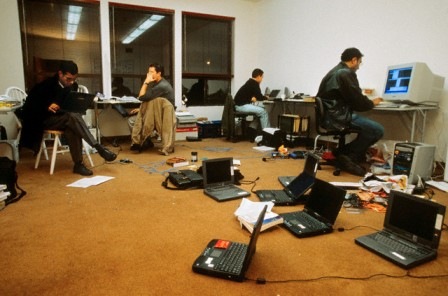
    I have always believed in the idea that if we love what we do, it is not work but more like play. And while doing different tasks during a typical day, it is very important to have fun and not get too serious. A team of people working who smile and have fun with each other in a casual atmosphere will always have more productivity. So in your team, play some games, pull somebody’s leg, take out time for discussions other than work, or whatever, but don’t miss to have FUN. This might be an exaggeration, but see what happened during a night out in my first job.

    11. Do everything – customer service to sales to coding

    As a co-founder or starting member of a startup, you should try to do everything to get a pulse of the whole business. That would mean doing coding with your engineers, being involved with your marketing team, going out on sales calls with your sales team and also hearing customer complaints and feedback. This will keep you well informed of what is happening in the whole ecosystem around your business and will help you make better decisions.

    12. Do your Business Ethically

    It is important to follow both the legal and ethical laws of the land where you operate your business. Being ethical will help you in fostering a long term relationship with your customers. Any success that is attained without the foundation of ethics is bound to be short lived, as lies and scams tend to come out sooner or later. The primary objective of business is not just to maximize profits, but it is also to be a responsible citizen in a just society and working in a way that benefits all its stakeholders.

    13. Make Mistakes, but Don’t Repeat

    It is only human to make mistakes, and as you start a new business, you will also make few. But the important lesson here is to not keep repeating them. We must take enough risks for our business to grow, but also be wise enough to learn from our mistakes and not repeat them. We just need to make ‘new and better‘ mistakes going into the future. As for me, I am really glad for the mistakes I have made.

    14. Mature with Time, but Don’t Grow up..

    As our business grows and we reap success, we grow more mature and this maturity starts reflecting in our daily lives as well as our business decisions. But as a startup, it is very important not to loose what makes you special in the first place. It is always good to be a little crazy, keep having fun along the way and not get too serious. It is ok to risk, and it is ok to fail.

    15. Don’t accept Failure as an Option

    One of the most important word you have to stop listening when starting something new is ‘NO‘. So no matter what, in the face of a NOs, keep on finding new ways of achieving the objective, but never give up. Try out a lot of things, and go with the things that work. When things are not going well, take a break, do something which inspires you, but after that, get back to it with relentless persistence. Remember, failure is not an option.

  • 7 Lessons from SaleRaja and other start-ups I have been associated with

    When I joined my first job, work was on full swing to launch 99acres.com . I was part of the team which did all the technical work and the site was launched one month after I joined. Thereafter, I launched Sukip.com in Jan 2007 and Saleraja.com in Aug 2007. After moving to Bangalore, I worked with Jivox.com for 18 months. Recently I started PickaFight.in, this time as a non-profit initiative. In all these endeavors over the last six years, I got a good exposure to starting up and scaling up websites, both from a technical, product and business point of view.

    There have been many lessons along the way, most of them learned the hard way. Here are seven important points I would like to share with one and all who might be interested in starting a web based business. UpdateHere are eight more lessons which I wrote as a follow up article 🙂

    1. Passion in what you are doing

    Always do what you are passionate about. If you are starting a new website based business, it will keep you awake at nights and make you work on weekends. So it is very important that it is something you are really excited about.

    2. Prioritize

    In my first job, my boss gave me a valuable lesson, “In a startup, you will always have thousand things to do but not the resources to do all of them. The key is to prioritize among them and then keep your focus on doing the selected tasks to the best”. I have never forgotten this. You will always have more than your plate can hold. So prioritize, prioritize and prioritize.

    Working in a startup can be totally fun and 'not like' work
    Working in a startup can be totally fun and 'not like' work

    3. Release regularly

    We launched sukip.com after 6 months of development, and then SaleRaja.com was launched after just 11 days of coding. Release early, release often is the idea. Rather than planning and building a Taj Mahal after months or years of work, start with a basic model and then make changes based on market feedback. Because the customer is the best judge of your product. Period.

    4. Understand technology driving your product

    As a founder, you might not do all the coding for your product, but it is very important to understand the technology behind it. By doing so, you will be better prepared to perform your job when you step in the shoes of your sales guy or the product manager. In short, it will allow you to make better business decisions.

    5. Work like a family

    Starting a company is like raising a baby, and hence it is very important the atmosphere is very cordial and like a family. People need to trust each other, care for each other and treat the work as their baby. This family like work culture could be the difference between success and failure later on.

    6. Hire people smarter than you or who fill your gaps

    You might be smart, talented and hard working, but nobody can know or do everything. Hence it becomes very important to hire people smarter or more talented than you are, or who are talented in the areas where you have a skill gap. Many times people don’t do this for personal and ego reasons, but this is a valuable lesson which I have learned the hard way.

    7. Work with people who share your value system

    Although your work might not require you to deal with your moral and ethical values very often, it is better to work with people who share your value system. In times of crises, or in times of extreme excitement and growth, these value systems can sometimes prevent us from making big mistakes. At the same time, a difference in the value system can cause rift between the team as both parties might consider their beliefs as right and blame the other party for not understanding.

  • What I learned in the last few months I worked on SaleRaja?

    Right from August 2007, when we started SaleRaja, it has been like a baby for me. It was something on which we had great hope. SaleRaja was supposed to be our way out of normal day-to-day jobs. I never thought I would have to work for any other company again at that time, and we even got a promising response in the beginning. But soon, the growth in terms of traffic and registrations began to steady out and it was clear that we would need a lot more funding and resources to scale it up to the next level.

    With the recession in 2008-09 and considering our background (having only technical skills and no financial, marketing and sales skills), we struggled to get any funding. There was one remote chance of funding or a tie-up but unfortunately we blew that up. Also, my partners decided to part ways because of impending personal issues like marriage and finances, and there I was, running SaleRaja alone in Dec 2008. I got together with one more guy in the beginning of 2009, then with another girl for sales for 3-4 months, at the same time myself managing my day job at Jivox and coding for SaleRaja in the mornings and evenings.

    It was around September 2009 that I was alone again (it didn’t work out as expected with the other two). I was still working day in and day out, doing coding as well as sales calls, but it was beginning to take its strain on me. I was no longer enjoying what I was doing, was getting tired and fatigued easily, and my energy levels started to dip for the first time in many years. The 16 hour work days which used to pass like a breeze started to seem like a self-imposed torture. This continued from September to December 2009. It was during these last few months of 2009 that I started to ponder on questions like –

    • Is this really what I want to be doing?
    • Why am I not enjoying this work now if I used to love it so much earlier?
    • Where am I headed if I continue this way?
    • Is there any other view or picture which I am missing here?
    “If you change the way you look at things, the things you look at change.” - Wayne Dyer
    “If you change the way you look at things, the things you look at change.” – Wayne Dyer

    I had jumped into SaleRaja at the age of 23. I also had blind faith in the idea that doing business is not possible after marriage, so this was THE time for me. And I had so much faith in mine and my friend’s abilities that failure never looked an option. I think I got so caught up in these predetermined notions that I tried harder, harder and harder but was unwilling to see the big picture, the picture that there might be something missing from our skill sets, the picture that business can even happen later on in life too, and that these last 2.5 years have taught me a lot even if they have not been as expected.

    So what I learned from this experience is that sometimes we get so caught up in our day to day existence that we seldom take time to step back from our daily activities to reflect and observe our life as a whole. It is like we are so much busy in reaching the destination that we don’t even have time to stop for fuel. When we are stressed by situations, we start taking our decisions also in that emotional state. It’s strange how one bad incident can take us off track and get us going in the opposite direction instead. Only if we remember to look things in perspective of our whole life.

    Taking time to stop every once in a while and gather our senses is also very important. We have to be calm and make sure we don’t panic. No matter how busy we get, we should always keep some time (a few hours or a whole day) to sit quietly and introspect that we are going in the right direction or not. It will allow us to focus on what we already have rather than what we don’t. Then we can go about calmly making new plans and vision for the future. In this quiet time we can ponder on long term questions like –

    • What all resources do I have now, and what all do I need?
    • What have been the past successes and failures, and lessons from them?
    • What skills, qualities, talents I need and how can I get them?
    • How can I more effectively use what I have right now to get the best results?

    Gaining perspective also allows us to be patient and conserve our energies for future riches rather than wasting it on frustrations. It can also prevent us from making a big and costly mistake. Many times we just have to wait before the tide turns in our favor and we can start running again. Sometimes, perspective also makes us aware that we are not going in the right direction, and we might need to take a step or two back before starting again. Like in my case, I realized I didn’t have the resources and skills to pursue SaleRaja. Also, my egoistic view that business can’t happen later in life was getting in the way of making better decisions. It was then I decided to step back and take a break from entrepreneurship, work on to plugging my skill gaps, and then get back to entrepreneurship later on. It was a tough decision back then considering the work I had put on SaleRaja for the last 2.5 years, but necessary, as Steve Jobs remarked in his famous commencement speech, “It was awful tasting medicine, but I guess the patient needed it.”

    I am glad I took this time to introspect, and today, 20 months after that decision, I can say I am on the right track, plugging my gaps and will soon be ready to jump into the entrepreneur world once again.

  • Six years of professional career – A quick recap

    18 July 2011. Yes, that’s today. It marks six years of my professional career. In a nutshell, ever since joining InfoEdge at their Noida office six years back, I have been programming to create websites. But it has been a lot more than that. I have made some amazing friends during these six years with whom I have shared some unforgettable moments, learned a lot about coding, business and life from the people I have interacted with and situations I faced. A lot have changed since that hot and sweaty day of 18 Jul 2005 (which I still remember very vividly).

    If I look back and try to recap the last six years, I can break them down into six very specific sections / phases / periods which can be associated with some really significant events in my career. Read below to know about these six phases –

    First Steps – July 2005 to July 2006

    The first year of my professional life was as good as it gets. I did a lot of hard work in office, and made some really good friends. Everyday during these times was so much fun and unforgettable. The leg-pulling, late night parties, the fights, and the do-not-care attitude of some 7-8 of us colleagues made it one of my best years ever. Coding till late in the night, learning new technologies and putting them to innovative use was an added advantage to the fun we were having everyday in office.

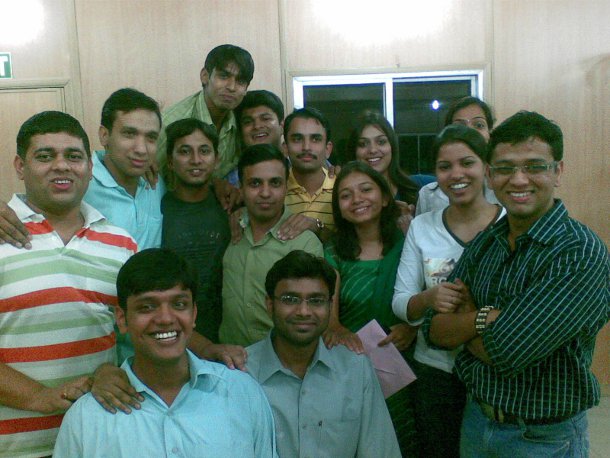
    Ok, I hope you can sense the 'fun' being part of this team
    Ok, I hope you can sense the 'fun' being part of this team

    Cloudy Days – Aug 2006 to Aug 2007

    The fist disappointment came after a year of work, and it made things bad with a very good friend of mine. The group was divided into two, and both sides tried to irritate the other group as much as possible with their sarcastic comments and mannerisms in office. Although it was all friendly rivalry with no serious hard feelings, it did get tense at times. But as all clouds have a silver lining, Sukip and SaleRaja were born during this period out of the happenings in office. It was not a pleasant year for me in office, but a very important one. And by the end of the year, I patched up with this friend of mine and we were back to normal, fun filled days.

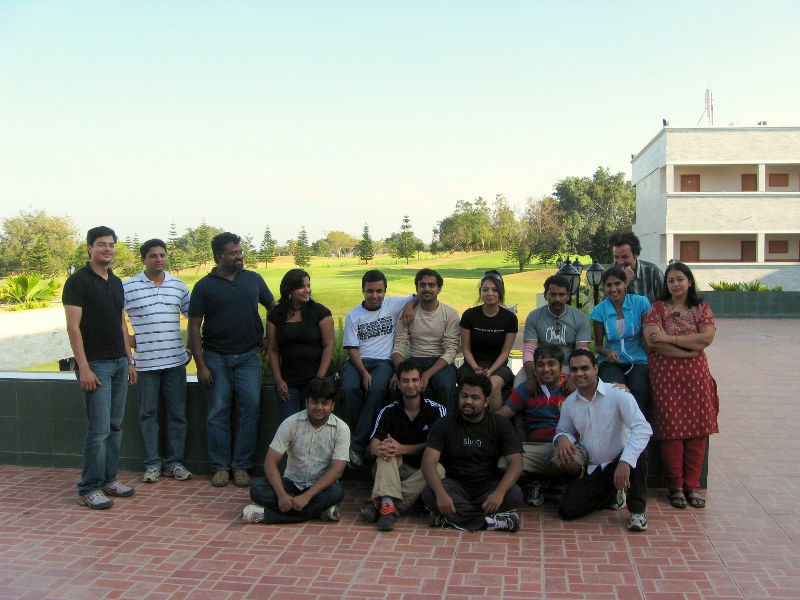
    The 99acres team of 2008, at Mashobra
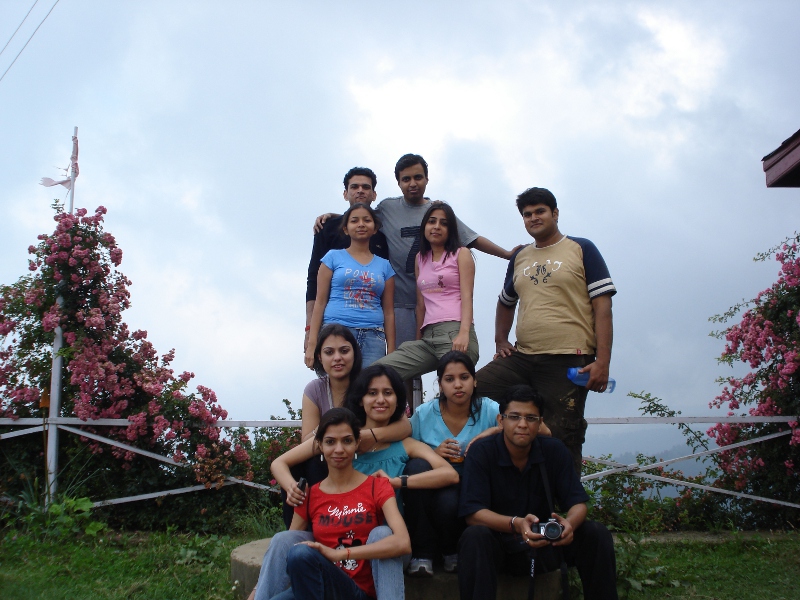
    The 99acres team of 2008, at Mashobra

    Finding the real me? – Sep 2007 to Oct 2008

    If I have to choose one year as the most defining in the last six, it will be this one. It made me discover traits of my personality which I didn’t knew even existed. Managing SaleRaja and leading a team of 14 people, ensuring the co-existence of both work and fun, made me face challenges and respond to them in a way that was to shape my personality. Made another group of great friends during this time, learnt a lot about leadership, and also cleared a lot of pre-conceptions about people and life in general during this time. This phase ended with me making one of the toughest decisions of my life, to leave InfoEdge and the team (and fun) I had for SaleRaja.

    My farewell from InfoEdge in Oct 2008, a very emotional moment
    My farewell from InfoEdge in Oct 2008, a very emotional moment

    SaleRaja – Nov 2008 to Dec 2009

    Over to Bangalore. Fully focussed on SaleRaja, I started doing everything, from sales calls to marketing to coding with an aim of making it big with SaleRaja. We worked hard, then harder, and then even harder to squeeze the most out of our time. My days have been 14-16 hour long for some time, but it started to become taxing and tiring by the end of this phase. In Dec 2009 decided it was time to move on, again one of the tough decisions I had to take. But these 14 months in Bangalore taught me a lot about business and life as I was exposed to many startups and the eco-system surrounding startups. Again, I made a lot of good friends and met a lot of good hearted and inspiring people.

    The Jivox team in Bangalore
    The Jivox team in Bangalore

    LOST – Jan 2010 to Jul 2010

    There are times when everything was going so well and you take some tough decisions which didn’t work out as well as expected. You left the good for the better but are left with nothing instead. These are the times when you start asking questions like, “Why did this happen?”, “Why did I take that decision?” or “What is happening?”… Let me tell you what is happening.. LIFE IS HAPPENING… Yes… Everything was going well.. and then Life Happened… This phase of my career was a time of doubt, but also of introspection. It made me look for answers to some really tough questions within myself, and it was during this phase that I started reading and writing regularly, which helped me a lot and is a regular practice now.

    Rediscovery – Aug 2010 to present

    The last year has been an uncertain, uncomfortable and a bumpy journey. But this journey has taken me through peaks and sights that are unforgettable. I have faced fear right in the eye and done things regularly which I was afraid of earlier, and regularly at that. And needless to say, I have grown as an individual the most in this last year, and done some crazy stuff which I could not have dreamt of a few years earlier. I am having the best time of my life now, where every day seems better than the previous one, where I enjoy every day of the week be it a Monday or Friday and I am doing so much that my days feel like having 36 hours 😉

    In reflection, whatever has happened in the last six years has made me what I am today. All the good stuff was certainly memorable, but all the not so good times were also blessings in disguise. The sooner we realize that the cloudy days are as much a part of life as the sunny ones, we can stop getting hurt from life’s beatings and instead use them to grow stronger and wiser. In the future too, I hope to be strong enough to get hammered, because I know I will get hammered into new and interesting shapes.

  • 5 Ways My Writing Has Helped Me, and Why You Should Try It?

    Ever since I have started writing on this blog (from Jan 2010), it has helped me in more ways than I could have imagined at that time. After struggling to write regularly in the whole of 2010, I have now actually started to enjoy my writing. It helps me to draw out my thoughts and clear up my mind. That itself makes me feel better many times. I think writing is a wonderful way of keeping your mind uncluttered, attaining clarity of thought and managing your emotions. Below are some ways writing has helped me and why should anybody try it —

    You have to be specific, do more research

    When you are talking, there are a lot of ideas and stats which come to your mind and you just say it. You don’t have to make sure that the information is correct or credible, and nobody is going to hold you accountable if you are wrong. But while writing, you make sure twice that what you are about to write is correct. You ask a few people, do some research about the topic, read some articles or books but make sure that you get your facts right before writing. This helps to clear the clutter in your mind of the unnecessary stuff and confusion regarding a lot of areas. It also clears up our mind to focus on newer and important areas which we would not have focussed on otherwise.

    Try your hand at writing too
    Try your hand at writing too

    A good reference for the future

    Writing my thoughts and experiences down has helped me provide a good reference point for the future. Sumit4all.com is one of the sites I myself read very regularly whenever I am free or bored or confused. And it has helped me get my act together in more ways than one. Recalling some old memories from my posts is one of the best way to remember how wonderful life is. Many a times, the poems and articles I have written has helped me clear my confusion and get me focussed on the task at hand.

    Finding your voice

    Writing for me is a way to find my self-expression. There are many thoughts in my mind which are left unexpressed because of the lack of opportunity or the lack of proper audience for it. But writing my thoughts down for the whole world to see and discuss has helped me express how I feel. Many times we keep our feelings inside us, specifically feelings of sadness, hurt and anger. And over time, these feelings can build up as stress and have negative effects on our daily lives. Writing is a powerful vehicle for expressing our feelings which we sometimes loose sight of and to get our focus back on what is really important.

    P.S. – You can keep your writing private too, there is no gneed to put up everything for public view 🙂

    Speak more effectively

    Writing has improved my speaking skills too, as my sphere of knowledge has expanded due to the research and time spent in writing. I have gone to the depth of many issues which I would not have gone had I not written about that particular subject. I also tend to speak more slowly and give facts to support the point I am making. I also know that many times I might be wrong, and prefer to go back and check for facts rather than push my words down another person’s throat. I think it is a result of the fact that I know many times I am wrong. This has happened because the research before writing has proved many of my initial thoughts wrong. How I organize my speech has also seen a marked difference, taking its cue from how I have been structuring my articles.

    Thinking and imagination

    As I said earlier, writing helps to clear one’s mind. It also forces you to confront what you think and feel about different situations in life. Writing also distills your ideas and generates a lot of new and better ones too. Writing makes us see different point of views about an argument, hence presenting a broader picture about the situation. In my experience, writing improves your imagination, and when you think better, you will write better the next time. Doing either improves the other in a way.

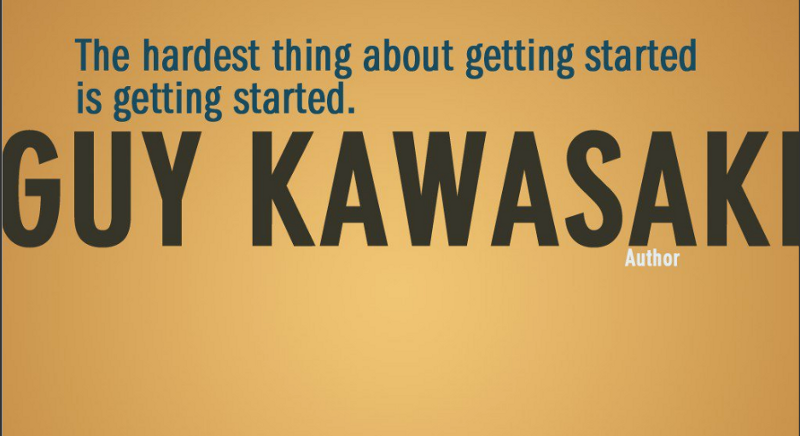
    Obviously, not everything I write is great or even worth reading. There are days when nothing seems to come out right, days when I don’t even feel like writing anything, but many times, words just keep coming if I try to write regularly. It feels real good at the point when you have some momentum in writing and the words just start to flow. I think the hardest part with writing, as with everything else, is just getting started. So persevere with yourself for the first 10-15 minutes of your writing an article, and more often than not, words will start flowing after that.. Keep Trying.. Keep Writing… If not already, Start Now..

    Update – Read my article on 10 easy steps to start writing

  • Why Will I Not Trade Any Year of My Career for even a MIT / Harvard Degree?

    When I passed out of college and finished my engineering in June 2005, I had appeared for GATE (Graduate Aptitude Test in Engineering) for the last two years to seek entrance to a M. Tech program. In 2005, I scored 97.25 percentile and an All India Rank of 744. Although I was disappointed by this scoring, I still got a call from NITIE Mumbai where they admit students for a PG program in management and IT based on GATE scores. I appeared for the interview, which went well, but was not named in the final list of selected candidates. I didn’t wanted to pursue a M.Tech in any regional college so that meant I started my professional career in July 2005 with InfoEdge India Ltd. Today, I can not be more glad that I didn’t get a good GATE score and could not clear the interview at NITIE.

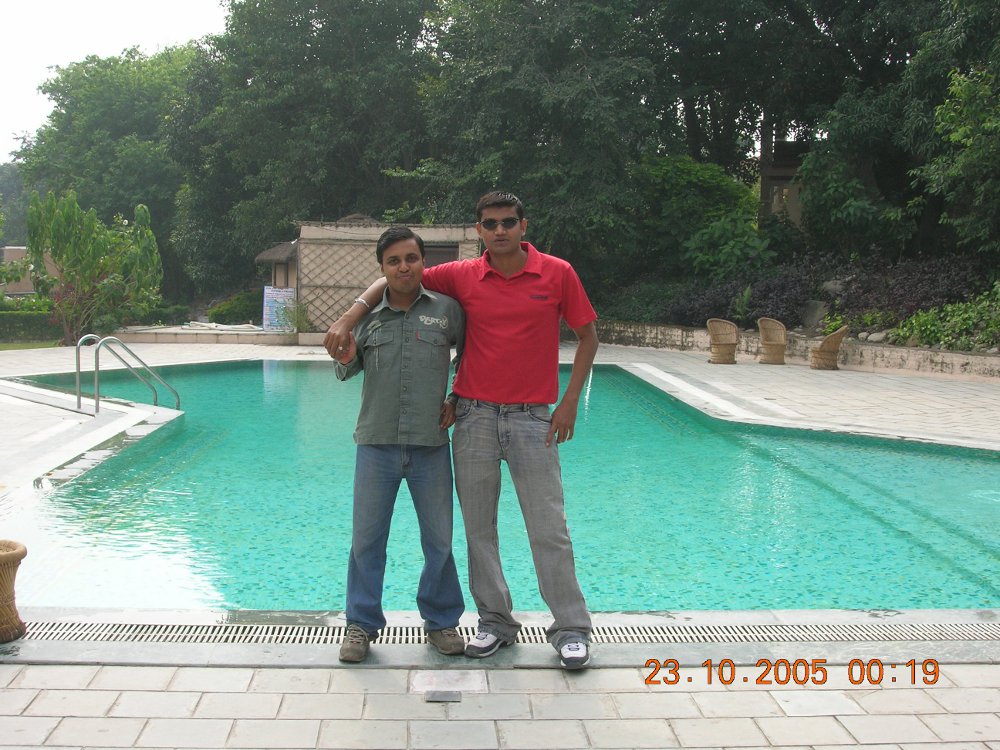
    Don't ask why? This pic has an interesting story behind it!!
    Don't ask why? This pic has an interesting story behind it!!

    It has been almost six years in my professional life now. And boy, what an adventure it has been! I call it an adventure because I have done some really crazy things in these six years. I have made great friends (for life) from my days at InfoEdge and frankly, enjoyed and had more fun than what I did during my college and hostel days. I did some pretty good work on 99acres and was leading the technical team of 14 people when I left InfoEdge in 2008. I started a startup (sukip.com and saleraja.com) with my school friends and ran it for 2.5 years. I joined a startup in Bangalore which had only 15 people. I started this blog in 2010, am writing regular articles and poems which are well received and am now working on my first book.

    Now I am working at Yahoo! and getting the experience of a multinational corporation for the first time. In the last 10 months or so, I have taken initiatives in the areas of waste management, anti-corruption and now PickaFight. After moving to Bangalore, I have hopped to and from Delhi like anything, attending marriages of Gunjan, Shiv, Saurabh, Kinshuk, Prateek, Gaurav (though I missed Mukesh and Rinkesh’s) and many more friends, many times giving a total shock to my friends and family by landing in front of them out of nowhere 😉 I ride a bike which I never thought I can, have been on rides as long as 800 kms, and in between somehow I also learned French for 18 months, prepared for IAS entrance for some six months and made and lost money in the stock markets at different times. I can’t believe it has been only six years!! Phew..

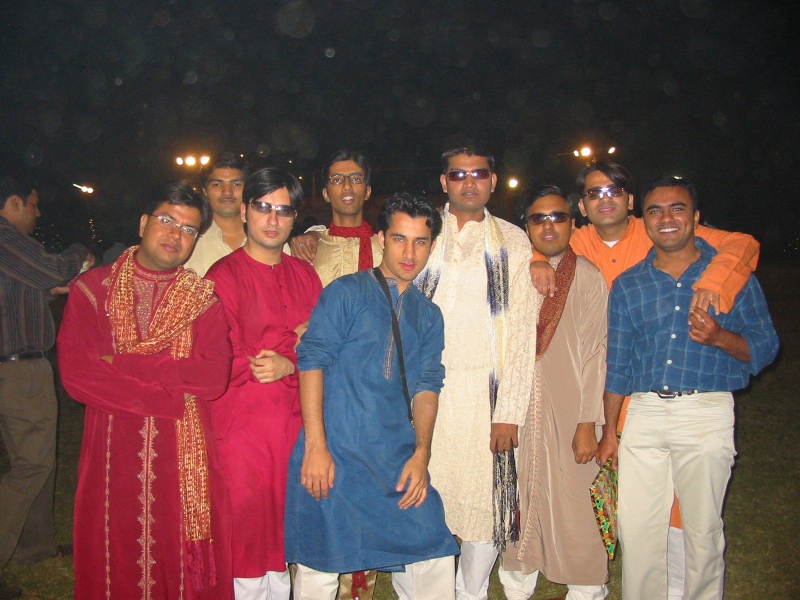
    The 2005 Gang.. All friends for life
    The 2005 Gang.. All friends for life

    The point I am making is, when normally doing a post graduation has become a norm these days, and even I wanted to do it, I have learned a lot lot more from the biggest teacher which is life. I have succeeded and stumbled, been happy and sad, felt trusted and betrayed, but in the course have gained from life what no formal education could have given. Today, if anybody asks me to trade any one of the last six years for a degree from the best of colleges like IIT, IIM, MIT or even the Harvard, I would say NO. Those degrees might be valuable in another way, but they can’t replace what I got in these past six years.

    If I look back at the Sumit from six years ago, I can say I am still the same person at the core, the spontaneous and rebellious one, always looking to break the rules and do something new. But seeing from another angle, I have become a completely different person and I can’t recognize the person I was six years ago. I was a hard core techie then with no intention of going into management, now I have started and shut down a company and call myself an entrepreneur.  My views about life, women, people, friends and family have changed totally in the last six years. It is a new ME now, yet with the same CORE.

    How have I changed?

    If I was a bustling pot of energy back then, trying different things without any direction and easily exploited by any person, emotion or situation, now the energy is being directed for achieving meaningful goals, while acting more responsibly and being more aware of my duties as a son, brother, friend, and as a citizen. My confusion back then has given way to confidence, my frustration to focus, and my arrogance has been replaced by a sense of respect towards fellow human beings. If I used to think I know a lot about the way this world works and how people are, I now know that I know very little about this amazing world which is full of incredible people.

    How am I still the same person?

    I still have a lot of fun in my everyday life, still wait for Mondays, still work on weekends (though it was never work to me), still take off spontaneously to go for a vacation or to give a surprise visit to friends and family in Delhi. I still break rules and norms and do things the way I want to do them. I still succeed sometimes, fail other times. You can say that my failures have not reduced but my disappointments have, my results might not have improved but my upsets have gone down, and that I might not have grown wiser, but I am less foolish now 😉

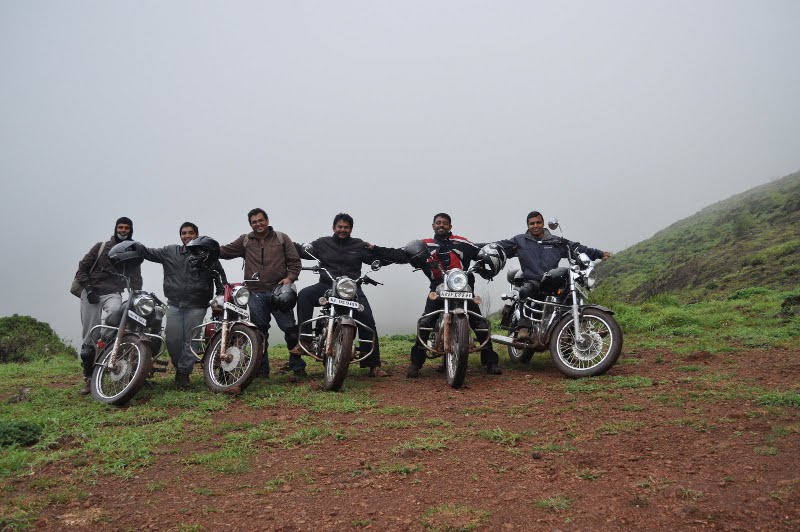
    Had to ride 20km off-road to reach here :)
    Had to ride 20km off-road to reach here

    Life has taught me a lot in these last six years, and it has not been easy either. I can’t erase the memories of my mom undergoing cancer surgery and chemotherapy three times in the last seven years, can’t take back the harsh words I have said to a few people and can’t undo the many mistakes I have made. But who said it was supposed to be smooth? At the same time, I also can’t forget the tremendous excitement when we created SaleRaja, will always miss the amazing fun I had in my first year of work, and can’t thank the 14 people of the 99acres team who made me discover a new side of myself in that one year when I led them.  In a nutshell, life has not been a cakewalk, but if you would ask me “Was it worth it?”, I would say “TOTALLY”!!!

    I don’t know if this is pretty much the difference between every 27 year old and a 21 year old, but this has been my story.

  • How my biggest strength was stopping me from achieving results?

    Time Management and prioritizing things have always been one of my biggest strength. First, as a student, and later as a professional, I have always tried to be ahead of time, and plan things in advance. I can’t remember how it started, maybe I just inherited this from my parents or my knack of doing something ‘extra‘ always made me manage my time properly. However, in the last one year, I have realized how this strength of mine has stopped me in achieving more and better results, and what I had to do to not let this strength become a barrier.

    The earliest example of time management in my life came from my parents. I still remember my mother used to wake me up at 6 AM every morning while I was 7-8 years old and how my parents made me study for 30 mins every morning before leaving for school. The same used to continue after coming back from school with homework in the afternoon, some playtime in the evening followed by one hour of TV at night. I think the same planning of time carried on when I went to college in Jaipur and later when I started my career at Noida.

    Now, as a student, and as a professional who was just starting his career, most of the work I did was individual in nature. It means I had the responsibility of doing something on my own, and I always enjoyed it as I was good at prioritizing and scheduling my time. Most of the success I tasted at work was primarily because of my ability to manage my time and schedule. All this was going well till I started handling the 99acres tech team. This moved me into a leadership role for the first time and I was responsible for the work of the whole team, and it was a team job rather than an individual job.

    Are your strengths becoming your weakness?
    Are your strengths becoming your weakness?

    During that one year in Noida, I found that I made good friends and had a good relationship with people who were good in their work and finished their tasks timely. On the other hand, I felt anger and frustration whenever someone was unable to complete their work timely. I started treating both sets of people differently. In other words, I enjoyed working with people who shared the same traits of time management and resented working with whom ‘I considered‘ poor performers. At that time, however, I was totally unaware that this was stopping me from achieving more results.

    Only in the last one year, when I have taken some projects in the social space, like Waste Management and Anti-Corruption, that I have realized how my biggest strength was stopping me from achieving results. As my work grew from personal to interacting with people and teams, it was obvious (not to me 😉 ) that there would be differences in the way people think and work. Different people will be good at different skills, and for the success of any task or project, it is very important to leverage the complementary skills of people so that the output is bigger than the sum of its parts. Instead, what I was doing is aligning people with same sets of strengths and weaknesses together, making the project difficult and more prone to failure.

    When I finally realized that how easily I used to get worried and upset when somebody did not replied in time, or doesn’t do what I expected him/her to do, I made a conscious effort not to let this become a show-stopper for the project, and for me. It was not easy in the beginning, as I was more concerned with somebody not replying in time rather than thinking about the project as a whole. The day I stopped seeing this behavior as ‘it should not be happening‘, life became a lot easier and I realized how this way of being has impacted my previous projects too.

    Once I realized this, I started building systems, structures and processes that provide necessary help to the people to empower them so that delays can be avoided, or their impact be cushioned at best. This helped in creating a win-win scenario with the team working together with each member contributing in his/her own way and without any resentment, worries, etc. There is still a long way to go for me in this area, and I think the best learning will come when I encounter such situations in future, and how I choose to react to them.

  • Islands of Excellence, and being an Engineer

    Recently when I was reading the bookBanker to the Poor” by Muhammad Yunus, the famous Bangladeshi professor, banker, economist and Nobel Peace Prize winner in 2006, I came across this text which I have quoted verbatim below. You can buy the book at Flipkart or Amazon.

    “Everyday I drove through the village of Jobra which stood between the highway and the campus. I saw barren fields next to the campus. I asked my colleague Professor Latifee the reason for not cultivating this land for a winter crop. He made some guesses for he knew the village well. I proposed that both of us go to the village and talk to the people. We did and soon found the answer.

    There was no water for irrigation.

    I thought we should do something about it. It was a shame to let the land around the university campus remain barren. If a university is a repository of the world’s knowledge, then some of this knowledge must spill over into the neighborhood and demonstrate that it is indeed useful knowledge. A university should not be an island where academics attain higher and higher levels of knowledge without sharing any of this knowledge with its neighbors.”

    And how accurately he has observed. He was a professor in one of the best universities in Bangladesh, and he could not understand the poverty and helpness of the villages right next to the campus. His remark that if a university is a repository of world’s knowledge, it should spill to the nearby areas to demonstrate that it is useful. What a simple and insightful thought!! What is the use of our education and all institutions we have created if it can’t help the people who need it the most?

    Are we doing justice to our profession?
    Are we doing justice to our profession?

    I am an engineer, and I have a similar network, with many people in my address book being engineers, managers, with high levels of education and skills. Living in Bangalore, it seems every other person works in a big IT company. With so much wisdom, knowledge and skills all around me, isn’t it ironical that grave problems still exist in the same society and neighborhood where we live. Shouldn’t our treasure of knowledge spill over in finding solutions to the problems all around us. Or is it that our skills can help big multinationals create new products and improve existing ones for clients mostly sitting abroad but we can’t use our skills to help our brothers and sisters, many of whom don’t even have the basic amenities to live a decent life.

    Or have we created little islands of excellence all around us and we don’t bother to see the poor and the miserable condition they live in. They might live next to our doorsteps, but it is amazing how we have learned to ignore them, and similarly, how they have learned to ignore us. We travel on the same roads, live in the same neighborhood, but the similarities end here. Our homes are spacious and have the best amenities, while somewhere nearby you will also find their congested neighborhood with small houses with very basic amenities. Our children go to the best schools and ride bicycles (with gears) while their go to government schools, play barefoot on the roads with old cycle tyres. Wah Re India..

    Now there must be something I am missing here. Because this can’t be right. This can’t be the state of one of the fastest growing economies in the world. If our engineers are known for their skills all over the world, why can’t they solve the problems which are nearest to them? Wikipedia define Engineers as “They work to develop economic and safe solutions to practical problems, by applying mathematics, scientific knowledge and ingenuity while considering technical constraints.” We call ourselves engineers very proudly, but if we see our daily lives, do we really think that what we do is in sync with the above definition? Even if the answer is yes, then why are we ignoring our own problems and solving problems of the rest of the world? Are we not doing a great injustice to our profession? Are we not insulting the word “Engineer” by calling ourselves so?

    I would love for all to leave comments below, but I would like to request one thing from all readers. Don’t leave your comment immediately if you are frustrated, angry or offended by what I have written. I am not blaming anyone, I am just wondering at the situation. Think about it for a minute or two, go over your daily lives and see if your skills can be of any help to people around you, and then leave a comment. I would love to hear what you have to say.

    P.S. – Banker to the Poor is one of my favorite books.

  • How letting go of SaleRaja could be one of my best decisions ever?

    It was December 2009, and although I was still working on SaleRaja, it was now more as a burden than for interest. I was stumbling in the timelines for feature changes that I had set myself, my enthusiasm was low and I was unsure about what the future had in store for me and SaleRaja. Finally, after managing SaleRaja alone for the whole of 2009, I decided to let it go and focus on my career through a job. That means I was soon looking for a job when at one time I thought that I would not have to find another job ever. My motivation levels were at an all-time low, and I was confused and unsure about what next?

    But I decided to take a break from entrepreneurship, focus on my career through a normal job, and come back to entrepreneurship some years later. It was not an easy decision, and it took me around six months of consideration to finally stop running SaleRaja as a business. Looking back now, 16 months after that decision, I can laugh over those uncertain times and say that it might be one of the best decisions I ever took. The first few months were tough, as I was confused, low on confidence and struggling to find a direction in life. But after that, and till now, the going has been wonderful. I have done things in the last one year that I never thought I could, and would do, ever. I am listing below everything for which I am really grateful in this past year.

    Started sumit4all.com
    I had always been good at writing, but used my writing skills only when writing letters, emails, or when somebody asked my help with it. Hence, in January 2010, I started sumit4all.com as a blog where I would write about different things I feel about, my experiences, my life, etc. I could only do so because I was free and there were no SaleRaja deadlines to follow. It was not easy at first, and I was not able to write more than one post per week. Writing was like a pain in the ass and I had to put in a lot of concentration, patience and effort to research about a topic and write an article. But slowly and steadily, I started enjoying writing and I am writing around 15 articles every month now. Many of my articles have been well received and been shared a lot through social media like facebook, twitter, etc. Now I have plans of writing and getting a book published in 5 years.

    Reading Books
    I started reading books during the last few months of 2009 when I was struggling with SaleRaja, but I made it regular only after Jan 2010. I started reading two books every month and have been following this practice till now. I have read autobiographies, self help books, and a few business and fiction books too. These books have allowed me to take a peek into the stories of so many men and women, and the perspective of life I got after that have been amazing. I have a small, but good library now and have a lot of books in my to-read list.

    A screenshot from SaleRaja.com
    A screenshot from SaleRaja.com

    Landmark Education
    Right after SaleRaja, I was looking for some kind of education to fill in the gaps in my skills which I had found during my stint with SaleRaja. I looked at MBA options, some short time courses done by IIMs and other B-schools, but nothing interested me. I started finding groups online related to business, entrepreneurship and started meeting like minded people in Bangalore, but that also didn’t sustain. Then I enrolled myself in the various programs of Landmark Education since July 2010, and am continuing this education even now. This could not have come at a better time for me. It has helped me get my confidence to a new level and clear a lot of doubts about life. Also, I met a lot of people through Landmark Education who are very successful and leading wonderful lives, providing inspiration and support. I can without doubt say this last seven-eight months of Landmark has been the best education of my life. It is ironical how we keep studying about specific skills / courses but never study anything about life and living in general.

    Joined Yahoo
    Yahoo, Google and a few more are the dream companies of many people. I was open to both startups and big companies when I started looking for a job again, and found myself in Yahoo in March 2010. Having spent the last one year here, it has given me my first experience of working in a multinational company. Dealing with different people and teams from Singapore, Brazil, Europe and US over the last year has given me much needed exposure about how work happens across continents, cultures and languages. In the future too, I am sure there is a lot I can gain from Yahoo and working here.

    Waste Management Activities
    In September 2010, I got intrigued by the idea of waste management and thought of a business idea around it. Since starting a new business was out of question, I got involved in waste management related activities in Bangalore to know more about its details. I took an initiative to implement waste management in apartments starting November 2011 and have got a decent response from that. I have met a lot of people who are already working in this area and am totally amazed by their energy levels. They have been a great inspiration about how to to live life responsibly. It also gave me the confidence to take new initiatives in any area, irrespective of my skills and knowledge in that area.

    Dandi March 2
    In March 2011, I got a chance to organize an anti-corruption walk in Bangalore. In less than three weeks, I put together a team and on 26 March, over 400 people walked over 11km under 4 hours to make this walk a huge success. These three weeks were one of the best of my life, with all my learnings in the past year put to test. I got confidence like never before after this event, and the Anna Hazare magic caught the attention of the whole nation soon after that. It was during this time only that some articles written by me attracted huge traffic from google as people searched for anti-corruption keywords on the internet. The success of this walk is the reason nothing seems impossible now to me.

    What Next?
    Although I have gained a lot in the last one year, I very clearly see a long journey ahead with lots to learn and do. I am in the most calm and peaceful state of mind that I have ever been, and with confidence that I can take on anything now. It has not been all uphill too in the last year, and I have tasted some setbacks too, but I have surprised myself with how well I have handled myself during these breakdowns. I have taken the lessons from the mistakes I have committed without getting frustrated and upset, and moved on to newer things. For the remaining of 2011, I have atleast two more initiatives lined up in the social space, so watch out in the coming weeks for more updates 🙂

    Update – Pick a Fight was born soon after I wrote this post

  • How to use Incentives to get things done?

    This post is not about how to get things done by others, but by yourself. I want to emphasize the use of incentives to motivate ourselves to do a task. We all need motivation to do any task, and more so if the task is repetitive or boring. Setting incentives for myself for any task, big or small, is something I have used all my life, and to good use.

    Set milestones in your task
    If you have a long boring task, break it up into smaller tasks and set milestones at regular period of time. I normally break up my tasks in a way that no two milestones lie more than 3-4 days apart. This helps me keep focus on the task at hand while the overall objective of the longer task is also not forgotten. Overcoming these milestones give you a sense of achievement and keeps you going. So the next time you have a task which might take 20 days, break it up into six or seven subtasks, set milestones, and get going, one milestone after next. It is easy to procrastinate or miss a few days in a 20 day task, but very difficult for a 3-4 day one.

    Treat yourself after every milestone
    Whenever a milestone is reached, treat yourself with something. It could be as simple as having an ice-cream or going to eat in your favorite restaurant which you won’t go normally. These small treats are the things which you might do normally too every once in a while, but tying them to a milestone gives you a sense of achievement and adds more meaning to it.

    Don’t give yourself what you want, tie it to a result
    During childhood, everything we two brothers demanded was never given to us directly, our parents always used to attach it to a result, most of the times academic results. If it was something small, the result could be as simple as doing your homework, or if it was something big, it could be tied to a good score in exams. I distinctly remember once when I wanted a cricket kit and that was tied to standing among the top three candidates in the final exams.

    If you don’t achieve the result you wanted but worked hard, treat yourself anyway
    Now when you set yourself some targets / milestones to achieve, sometimes you will achieve the results and sometimes you will not. That is very natural. But if I am sure I have given enough effort to the task, I go ahead and treat myself anyway 🙂 After all, the objective is to add some fun and motivation in doing of a task and not to discourage or demotivate.

  • What I learned when Deepali said “Theek Theek Laga Lo” 🙂

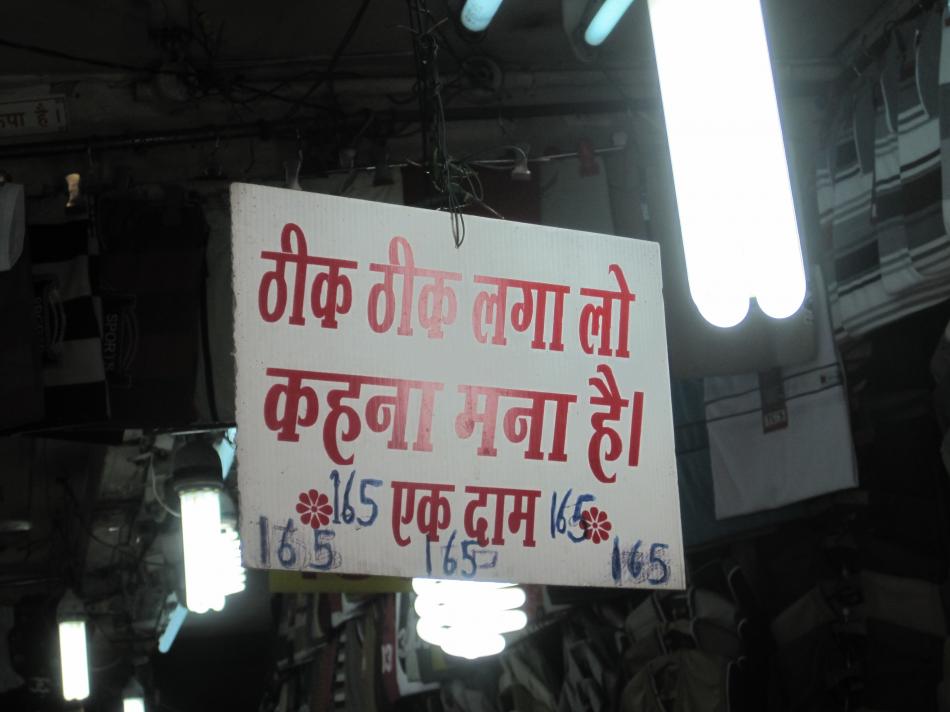
    It was sometime in 2007, or 2008, when I was the team leader of the 99acres team in Noida. This incident happened during a planning meeting for future projects in 99acres which was attended by many senior people in the company. Product Managers, Sales Heads, Business Heads of 99acres and Jeevansathi, and I think even our COO was present during that meeting, not sure about him though. Being the one handling the tech team, I was giving time estimates for the different ideas / changes the top guns had on their list. It was one such idea for which I suggested a time estimation and somebody said that he thinks it should be done in these many days (obviously less than mine). As it was only an estimation, I thought about it a little more and reduced my estimation by a few days. At this point, Deepali Singh, who was the business head of 99acres said “Theek Theek Laga Lo”. The whole room burst into laughter at that point and it was a moment I still remember to this day. (“Theek Theek Laga Lo” is a Hindi slang for “Give me a right price” which is commonly used while bargaining for price while shopping in local markets of Delhi)

    What I learned from this incident is that having fun and keeping a light atmosphere is very important, even when discussing the most serious of issues and problems. It was the same that day, I was a little nervous and was taking things too seriously. After this incident, the whole mood in the room lightened up and I was lot more relaxed which indeed helped me to do my job better, in this case, giving better estimations.

    I certainly miss shopping in Delhi's markets
    I certainly miss shopping in Delhi's markets

    Though normally I am fun loving and keep on doing something or other for fun, I have often seen myself getting too serious during important meetings, specifically when there are people higher up in the hierarchy attending it. Deepali’s comment diffused the tension and put me at ease highlighting how important it is to have fun at the workplace. I have always believed that if you are having fun while doing your work, then you will be more creative, more productive, will be able to take better decisions and will get along well with co-workers.

    A pleasant and happy work culture was one of the most important points that I saw during the three years I worked with InfoEdge. People were not colleagues there, they were friends. Now, even after 2.5 years of leaving InfoEdge, I am in regular touch with all the members of my team and many others too, and I make it a point to meet them whenever I am in Delhi. It wont be wrong to say that I got many friends for life from those three years of working there. All credit to the fun-filled work environment there.

    Remembering what we used to do within our team for fun, we used to go out for informal team lunches quite often. Many times, we used to get out just for having ice-cream at the nearby Nirulas or for sipping a glass of juice at a roadside juice seller. There were a few dhabas outside the office which had become popular meeting points over tea and maggi noodels. Within my team we used to play a lot of pranks with each other. There were times when Poorva (a teammate) used to hear random screams from her laptop while coding (thanks to me taking an ssh into her machine and remotely executing a scream mp3 file I have put there), and there were times when I used to return to my seat to find my laptop missing as my teammates have hidden it for revenge 😉

    Taking it one step further, I try to apply the same approach to life too. No matter what the situation is, how serious it is, it always helps to take it lightly and have fun along the way. Life is a series of ups and downs, and it is as important to enjoy the downs as it is to cherish the ups. It is all part of the game called life. I will end with a quote –

    “When faced with a problem, don’t ask life ‘Why Me?’, Instead say, ‘Try Me’”

  • What I learned when I brought 99acres down with a stupid piece of code?

    This is a story of an incident which happened in 2007 while I was working with InfoEdge in Noida. I regard this experience as one of most humbling experiences of my professional career. After this incident, I realised that anyone can make mistakes, and stupid ones at that. I also learned the importance of accepting your mistake and the consequences that come with it. I realized that accepting your mistakes is the only way to leave it behind in the past and move ahead towards the future.

    At that time, I had been working with 99acres for more than two years and was a senior member of the technical team. I was implementing a small module on the homepage and search results page, the most important pages of the website. I was always very good at programming, and am very confident (sometimes over-confident too) about my programming skills too. I coded that module successfully, it was tested and Abhinav (my team leader) made it live on production servers. This was during the late evening time. After that, the load on the server was very high and abnormal, but I just left without giving it another thought which was so wrong, both as a member of the team and also knowing the fact that my code has just gone live on the site.

    The next day, around 10 am the website stopped responding. Nobody knew what had happened, we could not even get a remote SSH connection to the servers. We had to ask Vivek, who has heading technology for 99acres and was the business head of Jeevansathi.com, to call the service providers in the US to do a manual reboot of the server. Once that was done, the site was back up again. But in another 2-3 hours, the same thing happened again. The service providers had informed us that the CPU and memory resources were getting depleted very fast. We thought it could be a hardware issue and asked the service providers to verify the same. Meanwhile the same cycle kept on repeating all throughout the day without any luck.

    Lots of sweet and not so sweet memories between us two
    Me & Abhinav in 2005

    Abhinav asked me whether this could be because of my code, but I remember exactly what I had done and was sure that it could not have caused the problem. Even Abhinav and other members of the team checked the code and found no problem with it. It was only around the end of the day that I realised what was causing the resources to be exhausted. I modified a piece of code in one place in such a way that it being called from another place caused it to call itself recursively. And since this other place was the homepage, it was getting recursively called and quickly taking all the server resources resulting in the server crash. There was nothing wrong in the code, and this could have happened with anybody’s code, but my mistake was that I was so confident that I did not even bother to look into my code to check if anything could have gone wrong.

    Once I realized this, I fixed the part of code that was causing the problem, and Abhinav quickly made it live. But as this had become a major issue, we had to let Vivek know what was the problem. I asked Abhinav what should I do, and he asked me to tell Vivek the truth and accept my mistake. I went to Vivek’s cabin, and informed him what was the issue and that it has been fixed. He said that I was one of the senior most guys in the team and he didn’t expected it from me. I apologized and said that I will be careful from now on and it will not happen again. He further added to forget this issue now and get back to work.

    I could have easily covered that issue up and let nobody knew what was the problem. But accepting this in front of Vivek gave me the freedom to see ahead rather than getting stuck with the issue. The point was that anybody and everybody of us will do mistakes (as we are all human) so it is better to accept it ourselves, learn the lesson from it and move ahead for the future. Now when I look back, I realize that this was one of those days when I learnt a lot. Accepting this mistake gave me the courage and strength to lead the 99acres team in the future and accept others mistakes as a natural thing which will happen. I learnt that it is very important to forget the mistakes, but always remember the lessons that come with it, and move ahead with life confidently!!!

    And for those who were with 99acres, the module which I coded was the “Featured Projects” module which was placed on the Homepage and the Search Results Page 🙂

  • What I learned when Neha kept quiet for 3 days?

    This post is about an incident which happened when I was leading the 99acres team while working with InfoEdge in Noida. This experience shook me and I still remember it very vividly. It made me realize the extra responsibilities and sensitivity which a leader must accept. I am a very fun loving and jovial person and some fun / jokes / mockery is a part of my daily life. But sometimes, you need to balance those keeping in mind the position you are in.

    Among the 14 members in my team, Neha was one of the best resources I had. Always the go-to person in case I want something done urgently and efficiently. Having worked with her for quite some time and sitting right next to her, she was also a very good friend and we shared a very good working relationship. Maybe thats why I still remember this incident. One day when I came to office I realized that Neha was surprisingly quite. She was talking only formally, and her mischievous look was also missing from her face. I thought it might be some personal issue and let the day pass. But when she was the same quite person the next day. I pondered that could it be because of something I did or said, but I dismissed that thought as soon as it came in my head. I even asked her what happened but she said she was fine.

    When she was uncharacteristically quite even on the third day, I started thinking of something I might have done to upset her. On the evening of the third day, I finally asked her whether her behavior for the last few days was because of something I did or said. And to my utter surprise, she said “YES“!! I could not believe that she was upset at something I said and did not mention it to me for the last three days. On further probing, she told me she has talked to her sister, and she advised her to talk to me directly about the issue. And the “issue” was that there was some incident which required urgent attention and I went to Neha with another person (from another team) to debug it. After Neha and myself figured out the issue and what would be required to sort it out, I made a comment “Tumhara response time bada slow hai. It was just a casual remark to tease her and nothing related to that incident or her performance. It was a part of the “mocking” nature that is very much a part of me.

    As I said earlier, I often make sarcastic and mocking about people and situations for humor and this was one such incident. But coming from her Team Leader just after she had finished an urgent task, it was very unfair of me to having made that comment at “exactly the inappropriate moment“. No doubt she misinterpreted it as a comment on her performance and took it to heart. I know how anyone will feel if a work well done is criticized instead of the appreciation which one expects out of such a task. And the fact that she was upset for three days and never told me despite sitting next to me totally hit me like anything. And how unfair of me to even think about something that I might have done to upset her and then dismissing that thought in a blink? When she opened up to me, I cleared up with her soon after and we were back to normal terms and she was her mischievous self.

    I learned two things from this incident. Firstly, as a leader, it should be my responsibility to make sure what comes out of my mouth does not hurt others (or is misinterpreted). And given the very casual and informal culture we had in the team, I should have realised that situation (with Neha) was not the right moment for a sarcastic remark, and that too in front of a third person. I learned to be more careful in future and keeping the right balance between fun and serious talk. It is very important that when I joke around, people should not take it a serious remark by their Team Leader, and similarly, when saying something serious, that should also never be regarded as a joke.

    The second thing I learned from this incident was following up and making sure your point is clearly understood by the other party or not. I had the thought a few times that Neha might be upset of something I said or did but I never gave it a serious thought. Had I cleared up with her earlier, she might have opened up to me and would not have stayed upset for so long. It is very natural for us as human beings to misinterpret something said to us as something else. Since then, I always try to make sure to get my point across so that there are no wrong interpretations. The same holds true if I am the hearing party. Instead of assuming that “this means that“, I often restate the statement to clarify to the other side what I understood from his / her communication. This way, when I leave the table, I am sure we both are on the same page and no doubts and misinterpretations remain.

    I would not say that I am not doing similar mistakes now, but I am more careful and cautious now when faced with similar situations. Keeping this balance between fun and serious stuff is very important. And I am getting better at it with time. Certainly from those times at InfoEdge.

anger anna hazare bangalore business challenge coaching conflict conversation corruption Cricket culture dandi march emotions energy friends fun gandhi giving gold growth hope india jan lokpal bill language leadership lessons Life listening love moment mother movie new year people perspective poem sachin tendulkar saleraja trust values walk waste women words world cup