The title of the book comes from a famous comedian Steve Martin who once said in his speech ‘’Be so good that they can’t ignore you’’. The author of this book, Cal Newport, a Computer Science professor at Georgetown University, took inspiration from this line to guide people on the reality of how people end up loving their careers.
We are often told that following our passion can lead us to success but in the 21st century, but as observed by the author, this thinking might be flawed. By studying leading professionals who followed their passion and hopped from one job to another, he came to an understanding that the way we look at passion needs to change.
The author, Cal Newport refers to Steve Jobs, the genius behind Apple and says that if Jobs had actually followed his passion, he would have been a teacher in a Zen monastery and not been able to achieve all that he did.
It is skills that give people a competitive advantage in their field, build you a ‘career capital’ and not passion alone. Skills can, as the subheading of this book goes, ‘trump passion in the quest for what you love’.
So Good They Can’t Ignore You by Cal Newport
Moreover, the author has observed that when people just follow their hearts but do not end up being successful, it can lead to anxiety, depression, disappointment, and a sense of helplessness.
Here are my 3 biggest lessons from this book :
1. Decide What Kind of Market You Are In & Adapt
There are broadly two types of skill markets:
The winner-take-all market is a market that has rampant competition and a lot of people out there who want to do well in the field. The primary skill required to succeed is to upscale your quality of work.
So people in this category comprise of – freelancers, writers, musicians, artists, etc.
The author believes that in this market since people have a few sets of skills, they should work hard on improving them more than juggling between networking and other efforts.
The work of such people speaks for itself and they automatically start getting recognized through word of mouth and are then contacted for business.
Auction markets are a market that isn’t so specifically structured and each person might have a unique skill set. It’s all about seeking new opportunities as they come knocking.
This is applicable to people in management jobs, and entrepreneurs.
It’s possible you spent so many years building a company and because of a financial crisis, it had to be shut down and you had to start afresh. Being experienced as well as being open to new ideas will help you come out of this situation.
2. Adopt the Craftsman Mindset
You will come across the term ‘career capital’ multiple times. This is all about how you can build on that. The author refers to a craftsman mindset as one which has rare and valuable skills. The more demanding a job is, it comes with more responsibility, autonomy, and has room for a lot of creativity.
When you are allowed to take a few decisions independently and be in charge of how things are going, it is your creative thought process that will help you succeed and win.
Three disqualifiers for applying the craftsman mindset:
The job presents few opportunities to distinguish yourself by developing relevant skills that are rare and valuable.
The job focuses on something you think is useless or perhaps even actively bad for the world.
The job forces you to work with people you really dislike.
Once you start listening to Steve Martin and try to “be so good they can’t ignore you”, you’ll be so busy trying to deliver quality work that you won’t even have the time to deliberate what your true calling is.
Deliberate practice is the way to develop the autonomy and competence you need to boost your intrinsic motivation levels. The key is to stretch — you want to practice skills that are just above your current skill level, so that you experience discomfort — but not too much discomfort that you’ll give up.
3. Avoid the Control Traps
The author through a string of studies and research explains that autonomy is a great factor for job satisfaction i.e. having some control.
When you have unique qualities and valuable skills, people will come looking for you. Money is a neutral indicator of value. By aiming to make money, you’re aiming to be valuable.
And as you build those skills, use those as leverage to take control of your career and shift it in directions that resonate with you.
He also says great careers start with ‘small bets’, i.e. small and achievable projects which would enhance your capabilities and make you feel confident as well. The author further adds that working right trumps finding the right work. We didn’t need to have a perfect job to find happiness — we need a better approach to the work we already have.
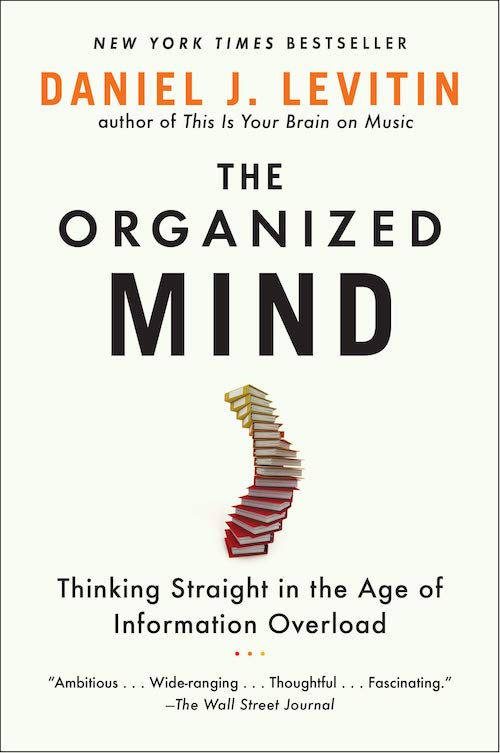
The Organized Mind by Daniel Levitin talks about the mind and the brain, its myriad processes, and systems related to the organization of ideas, thoughts, and decision making. Most importantly, it shows us strategies that will help us organize the vast influx of information we get every day, enhancing our productivity in daily life.
The mind tends to get overworked with the amount of information it has to process every day. When it’s overworked, it becomes difficult to cope with the decisions we have to make. This results in bad decisions, stress, and even breakdowns. There are, thankfully, a few strategies that one can apply in life to ensure that the mind functions smoothly.
1. The Attentional System Is Limited
The attentional system takes care of all incoming information. It determines the way this information is handled and processed. The attentional system can be regarded as a pillar of the brain that has evolved to function in one particular manner – that is to focus on one piece of information at a time. Due to the amount of information the brain takes in every day, the attentional system is under constant stress.
The brain also prioritizes its focus on change rather than on what is constant, especially information that could be associated with danger. For example, while driving on a smooth road, the brain will pay attention to a big pothole or a bumpy patch. This is because the change in the smoothness of the road triggers the brain to be more careful.
The brain can only focus on a limited number of stimuli at a time. And your brain focusses on what is most important.
2. Constant Decision Making Tires The Brain
In today’s world, we are constantly getting bombarded with pieces of information. Out of these, the attentional system sorts out the most important information. This puts the brain under immense stress, especially when the brain has evolved to pay attention to one thing at a time.
Consider an example where a person is thinking about spending a day off from work versus finishing a presentation. At the same time, there is an exciting program on TV. Simultaneously, the thought of hiring a new maid comes to mind, which reminds the person of the pending house chores. At this point, the person’s brain is trying to focus on what is important. With so many things to think of every day, the stress on the brain increases, and the person is more likely to make incorrect decisions.
It is therefore essential for us to focus on what is most important, rather than thinking of all the decisions at the same time. One should reduce the amount of time spent on making decisions and find ways to simplify the process.
3. The Trick to Organization
We all have faced a situation where we simply cannot remember where we kept the keys last time. Why does the brain fail us at these times?
The answer lies in the hippocampus. The hippocampus is the part of the brain that is responsible for remembering location. However, its workings are limited to remembering the location of things that have a fixed location. That is why we know for sure where the toothpaste is or where we keep milk. However, we tend to forget the location of things like keys or our mobile phones that do not have a designated place and roam around with us.
The solution here is to strictly adhere to keeping things in designated places, like keeping keys only on the key holder near the door.
4. The Power of To-do Lists
Let’s say you sit down to do your personal accounts. Then you start thinking about buying something on eBay, and then your mind wanders to the new coffee table you saw at the home store. This mind-wandering can be traced back to the attentional system. The influx of information overwhelms it and we lose focus.
There are three easy solutions to effective organization –
To-do lists – To-do lists are effective in helping the brain focus. They help us keep track of all the important things outside of our heads.
The two-minute rule – It becomes practically impossible to write down every thought and everything we want to do. The two-minute rule helps in prioritizing tasks. If it takes more than two minutes to finish a task then it makes sense to write it down. Otherwise, do it right away!
Categorizing – Putting things and tasks in organized categories such as ‘work’, ‘personal’, ‘kids’, etc. helps the brain remember better.
To-do lists and categorizing are efficient ways to organize the information received by the brain. However, it is impossible to categorize all information we receive. Even categorizing the information in to-do lists at times can be tough. Therefore, creating a ‘miscellaneous’ category helps in saving random ideas and thoughts that do not fit anywhere.
The idea of a miscellaneous junk drawer for random items stems from the brain’s need to simplify information and be able to focus on the most important information, even if it belongs to a miscellaneous category. A junk drawer helps in weeding out unnecessary items that one can eventually discard.
Organization methods such as categorizing and to-do lists help in reducing the pressure on the brain and saves mental energy.
5. Take Time to Rest and Refuel
It is important to remember that the brain needs time to rest, refuel, and repair. This happens when we sleep. However, the interesting thing is that even during sleep, the brain does not rest. It uses this break from incoming information to sort the information received through the day. Memories, ideas, problems, etc are processed, stored, and integrated into the existing knowledge. That is why often taking a break increases our productivity.
The need for refueling can be proven by the fact that most fresh ideas, solutions to problems, etc. come to us after a good night’s sleep. Moreover, many organizations today are focusing on upping employee productivity by incorporating ‘rest time’ and recreational spaces for employees at the office. Research shows that you’re actually twice as likely to solve a problem after you’ve slept on it.
Key take-aways
The brain is constantly working due to the barrage of information it receives. It is therefore most important for us today to ensure that our minds are fit and taken care of. Using these strategies for mind organization will help reduce the load on the brain. In this book, the author Daniel Levitin explains how to take back control of your life, by sharing examples and research from healthcare to online dating to raising kids, showing that the secret to success is always organization.
The author relies on many psychological studies to support his conclusions. My biggest learnings from the book were how tasks need a beginning and an end, figuring out why I can’t follow the systems I create, what really happens with multitasking, and some great insights into procrastination and strategies to overcome. Overall, it was a fascinating book and I would recommend this book without hesitation.
There comes a time, when a manager starts to mentor and coach the people in his team. But how does a manager become a successful coach? What does coaching entail and how should one make it effective?
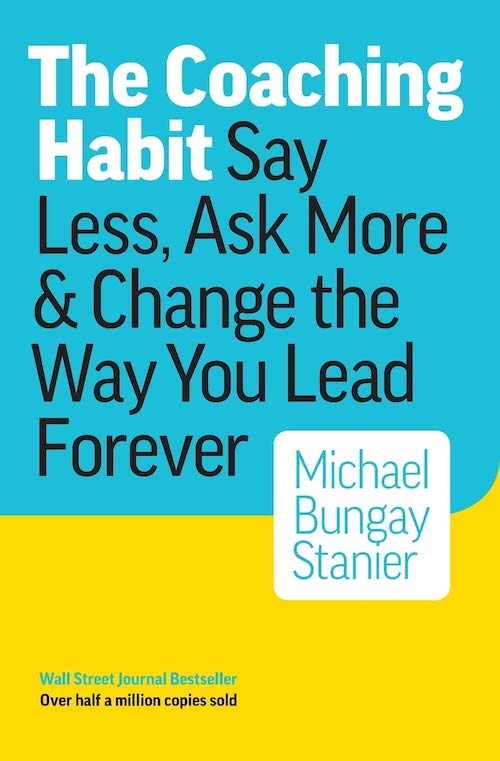
The Coaching Habit (2016) by Michael Bungay Stanier simplifies the elements of effective coaching. Good coaching skills will not only help one’s team members to personally succeed but also pave the way for success for the coach too. A good coach goes beyond subjective training, and some coaches can even transform a life completely.
To become a good coach, one should be able to ask the right questions and have the correct habits of a coach to ensure that their teams are on the path to success.
Spotting The Errors First
Research has shown that only about 23% of coaching seminars that managers attend have any positive effect on them. Additionally, many leaders, managers, and their teams get stuck in a cycle of unproductive work dynamics and habits. How does one identify what are these problems and more importantly, how does one solve them?
Here is a list of the common problems that are seen–
All decision making on projects, whether it is a big one or a small one, lies with the manager / leader.
The manager / leader becomes the bottleneck.
Subsequently, the team loses motivation because they have no decision making power.
The manager / leader gets overwhelmed with work.
The sheer load makes it difficult for the manager / leader to understand which tasks are critical because all are!
If, as a manager, you can relate to even one of these problems, then you are stuck in the unproductive work dynamic.
To get out of this rut, you can first and foremost, develop a coaching habit. A coaching habit is nothing but putting coaching into practice on a daily basis. Managers should, rather than advise, coach their teams, and guide them towards the right path. The daily coaching should always take place in an informal setting, where the manager can reconnect with the team.
Another set of errors most managers make is to focus on performance. Coaching looks at the larger picture in long run. While performance is important, it can only be improved by guiding the team towards development.
The Coaching Habit (2016) by Michael Bungay Stanier
Having That Vital Conversation
Sometimes managers ‘feign’ attention when a team member is discussing an issue. While they nod their heads in comprehension, their minds are elsewhere. While this can happen without really meaning to, managers who wish to become truly great coaches should use constructive conversation tactics to start and maintain a conversation.
Kickstart Question – The kickstart question is an effective open-ended question that helps the employee steer the conversation. A simple ‘What’s on your mind?’ does the trick.
AWE – AWE stands for ‘And what else?’ Sometimes, it is evident that the employee has more to say and does not know if he should for reasons that could be as simple as not knowing if the manager has time. The AWE question is an encouragement, and at times handy if the coach wants to add in a comment.
The Focus Question – The focus question, ‘What’s the real challenge for you?’ is often used to guide the conversation back on track in case the employee is beating around the bush or loses the train of thought. Often, employees tend to vent over certain issues regarding certain projects. The focus question helps the employee to identify which issue is more challenging and needs prompt attention.
As a coach, it is essential for leaders to know that these questions nudge the employee into finding their own conclusions. Leaders and managers wanting to become coaches should be there to listen and guide rather than offer the solutions themselves.
Conducting The Conversation Correctly With Questions
While the previous heading discussed questions for triggering a conversation and to keep the focus on track, coaches need to have a few more successful questions in their arsenal. Stanier gives four important questions that help a coach understand what the employee needs, what they want, and most importantly what are they willing to do about it.
The Foundation Question – The Foundation Question, ‘What do you want?’, is used to get the conversation straight to the point. It helps the coach understand what exactly the employee is looking for from the conversation.
Research shows that 9 types of needs and desires drive people. They are freedom, recreation, creation, affection, protection, participation, understanding, identity, and subsistence. Foundation questions will help in determining what drives the employee.
The Lazy Question – The lazy question is a moment of positive coaching. The question ‘How can I help you?’ helps in determining if the employee really wants something or is letting off some steam. Being a direct, to-the-point question, the employee’s ability to answer it will not only get the answer but also help the coach respect the directness of the employee.
It even helps the employee move on after letting off steam. From the employee’s perspective, it shows that the manager is interested in his needs and wants and that the manager understands him.
The Strategic Question – Once the need/want is identified, the coach reaches a point in the conversation where he needs to know whether the employee can handle what he is approving.
Asking ‘If you’re saying ‘yes’ to this, what are you saying ‘no’ to?’ helps the coach gauge whether the employee can take on a new project, whether he has the capacity to finish previous ones, and most importantly if the employee is accepting a decision simply because the manager is handing it out.
The Learning Question – Once the conversation is nearing its end, it is important to know if the conversation has sunk in. To make the employee derive learning from the discussion, to reflect, and to internalize, the coach has to create a learning opportunity for the employee. Asking ‘what was most useful for you?’ will help achieve that.
The Manner Of Questioning
While it is essential to know what questions to ask during a coaching session with any employee, understanding how to question is more than half the battle won. Sometimes, without meaning to, a coach could end up blurting out the solution. Coaches need to be wary of that.
Firstly, the conversation should never seem like an interrogation. Therefore coaches should be careful with the succession of questions as well as their implications. While a question should never intend to feel uncomfortable, it should be clear and to the point. To do this, asking ‘what’s?’ are more useful than asking ‘why’s?’
For example, it is better to ask, “What do you think?” rather than, “why do you think that?”
Avoiding rhetorical questions is equally important. These include questions such as, ‘did you consider…?’, or ‘have you thought…?’. Such questions are simply advice with a question mark.
Mannerisms and gestures also go a long way in making a conversation successful. There is a difference between listening and appearing to listen, and both are essential to keep the employee engaged in conversation. Listening is very important, whereas, appearing to listen – with a nod, or an encouraging silence after a question – can help the employee share what exactly on their mind without inhibition.
Forever Expert Coaching
In conclusion, managers and leaders should cultivate a habit of coaching. Cultivating a habit includes practicing coaching daily. While a few words can enlighten you and push you to learn how to coach, the tips mentioned above should become daily actions.
Changing habits involves putting theory in to practical use. This can be achieved in 5 steps –
Cause – It is the reason to change the current behavior, for example, constantly advising.
Trigger – Understanding the moments when advice is needed and when it is not.
Mini habit – Understanding the errors, using appropriate questions and the correct manner of questioning are the mini habits.
Training – Practicing mini habits daily becomes training.
Action plan – An action plan is an outline of what a coach should do in cases of slips, to get back on track.
For developing a coaching habit, managers and leaders can create coaching support groups too. These support groups can be useful in sharing strategies and experiences so that they can create empowered teams in their organization.
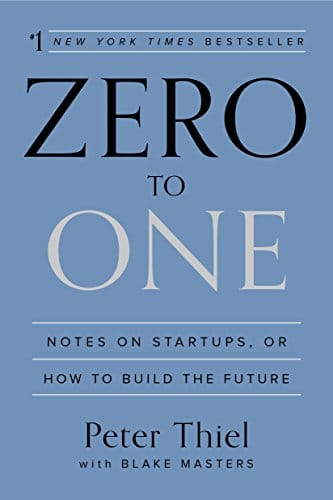
The author, Peter Theil, is a renowned investor, entrepreneur, and funder of companies such as SpaceX & Airbnb. In his book Zero To One, he talks about building a startup from scratch, the challenges one may face, and what all one should do to make it successful.
He shares his thoughts on taking a new idea of a product or service that people haven’t seen or heard of before and scaling that as a company, that is, in other words, taking something from ‘Zero to One’.
It’s easy to copy something & increase the competition but if we look back in history, it is the unique ideas that sell, be it the first-ever computer programs by Microsoft or selling a wide variety of goods online such as Amazon. One main idea of the book is that competition is bad for business and employees. A monopoly is good for them as competition squeezes out all the profits and monopoly generally have large profit margins. Examples are Google, Facebook, and Apple.
Here are 5 key lessons from Zero To One by Peter Theil that can help you to build an innovative & successful startup:
1. One Niche At A Time
When you think of your idea for a startup, think of something in a less explored field, which could have a selected group of loyal customers and would make your company different and would attract people who were alien to that field earlier.
The author, Peter Thiel, was one of the core members of the founding team of Paypal. He spoke about how Paypal came up with a unique system that gave people all over the world control over their currencies digitally like never before.
2. Work Towards Building A Monopoly
Peter Theil wrote this in an article on Wall Street Journal:
“The opposite of perfect competition is a monopoly. Whereas a competitive firm must sell at the market price, a monopoly owns its market, so it can set its own prices.”
If the quality of your products & services is great and has proprietary technology and network effects, it would lead to building a brand monopoly for you in the market and you would higher margins and other benefits of monopolies. He also adds in the book that the higher the price of your product, the more you can (and you should) spend on sales.
3. Innovate Around The Market
The book states that it’s important to learn from asking the right questions to potential customers and researching about the scope of your offerings.
Research on the companies that offer products in the same category – be it mobile apps, food trucks, etc. Compare the prices and study their USP’s and then come up with the best possible products and offers that don’t exist in the market.
4. Improve Existing Business or Products
A lot of times, we are not exactly building from scratch, we already have a few products selling. It’s possible that they might not be doing so well so you think of coming up with a new line completely. To save your cost of introducing more products, you can look if any innovation can be made to the existing products.
“Grand visions inflated the bubble, so they should not be indulged. Anyone who claims to be able to do something great is suspect, and anyone who wants to change the world should be more humble. Small, incremental steps are the only safe path forward.” – Peter Theil
5. The Last Mover Advantage
The first-mover advantage has its perks but nothing can be better than having the benefits of remaining the last significant player. It’s all about a startup surviving and outlasting the competition.
He also adds that good teamwork has a big hand in the success of a startup. The founders and their beliefs should be on the same page and know each other before starting the company.
Conclusion
The author says that people believe there are no mountains left to climb as there is nothing that hasn’t been discovered. But the reality is that there is always something that we miss, something new to bring to the table. In the book Zero to One, Peter Theil shares the below Seven Questions that Every Business Must Answer.
The Engineering Question – Can you create breakthrough technology instead of incremental improvements?
The Timing Question – Is now the right time to start your particular business?
The Monopoly Question – Are you starting with a big share of a small market?
The People Question – Do you have the right team?
The Distribution Question – Do you have a way to not just create but distribute your product?
The Durability Question – Will your market position be defensible 10 or 20 years into the future?
The Secret Question – Have you identified a unique opportunity that others don’t see?
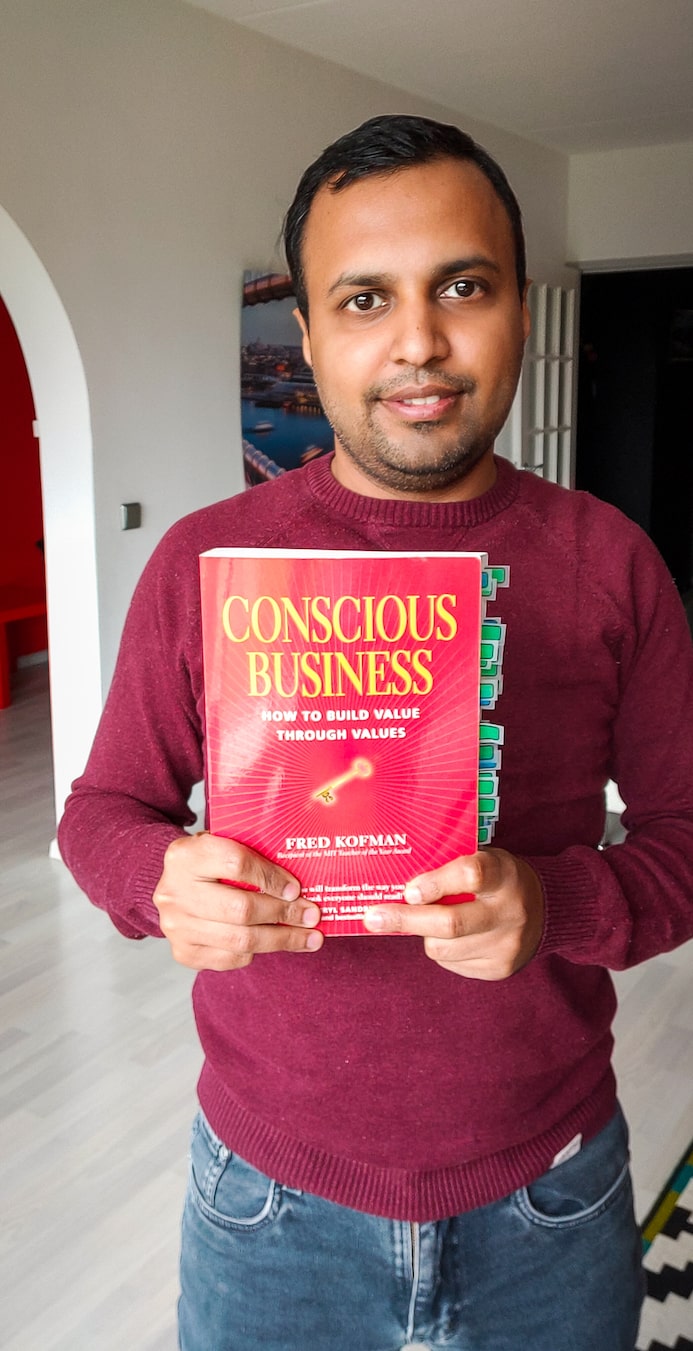
The author of this book, Fred Kofman serves as the Vice President of Executive Development of LinkedIn. As a part of one of his workshops on LinkedIn, he spoke to professionals around the world on ‘Conscious Business’ and seeing the excellent response, went on to write a detailed book on it.
This book is a guiding light to anyone entering the corporate world, climbing the corporate ladder, or for business leaders and resonates with our times when we don’t associate working with true living and fulfilling our purpose.
It brings us back to our roots, when we took decisions not just from our mind but also from our heart.
Conscious Bussiness : How to Build Value Through Values shows us how to do work that our conscience would approve of and would add some real value to society at large.
The author believes that conscious business is one made from your passions and inner beliefs and aligns well with your values as an individual and as a company. He defines a good business person as one of integrity.
Conscious businesses attract people and enjoy a loyal customer following for years. More than just aggressive marketing, it is about connecting with the customers on a deeper level and understanding their needs.
Here are 3 key learnings from this book:
1. Unconditional Responsibility
‘Being’ rather than ‘doing’ is what makes a good leader. A conscious business leader encourages his/her team members to think responsibly by first acting on principles of unconditional responsibility and setting an example.
When you personally feel responsible for everything happening around you and not just expect and blame others for inefficiency, it motivates the entire team to work as hard as you in meeting the business goals. A good leader reflects on his/her actions and encourages everyone to do that. It is the only way we can avoid mistakes and learn from them.
Listening to others is also an essential attribute of leadership. If there is a friendly and flexible culture in an organization then the smallest of problems can be solved at the root level before they become serious problems for the whole organization.
Unconditional responsibility also means that employees can always depend on the leader in times of crisis, the leader should be the driving force to take the company out of such dire occasions and not be someone who may just further delegate work and not participate in the happenings at all.
2. Impeccable Commitments and Managing Emotions
All actions should be accountable in an organization. A conscious business emphasizes on the need to stick to commitments and deliver results.
Commitments should only be made if they are achievable and the people making them are fully invested in them, and not just for appearances’ sake. The company should see and ensure if sufficient time is there to meet them so that employees are not rushed so much that they get exhausted trying to meet the commitments and compromise on the quality of the work.
The book also talks about managing our emotions in the workplace. Self-awareness and self-acceptance are the first steps to manage our emotions. It is possible that sometimes things will bother you which need not be addressed immediately and which can be solved by just being aware and conscious about our feelings.
The book also says that even our rational decisions are influenced by our emotions and we should not keep suppressing our emotions. If one feels that an emotion is serious enough to hinder your work, one should go ahead and discuss it with leaders in the company.
A good leader would understand and empathize with you and would help to reduce your stress. Nothing should be more important to a company than the employee’s well being and longevity in the company.
3. Authentic Communication and Unflinching Integrity
Fred Kofman, the author of this book, talks a lot about how good communication really bridges the gaps in organizations and provides a healthy work environment. Work is like a second home and what makes a home – a safe place where you can share your feelings with your family.
You should be able to do that in the workplace and the onus of that lies on the leaders. If such an environment doesn’t exist, one must not hesitate to express their ideas and inputs which they feel will help the company.
In all times, integrity is the crucial element of conscious businesses. The ability to stick to our values is often rare, with the rampant corruption and frauds that happen in business, like the Enron scandal or the recent Volkswagen emissions scandal. The companies that follow unlawful or unethical business practices can make a profit temporarily but end up being sued and losing in the long run.
Consumers today are smart and cannot be fooled easily. A bad reputation can break a successful business empire and no marketing efforts would be able to bring it back after committing unethical practices. Customers today want to be associated with companies that share and stand for their own values.
The book also teaches us to embrace humility and have patience.
The 12 Transformations On The Way to Conscious Business
The author Fred Kofman shares the below 12 transformations which anyone can take to take themselves and their organisation towards being a Conscious Business.
From blaming to owning: stop acting like a mere victim of circumstances out of your control and take charge of your life. (Responsibility)
From winning to meaning: stop pursuing only competitive goals and realize that happiness comes from pursuing a noble purpose through ethical means. (Wisdom)
From knowing to learning: stop trying to prove that you’re always right and open up to new possibilities. (Humility)
From judging to understanding: stop seeing people through your mental filters and put yourself in their shoes. (Compassion)
From avoiding to confronting: stop suppressing uncomfortable information and face reality. (Courage)
From pleasing to truth-telling: stop altering your story to be liked by others and start telling the truth to be liked by yourself. (Honesty)
From controlling to considering: stop telling people what to do and take into account what they want to do. (Respect)
From taking to trading: stop negotiating win-lose and look for ways in which everybody can be better off through an exchange. (Creativity)
From defaulting to delivering: stop defrauding your creditors and honor your promises unconditionally. (Integrity)
From indulging to investing: stop seeking immediate gratification and postpone pleasure for the sake of happiness. (Discipline)
From complying to committing: stop obeying as if you had no choice and choose to do what you do fully. (Commitment)
From bossing to leading: stop managing people through external rewards and punishments and inspire them with a dignifying purpose. (Vision)
Fred brings leadership language to a level I’ve never seen before. There are examples of dialogue between people with competing priorities which are very practical and show the principles in the book being applied. The book is well-grounded cognitively, emotionally, and spiritually and transcends the business world. Conscious Business provides the principles, practices, and tools to become a real leader, both inside and outside of work.
We have all heard of the SWOT (Strengths, Weaknesses, Opportunities, and Threats) analysis. We have also been told that we should ‘tap into our strengths’, or, ‘focus on our strengths’, etc.
But what are our strengths? How do we figure out our strengths? And most importantly, how do we focus on them to be par excellent at our work?
Now, Discover Your Strengths (2004) by Marcus Buckingham answers some vital questions we have about what ‘strengths’ are. It shows us how one should firstly; understand how to find their strengths, how strengths are created in the first place, and why most people do not focus on their strengths.
It is also a good guide for managers and leaders on how to tap the strengths of their employees and teams, to make a business thrive and keep it successful consistently.
Now, Discover Your Strengths (2004) by Marcus Buckingham
The Incorrect Focus On Weaknesses
Right from the beginning, we are told to work on improving our weaknesses. Whether it is in school or at the workplace, the focus has always been on finding how to turn weaknesses into strengths, leaving our strengths un-honed, especially when it is our strengths that chart our paths to success.
Strength is defined as any activity that a person can do repeatedly, to perfection, and at the same time enjoy doing it. Yet, many organizations focus time, money, and resources on trying to fix employees’ weaknesses. Companies make their employees attend special training to work on their weaknesses, without realizing that their resources are better used in helping employees better their strengths.
A study conducted by The Gallup Organization conducted research and asked 198000 employees across the varied businesses if they were able to do what they did best at work every day. The results showed that the 20% who strongly agreed that they were able to do what they do best, were –
The ones who were 50% more likely to work in organizations with a low employee turnover
38% more likely to be working in productive businesses, and
44% more likely to be working in companies that had higher customer satisfaction.
These statistics prove that organizations need to change their perspectives towards strengths and weaknesses. Rather than focus on improving weaknesses (damage control), they should focus on improving and perfecting strengths (development)
Building New Strengths
Everyone has strengths. But, how does one have these strengths? Are they acquired? Or built with practice? If they were built with practice, how did we know right at the start that these were the strengths to build?
This is where natural talent comes in. A person’s talent is a pattern of behaviors and thoughts that make certain tasks easier. Or example, a person could be great at making friends and starting conversations with unknown people. While many don’t find it easier to connect with strangers, it could be said that this person has a talent for communicating.
A natural inherent talent is a predisposition and cannot be changed. However, a person can choose to develop a predisposition (or a strength) by skill and knowledge.
Knowledge can be either experiential or factual. For example, a person learning to play the piano will require some factual knowledge of playing – like learning the notes, and additionally, gain experience by way of practice by listening and performing.
Skills, on the other hand, can be gained by gathering experiential knowledge. Skills refer to those key aspects of the chosen activity that helps in improving performance. For example, a person who is an excellent orator will have the skills to keep the audience captivated.
Development of one’s strengths and being explicit about the skills they have can help in identifying where one’s skills lie as developing strength is a long-term process.
The Anatomy Behind Our Strengths
In order to really understand the nuances of strength development, it is necessary for us to dive deep into our anatomy. We need to know how strengths are created or formed. The answer lies in neuroscience.
Our brains, up to the age of three, have about 100 billion neurons that can make about 15 thousand connections between synapses. Yet, by the time we are 15 years of age, billions of these synaptic connections get lost permanently to avoid sensory overload and to reinforce specific connections so that our brains and intelligence can develop.
Some of these connections that remain become stronger than others and allow us to perform certain actions with better proficiency, making some actions, tasks, movements, etc. seem natural, while others uncomfortable. The natural actions become strengths.
These uncomfortable actions need practice so that they start seeming more natural to us and can overtake those connections that cause undesirable behavior. And this is the difficult part. These uncomfortable actions are our weaknesses.
Clues Hidden In Our Responses
A person’s strength gets wasted when their talent remains undetected or undiscovered. To be able to discover talents, one should look into their own spontaneous reactions.
Our instinctive reactions tell a lot about where one’s natural talents lie. Additionally, rapid learning and yearnings can become good indicators of different talents. Rapid learning of any subject can indicate that one has a natural talent for it. Yearning on the other hand can be seen in childhood. For example, if a person has a yearning to sketch and doodle as a child, there might be a natural talent hidden or art.
Seeking Out Strengths At The Workplace
How does working and focusing on strengths help organizations succeed and thrive?
In context to organizations, there are about 34 talents that can be relevant to the workspace that managers can optimize. A few examples could be –
Analytical Employee – Analytical employees are objective and go by the data. They use logic and prefer a logical approach from others as well. Such employees need to be given clear and concise information to work well.
The Commander – Commanders are always at the forefront, whether it to share opinions or to convince others to share their opinion.
Restorative Employees – Restorative employees have a knack to wrangle out solutions from any situation. They love solving problems and can lift spirits when the situation is tense. Such employees are best suited for customer interaction roles.
Employers, leaders, and managers can use the strengths of employees to bring out their maximum, helping them succeed in their personal goals as well as in achieving productivity and performance for the team and hence the organization as well.
Final Summary
Organizations can channel the talents and strengths of their employees for achieving better productivity and performance, rather than focus on trying to improve weaknesses. Individuals on the other hand should pay attention to their natural abilities and try to use these natural strengths to succeed in their personal career goals. Focussing on strengths and natural talent is what makes the difference between an average performer and a star performer.
Life is full of challenges – complex relations, inevitable disappointments, and uncertainty. Our children have to be prepared for the best and the worst in life. It is the responsibility of parents and caregivers to ensure that they are prepared for it. They need to know how to cope and adjust to these myriad experiences.
It’s not an easy job, especially since most parents did not receive this when they were young. How can parents then, help their children to be secure, confident, resilient, and learn to build formidable relationships as they grow?
The Power Of Showing Up (2020) by Daniel J. Siegel and Tina Payne Bryson, show parents how to be there for their children – in more ways than just physically, how to build a stronger relationship with them, and how to prepare children to face hurdles, and build their confidence as they step out into the world.
1. Bonds Of Attachment – Secure and Insecure
In 1960, psychologist Mary Ainsworth conducted an experiment known as the “Infant Stranger Association Test’, that observed the effect of babies being left alone in a room or with strangers.
The experiment showed that children of parents who expressed concern and sensitivity were more confident when their parents left the room and continued to play with the toys. Once back, the babies happily greeted their parents. These babies were more secure when left alone and showed secure attachment.
On the other hand, babies with inconsistent care and attachment, or extreme disconnect from parents’ attachment developed an insecure attachment, showing signs of fright and anxiety. Such children tend to suppress emotions and needs as they grow and are unable to move beyond negative experiences that influence their behavior and relationships in the future. They feel unsafe and unable to develop healthy relationships with their own children.
No parent intends to raise their children in a bad manner; however, parents can make efforts towards developing secure bonds with their children by analyzing their own childhood experiences and acknowledging the negativity they experienced.
2. Physical and Emotional Safety
Kaiser Permanente, a healthcare company, along with the CDCP (Centers for Disease Control and Prevention), conducted a study from 1995 to 1997 called the Adverse Childhood Experiences Study. 15000 participants were interviewed about their childhood negative experiences such as emotional and physical abuse, especially in dysfunctional homes. These participants were found to face challenges in coping, have a lesser capability of relating to others, had more health problems, and shorter life spans than those who had a happy childhood.
The experiment showed that a child needs a positive mental, emotional, and physical environment, and need to be protected not only for their immediate well-being but also for their future. Threatening and harmful experiences in childhood can affect a child’s physical, mental, social, and emotional development. It also showed that any form of aggression – physical, emotional, verbal, as well as nonverbal (body language and expressions) can make children feel unsafe and afraid.
Parenting is not an easy task and even the most loving parents can experience bouts of frustration. However, it is imperative that parents avoid aggressive behavior in any form towards children. This can be done by communicating calmly with them, even in times of frustration. Simple breathing exercises to calm down when angry, or even apologizing to children when parents display anger and aggression can go a long way. It will make children feel safer and also teach them that relationships can be repaired by a simple sorry.
3. The Importance of Understanding Children
Consider an example of a parent who constantly berates their child for securing low grades and attributes it to the child being lazy. The parent constantly reprimands the child and calls her lazy and disobedient.
In this case, while the parent intends to derive a good outcome from their child, they are actually doing more damage, not only to the relationship but also to the child’s own perception of herself. The child could internalize the parent’s perception and develop a negative view of her own personality, resulting in a timid personality with a negative inferior complex.
Parents need to know and have the ability to understand their children as well as accept who they are. Reflecting and observing on why the child behaves in a particular manner, without making preconceived judgments will help parents in truly understanding their children and get valuable insights.
Another way is to communicate with them and let them express their thoughts and views about the issues they are facing. Setting a separate time daily to talk to them will help in getting to know them better, to understand what goes on in their minds, and subsequently understand their needs.
4. Handling Distressed Children by Soothing
While working with a school in a Texas district, the author noted the teachers’ observations, of using soothing behavior rather than time-outs and punishments for unmanageable tantrums of children. They found that the children responded better, calmed down faster, and had less long, less intense, and less frequent outbursts.
They inferred that children learn to calm down and soothe themselves by replicating the behaviors they see in their parents. Moreover, they are able to manage their internal distress and become more resilient.
Parents can use certain tools to get their children to learn to soothe themselves.
Setting a designated comforting space (unlike a time-out corner) in the house for children to go to when they feel distressed.
Parents should identify a calming song/playlist that their child likes to hear in times of distress.
Identify the child’s favorite physical activity like playing on a swing, dribbling a basketball, or even running around. Movement often works in emotional therapy.
Parents should create a code or a signal with their children so that they can identify when their child is stressed.
5. Showing Up, Every Time
Parents should work towards creating strong bonds with their children and try to understand how their child feels when they are experiencing stress or are misbehaving. Making them feel physically and mentally safe and responding to them in a soothing and calming manner repeatedly amounts to truly being there for children.
Such security not only impacts children mentally but also has an effect on them physically. The sense of security children feel makes their brain stronger, helping to create a resilient nervous system that helps them to nurture strong relationships in the future, as well as overcome distress.
Parents who focus on understanding their children provide them with a loving, nurturing, and empathetic environment through active listening and affection. They help children communicate their feelings in distress and promote strong parent-child relationships. Every time a parent is physically and emotionally present to support them, the child’s sense of security is enhanced, and in turn, they know that they have the support of their parents. They carry this feeling of support through their lives and grow up as confident and empowered adults who can in turn be there for their children in the future.
With the dynamic changes taking place all over the world in terms of the work culture, environment, and the shift in the roles and responsibilities of the working class, the need for a change in leadership has become crucial. While managers are sufficient for an organization in times of stability, dynamic changing times require strong leadership.
This translates to two crucial necessities, firstly, the need for strong leaders is even more essential for organizations, and secondly, today’s leaders need to keep reinventing themselves to adapt for success in these times of change.
Leadershift (2019) by John C Maxwell shows leaders and managers the way to adapt to this change by inculcating a strong desire and ability to succeed, to develop the right mindset and create positive up-to-date thinking to continue to be productive, not only for themselves but also for their team and the organization as a whole.
John C Maxwell takes us through his own journey of leadership and shows how he charted his ‘leadershift’ to succeed and create an impact on the world.
Leadershift by John Maxwell
Leadershift – From Me to We
Many managers consider a position of leadership as a step towards charting their own star-trails. They work keenly towards their own goals and aspirations, without realizing that leadership is not about their own success, but about how they can steer their teams, colleagues, and the organization towards success.
Leadershift firstly requires a leader to change their focus from ‘me’ to ‘we’. Maxwell gives an example of how leaders should work more like the conductor of an opera, rather than a soloist. Just like a conductor uses opportunities to draw out potential from a group of musicians, a leader should first work towards understanding the needs of the people around him in order to draw out their best.
Maxwell compared leadership to the dance tango, wherein it is the responsibility of the leader of the pair, to lead the team to a stellar performance. A leader, just as the lead of a tango dance, should not only understand what it means to lead but also be aware of what it means to be led.
It is essential that a leader should focus on making others in his team shine, by developing positive relationships and by paying keen attention to the needs of subordinates. A leader creates a vision and invites his team to help achieve it.
Leadershift – Moving From A Goal Mindset To A Growth Mind-Set
Leaders need to set certain goals and strive to achieve them. While a goal mindset has been at the crux of leadership since the beginning, leaders need to shift the focus to a growth mindset.
Maxwell realized the positives of a growth mindset during his days as a young church leader in Ohio. He began by setting a goal for himself to make his church the largest in the state. In a single year, he was able to double the size of his congregation making it the fastest-growing church in Ohio. He later realized, that his own achievements, personal growth, and his understanding of leadership were far more valuable than the numbers he achieved.
He saw that a goal mindset led to personal achievement and status growth, however, a growth mindset led to the development of every shareholder in the congregation.
The key to a growth mindset is to inculcate a teaching spirit. A leader should not only have the need to learn but feel the need to ensure that he passes on his learning to help improve others. Passing on the knowledge to others entails a leader practicing what he has learned.
Leadershift – From Climbing The Ladder To Building The Ladder
Many leaders aim at being on top of the leadership ladder. They aim towards a goal and work towards achieving it. In the corporate world, it is essential for a leader to aim for the top of the corporate ladder. However, real success comes only when a leader helps to build ladders for others at the same time.
Leaders should ideally aim at being within the top 10% of their chosen field to stand out. Once they reach the top 10%, they should start viewing their success as a means to help others reach their goals. For leaders to become a successful resource for helping others means to start mentoring others in their team.
Mentoring isn’t an easy process. A leader should assess whom to mentor. They should be able to sift from the crowd to find those who are passionate not only about their own personal growth but those who reflect the values and principles of the leader himself. Additionally, leaders should look for those who are not only hungry for success but also who have a strong potential to carry on the legacy of leadership.
Leadershift – Connection, Not Direction
Shifting the focus of leadership does not only mean directing subordinates and telling them what to do. It entails creating a connection by helping them connect with their own way to success.
Maxwell understood this form of leadershift from Pat Summit, the coach of the University of Tennessee Lady Volunteers basketball team. At halftime, rather than giving the team a pep-talk about what had transpired on the field, she made them analyze their performance by asking 3 questions – ‘What did we do right?What did we do wrong? and What should we change?’
Only after the team had discussed these, Summit spoke to them. She heard the team out and then made a few observations before sending them out for the second half of the game.
Maxwell understood that leadershift embraces connection rather than direction, collaboration instead of authority and that listening is far more valuable than talking. To be able to develop listening skills, leaders can follow a simple routine,
Use a notepad during meetings. Write a big ‘L’ on the top to remind yourself to listen first.
Use your growth mindset. Ask your peers, family members, and friends to rate your listening skills on a scale of 1 to 10.
Act on the feedback given by them.
Shifting from direction to connection helps build better relationships by generating a two-way flow in communication as well as in ideas.
Leadershift – Valuing Diversity
As a young pastor in Ohio, Maxwell noticed that that within his environment, the community and the leaders of the protestant church were all white Americans. Everyone looked and behaved in a similar manner. However, he realized that the most important insights and lessons came from outside the ‘white’ group.
As a pastor, conformity and tradition were drilled into him. Later on, due to his discussions with another Catholic Priest, who helped him reinforce his faith, he moved to Atlanta, a city rich in African-American culture, completely different from where he grew up. He understood the difference that resulted from the diversity could bring out positive changes in the organizational structure as well.
Leaders need to understand that diversity in teams can bring about different perspectives and effectively fill the gap of knowledge. A leader cannot possibly claim to know everything and manage it all. Additionally, if a leader is surrounded only by like people, the flow of knowledge becomes restricted.
Trusting diversity in a group is a lesson that is best shown in how Abraham Lincoln built his cabinet. His members were sworn political rivals, and this helped bring in different perspectives to Lincoln’s leadership.
In order to bring in diversity, a leader should take a good look at his team, his friends, colleagues, and the people that surround him. Leaders should take efforts in learning from different groups, cultures, races, and ages, to be able to gain different perspectives.
Leadershift – Moral Authority Over Positional Authority
A title does not merely make a leader. Maxwell learned this important lesson as a young and fresh-out-of-college pastor. As the leader of his church, his first church board meeting started off with another respected member of the church, Claude, taking command of the meeting. Claude asked Maxwell to start off with a prayer and politely asked him to end the meeting with a prayer. Maxwell hadn’t said a thing in between during the meeting. It was a completely unexpected outcome.
Reflecting on that particular meeting, Maxwell thought about what made Claude so influential? He realized that though Claude wasn’t rich, well-educated, or impressive in any way, he had a strong moral authority of being good, honest, and fair. Claude was never a leader, however, his values and consistent belief in them made him a leader in every way.
Therefore, how does a leader truly become a leader? The answer lies in upholding one’s own moral authority by developing integrity. Integrity refers to the ability to stand by one’s values and principles consistently. Integrity makes a leader trustworthy and dependable. Additionally, if a leader is courageous to follow and lead with integrity, he will be able to successfully influence people and gain their trust to follow him.
Leadershift – From Career To Calling
Leadershift finally involves a person to shift focus from career to calling. This essentially means that leaders should find their calling in life.
How does one’s calling differ from a career goal? While a career goal is a personal end result for a leader, a calling focuses on finding something that is far larger to pursue. A calling means pursuing an enriching goal, that one could do forever, to help others succeed. A calling refers to a clear purpose and a reason for living, a way to find one’s own, yet be able to make a positive difference in others’ lives.
A calling also refers to something that one is passionate about. It entails giving, thinking, and serving others, passionately! Finding a calling in life enriches, and gives one’s personal career goals a true meaning of accomplishment.
Final Summary
Leaders today need to shift their focus from mere leadership to leadershift. They need to adapt to change around themselves to truly succeed. They need to show others the way forward, by helping them adapt to these changes. To be truly successful leaders they should direct others with connection, apply a growth mindset to help others succeed, build opportunities, and ladders for others to grow, and finally exercise their calling with moral authority.
The term ‘natural born leader’ is often used to describe some charismatic leader who seems to be natural at leadership. However, are people really born with leadership qualities?
Learning Leadership (2016) by James Kouzes and Barry Posner sheds light on how leadership is learned. While people might possess the inherent ability to lead, it is a quality that needs to be learned, nurtured, and nourished over time. As it says in the book’s introduction, “Learning Leadership is a clarion call to unleash the leadership potential that is already present in today’s society.”
Leadership is a continuous learning process and in order to excel at it, one must know, master, and apply the five fundamentals of leadership that are essential tools for great leadership.
Fundamental No.1 – Never Stop Learning
Leaders do not necessarily have inherent, gifted, leadership qualities. Anyone aspiring to be a leader can work towards building leadership skills. All one needs is the willingness to learn, hone, and practice building leadership skills to be a great leader.
If we look deep within ourselves, we will find that we have – at some point in our lives – displayed excellent leadership qualities without knowing it. These will give us the answer to what kind of challenges brought out leadership skills in us.
You can employ an easy self-coaching exercise to develop the focus on bringing out leadership qualities. On a paper, write down four questions –
Who am I?
What do I do?
How do I make a difference?
What will I do today that really matters?
The answers to these questions help in getting the focus back on one’s goal for today, and goal for the future. Moreover, these answers work as motivation to strive in the wake of a block.
Another important factor that determines leadership is the willingness to learn. Acquiring new knowledge and the thirst for constantly learning through one’s career graph help great leaders keep up with the times. A valuable leader constantly learns, reinventing, and up-skilling himself.
Fundamental No.2 – Focus On The Future
Great leaders focus on the future. They keep track of necessary changes around them in the present to be able to make sound decisions for the future. They are able to evaluate how today’s events will affect tomorrow. Developing this foresight helps them plan better, as well as understand what resources will they need to have and how to plan to get these resources for themselves as well as their team members.
Another important aspect of quality leadership is the focus on others. Good leaders always put others before themselves. They see their success as a direct result of the success of their subordinates and strive hard to ensure that their team succeeds first. They ensure that the team works cohesively towards a common set goal.
Leadership most importantly includes keeping a focus on the future with a heart that is set on helping others succeed. A great exercise is to answer the following questions –
How will the world be after ten years?
What will be the size of the team will I lead?
What tools will they need?
What skills will I need to effectively lead them?
Fundamental No.3 – Mistakes Are About Learning From Challenges
Life is all about making mistakes and learning from them. Similarly, life is also about taking up challenges and emerging successful – no matter how many tries it takes. Leadership also works on these principles.
Great leaders know that they have to take up challenges in their path. These challenges help in pushing them out of their comfort zones, make decisions to take measured risks, and put them out of their comfort zone. That is because being within one’s comfort zone for too long not only brings complacency but also stagnates.
Additionally, for great leaders, failure means getting closer – albeit inch-by-inch – towards success. Making mistakes and errors creates room for improvement and are seen as opportunities by leaders to achieve goals. For great leaders, the challenge of facing the unknown, and perseverance to right their mistakes is the distinguishing factor.
To develop the courage to overcome the fear of the unknown, this simple exercise helps. Complete the following sentence; “It took courage for me to…”
Fundamental No.4 – Importance Of Feedback
A leader can never exist in a vacuum. Neither is he a function of individual success. The people surrounding a leader, and the relationship the leader develops with them is what makes a leader a great leader.
Harvard psychology professor George Vaillant deduced that good relationship are vital for good health. The support of peers, colleagues, subordinates, and employees help in shaping a leader. This support comes when a leader takes the effort to develop and maintain good relationships.
That said, getting feedback from them is crucial as well. A good leader creates a safe environment for peers and subordinates to provide feedback. Moreover, a good leader should be receptive and use feedback to improve their own leadership skills.
An exercise to work on getting authentic feedback and implementing them is to take feedback from a trusted person after a meeting, understand the feedback, acknowledge it, and try to make changes based on that feedback.
Fundamental No.5 – Daily Practice Makes Learning Faster
Learning is lifelong process. And it is no different for leaders. The most important quality of good leadership is to keep on practicing.
Great leaders know and understand that at every stage in their lives, they will need to practice to enhance one skill or another, whether it is to do away with weakness or to brush up an existing leadership skill. They understand that practice to improve a skill takes time and patience. Moreover, they understand that practice is needed irrespective of the successes they have.
At times, the practice also needs a push from others. Mutually beneficial, leadership-development programs help to keep the focus on and they help leaders overcome any hurdles with the help of peers in the programs.
Summary
Learning is at the crux of being a great leader. To be a great leader, it is essential to think about the future today, accept challenges take risks, and learn from mistakes. One way to effectively learn is to be open to feedback and work to making the changes that are mentioned in the feedback. Finally, a leader should practice, practice, and practice!
The way the world works has completely changed in the last 50 years. Today, organizations, work culture, and the roles of people are more knowledge-based. The standard management policies designed for maximum efficiency by Frederick Taylor more than a century ago are no longer relevant because the basic structure of work has changed.
Under New Management (2016) by David Burkus gives us an insight into this change and how to adapt to it to become successful managers in a work environment that is more flexible, more creative, and more unpredictable.
David Burkus, the author, discloses new management strategies that are in line with the new workspace, discusses management strategies that never worked earlier, and busts some management myths that have ruled the roost for a long time.
Myth 1 – The Customer is the King
Most management and marketing studies have stressed the fact that the customer is king. Today, organizations need to be more employee-centric. This is because organizations are finding out that happy customers are a result of happy employees. This might sound radical, but to best serve their customers, many leaders now put their customers’ needs second and their employees’ needs first.
This was supported by a study conducted in 2008 by Son Lam and Stephen Brown from Houston University. The study revealed that the service given to customers by happy employees was of much better quality, as perceived by the customers. This was evident even for customers who did not have much interaction with the employees.
Myth 2 – Employees Need to be Micro-Managed
Organizations need to put their trust in their employees. The age-old, rigid micromanaging structure is detrimental to employee engagement and managers need to give their employees more space because the way of working has changed from the manual labor-based work of the past to knowledge-based work today.
Netflix’s unlimited vacation policy and no standard working times are a great example. It is the employees’ discretion to decide their work schedule based on the amount of work they have. They can themselves decide when they need to take time off.
Such a work environment has actually led to a reduction in travel costs for the company because the employees actively make decisions in the ‘best interests’ of the company.
Myth 3 – Only Leaders Know Who to Hire
Conventional methods of hiring involve recruitment interviews to be done by one or two people, mostly managers and upwards. They focus on qualifications and past work experience as determining factors.
A new employee, at any level and designation, has to work with a team. And there is no guarantee that an employee with a great past record will fit well with a new team.
This is due to the fact that even top performers need the right team to push them to excel. Moreover, even star performers could bring the morale of the entire team down due to conflicts.
It is wiser to include the entire team to participate in the hiring process. A classic example comes from Whole Foods, where they allow the prospective hire to work with the team for a few weeks, after which the entire team votes to hire the person or not.
Myth 4 – Underperforming Employees Should be Fired
Underperforming, disengaged employees are bad for all companies. They are unproductive, skip work, and/or affect the working environment negatively. However, the better way to do it is to let them go with a good payoff.
Disengaged employees mostly linger around because of the amount of time they have invested in the company. Moreover, they find it difficult to admit that their efforts in their current job were poorly invested.
Paying them a good quitting bonus works in three ways –
It helps such employees see a reason to why they should move on
A cash bonus helps alleviate the pain of parting to some extent, and
Helps in creating a better relationship with a parting employee
Myth 5 – Strict Timetables And Job Descriptions Keep The Organization Organized
The days of manual and repetitive work usually done in factories are over and it is the era of knowledge workers now. Earlier, during the industrial revolution, most work was manual. Productivity was mostly proportional to the number of hours a worker put on it. This gave rise to the necessity of a top-down organizational structure where job descriptions were fixed and strict timetables were maintained.
In creative and knowledge-oriented jobs, having fixed timelines are difficult. At the same time, roles are also dynamic, where employees are organized around projects. Having a flexible work environment allows employees to be intrinsically motivated and more productive.
Myth 6 – Offices Mean A Closed, Quiet, And Serious Workspace
Many organizations like Facebook are moving out of the typical office, and incorporating open offices. Gone are the cubicles for workers and corner offices for managers. Integrating open workspaces with closed offices in the right amount today facilitates communication and teamwork.
Unlike the myth, Facebook used both open and closed workspaces giving employees the freedom to choose where they would like to work. Such freedom and personal space in work have shown to increase productivity.
Myth 7 – Emails Are The Best Communication Technology
Yes, technology did bring us one of the most convenient and quick forms of communication – emails. However, studies have proven that emails are the biggest distraction for employees.
One research showed that an average employee checks their emails 36 times an hour. Thus some companies like Atos SE custom-designed an internal network system that helped reduce the use of emails, and thus reduce distraction at work.
Myth 8 – Non-Compete Clauses Are Good For Business
Non-compete clauses prevent employees from joining competitor companies and sharing corporate secrets. While this might seem like a wise business move, it actually led to the fall of Boston’s Route 128, an erstwhile competitor for Silicon Valley.
In actuality, the ‘big idea’ that propels a company to success is often related to something that an employee learns from his previous work experiences. The flow of ideas, development of successful networks, and increase in knowledge take place only when employees interact, take information and knowledge to the next place, and innovate with previous and present knowledge.
This brings up the point that companies should maintain good relations with their past employees because companies with close ties with their ex-employees are better suited to re-hire them or tap their network in the future.
Myth 9 – Performance Rankings Are The Best Feedback Systems
Yearly performance rankings have been the norm in most organizations. However, they do not prove to be productive for new-age companies, considering they are done only once a year – a yardstick that does not do justice to the amount of work an employee does in a year. Performance rankings push employees to focus only on the yearly ranking, killing creativity, because they also foster competition among peers rather than collaboration.
Microsoft showed the way to change. They moved to a system of timely, personal feedback, assessing how people have performed on the goals set in the past and what the employee would like to achieve before the next meeting. This system proved efficient as employees felt fairly assessed, felt that there was lesser comparison with peers, and felt that the company took interest in building their personal skills.
Myth 10 – Salary Details Is Confidential Information
It is a common occurrence in organizations that discussions around salary are secret. Pay scales are considered confidential information in most organizations today.
However, research has shown that companies are better off being transparent with employees about their salaries. Being transparent prevents them from feeling shortchanged, or feeling envious towards their peers and at the same time shows employees that the company is fair.
For example, in Whole Foods, the salary and performance data of all employees is available for everyone to see. This has resulted in the employees enjoying a great sense of teamwork.
Busting Old Management Myths
All the myths busted above point out to one key feature that new-age companies should understand and imbibe. The key concluding idea is flexibility. Organizations should understand that this new age is brimming with knowledge workers who will appreciate flexibility and autonomy in the workspace. There’s a definite shift in the wind, and it’s going to change management as we know it in the next few decades.
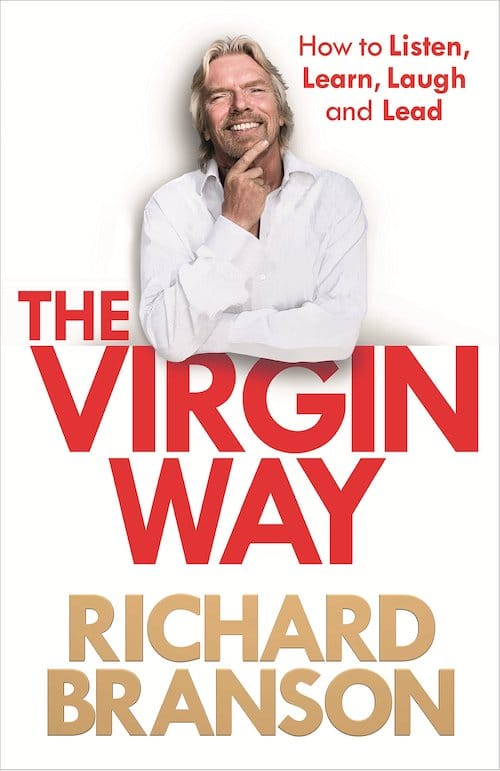
Richard Branson is one of the world’s most innovative minds today. His experiences in entrepreneurship are a treasure trove that he has shared in The Virgin Way (2015).
He believes that successful entrepreneurship entails much more than simply leading. Right from dropping out of high school to opening his first Virgin records store, he shares insights into his eccentric leadership, success in business, the future of the business world, and that his brand isn’t built on great leadership alone.
Lessons From The Past
We inherit our looks, our behaviors, and even personalities from our parents. Our parents on the other hand always strive to give us a good upbringing, good values, positive philosophies, and righteous principles in life. As adults, we have much to thank our parents for. Richard Branson believes that his leadership approach was influenced greatly by his father.
When he was young, he would often visit a local shop to buy chocolates. He would steal change from his parent’s room to pay for the chocolates. The shopkeeper, suspecting Branson’s stealing habit, told his father Ted about his visits to the local store.
While Branson expected punishment that evening, he simply got a cold shoulder treatment from his father. His father’s reaction showed sheer disappointment in him and taught him a lifelong lesson of not stealing.
Later, while he was running Virgin Records, he learned that an Artists and Repertoire (A&R) employee was stealing from the store and selling them to other stores. He remembered his father’s lesson in second chances and privately confronted the employee, giving him a second chance. The employee never stole again. Instead, he used his talent to work hard and become an asset to the company.
Not everyone believes in second chances, forgiveness, and keeping a humane attitude, yet it is this humane attitude that separates the leaders from great leaders.
The Virgin Way – Richard Branson
The Secret Of Listening
We all know that to be a good leader, one requires great oratory skills. However, Branson opines that it is keen listening skills that are far more worthy. Branson inculcated a habit, early on, of listening keenly to others and making a note of interesting remarks. As a teenager, he would use a small tape recorder to record interviews for his magazine, Student. However, the tape recorder rarely worked, and he got into the habit of taking notes.
Similarly, Branson recalls Sir Stelios Haji-Ioannou, the founder of UK’s EasyJet, attending one of his speeches in Greece. As a youngster, Haji-Ioannou was the only one in the audience who asked excellent questions, asked better follow-up questions, and also made a note of Branson’s answers. It was his passion for listening and making notes that gave him the edge to become as successful as he is today.
The Importance Of Having Fun
In the words of the famous Peter Drucker, “Culture eats strategy for breakfast.”
Richard Branson truly agrees and complies with this sentence. For Branson and his workmates at Virgin Records (before the brand became the behemoth it is), the work culture was all about having fun and enjoying the work they do with the people they enjoy with most.
Ask anyone in the corporate world what is the culture like in his or her company and you’ll probable get a blank stare. Many companies completely miss the point even. Inculcating a fun-loving culture in the company is often the difference between a mediocre company and a great one.
The Virgin way is to be serious about having fun! Late-night parties are the norm, as is working hard and beating the tough times. Similarly, Southwest Airlines CEO, Herb Kelleher has incorporated fun and humor into the culture of the company. Once, when a competitor almost sued the company for plagiarism (for using the tagline ‘Just Plane Smart’), Kelleher persuaded his competitor to settle the dispute by an arm-wrestling competition!
In another instance, the flight attendants of a particular Southwest flight hid in the overhead bins and jumped out at the baffled passengers with a ‘Surprize!’ While it may sound silly, it is a clear demonstration of a fun company with a great work culture. The outcome? Due to its fun-loving culture, Southwest Airlines is the only company to rake in profits for forty years straight!
Brave, Well Prepared, And Lucky!
Luck surely pays some part in our lives. Yet, without bravery and well preparedness, luck can easily escape doors of opportunity.
During the company’s earlier days, their first album release was Mike Oldfield’s Tubular bells. Branson was finding it difficult to sell the album to Ahmet Ertegun, the head of Atlantic Records in the US, in spite of the fact that it was a hit in the UK. Branson kept calling him on the phone to listen to the album. As luck would have it, the day Ertegun was listening to the album, after a day of persuasion from Branson, William Friedkin walked in. On hearing the music, he decided that the music that was playing would be the soundtrack of his upcoming movie The Exorcist. The rest is history!
The question we ask is, would Ertegun have heard the album had Branson not pestered him to hear it that day? Therefore while Friedkin’s presence at that very time was luck, it was Branson’s preparedness to keep pushing the album that gave it the successful opportunity.
But how do bravery and luck connect? The relation between the two is well explained by the experience Branson’s friend, Antonio, experienced as a student at Stanford University.
Antonio, while waiting in the cinema queue, randomly struck a conversation with a stranger. Antonio and the stranger, who also turned out to be a student, went out for a cup of coffee. During their conversation, the student told Antonio about a company he was going to start with another friend.
Antonio liked the idea and thought it had potential. So he took the risk of pledging $10,000 (which he had saved up for a new car) to his newfound friend. At the nascent stage of the company, the $10000 amounted to 1 share.
That student Antonio met was Sergey Brin, and the company launched, was Google. That 1 share, amounting to billions of dollars today, was the outcome of sheer luck that Antonio went for coffee. Yet without Antonio’s courage and brave risk-taking, mere luck wouldn’t have made him a billionaire!
Procrastination Can Have Positives
Decision-making isn’t an easy process. Moreover, for a top-level decision-maker like Branson, instinctively jumping feet-first into decision-making, rather than having a measured approach has seen both, successes (like the Virgin Atlantic and Virgin Blue aviation ventures) and failures (like his 1984 Virgin Cola and 1996 Virgin Brides bridal wear).
However, Branson, with four decades of experience under his belt, prefers to procrastinate on decision-making. Cautiousness in making decisions has indeed proved to be rewarding for the company. Branson’s caution actually saved him from the great financial crash of 2007.
Branson was approached by Goldman Sachs to invest in a lesser-known commodity. While his Virgin Money team jumped at the opportunity, Branson, having no knowledge or experience, urged the team to wait and gather more information. Eventually, despite the pressure from Goldman Sachs, he politely declined. The commodity in question was subprime mortgages – the cause of the global financial crash in 2007. Later on, in 2010, Goldman Sachs was fined for handling out incomplete information and for misleading potential investors. Branson had received this very misleading information that Goldman Sachs was fined for.
Conventional Wisdom And Innovation
Conventional wisdom is considered the safe route to take in business. However, it is a proven fact that conventional wisdom often thwarts innovation. Branson’s Virgin Megastore launch in Times Square, New York is a prime example. When he decided to launch the store in 1996, many warned him of the ‘scary’ Times Square neighborhood. Dismissing the naysayers and proving them wrong, Branson’s Megastore not only flourished and gave tremendous profits, but also triggered the redevelopment of the area, making it the Times Square it is today.
In another example, Branson Virgin Atlantic introduced the concept of clubhouse departure lounges, a luxury without which we cannot think of air travel today!
Despite critic warnings, Branson realized that passengers spend about 40% of their time at the airport. Wanting to make the Virgin experience more luxurious for his passengers, he decided to launch lounges, business centers, haircuts, and massage spas, and sit-down meals, all included in the price of the tickets.
Many warned Branson of the financial risks of the idea, but the idea proved them all wrong, making the idea a resounding success and even winning over the loyal customers of other airlines.
Branson believes that while it is important to give conventional wisdom a listening ear, one should never let it thwart innovation.
The Future Of The World
Being a high school dropout, Branson always believed and still does, that the schooling system in the country does not place enough emphasis on entrepreneurial skills. He believes in the future generation and their ability to lead the world of entrepreneurship. He is calling out to schools to change the out-dated schooling systems and inculcate more relevant career-oriented topics.
He believes that rather than focussing on calculus and algebra, youngsters should be exposed to careers in the real world by specialists in different fields. Educators should create the opportunity for students to be able to have open discussions with entrepreneurs, innovators, and those who have paved themselves a different path.
Leadership entails a lot more than just giving orders to subordinates and managing teams. A leader must be committed, inspire positive change in team members, build and maintain a good work atmosphere, be a good listener, work to first help peers and employees succeed, build and maintain personal relationships with employees, and along with all of this ensure that the organization is productive and profitable.
How does a leader do all of the above and still manage to succeed personally?
The 15 Commitments of Conscious Leadership (2014), explains that leaders have to be conscious leaders. It shows that success need not have a price. Moreover, it need not be at the cost of contentment. It brings forth the concept of conscious and unconscious leadership. To understand how leaders can work towards successful conscious leadership, we need to understand both concepts clearly.
Conscious Leadership
Conscious leadership is actually a state of mind rather than a stage that one should reach. Such leaders accept change and work towards learning from those changes. They know that they have the willpower to adjust as well made additional changes wherever necessary in order to succeed. They are responsive and sensitive to the needs of their team members.
Conscious leaders move from closed to open perspectives, from defensive to curious, and from wanting to be right to wanting to learn. They lead from a place of security and trust, rather than power and authority.
Unconscious Leadership
Such managers are uncomfortable with change. While they too strive for success, it is often at the cost of disregarding valuable suggestions from others. They refuse to do away with old patterns of working even when they are counterproductive. They believe that they are victims of circumstances and place a lot of importance on external factors, believing that these are responsible for their success and failures.
Unconscious leaders just go with the flow. They employ centuries-old models of leadership and management, believe they have all the right answers, and lead by fear and blame.
The book charts out 15 commitments of conscious leadership. While the word commitment is used, it does not imply promises in the future but focuses on the commitment to the present.
The Fifteen Commitments
Responsibility – Responsibility lies at the core of conscious leadership. It means to take full accountability for everything that happens in one’s life – personal or professional. Unlike unconscious leaders, who either play the victim of bad circumstances, placing blame on others or project themselves as heroes by taking on more responsibility than they can handle, conscious leaders understand that they must take full responsibility for their own actions. They understand the consequences of their actions and never shirk responsibility by blaming others for bad decisions and negative outcomes.
Learning – Learning is another value that forms the core of conscious leadership. Unconscious leaders do not learn from their mistakes and focus on blaming others, playing defensive, and proving that their views are correct. They never look at negative consequences as opportunities to learn.
Conscious leaders, on the other hand, understand that every experience – bad and good – are opportunities to learn. They understand that not all their decisions are going to be proven right. They are realistic about expectations and outcomes and are always eager to learn rather than place blame.
Accepting Emotions – Learning from experiences comes naturally to conscious leaders. They not only learn from their experiences and environment but also learn from their own thoughts and feelings. Unlike unconscious leaders, they do not resist and repress their emotions or recycle emotions by dwelling on them and feeding them with similar negative thoughts. Conscious leaders, on the other hand, look for wisdom in their emotions and thus have high emotional intelligence. They understand that emotions are powerful tools and accept them for what they are.
Listening Skills – Listening skills are assets that conscious leaders exercise at all times. They practice receptive communication, where they listen to what every team member has to say. They measure what they have to say after they have heard other viewpoints. Unconscious leaders often let their own judgments cloud their views and do not consciously listen to others. This can be detrimental as it often leads to prejudices.
Avoid Gossip – The corporate grapevine is an omnipresent and scarlet feature of the corporate world. It can be useful but at the same time, it can be devastating for the organization as well as individuals, making the work atmosphere toxic. Conscious leaders are aware of the dangers of gossip and know that it is essential to share the truth with the right people at the right time.
Integrity – Integrity is a commitment of conscious leadership that binds all the other commitments. A leader without integrity can poison the entire organization leading to its downfall. Conscious leaders who take responsibility, express their emotions openly, speak honestly, and keep their promises are said to have integrity. They make sure that they do not make commitments that they cannot honor and fulfill all commitments they make honestly.
Appreciation – A leader is made by his team and not the other way round. Conscious leaders know that their words of appreciation hold high value for their employees. When a leader is appreciative of his employees, he helps those employees learn to appreciate themselves. At the same time, appreciation makes the leader view the team member in a better light too. Appreciation, most importantly, helps a leader to be able to better understand team members, value them more, and understand their qualities too.
Zone Of Genius – There are three zones in which people work in, and tend to stay in due to the fact that they subconsciously limit themselves –
The Zone of Incompetence, where one doesn’t enjoy doing a job because they are not good at it.
The Zone of Competence, where the one is good at the job that is done but doesn’t find it fulfilling, and,
The Zone of Excellence, where one excels at the job done but does not find it fulfilling and hence, does not apply any creativity to do it.
However, there is a fourth zone – The Zone Of Genius – where people love their job so much that it doesn’t feel like work at all! Conscious leaders mostly work in their zone of genius, because they love and enjoy doing the work at hand.
Play. Do Not Struggle – The zones take us to the ninth commitment of conscious leadership – work with a playful attitude rather than doing it as if it is a struggle. Conscious leaders focus on enjoying the work they do. That is why their attitudes toward work are always fun and creative. They know how to integrate fun in their work naturally, making work less of a struggle.
Being Open – No experience or outcome is good or bad. They are simply labels that we attach to events or outcomes due to our perceptions. The tenth commitment of conscious leadership is to be open to other perceptions and interpretations. This gives leaders a different perspective and then they are able to make managerial decisions looking at all possible pros and cons.
Internal Security – People often view security, approval, and control as external factors that they mindlessly chase. However, conscious leaders know that these are internal factors and thus are comfortable and accepting of the security, approval, and control that they already have.
Contentment With The Present – While leaders should have the ambition to grow and succeed, they should also understand and recognize that there is an abundance of everything that they have, including time, money, love, respect, etc. Sadly, many leaders follow the belief that there is a scarcity of everything in life and that they need to hoard it in order to be truly content. Conscious leaders are cognizant and content with what they already have. This allows them to be happy and live in the moment.
Personal Growth – Sometimes, leaders believe that finding success is a representation of beating the competition. Such leaders view personal growth as the winning moment of the rat race. They do not realize that everyone surrounding them – their competitors, employees, personal relationships, etc. have contributed to their personal growth. Conscious leaders, on the other hand, know that all experiences and people surrounding them contribute to their personal growth and acknowledge their role.
Creating Win-Win Situations – Conscious leaders work towards making sure that everyone wins. They move beyond competition and compromises. They involve everyone in successes and see that everyone involved wins. They aim for creating 2+2=5 results, where the outcome is better than the sum of its parts.
Be The Solution – The final commitment of conscious leadership is to be the solution. Conscious leaders perceive problems in a positive light. For example, they see a problem as an opportunity to better something rather than viewing it as lacking something. They work towards becoming solutions to problems they see.
These fifteen commitments are the guide to becoming a conscious leader. Applying these commitments to oneself will help in leading a more fulfilling life, personally and professionally.
As professionals and leaders, we all reach a point when we wonder if we are doing it all right in today’s tough, cold-hearted corporate world. Leaders world-over have questioned themselves at some point in time – ‘is it a pretense or am I in control of my life?’
Jerry Colonna’s Reboot (2019), takes us inwards, pushing us to reflect on what has shaped us as human beings, what has shaped us as leaders, are we better human beings, etc. Reboot guides us towards a more rooted leadership that has the ability to transform any workplace into a less toxic, more humane, and more forgiving one.
1. Radical Self-Inquiry
Often leaders wonder, ‘What is that one quick-fix that will solve my problems?’
Truthfully, there is never a ‘one quick-fix solution’ for anything. However, one can dive deep into radical self-inquiry to find some answers to the feeling of helplessness and professional anxiety.
Many leaders toughen-up on their way to the top. They bury their vulnerability under a hard exterior in order to be able to run the organization. Their constant focus lies on ‘how’ to do it successfully, and the basic ‘why’ gets lost in the interim. In the bargain, their pent up emotions lash out in the form of irrational and emotional decisions at the workplace.
The way out is to understand one’s own roots. One needs to look at the difficult times they have faced in life, the ones that have shaped their personalities. For example, the author realized that his own professional anxiety stemmed from his childhood experiences with poverty. The feeling of losing everything was a driving factor for him to succeed, but it was also the cause of his anxiety.
Therefore understanding how past experiences have life-long effects on us via self-inquiry is very important.
2. Leadership-Building Crises
In the tenth-century, a Buddhist saint and teacher Milarepa went out of his cave to gather firewood. When he returned, he found it was full of demons. After unsuccessful attempts to shoo them away, he finally taught them Buddhism. They soon became quiet. When they still didn’t leave, he asked the demons, “What are you’re here to teach me?’ Stumped with his questions they all left except one.
Finally, Milarepa put his head in the demon’s mouth and said, ‘Eat me if you wish.’ And then the demon vanished.
This tale of confronting one’s demons shows us that one has to face their demons. These ‘demons’ are a test of character and mettle, and facing them often helps in building valuable leadership skills, making one a better human being.
Warren Bennis called it the crucible moment – the one where extreme pressure enables us to face the toughest situations in life, bringing out our best. Such experiences get us to the other side more confident, more humble, and most importantly as great leaders and humans.
3. The Calm Amidst The Rush
The corporate world is a fast-paced world. No one has the time to take a minute, stop, and practice mindfulness in the rat race to the top. Though keeping the pace is important from a career and ambition perspective, many lose themselves in this rush and often forget that need to pause and take a breather.
A constant fast-paced environment can turn toxic in a matter of minutes. Such toxicity can slowly spread from person to person and end up affecting the entire business structure, where the leap to the moon is only possible by trampling over someone else’s ambitions.
As a leader, it is vital to know when to take a breather and calm down right in midst of the fast-paced corporate life. It is important to sit back and evaluate the need for the rush. And it can be achieved only by practicing mindfulness every day.
4. Broken-Open Hearted Leadership
We have all heard of ‘What goes around comes around’. This couldn’t be truer than it is in the case of lies. Lies always catch up with us in the most unexpected ways and times, teaching us a hard lesson in life.
We have seen severe consequences of lies being told at the top of the corporate ladder. Serious ramifications such as oil spills in oceans, massive job losses, unemployment, bankruptcy, etc. are consequences of deceitful top-level management. The only reason why the world has faced these consequences is that some leader has not had the courage to be truthful.
Today’s time needs a change in how honesty is imbibed right from the onset of careers. Colonna talks about broken-open-hearted warriorship (a broken, scared, and lonely heart is an invaluable guide), a concept where the leaders themselves are strong enough to face the truth and do not leave themselves or their teams vulnerable to lies and deceit. Such a change works best when leaders become the torchbearers of honesty.
5. The Ghosts In The Machine
Software developers use a term ‘the ghosts in the machine’ that refer to bits of dormant out-dated code, from a previous version that despite being defunct can interfere with the newer versions of the code.
Our behaviors function in similar manners. The ghosts in the machines turn out to be irritating and irrational habits, complexes, and fears that make us humans messy, and asymmetrical. Leaders need to have an understanding that everyone, themselves included, will have these ghosts and that they will have to work around them.
For example, the author himself found that his habit of correcting colleagues incessantly often caused professional tensions just as it had its positives. However, the author also realized that this habit was a ghost code wired inside him by seeing his father obsessively correct errors in the newspaper during their times of poverty.
6. Do-Over!
Leaders spend almost all of their way up to the top controlling, planning, and monitoring their moves, and largely their lives. However, the path to success can turn to stifle us with its consistent routine.
The author himself proceeded up the planned path to success, only to find himself at the brink of suicide in the wake of 9/11. However, he turned things around by embarking on a personal travel journey, visiting places, and meditating.
It was an essential step to accepting uncertainty and not knowing. This led him to be able to embrace the potential of the present. He welcomed it at a physical as well as mental level, where he learned to let go of regrets and accept mistakes and move-on, reminiscent of a childhood game of stickball where his friend would yell ‘Do-over’ after a futile debate over a foul or hit.
‘Do-over’ essentially means to move on, move past, forgive, forget, and hit refresh. It means to embark on an uncertain, pathless-path where one is open to change and attentive to the present.
7. Personal Crow, Loyal Soldier, And You
In college, Jerry Colonna took a writing course with poet Marie Ponsot. She gave them a metaphor of a crow sitting on their shoulder cawing, ‘why did you write that?’ or ‘that’s not good enough’. She urged students to ‘shoot the damned crow’.
Colonna perceived the crow as the voice at the back of the head and refused to shoot it. He felt that we should learn to accommodate the crow because the crow reflects our care for our actions in the world and signifies our belief in humanity.
Similarly, he also describes the ‘Loyal Soldier’, a solitary soldier cut off from the regiment, defending a lone island. The soldier maintains his position and focuses on his survival rules. He maintains routines without knowing whether he will ever need them. However, just because the war is on in his mind, he is attentive guarding his base. Colonna likens the soldier to our instincts for self-preservation and embodiment of our survival strategies.
Both, the Personal Crow and the Lonely Soldier help us to be more at ease with ourselves and be more open and courageous.
Leaders need to let the team members work individually, yet be able to herd them towards being one cohesive team. They need to be intuitive to understand the undercurrents of the team to be able to create a conducive space. Finally, they should have compassion towards their team members to be able to understand them or make them work well together.
Colonna gives an example of a herd of horses. Amongst the herd, rather than the strongest, most handsome, smartest, or showiest horse, it is the horse that is able to feel the group the best that is chosen as the leader of the herd. This intuitively strong leader is almost always a mare. The mare is best able to calm down other horses and is able to understand the needs of other horses.
A leader has to show similar qualities, where they have to be tuned in to the needs of his team members. Such leadership can steer the team away from toxicity.
Reboot is a unique guide for leaders. It shows the true way of growing as a leader and more importantly as a human being. Jerry also shows that out of all the qualities a leader should imbibe, the ability to steer away from a toxic environment stems by reflecting inwards is the most important. It shows that self-awareness, mindfulness, honesty, and self-critique are qualities that create better leaders.
Egotism, especially at the workplace is an extremely harmful trait. Whether it is a manager, junior-level executive, or even an organization leader, having an inflated ego at any point can have severe consequences.
Ryan Holiday’s Ego is the Enemy (2016) shows the dangerous consequences of egotism and charts out strategies for those in the corporate world to stay grounded, rein it in, and keep the ego in check.
Ego isn’t all that bad; having a healthy ego is good to a certain extent. A little bit of ego is needed to compete, to surpass our own achievements, and to even convince others of our abilities. Yet there is a very thin line between an inflated ego and the healthy one. A line that is too easy to cross.
Ego Vs. Ambition
Ego thrives on fame, recognition, and success. The desire to achieve these is so strong that one tries to get them by any means, without deserving it.
Former US President Ulysses Grant is a good example. He ran for president after Abraham Lincoln’s second term was nearing the end. Being a reputed general in the US Army, he was popular, but he was also new to the world of politics. His desire to hold the highest office in the country without experience was egotism.
On the other hand, William Tecumseh Sherman, Grant’s colleague and a general in the army as well, was ambitious, but not egotistic. During many talks with Lincoln himself, Sherman showed no desire to run for president. His priority was to excel in his own field – military leadership. He focused on bettering himself in his field and knew that his expertise and recognition in the Army would not suffice for Presidency.
Ambition differs from ego. Egotists desire recognition and fame, whereas the ambitious set their sights on excelling in their field.
Ego is the Enemy – Ryan Holiday
Ego Vs Learning
Ego considers itself very clever. An egotist tends to have the belief that he or she knows everything and that there isn’t anything new that they can learn. Such people do not have the humility to accept that they might not know it all and that someone could have more knowledge than they do.
It is easy for your ego to get the better of you if you are good at anything. The trick is for us to think that we have much to learn and that there are others who are better than us.
The guitarist Kirk Hammet had the chance to be part of the world-famous rock band Metallica. Instead of joining them, he chose to study under Joe Satriani, the famous guitar virtuoso, and better his skills. He knew that with Metallica, he would never learn as much he did had he become just a member of the band. He had chosen to rein in his ego and learn more.
Another way to suppress the ego is to pass on the learning. Those who are good at a skill should pick a mentor to learn under as well as choose a novice to mentor. There was never a better equalizer than teaching.
Ego Vs Self-Improvement
Once we taste success, we tend to bask in the laurels for longer than we should. Would we have had iPhones today had Steve Jobs been content with his Apple II computer?
While pride and ego have different meanings, they go hand-in-hand. Ego is justified by one’s sense of pride. When we are proud of achieving something, we tend to sit back, relax, and bask in the limelight. Both pride and the resulting ego thwart one’s ability to try something new, to better oneself, and to push harder to do greater things.
Pride and ego play a part in deafening us to warnings and make us defensive to critics. People’s ego tells them that they are the best and can even get aggressive if someone tells them otherwise. Pride and ego will a person to fight anything that can seem like a conflict.
One way to rein in pride is to consider how a more humble person would perceive the criticisms given.
Ego Vs Delegation
In the corporate world, there are many cases where a manager is unable to delegate work to the team. They find it tough to trust other team members and co-workers. Especially for those who find success and step up the designation ladder due to individual successes, delegation seems difficult because they are unable to see that others might be able to do a better job than them. They often fail to see that delegation of work gives them more time to better themselves and aim for higher goals.
John Delorean left his job at General Motors because he thought he was better at car manufacturing, and more knowledgeable than his bosses there. However, when he started his own venture, he became more dictatorial in his management style, with his ego getting the better of him. Discarding the stable management style that was used in GM, he needed to sign off on every decision. His company eventually failed and he went bankrupt.
Ego Vs Humility
No one works in isolation. Our successes are always attributed to the hard work and contribution of those working with or around us. Often, people let their success and accomplishments go to their heads and think that their success is theirs, and theirs alone.
If we look at the examples of Kobe Bryant and Shaquille O’Neal, world-class basketball players with the LA Lakers, we can see how they both let their success of winning three championships back-to-back from 2000 to 2002 go to their heads.
Without realizing that it was their combination that worked seamlessly to win, both would constantly complain about each other to the media and to the teams. Finally, Bryant refused to sign-on another season with the Lakers if they didn’t trade-off O’Neal to another team, ending their successful streak.
Humility is an important virtue. One must have cognizance of the fact that their successes can never be attributed to themselves alone. Giving others the recognition they deserve helps form better workplace relationships. It is a pre-requisite for success in an environment that puts so much emphasis on optimism and going for more and bigger results.
Ego Vs Improvement
There are times when people find themselves underappreciated for the work they have done. For example, you might find that you get rejected for a job that you feel is made for you; one of your best ideas gets rejected by the manager, or even gets passed off for that much-deserved promotion.
In such times, it is natural that the ego gets hurt and we start resenting the people or the circumstances that lead to the result. However, unexpected undesirable results should be perceived as opportunities for improvement.
We should be honest with ourselves and consider the possibility that our work was not up to the mark and try to understand what went wrong. That way, one can rein in the ego and work harder to perform better than the best.
Our egos are part of our personalities. While we cannot do away with them completely, we can strive to ensure that they don’t spiral out of control and become detrimental to our success, affecting relationships and thereby our careers.
How did hierarchies come to exist? Why do only a select few lead? Is there really much difference between how societies functioned in the pre-historic era and how they function now? And what do all these questions and topics have in common?
Leaders Eat Last, by Simon Sinek attempts to answer these questions by delving into the science of neurochemicals – our hormones vis. a vis. leadership! How are our behaviors affected due to the natural functioning of our biology? And how do these neurochemicals affect leadership qualities?
The Biology Of Leadership
Our bodies release about 50 different types of hormones. Yet, dopamine, oxytocin, serotonin, and endorphins are some of the most talked about. That is because these hormones can by-and-large affect the behavior of humans. Our hormones have evolved over time to adapt to the conditions that surrounded us, by controlling and moderating our behaviors. Hormones are responsible for that even today.
Dopamine is the hormone that makes a person feel happy and content on completion of a take. For example, the happy sense of accomplishment one gets when they reach their weight-loss goals or if we find a lost key, is caused by dopamine.
Serotonin and oxytocin are known as relationship hormones because they affect our behaviors when we need to make meaningful relationships. Endorphins are the body’s natural painkillers. These disguise the pain of exhaustion as physical pleasure, making us feel renewed after a strenuous workout.
Because hormones affect behavior they have also shaped the way human society is structured. For example, the hunter-gatherers needed to feel the rush of endorphins to push them towards finding a kill. On the other hand, others who could not participate, we considered the ‘weaker’ section and were given easier tasks such as fruit gathering. These differences were the first references to hierarchy.
Additionally, hormones were responsible for cohesion within the society as well. Affection towards a leader, respect for the hunter-gatherers, etc. were behaviors that the hormones serotonin and oxytocin were responsible for. It explains why the weaker men would look up to the hunters or leaders have respect for one another and not jealousy.
Based on this understanding, let us analyse the relation between leader, organization, and how humans respond to these.
Leaders Eat Last by Simon Sinek
Feeling Safe With A Leader
Humans, being social, were conditioned to live in groups and form social circles. When there were a number of dangers such as predators, diseases, natural disasters, and other people, this group offered safety and ensured survival.
The concept of living in a group helped us feel secure. With security taken care of, mankind was able to focus on other tasks such as making tools, etc. that helped us to advance as societies. The human brain has also evolved to give priority to security and safety. This reflects in some of our behaviors today. For example, due to the security that a job offers, a person would continue to do it even if the work environment is very bad.
However, when we look at groups, it is the leaders who draw the ‘safety-circle’, protecting the members of the group. The members within this group protect and trust each other, and share resources. The leader also determines how large or small is the safety circle and to whom it extends.
Bob Chapman of HayssenSandiacre, allowed employees free access to the services and goods of the company. This trusting work environment helps in strengthening the bonds between the employees, who extended a helping hand to those in need, even in personal matters.
This shows that it is the leader who can create a feeling of safety and foster a healthy environment in the group.
Leading By Manifesting Culture
An organization isn’t all about its profits, shareholders, amazing products and services, and infrastructure. Its workforce and the culture that prevails due to that workforce, how they interact, approach issues, work together, treat their clients and customers, and prioritize values, are equally important.
Therefore it extremely important that a leader not only has knowledge of how culture influences the organization but also how to craft its culture and maintain it. This is because the culture runs through the fabric of the organization – from the leadership down to its staff at the lowest level.
An extraordinary example can be seen in the employees of the Taj Mahal Palace Hotel. In the year 2008, terrorists attacked the hotel. While some of the employees had managed to flee, they returned to help the guests staying at the hotel. Some of them even made human shields to protect the guests while they were escaping. About half of the people who perished in the attack were the hotel staff.
The staff put their customers before their lives. A clear indication of how the values of the hotel, and the culture were ingrained in the staff.
Empathy and Responsibility As A Leader
A leader is responsible for the group he leads. Therefore, if there is a gap between the leader and his group, it can cause severe damage to the organization. Moreover, if a leader does not feel responsible for the group, he becomes uncaring.
It is essential that a leader is empathetic. Without it, a leader could become emotionally distant from his employees, and the situation could be worse if there is a physical distance between the leader and his team. The leader would then never be able to see and understand how gravely his actions affect his employees. This is called abstraction.
The Milgram Experiment is a good example of abstraction. Volunteers called Teachers were asked to administer electric shocks – in increasing intensity from mild to potentially lethal – to another group of volunteers called Learners. Teachers did not know that the Learners were all actors and that they weren’t really being shocked.
The experiment proved that though many Teachers expressed uneasiness at harming others, it was apparent that the more the distance between a Teacher and a Learner, the more likely the Teacher was willing to continue. The experiment also showed that in a group where the Teachers could neither see the Learners writhing nor hear their (false) screams ended up administering a lethal dose.
When abstraction occurs, a leader cannot look beyond his own interest and tends to make decisions for others, which can be extremely harmful for an organization.
Selfishness And Dehumanization Of A Leader
Just as being surrounded by people of one’s group offers a feeling of safety and progress, being alone can make a person selfish and dehumanize other people. The Baby Boomer generation is a classic example. Being the generation that was born after WWII, they grew up in a thriving economy, were spoilt by their parents and thus, grew to become critical of authority and were self-centered, unlike their parents who came together in solidarity during war times.
This sense of self-centredness was clear in their acceptance of Ronald Reagan’s managing of the 1981 air controllers’ strike, where he sided with profiting companies over the well being of the workers.
Once a leader prioritizes profits of the business, technology, advancement, and the sheer strength and scale at which the businesses operate it becomes dehumanizing in a manner where leaders tend to view customers, employees, shareholders as abstractions or as tools to fulfill a business goal. Leaders stop considering them as a living beings with wants, feelings, and needs of their own.
Do you know what makes you happy? Or sad?
Addiction To Advancement
Technology and advancement have brought us instant gratification, which releases dopamine in our body once we feel it. Since this advancement and technology helps us get better and faster with our work, thus enhancing our performance, we need to feel the satisfaction and the gratification again and again. We become addicted to advancement.
We forget the value of stability and long-term satisfaction. Because technology makes everything as instant as ‘clicking’ a button we become addicted to the quick fix, eventually losing the patience to wait for results.
This can be well explained with any human rights campaign on Facebook. The moment we click on it, we get elated for doing something worthwhile so soon. We get used to the ‘quick fix’ rather than actually going out to volunteer for a cause we believe in. The release of dopamine that we get on clicking a button and being part of any campaign becomes an empty addiction.
Integrity And Bonding
Humans put trust in their leaders. Therefore it is essential that leaders have integrity. We expect that our leaders are honest about their mistakes and take responsibility for their errors. In fact, the feeling of safety that a group develops towards their leader is built on the foundation of trust and the ability of the leader to bond with the group.
Ralph Lauren Corporation, in the year 2009, found out that their Argentinian Branch was involved in bribery. The leaders informed the authorities and even agreed to help them, rather than cover –up the incident. In due course, they had to pay huge fines in penalties. However, they safeguarded their integrity and deepened the trust their employees had for them.
Bonding with the group is another important responsibility a leader has. If we see the US Congress, we will find that most of the members live outside Washington and travel there for a few days or a week. This has resulted in the lowest approval ratings in history today, as compared to the 1990s, where close cooperation between the congressmen and women resulted in making laws that reflected the closeness and regular communication between the members.
Service Before Self
Why would any group vote and put their trust in a leader that is ordinary? Wouldn’t they prefer to have someone extraordinary who leads with a clear vision in mind? The group follows the leader towards a goal and mission in spite of having their own individual goals due to the focused vision they have, that aligns with the needs of the group.
Microsoft is able to maintain its place in the market despite having huge profits because of the singular vision of Bill Gates – to put a computer on every desk.
When a leader leads a group towards a goal with a vision, he actually does the employee service, and not the other way round. A person becomes a true leader if he can understand the fact that leaders serve the people. Privileges aside, leaders should be willing to use their personal resources in times of crisis.
The most senior member is the US Marine Corps eats his meal last. This is because they put the needs of their Marines before their own needs.
Conclusion
A leader should understand that the members of their group do not follow them only out of compulsion (because they are working in the organization), or due to some personal gain, but also because being part of the group is a biological, chemical reaction that makes them want to trust and follow the leader.
Therefore, to be a leader means to firstly, guide the group selflessly, without having the want of success and self-promotion. Leaders should in fact work towards ensuring that all the members of the group have a fair opportunity to succeed and they help them reach their goals.
I use cookies on this website to give you the most relevant experience and for analytics purposes. Any personal data collected will never be shared with any third party, or used to spam you. That is my promise. - Sumit By clicking “Accept”, you consent to the use of ALL the cookies.
This website uses cookies to improve your experience while you navigate through the website. Out of these, the cookies that are categorized as necessary are stored on your browser as they are essential for the working of basic functionalities of the website. We also use third-party cookies that help us analyze and understand how you use this website. These cookies will be stored in your browser only with your consent. You also have the option to opt-out of these cookies. But opting out of some of these cookies may affect your browsing experience.
Necessary cookies are absolutely essential for the website to function properly. This category only includes cookies that ensures basic functionalities and security features of the website. These cookies do not store any personal information.
Any cookies that may not be particularly necessary for the website to function and is used specifically to collect user personal data via analytics, ads, other embedded contents are termed as non-necessary cookies. It is mandatory to procure user consent prior to running these cookies on your website.