Book Review

  • Power by Jeffrey Pfeffer – Why Some People Have It and Others Don’t

    Power, many believe is best suited in the hands of a few. However, that doesn’t mean you can’t try to gain power and work your way up the ladder of success. The mind-set that power is only for a selected few is completely wrong. Moreover, it can be changed and success and power can be yours. How?

    Power (2010) by Jeffery Pfeffer shows the way. The book focuses on how any individual can make it to the top. With tips on how to beat the competition and stand out in the crowd, it dispels the myth that power is only meant for the few.

    1. Power Is Only For A Selected Few

    Let us debunk the first and most important myth – power isn’t for everyone.  We often find that people keep on trudging at the workplace, wait for a promotion that is seemingly right-around-the-corner, only to be passed over in the end, finally believing that they did not deserve it.

    However, studies show that there is no relation whatsoever between performance and promotion. A study conducted on the Dutch aircraft manufacturer Fokker showed that post receiving a rating of ‘very good’, only 12 percent of white-collar executives were likely to be promoted when compared to those receiving a ‘good’ rating. 

    Moreover, the ones who do not get promoted fall under the trap of the ‘just-world-hypothesis’, a term coined by psychologist Melvin Lerner, where people tend to believe that the ones who do get promoted are the ones following all the rules and that they themselves have fallen short somewhere.

    The ‘just-world-hypothesis’ makes us think that a person using nefarious means to get to the top will one day ‘get it back’. We let our perceptions of their bad behavior cloud our ability to see and understand how such people succeed, often ignoring some of the techniques and tips that can be useful to us.

    2. Be Honest About That SWOT Analysis

    We often look at a leader and attribute their leadership qualities as ‘inborn or natural’, ignoring the fact that anyone can be a leader. Leadership qualities can be studied, practiced, and learned.

    Learning to be a leader first begins with an understanding of what the qualities of a good leader are. Moreover, it is about understanding the qualities that one embodies. Whether it is confidence, empathy, awareness, energetic behavior, resilience, or self-awareness, etc., that one has or has to imbibe; reflecting on which are the qualities that can be categorized as one’s strengths and weaknesses is essential. 

    Additionally, it is more important for an aspiring leader to be able to be honest about their strengths and weaknesses, as the strengths will need to be honed to perfection, to able to constantly be in the limelight to get noticed; and the weaknesses will have to be rigorously worked upon to ensure that they convert to strengths.

    3. Landing the Right Department

    Just as there are great differences between two companies, there is a wide difference between the different departments within the same company too. 

    A study conducted on the career paths of about 388 managers in public utility companies found that the managers who started their careers in the powerful departments of the organization had higher salary growth rates as well as higher chances of finding jobs in the powerful departments of other companies.

    Unfortunately, there is no way to pre-determine which department in an organization enjoys higher power over the other, however, fortunately, a 3-factor evaluation method can help one gauge which are the powerful departments – 

    • Relative Pay – The no brainer indicator. The more powerful departments tend to offer higher salaries.
    • Physical proximity to leadership – The departments that are physically located closer to where the leadership sits.
    • Composition of Important committees – The third is the departments that have representation in the boardroom.

    4. Breaking The Rules To Get Noticed

    There is an old Japanese proverb that says ‘The nail that sticks out, gets hammered down.’ 

    When it comes to seeking power and getting noticed by the leadership, this works quite in the opposite way than the proverb implies.  Simply put, the employee that stands out from the crowd gets noticed for promotions. How does one stand out then?

    There are two ways – by asking the powerful people in the organization for help and by making yourself memorable.

    People often shy away from seeking advice and asking for help – especially from the leaders – thinking that they will face rejection or that they are too little and inconsequential to be spent time on. However, the confidence in asking a leader help to the top is what often gets a person noticed.

    In addition to asking for help and seeking advice, one has to make themselves memorable to the leaders. One has to break or bend the rules a little to get noticed. In a pool of employees that follow the rules laid down by the organization, the one that gets noticed is the one that changes the way they work from the others. While breaking rules is essential, one has to be careful that they don’t steer onto the wrong side of rule-breaking.

    5. Helping Others

    The corporate world is all about working within teams. Therefore one cannot expect to receive help from teammates to make it to the top without helping them in their time of need. 

    Whether it is social support, career advice, or monetary help, sharing any kind of resources with colleagues demands reciprocity. It becomes a social obligation to return a favor. This reciprocity works better when the help given seemingly does not involve personal gain. For example, helping your boss plan a team outing. While it might not be much of a cost in terms of work, but will keep you in the memory of your boss for the help.

    Another resource to leverage is being fair and polite. Politeness is a rarely used virtue, however, one that makes a person stand out. Politeness never goes unnoticed, and in fact, it can help a person keep you in memory. The case is similar when you treat people fairly.

    6. Looking, Feeling, And Exuding Power

    It is simple. To be powerful, you have to look powerful. If you notice politicians, it is the way they speak and behave that influences people and they know that to be able to influence people, they have to attune the way they speak and behave.

    Emotions are contagious and have the ability to influence others. For example, when you enter a room smiling versus when you enter a room with a frown on the face, you will notice that the others in the room will reciprocate the same emotions. Therefore one has to exude a feeling of power.

    One way to exude power is to speak slowly and deliberately, which makes one seem to be confident and also helps in avoiding contradicting oneself. Another way is to study the display of dominant behavior. A study has shown that simply expressing anger while disagreeing with something makes others perceive you as strong and competent.

    7. Having A Good Reputation

    Reputation is indeed a fickle friend, albeit an important one. People make judgements and find ways to consistently back their judgements. Simply put, people will pay more attention to the things that will testify to their judgements, ignoring everything else. This is known as cognitive discounting. Additionally, people also modify or change their behaviour and reactions towards you depending on their judgement and assumptions they have previously made.

    It is therefore extremely important to have a good reputation. It is even more important to maintain it. A good reputation is made and maintained by firstly, making a good impression in the first place, because it is extremely difficult to change an established view.

    8. Conflict and Failure Are Inevitable

    Making it to the top is impossible without a few rounds of conflict and failure.  However, as essential as they are, these experiences can be used in one’s favor to make it to the top.

    Humans tend to be conflict-averse. However, a leader uses conflict to his advantage by preparing to face people with conflicting ideas head-on. To do this, however, one has to choose their conflicts wisely.

    For example, a fight for a good parking space might not be worth it as compared to defending your work that is being criticized by another person. Additionally, powerful people give the opponent in a conflict a chance to retreat gracefully. It is important to end a conflict on respectful terms; else one risk making lifelong enemies that can even destroy careers.

    Another important aspect is to know when you have lost the battle. And it is even more important to know how to move forward after that.

    Power, leadership, and success aren’t as elusive as they seem. Neither are they meant only for a select few. Leadership skills can be honed and power can be acquired by keeping the aforementioned tips in mind and by practicing the techniques enlisted.

  • Lincoln On Leadership: Executive Strategies for Tough Times by Donald T. Phillips

    Abraham Lincoln was one of the greatest leaders the world has ever seen. His leadership and management strategies before and during the American Civil War speak volumes of his success as the leader of a country. Donald Philips, in Lincoln on Leadership, describes some facets of Lincoln’s leadership skills and how managers today should imbibe these to be successful leaders.

    1. Managing By Wandering Around

    Abraham Lincoln loved to engage with his people and his staff at every level. Whether it was an inspection of state regiments passing through DC, his cabinet ministers, his soldiers in the Army, colleagues, supporters, or the general public, Lincoln took out time from his busy Presidential schedule to know the people around him. He would spend about three-quarters of his time meeting people and getting to know how they fit in the scheme of things.   

    His approach to meeting and engaging people was like the new age management concept of MBWA (Managing By Walking Around). MBWA is a management tool that encourages managers to seek out and meet the people in all levels of their organization, spend more time with them, and hear their opinions. This time with employees can also be used to instill organization values in them.

    2. Preach, Persuade And Reinforce

    Abraham Lincoln had a loyal following of believers. His approach was persuasive and encouraging with a focus to reinforce what he preached.

    A great example is his speech where he addressed and attacked the views of pro-slavery politicians, at a time when America was divided on the issue of slavery. He suggested that even most of the U.S. founding fathers had been against slavery. His well-crafted argument appealed to the faith the public had in the founding fathers, thus enabling him to win.

    As a leader, he would use his persuasive skills to motivate his administration. He would make his orders sound like suggestions, making his team feel that they were an active part of an important decision too. New age managers need to be persuasive with their team to motivate them, yet they need to make them feel involved and important.

    3. Communication And Silence

    Communication is the master key to great leadership. Abraham Lincoln knew this very well and mastered effective communication. While he was a fantastic orator, his success as a great speaker was perhaps due to the fact that he used to prepare extremely well for his speeches, often editing right down to the moment before he took the stage. 

    At the same time, his interpersonal communication skills were top-notch too. He would use imagery and stories to make his point. This enabled him to share complex pieces of information with people from different backgrounds, reducing the time it took from communicating an idea to its execution.

    Finally, Lincoln understood the most important thing in communication – “silence“, which is at times the best way to communicate. This was evident in his re-election speech, where he chose to not say much and limited his public speaking campaign.

    Similarly, it is essential that managers understand these three main facets of effective communication as well.

    4. Taking Intelligent And Bold Action

    At the brink of the American Civil War, Lincoln had to make a crucial decision of resupplying the military post at Fort Sumter, a decision he knew would result in him being the initiator of the conflict and endangering his political position in case he got blamed for starting the conflict. At the same time, leaving the military post insufficiently armed would have been dangerous too.

    He weighed the pros and cons after thorough deliberation and decided to make a bold move of resupplying the military hold. His move resulted in the Confederates attacking first, but his decision to reinforce Fort Sumter has been seen as a good decision considering the first attack by the Confederate Army.

    Like Lincoln, managers face situations where they need to take bold actions. Yet they need to ensure that their actions are supported by intelligent deliberation and are well thought out.

    5. Hiring The Right People With Trial Periods

    Abraham Lincoln knew he needed people who would take initiative on his team. His team comprised of people like General Ulysses S. Grant who was a self-motivated fighter and used aggressive strategies. Grant too, would prefer to surround himself with like-minded people, who were independent, knew their job, and took initiative.

    Finding the right team member isn’t an easy job. That is why leaders use a technique called the honeymoon period or a trial period to assess staff. The decision to hire them is taken only after this honeymoon period. Abraham Lincoln believed in this strategy and utilized it to the fullest to weed out bad hires.

    6. Using Technology and Innovation

    Abraham Lincoln understood that the success of a leader also relies on how attuned he is to seek out technological advancement. He ensured that his administration was technologically savvy and he would personally seek out technology that would help the Union Army during the War.

    He also ensured that once sought, any technological advancement would be implemented as soon as possible, even if, at times, he would need to override the opinions of his own generals when new weaponry was concerned. He also ensured that he was open to new ideas from his administration and encouraged them by creating an open platform for them to approach him with ideas.

    Leaders have to stay open to using technological breakthroughs, seek innovation and be open to new ideas.

    7. Balancing Change, Flexibility, Stability, And Consistency

    Good leaders understand that all organizations undergo constant change due to changes in technology, moving workforce, evolving situations, etc. They also understand that they have to be flexible to adapt to these changes. At the same time, leaders should also create a strong consistent base for employees to function within the organization. A stable workforce with a strong foundation can withstand any type of change.

    The necessity of maintaining a balance between change and consistency has been a constant battle for Abraham Lincoln. He saw the country and his Government through the worst time in history. The changes the country went through (abolishment of slavery, etc.) at the time were possible only because the leader of the government maintained consistency in his workings, dealings, and expectations.

    8. Building Trust Via Forgiveness

    Above all things, a leader should be forgiving by nature. A forgiving demeanor leads to the build-up of trust and faith. This was one of the most crucial values that Abraham Lincoln had. His forgiving nature instilled confidence amongst his people and encouraged them to take bolder action, knowing that he had their back.

    At the same time, even enemies benefitted from Lincoln’s forgiving nature and it was this forgiveness that helped heal the widest rift amongst people in the history of the United States.

    Key Learnings

    Abraham Lincoln’s style of leadership brings out three main learnings and actions for leaders and managers – 

    1. Getting personally involved with the team
    2. Utilize the honeymoon period to get the right people on the team
    3. Master communication and know when to keep silent

    Managers and leaders today should learn from Lincolns qualities of persuasion, communication skills, knowing and understanding his people, using innovation and technology, and most importantly having a humble and forgiving nature.

  • The Soft-Edge (2014) by Rich Karlgaard

    The business world can be a ruthless place to survive in. However, there is another forgotten side of this business world – the human side. The human side of an organization, also known as the soft-edge of the company is about attributes that are more cognizant of human relationships.

    Rich Karlgaard’s The Soft-edge (2014) shows the importance the human side has in the business. Furthermore, it charts out the importance of reviving the soft-edge element of business and discusses the five supporting pillars of the soft-edge.

    To understand what exactly Karlgaard means when he discusses ‘soft-edge’, it is imperative to understand the 3 key elements of a successful business. If we consider a business an equilateral triangle, then at its base is a strategy, and the two supporting sides are the ‘hard edge’ and the ‘soft-edge’.

    • Strategy – The strategy of any business forms its base foundation. It includes the plan of functioning, understanding of the market, analysis of competitors, etc.
    • The Hard Edge – The hard edge refers to the actual functioning of the business on a day-to-day basis. The hard edge is the execution of the strategy. The successful running of the hard edge can be measured by figures and statistics such as production speed, logistics, and efficiency of ROI.
    • The Soft-edge – This refers to the deeper meanings that the business communicates to its employees and customers. The soft-edge reflects the values and principles of the organization. It is unquantifiable and is at the crux of the success of a company and clearly defining the difference between a good company and a great one. The soft-edge can, however, be measured to an extent by a companies values, creativity, innovative spirit, and culture.

    Most companies begin with a great strategy and are adept at the hard edge attributes of the business. However, to understand how an organization can bridge the gap between good and great is to make sure that it cultivates and maintains its soft-edge attributes as well.

    There are five important pillars of the soft-edge of a company that are discussed ahead with relevant cases that show how the pillars work.

    Trust

    Trust is the first and most important pillar of the soft-edge. Getting people to trust the company is a tough job and maintaining that trust is even tougher. Trust, both, internal – that is the trust of the employees within the company – and external – meaning the trust of the customers – are equally important.

    According to an international study and research on organizational trust, called the Edelman Trust Barometer, trust in a company affects its reputation more than the quality of the company’s products and services.

    Example 1: The ratio of insurance contracts to assets of Northwestern Mutual – one of America’s largest insurance companies – is 7:1. This proves the amount of trust the customer has in the services and values of the company, considering they are willing to trust the company with their money. This is an excellent example of external trust. 

    Example 2: The network storage company NetApp has been featured a number of times in the Forbes List of best working places and most innovative companies. During a rough patch when they had to cut staff, the executive management team traveled to affected offices and delivered the bad news personally. Their utmost respect for their employees in this regard made the employees work harder during that period in spite of knowing that they could be laid off too. This shows the level of trust the employees have in the company.

    The Smarts

    What makes a company smart? Is it hiring clever people? Or is it staying ahead of the competition? 

    At a glance, it is not possible to ascertain what makes a company smart, yet there is something definite that defines a smart company. And that is the ability of the company to seek continuous improvement in its workings. A smart company is one that isn’t afraid of change and consistently accepts and learns from mistakes. Smart companies not only learn from their own mistakes but learn from the mistakes of other companies too.

    Case 1: David Chang, the chef, and owner of Momofuku (a well know restaurant group), uses the concepts of kaizen and hansei, meaning continuous improvement and acknowledgment of your own mistakes respectively. He uses these principles and gives his staff the freedom to try their own things. This practice helps them learn and come up with new and improved dishes.

    Case 2: Mayo Clinic, the healthcare giant, to inculcate better hospitality skills among its staff, sends them to two of the world’s best companies in the hospitality industry for training. Using the concept of lateral thinking, they ensure that their employees imbibe skills not generally found in the healthcare industry.

    A company has a better soft-edge when it applies smartness in their working processes, learning from competitors and other companies and making inculcating smartness an on-going process.

    Teams

    It is a proven fact that humans function better in smaller groups. That is why our social construct has the concept of family, community, and tribe. Working in smaller groups comes to us instinctively and bring efficiency in communication and processing. In the words of Jeff Bezos, the CEO of Amazon, ‘A development team should be small enough for two pizzas to feed them all.’

    Case 1: Porsche, saw an increase of 19% in their profitability and a four times increase in production after they implemented the strategy of creating mini-teams to focus on improving products and development processes.

    Case 2: SAP, the German software company, saw a reduction in development time from 14.8 months to 7.8 months on an average, after moving to smaller teams of 8 to 12 people after being inspired by the team size changes made by Porsche.

    Apart from size, diversity in teams makes a big difference too. A culturally and ethnically diverse team gets different perspectives from its members. People from different backgrounds working together on a project bring different skills and beliefs to the mix making the team function more effectively.

    Case 3: Tony Fadell, the CEO of Nest Labs, a company that produces smart thermostats, uses the concept of diversity by putting together marketers, engineers, designers, and people from other departments together to work while developing a product. 

    Taste

    How can taste give a company or its product the soft-edge? 

    Taste is an innate aura of intelligence and intrigue that any company or its product and service should exude. It is a quality that cannot be seen but is surely felt by a customer. It gets them excited and makes them feel smart. Taste, though an abstract concept gives a company its soft-edge and should be on the list of must-have strategies.

    Case 1: Tony Fadell of Nest Labs believes in giving his customers a tasteful product, even though it’s just a thermostat. His belief in the concept of taste led to the product not having any buttons, being remotely controlled via Wi-Fi, it comes in bamboo boxes, reinforcing their commitment to the green revolution and reduction of waste. It comes along with a special screwdriver and screws that give customers the freedom to install it wherever they prefer.

    Case 2: The minimalistic design of Apple products comes from the inspiration John Ive found in designer Deiter Rams of Braun, who, in turn, found his inspiration from the Bauhaus School of Design.

    Case 3: Starbucks’ Howard Schultz used the concept of taste to create a product that married the Italian coffee culture with American taste for ambiance. He reinvented the way Americans reinvented coffee.

    Taste is also defined by people’s affinity towards familiar aesthetic designs and objects. Emotions and memories associated with the look and feel of a previously loved product can pave the way for people to have a liking for a new product that emulates these.

    Story

    Stories about a company have the ability to shape peoples’ perceptions about it, and its products. The story gives the company’s brand a purpose. Stories tell people where the company comes from. It also helps describe what the company is aiming at, and how it intends to get there. Apple’s ‘conceptualized and built in a Palo Alto garage’ story has humble beginnings that resonate with people.

    Case 1: Northwestern Mutual holds an annual two-day meeting, wherein over 10,000 financial representatives share stories and experiences. They share challenges and create learning opportunities for others via their failures and successes. 

    The company follows a 10:3:1 rule. The rule states that for every 10 sales calls a rep makes, he will get 3 meetings, out of which he can get one sale. They follow the same principle during recruitment, making possible hires land a sale using the principle. Yes, it is a lengthy process that ups the cost of hiring, but it is a story that the company has maintained, making it part of their identity.

    For a story to add to the soft-edge of the company, it should be simple, with straightforward messages.

    The Human Side Of Business

    The soft-edge isn’t like other business functions and processes. It is in fact, all about the human side of the business. Whether it is taste, trust, team, smart, or story, they all involve refining the human elements that define a company.

    Just like a successful formula race winner needs an excellent engine, precise data, and most importantly human acumen to win the race, an organization cannot succeed without the human side.

    Companies such as Apple, NetApp, and Northwestern stand out from the crowd because they have cultivated their soft-edge. They give precedence to their relationship with employees and customers rather than simply focusing on hard-edge elements such as business processes, capital, and profit.

    Activating the soft-edge for a business or a company involves building trust, being smart by being open to errors and learning from them, creating smaller effective teams, inculcating the habit of having great taste among employees and customers, and finally, crafting an engaging story for the company. Giving these soft-edge attributes more attention is the path to success!

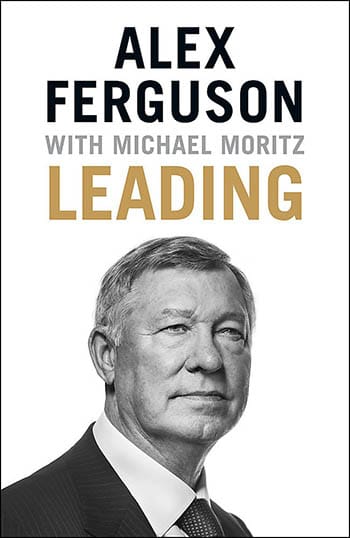
  • Sir Alex Ferguson’s 6 Pearls of Leadership From His 2015 Book Leading

    A dozen trophies to his name, a successful career spanning 27 years, Sir Alex Ferguson is an expert when it comes to leadership, teamwork, and discipline. Co-authored by Michael Mortiz, Sir Alex Fergusson shares his wisdom, observations, and experiences in making Manchester United a trail-blazing team in his book, Leading (2015).

    Though he had star players such as Cristiano Ronaldo, David Beckham, Wayne Rooney, and many more celebrated players on his side, yet, even with changing players over time, the team kept winning.

    The book discusses his celebrated success in the world of sport and the world-class performance of his team. I can see 6 Pearls of Leadership Wisdom in this book:– 

    • The necessity of observation and listening skills
    • The importance of determination and discipline 
    • The value of planning for success
    • Knowing the strengths and weaknesses of your team 
    • The power of ‘being there’ for the team
    • Getting the best out of the teamLeading by Alex Ferguson 2015

    1. The necessity of Observation and Listening Skills

    Experience taught Fergusson that listening is one of the most important skills a leader should have. While being in charge and being the decision-maker, a leader should learn to listen to everyone in the team. The book shows the value of listening to learn new and useful things. A small titbit shared long ago by Notts County manager Jimmy Sirrel about having players contracts expiring at different times, Sir Alex Fergusson has used that knowledge to prevent collusion against the club.

    Next on the list of essential skills, observation gives a leader an edge. When his assistant manager suggested that he watch the training sessions of the team from a distance rather than running the training sessions, he saw an unexpected outcome. He realized that though he could not pay attention to finer details, sitting back and observing enabled him to observe the players and their attitudes, patterns of behavior, and energy levels. 

    2. The importance of Determination and Discipline

    With the sheer mass of talent in the football world, competition is rife. To stay at the top of the competition, a leader, as well as the team, needs to be disciplined and determined to succeed. Ferguson was an extremely disciplined coach. He ensured that the team would strictly follow discipline not only where the game was concerned, but also regarding the dress code, jewelry, haircuts, etc. were concerned. 

    Sir Alex also knew that determination and discipline go hand in hand. He pushed his players to be determined to reach their goals. Cristiano Ronaldo was determined to emerge as the best football player in the world. It was his determination that guided him to preserve discipline and achieve his goal.

    3. Planning for Success

    Planning and preparation accentuate determination and discipline. Beckham, Rooney, and Ronaldo would stay after practice to perfect their free kicks. It was this planning and preparation that enabled David Beckham to score his famous goal from the halfway line in 1996 against Wimbledon – a heavily practiced shot that the world thought to be a miracle!

    Fergusson knew that he had to have good plans and preparation to foster good talent in the team. He structured the team so that they would work hard to get up the ladder to reach the squad. This helped players grow together and know each other’s moves extremely well.

    4. Knowing the Strengths and Weaknesses of your team

    Sir Alex would always maintain balance in the team. For example, his team always had a good mix of young blood as well as seasoned old players. Similarly, his team also comprised of creative and dependable players. This shows the value of team members having complementary skills as their strengths.

    He would also avoid extremes in all aspects of managing his team. He learned from experience that placing extreme expectations on his players only worked to add pressure, leading to weaker performance in a tournament. He saw that consistency comes by knowing the strengths and weaknesses of the team and by avoiding tension caused by extremes.

    5. The Power of ‘Being There’ for your Team

    In one experience, after missing a few training sessions, he got feedback from his players that the energy levels were just not the same without their coach. This gave him an insight into how inspiring his presence was to his team. Over his many years, Ferguson was present at all but three of 1,500 games. 

    6. Getting the Best Out of the Team

    Like all good leaders, Sir Alex Ferguson used praise as a tool to improve performance. They support their people and ensure they have what they need to do their job well, and avoid criticizing them. They use praise to reinforce the right behaviors.

    A leader should know what motivates the team to succeed and how to get the best out of them. Fergusson would always be careful while giving criticisms to his team after performances. He always waited for players to calm down after a match rather than immediately telling his players where they went wrong. Moreover, his criticisms were more encouragement to perform better. He believed that words as simple as ‘well done’ made a huge impact on the confidence of his players.

    Valuable Learnings

    Great leaders have a dynamic role in the performance and success of their team. They tap into the strengths of their players and complement their weaknesses by maintaining a balanced team. As a coach, Sir Alex Ferguson used tools such as observation, determination, discipline, and planning to make a successful team. And finally, a leader must always listen and be there for the team to get the best out of them. This book is informative and essential reading for any leader. And if you are a Manchester United fan, the stories in the book would be especially interesting for you.

  • The Leader’s Greatest Return (2020) by John C Maxwell

    A strong leadership forms the base of a successful organization. Research has shown that an organization with a strong leadership fare at least 13 times better in areas such as customer satisfaction, product quality, and profit. An organization needs to develop strong leadership to leave a legacy with its employees and its customers. Moreover, the leadership has to ensure that they have a strong legacy that carries the organization towards success.

    The Leader’s Greatest Return (2020) by John C Maxwell is a leadership guide for organizations to be able to build a formidable leadership legacy. It highlights how existing leaders can identify the potential for leadership and help cultivate it. Moreover, it is a guide that helps leaders create a culture within the organization where leaders never stop developing!

    The Power Of Many

    While organizations should have a strong key leader in charge, it is essential for the leader to be able to develop leadership qualities in the team as well. In the words of the management guru Peter Drucker, “No executive has ever suffered because his subordinates were strong and effective.”

    It is impossible for just one person to be in charge of everything that happens in the organization. Additionally, it is also difficult for one leader to be able to solve every problem and execute each and every idea. Thus it is necessary for a leader to be able to delegate the work to others who have potential, which is possible only if the leader builds a strong network of capable leaders.

    Developing a strong network of leaders in an organization adds new perspectives, insights and adds momentum to the growth of an organization.

    Hiring For Leadership

    Leaders in an organization should understand that finding potential leaders is a task that begins right at the starting point. During recruitment! 

    It is essential for leaders to be able to identify the right fit for leadership within the organization, and for that very reason, hiring managers/leaders should be able to identify leadership qualities within an individual at the beginning itself. They should look for individuals with the skills that sync with the goals of the organization and who have a passion to grow.  

    Training one’s team to hire the right fit firstly gives a leader a pool of potential leaders to choose from. Leaders should look for people within this pool who have a knack for taking charge and influencing others in the team to follow. Most importantly, leaders should choose to mentor those who show the willingness to persevere in the face of hardship and defeat.

    Motivation And Developing Habits

    It is important for leaders to keep their team motivated to perform. Similarly, it is also an important task for leaders to be able to keep aspiring leaders in the team invested enough to reach their goals. They need to be motivated and need the power of good habit development to succeed.

    Each person finds motivation in different things in life. Maxwell identified seven common motivations amongst people. He found that most commonly, people are motivated by – 

    • A sense of purpose
    • A need for autonomy
    • The promise of forming relationships
    • Personal and professional growth
    • The desire to master a skill
    • The need for recognition
    • The promise of financial reward

    To motivate potential leaders, these seven motivators can be used effectively. Most people have more than one motivating factor and that gives leaders the flexibility to give their potential leaders what they desire most.

    It is found that motivating factors, especially those that involve tangible benefits, do not continue to motivate or inspire people in the long run. Therefore, it is essential that leaders inculcate good habit formation into their leaders-to-be. Leaders need to show them in these times, that they believe in them, encourage and train them to do the right things by setting examples. Consistent belief, encouragement, and leading by example will lead to consistency in the improvement and thus, lead to habit formation.

    Learning And Connecting With Established Leaders

    Another important responsibility that a leader has towards creating a legacy of leadership in the organization is to ensure they give would-be-leaders plenty of learning opportunities, as well as opportunities for them to create connections with established leaders and in turn, learn from them.

    Learning opportunities and connection development are extremely beneficial not only to the individual but to the organization as a whole. Maxwell describes this as creating a leadership table. A table wherein leaders learn from each other’s triumphs and most importantly failures and exchange important tit-bits that help them all improve their respective leadership skills. 

    Such gatherings are excellent sources of learning for developing leaders as well as excellent sources for potential leaders to benefit from the power of proximity. Leaders-in-training learn to emulate their mentors. Moreover, they find a platform to experience new ways of thinking. They learn to approach problems like leaders and to strategize and apply business tactics like the leaders that influence them. Moreover, they will learn to form valuable connections that will propel them towards success.

    Direction, Freedom And The Tools To Succeed

    Practical experience in life trumps instructions. Research has shown that learning takes place in the form of the 70/20/10 model. It showed that amongst about 200 learners in the study, 70% of the learning took place during the practical, hands-on experience, whereas, 20 percent took place during coaching and feedback sessions. Only 10% of the learning took place during training.

    This proves that gaining practical experience leads to perfecting the job at hand. However, without a proper direction, leaders-in-training will never grow but merely move from one task to another.

    Thus, leaders have to create goals and set them on the path to success. The goals that are set should be challenging and make them think beyond their abilities, yet, they shouldn’t be so distant. Additionally, goals should be measurable and clearly stated, so that they can firstly, be put in writing, and secondly, leaders should be able to clearly determine whether they have been met or not.

    In addition to direction, goal setting, and monitoring, budding leaders also need freedom and encouragement. The role of a leader isn’t only to be a figure of authority and invigilation, but also to provide encouragement and assistance when they seem to be holding back due to the fear of failure.

    Empowerment And Environment

    What is the point if a thoroughbred horse that is trained well is never put in a race? Budding leaders are similar to thoroughbred horses. They need to be empowered to be able to use their learnings and skills. For this, leaders should create a supportive environment.

    As an already established leader, the influence and success as a leader give one the ability to exercise control. However, to truly help create empowerment for leaders-in-training, established leaders should be able to let go of this control for a bit. It essentially relates to leaving the spotlight to make room for the new talent.

    Along with empowering them, a leader’s responsibility also entails creating an environment that is conducive for growth, that encourages budding leaders to share innovative ideas and take initiative, and that encourages collaboration within departments and people. Leaders should enable people to take ownership of tasks, make them accountable for them, and subsequently reward them for good performance. Such a work culture builds a truly empowering workplace.

    Diverse Leadership Teams

    Like we discussed earlier, there is more power in many than one. Therefore it is essential that new leaders build leadership teams that function towards a common goal. A leader, who is developing new leaders in the organization, should ensure that the new leadership team comprises of people who have already demonstrated leadership skills. This ensures that the team can gel well and begin working together immediately.

    Additionally, as a leader and mentor, one has to be very clear and cognizant of what each member of the new team brings to the table. Everyone on the team should also be aware of each other’s strengths. It is the duty of the leader mentor to delegate roles as per their strengths. Additionally, each member should be given enough time to adjust to his or her new roles.

    Finally, leaders should ensure that the new leaders’ personal values are aligned with the values, mission, and vision of the organization. Leaders should communicate and reinforce the values of the organization regularly. Additionally, they should help the new leaders connect their personal values and goals with those of the organization. This ensures that the team, while having diversity, will be on the same page, working towards the goal effectively.

    Passing On The Baton

    A leader is said to have finally arrived when the leader he or she has mentored passes on the legacy of leadership to new, young, and potential talent. Without passing on the baton, an organization can never really win the race.

    The idea here is for leaders to be able to create a veritable line-up of leaders. Think of a football team that has a stellar line-up and a strong reserve as well. It ensures consistent and strong performance, making the team sustainable.

    To be able to achieve this, mentorship should be part of the culture. New leaders should be encouraged to mentor others. They should be shown the ways to handle the reins of mentorship and help others succeed. Teaching and learning should become the natural cycle of leadership in the organization, leading to growth.

    Such a natural cycle of leadership allows people to make time and space for personal growth as well. As a leader, one can be assured of a successful growing leadership when they see the people they have mentored, make way for new talent, mentor others for success, and work towards advancement in the organization.

    Summary

    Finding good leaders can be a challenge. However, creating a work culture wherein leadership building becomes a natural process can enable organizations and leaders to develop more leaders at every level. Empowering others to join the leadership bandwagon and encouraging them to pass on the knowledge is a leader’s greatest return.

  • High Output Management by Andy Grove – Book Review & Summary

    8 Lessons For Successful Management From The Book

    High Output Management (1995) is your perfect guide for making high-quality managerial decisions, inspiring employees for consistent performance, and most importantly, understanding one’s role as a manager. This book addresses questions such as – 

    • How should the manager of a company learn skills to achieve success? 
    • How to gather the skills necessary to successfully manage a business? 
    • What are the mantras for inspiring team members to enhance their performance consistently?

    1. Understanding the Dynamics of the Business

    Managers face a daunting task. They must make the right managerial decisions, work towards successfully achieving goals, derive profits, and at the same, time keep their team motivated to perform consistently. 

    However, most managers do not know that having a sound understanding of the business takes precedence over everything else. The business is a response to market demands that are met by your product, keeping in mind 

    • timely delivery within a given schedule, 
    • good product or service quality and, 
    • low costs of production. 

    The key facets of understanding the business process are

    • Knowing which is the most important step in their production cycle.
    • Identifying where the pressure points of the business are.
    • Knowing where and when to pull in all resources. 
    • Identifying bottlenecks and providing solutions
    • Understanding effective ways of managing peripheral administrative jobs such as hiring people, managing inventory, etc.

    Most importantly, managers must complete all the above tasks in a timely and cost-effective manner while keeping an eye on production indicators.

    2. Knowing the Performance Indicators

    Keeping an eye out for performance indicators (or key metrics) daily is an important step for all managers. These indicators could be

    • Getting a sales forecast update daily
    • Getting daily inventory levels vis-a-vis the sales forecast
    • Knowing the condition of equipment and being up to date on its functioning
    • Getting a daily update on the team 
    • Having a quality indicator, such as customer or client feedback

    A manager must extract the correct information from these indicators and know how to use them.  These production indicators are interrelated and can be used to examine trends and evaluate the need for any change.

    3. Managing Relationships with the Team

    Collecting information and sharing it with the team using performance indicators is one of the key responsibilities of a manager. This can be done by establishing a good relationship with the team via reports and regular informal conversations. 

    Informal conversations help in building a good relationship, gather necessary information and understand the general mood of individual members of the team. At the same time, ensuring proper reports are delivered and duties are performed on time helps a team member build discipline, comprehend tasks better, and reflect on the work done.

    Building positive and lasting relationships with team members entail supporting the team members to achieve their goals. Furthermore, a good manager should be a role model, helping the team imbibe good organizational values. This guides the whole team toward success. 

    4. Meetings are Essential for Good Management

    Meetings are a necessary medium for managers to conduct all management duties. They can be of two types :-

    • Process-oriented meetings – Process-oriented meetings aim at general discussions surrounding the workings of the team. They are held regularly for the team to catch-up on how the team is doing their job, and if there is anything that can be improved. One-on-one meetings are a classic example of process-oriented meetings.
    • Mission-oriented meetings – Mission-oriented meetings are goal specific and are used to finalize decisions. For example, emergency meetings held to discuss sudden changes in plans.

    Successful managers understand meetings are great tools and use them wisely. They eliminate unnecessary meetings and use meetings to serve the business.

    5. Understand Human Motivation

    Motivation is the key to modern management. A manager must assess if members of the team are lacking in skill, or simply lack the motivation to perform. With the rise in knowledge work and cognitive roles compared to labor-oriented roles in the work environment, it is the responsibility of managers to ensure that tasks are allotted based on the skill of the team member. Additionally, the manager is also responsible to ensure that all members of the team are motivated enough to succeed.

    Therefore, a manager should understand the differences between competency-driven and achievement-driven employees and be able to identify them. 

    • Competence-driven Employees – Such employees find their motivation in competence-driven tasks that help them expand their own skills and knowledge. A manager should help such employees focus on producing tangible results and not only focus on personal skill development.
    • Achievement-driven Employees – These employees are motivated by achieving success. Managers should be able to use their drive for achievement so that they can align their personal success with that of the team.

    6. Importance of Feedback and Support

    An employee is usually motivated with rewards and recognition. Additionally, they need feedback and support from their managers too. While monetary rewards motivate employees to achieve a goal of reaching and maintaining a good standard of living, employees need other meaningful and relevant intrinsic rewards to keep performing.

    Regular support and encouragement via regular feedback can do wonders for all types of employees. Managers should help team members to set new goals and remain motivated to consistently achieve them.

    7. The Importance of Coaching

    Abraham Maslow’s idea of self-actualization sheds light on the concept of what drives people towards consistent achievement. People need challenges to consistently reach their own potential. The need to find their point of self-actualization to take on challenging tasks and achieve success. 

    Therefore, a manager is also responsible for providing team members with an environment where they can reach these goals. A manager must play the role of a coach and know how to grow people to take on bigger and bigger challenges while ensuring their growth and development at the same time.

    However, a manager, like a sports coach, should also be wary of unhealthy competitiveness within a team that can backfire on the performance of the team. 

    8. Finding Your Management Style

    Managing a team is a dynamic process, with an ever-increasing rate of change we face in the world today. Managers must alter and change the way manage based on their learnings from trial and error to find out which style works best in their current situation. These 8 points are the crux of the book High Output Management by Andy Grove of Intel fame.

    TRM – Task Relevant Maturity

    TRM is a variable that gives indications of which style of management could work for a given situation. It measures an employee’s ability to perform tasks by ranking an employee based on their education, training, and experience with their tendencies towards responsibilities and achievement.

    For example, if an employee ranks low on TRM for a task, the manager should layout clear and detailed instructions, while hand-holding the employee to succeed. As the employee gains experience, the manager can reduce their involvement and keep monitoring the progress.

    Conclusion

    Achieving successful managerial skills is a continuous and dynamic process. It entails finding the right management styles, assuming the role of a coach, and using appropriate tools of motivation keeping in mind what the end goal for the organization is. It is a multi-faceted role that needs understanding the business processes, applying various management styles that are relevant to those processes and knowing when to shift between different management styles. High Output Management is one of the most popular management books in the industry.

  • 6 Learnings About Fear From The Fear Factor by Abigail Marsh

    Most people look at fear as a negative emotion, as an emotion to overcome. This book looks at the complex role that the emotion ‘fear’ has on us. It looks at the link the emotion fear has with other virtues such as altruism and empathy. 

    This book delves into concepts such as – 

    • The link between fear and empathy
    • Physical defects in the brain affect how much we fear and how we respond to it
    • The relationship between altruistm and fear
    • Relationship of hormones and fear (parental instincts)
    • Literacy: the key to reducing violence?
    • Compassion, meditation, and fear

    The author Abigail Marsh cites many studies (including her own) that show fear is linked to certain behaviors, and that it can lead to acts of kindness. So how can our fear help us?

    1. The link between fear and empathy.

    Empathy is the ability of a person to recognize another person’s emotional state.  We naturally perceive others we meet as nice or not. The author discovered that empathy was strongly related to the ability to recognize when others feel fear. 

    The author cites an experiment conducted by Daniel Batson in 1978 that showed a relation between empathy and altruism, and a person’s ability to recognize fear in others.

    2. Physical deficits in the brain affect the emotion (psychopaths and altruists)

    The Fear Factor by Abigail MarshThe previous experiment led researchers to believe that fear and empathy are linked to the amygdala, an almond-shaped part of the brain that detects threats and brings about a response to fear. It creates a feeling of anxiety and hyper-awareness, releasing adrenalin into the bloodstream and elevating heart rate and blood pressure.


    Case Discussed: Robert Hare, a criminal psychologist interviewed a psychopath. This experiment showed that, an impaired or dysfunctional amygdala restricted the psychopath to experience and identify with fear. This showed that people with damaged amygdala found it difficult to experience fear.

    Case discussed: Kidney Donors of the United Network of Organ Sharing. Another case study conducted by the author on anonymous kidney donors showed that the amygdalae of altruistic people work differently in the presence of perceived fear, and they are able to empathize more profoundly with others in distress.

    3. Altruists and fear

    Altruists have a keen sense of recognizing fear in others. However, this doesn’t mean that altruists are less brave or, do not feel fear. In fact, they are normal, but only tend to overrule their fear when needing to help others. Those who can recognize fear well tend to me more altruistic.

    The author Abigail Marsh gives the example of the former mayor of Newark, Cory Booker. The recount of his fearless rescue of his neighbor from the fire, while was heroic and brave, was also terrifying for him.

    Case discussed: The kidney Donor study also showed that while the donors were not fearless and would avoid risky situations and dangers their empathy was strong enough to help someone. Such altruists also feel excitement or elation while risking themselves to help others. 

    4. Relationship of hormone Oxytocin and fear 

    Altruism isn’t seen as a result of the amygdala only. Other hormones in the body such as Oxytocin are also responsible for nurturing behaviors promoting altruism. Oxytocin also plays a part in helping humans identifying fear. However, it also stimulates them to face danger.

    Case discussed: 2016 experiment where rats were given small doses of Oxytocin. Due to the hormone, the rats showed physiological signs of fear, but they did not freeze or run away, unlike when they weren’t exposed to oxytocin. This shows that oxytocin stimulates rats to face dangerous situations and help others.

    5. Literacy: the key to reducing violence?

    Myanmar is at the top of the list of the World Giving Index. Surprisingly, this adds to the fact that Myanmar also has a 90 % literacy rate. The connection lies in literature, enabling an enthusiast to be unbiased while perceiving a story and creating an empathetic connection, working in a similar manner to how the brain works with empathy. This shows that literacy could be the answer to reducing violence world-over.

    Case discussed: Daniel Batson’s experiment that shows that empathy can boost cooperation with other individuals, simply by reading.

    6. Compassion meditation is a good way to move towards altruism

    Altruism is a trait that develops over time and with practice. It can become a long-lasting habit. A small experiment on mother rats shows that once altruistic behavior is experienced, it will eventually become a habit.

    The Buddhist practice of compassion meditation helps to develop empathy as a habit, even towards strangers. You can start doing it by focussing your attention on your breathing.

    The Key Takeaway

    Fear isn’t necessarily a negative emotion. It can bring out positive outcomes in people too. Where absolute lack of fear leads to psychotic behavior, it also enables people to empathize more and promotes altruism. Fear can be harnessed positively by reading positive books, at the same time, altruism can be encouraged by practicing meditation.

  • 5 Levels of Leadership by John C Maxwell – The Leadership Ladder

    Having a managerial title doesn’t make you a leader. It is, in fact, only the first step towards leadership. In The 5 Levels of Leadership, John C Maxwell points out the main pitfalls that often hold managers back from following the path to great leadership. At the same time, he also explains how we can overcome them.

    A leader is made, not born. It takes perseverance, vision, strategy, and relationship-building skills, and many more qualities to merely work well in a managerial role. 

    To become a good leader, one has to practice and master each of these skills (levels) to become a truly well rounded, inspiring leader on their climb to the top.

    Level 1: Defining Leadership Through Personality and Core Values

    Reaching managerial positions is the starting point of the leadership journey. Many consider managerial positions an end-goal and become complacent once they reach them. Additionally, some managers think that positions give them the power to command. 

    Such leaders called Positional Leaders, and never really understand the true purpose of the position. They busy themselves with trying to gather a big team, most often unable to do much for the team as a leader. Positional leaders are so obsessed with their positions that they cannot give their teams direction.

    Good leaders work towards creating a lasting impression on their subordinates. They need to choose their core values and principles based on who they truly are. Their core values should reflect in their personalities and in turn their leadership skills should be defined by their personalities.

    Level 2: Building Trust and Positive Relationships

    Leadership is always about what the manager can do for the team, and not about what he does for himself. Keeping this in mind, leaders should help create a work environment for the team that is conducive, fun, enjoyable, and most importantly comfortable.

    Good leaders build positive relationships. To build these, leaders need to seek permission from their team members. In order to get permission, they need to foster positive relationships, gain trust, and value people around, and to do that, a leader has to think about others first.

    For Example, the US Marines’ core value of not leaving anyone behind is clearly seen when he or she leaves his or her rank insignias behind before war. It helps level the relationships between ranks and created a feeling of camaraderie and belonging.

    Level 3: Mastering How To Produce Result

    Successful leaders are measured by the results they produce. A leader is able to generate successful results only with an effective team that helps him execute.

    Therefore producing results often relates to how the leader chooses and manages the team, to steer it towards efficacy and success. Leaders need to understand that a good effective team not only comprises of individual performers but also of individuals committed to collectively succeeding in reaching the goal, by exercising their specific talents and skills.

    The leader should know that the success of the team is a contribution of each individual as well as the success of an individual in the team is a collective effort of the entire team. Moreover, a good leader knows how to chart the team in the right direction. He, therefore, put efforts into building the team, in choosing the right person for the right role, according to their respective strengths and weaknesses.

    Finally, the leader should also know how to optimize a team member’s performance in matters beyond the business as well.

    Level 4: Creating A Wave Of Momentum By Leading With Example

    George Washington, during the Revolutionary War, rode towards a group of soldiers who were unable to lift up a beam. Their commanding officer was standing beside them, shouting words of encouragement. However, the group was unable to lift the beam. 

    George Washington, dismounted, approached them, and helped to lift the beam. His physical contribution not only added the additional force that was needed to lift the beam, but his act of help instilled a sense of confidence and provided motivation to the soldiers. He displayed enthusiasm and drive that motivated the group to lift the beam. He also led by example and capitalized on his victory to build momentum.

    In the words of Thomas Carlyle, “Nothing builds self-esteem and self-confidence like accomplishment.” A good leader knows that while inspiration to succeed is essential to success, capitalizing on that success to build a wave of momentum amongst the team is as important to uplift the team and generate even better results.

    Level 5: Creating A Legacy By Helping Other Succeed

    The final level of leadership is to be cognizant of two things – 

    • First, a truly great leader focuses on transforming the people around him for success.
    • Second, a truly great leader builds a legacy by mentoring others to become great leaders.

    Both these points work in tandem. A leader cannot build a legacy without helping others reach success, and similarly, he cannot help others reach their full potential without the knowledge and the empowerment of being able to mentor great leaders.

    A leader knows that his people are his greatest assets in today’s dynamic work environment. Therefore, for the company to grow and succeed, or for the leader to grow and succeed, the focus of growth and success has to be on the workforce. People-development is one of the most crucial aspects of good leadership.

    Yet a good leader knows where to pull back. He should be able to judge when to let the employee test the waters on his own. Empowering a team member to grow on his own is a mark of a truly transformative leader – a leader who puts 80% of his efforts in ensuring the productivity of their team.

    This huge amount of effort that a leader invests in the employees pays back in the form of creating a legacy. No organization can survive with monopoly leadership. Leadership needs continuity for the organization to be consistent and successful. Therefore, great leaders invest much of their effort into ensuring that there is a culture of leadership in the organization that is as dynamic as the work culture today.

    Leaders craft future leaders. And those leaders of the future carry the legacy of today’s leaders into infinity!

  • Turn the Ship Around – How David Marquet’s Leadership Turned Around A Nuclear-Powered Submarine’s Performance

    This is a story that can change the way we think about leadership. This story of a United States Navy Captain David Marquet who transformed a dissatisfied submarine crew into a formidable and respected team gives us insights about how strong leadership can make a big difference to an “underperforming” team.

    Turning Around The USS Santa Fe

    Turn The Ship Around - David MarquetThe USS Santa Fe, a nuclear-powered submarine, was infamous for its sub-par performance and crew retention rate. David Marquet, a U.S. Navy Officer captaining the USS Santa Fe, transformed it from being one of the fleet’s worst-performing teams into an efficient and effective team winning it many accolades. Encouraging the members of his team to lead, he empowered his whole team to perform better and succeed, making him a better leader in the process.
    For example, he moved the chain of power down the hierarchy to his chiefs. He ended many inefficient and time-consuming processes such as leave approvals that needed sign-offs from three different officers.

    With more power and responsibility in hand, the chiefs became more passionate about the performance of their team and boosted the crew’s competence levels. He changed the very structure of leadership using many different mechanisms to bring about a sea change in the functioning and the performance of the team. 

    How and what did he do to turn the ship around?

    Simple Changes Can Go A Long Way

    A recent Conference Board Survey showed worker satisfaction rates and overall productivity has hit an all-time low. The US economy is facing a leadership crisis. 

    Why?

    An age-old organization structure could be the reason for the alarming statistics. As David Marquet shows in the book, the current organizational structure needs to be examined. 

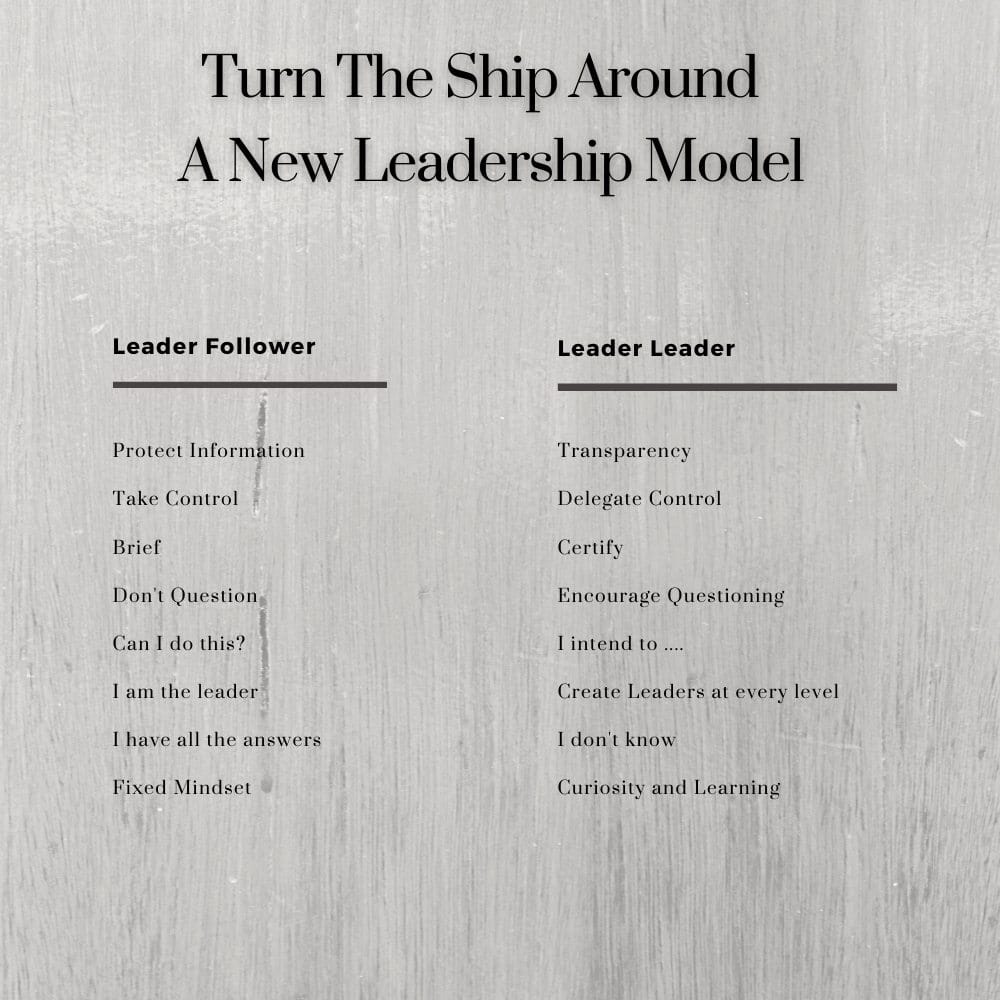
    Our organizations have used the leader-follower approach right since the times the Pyramids were built in Egypt, through the Industrial Revolution, until today. In this approach, the leader makes the decisions, and these are carried out by the follower. While this structure was suited for work needing physical labor and menial tasks, it does not suit today’s roles that need cognitive and decision-making skills. Today, we need a change in the way we perceive leadership.

    The age-old top-down leadership model does not tap into the natural leadership abilities of the workforce. A few simple changes and a re-evaluation of the way we look at leadership will lead to benefits not only for the employees but the organizations too. These changes were applied by David Marquet. And he saw some remarkable changes using his new model – The leader-leader model of leadership.

    The leader-leader approach is a radically different outlook on the leadership structure.

    • The difference between the two structures lies in the way decisions are made.
    • This new approach not only puts decision-making in the hands of more people but also empowers the workforce to recognize their leadership qualities.
    • Unlike the leader-follower chain-of-command, the power to make decisions is distributed throughout the chain-of-command in the leader-leader structure, where individuals can act on any newly received information.

    Implement by Decentralising Decision Making

    To implement the leader-leader approach, the deeply ingrained hierarchical organization structure itself needs change. It means that managers give up some amount of their decision-making control. They need to ensure that decision making involves the employees. David Marquet learned that his chiefs became more passionate about ensuring that their team succeeds and were more concerned about their overall efficiency than before. Simply because he made simple changes to the structure and handed leadership to his subordinates using the leader-leader approach.

    This can be done by identifying old processes and ways of doing things in the organization and changing them. Once people start to act differently, they will also start to think differently. For example – David Marquet had everyone inform him of their decisions with the phrase “I intend to…” instead of asking for permission to do something. This way he was aware of what people intend to do.

    The Pillars of Competence and Clarity

    Competence

    While giving additional responsibility, managers need to be sure that an employee can rise to the responsibility given. Mechanisms that ensure that the workforce builds and maintains their competence levels need to be used. This will empower them to make good decisions.

    Marquet emphasized on constant learning and delegated decision making as tools to improve competence in small steps. Every activity was seen as a chance to learn and do the tasks better. The leaders emphasized this message repeatedly to make sure people don’t revert back to old habits. Keep the communication flowing. Taking deliberate action – making your actions vocal and using gestures to deliberate actions – is one example.

    Clarity

    Not only managers have clarity of whether they can hand over more powers to the employees, but also when the employee can handle the task at hand. Leaders on Santa Fe ensured clarity by focussing on achieving excellent results, and not just to play safe and avoid errors. People were encouraged to question their peers and leaders if something was not clear. Everyone had long term goals and a desired end result, and the managers appreciated and recognized good performance whenever they saw it.

    These mechanisms can boost employee satisfaction and performance. The successful implementation of the leader-leader structure on the USS Santa Fe produced remarkable results.

    Common Goals And Shared Values

    For this strategy to succeed, all the employees of the organization need to be on the same page. If the decision-making power is to be shared by everyone, it is essential for all employees to work towards the same goal. The vital core values of the organization should be the focal point.

    This can be done by deriving inspiration from history, through the legacy and the founding story of the company. People need to be appreciated and rewarded for performance.

    Applying the leader-leader structure can result in achieving considerable success. And the lessons from the book are applicable to any organization or company.

    As David Marquet writes in the book, this new approach is for all those frustrated workers and bosses for whom the current leadership structure just isn’t working. We need to reject leader-follower as a model and view the world as a place for leaders everywhere to achieve this vision.

    Leader Leader Model by David Marquet
    The Leader Leader Model by David Marquet

  • Developing the Leader Within You by John C Maxwell – Moving Up The Leadership Levels

    Leaders play a crucial role in all possible walks of life, whether it is the boardroom, the courtroom, classroom, or even the battlefield. They are vital to the basic functioning of an organization and help bind the workforce to the values of the organizations and guide them along the path to success. Leadership is like a ladder. It has ascending levels that take time and practice to master, and moving up means to be able to balance between personal growth, the growth of the organization as a whole, and the success of subordinates.

    How does one, therefore, reach the pinnacle of this ladder? Developing the Leader Within You (1993) by John C Maxwell, shows the way to master the levels of leadership, imbibe the necessary qualities and traits needed to succeed as a leader, and how to take concrete steps to steadily, but surely reach the peak.

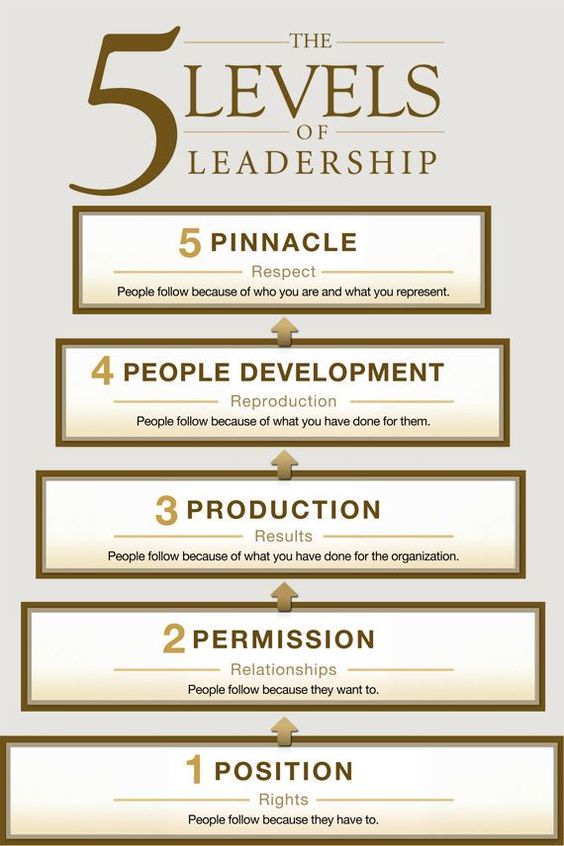
    The Five Levels Of Leadership

    To begin understanding leadership, it is essential to understand that it is a crucial quality that powerful people possess. Leadership is simply, the ability of a person to influence others or a group of people. That said, anyone who has the ability to make others follow them could be termed as a leader. JFK, Churchill, and even Hitler can be called a leader.

    Leadership has 5 levels of hierarchy. Every leader has to master each level and move up the ladder to the next one. The five levels of hierarchy are – 

    • Position – This is the first level of leadership. Those who are leaders at this level are leaders merely due to their titles in the organization.
    • Permission – Permission is all about being attuned to the needs of followers. It entails building and maintaining relationships with followers. At this level, if the leader neglects the needs of his followers, the followers will lose interest in the leader.
    • Production – At the production level, leadership becomes the product of the success of the followers (team). At this level, the leader works hard to ensure that the team works towards producing formidable results while being tuned to their needs at the same time.
    • People Development – The fourth level of people development entails focusing on mentorship. In this level, both the leader and the follower have a sense of loyalty; the follower towards following the guided path, and the leader towards guiding the follower towards success by helping them grow and acquire new skills.
    • Personhood – A leader who has attained personhood, has spent his entire life working for the success of their team members. They reach this level only because they have constantly strived to put the successes of their team members, organization, peers, and colleagues before their own. This final level requires constant perseverance. It is the level where a leader naturally commands respect, loyalty, and inspiration for others to follow.

    Now that we know the five levels of leadership, let us look into how we can master each of them, and reach the top of the ladder.

    Setting Priorities

    Setting priorities seems like a simple task. However, at the leadership level, it is much more than just known which task takes precedence and what to focus on. We all come across tasks that are important, tasks that are urgent, tasks that are neither important nor urgent, and tasks that are both, important and urgent.

    Apart from tasks, prioritizing also extends to other things such as time, energy, money, staff allocation, etc. in order to be able to successfully prioritize, one can use the 20/80 rule. The rule states that – 

    • 80% of the resources such as money and time should be allocated to the top 20% organizational priorities,
    • The top 20% of the most productive staff accounts for 80% of the organizational successes, therefore, 80% of the leader’s time should be dedicated to them.
    • Barring the top 20% organizational priorities, the remaining 80% should be delegated or outsourced.
    • And the top 20% of the organization should train new recruits.

    Put simply, a leader should be able to prioritize the most important tasks and invest time, money, and energy in the top employees to be productive and successful.

    Letting Integrity Be Your Compass

    What is integrity? Integrity is having a set of values that a leader adheres to, without wavering. This set of rules become the compass that guides the leader forwards. Integrity involves being consistent and true with words as well as actions.

    People get inspired to follow a leader’s actions. Therefore, if the leader leads by example, and follows his words with actions, he will be trusted and respected. Consistency in showing integrity will reinforce credibility and thereby help garner trust. Integrity makes the foundation of a long-lasting reputation that will endure.

    Creating Positive Change

    Adapting to change is one of the most important characteristics of a leader. With the work environment being fast-paced and dynamic, a leader has to be prepared to brace the changes in time. Inability to adapt and change can adversely affect the organization and most likely, the leader and/or his organization could succumb to competition.

    Apart from being able to adapt, a leader should be able to envisage the psychological changes that his employees will undergo as well as the challenges that they will face. Any form of change leads to insecurity and stress in the organization. The onus, therefore, lies on the leader to make sure that his team is aware in advance, of the changes that they should expect and the objectives those changes aim at achieving. This will lead to creating positive change in the organization.

    Self-Discipline 

    Self-discipline is an extremely crucial characteristic of good leaders. Without self-discipline, a leader cannot, and should not expect others to follow him or her.

    Self-discipline involves focus and practice on a daily basis. That is why it takes a lot of time to develop self-discipline. Additionally, without self-discipline and hard work, the growth of the leader, and thus, in turn, the growth of the organization gets stunted. 

    Leaders can use the following to inculcate a habit of self-discipline.

    • Start by making a list of five areas where you want to become more disciplined. 
    • Identify a mentor, peer, or colleague who is already disciplined in a particular area and ask them to monitor your progress.
    • Take fifteen minutes every morning to chart out your plan as to how you are going to work on the areas, and then revaluate for five minutes in the afternoon and five minutes in the evening to reflect on the daily progress.
    • Ideally, repetition of the same task help inculcating a habit. Cross the area of the list and move on to the next area.

    Having A Vision

    A leader should have a clear vision of their end goal in their mind. They need to envision where they plan to take the organization in terms of growth and success. Additionally, they should be able to have an idea of how they plan to persuade their team to reach the goal. The vision of the leader should fuel the daily working of the organization, the team, and the leader himself.

    Without a vision, a leader cannot lead others towards a goal, because, without a goal, a leader will not believe deeply enough to strive hard, to persevere, to add team spirit, or the drive-in his team to perform.

    However, not all leaders have a vision in place or a drive to leadership by a vision. Some need to build one. In such cases, leaders need to constantly keep questioning their dreams. They need to ask themselves, what keeps them going on day after day. Most importantly, they need to know if they can walk the talk and put their dreams into action.

    Final Message

    People follow leaders who have integrity. Moreover, they want to follow a leader with substance, self-discipline, and one who has the experience of driving his vision. They follow a leader who is open to change and is able to shift gears in the face of change. 

    Whatever level of leadership one stands at, they can move to the next level of leadership by keeping in mind the aforementioned practices.

  • How To Discover Your True North? And Other Key Lessons from Bill George

    Discover Your True North by Biill George (2007) is one of my all-time favorite leadership books. This book can help you discover one’s inner compass, develop authentic leadership skills, and uncover your values. It aids in becoming a better leader by keeping you on track and staying grounded.

    Finding Your True North

    The author of True North, Bill George interviewed 125 leaders, only to find that they are not very different from everyone else. He found that they know what the right issues are and give importance to them first. They focus on their True North – their inner compass that guides them to better hone their authentic leadership skills.

    1. Your own life story can inspire youDiscover Your True North - Bill George

    Leaders know and understand that their own life stories have true value. They learn from these experiences. A true leader is genuine, true to his beliefs, and uses his own experiences to motivate others. The key events in one’s life can be a guiding star to find one’s True North.

    Case 1: Howard Schultz, founder of Starbucks. Personal experience and memories of his father carried him along the path to authentic leadership.

    Case 2: Reatha Clark King, former president of the General Mills Foundation. Her struggles as a poor black woman from Georgia in 1940, showed her the way to create opportunities for the poor and to overcome racial and gender discrimination.

    2. Losing sight of your inner compass

    Money, success, acclaim, and rewards can lure leaders astray and lose sight of their inner compass. Bill George suggests that there are five archetypal leaders who get derailed from their path – 

    1. Imposters
    2. Rationalizers
    3. Glory seekers
    4. Loners
    5. Shooting stars

    Case 1: Phillip Purcell, the former CEO of Morgan Stanley. A true imposter archetype used manipulation to climb up the corporate ladder, only to lose his credibility and many talented employees. 

    3. It’s not about how you lead, but about who you help succeed

    Some leaders expect their followers to ‘follow their footsteps’. However, it’s not about gathering supporters to help you get ahead in life, but about motivating others to do their best to succeed and about realizing the true purpose of one’s leadership. Such realization often leads leaders to understand their greater calling through triggering experiences.

    Case 1: Oprah Winfrey’s pivotal interview with Trudy Chase. The interview was a transformation that led her to understand her true purpose in life – to help others along their journey to success.

    Case 2: Steve Rothschild, Vice President of General Mills. Dissatisfied with his leadership skills, he left his position to answer his true calling – helping underprivileged people become financially self-sufficient.

    4. Self-awareness guides the way

    Self-awareness keeps a true leader on track and helps in understanding shortcomings. You must know yourself, understand your strengths and weaknesses, and align them with your capabilities. A true leader can build strong teams with employees who have the skills that he lacks and learns from them. 

    Case1: Bruce Chizen, CEO of Adobe. He used his capabilities and skills to succeed in a role that he felt insecure about.

    Case 2: Ned Barnholt, former CEO of Agilent. He built his team with financially competent team members knowing he lacked accounting skills.

    Self-awareness has a downside too. It can be a blind spot for many leaders.

    Case 3: David Pottruck, former CEO of Charles Schwab. Lack of self-awareness led to others perceiving him as self-serving despite being a hard-working CEO. He had to work hard to face his shortcomings and change perceptions.

    5. Guiding principles and values to align with leadership

    Values and principles, along with self-awareness guide leadership. If a leader has firm values and principles, he will establish authentic leadership skills.

    It is always easier to stick to values and principles in easy times. The challenge is to stand by them even when careers are at stake. It is under extreme pressure that these values will be truly tested and could undergo metamorphosis. 

    Case 1: David Gergen, Presidential Advisor to Richard Nixon, Gerald Ford, Ronald Reagan, and Bill Clinton. Even at a time where his entire career was at stake, he did not stray and stood by his principles.

    Case 2: Narayana Murthy, Founder of Infosys. He stuck to his values of honesty and ethics and saw success without bowing down to corruption.

    6. Inspiration, purpose and, motivation

    Self-aware leaders have a purpose and a goal that is driven by values and principles. Though focused, and fuelled by their capabilities, without the right motivation even the best leaders can only get so far. Authentic leaders go beyond and dig deep into their life experiences for the inspiration to find their true north.

    Case 1: Bob Fischer, Chairman of The Gap. His concern for the well being of the environment was triggered during a fishing expedition on the Feather River that led to him joining the Natural Resources Defence Council (NRDC).

    Discover Your True North - Bill George

    7. The importance of a support system

    Whether it is a mentor, a support group, close relationships with supporting teams, or even close friends and family members, leaders understand that a solid support system is necessary. They understand that it is essential to nourish relationships. They know that their support system is not for making them feel good about themselves, but for challenges with a little bit of tough love.

    Case 1: Dave Dillon of Fry’s Supermarket. He found a mentor in Chuck Fry, the founder of Fry’s Supermarket after Chuck Fry himself decided to walk Dave through a Fry’s Store and hand priceless titbits of experience.

    Case 2: Bill George, the authors of the book, finds that his every Wednesday support group of 30 years is one of the most important sources of the most honest feedback.

    8. Staying grounded and being always integrated 

    True leaders know that they need to integrate their personal and professional life and be the same person at both places. One can be grounded by remembering one’s humble beginnings even during the high points in life. True leaders find a base point where they can return to strike balance and reclaim the perspective of their true goals.

    Case 1: Kris Johnson, former head of global business Medtronic. At the pinnacle of her career at Medtronic, she left and joined a mid-sized venture capitalist company because she was spending too much time away from her family. An essential sacrifice to strike balance.

    Case 2: Akshatha Murthy, Daughter of Infosys CEO Narayana Murthy. She finds her base point in her hometown, Bangalore. She returns regularly to meet her old friends and family to keep grounded.

    Conclusion

    There are many facets to becoming a truly authentic leader. All the great leaders of the world have their inner compass in focus that is guided by their firm values and principles, a sure sense of self-awareness, intrinsic motivation, a strong support system, and a keen sense of grounding.

    Tapping into these facets can make you a truly authentic leader!

  • The Culture Map by Erin Meyer – The Eight Scales Of Culture

    The world is a melting pot of cultures. Every country, culture, region, or religion has different rules, regulations, rituals, and norms. Today, the world has become smaller and interactions between different cultures, especially at the workplace, take place on a daily basis. It is therefore essential for leaders in all organizations to be able to understand that people exhibit different behaviours that can be most certainly attributed to the difference in cultures.

    The Culture Map focuses on how culture changes perceptions. It is a great guide for global managers and leaders to understand cultural idiosyncrasies and tailor their communication accordingly for different parts of the world. Moreover, understanding varied cultural backgrounds and thus the inherent perceptions can help in reducing miscommunication.

    I post one book summary every week. To not miss what I learn from the hundreds of books I read every year, subscribe to my bi-monthly Deploy Yourself newsletter and stay updated with the latest on leadership, culture change, and neuroscience.

    Erin Meyer charts out eight culture scales that help in grasping the various cultural communication styles all over the world.

    Scale 1 – The Communication Scale

    Communication is at the crux of all forms of interaction. Understanding how communication differs in cultures, Meyer charts out the communication scale that can help understand values, temperaments, and sense of humour. The communication scale has low-context and high-context cultures. The differences between the two can be attributed to the history of the country.

    • Low-context cultures have precise and clear styles of communication where there are lesser chances of misinterpretation. Countries such as the US and Australia are low-context because their history is shorter, more recent, and has influences of immigrants that required communication to be precise.
    • High-context cultures have layered and subtle communication styles, where one requires to employ a lot of reading between the lines. Countries such as Japan and Korea are high-context cultures mainly due to the homogeneity in population. These countries have a long history, giving them more time to develop nuances. For example, in Japanese ‘kuuki yomenai’ translates to ‘ someone who cannot read the air’, essentially meaning a person who doesn’t understand the ‘between-the-lines’.

    No country can be completely low-context or high-context.  For example, France is more ‘high-context in comparison with Germany, but low-context when compared to China. There are varying degrees and therefore it is important to be able to strike a balance while communicating with teams that are multi-cultural in nature. While communicating with people from high-context cultures, one has to be attuned to the meaning of body language and gestures. On the other hand, communication with a low-context culture will require more specific, precise, and clear communication.

    Scale 2 – The Evaluating Scale

    The Culture Map shows how the evaluating scale is a measure of how one gives and receives feedback. Feedback in the corporate world works like a double-edged sword, especially when one attaches culture to it. Feedback cultures can be either direct or indirect.

    • Direct feedback cultures include forthright language and use absolute descriptions to emphasize the point. Words such as ‘totally’, ‘strongly’, etc. are used to give feedback in direct cultures. Direct feedback styles do not refrain from giving criticisms in front of a group. Countries such as Russia and Israel are examples.
    • Indirect feedback cultures, on the other hand, are subtler, use gentle words, and mask negative feedback with positive words. Indirect feedback cultures mostly use words suck as, ‘maybe’, ‘kind of’, etc. criticisms in indirect cultures are given privately.

    Considering the communication and evaluation scale together, we see that cultures can be divided into four categories – 

    • Low-Context and Direct-Feedback like Germany
    • High-Context and Direct-Feedback like Russia
    • Low-Context and Indirect-Feedback like the USA
    • High-Context and Indirect-Feedback like Japan

    Managers should keep these four categories in mind while communicating with people from different cultures keeping their backgrounds in mind. This will help to eliminate the risk of sounding offensive to the opposite person, especially while providing feedback. For example, while communicating with a person from a culture that is high-context and indirect feedback like Japan, the manager should avoid giving feedback in front of others.

    Scale 3 – Persuading Scale 

    To manage a globally and culturally diverse team, it is important to understand how cultures affect persuasion. The persuasion scale tells us how people are inclined to reasoning to successfully understand and commence a task. The persuasion scale is divided into principles-first reasoning and applications-first reasoning.

    • The principles-first reasoning uses general principles and deduction to draw conclusions by questioning the ‘why’. They are more inclined to the reasoning behind the request. The French and the Italians fall in the principles-first persuasion scale.
    • The Applications-first reasoning is inductive in nature, where persuasion is driven by practice. Cultures such as the US and Canada are more focused on the ‘how’ of a given task.

    When managers have to deal with mixed cultures, it is best to alternate between explaining the why to the ‘principles first crowd and showing the ‘applications first the how of the task.

    Scale 4 – The Leading Scale

    It is obvious that culture affects the leading styles of managers and leaders as well. Therefore, even as an employee in a global network, it is imperative to have knowledge of how cultures affect the workspace.

    The leading scale has an egalitarian culture and a hierarchical culture at two ends of the spectrum.

    • Egalitarian styles of leading in countries such as the Netherlands and Denmark have flat organizational structures. With a narrow gap between employees and managers, the working relationship is egalitarian. For example, egalitarian cultures do not shy from managers and subordinates being on a first-name basis with each other.
    • Hierarchical structures such as Nigeria and China have gaps between levels that are clearly visible. In such culture styles, communication, as well as decision-making, follows a clear hierarchical structure. 

    Cultural differences in leading styles, according to Professor André Lauren, are hugely affected by the history of the country/region. For example, the history of France shows the influences of the Roman Empire’s hierarchical structures and central political standing. On the other hand, hierarchical structures leading in countries such as Sweden are seen due to the impact of the Vikings.

    Therefore working styles with people from egalitarian cultures should be inclusive, where employees are felt as being part of the big decisions. For people in hierarchical cultures, managers should invite employees to give their opinions. This is one of the key takeaways which I found valuable in the book The Culture Map.

    Scale 5 – The Deciding Scale

    While the leading scale gives an idea of how decision-making works in different cultures, there is a separate cultural scale for decision-making altogether. The deciding scale can be consensual, or top-down

    • Consensual scale – Cultures with consensual deciding scales involve everyone in the decision-making process. The final decision is made after all concerned reach a consensus. This type of deciding scale helps in making decisions faster. Countries such as Sweden and the Netherlands are examples of consensual deciding scales.
    • Top-down scale – Such deciding scales follow a hierarchical structure where those on the top of the ladder – the leadership, mostly make the decisions. While decisions are made faster on this scale, the need for regular alterations makes implementing changes slower. Countries such as India and China follow such a deciding scale.

    The Ringi-system in Japan is an interesting mix of the consensual and top-down decision scales. In this system, a ringisho  – a proposal document is passed between the mid-management to edit. The document is then passed on to the next management level. This process is repeated until the document reaches the topmost level.

    When it comes to decision-making styles, it is best for managers to stick to one style, and decide early on, whether the decision-making system itself will be fixed or whether the management is open to flexibility.

    Scale 6 – The Trusting Scale

    Trust is a factor that is central to all business negotiations to be successful. Trust can be divided into cognitive trust and affective trust, where cognitive trust refers to the trust that is built by working with someone for a long time and establishing reliability, and affective trust stems out of emotions. Such trust is often attributed to close relationships such as friends and family.

    Therefore, Erin shows in The Culture Map that the trusting scale has high task-based and high relationship-based measures.

    • High task-based scale – In countries such as the US and the Netherlands, the trust factor is created by achievements in business relations and profits. Such trust can be forged as well as dissolved easily.
    • High relationship-based scale – Countries such as Brazil and China form trust on the basis of shared personal relations and experiences. Such cultures believe that a trusting partnership needs time and effort to be nurtured.

    Trust in any business relationship is vital for success, irrespective of the cultural context that affects it. That said, an effective high relationship-based trust works with all cultures. It is therefore a better form of trust to build than high task-based that works only with a few cultures.

    Scale 7 – The Disagreeing Scale

    Disagreements are natural and inevitable in a social construct. However, different cultures perceive disagreements in different ways. Based on cultures, disagreements can be confrontational or they endeavour to avoid confrontations. 

    • Confrontational – Cultures that are confrontational by nature, such as France and Israel, are able to separate the person from their proposed idea that they do agree with. This outlook does not negatively affect relationships in disagreements.
    • Avoid confrontations – On the other hand, cultures such as Japan and Indonesia have cultures that believe that open confrontation can disrupt the harmonious setting of a group. They also believe that the idea a person puts forth is not separated from the person, therefore disagreeing with the idea is considered equal to disagreeing with the person.

    Additionally, disagreements are also affected by whether emotions in the culture are expressive or inexpressive in style. For example, while both France and Germany have a confrontational culture, they differ in styles where Germans are mostly objective and fairly inexpressive, preferring to keep emotions out of the way of disagreements. France on the other hand, though confrontational by culture is expressive by style.

    Working in a culture mix, it is always better to approach disagreements with caution. It is better to steer disagreements to constructive critiques rather than individual criticisms. This will be evident to you once you read The Culture Map by Erin Meyer.

    Scale 8 – The Scheduling Scale

    Perception of time and schedule differ from culture to culture and can range from linear to flexible on the scheduling scale.

    • Linear schedules – Linear styles focus on one task before they move to the next one and prefer to adhere to deadlines. Moreover, such cultures find it impolite to shift attention from one task to the other without finishing the first task.
    • Flexible schedules – Cultures such as Kenya and Saudi Arabia are flexible where timelines are concerned and believe in multi-tasking. Different topics can be addressed at the same time, and adaptability is a value that holds more weight.

    Managers handling different cultures should be able to understand the differences between flexible and linear cultures and use culture schedules accordingly for individuals. At the same time, the manager should fix the schedule style for the team as a whole and adapt and change when necessary. 

    Conducting business and leadership in the melting pot of cultures can seem like a daunting task. But understanding the nuances using the eight scales can give any management an edge to understanding how people work in different cultures.  Moreover, these scales help in creating effective communication within cultures and help in maintaining a successful, harmonious relationship within global teams. This is the crux of the book “The Culture Map”.

  • Your Brain At Work: Strategies for Overcoming Distraction, Regaining Focus, and Working Smarter All Day Long by David Rock

    As compared to a few decades ago, the human brain gets bombarded with a considerably large amount of information today. Occupations, roles, and work profiles are more creative and thought-oriented. At the same time, with the increase in communication methods and entertainment options, the brain also gets distracted more often.

    We need to use our brains optimally, especially while working, and ensure that the brain focuses on the task at hand. Your Brain At Work (2009) by David Rock looks at a number of neuropsychological studies to analyze how the brain functions in day to day life, and how we can make it focus and work well under pressure to succeed in any endeavor we take up.

    The author suggests 10 tricks to keep the brain functioning at its optimal best :-

    1. Conserving Its Thinking Ability

    The brain’s capacity for thinking actively is limited. This is evident in the fact that we feel exhausted and fatigued by the end of the day. At the same time, multi-tasking can exhaust the brain too. Therefore it is essential to conserve the thinking ability of our brain.

    This can be done by prioritizing tasks and converting them into routines so that the brain does not have to re-use thinking ability for a task it has done before, and we can save its thinking for other tasks.

    2. Minimise Distractions To Keep Focus

    While technology has made our lives easier, it has also increased the number of distractions we have. Once distracted, the brain puts in a lot of effort to refocus the attention on the task at hand. Apart from these external distractions, the brain also has an internal constant stream of distracting thoughts.

    Like our thinking ability, self-control is also a limited resource and gets used up when the brain tries to pay attention and not get distracted. We, therefore, need to conserve our self-control as well. An effective way of doing that is to simply remove or ignore distractions. This essentially translates to developing a habit of not paying attention to distractions when we need to focus actively on a task.

    3. Just The Right Amount of Brain Alertness

    To be able to focus on a task, we need to be interested in it as well as alert. The chemicals norepinephrine and dopamine get triggered when we need to be alert (or in fear of something) and when our interest in something is aroused respectively. 

    For the brain to focus and function at its peak, the level of both these chemicals needs to be just right in the brain. Lower levels lead to poor performance and higher levels lead to overstressing. However, at the optimum levels, these chemicals help the brain to focus and be attentive and generate a positive level of stress.

    However, we can influence the levels of these two chemicals on our own depending on how we feel during a task. If one finds that they are not very interested in a task, they can think of the outcome if the deadlines are not met. This will increase the level of norepinephrine due to fear, and thinking about the rewards if the task is done well could raise the levels of dopamine. Similar examples can be used to reduce the higher levels of these chemicals in the brain.

    4. Take Breaks To Allow Insights And Aha Moments

    There are times when the brain hits a mental impasse – a point where they hit a block. At these times, insight – a sudden stroke of genius or a perfect solution – breaks the impasse.

    This happens due to the unconscious mind. The unconscious delves on certain ideas and concepts and perceives or deciphers the information in a manner that the established logical thought process cannot. Therefore, insights are most common when a person is taking a break and not using the conscious mind.

    While insights happen on their own, we can trigger them too. This can be done by 

    • Not consciously thinking of the problem at hand.
    • Meditating and allowing the mind to wander
    • Speaking the problem out loud to oneself and think objectively
    • Taking a break and doing something else

    5. Mindfulness Helps Improve Memory And Brain Structure

    Mindfulness has many definitions – right from observing one’s own thinking, being aware of one’s experiences in the present, having an understanding of the word ‘is’ or living in the present, etc. To truly increase one’s focus, and be able to control what they pay attention to, mindfulness can be a helpful practice.

    Practicing mindfulness involves regularly focussing attention on physical senses and stimuli – like the feeling of the blanket on your feet as you read, or the roughness of the tongue against the roof of the mouth, etc. It is seen that a person’s attention keeps drifting away to other things. Bringing one’s thoughts back into focus is key.

    Doing this regularly will help to strengthen the parts of the brain that are responsible for memory, attention control, and context-switching, thus altering the brain structure for the better too. 

    6. Use Humor To Gain Back Control And Reduce Uncertainty

    We get triggered negatively when we experience uncertainty and feel out of control. Moreover, studies have shown that we tend to feel more stressed if we need to manage a stressful task without a sense of control. This happens because our brains are wired to experience a sense of reward when the need for control (autonomy) and certainty are fulfilled or satisfied.

    Our emotional response to a lack of control and certainty reflects on how we appraise ourselves. Reappraisal or revaluation of the situation (the uncertainty and lack of control) can help one-change perspectives about the situation and then in turn manage the strong emotions felt. One way to reappraise the situation, gain back control, and remove uncertainty is to add humor to one’s evaluation of the situation.

    7. Letting Go Of Expectations For A Happier Brain

    We all have certain expectations in our life. When things go as we expect, we feel satisfied and happy, whereas when they do not we feel disappointment, pain, and even anger at times. At the same time, the levels of happiness we feel when we experience a positive outcome unexpectedly is much higher.

    These feelings of happiness can be attributed to dopamine. Simply managing our expectations can regulate these levels of dopamine in the body, and the resulting positive emotional response. We need to get accustomed to paying less attention to expectations so as to have our results exceeding expectations.

    8. Our Brains Like Social Relations and Fair Treatment

    Our brains are wired to be social. It needs to be socially connected and be able to relate to others. According to research, the brain, when rewarded with necessary social needs, activates the neural networks of the body that are needed for basic survival. 

    This happens because the brain releases oxytocin – a neurochemical that induces feelings of pleasure – when it makes social connections. Studies have revealed that people who have stronger friendships can deal with stress better.

    Similarly, the sense of fairness is important for the health of the brain. This need overpowers the need for money or financial gains. An experiment showed that unfairness could make a person turn away from a financial reward as well. The brain defends the response to unfairness due to its need for fairness in any situation. This need has evolved over time due to the survival instincts of humans as a hunter-gatherer species in ancient times, to identify cheaters whose behavior could affect trade.

    9. Our Brains Like Any Increase In Status or Importance

    Whenever we find ourselves in a situation that shows our status as higher than someone else or experience a feeling of our status going up, the brain gets triggered with a sense of reward. This trigger is nothing but the release of dopamine and serotonin in the brain and the reduction of the stress-causing chemical cortisol.

    Our sense of improved status is therefore beneficial to the brain, keeping it happy and satisfied. The trick that works to keep the brain happy is to find a niche that makes the brain feel superior at all times. Even tricking the brain into believing that it is superior to its previous self, works.

    10. Feedback Doesn’t Work

    A study has revealed that giving feedback by telling a person what not to do works only 5% of the time and telling a person what to do works only 8% of the time. Feedback makes people anxious and therefore does not work as the brain is already stressed.

    For any form of feedback to work, the person receiving the feedback needs to be calm and in a reflective frame with an increased sense of insight and autonomy. Rather than saying, ‘why did this go wrong?’ saying ‘let’s work out together to find why this didn’t work.’ will work better. Such a positive perspective can raise a person’s status, thereby increasing levels of dopamine and serotonin, and propelling the person’s brain positively.

    Final Summary

    Despite the number of distractions the brain has to encounter daily, the brain can be conditioned to focus successfully. It needs to trigger the right neurochemicals such as dopamine, serotonin, norepinephrine, etc. at the right time and in the right amounts for the brain to work optimally. Certainty, control, improvement in the perception of status, fairness, mindfulness, moments of insight, and conserving our thinking ability are just some of the ways David Rock has written about in the book to increase the brain’s capacity to succeed.

  • Stories for Work By Gabrielle Dolan – The Power of Storytelling

    As children, the world of stories was a fascinating one. Our imaginations took us to new lands, introduced us to new characters, and most importantly served as a treasure trove of learnings. Stories have been at the very crux of communication since ancient times. It is a little known fact that while stories have been powerful enough to shape our childhood, they also have the power to shape businesses as well.

    Right from motivating team members, communicating ideas, or even cracking business deals, Gabrielle Dolan’s Stories for Work (2017) shows that spinning a great tale is a wonderful tool that can make a business tick.

    The Potential Of Storytelling At Work

    How can storytelling be relevant to the workplace? 

    Firstly, stories add color to communication and make the idea to be communicated more interesting. People are more interested in listening to an emotional story about how a company became successful, rather than a presentation of numbers, facts, and figures.

    The power of emotional connection via stories has been used since ancient times. Homer’s Odyssey was originally composed as a verbal poem, to impart cultural values. 

    Stories have been used since time-immemorial to impart values, teach cultural importance, and much more. Similarly, they can be used in business in a number of ways.

    For example, Australia Post, Australia’s postal service, used effective storytelling to instill its revamped organizational values into its vast workforce. They held a 2-day event called ‘Grapevine’, where employees were asked to share a personal story based on one of the company’s new values. The storytelling event helped the shared values of the company increase by 50 to 70 percent.

    Stories Create An Emotional Connect

    Stories have an emotional connect and work at a neuroscience level.

    Stories trigger an emotional reaction in our brains. The neocortex – the part of the brain that manages cognitive functions – works closely with the emotional functions of the brain. When we hear a story, the two parts connect words with logic and emotion to sensory images, to create a vivid mental image. Additionally, oxytocin – the trust hormone – gets released creating the same sense of security we get when we hug a loved one.

    Both these physical responses to stories affect the decision-making process. 

    Our brains are wired to make decisions based on emotional appeal rather than purely on the logic that is used to only back up the emotional reasoning. A story connects to the emotional sense, rather than logical reasoning. A study conducted on 1400 marketing campaigns proves this. The results showed that emotion-driven campaigns had an efficacy of 31%, almost double the 16% efficacy of logic-based campaigns.

    Understanding The 4 T’s Of Storytelling

    There are four categories of stories that can be effectively used for business. 

    They are tragedies, triumphs, tension, and transition. To understand how these four types of stories work, we can imagine them as characters in a party. While tragedies and triumphs will be the loud centers of attraction, the tension, and transition will be the quiet conversationalists occupying the corners. Let us look at these in more detail.

    1. Tragedies – Consider the movie Titanic. It is a classic example of how a tragic storyline works. Tragedy can be used very well at the workplace to relate to a number of organizational concepts. For example, the regional HR manager at Australia Post, used the tragedy to highlight the concept of health and safety. He told the story of how he bought his wife a bike that led to her crashing and injuring herself on her first try. He expected her to know how to turn by merely using his verbal instructions. 

    He applied this situation to work where we assume that colleagues, knowing the office equipment and work environment will keep themselves safe. However, making assumptions about other’s safety is the first error we tend to make.

    1. Triumphs – Triumph stories focus on celebrations, success, and winning, and do not necessarily include the speaker. These could be stories about other people’s triumphs as well. This helps motivate people and give them a feeling of achievement.

    An example of using triumph stories comes from the company Bupa when they were trying to implement their new set of core values amongst the employees. Head of the strategy, John Rizzo narrated a story of his own mother who struggled for five years to successfully fund and create a sensory room for disabled children. He described how his dinnertime conversations changed from rants to stories of success, highlighting the values of passion and selflessness that the company wanted to focus on.

    1. Tension – Tension stories keep the audience on the edge. They focus on friction and conflict – especially amongst personalities, behavior, or values.

    A senior product manager at Australia Post, Jonathan Snelling narrated a story of how he learned the value of humility from his son, on a trip to New Zealand. His story puts him in a spot of tension when he struggled for an hour to change a deflated car tire, refusing help from other people. Once back, his son simply asked him why he refused help from people who had good intentions of helping them. He realized that it was his pride that blinded him from accepting help. 

    It takes courage to open-up about ones own negative aspects, but it is a story type that inspires.

    1. Transition – Transition stories are about major, and moving transformation in one’s life. They deal with big changes and focus on the emotions felt during the transformation.

    Rose McCarthy, an Australian HR Manager, tells a transitional story of how she managed to get a job as a medical receptionist without having any experience. Her move to Ireland with her family was a massive transition in her life. She cited her ability to manage her life even after being uprooted from her old life for the sake of her family as a tale of willpower, determination, and motivation to learn the ropes of a job she had no experience in.

    Finding The Right Stories From Within

    It is one thing to know different types of stories one can use, and yet another to be able to understand when, how, and most importantly which story to use. However, there are a few key tips that can be employed in finding one’s story.

    One can ‘embrace the everyday’, essentially meaning, look for stories in everyday life rather than the big events. A classic example comes from Peter Cook, a Thought Leaders Business School teacher.

    He was obsessed with uneven sideburns to the point where he would cut off 2 mm differences. One day, he realized that he himself has never noticed any person’s uneven sideburns. It made him realize that no one ever noticed his. His ‘daily-life’ story highlights the fact that we put too much emphasis on some things, distracting ourselves from other important things. A mere change in perception can move mountains.

    Finding a story requires one to sit down and brainstorm. There are two types of stories that one can collect from their own lives.

    1. Work-related stories: To get a number of work-related stories, draw a table of 5 rows and columns for the number of jobs one has held. The upper-left box of the table should have ‘Job’ written on it. Fill in the other four empty row boxes with triumph, tragedy, transition, and tension under jobs. Start listing the jobs held on the top row of each column from left to right.

    Once you sit to think and write you will find stories that correspond to each of the story-types.

    1. Non-work-related stories: The process for non-work-related stories is similar. The only change would be to write ‘experience’ instead of ‘jobs’, and start relating experiences in life with the story type.

    The Three-Step Storytelling Structure

    Aristotle, the Greek philosopher introduced the three-step storytelling structure to the world – introduction or beginning, body or middle, and conclusion or end – that is used even today. Let us look at these in detail

    1. Introduction/Beginning – The beginning should be captivating and concise. It should provide context, interest the listener, and most importantly, avoid unnecessary facts and information. The time and place of a story should be included in the introduction to enable listeners to transport themselves there.
    1. Body/Middle – The body or middle of the story is called the heart of the story and contains the most detail. Information given in this part should be relevant to the story and devoid of superfluous information or unnecessary facts and figures that will disturb the emotional connection the story has. It is essential to name characters in a story for people to build empathy and trust.
    1. Conclusion/End – The conclusion should always be tight and impactful that comprises of a bridge, link, and pause. 
    1. The bridge acts as a reset button, bringing the listener’s attention to the main topic. Sentences starting with ‘I’m sharing this with you because…’ help in bridging a story.
    2. The link connects the story with the purpose and intent of sharing it. Sentences such as ‘Here we can see that…’ or ‘imagine what we can achieve from…’ are great linkers.
    3. A pause creates a silence that allows the audience to reflect on the story they have just heard. He pauses let’s the information sink in causing impact.

    Content Is Key

    Content is perhaps the most critical component of storytelling. There are certain rules to ensure that the content of the story is authentic and powerful. The content must be succinct. Too much of verbosity can ruin the effect of a story. Most business stories should be only 1 to 2 minutes long. The following are some additional principles that the content should follow.

    Vulnerability is a great device to embrace during storytelling. It prevents the promotion of self-importance and encourages emotional connection. Vulnerability is best used with triumph stories and is very effective.

    Another effective tool is humor that should be used, albeit with caution. Humour is often used to add flair and character to a story, however; it is like a double-edged sword that can backfire, especially if used in the context of racism, sexism, and at times political humor.

    The final rule of storytelling is practice. While it’s a no-brainer, practice and dedication help in truly making the story yours and instill confidence, get a rhythm, and discover inconsistencies in flow. One method is to write them exactly as they would be said, and practice, practice, practice!

    When And Where to Tell A Story?

    Having a treasure trove of stories is great, but how does one judge when and where to tell a story?

    Just like every story is different, so is the situation, juncture, and opportunity to tell it. A story can be an introduction to a talk or a presentation that helps the audience engage and build rapport. A well-crafted narrative will get them to the edge of their seats early on. A story at the end of a talk or a presentation leaves the audience with an impact and leaves them with something to think about. 

    A story is a great business communication tool. It can be used to nail a sales deal, instil company values, or even represent a personal brand.

    An effective example is using the informal grapevine to instill company values. Though the grapevine – a hidden network of stories passed between employees – is traditionally negative, it can be influenced by positive stories reflecting the values of the company.

    Flexibility And Variety

    Storytelling isn’t just about keeping an arsenal of four to five stories and re-visiting them at every opportunity. One has to have a variety of stories to tell, differently detailed versions of the same story that fit the situation and emphasize a different aspect of the same story. Moreover, it is essential to keep refreshing the story box.

    The stories reserved for business should also have flexibility. Essentially, the stories should be flexible enough that they can be pivoted into any medium and context; for example, an oral story should be flexible enough to be converted into a written blog.

    In Conclusion

    In the world of business, where facts and figures, numbers and lists, statistics and charts rule the roost, stories are like a refreshing burst to connect with people, make successful sales and deals, motivate and inspire team members to perform, and most importantly convey personal and company values.

  • The Seven Sins of Memory: How the Mind Forgets and Remembers by Daniel L. Schacter

    Our memories often fail us when we can’t remember simple pieces of information. Remembering someone’s name, forgetting where we kept the house keys, trying to recall an event in our past, or even having repetitive negative memory recall, are examples of how our brain can let us down. Forgetfulness is a flaw that is part of our brain.

    The Seven Sins Of Memory (2002), penned by author Daniel Schacter charts out 7 sins of memory, discussing why and how our memories fail us, its workings, shortcomings, and how these seven sins are beneficial.

    The seven sins can be attributed to the frailty of our minds. They are:-

    1. Transience

    Our memories are subject to transience. They fade over time and lose their accuracy.

    Case in Point:

    1. A study conducted by Hermann Ebbinghaus, a German philosopher in 1885, presented the forgetting curve, showing that memories fade over time. He memorized a list of senseless words and tested himself after nine hours. He inferred that he could not recollect more than 40% of the words, and after a month, he could not remember more than 75%.
    1. After the infamous O.J. Simpson Case in 1995, a Californian research group conducted a study to prove memory transience. Fifteen months on, they asked the research group to give details of when they came to know about the outcome of the trial. Only 50% of the group could accurately describe their whereabouts of when they heard of the acquittal. Moreover, after 3 years, the figures reduced to 30%.

    What To Do?

    We can use certain techniques to combat the transience of memory. People use many memory strengthening techniques. Mnemonics is one such technique developed by the Greeks. Mnemonics work by associating new data to ideas and concepts that have meaning to us. This helps in remembering decontextualized information like names or numbers that we tend to forget.

    Example, to remember the name Lily, one can associate an image of a bunch of lilies in a vase, or imagine how the persons face is shaped like a lily.

    2. Absent-Mindedness

    The brain encodes all incoming information. Absent-mindedness isn’t a failure of memory, but the fact that one did not pay attention to the information. Which means that either the information was not encoded at all, or was partially encoded.

    Additionally, absent-mindedness also occurs when one does not have enough cues to remember the information.

    Case in Point:

    Psychologists Christopher Chabris and Daniel Simons, conducted an experiment to show that paying attention to one piece of information results in complete ignorance of any other incoming information.

    They showed a video of a basketball match to the research group and asked them to count the number of ball passes in the match. In the middle of the recording, a man wearing a gorilla suit runs into the court and beats his chest. At the end of the video, surprisingly, only 50% could recollect the unusual occurrence of the man.

    What To Do?

    One can lessen the instances of absent-mindedness by setting cues that are appropriate to the information they wish to remember. For example, setting up reminders on the phone for exercising, or keeping medication pills near the sink to take them in the morning.

    3. Blockages

    We have all experienced the ‘it’s-on-the-tip-of-my-tongue’ syndrome. Such experiences are not a case of forgetting the information, but merely being blocked by the brain. Blockages in memory happen because the brain doesn’t have enough cues or associated information to recall.

    Case in Point:

    It is easier to remember a person’s occupation than his name because the brain does not collect enough associated information about proper nouns in general, whereas, an occupation will bring up associated information making it easier to remember. Therefore, it is easier to recall a baker by profession, than remember Baker as the last name of a person.

    What To Do?

    Creating information association and adding cues to information one wishes to remember proactively will help in reducing blockages and habituate the brain to recall information. For example, to remember the name Ally, one can use images of a dark alley to make associations with the proper noun.

    4. Misattribution

    Misattribution is probably one of the most dangerous sins of the memory leading to serious implications, most commonly seen in cases of criminal justice. It refers to the syndrome where one incorrectly places one piece of information to something else. 

    Case in Point:

    In the Oklahoma City bombing in 1995, a witness described a second person with the bomber Timothy McVeigh. His description perfectly matched an innocent soldier who had come in the day after, to rent a vehicle with a person who resembled the bomber.

    Misattribution takes place because the brain can recall faces better, however, it misses linking other crucial information such as place and time, thereby mixing it with loose memories.

    In a recent study based on DNA identification of wrongful conviction, an alarming 90% cases were due to wrong eyewitness identification.

    What To Do?

    Misattribution can be prevented by using memory cues to remember information. Measures  have been put in place to reduce cases of misattribution in the legal system. Example, the police now do not ask eyewitnesses to identify culprits in a line-up, rather show them pictures one by one, so that they can carefully screen them.

    5. Suggestibility

    Memories have an inherent suggestible nature. This implies that our memory isn’t as reliable as we think it is. It tends to fill in the details based on general information. Memory often relies on suggestibility to complete the entire story.

    Case in Point:

    Dutch psychologists interviewed a study group about a tragic plane crash incident in 1992, where a cargo airplane has crashed into an apartment in Amsterdam killing 43 people. 50% of the study group answered affirmatively when asked if they had seen the video.

    When asked again later, the number of affirmatives increased by two thirds. The respondents also added details about the crash angle of the airplane and its aftermath. Remarkably, there was no video released about the plane crash. The mere implication of a video made the respondents’ brains create false memories.

    In another case, a man in London, when questioned about a brutal murder, turned himself in a day later with a full confession. This was because his brain fabricated visions, and he was convinced that he was the murderer. He spent twenty-five years in prison before his sentence was reversed when new evidence came to light.

    What To Do?

    Understanding the repercussions of memory suggestibility is essential, especially where the law is concerned. The keepers of justice should avoid leading questions to avoid false memories.

    6. Consistency Bias

    Humans tend to place more value and confidence in their choices/decisions made. That said, we like to affirm that our past decisions and choices were better than the alternatives present at that time – even though, both choices/decisions seemed to carry equal weight then.

    This affirmation of our memories is called consistency bias. It makes one create narratives that make sense.

    Case in Point:

    In a study conducted over four years, couples were asked, twice, to state how their relationships with their significant others were. The participants who replied ‘good’ both times remembered their responses. However, the participants who answered ‘not good’ the second time, falsely started believing that their relationship had never been good and believed that they had said the same thing earlier.

    What To Do?

    Construction of narratives is attributed to the functioning of the left brain. Therefore, one will always find that the brain tries to explain their actions. One should try and view information objectively to avoid consistency bias.

    7. Memory Persistence

    We experience persistent memories due to the highly emotional events that affect us. Persistence is when you remember something all too well, even though you would much rather forget. Moments of embarrassment, or distress that seem to stick with you no matter what.

    Considering that both positive and negative memories can be persistent, memories fail when people get stuck in a loop of negative thoughts. This becomes even more dangerous for people who are habituated to brood over negative events.

    Case in Point:

    The University of Michigan interviewed a group of students to analyze their emotions and mood after an earthquake. They inferred that amongst those who delved more into negative thoughts about the event, were more obsessed about it and subsequently dived deeper into depression.

    In another study, psychologist Daniel Wegner showed that not thinking about something can be counterintuitive. He simply asked his study group to not think about something, for example, their significant other. While some were able to control their thoughts for some time, they rebounded with more intensity.

    What To Do?

    Persistent memories need to be put into a narrative context, in a way similar to letting negative emotions flow out and be done with them. Writing them down or talking to a friend will help to cope with such emotions. This can be done to positive emotions as well to boost their power and influence.

    Absolving Yourself From Seven Sins

    The seven sins of memory are simply side effects of the mechanisms the brain puts in place to adapt to certain situations. For example, if our minds were not susceptible to absent-mindedness, we would end up remembering every single detail of everything we encounter in our lives. At the same time, absent-mindedness also helps us to work on auto-pilot, especially with mundane chores we do every day. Imagine the pressure on the brain if we need to think about all these over and over again.

    Similarly, consistency bias also leads to positive illusions. This positivity, whether it is in the right context or not, helps in keeping us positive. It is therefore futile to try and combat all the seven sins completely. We need them to function normally more than we think!