August 2021

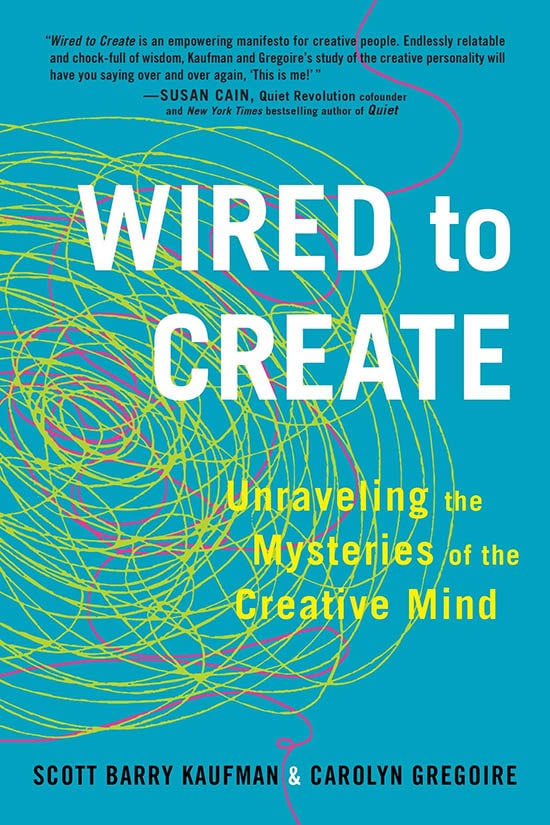
  • Wired to Create: Unraveling the Mysteries of the Creative Mind by Scott Barry Kaufman and Carolyn Gregoire – Book Review & Summary

    Nurturing Creativity 101

    Whenever we see creative people, we often think that they are simply born creative. We consider creativity to be an innate, natural trait that some have from birth, while others don’t have at all! We have drawn a bold line between these have’s and have not’s and never once think, that maybe creativity isn’t God-gifted and that it’s possible to nurture and develop creative traits.

    Scott Barry Kaufman and Carolyn Gregoire’s Wired to Create: Unraveling the Mysteries of the Creative Mind (2015), attempts to understand what creativity is, and how everyone can work towards developing their creative side. They delve into recent studies in psychology and neuroscience; look into the stories, habits, and practices of creative people to examine what it takes to boost one’s own creativity.

    What Makes Creative People Creative?

    Truthfully, it is difficult to pinpoint the exact traits that define creativity. Largely, it can be said that creative people have a vivid imagination, sensitivity, are open and intuitive in nature, are passionate, and daydream. However, according to psychologist Frank X. Barron’s 1960 research on famous, creative people, it is difficult to ascertain the one defining source that is the basis of a successful creative mind. His studies showed that having a higher IQ was only one of the many factors that contribute to creativity. 

    Creative minds are contradictory and paradoxical. This was proved in a study conducted on a group of writers. While they tested above average for psychopathology and mental illness, they measured above average for overall mental health too. This contradiction is perhaps reflected best by their messy, unstructured work habits.

    Psychologist Mihaly Csikszentmihalyi has noted that creative people seldom layout plans or schedules for their work. Instead, they follow the plan that is imposed on them by their work, proving that they have no rigid work pattern. For example, while Pablo Picasso worked on his masterpiece Guernica, he improvised, reworked, revised, and rethought as he painted, using some of his initial sketches and reworking on some others – only to discard them completely later on. While it led to a lot of ‘waste’ of time and effort, it also led to the masterpiece he created.
    Passion To Be Masters

    Literature and film have time and again stereotyped creative people as mathematical geniuses, whimsical painters, brilliant writers, etc. While this depiction can seem clichéd, they often reveal one trait that is common – passion. 

    This passion is deeply rooted within the personalities of creative minds. It is a product of a crystallizing experience; essentially, a pursuit of creative activity at some point in their life that has affected them deeply enough to become part of them.

    Jacqueline du Pré, the renowned cellist, for example, had her calling to playing the cello at the age of four. Though her talent and musical capabilities were evident in her Christmas carol singing and her nursery rhyme recitation, her crystallizing experience was when she first heard a cello. She told her mother, ‘That is the sound I want to make.”

    A crystallising experience gives way to a need for mastery. According to psychologist Ellen Winner, this need pushes creative people with great intensity to work towards the goal of mastery. American psychologist Martha J. Morelock studied uncommonly creative children and found that their brains craved engagement with what they were passionate about, which led to an intense focus on the subject. 

    Hence the dedication that is required to master the subject comes naturally, and isn’t as exhausting, since creative people need it for the satisfaction of a neurological need.

    A study conducted by E. Paul Torrence on creative children found that passions start developing in childhood, are already developed by the time children reach elementary school and increase as they reach adulthood.

     The study also showed that passion, when developed in childhood led to adult creativity. At the same time, academically successful children, without a developed passion weren’t as creative in adulthood.

    Perception And Sensitivity

    It is seen that highly creative people tend to have a sometimes shy, sensitive personality. This nature counterbalances their public personas. For example, a rock star that exudes oodles of charisma and confidence during a performance in front of the crowd might actually be sensitive by nature and be a quiet individual, once alone. 

    Psychologist Jennifer Grimes proved this, when she interviewed heavy metal musicians at a concert and found that they all had heightened, nuanced and rich perceptions of aural stimuli, partially stemming from their biological make–up. They were able to identify multiple layers to even simple sounds such as a bell.

    Such increased and predisposed sensitivity, according to psychologist Jerome Kagan, is found in 10-20% of infants who have hyperactive nervous systems. This sensitivity encourages creativity, making sensitive people more receptive to sensations and attentive to patterns and details. Psychologist Elaine Aron found that such sensitive people have a higher ability to process more information, fuelling creative output.

    At the same time, these sensitive individuals are lesser adept at filtering out unnecessary information from their surroundings. Essentially, unlike less sensitive people, sounds such as honking cars or footsteps easily distract sensitive people.

    Predisposition To New Experiences

    According to the author, the drive to explore, learn, and engage with the unfamiliar is a better indicator of creative success than divergent thinking, IQ, or any other psychological trait is. The longing for new experiences is neurologically wired into human nature.

    The need to explore the unfamiliar, physically and mentally, is called psychological plasticity, with dopamine at the crux. Dopamine is responsible for feelings of pleasure and happiness. Yet, one does not need to experience a happy or pleasant feeling to experience the rush of dopamine. Even simply thinking of a pleasant event can activate dopamine in the body. Additionally, people who have a higher level of dopamine in their bodies are known to experience vivid dreams, and vivid dreamers are known to be more receptive to new experiences.

    The unfamiliar and unknown also exposes people to new people, new ideas, and new connections. In his analysis, Dean Keith Simonton in 1997 showed that often, periods of creative achievements in different countries were preceded by periods of immigration. New places, new environment, exposure to new cultures and people, brought about opportunities and a conducive environment for creativity to grow and flourish.

    This proves that creativity is fuelled by the predisposition of individuals towards new experiences. And in turn, new experiences are vital for the nourishment of imagination, and for creative ideas to develop.

    Intuitive Thinking And Daydreaming

    Daydreaming is actually a way the conscious connects with the unconscious mind and discovers feelings and hidden thoughts. Carl Jung, the famous psychoanalyst often sought to daydream when he would experience emotional challenges. He would let his mind wander allowing a connection to be formed between his conscious and unconscious mind. This process called active imagination, helped him develop new ideas, solve problems and gain new perspectives.

    Apart from daydreaming, dual-process theories of cognition are another way to actively involve the unconscious mind. In this process, there are two types of thinking – 

    • Type 1 – This type of thinking doesn’t require inputs from the conscious mind and is automatic and quick processes, such as implicit learning and mental shortcuts, or emotion and intuition.
    • Type 2 – This includes deliberate, slow, and conscious cognitive efforts. Rationality, cause-and-effect thinking, and reflection are examples that are often referred to as ‘intelligence’.

    While traditionally both the thinking types were believed to work separately, Kaufman proposed in 2009 that both work simultaneously as a dual-process. Both, type 1 and 2 thinking can be seen in intelligent behaviors, with type 1 processes working in the background. Therefore, when the conscious mind isn’t actively solving a problem, intuition steps in, resulting in sudden revelations akin to Archimedes’ ‘Eureka’! 

    Embracing Solitude To Fuel Creativity

    People fulfill the need for solitude and space by going on solitary walks. In fact some of the world’s greatest thinkers – from Charles Darwin and Immanuel Kant to Virginia Woolf and William Wordsworth – all indulged in walking to achieve solitude and to promote thinking.

    The Buddhist monk Mathieu Richard wrote, ‘the outside silence opens the doors of the inner silence’.  Solitary walking has the ability to activate the unconscious and the lack of distractions gives way to ideas, images, and new connections that encourage creativity.

    However, walking isn’t the only way to embracing solitude and fuelling creativity. Ingmar Bergman, the filmmaker moved to a remote Swedish island called Faro in the Baltic Sea in pursuit of solitude. He grappled to come to terms with the difficulty of living alone. He later channeled this struggle into his films.

    The 16th Century French philosopher Michel de Montaigne believed that in order to be able to discover one’s inner voice and develop a unique perspective, it is crucial to remove oneself from the distractions of society and that one has to devote a sliver of life for oneself and indulge in reflection and personal relaxation.

    Turning The Tough Into Creative Growth

    The image of depressed, brooding, suffering artists, though a cliché, has its roots in reality. It is true that artists need to have a ‘suffering’ in order to achieve personal growth. 

    Researchers Lawrence Calhoun and Richard Tedeschi named it ‘post-traumatic growth’. There are more than 300 studies that prove posttraumatic growth and about 70% of the participants studied have had some positive psychological growth post-trauma. This phenomenon works because, in the wake of trauma, people tend to question established beliefs of who they are. Trauma forces people to reconstruct their world views completely, and lead to personal growth, despite being a very difficult process.

    Holocaust survivor Victor Frankl, transformed his suffering in the concentration camps by finding meaning amidst the horrors thus leading to personal growth. Finding meaning within trauma can make it more bearable. For creative artists, therefore, creative growth often stems from finding meaning in adversity and tough times.

    Marie Forgeard, a psychologist, interviewed more than 300 people whether they felt more creative after their life’s most stressful experiences, and found a link between increased creativity and adverse experiences. The study revealed that the more adverse or traumatic the experiences were, creativity increase was correspondingly higher, suggesting that creativity could be part of the natural healing process of the mind.

    For example, Paul Klee the painter started to work harder after discovering he had a terminal disease. Over the next year, he creates more than 1200 works of art, though his disease crippled his hands gradually. Some of these works were artistically groundbreaking.

    Thus, while people seek creativity in adversity, tough times in life give people the opportunity to recreate themselves.

    Increased Attentiveness Leads To Increased Creativity

    In today’s world where smartphones and devices take up more than eleven hours of the day of an average American, attentiveness is hard to come by. Yet, mindfulness or the state of being aware of the present can be achieved via meditation.

    Apple’s Steve Jobs meditated under Shunryu Suzuki, the author of Zen Mind, Beginner’s Mind. He found that his creativity was a result of the meditation that created a space in his head where intuition could thrive.

    Meditation, however, isn’t limited to sitting crossed-legged in an upright posture. It can be achieved in many ways. According to Jon Kabat-Zinn, the founder of the Mindfulness-Based Stress Reduction program, meditation is about living in the present, from one moment to the next, and making life really matter. ‘Why does one need meditation?’ is a more important question than figuring how to meditate. 

    Focus-attention meditation – the most common form – where one focuses attention on either the breath or the heartbeat is undoubtedly beneficial. However, it might not be the best form for everyone. According to psychologist Jonathan Schooler, focused-attention meditation could actually impede creative thinking.

    Another form – open-minded meditation – actually encourages the mind to wander and acknowledge any thoughts that could appear. This form de-emphasizes focus on any one thought or idea and thus could boost creativity.

    Lorenza Colzato, the cognitive psychologist conducted tests to prove the benefits of open-minded meditation. She made a group of open-minded meditators and focussed-attention meditators take two tests. While one test measured convergent thinking – one’s ability to give a single correct answer, the other measured divergent thinking – one’s ability to give multiple solutions to a problem. The open-minded meditation group, unsurprisingly, scored higher on the divergent thinking test.

    Breaking Habits Of Thought And Behaviour

    While it is beneficial to have a structured routine in the day, it has been proved that breaking or varying one’s daily routine or habits can boost creativity. Something as simple as having tea instead of the daily morning coffee, or reading a book rather than binge-watching Netflix can help break ‘ functional fixedness’ –a psychological term for the mind perceiving things in a set, single manner.

    Changing habits and challenging routines can be difficult. About 80% of adults find thinking differently exhausting and an unattainable goal. However, with breaking routine the effect lies in the effort.

    According to Hal Gregersen and Jeff Dyer, business professors, innovators put in 50% more effort and time into thinking differently, and it is the effort that yields results. Therefore, breaking habits or deviating from them is about forming new habits – a habit to be open to a different way of doing things and to new experiences.

    One of the ways to work towards creating this new habit is to change the way one sees success. Often, when people visualize success in the future they tend to get complacent. According to the science of motivation specialist Gabriel Oettingen, enjoying future success in the present decreases one’s motivation to actually achieve success. Achieving success then becomes even harder.

    Contrarily, visualizing both, the goal and the obstacles, or a process called mental contrasting is a better approach. For example, a person who wishes to lose weight should first visualize the goal and what achieving it might feel like. Next, the person should contrast it with the current situation and factor in any obstacles, such as food cravings, that could hinder the process. This method helps in visualizing obstacles that could arise and make the mind ready to strategize solutions for the obstacles.

    Risking Failure and Avoiding Conventional Thinking

    New methods of thinking require some amount of risk-taking. That said, it is a known fact that humans are, by nature, averse to risk-taking, creating routines, and resist creativity in others. Therefore, creativity is challenging, especially when unconventionality and risking failure is inevitable.

    16th Century philosopher, astronomer, and mathematician, Giordano Bruno is an extreme example. He was denounced as a heretic and exiled from Italy because his theory that the universe is infinite challenged the scientific belief of that time, that the earth is the center of the universe. However, he stuck to his theory, believed that the majority thought had no bearing on the actual truth, and thus, was burned at the stake.

    However, today, Bruno’s theory stands true and he is noted as a genius. Yet not all of his ideas were brilliant. This because, according to Dean Keith Simonson, the creativity of geniuses differs in quality. While some ideas a fantastic, others are utter failures. Yet what distinguishes them is their willingness to fail and face social rejection, all while having high productivity. They consider it a part and parcel of achieving success.

    Professor Sharon Kim of the John Hopkins University conducted an experiment where she placed students into two groups, where one group was given tasks needing an independent mindset and the second group was given tasks that needed a group-oriented mindset.

    She then asked all the students to draw an ‘unearthly’ creature from another planet. The first group, which had been given differentiation mindset tasks that made them feel unique, drew creatures that were stranger and more creative than the second group. This was because they were not afraid of the social consequences of depicting something that was original and bizarre.

    Conclusion

    Creativity isn’t an innate virtue, and neither does it arise out of a single set of experiences. the habits of creative minds are often paradoxical and contradictory. Creative people are intuitive by nature and have a vivid imagination. They are passionate and sensitive individuals. Additionally, creative people have a predisposition to new experiences and are solitary.

    Everyone can nurture their own creativity. One can use helpful strategies such as pursuing solitude to enhance creative thinking, finding meaning in adversity and trauma to cultivate it as a factor to increase creativity, paying attention to the present and to one’s conscious thought processes.

    Finally, in order to increase creativity, one has to be willing to break routine, avoid conventional thinking, and be willing to risk failure.
  • Issue #34, 31 Aug 2021 – Look Ahead. Not Down

    Welcome to the Deploy Yourself Newsletter. Every two weeks I share what impactful leadership looks like to show your own power. I also share the most insightful lessons and stories I encountered in the last two weeks. You can also read this issue online.

    Hey,

    Look Ahead. Not Down

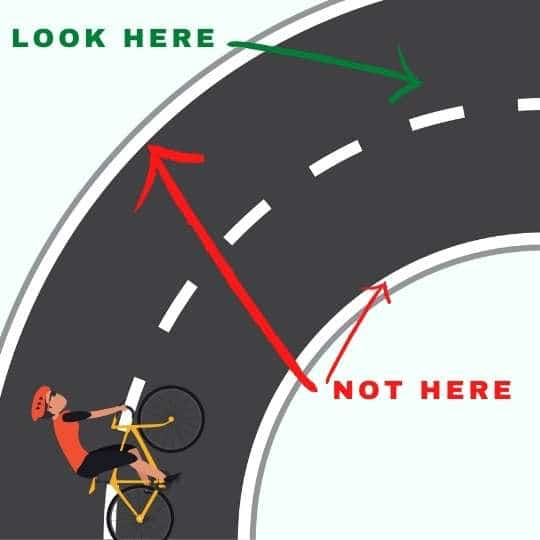
    When riding a bike, if you focus on the ground because of the fear of falling, you will go exactly there – on the ground. You will fall if you focus on the ground while biking. If you want to keep riding, you must keep looking at the horizon. You must keep looking in the direction you are headed, even if you experience fear.

    You go where you look. This is as important in cycling as it is in your life and leadership. One lesson I have learned in life is to reflect daily on where I am looking and where I am going. I regularly ask myself – Am I looking at my dreams and ambition? Am I looking at what I want to create? Or, am I looking at my obstacles and fears?

    This principle has worked well for me. Whenever I have managed to keep my attention on where I am headed, what I care about, and my deepest held values, I have found that things have gone well for me. On the other hand, I have had to face distrust, destroyed relationships, and missed opportunities when I have focused on my fears, insecurities, and anxiety.

    It’s true for cycling. It’s true for life. Look Ahead. Not Down. Keep your attention on where you want to go rather than what stands in the way.

    Where have you been focusing? Ahead or down. What is the future that lies ahead for you? What could be one tiny step you can take in that direction? I read and respond to every reply.

    Articles and Stories Which Have Fascinated Me

    One

    Check Up On Your Team’s Kids

    Checking up shows that you care. If there’s a mountain of stress being added to someone’s life, the least you can do is not pile on more. One of the most important ways to make your team feel supported is to acknowledge that they have a lot going on that you may not know about.

    Eyes are on you as a manager and standards are higher in emotionally charged moments – and that includes charged moments in your team’s lives, not just events related to work. So take a moment to check in with your team members if they have a sick child.

    It’s easy and can make a difference. The hardest part is remembering to do it, which is exactly why I’m writing this.

    From an article about managing team members who are parents

    Two

    It’s Part of the Game

    Falling and getting back up,
    That is how our life is setup
    When the night seems longer,
    It is only making us stronger
    Nothing is wrong, none should we blame,
    Because it is all part of the same game!!

    Hardships are life’s little tests,
    They are as real as our conquests
    Every fall and wound is like a teacher,
    The lesson is ours to find and discover
    In failing there should never be shame,
    For getting up is also a part of the game!

    Get back up, and dust off your clothes,
    Make the best of whatever life throws
    Take control, and be proud of who you are,
    See for yourself you can go how much far
    It’s again the time to play, to take a big aim,
    Hit or miss, it is all part of the game!!

    From a poem I wrote more than 10 years ago – It’s part of the game

    Three

    A Few Resources For You

    I want to thank all of you who have been reading this newsletter for the last 15 months. I hope it has added value to your lives. Please share any feedback as I am always looking for ways to improve these emails. As a show of gratitude, I want to share some research reports I often share with my coaching clients.

    These reports have been a result of my experience and research leading teams, making mistakes, and slowly growing in my own leadership. I hope you will find these valuable as well. These are :

    1. Care To Lead: Why There Is No Leading Without Caring (download here)
    2. The Listening Habit: The One Habit Which Enables All Others (download here)
    3. Fearless Feedback: Recognise Feedback For The Gift That It Is (download here)

    P.S. – If you know where you are headed, or if you have a dream which has been “on hold”, and if you want to discover how powerful you are, I invite you to my coaching programs. I am opening the last coaching group (4-6 people only) of 2021 in Nov. It’s a €4900 investment for one year – in your life and growth. Reply if keen.

    That’s it for now. If you have any questions or feedback, or just want to introduce yourself, hit reply. I read and respond to every reply. All the best,

    Sumit

    (Twitter) @SumitGupta
    (LinkedIn) Connect

  • Brave New Work (2019) by Aaron Dignan – Book Review & Summary

    Legacy Vs. Evolutionary OS

    The world has changed. So has the working culture. The global marketplace today, is more dynamic and is constantly reinventing itself, at a pace faster than it did merely two decades ago. However, many organizations are still using the same old operating systems that were inherited over a century ago from factories and industries. 

    Brave New Work (2019) by Aaron Dignan gives a unique perspective to creating and sustaining organizational change. Using case studies and by offering suggestions, the author gives organizations subtle guidelines that can help them move from an outdated OS to a more flexible, human-centered, and open system of functioning. 

    The Old Traditional OS

    The story of the organizational setup began a little after World War II. A field manual commissioned by the director of the agency that later morphed into the CIA laid down guidelines intended to destabilize commerce and communities. It was a manual that ‘waged a war of simple sabotage’. The manual, given to citizens that were friendly with the Allies had a list of actions that interfered with organizations and production, setting up complicated bureaucratic systems, adhering to regulations at all costs, and denying shortcuts that would help speed up the process of decisions, etc.

    Looking back, the manual of sabotage seems like a regular workday today! Whether intended or not, this structure of organizations seems like sabotage and is having negative effects on companies.

    Firstly, it has affected the lifespan of companies, where a company spending about 60 years on the S&P 500, now has a lifespan of 10 years only.

    Secondly, the return on assets – the profit amount a company earns with what it owns – a hard-to-fudge performance metric, has gone down. Thirdly, despite technological advances, the production per hour is lower than it was twenty years ago, signaling a leveling off in production growth.

    While economists are scratching their heads over the reasons for these negative effects, for the employees on the ground the answer is always – bureaucracy!

    Debt Is Dragging Businesses Down

    FAVI, the European auto manufacturer, exports auto parts to China when all other European auto part manufacturers have faced the brunt of Chinese competition. However, FAVI too struggled with bureaucracy earlier.

    For example, if a worker manning a machine had to replace worn-out gloves, the worker had to ensue a time-taking bureaucratic process of showing the manager the gloves that issued a permission slip after verification of its wear-and-tear. The worker would then have to wait with the permission slip at the place where gloves were kept to get them, then take the new gloves and then slip back to the manager for signatures.

    This process wasted about 30 minutes of a workers time before the new CEO stepped in. If one compares the price of the gloves (5 Euros), to the cost of leaving the machine unmanned for 30 minutes (5 thousand Euros), one can understand the concept of organizational debt.

    To simply put it, organizational debt amounts to all the redundant procedures and policies that may have once served a purpose. Often organizational debt is a response to a problem, where policies and procedures are set to rectify it. However, such policies and procedures that are mere attempts of having perfect order lead to disorders, resulting in a number of self-sabotaging rules and regulations affecting organizations negatively.

    This fix-with-rules habit is a century old, and breaking it needs understanding.

    Assumptions Of Legacy Organizations

    Every organization inherits assumptions that guide and underlie the system of working. This traditional, inherited Legacy OS is made up of structures, norms, and practices like performance reviews, budgets, managers that are so prevalent they are almost invisible. Moreover, in the fight between popularity and quality, the popular Legacy OS never gets questioned.

    The traditional Legacy OS, born over a century ago, as a result of less efficient factories, a lack of standard instructions for workers, and the idiosyncratic techniques that veteran machinists had. In the system, the novices learned on the job and adopted the techniques and procedures of those above them.

    Production was artisanal in nature and slow work was incentivized due to the reduction in per-piece rate if workers increased rates of production. Thus productivity was limited to avoid per-piece rate cuts.

    To this mix, Fredrick Winslow Taylor added his measuring experiments that gave birth to the legacy OS and revolutionized the world of work. He measured each and every step in the production process and ascertained exactly how long it should take to produce a given part.

    Then he offered workers a substantial raise, albeit with a catch. The 15-30% raise would only be given if the workers did exactly what he said just as he said it. And thus, the foundation of the assumption of the Legacy OS was laid with the sacrifice of employee autonomy – all for higher pay. This OS – where the managers think and the workers execute – was preserved as the business common sense in the following decades.

    Complex, Not Complicated!

    What is the difference between complicated and complex? Aren’t they synonyms? While mostly they are used synonymously, they indeed have starkly different meanings. 

    For example, a complicated system refers to a causal system, where its component parts have a cause-effect relationship. For example, if a cog is taken out of a watch, it will stop working. Put it back in its place, the watch will work again. Causal systems are predictable. One can expect the same results. Thus, an automobile engine is an example of a causal system.

    Complex systems on the other hand are dispositional. One can guess what they do, but one can never be sure. One can’t simply read a manual to understand how they work. One has to learn to read and understand the quirks of the disposition of these systems. Traffic is an example of a complex system, as is the weather.

    The Legacy OS treats organizations like complicated systems, assuming that the ‘right’ rules of work can be scientifically understood. However, the people within an organization are complex. Therefore, one can only hope to manage them, and this is the fundamental issue with the Legacy OS.

    Roundabouts, Not Traffic Signals!

    Signals and roundabouts were designed to tackle the same complex system – traffic – attempting to maximize smooth traffic flow and minimize accidents. Nevertheless, the underlying assumptions for both systems are very different.

    While a traffic signal tells the people what to do – stop at the red and go at the green, roundabouts assume the opposite. The rules of the roundabout are to follow the flow of traffic and yield to those already in the circle. However, navigation in the circle and application of these rules is up to the drivers.

    Conceptually, a roundabout is a better organizational system than a traffic signal. They reduce delays in traffic by 89%, reduce fatal collisions by 90%, are fully functional during power cuts, and are more cost-effective by a margin of $5000 to $10000. However, unlike roundabouts, traffic signals are more common in the US, with about over 300,000 traffic signals, versus one roundabout for every 1118 intersections. They are popular because they are the norm. They are familiar and people assume that they are effective.

    Legacy OS’s are more like traffic signals – popular, yet not as effective. They are the norm. They assume that people cannot be trusted and need to be told what to do, and be directed.

    What if there was a better organizational system? Without categorical rules, hierarchical structures, micromanagement, and mistrust? A system that allowed people to flow freely, use their judgment to navigate complex work issues. What if there was an Evolutionary Organization structure?

    Evolutionary Organizations

    The concept of Evolutionary Organization, though sensible, is difficult to achieve. Why?

    Because it is difficult to shift from a legacy habit to an evolutionary practice! Making the shift to an Evolutionary Organization requires an understanding of two main concepts.

    • Complexity Conscious – Evolutionary Organizations are complexity conscious. They are mindful of the complexity of business, as well as global complexity and human complexity.
    • People Positive – Evolutionary Organizations believe that when people are empowered, they have the capability of dealing with complexities.

    The performance turnaround of the USS Santa Fe under the command of David Marquet is a classic example of these concepts in action.

    Before Marquet took over, the USS Santa Fe was known as the worst sub in the fleet. Its turnaround to the best was a result of an unorthodox approach. He encouraged his crew to think about what the decision should be. As the crew got accustomed to his approach, they were able to make rational decisions and shoulder responsibility without needing to blindly follow the chain of command.

    He encouraged them to learn and experiment. He decentralized control. He enabled the crew to tackle complex problems with quick solutions. And he encouraged ownership of work.

    He applied the concepts of complexity Conscious and People Positive.

    There is no rulebook, however, for making the shift from a Legacy OS to an Evolutionary OS. The idea is to fight the dogmatism of the Legacy OS, and hence each organization has to cut its own path.

    Structure And Purpose

    The concept of Evolutionary Organizations can be applied in different domains. Marquet, for example, successfully applied it to the domain of authority.

    Similarly, the largest tomato processor in the world, The Morning star Company applied the concept of Evolutionary Organization to structure. Every year, it asks employees to write a document mapping their responsibilities to their co-workers. The co-workers then review the document, offering improvements where needed, thereby replacing top-down directives with community suggestions.

    The company also allows employees to set their own salaries. However, the suggested salaries are also subject to the same review. This change in the structure of the organization has enabled the company to consistently grow in the past 20 years with an average revenue net of over $700 million per year.

    Similarly, the Dutch homecare provider Buurtzorg has a core team of about 50 employees that manage a nurse workforce of about 14000. How do they manage it?

    They have split the 14000 nurses into teams of 12. These teams manage themselves and take care of everything ranging from recruitment to scheduling. The company functions as a collective of small businesses that work towards the same goal of providing personal and quality home care solutions.

    The concept can similarly, be applied to the domain of purpose too. To achieve that, a company has to be conducive to flourishing and human happiness, or eudemonic. Secondly, it should be translatable into concrete tasks.

    Tesla’s mission, ‘to accelerate the world’s transition to sustainable energy” is eudaemonic and inspirational, however, because it is vague, it is difficult to translate into action.

    Facebook, on the other hand, has developed a system that is both actionable and aspirational. Every six months, the people at Facebook discuss where they want to be in the next 30 years. Then they discuss what can they do in the next six months to bridge the distance between their goal. This exercise helps them to focus on the present while keeping the bigger picture in mind.

    Meetings And Membership

    The Evolutionary OS can be applied to the domains of meetings and memberships too.

    The average employee attends about 62 meetings in a month. The average employee also considers half of these meetings a waste of time. The Evolutionary OS introduces the concept of the meeting moratorium as a veritable practice. In this technique, the organization requires to cancel all meetings for two weeks.  While it might seem reckless and impossible, it has certainly helped the author.

    In one case the author and a team he worked with decided to discontinue their monthly strategy reviews. This decision led them to save about $3 million per year that was getting wasted on boring, worthless meetings that no one really liked.

    Implementing the meeting moratorium helped the author and his team do 18 hours per week, which they took 45 hours per week to achieve in meetings before it was implemented.

    The trick is to ascertain the pain points of canceling meetings for two weeks. Where does a meeting help? What does one miss without meetings? While reintroducing meetings one as to ensure that the meeting has a structure and a clear purpose. Without these, the meeting is surely unnecessary.

    While applying the Evolutionary OS to the domain of membership, one has to take a look at hiring practices. Who gets to be a member of the organization?

    While onboarding a new hire, it is essential to check whether the new employee’s passion and personality match with the environment and the company’s mission. Simultaneously, one has to be careful not to hire a culture fit. An Evolutionary OS needs people who will contribute to the culture of the organization, and not just fit within it. A culture fit almost always results in underperformance later on.

    Continuity Of Change

    Most leaders look at change as a journey from one point to another. They follow a roadmap, chart out landmarks, and pinpoint a well-defined goal. However, this practice is often misleading.

    The truth is that journeys are sequential and assimilative, where the transformation is gradual. Change works in similar ways and isn’t a series of steps marked on a map.

    Organizations, thus, need to change the way they change. Rather than the top-down, bureaucratic hierarchy that people are used to, change should be continuous and participatory.

    This can be ensured with a technique called looping. It includes three looped stages, where the last stage leads back to the first. The stages are – identifying tensionsproposing practices, and conducting experiments. These loops can happen either on a big or a small scale, slowly or quickly.

    For example, a team identifies a ‘tension’ that ‘only the loud voices in the team get heard. To clear this tension, a practice of asking every member of the team ‘how is your mood today?’ at the beginning of the meeting could ensure every person in the meeting is included in the present and has their say.

    If this practice doesn’t work, one has to keep proposing practices and conducting experiments until the tension is resolved.

    Unfortunately, there is no way to list down every tension encountered in an organization. Neither does one have a list of every practice that works for all tensions, or for all organizations. Each tension is unique as is each organization, simply because it is a complex system. It is mostly a trial and error system, where if each member of the organization accepts and understands that organizations are complex systems,  success isn’t unachievable.

    Conclusion

    The modern corporate structures work on an inherited, hierarchical Legacy OS that aims to control. This controlling system often thwarts success. Corporates should move to an Evolutionary OS, modeled on the concept of roundabouts, where control is reduced and the decision to follow the rules is discretionary.

    To implement the Evolutionary OS, organizations should decide to which domain the system should be applied. Finally, changing the way they change is key!

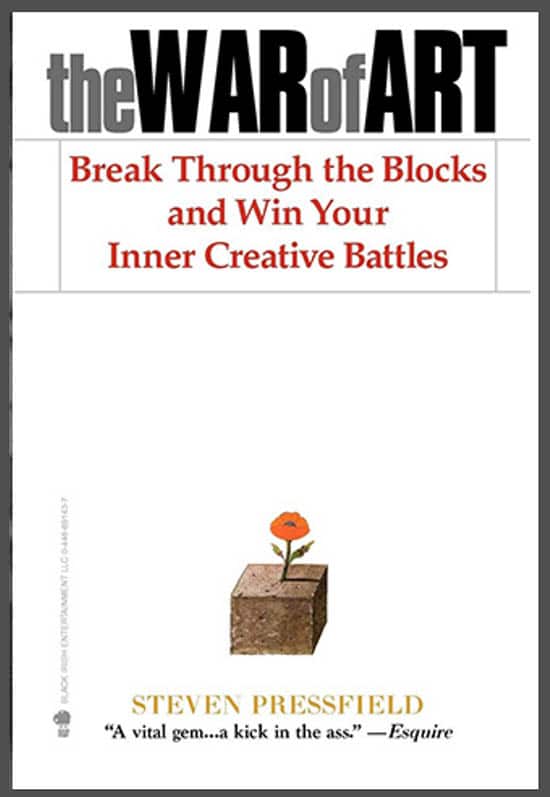
  • Battling Resistance – The War of Art by Steven Pressfield – Book Review & Summary

    Battling Resistance

    When we set out to pursue a creative passion, our own self-doubt and fears thwart us, most often. Steven Pressfield’s The War Of Art addresses these self-limiting creative battles and examines the negative forces of resistance that keep us from realizing our dreams and full potential.

    Resistance

    In the context of our abilities to realise our full potential and fulfill dreams, resistance is the negative force that opposes creativity. It is that feeling of inhibition that prevents one from achieving success in the pursuit of their goals.

    Resistance accompanies anything that is a deviation from one habitual routine. It is a negative, opposing force against anything new. For example, if a person wishes to start a new venture, the voice of resistance will tell him that the new venture is a risk and that he is safe in their current job. Resistance makes one procrastinate when one wishes to start a new diet and refrain from junk food.

    Feeling resistance is normal. It affects everyone and is impersonal and universal in nature. Additionally, resistance doesn’t discriminate between interests, for example, a person will naturally feel resistance whether they want to start a new venture, go on a diet, or even help in charity. Resistance, in fact, also affects experienced people and isn’t a personal target.

    For example, Henry Fonda the actor, even at a later age, would feel like throwing up before a theatre performance. His fear and resistance was present even when he was an accomplished actor.

    Resistance manifests in a number of ways including procrastination, fear of failure, or self-doubt. Everyone can overcome resistance. Commitment to one’s craft, refocusing on one’s dreams and acceptance of the presence of resistance are ways one can overcome resistance. Additionally, challenging it is necessary and is a natural part of one’s journey.

    Using Resistance To One’s Advantage

    The one greatest passion that is soul-satisfying that everyone experiences are called ‘one’s calling’. 

    Everyone leads two different lives – their ‘lived’ lives, and their ‘unlived’ lives. While the ‘lived’ lives are the ones that people live day-in and day-out, their ‘unlived’ lives consist of unrealized, unfulfilled dreams.

    What thus, makes a person wait to follow their unfulfilled dreams?

    Resistance is the main culprit here. All the feelings of self-doubt, procrastination, etc. that prevent one from fulfilling dreams and desires are a product of resistance. For example, one’s unfulfilled dream in life of becoming a novelist could be thwarted by fear of failing to meet expectations of self and of reader, or of rejection from publishers. Such fears may even stop a person from writing at all.

    However, one should keep in mind that fear isn’t bad. It shows how passionately one feels about their dream, and can be an indicator of the fact that the dream is worth pursuing. Resistance should be used to one’s advantage. As mentioned above, even those who are accomplished in their professional fields feel fear and thus resistance.

     The host of Inside the Actor’s Studio often askes Hollywood actors that appear as guests as to why they choose certain roles. Many have answered that they choose the roles that they are afraid to do. their fear thus shows passion and acknowledges the fact that those roles are worth pursuing.

    Similarly, everyone can use fear and resistance to motivate themselves and to orient themselves towards fulfilling dreams that they are passionate about.

    Fighting Resistance – Be A Professional

    Pursuing a dream is like doing a full-time job. Working on a dream for a few spaced-out hours doesn’t work. One has to be creative while deciding how to utilize their time while planning and pursuing their dream. 

    For example, Quentin Tarantino used to direct small projects in his free time during his regular job at a small video rental store. He never attended film school. Once, one of his projects got destroyed in a fire. Rather than thinking he failed, he considered that project as a learning experience, even though he couldn’t finish the film.

    Such dedication amounts to professionalism. Not giving up despite a setback proves commitment to craft.

    Another way to fight resistance is to transfer skills from one’s regular job to one’s dream, even if there are stark differences between the two. For example, the skills of self-discipline that one hone during a regular job can be applied to one’s dream too. For example, a person can work for a set amount of time daily on their dream, or keep working even when there are distractions and do the best to avoid them. A dream is after all a passion. And its pursuit amounts to pleasure and fulfillment. Therefore, when one can push oneself to work full-time for a day job that isn’t fun, powering oneself to work on dreams shouldn’t be as difficult.

    Somerset Maugham, the writer, when asked if he followed a schedule, replied that he only writes when inspiration strikes and that fortunately, it strikes every morning at nine. Therefore, it is proof that professionals, rather than waiting for inspiration to strive to realize their dreams, work hard to achieve them.

    Fighting Resistance – Knowing Oneself And The Craft

    Feeling self-doubt and fear is normal. Thus, one must learn to fight them in order to eliminate them. And in order to eliminate these negative feelings, it is essential to know oneself and to know one’s calling. 

    Furthermore, one has to learn what their limitations are. Without knowing limitations, one tends to expect too much from oneself, often expect that one can do everything by oneself. This is when a person fails to seek help from others, especially when they need it. One should surround oneself with other like-minded professionals who will be able to help. 

    Famous director, Terry Gilliam, works on solo projects, as well as collaborates with others as a member of Monty Python. He once advised Tarantino (an upcoming filmmaker then) that being a good director means knowing when to delegate rather than doing everything on one’s own. It means knowing that others – actors, directors of photography, producers, etc. – are talented enough to be trusted with work. A great director knows limits and also knows that these areas of limitations can be eliminated with the contributions of others.

    Additionally, a professional never shies away from seeking guidance and help. Recognizing the need for, and accepting guidance can help one develop one’s craft. This is the reason why Tiger Woods, even at the peak of his professional career, still had a trainer.

    Finally, one has to keep the process of learning one’s craft ongoing even when one reach the heights of their career. True professionals master the process of learning constantly. Madonna, for instance, has had a successful career in pop music for decades because, despite her success, she has kept reinventing herself and constantly learning to ensure that her music, songs, or performances are never predictable and boring.

    Organization, Patience, And Facing Adversity

    Resistance in many ways remains a constant. In fact, at times, it can even increase as one tries to fight it. For example, a person who wishes to be a novelist has successfully managed to develop self-discipline in writing daily. Yet the feelings of resistance don’t go or diminish.

    Thus for the novelist, the trick to weaken resistance would mean to be organized, patient, and persistent. John Updike the author embodied this concept in his writing process. He would write daily, while pacing his writing evenly through the process, without setting unrealistic goals.

    Therefore, as Updike did, one must be able to have patience and focus on the process rather than the end result or try to achieve it quickly. Such focus will help weaken resistance and patience will deliver good results.

    One must also accept the fact that one could have to face some adversity on the path of realizing one’s dream. Challenges, thus, should be perceived as steps that need to be overcome in order to reach goals.

    At the start of her career, very few believed that a black woman, Oprah Winfrey, could successfully host a talk show and gain a following. When the show started, it was a white-male-dominated field, and delving into the personal lives of guests was uncommon. She, however, remained dedicated to her dream and vision and ended up creating the most-watched morning talk show in America, within a few months. She also helped bring issues such as bullying and obesity into the limelight, which were not openly discussed issues.

    Oprah used the criticisms that she faced into motivation to keep persevering and work harder.

    Counteracting Resistance – Positive Mental Forces

    Fortunately, along with the negative resistance, one also has certain positive forces that help one achieve dreams. A muse is one form of positive force. Homer’s The Odyssey discusses nine muses that are goddesses that inspire creativity within artists.

    These muses present dedicated artists with creative ideas and help them fight resistance. Homer himself called upon these muses to guide him to tell Odysseus’ struggle.

    Thus, one has to be able to invoke their muses to help counteract resistance. Dedication and hard work are the only ways to achieve it. Another positive force is described by Plato as the ‘madness’ that grips a craftsman or an artist to create. Such forces are outside one’s control and yet help in defeating resistance. This ‘madness’ is one’s super-charged creativity that shakes an artist loose from the hold of daily routine, makes one get possessed by the object of one’s creation, and helps counteract resistance.

    Counteracting Resistance – The Battle Against Hierarchy

    Hierarchy is deeply woven into the social structure, whether it is in school, Hollywood, or workplace, etc. Hierarchy is always opposed to change and dictates a fixed position for those within it. Hierarchies define people and people define themselves within the hierarchies in their lives. Thus, hierarchies are also restrictive.

    For example, organizations restricting creative freedoms to employees often see these employees struggling to find meaning or enjoyment in their work.

    Hierarchy forces people to stick within roles and censor actions. Hierarchies also force people to place success within their set rules. People who conform to hierarchies often view others within the hierarchy as means to achieving goals, rather than as individuals.

    Professionals do not conform to or get defined by hierarchies. Contrarily, they battle it and stay true to their creativity and craft. Such individuals work for the love of their craft and not for others.

    For example, Steve Jobs, who was a thorough professional, a perfectionist, and a staunch believer of his vision, insisted on making the decisions about everything, right from the design of his products, to how customers would interact with them. Apple was thus born out of his dedication to his vision. 

    Professionals thus should work to please themselves and aim to be proud of their own work. Only then will they excel at it.

    Commitment To A Territory

    All true professionals have their own territories to work. Arnold Schwarzenegger, former Mr. Universe, actor, bodybuilder, and politician, has his gym as his territory.

    A territory is where a professional feels sustenance, satisfaction, and challenge as he/she works. Schwarzenegger would feel extremely satisfied and accomplished after his gym routine. Additionally, it is the space and place to which one lays their claim through hard work, as Schwarzenegger claimed his gym as his territory for hard work. It is an endless resource for professionals, wherein only the amount of effort one puts in defines the limit of how much one’s territory gives back.

    Woody Allen, unlike Schwarzenegger, claimed the realm of film as his territory. His movies and his creative input defined his territory and his territory defined his ability to create, work hard and expand.

    Professionals who define their territory thus, also have the ability to change the larger field they work in. For example, Steve Jobs and BillGates, who made computing their territory in the early days of computers, were able to change the world.

    Conclusion

    Negative forces like resistance to pursuing dreams are present in everyone’s life. Overcoming forces of resistance such as self-doubt and fear is essential to be able to achieve goals and successfully realize dreams. One can overthrow resistance by learning to use it as an advantage, by learning first to be a professional, to know one’s own abilities and the craft they wish to pursue, and countering resistance by using positive mental forces.

    Finally, it is imperative that one realizes and accepts that resistance is a natural process and that one has to face it. Being organized and having patience will help fight resistance and succeed in achieving personal goals.

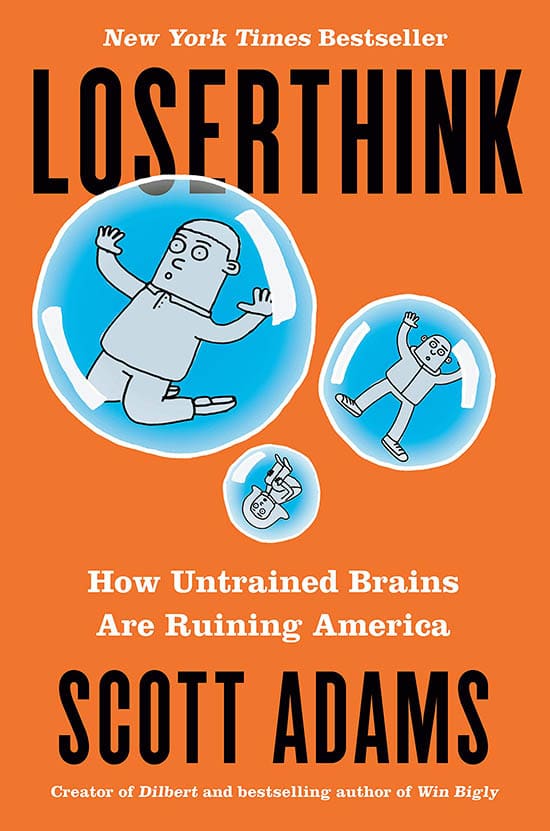
  • Loserthink: How Untrained Brains Are Ruining America by Scott Adams – Book Review & Summary

    What’s Loserthink?

    The individual mind is often inundated with ideas, opinions, and unproductive thinking habits that are continuously bombarding us with manipulative data and information. Additionally, the mind is also highly influenced by the ego, depriving us of the capability of rational thinking. 

    Scott Adams coined the term ‘loserthink’ to describe all kinds of unproductive thinking habits. Furthermore, his book Loserthink: How Untrained Brains Are Ruining America (2019) delves into this mindset with references from psychology, history, business, and global affairs to understand how and why the human mind is increasingly affected by such irrationalities and the pitfalls of unproductive thinking habits.

    The Double-Edged Sword – The Ego 

    To begin with, consider a scenario where you are at a party with capable and influential people. It isn’t unnatural to feel intimidated by the capabilities of the people surrounding you. Yet the thought never crosses your mind that each and every one of those people might have amped up their egos and could be putting up a performance to simply fit in with the crowd. 

    Some people’s performances are closer to their true selves; nevertheless many others simply fake it. How do they do it?

    The answer lies in thinking of the ego as a tool rather than a part of the personality. For example, in the above situation, if you aren’t able to build confidence to match the crowd, you can learn to fake it!

    Simply faking confidence – or believing that you are more valuable than what your achievements indicate – can improve one’s chance at romance, social, professional, and athletic performance, and even help in acing the job interview. Tuning up one’s ego a few notches up, especially in situations where the ego will work in one’s favor can help a person along the path to success because confidence and success often go hand-in-hand.

    To learn how to turn the ego into a tool, one has to understand that body language plays a vital role. One can project a strong ego by maintaining eye contact, having a good posture, and owning the space. Such body language helps to exude confidence. In turn, the confidence you exude will make people perceive you as confident and they will treat you with respect, boosting confidence further.

    Ego, however, is a double-edged sword, and tuning it up at the wrong time and place can make one seem arrogant. It is very easy to lose control of the ego, and decisions that are led by the ego are a form of loserthink!

    For example, when he started the Dilbert comic strip, Adams used funny ideas from all aspects of life. However, fans started writing to him that his office comics were the best. He then reshaped Dilbert as a workplace comic making it the national success it is today. However, had he let his ego dictate decisions, and stuck to what he personally thought worked, he would have never seen success as a cartoonist and then as an entrepreneur.

    Overreliance On history

    It is natural to look for guidance in past patterns. However, overreliance on history can plus one deep into a trap, as historic patterns aren’t as reliable as we think.

    History is an account of the victorious. What has been written is almost always a one-sided account, and thus, there isn’t an objective interpretation of historical events. There are many versions of the same historical event because they are dictated by whose account it is.

    For example, one account states that European settlers in America were gracious enough to let the Native Americans live for free on the reservation because they were too primitive. However, from the point of view of Native Americans, it could be said that the European colonists invaded their land and stole it with mass genocide. Yet it is wise to remember that every nation teaches its citizens a version of their history that portrays them in a good light.

    If we consider the idea of the American philosopher George Santayana that ‘history repeats itself’, believers and followers of this principle, actually let the past dictate their decisions. This eventually leads to unproductive thinking.

    When Adams wrote The Dilbert Principle, his first non-fiction bestseller book, he thought that Santayana’s ‘history repeats itself’ would hold true for him too. Therefore, he jumped at his publisher’s idea of using the success of his first book to publish another book, close to his first one. The book sold only half the numbers of the first one.

    Adams learned that readers of non-fiction books – unlike fiction readers who return to the same author time and again due to the style of writing – prefer to move on to other topics, believing that have learned all about the topic. This experience made Adams wary of letting the past influence his decisions.

    The Importance Of Micro steps

    Whenever we are faced with an obstacle, ‘loserthink’ can make the task at hand seem more impossible to achieve. Getting overwhelmed can tend to psych one out and lead to loserthink. It’s a vicious cycle; nevertheless, it can be broken. The answer lies in micro steps.

    Micro steps involve getting oneself busy with the smallest of tasks when the seemingly huge obstacles can prove to be immobilizing. Let’s consider that a person is feeling overwhelmed by the responsibility of a massive project. The person just can’t seem to find the will to get up and get moving with the work at hand and feels anxiety and exhaustion at the mere thought of it.

    Here, the person can, perhaps, begin with the smallest of movement – moving the fingers of the hand. Once this is accomplished, the renewed sense of agency can be used to propel the next micro-step of moving the feet and so on, until the person can finally get up to work.

    Often, the obstacles are bigger than simply mustering the will to get up and get going. Yet, applying the logic of micro-steps works. It works because even the smallest step can gear one into action and start the process of change of mindset, towards productivity.

    Adams understood the value of micro-steps when he had decided to pursue a career as a cartoonist in 1988. Not knowing anything about being a cartoonist and spending his entire career in the corporate world seemed like a huge obstacle. 

    However, rather than think about the looming larger picture, Adams simply went out to a supply store one day and bought pens and paper. A few days later, he tried his hand at drawing. After that, he resolved to practice every day for an hour before work. While he couldn’t see the fruits of his microsteps as he took them, a year later he saw the fruits of his microsteps when Dilbert started running in newspapers.

    Clarifications Are Essential

    Adams, a public figure, and having a large following on sites like Twitter, experiences misrepresentation of his words regularly. He has been accused of being a liar, a racist, a neo-Nazi supporter, and even been criticized for supporting President Trump. However, despite the allegations, Adams is understanding the fact that the Fourth Estate is prone to misinterpretation.

    He believes the reason behind this is that fact that while humans consider themselves good at the thought guessing game, no one can read minds! Therefore, believing that one knows what another thinks is a form of loserthink too!

    Hence, it is vital to wait for at least 48 hours for some sort of clarification, before reacting. For example, in 2018, Roseanne Barr, a comedian, and actress, commented that Valerie Jarrett, the former advisor to President Barrack Obama looked like ‘an offspring of a Planet of the Apes character and the Muslim Brotherhood’. 

    Barr’s Tweet was viewed as an intentional racial slur especially because Jarrett was part African-American born in Iran. Despite Barr’s push-back that she was unaware of Jarrett’s background, her career was ruined and she was called a racist. According to Adams, however, if the critics had considered the 48-hour rule, they would have probably considered Barr’s ‘ignorance’.

    Adams also believes that what a person actually means to say should hold more weight than what others think they said. After all, the actions of a person matter more in the end, and thus, lashing out without clarifications is loserthink!

    Looking Into The Future Without Loserthink

    We are constantly bombarded with gloom-and-doom news that often makes us worry about the future. Issues such as unemployment, climate change or the healthcare crisis can create a state of anxiety, especially with overactive media adding fuel to the fire.

    However, this constant worrying, especially about the matters that one can do nothing about is loser think! If we take unemployment for example, while the world worries about robots and AI displacing low-skilled workers, technological and economical developments have shown that the end of unemployment is fast approaching. 

    Similarly, technology could help alleviate the negative effects of climate change to a certain degree. The world is taking steps to brainstorm towards the development of technologies that can help in climate change. For example, the British businessman Richard Branson has collaborated with the Indian Government to award $3 million to anyone who comes up with an effective form of air-conditioning that everyone can afford, considering that as the planet warms further, it will become a critical requirement.

    On the other hand, partially funded by Bill Gates, the Canadian company Carbon Engineering is developing technology to make jet fuel by converting carbon dioxide from the atmosphere. Telemedicine and smartphone health tests are turning healthcare more affordable and easily available.

    It is one’s own choice as to which side of the coin one wishes to see and believe – the positive one, or the negative one that leads to loserthink!

    Conclusion

    Unproductive thinking or loserthink is a trap. And sadly, people fall into it without even knowing that they are stuck there. Loserthink can be seen in many forms. For example, actions and behavior that are influenced by one’s ego, believing in and letting past events and history dictate decisions, reacting without clarifications, and finally worrying about the future, especially, that which is out of one’s control, are all forms of loserthink.

    These unproductive thought patterns can be battled by being aware of what loserthink is and how it works. Changing one’s perception is the first step towards rational thinking and winning the war against loserthink. 

  • Issue #33, 17 Aug 2021 – No One Can Do It For You

    Welcome to the Deploy Yourself Newsletter. Every two weeks I share what impactful leadership looks like to show your own power. I also share the most insightful lessons and stories I encountered in the last two weeks. You can also read this issue online.

    Hey,

    No One Can Live Your Life For You

    Every now and then, we all get surprised and knocked down by life. In those moments, we have a choice. To let our circumstances and what is “acceptable” decide our actions, or to choose to live our own way. There is nothing wrong with letting others dictate your choices, but it limits your leadership and possibilities.

    No one can make this choice for you. No one can live your life for you. When you get knocked down, you can let your heart out and get back up. Or you might not. The choice is yours. And why is this choice important? Because it is your life after all. Isn’t it?

    Whenever I have made the choice to live “my life”, I have been more alive, joyful, and satisfied than otherwise. Even if things don’t go as planned or there are obstacles on the way. Do you experience aliveness, meaning, and satisfaction in your day-to-day life? If not, what are you waiting for? Either way – the choice is yours.

    If you want to share a dream or idea which has been “on hold” in your life, reply to this email and share that. What could be one tiny step you can take in that direction? And see what happens. I read and respond to every reply.

    Articles and Stories Which Have Fascinated Me

    One

    How to do Long Term

    The long term is harder than most people imagine, which is why it’s more lucrative than many people assume. Everything worthwhile has a price, and the prices aren’t always obvious. To do long term effectively you have to come to terms with a few points.

    1. The long run is just a collection of short runs you have to put up with.
    2. Your belief in the long run isn’t enough. Your investors, coworkers, spouses, and friends have to sign up for the ride.
    3. Patience is often stubbornness in disguise.
    4. It’s hard to know how you’ll react to decline.
    5. Long term is less about time horizon and more about flexibility.

    And never forget Keynes: “In the long run we’re all dead.”

    Two

    7 Empathetic Questions To Ask At Work

    One of the most important tasks of a leader is to support her people with the challenges they face. However, in the pressure-filled and fast-paced routine of everyday work, the challenges each one of us face might not be easily identifiable.

    One way to uncover important issues is to ask powerful questions regularly. These questions require original answers which often leads to introspection and being vulnerable. I have found that asking powerful questions is a very important skill to develop as a leader.

    Below are 7 such Empathetic Questions which you can ask to understand others and provide any support they might need:-

    1. You don’t seem yourself today. Would you like to take a break and chat?
    2. You sound upset. Is that because of something I did? Let me know if I can help anyway.
    3. What can I do to help? How can I (or the organization) support you?
    4. I know you are going through a tough time. If you want to talk about it, I am willing to hear you out and help in any way possible?
    5. I can’t even imagine how hard it must be for you. I want you to know that I and the organisation appreciate the way you have responded to the situation. If there is anything else I can do to support you, let me know?
    6. I am sorry for what you are going through right now. I know you are a fighter and will come back stronger from this. Can I be of any help?
    7. I would hate to see you burn out. Are you taking care of yourself? Is there anything I can do?

    From an article from my desk – 7 Empathetic Questions To Ask At Work to Understand And Support Your Colleagues

    Three

    Documentary filmmaker Valarie Kaur on Listening

    “Deep listening is an act of surrender. We risk being changed by what we hear.

    When I really want to hear another person’s story, I try to leave my preconceptions at the door and draw close to their telling. I am always partially listening to the thoughts in my own head when others are speaking, so I consciously quiet my thoughts and begin to listen with my senses.

    Empathy is cognitive and emotional—to inhabit another person’s view of the world is to feel the world with them. But I also know that it’s okay if I don’t feel very much for them at all. I just need to feel safe enough to stay curious.

    The most critical part of listening is asking what is at stake for the other person. I try to understand what matters to them, not what I think matters. Sometimes I start to lose myself in their story. As soon as I notice feeling unmoored, I try to pull myself back into my body, like returning home. As Hannah Arendt says, ‘One trains one’s imagination to go visiting.’ When the story is done, we must return to our skin, our own worldview, and notice how we have been changed by our visit.”

    That’s it for now. If you have any questions or feedback, or just want to introduce yourself, hit reply. I read and respond to every reply. All the best,

    Sumit

    (Twitter) @SumitGupta
    (LinkedIn) Connect

  • How I Discovered My Body? And The 4 Body Dispositions

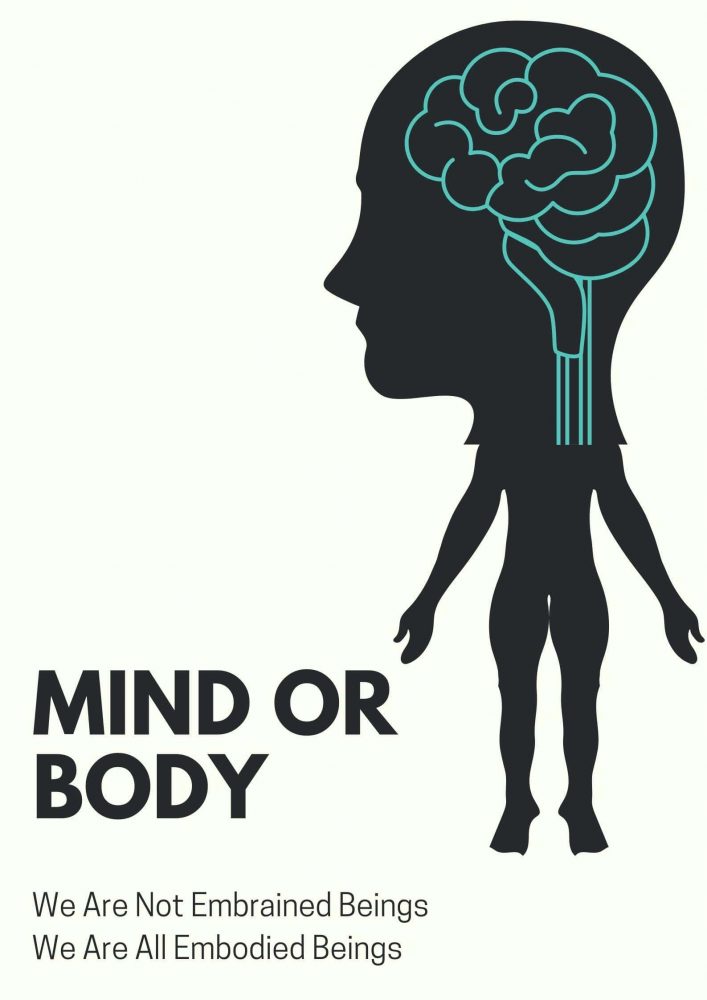
    I have always taken pride in my analytical and logic-driven reasoning skills. As a child, I remember myself not being physically strong. Sports was never a priority in the culture I grew up in, and we never had the finances to focus on any sports training anyways. As a natural corollary of that, I focussed on reading and studies. I vividly remember falling in love with mathematics, and I could sometimes solve complex problems in my head. That was probably when I started living in my head and forgot that I also had a body.

    This focus amplified when I stumbled into computer programming. The first time I used a computer, it was to program using BASIC and to play a game called DAVE. I must have been 13 years old back then. A few years later, my joy had no limits when my father bought a computer for me when I turned 15. It started a fascination with logic, reasoning, and programming that has shaped most of my work life.

    If I was not good at sports earlier, I totally stopped doing any physical activity once I had a computer at home. I spend my nights and days learning to program and making small and large projects – first for myself and then for some small companies. I carried this analytical mindset with great pride wherever I went and never bothered to consider that I also have a body – except as a vehicle for my head and thinking brain.

    Understanding Emotions Led Me To My Body

    My learning and research around emotional intelligence led me to focus and notice my body. Have you ever experienced having “cold feet” or a “hair raising” experience? If yes, you are not alone as every emotion brings with it a physiological response in your body.

    Our bodies react to external events first before our thinking brain has a chance to reflect on them. These responses might range from tension in your neck, back, or any other part of the body. For example – Sadness is associated with pain in the heart and numbness or stillness in the lower part of the body. Anger is associated with fast and shallow breathing and reddening of your face.

    Other ways your body reacts to external events include your heart beating faster, turning pale, smiling, sighing, sweating, getting goosebumps, and so on. These physiological responses show that emotions are not only in our brains but that they have a presence and origin in the entire human body.

    Noticing and becoming aware of our bodies becomes very relevant when it comes to communication skills as our words only constitute 7% of it. The rest of it is communicated via our tone of voice and our body. Do you notice small shifts in your and others’ bodies (gestures, hand movements, eye contact, facial expressions) while communicating? Do you notice the tone, volume, and fluency of voice change as different emotions play their part in the background?

    Discovering My Body At Newfield Network’s Coaching Program

    In 2019, when I signed up for the Newfield Network’s Coaching Program, I discovered the role of our body in everything we do, and especially our leadership. Our body and associated physiology, our thoughts and language, and our emotions determine how we see the world, and every action we take henceforth.

    Our language, emotions, and body are the coloured glasses we all wear and through which we view the world. And making changes in our language, emotions, and body are our access to see the world differently and open up new possibilities. Modern neuroscience has shown that the body influences the brain just as much as the brain influences the human body. If we get into a posture of confidence and put a smile on our faces, it is impossible to feel depressed. Alternately, if we get into a slouched and depressive posture, it is impossible to be cheerful and joyful.

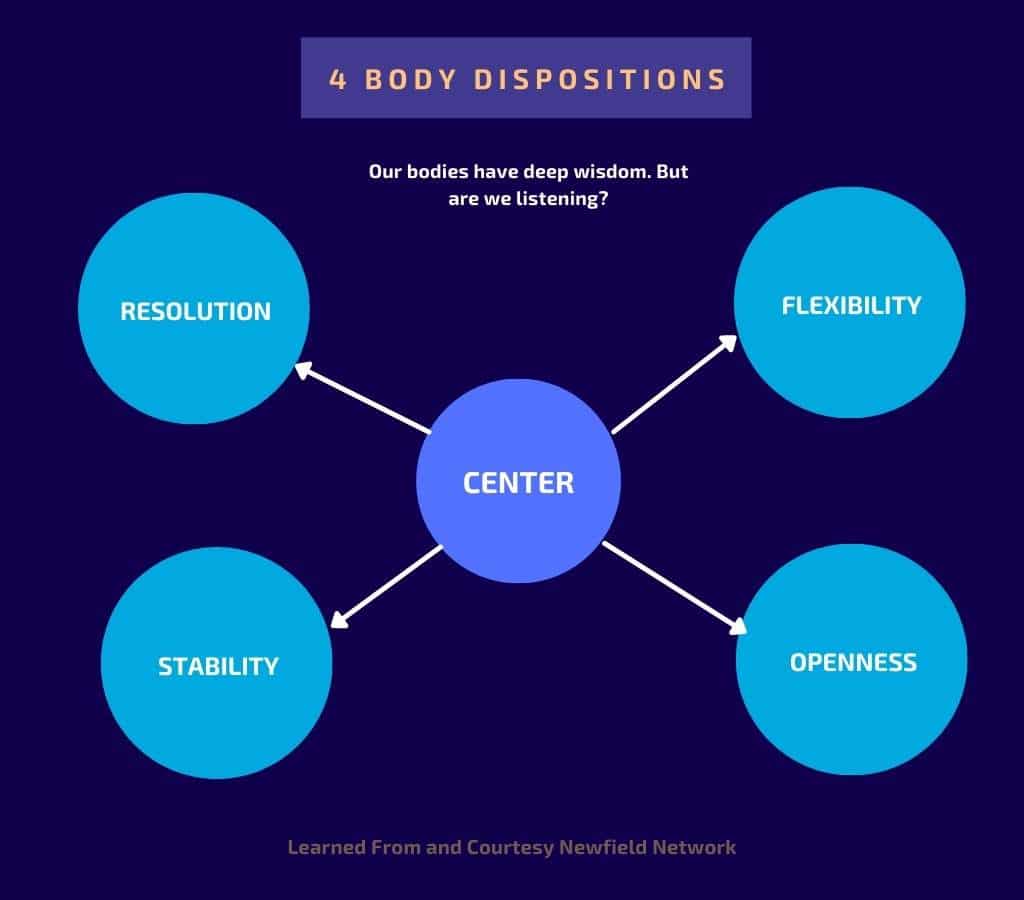
    It was at Newfield that I was introduced to the 4 body dispositions or archetypes. Before we talk about them, let’s understand the neutral state which is called the CENTER. Being in CENTER allows us to choose to move to any of the other 4 body dispositions. Being in CENTER is our foundational and grounded state as human beings. Center means we are aware of what is happening in our bodies. Are we tense or relaxed? Are we hot or cold? Are we balanced or not?

    “Life is always better in your body. Get out of your mind.”
    ― Lebo Grand

    The 4 Body Dispositions

    The 4 Body Dispositions (see them as choices) are different ways we can shape our bodies. With each body disposition, we see the world in a different way, and it shapes every conversation we have. Unless we are aware of them, we usually are comfortable in only a few of these body dispositions. These 4 body dispositions are Resolution, Flexibility, Stability, and Openness.

    Resolution is the body disposition when we are singularly focussed on getting something done. We feel tight and determined in our bodies, and are ready to take clear and decisive action. This is the disposition of a warrior.

    This is a position when you are ready to sprint. You place one foot in front of the other and are ready to move ahead and take decisive action. This disposition also keeps you away from distractions as your vision is focused. We all use this disposition in times of emergencies and crises situations.

    Flexibility is the body disposition when we are open to trying out new things and brainstorm new ideas. In this body disposition, we are moving our bodies, our hands and our feet as required. It can be said that in flexibility we are in a dance with what is happening around us. This is the disposition of a dancer or a magician.

    In this disposition, we are playful and open to trying different approaches and seeing different perspectives. We are ready and open to moving from one idea to the other. We can listen and speculate with others, even if their views are very different from ours.

    Stability is the body disposition when you feel grounded by the weight of your feet on the ground. Stability is standing in our own dignity, knowing what we stand for, and not be easily shaken or moved by what is happening around us. This is the disposition of a king or queen.

    In this body disposition, we align our head, shoulders, hips and legs in a straight vertical line. You speak firmly and confidently in this disposition and are aware of your own standards and boundaries.

    Openness is the body disposition when we open up our chests and arms in a warm embrace of what is in front of us. It is a disposition of vulnerability, tenderness, trust, and love. This is the disposition of a lover.

    In this disposition, your eyes are soft and you make eye contact with whom you are speaking. Your smile is genuine and your voice soft. It is as if when you are inviting someone to your world with open arms.

    These four body dispositions determine how we carry ourselves and how we use our bodies. By default, our body is shaped by our past life experiences and cultural influences. However, we all have the ability to change and shift our bodies, and with it the way we communicate and show up in the world.

    Some of us might spend most of our time in resolution, while for some of us it would be openness. For me, before I discovered this work, I realised that I used to spend most of my time in Stability and Openness without moving into Resolution and Flexibility, even when it was required. Ask yourself :

    • In what body disposition do you spend most of your time?
    • In what body disposition would you like to be more in?
    • What new possibilities could open up for you from those new body dispositions?

    The Relevance of Your Body To Leadership

    As leaders, we should be committed to our responsibilities and our commitments rather than the way we are used to being. If a leader identifies themselves as goals-focussed (resolute) and a situation demands them to listen and be open to ideas, can they bring forth an open body in that situation? Alternatively, if a leader is always empathetic and open by nature, can they switch to a more resolute posture when the situation demands so?

    Leaders need to think of themselves as not just their brains but the whole person – which includes all their emotions, conversations, and the foundation of it all – their body. Leadership presence is to be aware of your own body first and then of others around you.

    Having the view that my personality/identity is fixed and can’t change is an immature way of leadership. Imagine how effective it would be to learn to shift your body, and with it your emotions and communication to suit the situation. Instead of being “one type” of leader, you could show up as the leader which your team and organisation needs at any given point. The question is – will your personal style and comfort level limit your leadership, or will you transcend your default body dispositions towards one of your choice?

    Deepening My Awareness and Learning With Strozzi Institute

    In 2021 as I write this, I am continuing to know more about our own body (with relation to leadership) from the Strozzi Institute. I am slowly discovering the difference between academic knowledge and embodied knowledge. I am learning that leadership is a full-body contact sport, rather than just an analytical or rational one. I am discovering what Richard Strozzi has written in his book The Leadership Dojo, “The body we are will be the type of leader we are”.

  • 36 Communication Quotes for Better Relationships & Leadership

    Please find below my favourite collection of quotes and one-liners about effective and deep communication, building strong relationships – both at work and in life, and effective team management and leadership.

    “Paradoxically, the ability to be alone is the condition for the ability to love.”

    —Erich Fromm

    “If you judge people, you have no time to love them.”

    ― Mother Teresa

    “The most important thing in communication is to hear what isn’t being said.”

    Peter Drucker

    “There are two things people want more than sex and money… recognition and praise.”
    – Mary Kay Ash

    “When you are 80 years old, and in a quiet moment of reflection narrating for only yourself the most personal version of your life story, the telling that will be most compact and meaningful will be the series of choices you have made. In the end, we are our choices. Build yourself a great story.” — Jeff Bezos

    “You cannot truly listen to anyone and do anything else at the same time.”

    ― M. Scott Peck

    “You can’t let praise or criticism get to you. It’s a weakness to get caught up in either one.” – John Wooden

    “Wise men speak because they have something to say; Fools because they have to say something.”

    Plato

    “Dream more than others think practical. Expect more than others think possible. Care more than others think wise.” Howard Schultz

    “I speak to everyone in the same way, whether he is the garbage man or the president of the university.”

    ― Albert Einstein

    “Effective communication is 20% what you know and 80% how you feel about what you know.”

    Jim Rohn

    “I have always strenuously supported the right of every man to his own opinion, however different that opinion might be to mine. He who denies to another this right, makes a slave of himself to his present opinion, because he precludes himself the right of changing it.”

    ― Thomas Paine

    “There is nothing stronger than gentleness.”

    — John Wooden

    “I am a storyteller, for better and for worse.

    I suspect that a feeling for stories, for narrative, is a universal human disposition, going with our powers of language, consciousness of self, and autobiographical memory.

    The act of writing, when it goes well, gives me a pleasure, a joy, unlike any other. It takes me to another place — irrespective of my subject — where I am totally absorbed and oblivious to distracting thoughts, worries, preoccupations, or indeed the passage of time. In those rare, heavenly states of mind, I may write nonstop until I can no longer see the paper. Only then do I realize that evening has come and that I have been writing all day.

    Over a lifetime, I have written millions of words, but the act of writing seems as fresh, and as much fun, as when I started it nearly seventy years ago”.

    – Oliver Sacks

    “Music is the greatest communication in the world. Even if people don’t understand the language that you’re singing in, they still know good music when they hear it.”

    Lou Rawls

    “The one thing you can’t take away from me is the way I choose to respond to what you do to me. The last of one’s freedoms is to choose one’s attitude in any given circumstance.”

    – Viktor Frankl

    The limits of my language are the limits of my mind. All I know is what I have words for.

    Ludwig Wittgenstein

    “If you have nothing to say, say nothing.”

    Mark Twain

    “When you give yourself permission to communicate what matters to you in every situation you will have peace despite rejection or disapproval. Putting a voice to your soul helps you to let go of the negative energy of fear and regret.”
    ― Shannon L. Alder

    It is a sin to be silent when it is your duty to protest.

    Abraham Lincoln

    “Not the fastest horse can catch a word spoken in anger.”

    Chinese proverb

    “I’ve learned that people will forget what you said, people will forget what you did, but people will never forget how you made them feel.”

    ― Maya Angelou

    “One of the most important things you can do on this earth is to let people know they are not alone.”
    ― Shannon L. Alder

    “I don’t like that man. I must get to know him better.”

    — Abraham Lincoln

    “There is no greater agony than bearing an untold story inside you.”

    ― Maya Angelou

    “When a person can’t find a deep sense of meaning, they distract themselves with pleasure.”

    ― Viktor E. Frankl

    “We can know only that we know nothing. And that is the highest degree of human wisdom.”

    ― Leo Tolstoy

    “When you accept yourself, the whole world accepts you.”

    ― Lao Tzu

    “I would rather have questions that can’t be answered than answers that can’t be questioned.”

    ― Richard Feynman

    “The most important single ingredient in the formula of success is knowing how to get along with people.”―

    Theodore Roosevelt

    “The highest forms of understanding we can achieve are laughter and human compassion.”

    ― Richard P. Feynman

    Opportunities don’t knock, they whisper. So shut up and listen.

    — Thomas Leonard

    “You can talk with someone for years, everyday, and still, it won’t mean as much as what you can have when you sit in front of someone, not saying a word, yet you feel that person with your heart, you feel like you have known the person for forever…. connections are made with the heart, not the tongue.”
    ― C. JoyBell C.

    “Much unhappiness has come into the world because of bewilderment and things left unsaid.”
    ― Fyodor Dostoevsky

    “Assumptions are the termites of relationships.”
    ― Henry Winkler

  • Perennial Seller by Ryan Holiday – Book Review & Summary

    Eternally Saleable

    It is true that each and every individual leaves a mark of his or her existence – in whatever small way – in the world. Whether it is a book written, a work of art, political or academic legacy, an app created, or even working on a project for one’s company, each and every individual should endeavor to make their work and creation eternal.

    However, in today’s times, the constant need and want for something new poses a challenge to ensuring that one’s work is perennial. This fact is true especially in the field of marketing, where creativity is a constant requirement, and the need to thrive and survive is at the forefront. How do company’s, therefore, ensure that they create brands that are everlasting?

    Ryan Holiday’s Perennial Seller (2017) is a guide that shows the way to perennial selling, how to ensure creativity trumps constant newness making products, services, and campaigns last.

    The Hard Graft

    It was earlier touted that the success of any product lies in 80% marketing and 20% creativity. However, this notion has been proved wrong time and again. It is in fact creativity that ensures a long-standing, perennial product. Additionally, creativity needs a lot of hard work and one’s product needs to be outstanding from the word go!

    No one has learned this lesson harder than Microsoft. The failure of their Zune MP3 player and the search engine Bing proves that marketing can never cover the shortcoming of a product. On the other hand, Microsoft Office has constantly improved over time, becoming a 25–year long, perennial success, simply due to the excellent software design.

    However, having a stunner product needs creating a stunner product. One might have the best award-winning ideas, but things will never fly off the shelf if ideas aren’t put into action. Sarah Silverman, the writer and comedian aptly said, “You needn’t wait for someone’s approval to get going: just write!”

    How does on therefore, get into the grind, to combine creativity and hard work and turn that great idea into something concrete?

    Sacrifice And Motivation Lead To Success

    Actual concrete results do not happen with the right kind of motivation. Without that strong sense of purpose no professional football player ever made it to the starry leagues. The same applies to creative work. It needs the push of purpose and motivation to overcome obstacles. If a writer with the purpose of creating change and goodwill in the world doesn’t find success in the books or articles he writes, he wouldn’t simply give up! He would strive to get creative and write better because the drive of his worthwhile agenda will motivate him.

    One’s sense of purpose can be fuelled by certain desperate situations too. A person who has desperate to provide for his family’s survival will be driven with a sense of purpose to work hard. Desperation fuels success, but it needs the willingness to make sacrifices too.

    The professional football player, for example, has the choice of chilling out with friends, partying, and enjoying their time sipping beers, but they choose to sweat it out in the gym and ensure that they keep fit. Similarly, writers and artists sacrifice by shutting themselves out from the world to achieve their creative successes.

    Thus sacrifices are vital to ensuring that hard work pays off.

    How to Be A Successful Artist

    It is a paradoxical fact that there is more to being creative than creativity alone. Writers don’t find success in simply writing a book and shipping it off to a publisher. It needs hard work, and one has to become one’s own CEO.

    Often, creative people leave the marketing, promotion, and editing of their work to others. However, that is possible only when they either have enough money to do it or are already famous for their work.

    The world is an extremely competitive market. For example, considering more than 300,000 books are published in the US yearly; writers have their hard work cut out. They will need to be more than geniuses and become their own CEOs to ensure successful strategies for their work to stand out.

    While the responsibilities of success rest on one’s own shoulders, one also needs a third-party perspective in the form of an editor. This editor should be a professional in the field and be someone who can be trusted with their honesty. For example, musicians can turn to composers and sound engineers, writers can seek assistance from actual editors, and athletes need a coach to guide them to success.

    People often tend to miss this vital step of employing an editor to oversee and critique their work. For example, the book To Kill A Mockingbird, by Harper Lee is considered a timeless classic. However, the book began its journey as an imperfect manuscript in the hands of editor Tay Hohof, a person Lee trusted. Hohof was a brutal critique. She ensured that Lee reworked the text and demanded that it was made more coherent and structured. Her editorial efforts made the book the classic it is today and Lee a renowned name.

    Testing To Perfection

    People tend to relax, as they inch closer to the finish line.  However, in order to ensure the success of the creative work, one has to become almost obsessive with perfecting it. Incorporating surprise quality control methods is one way to do this.

    Max Martin, the producer and composer, who has written songs for personalities like Adele and Celine Dion, developed the LA Car Test over the years. He cruises down the Pacific Coast Highway, playing the song he wishes to test on full blast. This enables him to hear his music like listeners would on the radio. If he likes the song then, he knows that it will work for the public too.

    One can use another method, called the One Sentence, One Paragraph, One Page method.  In this, one should compare the product in hand with the original idea and check how close the product is to what was originally imagined or decided. To do this, one can write down exactly what the project is about in one sentence. Next, describe the same thing in one paragraph and next, describe it on one page. This exercise helps in ascertaining the coherency of the project.

    For example, if a writer has written an autobiography that has some fictional content, it will be difficult to describe the book using the one sentence, one paragraph, one-page method. This will help the writer refine the content of the autobiography.

    Thus being able to describe one’s work in a convincing and concise manner is vital to ascertain whether the creation or product is perfect. Until then, one needs to keep improvising, enhancing, and testing.

    Marketing One’s Own Creation

    In every creative field, competition is rife. Therefore ensuring that one’s own work stands out and gets noticed by the audience needs serious marketing efforts. While many reach out to marketing professionals, they need to be fully invested in the marketing efforts of their creative work themselves. 

    While professionals will put in some effort because they are paid to do it, the person who has created the work will be most invested in pushing their work, and ensuring that their product or creation has been represented in the best way possible.

    Being the marketer of ones own product is extremely crucial, because one will care about it, as much the creator will.

    Additionally, the virtue of humility is vital to market one’s own product. For example, one of the author’s clients had the opportunity to advertise a new product on many successful podcasts. However, the client wanted to finish his bit in one single conference call, rather than go on each podcast. The author reminded his client that such opportunities are one in a million and that humility is an important virtue, especially if he wants others to value his new product. The client agreed, and the result was a successful marketing coup.

    The Importance Of Word-Of-Mouth

    Every creation or product begins at the point where the audience has no idea about its existence. However, there are many strategies to get the audience talking about the creation. There are no hard and fast rules to which strategies one wishes to employ to market their product or creation.

    Steven Pressfield’s 2011 ‘The Warrior Ethos’ was entirely self-published and marketed. Pressfield used a unique marketing strategy. He made a special military edition and distributed about 18,000 copies among army contacts and friends. Even though it took a whale of an effort to publish, distribute, and deliver the books, the efforts were worth it. The following months saw the sales figures shoot through the roof, with about 13,000 copies being sold even today!

    It was word-of-mouth that worked its wonders in making the book popular.

    According to the consulting firm McKinsey, about 20% to 50% of purchase decisions of consumers are based on word-of-mouth. Recommendations from friends and family amount to marketing magic! For example, people are more likely to make a purchase if the product is recommended by a close friend than if it is mentioned in passing by an acquaintance. Additionally, word-of-mouth ensures long-term sales.

    With word-of-mouth being a marketing magic wand, social media is Hogwarts!!!

    Creating A Platform

    Achieving creative excellence and/ or product success should not be one-time, flash-in-the-pan. Neither should it be the only career-defining achievement. Continued success requires a platform wherein one can nurture their persona as a creator and combine connections, communications, and skills, and link them with the audience and followers.

     Such a platform is a necessity especially when the going gets tough. His rivals for example, despite having a successful political career early on, put Winston Churchill on the back burner from 1931 to 1939 due to his radicalized stances on the independence of India. However, Churchill had a second platform ready. He spent his downtime writing articles and books, and even made radio appearances, keeping his influence alive and ensuring the people did not forget him during his time of exile. 

    Having a platform also ensures having success independent of others and truly owning it. The filmmaker Casey Neistat had a promising film career with two premiers at Cannes. However, he decided to have his own independent platform on YouTube. By cutting out the middleman, he not only ensured making and owning his own profits but also has his own audience and gets to decide what to broadcast. He created his own artistic freedom.

    The Importance Of Mailing Lists

    Imagine if suddenly an artist wakes up to find that the media is no longer interested in his work, his marketing tactics are failing and he is losing the ability to garner more followers.

    While earlier, this would have simply qualified as a sheer nightmare, today; artists have a ray of hope in the event of such a thing happening – a mailing list!

    A mailing list is a direct mode of communication with those who are interested in the work of the artist, know the value of his artwork, and are supportive in some way or the other. It, however, takes time to build such a database of fans and followers. Thus it is essential that the artists start building these mailing lists as early as possible perhaps even before the product or the artwork being ready.

    The heavy-metal band Iron Maiden used their mailing lists extremely well at a time when heavy metal was giving way to grunge music. Their mailing lists have kept them in touch with their fans, leading to sold-out concerts even today!

    The author, similarly, ensured big sales of his first book. He kept a ready mailing list of persons who would be interested in reading his book before he published it. He did this by creating a monthly newsletter with reviews of books. This way he ensured that he not only gets his mailing contacts but also a ready platform for publishing his own book and gathering followers.

    Conclusion

    Keeping one’s creative work or product alive and kicking, one needs to combine creativity and hard work, be ready to make sacrifices, be obsessive about finding perfection in their artwork, and to that effect, keep testing. 

    Additionally, ensuring that they have a perennial seller at hand, creative should be at the forefront when it comes to marketing their own work, use effective strategies such as word of mouth and mailing lists, and most importantly, create a platform wherein they have a back-up strategy to keep themselves and their product in the limelight!

  • Bird By Bird by Anne Lamott – Book Review & Summary

    The Writer’s Guide To Writing

    Finding one’s true ‘writer’s voice’, creating unforgettable characters, bringing stories to life, making memorable plots, and most importantly, overcoming the dreaded ‘writer’s block’ are just some of the things writers wish they could effortlessly take care of. 

    Novelist and memoirist Anne Lamott’s Bird By Bird is a classic guide for writers, helping them to not only write better but improve life along the way too. It is an honest, witty, distinctive, and unique perspective, dotted with personal anecdotes from Lamott’s experiences, explaining how to instil commitment, discipline, and focus into one’s writing.

    She emphasises that a good writer not necessarily follows a strict routine and that inspiration for writing can come from anywhere, especially when one slows down, observes one’s surroundings keenly, and looks deep within oneself.

    Everything That Happens

    One has to generate good material to write well. And to generate good material, one has to be a good observer. One often finds that good writers have a tendency to keep away from the crowd and observe everything in their surroundings – the people, their mannerisms, the settings, etc.

    A writer needs to articulate everything that is seen or experienced. Articulation, therefore, needs focus and a relaxed manner. Rushing, or forcing the process of articulation doesn’t help. Like it or not, writers need to be patient and learn to pay attention to everything ranging from the person’s curious gait, to how the evening sunlight frames a face, to the feelings a memory brings forth.

    Observation and noting down what one observes in the surroundings helps in conveying the truth: a quality that good writers must possess. It isn’t important whether the writer thinks that his observations will result in good material or not. What matters is that the writer is able to seek truth in observations and use them in the story that the writer wishes to tell.

    Drawing on past experiences is another ability that writers must possess. One’s own past and childhood is a treasure trove of true information. However, writers must ensure that they carefully, and truthfully, use their viewpoint to make the story compelling. Examining oneself and everything around is an intrinsic quality that writers can use.

    Finding One’s Own Voice

    Every writer should have his/her own ‘voice’. A ‘voice’ is a writer’s own style of not only including details but also telling a story, and honesty in expressing one’s own feelings is the only way to develop it.

    Expressing one’s true feelings cannot happen without facing some stark truths and opening emotional doors. Thus, developing an authentic ‘voice’ by discovering and confronting ones own feelings and emotions is the key to writing truthfully. For example, writing truthfully about raging anger or profound grief can only be truthfully penned down if the writer accepts and faces them during the process of writing. This is also true of painful or extremely private feelings.

    Furthermore, to truly accept such emotions and feelings, a writer has to be ‘present’ in them and be fully aware of how it feels to be experiencing them. Merely thinking about them will not lend authenticity to a writer’s voice. In other words, being in the present amounts to understanding one’s reality and being comfortable with the entire spectrum of one’s own emotions.

    Having Faith 

    To be a good writer, one has to stop worrying whether they are a good writer or not. Like everything else, writing develops with practice, and believing in one’s own ability to write is key.

    Writers have to accept that not all days are filled with a good flow of words. There will be days and weeks of blank pages and that patience is a virtue, as is determination. Such faith and persistence are important, especially for young writers.

    Over time, and with practice, a writer can feel a yearning to write. Faith in one’s own ability to write, and the yearning to write well can replace the frustration one experiences on bleak days.

    Faith is also crucial when a writer needs to believe in whatever he/she is writing. If the writer doesn’t believe in what he/she is writing, no one will. But how does a writer generate such belief?

    The answer lies in making an effort to understand and care deeply about life itself. Writers have to connect with their own stories and write about everything that is important in their life. That includes examining not only the dramatic, drastic, and important events in life but also the banalities of life.

    Establishing A Daily Routine

    The biggest assumption that writers have, is that they can write well only when inspiration strikes. However, establishing a strict daily writing routine and incorporating discipline in the routine is essential for success.

    A writer should find a place to write and go there every day, at the same time, whether productivity strikes or not. Following a routine of time and place prepares the unconscious mind to yield creativity at the time and place designated for writing.

    At first, a writer could get bored, or even not write anything at all. However, as a writer persists with the routine, the positive effects of the routine will lead to success. The mind will automatically start creating a ‘mental writing space’. Eventually, the routine will become a habit and will train the mind to ‘get creative’ at the designated time every day.

    While routine is essential to write, it isn’t the sure formula to write well. There is no secret code or password that unleashes good content. One needs commitment too, to succeed as a writer. The author, for example, realised that all good writers are not only disciplined about their writing routines but are also committed to their work.

    Just as meditation requires routine and daily practice in quietening the mind to hear the inner voice, writing requires routine, discipline, and commitment for finding the inner writing voice.

    The Shitty First Draft

    To put it bluntly, no one writes a great, elegant first draft. According to the author, all good books emerge from a series of better versions of  ‘the shitty first draft’.

    At the first stage, even the most seasoned writer finds it difficult to accept the shitty first draft. However, it is essential that all writers – seasoned or young – not only accept the shitty first draft as the first stage but also accept it as part of the writing process.

     In fact, a ‘shitty first’ is an opportunity to play around with ideas and let the mind wander. At this stage, writers should simply write, without overthinking about its quality. Overthinking can lead to blocks and frustration, where a writer could end up giving up the idea of writing completely.

    The shitty first draft should be the point where a writer should enjoy getting their hands dirty, make a mess and know that they can clean it up later. It should be the stage where the writer dumps everything that is on his/her mind because no one judges a writer by the draft.

    Once the first draft is written, the writer can revisit it, edit, and refine it, focussing on improving writing. While writing, the second draft is considered the ‘up’ draft, as a writer is fixing it ‘up’, and the third draft is called the ‘dental draft’ as it includes prodding and poking, just as a dentist first examines a patients teeth.

    The whole process is akin to watching a Polaroid develop slowly, revealing the finer story with each successive draft.

    Knowing The Characters

    A good story has memorable characters, and a writer has to know them well to make them unforgettable. It is the job of a writer to bring the characters of a story to life.

    Every character owns an emotional acre, just as a real person does. It is the space where everything about the personality grows and develops. A writer has to get a sense of each character’s emotional acre, think about what grows or blooms in it, what dies in it, the condition of the acre, etc.

    Next, a writer should get a more detailed look at the character. The writer has to think about what is happening to the character, why is it happening, and what the character is doing.

    Furthermore, a writer should not be protective of the characters. Essentially, a character should have bad things happen to them. Making a characters life ideal and painless can render the story flat and mundane.

    A character should have a voice of its own. To give characters a voice, writers should model them on real people they know. This not only gives characters a ‘true voice’ but also makes readers believe that the characters are telling the truth. Writers should understand their characters to be able to bring them to life, and allow the dialogue and plot to emerge from them naturally.

    Writers should imagine their characters in real-life situations, and think of how they will act and react in challenging situations and different settings.

    Writers should remember that dialogues reveal more than lengthy and detailed descriptions do. Hence, a writer has to pay attention to what a character says, as well as how they say it. Diction, speaking style and pace make a dialogue good and realistic. Writers should thus, read the dialogue out loud to get a feel of how the character sounds. 

    Details In The Atmosphere

    Details make a story tangible and believable. Moreover, details in storytelling help bring a reader inside the story. They involve a few important components that writers should focus on.

    The setting of a story can bring it to life. The story and the world the characters live in, get a three-dimensional feel with a good setting. Writers have the ability to tailor a set to fit their characters, as well as the story itself. For example, the details of a crime scene in a dark, dank, forest in the night will be different from those of the same forest depicted on a sunny day, where a family is enjoying a picnic.

    Settings can reveal a lot about characters too. The relationship a character has with his space can help focus on certain aspects of the character’s personality. For instance, a character that wanders around a huge empty mansion can help show the relationship the man has had with the house, his status, and even the family residing in it.

    Details can reveal themselves to a writer anytime and anywhere. Thus, to have an eye for detail, writers should carry a notebook with themselves so that they can jot down any interesting detail they observe in their surroundings.

     For example, if a writer is attending a grand event in a mansion, details such as the number of steps in the staircase, how long it takes to go from one end of the staircase to the other, the colour scheme of the walls, paintings, style of furniture, windows, etc. are details that can be used to create and describe a setting.

    Details also help in moulding the structure of a story. Writers often use a plot treatment – a detailed ‘list of details’ of all the things that happen in each chapter of their book. This helps in checking the narrative or flow of the plot. A plot treatment helps in weeding out illogical details or find missing details in the story.

    The Big, Bad, Writer’s Block

    The much-feared writer’s block is inevitable. All writers have faced it at some time or the other. It is a feeling of being ‘creatively empty’. Not having any idea of what to write can be very debilitating for writers. However, there are ways that writers can get past writer’s block.

    The first step, when a writer experiences a block is to simply accept it. Admitting that one is just not in the mood to be creative is important. However, it is important to keep following the daily routine of writing at least a page, without thinking whether it is written well or not.

    The thing that actually gets writers past writer’s block is confidence. It works like a supporting pole that gives a writer the knowledge that they will be able to write again.

    There are times, however, when a writer can lose their confidence as well as the inspiration to write. Though it is a tough situation to be in, there is a way out. Trusting one’s own ability and intuition can help a writer remain connected to writing and get back on track. However, at times, intuition can send warning signs that the story is simply not good too. Writers have to be able to respect and observe that information to ascertain whether they should trudge along and persevere, or simply let go of the story.

    Observe The Weakness And Write About It

    Denying feelings often results in loss, especially for a writer. One can learn a great deal from feeling alone. Even dangerous feelings such as jealousy can teach a person a lot.

    Jealousy can leave a writer feeling miserable and paranoid; eventually, affect the quality of writing itself. While it is unwise to let jealousy foster, writers can use it to their advantage.

    The feeling itself can be used in writing, where a writer describes the experience and reveals the beauty hidden inside the feeling through words. Writing about such negative feelings helps a writer grow, both, personally and professionally.

    Though it is incredibly difficult to face and confront certain emotions, understanding the weakness in these emotions can help a person emerge stronger, and eventually help one in seeing the humour in them. These emotions and feelings, which seem like personal weaknesses, can be ultimately used to colour the personalities of characters in the story.

    Talking To The Right People For Inspiration

    Stories are all around us. Every person has a story to tell, and just like every writer is waiting to hear the right story, a teller is waiting for the right writer. Thus, for a writer to find the right story, he/she has to talk to people.

    Writing is often seen as a solitary endeavour. Most writers end up confining themselves to isolation in search of solitude. Writers should avoid isolating themselves as it can lead to a disassociation from people and even life itself. Many writers have wasted away, unable to distinguish between reality and the fiction they write about.

    Reaching out to others and seeking inspiration from their stories can help avoid isolation and disassociation. Simply initiating a conversation with a stranger while travelling on a bus could bring inspiration for the next story, or the setting and personality of a character in one’s story.

    Sharing and discussing work with other writers is another way to get inspired. One can perhaps join a writing group, enrol for creative writing workshops or classes, and discuss their work with other writers in the writing profession.

    However, one has to be wary, as sometimes, such groups tend to be overly critical. Too much criticism from instructors, friends, and colleagues alike can lead to the shattering of one’s confidence. It is thus important to find someone who is supportive, can help with constructive criticisms and can give good writing advice.

    It’s Better To Write Well Than Get Published

    Many writers simply aim at getting their work published. While publishing one’s work and getting readers for their material is essential, it should never be the main goal of writing. Sometimes, the need to get published, garner acclaim and find a large audience can become an obsession.

    Fame is a fickle friend and obsessing over it can only lead to disappointment. Leading with the expectation that once a book is published, one attains fame and wealth is folly. Yes, publishing can give a feeling of accomplishment, get a writer noticed in the writing community, perhaps even earn a few good reviews and followers, but it can never be the yardstick that measures quality. 

    A writer that cannot write well before being published will not be able to write well after publishing either. What really matters is the journey a writer takes while writing, and the transformation experienced – personally and professionally.

    Getting one’s work published should be regarded as a treat. However, the real fruit of writing lies in getting to live a writers life, caring deeply about one’s own work, and achieving a small goal daily. Writing should be a means to live a fulfilled life and to feed the soul.

    Conclusion

    To be a good writer, one has to develop the skill of observing one’s surroundings, paying attention to small details, and endeavouring to seek the truth. Routine, discipline, faith, and confidence are the key to writing well.

    A writer should have confidence in a ‘shitty first draft’ and know that it is the base of any story. Furthermore, a writer should know and understand their characters, learn and write about their weaknesses, talk to the people around them, and never, ever, be afraid of writer’s block.

  • The Power of Words: How Leaders Use Speech Acts to Transform Reality

    Painters have a brush, digital artists use Photoshop, and musicians have their instruments to produce their results. Similarly, leaders have language – to produce results in their teams and organisations via having verbal communication.

    Ask yourself- What do leaders do all day? If you observe leaders operating during a workday via a neutral third party like a camera, you will only observe them having conversations. Leaders have conversations all day. Leaders get paid to have effective conversations. As a corollary, leaders produce all results through prior conversations. The results that work for them, the results that are ineffective, and the results that are totally missing, all are the result of prior conversations.

    In the realm of leadership, words are not merely vehicles for communication—they are instruments of action and catalysts for change. The philosophy of language introduced by J.L. Austin and expanded by John Searle reveals a profound truth: when we speak, we do not simply describe reality; we actively shape it. This insight offers transformative potential for leaders seeking to make a meaningful difference in their organizations and in the world.

    We normally don’t see language as the most important leadership “resource”. This is because normally language’s role is seen as only to describe and communicate. However, language does not only describe and help us communicate. Language generates and creates our world. Our verbal conversations determine and create our experiences, our emotions, our possibilities, our problems, our opportunities, and so on. If you ponder over this fact, the implications are staggering.

    If you don’t like how things are, change it! You’re not a tree. ― Jim Rohn

    The speech act theory was introduced by J.L. Austin (How to Do Things With Words, 1962) and later developed by J.R. Searle. Most of what I have learned about language and words as your most powerful leadership tool comes from the work done by them and developed further by people like Fernando Flores, Rafael Echeverria, Julio Olalla, Robert Dunham, and others. This new model considers the way we use words and language as a type of action rather than just a medium to share and express information.

    In this article, I attempt to show how language is not just a passive activity but instead a very powerful tool for shaping our future. Since leaders shape their future and of their teams and organisation, I found this directly applicable to producing results as a leader. I have used this view of language to produce highly effective teams – both in my role as a leader in several IT companies and also in my role as a leadership coach with my coachees.

    One of the quickest ways to improve your way of being is to change the words you use, to others and to yourself. When I say words, it includes the spoken words and the unspoken thoughts too. Just by changing the words we use, we can release a lot of tension and create joy. Speak words that profit others, depict hope, courage, and inspiration and create positive images. Then notice the difference in how your surroundings and people react. This includes and goes much beyond what we normally understand as verbal and nonverbal communication.

    The speech acts theory says that every conversation that we have involves the below 6 speech acts. We always use these speech acts, though we might not be aware of the distinctions between them. As human beings, we can not not use them. They are:

    • Assertions
    • Assessments
    • Declarations
    • Requests
    • Offers and 
    • Promises

    Assertions

    Assertions are the facts and events which we can objectively identify in the world. This would be something a camera would observe – just the raw facts without adding any interpretations or judgements over it. For example – His height is 165 cm, He came to the meeting 15 minutes late, She is the CEO of XYZ Corporation are all facts that can be verified as true or false. However, he is tall (or short), he is reliable (or not), and she is a good (or bad) leader are not facts. They are the speech act that follows below – Assessments.

    Assertions describe something about the past or the present, and it is where language is most descriptive. It is the job of a leader to separate assertions from assessments. Leaders are paid to make the distinction between the two so that they can trust their decisions and not get lost in action arising from ungrounded assessments.

    Assessments

    Assessments are opinions, judgements, or interpretations of assertions. They are never true or false, as different people can interpret the same event another way. However, they can be grounded or ungrounded, which means finding enough evidence and reasons to trust an assessment.

    Assessments reveal something about the one making the assessment. It reveals the lens through which we see and observe the world. Since assessments are subjective, you can always find someone with the opposite assessment as yours. Our assessments directly impact the way we see the world and how we act or do not act in the future, and in that sense, it is a “generative” use of language and verbal communication.

    Examples of assessments are – “He is not disciplined, I am a slow learner, and she is so clumsy”. It is normal to confuse assertions with assessments. This confusion causes not only personal suffering but can also hurt individual and team performance in organisations. Making grounded assessments are directly related to the amount of value any leader offers in an organisation. Knowing which assessments are not helpful, and then dropping them, is one of the characteristics of a sound leader.

    “Things are as they are. Looking out into the universe at night, we make no comparisons between right and wrong stars, nor between well and badly arranged constellations.”

    ― Alan W. Watts

    Declarations

    Declarations are a powerful leadership move because we create the world we see through our declarations. While we are describing the world when using assertions, we create and form our own reality when we use declarations. Declarations help us design the future, and that makes them a powerful leadership move. The below are examples of some declarations:-

    1. You are guilty of the crime
    2. You are fired
    3. From now on, we will hire employees only after 5 rounds of interviews.
    4. All men and women will be judged by their character rather than the colour of their skin.
    5. We will put a man on the moon by the end of this decade.

    “Whether you say you can, or say you can’t — either way, you are right!”

    Think about the declarations you have consciously or subconsciously made in the past, and the impact it has had on your life? Think about a declaration which you can make which can transform your team or organisation? What is stopping you from making such a declaration?

    Declarations are a powerful tool leaders use to create a new future and inspire people to take action towards realising that future. Leaders make declarations that will take them and their organisations where they want to go. Making powerful declarations might be uncomfortable and uneasy, but all leaders use the leverage of declarations to shift the current situation to where they want to take their teams and organisations.

    Of all speech acts, declarations possess the most direct power to transform reality. When used with proper authority and in appropriate contexts, declarations instantly create new states of affairs.

    When a board chair declares, “The motion passes,” when a CEO declares, “We are entering the healthcare market,” or when a team leader declares, “This project is now our top priority”—these declarations don’t describe change; they create it.

    Leadership Applications:

    • Direction-setting: Make clear declarations about strategic priorities. (“I declare customer experience our primary focus for the coming year.”)
    • Status-changing: Use formal declarations to mark significant transitions. (“I hereby appoint you as the new project lead with full authority to make necessary decisions.”)
    • Crisis-managing: Make clarifying declarations during uncertainty. (“I declare this a situation requiring our emergency protocol, effective immediately.”)

    Requests

    Requests need no introduction. We make them every day – of ourselves and of others. Requests are how we get anything done in interpersonal relationships and communication. Every result you have today is a result of a request (or offer or promise) that you made previously. If you want to produce a result in your life that you currently desire, one question to ask yourself is – “What are the requests that I am not making to produce the result that I want?”

    The ability to make clear, compelling requests is perhaps the most fundamental leadership skill. Effective requests don’t simply ask for action—they create the possibility for coordinated achievement that wouldn’t otherwise exist.

    For example – “Can you help me?” is a very powerful request and yet so many leaders find it so difficult to make it because of the vulnerability it requires. Requests help us move forward. Every time we are stuck, the answer is in a request which you have not made yet.

    A request creates a future that would not have happened otherwise. When you request your friend for a meeting, it creates a new future (the meeting) as soon as your friend says Yes. Requests propel future action. All of this may sound simple, but it is not trivial because while there is nothing new in making requests, so many of us are unaware of what makes a request effective or ineffective.

    Effective requests have the below elements :

    1. A committed speaker – Are you serious when making the request?
    2. A committed listener – Is the person you are making the request to listening and committed?
    3. Conditions of satisfaction – What are the exact requirements for the successful fulfilment of the request? Or have you left it vague or open to interpretation?
    4. Time – As soon as possible, soon, urgently are not acceptable answers. Time has to be specific – like 9 am tomorrow, or by the end of day 20th September.
    5. Context – Why are you making the request? What is the context behind it? Have you shared it with the listener?
    6. How are you making the request? What is the mood and emotion behind the request? The same request when you are angry and when you are happy are two different requests, and will likely produce two different results.

    Ineffective leaders make ambiguous requests, disguise commands as requests, or fail to establish clear conditions for satisfaction. Powerful requests respect autonomy while clearly articulating desired outcomes.

    Offers

    Offers are similar to requests except that you offer to do something for the other person rather than requesting them to do something. Both requests and offers become a Promise when the other person says YES. For example – “Can I prepare you tea?”, “Do you want me to finish the rest of the work?”, and “I can attend that meeting instead of you if you would like me to?” are all offers.

    Offers propose potential actions or resources that the speaker is willing to provide to benefit others.

    How Leaders Use Offers:

    While requests seek action from others, offers extend possibilities. Leaders who master the art of making genuine offers create environments rich with opportunity and support.

    Promises

    We make a request or an offer with the intention of getting a trustworthy declaration “YES” from the other person. When an offer or a request is accepted, it becomes a promise. We swim in a sea of promises every day. Promises are what makes the world operate the way it does. On the other hand, any breakdown in coordination is also a result of weak and ineffective promises.

    Promises commit the speaker to future courses of action, creating obligations and expectations.

    Promises power all business organisations, all trade and purchases, and even simple actions like taking a vacation together involve a myriad of promises. Promises, when managed well, strengthen relationships, produce expected results, and can build a strong reputation. On the other hand, broken and mismanaged promises can lead to broken trust and relationships, breakdowns in results, and can destroy reputations.

    When promises are broken, everybody involves pays a cost. The role of leadership involves making bold and trustworthy promises and also seeking reliable promises from your teams and peers. Our organisations and the world we live in can be seen as a network of promises, agreements, and commitments.

    Every promise a leader makes or breaks shapes the environment of trust within their organization. Promises aren’t simply commitments to actions—they’re the fundamental building blocks of organizational integrity.

    When a CEO promises that no layoffs will occur despite financial pressure, that promise doesn’t just predict the future—it creates a covenant that will either build or destroy trust depending on how it’s honored. When a team leader promises to support a risky initiative, that promise creates psychological safety that enables innovation.

    Conclusion

    Language allows us to not just verbally communicate but also reference the past and imagine and coordinate action for the future. In a way, language is the way we make the past and the future actionable in the present. Without language, we would have no way to imagine a future, inspire a vision, manage commitments, and coordinate successes and failures along the way.

    Seen this way, language and the words we use become the most powerful tool we use as leaders to create all results in our life. It is through language that we create trust and strong relationships. It is through language that we manage complex and complicated projects. It is through language that we inspire and motivate others. Through language, we make all our results meaningful to us and the people around us. If you are a leader, language is your most powerful tool as a leader.

    Through mastery of these six fundamental speech acts, leaders can move beyond mere communication to the active creation of new organizational and social realities.

    The most influential leaders in history—from Martin Luther King Jr. to Steve Jobs, from Nelson Mandela to Angela Merkel—understood intuitively that words don’t just describe the world; they create it. Their assertions shaped how people understood reality. Their assessments established what mattered. Their requests mobilized action. Their offers created opportunity. Their promises built trust. And their declarations transformed institutions.

    For those who aspire to make a meaningful difference in their organizations and in the world, developing mastery of these six speech acts isn’t merely a communication strategy—it’s the fundamental practice of leadership itself. In a very real sense, the leader’s voice doesn’t just describe the future; properly used, it creates it.

  • Growth Hacker Marketing by Ryan Holiday – Book Summary or Review

    How To Achieve Rapid Marketing Success

    Technology and advancement have completely changed the face of marketing today. While marketers are jumping on to the latest bandwagon of new marketing strategies such as big data, social media, and virality, most seem to have forgotten the crux of marketing – that is to expand their customer base and keep the incoming of new customers rolling! 

    Moreover, while these companies have understood the ‘need to have an Internet presence and go viral’, they still resort to traditional, old-school marketing strategies and concepts, without realizing that to really keep up with the new market and its trends, they have to revamp not only marketing strategies but their entire company itself.

    Growth Hacker Marketing by Ryan Holiday shows marketers the way forward, combining relevant strategies of smart product design and user data to effectively tap into consumer markets. With examples from successes like Instagram, Dropbox, Groupon, and Twitter, it charts out a path for companies to effectively and economically use the concept of growth-hacker marketing to pool in more customers.

    Rapid Growth At A Low Budget

    Today, Twitter and Dropbox have become household names. Within lesser than a decade, these companies have seen exponential growth in users. 

    While these companies have been asking the same traditional marketing questions to get answers, what has made their marketing strategies different?

    They found their answers in growth-hacker marketing, a concept that uses technology to find answers to the same questions that traditional marketing asks. They relied on tracking user behaviour to tweak products to align with what customers want. This has led them to essentially blur the lines between their product development and marketing divisions, thus redefining marketing altogether.

    The emergence of small start-ups has made gunning for big budgets virtually redundant. Instead, smaller start-ups focus on becoming the ‘next big thing’ within a small budget. Relying on a small budget means that massive media marketing campaigns are often out of reach, and getting that big customer base needs creativity.

    While traditional marketing strategies focus on creating a ‘buzz’ before the product is launched, growth-hacker marketing aims at rapid growth by constantly introducing improvements in their products after the products are already out in the markets. This strategy required marketers to measure statistics based on user data – right from Facebook ‘likes’ to website click rates – and then applying their learning to improving products and aiming to optimize them over time.

    What People Want 

    Traditionally, marketers’ weren’t fixated on creating customer-centric products. They relied on clever campaigns to sell an existing product.

    However, the growth-hacker technique focuses on a product-market fit – meaning, creating a product that fits to satisfy the needs of the consumer. This technique bypasses the need for heavy, expensive advertising tools by converting users into evangelists for their products, thus advertising the product for free!

    Instagram for example, was at first a social networking platform where users had photo options. They later realized that their users were exclusively interested in their enhanced filter options. In order to achieve the product-market fit, they focused on this filter-enhanced feature, propelling their business to success.

    They used relevant questions such as, ‘How does the product fulfill consumer needs? Do they find it useful? Does it add value to the lives of the customers?’ in order to determine their product-market fit.

    While the concept of finding a product-market fit seems elusive, it is easy as long as the marketing strategy focuses on the customers. For example, some authors use blogs to gain an understanding of what their readers are interested in. Additionally, they even ask readers for online feedback for titles and covers, to be able to deliver exactly what readers want.

    Targeting The Right Customers

    Ensuring that the product reaches the right customers is one of the most vital requirements for growth hacking to be successful. Even the best product in the market won’t be a success if consumers don’t know it exists!

    Before Aaron Swartz co-founded Reddit, he had founded 2 websites, a collaborative encyclopedia, much like Wikipedia, and Watchdog.net similar to Change.org. However, due to a lack of user attention, neither of the websites worked.

    While both, traditional and growth hackers focus on reaching customers, growth hackers get a little more creative. For example, when Dropbox launched, it was an ‘invite-only membership. This exclusivity led customers to flock waiting lists that grew from 5000 to 75000. While anyone can get Dropbox today, this creativity has led to a whopping 300-million customer base.

    Additionally, rather than simply targeting everyone, they chose to target a select few, essentially the right customers, thus avoiding a waste of time, money, and resources. 

    This ‘just right ‘ customer base is often found in the early adopters or customers who are willing to try out new trends and technologies. Once these early adopters become fans, they eventually become loyal spokespersons, recommending the products to friends and family. Such organic referrals are the key to growth.

    Uber gave free rides during the South by Southwest event in 2013, with the aim of reaching early adopters. They resorted to conventional advertising almost a year later.

    Achieving Virality

    Every marketer is talking about virality these days. However, unlike everyone else, growth hackers understand the fact that achieving virality isn’t an arbitrary phenomenon, nor is it magic. They know that in order to achieve virality that has to, once again, ask the right questions.

    Is my product worth talking about? Why would customers share this? Would it be easy to share?

    These are just a few questions that lead to the answer – customers will share, refer and recommend a product only if it is really worth sharing. Making one’s product share-worthy is a simple two-step process. 

    Firstly, focus on making the product share-worthy, and second encourage sharing! For example, Groupon devised a ‘refer a friend’ campaign, where they credited users with $10 when their referral made their first purchase. Thus they rewarded customers for sharing.

    Marketers can use publicity to encourage sharing too. According to John Berger, the virality specialist, ideas and products become popular, and thus viral when they are noticed. Spotify, for example, used the massive user base of Facebook when they integrated. Once users saw that their friends were using Spotify, everyone wanted to jump on the popular wagon!

    Similarly, when Apple manufactured their iPod cables in white rather than the usual black color, they made their cables stand out in the crowd, thus ensuring that their customers become free, walking advertisements for their product.

    Improving Products to Retain Customers

    Many marketers get simply satisfied once they have got their customers and stop paying attention to existing customers. However, the ball doesn’t stop rolling there. Growth hacking places importance on being attentive to the needs of the customers even after they have purchased the product to retain them.

    Thus, to execute this, growth hackers employ the right metric to measure the performance of their product. There are many tools available to marketers to measure conversion rates. In order to figure out and improve conversion rate, marketers have to first understand how to define their conversion rate, which essentially differs for each business.

    Twitter, for example, hired growth hackers who realized that conversion rates improved when users had the option to manually select 10 accounts to follow, as opposed to their earlier list of 20 default accounts available to users. By finding a way to improve their service with this small tweak, they were able to convert inactive users.

    Ensuring that customers stick around ensures maximization of return on investments, because it is cheaper to retain customers with product improvements than to attract new ones altogether. Market Metrics, the research firm, places profits from existing customer sales at 60-70%, as opposed to the 20% profits marketers get from new customers.

    How Growth-Hacker Marketing Actually Works

    Ryan Holiday actually practiced what he preaches. He used the concept of growth-hacker marketing to launch and market this book – Growth-Hacker Marketing!

    He began his ‘testing’ by writing an article about growth-hacker marketing for Fast Company, the business magazine. Soon Penguin Books showed interest in the article and created a short eBook based on the article. This move was cheaper and allowed them to understand the audience’s response. Once Holiday saw a positive response to the eBook, he expanded it and launched it as a paperback.

    His next growth-hacker move was to reach the right audience. To do this, he converted lessons from the book into articles, published them on sites such as The Huffington Post, MarketWatch, etc. for free to reach his audience.

    He connected with and rewarded the existing fans by giving them an opportunity to sign-up for free for his newsletter. With about 10% of his readership signing up, he was able to build an email list to notify them that his extended, hard-copy version of the book was available for purchase.

    Holiday actually reaped benefits from his employ of growth-hacker marketing technique. A simple, low-cost technique that can enable marketers anywhere to achieve truly rapid marketing success!

  • Issue #32, 3 Aug 2021 – What dream keeps coming back to you?

    Welcome to the Deploy Yourself Newsletter. Every two weeks I share what impactful leadership looks like to show your own power. I also share the most insightful lessons and stories I encountered in the last two weeks. You can also read this issue online.

    Hey,

    What one dream or idea keeps coming back to you?

    Is there something you have wanted to do for a long time but never got around to it? Maybe it is a business you want to start or a hobby you have wanted to pick up. Maybe you want to start a restaurant, or perhaps a new relationship. But life happened, and the idea has been on hold.

    What is that telling you? As you wait for the “perfect moment” for your dream or idea, life is zipping past moment by moment. What are you waiting for? The perfect time, financial investment, more courage, or just a sign from the universe? Maybe this email is a sign.

    This question often comes up in my coaching sessions, and so many of them discover that it is much easier to move forward with their dream idea than they thought? They discover that the barriers that were stopping them from moving forward were actually much smaller than imagined.

    And they discover that life becomes so much meaningful and joyful when you pursue your dream idea, even if the road is not easy and there are struggles on the way.

    If you want to share your own dream or idea which keeps coming back to you, reply to this email. What might that be telling you? I read and respond to every reply.

    Articles and Stories Which Have Fascinated Me

    One

    5 Wrong Ideas About Work

    Here’s the list of wrong ideas:

    1. Work is the soul-sucking thing I do every day to get money.
    2. I need to do work I’m passionate about.
    3. I need to know exactly what I want to do with my life.
    4. I’m not qualified to do this work.
    5. I need this job because I need the money.

    Here’s the problem: These ideas can be right for some people, but wrong for others. The problem arises when it’s actually the wrong idea for you but you fail to see that. This means you get unnecessarily stuck by a self-limiting worldview that wasn’t actually true for you.

    What wrong ideas about work do you have?

    From an article titled Wrong Ideas About Work

    Two

    31 Important Things You Should Say ‘No’ to for a Happier Life

    Below are some of my favourites from the below-linked article. These are what I have learned to say “NO” to.

    1. Negative self-talk
    2. Perfection
    3. Comparing to others
    4. Useless long meetings
    5. Listening to complaints
    6. Toxic people
    7. Bad routines and habits

    From an article titled 31 Important Things You Should Say ‘No’ to for a Happier Life

    Three

    Maya Angelou on Growing Up

    “Most people don’t grow up. It’s too damn difficult. What happens is most people get older. That’s the truth of it. They honor their credit cards, they find parking spaces, they marry, they have the nerve to have children, but they don’t grow up. Not really. They get older. But to grow up costs the earth, the earth. It means you take responsibility for the time you take up, for the space you occupy. It’s serious business. And you find out what it costs us to love and to lose, to dare and to fail. And maybe even more, to succeed.”

    — Maya Angelou

    That’s it for now. If you have any questions or feedback, or just want to introduce yourself, hit reply. I read and respond to every reply. All the best,

    Sumit

    (Twitter) @SumitGupta
    (LinkedIn) Connect