performance

  • 8 Things Leaders Can Do To Create a High Trust, High Engagement, and High-Performance Team

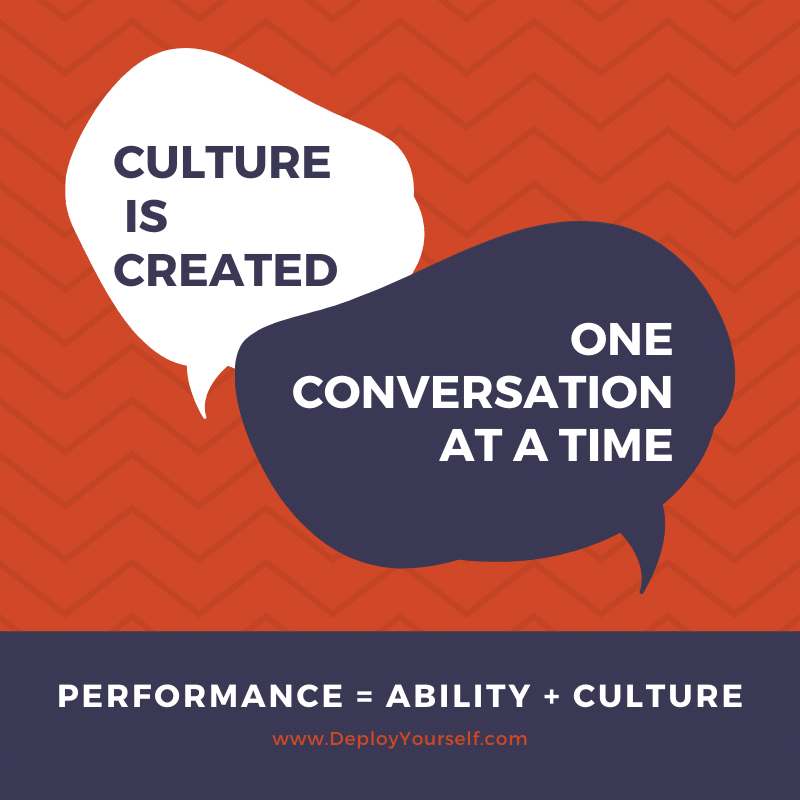
    Many people have a rather simplistic view of how people and teams perform. People don’t perform based on their abilities alone. Any person’s performance is the sum total of their own abilities and effort plus the prevalent culture in the company (and team). A high-trust and high engagement culture can enhance performance just like bad culture can degrade performance

    Engagement and trust are incredibly important facets of a high-performance team yet according to Gallup, employee engagement is now at an all-time low. The benefits of high engagement at work are numerous. Here are some of the key advantages of an engaged workforce:

    • A more positive job outlook
    • Willingness to share opinions
    • Readiness to ask for help when needed
    • The inclination to offer alternative solutions
    • Eagerness to achieve more and improve on a personal level
    • Providing guidance for colleagues
    • Understanding the importance of their contributions

    Conversely, disengaged employees tend to :

    • Become easily frustrated
    • Develop unclear/unrealistic expectations
    • Feel undervalued and demotivated
    • Become complacent and disinterested
    • Fail to understand the importance of their contributions

    It is estimated that just over half of workers in America (and an even higher proportion worldwide) are not engaged in their jobs. The figure for engaged employees worldwide could be as low as 13% (Crabtree, 2013). Therefore, It is clear that it is within a company’s interests to increase engagement and trust in order to boost team performance.

    8 Things Leaders Can Do To Increase Trust, Engagement, and Performance

    1.  Prioritise Trust and Relationships Over Tasks and Projects

    Too many companies believe people are interchangeable, and treat them as just resources to get work done. That is why most work conversations revolve around what we do – the tasks, projects, deadlines, budgeting, strategy, etc. I believe we are missing a trick here if only focus on the tasks, and ignore the relationships between people who do these tasks.

    Good leaders understand that it is the people and the relationships among them which decide the quality of work done. Hence they focus on building strong relationships and creating a culture where trust, honesty, and accountability are prioritized.

    Leaders build strong relationships by understanding people’s deepest beliefs and ambitions, by coaching them to figure out their values and empowering them by setting relevant milestones and then providing support along the way. This way the relationship becomes the bedrock of everything being done and the conversations shift from being project-based to relationship-based.

    Gallup found that people who have a good friend in the workplace are more likely to be satisfied. With good relationships, precious time and energy that would have been spent in fixing bad relationships and solving conflicts is now instead spent productively. This results not just in increased wellbeing but also increased business productivity.

    2.  Give People Control of Their Work

    Giving people more control over their day-to-day decisions and work is a fantastic way to improve engagement. Autonomy creates accountability and accountability leads to engagement (Saragih, 2011).

    Good leaders allow people to have a greater say in their work and they become more involved and engaged by extension. Nobody likes to be told what to do. Nobody likes to be micromanaged. We hire people after extensive interviews. I think we disrespect their skills when we don’t listen to them.

    Resisting the temptation to micromanage and involve yourself in every task can be difficult. Allowing your people to do what they do best without interference will, however, lead to better results in the long-run. Provide them the assurance and freedom they need and desire to do their job. Give them ownership, so the work is theirs, not yours. This makes their tasks, their projects, and their responsibilities more meaningful.

    3.  Promote a Growth Mindset

    Mistakes are unavoidable when chasing big goals but how you deal with them can make a world of difference. Instead of viewing mistakes as negative, strong leaders see them as an opportunity to learn. This begins by showing your own vulnerabilities as a leader. If you make a mistake, it’s important to admit it. Be willing to accept feedback on your performance and then use the information for positive change.

    Strong leaders promote a “growth mindset” among their people. This growth mindset is based on the belief that your basic qualities are things you can cultivate through your efforts. As Carol Dweck, who studies human motivation, says in her book Mindset : The New Psychology of Success, “The passion for stretching yourself and sticking to it, even (or especially) when it’s not going well, is the hallmark of the growth mindset. This is the mindset that allows people to thrive during some of the most challenging times in their lives.”

    With the growth mindset, people become students for life and see each success and failure as opportunities to learn. With this attitude, everything becomes a journey and people avoid getting stuck in defeating self-talk like “I can’t do this.”, or “This is beyond my abilities”.

    Strong leaders create a growth mindset by promoting a culture where people are not blamed for mistakes and failures, which will eventually happen. Instead these are seen as learning opportunities so that the same mistakes are not repeated in the future.

    4.  Develop People Based on Their Strengths

    Have you worked in a company or with a manager where every conversation focussed on what you are not doing well, and what you need to do to improve your weaknesses? Have you been asked to create measurable goals to show progress in an area where you have not been doing so well? How does it feel when your manager talks about your weakness in every 1-on-1?

    If you are like most people, you will find this experience extremely frustrating. As human beings, there are always skills that we do well and some skills where we don’t do as well. Focussing on weaknesses brings our fears, insecurity, and anxiety to the fore, and impairs learning and growth.

    In a massive study by Gallup involving 1.2 million employees across 22 organizations in seven industries and 45 countries, it was found that focussing on strengths leads to increased sales, profits, high engagement for employees, and safety. By focusing on weaknesses, the true potential of employees where they can shine and do their best work is often neglected.

    Researchers have also found that receiving praise releases dopamine, which is the chemical associated with rewards in our brain. Praise basically tells our brain “Do that again.” This is why, when good work is praised and recognized, people will tend to do more of the same in the future.

    Praise works best when it is specific and not vague. So instead of praising someone’s work as “brilliant” or “wonderful”, be more specific in appreciating the effort. Below are some specific examples of praise done well :

    • “I liked how you have used juxtapositions to add humor to your sentences.”
    • “I loved the report, especially the solid research you did and can be seen in the statistics you presented.”

    “If you focus on people’s weaknesses, they lose confidence.”

    ― Tom Rath

    5.  Balance Performance and Wellbeing

    Performance needs to be balanced with employees’ health and wellbeing for the best results. Overworking employees leads to a decline in engagement and performance over time. Instead, good leaders encourage days off, reduce overtime, and allow weekends off to ensure people get enough rest to recover and come back fresh to work every week.

    Overworking will have detrimental effects on your employees’ physical and mental health in the long-run (Wong, Chan & Ngan, 2019). It goes without saying that this is not a good outcome. Your people’s health and wellbeing should be your number one concern, as it can impact everything the business does.

    There are no winners when people are overworked and it is bad for the long-term success of your company. Managers should encourage people to focus on their health by providing and promoting adequate health insurance, healthy food, and sports facilities – whether inside or outside the physical space of organizations.

    Just like overplanting plants drain the soil of all its nutrients and lead to failed crops, overworking people leads to sick employees and poor work performance.

    6.  Create A Safe Space Where Employees Feel Comfortable

    The working environment you create is vital to the performance of your team. Employees should feel comfortable to voice concerns, open up, and make suggestions. They should not fear repercussions for taking initiative or speaking up. Everyone should be aware that they are working in a safe space absent of blame or retaliation.

    Organizational behavioral scientist Amy Edmondson defines psychological safety as “a shared belief held by members of a team that the team is safe for interpersonal risk-taking.” Psychologically safe teams understand and give the opportunity for people to stand out because of their uniqueness, rather than attempting to fit people in boxes (or roles, titles, etc).

    In a safe environment, you don’t have to wear a mask and can be completely honest about what you know and what you don’t. When you do that, others step in to help and close the gaps in skill and knowledge, leading to faster learning and better execution. This is leaps and bounds better than the alternative – when people fake knowing something they don’t, and this leads to mistakes or other faults down the line.

    Some ways in which you can create a safe and comfortable workspace include:

    • Listen to and take action based on inputs and feedback provided by your team.
    • Remove blame and punishing people from your culture. Instead, focus on learning from mistakes.
    • Delegate decision making and remove unnecessary processes and approvals. Let your team own their own decisions.
    • Lead by example by sharing your own vulnerabilities.
    • Ask for support from your team when you need help. Show them that this doesn’t make you weak. It only shows you are human.

    “Teamwork begins by building trust. And the only way to do that is to overcome our need for invulnerability.” – Patrick Lencioni
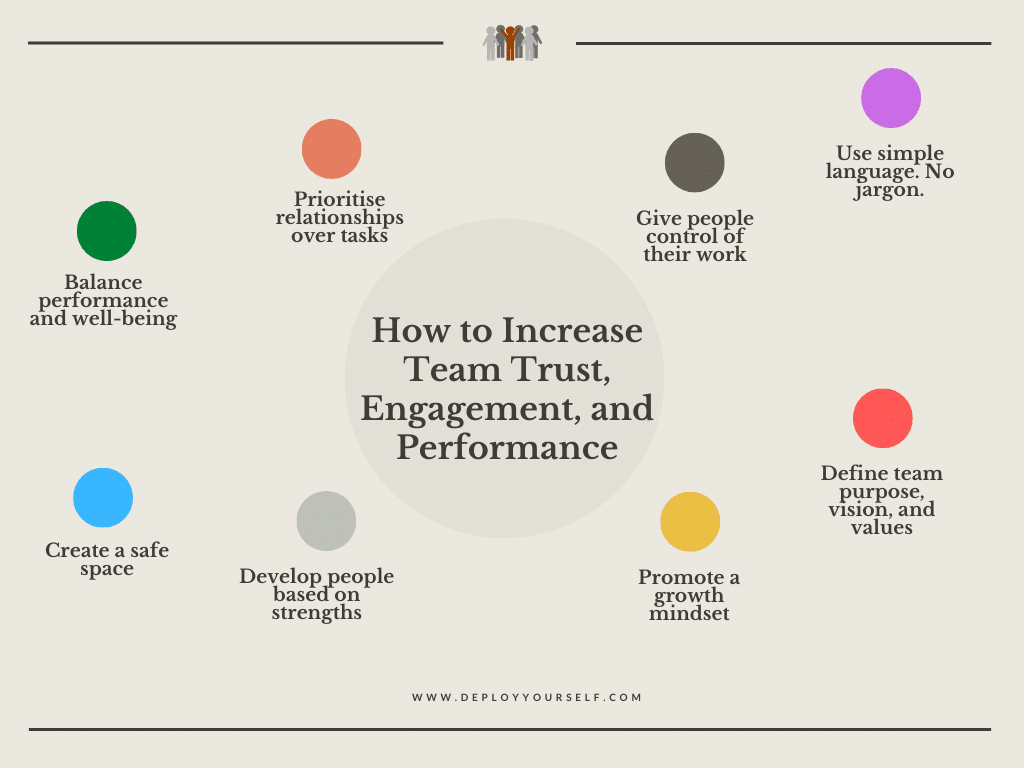
    7.  Define Team Purpose, Vision, and Values

    The ‘why’ is arguably more important than the ‘what’ and the ‘how’. In more specific terms, the purpose, vision, and values behind a project have the potential to influence its success as much as the details of the project itself.

    Continuously offering reminders of the bigger picture when working on daily tasks is key. People are motivated by meaning and this concept is perfectly illustrated by Dan Ariely. Research has shown that acknowledgment or meaning behind work, even in small quantities, is associated with more engagement and higher ownership.

    Ariely research indicated that not only are people motivated by meaning, but they are also aware of this. When asked to predict their output for two conditions of varying acknowledgment, participants correctly predicted a greater output in the meaning condition. Perhaps most interestingly, it has been suggested that even if you like something, you are still demotivated by a lack of meaning.

    Everyone wants to contribute to something bigger than themselves and make a difference. Strong leaders show people how their work impacts the customer and the wider benefits to the industry/society. A wonderful example of this is the below story –

    During a visit to the NASA space center in 1962, President John F. Kennedy noticed a janitor carrying a broom. He interrupted his tour, walked over to the man, and said, “Hi, I’m Jack Kennedy. What are you doing?”

    “Well, Mr. President,” the janitor responded, “I’m helping put a man on the moon.”

    “Coming together is a beginning, staying together is progress, and working together is success.” – Henry Ford

    8.  Use Simple Language to Make Expectations Clear

    Corporate language is known for being unnecessarily complicated and boring. Cutting down on corporate jargon increases engagement, transparency, and understanding. Often, simple and clear statements will get the point across. Corporate jargon is unpopular and often confusing, so use it sparingly, if at all. There is research to suggests that plain and simple language is effective in a business setting.

    Leaders should stop using complicated language or hiding behind jargon. Trust people and share information openly. Let people ask anything about everything. Transparent communication involves people in problem-solving and they see the team’s or the company’s problems as their own. And, you never know where a good solution to your biggest challenges might come from.

    A few simple tips for clearer language in the workplace are –

    • Use shorter sentences
    • Make your most important point first
    • Use headings and bullet points to make your message easier to skim
    • Keep your target audience in mind when communicating
    • Use visuals aids like graphs and chart to make it easier for people

    “When corporate executives get really excited, they leverage their learnings against comprehension to revolutionize English.”

    ― Tanya Thompson

    Conclusion

    Treating your employees as just employees will make them just employees. Treating them as people will unlock their full potential by creating more trust, higher engagement, and better performance.

    Finding out what your employees need and providing the opportunities to access them is one of your primary goals as a leader. Create stronger relationships, communicate transparently and regularly, and encourage participation. These are all key to an engaged and trusting workforce, that will perform better as a result.

    The single best way to increase performance is to create a culture that enables people to do their best work. Culture should enable performance, rather than stand in its way. By using the 8 things presented in this article, leaders can ensure people feel connected to the larger vision of the organization and supported by peers, subordinates, and leaders.

    References

    1. Historic Drop in Employee Engagement Follows Record Rise
    2. Worldwide, 13% of Employees Are Engaged at Work
    3. The “IKEA Effect”: When Labor Leads to Love Working Paper
    4. THE FUTURE WORKPLACE
    5. Inbound Recruiting: HubSpot’s Approach to Employer Branding
    6. The Effect of Long Working Hours and Overtime on Occupational Health: A Meta-Analysis of Evidence from 1998 to 2018
    7. How to Create Safe Spaces at Work
    8. If We All Hate Business Jargon, Why Do We Keep Using It?
    9. Why Plain Language is Good for Business –
    10. (PDF) The Effects of Job Autonomy on Work Outcomes: Self Efficacy as an Intervening Variable
    11. Trust Employees: 3 studies showing the power of trust in the workplace

  • How to Expand the Capacity of Your People and Enable Them to Do More Than They Think They Are Capable of?

    People are often capable of far more than we realize. It is not uncommon for people to work below their true potential (Kaplan, 2008). With the right knowledge and tools, we can learn to expand the capacity of our people, and get them to perform at a level they themselves never thought possible. Just as your company cannot succeed without the right employees, your employees cannot succeed without the right support.

    If you have worked for any company, you would know that high potential and high performance isn’t always in alignment. Identifying an underperforming high-potential employee is an invaluable skill for any manager to possess (Westfall, 2019). A skilled manager can expand the capacity of their people and unlock their hidden potential.  A good leader can unlock this hidden potential by asking the right questions, working to build an atmosphere of mutual trust and respect, and providing opportunities to go above and beyond.

    Workplace culture is an extremely important part of any organization, especially when it comes to the performance of people. A good culture within a company can help people to work at their full capacity (Bennett, 2019). Similarly, an adverse culture can have the opposite effect, pulling everyone down.

    “At critical moments in time, you can raise the aspirations of other people significantly, especially when they are relatively young, simply by suggesting they do something better or more ambitious than what they might have in mind.  It costs you relatively little to do this, but the benefit to them, and to the broader world, may be enormous. This is in fact one of the most valuable things you can do with your time and with your life. ” – Tyler Cowen

    But how does one go about establishing a culture where people perform at their highest levels? If you are a manager or a leader, the below steps are for you:-

    9 Ways to Expand the Capacity of Your People

    1. Understand Them as People

    People value being recognized as individuals, and not just as tools and resources to get a job done. It is important to build a strong manager-employee relationship if you want to increase their engagement and retain them (Markos & Sridevi, 2010). Furthermore, a report by The Towers Perrin Talent Report (2003) listed “senior management’s interest in employees’ well-being” as the key drivers in work-related performance.

    Evidently, getting to know your people is a worthwhile exploit but how is this best achieved?

    Scheduling regular one-to-one meetings is a great starting point. Each meeting is different from the last but the overall outcome will be a deeper understanding of your employees as people and a stronger working relationship.

    Topics of discussion during any such 1-on-1 meeting can include upcoming projects, work-related concerns, or personal updates. Possible questions which may elicit particularly useful responses are as follows:

    1. What concerns do you have at work?

    2. What do you find especially enjoyable or engaging at work?

    3. How do you define your best work? What can I do to help?

    4. When was the last time you laughed at work? Do you have friends at work?

    5. How do you spend your time outside of work?

    6. If you could change one thing in the workplace what would it be?

    The benefits of these conversations are two-fold. Firstly, you will get to know your employees as people. The insight you gain from these chats can inform the decisions you make regarding regular day to day work activities. Through honest inquiry and asking questions, you will find out what your people care about.

    Secondly, as a direct result of your communication, people will feel valued. One-to-one meetings allow you to express your interest in people and show that you care. Feeling valued will allow people to shed any inhibitions and bring themselves to work fully.

    Make a mental note to ask about their child’s recent sporting event or their dog’s surgery. These connections create opportunities to learn more about what motivates them, what gets them excited, what their goals are.

    In short, having open communication regularly will benefit both you and your employees. It will not only increase work performance, but also increase the amount of fun, happiness, and satisfaction people have after work.

    2. Treat Them as a Superhero

    Showing belief in someone can be powerful. It is so easy to judge, doubt, and belittle people that honest belief in someone’s abilities can be refreshing and empowering. Shine the spotlight on your people. Use recognition to give them courage and permission to keep pushing the limits of their ability. Do not only recognize success, but also growth and effort. A sense of worth within a company will without doubt lead to improved output.

     “If we treat people as they are, we make them worse. If we treat people as they ought to be, we help them become what they are capable of becoming.”

    ― Johann Wolfgang von Goethe

    As per the Development Dimensions International, empowerment is one of the five conditions needed to create a “highly engaged workforce” (DDI, 2005). Do your best to instill confidence in your employees and, in turn, the likelihood of them performing to their capacity will increase.

    Self-confidence comes from within but external forces like the culture at work and belief from superiors can play a big part. When you build confidence in your employees, the end result will likely surprise not only you but also your people. Give them your confidence and trust and watch your superheroes rise to the occasion and outperform even your expectations. 

    According to Forbes, 70% of workers say that motivation and morale would improve if managers simply said thank you more. Fifty-four percent of employees feel their boss could do more to appreciate them. If you want to enable your people to do more, show more appreciation. 

    Treating your people as superheroes can instill a lot of confidence in people. This can come from the way you speak to them or even just your actions. Believing that an employee is capable of much more than their current performance can help change your actions and words in many subtle ways. These small changes are reflected in your body language and tone of voice, and give people confidence and belief in their own abilities, freeing them of any doubts and insecurities.

    3. Provide The Best Resources Possible

    Understanding your workforce goes further than simply getting to know them. Use the above mentioned one-to-one meetings to engage people in dialogue about what tools and resources they need to do their job. As a leader, once you find out what resources will help them do their job more efficiently, waste no effort in providing them. After all, an experienced gardener with a rake is less efficient than an apprentice with a leaf blower.

    Research highlights the importance of supplying workers with suitable tools and resources such as improved scheduling functionalities. By delivering superior resources, employees are far more likely to be engaged in their work and perform to their best ability (Chung and Angeline, 2010). Having what you need to do your work also avoids any unnecessary frustrations, which can sap useful energy and slow you down.

    As we saw in point 1, asking questions can help you figure what people care about. Your task as a leader is now to take care of what they care about. And you do that by providing whatever people need to perform at their best.

    4. Avoid Micromanaging

    A big part of the manager-employee relationship is trust, specifically the trust you need to show in your people. As leaders, once we hire the appropriate people, it is important to trust them without asking for reasons to do so. Once they have what they need, get out of their way.

    Resisting the temptation to micromanage and involve yourself in every task can be difficult. Allowing your people to do what they do best without interference will, however, lead to better results in the long-run. Provide them the assurance and freedom they need and desire to do their job. Give them ownership, so the work is theirs, not yours. This makes their tasks, their projects, and their responsibilities more meaningful.

    There is a lot of overlap between points three and four as highlighted by Markos (2010). He states that by providing all the adequate resources, information, and training, employees can develop their knowledge and skills. This, in turn, builds confidence, allows them to work without supervision, and fosters self-efficacy and commitment to the job.

    Take the stabilisers off their bicycles and they will learn to ride more proficiently.

    “There is no passion to be found playing small — in settling for a life that is less than the one you are capable of living.”

    — Nelson Mandela

    5. Setting Effective Goals

    Goal-setting is a great motivator in the workplace but it needs to be done correctly. Goals should be ambitious enough to encourage people to work at their full capacity but they must also be achievable. 

    The BlessingWhite (2006) study showed that 60% of employees surveyed wanted more opportunities to grow within their job in order to remain satisfied. The study corroborates the idea that setting goals in which employees can advance their skills is very important. Goals also give a sense of progress and build momentum, as people start to hit bigger and bigger goals, building confidence and higher levels of ability.

    This does, however, raise the question – “How to set the right goals?”.

    The answer? SMART goals.

    George T. Doran is widely recognised as the person responsible for the acronym SMART. This goal-setting framework is widely used in the business world today and uses a simple actionable set of rules. These rules are as follows:

    Goals should be:

    S – Specific – Clear and easy to comprehend by all involved. Can everyone relay the goal?

    M – Measurable – Can you easily determine whether the goal has been achieved?

    A – Achievable – Is the goal realistic? It may be ambitious, but is it feasible?

    R – Relevant – What is the benefit of achieving the goal? Is there a point to it?

    T – Time-bound – What is the timeframe to complete the goal? Without one the goal can lack direction.

    Setting ambitious goals will encourage people to think outside the box. Provided they are motivated, they will push their capabilities to the maximum and take bold actions in order to achieve the goal. By doing so they will expand their skill set in the process. Your job as a leader is to provide whatever they need to go after their big goals and remove any roadblocks that might stand in the way.

    Use BIG goals to push people out of their comfort zone, take bold actions, and expand the horizons of their ability. They will never know what they are capable of if they are not given the opportunity to strive for more than they are currently doing.

    6. Mistakes Are an Opportunity

    Mistakes are unavoidable when chasing big goals but how you deal with them can make a world of difference. Instead of viewing mistakes as a negative, see them an opportunity to learn. This begins by showing your own vulnerabilities as a leader. If you make a mistake, it’s important to admit it. Be willing to accept feedback on your performance and then use the information for positive change.

    Blaming and penalising people for mistakes and failure can create a toxic workplace culture, which is counterproductive, not to mention unpleasant.

    Zhao, Lautsch, and Boyle delved deeper into the topic in their 2016 research paper. They concluded that although errors may be prevalent in the workplace, they do indeed offer the opportunity for learning.

    If people work in fear of failing, they lose initiative and will never take the necessary risks to go beyond their current capacity. They need to be confident that failure is permissible, and even desired, as part of what it means to learn and expand our abilities.

    If you, as a manager, have an open dialogue with your employees, you will be able to easily determine how and why a mistake occurred. The focus should be on learning from the mistakes and making improvements, rather than blaming or punishing those who were responsible.

    In many high trust cultures, mistakes and lessons learned are often shared with the entire company, without naming or blaming any individuals responsible for the mistake.

    “ A boss who micromanages is like a coach who wants to get in the game. Leaders guide and support and then sit back to cheer from the sidelines.”

    Simon Sinek

    7. Wider Context Is Key

    Context can sometimes be a vague term but it encapsulates everything we do. Understanding the wider context behind an organization, both in a holistic and individual sense, is paramount to success.

    Breaking that down, the vision of the individuals within a company has to be aligned with the company’s vision in order to cultivate success. 91% of companies surveyed who have an effective performance management system claim their employees’ goals are linked to the business’ (Chowdhury and Hioe, 2017). People become more effective contributors when they fully understand what they are contributing to.

    The Developmental Dimensions International (2005) was referred to in point two and is once again relevant here. The paper states that managers must align employee efforts with a strategy in order to achieve a highly engaged workforce.

    Organizations need leaders who can both communicate a vision and get employees to buy into that vision (Sadeghi and Pihie, 2012). If you believe in the destination, you will do everything you can to get there.

    8. Be Supportive

    Employee concerns affect productivity. The role of a manager is to manage their team. This includes easing fears and doubts and creating a more productive atmosphere as a result.

    People start relationships, get married, receive diplomas, and experience other highs which can improve productivity. Equally, people will experience divorce, bereavement, childcare issues, and other personal issues that will negatively affect their output at work.

    Anxiety, stress, and fear are emotions that everyone goes through and the workplace is not exempt from them. Make sure to be supportive so that you help and not worsen the situation. Your job as a leader is to make sure your people know you have their back. They must know there is always an open line of communication for guidance and support.

    They must feel comfortable and confident before they will be willing to take on that big project or go beyond their current abilities. Build on their strengths, empower them to take risks and voice their thoughts, practice constant optimism, and never stop communicating. 

    Some of the most common workplace concerns include:

    ·         Wanting a pay rise

    ·         Favouritsm

    ·         Excessive management

    ·         Unnecessary or unclear processes

    ·         Lack of communication

    ·         Being overworked

    ·         Workplace politics

    Support doesn’t necessarily have to come directly from you. If you can implement the right structure to deal with issues that arise. Your job is to allow your people to work to their maximum capacity, and that might mean connecting people across teams and departments if they can help each other.

    Your goal as a manager is to support your people and help them realize their biggest dreams.  The findings of a 2019 study by Leitão, Pereira, and Gonçalves suggest that supervisor support and a “good work environment” are important in organizational productivity.

    Taking care of your employees’ welfare and supporting them in moments of anxiety and stress will allow them to perform to a higher standard and flourish. That is how you, as a leader, show that you care for your people. You care for your people by taking care of what they care about.

    “Love is the only way to grasp another human being in the innermost core of his personality. No one can become fully aware of the very essence of another human being unless he loves him. By his love he is enabled to see the essential traits and features in the beloved person; and even more, he sees that which is potential in him, which is not yet actualized but yet ought to be actualized. Furthermore, by his love, the loving person enables the beloved person to actualize these potentialities. By making him aware of what he can be and of what he should become, he makes these potentialities come true.”

    ― Viktor E. Frankl

    9. Escape the Bubble

    Routine has a lot of positives but it can also be stifling. Sometimes taking a step back and looking at the bigger picture can be a refreshing exercise. This isn’t just a solo activity either, as you can involve your people in the same.

    Take time to talk to people about their deepest dreams, ambitions, and hopes for the future. Talk about what can we do better in the future and how to work better together. Having the opportunity to voice these thoughts, be heard, and work together for the good of all is empowering and will give your people the confidence they need to do more than they think they are capable of. 

    By doing so you’re indirectly reinforcing their (perhaps waining) motivation. Perspective can often get lost in the routine of a 9 to 5 and it is important to bring it to the forefront of your employees’ thinking. You will get a clearer perspective looking at a house from outside than inside. 

    Help people connect with their deepest values and why they are doing what they are doing. Once they can step back and see the big picture, and then come back to focus on the detail and execute the day to day tasks, your job becomes easier.

    This point nicely ties in with all of the previous eight. To achieve it you need to have an understanding (1) and mutual trust (4) with your workforce. In escaping the bubble they are able to remind themselves of their goals (5), fuelled by the confidence you have instilled in them (2) with support (8) and resources (3). They are able to consider the wider context (7) and make improvements towards that from what they have learned (6).

    Conclusion

    1. Understand Them as People – People are multi-faceted. Get to know them beyond work.

    2. Treat Them as a Superhero – Belief is key. Confidence will take them (and you) a long way.

    3. Provide the Best Resources Possible – Without the correct resources, people cannot perform to optimum levels.

    4. Avoid Micromanaging – Step back and trust your people to flourish.

    5. Set Effective Goals – Go after ambitious SMART goals to enhance capacity.

    6. Mistakes Are an Opportunity – Turn a negative into a positive and build for the future.

    7. Wider Context is Key – There is always a ‘why’. Understanding it will open doors.

    8. Be Supportive – Creating the right environment for your people is paramount. Have their back.

    9. Escape the Bubble – Take a step back. See the big picture together so that everything else falls into place.

    Getting the best out of people is by no means a simple task. It requires hard work, effort, and dedication to the cause. The ideas above will help you unlock the potential of your people. By employing these in your own organization, you will be taking steps towards expanding the capabilities of your employees and helping them reach their potential.

    Everyone wants to work in a workplace where mistakes are used as opportunities to learn, where employees are given the tools they need to be successful, and where they know they are supported as they do the best work of their lives.

    If your employees are not working to their full potential, then neither are you. By seeing people as superheroes and showing that belief with your actions and words, you will help them become superheroes going after meaningful and ambitious goals.

    References:

    1. The Four Steps to Building a Coaching Culture
    2. High Potentials vs. High Performers: A Manager’s Guide to Identify, Assess and Develop
    3. 8 foolproof employee engagement ideas for your remote team
    4. Reaching Your Potential
    5. Science Says Only 8 Percent of People Actually Achieve Their Goals. Here Are 7 Things They Do Differently
    6. Quality of Work Life and Organizational Performance: Workers’ Feelings of Contributing, or Not, to the Organization’s Productivity
    7. Effective Employee Engagement in the Workplace
    8. 10 Employee Concerns That Affect Productivity
    9. An explanation of SMART goals and how to write them
    10. How effective goal-setting motivates employees
    11. Mistakes Happen – So Manage Them
    12. The culture of learning from mistakes: How employees handle mistakes in everyday work | Request PDF
    13. https://academicjournals.org/journal/AJBM/article-abstract/81612E732304
    14. Moving from performance measurement to performance management
    15. Get to know your employees better
    16. How to Deal with Your Emotions In The Workplace And Make Them Work For You |
    17. 9 immediate ways to improve communication in the workplace
    18. A Brief History of SMART Goals 
    19. Quality of Work Life and Organizational Performance: Workers’ Feelings of Contributing, or Not, to the Organization’s Productivity
  • Busting The Myth of Individual Performance. A Radical New Equation For Improving Performance At Work

    What causes employees to put themselves between a customer and bullets from a terrorist attack?

    It is very difficult to imagine anybody valuing their work so much that they put their lives at stake to protect customers. Yet, that is what many employees of the Taj Mahal Palace Hotel in Mumbai did on 26 Nov 2008 when terrorists attacked the hotel with gunfire and grenades. Eleven hotel employees were killed, most while helping approximately 1,500 guests escape from harm. Many repeatedly guided guests to safety before they themselves were shot by the terrorists.

    We will come back to this story later, but let’s start with a simple question – Do you want to improve performance?

    This might seem like a lame question because everyone wants to improve performance. Individuals want to improve their own performance for better career prospects, pay, and growth. Managers want to improve the performance of their teams and individuals to achieve business goals and make their bonus targets. Companies want to improve performance to retain the best employees and increase value for both customers and shareholders. Similarly, countries want to improve the performance of their workforce to make their economies stronger, and their people more prosperous.

    When it comes to discussing performance at the workplace, most of it revolves around individual performance. We believe, both consciously and subconsciously, that an individual is in complete control of his or her performance. We assume that the individual holds the absolute responsibility of performance – good or bad. And that is why we reward or punish people based on their individual performance.

    But what if this is not the truth? What if we are missing a huge component of performance? After researching and reading about the role of neuroscience and psychology in performance and leadership, I want to present a radical new equation for understanding and improving performance at work.

    Taj Mahal Hotel, Mumbai, Which Was Attacked By Terrorists in 2008
    Taj Mahal Hotel, Mumbai, Which Was Attacked By Terrorists in 2008

    Performance = Ability + (Culture x Size of Company)

    After 15 years of working professionally across many companies and two continents, today I see ability as an important but incomplete condition for performance. The culture of the company plays a much bigger role in the performance of each individual, and this part gets bigger as the company gets bigger.

    For example – In a small startup of 5 people, the performance of an individual will mostly be determined by their ability. If they can work on improving their ability, their performance increases by a similar margin. However, as the company gets bigger, the culture component gets bigger and has a major impact on performance. In a hundred or a thousand-person company, the impact of culture will be huge compared to the impact of the individual’s ability.

    If you were wondering what caused the Taj Mahal Hotel’s employees to put themselves in front of bullets, it was the culture the Tata group has managed to form over the 150 odd years of its existence. It was certainly not a part of their job requirement that day, and everybody would have understood if they had cared for their own safety first.

    As the hotel’s general manager said, “Every team member at the Taj felt that their house was being attacked. When our house is attacked, what do you do? You defend it and whoever is there inside. The family values that we all believe in are part of our corporate culture in the Tatas… The Tatas truly exhibit that the organization has a soul. I am very very proud that I work for them.”

    “Culture eats strategy for breakfast”

    — Peter Drucker

    Importance of Culture

    People don’t perform based on their abilities alone. Any person’s performance is the sum total of their own abilities and effort plus the prevalent culture in the company (and team). A good culture can enhance performance just like bad culture can degrade performance. I have seen this firsthand when working in Yahoo at a difficult phase in the company’s existence. Before Google or Facebook, Yahoo was the king of the internet. But it stumbled and missed many opportunities – first to buy Google, and later on to compete with Google.

    I met the best and most talented people of my life while working in Yahoo, and while they were putting in their best effort, the results were not good enough to compete in the market. As Yahoo’s business was struggling, a string of new CEOs and a lack of leadership destroyed the culture in the company. Yahoo innovated and introduced some revolutionary products (briefcase, portal, email, Geocities, broadcast, Flickr) in the 1990s, but failed to capitalize on their own products as well as acquisitions in the 2000s.

    What Can A Good Culture Enable?

    1. Good company culture can turn your employees into passionate advocates for your way of doing business. They will go above and beyond what is expected of them on paper to serve each other and your customers.
    2. Good culture makes it easier to retain your best people as your culture becomes a key differentiator in the industry. People stay in companies longer if they have fun and share values with the people they work with.
    3. Culture has a direct impact not just on performance but also on health and well being. Good culture reduces stress and tension, and people look forward to Mondays as your colleagues become like an extended family.
    4. Culture creates brand loyalty and improves your branding without any additional spend as your people speak about the “culture” in your company wherever they go. On the other hand, reports of bad culture can create a PR nightmare.

    Any guess who creates and shapes the culture of a company – its leaders. Leaders shape the culture of a company through two things – conversations and processes. Let’s start with processes.

    Processes

    As a company grows, it is important to put certain processes in place, but they must always be for the right reasons – to make it easier for people to do their work with autonomy and collaboration. Processes should allow people to collaborate with honesty and transparency, not the other way round.

    Processes should never be but often are, put in place just to control things or to assert one’s leadership. As a leader, it always feels good to put a new process in place, but we must resist the temptation. Process and trust are inversely proportional to each other. We lose an opportunity for a personal connection when we put in a new process. The more processes a company has, the less trust it places on its employees, and vice versa.

    Processes put for the right reasons can clarify common company values and business goals, and acts like checks and balances against people going astray. Processes can determine some key aspects of running an organization, like :

    1. Recruitment and Onboarding of new employees
    2. Promotion criteria and opportunities for internal job moves.
    3. Flexibility in work timings and absence from work
    4. Compensation, Rewards, and Benefits
    5. Hierarchy and lines of communication in the company
    6. Training and learning possibilities
    7. Health insurance, sick leave, absence to take care of family
    8. Clarity on management styles and what is accepted and what is not.

    Leaders must always ask themselves – What processes can we remove? Anyone can create a new process and add to a mesh of existing processes, but it takes a brave leader to untangle the mesh and see through the web and simplify processes, increasing trust and performance as a result. Regularly updating processes also make sure everyone is focused on the real objective (of the organization) rather than focusing on what the processes say. If the time has come for a process to go, then it must be retired or adapted to the current situation.

    A hallmark of a healthy creative culture is that its people feel free to share ideas, opinions, and criticisms. Lack of candour, if unchecked, ultimately leads to dysfunctional environments.

    — Ed Catmull, President of Pixar

    Performance = Ability + Culture . A Radical New Equation For Improving Performance At Work
    Performance = Ability + Culture . A Radical New Equation For Improving Performance At Work

    Conversations

    Once leaders have done the groundwork and provided the platform for people to perform, they can step back and look at the big picture. They use conversations to align conflicting energies in a common direction. It is not uncommon for empowered people to run in different directions, or worse, to run into one another. That is why a leader must always engage in conversations with his/her people to align them with a common vision and direction.

    In most companies, there are hardly any trainings or resources to master the skill of engaging people in conversations. Most managers are never trained to deal with conflicting energies and inspiring people to act. Leaders do their best work when they are in touch with their values, and align them with the company’s values while going after their respective team’s goals. Isn’t it a shame that so many leaders today have no idea what their values are?

    Without this understanding of themselves, I often see people stepping up as managers without any knowledge of what to expect in their new roles. To make it worse, they have no idea where to go and seek help when they need it. Leaders should lead because they see it as a privilege to serve people and an opportunity to make an impact, not because it is one of the “career” options available. If a leader is leading his team only for his career goals, and without care for the people or the product, it will show in the team’s performance and culture.

    There are some important conversations every leader should master (or continuously improve) as they have a direct role in establishing culture. They are :

    1. Establishing the importance of company values by encouraging or discouraging certain types of behaviors or actions.
    2. Celebrating smalls wins and recognizing good performance can be the difference between a team and a group of people.
    3. Dealing with uncertainty and failure. Do your leaders engage in blame games? Or do they focus on fixing the mistake and ensuring it is not repeated without blaming the one who did it?
    4. Storytelling – We all listen and absorb concepts better in stories than abstractly. The stories leaders tell determine the level of trust and community in the organization.
    5. Making and communicating decisions. Honesty and transparency in communicating about the reasons behind taking any specific decision is a key element of any leader’s job.

    In the end, conversations reinforce the beliefs, values, and perceptions present in the culture of any organization.

    To come back to the Tata story, here is what the leaders of the company did after the terrorist attacks in 2008 which killed 164 people :

    1. The hotel didn’t fire even a single employee as the hotel was closed for 2 years due to the damage by the attack.
    2. Senior company leaders attended all eleven funerals and visited the families of all eighty employees who were killed or injured.
    3. The company assigned a mentor for every affected team member to serve as a single point of contact to ensure that the person received any help needed.
    4. They provided compensation to the families of every deceased member, ranging from $80,000 – $187,000
    5. Waived all loans and advances, regardless of amount.
    6. Committed to paying the employee’s last full salary for life.
    7. Took complete responsibility for the education of their children and dependents through college – anywhere in the world.
    8. Provided full healthcare coverage for all dependents for the rest of their lives.

    Conclusion

    As we have seen, culture plays a big role in shaping performance. In my experience, if the performance of people goes up or down significantly, the most important factor is the prevalent culture in the company. However, we often fail to see culture as a performance driver and put the impetus of performance only on the individual’s ability and efforts.

    To conclude, in this article we read about how the Taj Mahal hotel’s employees put themselves in front of bullets to save guests during the 2008 Mumbai terrorist attacks. We also found out what the Tata group did after the attacks to reinforce their culture, and the big but often ignored role culture plays in the employee’s performance. Then we looked at how leaders shape the culture of the organization through processes and conversations. And how important is to train our people to create a culture that enables performance, rather than stand in its way.

    Most of the work in organizations is done by teams, and not by individuals alone. And yet the entire performance measurement systems in organizations focus on the individual alone. I believe we (as an industry) are missing a trick here. And that trick is ‘culture’. When an individual’s performance changes from one year to another, we should focus on the culture, instead of just focusing on the individual. The single best way to increase performance is to create a culture that enables people to do their best work. Culture should enable performance, rather than stand in its way.

    Resources

    1. Conscious Capitalism: Liberating the Heroic Spirit of Business
    2. https://www.fastcompany.com/40544277/the-glory-that-was-yahoo
    3. https://www.forbes.com/sites/williamcraig/2017/08/03/8-ways-company-culture-drives-performance/#134149b46ce0

brain care coaching commitment communication conflict conflicts conversation culture deployyourself deploy yourself emotional intelligence emotions empathy energy feedback freedom future gold habits hope john maxwell language leadership lessons listening performance perspective preparation productive productivity psychological safety purpose questions relationships resolution ryan holiday seth godin simon sinek strengths struggle team trust values words