lessons

  • 5 Valuable Life Lessons Struggle and Hardship Teaches You

    When faced with difficulties as human beings, our natural reaction is to avoid the situation rather than power through it. Years of evolution have wired our brains to seek the comfort of the familiar and avoid the discomfort that comes with new and challenging experiences. 

    When you experience fear, whether physical or psychological, the part of the brain responsible for dealing with emotions (limbic system) is triggered before the reasoning part of the brain (neocortex). Overwhelming fear triggers a fight or flight response that makes you act before you think. 

    Subconscious reactions are necessary for your survival. But they can also be an impediment when there’s no actual danger or when the situation calls for an appropriate response rather than a spontaneous reaction.

    Emotions can teach you a lot about yourself, but you should never allow them to take control of your responses. Hasty responses such as outbursts of anger make it difficult to have meaningful relationships, handle conflicts, and communicate effectively.

    Every 2 weeks I share my most valuable learnings from living life fully in my Deploy Yourself Newsletter. Sign up now to download a workbook with 164 Powerful Questions which I use daily in my work and coaching. Allow these questions to transform your life and leadership.

    Although avoiding struggle is a natural biological response, it is also ironic because struggle can teach us many valuable lessons. Struggle builds character, makes you stronger, and enables you to grow in all aspects of your life. Nobody wakes up in the morning hoping to struggle, but the struggle can provide you with valuable life lessons. 
    5 Lessons Struggle Teaches You That Are Valuable In Life

    Every cloud has a silver lining. Going through a difficult phase in life can be immensely valuable if you face it with an attitude of perseverance and patience. The following are 5 valuable lessons struggle teaches you.

    1. Resourcefulness

    Resourcefulness is the ability to look for and utilize available resources to attain a certain objective. Achieving your set goals may seem impossible when resources are limited, but this is also an opportunity to be resourceful and make the best of what you have.

    Persevering in times of struggle enables you to think outside the box and try new approaches to dealing with the problem. Rising above the struggle of limited opportunities will teach you to be more resourceful and enhance your problem-solving skills for the future.

    “Success is not about your resources. It’s about how resourceful you are with what you have.” – Tony Robbins

    When you grow up in a family with little money, the only choice you have is to find creative solutions to make ends meet. For example, when I was growing up I remember how my mother used any spare paper for taking notes and math practice, any spare cloth for making clothes, or to utilize a pencil till it disappears by attaching it to pen handles. 

    Being resourceful will not only help you achieve your goals but will also help you manage stressful situations better. According to a research conducted to examine the impact of learned resourcefulness on the relationship between academic stress and academic performance, highly resourceful students were found to be better at managing academic stress. 

    The study which sampled 141 university students revealed that academic stress negatively impacted the students’ academic grades. However, the stress had no impact on students who showed high resourcefulness.

    The frustration you experience when struggling with a problem can open up your mind to alternative ideas and solutions. When the methods you’re using are not helping you find a solution, you are bound to try other ideas you wouldn’t have thought of had things been sailing smoothly. 

    You may even try things you had initially ignored. Struggle can bring out the hidden creative genius within you, enabling you to see a problem from a new angle. You tend to remain in your comfort zone and take less risk when everything is going well.

    The best way to learn resourcefulness is to look beyond your struggle and approach problems from a new perspective. By not giving up when problems seem difficult, you can learn from mistakes along the way. This is the common formula that highly successful people like Walt Disney, Richard Branson, etc have utilized in their respective careers.

    2. Struggle Teaches You Prioritization and Helps You Realize What Is Really Important

    Prioritization means choosing what matters most. When you face multiple tasks and responsibilities in life, they will compete for both your time and resources. Although everything may seem important, not every task requires your urgent attention. 

    Learning to prioritize will save time you would have wasted going back and forth between tasks. Prioritizing is a skill that needs constant practice. It requires you to know what matters and recognizing what should be put on the back burner. Facing struggles in life will teach you to let go of things that don’t add value and to value what is really important.

    When your financial situation is favorable, you will find joy engaging in activities such as going to the club, shopping, traveling, dining in restaurants, and going to events. When you’re facing struggle, however, you may not see these activities as high priority ones. You will more likely direct your resources (time, attention, money) to more important activities.

    Instead of eating out, you will start cooking. Instead of going to the club, you will consider a more intimate gathering of friends in your house. Rather than buying things you don’t need, you will learn to appreciate what you have in life. Little by little, you will realize you don’t really need fancy stuff to be happy and learn to appreciate the simple things.

    When you’re dealing with adversity, how you adapt or cope will determine whether you bounce back quickly or not. Self-awareness is crucial to developing emotional intelligence. Learning to monitor your thoughts and emotions will help you understand yourself better and be at peace with who you are.

    When dealing with life struggles, the important thing is to make taking care of yourself physically and emotionally, your first priority. Physical self-care includes getting enough sleep, eating healthy, and engaging in physical activities. Emotional self-care tips include self-acceptance and learning to appreciate yourself and your needs. Put on your oxygen mask first.

    3. Struggle Makes You More Confident and Humble in Your Ability to Weather the Storms

    The story of the struggling butterfly paints a perfect picture of how struggles are an integral part of life. It shows how difficulties along the way help strengthen your resolve and brace you for bigger storms ahead.

    A gardener saw a butterfly laying some eggs and took an interest in a particular egg. He began to notice the egg moving and shaking a little. Here was an opportunity to see life brought forth before his eyes, and he watched for hours as the egg began to expand. Cracks started to develop, and he could see the head and antennae as the pupa struggled to come out of the egg.

    As he saw the struggling little creature, he took mercy on it and decided to help it by breaking the egg with his forceps. Long story short, the pupa did make it out of the egg, but it never grew to become a fully-fledged butterfly. Denying it, the struggle of breaking out of the egg on its own made it weak, and it died after four weeks.

    Just like the young pupa, your life struggles are only building your confidence and preparing you for tougher challenges ahead. If you take the easy way out, you will enjoy instant gratification but limit your own growth. Embracing your circumstances will make you stronger and help you appreciate life more. As you face struggles, you will learn your strengths and weaknesses. You will also learn to accept things you can’t control.

    Oliver Wendell Holmes once said, “A mind that is stretched by a new experience can never go back to its old dimensions,” and he was right.

    Going through challenges in life requires both physical and mental strength. Although you can’t control what happens to you, you can change your attitude and choose your response. Changing how you look at things will enable you to master change instead of allowing it to master you. Mastering change will make you more confident and less afraid of what life throws your way.

    Henry Ford once said, “Whether you think you can or think you can’t—you’re right”. A study published in a journal of the Association for Psychological Science supports this statement. According to the study, people who believe they could learn from their mistakes fare better than others after making mistakes. Your attitude determines your level of success.

    “The harder the conflict, the more glorious the triumph. What we obtain too cheap, we esteem too lightly; it is dearness only that gives everything its value. I love the man that can smile in trouble, that can gather strength from distress and grow.”

    ― Thomas Paine

    4. Struggle, if You Never Forget It, Can Help You Stay Grounded

    Change and uncertainty can make you feel like things are spinning out of control. When things are bad, keeping a calm head is a challenge as your mind is constantly racing. If you lack experience in dealing with difficult situations, you can easily get lost in the maze. The current Coronavirus pandemic is a perfect example of how change and uncertainty can lead to fear and panic. It has taught us that everyone reacts differently in challenging situations.

    While the pandemic is a challenge, it is also an opportunity. If you’re able to stay grounded, you will emerge out of the crisis stronger and able to overcome similar challenges in the future. The coronavirus crisis has not made the world unpredictable. It has only revealed how uncertain and unpredictable life is.

    Challenges and change are inevitable. The best you can do is embrace them and allow them to become your teacher. Tackling challenging situations will keep you grounded as you recognize that there’s always room for improvement and more to learn.

    The story of Abraham Lincoln can teach us many life lessons. But most of all, it teaches us the importance of being humble. Lincoln is arguably one of the most iconic presidents of the United States and is revered for his modesty and deep-seated humility. He was a leader who was willing to admit his shortcomings, accept his mistakes, and learn from them.

    Lincoln’s road to the white house was riddled with failures and disappointments. As a child, his family was forced to move out of their home because of land disputes, and his mother died shortly after when he was merely nine years old. He tried his hand at business and failed multiple times and experienced financial struggles that drove him to the verge of mental dissipation.

    Yet despite all his failures, he still managed to stand on his feet, dust himself up and take charge of his destiny. He sought to improve his life through constant learning and self-reflection. When the going gets tough, being fully present will help keep you grounded. Take control of your emotions and focus your mind and energy on things you can control. 
    5. Struggle Imbibes in You a Respecting and Helpful Attitude Towards Our Fellow Beings

    Experiencing adversity in life can make you more respectful and helpful towards others. If you have experienced pain, it is easier to understand another person’s pain. According to Dr. Sood, adversity breeds compassion. Several studies have revealed that experiencing hardships is a catalyst for developing empathy for others. These studies show that people with low socioeconomic status develop feelings of compassion when responding to the suffering of others.

    They are also able to determine the emotional state of others with better accuracy. Such individuals also exhibited more prosocial behavior and have more motivation to connect with others compared to their counterparts with higher socioeconomic status.

    “The struggle of life is one of our greatest blessings. It makes us patient, sensitive, and Godlike…” – Helen Keller

    Battling life struggles gives you valuable experience. You can understand situations and people better as you compare their battles with your own experiences. When you meet people in a similar predicament, you are in a better position to help since you have walked the same path before. You will also feel closer to people with whom you have experienced struggles together. For instance, buddies who served in the army together will experience a special bond.

    Oprah Winfrey experienced a tumultuous childhood. She was raised by her grandmother, whose only ambition for her granddaughter was for her to become a domestic worker. She was first raped by her 19-year-old cousin at the tender age of nine and would experience other instances of sexual abuse at the hands of men over the years. Despite her traumatic experiences, she has gone on to become one of the richest and influential women leaders of our time and is widely recognized for her deep compassion.

    Final Word

    Throwing resources at a problem often covers up inefficiencies and prevents creative solutions. According to research, people who struggle with a problem without seeking assistance from others record better performance the second time they face the obstacle than those who didn’t struggle. Experts refer to this phenomenon as a productive failure

    When you experience hardships and failures, there’s no reason for feeling pessimistic or depressed. Take each obstacle as an opportunity to learn more and improve yourself. Identify where you made a mistake and make adjustments to prevent the problem from recurring in the future.

    If you find yourself in a difficult situation with no end in sight, you’re exactly where you need to be. Hard work and persistence during this trying period will toughen you up, build your character, and enhance your relationship with other people. Struggle (whether of our choice or not) can help us discover much more about ourselves and what we are capable of.

  • 15 Timeless and Valuable Lessons Learned After 15 Years of Working Professionally

    I started to work professionally in 2005, and very soon it will be 15 years. Over this decade and a half, it has been a wild journey working in over 8 different companies across 2 continents, including 2 companies that I started. I have seen ups and downs and worked with people and teams from all over the world. I also dabbled in social activism while I was in Bangalore. Organizing the Dandi March 2 in 2011 and then co-founding and running a not for profit organization for a couple of years was an experience in itself.

    Ever since moving to Amsterdam in late 2014, I have traveled and experienced life in Europe and attempted to express myself through my photography. Training and establishing myself as a photographer has come with exposure to the world of journalism, media, and photography which was totally alien to me before. In the process, I have met and interacted with a lot of remarkable people from the world of photojournalism and news. That has given me a tremendous perspective in addition to my other life as a software leader.

    There Can Be Joy In Overcoming Suffering
    There Can Be Joy In Overcoming Suffering

    Below are 15 timeless lessons I have learned over the last 15 years.

    1. Good Days Pass, And Bad Ones Too. In the last 15 years, I have had many good days where I have thumped my fist or felt extremely proud and satisfied. At the same time, I also have had my share of bad days where I have been shaken to the core. Yet if there is one timeless lesson which I have learned is that time stops for no one, and whether good or bad, days pass and take along with them their impressive highs as well as their depressive lows. If I compare my current self to my past self, I can say that the highs and the lows are more moderated now, and you won’t see me fist-pumping on a good day or getting anxious and sad on a bad day.

      “No man has been shattered by the blows of Fortune unless he was first deceived by her favors.” – Seneca

    2. Process Over Outcome. When I started working, nothing but success mattered to me. And I defined success as external results – good marks in exams, high output at work, more business revenue, and so on. I wanted to reach these success milestones so badly that many times I even cut corners for them. Not to say that external success or results are not important, but today I view success very differently. Now I define success as doing the best I am capable of doing irrespective of the results they produce and expressing myself fully while doing so. I have learned to value the process over the outcome, and the journey rather than the destination. This has made me slow down and appreciate the people and the valuable relationships I build along the way.
    3. If Something Is Important to You, You Must Work to Make it Happen. Outcomes and results don’t happen by themselves. Don’t wait for “one day” or the “future”. Nothing worthwhile is accomplished without discipline, hard work, and patience. Play the game seeking whatever outcome you are seeking, take the risks that are required, and acknowledge the roses and bricks that come along the way. I am not saying it will be easy, but if it is a journey you must take, I can assure you that the roses and the bricks will be worth their weight in gold.
    4. In Seeking Worthwhile Goals, There May Be Suffering. But there can be Joy in Suffering. Life is not about playing it safe or avoiding pain and suffering. Every path of learning and growth require (or demand) some suffering which will make us more resilient, mature, and strong eventually. There can be joy going through a painful moment – from the satisfaction of giving your best and acting according to your values. On the other side of suffering, you will find yourself stronger and more resilient, and that will prepare you for journeys that lie ahead.
    5. Believe in Yourself, and Act with Confidence. Self-confidence is one of the most important criteria when it comes to influence, leadership, and success. Yet most highly skilled people I have met have been unsure about their abilities. I still see myself struggling with self-doubt a lot. While there is nothing wrong with doubt, and we all feel the presence of doubt, it should not stop us from acting with conviction when required. We must always take the “healthy” doubt into consideration, consider different opinions and perspectives, and then speak and act with confidence.
    6. We Should Not Let Confidence Blind Us. When we are challenged, we must check your assumptions, listen to feedback, and adjust course if necessary. Sometimes it is necessary to kill our favorite ideas, and overconfidence should not come in the way of doing that. Learning to listen to different perspectives, considering opposing ideas, and questioning our assumptions can save us many troubles in the future. It will not only make us better decision-makers but also enrich our relationships with people around us.
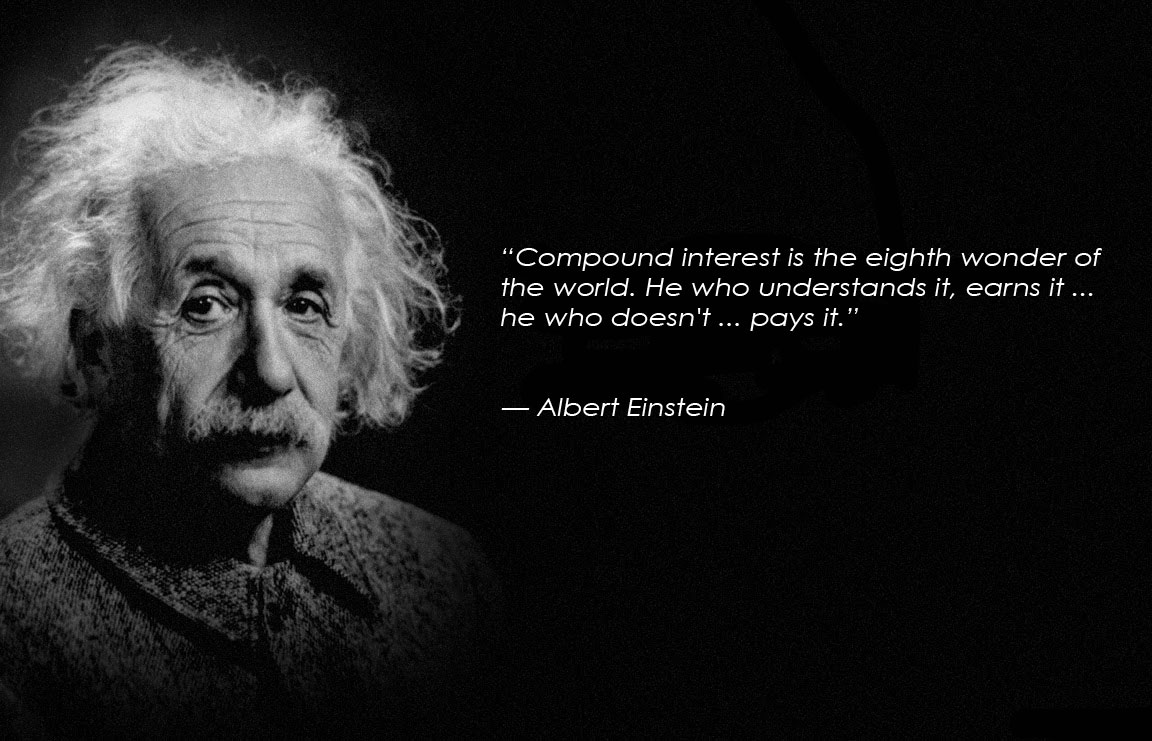
    7. Think Long Term – For the first 8 years of my career, I only focused on short term goals and chased immediate results. However, when I look back, I see that I have missed so many opportunities to create impact just because I was too impatient to stick and persevere with an idea/project/company over time. Today I know that success comes from playing iterated games over an extended period of time. Compounded results are behind every single success or human achievement. It is no surprise Einstein called it (Compound Interest) the 8th wonder of the world.from Pixabay
    8. Business is about People (customers, employees, partners) and not things (profits, markets, revenue). As I have worked with different companies, both big and small, I have found myself in meetings about markets, financials, strategies, and competition. Very often we end up giving secondary importance to the people involved – customers, employees, other stakeholders, etc. Today I believe that empowering our people (employees) might be our most important job as leaders to produce business results which end up serving another set of people – our customers. Focusing on the people involved can help us simplify the complicated in business, and strip out the necessary from the superfluous.
    9. We Are All Flawed. We are wrong more often than we think we are. One of my most revealing insights has been how often human beings run on autopilot without even realizing so. We think we are in control of our actions and feelings, but in reality, they are shaped subconsciously by our past experiences, emotions, and cognitive biases. We all put up a brave face in front of others, but we are all dealing with self-doubt and are yearning to be acknowledged by others.

      “Character, like a photograph, develops in darkness.” — Yousuf Karsh

    10. Don’t Work for People You Don’t Share Values With. Life is too short for not having a good time at what you are doing. Find places to work where you can be yourself, and the work gives you joy rather than suck the life out of you. However, don’t confuse this with facing discomfort that always comes with growth. There must always be some learning curve (decide your slope yourself) which will come with some pain and suffering. That only means you are growing to become a better version of yourself.
    11. Don’t Wait for Retirement or Some Time In The Future To Do What You Always Wanted To Do. What is on hold in your life? If you are waiting for tomorrow, remember that it never comes. Find time to do it today, and fill a little bit of each day with one such activity. For me, it has been writing articles, doing poetry, learning the French and Dutch languages, reading books, learning and practicing photography, traveling, social activism, or following my curiosity and expanding my knowledge in previously unknown subjects like coaching, neuroscience, history, psychology, human rights, urban design, deep learning, and so on. To reiterate, find what is on hold in your life, and make space for it.
    12. The Most Powerful Phrase at work, and in Life is “I Don’t Know”. However, it is very difficult to say. Acknowledging that there is something we don’t know is the first step in seeing reality as it is, and opens up the pathways for future learning. We all need to overcome our insecurities and inner fears and be brave enough to acknowledge our “not knowing” something. Once you acknowledge that you don’t know it, you earn yourself the freedom to act like a beginner and take whatever actions are required.
    13. Guard Your Time, and Only Fill it up with Life-Enriching activities. Time is your most valuable resource. Set boundaries for what you are willing to do and not, and enforce them in your life. Saying No can be intimidating, but people will respect you for it. Cut off your TV consumption as it is the easiest way to be sucked into wasting time mindlessly. Instead spend that time doing exercise, reading, or writing – which are all life-enriching activities.
    14. Always Be A Student. Keep on learning. Always update yourself in your core skills to stay up-to-date with the latest developments. But also spend some time learning a bit about a subject outside of your core expertise. Over time this can add up to a lot, and open up previously unknown career opportunities.
    15. The Only Person you can Change or Control is Yourself. Focus on yourself and not on changing others. Ask yourself the hard questions and introspect when you need to. Constantly revisit your values and beliefs, and build up the courage to act accordingly. And last but not the least, take care of your body. It needs rest to replenish and rejuvenate between sprints of hard work. Give it the gift of rest to live more sustainably.
    16. Do Different Things, which you would never do otherwise, just for the heck of it. Explore life. It will give you perspective and respect for different ways of life. Every once in a while, let others decide things for you. Or when an unexpected event happens, take it as an opportunity to dance with life and go with the flow instead of resisting it. You never know what you might end up discovering.

      “The tragedy of life is what dies inside a man while he lives.”  ― Albert Einstein

    17. Life is Uncertain and you will be disappointed if you want your expectations to be precise and true. That is why you end up with 17 lessons in this article instead of the 15 I promised.
  • How to Use The Surprising Power of Compound Interest in Life

    When I was young my mother used to wake me up 5 minutes earlier than I had told her to and made me study any of my school books before getting ready to go to school. I often used to ask her – “how would studying this for just 5 minutes make any difference?” And she would say – “You will know that by the end of the year.” It took me a few years to realize how much my good grades were determined by those 5 minutes of study time daily.

    We all know the power of compound interest when it comes to money. This article will focus on how we all can use the same principle of compound interest in other areas of our life to get enormous gains. Only if we realize, that is.

    Doing something small, which might look very trivial and futile, and doing it regularly without fail – no matter what it is, will take your skills in that area to a totally different level over time. This habit has stayed with me ever since my childhood, and I have used to learn several new skills. Below are a few examples we can make our lives better in just 5 minutes –

    1. Just spend 5 minutes reading a book every day, and by the end of the year, you will have finished many books and you will have many new skills and learnings. I still carry this habit which my mother imbibed in me so many years ago.
    2. Spend 5 minutes exercising every day, and you will be amazed at how much strength and energy you have after a few months.
    3. Getting up Early – If you get up at 8 am and want to move to a 5 am routine, start with just a 5-minute early start. Get up at 7:55 am for a week, and then get up at 7:50 am the next week. In around 9 months, you will be waking up at 5 am without even noticing it.
    4. Write – If you always want to write something but never had the time to do so, just write the topic and title of what you want to write about today. Tomorrow, just write a few bullet points. Over the next few days – take each point and expand it to a paragraph. Within a week, you will have a full-page post ready.
    5. Photography – I was always interested in making better photos and photography, but never used to get the time to do so. After 4 years of buying my DSLR, I finally decided to give 5 minutes to photography daily – whether it is shooting any subject I could find at my home or outside, or reading an article or watching a video about it. Within a couple of years, my photography skills had improved so much that I now take it very seriously and might even do it professionally at some point in the future.

    So think about the things which are not working in your life and career right now or stuff for which you don’t have time. Now, start doing just 5 minutes of it daily, and stick to it.

    Things to Take Care

    While it is easy to do something for just 5 minutes a day, it is also very easy to forget doing your 5-minute task. There are a few things we can do to keep at this habit –
    1. Set a reminder in your phone. Once the alarm goes off, make it a priority to do your 5-minute task.
    2. Watch yourself get better in that skill over time. Celebrate for 5 minutes every now and then, for sticking to the habit and for getting better.

brain care coaching commitment communication conflict conflicts conversation culture deployyourself deploy yourself emotional intelligence emotions empathy energy feedback freedom future gold habits hope john maxwell language leadership lessons listening performance perspective preparation productive productivity psychological safety purpose questions relationships resolution ryan holiday seth godin simon sinek strengths struggle team trust values words