emotions

  • The Invisible Weight of Success: What Nobody Tells You About Making It

    You know what’s funny? When I quit my 16 years tech career to start on a totally new journey – to guide and work with the biggest changemakers & leaders on this planet, I thought the hard part was getting there.

    Landing the big CEO clients. Hitting the numbers and building a reputation. Being known for bringing people together and helping them go beyond even their own wildest dreams – both personally and professionally.

    Turns out, I had no idea.

    The real challenges of success? They’re the ones nobody talks about at conferences. They’re not in the Harvard Business Review case studies. They’re the 3 am thoughts, the conversations you can’t have with anyone, the slowly growing sense that you’re living someone else’s life while everyone congratulates you on yours.

    I’ve sat across from people who look like they have it all figured out—the title, the impact, the respect—and watched them break down because they finally found someone who wouldn’t judge them for admitting: “I don’t know if I can keep doing this.”

    Let me walk you through what success actually looks like from the inside. Not the Instagram version. The real one.

    When You Become a Role, Not a Person

    I’ll never forget this CEO I worked with—let’s call him Raj. Built an incredible company from scratch. 300 employees. Lives changed. Real impact. And he came to me completely burned out.

    “I can’t remember the last time someone asked me how I actually am,” he said. “Not how the company’s doing. Not how the quarter looks. Just… me.”

    Here’s what happens: You achieve something significant, and suddenly you’re not allowed to be human anymore. You’re “The CEO.” You’re “The Founder.” You become a symbol, an inspiration, a beacon—and all of that is beautiful except you’re still just a person who gets scared and tired and confused.

    Raj told me about going to a friend’s birthday party—people he’d known for years—and spending the whole evening answering questions about his company. Nobody asked about him as a father or about his painting hobby. Nobody noticed he’d lost weight from stress. The entire conversation was about his role, never about him.

    This is the identity prison. You get trapped in the character you’ve created, and the bars are made of other people’s expectations and your own success.

    I see this constantly. A leader can’t admit they’re struggling with a decision because “leaders are decisive.” They can’t show uncertainty because “leaders inspire confidence.” They can’t have a rough day because everyone’s watching.

    The exhausting part? You start believing it too. You internalize that you should always have answers. You should never waver. And slowly, you lose touch with the actual human underneath—the one who’s allowed to not know, to be tired, to need support.

    The Loneliness Nobody Warns You About

    Let me tell you about Priya. Brilliant executive. Everyone wanted to work with her. Her calendar was packed 7am to 8pm. And she was profoundly, achingly lonely.

    “I’m surrounded by people all day,” she told me. “But I can’t actually talk to any of them.”

    This is the cruel irony of success: The higher you go, the fewer people you can be real with.

    Your team needs you to be strong, so you can’t share your doubts. Your board wants confidence, so you can’t express fear. Your old friends feel distant because your life looks so different now. Your new “friends” might want access more than connection.

    I remember Priya describing a moment when she was in a meeting with her executive team, discussing a major strategic pivot. She was terrified it was the wrong call. Her stomach was in knots. But everyone was looking at her for certainty, so she projected it. The decision went through. It worked out. And she felt more isolated than ever because nobody knew how scared she’d been.

    Who do you talk to when you can’t talk to anyone?

    This is why our work together mattered so much. Not because I had magic answers, but because I was someone she could actually be honest with. Someone who didn’t need her to be anything other than human. Someone who could handle her uncertainty without panicking or judging.

    I remember one conversation where she spoke for 55 minutes of the 60-minute session. Internally, I was almost blaming myself because I didn’t get a chance to coach her or solve her problems. I was wondering if I added value because the only thing I did was I listened to her. At the end of the session, she said, “This was the best conversation I have had in a long time. Nobody has listened so deeply to me.” This feedback helped me understand the other side of success.

    The loneliness of success isn’t about being alone. It’s about being surrounded by people and still feeling like nobody sees you.

    When Success Stops Feeling Like Success

    Here’s something wild: I’ve worked with people who hit goals they’d been chasing for years—goals that would change their lives—and they felt… nothing. Or worse, they felt empty.

    There was this founder I coached who finally closed his Series B. Eight million dollars. Validation from top-tier investors. Everything he’d been working toward for three years.

    He called me the next day. “Is this it?” he asked. “I thought I’d feel different.”

    This is the moving goalpost syndrome, and it’s brutal. You think hitting the target will bring peace, satisfaction, that sense of “I made it.” Instead, it brings relief for about 48 seconds, and then your brain is already moving to the next thing.

    The Series B becomes “we need a Series C.” The VP title becomes “I need to be in the C-suite.” The successful exit becomes “but what’s my next thing?”

    You become addicted to the chase, to the achievement, to the validation—but you never actually feel satisfied. Success becomes this treadmill you can’t get off because stopping means facing the emptiness you’ve been running from.

    I see this with executives who work 80-hour weeks not because they have to, but because they don’t know who they are without the work. The hustle became their identity. The achievement became their drug. And now they’re trapped in a cycle that’s slowly killing them but they can’t imagine life without it.

    The Weight of Other People’s Lives

    At 2am one night, I got a text from a client—a CEO of a mid-sized company. Just two words: “Can’t sleep.”

    I called him first thing the next morning. He’d been lying awake thinking about a restructuring decision. Twenty people would lose their jobs. Twenty families. Kids. Mortgages. Dreams.

    “I know it’s the right business decision,” he said. “The numbers are clear. But these are real people. How do you sleep when you’re making choices that impact lives?”

    This is something most people never consider about success and leadership: Every decision carries weight that goes far beyond you.

    You’re not just responsible for results. You’re responsible for people’s livelihoods, their sense of security, sometimes their entire identity if they’ve wrapped it up in their job. One wrong strategic call and you’re not just missing a target—you’re affecting dozens or hundreds of lives.

    I’ve seen this weight crush people. The executive who can’t stop thinking about the single mom on their team who’s about to be laid off. The founder who feels guilty about every 5-star hotel stay because their employees can’t afford one. The leader who lies awake calculating how many people they’re affecting with each decision.

    The privilege of impact comes with the crushing burden of consequence. And you carry that alone because who else can understand it?

    When You Don’t Know Which Version of You Is Real

    I worked with a leader once—a woman who’d built an incredible reputation in her industry. Confident. Inspiring. The person everyone wanted to be.

    In our third session together, she said something that broke my heart: “I’ve been performing for so long, I don’t remember what I actually think or feel about anything. I don’t know who I am.”

    She’d spent years crafting the right image. Saying the right things. Showing up the right way. And somewhere along the line, the performance became the reality. Or rather, she lost track of which was which.

    This is the authenticity gap. The distance between who you are and who you show up as. And it grows every time you:

    • Project confidence you don’t feel in a meeting
    • Give an inspiring speech when you’re terrified inside
    • Act like you have it together when you’re falling apart
    • Smile and say “everything’s great” when it’s not

    The gap gets wider and wider until you feel like a fraud in your own life.

    I see this especially with introverts who’ve learned to perform extroversion. With people from cultures where showing vulnerability is seen as weakness. With anyone who’s had to “fake it till you make it” for so long that they forgot there’s a real person underneath the performance.

    The work we do together often starts with simply creating space to let the real person emerge. No performance. No image management. Just “what’s actually true for you right now?”

    When Everyone Wants Something From You

    “I don’t know who actually likes me anymore,” a client told me once. He’d just sold his company for a stupid amount of money, and suddenly he had more “friends” than ever.

    This is the trust deficit. When you’re successful, every relationship gets complicated. Is this person genuine or do they want funding? Want a job? Want to be associated with your success? Want to network through you?

    You start filtering every interaction through suspicion. It’s not paranoia—you’ve been burned. The person who seemed so supportive suddenly had an agenda. The friendship that felt real turned out to be transactional.

    I’ve watched this make people incredibly isolated. They want connection but they can’t trust it. They want friendship but they can’t tell if it’s real. And the sad part? Sometimes they’re right to be suspicious. Success attracts people who are more interested in what you can do for them than who you actually are.

    This is why finding people who knew you before, who don’t need anything from you, becomes so valuable. Or working with someone like me, where the relationship is clear and boundaried and there’s no hidden agenda.

    When You Have Everything Except Time

    The most painful irony of success: You finally have resources but no time to use them.

    You can afford the vacation but can’t take it. You can hire help but you’re too busy to let them help. You want to be present with your family but you’re always mentally somewhere else.

    I remember this executive—father of three—who realized he’d missed every single one of his daughter’s soccer games that season. He could afford front-row tickets to anything. But he couldn’t afford the three hours on a Saturday afternoon.

    Success promised freedom. Instead, it delivered a different cage—one made of opportunities you can’t say no to, obligations you can’t drop, expectations you can’t ignore.

    “I thought making it would mean I could finally relax,” he told me. “But I’m more trapped than ever.”

    The Imposter in the Room

    Here’s the wildest part: The more successful people become, often the more like an imposter they feel.

    You’d think it would be the opposite. You’d think results would build confidence. But what actually happens is this: The stakes get higher, the spotlight gets brighter, and that voice in your head gets louder: “When are they going to figure out I’m making this up?”

    I worked with a woman who’d been promoted to SVP. Huge company. Incredible opportunity. And she was terrified.

    “Everyone else seems to know what they’re doing,” she said. “I’m just figuring it out as I go.”

    The truth I shared with her? Everyone is figuring it out as they go. But at higher levels, you’re expected to hide it better.

    The imposter complex doesn’t go away with success. It just gets more sophisticated. More subtle. More isolating because you think you’re the only one who feels this way.

    What Actually Helps

    After years of sitting with people going through all of this, here’s what I’ve learned: The antidote to these challenges isn’t working harder or achieving more. It’s finding people and spaces where you can be fully human.

    Where you can admit you’re scared and it doesn’t shake anyone’s confidence in you.

    Where you can say “I don’t know” and it’s not a crisis.

    Where you can drop the performance and just be yourself, whatever that looks like today.

    This is why people come to me. Not because I have all the answers (I definitely don’t), but because I can hold space for the full reality of their experience. The fear and the confidence. The doubt and the vision. The exhaustion and the commitment. My promise to them is that I will never judge them (even when feedback is very honest and direct) and they can always count on me – for the rest of their lives.

    They come with their lights dim—frustrated, stuck, low on energy. And through our work together, something shifts. Not because I fix them (they’re not broken), but because they finally have space to be honest. To reconnect with themselves. To remember who they are underneath all the roles and expectations.

    They leave empowered, confident, ready—not because the challenges went away, but because they’re no longer carrying them alone.

    (All names have been changed and details in this article have been anonymised)

    The Real Conversation

    If you’re reading this and recognizing yourself, know this: What you’re experiencing is real. It’s valid. And you’re not alone in it, even though it feels like you are.

    The challenges don’t get easier with success—they just get more invisible and more isolating. And that’s exactly why finding someone who can see the real you, who won’t need you to be anything other than human, becomes absolutely critical.

    There are moments in every leader’s life when they need someone they know they can count on. Someone who gets it.

    Maybe that’s why you’re still reading this.

    If any of this resonated, send me a note. Better yet, record a voice note or a video msg. Let yourself be seen.

    Because here’s what I know for sure: You don’t have to carry all of this alone. And on the other side of being real about what’s actually happening? That’s where you let the burden of leadership go and acknowledge the privilege and grace of leadership. You deserve it.

  • How Can We Overcome Negative Emotions And Create Positive Energy To Achieve Joy And Fulfilment?

    We all experience a wide range of emotions. If we are human, we can not escape feeling the same emotions as everyone else. In fact, the more psychology and neuroscience research I encounter, I wonder that a better name for us would be “emotional beings” rather than “human beings“. Emotions (not logic) are what decide each and every action we take, and it is emotions that make us human.

    The 6 basic human emotions are happiness, sadness, fear, disgust, anger, and surprise. However, all of us are capable of experiencing a much wider set of emotions like excitement, contempt, guilt, relief, embarrassment, shame, joy, inspiration, numbness, horror, and so on. It is natural that we will all experience the above emotions at some point or another.

    While all of these emotions might be natural, they are not all helpful. Many emotions leave us in a positive and empowered state while others leave us worse off. We also experience these emotions in different combinations and intensity.

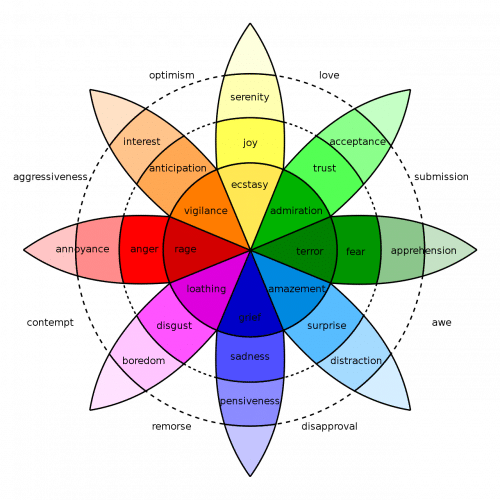
     Plutchik Wheel of Emotions
    Plutchik Wheel of Emotions

    For example – anticipation and joy together become optimism, trust and fear become submission, and anger and disgust become contempt. Plutchik’s wheel of emotions provides a good framework to understand emotions, how they mix together, and how they can vary in levels of intensity.

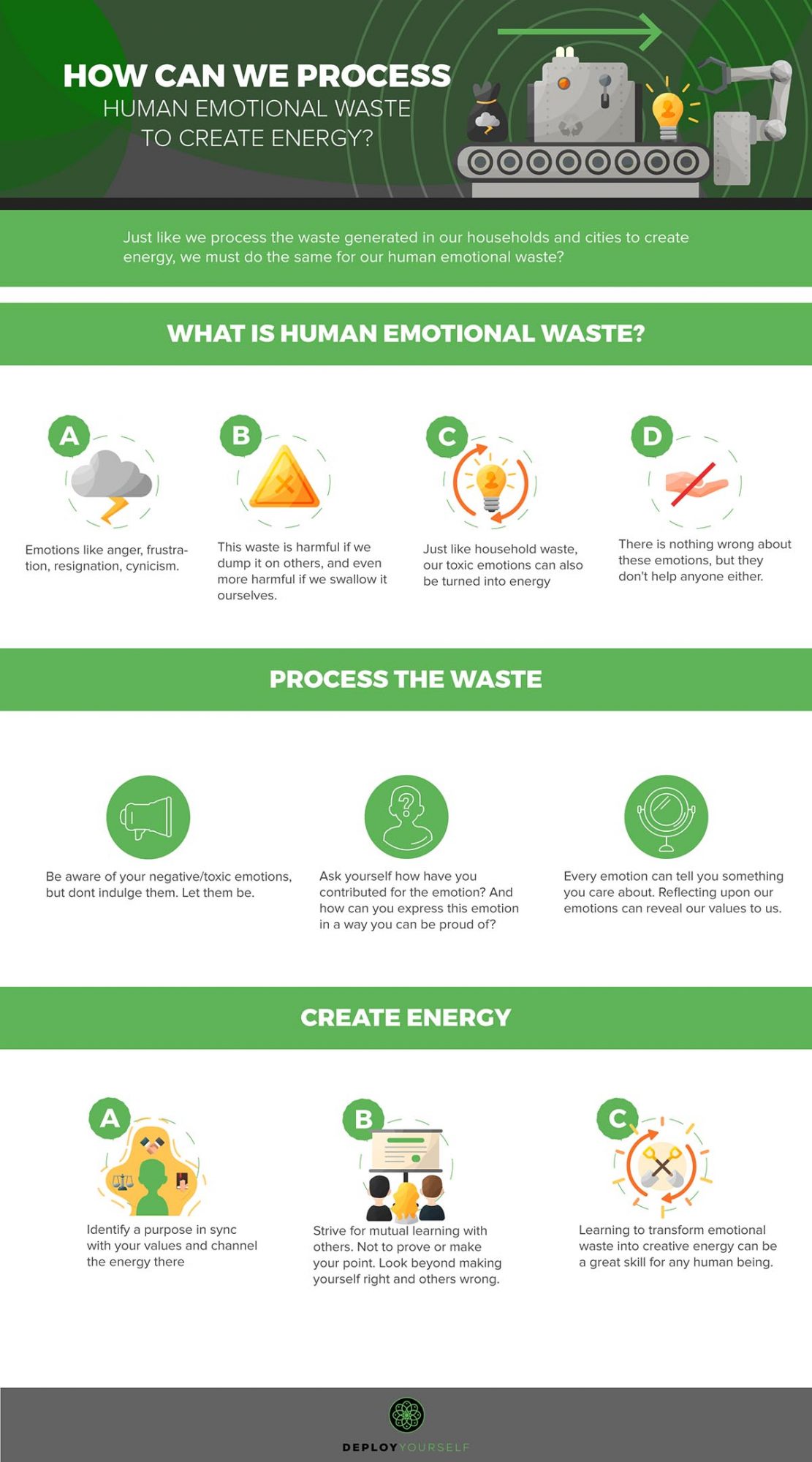
    In this article, I want to talk about our emotional waste, or what is often termed as negative emotions. Just like the waste generated in our households and cities is processed to create energy, we can and must process our emotional waste too. If we know how to deal with our emotions, they can be used to generate productive energy.

    “Clouds come floating into my life, no longer to carry rain or usher storm, but to add color to my sunset sky.”

    ― Rabindranath Tagore

    What Are So-Called Negative Emotions, or Human Emotional Waste?

    What I call Human Emotional Waste are emotions like anger, frustration, resignation, cynicism, guilt, and other so-called negative emotions. They are usually called “negative” in popular nomenclature, but I must clarify that there is nothing wrong with these emotions. Experiencing them is as natural as experiencing any other emotion. If you are a human being, you will experience these emotions in your life. There is no escaping them.

    Having said that, these emotions don’t help us either. The waste of these emotions is harmful if we dump it on others, and even more harmful if we swallow it ourselves. But just like household waste, these toxic emotions can also be turned into positive energyJust like crude oil can turn to fuel used to drive vehicles, these toxic emotions can also be turned into fuel to power something beneficial in our lives.

    Every Emotion Has Energy. It's Up To Us How We Use It
    Every Emotion Has Energy. It’s Up To Us How We Use It

    How Can We Process This Emotional Waste?

    The first step to productively process our toxic emotions is to stop fighting them. We must be aware of these emotions as they arise, but we should not indulge them. The more we indulge them, the more we risk slipping into the rabbit hole of disempowering thoughts and harmful actions. We must realize that having these emotions are natural, and we should just let them be.

    At this juncture, it is also important to note that we should not resist them either. Saying “I shouldn’t feel this way, or I will not get angry” will only make it more difficult to let these emotions go. The more we resist them, the more they will persist.

    Once we have done that, we can take the next step, which is to ask ourselves a few questions to understand what these emotions are trying to tell us:-

    • How have I contributed to the emotion to arise that I am experiencing right now?
    • What is it that I deeply care about and has been violated, which has stirred up this emotion?
    • How can I express this emotion in a way that I can be proud of?

    Answering these questions can be hard and intimidating, but this is the hard work required to “recycle” such emotions and gain some valuable insights from them. The more attention we pay to our emotions, the more aware we can be of what they are trying to tell us.

    Every emotion can tell us something we care about. Answering the above questions and reflecting upon our emotions can reveal our values and what is important to us. Once we realize which of our deeply held values was violated resulting in the emotion, we can take the next step.

    Suppressing our emotions can cause a lot of damage
    Suppressing our emotions can cause a lot of damage

    How Can We Create Positive Energy?

    Once we have identified what our emotions are trying to tell us, we must think about expressing these emotions in sync with our values. At such moments, we need to take the driver’s seat and prevent our emotions from taking over. Emotions are very good messengers but can be equally bad masters.

    We must channel the energy from understanding our emotions towards expressing them without suppression or explosion. Shouting at others (explosion), or sulking in silence (suppression) never solves any problem. It often only makes it worse. We can always choose to act according to our values — even in the face of failure, disappointment, and other strong feelings.

    We can’t always control our circumstances, but we can always act in ways congruent with our values. When we give in to the temptation of an impulsive emotional reaction, we try to win the argument and prove that our point of view is the correct one.

    “Everything can be taken from a man but one thing: the last of the human freedoms—to choose one’s attitude in any given set of circumstances, to choose one’s own way.”

    ― Viktor E. Frankl

    However, we must strive for mutual learning with others when expressing our emotions. The purpose is not to prove or make our point. We must look beyond making ourselves right and others wrong. For example:-

    • When we are sad about experiencing a loss, an impulsive reaction could be resignation and cynicism about the future. But a conscious expression of sadness would be to just grieve and acknowledge your loss.
    • When we feel anger and frustration, an impulsive reaction could be to get into a fight or suppress our feelings. But a conscious expression of anger would be to make a complaint and sharing our concerns.
    • When we feel guilt after a mistake, an impulsive reaction could be to beat ourselves up and sulking in shame. But a conscious expression of guilt would be to make a sincere apology and repair the broken trust.

    Learning to transform emotional waste into creative energy for a common or higher purpose is a skill. And just like other skills, it can be learned and developed. We can all use our emotional intelligence to make productive use of our emotions. If we can do that, these emotions will stop being “negative” for us. And we will end up with stronger relationships and a better world for all of us – not just you and me.

    How Can We Overcome Negative Emotions And Create Positive Energy To Achieve Joy And Fulfilment?
    How Can We Overcome Negative Emotions And Create Positive Energy To Achieve Joy And Fulfilment?

  • Why Anger Is The Most Compassionate Human Emotion? And 3 Ways to Use it Productively?

    “Anger is the deepest form of compassion,” poet and philosopher David Whyte wrote.

    Most people do not associate anger with compassion. In fact, at first glance, it looks and feels like the exact opposite of compassion. But as with most emotions, the more attention we pay, the more aware we can be of what our anger is trying to tell us. In this article, I want to present a different take on anger – seeing anger as the most compassionate human emotion. Taking this unusual perspective about anger can reveal a lot of useful insights. Let’s get started.

    On the surface, anger looks like an ugly emotion. The feeling of an intense fire that threatens to burn not just the target of the rage but also ourselves. We have all been through that. It is in those moments when we know we are going to explode, but can do very little to stop it — that we realize the energy of anger. Often we end up spending it destructively (shouting, hand waving, punching a wall).

    Every 2 weeks I share my most valuable learnings from living life fully in my Deploy Yourself Newsletter. Sign up now to download a workbook with 164 Powerful Questions which I use daily in my work and coaching. Allow these questions to transform your life and leadership.

    What is Anger?

    Anger is a natural human emotion. Anger is one of our most primitive biological responses, and everybody experiences it. Anger is a legitimate emotion, and there is nothing wrong with it. As my mom used to say, anger is our inability to deal with what we care about, and the vulnerability that comes along with it. We get angry when we don’t know how to react (to events around us) normally.

    A lot of people see anger as a negative emotion. I wouldn’t categorize anger as negative. Instead, anger can be our guiding light. It can be a mobilization force to deploy ourselves in the face of circumstances. Every time we can do that, it strengthens and helps us behave in a way we can be proud of. Seen this way, anger is a very useful emotion.

    Anger is very useful to avoid and navigate fear and threat when our survival is at stake. The human species would not have survived unless it had been for anger. I’ve never met a human being who doesn’t feel anger. Everybody gets angry at some point in their life. People might have different thresholds for anger. People might react to anger in different ways, but everyone gets angry.

    Anger from Psychological Point of View

    Anger is a secondary emotion. What that means is that it can hide more emotions behind it. For example, anger can hide frustration, sadness, or even grief behind it. Anger is also not a static emotion. Your anger can range from mere irritation, on the one hand, to rage on the other hand. Anger can be triggered suddenly or it can linger deep inside yourself.

    Physical Manifestation of Anger

    Everyone reacts differently to anger, but there are some common physiological changes associated with it. It causes our heart rate and blood pressure to go up, and we feel an adrenaline rush when we get angry. We get a sudden rush of energy and an impulse to react in a particular way – banging our fists, cursing, shouting, venting, throwing things, etc.

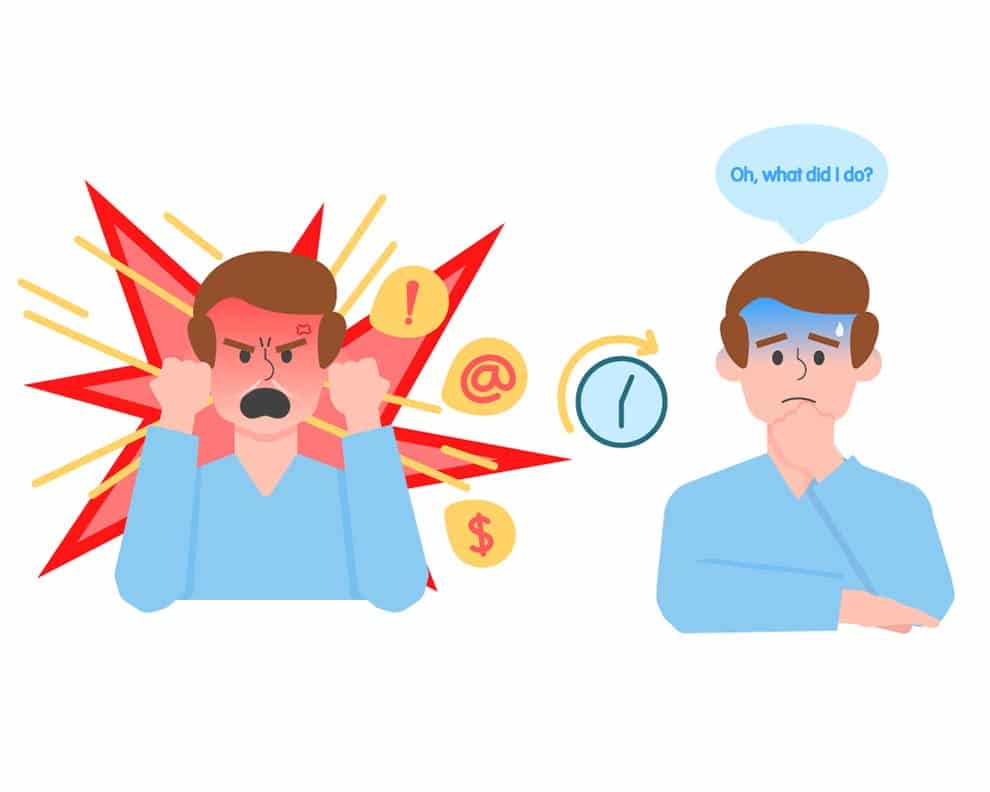
    Anger is harmful to your health. It causes stress and anxiety, and it can cause long term harm like heart attack and depression. It is not only harmful to our own health, but it is also harmful to people around us, and our relationships. In anger, we tend to lose control, and we can do things that we might regret later. If we look back in our lives we can all see moments of anger where people have left a trail of destruction behind them.

    Neuroscience Point of View

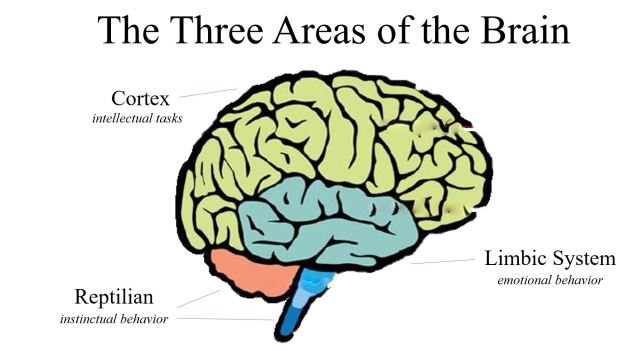
    The primary function of our brain is to ensure our survival. When it comes to emotions and how we operate on a day to day basis, our brain comprises of 3 partsthe Neocortex (the thinking brain), the Limbic System (the feeling brain), and the Basal Ganglia (the reptilian brain). The Amygdala is the deepest and most critical part of the limbic system. It is most commonly activated when dealing with intense emotions. It triggers what is called the fight or flight response.

    Research proves that when we are emotionally overwhelmed and experience a threat to our physical or psychological safety, our amygdala is triggered before our neocortex (the reasoning part of our brain) even knows about it. When this happens, the amygdala decides our behavior (the fight or flight response) and it is called an “Amygdala Hijack”.

    Anger Short Circuits Our Brain

    This is what happens when we experience physical symptoms like a racing heart, sweating palms, or a shaking body — even in situations with no physical threat. Our ages-old survival mechanism kicks off and makes us react to things primitively before the rational brain has time to think things over.

    This is one of the reasons emotions are good messengers but very bad masters. Our anger can tell us a lot about what we care about, but if we let it take over, it can short circuit the thinking part of our brain. When that happens, we react rather than respond to the situation.

    “The truth will set you free, but first it will piss you off.” ― Joe Klaas

    At the same time, just like any emotion anger can tell us a lot about ourselves. Anger has the power to clarify our thinking and reveal our moral lighthouses. But only if we are willing to listen. There are 3 ways we can use anger productively rather than let it destroy us and our relationships:-

    1) Listening To Anger Reveals What We Care About

    If we pause and reflect, anger can reveal what we deeply care about. For example – I once got angry at my manager. After reflection, I came to understand that the anger was not against the manager but against unfair behaviour. Once I realized that I was able to respond in a better way, and it revealed one of my deepest values to me – fairness and justice.

    The more attention we pay, the more we can be aware of what our anger is trying to tell us. Anger can be our guiding light and a force to deploy ourselves in the world around us in a healthy and productive way rather than destructively. As I mentioned earlier anger is a secondary emotion. It hides many emotions behind it, but we can look deeper and figure out what those emotions are.

    One way we can listen to what anger is trying to tell us is by separating facts from stories and assumptions which we might have made. Our minds can fool us easily. A thought comes into our mind after something happens, and we believe it to be true. In such moments, we can instead stop and validate each assumption which our mind is making before believing it. Whether it is true or not, or is it a story?

    Anger can show us the way ahead, and what needs to change. Because anger tells us what is not okay, what we should not do, or that a deeper investigation is required, about something which is bothering us.

    2) Anger Is An Opportunity To Practice Emotional Intelligence

    In the heat of anger, we stop listening. We are only burning in rage. But after the immediate impulse of the anger is gone, it is an opportunity to practice emotional intelligence. And as with all skills. It gets better with practice and time.

    Anger always comes along with a temptation to react. But seen another way, every time we get angry, it is an opportunity to express ourselves in a way that we can be proud of. Venting out in anger can certainly give us immediate relief, but we often end up damaging relationships and our reputation in the process. Not giving in to that impulse is an opportunity to practice emotional intelligence.

    You might think that when angry, you can’t stop yourself from reacting. And this is why you hate being angry. But the truth is that anger is not the culprit here. Instead, it is you who lacks the ability to understand, reflect, and act responsibly in the face of your anger. Anger provides us with an opportunity to use the energy of our anger productively. When we do so, we strengthen relationships and build a strong reputation backed by responsible behaviour.

    3) Anger is Love, and It Shows Your Commitment

    We often get the most frustrated and angry at those whom we love or care deeply about. The opposite of love is not hate or anger, it is indifference. So when we see people in love fighting, it is not that the relationship is going downhill. Instead, it is a sign that the relationship has a lot of care and sincerity that is often expressed in anger. To expect anger to not arise in love is to not understand love at all.

    You get angry because you care. You get angry because you love somebody, because you love a cause or because you love a certain value. You get angry because you want to reach an important goal or you see a possibility in the future. Something happened which violates that commitment you have to the person or to the cause or to the future goal. That is what makes you angry, and that is what we need to discover.

    Have you noticed that when you are angry, you cannot think of anything else? It is because anger brings tremendous clarity with it, and forces you to focus on the current moment. If we can honor our anger instead of denying it, we can usee its energy. This energy arises because we feel vulnerable in love. If we can see it for what it is, we can use the force of anger to enrich the love which is at the root of anger in the first place.

    Every time you are angry at someone you care about, take a moment to celebrate your commitment to the person or the relationship. Your response can change massively if you keep this commitment in mind in that moment of heat. Your anger is there to serve you and your relationships, but only if you are willing to pause and listen. You get angry because you love. Allow this love to strengthen the relationship rather than weaken it.

    Conclusion

    Understanding anger on a deeper level can be poetically beautiful. Once you learn to stop acting out impulsively and express your anger keeping love and care as the underlying commitment; you can channel it to nurture the relationship. We all feel anger, so in a way, anger connects us all. It is what makes us human.


    References

    1. Amygdala Hijack and the Fight or Flight Response
    2. How to Turn Your Brain from Anger to Compassion
  • Discover 10 Myths and Realities about Emotions, and How That Will Turbo Charge Your Emotional Intelligence And Change Your Life?

    Improve your communication skills by discovering how science has busted these 10 myths about emotions. Tap into the deep psyche of human emotions and stop them from holding you back in life. Read this article and understand how it can help you become a more empathetic colleague or leader.

    Emotions can be a touchy topic to talk about. Because of the fact that people rarely talk about emotions and feelings, it is very common for people to hold wrong and misguided beliefs about emotions. If I look back, I can see that I spent the first five years of my career living in emotional darkness. It was only when I found myself in a leadership training and the topic of emotions came up that I realized my blind spots.

    “The highest forms of understanding we can achieve are laughter and human compassion.”

    ― Richard P. Feynman

    Ever since, I have done multiple trainings and read hundreds of books on human psychology, behavior, and the neuroscience behind it, which has revealed a previously hidden world to me. I can’t even begin to express what a vast difference that has made to my performance and wellbeing.

    When people don’t understand how to deal with anger, jealousy, anxiety, and other complex emotions; there is no way they can help themselves and those around them address these emotions. Educating oneself about the scientific and proven truths about emotions is the first step to take any further steps to support and empower people.

    Understand Science Based Facts About Emotions and Ease Your Shoulders of Their Burden
    Understand Science-Based Facts About Emotions and Ease Your Shoulders of Their Burden

    Below are the 10 Myths:-

    1. Weak People Get Emotional, Strong People Don’t – Emotions are as natural as breathing. Every human being has the full range of emotions – joy, anger, sadness, surprise, happiness, frustration, and more. If you are a human being, you will experience these emotions at some point in your lives. The first myth, which is almost accepted as an unspoken truth in society, is that only weak people get emotional. What I have learned is that nothing can be further from the truth. Being aware of our emotions and expressing them consciously demonstrates strength, not weakness.
    2. Showing Emotions is Unprofessional – People are often crucified for showing emotions, especially in the workplace. “Real men don’t show emotions” — We all have been encouraged to hide their emotions or suck it up. This not only impacts our health and well being but also prevents important conversations from taking place. Every emotion tells us what we care about, and to not express them is to miss an opportunity to resolve the underlying matter.
    3. Being Angry or Upset is Wrong – I believe anger is one of the most compassionate human emotion. The more attention we pay to our anger, the more aware we can be of what it is trying to tell us. There are no right and wrong emotions. There are no positive and negative emotions. Our emotions are always valid, and an inevitable part of being human. There is nothing wrong with feeling frustration and anger. It only becomes a problem when we don’t know do what to do with our anger.
    4. We Can’t Control Our Actions When Dealing With Emotions Like Anger, etc – While getting angry or emotional might be natural, we always have a choice to choose our action in the face of our emotions. Over time I have learned that we can always witness our emotions as they arise instead of being sucked into their gravitational power. Although it might feel very tempting to respond impulsively when we face intense emotions, we can always calm ourselves and choose our response consciously.
    5. We Should Suppress Our Emotions – Allowing us to experience the full range of emotions can be overwhelming, but never allowing them to surface has an even bigger impact. Just like tying a wild horse only infuriates him, repressing our emotions never works. When we do so, we end up suffering inside while putting up a brave face on the outside. By suppressing emotions, we are bound to explode sooner or later. It also results in stress which ends up impacting our health in the long term. Emotions need to be expressed, without suppression or explosion.

      Every Human Being Experiences the Full Range of Emotions
      Every Human Being Experiences the Full Range of Emotions
    6. Venting Makes Us Feel Better – Sometimes people give advice to vent out our emotions, especially when dealing with anger and frustration. This is a commonly held misconception that venting out makes you feel better. Instead what it often does is traps us into a certain way of thinking and rationalizing that might be difficult to get out of. Research shows that venting out to our friends about our boss, or venting our anger out on a punching bag rarely helps. The only thing that actually helps is to consciously choose to address what the emotion is trying to tell us, and then express ourselves in a way we can be proud of.
    7. Others Are Responsible For Our Emotions. We Have No Control Over Them – There are different factors that can trigger our emotions. We often feel helpless when dealing with emotions. What we don’t realize is that dealing with emotions is a skill, and just like any other skill, it can be practiced and improved. Playing victim and blaming others for our emotions might be an easy way out, but seeing this myth for what it is could be the first step to building emotional muscle. As we get to know more about ourselves, we learn our emotional triggers and become more skilled in expressing emotions in a way that we can be proud of.
    8. Negative Emotions (sadness, anger, frustration) Happen to Bad People – There is nothing negative about emotions like sadness and anger just like there is nothing positive about joy and happiness. Emotions are neutral and a part of being human. It is just that we tend to associate and label emotions as positive or negative based on how pleasant or comfortable they make us feel. If I experience fear, sadness, shame, anger, or frustration that doesn’t mean that I am good or bad. There is nothing to be ashamed or scared about if you are experiencing these emotions.
    9. Emotions Are Not Important. We Can Live Without Them. – Many people believe that emotions only make them weak and lead them towards bad decisions, so they decide to not feel anything at all. They go inside their shell and act like they are all rational. Nothing could be further from the truth. Research has proven that emotions are integral to making decisions, and it is emotions that help us choose one choice over another when making decisions. If we were to have no emotions, we would not be able to make any decisions at all. Besides the decision making aspect, we will miss out on joy, love, happiness, excitement, and fun if we choose to live without being emotional. Would such a life be even worth living?
    10. Emotions Suprise Us by Coming Out Of The Blue – There are always warning signs before an emotional storm, though we might not always be aware of them. We can always look out for symptoms for bottled up emotions to suddenly explode. We all have emotional triggers which we are not aware of. With the right effort, we can understand these triggers and increase our self-awareness. With enough practice, we can always learn to identify these signs of emotional distress (in ourselves and others) before it gets too late and difficult to recover from them.

    I feel that we do our best work when we are emotionally engaged. Only when we can separate the above myths from the realities about emotions, we can reflect upon and listen to what they are telling us. We can then act in a way that is consistent with our values and long term objectives. When we think of emotions this way, we can turn them into a strength rather than a weakness.

    “Man suffers only because he takes seriously what the gods made for fun.”

    ― Alan W. Watts

  • Can We Walk in Another Person’s Shoes? Why Empathy Might Be The Most Important Human Ability?

    On a recent archaeological dig in Man Bac in what is now northern Vietnam, a team of researchers made a remarkable discovery. While unearthing the remains of some Stone Age people who were buried 4,000 years ago, they discovered one young man who had been placed in his grave differently from the others: he was curled in the fetal position.

    It turned out he was laid to rest as he lived. Further examination showed that this man suffered from a rare congenital disease that fused the vertebrae of his spine. It would have left him paralyzed from the waist down from the time he was a small child.

    Yet the scientists concluded that this young man lived a good ten years past his adolescence. That means that for years, perhaps decades, others had to care for him, feed him, keep him clean, and keep him safe from danger.

    Why is this significant? Because this young man’s life and death show us the essence of what it means to ‘walk in someone else’s shoes.’ This profoundly disabled young man lived into his 20s only because others in his little tribe had empathy for him: they imagined what it might be like to be him, they chose to feel his pain, and they chose to experience the difficulty of his life.

    And then they chose to care for him since he couldn’t care for himself.

    That is walking in someone else’s shoes. That is the beating heart of empathy.

    Every 2 weeks I share my most valuable learnings from living life fully in my Deploy Yourself Newsletter. Sign up now to download a workbook with 164 Powerful Questions which I use daily in my work and coaching. Allow these questions to transform your life and leadership.

    What Do We Mean By Walking in Another Person’s Shoes?

    To walk in someone else’s shoes is to make an effort to grasp their point of view emotionally.

    Empathy‘ is the ability to recognize and understand the feelings and thoughts of another person.

    Perhaps most importantly, walking in another person’s shoes is the ability to not only see the world from their perspective but to feel it as if you were them.

    The Ability To Walk In Someone Else’s Shoes

    Sadly, empathy isn’t taught very well in our schools and workplaces. This is strange given that developing empathy has always been recognized as an important part of human development.

    Throughout our lives, we learn many skills that are drilled into us through regular tests, projects, and repetition. But in my experience, I’ve found that it isn’t always the formal skills – the ones like math, history, and physics – that are the most important.

    Formal Skills vs. Informal Skills

    After going through 21 years of education and now 15 years of work experience, I have learned that while the skills taught in formal education are important, the most crucial skills I have used to succeed in my career and life were never taught to me in an educational setting.

    Like most people, I was not even aware that there were other skills that I needed in order to succeed. As many of us do, I was running blind without even knowing that this blind spot was hampering my growth and success. I’ve since learned that there are a few vital informal skills that we can develop, skills that put a powerful compass in our hands to help us navigate the difficult seas of the modern workplace – and life in general.

    Vital Informal Skills

    Why Are These Skills So Important?

    Of course, having the kinds of skills we learn in school and later in the workplace are important. However, knowing how to actually achieve your goals while working together with multiple people within your company is a different matter altogether.

    A lack of empathy not only hampers our ability to be productive in the workplace, but it is also foundational to rational decision-making, building lasting relationships, and distinguishing between right and wrong.

    Without empathy, that one particular, critical skill in your tool kit – one that often doesn’t appear on a CV – you are likely to face an uphill battle in anything you’re trying to accomplish.

    “When you show deep empathy toward others, their defensive energy goes down, and positive energy replaces it. That’s when you can get more creative in solving problems.”

    – Stephen Covey

    I Hear You, I See You, I Feel You.

    To walk in another person’s shoes is to shift perspective, and to see and feel the world as another sees and feels it. The word feel in the previous statement is very important, important enough that we must take a closer look at it.

    What I mean by feeling as another person is that you must learn to not only see things intellectually from someone else’s point of view but also to feel the same emotions that the other person feels. This might mean feeling scared, tearful, or elated depending on the situation, and understanding on a profound level what has made the other person feel this way.

    Researchers have found that when we feel another person suffering, it activates not only the visual cortex in the brain but also our emotions and physical sensory receptors. Imagine witnessing someone get a paper cut: you not only sympathize with their pain, but you might also wince, or draw your own hand back involuntarily. You can almost feel the slice happening to you.

    Developing and nurturing these empathetic abilities rather than shying away from them is like a secret weapon when it comes to working with other people. It’s a foundational component of what made us human in the first place – just ask our Stone Age friend from Man Bac in Vietnam.

    So what is it that prevents us from fully understanding what another person is feeling? Why can’t we listen deeply?

    That’s because we’ve already filtered it out.

    Listening Filters, Empathy and Your Truth

    Empathy has deep roots in our evolution as a species. Developmental psychologists say that empathetic behaviors like altruistic helping and comforting others who appear to be in distress emerge in children as young as 12 months! Thus, empathy is built into who and what we are.

    However, as we get older, it becomes more and more difficult for us to be empathetic with others.

    All of us see the world differently based on our listening filters. We select what to pay attention to and what to ignore, often subconsciously, based on our particular set of experiences and knowledge. Our parents, friends, culture, values, beliefs, expectations, moods, and prejudices all combine to form such filters. These filters help each one of us create our own perceived reality and affect every decision we make.

    The important thing to realize here is that the “truth” we form by the above process is only “our” truth and not the absolute truth. Throughout any interaction, understanding that others’ perceptions of the world are equally valid as ours is key to gaining any level of understanding with them.

    Everyone has a right to form their own perception based on how they experience the world around them. Indeed, if you stop and think about our listening filters, we quickly realize that it would be literally impossible for two people to share the same “truth” in the deepest sense.

    Once we understand that our apparent “truth” is only a perspective, it allows us to view the same situation differently and accommodate someone else’s point of view. This is the foundation of empathy and is of immeasurable help in resolving conflicts.

    “Physics isn’t the most important thing. Love is.”

    ― Richard P. Feynman

    Perspective and Conflict

    Conflicts don’t occur because of different perceptions, not exactly. Rather, conflicts occur because of our inability to step outside of our own perspective and acknowledge the other person’s point of view. If you can’t take a moment to walk in another person’s shoes, how on earth are you going to reach any kind of accord or understanding with them?

    And this is why I believe that seeing and understanding different points of view is a superpower for those who possess it. Friction should be between points of view, not between people, and certainly not between organizations and nations. Empathy allows us to escape unnecessary stress from friction in relationships.

    President John F. Kennedy famously brought in advisers from profoundly different backgrounds and political persuasions in order to guarantee he would get the widest possible variety of perspectives. After a pair of advisers went on a fact-finding mission to Vietnam in the early years of the conflict there and came back with wildly differing tales of what the conditions were like on the ground, Kennedy famously quipped, “You both went to the same country?”

    When it comes to our own lives, it’s vital to remember that we can all be in the same country, even standing in the same room, but nonetheless perceive our surroundings in profoundly different ways.

    Celebrating Difference, Loving Friction

    Every great human accomplishment has come out of differing opinions and the energy generated by healthy friction. Seeing things from different perspectives can allow us to create something better than anyone could on their own.

    Taking the time to step into the other person’s shoes is the very necessary first step we must take to engage in productive conversations, iron out our differences without making things personal, and reach a win-win solution/agreement. To not do so out of defensiveness or fear is to invite unnecessary conflict and misunderstanding.

    How to Build Empathy

    Like any skill, empathy can be learned and it gets better over time with practice. Here is how you can do so:-

    • Pay Attention – Be fully present without distractions when in the company of others.
    • Active Listening – Stop thinking about what you’re going to say next and just take in what the other person is saying.
    • Don’t Interrupt – Even with the best intentions, saying things like, ‘It’ll get better,’ or ‘It’s not that bad’ diminish the other person’s problems and may cause them to shut down. Avoid doing that.
    • Make It About them, Not You – Resist the urge to speak. Use filler words like “umm”, “and”, and “tell me more” to hear them out fully before speaking.
    • Be Open and Vulnerable – Empathy is a two-way street. We make these connections by sharing our own vulnerabilities and struggles. Don’t be afraid to open up.

    You Can Be Right and Still Be Wrong.

    In the end, we must ask ourselves this question – Do we want to be right, or effective?

    And this is the question that can be answered by seeing things from another’s point of view.

    Do we want to be right and prove others wrong and secure a personal victory?

    Or is it more important to be effective in dealing with the topic at hand, even with the different points of view we might have?

    Once we learn to choose the latter, we can take meaningful steps towards reaching solutions and agreements that are more positive and inclusive than any individual point of view. Developing the ability to empathize and to approach life from this perspective will result in consistently better results for not only you but for everyone around you.

    Now that’s what I call a real superpower.

  • How to Communicate When the Going Gets Tough, and Things Get Messy?

    The world is unpredictable and full of chaos and change. Many things can cause worry and tension in an organization. Mergers & acquisitions, leadership wrangles, controversies, and pandemics such as Covid-19 are just some of the many things that can cause a crisis within the organization. 

    The true test of leadership occurs when the going gets tough. How you handle yourself and communicate with your team during tough times is what determines whether your organization will rise or fall.

    Thanks to the unpredictable nature of the world around us, leaders often find themselves with little time to prepare. And no excuse will ever be enough if you fail to respond in a timely manner. At the same time, you must take caution because taking the wrong approach when communicating will do more harm than good.

    The infamous BP oil spill in the Gulf of Mexico is a good example of how not to respond during a crisis. Not only did millions of liters of oil spill into the sea, but also 11 crewmen lost their lives. BP’s chief executive, Tony Hayward, dealt with the disaster in the worst way possible; he shifted blame entirely to Transocean and Halliburton even before investigations had started. Investigations later revealed that BP’s gross negligence is what caused the disaster. By then, the damage had already been done with the energy giant’s credibility taking a major hit. 

    But look at Alan Mulally. In 2006, Ford was on the verge of declaring bankruptcy when Bill Ford brought Mullaly on board. He brought the company back to profitability, and not only that, Ford weathered the 2008-2009 depression without much turbulence. Alan Mulally accomplished this using clear communication and one slogan that echoed through the entire organization, “One Team.”

    The above examples show the tremendous impact of a leader’s words and actions during a crisis. To help you navigate those murky waters of uncertainty that every crisis brings along with it, consider utilizing the following guidelines to communicate during a crisis.

    1. Absorb Emotions. Do Not Amplify Them

    Fear, stress, and other emotions usually run high during any crisis. As a result, chaos can ensue. As a leader, the first step you can take is to manage your own emotions. Your employees look to you for reassurance. If you project fear, they will notice it and can panic. Once you learn to observe your emotions, you can reassure your team. This will help you calm the brewing storm of emotions, and not amplify the emotions of others.

    Each human being acts like a tuning fork. Every emotion is like a wave, which when reaches others, either accentuates or dies down depending on whether the frequencies match or not. When we learn to master our own emotions, it will dampen any emotional waves and allows collaboration, even in the face of disagreement. We can strengthen our relationships with others, even in the most stressful and difficult situations.

    Listen to People’s Concerns & Understand Them

    Be human and embrace the emotions that everyone is experiencing in moments of crisis. You will also need to be transparent about how the situation is affecting you. Opening up, sharing, and displaying vulnerability on such occasions is important, as it can help you build trust. People appreciate knowing that no one is having it easier.

    Try to connect with them by asking people how they are feeling. This will not only provide an outlet for venting emotions but will also provide you with rich feedback to consider while working on a solution. It is much more effective than simply asking how they are doing.

    As much as possible, try to have this meeting in a setting where you both can see each other (and not over email or chat). This is another key element of trust-building, as it shows that you care enough to address them in person. If you cannot be in the same space, set up a meeting via video call.

    You will find that communication is usually better when you can read a person’s emotions through their body language and facial expressions. This is because their subconscious feedback will allow you to adapt your message and tone to soothe their anxiety.

    Be Calm. Don’t React

    During the heat of the moment, some folks might get too emotional. But you cannot control the feelings of another human being. Therefore, allow them to express themselves freely despite your urge to jump in. Calmness is one of the best ways of showing that you are in control of a situation.

    Look at Things from Others’ Point of View

    Putting yourself in the shoes of others will allow you to see things from their point of view. After listening to what someone has to say, suppress the urge to start providing solutions immediately. Instead, bring attention to their (and any shared) values and feelings. At times, this might be all you need to do to reassure your team. 

    However, you might need to do more. For example, ask deeper questions to encourage more active participation. This is also a great way of empowering your team, especially during a crisis, when they are more than likely feeling powerless. 

    2. Show People They Matter

    During a crisis, you will need to communicate with your teams more often than is the norm. Frequent communication shows your people that they are on top of your priorities, and this goes a long way in reducing their fear and uncertainty.

    This means that you might have to repeat your core message several times. While it might feel tiring, you have to remember that people under stress need constant reassuring.

    While at it, ensure that your staff has channels through which they can contact you. Regardless of how many times you call or visit them, if the interactions only occur when you choose to, you risk missing out on all incoming communication. Providing them with a channel through which they can reach you directly allows them to know that their feedback matters to you.

    Keep emphasizing how you want to hear from them, regardless of their level. This will go a long way in building the trust you will need when it comes to implementing any change you might want to implement.

    The feedback channel should not be for show; make sure that you listen to what people are expressing. Therefore, you will need to respond to their feedback periodically. 

    Show Care for People by Taking Care of What They Care About 

    The biggest concern people have during a crisis is whether they will still have a job. While being reassuring is important, it is crucial that you are honest. If part of the solution will involve some people being laid off, the best course of action is to deliver the message as soon as possible. 

    Remember, there is no good time to deliver bad news. The sooner, the better. It allows people to start planning early. Even if you have to break the bad news about layoffs, you can help to soften the blow by choosing an outplacement vendor to help employees with the transition.

    How AirBnB’s CEO Brian Chesky delivered the announcement that the company would have to make layoffs following Covid-19 restrictions is one of the best examples of how to deliver such news. 

    Do What is Required to Take Care of People’s Physical and Mental Well Being

    The mental well-being of your employees should also be among your top considerations. During stressful times, people become more susceptible to mental health issues. Try to take care of that by providing them with resources or tools to support them. Address the issue during your meetings and let them know that the company is there for anyone who might be experiencing mental health issues.

    Highlight Togetherness, and Tell People They Matter

    During trying moments when stability is elusive, it is important to highlight togetherness. Let your people know that the only way to overcome the situation is by maintaining solidarity with each other. The best way of passing this message across is by reinforcing the company’s core values.

    Base your message around statements or questions such as:

    • Who are we as a company?
    • What are our values?
    • What do we believe in?
    • What is our purpose?

    Let your people know that their work matters. People get enormous pride and motivation, knowing that their work is not only appreciated but also contributes to the greater good. Tell people that we are in this together, and you will not be left behind.

    Praise People for Holding up in Adversity, and Ask Them to Look for the Good and Lessons from the Crisis

    People feel good when they are seen, heard, and their effort acknowledged. Do not underestimate the value of positive feedback, as it goes a long way in boosting an individual’s morale and productivity. It also allows them to feel like they are part of a team, thus boosting trust and loyalty within your workforce.

    Therefore, even though you might have a lot on your plate, make sure that you address and acknowledge the hard times that your people have been going through. Acknowledge their ability to adapt, in addition to praising any accomplishments they might have had during the crisis.

    This lets your teams know that you care about them as individuals.  Additionally, ask them to take lessons from the crisis, as it will only make them better – as human beings and at work.

    3. Give Hope for the Future

    Keep in mind that your staff might be under tremendous pressure or anxiety due to the uncertainty of the crisis. As a leader, one of your main objectives is to give them hope and see the light at the end of the tunnel.

    Show (or Create) a Plan to Remove Confusion

    Remember, you are in charge. Therefore, take charge and evaluate your options. It is important that you take action as soon as possible.  Indecisiveness will only breed anxiety and can lead to people questioning your leadership. Therefore, create a plan and explain how things are going to be, as soon as possible.

    However, make sure that you explain your decisions. People might not like or agree with all that you have decided, but they will appreciate that you have taken it upon yourself to explain your decisions. Explain the various courses of action that you considered, and why you decided that this particular one was the most appropriate choice.

    Make sure to align your actions to the company’s core values and purpose, as that will help them feel certainty, togetherness and not confusion.

    Remove Uncertainty. Go Over the Facts. Give Clarity

    While sharing any information about the company’s future, be honest. Tell them all that you know while admitting that there are things you do not know. Embracing the ambiguity of the situation will allow your message to resonate with its recipients better. 

    Assure People by Highlighting What Steps You Have Taken to Ensure their Safety

    People need to know that you have taken actual steps towards ensuring their well-being. If any, highlight them and explain how they will help your team during the tumultuous period.

    Communicate with Confidence, Transparency, and a Positive Outlook for the Future

    In spite of your own uncertainty, you must project confidence when speaking to your teams. Be clear about everything so that you do not leave any room for speculation while remaining optimistic about the future. 

    Conclusion

    The true test of a leader is how they steer their ship and communicate during tough times. It might be difficult, but it is doable, as long as you are proactive, empathetic, and honest.

  • How to be Emotionally Intelligent with Written Communication at the Workplace

    Emotions play a big part in our communication in the workplace, either face-to-face or written. The way we express our emotions requires us to be sensitive to others’ emotions. In the same way, we also need to be sensitive to our own emotions and values and respond accordingly. The mastery of our own emotions is a skill that can help us become more productive at work. Working on how we express ourselves can greatly affect how we connect and collaborate with others.

    Expressing ourselves through written communication is a challenging task as we have limited means to express our ideas. Email, chats, and all other sorts of documents in a workplace often focus totally on the subject or topic; which makes it difficult to understand the emotions behind them. However, I feel we need to make space for our emotions, ideas, and thoughts to be freely expressed in any form of communication to build lasting trust and cooperation with our colleagues.

    “People will forget what you said. People will forget what you did. But people will never forget how you made them feel.” – Maya Angelou

    Pros and Cons of Written Communication In The Workplace?

    The digital age has made communication faster and more accessible. We’re able to send messages to people we can’t meet personally in a more efficient manner. Emails and text messages can distribute information to people anywhere in the world while we’re at the comfort of our desk.

    We use written communication in many different situations at the workplace. Some of these situations can be found below :-

    • Sharing important information through emails to different division members
    • Providing feedback on documents sent to us for review
    • Responding to messages asynchronously
    • Requesting permission for vacations leave and other administrative tasks

    These situations can get challenging since you need to fit your message into a certain format and you’re left to express your message often only through text. There are no verbal and nonverbal cues to help you express your thoughts.

    So, where does emotional intelligence fit? Emotional intelligence can help us in phrasing our emotions into words and sentences. The knowledge of our emotions serves as a guide to how we can communicate better with other professionals.

    Communication, in whatever form, is never detached from our personality (thoughts, emotions, beliefs). Even a simple email or letter is already an expression of ourselves. Emotional Intelligence is not just about communicating verbally and listening to others. It is about expressing ourselves clearly regardless of what medium we use for communication.

    Written communication, while it is effective, also has drawbacks. Since messages are limited to written text, they can get lost in translation. The way we choose to express the message can be interpreted differently by the other person. Some parts or the whole intent of the message can be misunderstood.

    When dealing with people, remember you are not dealing with creatures of logic, but with creatures of emotion. – Dale Carnegie

    What Can We Do To Avoid Confusion And Misinterpretation?

    By being careful about a few ideas as listed below, we can make written communication easier for others to process and understand :-

    1. Write messages in simple and short sentences. Written communication is about effectively transferring information. By adopting a simple style of writing, we become more effective since there is less room for misinterpretation.
    2. Ask others if they understand the message you’re expressing. The most effective way to ensure that no miscommunication happens is by confirming the message with others. There’s nothing wrong with asking colleagues if they understood the details you provided.
    3. Be careful about being funny or sarcastic. It’s alright to add some humor to messages, but be sensitive to others who might get offended or misinterpret them.
    4. Avoid emotionally-charged messages. Written communication is not meant for emotional release. Ask yourself if you would have the courage to say the same thing face to face. If not, don’t express it as an email either.
    5. Ask for acknowledgment if you expect something back. Or follow up if you don’t hear back or hear an unsatisfactory response to make things clear.

    When Should We Not Use Written Communication?

    While written communication may be helpful, there are times when its use is not the best choice. Having the presence of mind not to use written communication if the situation calls for it is also being emotionally intelligent. Some situations like those listed below might require a personal conversation instead of written.

    • Discussing sensitive or emotion-loaded discussions – Written communication cannot express the full spectrum of emotions and messages we wish to send to others. Verbal and nonverbal cues are important when talking about sensitive topics to be able to fully express emotions and communicate the message without room for misinterpretation.
    • Personal discussions – Personal discussions often require attention and immediate feedback. The nature of written communication, unfortunately, cannot fit the needs of these important discussions.

    In conclusion, becoming emotionally intelligent requires us to know when and how written communication can be used in a professional setting. Doing it well allows us to capitalize on human relationships and unlock the huge potential when people work together for a common purpose and mission. On the other hand, if not done well, it can also go downhill pretty quickly.

  • The Role and Importance of Emotions in Our Professional and Personal Lives

    When I started working at the age of 21, my manager was only a few years older than me. Both of us being very young and passionate about work, we developed a good friendship. As I completed my first year at work, I sat down with this friend (manager) to discuss my performance. I wasn’t ready for what came next.

    In the meeting, he was very formal and distant in his approach which I found unfair. Due to our friendship, I expected an informal conversation. Instead, what I got was “feedback” and “improvement points”. When he was done with the performance cycle, it left me in a very bad mood and it affected our friendship. While he was only performing his job as a manager, I was too naive and felt betrayed as a friend. It took us more than a year to mend our friendship, and I am good friends with him to this day.

    This incident was very tough for me, and it was not until many years later that I recognized why it was so. At first, I blamed my manager friend for being more of a “manager” than a “friend“. Later (after we mend ways) I blamed myself for being too emotional and developing friendships at work. I came to the (wrong) conclusion that emotions and rationality are mutually exclusive, and I shut myself down emotionally.

    It was much later that I realized that emotions were not the culprit. Instead, it was my inability to handle my emotions which led me to react impulsively. With experience, I have come to believe that emotions are absolutely necessary for doing any meaningful work. They only seem tough when we don’t know how to handle them.

    I have already written about how to handle our emotions in the workplace. In this article, I want to stress the importance of emotions as the driving force behind decisions.

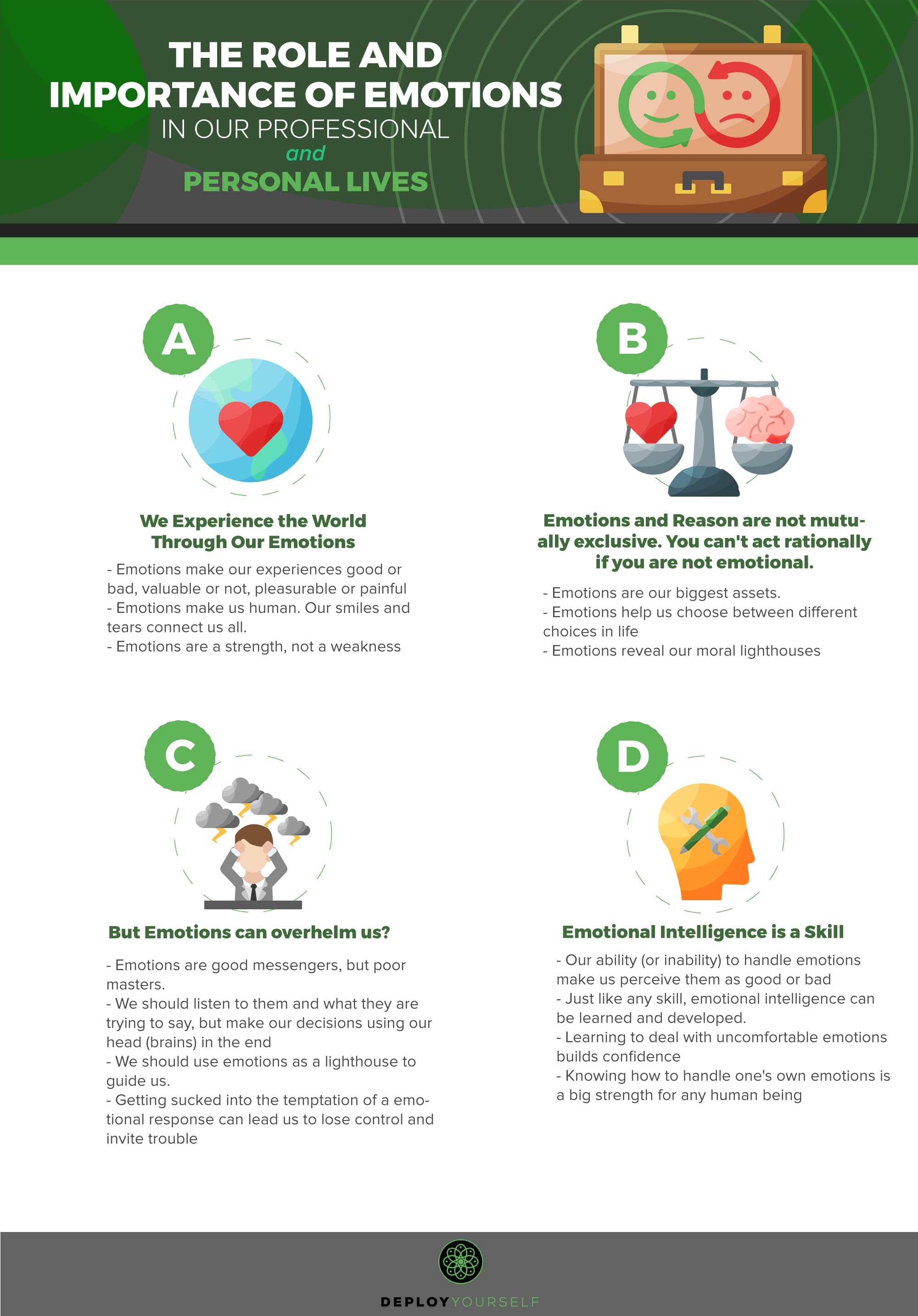
    We Experience The World Through Our Emotions

    We walk around the world and make sense of it through our emotions. When we experience an event, different emotions get triggered based on our values and beliefs. Emotions make our experiences good or bad, valuable or not, and pleasurable or painful. If we introspect we will found that every decision we end up taking is derived from an emotion that touched and moved us.

    These emotions can overwhelm us occasionally, but without them, we would have no connection with people or events around us. While emotions can sometimes bring pain and tears, it is only through them that we feel joy, happiness, and peace in life. It is very important to realize that emotions are our strength and not our weakness.

    It is our emotions that make us human. The little moments of joy when we play with our kids, the smile on our faces when we help someone, the tears in our eyes when we see something cruel and terrible (even if it is on TV) – it is these emotions that connect us all as human beings.

    Seeing a tweet by a billionaire CEO and to be able to feel empathy for him/her makes us bridge the economic, physical, and social divides and come closer. On the other hand, if we are privileged in any way, being able to empathize with the less privileged and act for them brings us closer. Emotions help keep our egos in check and prevent us from being indifferent towards the less or more privileged in our society.

    Emotions and Reason are Not Mutually Exclusive

    Most of us believe that emotions and reason are opposites of each other, and it is often presented as a fact that you can’t act rationally if you are emotional. In many workplaces, emotions are frowned upon and an excessive display of emotions (joy, tears, anger) is seen as a liability.

    On the contrary, what I have learned over the years is that emotions can be our biggest asset. They can give us important information that can shape our lives if we listen to what they are trying to tell us. The key is to learn how to express our emotions without repression or explosion.

    Emotions can help us clear the fog of rational choices and reveal our moral lighthouses. They help us choose wisely when presented with two equally good or equally bad choices. Emotions clarify our thinking and help us see rational choices in a new light while pure rationality often makes us run wild with ideas, even at the expense of others. Rationality without emotions can look enticing in the short term, but it can be a menace in the long term.

    It Is Impossible to Be Rational Without Emotions

    While it is true that emotions can overwhelm rationality at times, it is impossible to be rational without being emotional. Today there is scientific evidence to prove that we, as human beings, are incapable of making decisions if we can’t feel our emotions. You can read about the works of neurobiologist Antonio Damasio to see that without emotions, there is no decision making possible. [1][2]

    He worked on a patient with a severed connection between the frontal lobe (where rationality originates) and cerebral amygdala (where emotions originate) in the brain. After the surgery, the patient could think, but he could not feel anything. He noticed that while he was able to engage in rational thought all the time, he was not able to make a choice over the other.

    When Emotions Overwhelm Us?

    We all have been in situations where we don’t want to do what we know is the right thing to do. When emotions overwhelm us, we can get sucked into the temptation of the respective emotion and (re)act in a way that provides us emotional relief. For example – When you couldn’t control your frustration and vented it out on your manager because it felt good to spurt it out.

    Emotions are very good messengers, but poor masters. We should always listen to them and let them play a big role in our rationality, but subjugating reason for emotional whims can cause us short and long-term harm. In the end, we should always use reason to choose the best option available for us, and use emotions as a lighthouse to guide us on the right path. This will help us in making the right choices (which might not be the easy ones) in life with conviction.

    Emotions Intelligence is a Skill. Train Yourself

    Now that we have seen that there is no action possible without emotions, we can conclude that emotions are not bad or good in themselves. It is our ability to handle them that makes us interpret them as so. It is a skill that, just like other skills, can be developed.

    Learning to deal with uncomfortable emotions builds confidence and opens up new pathways that were earlier closed to you. Emotional people are often regarded as weak in certain societies, but I believe that the ability to handle one’s own emotions is one of the most useful skills a human being can acquire.

    Increased emotional awareness can be a great asset we all can make use of not only to make the right decisions for ourselves but also to create a better world around us. A world which is not mine or yours – but ours.

  • How To (and not to) Deal with an Emotional Employee

    As I wrote previously, every human emotion is valid. However, the story behind them might not be, and we always have the choice of how to respond to an emotion. If we want to master how to deal with others’ emotions, our own emotional mastery is the prerequisite.
    Studies have shown that emotions like frustration, cynicism, enthusiasm, etc are as contagious as germs. I believe each human being acts like a tuning fork. Every emotion is like a wave, which when reaches others, either accentuates or dies down depending on whether the frequencies match or not.
    When two people are emotionally reactive, even a small argument can quickly escalate into a fight. When we learn to master our own emotions, it gives us an opportunity to deal with any situation confidently. It will dampen any emotional waves and allows collaboration, even in the face of disagreement. We can strengthen our relationships with others, even in the most stressful and difficult situations.

    1. Learn to Notice Emotional Build Up
    Emotions are like storms. Just as we can forecast most weather storms before they strike, we can always notice and predict “emotional” storms too. If an emotional outburst of an employee is a surprise, then there were some signs we missed.
    Emotional reactions don’t come out of anywhere. Just like storms, they build up over time. There are always signs, physical and behavioral, which we can observe and watch out for. If we notice these signs, we can get advance notice of emotional build-up in people.
    For example – If we notice tightening of muscles and a red face, the person might be getting angry or frustrated. If we notice a trembling voice, sweating, and defensive body language, someone might be feeling scared or anxious. If we notice smiles, laughter, and relaxed body language, the person might be happy about something in his/her life.
    2. Act Early. Validate What You Notice
    When we notice physical signs of an emotional build-up in others, we must act early and validate our assumptions. Obviously, we can’t read another’s mind so whatever we assume about another’s emotional state might or might not be true. So the most prudent way is to state our assumption as just that and ask the other person for validation.
    For example – If your colleague has been quiet and detached for a few days, you can approach them and say – “I see that you have been quiet lately. You seem a bit tensed too. Am I right? Is there something which I don’t know, or can help with?” Never walk up to someone and pass a judgment, “Why are you sad? What’s upsetting you?”
    Remember our assessments about others’ emotional states are just that – assessments. Mistaking them for truth could trigger an emotional reaction and make them defensive, which we don’t want to. What works for me is to state my assessment tentatively, and to always ask for verification.
    3. Listen And Acknowledge. Don’t Judge And React
    It is only human to be emotional. When someone opens up about their emotions to you, it is an act of courage. Don’t dishonor that act by rushing to judgment or suggestion. Just like our own emotions, acknowledge them by listening and understanding their point of view. Try to stand in their shoes and sympathetically feel what they feel.
    Challenging others’ emotions is often counter-productive and makes them feel alienated and disrespected. If their emotion is directed at you or they feel your behavior led to the emotion, you might be tempted to justify yourself. But that never helps anyone. If you can stay calm and relaxed, any emotional attack will eventually diffuse itself.

    Emotions are the result of an internal fire. Reacting emotionally only adds fuel to that fire. Instead, let we can let it run out of fuel by allowing others to express themselves fully while we listen empathically.

    Remember, mastering your own emotions is a prerequisite before handling others' emotions
    Remember, mastering your own emotions is a prerequisite before handling others’ emotions

    4. Let The Storm Pass. Take A Time Out
    When there is damage due to a weather-related storm, we don’t rush out to do repairs while the storm is still on. We wait for the storm to pass before assessing the damage, and doing any repairs. Similarly, if we notice an emotional storm, it is always best to wait for it to pass before jumping in to help.
    There have been many instances when I have been sucked in to respond to an emotional employee. I have always regretted it later as it only made the situation worse. Taking a time out often works for me. A few moments to breathe often allows both parties to stay with their emotions and come to peace with them.
    I believe the best way to understand someone else’s emotions is to observe our own. Becoming aware of our own emotions can help us empathize with others. When we feel compassion for others’ emotional states, regardless of whether we agree with their reasons or not, then we are ready to take the next step — which is asking the right questions and coaching them.
    5. Coach. Inquire. Ask the Right Questions
    The next step is to ask coaching questions and help them understand their own emotions. By genuinely inquiring and listening to others, we can help them clarify their thoughts.

    Coaching via asking open questions is about respecting people as individuals, and giving them a free choice to act in a way that is consistent with their values.

    Coaching someone doesn’t mean fixing other’s problems. We don’t get to be a superhero through coaching. Coaching is about letting others find their own answers – ones they already know but have become masked behind their stirred emotions. Coaching begins with genuine care for your employees and colleagues. It is a skill that requires practice, and you get better at it with each conversation.
    Depending on the emotion, the coaching questions you can ask will differ. Here are a few examples –
    Sadness – What are you sad about? What did you lose? Why did that matter so much for you? How could you grieve or mourn for your loss? Is there something I can do for you to support you?
    Fear – What is scaring you? What are the chances of that happening? How does that impact you? How can you prepare better for it to minimize the damage? What else can you do to feel at peace?
    Anger – Who hurt you? What boundaries did they cross? How can you express your complaint and act in a way consistent with your values? How can you put the issue behind? What would it take for you to forgive them, or let go?
    Guilt – What did you do? What damage did it cause? Who have you hurt? How can you make amends? Have you apologized? How can you be at peace? Can you forgive yourself?

  • How to Deal with Your Emotions In The Workplace And Make Them Work For You

    Fresh out of college, when I started to work professionally as a 21 year old, I dived into work passionately and emotionally. Not only did I do great work during that year, but I also had a lot of fun with my team, many of whom are still my good friends. I was emotionally attached to the work and the people around me, and I considered that a strength at that time.

    Not soon after, I had my first performance appraisal along with my friends (colleagues). Very soon, things weren’t as simple and fun as words like bonuses, promotions, and salary increments entered the vocabulary. Emotions flared, arguments ensued, and I had a hard time dealing with my emotions. I gave in to the temptation of reacting emotionally a few times and strained my relationships with some people.

    After a few such incidents, I started to consider my emotions a weakness and shut myself down, creating personal and professional boundaries in the workplace. I am glad that phase didn’t last very long.

    Today, after working for over 15 years in different companies and across continents, I consider emotions an integral part of the workplace, and they can be very powerful if we know what to do with them.

    Below are a few of my observations about dealing with our emotions at work :-

    Every Emotion Tells Us What We Care About

    When I formed great friends during my first year at work, my emotions (of joy) were telling me I care about trust and honesty. Later when I was angry and felt being wronged, my emotions were telling me I cared about everyone being treated fairly and respectfully. And when that expectation was not met, it gave rise to frustration and anger.

    The more attention we pay to our emotions, the more aware we can be of what they are trying to tell us. We can then reflect upon and listen to what they are telling us, and then still act in a way that is consistent with our values and long-term objectives.

    Emotions Are Always Valid. The Stories Behind Them Might Not Be

    There are no right and wrong emotions. There are no positive and negative emotions. Our emotions are always valid, and an inevitable part of being human. But we can examine the stories behind our emotions to separate the useful facts from false beliefs. Each emotion can tell us about something significant in our lives, but only if we are willing to examine the stories behind them objectively.

    For example – I felt angry and frustrated once when I didn’t get an expected bonus. In this case, I embraced the emotion without denial and examined the assessments behind it. I believed I had performed very well and shared the same with my manager. It was then that I got some feedback which made me aware of the gaps in my performance, and which I could improve upon. Thus I came to the realization that while my emotion was valid, the story behind it lacked evidence and was not well-grounded in facts.

    My manager understood my concerns and it strengthened our relationship. He also promised me to deliver any such feedback earlier the next time. In the end, it prevented me from reacting impulsively and judging others, which would have not done any good for both me and my team.

    I have learned that we can always witness our emotions as they arise instead of being sucked in their gravitational power and respond impulsively.

    Emotions Need To Be Expressed. Without Explosion or Repression

    According to Daniel Goleman, the capacity to subordinate immediate gratification to long-term objectives is the most important psychological skill. All emotions lead to one or the other impulse to act, which often are harmful to us in the long term. At such moments, we need to take the driver’s seat and prevent our emotions from taking over. Emotions are very good messengers but very bad masters.

    Just like tying a wild horse only infuriates him, repressing our emotions never works. When we do so, we end up suffering inside while putting up a brave face on the outside. By repressing, we are bound to explode sooner or later and it also results in stress which can end up impacting our health. Shouting at others (explosion), or sulking in silence (repression) never solves any problem. It often only makes it worse.

    Emotional Intelligence involves expressing our emotions, without repression or explosion. If we can understand our emotions and the stories behind them as a third-party observer, we can accept them fully without abdicating our responsibility to them. We can then choose to act according to our values – even in the face of failure and disappointment. We can’t always control our circumstances, but we can always act in ways congruent with our values.

    “To increase your effectiveness, make your emotions subordinate to your commitments.” -Brian Koslow

    Give Up Your Need to Be Right

    The reason we are so tempted to react impulsively to emotion is that it provides our ego instant gratification. When we shout and explode in anger, it makes us right and the other person wrong. Even if we know it is harmful to us in the long term, it gives us an immediate boost of righteousness. To handle our emotions well, we have to give up our need to be right all the time. We have to give up the temptation to “win” in every conversation and situation.

    I feel that we do our best work when we are emotionally engaged. We are our most creative and productive selves when we feel emotionally safe and don’t have to put on a mask at work. However, if we don’t know how to handle our emotions and give in to impulsive responses, we can do more harm than good.

    To sum it up :-

    • When we are happy with a successful result, an impulsive reaction could be to over-promise in excitement. But a conscious expression of happiness would be to just celebrate and acknowledge the hard work.
    • When we are sad about experiencing a loss, an impulsive reaction could be resignation and cynicism about the future. But a conscious expression of sadness would be to just grieve and acknowledge your loss.
    • When we are scared and fearful, an impulsive reaction could be to shut down and seek protection. But a conscious expression of fear would be to take a step back, assess the situation properly, and then act with courage.
    • When we feel anger and frustration, an impulsive reaction could be to explode or repress our feelings. But a conscious expression of anger would be to make a complaint and sharing our concerns.
    • When we feel guilt after a mistake, an impulsive reaction could be to beat ourselves up and sulking in shame. But a conscious expression of guilt would be to make a sincere apology and repair the broken trust with a new promise for the future.