emotional intelligence

  • 5 Steps To Deploy Yourself And Live An Authentic Life

    A lot of us, especially in our youthful days, struggle with how to deploy ourselves in the world. Instead of being true to ourselves and charting our own unique course, we tend to follow paths that others have decided on our behalf. However, if we take the long-term view, taking the path less traveled and Deploying Ourselves can make all the difference in the long run.

    Unfortunately, most of us prefer to stay in our comfort zones instead of striving to become the best version of ourselves. In this article, I will share 5 things that you are probably not doing but which could help you thrive and not just survive.

    To get fulfillment in life, we must understand who we are and lead an authentic life – one that is based on our values, and that utilizes our strengths and talents. The following are five key things that you can do to take charge of your life and Deploy Yourself.

    1. Understand Yourself – Your Values, Emotions, Desires, Strengths, and Weaknesses

    The first step towards Deploying Yourself is to understand what you care about and what is important to you. Identifying your unique set of values can be the first step towards building self-awareness. Often in life, most of us don’t know what we care about and what matters to us. As a result, we end up accepting the standards and values which other people (parents, society, culture, etc) decide for us. However, trying to live your life by others’ standards is akin to surrendering your own will and judgment.

    On the other hand, understanding your own values and being bold enough to follow them enables your unique light to shine upon the world. Looking back at history, it is clear that people who succeed in business or career are those who choose the path less trodden and follow their own path. Steve Jobs, Apple’s former CEO and co-founder is one example. His unique ideas went against the grain, and this transformed the tech world.

    A big part of understanding yourself also means becoming aware of your emotions and desires. What makes you angry, happy, or sad? What gives meaning to your days and weeks? What do you crave? If you wish to master yourself, you must learn to pay attention to what your emotions and desires are trying to tell you.

    Learning about your strengths and weaknesses enables you to choose a path that aligns with your talents and abilities. Research has proven that we can do much more productive and produce better results when we try to build upon our strengths rather than improve or fix our weaknesses.

    “There is no passion to be found playing small — in settling for a life that is less than the one you are capable of living.” – Nelson Mandela

    2. Realise that You are Unique and Special, Just Like Everyone Else

    No two human beings are like. Each one of us has unique talents and skills that enable us to succeed in our careers and life. All of us have activities that fill us up with joy and satisfaction, whenever we are doing them. Unfortunately, most of us are not comfortable in our own skin, especially when our uniqueness takes us against the norms of society or of our peers. People too often hate that they are different from everybody else and try too hard to become someone they are not.

    Failing to embrace your true self could stem from a desire to fit in with the crowd. What you should understand is that no two people are the same, just like no two flowers or no two birds are the same. Everyone has their own journey. And frankly, the world would be such a boring place if everybody was the same.

    Instead of worrying about what others think, be ok with the fact that no matter what you do, someone somewhere will still find fault in you. If you are always comparing yourself to others and are trying to please everybody, you are allowing yourself to be deployed by others. Having a few people in your life who love you for who you are is better than having many friends who love you for who you pretend to be.

    Martha Graham said, “There is a vitality, a life force, energy, a quickening that is translated through you into action, and because there is only one of you in all time, this expression is unique. And if you block it, it will never exist through any other medium and will be lost.” 

    3. Get Out of Your Comfort Zone, Live on the Edge That’s Where the Real “You” Lies

    If you want to become the best version of yourself, you must be willing to get out of your comfort zone. That means pushing yourself to the edge and not being afraid to take risks. Often what stops us from learning new things are the mental limitations we put on ourselves because of fear of going beyond the comfort zone. Being afraid shrinks our vision and cripples our abilities to try out new possibilities, take new actions, and explore new learning pathways.

    The best thing to do is acknowledge the presence of fear – for it is trying to tell you that the path you are moving towards is meaningful for you. Often the things you are most afraid of have the biggest potential to transform your life. So, instead of cowering when confronted by your fears, move towards them and stay at the edge of learning and new possibilities.

    Remember what Bruce Lee once said, ” Courage is not the absence of fear. It is the ability to act in the presence of fear.”

    Accept that fear is a natural and essential factor for growth to happen. Whenever you summon the confidence to step out of your comfort zone and face your fears head-on, subsequent stumbling blocks will look like stepping stones. Progress becomes faster and obstacles become easier because of the momentum you gain progressively. That is what Jim Collins describes as the Flywheel effect.

    If you are given the task of rotating a heavy flywheel mounted on an axle, making the first turn takes a lot of time and effort. But after each successive turn, the wheel will start to pick up speed and momentum. Soon, the wheel’s weight will start working in your favor. Progressively, the effort you put in will be compounded as the wheel turns faster and faster. 

    “To be yourself in a world that is constantly trying to make you something else is the greatest accomplishment.”
    ― Ralph Waldo Emerson

    4. Lead Yourself – Take Control of Your Desires, Emotions, Body and not Be a Slave to Them

    Our emotions can impede our ability to think and act rationally if we allow ourselves to be overwhelmed by them. Most of us have, at some point, let our feelings cloud our judgment and ended up doing something that we regretted almost immediately. Emotions tell us what we care about, but reacting to them impulsively only boosts our ego by giving us instant gratification. This type of behavior feels good in the short term but is detrimental in the long term. 

    The good news is that emotions can be beneficial if you learn how to use them instead of trying to suppress them. Suppressing emotions only results in explosions later on and the emotion continues to keep building up inside. Instead of bottling up your emotions, pay attention to how you feel in your body and what your emotions are trying to tell you. 

    For instance – I once got angry when I got passed up for promotion. An impulsive reaction to that might be letting my frustration, but when I listened, my emotions were telling me that I cared for hard-work and fairness. When you understand your emotions and the motivation behind them, you can embrace them without letting them take the wheel.

    Sometimes your emotions can hold you captive and control your life. They can dictate your actions and prevent you from Deploying Yourself. As Aristotle noted, “I count him braver who overcomes his desires than him who conquers his enemies; for the hardest victory is over self.”

    Desire is insatiable. Once you feed it, it only expands. It disappears temporarily only to come back stronger. Therefore, you cannot overcome them by simply resisting. The key to Deploying Yourself lies in acknowledging your short-term desires and long-term cares and then taking action to take care of your cares.

    For example, do you feed your desire as a way to mask something deeper and much more valuable? Addressing those important issues could help get to the root of the problem, even though that process is usually not very comfortable. If you understand your urges and what fuels them, you will be able to Deploy Yourself instead of being deployed by them.

    5. Stand Up and Speak Up for Yourself and Your Values

    In life, we come across situations that call on us to take a stand for ourselves and what we believe in. Unfortunately, most of the time we struggle with growing a backbone and standing our ground. Any reasonable person wants to avoid conflict whenever possible. That’s understandable. However, being too accommodating can make you a pushover and prevent you from Deploying Yourself. 

    Never leave things unsaid if it is your true self-expression. Irrespective of the circumstances and what happens to you, you always have a choice to express yourself fully in a way that makes you proud. When you express yourself aligned with your values, you will feel good in your body. You will feel aliveness and meaning, even if others’ don’t agree. Sometimes it can be saying something as simple as “No.” Other times, it might mean writing a letter to give ourselves space to express our views authentically.

    Overcome the fear that is holding you back from Deploying Yourself in life. Give it time as you build this new muscle with practice. It won’t happen overnight. But once you start putting your point across without being overly defensive or accommodating, people will be more willing to hear from you. You can start by taking small steps and starting slow. For example, you can tell the person who cuts the line to move back to the start of the line, firmly but politely.

    Standing up for yourself doesn’t mean being aggressive. It is having the courage to stand in the authenticity of your opinion and believing in your self-worth. So, when the situation demands it, stand up and speak up for what you believe. You will find yourself becoming more comfortable in your own skin with time as you build the muscle of Deploying Yourself.

    Final Thoughts

    Take some time to pause and think about what do you really care about. Don’t shy away from asking yourself the hard questions. If you only follow what everyone is doing, you can easily get lost in the crowd. But once you identify your unique set of values, cares, and strengths, and understand your emotions and desires, it can guide you into understanding and deploying yourself.

    History is awash with examples of great individuals and leaders who dared to dream. Their unique ideas managed to change the course of their life while also making a significant impact in their respective fields. If you do the five essential things listed above, you will gain the confidence and assurance needed to chart your unique path instead of following the crowd.

  • How to be Emotionally Intelligent with Written Communication at the Workplace

    Emotions play a big part in our communication in the workplace, either face-to-face or written. The way we express our emotions requires us to be sensitive to others’ emotions. In the same way, we also need to be sensitive to our own emotions and values and respond accordingly. The mastery of our own emotions is a skill that can help us become more productive at work. Working on how we express ourselves can greatly affect how we connect and collaborate with others.

    Expressing ourselves through written communication is a challenging task as we have limited means to express our ideas. Email, chats, and all other sorts of documents in a workplace often focus totally on the subject or topic; which makes it difficult to understand the emotions behind them. However, I feel we need to make space for our emotions, ideas, and thoughts to be freely expressed in any form of communication to build lasting trust and cooperation with our colleagues.

    “People will forget what you said. People will forget what you did. But people will never forget how you made them feel.” – Maya Angelou

    Pros and Cons of Written Communication In The Workplace?

    The digital age has made communication faster and more accessible. We’re able to send messages to people we can’t meet personally in a more efficient manner. Emails and text messages can distribute information to people anywhere in the world while we’re at the comfort of our desk.

    We use written communication in many different situations at the workplace. Some of these situations can be found below :-

    • Sharing important information through emails to different division members
    • Providing feedback on documents sent to us for review
    • Responding to messages asynchronously
    • Requesting permission for vacations leave and other administrative tasks

    These situations can get challenging since you need to fit your message into a certain format and you’re left to express your message often only through text. There are no verbal and nonverbal cues to help you express your thoughts.

    So, where does emotional intelligence fit? Emotional intelligence can help us in phrasing our emotions into words and sentences. The knowledge of our emotions serves as a guide to how we can communicate better with other professionals.

    Communication, in whatever form, is never detached from our personality (thoughts, emotions, beliefs). Even a simple email or letter is already an expression of ourselves. Emotional Intelligence is not just about communicating verbally and listening to others. It is about expressing ourselves clearly regardless of what medium we use for communication.

    Written communication, while it is effective, also has drawbacks. Since messages are limited to written text, they can get lost in translation. The way we choose to express the message can be interpreted differently by the other person. Some parts or the whole intent of the message can be misunderstood.

    When dealing with people, remember you are not dealing with creatures of logic, but with creatures of emotion. – Dale Carnegie

    What Can We Do To Avoid Confusion And Misinterpretation?

    By being careful about a few ideas as listed below, we can make written communication easier for others to process and understand :-

    1. Write messages in simple and short sentences. Written communication is about effectively transferring information. By adopting a simple style of writing, we become more effective since there is less room for misinterpretation.
    2. Ask others if they understand the message you’re expressing. The most effective way to ensure that no miscommunication happens is by confirming the message with others. There’s nothing wrong with asking colleagues if they understood the details you provided.
    3. Be careful about being funny or sarcastic. It’s alright to add some humor to messages, but be sensitive to others who might get offended or misinterpret them.
    4. Avoid emotionally-charged messages. Written communication is not meant for emotional release. Ask yourself if you would have the courage to say the same thing face to face. If not, don’t express it as an email either.
    5. Ask for acknowledgment if you expect something back. Or follow up if you don’t hear back or hear an unsatisfactory response to make things clear.

    When Should We Not Use Written Communication?

    While written communication may be helpful, there are times when its use is not the best choice. Having the presence of mind not to use written communication if the situation calls for it is also being emotionally intelligent. Some situations like those listed below might require a personal conversation instead of written.

    • Discussing sensitive or emotion-loaded discussions – Written communication cannot express the full spectrum of emotions and messages we wish to send to others. Verbal and nonverbal cues are important when talking about sensitive topics to be able to fully express emotions and communicate the message without room for misinterpretation.
    • Personal discussions – Personal discussions often require attention and immediate feedback. The nature of written communication, unfortunately, cannot fit the needs of these important discussions.

    In conclusion, becoming emotionally intelligent requires us to know when and how written communication can be used in a professional setting. Doing it well allows us to capitalize on human relationships and unlock the huge potential when people work together for a common purpose and mission. On the other hand, if not done well, it can also go downhill pretty quickly.

  • Do You Know your Emotional Triggers? And What To Do When You Are Emotionally Triggered?

    “Mastering others is strength. Mastering yourself is true power” – Lao Tzu

    I am sure we’ve all experienced a sudden emotional reaction. It happens when our thinking starts to become clouded, and feelings (of fear, anger, or sadness) overwhelm us. While it’s not always possible to avoid emotional outbursts, there are always better ways of expressing our emotions without suppression or explosion.

    Our emotions play a crucial role in the workplace too. Anybody who tells us otherwise doesn’t understand that human beings are emotional beings, and just because we are at work we can’t expect to not have any emotions at all.

    Teamwork and cooperation rely heavily on each team members’ communication. Here’s where identifying our emotional triggers becomes important. Understanding our own emotions also helps us understand how we can interact better with others. Rather than suppressing or controlling our emotions, we should be able to express our emotions in a way that we can be proud of in the long term, and which just doesn’t give the kind of short term relief an emotional outburst provides. When we are able to do that, we build trust and cooperation with colleagues which in turn translates into better quality work.

    When Do We Become Emotionally Triggered?

    Every one of us is unique. We have our own likes and dislikes, personalities, and habits. We sometimes refer to this as our “identity” as individuals. We all have our own unique and different emotional triggers as part of our identity, and some of us are more sensitive to these emotional triggers than others.

    Our beliefs, values, culture, and past experiences shape how our identity is formed. In a similar fashion, our means of expressing emotions are shaped over time. They are learned and slowly become habits unless we intervene and decide to change them.

    But what causes our emotions to trigger in the first place? There are different factors that can trigger our emotions. Figuratively, emotional triggers are stimuli that can press our hot buttons. Like an Achilles’ heel, we usually try to guard ourselves against these triggers.

    Understand Science Based Facts About Emotions and Ease Your Shoulders of Their Burden
    Do You Know Your Emotional Triggers?

    What Factors Cause Our Emotions to Trigger?

    These triggers can vary from the simplest things in our daily life to more personal ones, but they can be classified into common factors such as the following:

    • Undesirable memories of people, places, and events – Anything that reminds us of a past traumatic experience can be an emotional trigger. These memories evoke strong emotions that might cause us to behave differently.
    • Stress and lack of comfort – Some situations cause our emotions to stir without us knowing why. The loss of comfort and the built-up stress in these situations weaken us and cause our emotions to trigger.
    • Conflicting beliefs, values, and culture – Our emotions often trigger when we feel that our identity is being attacked. While some of us can be aware when this happens, most of us instinctively have our emotions triggered whenever conflicting beliefs arise without us realizing so.
    • Pet peeves and dislikes – The things we dislike, whether or not we’re aware, also trigger our emotions depending on how much we dislike that thing. While pet peeves don’t always trigger strong emotions, these dislikes may weaken our emotional barriers and make us more emotionally vulnerable.

    Once these emotional triggers press our hot buttons, we often become overwhelmed with emotions. As a result, our actions can often end up sending the wrong message. These can strain our relationships with people around us, or give an impression to others which we might not want to convey.

    Knowing what our emotional triggers are is the first step to expressing them wisely. Becoming less vulnerable to emotional triggers requires knowing where our weak spots hide. As we get to know more about ourselves, we learn our emotional triggers and become more skilled in expressing emotions in a way that we can be proud of. When we think of it this way, we can turn our emotions into a strength rather than a weakness.

    How Do You Identify Your Emotional Triggers?

    “But feelings can’t be ignored, no matter how unjust or ungrateful they seem.” – Anne Frank, The Diary of a Young Girl

    We can’t always avoid stressful situations. At work, we face these situations when heated arguments happen and conflicting views arise.  There will always be times when our emotional triggers suddenly act up. Whether we like it or not, we still need to collaborate with different people and their different identities. It all boils down to how we react to what we face.

    range-of-emotions

    To be able to identify our emotional triggers, we must begin with introspection or the process of examining our emotions. Like a river, our emotions flow continuously. Learning what causes the tides of our emotions to change will help us identify our emotional triggers. Our bodies can also help us identify these changes.

    • Start by identifying the physical symptoms of uneasiness and stress. Our body sends warning signals to our brain without us consciously knowing. These signals manifest into physical symptoms that we can identify. Involuntary shaking, sweating, increased heartbeat, and headaches are common symptoms that our mental state is vulnerable. You’ll notice that these physical symptoms arise when we start becoming highly emotional. By mastering this knowledge, we can identify the emotional triggers that cause us discomfort.
    • Notice changes in our behavior. Our actions and mannerisms usually change when our emotional triggers affect us. Changes in the way we interact with certain people or in our routine are also symptoms of a weakened emotional state. In the same way as physical symptoms, we can also learn more about our emotional triggers by noticing patterns in our behavior.
    • Identify common patterns. Learning more about our emotions and emotional triggers requires us to identify some common patterns. We need to know our dominant emotion before, during, and after periods of being highly emotional. Through this method, we can slowly map out how our emotions play out when we are triggered.
    • Reflect on your actions when you became emotionally triggered. There will be situations when you will not know what exactly triggered your emotions even if you’re already aware of some of your emotional triggers. The best way to adapt to these situations is by reflecting on our actions and identifying what we can do to prevent the same situation from happening again.

    What To Do When You Are Emotionally Triggered?

    “He that knows patience knows peace” – Chinese Proverb

    When worst comes to worst, we need to think and act fast and not panic. Below are some ways to avoid acting impulsively and doing something which we would regret later. 

    • Take a break – Take a pause, right where you are. Stop speaking if you are talking and take some deep breaths.  Get present to your body inhaling and exhaling. Let your body calm down and slowly relax. This will help you diffuse the situation as fast as possible. 
    • Get out of the situation (if possible). If it’s an uncomfortable situation that you can get out of, then do so immediately. You’ll know when you need to leave if you’re starting to feel physical symptoms. Removing yourself from the situation gives you a chance to recover. If you can’t get out of the situation, patiently wait for an opening to excuse yourself.
    • Write it all down in a journal. Feelings of blame, justification, guilt, or regret may often linger after having emotional outbursts. What you can do is to write your experience down in a journal. Keep writing until you have nothing left to say or express. Releasing all of the lingering emotions into a journal not only helps you release those emotions but also helps document your progress. P.S. – Don’t send it to anyone. Read it a few times and delete/destroy it.
    • Reflect and continue learning from the experience. Learning about ourselves is a continuing experience. Reflect on what you did and what you can do differently the next time. By reflecting on our past actions, we can always find ways to express our emotions better. 
    • Seek professional help if you need to. There’s nothing to be ashamed of in seeking professional help. This could range from asking a trusted mentor for advice or seeking intervention from a trained doctor. Some of us have grown up with several emotional triggers that greatly affect our daily life, and seeking professional help is sometimes necessary to live a more meaningful life.

    Avoid Intoxication

    Though there is always a temptation of doing so, we must avoid taking drugs and alcohol to feel better or suppress our emotions in the short term. Drugs and alcohol do not only remove so-called “inhibitors” but also weaken our mental state to the point where we become increasingly sensitive to our emotional triggers. What’s worse is that we tend to act more impulsively under the influence of alcohol that can cause harm to our relationships and people close to us.

    In conclusion, the process of controlling our emotions goes hand-in-hand with learning about our true identity. Like how the seasons change, so too does our identity. Different experiences will eventually lead us to learn more about ourselves. Hopefully, this article will guide you in identifying and adapting to new emotional triggers that you’ll discover.

  • The Role and Importance of Emotions in Our Professional and Personal Lives

    When I started working at the age of 21, my manager was only a few years older than me. Both of us being very young and passionate about work, we developed a good friendship. As I completed my first year at work, I sat down with this friend (manager) to discuss my performance. I wasn’t ready for what came next.

    In the meeting, he was very formal and distant in his approach which I found unfair. Due to our friendship, I expected an informal conversation. Instead, what I got was “feedback” and “improvement points”. When he was done with the performance cycle, it left me in a very bad mood and it affected our friendship. While he was only performing his job as a manager, I was too naive and felt betrayed as a friend. It took us more than a year to mend our friendship, and I am good friends with him to this day.

    This incident was very tough for me, and it was not until many years later that I recognized why it was so. At first, I blamed my manager friend for being more of a “manager” than a “friend“. Later (after we mend ways) I blamed myself for being too emotional and developing friendships at work. I came to the (wrong) conclusion that emotions and rationality are mutually exclusive, and I shut myself down emotionally.

    It was much later that I realized that emotions were not the culprit. Instead, it was my inability to handle my emotions which led me to react impulsively. With experience, I have come to believe that emotions are absolutely necessary for doing any meaningful work. They only seem tough when we don’t know how to handle them.

    I have already written about how to handle our emotions in the workplace. In this article, I want to stress the importance of emotions as the driving force behind decisions.

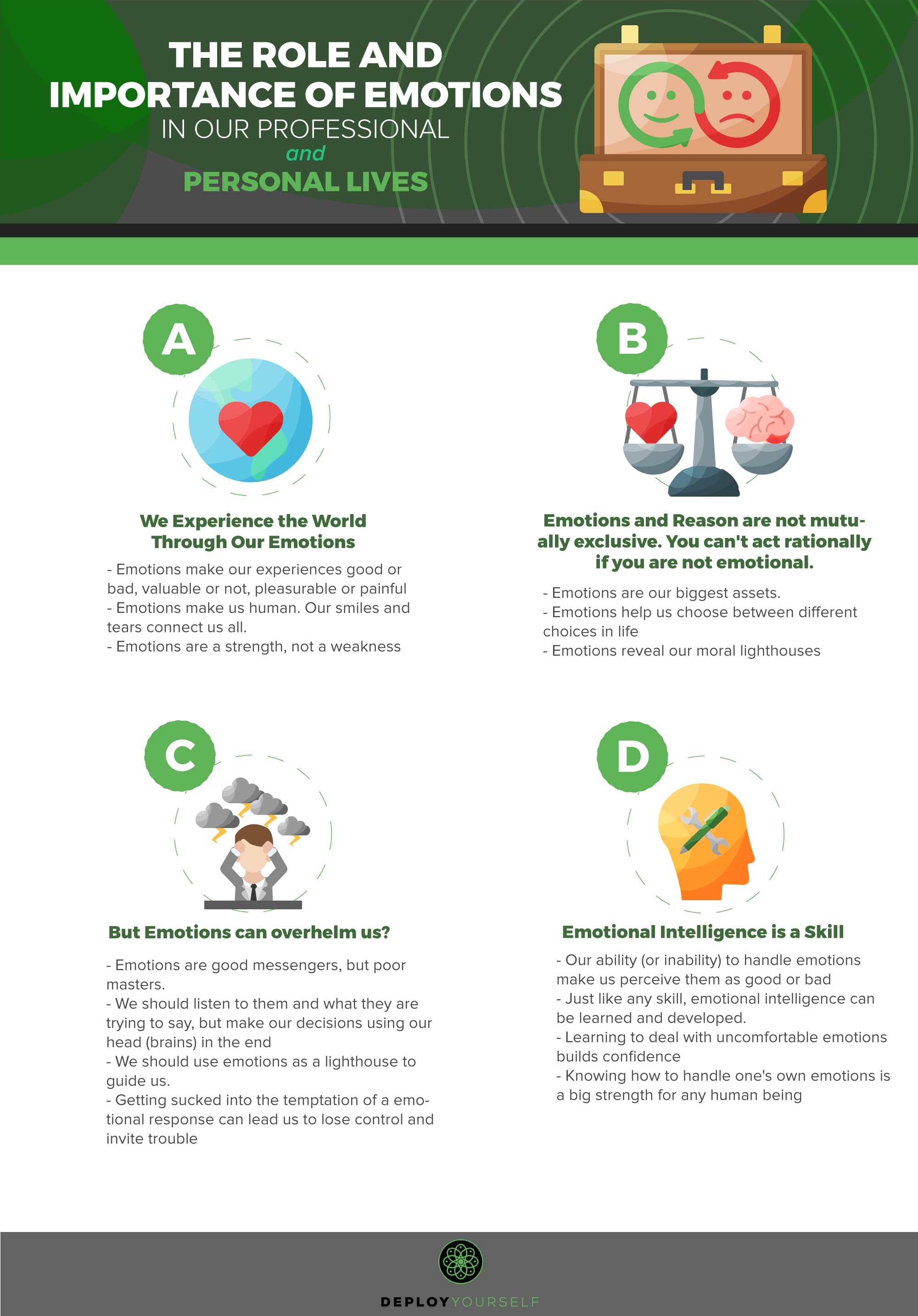
    We Experience The World Through Our Emotions

    We walk around the world and make sense of it through our emotions. When we experience an event, different emotions get triggered based on our values and beliefs. Emotions make our experiences good or bad, valuable or not, and pleasurable or painful. If we introspect we will found that every decision we end up taking is derived from an emotion that touched and moved us.

    These emotions can overwhelm us occasionally, but without them, we would have no connection with people or events around us. While emotions can sometimes bring pain and tears, it is only through them that we feel joy, happiness, and peace in life. It is very important to realize that emotions are our strength and not our weakness.

    It is our emotions that make us human. The little moments of joy when we play with our kids, the smile on our faces when we help someone, the tears in our eyes when we see something cruel and terrible (even if it is on TV) – it is these emotions that connect us all as human beings.

    Seeing a tweet by a billionaire CEO and to be able to feel empathy for him/her makes us bridge the economic, physical, and social divides and come closer. On the other hand, if we are privileged in any way, being able to empathize with the less privileged and act for them brings us closer. Emotions help keep our egos in check and prevent us from being indifferent towards the less or more privileged in our society.

    Emotions and Reason are Not Mutually Exclusive

    Most of us believe that emotions and reason are opposites of each other, and it is often presented as a fact that you can’t act rationally if you are emotional. In many workplaces, emotions are frowned upon and an excessive display of emotions (joy, tears, anger) is seen as a liability.

    On the contrary, what I have learned over the years is that emotions can be our biggest asset. They can give us important information that can shape our lives if we listen to what they are trying to tell us. The key is to learn how to express our emotions without repression or explosion.

    Emotions can help us clear the fog of rational choices and reveal our moral lighthouses. They help us choose wisely when presented with two equally good or equally bad choices. Emotions clarify our thinking and help us see rational choices in a new light while pure rationality often makes us run wild with ideas, even at the expense of others. Rationality without emotions can look enticing in the short term, but it can be a menace in the long term.

    It Is Impossible to Be Rational Without Emotions

    While it is true that emotions can overwhelm rationality at times, it is impossible to be rational without being emotional. Today there is scientific evidence to prove that we, as human beings, are incapable of making decisions if we can’t feel our emotions. You can read about the works of neurobiologist Antonio Damasio to see that without emotions, there is no decision making possible. [1][2]

    He worked on a patient with a severed connection between the frontal lobe (where rationality originates) and cerebral amygdala (where emotions originate) in the brain. After the surgery, the patient could think, but he could not feel anything. He noticed that while he was able to engage in rational thought all the time, he was not able to make a choice over the other.

    When Emotions Overwhelm Us?

    We all have been in situations where we don’t want to do what we know is the right thing to do. When emotions overwhelm us, we can get sucked into the temptation of the respective emotion and (re)act in a way that provides us emotional relief. For example – When you couldn’t control your frustration and vented it out on your manager because it felt good to spurt it out.

    Emotions are very good messengers, but poor masters. We should always listen to them and let them play a big role in our rationality, but subjugating reason for emotional whims can cause us short and long-term harm. In the end, we should always use reason to choose the best option available for us, and use emotions as a lighthouse to guide us on the right path. This will help us in making the right choices (which might not be the easy ones) in life with conviction.

    Emotions Intelligence is a Skill. Train Yourself

    Now that we have seen that there is no action possible without emotions, we can conclude that emotions are not bad or good in themselves. It is our ability to handle them that makes us interpret them as so. It is a skill that, just like other skills, can be developed.

    Learning to deal with uncomfortable emotions builds confidence and opens up new pathways that were earlier closed to you. Emotional people are often regarded as weak in certain societies, but I believe that the ability to handle one’s own emotions is one of the most useful skills a human being can acquire.

    Increased emotional awareness can be a great asset we all can make use of not only to make the right decisions for ourselves but also to create a better world around us. A world which is not mine or yours – but ours.

  • What Not To Do When Conflicts Happen?

    We all deal with conflicts in the workplace. In the last 12 years of my professional career, I have had my own share of conflicts. That has left me with some learnings about how to navigate through them successfully. This article is the second in a series of articles. To understand conflicts better, find the first one here.

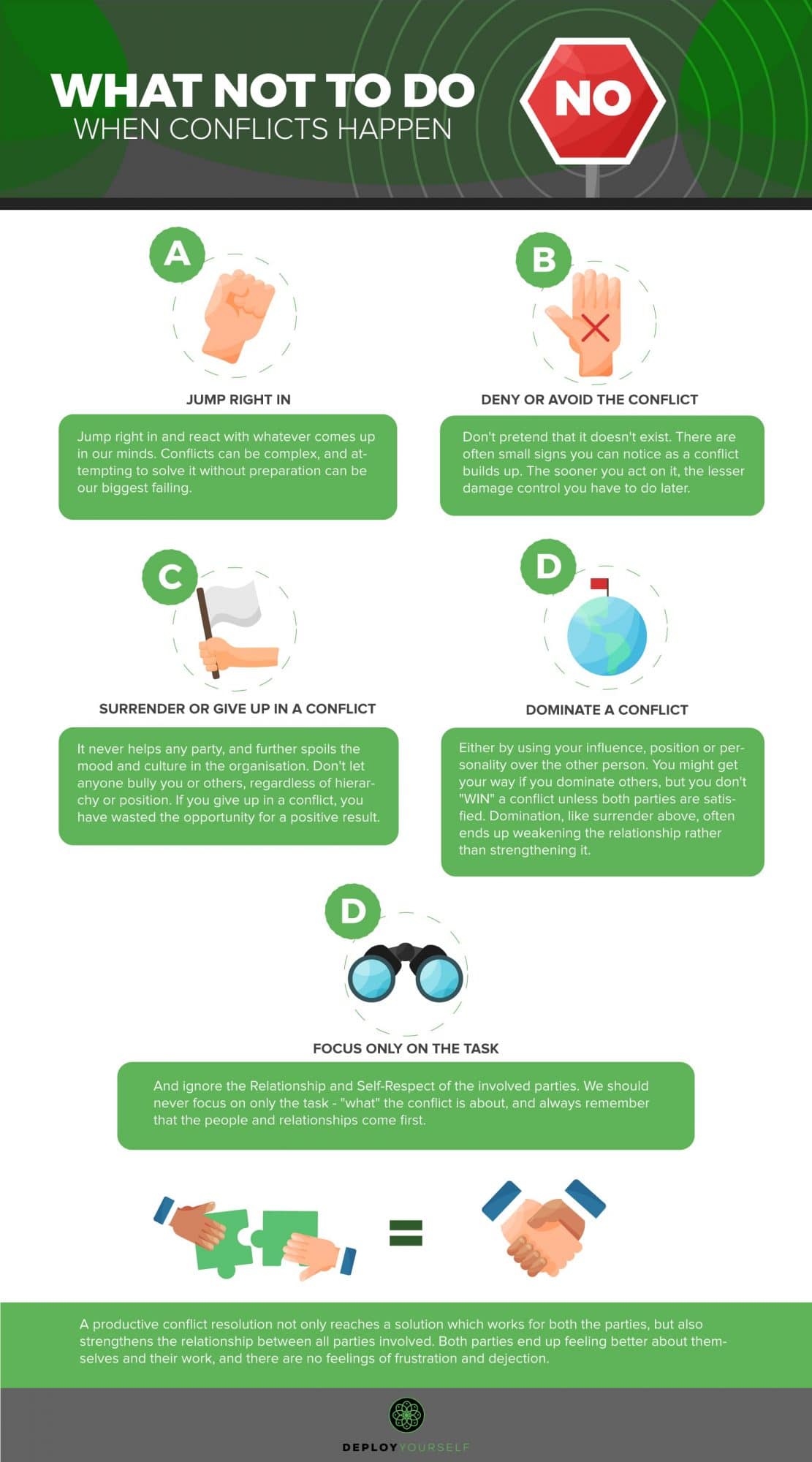
    While there are different ways we can approach a conflict, I have learned from my experiences a few things we MUST NOT DO when conflicts happen. However, these are the very things we end up doing when we are not prepared or aware of how to respond to a particular conflict.

    1. Jump Right In and React

    Conflicts can be complex, and attempting to handle them without preparation can be our biggest failure. As human beings, we (or our brains) never want to be involved in a conflict, so whenever we encounter one, the first impulse is always to react with whatever comes up in our minds.

    Our brains are hardwired to protect us from danger and to ensure our survival. An unexpected conflict is perceived as a threat, and it can lead us towards a fight or flight reaction. Doing so without understanding the conflict and giving ourselves time to process it can do damage which can take a lot of effort to undo in the future.

    2. Deny or Avoid the conflict

    One of the most natural ways to react to a conflict is to deny its existence. There are always small signs you can notice as conflict builds up. The sooner you act on it, the lesser damage control you have to do later. Don’t pretend that it doesn’t exist, or you are only postponing the problem.

    Denial means acting like the conflict doesn’t even exist, and I don’t think there is any human being who has not acted with denial when presented with a conflict at least once in their life. We can close our eyes and walk around as nothing has happened, but that can often result in falling into a pit which can then take a lot of effort to get out of.

    “You can’t shake hands with a clenched fist.” – Indira Gandhi

    3. Surrender or Give Up

    Many of us hate confrontation, and often we give up our needs and position to avoid an ‘unpleasant’ confrontation. While this prevents the confrontation, it often results in resignation and cynicism as surrendering doesn’t help in moving forward in our careers or life.

    Surrendering never helps any party, and spoils the mood and culture in the organization. We should not let anyone bully us or others, regardless of hierarchy or position. If we give up in a conflict, we must know that we have wasted an opportunity for a positive result.

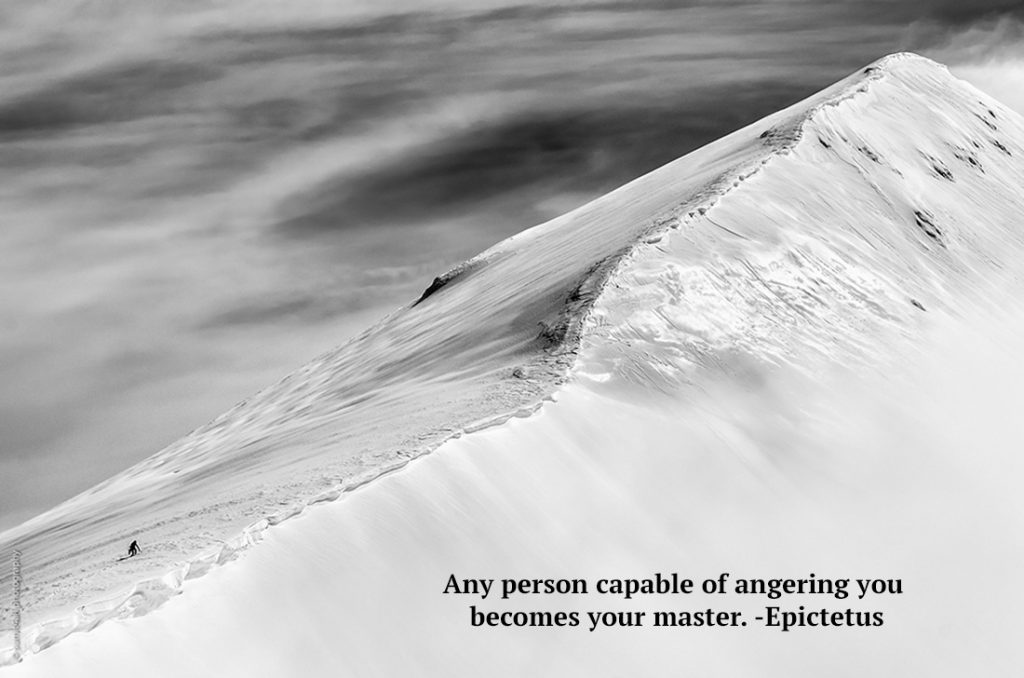
    Can you put anger to productive use?
    What Not To Do When Conflicts Happen?

    4. Dominate a Conflict

    On the other spectrum of surrendering is trying to get our way by dominating. We can do this either by using our influence, position, or personality over the other person. We might get our way if we dominate others, but we never truly “win” a conflict unless both parties are satisfied.

    Domination, like surrender above, often ends up weakening the relationship rather than strengthening it. If people are unhappy and resentful, sooner or later it will boil up again as a conflict or show in poor results in whatever we are trying to do.

    5. Ignore the Relationship and the People Involved

    We often get sucked up in tasks and getting the results we want, that we totally ignore the relationship and the people involved. We should always remember that the people and relationships come first and that any success that focuses only on the “task” will be short-lived if we destroy the relationships in the process.

    A productive conflict resolution not only reaches a solution that works for both the parties but also strengthens the relationship between all parties involved. They end up feeling better about themselves and their work, without any frustration and cynicism.

    In conclusion, I would like to add that constructive conflict resolution can only happen in a space of trust and camaraderie between people, and all of the points above destroys this space. When people understand each others’ needs and look beyond their fears and anxieties, they can work together to create new results that work for everyone. When this happens, you win WITH the other person rather than OVER them.