
Newsletter

The Deploy Yourself Newsletter

  • Issue #26, 11 May 2021 – 7 Unusual Superpowers

    Welcome to the Deploy Yourself Newsletter. Every two weeks I share what impactful leadership looks like to show your own power. I also share the most insightful lessons and stories I encountered in the last two weeks. You can also read this issue online.

    Hey,

    7 Unusual Superpowers

    I work with leaders who have taken on big and complicated challenges. Yet, I have found that as human beings, we have some unique abilities which we often ignore to use. I call them the 7 Unusual Superpowers, and we can choose to use them whenever we want. Are you using yours? They are :

    1. To take a break and slow down to reflect when everyone around you is running busy and overwhelmed.
    2. To focus on doing the right thing vs doing everything right.
    3. To care so much (about your customers and other people around you) that you don’t care. It is a superpower when you can be straight and honest to people to serve them compared to being nice to please them.
    4. To share your gifts with others and to take action – just for the sake of serving others instead of wanting something in return.
    5. To be honest and admit your own vulnerability rather than faking confidence and winging it.
    6. To continuously take imperfect action and move forwards instead of waiting for perfection and the right moment.
    7. To respond according to your values and choice rather than from automatic habits of the past.

    What is the unusual superpower that you have been hiding from the world? Reply to this email right now if you recognize your superpower. I read and respond to every reply.

    Articles and Stories Which Have Fascinated Me

    One

    Why Your Meetings Stink—and What to Do About It

    Although most organizations have meetings that could easily be cut, a no-meetings policy is unrealistic and counterproductive. Meetings can efficiently bring together ideas and opinions and allow people to do their jobs in a more coordinated and cooperative manner. They help individuals form a coherent whole that is more adaptive, resilient, and self-directing, especially in times of crisis.

    So the goal should be not to kill all meetings but to eliminate the ineffective or unnecessary ones and improve the quality of those that remain. Better meeting leadership requires better self-observation. Take a few minutes after each meeting you run to reflect. Think about attendee behavior, conversational dynamics, and the content that was covered. Ask yourself: Were people distracted? Conducting side conversations?

    Leading meetings might seem like a small part of a manager’s job. But the positive change in this one arena can lead to real gains for companies and their employees. If your organization isn’t training you in this key skill, it’s time for you to develop it on your own.

    From an HBR Article titled Why Your Meetings Stink—and What to Do About It

    Two

    7 Essential Work Skills For The Future – The 2020s And 2030s

    Do you remember a time when you couldn’t ‘Google’ something? Or had to rely on a piece of paper to find your way to a location? Or when ‘social networking’ just meant meeting up with people in real life? Our world is changing fast, with new technologies and ways of doing business. So much has changed since 2000 – and the next 20 years will be no different. 

    The coronavirus pandemic has already accelerated this change and helped some technologies like video calling to come to the forefront. People will need to adapt to this constantly changing landscape to stay relevant and perform well. 

    The world is changing, and those who don’t adapt quickly will be left behind. You have seen how different 2020 was from the years right before it, and the future will be no different. Below are 7 workplace skills everyone will need in the future – the 2020s and beyond that.

    1. Multi-Disciplinary Thinking
    2. Emotional Intelligence
    3. Creative, Out-of-the-Box Thinking
    4. Logical and Data-Driven Reasoning 
    5. Virtual Collaboration
    6. Designing a Holistic Environment That Promotes Wellbeing 
    7. Having a Voice

    From an article from my desk – 7 Essential Work Skills For The Future – The 2020s And 2030s

    Three

    A Quote by Benjamin Franklin

    “Remember not only to say the right thing in the right place, but far more difficult still, to leave unsaid the wrong thing at the tempting moment.”

    Benjamin Franklin

    That’s it for now. If you have any questions or feedback, or just want to introduce yourself, hit reply. I read and respond to every reply. All the best,

    Sumit

    (Twitter) @SumitGupta
    (LinkedIn) Connect
  • Issue #25, 27 Apr 2021 – A Ripple of Hope

    Welcome to the Deploy Yourself Newsletter. Every two weeks I share what impactful leadership looks like to show your own power. I also share the most insightful lessons and stories I encountered in the last two weeks. You can also read this issue online.

    Hey,

    A Ripple of Hope

    The recent wave of coronavirus has hit India, and especially my hometown Delhi, very hard. I have suffered some losses in my family in the last week, and I am hurt and pained as I write this. However, it would be a terrible waste if we only experience the worst in this crisis – the fear, the panic, the anxiety; and ignore the other side of the coin – which is how a crisis like this also bring kindness, service, courage, humility, and companionship to the surface.

    Hence, I want to share with the readers a poem titled “A Ripple of Hope” I wrote over 10 years ago.

    When nothing around you is going your way,
    When nobody is hearing what you have to say..
    Times like these are the real test of your will,
    For amid storms is the challenge to stand still..

    When your life will take a sudden turn,
    When you will reach a point of no return
    Just keep moving ahead despite of every hurdle,
    For there is always light at the end of the tunnel..

    When all you get is blow after blow,
    When every hope and promise seems hollow
    You have to decide how high you want to rise,
    For you know in every crisis there is a prize..

    When nobody around you knows what to do,
    When everybody is searching for a clue
    That is the time for you to stand strong,
    For every night ends no matter how long..

    When everything looks like falling apart,
    It is very important not to lose heart
    For every step, you take against the slope,
    You are giving rise to a ripple of hope…

    Reply to this email right now if it sparked something for you. I read and respond to every reply.

    Articles and Stories Which Have Fascinated Me

    One

    The Neglected Middle Child of Mental Health

    Languishing is a sense of stagnation and emptiness. It feels as if you’re muddling through your days, looking at your life through a foggy windshield. It’s the void between depression and flourishing — the absence of well-being. You don’t have symptoms of mental illness, but you’re not the picture of mental health either. You’re not functioning at full capacity. Languishing dulls your motivation, disrupts your ability to focus, and triples the odds that you’ll cut back on work. It appears to be more common than major depression — and in some ways it may be a bigger risk factor for mental illness.

    So what can we do about it? A concept called “flow” may be an antidote to languishing. Flow is that elusive state of absorption in a meaningful challenge or a momentary bond, where your sense of time, place and self melts away. During the early days of the pandemic, the best predictor of well-being wasn’t optimism or mindfulness — it was flow. People who became more immersed in their projects managed to avoid languishing and maintained their prepandemic happiness.

    By acknowledging that so many of us are languishing, we can start giving voice to quiet despair and lighting a path out of the void.

    From A New York Times Article titled There’s a Name for the Blah You’re Feeling: It’s Called Languishing

    Two

    Why Are You Trying So Hard To Fit In When You Can Instead Stand Out?

    “I can always choose, but I ought to know that if I do not choose, I am still choosing.”, said Jean-Paul Sartre.

    We are always in action and always making choices. We are never not making a choice. Even not doing something is a choice. There is no life without choice. We have this power – to choose – in every moment of life. Once you understand this, it can be very powerful.

    Watch Steve Jobs explain the same concept in different words in this short 100 seconds video.

    Three

    A Framework To Take Your Team Culture From Blame to Accountability

    If you fail to shape your culture, the culture will shape you and your business results.

    Blame stops learning, as people get defensive and hold onto their positions. As a consequence, both the individual and the organization do not enjoy the benefits of learning from the mistakes. In a culture of blame, people start hiding mistakes, which is even worse.  On the other hand, accountability means recognizing that anybody can err and viewing mistakes as opportunities for learning and growing.

    How to Get There? The following are 6 steps to take your team culture from blame to accountability.

    1. Create Trust and Psychological Safety
    2. Create a No-Blame, Always-Learning Policy
    3. Be Curious. Ask Questions To Figure Out Why The Problem Happened? 
    4. Build and Practice Emotional Intelligence
    5. Make It Better
    6. As a Leader, Take Responsibility for Your Team’s Actions

    From an article from my desk – A 6 Step Framework To Take Your Team Culture From Blame to Accountability

    That’s it for now. If you have any questions or feedback, or just want to introduce yourself, hit reply. I read and respond to every reply. All the best,

    Sumit

    (Twitter) @SumitGupta
    (LinkedIn) Connect

  • Issue #24, 13 Apr 2021 – When Will You Do What Makes You Happy?

    Welcome to the Deploy Yourself Newsletter. Every two weeks I share what impactful leadership looks like to show your own power. I also share the most insightful lessons and stories I encountered in the last two weeks. You can also read this issue online.

    Hey,

    When Will You Do What Makes You Happy?

    When I ask the question “Are you happy?” at work or with my leadership coaching clients, I often get a blank look. People don’t understand the context of this question – especially at work. And that is where I am left the most surprised.

    Everyone I interact with wants success, productivity, engagement, and motivation – but people are often blind about happiness. They think happiness is a price they have to pay to achieve all that. I have found that happiness is often the pre-condition for everything else in life. And that is where many of my coachees get an “aha” moment.

    When I say happiness, I want to be clear to not confuse it with pleasure or being comfortable. You can be happy and joyful even amidst your biggest challenges, and even when you are the most uncomfortable that you have been.

    Happiness is going after what makes you happy. Period. Nothing more. Nothing less. What is it that makes you happy? Where have you buried that dream of yours? Is it buried under discouragement from others, or under lack of approval, or under past failures, or due to a fear of what you might find if you dig the dream out from where it is buried?

    So, let me ask you – When will you do what makes you happy? When will you give yourself permission to do that? Yes. Give. Yourself. Permission. Read that again if you have to.

    Reply to this email right now if it sparked something for you. I read and respond to every reply.

    Articles and Stories Which Have Fascinated Me

    One

    Lessons In The Art of Listening From a CIA Agent and more

    Listening can be more valuable than speaking. Wars have been fought, fortunes lost and friendships wrecked for lack of listening. It is only by listening that we engage, understand, empathize, cooperate and develop as human beings. It is fundamental to any successful relationship — personal, professional and political.

    It also involves paying attention to how they say it and what they do while they are saying it, in what context, and how what they say resonates within you. Good listeners ask good questions. One of the most valuable lessons I’ve learned as a journalist is that anyone can be interesting if you ask the right questions.

    That is, if you ask truly curious questions that don’t have the hidden agenda of fixing, saving, advising, convincing or correcting. Curious questions don’t begin with “Wouldn’t you agree…?” or “Don’t you think…?” and they definitely don’t end with “right?” The idea is to explore the other person’s point of view, not sway it.

    Listening is a skill. And as with any skill, it degrades if you don’t do it enough. Some people may have stronger natural ability while others may have to work harder, but each of us can become a better listener with practice. 

    From A New York Times Article titled Talk Less. Listen More. Here’s How.

    Two

    Advantages of Strengths-based Leadership

    Does your manager focus only on your weaknesses and never talks about your strengths? If you answered yes, you are not alone. The following are some reasons why you shouldn’t try fixing people.

    1. It doesn’t work. It leads to frustration and demotivation.
    2. It ignores the strengths of people, which can create extraordinary room for growth.
    3. Focussing On Weaknesses Says “I Know Better”

    On the other hand, below are 6 advantages of strengths-based management and leadership

    1. Fast growth and learning
    2. Better productivity and output
    3. Low stress and better well-being
    4. High engagement and motivation
    5. Building on strengths is faster than fixing weaknesses
    6. Higher retention – people stay longer in places where their strengths are valued

    From an article from my desk – 6 Advantages of Strengths-Based Leadership and Management (And Why Should Managers Stop “Fixing” People?)

    That’s it for now. If you have any questions or feedback, or just want to introduce yourself, hit reply. I read and respond to every reply. All the best,

    Sumit

    (Twitter) @SumitGupta
    (LinkedIn) Connect

  • Issue #23, 30 Mar 2021 – Discover Your Most Powerful Tool – Language

    Welcome to the Deploy Yourself Newsletter. Every two weeks I share what impactful leadership looks like to show your own power. I also share the most insightful lessons and stories I encountered in the last two weeks. You can also read this issue online.

    Hey,

    Discover Your Most Powerful Tool – Language

    Language, and especially using it to create the future we want, is the best tool we have. We have the power to choose, in any given moment and circumstance, the life we are going to live. And that happens in language. We all have it within us to give up being a victim and take a stand for everything that matters in our lives. And that happens in language.

    We live in language just like fish live in water. Language is not only for describing and communicating. Its most powerful use is in creating a future. That happens when you make a declaration. Recall every time you said “yes” to a request or made a “commitment”. In these moments you were not just describing and communicating, you were creating a future. All human progress was created first in someone’s words – before it manifested as tools, technology, and objects.

    The only person who can envision and create your future is you. And that happens in language. The only person who can pin you down or defeat you is you. And that happens in language too. You produce every result by having conversations. Similarly, there is a missing conversation behind every result you desire but do not currently have.

    Reply to this email right now if it sparked something for you, or if you want to know more…

    Articles and Stories Which Have Fascinated Me

    One

    Be The Water in a River, Not Like in a Glass

    If you add salt to a glass of water, it becomes salty. And if you add salt to a river, the water stays as it is. In life, be more like the river and less like the glass when dealing with other’s emotions. The river and the glass are wonderful metaphors for having a big heart.

    From The River of Compassion

    Two

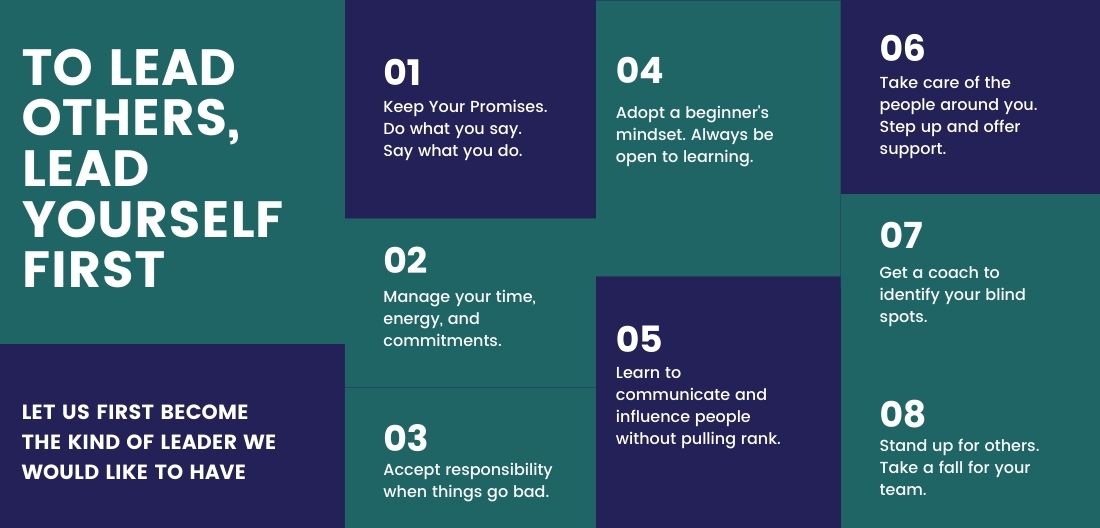
    8 Leadership Skills & Qualities to Lead Yourself

    Leadership is not a role; it is a mindset. It is about taking a stand and operating from a place of responsibility in all situations – and that includes the possibility of making mistakes and stumbling on the way.

    Leadership starts from reflection and focussing inwards. Leadership starts when you ask yourself the hard questions and are brave enough to do what most people wouldn’t do. As Lao Tzu once said, “Mastering others is strength; mastering yourself is true power.” It is only when you can lead yourself that you can lead others effectively.

    Here are 8 leadership skills and qualities to do so :-

    From an article from my desk – 8 Leadership Skills & Qualities to Lead Yourself

    Three

    How I Wrote 200 Articles in 200 Days

    The key to turning your experience into words is prioritization. Writing is a muscle, a marathon, and a legacy. My writing went from general advice to specific life musings. Instead of branching to more topics, I began to share my fears, dreams, and hesitations. People came for the content and stayed for the character. Aim to share your intimate and unfiltered thoughts, and you will intrigue your readers. 

    From an article – How I Wrote 200 Articles in 200 Days

    That’s it for now. If you have any questions, just hit reply. All the best,

    Sumit

    (Twitter) @SumitGupta
    (LinkedIn) Connect

  • Issue #22, 16 Mar 2021 – Fear Hides What You Really Really Desire

    Welcome to the Deploy Yourself Newsletter. Every two weeks I share what impactful leadership looks like to show your own power. I also share the most insightful lessons and stories I encountered in the last two weeks. You can also read this issue online.

    Hey,

    Are You Speaking Your Truth?

    I struggled with fear for a long time – fear to start this newsletter, fear to pursue coaching full-time, etc. What I have figured out in the last few years is that fear tells you what you really care about. Fear reveals what will make your life meaningful and make you come alive. Underneath fear is desire – the desire of what you really really long for.

    Fear is very useful as it is designed to keep us safe. It helps us escape danger, and plan for challenging situations. Fear is also a sign that you have a dream within you, and you long for something beyond your current comfort zone. You can either let fear stop you, or you can listen to fear and use it as a compass to guide you towards what you really really desire.

    I feel a little fear every time I write this newsletter. I am scared to speak my truth to my coachees – the truth that they don’t want to hear. But the truth is what my coachees want and pay me for. I speak to them as nobody would. As a coach, it is my job to serve them, not please them.

    Are you speaking your truth? Or, are you playing safe and only saying what is acceptable around you – at your work, in your family, and in your communities. It is not easy and comfortable. But it very meaningful and empowering. It scares me every time I speak my truth to a coachee, but it becomes worth it when they later thank me for saying it.

    I AM IN. ARE YOU?

    Reply to this email right now if it sparked something for you, or if you want to know more…

    Articles and Stories Which Have Fascinated Me

    One

    Lessons From Geniuses, and How To Be One?

    IQ, it turns out, is overrated and so, too, are other standardised tests, grades, Ivy League schools, and mentors. Stephen Hawking didn’t read until he was eight; Picasso and Beethoven couldn’t do basic mathematics. Jack Ma, John Lennon, Thomas Edison, Winston Churchill, Walt Disney, Charles Darwin, William Faulkner, and Steve Jobs likewise were all academic underachievers.

    If IQ is overrated, curiosity and persistence are not. Nor is having a childlike imagination through adult life, the capacity to relax so as to allow disparate ideas to coalesce into new, original ones, and the ability to construct a habit for work so as to get the product out the door. Genius is not an absolute but a human construct that’s dependent on time, place, and culture.

    From an article “What Can We Learn From Geniuses?” on AEON

    Two

    Celebrate and Reward Yourself To Make New Habits Stick

    If we really want to make lasting changes in our lives, psychologist BJ Fogg believes we need to break them down into specific, easy behaviors (what he calls Tiny Habits), and find ways to trigger and reward them. Taking 30 seconds or less, a Tiny Habit is fast, simple and will grow. For example, instead of having “get in shape” as a vague and intimidating goal, do two push-ups every time you make your morning coffee — that’s your Tiny Habit.

    When you celebrate, you create a positive feeling inside yourself on demand. This good feeling wires the new habit into your brain. Emotions create habits. Not repetition. Not frequency. Not fairy dust. Emotions. Celebration is the best way to use emotions and create a positive feeling that wires in new habits. It’s free, fast, and available to people of every color, shape, size, income, and personality. In addition, celebration teaches us how to be nice to ourselves.

    From an article – “The power of celebration to make habits stick” – on TED

    Three

    A definition of love beyond the limited domain of “romantic love”. Love (and care) is the foundation of trust. And trust is the foundation of all the work we do together as colleagues and comrades.

    Love for a person is acceptance of him or her the way he is and the way he is not. – Werner Erhard

    That’s it for now. If you have any questions, just hit reply. All the best,

    Sumit

    (Twitter) @SumitGupta
    (LinkedIn) Connect

  • Issue #21, 2 Mar 2021 – Your Hidden Power #3 – The Power Of Your Language

    Welcome to the Deploy Yourself Newsletter. Every two weeks I share what impactful leadership looks like to show you how powerful you are. I also share the most insightful lessons and stories I encountered in the last two weeks. You can also read this issue online.

    Hey,

    We are much more powerful than we think we are. I talked about the power of your mind and your emotions in the last two newsletters, and language is the subject of today’s e-mail.

    The Power Of Your Language

    Words, and thus language, is the technology that has made humans the most powerful species on the planet. Alone, a human being is a puny creature that cannot stand its ground against most animals. However, as a team, it is a completely different ball game. Our ability to communicate effectively is what has led to all the progress we have made.

    Language does more than just help in describing and communicating. Language creates our world. The way we use language shapes how we view the world. It impacts every action we take, and hence every result we produce.

    Every result that you have in your life started as a conversation – either with yourself or with someone else. And every result that you do not have in your life is also because of a missing conversation. Read that again, because that’s how powerful it is.

    The path to any result that you desire in the future is paved with a series of conversations. Ask yourself – If there is a result that you want but do not currently have, what might be the missing conversations?

    Reply to this email right now if it sparked something for you, or if you want to know more…

    Articles and Stories Which Have Fascinated Me

    One

    Abraham Lincoln’s – Success or Failure?

    Abraham Lincoln is still regarded as one of the greatest American leaders, and his legacy lives on today. Today, in the 21st century, it is easy to remember him as the “most successful” President and to reflect on all his achievements. Yet many people are unaware of what it took for him to reach there.

    Here is how Abraham Lincoln’s road to be elected the President of the US looked like. Can you count the failures?

    • 1816: His family was forced out of their home. He had to work to support them.
    • 1818: His mother died.
    • 1831: Failed in business.
    • 1832: Ran for state legislature – lost.
    • 1832: Also lost his job – wanted to go to law school but couldn’t get in.
    • 1833: Borrowed some money from a friend to begin a business and by the end of the year he was bankrupt. He spent the next 17 years of his life paying off this debt.
    • 1834: Ran for state legislature again – won.
    • 1835: Was engaged to be married, sweetheart died and his heart was broken.
    • 1836: Had a total nervous breakdown and was in bed for six months.
    • 1838: Sought to become speaker of the state legislature – defeated.
    • 1840: Sought to become elector – defeated.
    • 1843: Ran for Congress – lost.
    • 1846: Ran for Congress again – this time he won – went to Washington and did a good job.
    • 1848: Ran for re-election to Congress – lost.
    • 1849 Sought the job of land officer in his home state – rejected.
    • 1854: Ran for Senate of the United States – lost.
    • 1856: Sought the Vice-Presidential nomination at his party’s national convention – got less than 100 votes.
    • 1858: Ran for U.S. Senate again – again he lost.
    • 1860: Elected president of the United States.

    Two

    Never Sacrifice Happiness For Achievement

    Happiness and achievement are two different things. No doubt we need goals to challenge us, to inspire us, and take action, but we need not be happy only on the successful completion of the goal. Happiness is more of a choice rather than an outcome. When we are doing small daily tasks towards a bigger goal or a milestone, we can be happy and enjoy our best in each of these tasks, no matter how small they may be.

    Remember gold needs to go through a furnace before it starts to glow and shine. A diamond is nothing but carbon. It has to withstand enormous pressure for many many years before it becomes a diamond. Similarly, for any commendable achievement, everybody has to make some sacrifices, do some tasks which we don’t like, or sometimes we have to just hope and wait for the results of our efforts. All this is ‘part of the game‘. 

    So start living NOW. Enjoy what you are doing. This is the only moment you will ever have. This is the moment to celebrate. Courage is not the absence of fear, it is knowing that it is there and still dreaming to be bigger than your fear. I will end with a simple but very powerful quote –
    “Have the courage to live. Anyone can die.”

    An article from my old blog which I wrote over 10 years ago

    That’s it for now. If you have any questions, just hit reply. All the best,

    Sumit

    (Twitter) @SumitGupta
    (LinkedIn) Connect

  • Issue #20, 16 Feb 2021 – Your Hidden Power #2 – The Power Of Your Emotions

    Welcome to the Deploy Yourself Newsletter. Every two weeks I share what impactful leadership looks like to show you how powerful you are. I also share the most insightful lessons and stories I encountered in the last two weeks. You can also read this issue online.

    Hey,

    We are much more powerful than we think we are. I shared the first of the three main ways we can tap into this hidden power in the last newsletter, and the second is the subject of today’s e-mail. I will share the last source of power in the next newsletter.

    The Power Of Your Emotions

    Emotions are usually seen as a weakness – something that we must hide or suppress if we want to progress and succeed. Yet I have found that they can be our biggest strength and motivator. Emotions can overwhelm us occasionally, but without them, we would have no joy or happiness either.

    Here are 3 ways you can make your emotions work for you, rather than against you –

    1. Each Emotion Tells You What You Care About – Often in life, you don’t know what you care about and what matters to you. As a result, you end up accepting the standards and values which other people (parents, society, culture, etc) decide. However, trying to live your life by others’ standards is akin to surrendering your own will and judgment. If you listen to your emotions, they can reveal what you care about. They can reveal what makes you unique.
    2. Don’t Try To Fit In When You Are Made To Stand Out – People too often hate that they are different from everybody else and try too hard to become someone they are not. No two people are the same, just like no two flowers or no two birds are the same. Your uniqueness comes from what you care about, and your emotions are the gateway to understanding that.
    3. Respond To Your Emotions, Don’t React – Your emotions can impede your ability to think and act rationally if you allow yourselves to be overwhelmed by them. They can hold you captive, dictate your actions, and prevent you from Deploying Yourself. However, there is always a gap between emotion and your response. And that gap allows you to “choose” your response aligned with what you care about and the future you want to see in the world.

    Understanding your emotions and understanding what they conceal enables your unique light to shine upon the world, instead of following the path others have decided for you. This way you can achieve what you always knew you were meant to do.

    Reply to this email right now if it sparked something for you, or if you want to know more…

    Articles and Stories Which Have Fascinated Me

    One

    Jim Rohn on the disappointments of life:

    “Let’s face it … people and events are going to continue to both hurt and disappoint you. Among the people will be those you most love, as well as those you least know. Seldom is it their intent to purposely hurt you, but rather, a variety of situations mostly beyond your control will cause them to act, speak, or think in ways which can have an adverse effect upon you, your present feelings and emotions, and the way your life upholds. It has been this way through six thousand years of recorded history, and your hurt or grief is not the first time a human has been deeply hurt by the inappropriate actions of another.

    The only way to avoid being touched by life––the good as well as the bad––is to withdraw from society, and even then you will disappoint yourself, and your imagining about what is going on out there will haunt you and hurt you. Knowing this, there is but one solution that will support you when people and events hurt you, and that is to learn to work harder on your personal growth than anything else. Since you cannot control the weather, or the traffic, or the one you love, or your neighbors, or your boss, then you must learn to control you … the one whose response to the difficulties of life really counts.”

    From Jim Rohn’s book “Seasons of Life”

    Two

    Character and Success

    “Perhaps there is no more important component of character than steadfast resolution. The boy who is going to make a great man, or is going to count in any way in after life, must make up his mind not merely to overcome a thousand obstacles, but to win in spite of a thousand repulses or defeats. He may be able to wrest success along the lines on which he originally started. He may have to try something entirely new. On the one hand, he must not be volatile and irresolute, and, on the other hand, he must not fear to try a new line because he has failed in another.

    Alike for the nation and the individual, the one indispensable requisite is character—character that does and dares as well as endures, character that is active in the performance of virtue no less than firm in the refusal to do aught that is vicious or degraded.”

    From the speech “Character and Success” by Theodore Roosevelt

    That’s it for now. If you have any questions, just hit reply. All the best,

    Sumit

    (Twitter) @SumitGupta
    (LinkedIn) Connect

  • Issue #19, 2 Feb 2021 – Your Hidden Power #1 – The Power Of Your Mind

    Welcome to the Deploy Yourself Newsletter. Every two weeks I share what impactful leadership looks like to show you how powerful you are. I also share the most insightful lessons and stories I encountered in the last two weeks. You can also read this issue online.

    Hey,

    Two weeks ago I talked about how each of us is much powerful than we think we are. I have discovered 3 main ways we can tap into this hidden source of power, and the first of them is the subject of today’s mail. I will share the other two sources of power in the next two emails.

    The Power Of Your Mind

    The human mind is often called the most sophisticated machine in the universe. Yet we are never taught how to best use it to our advantage. And guess what, the human mind can also lead you to damaging behaviors if you are not conscious about its usage.

    Social media (seen this?) and e-commerce websites work hard to exploit your brain’s unconscious wiring to get you addicted to their products. If we don’t take proactive action, the constant bombardment on advertisements and notifications can take our attention from things that really matter – like friends, family, and results that are important to us.

    Here are 3 ways we can make our brains work for us, rather than work against us

    1. Build Your Own Conscious Habits – Every time you upload a photo on social media and get notified of a like, you are getting a dopamine hit and building a habit. Similarly, most of our habits are unconscious and formed by others. The first step is to form your own habits that serve you, not the other way round. Become aware of your own biases and limiting patterns, and take control of your life rather than just relying on willpower. Design your life, rather than let it be designed by external circumstances.
    2. Don’t Choke On Your Thoughts – Don’t believe the endless loop of internal thoughts that gives you a running commentary on everything in your life. If you’re not careful, you can choke on this never-ending stream of random thoughts. So much so that it can block the rest of your thinking. Or you can do more deliberate thinking to be more conscious of your life choices and results. As with most things, the choice is yours.
    3. Dream and Play Big – Playing small is easy as we don’t get unwanted attention and questions. We play small as everyone around us is doing the same. We settle for too low. And then we blame ourselves for achieving less than what we know deep inside we are capable of. We deprive ourselves of the true joy and happiness which comes from going after what really matters to us. We think we are scared of failure when we are in fact more scared of our own hidden greatness. We are scared to show this hidden greatness in front of the world.

    Your unconscious and limiting beliefs stop yourself “to be” in the world. It is not “you” if you are not free.

    You might be breathing but you are not living. Give yourself the freedom to play, laugh, and fully express yourself .

    Act in a way that allows your own unique light to shine upon the world, instead of following the path others have decided for you

    Reply to this email right now if it sparked something for you, or if you want to know more…

    Articles and Stories Which Have Fascinated Me

    One

    Ripple of Hope

    When nothing around you is going your way,
    When nobody is hearing what you have to say..
    Times like these are the real test of your will,
    For amid storms is the challenge to stand still..

    When your life will take a sudden turn,
    When you will reach a point of no return
    Just keep moving ahead despite of every hurdle,
    For there is always light at the end of the tunnel..

    When all you get is blow after blow,
    When every hope and promise seems hollow
    You have to decide how high you want to rise,
    For you know in every crisis there is a prize..

    When nobody around you knows what to do,
    When everybody is searching for a clue
    That is the time for you to stand strong,
    For every night ends no matter how long..

    When everything looks like falling apart,
    It is very important not to lose heart
    For every step you take against the slope,
    You are giving rise to a ripple of hope...

    (this is a poem I wrote around 10 years ago. Interesting trivia – I coined the name Deploy Yourself only in 2016, but I was already writing on the idea behind DY for more than a decade)

    That’s it for now. If you have any questions, just hit reply. All the best,

    Sumit

    (Twitter) @SumitGupta
    (LinkedIn) Connect

  • Issue #18, 19 Jan 2021 – You Are More Powerful Than You Think You Are

    Welcome to the Deploy Yourself Newsletter. Every two weeks I share what impactful leadership looks like to show you how powerful you are. I also share the most insightful lessons and stories I encountered in the last two weeks. You can also read this issue online.

    Hey,

    I always thought I was shy, introverted, and only good for working with computers. Then 2011 happened when I organized an anti-corruption protest march in India. 400 people showed up that day – still one of my proudest moments. In the next year, I set up a not for profit organization with volunteer-driven teams in 5 Indian cities. I had no idea I was capable of producing the results that I produced. That led me on a journey to understand human behavior, potential, and leadership.

    What I have found is that all of us operate at a level much below our true potential. We end up believing we are wired a certain way (by our family, peers, society) which limits our possibilities and actions. With the right support, you can often surprise yourself and those around you with what you can do.

    You are more powerful than you realise. You are braver than you think. You can life of complete aliveness and joy. You can watch life from the stands, or you can get on the arena and play like a champion. And if you are in the arena, you have already won. What is it that is on hold in your life? What is that idea or project which has been waiting for you to show up? Maybe, now is the time for you to make that happen. Maybe, now is the time to see what you are capable of. Maybe, now is the time to take care of what you truly care about.

    Reply to this email right now if it sparked something, or if you want to take the conversation ahead?

    Articles and Stories Which Have Fascinated Me

    One

    How Labels Shape Our Reality and Limit Our Ability to Reason

    Sometimes, we voluntarily label ourselves, and sometimes society labels us. When we do it, labeling can act as a compass to our values. When someone else does it, a label can be a lifelong prison sentence.

    Labels can lead to tribalism, dogma, and mob mentality. When we crave connection, we join groups in order to feel a sense of belonging. But it becomes dangerous when that group limits what you can and cannot say to the point where you forfeit independent and rational thought.

    We label people as fixed characters — ones incapable of change. So we label — sometimes entire swaths of people — as “addicts,” “racists,” “socialists,” and “criminals.”

    Remember, every time you slap a label on someone and put them in a box, you filter what you see. You make your world smaller, simpler, and less reflective of reality. As novelist Toni Morrison once wrote, “The definitions belong to the definers, not the defined.

    From How Labels Shape Our Reality and Limit Our Ability to Reason 

    Two

    An Offer To Join Me In A Year Long Leadership Journey

    Starting next month, I am starting a one-year leadership program with the Institute of Generative Leadership to improve my leadership skills. I will directly apply what I learn in the program to set up my own leadership development and coaching company in Amsterdam this year. One thing to realize as a leader is that learning never stops, and it is never too late to approach learning with a beginner’s attitude.

    If you want to take your leadership skills to the next level and see for yourself how powerful you can be, I invite you to join me in this year-long journey. You will be amazed by the kind of results you can produce given the right support and coaching.

    If you are interested to see what you are capable of, just hit reply and we can have a conversation about how the program works.

    That’s it for now. If you have any questions, just hit reply. All the best,

    Sumit

    (Twitter) @SumitGupta
    (LinkedIn) Connect

  • Issue #17, 5 Jan 2021 – How To Powerfully Step Into 2021?

    Welcome to the Deploy Yourself Newsletter. Every two weeks I share about what impactful leadership looks like to show you how powerful you are. I also share the most insightful lessons and stories I encountered in the last two weeks. You can also read this issue online.

    Hey,

    Today, as we stand at the cusp of a new year, is our annual reminder that time has come to move on from 2020 and prepare ourselves for the changes coming. Here are a few things I do each year to step into the new year on my own terms :-

    1. Complete The Previous Year (2020)

    1. Introspect your goals (if any) at the start of the year and make peace with where you are now.
    2. Celebrate your achievements (big and small) and laugh about your failures (missed opportunities)
    3. Reflect upon what you have learned, and how you have changed or grown over the year.
    4. Free your mind from the grip of the difficult people and hard situations you have encountered this year.
    5. Apologize if you realize you have been a difficult person in someone else’s life.
    6. Give up any blame, regret or shame gathered this year. There will be new to collect in 2021
    7. Thank and express gratitude to everyone who has made a difference in your life

    2. Know Yourself

    1. What are your deepest motivations? What have you always wanted to do?
    2. What are you really passionate about? Is there something worth devoting your life to?
    3. What drives your actions and decisions? What are the values you hold most dearly?
    4. What makes you really happy or angry?
    5. Who are your biggest inspirations in life, and who are the people you can’t stand? Why?

    3. Where do you want to be in the next 5 or 10 years?

    This might seem too far ahead in the future, but it doesn’t take long for these years to roll by. Just think about how quickly the last 10 years have passed by.

    Imagining your own future can feel a bit strange and uncomfortable at first, but soon it will become a lot of fun – just like a game. Do not let this question overwhelm you (which it can), and instead, play it like a game and see what you come up with.

    4. Decide milestones or checkpoints on the way

    Make sure to be clear about what you want to achieve, when and where you will achieve that and with whom. The more numbers you can use the better this step will be in its fruitfulness, and it is best to avoid vague words like soon, sometime, in a few weeks, improvement, better, more, etc.

    With the above four steps, you can step into the new year and make a powerful “start“. Knowing where you want to go is always better than hoping to get “somewhere” by default.

    Reply to this email right now if it sparked something, or if you want to take the conversation ahead?

    Articles and Stories Which Have Fascinated Me

    One

    7 Essential Work Skills For The 2020s And 2030s

    Our world is changing fast, with new technologies and ways of doing business. So much has changed since 2000 – and the next 20 years will be no different. The coronavirus pandemic has already accelerated this change. People will need to adapt to this constantly changing landscape to stay relevant and perform well. 

    Below are 7 workplace skills everyone will need in in the future – the 2020s and beyond that.

    1. Multi-Disciplinary Thinking

    2. Emotional Intelligence

    3. Creative, Out-of-the-Box Thinking

    4. Logical and Data-Driven Reasoning 

    5. Virtual Collaboration

    6. Designing a Holistic Environment That Promotes Wellbeing 

    7. Having a Voice

    From 7 Essential Work Skills For The Future An Article From My Desk

    Two

    Write a Resume that Tells Your Story

    A great resume tells your career story. It will take you where you want to go, not just say where you’ve been.

    If you take a storytelling approach to reflecting on your experience before you craft a document, you will unlock a more interesting and comprehensive version of your experience. 

    Your career, like a plot, is made up of a series of events. You’ll start to see how the story comes together once you consider the relationship between the events, the characters who helped shape them, and the setting that influenced why things transpired the way they did.

    Simply saying you have a growth mindset or are a life-long learner is not enough! Take the opportunity to show with a story what you have to offer rather than just telling them.

    From Write a Resume that Tells Your Story

    That’s it for now. If you have any questions, just hit reply. All the best,

    Sumit

    (Twitter) @SumitGupta
    (LinkedIn) Connect

  • Issue #16, 22 Dec 2020 – The Headlight Analogy

    Welcome to the Deploy Yourself Newsletter. Every two weeks I share about what impactful leadership looks like. I am sending this a couple of days earlier just before the holidays start. I also share the most insightful lessons and stories I encountered in the last two weeks. You can also read this issue online.

    Hey,

    When we are driving at night towards a destination, we turn the car’s headlights on, and we can only see a few meters ahead clearly. Anything beyond what is illuminated by the car’s headlights is completely dark. And there is no guarantees that the road will take us to our destination. The road might be closed ahead, or there might be a diversion, or there might be some other unpredictable obstacle.

    Yet in this uncertainty, we continue driving and eventually reach our destination. Even if we experience obstacles along the way, we don’t just stop and sit on the road. We find an alternate way and continue our journey towards our destination.

    Yet when it comes to our life, why do we always seek complete control? We live in a world where insurance and pension policies, investments, education, business, almost everything is done with an objective to achieve something in the future. While planning for the future has its benefits, I believe we often take it too far and miss the only time we really have, which is “now”, or this very moment.

    Who gave you the guarantee that you will not die tomorrow, next week, or next month? What made you believe that you are going to die at 70 or 80, and not at 20 or 30 or 40. If you don’t believe it, read and watch the news. People are dying every day at all ages. The average age might be 70 or 80, but ask yourself – Do you really want to live your life based on a statistic?

    Instead, turn your headlights on and LIVE NOW. Enjoy whichever phase of life you are in. Be ok with uncertainty of life. See as far ahead as your headlights allow you to see. And have faith that if you find obstacles on the way, you will find another way. Don’t wait for tomorrow if you want to fall in love, travel to your dream destination, or eat that favourite ice-cream of yours. Do it NOW

    Life, by its very nature, is messy and unpredictable. You are not entitled to get anything out of it. Embrace the uncertainty of life and experience real FREEDOM. Go out and play. Learn a new language. Take a new job, or live in different cities/countries and soak in different cultures. Write, paint, or do anything else that makes you experience life rather than draining the life out of you.

    Don’t try to be nice or do what is expected. Don’t live for the gallery. Be authentic. For a change, LIVE for YOURSELF. Let yourself be misunderstood, hated, judged, or whatever, but live by your convictions. 

    It is better to be assassinated by another human being than to be assassinated by death.

    Reply to this email right now if it sparked something in you?

    Articles and Stories Which Have Fascinated Me

    One

    5 Unconscious Ways We Limit Our Own Freedom

    Are you living your life with your hand-brakes on without realizing it? Are you struggling to get the power in your life which you know you can? Do you wonder why your life looks so constrained and limited in this age of freedom and abundance?

    If you allow your unconscious mind to limit your choices in life, you will endlessly worry without finding out if you are on the right path or not. Being scared or feeling anxious about our deep desires is normal (from both the psychological and neuroscience point of view), but the real opportunity and power lie beyond them.

    And the amount of unconscious resistance you face from within can give you a measure of the real potential you have kept locked inside and which is waiting to be unleashed.

    From 5 Unconscious Ways We Limit Our Own Freedom An Article From My Desk

    Two

    My Favorite Reads of 2020

    I have not kept count, but I must have read around 100 books in 2020. This is by far the most I have ready in any year. Here are some of my favorites (in no particular order).

    1. Greenlights by Matthew McConaughey
    2. Mastery by George Leonard
    3. Leadership: In Turbulent Times by Doris Kearns Goodwin
    4. The Promise of a Pencil by Adam Braun
    5. Lincoln by David Herbert Donald
    6. Becoming By Michelle Obama
    7. The Leadership Challenge by James Kouzes & Barry Posner
    8. 12 Rules for Life by Jordan Peterson
    9. Thinking Fast and Slow by Daniel Kahneman
    10. Why We Sleep by Matthew Walker
    11. Influence by Robert Cialdini
    12. Language and the Pursuit of Leadership Excellence by Chalmers Brothers and Vinay Kumar
    13. Bhagavad Gita – translation by MK Gandhi
    14. Conscious Business by Fred Kofman
    15. Conscious Capitalism by John Mackey and Raj Sisodia
    16. The Rise of Theodore Roosevelt By Edmund Morris
    17. Lifespan: Why We Age and Why We Don’t Have To by David Sinclair
    18. A History of the World in 6 Glasses by Tom Standage
    19. Year of Yes by Shonda Rhimes
    20. Tao Te Ching by Lao Tzu / Stephen Mitchell

    That’s it for now. If you have any questions, just hit reply. All the best,

    Sumit

    (Twitter) @SumitGupta
    (LinkedIn) Connect

  • Issue #15, 10 Dec 2020 – The One Skill We Could All Learn

    Welcome to the Deploy Yourself Newsletter. Every two weeks I share about what impactful leadership looks like. I also share the most insightful lessons and stories I encountered in the last two weeks. You can also read this issue online.

    Hey,

    Most people become successful because of their ability to focus on doing a particular job well. Whether you are a software developer, a designer, an analyst, or a consultant, you are successful today because you have become very good at doing what you do. However, this laser-focus on finishing projects, and doing them to the best of your ability hardly leaves any time to slow down and relax.

    As the year draws to a close, the skill to celebrate and feel grateful is a skill we can all learn and use a bit more of. Before your hyper-focused mind kicks back in, reserve some time before the end of the year only for yourself. Yes, only for yourself. A time when you can sit alone, celebrate all that you have achieved in life, and express gratitude for all the little wonders and joys in your life.

    Whenever I do this exercise, I’m surprised at how many things I can list. Quickly, I feel relaxed and grateful, which makes life a whole lot more enjoyable.

    If your hyper-active brain is asking for evidence or looking to dismiss the above, there is plenty of research that backs up the fact that gratitude and celebration are powerful tools to improve your well-being and productivity in the long term.

    Reply to this email right now and tell me one thing that you are grateful for in this moment?

    Articles and Stories Which Have Fascinated Me

    One

    How To Use Both Conscious and Subconscious Mind to Solve Your Biggest Problems?

    The human brain is often called the most sophisticated machine in the universe. Be it writing a letter, loving our family members, playing a game, preparing a presentation, or planning for the future – none of these tasks are possible without our brains. Yet isn’t it surprising that our brain doesn’t come with an owner’s guide? Also, our education rarely teaches us how to make the best use of our brains.

    Even though a lot is unknown about how our mind works, there has been considerable progress in neuroscience in the last two decades. If the average human being knows about what we now know about our brains, I believe we can vastly increase our performance in all aspects of our lives.

    Our mind is often categorized into two categories – the conscious and the subconscious. Everywhere where we use rational thought, we are using our conscious mind. The subconscious mind, on the other hand, is where our intuition lies. We might think that when we develop ideas and solve problems, it is only our conscious mind at work. But our subconscious mind also plays a big role in the background.

    This is the part of the mind’s functioning which most people are unaware of.  Even in our lives, we can see that trying too hard to solve a problem can lead to frustration sometimes, yet when we step aside and do something else we can suddenly see the solution. Many scientific discoveries have also been accidental or happen in so called “Eureka” moments.

    Scientists have discovered that taking long walks in nature is one such mind wandering activity that can generate creative insights for problem solvers. There is evidence that spending just a few minutes outside in nature can improve people’s moods and generate positive emotions, which in turn can improve our intuitive idea generation.

    From How To Use Both Conscious and Subconscious Mind to Maximise Creativity And Solve Our Biggest Problems? – An Article From My Desk

    Two

    Solitude and Leadership

    This is one of my favorite leadership essays, and it highlights the role of solitude in the development of any leader. The author William Deresiewicz writes in this essay –

    “Your own reality—for yourself, not for others.” Thinking for yourself means finding yourself, finding your own reality. Here’s the other problem with Facebook and Twitter and even The New York Times. When you expose yourself to those things, especially in the constant way that people do now—older people as well as younger people—you are continuously bombarding yourself with a stream of other people’s thoughts. You are marinating yourself in conventional wisdom. In other people’s reality: for others, not for yourself. You are creating a cacophony in which it is impossible to hear your own voice, whether it’s yourself you’re thinking about or anything else. That’s what Emerson meant when he said that “he who should inspire and lead his race must be defended from traveling with the souls of other men, from living, breathing, reading, and writing in the daily, time-worn yoke of their opinions.” Notice that he uses the word lead. Leadership means finding a new direction, not simply putting yourself at the front of the herd that’s heading toward the cliff.

    I started by noting that solitude and leadership would seem to be contradictory things. But it seems to me that solitude is the very essence of leadership. The position of the leader is ultimately an intensely solitary, even intensely lonely one. However many people you may consult, you are the one who has to make the hard decisions. And at such moments, all you really have is yourself.

    From Solitude and Leadership – An Essay by William Deresiewicz

    That’s it for now. If you have any questions, just hit reply. All the best,

    Sumit

    (Twitter) @SumitGupta
    (LinkedIn) Connect

  • Issue #14, 26 Nov 2020 – Slow Down To “Wander and Wonder”

    Welcome to the Deploy Yourself Newsletter. Every two weeks I share about what impactful leadership looks like. I also share the most insightful lessons and stories I encountered in the last two weeks. You can also read this issue online.

    Hey,

    Usually, we go through our days at 100 miles per hour in the pursuit of “success” and “achievement”. Yet, when we continue moving at such a fast pace for a long period of time, we can lose track of our purpose and other human needs that we all have.

    We all have needs of community, friendships, love, joy, happiness, and wonder besides success and achievement. As 2020 comes to an end, it is an apt time to slow down, reflect, and create space to meet more of our needs. This doesn’t mean achievement isn’t important. It just means that slowing down can allow us to breathe deeply and wander around, marvel at the gift of life, and wonder at the beautiful world around us.

    Stop moving towards achievement and allow your mind and body to wander. And as you go sideways instead of moving forward, notice the flowers on the roadside, and the blue sky and white clouds above. Notice the various smells you can sense, and the numerous sounds you can hear. Just wonder (don’t think, evaluate or judge) what you sense all around you.

    This will help release all the tension you have been carrying in your body all this time. It will allow for more of your important human needs to be fulfilled. After doing this “Wander and Wonder” exercise, you can come back to moving forward towards achievement again, but now you will do so in a more spacious and wholesome way.

    Reply to this email right now and tell me one thing where you can slow down and just “wander and wonder”?

    Articles and Stories Which Have Fascinated Me

    One

    How To See The World Differently – To Create New Possibilities, New Actions, and New Results

    Have you ever stopped yourself to ask the below questions :-

    1. Why do I observe the world that I observe?
    2. Is the way I am interpreting this event grounded in facts and proper reasoning, or am I choosing this interpretation only because it is convenient to my identity?
    3. Is there another way of observing the same event? Is there a different perspective that would serve my needs and goals, instead of just serving my ego and primitive identity which is constantly seeking safety and comfort?

    What will happen if you are wearing dark glasses but forget that you are wearing them? The whole world would appear darker, wouldn’t it?

    What if you are wearing pink glasses instead? The whole world would appear pink, right?

    I and you (all of us) are wearing our own versions of colored glasses, and we have no idea that we are wearing them.

    I believe changing the way we look at things is a superpower that can produce transformational results. This ability to shift the way we see things is all the more important in the ever-changing and chaotic world we live in today.

    From How To See The World Differently – To Create New Possibilities, New Actions, and New Results – An Article From My Desk

    Two

    Send A Gratitude Postcard From Beautiful Amsterdam

    As I shared in my last newsletter, I am still sending Thank You Postcards with one of my beautiful Amsterdam photographs to anyone you want me to. If you have a friend, colleague, or family member you want to express gratitude to, just send me their name, the message you want to send, and their address to me.

    I will print up one of my Amsterdam photos on a postcard, write down your message, and mail it to them, no matter where in the world they are. You can see my favorite photos from Amsterdam here. If you want to choose which photo should I send for you, just let me know and I will do the rest.

    This year has been a year of reflection for me. I have written a lot about my thoughts at DeployYourself this year, and this is my way of Deploying Myself.

    If anyone comes to mind after reading this, send me their name, address, and your message for them. They will have a beautiful Amsterdam postcard coming their way soon.

    That’s it for now. If you have any questions, just hit reply. All the best,

    Sumit

    (Twitter) @SumitGupta
    (LinkedIn) Connect

  • Issue #13, 12 Nov 2020 – Send A Gratitude Post Card From Beautiful Amsterdam

    Welcome to the Deploy Yourself Newsletter. Every two weeks I share about what impactful leadership looks like. I also share the most insightful lessons and stories I encountered in the last two weeks. You can also read this issue online.

    Send A Gratitude Post Card From Beautiful Amsterdam To Your Loved Ones

    Ever since I shared the benefits of gratitude in my last newsletter, I have been thinking about how to express gratitude myself. Then, during one of my photo walks in Amsterdam last week, it all clicked together. I spend hours photographing Amsterdam every week, and it is a kind of meditation for me. I love those moments when I forget myself behind the camera and focus entirely on the beautiful city in front of me.

    So I thought – what if I use my photographs, which provide so much calm and joy to me, to express gratitude to people this festive season? 2020 has been a tough year for all of us, and many of us have been directly or indirectly impacted by it. We can all use a little gratitude.

    We are also entering a festive season soon, with Diwali – the festival of lights, coming up on the 14th of November, and Christmas and New Year coming up soon after that. It is a tradition to share gifts during both Diwali and Christmas, and I think this is all the more important this year given that we have all been locked up inside our homes. We have spent this entire year without being able to meet and spend time with our friends and family.

    As a gesture of gratitude, I will send out Thank You Postcards with one of my beautiful Amsterdam photographs to anyone you want me to. If you have a friend, colleague, or a family member you want to express gratitude to, just send me their name, the message you want to send, and their address to me.

    I will print up one of my Amsterdam photos on a postcard, write down your message, and mail it to them, no matter where in the world they are. You can see my favorite photos from Amsterdam here. If you want to choose which photo should I send for you, just let me know and I will do the rest.

    This year has been a year of reflection for me. I have written a lot about my thoughts at DeployYourself this year, and this is my way of Deploying Myself.

    If anyone comes to mind after reading this, send me their name, address, and your message for them. They will have a beautiful Amsterdam postcard coming their way soon.

    Articles and Stories Which Have Fascinated Me

    One

    How To Use Both Conscious and Subconscious Mind to Solve Our Biggest Problems?

    Our mind is often categorized into two categories – the conscious and the subconscious. Everywhere where we use rational thought, we are using our conscious mind. For example – we are using our conscious mind when we apply logic to solve a math problem. Similarly, we use our conscious mind when we use our intellect to plan for the future. It is our conscious mind that leads us to speak, write, move our body, or plan. We use our conscious mind whenever “we” decide to do something.

    The subconscious mind, on the other hand, is where our intuition lies. This is the part of the mind where all our memories and past experiences lie. This is the part of the mind which knows how to breathe, how our vital organs function without our making any decisions. It is through our subconscious mind that we form beliefs and intuition about what is happening around us. Our subconscious mind is where our feelings and emotions originate.

    We might think that when we develop ideas and solve problems, it is only our conscious mind at work. But our subconscious mind also plays a big role in the background. This is the part of the mind’s functioning which most people are unaware of. At the same time, this is exactly the information which can make us much more productive if we were to know how it works.

    A lot of scientific discoveries and achievements have been accidental, or not what the scientists were working towards. Even in our lives, we can see that trying too hard to solve a problem can lead to frustration, yet when we step aside and do something else we can suddenly see the solution. This kind of idea generation and making connections between different ideas are a result of our intuitive and subconscious mind.

    From How To Use Both Conscious and Subconscious Mind to Maximise Creativity And Solve Our Biggest Problems? – An Article From My Desk

    Two

    Only Thing We Have to Fear Is Fear Itself – One Of My Favorite Speeches

    So, first of all, let me assert my firm belief that the only thing we have to fear is fear itself—nameless, unreasoning, unjustified terror which paralyzes needed efforts to convert retreat into advance.

    From the speech Only Thing We Have to Fear Is Fear Itself by Franklin D Roosevelt

    That’s it for now. If you have any questions, just hit reply. All the best,

    Sumit

    (Twitter) @SumitGupta
    (LinkedIn) Connect

  • Issue #12, 29 Oct 2020 – Are You Taking Meaningful Actions? Or Just Busy?

    Welcome to the Deploy Yourself Newsletter. Every two weeks I share about what impactful leadership looks like. I also share the most insightful lessons and stories I encountered in the last two weeks. You can also read this issue online.

    Are You Taking Meaningful Actions? Or Just Busy?

    Have you fallen into the trap of being busy rather than being productive? Are you taking meaningful actions, or are you busy in meaningless activities?

    Being busy often relieves us from the fear of sitting still and the pain of conscious thinking, while the really important tasks often get neglected.

    Everything that we do can be divided into either meaningless activity or meaningful actions. What I mean by meaningless activity is anything we do to only keep ourselves busyExample – checking email and social media, hanging out with friends, or anything we do without a specific intention in mind.

    In contrast with the above, any activity which adds meaning to your life, or takes you in the direction of a conscious intention (or a goal), is what I would term meaningful. It could be a business trip for one or spending time with their family for another.

    What is meaningless and meaningful is different for everyone. Only you can define that. No-one else can make that distinction for you.

    Research has shown that not having the courage to live a life true to ourselves, not expressing our feelings when we should have, and working too hard are the top three regrets people have at the end of their lives. I have myself struggled with this lack of courage for years, and this newsletter is a prime example of that – I have been thinking of starting this newsletter since 2016, but only found the courage to do so this year.

    Doing things that we find meaningful is essential to our well being. But how many of us spend time wondering about what gives our life meaning, and what is really important to us?

    Three Questions

    • What are you good at?
    • What do you love doing?
    • What need can you serve?

    I believe the intersection of answers to the above three questions will be the most meaningful work for you. Once you have these answers, it will give you the clarity to prioritize tasks and the courage to say “No” to anything that doesn’t align with what you discover.

    If what you read above made you realize what is meaningful for you, I would like to hear more. This could be the start of something big and meaningful for you.

    Articles and Stories Which Have Fascinated Me

    One

    9 Steps To Make The Most Out Of Difficult Conversations

    Millions of years of evolution have taught our bodies to react in a certain manner to external threats. In moments of stress, our bodies react by releasing chemicals like cortisol that increase the heart rate. 

    This is often termed as “amygdala hijacking” by psychologists. As a result, we often overreact or behave irrationally. Basically, the neurochemical interactions in the brain make it even harder to think straight and behave rationally. When faced with difficult conversations, our amygdala is often triggered shutting off the thinking part of the brain.

    I believe being ready for tough conversations makes us better equipped to face challenges in life. When done in the right manner, difficult conversations have the potential to enhance a relationship and produce great results.

    While there are no defined rules for handling difficult conversations, I have found that these nine crucial steps can make a big difference.

    1. Set the Right Context
    2. Be Willing to See Another’s Perspective
    3. Separate Facts From Opinions
    4. Mutual Respect
    5. Keep the Focus on the Shared Goal
    6. Brainstorm Together, Not Against Each Other
    7. Express Gratitude
    8. Make Sure to Follow Up
    9. Reflect to Become Better

    From 9 Steps To Make The Most Out Of Difficult Conversations – An Article From My Desk

    Two

    13 Things You Should Give Up If You Want To Be Successful

    Sometimes, to become successful and get closer to the person we can become, we don’t need to add more things — we need to give up on some of them.

    There are certain things that are universal, which will make you successful if you give up on them, even though each one of us could have a different definition of success.

    You can give up on some of them today, while it might take a bit longer to give up on others.

    From the article 13 Things You Should Give Up If You Want To Be Successful by Zdravko Cvijetic

    Three

    The Research-Backed Benefits of Gratitude

    This year has been a tough one for most people, whether or not they have been impacted by Covid. Being separated from loved ones, and seeing so many others suffers in illness and death is never easy. I was on vacation in India earlier this year during Covid’s first wave, and I was stuck in India with a 6-month old kid for two months as all flights back were cancelled.

    Ever since returning to Amsterdam, I have found that expressing gratitude to those who have supported me has decreased stress, and given me hope for the future. Below you can find the various advantages of gratitude.

    • Improved physical, emotional, and social well-being
    • Improved feelings of connection in times of loss or crises
    • Increased self-esteem
    • Heightened energy levels
    • Strengthened heart, immune system, and decreased blood pressure
    • Improved emotional and academic intelligence
    • Decreased stress, anxiety, depression, and headaches

    Read more on The Advantages Of Gratitude In This Article

    That’s it for now. If you have any questions, just hit reply. All the best,

    Sumit

    (Twitter) @SumitGupta
    (LinkedIn) Connect