April 2023

  • Leadership Journeys [81] – Leslie Kivit – “We need to restore trust in companies”

    This is the Leadership Journey series on the Choosing Leadership Podcast.

    I believe we all have a lot to learn from each other’s stories – of where we started, where we are now, and our successes and struggles on the way. With this series of interviews, my attempt is to give leaders an opportunity to share their stories and for all of us to learn from their generous sharing. If you know a leader whom you would like to see celebrated on the show, please send me a message on LinkedIn with their name.

    In the interview, Leslie shares how travelling to China opened up his perspective and helped him become an entrepreneur. He also shares his vision of trust and transparency that he sees in the world of HR in organisations. We also explore how every leadership journey is also a personal journey, he shares how he has grown and evolved over the years.

    You can find Leslie at the below links

    In the interview, Leslie shares

    • That he has been working in the HR space for about 15 years where he mostly worked within startups and also into scale up.
    • He describes himself as a leader who has strong hands-on experience.
    • I studied and worked at the same time which was very beneficial for my own development.
    • I started to work for booking.com and I think this was personally the first company where I truly experienced, professionalism in a way and hyper-growth and the use of data to make really good decisions.
    • I had the support also of my parents and that was great. But I also realized this kind of pushed me to go out of my comfort zone so I decided to do an internship in Shanghai China because I felt that I needed to do something that was not very obvious.
    • I think we can Restore trust to become more transparent, to become more clear and to overcommunicate on the expected impact, right before we actually start a work. 
    • It’s becoming more and more important that employees would also like to have a stronger say to have more access in the organizations that they work for so they would like to influence a certain process.
  • Leadership Journeys [80] – Caleb Avery – “When I’m getting anxious and overwhelmed, it is because I am spending too much time on things that I have no ability to change.”

    This is the Leadership Journey series on the Choosing Leadership Podcast.

    I believe we all have a lot to learn from each other’s stories – of where we started, where we are now, and our successes and struggles on the way. With this series of interviews, my attempt is to give leaders an opportunity to share their stories and for all of us to learn from their generous sharing. If you know a leader whom you would like to see celebrated on the show, please send me a message on LinkedIn with their name.

    In the conversation, Caleb shares how his entrepreneurial journey started at college going door to door when he was only 19 years of age. We spoke about how the role of a founder or leader changes as their company grows to more than 50 people. He shared the challenges that presents as you have to learn to let go and trust others, and how invests in his own learning in this process.

    Caleb discusses the challenges he faced while going door to door and trying to sell their payment processing services to small business owners. He shares how this experience helped them to handle rejection and empathize with people. He also talks about the importance of leading by example and how a founder-led sales approach is crucial in the early stages of a business.

    Caleb emphasizes the importance of pushing oneself out of the comfort zone and doing things that they may not be incredible at, to help the organization grow. Finally, we discuss the importance of feedback and being open to suggestions from investors, the board, and the team. Overall, the conversation is an inspiring and educational look into the journey of an entrepreneur and the challenges they face along the way.

    You can find Caleb at the below links

    In the interview, Caleb shares

    • my entrepreneurial journey at 19 by co-founding , uh, credit card processing business when I was in college. And started my career going door to door, selling payment processing services to small business owners over time, scaled up that business.
    • a buddy of mine at the time, uh, we were talking about this idea of credit card processing and ni neither of us really knew anything about credit card processing at that particular time.
    • I learned, in that experience was really, the, this idea of rejection and how to handle, the rejection, not take it personally, how to overcome those objections and really. Taught me a lot about, how to sell, how to empathize, with the people you know that you’re working with.
    •  it’s easy to fall into the trap of focusing on the things that, you’re good at you enjoy, and you could basically do on autopilot. Like that’s the kind of comfort zone, for an entrepreneur. And oftentimes like, that’s where you decide to go start a business.
    •  it’s easy to fall into the trap of focusing on the things that, you’re good at you enjoy, and you could basically do on autopilot. Like that’s the kind of comfort zone, for an entrepreneur. And oftentimes like, that’s where you decide to go start a business.
    • for the organization to grow and for you to evolve, into that c e o role, you have to push yourself out of that comfort zone and say, Hey, here’s something that I need to go do.
    • I’m an entrepreneur, at heart that’s what my business needs and you have to have leaders in the right roles within the organization that have that desire and intense focus.
    • leader myself, empower them to have the ability to institute, follow and maintain those processes without me, getting in the way.
  • Issue #77, 25 April 2023 – If you appreciate someone, tell them right then. Don’t Wait.

    Welcome to the Deploy Yourself Newsletter, where I gently provoke you to show you your own power. This newsletter is an invitation to your leadership. You can also read this issue online.

    Hey,

    If you think nice about someone, tell them right then. Don’t Wait.

    It’s a pity that we often wait until a person’s death to say all of the nice things we thought about them.

    Appreciation is a powerful tool for building strong bonds in relationships – whether at work or outside it.

    Most organisations focus on feedback, while I have found that genuine appreciation is much more powerful.

    When you appreciate people, it reminds them who they are rather than what they just did.

    Strong leaders focus on what people do well and not on their shortcomings, and understand that positive attention leads to engagement and exponential performance in the future.

    The next time you have a positive thought about someone—no matter how small or insignificant it may be—tell them right then.

    Write them a short note expressing your heartfelt appreciation for what they’ve done and what that means to you.  Be as specific as you can about what they’ve done that you appreciate. 

    This is not a trick.

    Genuine appreciation must be sincere and genuine – it must come from your heart, and not just your mind.

    I want to acknowledge you for reading this newsletter – week after week – over the last 2 years. THANK YOU.

    Forward this email to someone you want to appreciate with a short personal appreciation. And. Do it right now.

    Fascinating Articles & Stories

    One

    Manish Godha – “There is no right or wrong way to be a leader/entrepreneur.”

    I interviewed Manish Godha, CEO of Advaiya, on the Choosing Leadership podcast.

    In the interview, Manish shared the secrets behind his calm and balanced answers to my questions. We also talk about why there is no one right or wrong way to be a leader and an entrepreneur and unpack some of the unconventional choices he has made. He also shared his vision for the future as he looks to take his organization to the next level of growth.

    In the interview, Manish shares

    • My father has a background in engineering, power production, and power generation, so I became interested in those fields and got an opportunity to work on solar power.
    • As a chartered accountant, you definitely gain exposure to how enterprises use technology, especially in their business processes and overall enterprise resource planning.
    • You have to choose a few things that are fixed and non-negotiable, and other things will then fall into place around those choices.
    • Most entrepreneurs, especially traditional ones of my generation or the one before, tend to have this tendency.
    • One of the challenges is how to continue building, growing, and refreshing your expertise in your business.
    • We have to have the right set of people who share a growth mindset and are willing to build expertise in themselves and provide the benefit of that expertise to others.
    • Things have a way of taking care of themselves, and we just have to ensure that we learn the right things and continue to persist
    • I love reading a lot of things of a fundamental nature, like aspects of physics and the laws of basic sciences. They have quite a calming effect.

    Listen to the entire episode.

    Two

    Shay David- “In our life as entrepreneurs, we are always high on life.”

    I interviewed Shay David, CEO of Retrain.AI, on the Choosing Leadership podcast.

    In the interview, Shay reveals both the very practical data-driven as well as grounded spiritual part of himself, and how he balances both in his day-to-day. We spoke about his vision for the future, how he deals with often debated topics like AI and unemployment, and how entrepreneurship is different now than when he started his first company.

    Shay shares:

    • That he has been working in the HR space for about 15 years where he mostly worked within startups and also into scale up.
    • He describes himself as a leader who has strong hands-on experience.
    • I studied and worked at the same time which was very beneficial for my own development.
    • I started to work for booking.com and I think this was personally the first company where I truly experienced, professionalism in a way and hyper-growth and the use of data to make really good decisions.
    • I had the support also of my parents and that was great. But I also realized this kind of pushed me to go out of my comfort zone so I decided to do an internship in Shanghai China because I felt that I needed to do something that was not very obvious.
    • I think we can Restore trust to become more transparent, to become more clear and overcommunicating on the expected impact, right before we actually start work. 
    • It’s becoming more and more important that employees would also like to have a stronger say have more access to the organizations that they work for so they would like to influence a certain process.

    Listen to the entire episode.

    Three

    Curated resources for your leadership

    Here are my best finds from all over the internet for your leadership. Make yourself tea/coffee as you read, listen and learn.

    Pro-tip – Listen and read the below about YOU – not about the author. (reply back and ask if you do not understand what that means)

    That’s it for now. If you have any questions or feedback, or if you are new and want to introduce yourself, hit reply. I read and respond to every reply. All the best,

    Sumit

    P.S. – I am looking to interview more inspirational leaders on my podcast. If you know anyone I should interview, make an introduction.

    (Twitter) @SumitGupta
    (LinkedIn) Connect
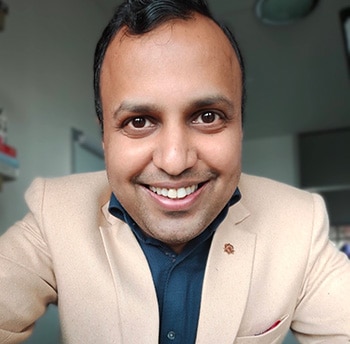
  • Leadership Journeys [79] – Shay David- “In our life as entrepreneurs, we are always high on life.”

    This is the Leadership Journey series on the Choosing Leadership Podcast.

    I believe we all have a lot to learn from each other’s stories – of where we started, where we are now, and our successes and struggles on the way. With this series of interviews, my attempt is to give leaders an opportunity to share their stories and for all of us to learn from their generous sharing. If you know a leader whom you would like to see celebrated on the show, please send me a message on LinkedIn with their name.

    In the interview, Shay reveals both the very practical data-driven as well as grounded spiritual part of himself, and how he balances both in his day-to-day. We spoke about his vision for the future, how he deals with often debated topics like AI and unemployment, and how entrepreneurship is different now than when he started his first company.

    You can find Shay at the below links

    In the interview, Shay shares

    • That he has been working in the HR space for about 15 years where he mostly worked within startups and also into scale up.
    • He describes himself as a leader who has strong hands-on experience.
    • I studied and worked at the same time which was very beneficial for my own development.
    • I started to work for booking.com and I think this was personally the first company where I truly experienced, professionalism in a way and hyper growth and the use of data to make really good decisions.
    • I had the support also of my parents and that was great. But I also realized this kind of pushed me to go out of my comfort zone so I decided to do an internship in Shanghai China because I felt that I needed to do something that was not very obvious.
    • I think we can Restore trust to become more transparent, to become more clear and to overcommunicate on the expected impact, right before we actually start a work. 
    • It’s becoming more and more important that employees would also like to have a stronger say to have more access in the organizations that they work for so they would like to influence a certain process.
  • Leadership Journeys [78] – Manish Godha – “There is no right or wrong way to be a leader/entrepreneur.”

    This is the Leadership Journey series on the Choosing Leadership Podcast.

    I believe we all have a lot to learn from each other’s stories – of where we started, where we are now, and our successes and struggles on the way. With this series of interviews, my attempt is to give leaders an opportunity to share their stories and for all of us to learn from their generous sharing. If you know a leader whom you would like to see celebrated on the show, please send me a message on LinkedIn with their name.

    In the interview, Manish shared the secrets behind his calm and balanced answers to my questions. We also talk about why there is no one right or wrong way to be a leader and an entrepreneur and unpack some of the unconventional choices he has made. He also shared his vision for the future as he looks to take his organization to the next level of growth.

    He also shares his thoughts on entrepreneurship and how to deal with setbacks. He emphasizes the importance of having a growth mindset and building expertise to provide the best value to clients. Additionally, he talks about his interests outside of work, including reading about fundamental sciences and building audio equipment. Overall, the conversation provides insight into entrepreneurship, renewable energy, and personal interests.

    You can find Manish at the below links

    In the interview, Manish shares

    • My father has a background in engineering, power production, and power generation, so I became interested in those fields and got an opportunity to work on solar power.
    • As a chartered accountant, you definitely gain exposure to how enterprises use technology, especially in their business processes and overall enterprise resource planning.
    • You have to choose a few things that are fixed and non-negotiable, and other things will then fall into place around those choices.
    • Most entrepreneurs, especially traditional ones of my generation or the one before, tend to have this tendency.
    • One of the challenges is how to continue building, growing, and refreshing your expertise in your business.
    • We have to have the right set of people who share a growth mindset and are willing to build expertise in themselves and provide the benefit of that expertise to others.
    • Things have a way of taking care of themselves, and we just have to ensure that we learn the right things and continue to persist
    • I love reading a lot of things of a fundamental nature, like aspects of physics and the laws of basic sciences. They have quite a calming effect.
  • Leadership Journeys [77] – Sooraj Jayaraman – “A leader is a normal person who has the ability to find Superman in his team.”

    This is the Leadership Journey series on the Choosing Leadership Podcast.

    I believe we all have a lot to learn from each other’s stories – of where we started, where we are now, and our successes and struggles on the way. With this series of interviews, my attempt is to give leaders an opportunity to share their stories and for all of us to learn from their generous sharing. If you know a leader whom you would like to see celebrated on the show, please send me a message on LinkedIn with their name.

    In the interview, Sooraj shared his creative side as he also has a popular youtube channel where he makes web series and short films in the Malayalam Language. We also spoke about his transition from technology to sales, and how creativity is very important in sales as well as leadership.

    You can find Sooraj at the below links

    In the interview, Sooraj shares

    • when an opportunity comes to you, if you are hesitant to, uh, even attempt that you never know that’s what you are missing. 
    • I always enjoy solving problems instead of just doing for one company or one organization.
    • So we are, our YouTube channel is called we are a Sambhavan which stands for Awesome. So the motto is like, we are awesome. It’s not only us, but everybody in this world is, awesome. , that’s the kind of message you want to put across.
    • I used to write blogs a lot, so when blogs were popular long back when I was in Toronto so we. Same thing. I take this experience, uh, of my life and put that in a very,  comical way.
    • everything I have done in that video production is self-taught. YouTube is my group till now. So I go and uh, view stuff, you know, how to edit a video and how to shoot a video about lenses to use.
    • creativity and playfulness play in your journey as a leader, obviously like that in the communication conversations this skill, uh, really gives an advantage over, anything else. It becomes an icebreaker. 
    • creative person, which certainly creates curiosity on the other person.  in the business aspect, it helps in conversations. A beautiful conversation sometimes, and suddenly you hit with another person who says, I always wanted to be an actor.
    • every leader should be creative. If not, you want, because every, the problems you face on a day-to-day basis, you need creative solutions.
    • if you want your people to listen to you, you must first listen to your people then. You get into their life, you understand what they’re feeling, you know, their difficulties, their happiness.
  • Leadership Journeys [76] – Manoj Dhanotiya – “I have nothing to loose and whatever I have is enough”

    This is the Leadership Journey series on the Choosing Leadership Podcast.

    I believe we all have a lot to learn from each other’s stories – of where we started, where we are now, and our successes and struggles on the way. With this series of interviews, my attempt is to give leaders an opportunity to share their stories and for all of us to learn from their generous sharing. If you know a leader whom you would like to see celebrated on the show, please send me a message on LinkedIn with their name.

    In the conversation, Manoj shares how growing up in a small town and then living in the United States shaped him as a person. He shares that his next level of success is not about him but something much larger than himself, and how he runs away from negativity and only chooses to focus on opportunities and growth. He shares that his confidence comes from the fact that he started from nothing and he has nothing to lose.

    You can find Manoj at the below links

    In the interview, Manoj shares

    • Pressure is simple. If you create hurdles which are unachievable, basically, then you have pressure. You know, if you know your limits and you try to build around it. I don’t think there is any pressure. 
    • Change is not pressure. Change is okay. Change will happen. Change has to happen.
    • For a first generation entrepreneur, there are no choices, you are molded by direction You. It is always just the direction you want to grow towards and Are you content with what you are.
    • When you attain certain level of maturity, it’s not like we are like very successful, but our mindsets have changed. Now we are content in terms of what we are doing, not in terms of what we are, but content, what we’re doing. 
    • It’s not about me anymore, it’s more about making a contribution, helping people lead better lives or do better in their business.
    • I will not deny that I am not working for money. Money comes automatically with it, it is just part of the process. The more known you are, the more your product is doing, better automated that comes in.
    • I’ve realized that you cannot do everything alone. You need to have team and finding the best person across the world, challenge is global then is something you have to figure it out if you can build a great.
    • You have to make it easy for others to work with you. That is my landing. Otherwise, we used especially in India when I came back here, use the different culture. 
    • If you make it easier for people to work with you, and if you create a opportunities to grow, that is the only way you can avoid electrication is the only way you can avoid bonds and people will work with you.
    • Being positive is something I totally believe in, it’s simple. If somebody’s not positive, he may have his own reasons. I am always positive no matter what.
  • Leadership Journeys [75] – Ben Demiri – “When people are self-actualized, they are confident and contribute more to business”

    This is the Leadership Journey series on the Choosing Leadership Podcast.

    I believe we all have a lot to learn from each other’s stories – of where we started, where we are now, and our successes and struggles on the way. With this series of interviews, my attempt is to give leaders an opportunity to share their stories and for all of us to learn from their generous sharing. If you know a leader whom you would like to see celebrated on the show, please send me a message on LinkedIn with their name.

    In the heart-felt, Ben shares his vision for a better world, and included a call for all leaders to embrace their humanity. We talk about learning and integrating the feminine side of humanity, and how he sees exchange and making changes in small increments as the way to create tectonic shifts in the way leaders and companies operate today.

    You can find Ben at the below links

    In the interview, Ben shares

    • The most defining moment I would say is when I was asked to step into a C E O role, which was through a mentor of mine.
    • It starts with a gradual degree of holding responsibility and really, taking it closely when it comes to both the execution, and also the nurturing element, making sure that things really fall under your care.
    • Gradual ascend in leadership positions has really created a much necessary awareness that things are complex.
    • It is very easy to say I care about this or I care about people, but it’s very difficult to take care, especially when in the heat of everything. So you’re have to have balance. 
    • we need to recognize the reality that sometimes there’s simply very little choices depending on where you are and the environments, the microeconomics. So you’ve got to sometimes do what you’ve got to do, but I always think there is a degree in that decision making. 
  • Issue #76, 11 April 2023 – How to get the benefits of coaching without the cost?

    Welcome to the Deploy Yourself Newsletter, where I gently provoke you to show you your own power. This newsletter is an invitation to your leadership. You can also read this issue online.

    Hey,

    How to get the benefits of coaching without the cost?

    I have had a coach for the last 3 years now. I regularly invest tens of thousands of dollars each year for the same.

    At the same time, some of my most impactful insights have come from what I would call peer coaching – having a conversation with a trusted friend or colleague in a structured format.

    For the big problems and issues of your life, having an experienced executive coach can be invaluable. That is also probably why it costs anywhere from $1000-$4000 per hour.

    But that also makes executive coaching out of reach for most people and most problems.

    However, that doesn’t mean the rest can’t benefit from the practice of coaching.

    Coaching is simply a way to have a conversation with another human being in which they help you see what you can’t see on your own in order for you to achieve what you want to achieve.

    I have found that it is possible to grow both personally and professionally – without a formal coaching session. Welcome to the world of Peer Coaching!!

    Coaching is so valuable it needs to be accessible to more people.

    Here is how you do it:

    1. Meet weekly for an hour. Alternate between coach and coachee each week.
    2. Coachee comes with a problem or challenge they want to achieve a breakthrough in.
    3. The coach listens actively and asks questions (no advice), reflects together and helps the coachee see what they can not see on their own. (this requires some training and practice of being fully present, active listening, empathy, and asking powerful questions)
    4. The session ends with a recap of any insights and a few action items.
    5. Between sessions, the coachee practices the action items and comes back with successes, failures, and more questions.

    Even if you struggle in the beginning, have fun and you will slowly learn and improve your listening, emotional, and question-framing skills.

    These skills are not just coaching skills, but they are also powerful leadership skills.

    At the minimum, Peer Coaching can create a space for you to express what’s on your mind. You will experience the joy of being seen and listened to without judgement.

    Needless to say, this can only work when both people respect each other’s confidentiality and are willing participants in the process. (if you have never experienced coaching before, some training might be required)

    You can’t force coaching or a breakthrough if the coach or the coachee is not ready.

    Leadership is lonely. But it doesn’t have to be. We are all co-passengers in this journey.

    And peer coaching might be one way to bring the benefits of executive coaching to the masses without the cost.

    If you want me to host a session for you where I introduce coaching and we all practice together, hit reply. It might just change your life.

    Fascinating Articles & Stories

    One

    Gaurav Sabharwal – “You can’t do business in isolation, no matter how intelligent you think you are.”

    I interviewed Gaurav Sabharwal, CEO of JOP, on the Choosing Leadership podcast.

    In the interview, Gaurav shared how entrepreneurship is in his roots, and that has always meant he is comfortable taking risks. We also spoke about the importance of OKRs, the role of intuition in his decision-making, and the importance of being present and keeping the balance between work and family.

    In the interview, Gaurav shares

    • I decided to help my father expand his business in the US rather than spending ours doing jobs during school break. 
    • Growing up I always saw my family talking about business on dinner table and that had a huge impact on me, how I looked at life and at business. 
    • Our biggest challenge as a company would be trying to emerge as a mature player in this space that we are creating.
    • As an entrepreneur, sometimes you get so absorbed with the passion of your business that you tend to ignore or miss on things which are beautiful and which will not come back in your life again.

    Listen to the entire episode.

    Two

    Shakun Sethi – “You need to be you because if you’re not being you, how will you make things work?”

    I interviewed Shakun Sethi, CEO of TickeLife, on the Choosing Leadership podcast.

    In this open and honest conversation, Shakun her personal story of living in the Netherlands and how that led her to start a company in an otherwise taboo industry. We also spoke about what gives her the confidence and grounding to lead her team, as well as the importance of slowing down and establishing clear boundaries.

    We talked about:

    • One of the problem I had when I was starting my company was that it was difficult for me to go into an sex store and look around while asking questions.
    • I lost a lot of friends when I started my company because I come from a culture where talking about sex openly is a taboo
    • Demand is completely, nullified. Everybody has a demand, everybody wants it.
    • Due to the nature of my company, we started facing problems like banks would not allow us to have a bank account, PayPal and Stripe flagged us too.
    • Starting a company in an otherwise taboo industry led to the realization that this is not something bad or wrong, and then internally you feel okay, you feel more confident, you feel more open while otherwise.
    • After my 12 or 13 hours shift when I lie down in the bed, I have a smile on my face. I know that, we are onto something big and what we are building is like we are in a position to make it.

    Listen to the entire episode.

    Three

    Curated resources for your leadership

    Here are my best finds from all over the internet for your leadership. Make yourself tea/coffee as you read, listen and learn.

    Pro-tip – Listen and read the below about YOU – not about the author. (reply back and ask if you do not understand what that means)

    That’s it for now. If you have any questions or feedback, or if you are new and want to introduce yourself, hit reply. I read and respond to every reply. All the best,

    Sumit

    P.S. – I am looking to interview more inspirational leaders on my podcast. If you know anyone I should interview, make an introduction.

    (Twitter) @SumitGupta
    (LinkedIn) Connect

  • Leadership Journeys [74] – Sunny Ray – “Money reminds me of asthma, when you don’t have it, it’s like the world is ending”

    This is the Leadership Journey series on the Choosing Leadership Podcast.

    I believe we all have a lot to learn from each other’s stories – of where we started, where we are now, and our successes and struggles on the way. With this series of interviews, my attempt is to give leaders an opportunity to share their stories and for all of us to learn from their generous sharing. If you know a leader whom you would like to see celebrated on the show, please send me a message on LinkedIn with their name.

    In this open and honest conversation, he shares how living in Canada but having Indian roots has shaped his personality. We also discussed the role money play in our economic and psychological worlds, and how he sees Bitcoin as the future. Sunny also shared the difficult challenge they faced in 2018 and how they challenged and won against the Indian government in the Supreme Court of India.

    You can find Sunny at the below links

    In the interview, Sunny shares

    • Combination of curiosity and money coupled with my engineering degree gave me the ability to  read the white paper, not be and start tinkering and playing and learning and this led to my obsession with Bitcoin. 
    • India everyone loves cricket and in Canada everybody’s loves football. I didn’t want to around people who only talk about sports, so I started India’s first Bitcoin meetups which eventually grew to even larger ones.  
    • When growing up in Canada, I realized that kids took a lot of this for granted where else in Kolkata life was tough. It was a struggle to even have one meal a day. It really helps shape your view because you start to realize that the world is not like.
    • Our goal is really to let people know that, once they get into Bitcoin they can have flexibility and they have options  if they need to buy something from Amazon or acquire a gift card.
    • I highly believe in connecting with people and talking to them and not just sitting behind a computer and programming and hoping that, you’ll hit the mark.
  • Leadership Journeys [73] – Barnaby Dorfman – “It is really important to connect with people as people”

    This is the Leadership Journey series on the Choosing Leadership Podcast.

    I believe we all have a lot to learn from each other’s stories – of where we started, where we are now, and our successes and struggles on the way. With this series of interviews, my attempt is to give leaders an opportunity to share their stories and for all of us to learn from their generous sharing. If you know a leader whom you would like to see celebrated on the show, please send me a message on LinkedIn with their name.

    In the interview, Barnaby shared his early fascination with technology, the challenges of leading a distributed and remote team, and what he has learned by leading across cultures and geographies. We also talk about the importance of quarterly planning, agile, and his plans to travel as he enjoys his sabbatical with his family.

    You can find Barnaby at the below links

    In the interview, Barnaby shares

    • How his father’s filmmaking helped him in early adoption of technology which led him to writing codes as a kid. 
    • That the role of a CTO, is really about working with people and helping them in innovation and development.
    • Great leaders are able to really observe and have empathy and understand what other people are going through, what motivates people to do and achieve things. 
    • That helping people with curiosity and also helping them get past their fears and all the reasons why you can’t. 
    • How it is important to connect with people as people so that you are able to communicate you goals to them.
    • It is important that you have structure, humans are creatures of habit and if you don’t create structure, people will create their own structure and those structures won’t be aligned. 
    • I left my last role and just decided that it was time for something new and take some time off. 
  • Leadership Journeys [72] – Gaurav Sabharwal – “You can’t do business in isolation, no matter how intelligent you think you are.”

    This is the Leadership Journey series on the Choosing Leadership Podcast.

    I believe we all have a lot to learn from each other’s stories – of where we started, where we are now, and our successes and struggles on the way. With this series of interviews, my attempt is to give leaders an opportunity to share their stories and for all of us to learn from their generous sharing. If you know a leader whom you would like to see celebrated on the show, please send me a message on LinkedIn with their name.

    In the interview, Gaurav shared how entrepreneurship is in his roots, and that has always meant he is comfortable taking risks. We also spoke about the importance of OKRs, the role of intuition in his decision making, and the importance of being present and keeping the balance between work and family.

    You can find Gaurav at the below links

    In the interview, Gaurav shares

    • I decided to help my father expand his business in the US rather than spending ours doing jobs during school break. 
    • Growing up I always saw my family talking about business on dinner table and that had a huge impact on me, how I looked at life and at business. 
    • Our biggest challenge as a company would be trying to emerge as a mature player in this space that we are creating.
    • As an entrepreneur, sometimes you get so absorbed with the passion of your business that you tend to ignore or miss on things which are beautiful and which will not come back in your life again.