Winning is an attitude. It is a matter of following what you want to do, rather than what others want you to do. A person strives through life to unlock the true potential that they have, yet there is only a handful that actually manages to do so. How do these people become the champions they are?
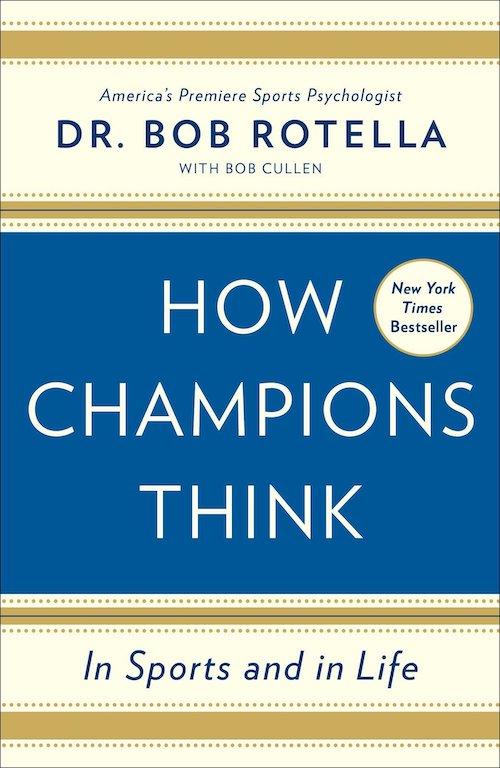
How Champions Think (2015), by Dr. Bob Rotella and Bob Cullen, brings forth the winning spirit, the guiding philosophy, and the psychology behind champions. Whether it is a CEO or an athlete looking for a guide to success, this is a true push towards achieving the maximum potential on a daily basis.
You Are Your Own Competition
Have you ever felt as though you want to be a champion at whatever you do, yet something holds you back? Why does this happen?
Everyone faces the problem of the ‘average’. Most get sorted into the average group not because they are really average at what they do, but because they have very few expectations from themselves.
Those few, who are in the ‘champion’ category follow a very important pattern. They convert their dreams into process goals, which in turn, help the dreams to become reality.
The trick is to think of the goal at the end of a ladder every day. Any challenge, possible outcome, or work can be a step towards the top of the ladder. For example, if you want to lose 20 lbs. of weight in 3 months, it is better to break down the goal by week. It is easier to achieve a goal of losing 2-3 lbs. of weight per week rather than look at the total amount, which may seem too much or too far away.
If you get into the habit of setting low goals thinking that you will start low, then the results will be low, too. Aim for the unreachable and you will get to where most people cannot!
The idea is to consider yourself as your toughest, truest competition and beat your ‘yesterday’s score’. Never set a limit to what you think you can achieve!
How Champions Think (2015) by Dr. Bob Rotella and Bob Cullen
Beat Negativity With Optimism
We are bombarded with news from all over the world. While we can all choose to absorb only the information that we wish to listen to, we cannot possibly avoid the negative information that comes through. Such negativity can affect us even though we try not to let it.
We often let negativity guide us, and even without realizing it, let it bar us from reaching our maximum potential. For example, in 1954, experts deemed that no one could run a mile in four minutes. Sadly, while no one attempted it, one man named Roger Bannister set to prove the statement wrong. He worked hard and persevered, finally breaking the record and set an example for other athletes to follow.
There is no proved co-relation between success and optimism, but there is a correlation between failure and pessimism. Therefore, the only way to beast negativity from affecting us is to be optimistic with a smile and see how the stress reduces!
Building Confidence Every Day!
It is true that winning instills the confidence to succeed repeatedly. However, if that were the only yardstick to success, how would one win in the first place?
Confidence is a choice. Confidence builds when you choose to keep even the smallest accomplishments in perspective. It is important to keep in mind that the journey to the finish line is more important than reaching the finish line. Additionally, repetition builds practice, which will eventually lead to success.
LeBron James, the basketball player, was only a rookie at first. With a 3-point shot success percentage of only 29, he approached the author to help him improve his performance. The author advised him to try 400 different variations of the 3-point shot on a daily basis. It was repetition, practice, and perseverance that made LeBron the star he is today! He also learned that being naturally talented isn’t enough.
According to Vince Lombardi, the American football coach, “Winning isn’t everything. It’s the only thing.”
To build confidence and be a champion, being optimistic and leaving out the negativity should become a daily practice. Therefore, while revisiting failures is important to understand the errors that have been made, dwelling on them for too long is detrimental.
The Importance Of Self-Image
Parents, teachers, coaches, motivational gurus, etc. help us find our motivation. However, over time, it is essential that we find the inner strength to motivate ourselves from time-to-time as well.
Whether it is a manager in a multi-national, or an Olympic-level swimmer, the inability to self-motivate is one of the top reasons for underperforming or not reaching their true potential and thus goal in life. Many experience ‘burn-out’, losing the spark completely, in what once was their passion. At such a juncture in life, one has but 2 choices –
Re-ignite the lost spark by remembering what was it that ignited the passion in the first place, or
Change one’s passion completely and look towards new ventures.
Whatever the decision, one must remember to enthusiastic with their decision. Enthusiasm and optimism practiced on a daily basis will keep one positive, happy and have a good self-image of oneself.
Bring Down Those Mental Barriers With Virtuous Cycles.
Being a champion in everyday life is mind over matter. If you keep thinking that you are a failure, you will fail. Many who keep hitting misses in life tend to suffer from a problem of acquiring learned helplessness. Such a feeling can deter one from even trying to win. They develop a fear of failure that keeps them from trying to win at all.
It is therefore important that one keeps such mental barriers away. How does one do this?
It is a step-by-step process wherein, firstly, one should identify what triggers certain habits that put up mental barriers. Next, one should transform these ‘bad’ habits into virtuous cycles. One can even take the help of close friends and loved ones to help.
Say, you are trying to avoid eating junk food. But you know that after a long day at work, you want to relax in front of the TV. You end up with a beer and a bag of chips in hand.
Therefore, it is essential to realize what is triggering the habit that you want to avoid (sitting in front of the TV). Next to turn the habit into a virtuous cycle, one can opt to relax by picking up an activity like learning music, exercising, or even simply playing with the kids. One can seek the help of a roommate or partner to distract them from their trigger. It is important to make an effort to avoid the trigger on a daily basis.
Inculcating a self-retrospective habit (even with the help of others) can go a long way. Succeeding in pulling down mental barriers also helps in instilling confidence.
Conclusion
You have to instill a sense of competition in yourself and keep ‘upping the bar’ to be a champion time and again. Optimism, confidence, and maintaining a positive self-image are interconnected and interrelated. Building these positively depends on breaking mental barriers and adopting a virtuous cycle in life.
Welcome to the Deploy Yourself Newsletter. Every two weeks I share what impactful leadership looks like to show your own power. I also share the most insightful lessons and stories I encountered in the last two weeks. You can also read this issue online.
Hey,
A Ripple of Hope
The recent wave of coronavirus has hit India, and especially my hometown Delhi, very hard. I have suffered some losses in my family in the last week, and I am hurt and pained as I write this. However, it would be a terrible waste if we only experience the worst in this crisis – the fear, the panic, the anxiety; and ignore the other side of the coin – which is how a crisis like this also bring kindness, service, courage, humility, and companionship to the surface.
Hence, I want to share with the readers a poem titled “A Ripple of Hope” I wrote over 10 years ago.
When nothing around you is going your way, When nobody is hearing what you have to say.. Times like these are the real test of your will, For amid storms is the challenge to stand still..
When your life will take a sudden turn, When you will reach a point of no return Just keep moving ahead despite of every hurdle, For there is always light at the end of the tunnel..
When all you get is blow after blow, When every hope and promise seems hollow You have to decide how high you want to rise, For you know in every crisis there is a prize..
When nobody around you knows what to do, When everybody is searching for a clue That is the time for you to stand strong, For every night ends no matter how long..
When everything looks like falling apart, It is very important not to lose heart For every step, you take against the slope, You are giving rise to a ripple of hope…
Reply to this email right now if it sparked something for you. I read and respond to every reply.
Articles and Stories Which Have Fascinated Me
One
The Neglected Middle Child of Mental Health
Languishing is a sense of stagnation and emptiness. It feels as if you’re muddling through your days, looking at your life through a foggy windshield. It’s the void between depression and flourishing — the absence of well-being. You don’t have symptoms of mental illness, but you’re not the picture of mental health either. You’re not functioning at full capacity. Languishing dulls your motivation, disrupts your ability to focus, and triples the odds that you’ll cut back on work. It appears to be more common than major depression — and in some ways it may be a bigger risk factor for mental illness.
So what can we do about it? A concept called “flow” may be an antidote to languishing. Flow is that elusive state of absorption in a meaningful challenge or a momentary bond, where your sense of time, place and self melts away. During the early days of the pandemic, the best predictor of well-being wasn’t optimism or mindfulness — it was flow. People who became more immersed in their projects managed to avoid languishing and maintained their prepandemic happiness.
By acknowledging that so many of us are languishing, we can start giving voice to quiet despair and lighting a path out of the void.
Why Are You Trying So Hard To Fit In When You Can Instead Stand Out?
“I can always choose, but I ought to know that if I do not choose, I am still choosing.”, said Jean-Paul Sartre.
We are always in action and always making choices. We are never not making a choice. Even not doing something is a choice. There is no life without choice. We have this power – to choose – in every moment of life. Once you understand this, it can be very powerful.
Watch Steve Jobs explain the same concept in different words in this short 100 seconds video.
Three
A Framework To Take Your Team Culture From Blame to Accountability
If you fail to shape your culture, the culture will shape you and your business results.
Blame stops learning, as people get defensive and hold onto their positions. As a consequence, both the individual and the organization do not enjoy the benefits of learning from the mistakes. In a culture of blame, people start hiding mistakes, which is even worse. On the other hand, accountability means recognizing that anybody can err and viewing mistakes as opportunities for learning and growing.
How to Get There? The following are 6 steps to take your team culture from blame to accountability.
Create Trust and Psychological Safety
Create a No-Blame, Always-Learning Policy
Be Curious. Ask Questions To Figure Out Why The Problem Happened?
Build and Practice Emotional Intelligence
Make It Better
As a Leader, Take Responsibility for Your Team’s Actions
That’s it for now. If you have any questions or feedback, or just want to introduce yourself, hit reply. I read and respond to every reply. All the best,
The human conscious mind is merely the tip of an iceberg. The subconscious that lies hidden, like the large mass of an iceberg beneath the water, is a vast resource that remains untapped. The subconscious mind has immense power to influence the human mind. It can be the secret to unlocking true happiness and success in all aspects of life.
The Power of the Subconscious Mind (1963), by Joseph Murphy, shows how to unlock the vast potential of the subconscious.
Suggestions From The Subconscious
It is said that once you learn to ride a bicycle, you learn it for life. While the conscious mind focuses hard during the learning process, the subconscious works in the background retaining all the information learned, thus making it an automatic task. This phenomenon called conscious-to-unconscious learning is a fantastic tool that humans have.
The mind merely needs learning by repetition for conscious-to-unconscious learning to take place. This applies to all processes of repetition. For example, the repetition of positive thoughts will lead to harnessing positivity into the subconscious.
Case 1: Enrico Caruso, the late nineteenth-century Italian opera tenor, used to perform at famous European and American opera houses. He often found himself sweating profusely and having throat spasms just before his performances. He feared the crowd would laugh him off the stage. He eventually took control of these negative thoughts by reinforcing the thought that his conscious mind has to stop influencing his subconscious.
This positive repetition helped his subconscious to ignore his fear and provide energy to his voice box.
The subconscious mind has the power to manifest any thought or idea that one trains it to do.
Case 2: Dr. James Esdaille, a Scottish surgeon, had an extremely low mortality rate for the 400 or so operations before anesthesia was developed, between 1843 and 1846. He used to hypnotically tell his patients to not be afraid, as they would not get any infections after the operation. This hypnosis prompted the patient’s body to trigger the subconscious into activating a response in their bodies to build immunity.
The Power of the Subconscious Mind by Joseph Murphy
The Power Of Visualization And Positive Thinking
In the 18th Century, priests would treat people by simply convincing them that God would heal them and make them well. The method worked due to the workings of the subconscious mind, rather than any divine power. It is known that positive thoughts can empower the subconscious to heal diseases.
Case 1: A relative of the author contracted tuberculosis. His son was determined to help his father recover. he gave his father across and told him that he got it from a monk who had visited a European shrine. He had, however, picked it up from the street.
He told his father that the cross had the power to heal people if they touched it. His father slept with the cross in his hands. The next day, he was cured. The belief of the father had triggered his subconscious to heal his body.
His belief was so strong that no one told the man the truth about the cross. Breaking his belief would have led the disease to resurface. Thus truly believing and imagining what one desires as reality, will make it real.
Case 2: The Church of Divine Science, a weekly radio show conducted by the author, gives a good example, where the author discussed the concept of the mental movie method. The author was advising people on the process of selling their homes. He told people to visualize and create a mental image until the subconscious made that image real.
The methods involved people having the confidence that they had set a good price for the house, and then imagine that they were celebrating its sale, while they were sleepy. This method of visualization worked well and the author received a number of letters thanking him for helping sell their homes.
The Results Of Passion And Visualization
The power of the subconscious and visualization can help achieve more than just property sales. It can even attract wealth. One has to simply imagine what they want and let the subconscious work its wonders.
Case 1: An Australian boy wanted to become a surgeon. He, however, did not have the money to fund his education and dream. Every night, the boy would create an image of a diploma with his name, hanging on his wall. Over a period of time, a doctor recognized the potential in the boy, taught him to sterilize medical instruments, and administer injections. The doctor later paid for the boy’s tuition.
Case 2: The subconscious mind works best when visualization is augmented with passion. A young passionate pharmacist known to the author would dream of owning his own pharmacy. He visualized himself giving out prescriptions. He got a job at a big chain store and worked as passionately as he always imagined.
The pharmacist was soon promoted to manager for his hard work, and four years later, he opened his own pharmacy with the money he had saved. Thus the pharmacist combined passion with visualization to achieve his dreams.
The Subconscious, Career, And Love
Humans sleep for one-third of their lives. While asleep, the body reenergizes and heals itself. Functions of the body such as digestion accelerate while the body relaxes and rests. During this time, the subconscious becomes active, and its intuitive powers work to guide us.
Case 1: A Los Angeles listener of the author’s radio show, had gotten a job in New York at two times the salary she currently drew. She was, however, unable to make the decision to relocate.
She heard on the show that meditation would help guide her, and she meditated on her decision as she dozed off. The next day, she had a strong intuition to decline the offer. Months later, the company filed for bankruptcy and her intuition was validated. Her subconscious had guided her through her decision and she got her answer in her sleep.
Case 2: A teacher theauthor knew had 3 failed marriages. All her ex-husbands had a weak and passive nature. This kept happening to the lady, despite the fact that she has attracted to the opposite qualities of a partner. Why was this happening to her?
It was her dominant masculine personality that was attracting people of the opposite qualities. To overcome her dilemma, she used mental visualization and concentrated on the personality of her ideal partner. Soon she got a job as a receptionist at a physician’s clinic. The doctor was a smart, successful, healthy man like what she had been visualizing. The teacher soon got married to him and they lived happily together.
Thus the subconscious can also help focus on the type of partner one desires.
Driving Negative Thoughts Away.
We have seen many examples of how conditioning the subconscious to think happy thoughts can actually help manifest reality. Happiness comes to people anytime. Even finding a ten-dollar bill on the sidewalk can bring happiness. However, these moments of happiness are fleeting.
One can actually use the power of the subconscious to bring long-lasting happiness in one’s life by changing the way one thinks. They simply need to choose to be happy.
Envy is a negative emotion that can thwart one’s dreams. This emotion often rises when one sees the success and wealth of others. Being a negative thought only precludes one’s potential affluence. By hoping for more wealth and success for others, one can train the mind to think of success and wealth for themselves too.
Case 1: Once, a salesman sought advice from the author. He never received recognition for his work, even though he always outperformed his colleagues. He started blaming the fact that his manager did not like him and thus treated him poorly.
He then learned from the author the real reason for his problem. The obstruction of his success was due to his hostility towards his situation, jealousy for his colleagues, and anger towards his boss, which constantly created negativity in his mind.
He soon began practicing visualization and imagined receiving congratulations from his manager, shaking his hand, and smiling at him. He chose happiness instead of his negative thoughts and began to genuinely wish for the good of his boss and his colleagues. Soon, his boss promoted him, and he got a big raise too.
Negative thoughts can take away one’s peace of mind.
Case 2: An associate of the author was a workaholic, who was neglecting his family, and ended up with high blood pressure. Digging deeper, it was found that his habit was to avoid being with his family because he was racked by guilt for not doing right by his deceased brother. It was his way of punishing himself.
The associate needed to forgive himself first and let his mind heal in the process.
Fears, Obstacles, And Staying Young
The subconscious has the power to help us over our fears, obstacles in life and even to stay young. Many children fear monsters lurking under their beds. But when their mother puts on the light, their fear melts away, and they know that they are safe. Similarly, fears, like those of failure and powerlessness can be countered as they are mostly supported by false thoughts.
Case 1: Mr. Jones was a compulsive drinker and constantly failed at quitting his habit. His failure had made him think that he was powerless against the urge to drink and thus he had given up trying to quit too, losing his family in the process.
He decided to face his fears and visualized his daughter praising him for finally quitting. By doing this, Mr. Jones was able to finally quit alcohol once and for all and was reunited with his family.
Many people fear aging. The subconscious can help one overcome this fear as well. One truly ages when one stops having the passion to dream and learn.
Case 2: An executive known to the author had spent most of his life working and studying. When he retired at 65, he perceived his retirement as a chance to do all the things he wanted to and could not find the time to. His way of thinking and his hobbies kept him young at heart. With his mind active and young, his body followed suit.
Conclusion
The subconscious, though dormant has immense power to help one attain true happiness in life. Whether it is a matter of career, love, facing one’s fears, tackling obstacles, or even remaining young at heart, the subconscious mind, with the powerful tool of visualization and positive thoughts can help unlock the secret to success in all walks of life.
Frans de Waal’s ‘Our Inner Ape’ brings forth a comparison between human and their closely related ancestors the apes. He shows the relation (and differences) between characteristics such as violence and sympathy, greed and fairness, community spirit and dominance, and sexual behaviours vis-à-vis morality.
The great work of Charles Darwin in 1859 On the Origin of Species, puts light on the fact that all species had evolved over a period of millennia. He showed that ‘survival of the fittest and ‘adaptation’ was elemental to the preservation of all species and that those that didn’t, disappeared.
Furthermore, Konrad Lorenz, in his 1963 On Aggression, augmented Darwin’s work by theorizing that the purpose of evolution was to pass on one’s own genes – even if it meant to hurt and kill the members of ones own species for dominance – and not only to preserve the species.
Richard Dawkins in 1975 added to this line of thought. His theory stated that it is the ‘selfish gene’ and not the individual that wants to make sure that its copies are passed on. The selfish gene, he said, behaves socially only when it gains the benefit for individuals of the same genes. He argued that the distinguishing factor between humans and other animals is the fact that they use their intellect and rationale ( their cerebral cortex) to act morally and help others who are not related to them.
There have, however, been many types of research conducted since 1980, that contradict earlier theories and have shown documented proofs of sportsmanship, selflessness, ability to reconcile, and even have a sense of fairness in animal behaviour. Research conducted on bonobos (a chimpanzee species), especially on their social life that differs greatly from their violent cousins changed the way we perceive primate research.
Frans de Waal, through his works showed that apes have morals too.
The Hippies Of The Primate World – Bonobos
Bonobos, though are the same size as chimps, are also known as pygmy chimpanzees. They have smaller heads and longer hair and are more delicate and sensitive than chimps. They even walk upright and have a higher voice than chimpanzees. These differences in physicality were noticed even before they were studied in the 1970s. An important example can be seen in Munich Zoo, when all the bonobos died of shock during the bombings of WWII, whereas all the chimpanzees survived.
A study on bonobos in Congo conducted by a Japanese research team, threw new light on the social life of the primates when they were studied in their natural habitat. They found that unlike gorillas, chimpanzees, orangutans, and humans, bonobos do not rape each other or fight to the death. They are more sexually active and the females are more dominating of the species. Sexual they are pansexual – they indulge in sex with all genders. For bonobos, sex is a social indulgence, not only meant for procreation.
Our Inner Ape by Frans de Waal
The Dominant Sex
Bonobo females are physically weaker than bonobo males. Yet, unlike human females, they are the dominant sex of the species. The female bonobos stick together and are able to stand up to males (who are not as socially cohesive), whereas, chimpanzee males are more dominant than chimp females. This difference is due to differences in their natural habitat. Bonobos are found to the south of the Congo River, which is lusher than the north where chimps are found. This enables bonobo females to stay together and form stronger social connections with other females while gathering food.
The lack of vegetation in the north requires chimp females to wander in search of food, often alone with their young ones, whereas the males hunt in the steppes in groups, increasing the power imbalance between male and female chimps.
On the other hand, studies on chimpanzees in zoos have shown that the power imbalance decreases amongst the chimps in zoos, due to the fact that females have more contact with each other, can stand up to the males, and even have been known to disarm fighting male chimpanzees. The disarming is mostly a form of self-protection from the losing male chimp that could end up taking it out on the females later.
This shows that dominance within a species is hardly dictated by physical strength. It is more about having a stronger group cohesion.
Contradictory Reconciliatory Behaviour
In 1980, Frans de Waal discovered an interesting fact about chimpanzees. He witnessed an incident where two male chimps gave each other a heartfelt reconciliatory hug after a bloody and vicious fight.
He found that chimpanzees, unlike orangutans and gorillas (who either drive away or kill the loser of the fight), publically reconcile. On further studying this strange reconciliatory behavior, de Waal found that chimpanzees ensure that all chimps have a clear understanding of the hierarchical structure in the group. Since they all hunt together they have to cooperate with the alpha male.
De Waal saw clear phases of cohabitation that began with a cycle of one alpha male ruling, until one young male challenges the alpha. This challenger starts looking for supporters. Gathering followers is done by grooming and scratching each other, cleaning fur to gain favor, and make friends.
The boss, on the other hand, tries to keep his friends closer. Once the challenger male chimp gathers enough support, the two chimps fight, until one of them admits defeat. Unlike other apes, the fighting chimpanzees make up in public, where the males get to stay together in the group, and the supporters of the winning chimp get special privileges, especially with access to females. The new hierarchy then gets accepted and established until the next cycle begins.
Sexual Behaviour Among Chimpanzees
Amongst the male chimps, sexual activity is determined by a male’s strength and power within the group. Basically, the more females the powerful chimp mates with, the higher the chances of reproduction.
Male chimpanzees however have a very small mating window. This is because female chimpanzees bear only one child in pregnancy, and breastfeed for about 4 years during which they cannot reproduce. Therefore, there is more competition between males.
Females, on the other hand, compete for food and not for sex. Often, they don’t get enough to feed their babies and keep them alive. Therefore, only those young ones who make it into adulthood and end up with their own progeny can pass on genes.
Females make their own decisions with respect to male partners, and mostly have sex with the alpha male. They are very choosy when it comes to the friends of the alpha male and decide to have sex with the chimp distributing food, only if she receives a bigger share. Other male chimps that aren’t part of the alphas close circuit have sex with females behind the alphas back.
De Waal once observed a limping male whose limp instantly vanished as soon as the other males left for hunting. The chimp then started making passes at the females in the group. If another male is caught trying such antics, they are given a good beating. Thus male chimps avoid such strategies and prefer to try and stay within favor of the alpha male, or support the winning male during a shift of power.
Physical Differences
The differences in the physicality of apes show connections between the evolutionary patterns of humans. For example, gorilla males are about thrice the weight of females. Chimpanzee males, though only a few inches taller than females, have stronger muscles and can weigh about 1.5 times more than females. The difference between the two is that level of dominance between male and female chimps is lesser than that of gorillas, where the females have no power at all.
In bonobos, males are slightly larger and heavier than females. Even though today, males are smaller in size, and physical strength no longer determines sexual activity among bonobos, it can be assumed that earlier, the male bonobos were dominant. Strength and physicality did not yield evolutionary benefits and thus the dominance dynamic must have changed over time.
The dynamics of being dominant among the species also determine life expectancy. Fighting for power leads to earlier deaths. This can be seen in the drastic differences between male and female lions. While female lions live up to an average of 30 years, males live only till seven. Similarly, chimps, as well as human females live longer than males. Apart from surviving conflicts (and wars), the stress of constantly maintaining power positions leads to elevated levels of cortisol among males, leading to shorter life spans.
Bonobos, on the contrary, live healthier lives and live as long as females. Unfortunately, humans, being more like chimps in this respect, evolved with males dominating. If humans were a matriarchal species, human bodies would have evolved in a manner similar to bonobos.
Reproduction Competition
Considering the physicality and size of testicles of various apes, it is observed that despite the size of the gorilla, it has small testicles, as compared to chimpanzee males. This can be attributed to the level of competition they face. Among gorillas, other males do not dare mess around with alphas females and their friends. Thus facing no competition, gorillas need very little sperm for impregnation (and thus have smaller testicles).
Chimpanzee alphas, on the other hand, play a political role in the chimp group and need to grant favors to loyalty. Additionally, the males in the lower order will try to have sex with females behind the alphas back. Therefore, while there is no dispute about the position of the alpha male, his sperm still has competition, thus resulting in the evolution of larger testes.
Bonobos, being the ‘happy hippies’ have a lot of sex with multiple partners. Therefore in their case, the male with the most sperm wins the reproduction competition.
Humans in comparison to chimps and gorillas rank in between with respect to testicle size. The reason could be that humans, like bonobos and chimps, are a multi-male society. Additionally, considering women don’t have sex constantly with multiple partners made stable heterosexuality the dominant system.
Promiscuity, Fidelity, and Infanticide
It observed in many animals such as lions, bears, dolphins, rats, and all primates – except in bonobos – where males indulge in infanticide, to make a female ready for mating faster.
In bonobos, infanticide is not only pointless, but they are the only primate species where infanticide does not happen. This happen for four reasons –
The females’ interests are often up against those of the male bonobos
It is the genes that compete, and not the primate itself
Females also protect the lives of their children and thus their own genes, and,
Since females have sex with all the males, there is no way of telling who the father of the young ones is.
This, evolutionarily, has led to no infanticide among bonobos.
Humans work in the other way. Women guarantee men paternity and get the men to protect their young. Yet, there are still traces of the ancestral urge to partner with attractive others that can still be seen.
The Human ‘Sense Of fairness’ And Solidarity
Till before de Waal’s documentation, the characteristic of ‘fairness’ was only considered a human trait. De Waal conducted an experiment with two capuchin monkeys. He taught the two monkeys to give pebbles from their cage to the scientist. Both the monkeys were rewarded with a slice of cucumber on success.
After about 25 repetitions, one monkey was given a sweet grape instead of the regular slice. De Waal saw the second monkey cried out loud and checked if his pebble was the problem before handing it in the next time. When he received a slice of cucumber again, the monkey threw it back and refused to play the unfair game.
De Waal found this behaviour so incredulous that he had to repeat the experiment a number of times. He deduced that an aversion to unfairness is embedded into the genetic makeup of primates. He conducted the same experiment with chimps. He found the same result. He also saw that the chimps that were favoured rejected their special treat out of solidarity towards their unfairly treated friends. While this behaviour differed from personality to personality, every unfairly treated chimp refused to play the unfair game.
Such behavior can be attributed to the hunt. If a primate would not get his fair share of the hunt, there would be no point sticking around. The sense of fairness is genetically ingrained in primates, where all, even the sick and old get something from the hunt, even if the best parts go to the alphas.
Higher Level Thinking Order
We can establish so far that there is more to primates than we believed earlier. Primates are not only able to understand the feelings of others in their own species and of other species; they are able to imagine how others feel too.
This could be seen from an experiment conducted, wherein one chimp is blindfolded and the second chimp is watching him. The researchers then hid food from the blindfolded chimp. The second chimp watched the event. Once the blindfold was taken off, the researchers observed the behavior of the chimps. It was evident from the behavior of the second chimp that he expected the blindfolded chimp to not have knowledge of the hidden food.
Another proof of higher-level thinking among animals is the fact that along with humans, elephants, primates, magpies, and dolphins can recognize themselves in the mirror.
Observation of primate behavior shows that they are able to help others consciously because they are able to deduce what the others could be thinking and out themselves the shoes of the other.
This was seen when an injured bird flew into the glass enclosure of a bonobo female. At first, she tried to help it fly. When I couldn’t, she nursed it and cared for it until it was well. The bonobo then climbed to the top of a tree, gently spread the wings of the bird, and threw it high up. She had sensed what the bird had wanted to do.
Opposing Forces Of Empathy And Cruelty
Hostility is an inherent trait among all primates. This was seen by Jane Goodall, the British ethologist in 1970. She observed behavior among a group of chimps, which she called murdering.
The group, during patrolling one night, caught an enemy male chimp at the border of their territory, dragged him into the bushes, and beat him to death. Over a few months, they did this to most of the males in the enemy group. The alarming behavior was different from the fights they had with those in their group. This murdering was almost like that of prey.
Next, they raided the enemy territory, killed all the young, raped the females, and took over. Among chimpanzees, such wars are not uncommon. Bonobos are different in this respect too.
While fights do break out among bonobos with strangers, the fights are broken by the females with the prospect of sex. However, tension still exists. Though no one is killed, there is no sharing of food or grooming within the two groups.
While it seems the xenophobia comes from evolutionary factors, and there is no ignoring it, ethologists should target studies towards the opposing force of xenophobia: empathy. They need to address the fact that why are chimpanzees (and humans) unable to exercise empathy towards strangers of their own species?
Morality And Its Ties To Our Ape Ancestors
Humans have been under the misconception that morality is based on one’s free will and rational thinking. However, if one studies the brain during moral decisions, one can see that rather than the cerebral cortex (that deals with rational thinking), deeper parts of the brain are activated. This phenomenon is common among primates.
This was studied when 2 scenarios were presented to test subjects.
Scenario 1: What would you do if you are in a trolley on a rail track that is about to collide with five rail workers?
Option 1: Throw the track switch sending the trolley on another collision course with another trolley with only one person.
Option 2: Stay on track.
Scenario 2: What would you do if you are on abridge with a heavy-set man, and you see that a trolley beneath is out of control heading for five workers?
Option: Push the heavy man down, so that his body obstructs the trolley, saving the men.
Note: Sacrificing oneself is pointless as you are too light to stop the trolley.
The working of the brains of the test subjects differed in the two scenarios. While contemplating the solution to the first scenario, it was seen that the cerebral cortex was activated, with about 90% choosing to throw the switch of the trolley.
However, in the second scenario, it was observed that deeper sections of the brain were activated. Very few subjects chose to push the man. This was because the prospect of killing someone brought up morality roots that reside deep within our brains, and that deeper than mere rational thinking.
Humans And The Apes Within
All the comparisons between the primates and humans help deduce that humans have 2 types of apes within – the competitive ape and the collaborative ape.
The Competitive Ape: Competitive aggressive behaviour is the inherent trait that enables all primates and humans to survive and multiply. It the base of evolution. It is the reason why especially the males of all species have an inherent urge to conquer and prevail.
The Collaborative Ape: The collaborative ape represents the inner traits of showing empathy, maintaining social instincts, needing fairness, and having a natural impulse to help others. This collaborative inner ape has developed much later, with empathy at the forefront.
It is however noted that one inner ape does not suppress the other. Both the inner apes become more complex as the inherent apes and social lives become more contradictory, making cohabitation increasingly difficult, yet more substantial.
Reactions to friend or foe are natural and ancestral. They determine which impulse (empathetic or competitive) prevails in situations of conflict.
Humanity is a falsification that has become the basis for many social theories like communism. It assumes that competition can disappear if there is no exploitation. Contrarily, believers of a free-market economy think that people act of their own free will and then find incredulity in the irrational manner in which people behave. Humans too, like other primates have a willingness to help and a sense of fairness that trump egoism.
It is not possible to get to the root of all behaviors and feelings, however, it is possible that these feelings are inherited via evolution. One can however rationally determine which feelings and behaviors are anchored in one’s genetic makeup, how one will tend to impulsive act in any given situation. That doesn’t mean that we can’t change it. Considering we have strong evolutionary and ancestral impulses, to change these impulses will need equally strong countering efforts.
Conclusion
Humans have a deep-seated morality, just as they have aggression and competitiveness. These inner conflicts make humans, humans. It is the gift of intelligence that enables humans to see and understand these conflicts in themselves and others. These abilities to understand the difference between free will and the impulses of the inner apes are the keys to understanding and improving society.
We have all heard of the proverb ‘Jack of all trades and master of none.’ Moreover, we have been, since our childhood, told that there is no value in being a ‘jack of all trades’, and that ‘mastering one thing’ takes us towards success. This has brought about the focus on early-life specializations and getting an early head start to our careers.
On the contrary, Range (2019) by David Epstein shows that curiosity and a more generalist outlook has more benefits than specialization. Epstein takes examples from sports, science, business, medicine, academia, and human psychology to prove that broadening one’s range gives more power than narrowing one’s specialization.
While it is true that generalists tend to find their calling a little later, it is also true that generalists tend to be more creative due to the increased ability to make connections. Keeping one’s interests broad can lead to innovation and open minds to curiosity, excellence, and ultimately success.
Specialization – Fashionable And Dubious?
Tiger Woods has for some time now, been the poster-boy for specialization and early focus on a career in golf. He has embodied the concept of getting a head start and intense practice since the age of two. While such early-life focus on specialization is most common in the world of sports, it can be seen in other fields such as academia, medicine, finance, etc. For example, oncologists now consider cancer as a general area and specialize in organ-specific cancer studies.
Though specialization is the fad of the century, there are studies that prove that it isn’t the yardstick that defines successful performance. Psychologists Daniel Kahneman and Gary Klein, in 2009, studied how performance and experience are connected. They found that experience is essential to some professions such as firefighting, where years of experience can train firefighters to understand behavior and patterns of flames, enabling them to make eye-blinking decisions. Yet in many other fields, experience holds little value.
Kahneman studied recruitment trends and predictions of recruiters, versus assessments and feedback of Israeli Defence Forces. He found a complete disconnect between experience and performance, as recruiter predictions based on physical and mental abilities at the time of recruitment were a far cry from actual performances. He saw that many fields such as the armed forces need the flexibility and creativity that can be found with generalization.
Range by David Epstein
Expertise With Experimentation
There is no doubt that specialization has its merits. Tiger Woods is an example of that. However, there is ample proof that sampling and experimentation is a reliable route to expertise and success. Let us take the example of Roger Federer.
His path to tennis success began much later in life. Despite his mother being a tennis coach, she never pushed him towards the sport. As a child, he tried his hands at skiing, wrestling, skateboarding, squash, badminton, basketball, and tennis. In due course, he found that he preferred sports with balls. He started playing tennis in his teens though not instinctively. He later acknowledged that his skills in tennis, athleticism, and hand-eye coordination were because of his wide-ranged experience in playing different sports.
This applies to other fields as well. Yo-Yo Ma, the cellist began his career in music at a young age with the violin and piano. He moved to the cello simply because he did not like the first two. Yo-Yo Ma isn’t an exception. John Sloboda, the music psychologist studied students in British boarding schools who were taking structured music lessons. He found that children who had tried that hands at two or more instruments were identified as ‘exceptional’ whereas those focusing on one instrument were ‘average’.
Even Vincent Van Gogh jumped from job to job, from preaching to teaching and working in bookstores to dealing in art before he found his calling in painting and made a mark in history!
Increasing IQ’s And Abstract Thinking
In 1981, political sciences professor James Flynn from New Zealand stumbled upon reports that led to a study, which has changed the way we think about thinking today. In his study, he saw that the IQ test scores of American troops had drastically improved between World War I and II.
He found that based on IQ, a WWI soldier in the 50th percentile would be placed in the 22nd percentile in WWII. He then compiled data from 14 other countries that showed similar improvements from generation to generation. This phenomenon was named the Flynn effect. He propounded that every decade people’s IQ increases by an average of 3 points. He found the same trend in over 30 countries.
This brings us to another research conducted in 1931 by the Russian psychologist Alexander Luria. In a time when the Soviet Union was undergoing rapid change, pre-modern, remote villages that had been functioning unchanged for centuries, were seeing planned development, production, and division of labor with industrialization.
Luria took the opportunity of the change to conduct some experiments. In one experiment, he asked villagers to sort some wool into groups. In some of the modern villages, the villagers sorted the wool into different categories such as shades, types, quality, etc. however, in the villages that were still remote, the villager was simply unable to categorize the wool because they saw each piece of wool as different.
Luria’s experiments showed that people are able to make better conceptual connections between abstract notions and objects as they were further exposed to modernization.
Based on these studies, it is clear that in today’s modern world, our minds are better equipped to make abstract connections and diverse ideas all at once. Yet, a wide majority consider narrowing down specializations and conceptual focus to be the only way to succeed!
Learning Shouldn’t Be Easy And Fast
We often remember our harshest teachers better and with more fondness later on in life. Why is that the case?
A group of economists conducted a study of the long-term results of about a thousand Calculus I students at the US Air Force Academy. The observation found students with better grades giving higher student evaluation ratings to professors, whereas those with lower grades gave harsher feedback. The long-term study found that students giving positive feedback had a net negative effect. Moreover, those giving harsh feedback were more inspired towards better performance in the long run. These professors who chose desirable difficulties were actually imparting a better way to learn.
In addition to difficult learning, it is seen that learning at a slower pace or using the concept of ‘spacing’ yields better learning. In spacing, there should be some time given between learning and practicing. In a 1987 Journal of Experimental Study, Spanish students were separated into two groups. One group was tested on vocabulary they had learned the same day and the second group was tested weeks later. After a span of 8 years, the two groups were tested again. It was found that the second group had a success rate of about 200%. Similarly, there have been benefits of short-term spacing as well, proving that slow and difficult learning is more effective than quick and easy learning.
An Outside Viewpoint Is Better Than A Specialized One
In a 2015 study, Harvard Medical School’s Dr. Anupam Jena found that heart failure and cardiac patients were more likely to survive if they were admitted when the top cardiologists were not available. For example, specialists such as cardiologists are so good with their work – like placing stents in blood vessels – that they start performing these surgeries reflexively. Even in dangerous situations, they come in with a mindset that ‘we have done this a million times before’.
The concern here is that the narrow and detailed focus makes specialists too conditioned and reflexive. For specialists, repetitive functioning can lead to making extreme judgments and narrow-minded to view only what they specialize in.
University of Sydney professor Dan Lovallo conducted a study involving private equity investors. They were told to conduct a detailed assessment and return on investment (ROI) estimates of ventures they would consider investing in. Next, they were told to write notes on other broadly similar projects. The results showed that for the businesses the investors were actually planning to invest in, the estimates of ROI were about 50% higher than the other projects.
Narrow focus and specialization can put up blinders that prevent a holistic viewpoint. At times, an outside view that isn’t colored by narrow focus and specializations can save people from making bad calls.
The Value Of Having A Breadth-Wide Experience
Innovator of the year 2013, Andy Ouderkirk from 3M has his name on about 170 patents, conducted research on the members of innovative and successful teams. His study revealed that to win the innovation-recognizing Carlton Award at 3M, he needed a team of polymaths rather than specialists. Polymaths are those who have specialization and depth in one area but have diverse expertise in other areas too. These inventors used their knowledge from other areas and applied it to a different field altogether.
Similarly, Norwegian School of Management’s Alva Taylor and Henrik Greve studied the success of comic creators post-1971. They too found that breadth of experience is vital to success. While they predicted that more comics created, would lead to honing skills and thus more success, however, they learned that it is the wide range of exposure to different comic genres that decided success.
Therefore, at times, it is essential to do away with the ‘perfect fit requirements’ during hiring, and that recruiters should consider people who don’t fit in one category, and whose has more breadth-wide experience in all areas.
Why Experts Don’t Have Active Open-Mindedness
Forecasting expert Philip Tetlock assessed the predictions of 284 experts during the Cold War. Tetlock’s study revealed that experts are very bad at making predictions. In fact, his study showed that an expert’s ability to have access to classified information, years of experience, and even their academic degree made no difference to their (lack of) ability. They suffered from having a narrow focus and outlook towards their predictions.
Psychologist Jonathan Baron attributed their disability to a lack of active open-mindedness – ability and willingness to question one’s own beliefs. He said that it boils down to the fact that experts’ opinions get laced by their own existing beliefs, a problem most people face.
Yale’s Dan Kahan conducted a study where he asked anti and pro-Brexit voters to decipher statistics about the effectiveness of skin cream. Next, they were given the same statistics as the link between crime and immigration; their interpretations of the statistics were influenced by their political beliefs. This did not happen during the first task with the skin cream.
The concern lies in the fact that expert opinions are often based on existing beliefs to the extent that one can tend to disregard existing evidence. How does one stay impartial then?
According to Kahan, the difference lies in pursuing scientific curiosity where one desires to learn more, accepts new evidence, and analyses with an open mind, rather than scientific knowledge where one is focused on what and how much they know. There is therefore a need to change one’s attitude and the way one thinks about success and learning.
It’s All About The Range
How does one ultimately expand their range? The answer lies in accepting failure and more importantly embracing it. While being patient, taking a wider route, a more disorderly experimental path may delay success; it is a more successful route to success.
In addition, experimentation, applying out of the box thinking to concepts one is already an expert at, and trying to achieve a wider range of knowledge, and applying it can make all the difference. In other words, having a generalist attitude can add immense value to specialization.
Welcome to the Deploy Yourself Newsletter. Every two weeks I share what impactful leadership looks like to show your own power. I also share the most insightful lessons and stories I encountered in the last two weeks. You can also read this issue online.
Hey,
When Will You Do What Makes You Happy?
When I ask the question “Are you happy?” at work or with my leadership coaching clients, I often get a blank look. People don’t understand the context of this question – especially at work. And that is where I am left the most surprised.
Everyone I interact with wants success, productivity, engagement, and motivation – but people are often blind about happiness. They think happiness is a price they have to pay to achieve all that. I have found that happiness is often the pre-condition for everything else in life. And that is where many of my coachees get an “aha” moment.
When I say happiness, I want to be clear to not confuse it with pleasure or being comfortable. You can be happy and joyful even amidst your biggest challenges, and even when you are the most uncomfortable that you have been.
Happiness is going after what makes you happy. Period. Nothing more. Nothing less. What is it that makes you happy? Where have you buried that dream of yours? Is it buried under discouragement from others, or under lack of approval, or under past failures, or due to a fear of what you might find if you dig the dream out from where it is buried?
So, let me ask you – When will you do what makes you happy? When will you give yourself permission to do that? Yes. Give. Yourself. Permission. Read that again if you have to.
Reply to this email right now if it sparked something for you. I read and respond to every reply.
Articles and Stories Which Have Fascinated Me
One
Lessons In The Art of Listening From a CIA Agent and more
Listening can be more valuable than speaking. Wars have been fought, fortunes lost and friendships wrecked for lack of listening. It is only by listening that we engage, understand, empathize, cooperate and develop as human beings. It is fundamental to any successful relationship — personal, professional and political.
It also involves paying attention to how they say it and what they do while they are saying it, in what context, and how what they say resonates within you. Good listeners ask good questions. One of the most valuable lessons I’ve learned as a journalist is that anyone can be interesting if you ask the right questions.
That is, if you ask truly curious questions that don’t have the hidden agenda of fixing, saving, advising, convincing or correcting. Curious questions don’t begin with “Wouldn’t you agree…?” or “Don’t you think…?” and they definitely don’t end with “right?” The idea is to explore the other person’s point of view, not sway it.
Listening is a skill. And as with any skill, it degrades if you don’t do it enough. Some people may have stronger natural ability while others may have to work harder, but each of us can become a better listener with practice.
Does your manager focus only on your weaknesses and never talks about your strengths? If you answered yes, you are not alone. The following are some reasons why you shouldn’t try fixing people.
It doesn’t work. It leads to frustration and demotivation.
It ignores the strengths of people, which can create extraordinary room for growth.
Focussing On Weaknesses Says “I Know Better”
On the other hand, below are 6 advantages of strengths-based management and leadership
Fast growth and learning
Better productivity and output
Low stress and better well-being
High engagement and motivation
Building on strengths is faster than fixing weaknesses
Higher retention – people stay longer in places where their strengths are valued
That’s it for now. If you have any questions or feedback, or just want to introduce yourself, hit reply. I read and respond to every reply. All the best,
Every team is different as human beings are complex. And organizations can be even more complex. If the team members do not gel and work together effectively, problems can arise very quickly or they can slowly simmer under the surface. Talk about missed deadlines, infighting, declining productivity, poor customer service, etc. All of these have a bearing on the team’s output and the company’s bottom line.
Finding the right people is the first step in building a high-performing team. However, bringing several talented individuals together under one roof is not enough to make an effective team. So what can you do to ensure the group of people becomes an effective unit which works together? Here are 7 common attributes of highly effective teams, and how to build such a team?
1. Good Leadership
Leadership has less to do with positions and more to do with the ability to influence. Today, leadership is no longer reserved for those at the top. Everyone has within them the ability to become a leader in their own sphere.
Effective teams don’t necessarily have one great leader. Instead, they promote a culture of leadership. That doesn’t mean multiple people competing to become leaders. It is about each individual playing their part and supporting each other for the benefit of the team.
Every team needs a north star—a clear and shared vision. Each member should know the direction and purpose behind what they are doing. A team without a united vision is like a group of chickens with a lot of energy. They will continuously be busy running around but never make any progress.
Therefore, a team should first co-create the shared vision, objectives, and outcomes before undertaking a project. Moreover, the vision should be restated often. It is not enough to engrain it on the door or post it on the website.
According to research by Rungway, 52% of employees don’t know their company’s vision. The same research shows employees want to be involved more in actualizing the company’s vision and values. Even when working on different facets of a project, team members should know the end goal.
When the team is involved in setting goals and objectives, they are more willing to rally behind them. As John F. Kennedy noted, “Effort and courage are not enough without purpose and direction”.
It is hard to focus when multiple needs are competing for your attention. And when the team is overloaded with tasks, chances are that people will struggle with one thing or another. With so many buttons to push and levers to pull, the team can get easily frustrated.
Do You Know Your Own and Your Team’s True North?
Highly effective teams navigate these muddy waters by focusing and prioritizing. Establishing priorities ensures that set goals are met on time. Unfortunately, it is human nature to want to accomplish everything at the same time. However, that is a surefire way of producing shoddy work.
Instead, it is better to prioritize your tasks according to their importance and urgency. That will involve listing down all your goals, and then deciding how long you would like to spend on each goal.
However, keep in mind that goals are not the actual actions taken, but rather the metrics you intend on hitting. Those metrics are what allow you to know whether the team is moving in the right direction. As such, to get closer to achieving those metrics, you must determine what projects need to be fulfilled first to get there.
So, how do you go about prioritizing projects?
Simply choose the 3 most important priorities and start working on them. People work better with clear and attainable goals. Therefore, choose 3 projects that will allow you to make a significant advancement towards a longer-term goal, and then set deadlines for their completion.
By putting the team’s focus on a few defined priorities, you will evade the all-too-common syndrome of spreading yourself thin trying to accomplish everything at the same time.
A good leader also understands the critical role shared values, standards, and boundaries play in the development of a high-performing team. This is because it is impossible to sustain high-performance standards without shared values.
Shared values ensure that your team does not always depend on you or policies to tell them what to do. Those values guide their behavior. The former EVP at Advanced Micro Devices, Tim McCoy, put it best, “values tell you what to do when you do not know what to do.”
A good example of how shared values can have a monumental impact on a team’s success is the Mayo Clinic. During the Civil War, a group of individuals known as the “Mayo Family” formed a medical practice whose entire operation was guided by two primary values:
The only interest to be considered is the patient’s best interests
Nobody is big or good enough to be independent of others
Guided by those values, the Mayo Clinic has gone on to become one of the world’s most reputable nonprofit hospital systems, with a net worth of around $17 billion.
Collaborate with your team to develop a set of values and standards to uphold. Those values should act as moral and operational compasses. In other words, they should guide the behaviors of the team.
In addition to shared values and standards, it is crucial to establish boundaries within the team. Boundaries prevent conflict within the team. Conflict (not disagreement, which is natural and healthy) is one of the biggest deterrents to productivity. With boundaries, everyone knows what is considered acceptable behavior, and what is not.
One of the most critical benefits of setting boundaries is the clear expectations that come with it. When everyone knows what is considered acceptable, they are more likely to uphold those standards.
Do you know your values? Does your team know theirs?
2. Working Together and Collaborating
It might look safe to work with people who don’t ask a lot of questions. Effective teams understand that such behavior hinders collaboration. Instead, successful teams embrace challenging each other in a space of trust and psychological safety.
Good teams focus on tackling the problems together. They share knowledge across different departments, which enables the organization to adopt a unified approach in handling issues.
Collaboration brings unique skill sets and mindsets together to create a team that can overcome any obstacles together. A highly effective team understands and leverages each individual member’s strengths to create momentum.
Highly effective teams understand that friction is natural when working with others. They welcome the friction and use its energy to enhance relationships and improve productivity rather than the other way around. Strong teams work together rather than against each other.
3. Performing Team Rituals
Outside the workplace, rituals are often used to unite, motivate and rally people behind a common cause. A good example is an annual family holiday that brings everyone together. Rituals also have a place in the organization.
Apart from defining the team’s culture, they increase employee engagement and help create lasting bonds between individual members.
Employees in an organization work together for more than eight hours a day. That means they see and spend more time with their colleagues than they do with friends and family. It is imperative that they build strong bonds when working and also in their social lives.
Celebrating rituals such as birthdays by bringing a cake and holding parties is a great way to create and foster long-lasting bonds.
Many organizations insist that fun is ingrained in their culture. But many often struggle to create an environment where workers are truly happy. Like everything else, fun needs to be structured. Otherwise, it will get lost in the busyness of daily life.
Think about lunch outings, comedy nights, and beach days. A team that has fun together is more productive. That’s because work is likely to be less stressful and frustrating when you are having fun. Downtime decreases and job satisfaction and loyalty increases with fun.
Apart from celebrating wins and forging lasting relationships, some rituals also promote growth. For instance, having regular brainstorming or knowledge-sharing sessions enables each member to share their skills and talents.
Participating in weakly share-outs, team-bonding events, and daily scrums can also help the team become more productive, creative, and adaptable.
Do people feel safe enough to be vulnerable and collaborate freely?
4. Safe Environment
According to a study by Google, psychological safety is one of the most vital dynamics that sets effective teams apart. Employees should be free to be who they are. And they should share their ideas and opinions without feeling insecure or afraid.
When a team member shares an idea in a meeting or opens up to a colleague about a bad experience, they are taking risks. Therefore, they need to feel safe enough to take the risk. If they can’t open up, they will end up putting a mask at work. Doing so drains a lot of productive energy which could otherwise be used for productive work.
Individuals should be able to ask questions without feeling lost. Granted, it is natural to want to protect one’s personal image. After all, no one wants to look like a fool in front of colleagues. However, when there is psychological safety, everyone supports you. When everyone feels free to look like a fool, there is so much possibility of awareness about matters which are otherwise never spoken about.
Even in the face of disagreements, everyone in an effective team knows they are on the same side. It is easier to share ideas, admit to mistakes, collaborate, and resolve any underlying conflicts. Consequently, it makes the team more productive.
With technological growth and increasing pressure to perform, people are finding it hard to make personal connections and friendships in the workplace. In fact, there is growing disconnectedness.
The importance of meaningful connections and deep conversations cannot be overstated. Research has demonstrated that having high-quality connections in the workplace leads to more creativity and resilience.
5. Open, Honest, and Trust-Filled Communication
Although the advent of technology has made communication faster, it has led to an information overload that has made it harder to communicate. Nowadays, you have to sift through countless emails and attend regular meetings to get information.
The annual total estimated cost of poor communication in the corporate scene is as high as $37 billion. Such losses can be mitigated by fostering honest communication. Open dialogue is the only way a team can achieve more than the sum of its parts.
Open communication allows everyone to have a voice. When employees know their opinion counts, they feel a great sense of ownership. They are also more willing to positively contribute to the organization’s success. The manner and frequency of communication also matter. The more freely and often the team communicates the more comfortable people are in sharing their ideas and insights.
It is through communication that ideas are birthed and nurtured. A team where members are not communicating encourages wrong assumptions. That’s because everyone is forced to join the dots alone.
As a result, many arrive at the wrong conclusions. For instance, when discussing growth, some may be thinking about market share while others may be referring to revenue. It is only through open communication that such differences can be brought to light.
Sometimes communicating means offering constructive criticism. Highly effective teams create an environment that encourages members to offer honest feedback. Although nobody likes to be criticized, there is no learning without honest feedback. And in a safe environment, feedback doesn’t look like a threat.
Don’t make people wear emotional armor at work
6. They Embrace Empathy
A team that cares for each other performs better. And highly effective teams value empathetic listening and compassionate conversations.
Often in movies, when the ship goes down, the captain and crew are ready to sacrifice their lives to save others. That is only possible because they know they are part of something bigger than themselves.
Likewise, in highly effective teams employees are willing to come together and take one for the team. They shelve their own self-interests and put the needs of the organization and their team ahead of their own. And that is only possible with empathy and care for others.
Empathy is the ability to put yourself in someone else’s shoes. It is a deep and compassionate understanding of what others are going through.
Without empathy, organizations and individuals run the risk of becoming too self-absorbed. This can affect all aspects of the business and the team’s productivity as well as their well-being.
According to a study by Google called Project Oxygen, employees prefer managers who care about their well-being than those with technical skills. When leaders and team members embrace empathy, everybody feels appreciated and valued.
Consequently, this creates trust and fosters high performance among individuals. Although it is not natural for most people to generate empathy, it is an emotional competence that anyone can learn.
Real Diversity Is When People Think Differently
7. Diverse Team Composition
One of the greatest advantages of working as a team is being around people with varying skills and talents. It doesn’t matter who does what, so long as the team has all the right skills. Highly effective teams include a diverse set of people who complement one another in talent, thinking, and personalities.
Diversity is not only about gender, ethnicity, and skin color. Real diversity is having people in the team who think and act differently. People who don’t just look different, but are so from the inside. When such people come together in a safe environment where they feel safe to speak up, wonders can happen.
A team’s main priority is to achieve the organization’s goals and objectives. Therefore, having someone who makes the team great is more valuable than a great individual. No matter how skilled a person is, they are not important if they don’t contribute to the overall strengths of the team.
What exact roles belong on each team depends on what a team’s goals and purpose are. Highly effective teams create a platform where individuals can both absorb and teach. No matter how talented or experienced one is, there is always room for learning.
Working alongside other equally talented individuals in diverse fields is a great way to learn and share knowledge and skills.
Final Thoughts
To create a high-performing team, good leadership is paramount. Without a clear and set-out vision, a team will only be groping in the dark. Collaboration is also key. The silo mentality fails to capitalize on the advantages of pooling different skill sets together to tackle problems. Honest communication, team rituals, and embracing empathy help create a fertile ground for such collaboration. But it takes a diverse team composition to make any meaningful impact.
Building a successful team might sound simple, but implementing the above takes practice, which is not easy. To succeed, team members need to share and jointly own the team’s goals and objectives. They must also put the team’s needs ahead of their own. Moreover, everybody should be free to be who they are. They should feel safe to share their ideas and opinions without fear of judgment. As I said, simple, but not easy.
In recent times, there has been a drastic shift in how organizations around the world view 1-on-1 meetings. For a long time, communication between managers and their employees typically revolved around either occasional over-the-desk check-ins or group meetings.
Without a regularly scheduled 1-on-1 meeting, employees don’t have an option for expressing their concerns openly. Without one-on-one meetings, the manager also does not get to know their employee well enough.
However, changes in work culture in the 21st century have called for a shift in this trend. For example, more and more employees are seeking fulfilment from their jobs rather than just a salary. One-on-one meetings have been found to be one of the most effective ways of listening to people’s concerns, understanding them as individuals, and giving them opportunities for growth and fulfilment.
According to a Harvard Business Review report, employees who have limited one-to-one time with their managers tend to have higher disengagement rates compared to those who do. In fact, employees who get more one-on-ones with their bosses are 67% less likely to experience disengagement.
One-on-one conversations with your employees, therefore, are critical to boosting engagement and productivity in the workplace. When I first became a manager, having a 1-on-1 meeting was not even a strict requirement for my role. And now, I see managers being reprimanded for not having 1-on-1 meetings in companies regularly.
In this article, we will cover
Best practices and guidelines to follow when it comes to one-on-one meetings.
What is the purpose of one-to-one meetings
Questions to ask in one to one meetings
How Often Should You Have 1-on-1s?
Where should you have your one-on-one meetings?
Advantages of 1-on-1 meetings
How to Prepare for One to One Meetings
Common Misconceptions about One-on-One Meetings
General Guidelines
Before you head into any one-on-one meeting with an employee or subordinate, keep the following things in mind:
Do your homework well. Go well-prepared for the meeting. Review any notes from the past meetings, go over any action points to follow up, and go over the agenda if you have pre-decided that.
Go into the meeting devoid of any judgment, bias, or emotional overwhelm from how your day has gone so far. In fact, go into the meeting thinking of your employee as a superstar. Take a minute or two of silence and deep breathing before the meeting to ground yourself in your values, and enter into the meeting in a mood of relaxation and possibilities.
Do it at regular time intervals (weekly/bi-weekly). Do not wait for the quarter or the year to end to meet your employees. Do it regularly. Your people are your most important asset. Time spent with them is your best investment.
Be humble and polite. You work together, not against each other. Collaborate and communicate openly. If you have disagreements, welcome them and use the energy in them to create win-win results rather than conflict and friction.
Listen attentively so that you do not miss anything. Avoid potential distractions and give your full attention to your employee. Make eye contact and talk with the employee like he/she is the most important person in your life. Put your mobile, laptop, and other devices aside.
One-on-One Meetings – How To Prepare, Questions To Ask, And Other Best Practices
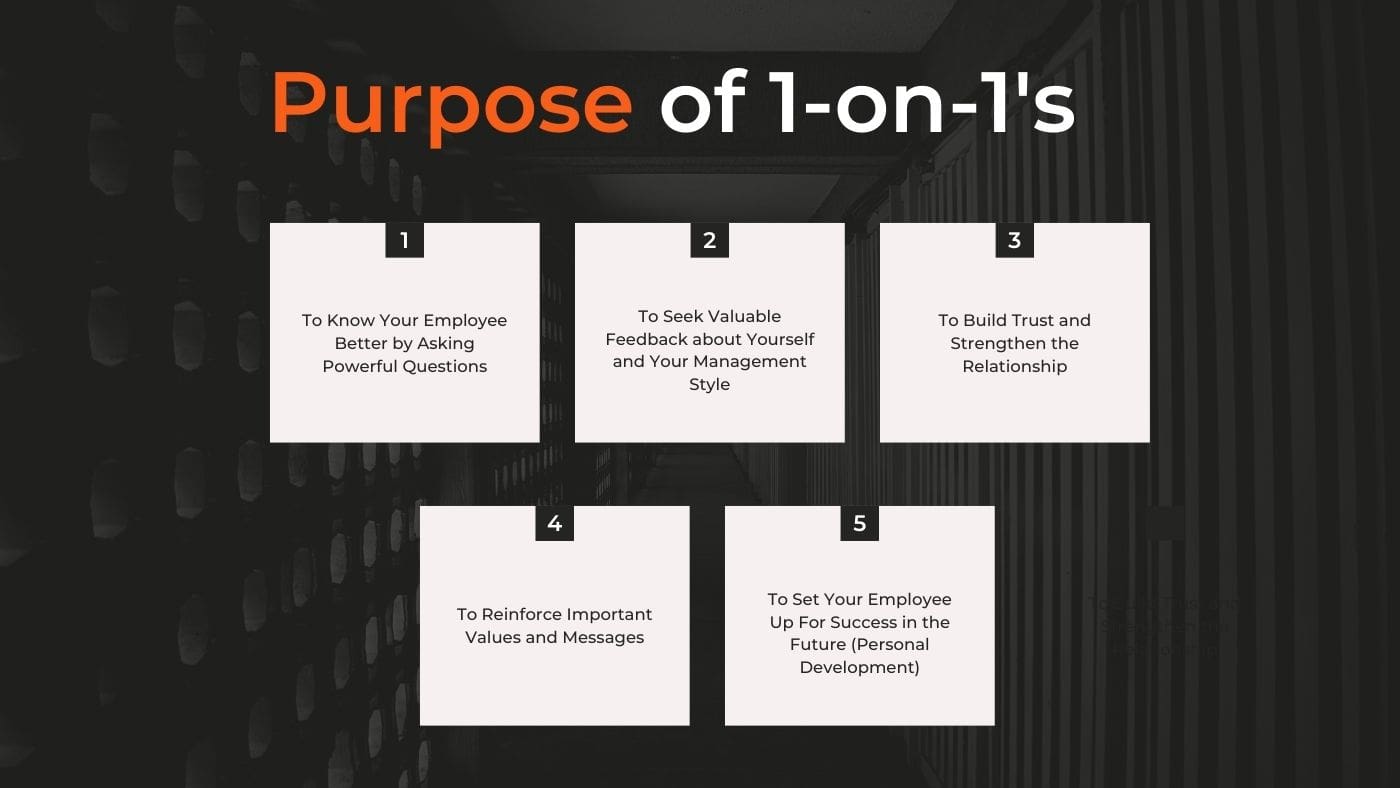
What Are 1on1s for? (Purpose)
One-on-ones are the regular conversations that a manager has with their employee. Essentially, they are meetings with a mix of formal and informal talk. They can happen anywhere and at any time. Experts recommend making them as frequent as possible.
Many leaders view these meetings as performance conversations and use them to get status updates. While one-on-ones are an excellent way of discussing goals and performance in real-time, they offer you a platform for achieving so much more, including:
1. To Know Your Employee Better by Asking Powerful Questions
As a leader, you expect your people to do their job. However, it is your job to provide them with the support they need to not only execute their tasks perfectly but also to reach their full potential.
Unfortunately, that can be difficult to achieve if you do not know your employees on an individual basis. This is why one-on-ones are necessary, as they allow you to have a good read of a person’s strengths, weaknesses, values, and principles.
For example, even among people with similar skill sets, you will find that they have different ways of working – because of their past experiences. Therefore, by finding out what excites each person, you will be able to delegate tasks more strategically, thus improving the team’s overall productivity.
In addition to allowing you to know your employees better, powerful questions show that you care for your employees, which, as mentioned, improves their engagement tremendously. Care comes first, engagement second. That is why I strongly believe that you have to be a good human being to be a good leader.
Consider asking the following powerfulquestions during your one-on-ones, in addition to whatever else you might have prepared:
What makes you stand out?
What do you do after work? What are your hobbies?
What are your highest priorities in life?
Where does work fit in?
What are your future aspirations?
What makes you special?
What are you most excited about?
What does success look like to you?
Do you feel that your work is recognised and valued?
What motivates you to work each day?
How often do you use your strengths at work?
What’re your preferred means of communication? How can we align best?
How can we work your challenges out together?
Is there anything blocking you?
Is any part of your job unclear or without transparency?
What could I do to help us work better?
What feedback do you have for me? Both positive and negative?
What could I be doing better as your leader?
What skills/areas would you like to improve upon?
What have you learned recently?
What can I do to make you more successful and happy?
How do you find your team?
Do you think we are headed in the right direction?
What’s the biggest problem we are facing?
What is the one opportunity for our company that we should not miss?
How do I know when you are annoyed?
What were your priorities since we last met?
How is your work/life balance?
What are your hobbies? Do you take time out for them?
Tell me about your weekend
Was this meeting helpful? How can we improve in the future?
Based on the answers, you will be in a better position to set them up on the best path to realizing their full potential. The only purpose of work doesn’t have to be to fulfil the team’s goals and increase productivity. Work can also be fulfilling, nourishing, and enriching for your people. The only question is – do you provide that opportunity or not?
Purpose of One on One Meetings
2. To Seek Valuable Feedback about Yourself and Your Management Style
Employee feedback is one of the most under-utilized tools by managers or team leaders. It is unfortunate that most leaders and managers fall prey to the idea that listening and accepting critical feedback is a weakness. Instead, it is the only way for you to grow.
Leaders who think of themselves as bosses, superior, or better usually also find it difficult to listen to critical feedback. They think their job is to tell their employees how to do their job.
However, such a mindset can be incredibly costly. How expensive, you ask? In a survey titled “The Cost of Poor Communications,” which involved over 400 companies and more than 100,000 employees, each company lost an average of $62.4 million per year to poor communication with employees.
The importance of seeking feedback from your team members can therefore not be overemphasized. Let go of the fear of being critiqued, as that fear will only wall you off from valuable input that could help you grow and change your perspective.
Therefore, during your one-on-ones, encourage the employee to share some input regarding what they think about your leadership style, as well as what they think you could do better. Of course, this does not mean that their feedback is a true reflection of your performance as a leader. But if you notice a recurring theme in the feedback from different employees, you will need to reflect on it and address any underlying issues.
Most importantly, asking for feedback tells your employees that their opinion is valued by the organization, and that goes a long way in boosting engagement.
3. To Build Trust and Strengthen the Relationship
According to a study by Gallup, people who have close friends at their workplace can be up to 7 times as engaged at work compared to those who do not. While this does not necessarily mean that you should become everyone’s BFF at work, the value of developing closer relationships with your employees is undeniable.
For starters, humans are social creatures, meaning that we thrive when we are close to those around us. Considering that the average human spends one-third of their lives at work, enhancing the quality of your relationships with your colleagues is not only important for better cooperation but also for enhancing the overall quality of your life.
When your employees are more comfortable around you, they will be more willing to listen to your ideas, in addition to voicing their own opinions and suggestions. This will create an environment where teamwork takes precedence over everything else, thus improving everyone’s productivity tremendously.
4. To Reinforce Important Values and Messages
Every company has core values that it holds dear. An organization’s core values are its lifeline, as they not only create an identity for the company but also attract individuals who share similar values.
It is important for leaders and managers to keep repeating and reinforcing these values so they people remember what they are working towards. According to Seetec, having a concrete set of core values is one of the best ways of keeping your employees motivated and engaged, hence resulting in better performance and productivity.
This is because when people believe in and respect the company’s values, they gain greater clarity regarding their role in the company. One-on-ones offer you the perfect platform for reinforcing these values. Remind them of any expectations, boundaries, or ethics that they are supposed to uphold in order to be in compliance with the organization’s values. At the same, acknowledge and celebrate people when they act according to the company’s values.
5. To Set Your Employee Up For Success in the Future (Personal Development)
I believe one of our main roles as leaders is to help people achieve their full potential. Therefore, use the one-on-ones to discuss the employee’s progress and career aspirations. To make these goals tangible, work together to create both short-term and long-term goals for the employee.
Short-term goals encompass the objectives the employees look to accomplish within a month or a quarter, while long-term goals are the strategic milestones they look to achieve within 6 months or a year. You can also create a vision for 5 years or even 20 years into the future. It can be tremendously powerful when done well.
The short-term goal is climbing the ladder of personal growth, while the long-term goals and vision help to ensure the ladder is leaning against the right wall. Long-term planning is more to set the direction rather than being specific. That is why it is ok if long-term goals are vague, but short-term goals work best when they are time-bound and specific.
How Often Should You Have 1-on-1s?
To some managers, having these meetings on a monthly basis sounds reasonable. However, when you consider all the activities that can happen at work in a month, you will find that four weeks are too long a time to wait.
For example, an employee might be experiencing a challenge, and it can quickly become a big issue if you address it a month later. On the other hand, the employee can accomplish several important milestones within a month if you can support and guide them along the way.
What’s more, if we assume that you are meeting them only once every month for an hour, you will only have spent a total of 12 hours together after one year. That is not nearly enough time to forge a good relationship with anyone.
So how much time should you dedicate to one-on-one meetings? There isn’t a definite answer to this question. Consider the following factors when deciding the appropriate frequency for your one-on-ones:
1. Team Size
If you are managing a team of five or less, consider meeting each member weekly or twice a month for 45-60 minutes. If you have more than five direct reports, you can shorten the length of those meetings to 30 minutes.
Don’t focus too much on the length of these meetings when you are starting out. The goal is to have a better understanding of your employees without burdening them with formalities. Therefore don’t make them longer than necessary.
2. Task-Relevant Maturity
If the employee is still new to their role, they will require more help and guidance than someone who has been on the job longer. With new team members, consider meeting them on a weekly basis. Experienced employees, on the other hand, can do with twice a month meetings.
3. How Frequently You Work with Them
Teams operate differently, with some working more closely than others do. If you rarely interact and work independently with people as part of your daily job, twice a month one-to-ones are more appropriate. On the other hand, if you work closely with your team members, a weekly one-to-one is a better fit.
One on One Meetings – Where To Have Them?
Mix it Up When it comes to Meeting Location
Now that you have chosen the frequency at which you will be meeting your employees for one-on-ones, you might probably be wondering about the ideal location to hold those meetings.
Whether it is having lunch together or going for a walk, it does not matter as long as you meet your objective – of creating a safe space where you can talk about anything openly and honestly. However, you do not want those meetings to feel like a chore to both of you. Therefore, consider trying out different settings.
The most common settings for one-on-ones with direct reports include:
1. Meeting at the Office
The benefit of holding one-on-one meetings at the office is the safe and quiet environment it provides you. It allows the person to be more comfortable, thus allowing them to express themselves more freely and privately.
Office meetings, however, do have their drawbacks. For example, it might feel too official, causing the employee to be more reserved than you would like. Office environments and cultures can become too toxic or negative, and that can shadow your whole conversation if you are not mindful about that.
2. Taking a Walk Outside
Holding a one-on-one outside while walking can be incredibly impactful. According to some studies, a person’s creativity can increase by up to 60% during walks. As such, you are more likely to have better conversations when you meet outside as compared to closed doors.
What’s more, walking eliminates the tension that typically comes with facing each other across the table. When the body is moving, it is easier to be flexible with ideas and opinions rather than getting stuck in arguments.
Another benefit of outdoor one-on-ones is they allow you to be comfortable with silence. Therefore, those moments where you both pause to think will not feel as awkward.
Meeting outside in the open also makes it easy to start casual conversations. Sometimes, it is those ‘filler’ conversations that end up being the most insightful and can reveal deep desires and motivations.
However, walking one-on-ones might not always be ideal. For example, you might keep running into people you know. If you feel like a walking meeting is a good option, consider doing it in a place with few distractions, such as a park. Avoid busy places with noise.
3. Meeting at a Restaurant or Coffee Shop
The main benefit of holding a one-on-one while eating or drinking coffee is that it makes you relate on a more personal level. Consider doing this if you are looking to know an employee better and willing to have a casual conversation.
The main issue with this meeting style, however, is that it can be too distracting. A cafeteria is not the ideal place to discuss sensitive issues or make strategic plans, so make sure you choose the meeting venue based on the agenda of the meeting.
One on One Meetings – The Best Tool For Managers
Advantages of 1-on-1s
Unfortunately, some managers still do not have one-on-one meetings frequently enough. They hold them only when it is unavoidable. Some even avoid them entirely.
Nevertheless, one-on-one meetings are extremely important. Below are a few reasons why you should have them regularly.
1. They Boost Productivity
One of the biggest reasons for having these kinds of meetings is their positive impact on work quality and productivity. It sounds like a paradox to me when a manager tells me he has no time for 1-on-1 meetings. My next question to them usually is “So you have no time to increase the productivity of your team?”
In his book, “High Output Management,” Andy Grove argues that meeting your employees regularly gives you the opportunity to not only coach them but also to help you develop a common information base, thus allowing the team to be in sync at all times leading to better results.
You have to remember that employees are not equal when it comes to prioritizing tasks, with some not having the necessary experience to know which tasks bring the highest ROI. By scheduling regular one-on-ones, therefore, you will be able to set clear priorities with all your people.
One-on-one meetings also boost your own productivity. This is because they allow you to address all the pertinent issues effectively, thus reducing the incidences of your direct reports popping in for a “quick question or an emergency.”
On his Managers Tools podcast, Mark Horstman says, “One of the first things you will notice once you start holding regular one-on-ones is the significant reduction in the number of questions that you receive per week. However, it is not because things are not running as they should, but people have learned that they can wait for the one-on-one to bring any queries to your attention.”
Buffer, Inc., the company behind the Buffer software application that provides social media accounts management tools, decided to get rid of their managers, suffering a tremendous blow in engagement and productivity in the process. They soon discovered that managers were not only necessary but also one-on-one meetings were incredibly effective in fixing things and improving productivity.
2. To Improve Employee Engagement and Forge Better Work Relationships
Building healthy relationships takes a while. For example, you cannot expect to have a good relationship with your significant other (or friend) if you rarely communicate. The same goes for work relationships; you need to see and talk to your employees regularly to build strong relationships.
Frequent one-on-one meetings are one of the best tools managers can use to build better relationships. In fact, one-on-ones have been found to be so effective that companies such as Adobe, Deloitte, IBM, and Microsoft have ditched their annual reviews, replacing them with frequent check-ins.
One-on-ones are also incredibly effective at boosting engagement and retention. According to a Gallup report, employees who meet with their managers regularly are up to three times more likely to be engaged in their work as compared to those who do not.
It comes as no surprise, therefore, that Ben Horowitz, CEO of Andreessen Horowitz (a Silicon Valley venture capital firm), was willing to fire two of his managers when he found out that they had not been conducting one-on-one meetings.
3. They Can Help You Identify and Address Problems Proactively
A one-on-one is one of the best tools you can use to identify potential problems, allowing you to solve them in time before they become an emergency.
Conflict between employees is bound to happen when people work together. However, if it is not solved in time, it can turn messy, impeding your team’s culture and productivity. One-on-one conversations allow you to pick up on any potential seeds of conflict, frustration, and disengagement.
If you are a leader or a manager, do not fit your 1-on-1 meetings in the rest of your work. Fit the rest of your work with your schedule for 1-on-1 meetings. They come first, not second to anything else you might consider “real work”.
Praise More Than Criticise
How to Prepare for One to One Meetings
Keep the following things in mind when preparing for a one-on-one with your employee:
Make it About Them
One of the main goals of a one-to-one meeting is to make your employees feel appreciated, in addition to getting to know them better. Therefore, the meeting’s talking points should be centered on them, discussing things such as:
How they feel about work
Challenges they are facing
Their suggestions on how to make the workplace better
Some employees are reserved or introverted, hesitating to open up. This is why you should ask employee-centric questions, as these will allow them to be more expressive.
Most importantly, however, be a good listener. A good listener is one that listens to understand, not to reply. Good listening skills are a sign of maturity and humility and allow you to pinpoint potential issues early. What’s more, showing genuine interest in your employees reveals to them that you care about their welfare, thus strengthening your bond.
Take Notes
Regardless of how good your listening skills are, there is always a chance that you might forget an important point or two. This is why it is good practice to take notes during or after the meeting.
Note down action points, what you talked about, and any issues to bring up the next time. Doing that will allow you to review the important discussion points before your next meeting, thus allowing you to address any issues in future meetings.
Be Open-Minded
If the conversation in a 1-on-1 meeting becomes somewhat casual, do not feel like it is inappropriate. Casual conversation lightens up the mood, allowing your employee to feel more relaxed.
Employees are more expressive when they are feeling comfortable. Besides, the goal is to establish healthier relationships and not just focus on results, projects, and deadlines. They go together, as you might have already realized if you have been leading people for a while.
Ask Them to Prepare an Agenda
It takes two to tango; therefore, ask people to prepare talking points for the meeting. Let them know that the one-on-one is their meeting with you, not yours with them.
Have Your Agenda As Well
The employee owns the 1-on-1 meeting, but make sure you add your points to the agenda as well. If important issues like career development, employee motivation, engagement, trust, progress on goals need discussion, make sure to bring them up.
De-Stress Before the Meeting
A one-on-one will be of no use if you are not in the right mood. You want your employee to know that you are genuinely glad that you are spending some time with them. That is what will get them to open up.
Therefore, consider taking a 2-minute silent break before the meeting to relax. Consider meditating or performing breathing exercises during that period if you are stressed out. When you walk into a 1-on-1 meeting, be ready to put your full attention on the person in front of you.
Enter the meeting thinking about your employee like a superhero.
Your meeting will be more fruitful if you go into the meeting with a positive mindset. In fact, be enthusiastic about the meeting, which is why it is critical that you first de-stress before heading into a one-on-one.
A positive, upbeat mood goes a long way in relieving any potential tension an employee might have when meeting their boss. It also would help tremendously if you gave them the same type of respect and attention that you give your colleagues or superiors.
Respecting people is not only good for engagement and productivity, it is also a human thing to do. It should not require any convincing from anyone for you to respect your employees. Treat them with respect and give them the attention they deserve.
Avoid distraction. Make Eye-Contact
Think about it, how would you feel if your manager barely looked at you during a one-on-one meeting? Chances are you would feel disrespected or insignificant even if nothing demeaning was said to you.
This is because eye contact is one of the most fundamental forms of body language. Maintaining eye contact when talking to someone indicates that you are not only paying attention but also that you care about what they have to say.
One of the biggest barriers to effective communication today is our phones, laptops, and other devices. While it might seem harmless, looking at your devices while talking to someone is incredibly disrespectful. Avoid such subtle and often unintended signs of disrespect.
Leave on a Positive Note
As mentioned, one of the primary reasons for doing one-on-ones is to improve employee engagement. A one-on-one achieves that by bridging the gap between managers and their employees. Therefore, it is crucial that the meeting ends on a positive note.
Even if you have to deliver bad news or bring up a difficult issue, frame that as a learning opportunity for both yourself and your employee in the meeting. Mistakes and failures can be stepping stones or stumbling blocks. It is your responsibility to help people see seemingly bad outcomes as a stepping stone for them.
Take Care Of People
Common Misconceptions about One-on-One Meetings
The following are 3 common misconceptions about one-on-ones.
1. One-on-Ones are Easy
If you have never held a one-on-one before, you might assume that they are easy since all you have to do is talk. However, dealing with different people and their problems and emotions can be challenging and might even be frustrating at times.
As with any other skill, listening and effective communication takes time to master. Therefore, even though the first few one-on-ones might feel awkward, keep going. Invest in your learning and learn to coach by asking better questions. You will soon get the hang of it.
2. They Might Breed Unrealistic Expectations
Considering how employee-centric these meetings are, some managers fear that they might breed unrealistic expectations. They start asking questions such as, “What if the employees start asking for things we cannot deliver?”
Nonetheless, that should not stop you from holding one-on-ones. The goal of the meeting is to clarify expectations. Both parties get to communicate what they want or expect from one another. Therefore, let your employees know that they can always make their needs known. However, not all of them can be met. Be open, honest, and straight.
It is not your job as a manager to say nice things to your employees. It is your job to care for them and to ensure their growth, productivity, and development. Don’t beat around the bush. If you have something to say, say it the way it is.
3. The Manager Should Have it All Figured Out
Managers often stress themselves up thinking that they should have all the answers. Nonetheless, that should not be the case, as you are human after all. Answer what you can while promising to look into what you do not know.
Even if you make mistakes, don’t be too hard on yourself. You are not superhuman, and expecting too much will only put you under pressure. Forgive yourself when you mess things up. Take responsibility and apologize to the responsible parties. Make fresh promises if you need to.
Conclusion
One-on-one meetings are one of the most powerful tools you have as a leader and manager. This is because they give you the opportunity to know people better, build better relationships, and go on an inspiring journey together. A journey that can be challenging, fun, and at the same time, fulfilling.
Creativity is the new buzzword in the world of work today. Everyone is looking for creativity in every department, every employee, and every job description. With so much resting on creativity, how can one truly be creative?
Firstly, everyone can be creative. It is an ability that is inherent in everyone, and only exercising it is a matter of choice and learning. The Myths of Creativity by David Burkus throws light on some of the common myths surrounding creativity that many believe. He debunks these myths and offers a practical guide to letting creativity flourish, by changing perceptions.
The Myth Of The Out-Of-The-Blue Divine Inspiration
We have all heard how Newton discovered gravity while sitting under an apple tree. His sudden, out-of-the-blue experience led to the realization of gravity. It’s true that he saw the apple fall, but he didn’t actually discover gravity while sitting alone under the tree. He was with someone else.
His observation sparked a scientific discussion with the person, and that led to immersing himself in years of study and research, finally discovering the mathematical formula for gravity.
The first myth that creativity comes in sudden, out-of-the-blue experiences is simply a myth. Even creative, lightening-bolt, inspirations need some amount of hard work. According to the psychologist Mihaly Csikszentmihalyi, an idea is born when successful creatives move through the center of a number of insightful steps.
A seed of an idea needs to germinate with the help of the water and sunlight of hard work and deep thought, often on a number of things simultaneously. For example, Da Vinci and Edison worked on a number of projects and ideas often, because their ideas needed to develop over time.
The Myths of Creativity by David Burkus
The Myth Of The Creative Breed
Many believe that creativity is in our genes. However, creativity is neither divinely bestowed to special people nor is an exclusive resource that only a few can tap into. Scientists have been studying Einstein’s brain to ascertain if his intelligence was genetic. While they found that his brain was remarkably small in size, they found no proof of genetic markers showing creativity as genetic.
To study creativity in genes further, scientist Marvin Reznikoff studied creativity in twin children. He divided them into two groups, fraternal twins and identical twins, and gave them creative tasks to do. He found that there were differences in creativity between both, the fraternal as well as the identical twins, ruling genes out as a carrier of creativity.
Unfortunately the ‘Breed Myth’ creates prejudiced perceptions, and organizations tend to classify employees and roles into creative and non-creative. However, with changing trends and the need for creativity in all aspects of the organization, companies are giving equal importance to creativity in all areas. This bucking of traditions has shown an increase in innovation, as so-called ‘non-creative’ employees are given chances to showcase their creativity as well.
The Myth Of Timelines In Creativity
Organizations are hardwired to work in timelines and deadlines. However, to nurture and foster creativity, one has to let go of the timeline concept. This is because creativity hardly flourishes within timelines. Many organizations are now turning to a more democratic form of structure versus the traditional top-down organizational structure. This change has shown encouragement to creativity and innovation.
Semco, the industrial manufacturer is a great example. Ricardo Semler took over the wheels of Semco from his father at a time when the company was near bankruptcy and needed innovation desperately. He immediately moved to remove the old structure of fixed teams and assignments and top-down management. By 2003, after a decade of following the new structure, Semco has made more than $200 million in revenue.
When it comes to creativity, rigid timelines restrict creative outflow and thus, innovation. In fact, creativity is known to develop better when one mulls over the job at hand and lets the mind wander.
The Myth Of The Creative Loner
People have prejudiced perceptions about creative people as ‘loners’, and that creativity and innovation as the output of one single mind working in isolation to spin yarn after yarn of creativity.
This is, however, ‘the myth of the creative loner’, and needs to be debunked! Creativity in fact gets a boost when there are many minds focussing on innovating. Moreover, it is a known fact that the people who surround you can be a source of inspiration. Therefore, having a like-minded, creatively inclined, the social network can have a catalytic effect.
Steve Jobs and Bill Gates, despite their differences over the personal computer, influenced each other with the Alto Computer and the PARC Company. While Jobs found his inspiration during a tour of PARC, Gates found his inspiration while working for Jobs for a short time.
Creativity and innovation need collaboration for success. Even other inventors and geniuses like Edison had a team of ‘muckers’ – a mix of engineers, machinists, physicist, etc. – that brainstormed together on some of his best-known inventions like the light bulb.
The Myth Of Characteristic
People often associate creativity as a characteristic or an ability that creative people have. However, research has shown that creativity also depends on the physical connections in the brain.
Our brains have ‘grey matter’ and ‘white matter’. The grey matter is the brain tissue that stores the information that we think, whereas white matter is the connectivity tissue that’s responsible for transporting electric pulses. Creative people have a better ability to connect the information stored in the grey matter. Therefore, it was found that creative people have more white matter that helps in connecting ideas and blending them with thoughts from different areas of the brain in a more creative way.
The truth of the matter (pun intended) is, that white matter grows the more we use it. That is why it is often seen that old ideas, existing innovation, and known information are often the basis of new creative innovative ideas.
If we take Edison’s ‘muckers’ as an example, they worked on existing ideas and technologies, stripped-down other’s machines and ideas, and gathered a whole lot of knowledge to create things of their own.
So what if one isn’t naturally creative! Creativity can be practiced and just like one exercises to build muscles, one can exercise their creative thinking skills to build more white matter!
The Myth Of Creative Freedom
People also believe that creativity needs freedom and that any constraints can restrict the flow of creativity. However, too much of anything is bad and this is true for creativity too. Too much freedom can lead to ideas running amok. Too many ideas without direction will lead to many incomplete ideas that keep piling up.
Restraints help in keeping creativity on the right path. Some amount of constraints and restrictions on time, processes, and resources can propel out of the box thinking.
Japanese Haiku is a form of poetry that restricts the poet to a limited number of syllables. The creativity and beauty of a Haiku is brought out by the restriction placed on the process of writing. It is the same with European Sonnets.
The Brainstorming Myth
We have seen or been part of brainstorming sessions at the workplace. While a large group of people sitting together, throwing ideas at each other seems like a great way to be innovative and creative, it is, in fact, a melting pot of half-cooked or useless ideas that often get tossed into the corner.
The reasons could be many. The idea could be absolutely useless, it might not appeal to some of the group members, it could be half-cooked and might need some more thinking and working on. Often great ideas get discarded because they need time to develop, and no one sees them.
Brainstorming works, but only if there is a creative process set around it. Moreover, it needs a leader to oversee the session, set creative restrictions and constraints, and revise stormed ideas. Finally discarded ideas need to be revisited, restructured, reframed, and shaped in order to work.
The Key To Creativity
There is no inherency or genetic make-up of creativity. No one is born creative or is naturally creative. In fact, creativity can be cultivated, nurtured, and practiced by everyone. The myths that have been debunked above, prove that all one has to do to be creative is to first understand that their knowledge about creativity is incomplete. Only then can one open their eyes and their mind to learning to be creative!
I use cookies on this website to give you the most relevant experience and for analytics purposes. Any personal data collected will never be shared with any third party, or used to spam you. That is my promise. - Sumit By clicking “Accept”, you consent to the use of ALL the cookies.
This website uses cookies to improve your experience while you navigate through the website. Out of these, the cookies that are categorized as necessary are stored on your browser as they are essential for the working of basic functionalities of the website. We also use third-party cookies that help us analyze and understand how you use this website. These cookies will be stored in your browser only with your consent. You also have the option to opt-out of these cookies. But opting out of some of these cookies may affect your browsing experience.
Necessary cookies are absolutely essential for the website to function properly. This category only includes cookies that ensures basic functionalities and security features of the website. These cookies do not store any personal information.
Any cookies that may not be particularly necessary for the website to function and is used specifically to collect user personal data via analytics, ads, other embedded contents are termed as non-necessary cookies. It is mandatory to procure user consent prior to running these cookies on your website.