A professor of Psychology at Stanford, Carol Dweck writes books that often make you see things from a larger perspective.
In her much loved and appreciated book ‘Mindset’, focusing on Decision Theory and General Systems Theory of Psychology, she talks about the importance of a growth mindset, how it can influence human behavior, and shows that behavior can also be changed over the time.
Introduction: Fixed v/s Growth Mindset
Now what really is a Mindset? It is a way of thinking, a way of perceiving a situation and basically the thought behind our actions.
A person with a fixed mindset believes that a person’s qualities cannot be changed and are solely based on natural talent.
It’s like saying, “Dancing is just not my thing’’ But the real problem is that maybe you were just not trained enough for it.
On other the other hand, a growth mindset believes that with your hard work and efforts, you can attain new qualities and skills.
’Be the change you wish to see in the world.’ – Mahatama Gandhi
It is best to correct ourselves first and work on our growth before we expect this from everyone around us.
More than intelligence and one’s abilities, one needs to be focused and willing to do the work and have the determination to not give up. A growth mindset can help us to achieve not only our professional goals but also meet our personal goals and ambitions.
Failures are bound to happen at every stage of life. Growth Mindset is about how we can embrace resilience and learn from our hardships and live life to the fullest. It is actually the best friend you can have, it teaches you to face the unexpected, and to adjust in a dynamic work environment.
This book very practically gives us 3 important life lessons:
1. How A Fixed Mindset Holds Us Back?
As kids, we are always curious about everything around us and have so many questions to ask but that fades away as we grow up. A major reason for it is that we start forming our opinions and notions about various things – what do we like, what do we don’t like, etc.
Our family backgrounds and experiences in life also shape the way we think. A person with a fixed mindset believes that his/her capabilities are fixed and can even be changed. Such people restrict themselves to a few areas of interest and refrain from trying new things.
This makes us dependent on others for some of the simplest things, be it just making a work presentation or cooking a meal at home.
The author says that some typical mindsets that you might have observed around you are:
People often assuming either they are good at something or not, with no middle path.
People assuming it’s too late to learn.
People assuming there’s no point of trying if I’m going to fail
It’s never too late to learn. We can always take out time, say on the weekends to learn something new or go back to something we had learned in college or school. It’s our ego that really stop us from doing that.
2. The Growth Mindset Can Help Us Overcome Challenges & Achieve Our Biggest Goals
If our mindset is too rigid, we seek approval and acknowledgment from others at every point in our life to gain confidence in our abilities. With an open, growth mindset we will be able to move ahead. We will also listen to our gut feeling and consciousness which will guide us in the right direction.
We can channel all our positive energy simply by having a good frame of mind and using this growth mindset to make us stand strong amidst all the challenges that we may come across. The person with a positive and forward-looking mindset could be the last one standing.
Having such an approach in life would also make sure you sustain your growth and don’t get exhausted in your mid 30’s when you have a whole life ahead of you. If at the age of 80 years, people could summit Everest, then nothing is impossible.
At times, it’s all about taking a leap of faith and looking at the situation as ‘glass half empty or half full.’
3. How Can We Develop A Growth Mindset?
Our mindset is largely affected by who we look up to – our parents, our peers, and our role models. We aim to be like them one day and tend to shape our mindset like how they think.
The book highlights the very important fact that every mindset has the capacity to change and become more of a growth-oriented one. It is also possible to change someone else’s mindset and encourage them more towards having a growth mindset by encouraging and motivating them.
A good practice to imbibe a growth mindset is to meditate, sit, and think of your whole day and ponder on if you could have done something differently. You can also keep a small journal, listing the things that are not going your way and what can you do better.
This books shows that Mindset defines how great parents, teachers, managers, and athletes can put this idea to use to create outstanding results in their lives. Having a simple model like this is very useful if you understand the details behind it. This book will free you up to practice and improve without tying your identity to your skills.
People are often capable of far more than we realize. It is not uncommon for people to work below their true potential (Kaplan, 2008). With the right knowledge and tools, we can learn to expand the capacity of our people, and get them to perform at a level they themselves never thought possible. Just as your company cannot succeed without the right employees, your employees cannot succeed without the right support.
If you have worked for any company, you would know that high potential and high performance isn’t always in alignment. Identifying an underperforming high-potential employee is an invaluable skill for any manager to possess (Westfall, 2019). A skilled manager can expand the capacity of their people and unlock their hidden potential. A good leader can unlock this hidden potential by asking the right questions, working to build an atmosphere of mutual trust and respect, and providing opportunities to go above and beyond.
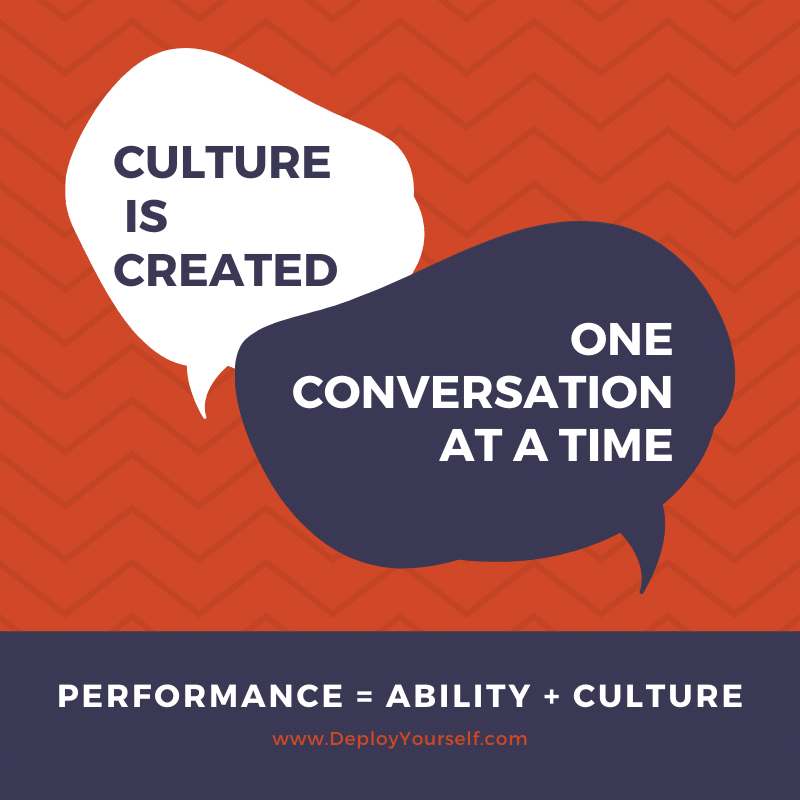
Workplace culture is an extremely important part of any organization, especially when it comes to the performance of people. A good culture within a company can help people to work at their full capacity (Bennett, 2019). Similarly, an adverse culture can have the opposite effect, pulling everyone down.
“At critical moments in time, you can raise the aspirations of other people significantly, especially when they are relatively young, simply by suggesting they do something better or more ambitious than what they might have in mind. It costs you relatively little to do this, but the benefit to them, and to the broader world, may be enormous. This is in fact one of the most valuable things you can do with your time and with your life. ” – Tyler Cowen
But how does one go about establishing a culture where people perform at their highest levels? If you are a manager or a leader, the below steps are for you:-
9 Ways to Expand the Capacity of Your People
1.Understand Them as People
People value being recognized as individuals, and not just as tools and resources to get a job done. It is important to build a strong manager-employee relationship if you want to increase their engagement and retain them (Markos & Sridevi, 2010). Furthermore, a report by The Towers Perrin Talent Report (2003) listed “senior management’s interest in employees’ well-being” as the key drivers in work-related performance.
Evidently, getting to know your people is a worthwhile exploit but how is this best achieved?
Scheduling regular one-to-one meetings is a great starting point. Each meeting is different from the last but the overall outcome will be a deeper understanding of your employees as people and a stronger working relationship.
Topics of discussion during any such 1-on-1 meeting can include upcoming projects, work-related concerns, or personal updates. Possible questions which may elicit particularly useful responses are as follows:
1. What concerns do you have at work?
2. What do you find especially enjoyable or engaging at work?
3. How do you define your best work? What can I do to help?
4. When was the last time you laughed at work? Do you have friends at work?
5. How do you spend your time outside of work?
6. If you could change one thing in the workplace what would it be?
The benefits of these conversations are two-fold. Firstly, you will get to know your employees as people. The insight you gain from these chats can inform the decisions you make regarding regular day to day work activities. Through honest inquiry and asking questions, you will find out what your people care about.
Secondly, as a direct result of your communication, people will feel valued. One-to-one meetings allow you to express your interest in people and show that you care. Feeling valued will allow people to shed any inhibitions and bring themselves to work fully.
Make a mental note to ask about their child’s recent sporting event or their dog’s surgery. These connections create opportunities to learn more about what motivates them, what gets them excited, what their goals are.
In short, having open communication regularly will benefit both you and your employees. It will not only increase work performance, but also increase the amount of fun, happiness, and satisfaction people have after work.
Our Potential For Performance Is Huge
2.Treat Them as a Superhero
Showing belief in someone can be powerful. It is so easy to judge, doubt, and belittle people that honest belief in someone’s abilities can be refreshing and empowering. Shine the spotlight on your people. Use recognition to give them courage and permission to keep pushing the limits of their ability. Do not only recognize success, but also growth and effort. A sense of worth within a company will without doubt lead to improved output.
“If we treat people as they are, we make them worse. If we treat people as they ought to be, we help them become what they are capable of becoming.”
― Johann Wolfgang von Goethe
As per the Development Dimensions International, empowerment is one of the five conditions needed to create a “highly engaged workforce” (DDI, 2005). Do your best to instill confidence in your employees and, in turn, the likelihood of them performing to their capacity will increase.
Self-confidence comes from within but external forces like the culture at work and belief from superiors can play a big part. When you build confidence in your employees, the end result will likely surprise not only you but also your people. Give them your confidence and trust and watch your superheroes rise to the occasion and outperform even your expectations.
According to Forbes, 70% of workers say that motivation and morale would improve if managers simply said thank you more. Fifty-four percent of employees feel their boss could do more to appreciate them. If you want to enable your people to do more, show more appreciation.
Treating your people as superheroes can instill a lot of confidence in people. This can come from the way you speak to them or even just your actions. Believing that an employee is capable of much more than their current performance can help change your actions and words in many subtle ways. These small changes are reflected in your body language and tone of voice, and give people confidence and belief in their own abilities, freeing them of any doubts and insecurities.
Can You Bring Out Your Inner SuperHero?
3.Provide The Best Resources Possible
Understanding your workforce goes further than simply getting to know them. Use the above mentioned one-to-one meetings to engage people in dialogue about what tools and resources they need to do their job. As a leader, once you find out what resources will help them do their job more efficiently, waste no effort in providing them. After all, an experienced gardener with a rake is less efficient than an apprentice with a leaf blower.
Research highlights the importance of supplying workers with suitable tools and resources such as improved scheduling functionalities. By delivering superior resources, employees are far more likely to be engaged in their work and perform to their best ability (Chung and Angeline, 2010). Having what you need to do your work also avoids any unnecessary frustrations, which can sap useful energy and slow you down.
As we saw in point 1, asking questions can help you figure what people care about. Your task as a leader is now to take care of what they care about. And you do that by providing whatever people need to perform at their best.
4.Avoid Micromanaging
A big part of the manager-employee relationship is trust, specifically the trust you need to show in your people. As leaders, once we hire the appropriate people, it is important to trust them without asking for reasons to do so. Once they have what they need, get out of their way.
Resisting the temptation to micromanage and involve yourself in every task can be difficult. Allowing your people to do what they do best without interference will, however, lead to better results in the long-run. Provide them the assurance and freedom they need and desire to do their job. Give them ownership, so the work is theirs, not yours. This makes their tasks, their projects, and their responsibilities more meaningful.
There is a lot of overlap between points three and four as highlighted by Markos (2010). He states that by providing all the adequate resources, information, and training, employees can develop their knowledge and skills. This, in turn, builds confidence, allows them to work without supervision, and fosters self-efficacy and commitment to the job.
Take the stabilisers off their bicycles and they will learn to ride more proficiently.
“There is no passion to be found playing small — in settling for a life that is less than the one you are capable of living.”
— Nelson Mandela
5.Setting Effective Goals
Goal-setting is a great motivator in the workplace but it needs to be done correctly. Goals should be ambitious enough to encourage people to work at their full capacity but they must also be achievable.
The BlessingWhite (2006) study showed that 60% of employees surveyed wanted more opportunities to grow within their job in order to remain satisfied. The study corroborates the idea that setting goals in which employees can advance their skills is very important. Goals also give a sense of progress and build momentum, as people start to hit bigger and bigger goals, building confidence and higher levels of ability.
This does, however, raise the question – “How to set the right goals?”.
The answer? SMART goals.
George T. Doran is widely recognised as the person responsible for the acronym SMART. This goal-setting framework is widely used in the business world today and uses a simple actionable set of rules. These rules are as follows:
Goals should be:
S – Specific – Clear and easy to comprehend by all involved. Can everyone relay the goal?
M – Measurable – Can you easily determine whether the goal has been achieved?
A – Achievable – Is the goal realistic? It may be ambitious, but is it feasible?
R – Relevant – What is the benefit of achieving the goal? Is there a point to it?
T – Time-bound – What is the timeframe to complete the goal? Without one the goal can lack direction.
Setting ambitious goals will encourage people to think outside the box. Provided they are motivated, they will push their capabilities to the maximum and take bold actions in order to achieve the goal. By doing so they will expand their skill set in the process. Your job as a leader is to provide whatever they need to go after their big goals and remove any roadblocks that might stand in the way.
Use BIG goals to push people out of their comfort zone, take bold actions, and expand the horizons of their ability. They will never know what they are capable of if they are not given the opportunity to strive for more than they are currently doing.
See The Big Picture
6.Mistakes Are an Opportunity
Mistakes are unavoidable when chasing big goals but how you deal with them can make a world of difference. Instead of viewing mistakes as a negative, see them an opportunity to learn. This begins by showing your own vulnerabilities as a leader. If you make a mistake, it’s important to admit it. Be willing to accept feedback on your performance and then use the information for positive change.
Blaming and penalising people for mistakes and failure can create a toxic workplace culture, which is counterproductive, not to mention unpleasant.
Zhao, Lautsch, and Boyle delved deeper into the topic in their 2016 research paper. They concluded that although errors may be prevalent in the workplace, they do indeed offer the opportunity for learning.
If people work in fear of failing, they lose initiative and will never take the necessary risks to go beyond their current capacity. They need to be confident that failure is permissible, and even desired, as part of what it means to learn and expand our abilities.
If you, as a manager, have an open dialogue with your employees, you will be able to easily determine how and why a mistake occurred. The focus should be on learning from the mistakes and making improvements, rather than blaming or punishing those who were responsible.
In many high trust cultures, mistakes and lessons learned are often shared with the entire company, without naming or blaming any individuals responsible for the mistake.
“ A boss who micromanages is like a coach who wants to get in the game. Leaders guide and support and then sit back to cheer from the sidelines.”
— Simon Sinek
7.Wider Context Is Key
Context can sometimes be a vague term but it encapsulates everything we do. Understanding the wider context behind an organization, both in a holistic and individual sense, is paramount to success.
Breaking that down, the vision of the individuals within a company has to be aligned with the company’s vision in order to cultivate success. 91% of companies surveyed who have an effective performance management system claim their employees’ goals are linked to the business’ (Chowdhury and Hioe, 2017). People become more effective contributors when they fully understand what they are contributing to.
The Developmental Dimensions International (2005) was referred to in point two and is once again relevant here. The paper states that managers must align employee efforts with a strategy in order to achieve a highly engaged workforce.
Organizations need leaders who can both communicate a vision and get employees to buy into that vision (Sadeghi and Pihie, 2012). If you believe in the destination, you will do everything you can to get there.
8.Be Supportive
Employee concerns affect productivity. The role of a manager is to manage their team. This includes easing fears and doubts and creating a more productive atmosphere as a result.
People start relationships, get married, receive diplomas, and experience other highs which can improve productivity. Equally, people will experience divorce, bereavement, childcare issues, and other personal issues that will negatively affect their output at work.
Anxiety, stress, and fear are emotions that everyone goes through and the workplace is not exempt from them. Make sure to be supportive so that you help and not worsen the situation. Your job as a leader is to make sure your people know you have their back. They must know there is always an open line of communication for guidance and support.
They must feel comfortable and confident before they will be willing to take on that big project or go beyond their current abilities. Build on their strengths, empower them to take risks and voice their thoughts, practice constant optimism, and never stop communicating.
Some of the most common workplace concerns include:
· Wanting a pay rise
· Favouritsm
· Excessive management
· Unnecessary or unclear processes
· Lack of communication
· Being overworked
· Workplace politics
Support doesn’t necessarily have to come directly from you. If you can implement the right structure to deal with issues that arise. Your job is to allow your people to work to their maximum capacity, and that might mean connecting people across teams and departments if they can help each other.
Your goal as a manager is to support your people and help them realize their biggest dreams. The findings of a 2019 study by Leitão, Pereira, and Gonçalves suggest that supervisor support and a “good work environment” are important in organizational productivity.
Taking care of your employees’ welfare and supporting them in moments of anxiety and stress will allow them to perform to a higher standard and flourish. That is how you, as a leader, show that you care for your people. You care for your people by taking care of what they care about.
“Love is the only way to grasp another human being in the innermost core of his personality. No one can become fully aware of the very essence of another human being unless he loves him. By his love he is enabled to see the essential traits and features in the beloved person; and even more, he sees that which is potential in him, which is not yet actualized but yet ought to be actualized. Furthermore, by his love, the loving person enables the beloved person to actualize these potentialities. By making him aware of what he can be and of what he should become, he makes these potentialities come true.”
― Viktor E. Frankl
9.Escape the Bubble
Routine has a lot of positives but it can also be stifling. Sometimes taking a step back and looking at the bigger picture can be a refreshing exercise. This isn’t just a solo activity either, as you can involve your people in the same.
Take time to talk to people about their deepest dreams, ambitions, and hopes for the future. Talk about what can we do better in the future and how to work better together. Having the opportunity to voice these thoughts, be heard, and work together for the good of all is empowering and will give your people the confidence they need to do more than they think they are capable of.
By doing so you’re indirectly reinforcing their (perhaps waining) motivation. Perspective can often get lost in the routine of a 9 to 5 and it is important to bring it to the forefront of your employees’ thinking. You will get a clearer perspective looking at a house from outside than inside.
Help people connect with their deepest values and why they are doing what they are doing. Once they can step back and see the big picture, and then come back to focus on the detail and execute the day to day tasks, your job becomes easier.
This point nicely ties in with all of the previous eight. To achieve it you need to have an understanding (1) and mutual trust (4) with your workforce. In escaping the bubble they are able to remind themselves of their goals (5), fuelled by the confidence you have instilled in them (2) with support (8) and resources (3). They are able to consider the wider context (7) and make improvements towards that from what they have learned (6).
Conclusion
1. Understand Them as People – People are multi-faceted. Get to know them beyond work.
2. Treat Them as a Superhero – Belief is key. Confidence will take them (and you) a long way.
3. Provide the Best Resources Possible – Without the correct resources, people cannot perform to optimum levels.
4. Avoid Micromanaging – Step back and trust your people to flourish.
5.Set Effective Goals – Go after ambitious SMART goals to enhance capacity.
6. Mistakes Are an Opportunity – Turn a negative into a positive and build for the future.
7.Wider Context is Key – There is always a ‘why’. Understanding it will open doors.
8.Be Supportive – Creating the right environment for your people is paramount. Have their back.
9.Escape the Bubble – Take a step back. See the big picture together so that everything else falls into place.
Getting the best out of people is by no means a simple task. It requires hard work, effort, and dedication to the cause. The ideas above will help you unlock the potential of your people. By employing these in your own organization, you will be taking steps towards expanding the capabilities of your employees and helping them reach their potential.
Everyone wants to work in a workplace where mistakes are used as opportunities to learn, where employees are given the tools they need to be successful, and where they know they are supported as they do the best work of their lives.
If your employees are not working to their full potential, then neither are you. By seeing people as superheroes and showing that belief with your actions and words, you will help them become superheroes going after meaningful and ambitious goals.
We spend a good part of our life thinking about time. Right from when to wake up in the morning, to meeting work deadlines, to when is the right time to make a decision, we all know that timing plays a crucial role in our lives.
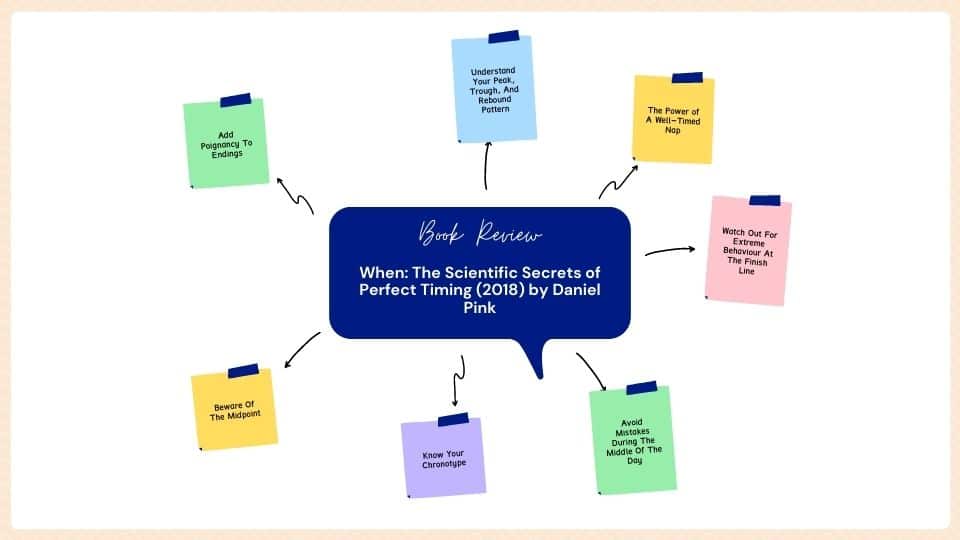
In the words of Miles Davies, ‘Time isn’t the main thing, It’s the only thing’. His words are applicable to each one of us. When: The Scientific Secrets of Perfect Timing (2018)by Daniel Pink discusses the strong connection we share with time, how habituated we are to our routines, and why we do what we do when we do it.
1. Understand The Peak, Trough, And Rebound Pattern
We go through our days in a consistent routine. We get up, complete our chores, have breakfast, read the newspaper, get dressed, head to work, have lunch, head back home, spend time with family at dinner and go to bed. However, underneath these daily routines, our moods also follow a general time pattern.
Researchers from Cornell University studied the mood trends of people on Twitter. They found a consistent pattern through the day where positive moods peak in the mornings, dip down in the afternoon and pick up again in the evenings. Apart from these studies, many behavioral scientists, using the Day Reconstruction Method (DRM) – a method of analyzing peoples’ day hour-by-hour, found that positivity levels follow the Peak, Trough, and Rebound pattern. Similarly, negativity levels peak in the afternoon and wane towards the evenings.
Daniel Pink shows in the book that the peak, trough, and rebound pattern has a significant effect on our mood. Our moods affect the quality of the work we do in the afternoon’s trough time. Therefore, the most important calls, meetings, and deals are advised to be scheduled in the daytime when our mood is at its peak.
2. Know Your Chronotype
Along with the pattern our emotional state follows, each one of us has an internal clock or chronotype. While a majority of the people follow the same consistent pattern of morning peak, afternoon trough, and evening rebound, there are two other chronotypes that differ from the general type – the night owls and larks who consist of 20-25 percent of the general population.
Night Owls
Night owls experience their peak around 9:00 PM and rebound in the morning. These are usually creative people and tend to be a little more neurotic, depressive, and impulsive than the general group. Night owls should use their night-time peak to handle analytical tasks and use their morning rebound for creative work.
Larks
Larks (like I am) on the other hand experience their peak, trough, and rebound a few hours earlier than everyone else. They are the ‘early to bed early to rise’ people and have stable, happy, and introverted personality types. For larks, the reverse works. They should assign analytical tasks for their early morning and creative work for evenings.
The author of the book gives various examples to show why it is important that we understand our chronotype to help schedule our day and maximize productivity.
3. Avoid Mistakes During The Middle Of The Day
Studies have shown that the elderly and small children tend to follow lark patterns, and we tend to change to the night owl pattern once we hit the teenage years. This is the reason why most teenagers suffer in analytical subjects such as math when schools start early in the morning.
Another observation in hospitals has shown that standards of hygiene and care drop towards the afternoons. Moreover, the staff is more prone to medical mistakes during the trough period.
Daniel Pink adds that these midday mistakes are avoidable by taking breaks. The University of Michigan Medical Centre has proven that taking ‘vigilance breaks’ shows improvements in the rate of medical errors. Similarly, the introduction of twenty-minute breaks before assessments in some Denmark schools has shown improvement in scores.
Schools, colleges, hospitals, and other work organizations should take cognizance of this fact and introduce regular breaks for better productivity, and to avoid midday errors.
4. The Power of A Well-Timed Nap
It is important to understand why breaks are beneficial. Research on the usage of Desktime, a desktop productivity software company, revealed that for every fifty-two minutes of work, a person needs seventeen minutes of break time for maximum productivity. Sadly, in the previous ten years, the work culture is moving in the wrong direction by reducing the number of breaks.
Studies have shown that a small 5-minute break can uplift mood, improve creativity, and motivate people. Moreover, chatting up with colleagues at the coffee machine, a walk in the outdoors without the smartphone constantly pinging, or even taking lunch outside amongst nature can improve emotional state and maximize productivity.
Studies have also shown that taking a small twenty-minute nap can result in about three hours of increased information retaining capacity and improved focus. Additionally, a Nappuchino – a quick cup of coffee before that 20-minute nap – can give a better boost to focus and productivity. It takes about 20 minutes for caffeine to enter the bloodstream. Therefore, just as we wake up from the nap, the coffee keeps us awake and geared up for work.
5. Beware Of The Midpoint
Studies show that we tend to start a project (or any other task) with great gusto. However, if we hit an obstacle at mid-point – or even at the start – we tend to slack off. Most studies also show a rate of higher productivity at the start and at the end of a project. However, productivity is rarely consistent at the midpoint (when we tend to slow down).
Connie Gersick, a researcher, coined the term the uh-oh effect. The uh-oh effect refers to the human behavior pattern where people would waste time as they reach the midpoint of a project. Later they realize that they haven’t got any work done and speed up towards the end to finish the job. This behavior pattern is seen in sports like basketball and football, where players who get a pep-talk at half-time to score a winning goal, play their best and emerge winners.
Another way to boost midpoint productivity is to do a premortem. A premortem is an analysis of all the obstacles that one could encounter in the project, midpoint onwards. This pre-analysis helps in being prepared for any midpoint crises.
6. Watch Out For Extreme Behaviour At The Finish Line
Though behavior patterns suggest higher activity towards the end of any project or task, extreme finish-line behavior coupled with panic can prove to be disastrous.
To avoid these, one can use the following tips –
Establish a clear end goal individually and/or for the team. If the project falls behind schedule, these shared end goals help in establishing focus.
Avoid assigning new tasks or introducing new ideas at the midpoint. Reassert the end goal and brainstorm how to move ahead with the original plan.
Be aware of rash decisions towards the end. We tend to try and assign more meaning to the project towards the end. These added meanings could create more errors and additional work.
7 Secrets Of Perfect Timing
7. Add Poignancy To Endings
Humans place huge importance on a ‘happy ending’. Moreover, we place more value on achieving poignancy – a bittersweet, happy yet sad feeling – to a project or task that nears its end. This desire for poignancy is truly satisfying and one can take steps to achieve it.
The end always symbolizes a period of change and a new beginning. Yet, the future is unseen, unknown, and therefore, there is uncertainty too.
We should therefore attempt to bridge this gap, by creating relations between the past, present, and future. A good example would be to write a letter to your future self, describing the feelings of the past and the present, or plans for the future. When such letters are read after a few years, they can move a person in many ways and be a revelation. The feeling of poignancy can be thus achieved.
“Ernest Hemingway published 15 books during his lifetime, and one of his favorite productivity techniques was one I’ve used myself (even to write this book). He often ended a writing session not at the end of a section or paragraph but smack in the middle of a sentence. That sense of incompletion lit a midpoint spark that helped him begin the following day with immediate momentum. One reason the Hemingway technique works is something called the Zeigarnik effect, our tendency to remember unfinished tasks better than finished ones.”— Daniel Pink
The Final Message Of Time
Our moods and performance oscillate during the day. Time waits for no one. It is up to us to make the most of it. Understand how the peak, trough, and rebound pattern affect us in a myriad of ways. Knowing one’s chronotype, avoiding midday mistakes, incorporating well-timed breaks and naps are some of the ways we can get ahead of time.
Welcome to the Deploy Yourself Newsletter. Every two weeks I share about what impactful coaching and leadership look like. I also share the most insightful lessons and stories I encountered in the last two weeks. You can also read this issue online.
Why Are You Doing What You Are Doing?
“I got so busy doing that I forgot why I was doing it in the first place. It took me 13 years to realize that I was doing the wrong thing,” said my friend recently to me.
I was surprised as I have always considered this friend very successful and someone who always knew what he wanted, and then went for it. He got good grades in school, went to a top engineering college, and later went on to work in some big companies like Amazon and Google. Then, he did his MBA from a top school, which was like a cherry on the cake (his resume).
To me, and to everyone else, his life and career looked like the perfect career. Yet this is what he has to say about his choices :
“I got so busy in chasing the new promotion, the new job, the new project that I forgot why I was doing what I was doing. I got so busy doing what I (or others around me) thought was the right thing to do; that I never stopped to think what was it that I was trying to create or achieve in the world. As I chased and won over challenges, I lost connection with my purpose, and that sucked all energy, joy, and fun from my life.
It was only later I realized what really makes me happy, and what I have been putting on hold. When I connected with that (he left his job to practice farming and solving farmer’s problems in his village), I found a power that is grounded in values and purpose and is not superficial and arrogant.
I realized that asking myself this question – Why are you doing what you are doing? – helped me let go of the attachment to the life others have chosen for me. The answer to this question helped me get reconnected to what I really wanted to do, and what gives me joy and satisfaction, even if that is hard and painful at times. “
Everyone wants to be successful. But few people take the time and energy to define the success they want. We owe it to ourselves to break this cycle and ask ourselves “Why am I doing what I am doing?” Success is about stepping back and asking yourself What do I really want? What, if I didn’t do, I will regret forever?
If what you read above made you realize something deep, hit reply, and share the insight that you had? .
Articles and Stories Which Have Fascinated Me
One
“Make Your Bed” – A Speech By Admiral William H. McRaven
“If you make your bed every morning you will have accomplished the first task of the day. It will give you a small sense of pride, and it will encourage you to do another task and another and another. By the end of the day, that one task completed will have turned into many tasks completed. Making your bed will also reinforce the fact that little things in life matter. If you can’t do the little things right, you will never do the big things right.
And, if by chance you have a miserable day, you will come home to a bed that is made — that you made — and a made bed gives you encouragement that tomorrow will be better.
If you want to change the world, start off by making your bed.”
From Make Your Bed – a speech that was delivered as the commencement address to the graduates of The University of Texas at Austin on May 17, 2014.
Two
The 7 Most Powerful Investments You Can Make. They Are Not What You Think
Most of the time when we talk or think about investing, we limit our thoughts to financial investing and to maximize our monetary returns. We believe doing so will maximize the quality of our lives in the long term.
All that is good thinking, but I have discovered that there are some simple investments we can make in ourselves which we tend to miss or neglect. And for most of these are not even financial. You don’t need to have money to do this kind of investing.
Below are the 7 most powerful investments you can make:-
We all would love to be rational all the time, make sensible decisions, and act reasonably. However, Dan Ariely shows in his latest book that humans are rarely rational, and the truth is that our irrationality affects our decision-making our actions all the time.
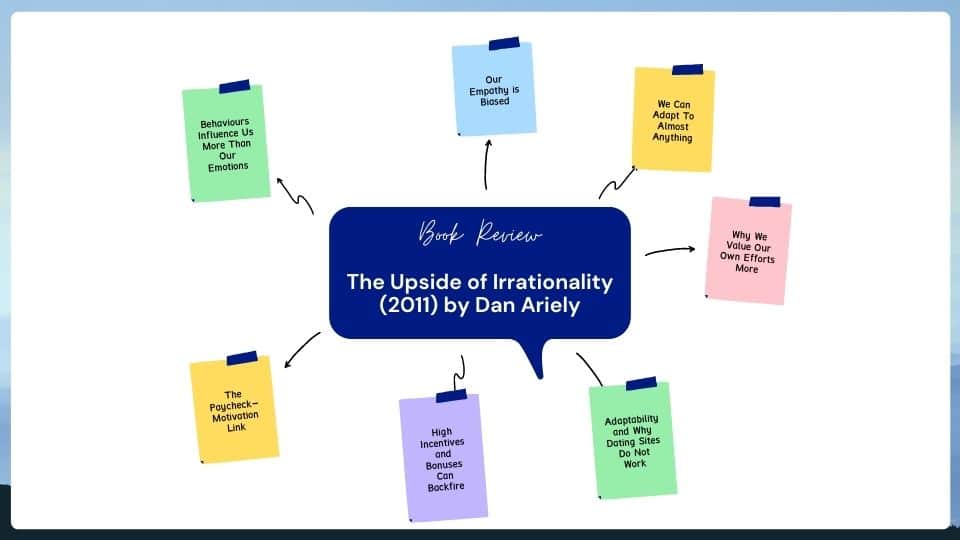
InThe Upside of Irrationality (2011), Dan Ariely calls out our behaviors for being irrational, and the surprising positive and negative effects of the same.
He discusses how to become aware of our behaviours in these situations and what we can do :-
1. High Incentives and Bonuses Can Backfire
Most of us look forward to that time in the year when we are about to receive our yearly bonuses. Most put in extra effort at work, burn the midnight oil and push themselves to the limits, to show that they deserve every penny of it. High incentives and hefty bonuses were introduced with a view to increasing employee output. However, recent studies show the opposite.
High incentives and hefty bonuses put immense pressure on employees. It is a known fact that while a healthy amount of pressure can manifest better performance, it can also work negatively. Such pressure can become detrimental, especially when it comes to creative work, innovation, and problem-solving. The race ‘to be worth it’ results in hypermotivation – a state where one is so highly motivated to perform that they fail due to the extreme build-up of pressure and stress.
For Example – The impact of pressure and stress can be seen in executives who are motivated and well prepared to give a high-impact speech but do not perform well in front of an audience.
Bonuses and incentives that do not raise the stakes too high do not put pressure and extreme stress on individuals. An average incentive will still motivate performance, yielding better results.
2. The Paycheck-Motivation Link
The foregoing notion that a paycheck motivates people to perform is irrational. Animal psychologist Glen Jenson used the term contrafreeloading to describe a behavior exhibited by many animals such as monkeys, birds, and fish – that they prefer to earn their food as a reward for completing a task rather than to get it free.
This concept is also true for human beings and their motivation to work. Internal motivators like meaning and recognition are important conditions for high performance and motivation. External motivators like the paycheck are never enough to motivate people to do their best work.
Moreover, contrary to Adam Smith’s division of labor theory, it is found that people feel devalued and demotivated when assigned overly simple tasks. For Example, Workers involved in simple manual repetitive jobs such as screwing on bolts to metal in a car factory, do not feel involved in the end-product.
Since many employees today feel demotivated due to the lack of meaning in their work, organizations should acknowledge it and work harder in employee engagement programs and recognition of performance, rather than just using salary as a motivator.
“Wouldn’t economics make a lot more sense if it were based on how people actually behave, instead of how they should behave?” — Dan Ariely
3. Why We Value Our Own Efforts More
Humans have a natural tendency to over-value their own work and feel pride in their work and effort. However, human beings do not need to put a huge amount of effort into a task to appreciate themselves. There is an irrational tendency to be biased toward one’s own work.
We tend to be blind to the idea that we overvalue our work. If you have children, for example, you probably think of them as the best children on the planet. Well, most parents do!
Conversely, simply effort is not enough. Humans crave a sense of completion too, without which, their motivation for completion and positive bias towards their own work fades.
4. We Can Adapt To Almost Anything
Humans are shown to have high adaptability to their environment. We crave normalcy and our bodies as well as emotions have evolved to get back to normalcy soon after we experience any change in circumstances. Our adaptability is an excellent novelty filter and makes us sensitive to even the smallest of change in our surroundings.
We experience hedonic adaptation, the tendency of emotionally leveling out and adapting to expectations, or to new experiences, both positive as well as negative. Example: Hedonic adaptation can be understood better when we look at shopaholics. They tend to adapt to their new purchases so fast that they get bored soon. Then they need to experience the excitement of a new purchase again, only to adapt to it again.
The best way to use our natural adaptation to our advantage is to not interrupt our negative life experiences when they happen. This way, we can adapt to negative changes faster. Similarly, we should try to interrupt positive experiences to keep the excitement alive.
The Upside of Irrationality
5. Adaptability and Why Dating Sites Do Not Work
Our ability to adapt to our surroundings is a major factor that affects our choices in dating. Moreover, as irrational as it sounds, it gives us insight into why dating sites do not work well.
To begin with, when it comes to dating, people tend to choose partners who are like them, especially when physical attributes are concerned. Therefore, while someone with average looks will desire an attractive partner, he will naturally (or irrationally) end up choosing someone who has average looks. The person will place more value in some non-physical quality due to our human nature to adapt to what we have and level out our expectations.
It is this adaptability that causes dating sites to fail. Irrationality impacts our decisions when it comes to love. Online dating sites that categorize people based on their attributes such as favorite movies, hair color, income, etc. using checklists and multiple-choice questions fail. In reality, dating works when two people get to know each other better and spend time together.
I no longer idolize reason. I have come to accept that ninety percent of what we do is irrational and that we spend what little rational thought we have in justifying our irrationality. — Rita Mae Brown
6. Our Empathy is Biased
Humans are empathetically biased, especially when it comes to choosing to act or react to tragedies. The problem lies in the fact that we look for closeness, detailed information, vividness, and relatability to the tragedy for it to make an impact on us. This irrational tendency is known as the identifiable victim effect.
For Example: News about a child fallen down a well shaft will affect us more than then the news of a mass murder. It was Stalin who said “One man’s death is a tragedy, but a million deaths is a statistic.”
At the same time being completely rational is not the answer either. Pure, unadulterated rationality discounts everything else that does not directly threaten, concern, or profit, and therefore will eliminate the aspect of empathy altogether. Some bit of irrationality is essential to make decisions we can live with and feel good about, in the future.
7. Behaviours Influence Us More Than Our Emotions
Humans tend to remember and take cues, from their past behaviors rather than from their past emotional states. We tend to believe that we had a reasonable reaction back then and that a new situation warrants the same reaction again. This tendency is called self-herding.
Example: Consider a situation where a person is on an important phone call and his children are making trouble. He scolds them and that makes the kids leave the room. The person will tend to remember that his negative reaction of yelling (and not his emotional state) at them caused the kids to keep quiet. That will get him to believe that scolding them is ok, making it a habit.
It is therefore essential to be wary of how we react to certain situations, especially in negative reactions. The failure to recall our emotions when we swore at our friend prevents us from doing the same thing next time.
In conclusion, human behavior is complex in nature. When we think that we are, or need to behave rationally and make objective decisions, we tend to give in to irrationality. In this book, the author Dan Ariely shows us both sides of the irrationality coin, and how biases influence our behavior and way of thinking.
If you are lucky enough to be someone’s employer, then you have a moral obligation to make sure people do look forward to coming to work in the morning. – John Mackey
I have been leading teams for 12 years in companies such as Yahoo, Booking.com, etc in India and Europe. When I look over the last 12 years, I get a smile on my face on recalling how foolish I was to think that I had it all figured out. I used to believe management and leadership is only common sense, and that I do not need any special training or knowledge for it.
Today, while I still believe that leadership is a lot of common sense, but I couldn’t be more wrong about how easy or hard would be. As it is said, the one thing about common sense is that it is not so common. One of my biggest learnings about leadership is that while the concepts behind it are simple and age-old, they are not easy to actually implement in real life. What I found is that even with all the leadership knowledge, these skills can desert you when you need it the most.
What I learned is that human psychology and our evolution driven behavior patterns are hard to undo. Our ego, various cognitive biases, and our desire to look good in front of others can fool us easily. These very human traits can make us behave in ways that are diagonally opposite to our deepest held beliefs and values.
Don’t Underestimate The Importance of Work Culture
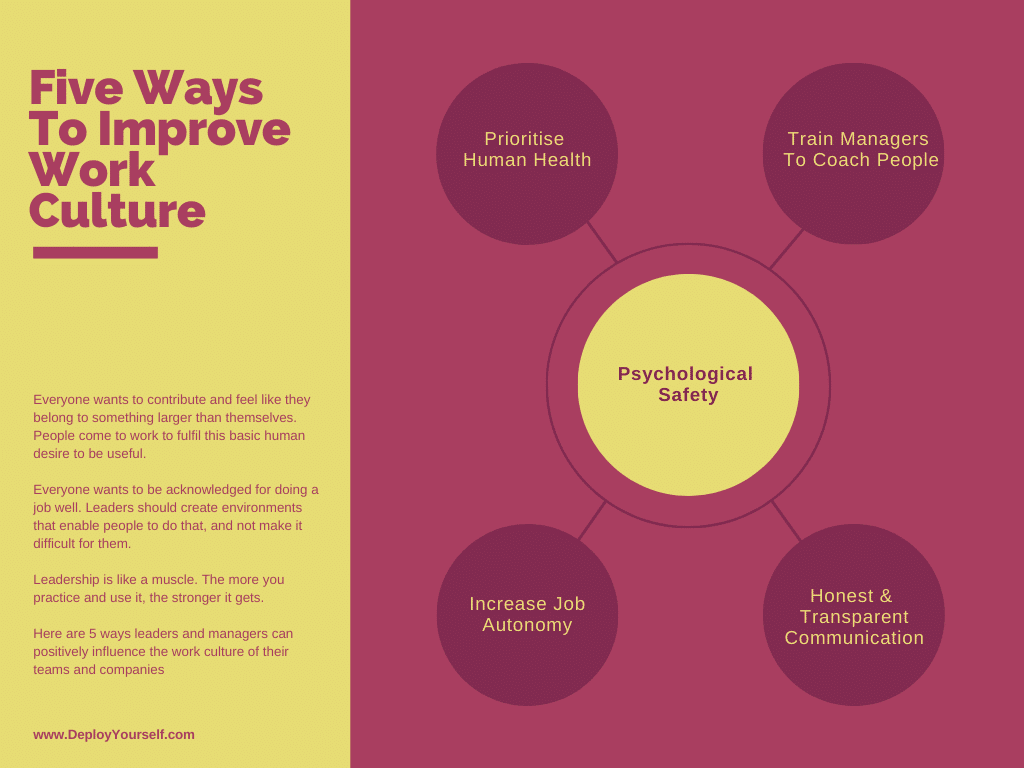
Leadership is like a muscle. The more you practice and use it, the stronger it gets. Without practice, all the leadership knowledge is only as useful as the knowledge of nutrition while we keep on eating fast food. Below are 5 ways leaders and managers can positively influence the work culture of their teams and companies:-
1. Make Human Health A Priority
Good management starts with taking “care” of your people. As managers, we should all ask ourselves – how well do we know our people? Do we know what they “care” about? And then we should make it a priority to take care of what they care about. If we know that, we can match work projects and assignments to employees better. This leads to motivation, growth, and success for both the company and the employee.
Managers should actively discourage bad practices like working late and on weekends, and encourage people to focus on their health by providing and promoting adequate health insurance, healthy food, and sports facilities – whether inside or outside the physical space of organizations.
“Customers will never love a company until the employees love it first.” – Simon Sinek
2. Create Psychological Safety
No productive work is possible if people don’t feel safe at work. If you have to put a mask at work and are not free to say what you feel, it creates a lot of friction and stress. Thus creating an environment of psychological safety is very important for any manager. Your biggest job is to create an environment of respect and accountability, where people have fun and express themselves freely by continuously moving forward towards the team’s goals.
3. Train Managers to Coach People
If you are a manager, you are a coach by default. You don’t have a choice in being their coach as people will approach you anyways. When they are demotivated, when they have a conflict, or when they need help for any other reason; it is your responsibility to listen, understand their concerns, and then coach them to align their personal motivations with the team’s shared purpose and goals.
How well you coach people will be directly proportional to the results the team produces. Investing in learning these skills and making coaching a priority can be your best investment ever.
4. Increase Job Autonomy
Nobody likes to be told what to do. Nobody likes to be micromanaged. We hire people after extensive interviews which test them on their skills. I think we disrespect the same skills when we don’t listen to them.
As managers, it is important to give people a say in how they want to work. Once people have everything they need to do their job, managers should get out of their way and not stand over their shoulders.
Making Friends At Work Can Make a Huge Difference To Your Performance (and Wellbeing)
5. Honest and Transparent Communication
Finally, we should treat our employees like adults. We should be honest and share what is going on in the company – even if it means sharing bad news. This builds trust and makes it more likely that people will stand by you in times of adversity.
Leaders should stop using complicated language or hiding behind jargon. Share documents openly. Let people ask anything about everything. Transparent communication involves people in problem-solving and they see the team’s or the company’s problems as their own. And, you never know where a good solution to your biggest challenges might come from.
Employees who believe that management is concerned about them as a whole person — not just an employee — are more productive, more satisfied, more fulfilled. Satisfied employees mean satisfied customers, which leads to profitability. — Anne M. Mulcahy
Everyone wants to contribute and feel like they belong to a company. People come to work to fulfill this basic human desire to be useful. Everyone wants to be acknowledged for doing a job well. Leaders should create environments that enable people to do that, and not make it difficult for them.
Welcome to the Deploy Yourself Newsletter. Every two weeks I share about what impactful coaching and leadership look like. I also share the most insightful lessons and stories I encountered in the last two weeks. You can also read this issue online.
Things That Stop Us From Achieving What We Really Want
Not saying NO to unimportant things so that we can focus on the most imp ones
Eating and drinking poorly
Playing the victim – Blaming instead of taking responsibility
Letting news and social media turn into a dopamine addiction
Not surrounding ourselves with people who inspire and challenge us, and not afraid to tell the truth to our face
If what you read above made you realize something deep, hit reply, and share the insight that you had? .
Articles and Stories Which Have Fascinated Me
One
20 Books That All Leaders Should Read In 2020
” I’m constantly surprised by the number of leaders and managers who say they’re too busy to read. Leaders who don’t have time to read are leaders who don’t make time to learn.
Organizational pyschologist at Wharton, Adam Grant, selects 20 books that could have a lasting impact on you this year
The major themes are problem-solving, relationships, rhythms of work and life, identity, and happiness.”
Reasonable or Unreasonable? What Kind of Goals Do You Set?
We all have our definitions of what is reasonable and what is not. At first sight, it seems silly to aim for goals you doubt you can achieve. You know what’s reasonable and what is not, and you set reasonable goals for yourself.
This sounds like a fine approach, but is it?
Setting unreasonable goals could, in fact, be the better choice. We constantly underestimate our abilities due to risk aversion and impostor syndrome – which has been proven by research.
After aiming for unreasonable goals (irrespective of the result) we are left with more knowledge and lessons. That itself is a good reward. If you can look at things this way, going after unreasonable goals will leave you wiser and more experienced, even if you fall short.
In short, the most important benefit of going for unreasonable goals is that it will help you expand as a person.
I use cookies on this website to give you the most relevant experience and for analytics purposes. Any personal data collected will never be shared with any third party, or used to spam you. That is my promise. - Sumit By clicking “Accept”, you consent to the use of ALL the cookies.
This website uses cookies to improve your experience while you navigate through the website. Out of these, the cookies that are categorized as necessary are stored on your browser as they are essential for the working of basic functionalities of the website. We also use third-party cookies that help us analyze and understand how you use this website. These cookies will be stored in your browser only with your consent. You also have the option to opt-out of these cookies. But opting out of some of these cookies may affect your browsing experience.
Necessary cookies are absolutely essential for the website to function properly. This category only includes cookies that ensures basic functionalities and security features of the website. These cookies do not store any personal information.
Any cookies that may not be particularly necessary for the website to function and is used specifically to collect user personal data via analytics, ads, other embedded contents are termed as non-necessary cookies. It is mandatory to procure user consent prior to running these cookies on your website.