July 2020

  • Busting The Myth of Individual Performance. A Radical New Equation For Improving Performance At Work

    What causes employees to put themselves between a customer and bullets from a terrorist attack?

    It is very difficult to imagine anybody valuing their work so much that they put their lives at stake to protect customers. Yet, that is what many employees of the Taj Mahal Palace Hotel in Mumbai did on 26 Nov 2008 when terrorists attacked the hotel with gunfire and grenades. Eleven hotel employees were killed, most while helping approximately 1,500 guests escape from harm. Many repeatedly guided guests to safety before they themselves were shot by the terrorists.

    We will come back to this story later, but let’s start with a simple question – Do you want to improve performance?

    This might seem like a lame question because everyone wants to improve performance. Individuals want to improve their own performance for better career prospects, pay, and growth. Managers want to improve the performance of their teams and individuals to achieve business goals and make their bonus targets. Companies want to improve performance to retain the best employees and increase value for both customers and shareholders. Similarly, countries want to improve the performance of their workforce to make their economies stronger, and their people more prosperous.

    When it comes to discussing performance at the workplace, most of it revolves around individual performance. We believe, both consciously and subconsciously, that an individual is in complete control of his or her performance. We assume that the individual holds the absolute responsibility of performance – good or bad. And that is why we reward or punish people based on their individual performance.

    But what if this is not the truth? What if we are missing a huge component of performance? After researching and reading about the role of neuroscience and psychology in performance and leadership, I want to present a radical new equation for understanding and improving performance at work.

    Taj Mahal Hotel, Mumbai, Which Was Attacked By Terrorists in 2008
    Taj Mahal Hotel, Mumbai, Which Was Attacked By Terrorists in 2008

    Performance = Ability + (Culture x Size of Company)

    After 15 years of working professionally across many companies and two continents, today I see ability as an important but incomplete condition for performance. The culture of the company plays a much bigger role in the performance of each individual, and this part gets bigger as the company gets bigger.

    For example – In a small startup of 5 people, the performance of an individual will mostly be determined by their ability. If they can work on improving their ability, their performance increases by a similar margin. However, as the company gets bigger, the culture component gets bigger and has a major impact on performance. In a hundred or a thousand-person company, the impact of culture will be huge compared to the impact of the individual’s ability.

    If you were wondering what caused the Taj Mahal Hotel’s employees to put themselves in front of bullets, it was the culture the Tata group has managed to form over the 150 odd years of its existence. It was certainly not a part of their job requirement that day, and everybody would have understood if they had cared for their own safety first.

    As the hotel’s general manager said, “Every team member at the Taj felt that their house was being attacked. When our house is attacked, what do you do? You defend it and whoever is there inside. The family values that we all believe in are part of our corporate culture in the Tatas… The Tatas truly exhibit that the organization has a soul. I am very very proud that I work for them.”

    “Culture eats strategy for breakfast”

    — Peter Drucker

    Importance of Culture

    People don’t perform based on their abilities alone. Any person’s performance is the sum total of their own abilities and effort plus the prevalent culture in the company (and team). A good culture can enhance performance just like bad culture can degrade performance. I have seen this firsthand when working in Yahoo at a difficult phase in the company’s existence. Before Google or Facebook, Yahoo was the king of the internet. But it stumbled and missed many opportunities – first to buy Google, and later on to compete with Google.

    I met the best and most talented people of my life while working in Yahoo, and while they were putting in their best effort, the results were not good enough to compete in the market. As Yahoo’s business was struggling, a string of new CEOs and a lack of leadership destroyed the culture in the company. Yahoo innovated and introduced some revolutionary products (briefcase, portal, email, Geocities, broadcast, Flickr) in the 1990s, but failed to capitalize on their own products as well as acquisitions in the 2000s.

    What Can A Good Culture Enable?

    1. Good company culture can turn your employees into passionate advocates for your way of doing business. They will go above and beyond what is expected of them on paper to serve each other and your customers.
    2. Good culture makes it easier to retain your best people as your culture becomes a key differentiator in the industry. People stay in companies longer if they have fun and share values with the people they work with.
    3. Culture has a direct impact not just on performance but also on health and well being. Good culture reduces stress and tension, and people look forward to Mondays as your colleagues become like an extended family.
    4. Culture creates brand loyalty and improves your branding without any additional spend as your people speak about the “culture” in your company wherever they go. On the other hand, reports of bad culture can create a PR nightmare.

    Any guess who creates and shapes the culture of a company – its leaders. Leaders shape the culture of a company through two things – conversations and processes. Let’s start with processes.

    Processes

    As a company grows, it is important to put certain processes in place, but they must always be for the right reasons – to make it easier for people to do their work with autonomy and collaboration. Processes should allow people to collaborate with honesty and transparency, not the other way round.

    Processes should never be but often are, put in place just to control things or to assert one’s leadership. As a leader, it always feels good to put a new process in place, but we must resist the temptation. Process and trust are inversely proportional to each other. We lose an opportunity for a personal connection when we put in a new process. The more processes a company has, the less trust it places on its employees, and vice versa.

    Processes put for the right reasons can clarify common company values and business goals, and acts like checks and balances against people going astray. Processes can determine some key aspects of running an organization, like :

    1. Recruitment and Onboarding of new employees
    2. Promotion criteria and opportunities for internal job moves.
    3. Flexibility in work timings and absence from work
    4. Compensation, Rewards, and Benefits
    5. Hierarchy and lines of communication in the company
    6. Training and learning possibilities
    7. Health insurance, sick leave, absence to take care of family
    8. Clarity on management styles and what is accepted and what is not.

    Leaders must always ask themselves – What processes can we remove? Anyone can create a new process and add to a mesh of existing processes, but it takes a brave leader to untangle the mesh and see through the web and simplify processes, increasing trust and performance as a result. Regularly updating processes also make sure everyone is focused on the real objective (of the organization) rather than focusing on what the processes say. If the time has come for a process to go, then it must be retired or adapted to the current situation.

    A hallmark of a healthy creative culture is that its people feel free to share ideas, opinions, and criticisms. Lack of candour, if unchecked, ultimately leads to dysfunctional environments.

    — Ed Catmull, President of Pixar
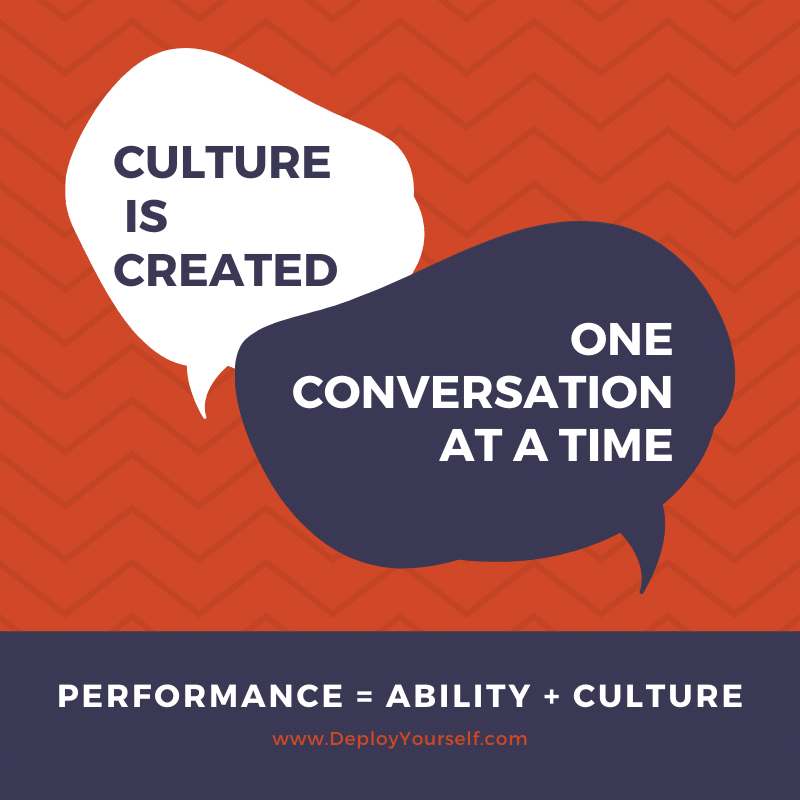
    Performance = Ability + Culture . A Radical New Equation For Improving Performance At Work
    Performance = Ability + Culture . A Radical New Equation For Improving Performance At Work

    Conversations

    Once leaders have done the groundwork and provided the platform for people to perform, they can step back and look at the big picture. They use conversations to align conflicting energies in a common direction. It is not uncommon for empowered people to run in different directions, or worse, to run into one another. That is why a leader must always engage in conversations with his/her people to align them with a common vision and direction.

    In most companies, there are hardly any trainings or resources to master the skill of engaging people in conversations. Most managers are never trained to deal with conflicting energies and inspiring people to act. Leaders do their best work when they are in touch with their values, and align them with the company’s values while going after their respective team’s goals. Isn’t it a shame that so many leaders today have no idea what their values are?

    Without this understanding of themselves, I often see people stepping up as managers without any knowledge of what to expect in their new roles. To make it worse, they have no idea where to go and seek help when they need it. Leaders should lead because they see it as a privilege to serve people and an opportunity to make an impact, not because it is one of the “career” options available. If a leader is leading his team only for his career goals, and without care for the people or the product, it will show in the team’s performance and culture.

    There are some important conversations every leader should master (or continuously improve) as they have a direct role in establishing culture. They are :

    1. Establishing the importance of company values by encouraging or discouraging certain types of behaviors or actions.
    2. Celebrating smalls wins and recognizing good performance can be the difference between a team and a group of people.
    3. Dealing with uncertainty and failure. Do your leaders engage in blame games? Or do they focus on fixing the mistake and ensuring it is not repeated without blaming the one who did it?
    4. Storytelling – We all listen and absorb concepts better in stories than abstractly. The stories leaders tell determine the level of trust and community in the organization.
    5. Making and communicating decisions. Honesty and transparency in communicating about the reasons behind taking any specific decision is a key element of any leader’s job.

    In the end, conversations reinforce the beliefs, values, and perceptions present in the culture of any organization.

    To come back to the Tata story, here is what the leaders of the company did after the terrorist attacks in 2008 which killed 164 people :

    1. The hotel didn’t fire even a single employee as the hotel was closed for 2 years due to the damage by the attack.
    2. Senior company leaders attended all eleven funerals and visited the families of all eighty employees who were killed or injured.
    3. The company assigned a mentor for every affected team member to serve as a single point of contact to ensure that the person received any help needed.
    4. They provided compensation to the families of every deceased member, ranging from $80,000 – $187,000
    5. Waived all loans and advances, regardless of amount.
    6. Committed to paying the employee’s last full salary for life.
    7. Took complete responsibility for the education of their children and dependents through college – anywhere in the world.
    8. Provided full healthcare coverage for all dependents for the rest of their lives.

    Conclusion

    As we have seen, culture plays a big role in shaping performance. In my experience, if the performance of people goes up or down significantly, the most important factor is the prevalent culture in the company. However, we often fail to see culture as a performance driver and put the impetus of performance only on the individual’s ability and efforts.

    To conclude, in this article we read about how the Taj Mahal hotel’s employees put themselves in front of bullets to save guests during the 2008 Mumbai terrorist attacks. We also found out what the Tata group did after the attacks to reinforce their culture, and the big but often ignored role culture plays in the employee’s performance. Then we looked at how leaders shape the culture of the organization through processes and conversations. And how important is to train our people to create a culture that enables performance, rather than stand in its way.

    Most of the work in organizations is done by teams, and not by individuals alone. And yet the entire performance measurement systems in organizations focus on the individual alone. I believe we (as an industry) are missing a trick here. And that trick is ‘culture’. When an individual’s performance changes from one year to another, we should focus on the culture, instead of just focusing on the individual. The single best way to increase performance is to create a culture that enables people to do their best work. Culture should enable performance, rather than stand in its way.


    Resources

    1. Conscious Capitalism: Liberating the Heroic Spirit of Business
    2. https://www.fastcompany.com/40544277/the-glory-that-was-yahoo
    3. https://www.forbes.com/sites/williamcraig/2017/08/03/8-ways-company-culture-drives-performance/#134149b46ce0
  • Tired Of Outdated Processes In Your Organisation? Here Is A Step by Step Guide To Change or Remove Them

    Why would a monkey not go after a bunch of bananas placed within his reach?

    An experimenter puts 5 monkeys in a cage. High up at the top of the cage is a bunch of bananas. Underneath the bananas is a ladder.
     
    The monkeys immediately spot the bananas and one begins to climb the ladder. As he does, however, the experimenter sprays him with a stream of cold water. Then, he proceeds to spray each of the other monkeys.
     
    The monkey on the ladder scrambles off. And all 5 sit for a while on the floor – wet, cold, and bewildered. Soon, though, the temptation of the bananas is too great, and another monkey begins to climb the ladder. Again, the experimenter sprays the ambitious monkey with cold water and all the other monkeys as well. When a third monkey tries to climb the ladder, the other monkeys, wanting to avoid the cold spray, pull him off the ladder and beat him.
     
    Now the experimenter removes one monkey and introduces a new one to the cage. Spotting the bananas, he begins to climb the ladder. The other monkeys pull him off and beat him.
     
    Here’s where it gets interesting. The experimenter removes a second one of the original monkeys from the cage and replaces him with a new monkey. Again, the new monkey begins to climb the ladder and, again, the other monkeys pull him off and beat him – including the monkey who had never been sprayed.
     
    Very soon all monkeys have been replaced, and none of them go after the bananas. The researchers hypothesize that, if they were to ask the monkeys why they don’t go for the bananas, they’d answer “because that’s the way it’s always been done.
     
    Do you recall any processes in your organization that have always been there? Are there specific ways to do things that everyone follows without knowing the real reason? If you question them, do you get the same answer “because that’s the way it’s always been done”? If the answer is yes, it brings us to the topic of this article – processes.
    Only the wisest and stupidest of men never change. – Confucius

    In this article we will look at three key aspects of processes:-

    1. Why are processes introduced in companies? What purpose do they serve?
    2. How processes become outdated? What are the disadvantages of outdated processes?
    3. What can you do if you find yourself in such a situation?
    Do you feel lost in the chaos of processes?
    Do you feel lost in the chaos of processes?

    Let’s start with Part 1 – the need for processes.

    As organizations get bigger, processes are introduced overtime for reasons like controlling tasks and expenditures, showing and measuring progress on important tasks, ensuring adherence to standards, maintaining levels of quality, and so on.
     
    When organizations are small, communication is easy as everyone knows everyone and there are only a few levels of hierarchy. If you have a question or want clarity on something, you can just walk up to the concerned person and ask them. However, communication and management become difficult and the possibility of confusion increases as companies get bigger. When people are spread over different buildings, cities, countries, and time zones, effective communication and coordination become a task in itself.
     
    When that happens, processes are introduced to solve this problem and to help people do their jobs better. They are required to ensure the smooth functioning of large organizations. Processes standardize how work is done. They are well documented so that everyone knows how to perform their work. Processes reduce the time required to train new people. They make problems easy to identify and diagnose. Everyone knows what to expect from others – irrespective of personal styles or cultural differences.
     
    Behind every process in your organization is a well-intentioned reason. Simply put, if you have a process, someone put it there for a specific reason, even though it might seem useless to you. Which brings us to the second part of the article.
    “He who rejects change is the architect of decay.” – Harold Wilson

    Part 2 – What causes processes to become useless and outdated? What are the disadvantages of an outdated process?

    Have you ever felt that people in your organization are following processes for the sake of doing so? Have you ever felt that people are following procedures at the expense of the organization’s objectives? Do you think that the process has become the master and not the servant to the organization, as it should be?
     
    If your answer to any of the above questions is YES, you are dealing with outdated processes that have outlived their existence. When that happens, you can see people do things for the same reason the monkeys did – “because that’s the way it has always been done.
     
    Examples of outdated processes are using obsolete technological solutions or products or using time-consuming manual processes when a simple technological intervention can save both time and resources.
     
    Processes become outdated because technology or business practices evolve in your industry and you have been busy doing other things. Needless to say, there are many disadvantages to following processes for the sake of following them. The 5 main disadvantages of having outdated processes are –
     
    1. People lose motivation as old processes cause disappointment and stop people from doing their best work.
    2. Your best people leave because of frustration. You have trouble attracting the best talent.
    3. Politics and red-tape increases as more people are required to do tasks which can be solved by efficient and new processes and tools.
    4. Lack of efficiency in what you do harms your productivity and increases waste
    5. The disconnect between customer expectations and your levels of service. For example – a customer expects you to have a chatbot, or answer questions over social media; while you still want them to mail or call you.
    If by now you are feeling defeated, sad, and demotivated, don’t. Because now is the time to move to Part 3 – how to deal with outdated processes?
    Change Is The Only Constant
    Change Is The Only Constant

    Part 3 – What can you do if you are dealing with outdated processes?

    If you are feeling helpless in the face of outdated processes, you can ask yourself a few questions to get a better grip on the situation. These questions will empower you to deal with the situation powerfully.
    1. What processes can be removed, or no longer serve their purpose?
    2. Are people rewarded or punished for following the processes blindly?
    3. Do people have the discretion to question the existence of a process and use their judgement?
    4. Are you, and your organization focused on achieving excellence rather than avoiding errors?
     
    Answering the above questions will help you understand how easy or difficult change might be in your organization. It will also make it clear the kind of challenges you might expect to face if you were to move further. And many times, these questions will help you figure out if getting a process changed or removed is a battle you want to fight or not? (and believe me, in big organizations it can be a battle).
    Growth is painful. Change is painful. But nothing is as painful as staying stuck somewhere you don’t belong. – N.R. Narayana Murthy
    If you decide to get a process removed which is not serving its purpose, you can take the below steps:-
    1.  Investigate the reason behind the existence of the process? When was it introduced, by whom, and what was it supposed to achieve?
    2. Make a case for why that process is not needed now or should be altered or removed. Gather data and make an argument.
    3. Share your findings with people close to you (peers, your manager) and get their feedback. If you need to, adapt your findings.
    4. If you still want to move ahead, make a list of people who you might want on your side to get the process removed.
    5. Share your findings with them, and the proposal to get the process removed or changed. Ask them if they support your proposal or not.
    6. Listen to their concerns and get them on board with the idea of removing/changing the process.
    7. Share the proposal with the people who have the authority to change the process and approve any budget. If there is a need to purchase a new tool or software or organize training, there might be significant costs associated with the change in the process.
    8. Be open to feedback, and answer any questions people might have.
    9. Be patient. The bigger and more political the organization, the longer it can take to change or remove a process.
     
    If the above process goes well, you can take the below steps to make sure the process change goes smoothly without causing a lot of disruption for the people impacted by the decision.
     
    1. Be transparent and communicate the reason behind the process change with everyone impacted by the process, and why it needs to be removed/changed? Show people why this change will help them do their jobs faster and better.
    2. Train / educate people to fill in knowledge and skill gaps wherever required. Make sure they are equipped to do what you are asking from them.
    3. Empower people to report any missed opportunities or any other feedback about the process change. Reward instead of punishing people when that happens. Take action to ensure concerns are addressed fast. A new process might need some minor adjustments before everyone feels comfortable using it.
     

    Conclusion

    By following the above 3 steps, you can ensure the processes in your organization make sense. Regularly updating processes also make sure everyone is focused on the real objective (of the organization) rather than focusing on what the processes say. If the time has come for a process to go, then it must be retired or adapted to the current situation. Rather than making you feel resigned or defeated in the situation, this article will allow you to deal with the situation powerfully.
  • Issue #5, 23 July 2020

    Welcome to the Deploy Yourself Newsletter. Every two weeks I share about what impactful coaching and leadership look like. I also share the most insightful lessons and stories I encountered in the last two weeks. You can also read this issue online.

    .

    The Neuroscience of Trust, And Treating People Like Adults

    The latest neuroscience research has found that the hormone oxytocin reduces fear and increases trust and empathy in the workplace. If you are wondering why trust is important, it leads to 74% less stress, 106% more energy at work, 50% higher productivity, 13% fewer sick days, 76% more engagement, 29% more life satisfaction, and 40% less burnout.

    Below are some simple ways I have found in my research to foster trust and improve performance. This is especially important if you are in a managerial position.

    1. Give recognition immediately after a task well done
    2. Give people autonomy to decide how they do their work
    3. Flexible job responsibilities based on people’s strengths and project requirements
    4. Transparency in communication
    5. Caring about the whole person, and not just the employee
    6. Being vulnerable and sharing

    You cultivate trust by setting a clear direction, giving people what they need to see it through, and getting out of their way. It’s not about being easy on your employees or expecting less from them. High-trust leaders hold people accountable but without micromanaging them. They treat people like responsible adults.

    If you are a manager, what one small step you can take right now, right after reading this email, to increase the trust among your teammates?

    If you are not a manager and work in a low trust environment, hit reply and I can share what has worked for me when I have dealt with similar situations.

    .

    Articles and Stories Which Have Fascinated Me

    .

    One

    How To Overcome Negative Emotions And Create Positive Energy?

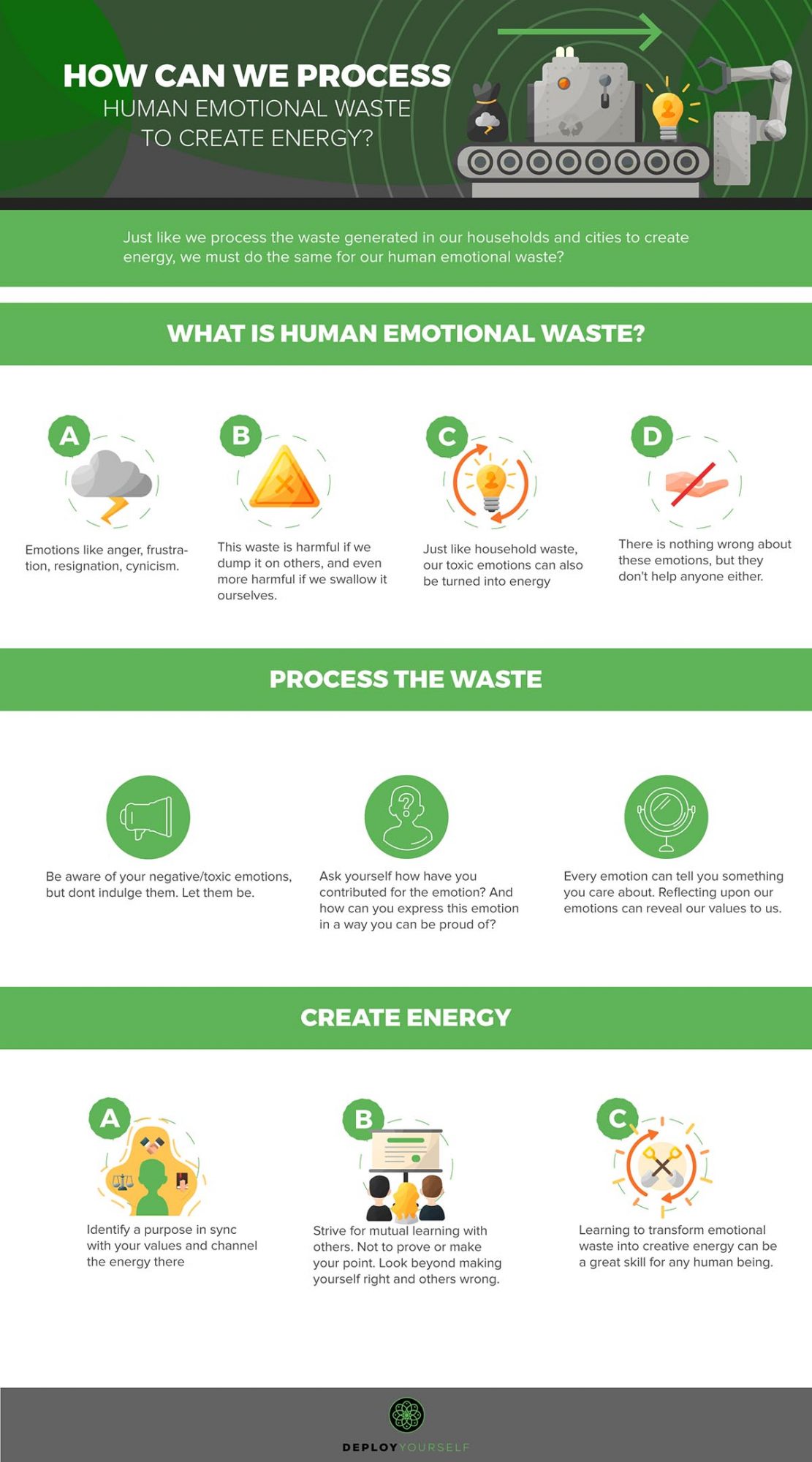
    This one is from my desk. Read this article to understand how can we process human emotional waste. Just like the waste generated in our households and cities is processed to create energy, we must process our emotional waste too. If we know how to deal with our emotions, they can be used to move towards meaningful goals that lead to joy and fulfillment.

    Just like crude oil can turn to fuel used to drive vehicles, our toxic emotions like anger, frustration, resignation, etc can also be turned into fuel to power something beneficial in our lives.

    From my article titled How Can We Overcome Negative Emotions And Create Positive Energy To Achieve Joy And Fulfilment?

    .

    Two

    Why We Sleep Review

    I just finished reading the book “Why We Sleep: The New Science of Sleep and Dreams” by neuroscientist Matthew Walker, and was completely fascinated by the book. I knew sleep was important, but I never knew it was “this” important. It impacts everything we do – from our physical and mental health, learning, memory, decision making, creativity, and productivity. In this book, Matt Walker explains the new science that is rapidly solving this age-old mystery of what happens when we sleep.

    Bill Gates calls this book one of his favorites, which he says took him a little longer than usual to finish — ironically, because he kept following Walker’s advice to put down the book a bit earlier than he was used to, so he could get a better night’s sleep.

    I found this a must-read book about the importance of sleep and the dangers of a lack of it. And it contains stunning information I have never read anywhere else. I always prefer to read science-related books that are written by scientists, and this book does not disappoint.

    .

    Three

    How to Take Back Your Power at Work

    “Reclaiming your power means you stop behaving in ways that make your stomach twist and churn. You stop putting up with some jerk executive berating you and others in the room. You stop living in fear in the office.

    When I reclaimed my power, I started sharing my thoughts and opinions, even when I knew they weren’t popular. I began asking the tough questions others were afraid to ask because they were afraid of losing their jobs. I spoke up even when the senior exec across the table would shout and curse at me.

    Powerful people get as much, if not more, out of their jobs as they are putting in. When that balance changes or someone tries to make them give up their power, they move on quickly.

    When you’re powerful and talented, opportunities continually flow your way. You will always be in the position to call the shots at work when you know that you can land a new job at any time.

    Don’t let any company or boss take that freedom away from you.”

    From an article titled How to Take Back Your Power at Work by Larry Cornett

    .

    That’s it for now. If you have any questions, just hit reply. All the best,

    Sumit

    (Twitter) @SumitGupta
    (LinkedIn) Connect

  • How I Made My Laziness and Procrastination Productive, and Used It To Read Over 250 Books In the Last 5 Years?

    The dictionary defines procrastination as “the action of delaying or postponing something”. There was a time when I used to believe that procrastination is a bad habit and that only bad or weak people procrastinate. However, after reading a lot of psychology and neuroscience research, I now realize that we are all lazy and procrastinate on important life tasks. I am yet to meet a human being who doesn’t procrastinate.

    Why We Procrastinate?

    We procrastinate when our desire to do something is trumped by anxiety, perfectionism, a fear of failure or not seeing any immediate reward (dopamine hit) for doing the task at hand. This is the psychology behind procrastination. This causes us to postpone things endlessly even when we know they are important.

    I often slip into procrastination when I am working on something important like writing an article, programming software, editing photos, etc. It is so tempting to procrastinate and do something else when the real task is uncomfortable and lacks immediate gratification. Earlier I used to waste that time by intuitively opening up Facebook / social media / news online. Once you open it, it is so easy to get sucked up and 30 to 60 minutes are gone before you realize it.

    “A man who procrastinates in his choosing will inevitably have his choice made for him by circumstance.” – Hunter S Thompson

    Social Media and news websites/apps are designed to hack your brain and keep your attention by using psychological and behavioral tricks. Most of the smartest brains in our world are working for these companies with the aim of making you click more advertisements, watch recommenced videos, and so on. Features in our apps like likes, followers, streaks, and constant notifications are habit-forming and make us want to check these apps again and again.

    The real purpose of these apps is to trigger dopamine-producing actions to give us instant gratification, which can be tremendously addictive. This is basic psychology, but most people have never studied it so they have no idea they are falling victim to an elaborate trap/system to capture and keep their attention.

    Understand How Your Brain Works
    Understand How Your Brain Works

    Making Procrastination Productive

    Instead of fighting my procrastination (which I tried a lot), now I kind of hack it in a productive way. By not trying to resist my procrastination, I have been able to get a lot of important tasks done which I earlier believed I never had the time for. It was only much later that I realized this way of doing things is called “Structured Procrastination” by John Perry, who is a professor of Philosophy at Stanford University.

    Earlier, I always wanted to but never used to get enough time to read books. At one time I had around 40 unread books in my home without any time to read them. So I thought of using the time I wasted procrastinating away to read books instead. I decided to read whenever I would slip into procrastination mode.

    I took only 2 steps to achieve this:-

    1. I made slipping into social media/news apps difficult. For this, I turned off all notifications on all my devices – laptops and mobile phones. I also deleted all social media and news apps from my mobile phone and decided to use the browser to open them if I really need to. I also blocked all social media and news websites on my browser by using a browser extension from 5 am to 5 pm – my most productive hours.
    2. I made reading easier by making sure a book is always accessible no matter where and when I need one. I did that by –
      • Having a book I am currently reading on my phone (kindle) so that I read 5-10 pages whenever I have spare time. Ex – waiting in a queue, traveling by bus or metro, etc.
      • Always have a physical book in my backpack so that I can take it out whenever I need to without any effort.
      • Always keep a physical book where I usually am – on my work desk, at my bedside, in my living room, on my home office desk, etc.
      • This way, I always have a book accessible whenever I tend to procrastinate from another important task. It is not uncommon for me to read 4-6 books at the same time (kept in different physical or virtual locations). Usually, I end up finishing these 4-6 books in a month’s time. As soon as one is over, I open a new book for that particular location.
    “A room without books is like a body without a soul.” ― Marcus Tullius Cicero
    “A room without books is like a body without a soul.” ― Marcus Tullius Cicero

    250 Books in 5 Years

    If you want to know how well this method has worked, read on. I did not read more than a couple of books in 2014 and 2015 each. That’s when I realized I need to do something about my procrastination and I started following the above strategy. After this, I have read over 250 books from 2016 onwards (I am writing this in July 2020) using this process (all in reading sessions from minimum 5 to maximum 30 minutes long) without taking out any other dedicated time for reading. Today I read close to 50 books every year this way.

    I would never have imagined this being possible. Even now, as I write this article, there are 6 books which I am reading simultaneously – 4 physical books placed all around my house and 2 e-books (one on my laptop and phone each). I can’t even begin to imagine how much I have learned from all these books I have read in the last 5 years.

    If you are wondering what I usually read, I love to read (auto)biographies of prominent politicians, businessmen, sport stars the most. They are followed by books from my areas of interest – ranging from psychology, neuroscience, computer systems, self-help, entrepreneurship, leadership, coaching, and so on.

    “All I have learned, I learned from books.” ― Abraham Lincoln

    What Does This Mean?

    If you are wondering what is the point of this, it is to realize that we are all flawed and have skills of self-deception, many of them working on a subconscious level. Structured Procrastination is just using a little bit of imagination to work around our most innocent character flaw – procrastination. If you want to implement a similar system, here is what I recommend:

    • Make it difficult to procrastinate in your preferred way. Remove your social media apps, block them in your browser, kill your TV/Netflix connection, or just turn off your wifi while you work on your “important” task.
    • Have an alternate Structured Procrastination activity planned out which is also important but not urgent. This could be reading books, or exercising. It is important to do this pro-actively and not think about when you are procrastinating away from your main activity.
    • Have a goal which is very minimal. For me, it is reading 2-3 pages of a book, which I can do in 5 minutes. For you, it could be doing 5 push-ups wherever you are.
    • Make it easier to do. I did this by having a book always available and within reach. Finding a book that I am reading never takes more than 10 seconds, as I always have a physical or virtual copy within my sight. I have shortcuts for the kindle app all over my phone 😉
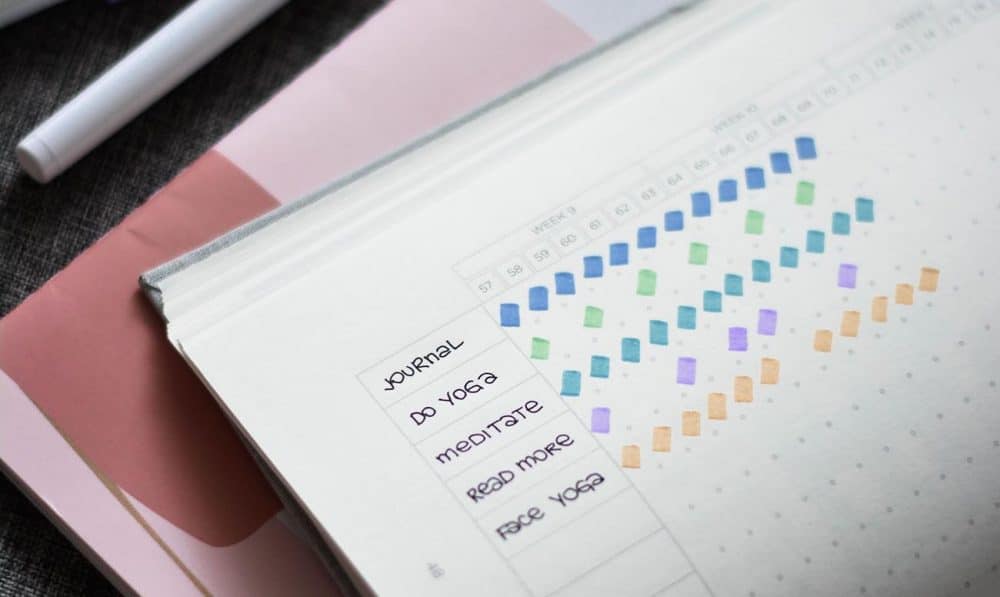
    A Simple Habit Tracker
    A Simple Habit Tracker

    Adapt As You Go

    Everyone is different. What works for me might not work for you. Once you have an initial system in place, adapt it to suit your needs as you go. For me, another recent addition (which I added only a year ago) is to mark my progress in a habit tracker. So every time I complete an activity (that I want to make into a habit), I mark it in a spreadsheet.

    Once I have a streak going, I don’t want to break it, and this way I make my own psychology work for me. This is the same concept of “streaks” which you can find in apps like Strava, Snapchat, Headspace, etc but instead of falling prey to the strategy by the app, you can use it to your own advantage.

    Another unconventional way I have recently added to tackle procrastination – I never leave a reading session at the end of a chapter or a book, as I realize starting something fresh (a new book, a new chapter) takes more mental effort than continuing what you are already midway into.

    So I always start a new book/chapter immediately after I finish one, and I always read 1-2 pages of a new book/chapter before finishing a reading session no matter how small or large that session is. This way, I am never in between books/chapters, and I am always in the continuous process of reading one book after another.

    .

    References

    1. http://www.structuredprocrastination.com/
    2. https://solvingprocrastination.com/why-people-procrastinate/
    3. https://www.nytimes.com/2019/03/25/smarter-living/why-you-procrastinate-it-has-nothing-to-do-with-self-control.html
  • How Can We Overcome Negative Emotions And Create Positive Energy To Achieve Joy And Fulfilment?

    We all experience a wide range of emotions. If we are human, we can not escape feeling the same emotions as everyone else. In fact, the more psychology and neuroscience research I encounter, I wonder that a better name for us would be “emotional beings” rather than “human beings“. Emotions (not logic) are what decide each and every action we take, and it is emotions that make us human.

    The 6 basic human emotions are happiness, sadness, fear, disgust, anger, and surprise. However, all of us are capable of experiencing a much wider set of emotions like excitement, contempt, guilt, relief, embarrassment, shame, joy, inspiration, numbness, horror, and so on. It is natural that we will all experience the above emotions at some point or another.

    While all of these emotions might be natural, they are not all helpful. Many emotions leave us in a positive and empowered state while others leave us worse off. We also experience these emotions in different combinations and intensity.

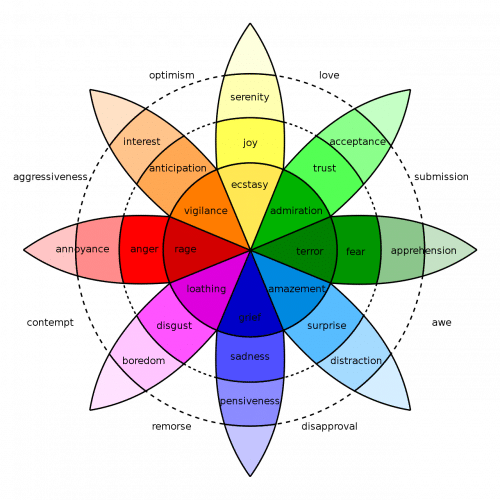
     Plutchik Wheel of Emotions
    Plutchik Wheel of Emotions

    For example – anticipation and joy together become optimism, trust and fear become submission, and anger and disgust become contempt. Plutchik’s wheel of emotions provides a good framework to understand emotions, how they mix together, and how they can vary in levels of intensity.

    In this article, I want to talk about our emotional waste, or what is often termed as negative emotions. Just like the waste generated in our households and cities is processed to create energy, we can and must process our emotional waste too. If we know how to deal with our emotions, they can be used to generate productive energy.

    “Clouds come floating into my life, no longer to carry rain or usher storm, but to add color to my sunset sky.”

    ― Rabindranath Tagore

    What Are So-Called Negative Emotions, or Human Emotional Waste?

    What I call Human Emotional Waste are emotions like anger, frustration, resignation, cynicism, guilt, and other so-called negative emotions. They are usually called “negative” in popular nomenclature, but I must clarify that there is nothing wrong with these emotions. Experiencing them is as natural as experiencing any other emotion. If you are a human being, you will experience these emotions in your life. There is no escaping them.

    Having said that, these emotions don’t help us either. The waste of these emotions is harmful if we dump it on others, and even more harmful if we swallow it ourselves. But just like household waste, these toxic emotions can also be turned into positive energyJust like crude oil can turn to fuel used to drive vehicles, these toxic emotions can also be turned into fuel to power something beneficial in our lives.

    Every Emotion Has Energy. It's Up To Us How We Use It
    Every Emotion Has Energy. It’s Up To Us How We Use It

    How Can We Process This Emotional Waste?

    The first step to productively process our toxic emotions is to stop fighting them. We must be aware of these emotions as they arise, but we should not indulge them. The more we indulge them, the more we risk slipping into the rabbit hole of disempowering thoughts and harmful actions. We must realize that having these emotions are natural, and we should just let them be.

    At this juncture, it is also important to note that we should not resist them either. Saying “I shouldn’t feel this way, or I will not get angry” will only make it more difficult to let these emotions go. The more we resist them, the more they will persist.

    Once we have done that, we can take the next step, which is to ask ourselves a few questions to understand what these emotions are trying to tell us:-

    • How have I contributed to the emotion to arise that I am experiencing right now?
    • What is it that I deeply care about and has been violated, which has stirred up this emotion?
    • How can I express this emotion in a way that I can be proud of?

    Answering these questions can be hard and intimidating, but this is the hard work required to “recycle” such emotions and gain some valuable insights from them. The more attention we pay to our emotions, the more aware we can be of what they are trying to tell us.

    Every emotion can tell us something we care about. Answering the above questions and reflecting upon our emotions can reveal our values and what is important to us. Once we realize which of our deeply held values was violated resulting in the emotion, we can take the next step.

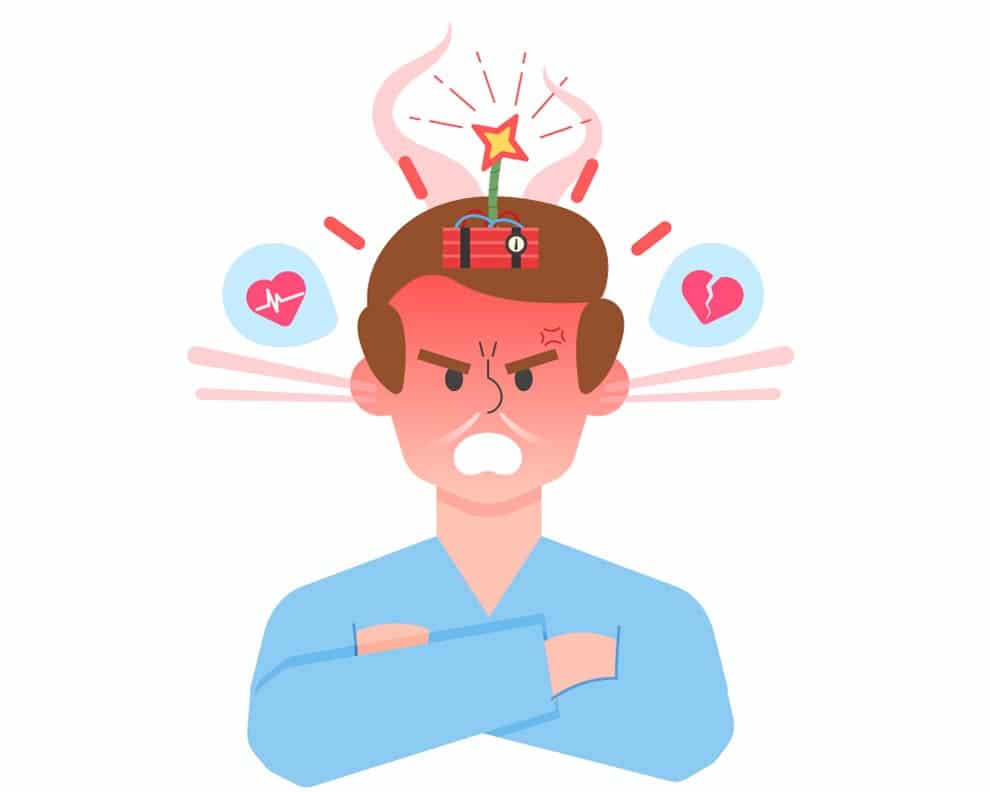
    Suppressing our emotions can cause a lot of damage
    Suppressing our emotions can cause a lot of damage

    How Can We Create Positive Energy?

    Once we have identified what our emotions are trying to tell us, we must think about expressing these emotions in sync with our values. At such moments, we need to take the driver’s seat and prevent our emotions from taking over. Emotions are very good messengers but can be equally bad masters.

    We must channel the energy from understanding our emotions towards expressing them without suppression or explosion. Shouting at others (explosion), or sulking in silence (suppression) never solves any problem. It often only makes it worse. We can always choose to act according to our values — even in the face of failure, disappointment, and other strong feelings.

    We can’t always control our circumstances, but we can always act in ways congruent with our values. When we give in to the temptation of an impulsive emotional reaction, we try to win the argument and prove that our point of view is the correct one.

    “Everything can be taken from a man but one thing: the last of the human freedoms—to choose one’s attitude in any given set of circumstances, to choose one’s own way.”

    ― Viktor E. Frankl

    However, we must strive for mutual learning with others when expressing our emotions. The purpose is not to prove or make our point. We must look beyond making ourselves right and others wrong. For example:-

    • When we are sad about experiencing a loss, an impulsive reaction could be resignation and cynicism about the future. But a conscious expression of sadness would be to just grieve and acknowledge your loss.
    • When we feel anger and frustration, an impulsive reaction could be to get into a fight or suppress our feelings. But a conscious expression of anger would be to make a complaint and sharing our concerns.
    • When we feel guilt after a mistake, an impulsive reaction could be to beat ourselves up and sulking in shame. But a conscious expression of guilt would be to make a sincere apology and repair the broken trust.

    Learning to transform emotional waste into creative energy for a common or higher purpose is a skill. And just like other skills, it can be learned and developed. We can all use our emotional intelligence to make productive use of our emotions. If we can do that, these emotions will stop being “negative” for us. And we will end up with stronger relationships and a better world for all of us – not just you and me.

    How Can We Overcome Negative Emotions And Create Positive Energy To Achieve Joy And Fulfilment?
    How Can We Overcome Negative Emotions And Create Positive Energy To Achieve Joy And Fulfilment?
  • 7 Empathetic Questions To Ask At Work to Understand And Support Your Colleagues

    One of the most important tasks of a leader is to support her people with the challenges they face. However, in the pressure-filled and fast-paced routine of everyday work, the challenges each one of us face might not be easily identifiable.

    Due to workplace culture and social taboos, people might be struggling with some very important issues but never bring them to your notice. I have often been surprised by how much we can hide beneath our fake smiles and phony appearances.

    How Can You Uncover The Hidden?

    As a leader, the ability to uncover the hidden and provide support can be the difference between success and failure – both for individuals on your team and also for the business. So, how do you uncover these difficult to talk about topics?

    One way to uncover important issues is to ask powerful questions regularly (download 164 such questions here). These questions require original answers which often leads to introspection and being vulnerable. I have found that asking powerful questions is a very important skill to develop as a leader.

    The key is to be completely present while interacting with others, and then being brave enough to ask the question. These questions can be asked in formal or informal settings, in regular 1-on-1s, or while walking to and from meetings.

    “Stop taking care of your career. Start taking care of your people. And if you do that, they won’t let you fail.” – Jim Collins

    Below are 7 such Empathetic Questions which you can ask to understand others and provide any support they might need:-

    1. “You don’t seem yourself today. Would you like to take a break and chat?” – Ask this question when you notice sadness or sudden quietness from someone. Invite them to take a walk around the office, or to have a chat over coffee. A single conversation at the right time can make a world of difference to another person. Often you will discover a minor issue, which if quickly acted upon, can prevent major problems down the road (both for the people involved and the business).

    2. If you notice someone angry or frustrated, you can calmly say – “You sound upset. Is that because of something I did? Let me know if I can help anyway.” Pent up emotions can lead to cynicism which can easily spread to other people. Emotions are contagious, and hence it is important to offer help and support when you notice emotional build-up. Showing a little care can go a long way in making people feel that they are not alone and they can share what they feel.

    3. “What can I do to help? How can I (or the organization) support you?” You can ask this question when you see a person sad or dejected. Stressful situations can often lead to feelings of helplessness. However, if addressed in time, these feelings can help the person to understand themselves better. As a leader, you can use these moments as coaching opportunities.

    4. If you know someone is going through a personal crisis, you can politely ask. “I know you are going through a tough time. If you want to talk about it, I am willing to hear you out and help in any way possible?” We all go through tough times at times, and as a leader, it is important to show people that you care for them as human beings, and your interest in them is not only limited to the work output they produce.

    5. “I can’t even imagine how hard it must be for you. I want you to know that I and the organisation appreciate the way you have responded to the situation. If there is anything else I can do to support you, let me know?” You can say this statement to show support when a person is experiencing difficulty at home or work. An encouraging message like this can go a long way. A little reassurance at the right time can go a long way.

    6. “I am sorry for what you are going through right now. I know you are a fighter and will come back stronger from this. Can I be of any help?“ You can use this statement when someone is in despair or tearful. We all go through tough times and through situations that can feel overwhelming. However bad the suffering, it often helps to remind people that they have what it takes in them to overcome what they are going through.

    7. “I would hate to see you burn out. Are you taking care of yourself? Is there anything I can do?” If you notice someone is overwhelmed by work or at the risk of burnout due to a stressful project, you can use this statement to show empathy. This also serves as a “check yourself” warning before it gets too late. Because of the advantage of distance, you can sometimes see signs of burnout which others can’t, and a small intervention in such a situation can prove very timely and helpful.

    Simple Empathetic Words Can Make A World of Difference
    Simple Words Can Make A World of Difference

    Right Words At The Right Time Can Make A World of Difference

    Asking the right questions and sincerely listening will help you see things from others’ points of view. Consciously expressing your care can help people understand their own emotions better and make our relationships more meaningful. Needless to say, all of this results in better engagement and higher productivity at work.

    A few words, said at the right time, can make a world of difference. And we all have the power to make a difference by practicing empathetic listening and noticing emotional cues. You never know what your support at the right moment might mean for someone else. The benefits of becoming more emotionally intelligent are very tangible and have a direct impact on your health and well being. And I can tell you that there is no better feeling than knowing that your little act of empathy made a positive difference to someone else’s life and well being.

  • Issue #4, 9 July 2020

    Welcome to the Deploy Yourself Newsletter. Every two weeks I share about what impactful coaching and leadership look like. I also share the most insightful lessons and stories I encountered in the last two weeks. You can also read this issue online.

    .

    What In Your Life Is “On Hold”?

    What feels impossible right now, but deep down, it’s what you really want?

    We all have ambitions or goals which are on hold because we are waiting for the perfect day. From my neuroscience and psychology research, I have seen that change is a complicated idea for human beings. We will go to any extent to resist change.

    Tomorrow will not be the perfect day you have been waiting for. No new sunrise can bring that change. Instead what you need is a change of mentality. A different way of looking at the world.

    You have things in the “I will do it someday” category only because you don’t want to risk failure. But what if you succeed? What if you are capable of much more than you think?

    What if instead of playing safe, waiting and resisting change is the riskiest bet of all? Think again, are you afraid of failure? Or of your success?

    Achieving success means you are entering uncharted territory. You are putting yourself out there to be criticized. It’s only human to wonder whether you’ll be up to the challenge, and that creates anxiety that holds you back.

    So ask yourself – what if you can pull it off?

    What lies are you telling yourself which are holding you back? What if that “someday” which you have been waiting for is today?

    What one small step you can take right now, right after reading this email, to move a tiny bit towards your goal?

    Before your brain (feeling anxiety?) gives you another reason to procrastinate, hit reply, and send me your big ambition, and what tiny action are you going to take today?

    .

    Articles and Stories Which Have Fascinated Me

    .

    One

    The Value of Journaling

    “I don’t journal with anyone else in mind.

    I don’t ever think about a reader or worry about making sure I’ve explained something clearly enough for a stranger to understand.

    It’s really all about me releasing stress, filling myself with gratitude, celebrating my small accomplishments with healthy choices, processing things that are confusing, and getting clarity about what matters to me.

    I only think about “what do I need right now for this day?” I don’t think about how it looks, or how anyone else would experience the jumble of words.

    Sometimes I use the pages to doodle something I might make public, or paste ticket stubs, or pay attention to making my handwriting look cool, but I don’t worry about doing any of that consistently. I only do that if it feels like what I need that day.

    And so, most pages are just messy stream of consciousness rambles that leave me with what I was hoping for: feeling full of clarity, gratitude, and awe.

    I am a little biased, obviously, but for me, journaling feels like a magic elixir.

    From an article titled Reflections on Journaling for 25 Years by Crystal Ellefsen

    .

    Two

    Understand What Coaching Is Really Like

    This is important: We lie to ourselves. Don’t labor under the misapprehension that you do not.

    Physicist and total genius Richard Feynman once said:

    “The first principle is that you must not fool yourself and you are the easiest person to fool.”

    So expect a bumpy ride. It’s always you getting in the way of you. Your coach can’t help you if you don’t put in the work or if you’re not going to bare your soul and tell them the truth.

    I got a taste of my potential and for the first time in ages, I’m excited for what I can do. Nothing seems impossible anymore. It’s just whether or not I decide to try. And that alone is money in the bank.”

    From an article titled I Bought a Year of Tony Robbins Performance Coaching and Here’s What It’s Like

    .

    Three

    Make Stress Work For You

    “We can actually use stress to improve our health and well-being. Over a decade of research — ours and that of others — suggests that it’s not the type or amount of stress that determines its impact. Instead, it’s our mind-set about stress that matters most.

    Based on our experience working with Navy SEALs, college students and business leaders, these are the three steps to harnessing the benefits of stress while minimizing its harmful effects.

    1. Acknowledge Your Stress
    2. Own Your Stress
    3. Use Your Stress

    From an article titled In Stressful Times, Make Stress Work for You by Kari Leibowitz and Alia Crum in the NYT

    .

    That’s it for now. If you have any questions, just hit reply and we can have a chat. All the best,

    Sumit

    (Twitter) @SumitGupta
    (LinkedIn) Connect

  • 5 Research Backed Reasons Taking Regular Breaks Can Help You Get More Done

    If you have a lot to do, take regular breaks. Find out about the counterintuitive advice of taking breaks to get more done.

    Are you surging ahead in life? Is your life becoming too fast for comfort? Why not take a break?

    What did I just say?

    Do you think you have a lot more to achieve and you just can’t afford to take breaks? Does this sound like your life?

    If this looks like your life, you are not alone. Many people find it difficult to switch off from their daily activities. They feel so busy achieving their goals and targets that they do not have time to have a break.

    I am afraid they are grossly mistaken. Research has shown that a break can do wonders to increase your efficiency and productivity. Breaks have a direct and positive relationship with productivity as well as well-being.

    In this article, I will share the 5 benefits of taking regular breaks and 5 ways to take them.

    Understand Science Based Facts About Emotions and Ease Your Shoulders of Their Burden
    Too Much To Do, Take a Break?
    .

    Benefits of Taking Regular Breaks

    .

    1. Helps Our Brain To Focus Better

    Research shows that regular breaks help us to focus; thereby, allowing us to process information in a better way.

    Our brains get tired after continuous work, and taking regular breaks helps our brains to relax. Our brain demands time to rest, regroup, and gather its thoughts. We are then able to focus better when we resume work.

    For example – you do yourself more harm than good if you skip your lunch when you are in the middle of work that demands intense focus. It’s just like how an athlete allows his body to rest after an intense training session.

    2. Helps To Generate New And Creative Ideas

    Research has shown that when we take a break, our brain doesn’t just stop functioning. Instead, it is busy digesting different ideas and making connections between them.

    Have you ever solved a problem, or got a new idea while taking a shower or another non-cognitive activity? That is because our brains make sense of our experiences when it gets a break.

    A brain at rest doesn’t mean an idle brain, and that is why we often get new and creative ideas during a break.

    3. Healthy For Our Mind Snd Body

    Today’s fast-paced work culture takes a heavy toll on our mind and body. Work is the most prominent source of stress and we often run the risk of burnout, without even realizing it.

    Constantly working and not moving much puts us at a higher risk of several diseases like heart ailment, diabetes, and depression. Taking regular breaks to move around can lead to increased energy levels and improved health.

    It also decreases exhaustion by returning our psychical and mental systems to their base levels. Besides, a relaxing break helps a great deal to reset our mood. Thus it reduces stress and promotes our wellbeing.

    “All that is important comes in quietness and waiting.” ― Patrick Lindsay

    4. Helps Us Make Better Decisions

    A well-deserved break allows you to have a good look at the bigger picture and make better decisions. When you are too engrossed in a complex task and your brain gets tired, you are easily distracted from what is important, and you tend to procrastinate. In a state of busyness and overwhelm, you also tend to make poorer decisions.

    When you take a break, you give yourself a chance to reflect on your priorities and goals. Your motivation goes up and you can assess whether you are giving due importance to the right tasks/projects. This will help you make better decisions.

    5. Help Us Do More And Be More Productive in the Long Run

    All of us want to be more productive at work, right? Research proves that taking breaks refreshes our brains, re-energizes us, and improves engagement levels.

    All of the above directly lead to higher productivity over the long term. You might think you can do more in a long day, but you can’t sustain that pace without risking burnout or other health issues. Taking regular breaks and reducing your work hours will make you more likely to sustain that pace for the long term.

    Taking A Break Beside a Canal in Amsterdam
    The Canals in Amsterdam Are My Favorite Location To Take A Small Break
    .

    How To Take Breaks?

    .

    As we have seen, taking small breaks regularly can be of immense value to your health and productivity. Now let’s take a look at 5 different ways we can do that despite our busyness:-

    1. Take a Walk in Nature

    Take a stroll amidst nature. One recent study has shown that it is a wonderful remedy to calm your mind. They call it a “nature pill”.

    By nature, any green area would do – a small park in your neighborhood, or if you have a water body (river, lake) nearby. Personally, I love walking in Amsterdam because the presence of water eases off any stress I might have.

    2. Pomodoro Technique

    This is a method of time management developed in the ‘80s. It breaks down work into time intervals (usually 25 minutes), separated by a short break of 5 minutes. These intervals are called Pomodoros. One can extend the break duration to 15 or 20 minutes after about 4-5 Pomodoros.

    You can give it a try. You may download any Pomodoro timer app on your smartphone and split your workday into short bursts of Pomodoros. Do ensure though that you step up from your desk and do something completely different for the break duration.

    3. Notice What Is Going On Around You

    Being mindful of little things going around you is another way to give your cognitive brain a break. Take a few deep breaths and relax your mind and body.

    Notice the faces of people around you – the smiles and the frowns. Notice the different sounds you can hear – birds chirping, people walking, of a printer or a coffee machine, etc.

    Doing such mini-meditations for even a minute or two has been shown to be helpful.

    4. Take A Small Nap

    A small nap of 10 to 20 minutes during the day is one of the proven ways to rest your brain and increase not just your health and well-being, but also your productivity.

    A Small Nap Can Help Improve Productivity
    A Small Nap Can Help Improve Productivity

    5. Engage Your Right Side of The Brain

    Most of our cognitive tasks which involve thinking and logic happen on the left side of the brain. Another way to give our brains a break is to do something that engages the right side of the brain – which is more creative.

    Drawing, painting, listening to music, or just imagining and visualizing are some of the ways to engage our right-side brain and give our thinking (right side) brain a break.

    .

    Resources

    1. 12 Quick Mini-Meditations to Calm Your Mind and Body
    2. Why Your Brain Needs More Downtime
    3. The Overwhelming Benefits of Power Napping
    4. How to be Happier and More Productive by Avoiding ‘Decision Fatigue’
    5. Is It True That “Movement Is Medicine”?
    6. To Become a Better Writer, Be a Frequent Walker
    7. Research Reveals How to Take a Better Break