July 2019

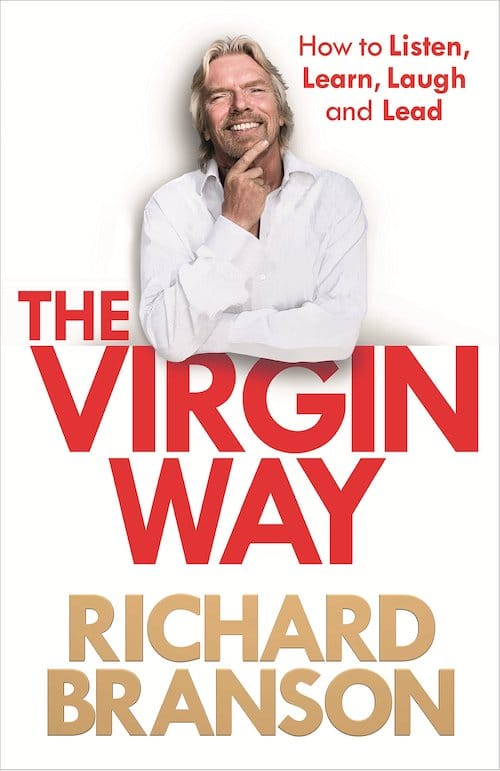
  • The Virgin Way (2015) By Richard Branson

    Richard Branson is one of the world’s most innovative minds today. His experiences in entrepreneurship are a treasure trove that he has shared in The Virgin Way (2015).

    He believes that successful entrepreneurship entails much more than simply leading. Right from dropping out of high school to opening his first Virgin records store, he shares insights into his eccentric leadership, success in business, the future of the business world, and that his brand isn’t built on great leadership alone.

    Lessons From The Past

    We inherit our looks, our behaviors, and even personalities from our parents. Our parents on the other hand always strive to give us a good upbringing, good values, positive philosophies, and righteous principles in life. As adults, we have much to thank our parents for. Richard Branson believes that his leadership approach was influenced greatly by his father.

    When he was young, he would often visit a local shop to buy chocolates. He would steal change from his parent’s room to pay for the chocolates. The shopkeeper, suspecting Branson’s stealing habit, told his father Ted about his visits to the local store.

    While Branson expected punishment that evening, he simply got a cold shoulder treatment from his father. His father’s reaction showed sheer disappointment in him and taught him a lifelong lesson of not stealing.

    Later, while he was running Virgin Records, he learned that an Artists and Repertoire (A&R) employee was stealing from the store and selling them to other stores. He remembered his father’s lesson in second chances and privately confronted the employee, giving him a second chance. The employee never stole again. Instead, he used his talent to work hard and become an asset to the company.

    Not everyone believes in second chances, forgiveness, and keeping a humane attitude, yet it is this humane attitude that separates the leaders from great leaders.
    The Secret Of Listening

    We all know that to be a good leader, one requires great oratory skills. However, Branson opines that it is keen listening skills that are far more worthy. Branson inculcated a habit, early on, of listening keenly to others and making a note of interesting remarks. As a teenager, he would use a small tape recorder to record interviews for his magazine, Student. However, the tape recorder rarely worked, and he got into the habit of taking notes.

    Similarly, Branson recalls Sir Stelios Haji-Ioannou, the founder of UK’s EasyJet, attending one of his speeches in Greece. As a youngster, Haji-Ioannou was the only one in the audience who asked excellent questions, asked better follow-up questions, and also made a note of Branson’s answers. It was his passion for listening and making notes that gave him the edge to become as successful as he is today.

    The Importance Of Having Fun

    In the words of the famous Peter Drucker, “Culture eats strategy for breakfast.”

    Richard Branson truly agrees and complies with this sentence. For Branson and his workmates at Virgin Records (before the brand became the behemoth it is), the work culture was all about having fun and enjoying the work they do with the people they enjoy with most.

    Ask anyone in the corporate world what is the culture like in his or her company and you’ll probable get a blank stare. Many companies completely miss the point even. Inculcating a fun-loving culture in the company is often the difference between a mediocre company and a great one.

    The Virgin way is to be serious about having fun! Late-night parties are the norm, as is working hard and beating the tough times. Similarly, Southwest Airlines CEO, Herb Kelleher has incorporated fun and humor into the culture of the company. Once, when a competitor almost sued the company for plagiarism (for using the tagline ‘Just Plane Smart’), Kelleher persuaded his competitor to settle the dispute by an arm-wrestling competition!

    In another instance, the flight attendants of a particular Southwest flight hid in the overhead bins and jumped out at the baffled passengers with a ‘Surprize!’ While it may sound silly, it is a clear demonstration of a fun company with a great work culture. The outcome? Due to its fun-loving culture, Southwest Airlines is the only company to rake in profits for forty years straight!

    Brave, Well Prepared, And Lucky!

    Luck surely pays some part in our lives. Yet, without bravery and well preparedness, luck can easily escape doors of opportunity. 

    During the company’s earlier days, their first album release was Mike Oldfield’s Tubular bells. Branson was finding it difficult to sell the album to Ahmet Ertegun, the head of Atlantic Records in the US, in spite of the fact that it was a hit in the UK. Branson kept calling him on the phone to listen to the album. As luck would have it, the day Ertegun was listening to the album, after a day of persuasion from Branson, William Friedkin walked in. On hearing the music, he decided that the music that was playing would be the soundtrack of his upcoming movie The Exorcist. The rest is history!

    The question we ask is, would Ertegun have heard the album had Branson not pestered him to hear it that day? Therefore while Friedkin’s presence at that very time was luck, it was Branson’s preparedness to keep pushing the album that gave it the successful opportunity.

    But how do bravery and luck connect? The relation between the two is well explained by the experience Branson’s friend, Antonio, experienced as a student at Stanford University.

    Antonio, while waiting in the cinema queue, randomly struck a conversation with a stranger. Antonio and the stranger, who also turned out to be a student, went out for a cup of coffee. During their conversation, the student told Antonio about a company he was going to start with another friend. 

    Antonio liked the idea and thought it had potential. So he took the risk of pledging $10,000 (which he had saved up for a new car) to his newfound friend. At the nascent stage of the company, the $10000 amounted to 1 share.

    That student Antonio met was Sergey Brin, and the company launched, was Google. That 1 share, amounting to billions of dollars today, was the outcome of sheer luck that Antonio went for coffee. Yet without Antonio’s courage and brave risk-taking, mere luck wouldn’t have made him a billionaire!

    Procrastination Can Have Positives

    Decision-making isn’t an easy process. Moreover, for a top-level decision-maker like Branson, instinctively jumping feet-first into decision-making, rather than having a measured approach has seen both, successes (like the Virgin Atlantic and Virgin Blue aviation ventures) and failures (like his 1984 Virgin Cola and 1996 Virgin Brides bridal wear).

    However, Branson, with four decades of experience under his belt, prefers to procrastinate on decision-making. Cautiousness in making decisions has indeed proved to be rewarding for the company. Branson’s caution actually saved him from the great financial crash of 2007.

    Branson was approached by Goldman Sachs to invest in a lesser-known commodity. While his Virgin Money team jumped at the opportunity, Branson, having no knowledge or experience, urged the team to wait and gather more information. Eventually, despite the pressure from Goldman Sachs, he politely declined. The commodity in question was subprime mortgages – the cause of the global financial crash in 2007. Later on, in 2010, Goldman Sachs was fined for handling out incomplete information and for misleading potential investors. Branson had received this very misleading information that Goldman Sachs was fined for.

    Conventional Wisdom And Innovation

    Conventional wisdom is considered the safe route to take in business. However, it is a proven fact that conventional wisdom often thwarts innovation. Branson’s Virgin Megastore launch in Times Square, New York is a prime example. When he decided to launch the store in 1996, many warned him of the ‘scary’ Times Square neighborhood. Dismissing the naysayers and proving them wrong, Branson’s Megastore not only flourished and gave tremendous profits, but also triggered the redevelopment of the area, making it the Times Square it is today.

    In another example, Branson Virgin Atlantic introduced the concept of clubhouse departure lounges, a luxury without which we cannot think of air travel today!

    Despite critic warnings, Branson realized that passengers spend about 40% of their time at the airport. Wanting to make the Virgin experience more luxurious for his passengers, he decided to launch lounges, business centers, haircuts, and massage spas, and sit-down meals, all included in the price of the tickets.

    Many warned Branson of the financial risks of the idea, but the idea proved them all wrong, making the idea a resounding success and even winning over the loyal customers of other airlines.

    Branson believes that while it is important to give conventional wisdom a listening ear, one should never let it thwart innovation.

    The Future Of The World

    Being a high school dropout, Branson always believed and still does, that the schooling system in the country does not place enough emphasis on entrepreneurial skills. He believes in the future generation and their ability to lead the world of entrepreneurship. He is calling out to schools to change the out-dated schooling systems and inculcate more relevant career-oriented topics. 

    He believes that rather than focussing on calculus and algebra, youngsters should be exposed to careers in the real world by specialists in different fields. Educators should create the opportunity for students to be able to have open discussions with entrepreneurs, innovators, and those who have paved themselves a different path.
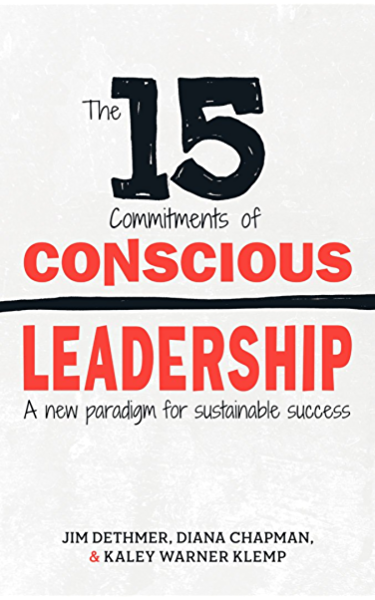
  • The 15 Commitments of Conscious Leadership by Jim Dethmer, Diana Chapman, and Kaley Klemp

    Leadership entails a lot more than just giving orders to subordinates and managing teams. A leader must be committed, inspire positive change in team members, build and maintain a good work atmosphere, be a good listener, work to first help peers and employees succeed, build and maintain personal relationships with employees, and along with all of this ensure that the organization is productive and profitable.

    How does a leader do all of the above and still manage to succeed personally?

    The 15 Commitments of Conscious Leadership (2014), explains that leaders have to be conscious leaders. It shows that success need not have a price. Moreover, it need not be at the cost of contentment. It brings forth the concept of conscious and unconscious leadership. To understand how leaders can work towards successful conscious leadership, we need to understand both concepts clearly.

    Conscious Leadership

    Conscious leadership is actually a state of mind rather than a stage that one should reach. Such leaders accept change and work towards learning from those changes. They know that they have the willpower to adjust as well made additional changes wherever necessary in order to succeed. They are responsive and sensitive to the needs of their team members.

    Conscious leaders move from closed to open perspectives, from defensive to curious, and from wanting to be right to wanting to learn. They lead from a place of security and trust, rather than power and authority.

    Unconscious Leadership

    Such managers are uncomfortable with change. While they too strive for success, it is often at the cost of disregarding valuable suggestions from others. They refuse to do away with old patterns of working even when they are counterproductive. They believe that they are victims of circumstances and place a lot of importance on external factors, believing that these are responsible for their success and failures. 

    Unconscious leaders just go with the flow. They employ centuries-old models of leadership and management, believe they have all the right answers, and lead by fear and blame.

    The book charts out 15 commitments of conscious leadership. While the word commitment is used, it does not imply promises in the future but focuses on the commitment to the present.

    The Fifteen Commitments

    1. Responsibility – Responsibility lies at the core of conscious leadership. It means to take full accountability for everything that happens in one’s life – personal or professional. Unlike unconscious leaders, who either play the victim of bad circumstances, placing blame on others or project themselves as heroes by taking on more responsibility than they can handle, conscious leaders understand that they must take full responsibility for their own actions. They understand the consequences of their actions and never shirk responsibility by blaming others for bad decisions and negative outcomes.
    1. Learning – Learning is another value that forms the core of conscious leadership. Unconscious leaders do not learn from their mistakes and focus on blaming others, playing defensive, and proving that their views are correct. They never look at negative consequences as opportunities to learn.

      Conscious leaders, on the other hand, understand that every experience – bad and good – are opportunities to learn. They understand that not all their decisions are going to be proven right. They are realistic about expectations and outcomes and are always eager to learn rather than place blame.
    1. Accepting Emotions – Learning from experiences comes naturally to conscious leaders. They not only learn from their experiences and environment but also learn from their own thoughts and feelings. Unlike unconscious leaders, they do not resist and repress their emotions or recycle emotions by dwelling on them and feeding them with similar negative thoughts. Conscious leaders, on the other hand, look for wisdom in their emotions and thus have high emotional intelligence. They understand that emotions are powerful tools and accept them for what they are.
    1. Listening Skills – Listening skills are assets that conscious leaders exercise at all times. They practice receptive communication, where they listen to what every team member has to say. They measure what they have to say after they have heard other viewpoints. Unconscious leaders often let their own judgments cloud their views and do not consciously listen to others. This can be detrimental as it often leads to prejudices. 
    1. Avoid Gossip – The corporate grapevine is an omnipresent and scarlet feature of the corporate world. It can be useful but at the same time, it can be devastating for the organization as well as individuals, making the work atmosphere toxic. Conscious leaders are aware of the dangers of gossip and know that it is essential to share the truth with the right people at the right time.
    1. Integrity – Integrity is a commitment of conscious leadership that binds all the other commitments. A leader without integrity can poison the entire organization leading to its downfall. Conscious leaders who take responsibility, express their emotions openly, speak honestly, and keep their promises are said to have integrity. They make sure that they do not make commitments that they cannot honor and fulfill all commitments they make honestly.
    1. Appreciation – A leader is made by his team and not the other way round. Conscious leaders know that their words of appreciation hold high value for their employees. When a leader is appreciative of his employees, he helps those employees learn to appreciate themselves. At the same time, appreciation makes the leader view the team member in a better light too. Appreciation, most importantly, helps a leader to be able to better understand team members, value them more, and understand their qualities too.
    1. Zone Of Genius – There are three zones in which people work in, and tend to stay in due to the fact that they subconsciously limit themselves – 
    • The Zone of Incompetence, where one doesn’t enjoy doing a job because they are not good at it.
    • The Zone of Competence, where the one is good at the job that is done but doesn’t find it fulfilling, and,
    • The Zone of Excellence, where one excels at the job done but does not find it fulfilling and hence, does not apply any creativity to do it.

    However, there is a fourth zone – The Zone Of Genius – where people love their job so much that it doesn’t feel like work at all! Conscious leaders mostly work in their zone of genius, because they love and enjoy doing the work at hand.

    1. Play. Do Not Struggle – The zones take us to the ninth commitment of conscious leadership – work with a playful attitude rather than doing it as if it is a struggle. Conscious leaders focus on enjoying the work they do. That is why their attitudes toward work are always fun and creative. They know how to integrate fun in their work naturally, making work less of a struggle.
    1. Being Open – No experience or outcome is good or bad. They are simply labels that we attach to events or outcomes due to our perceptions. The tenth commitment of conscious leadership is to be open to other perceptions and interpretations. This gives leaders a different perspective and then they are able to make managerial decisions looking at all possible pros and cons.
    1. Internal Security – People often view security, approval, and control as external factors that they mindlessly chase. However, conscious leaders know that these are internal factors and thus are comfortable and accepting of the security, approval, and control that they already have.
    1. Contentment With The Present – While leaders should have the ambition to grow and succeed, they should also understand and recognize that there is an abundance of everything that they have, including time, money, love, respect, etc. Sadly, many leaders follow the belief that there is a scarcity of everything in life and that they need to hoard it in order to be truly content.  Conscious leaders are cognizant and content with what they already have. This allows them to be happy and live in the moment.
    1. Personal Growth – Sometimes, leaders believe that finding success is a representation of beating the competition. Such leaders view personal growth as the winning moment of the rat race. They do not realize that everyone surrounding them – their competitors, employees, personal relationships, etc. have contributed to their personal growth. Conscious leaders, on the other hand, know that all experiences and people surrounding them contribute to their personal growth and acknowledge their role.
    1. Creating Win-Win Situations – Conscious leaders work towards making sure that everyone wins. They move beyond competition and compromises. They involve everyone in successes and see that everyone involved wins. They aim for creating 2+2=5 results, where the outcome is better than the sum of its parts.
    1. Be The Solution – The final commitment of conscious leadership is to be the solution. Conscious leaders perceive problems in a positive light. For example, they see a problem as an opportunity to better something rather than viewing it as lacking something. They work towards becoming solutions to problems they see.

    These fifteen commitments are the guide to becoming a conscious leader. Applying these commitments to oneself will help in leading a more fulfilling life, personally and professionally.

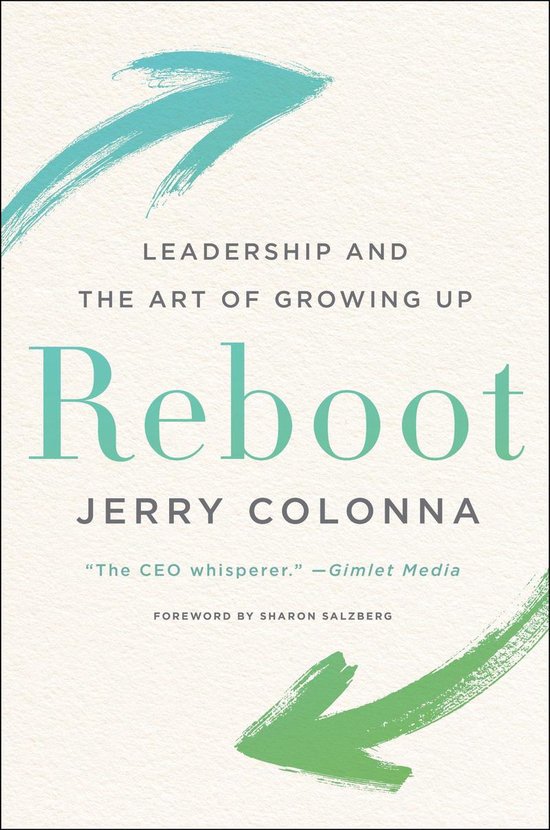
  • Reboot by Jerry Colonna – Looking Inward For Better Leadership

    As professionals and leaders, we all reach a point when we wonder if we are doing it all right in today’s tough, cold-hearted corporate world. Leaders world-over have questioned themselves at some point in time – ‘is it a pretense or am I in control of my life?

    Jerry Colonna’s Reboot (2019), takes us inwards, pushing us to reflect on what has shaped us as human beings, what has shaped us as leaders, are we better human beings, etc. Reboot guides us towards a more rooted leadership that has the ability to transform any workplace into a less toxic, more humane, and more forgiving one.

    1. Radical Self-Inquiry

    Often leaders wonder, ‘What is that one quick-fix that will solve my problems?’ 

    Truthfully, there is never a ‘one quick-fix solution’ for anything. However, one can dive deep into radical self-inquiry to find some answers to the feeling of helplessness and professional anxiety.

    Many leaders toughen-up on their way to the top. They bury their vulnerability under a hard exterior in order to be able to run the organization. Their constant focus lies on ‘how’ to do it successfully, and the basic ‘why’ gets lost in the interim. In the bargain, their pent up emotions lash out in the form of irrational and emotional decisions at the workplace. 

    The way out is to understand one’s own roots. One needs to look at the difficult times they have faced in life, the ones that have shaped their personalities. For example, the author realized that his own professional anxiety stemmed from his childhood experiences with poverty. The feeling of losing everything was a driving factor for him to succeed, but it was also the cause of his anxiety.

    Therefore understanding how past experiences have life-long effects on us via self-inquiry is very important.

    2. Leadership-Building Crises

    In the tenth-century, a Buddhist saint and teacher Milarepa went out of his cave to gather firewood. When he returned, he found it was full of demons. After unsuccessful attempts to shoo them away, he finally taught them Buddhism. They soon became quiet. When they still didn’t leave, he asked the demons, “What are you’re here to teach me?’  Stumped with his questions they all left except one. 

    Finally, Milarepa put his head in the demon’s mouth and said, ‘Eat me if you wish.’ And then the demon vanished.

    This tale of confronting one’s demons shows us that one has to face their demons. These ‘demons’ are a test of character and mettle, and facing them often helps in building valuable leadership skills, making one a better human being.

    Warren Bennis called it the crucible moment – the one where extreme pressure enables us to face the toughest situations in life, bringing out our best. Such experiences get us to the other side more confident, more humble, and most importantly as great leaders and humans.

    3. The Calm Amidst The Rush

    The corporate world is a fast-paced world. No one has the time to take a minute, stop, and practice mindfulness in the rat race to the top. Though keeping the pace is important from a career and ambition perspective, many lose themselves in this rush and often forget that need to pause and take a breather.

    A constant fast-paced environment can turn toxic in a matter of minutes. Such toxicity can slowly spread from person to person and end up affecting the entire business structure, where the leap to the moon is only possible by trampling over someone else’s ambitions.

    As a leader, it is vital to know when to take a breather and calm down right in midst of the fast-paced corporate life. It is important to sit back and evaluate the need for the rush. And it can be achieved only by practicing mindfulness every day.

    4. Broken-Open Hearted Leadership

    We have all heard of ‘What goes around comes around’. This couldn’t be truer than it is in the case of lies. Lies always catch up with us in the most unexpected ways and times, teaching us a hard lesson in life.

    We have seen severe consequences of lies being told at the top of the corporate ladder. Serious ramifications such as oil spills in oceans, massive job losses, unemployment, bankruptcy, etc. are consequences of deceitful top-level management. The only reason why the world has faced these consequences is that some leader has not had the courage to be truthful.

    Today’s time needs a change in how honesty is imbibed right from the onset of careers. Colonna talks about broken-open-hearted warriorship (a broken, scared, and lonely heart is an invaluable guide), a concept where the leaders themselves are strong enough to face the truth and do not leave themselves or their teams vulnerable to lies and deceit. Such a change works best when leaders become the torchbearers of honesty.

    5. The Ghosts In The Machine

    Software developers use a term ‘the ghosts in the machine’ that refer to bits of dormant out-dated code, from a previous version that despite being defunct can interfere with the newer versions of the code.

    Our behaviors function in similar manners. The ghosts in the machines turn out to be irritating and irrational habits, complexes, and fears that make us humans messy, and asymmetrical. Leaders need to have an understanding that everyone, themselves included, will have these ghosts and that they will have to work around them.

    For example, the author himself found that his habit of correcting colleagues incessantly often caused professional tensions just as it had its positives. However, the author also realized that this habit was a ghost code wired inside him by seeing his father obsessively correct errors in the newspaper during their times of poverty.

    6. Do-Over!

    Leaders spend almost all of their way up to the top controlling, planning, and monitoring their moves, and largely their lives. However, the path to success can turn to stifle us with its consistent routine.

    The author himself proceeded up the planned path to success, only to find himself at the brink of suicide in the wake of 9/11. However, he turned things around by embarking on a personal travel journey, visiting places, and meditating.

    It was an essential step to accepting uncertainty and not knowing. This led him to be able to embrace the potential of the present.  He welcomed it at a physical as well as mental level, where he learned to let go of regrets and accept mistakes and move-on, reminiscent of a childhood game of stickball where his friend would yell ‘Do-over’ after a futile debate over a foul or hit.

    ‘Do-over’ essentially means to move on, move past, forgive, forget, and hit refresh. It means to embark on an uncertain, pathless-path where one is open to change and attentive to the present.

    7. Personal Crow, Loyal Soldier, And You

    In college, Jerry Colonna took a writing course with poet Marie Ponsot. She gave them a metaphor of a crow sitting on their shoulder cawing, ‘why did you write that?’ or ‘that’s not good enough’. She urged students to ‘shoot the damned crow’.

    Colonna perceived the crow as the voice at the back of the head and refused to shoot it. He felt that we should learn to accommodate the crow because the crow reflects our care for our actions in the world and signifies our belief in humanity.

    Similarly, he also describes the ‘Loyal Soldier’, a solitary soldier cut off from the regiment, defending a lone island. The soldier maintains his position and focuses on his survival rules. He maintains routines without knowing whether he will ever need them. However, just because the war is on in his mind, he is attentive guarding his base. Colonna likens the soldier to our instincts for self-preservation and embodiment of our survival strategies.

    Both, the Personal Crow and the Lonely Soldier help us to be more at ease with ourselves and be more open and courageous.

    8. Creating a Conducive Space

    A leader needs to create an environment that is highly conducive and comfortable for his/her team to succeed. He/She needs to create an authentic workspace, where the members of the team can be themselves, open up, find personal space for growth, quite similar to comfort that one finds with family members or the acceptance that is seen between partners.

    Leaders need to let the team members work individually, yet be able to herd them towards being one cohesive team. They need to be intuitive to understand the undercurrents of the team to be able to create a conducive space. Finally, they should have compassion towards their team members to be able to understand them or make them work well together.

    Colonna gives an example of a herd of horses.  Amongst the herd, rather than the strongest, most handsome, smartest, or showiest horse, it is the horse that is able to feel the group the best that is chosen as the leader of the herd. This intuitively strong leader is almost always a mare.  The mare is best able to calm down other horses and is able to understand the needs of other horses.

    A leader has to show similar qualities, where they have to be tuned in to the needs of his team members. Such leadership can steer the team away from toxicity.

    Reboot is a unique guide for leaders.  It shows the true way of growing as a leader and more importantly as a human being. Jerry also shows that out of all the qualities a leader should imbibe, the ability to steer away from a toxic environment stems by reflecting inwards is the most important. It shows that self-awareness, mindfulness, honesty, and self-critique are qualities that create better leaders.

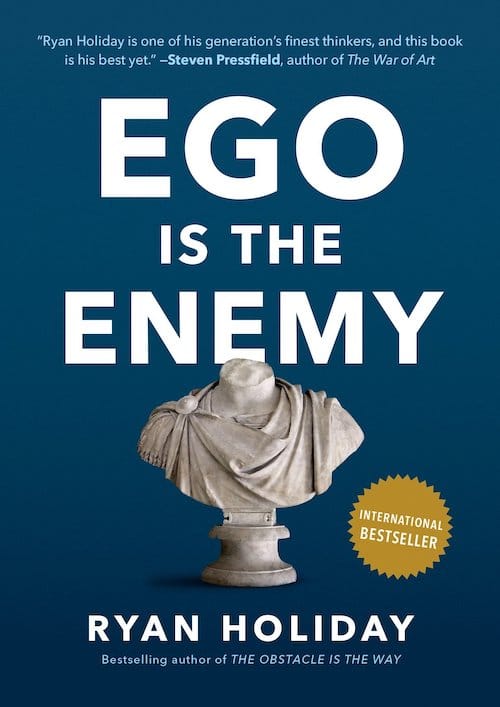
  • Ego is the Enemy (2016) by Ryan Holiday

    Egotism, especially at the workplace is an extremely harmful trait. Whether it is a manager, junior-level executive, or even an organization leader, having an inflated ego at any point can have severe consequences. 

    Ryan Holiday’s Ego is the Enemy (2016) shows the dangerous consequences of egotism and charts out strategies for those in the corporate world to stay grounded, rein it in, and keep the ego in check.

    Ego isn’t all that bad; having a healthy ego is good to a certain extent. A little bit of ego is needed to compete, to surpass our own achievements, and to even convince others of our abilities. Yet there is a very thin line between an inflated ego and the healthy one. A line that is too easy to cross.

    Ego Vs. Ambition

    Ego thrives on fame, recognition, and success. The desire to achieve these is so strong that one tries to get them by any means, without deserving it.

    Former US President Ulysses Grant is a good example. He ran for president after Abraham Lincoln’s second term was nearing the end. Being a reputed general in the US Army, he was popular, but he was also new to the world of politics. His desire to hold the highest office in the country without experience was egotism.

    On the other hand, William Tecumseh Sherman, Grant’s colleague and a general in the army as well, was ambitious, but not egotistic. During many talks with Lincoln himself, Sherman showed no desire to run for president. His priority was to excel in his own field – military leadership. He focused on bettering himself in his field and knew that his expertise and recognition in the Army would not suffice for Presidency.

    Ambition differs from ego. Egotists desire recognition and fame, whereas the ambitious set their sights on excelling in their field.

    Ego Vs Learning

    Ego considers itself very clever. An egotist tends to have the belief that he or she knows everything and that there isn’t anything new that they can learn. Such people do not have the humility to accept that they might not know it all and that someone could have more knowledge than they do.

    It is easy for your ego to get the better of you if you are good at anything. The trick is for us to think that we have much to learn and that there are others who are better than us.

    The guitarist Kirk Hammet had the chance to be part of the world-famous rock band Metallica. Instead of joining them, he chose to study under Joe Satriani, the famous guitar virtuoso, and better his skills. He knew that with Metallica, he would never learn as much he did had he become just a member of the band. He had chosen to rein in his ego and learn more.

    Another way to suppress the ego is to pass on the learning. Those who are good at a skill should pick a mentor to learn under as well as choose a novice to mentor. There was never a better equalizer than teaching.

    Ego Vs Self-Improvement

    Once we taste success, we tend to bask in the laurels for longer than we should. Would we have had iPhones today had Steve Jobs been content with his Apple II computer?

    While pride and ego have different meanings, they go hand-in-hand. Ego is justified by one’s sense of pride. When we are proud of achieving something, we tend to sit back, relax, and bask in the limelight. Both pride and the resulting ego thwart one’s ability to try something new, to better oneself, and to push harder to do greater things.

    Pride and ego play a part in deafening us to warnings and make us defensive to critics. People’s ego tells them that they are the best and can even get aggressive if someone tells them otherwise. Pride and ego will a person to fight anything that can seem like a conflict.

    One way to rein in pride is to consider how a more humble person would perceive the criticisms given.

    Ego Vs Delegation

    In the corporate world, there are many cases where a manager is unable to delegate work to the team. They find it tough to trust other team members and co-workers. Especially for those who find success and step up the designation ladder due to individual successes, delegation seems difficult because they are unable to see that others might be able to do a better job than them. They often fail to see that delegation of work gives them more time to better themselves and aim for higher goals.

    John Delorean left his job at General Motors because he thought he was better at car manufacturing, and more knowledgeable than his bosses there. However, when he started his own venture, he became more dictatorial in his management style, with his ego getting the better of him. Discarding the stable management style that was used in GM, he needed to sign off on every decision. His company eventually failed and he went bankrupt.

    Ego Vs Humility

    No one works in isolation. Our successes are always attributed to the hard work and contribution of those working with or around us. Often, people let their success and accomplishments go to their heads and think that their success is theirs, and theirs alone.

    If we look at the examples of Kobe Bryant and Shaquille O’Neal, world-class basketball players with the LA Lakers, we can see how they both let their success of winning three championships back-to-back from 2000 to 2002 go to their heads.

    Without realizing that it was their combination that worked seamlessly to win, both would constantly complain about each other to the media and to the teams. Finally, Bryant refused to sign-on another season with the Lakers if they didn’t trade-off O’Neal to another team, ending their successful streak.

    Humility is an important virtue. One must have cognizance of the fact that their successes can never be attributed to themselves alone. Giving others the recognition they deserve helps form better workplace relationships. It is a pre-requisite for success in an environment that puts so much emphasis on optimism and going for more and bigger results.

    Ego Vs Improvement

    There are times when people find themselves underappreciated for the work they have done. For example, you might find that you get rejected for a job that you feel is made for you; one of your best ideas gets rejected by the manager, or even gets passed off for that much-deserved promotion.

    In such times, it is natural that the ego gets hurt and we start resenting the people or the circumstances that lead to the result. However, unexpected undesirable results should be perceived as opportunities for improvement.

    We should be honest with ourselves and consider the possibility that our work was not up to the mark and try to understand what went wrong. That way, one can rein in the ego and work harder to perform better than the best.

    Our egos are part of our personalities. While we cannot do away with them completely, we can strive to ensure that they don’t spiral out of control and become detrimental to our success, affecting relationships and thereby our careers.

brain care coaching commitment communication conflict conflicts conversation culture deployyourself deploy yourself emotional intelligence emotions empathy energy feedback freedom future gold habits hope john maxwell language leadership lessons listening performance perspective preparation productive productivity psychological safety purpose questions relationships resolution ryan holiday seth godin simon sinek strengths struggle team trust values words