Reaching For The Skies
What do you get when you combine razor-sharp business acumen, a penchant for adventure and fearless risk-taking?
You get Richard Branson!
One of the world’s most imaginative, determined, self-made businessmen who have touched the skies of success. His endeavours to take on challenges and make the most out of failures, make him a unique personality and one of the world’s richest men on earth.
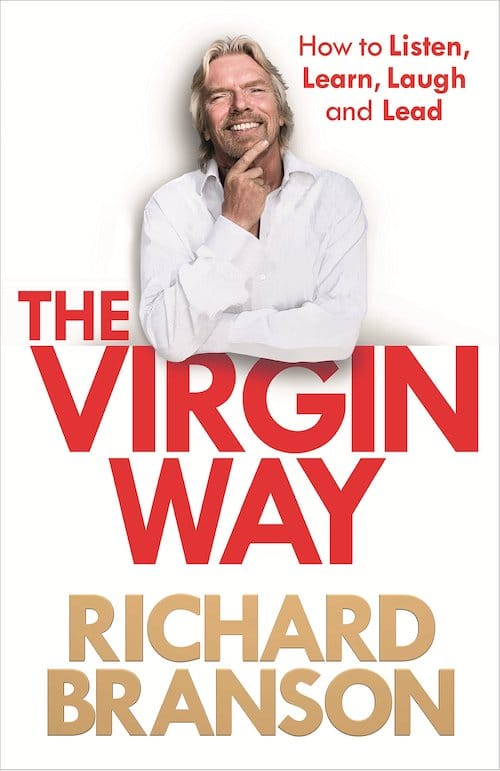
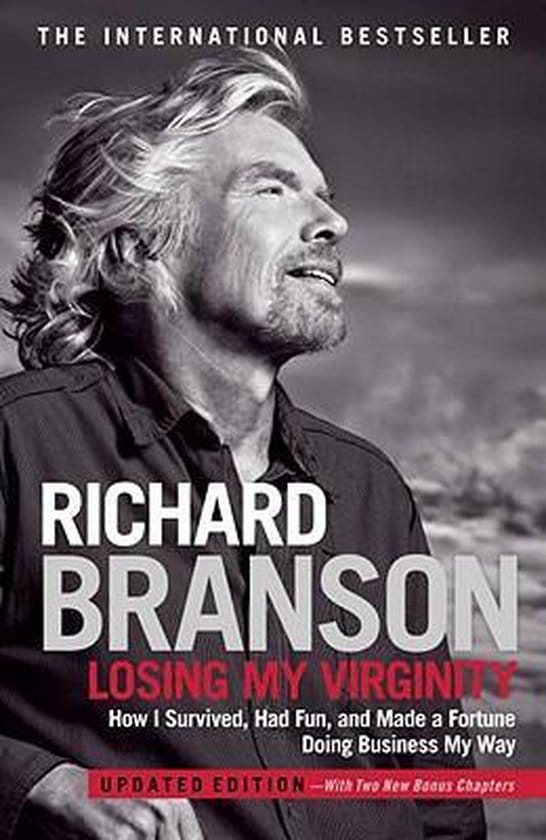
Losing My Virginity is his international best-seller autobiography that takes us through his unpredictable yet exciting life right from his childhood when he dropped out of school, to revolutionizing the airlines, railways and music business with his steely resolve, sense of fun and love for adventure.
The Wonder Years
Branson’s sense of adventure and pushing oneself to the limits of possibility comes from his family. The challenges that his family would present him gave him a taste of adventure early on.
For example, once, at the age of 11, his mother sent him on his bike more than 50 miles away to visit relatives, without directions. This exercise was meant to teach him orientation and stamina. When he returned, he was immediately sent to the Vicar’s house to chop logs, rather than receive any praise for his accomplishment.
Richard Branson was used to arduous challenges by then. In fact, when he was just 4, his aunt bet him 10 shillings that he wouldn’t be able to learn to swim, by the end of their holiday in Devon. He took up the challenge and spent hours in the sea trying to stay on top of the waves, without success. On their journey back home, he spotted a river. Not wanting to give up he asked his father to stop the car. He sprang out of the car, ripped his clothes off and ran full tilt towards the riverbank.
As soon as he jumped in, he sank. But he was determined, and slowly, kicking and flailing, he managed to make it to the surface. As he came out, he saw his family cheering, his aunt waving a 10 shilling note, and his father, dripping wet as he has jumped in after his son, giving him a big hug!
The Student
Branson was dyslexic, albeit with an independent attitude. This meant that while he struggled academically, failing to get recognition in university, he looked for alternative occupations. Along with his friend and fellow student Jonny Gems, Branson founded the magazine Student.
What started as a magazine for criticism of the school, soon became an outlet for the pop culture and contemporary issues. However, the magazine saw its first roadblocks when Branson and his buddy couldn’t find the funding (in the form of advertisers) to publish the magazine.
Branson, however, found a clever strategy to get those advertisers. He informed the National Westminster Bank that Lloyds Bank had purchased ad space in their publication and got his first check of 250 pounds.
As the writing and editing work for the Student took priority, Branson and Jonny moved into a London basement. Branson put more effort into writing and editing – despite his dyslexia – for the magazine than he did for his coursework.
Jonny and Branson were ambitious. They wanted to cover international events. They wanted to report on the wars in Vietnam and Biafra. They approached the Daily Mirror asking them if they were interested in the story of a young reporter going to Vietnam. When the publication showed interest and bought the story, they sent one of the Student’s staff to Vietnam. They had a similar arrangement for Biafra.
Their political interests aside, the Student’s main involvement was in the current music scene. It features news about concerts and club events, and exclusive interviews with the likes of Keith Richards, John Lennon and Yoko Ono.
The Virgin Mail Order
Branson’s keen business sense and his interest in the music scene made him realise that there was virtually no competition to record stores. People were willing to spend 40 shillings for a Beatles record at the store, mainly because they had no alternative. He saw the potential for a mail-order system, where people his own age would prefer to mail-order those records at a lower price than at retail prices.
Branson discussed the idea with his staff at the Student, and they suggested that the venture have a new appealing, eye-catching name. One of his staff suggested ‘Virgin’ since they were all virgins at business. Thus Virgin Mail Order was born.
Branson placed an ad for record mail-order in the last issue of the Student which received more enquiries and cash for advance orders. This cash was the capital for buying records, and it enabled them to build a large balance rather than having to wait for the money to come in. Branson then roped in his co-contributor from the Student, Nik as an accountant.
Nik and Branson would decide whom to buy records from and how to mail-order them. They made a deal with a local record shop that would obtain records directly from the record companies, enabling the Virgin team to sell records at a discount.
Virgin Mail order flourished through 1970, until January 1971, when the Post Office went on a strike, spelling disaster for them.
Virgin Music Stores
The 1971 postal strike impelled Branson to set up his own record store. Branson wanted to model the record store on the principles of the Student, where people would not only come to buy records, but also a place where people could exchange their views about their interests. They struck up a deal with a shop store owner who had free space above the shop.
Having no money to pay rent, Branson used his charm and business sense to convince the shoe store owner how a record store would increase footfall in his shop as well. They set up the first Virgin Music Store for free.
Riding on the success of the record store, Branson and his partners planned to open more outlets, while keeping the mail order intact, ready for business when the postal strike would cease.
The Virgin Music Store expanded into 14 more stores all over England by Christmas 1972.
As opposed to other record stores which had bland interiors and virtually no excitement as compared to the rock music scene then, Virgin stores were focused on creating an atmosphere where people could relax and hang out. However, while the entertaining atmosphere of the store got the customers in, people weren’t buying anything.
To rectify the problem, Branson installed brighter lights and moved the cash register closer to the window, to reduce the appearance of a club.
The idea worked and the sales improved.
Virgin Expansion
The wild rock and pop culture of the 1960s made Branson realise the potential and profits of owning a recording studio and label. He also saw that the existing record studios worked very formally, with minimal musical instruments, overbooked rooms and strictly appointed slots. This formality was in absolute contradiction to the musical culture brewing in the country.
Hence, at the young age of 21, Branson started looking for a country house that could turn into a recording studio. His search ended with a beautiful 17th-century manor, with iron gates and beautiful countryside, that would appeal to music bands to come and record their music in an attractive environment.
However, the manor was priced at 30,000 pounds, a price that was far expensive considering the sales that Branson’s other successful ventures were bringing in. He approached the British bank Coutts, who estimated a mortgage for the Virgin Music store and Virgin Mail Order at 20,000 pounds. His aunt lent him 7,500 pounds by re-mortgaging her house, and Branson was able to transfer the full amount to the estate agent.
Alongside, Branson founded Virgin Records, his own music label that integrated with the Virgin group, allowing them to sign on their own artists, offer and charge those artists for a place to record, publish and release those records, and promote and sell them at the Virgin Music Stores, all while making profits and retail profit margins as well!
Branson’s foray into skyrocketing success came with Mike Oldfield’s Tubular Bells, which was recorded at the manor through 1972 and 1973. It sold over 13 million copies.
The Sex Pistol Troubles
Towards the mid-’70s, Virgin Records was standing at the doors of trouble. Apart from the Mike Oldfield success, the label was losing money. The emergence of punk music made them desperate to sign on to a new band.
In 1977, Malcolm McLaren, the manager of the band the Sex Pistols signed the band to Virgin Records. He was hoping to get dropped from his contract due to their indecent behaviour, as they had with EMI and A&M. McLaren closed the deal with Virgin, just as they had staged a concert in from of the House of Commons, playing their ‘God Save The Queen’ for Queen Elizabeth’s 25th anniversary as Queen. The concert drew in large publicity, flak and the arrest of McLaren.
McLaren’s hopes of being dropped by the label were dashed as Virgin Records didn’t have any shareholders to protest their actions. In 1977, ‘Never Mind The Bollocks, Here are The Sex Pistols’, the album was widely advertised and released in Virgin stores all over the UK. A Nottingham store manager got arrested for publicly advertising the word ‘bollocks’, and the police threatened to injunct the album.
It was time for Branson to take action. He roped in linguist James Kinsley to fight the court case, who went on record to explain that ‘bollocks’ didn’t mean ‘testicles’ but were rather a nickname for priests. He further argues that not even the Church would get offended by the title, ‘‘Never Mind The Priests, Here are The Sex Pistols’.
When the prosecutor asked why was Kinsley so sure that the title wouldn’t be offensive to the Church, Kinsley simply folded his polo-shirt collar down revealing his clerical collar. Branson had found a Reverend to defend his case! The case was dismissed.
Love, A Tropical Island, And Virgin Airways
In 1978, while Branson was in New York, waiting for his future wife Joan’s divorce to come through, he was asked if he has named his company after the Virgin Islands. Though there was no connection whatsoever, Branson thought that the islands were a perfect getaway for Joan and himself.
Showing interest in buying an island in the Virgin Islands for artists to relax and record, Branson and Joan were put in a villa and were shown one of the remotest islands, Necker Island.
Priced at 3 million pounds, the island was far from Branson’s quote of 150,000 pounds. He was shown the door out!
Once back in London however, Branson learnt that the owner of the island, a British Lord, was desperate to make a quick sale. The lord needed to finance another building that would cost him 200,000 pounds. Branson upped his offer to 175,000 pounds, and the Lord agreed to settle at 180,000!
What started as a hunt for a free holiday ended up in Branson buying an island.
The Virgin Islands are important to Branson for another reason. It was during that trip that Branson came up with his Virgin Airways. The idea came about when Branson’s flight to Puerto Rico got cancelled and he chartered a plane for $2000. He wrote on a blackboard, ‘Virgin Airways: $39 Single Flight To Puerto Rico.’
The CD Era And More Artists
Despite signing the Sex Pistols and many other younger bands, Virgin Records was running at a loss of 900,000 pounds. Even so, Branson kept signing new artists and bands, some of which were Simple Minds, Phil Collins and The Human League.
The financial director, worried about the future of Virgin in the hands of unknown artists, sold his 40% share back to Branson and left, leaving Branson the 100% owner of the Virgin group, on the verge of going bust.
As luck would have it, with the success of the Compact Disc, and the popularity of music CD’s, people wanted to purchase them even though they had vinyl. Branson then resold his back catalogue on CDs. the first record of Mike Oldfield did exceptionally well on CD’s, helping restore Virgin’s cash balance.
Furthermore, the trust Branson had placed in Simon Draper, his musical scout and advisor, started paying off. Almost all the bands that he had roped in, like Human League, had their album dare shoot to the number one spot on the British Charts. It sold 1 million copies in Britain and 3 million worldwide.
The newcomers and young artists that Virgin had launched, like Boy George, Phil Colling, Heaven 17, Culture Club, XTC, Simple Minds, etc. all were making great music and success. Virgin went from a 2 million pounds profit in 1982 from a 50 million pound sales to a whopping 11 million pounds profit in 1983. It had become the undisputed independent label.
Getting Virgin Airways Off The Ground
In the late 1970s, Branson already had dreams of Virgin Airways and was toying with the idea. In 1984, when Randolph Fields, a US attorney came inquiring about Branson’s interest in a transatlantic airline, Branson jumped at the challenge.
Even though his senior management wasn’t keen on the idea, Branson argued his case. He said that by leasing just one aeroplane for a year, they could retreat from the project if it didn’t succeed, thereby limiting the money they could lose. After negotiating with Boeing for two tough months, Branson was able to lease one Jumbo for a year.
Branson’s work was cut out. There were permits to obtain, ticketing systems to be set, time slots to fit in and advertising to be taken care of. In order to obtain the permit, they had to conduct a test flight, with an official onboard. On the test flight, the plane flew into a flock of birds and one of the engines exploded. The plane unfortunately was uninsured due to a lack of license.
With Branson’s first commercial flight scheduled in two days’ time, no license and no engine, and a cost of 600,000 pounds for both, he was in trouble again. He realised that the cost had exceeded the company’s 3 million pounds overdraft. The bank was unwilling to extend, and Virgin was on the brink of insolvency.
Branson’s resolve and penchant for challenges saw him through this as well. He collected as much he could from his overseas stores to keep the airline operating. Under Branson’s watchful entrepreneurship, Virgin Atlantic became legitimate, and a resounding success.
Adventurous Sailing Across The Atlantic
Ted Toleman, in 1984, was seeking sponsors for a cross-Atlantic catamaran he was building that would set a new speed record and re-win the Blue Riband Trophy for Britain. Branson, realising that such a coveted trophy and world record would be just the kind of attention his trans-Atlantic airline needed.
The world record has been set at 3 days, 10 hours and forty minutes. Branson and Toleman, along with round-the-world yachtsman Chay Blyth, set out from New York to England with their sights firm on beating the record. However, three days later, with just 60 miles to cover, the hull of the catamaran was split open in a storm, and the Virgin Challenger sank.
They were rescued by a cruise ship, where Branson got news of the birth of his son from a copy of the Evening Standard, which one of the passengers was carrying. Determined to win the trophy, Branson and Chay decided to beat the record on a single-hulled boat rather than a catamaran. Thus, the Virgin Atlantic Challenger II left New York in 1986.
However, Branson and Chay had another mishap, when the fuel pump filters got clogged and choked the engine. The filters would be needed to get replaced every few hours, pushing their chances of beating the record further away.
Branson cunningly reached out to Downing Street and got an RAF plane to deliver new filters. The Virgin Atlantic Challenger II made the 3000-mile transatlantic journey in 3 days, 8 hours and 31 minutes, setting the new world record and winning the Blue Riband Trophy.
The Kuwait War
Saddam Hussein’s invasion of Kuwait in 1990, stumped the world. The prices of aviation fuel jumped from 75 cents a gallon to $1.50. More than 150,000 refugees had fled from Iraq into Jordan. Despite the help from the Red Cross for setting up the distribution of supplies such as water and blankets, the Jordanian government was still short of about 100,000 blankets for the refugees.
One day, just as Branson was about to take his children to school, he received a call from Queen Noor of Jordan, who was a close friend, seeking help. Branson and his staff got into the action of figuring out the logistics.
He contacted the Red Cross, The Foreign Office and the Overseas Development Office, and was able to gather around 30,000 blankets. UNICEF was to add more supplies to the number, and Sainsbury, a departmental supermarket chain in Britain donated many tons of rice.
In order to fit all these supplies and fly them to Jordan, Branson and his staff decided to take out all the seats from a Boeing 747. They loaded the plane with about 40,000 blankets, rice and medical supplies, and flew into Jordan. On the way back, they also picked up British nationals stranded in Jordan.
However, there were many British Nationals taken hostage in Baghdad. He called his friend the King of Jordan to help negotiate with Saddam Hussein, to release the women and children and the sick men in exchange for medical supplies.
On 23rd October, Branson and a Virgin volunteer crew set out for one of the most dangerous airspaces. While they arrived safely and were able to rescue most of the hostages, they were forced to leave the men at the airport, which was sadly devastated a few days later.
A Daring Hot-Air Balloon Adventure
True to his adventurous nature, Richard Branson had, along with Per Lindstrand, attempted to cross the Pacific in a hot-air balloon in 1989. However, the balloon had fallen apart just before they could lift off.
In 1990, Lindstrand and Branson met again in Japan to attempt to cross the Pacific and set the record for the first and the fastest to cross the ocean in a hot-air balloon. The goal was to reach California in 2 days. About 7 hours after take-off, they had to let off an empty fuel tank to lighten the load and fly faster.
However, a mechanical failure caused them to not only drop off the empty tank but 2 full tanks as well, leaving them with 6000 miles to cover with half the fuel aboard. If things could not get any worse, they lost contact with their control centre after learning of a massive storm below. While they managed to keep ahead in the 200 MPH jet stream at 170/mph, a propane leak caused a fire in the capsule.
Thankfully, their quick actions of taking the balloon to a height of 40,000 feet helped extinguish the fire. With the fire out they managed to recommunicate with their contact centre, only to receive more bad news. Their jet stream had pivoted. Unless they got the balloon to 18,000 feet into another stream that was blowing north towards the Arctic, they would be blown back to Japan. They landed in Canada about 48 hours later, at a speed faster than anyone had, covering 3000 miles more than their original destination.
Dirty Tricks And An Apology
Success always comes with its fair share of jealousy. By 1990, while Branson and Co. were enjoying unrivalled success, the traditional British carrier British Airways was getting increasingly envious of Virgin Airways.
They had started putting up several campaigns to put Branson out of business. Additionally, they had a whole team that was put together only to discredit Virgin Airways and were resorting to dirty tricks such as contacting VA customers and offering them flights at cheaper rates, or claiming that VA flights were cancelled or overbooked. They even went to the extent of hacking the Virgin database to get information. Their desperation reached heights when they contacted private detectives and a team of public relations representatives to investigate Branson’s family and his company to try to tarnish his image.
After viewing a documentary on TV, one customer contacted the Virgin office and reported that she had received a number of calls from people who claimed to work for Virgin. They told her that she had been bounced off her flight, and asked if she would be interested in taking the Concorde the next day.
British Airways denied their involvement, and the officials responsible for viable competition between the two airlines claimed Branson’s reports as unfounded, despite Branson having many BA officials willing to testify.
Finally, Branson received a drive containing logs of conversations of top BA executives, planning to discredit Virgin Atlantic. Branson and his lawyers decided to take BA to court. What ensued was a record for the highest uncontested libel payment, with an amount of £500,000 to Branson and £110,000 to Virgin Atlantic paid as compensation for corporate and personal libel, along with a full public apology.
Conclusion
To many, the business might seem boring. However, Richard Branson is proof that success is sweeter when one is willing to take challenges head-on and be adventurous enough to take risks.