gold

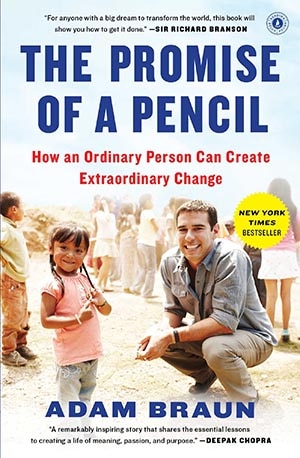
  • The Promise of a Pencil by Adam Braun – Book Summary & Review

    10 Lessons To Realising Dreams

    Pencils Of Promise is a charity organization started by Adam Braun. While the charity was started with only $25, it has expanded with more than 200 schools providing basic education in developing countries across the globe.

    This is the story of the charity organization that was started with only a group of supportive friends and humble beginnings and is today one of the leading charities in the world. While hard work is the crux of this success story, it is also about the passion, confidence, inspiration, and gratitude of Braun and his colleagues. 

    Adam Braun’s Promise of a Pencil is an account of the inspirational story of the charity organization, and how Braun realized his dream. It is a guide that encourages each and every person to follow dreams, finds their passion, and use their potential to the fullest.

    Lesson 1: Follow Your Dreams

    Why do people choose the safer path in life? What stops them from being courageous enough to take risks? Moreover, why are they so vary about the expectations and opinions of others?

    As a college student standing at the brink of a successful Wall Street career, he backpacked across the globe. He saw widespread poverty and the lack of basic education in many countries, which laid the foundation for his dream. Braun started his charity in 2008 with a simple aim – to raise enough funds to start a school in a Laotian village.

    His career was at stake, his family thought that he was wasting his time on an impossible dream. Raising the required $10000to start his school was an unattainable feat. Yet, Braun ignored the criticisms of his family and friends and ploughed through. He achieved his goal in a matter of months.

    His dedication and dismissal of others opinions and expectations helped him achieve his goal. He didn’t let others discourage him.

    Braun’s dedication to giving it a try at the least led to the fast growth of his organization. By 2013, Pencils of promise was running ground to opening their 100th school in Ghana, despite the fact that at the onset, neither Braun himself nor his friends and family believed that would be able to achieve the success they had.

    What did Braun do to achieve his goals?

    Firstly, Braun and his team believed in and committed to their idea. Secondly, he allowed himself to follow his dreams and did not delay acting upon them. Therefore, to realise one’s dreams it is crucial to start living them, today!
    Lesson 2: Get Out Of The Comfort Zone

    Most people live within their own comfort bubbles. They surround themselves with like-minded people who share opinions, habits, and interests. This sense of comfort brings a sense of safety.

    However, this is not the ideal way to live life. One has to push oneself out of the safety of comfort now and then and have experiences that will enrich life.

    Adam decided to take a semester off to travel at the brink of a successful Wall Street career. Most of his friends and family advised him against taking such a risky step, especially since it wouldn’t help his career in any way.

    However, Braun’s travels gave him fresh insights that changed his life.

    It is not easy to get out of the comfort bubble. It requires a high level of optimism and some amount of risk-taking. Additionally, pondering over incessantly about the things that go wrong will thwart new ideas and one will never experience fresh insights.

    While Adam was travelling in Guatemala, he met a local who offered to give him a place to stay in his house for a few weeks in exchange for teaching his family English. While Adam had his doubts over the safety of the proposition, his eventual agreement to accept the offer enabled him to make new friends and learn about the Guatemalan culture.

    The lesson here is, staying in the comfort one never leads to valuable experiences, and one never learns to deal with unfamiliar situations.

    Lesson 3: Follow Your Intuition

    Intuitions are strong feelings, and most often powerful advisers. Intuitions help us realize what is good much before we, ourselves do.

    Braun’s realization of his dream was triggered by an epiphany he experienced while he was at a pianist concert at the New York Philharmonic. The passion that he witnessed in the pianist’s performance, inspired him to write the mission statement for Pencils of Promise that very night.

    Intuitions are also central to providing solutions to a dilemma. Intuitions work on a subconscious level, showing certain signs of what one must do.

    As Braun began his work on his charity, he was working as a consultant. He usually worked during his free time. Soon his supervisors noticed his lack of commitment to his job and asked him to choose between his job and his dream. That day, on his way home, he came across a cardboard box with ‘Become your dream’ written on it. The timing of seeing the graffiti was perfect. It was the push he needed to make his decision.

    Intuitions guide people and give confidence. One should listen to that inner voice more often and follow that intuition.

    Lesson 4: Don’t Be Afraid To Start Small

    Most often, the enormity of following one’s dream puts a stopper in realizing them. However, one should remember that every big accomplishment starts with a small step, no matter how insignificant it may seem at the beginning. These small steps can hold the power to change lives.

    While Braun was backpacking through India, he asked a small boy what was it that he wanted most in the world. The boy answered – a pencil. Adam gave the boy one of his own pencils, making the child incredible happy.

    What seemed like a small cheap item to Adam meant the world to the little boy – a fulfilment of his biggest wish. The experience had a profound effect on Adam – profound enough that he named his charity from the inspiration he got.

    Starting with small steps also means that one doesn’t need a lot of money to effect positive change. Many successful entrepreneurs have worked within limitations and started small, slowly building their ideas over time.

    Braun too started small by opening an account with $25 in the name of his organization. He soon began raising funds by asking family and friends, collected a veritable amount that he used for his charity.

    Dreams, at the outset, often seem like unreachable goals. The trick is to start with small steps and not be afraid to take them.

    Lesson 5: Remain Confident

    Difficulties and hurdles are inevitable while one follows their dreams. During such times, one has to remain confident and believe in their ideas and in themselves. This will ensure that one does not give up when the going gets tough.

    Braun, in the course of following his dream, encountered one difficulty that changed his life’s course drastically. On his way to Africa, his ship got caught in a severe storm. It damaged the ship badly and the passengers were scared for their lives. However, Adam did not believe that he would die that day. He believed that he has a purpose to fulfil and he had to live on to fulfil it.

    It was this sense of confidence that helped him remain calm, help others around, and emerge stronger from this experience.

    However, confidence in one’s dreams and oneself isn’t enough. One has to act confident and show the world that one is in control. A show of confidence demonstrates to others that one is not afraid or weak, especially in a dangerous situation.

    While Adam was in Nepal, he found himself in the midst of a huge political demonstration, where the protestors were agitated and ready to attack. Though he was afraid, he got out of his taxi and confidently walked away. Though he had no idea where to go, it was probably his confidence that saved him that day.

    One has to have the confidence to change the manner one confronts obstacles, even if it means to pretend that one is confident.

    Lesson 6: Use The Right Language

    Language, like confidence, is vital to success. Therefore, one has to use it to their advantage to be successful.

    Choosing one’s words carefully is crucial while talking to supporters, as sometimes, even seemingly harmless words can backfire and affect people negatively.

    When Pencils of Promise started, Adam often referred to it as a non-profit organization. However, some of his managers had an aversion to the negative connotation of the prefix. When he realised this, he changed it to ‘for-purpose’, thereby making the connotation positive and increasing interest.

    Language can also be used to making ideas concrete. When an idea is still nascent, inside one’s mind, it can be hard to develop. However, simply voicing them out loud or writing them down can help increase the chances of actually realising them.

    After a trip to Ghana, Adam was playing with the idea of expanding his charity in Africa. However, during a speech at a fundraiser, he ended up spontaneously promising the audience that if they could raise donations worth $1 million at the gala, the proceeds would be used to open a school in Ghana. Voicing out his nascent idea, led to an overwhelming response and they were easily able to reach the goal of a million dollars. Thus, the first school in Ghana was opened.

    Lesson 7: Inspire Others

    No dream can be truly realized without the help of others. Hence recruiting the right people the right way is crucial.

    One gets only one chance to influence people to follow their cause. The first impression should be good, and the listeners should feel important, especially while addressing a large crowd.

    Braun employs the idea of  ‘one person, one thought’ throughout his presentations. This practice involves establishing eye contact with one person for as long as one thought is discussed. Once that thought is done, move on to establishing eye contact with another person, and so on.

    This method helps in getting people to feel that they are being addressed directly. Their chances of understanding the cause and getting inspired due to the few seconds of personal interaction are higher.

    While addressing a crowd, the number of people addressed is not as important as the number of people within that crowd who actually listen. It’s better to have one inspired and dedicated person, rather than a hundred who don’t care.

    For example, during the early days, Adam and his friends would hold presentations at universities all over the country. For one such presentation, they had booked a huge classroom considering expected numbers. However, just one person showed up. Rather than cancel or reschedule, Braun though frustrated, decided to present irrespective of the poor attendance.

    His decision paid off. The single attendee eventually became a dedicated and valued volunteer of the organization.

    Lesson 8: Thank People For Their Support

    Thanks’ is a magical word. It mends, heals, and strengthens relationships. It is as important to share joys and sorrows, appreciate, and thank the people one works with as it is with family. Moreover, it is essential to remember that one gets treated the way one treats others.

    Braun dedicated the first school the organization opened to his grandmother. A holocaust survivor, she had escaped to the USA with nothing and built a safe life for her children and grandchildren. Braun’s grandmother was moved to tears when she saw her name engraved on the school door. Additionally, seeing his grandmother’s joy, made Braun happy too.

    In another example, Braun remembered that two years into starting the organization, he had not personally thanked the first stranger who had donated a large sum of money to the organization. He wrote a belated note thanking the stranger.

    The stranger was so happy to receive the note of thanks and due to his interest in the organization, he arranged for a new office to be built for the organization at no cost at all.

    Lesson 9: Recognize Weaknesses And Learn From Mistakes

    Weaknesses and failure are inevitable components of being human. Neither can be completely avoided. Hence, understanding weaknesses and learning from mistakes is advantageous. 

    Analysing mistakes shows what can and cannot work, and knowing weaknesses can help one avoid mistakes.

    Adam once got a mail from a colleague in Nicaragua that he had been robbed. Surprisingly, Adam, instead of enquiring after the person’s well being, first informed him that the organization wouldn’t be able to reimburse the losses. The colleague was really upset, especially since he hadn’t asked Braun for any money. When Braun realised his mistake, he vowed to never repeat the mistake of placing the importance of money ahead of the well being of his staff.

    Understanding and learning from his mistake enabled him to develop a better leadership style.

    In another example, during the early years, Braun never asked anyone for money directly or personally. This was not a principle he followed, but a fear of rejection. When he realized this weakness, he confessed it to the board of directors, who helped him overcome it.

    They helped him practice asking for others money and gave him advice on how to handle such situations.

    Lesson 10: Take Time To Make Decisions

    Following one’s dreams requires making tough decisions. Doubts ad moments of uncertainty, especially in the wake of having an easier way out are inevitable. During such times, one has to think of both, the short-term benefits and obstacles as well the ones that could arise in the long run.

    Just as Braun’s charity organization had started, he received an attractive job offer – one that would give him a very high salary and many personal benefits, however, one that he would have to leave his dream for.

    At the moment of making his decision and accepting the offer, his friends advised him to think of his principles and think of what he loved to versus what he needed. Thus Braun chose to stick to what he loved doing and rejected the job offer.

    Making such a decision also requires a person to be in the right frame of mind, simply to be able to make the right decision. For example, routines tend to thwart gaining new perspectives, and judgements can get impaired. Hence, it is essential to take breaks and think of creative ways of changing one’s routine to gain newer perspectives.

    Conclusion

    Realizing one’s dream isn’t an easy task. However, with the right amount of confidence, staying committed to the dream, listening to one’s intuition, and getting out of the comfort zone one can achieve goals.

    Additionally, one should not be afraid to make risky decisions to make dreams a reality. Starting with small steps, inspiring people and thanking people for their help goes a long way in succeeding.

    Adam Braun’s struggles, his dedication to pursuing his dream and belief in his own abilities to make them a reality are a great example for all to follow.
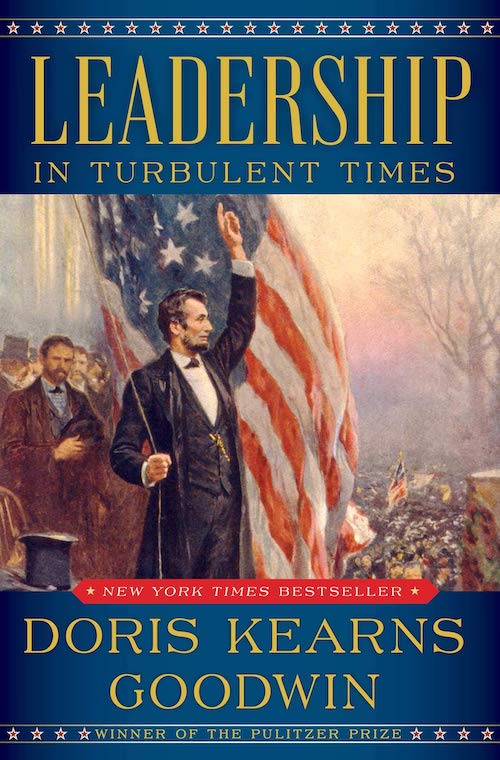
  • Leadership: In Turbulent Times (2018) by Doris Kearns Goodwin

    Leadership: In Turbulent Times (2018), by Doris Kearns Goodwin discusses the leadership secrets of four presidents who played a pivotal role in shaping the transformation of the United States of America.

    The author takes a look into the leadership qualities of four influential and transformational presidents – Abraham Lincoln, Theodore Roosevelt, Franklin Roosevelt, and Lyndon Johnson, and we learn what makes a great leader.

    1. Backgrounds Hardly Matter In The Path To Greatness

    Great leadership doesn’t always stem from one’s background or from the circumstances of a person. The difference between the backgrounds and upbringing of Abraham Lincoln and Theodore Roosevelt are proof.

    Abraham Lincoln was born in Illinois to an uneducated father, who took him out of school at the age of nine to help him in his work. However, Lincoln’s love for education made him borrow books from other people. As a young adult, it took him years of relationship building with townspeople in New Salem to earn a reputation good enough to earn a seat in the state assembly of Illinois.

    In contrast, Theodore Roosevelt was born in New York, a grandson to the fifth richest individual, with a trust fund bequeathed to him. His father was a philanthropist and gave his son access to the large family library at a young age. Theodore Roosevelt’s family name itself was enough to merit his entry into politics.

    With such stark differences in backgrounds, it is clear that the background and circumstances are not of much importance in the path to greatness. 

    2. Not All Leaders Have The Same Personal Traits

    Just as great leaders come from varied backgrounds, they do not have the same personality traits.

    Where Franklin Roosevelt had a loving, stable, and nurturing environment that resulted in a warm and optimistic demeanour, Lincoln, due to his tough upbringing, used to suffer from depression and melancholy. Even in terms of physical attributes, Lincoln was tall, healthy, strong, and athletic due to his laborious background. On the other hand, Theodore Roosevelt had fragile health and suffered from asthma.

    When we consider another aspect of personality, memory, we find that where Theodore Roosevelt had a photographic memory, Lincoln had to practice and memorize to be able to retain large amounts of information.

    The personalities of these four presidents were as different as chalk and cheese, even when it came to how they spent their free time. Out of the four, only Lyndon Johnson was a workaholic. Where Lincoln loved drama and poetry, Theodore Roosevelt loved novels and birds and Franklin Roosevelt played poker and sailed.

    3. They All Had Strengths And Associated Weaknesses

    It is easy to perceive great leaders as larger-than-life personas. However, in reality, while they did have remarkable strength and mettle as transformational presidents, their very strengths were also double-edged as weaknesses. Even these strengths and weaknesses are varied and do not point to any commonality among them. 

    Lincoln learned the ropes of politics through patiently observing, till he was confident to enter the fray. Conversely, Theodore Roosevelt’s approach to the presidency was aggressive and he had uncontained energy. While it proved to be a great asset, it also can be seen as a weakness, considering his interrogation and violation of rules would irritate his colleagues sometimes.

    Similarly, Franklin Roosevelt would willingly bend, bypass, and even at times, break rules if the end justified the means. This trait worked as a strength as well as a weakness.

    4. Ambition Is The Common Factor

    Once again, the backgrounds and upbringing of Theodore Roosevelt and Abraham Lincoln show that despite the contradictions, they had one factor that was common – ambition.

    Looking back at Lincoln’s early years, one would never guess that he would become a successful politician one day, let alone be the greatest presidents of history. His ambition is shown in his love and thirst for education, his independence in learning to read and write himself, his penchant for studying law by working day and night.

    At the same time, Theodore Roosevelt, one might say, had it all served on a platter. However, when his health prevented him from outdoor games, he cultivated voracity for reading and knowledge, which sparked his ambition.

    5. They All Had A Greater Purpose In Life

    All the presidents show that their climb towards great leadership can be attributed to the fact that they were able to blend their strengths, ambitions, and traits and align them to a greater purpose in life.

    Johnson can perhaps be cited as a classic example of having that greater purpose. His promotion of Civil Rights led to a number of reforms that led to programs such as eliminating poverty, racial injustice, and discriminatory voting laws. His greater purpose in life also guided him to founding Medicare for the elderly and passing of the Voting Rights Act. 

    6. The Uncertain Path To Leadership

    The path to great leadership has one thing for certain – uncertainty. While there are stories of strength, victories, and great thoughts and ideas being put into action, the stories of hardships, setbacks, and failures are also there.

    All four transformational presidents have had their fateful trysts with uncertainty at the brink of their political careers. While Franklin Roosevelt developed a polio-like condition at the age of 39, Lincoln lost in his first try at the Illinois state assembly. During his second run, his ambitious plans for a complete overhaul of state infrastructure at risk of his own reputation was sent crashing down by a multi-year recession. The following days brought him severe depression, where his friends hid all his razors fearing he would commit suicide.

    Theodore Roosevelt suffered an attack of acute depression after his mother and wife passed away on the same day. Lyndon Johnson too suffered from depression, however, a heart attack in the middle of a presidential run, which put a halt to his political ambitions was his tryst with uncertainty.

    7. Retreat, Reflect, and Rebuild In The Face Of Crisis

    It was these very difficult uncertain setbacks in the lives of the transformational four that propelled them towards greatness. While Lincoln returned to law, Theodore Roosevelt took time off at his Western ranch and dedicated his time to strengthening his physical self and transforming his timid demeanor into one of courage. 

    Johnson, after his heart attack, took time off to recuperate and spend time with family. He used his break to reevaluate his political goals by reconnecting with his political values. Franklin Roosevelt on the other hand took seven years to regain his strength. He built a formidable team of close confidants who kept his reputation alive in politics.

    8. Lessons In Crisis Management From Personal Crises

    The path to great leadership is strewn with crises, and the transformational four, each saw their fair share of personal crises. These personal crises helped them emerge stronger and leverage the learnings from their personal crises in their pursuit of the presidency. Yet, each of them also faced national crises in the White House.

    Abraham Lincoln had to deal with the Civil War, Theodore Roosevelt with the Coal Strike of 1902, Franklin Roosevelt faced the Great Depression, and Lyndon Johnson faced the assassination of President Kennedy.

    Case in point, President Franklin Roosevelt’s debilitating illness, and the debilitating national economic crisis helped him identify parallels and come up with strategies that eventually led to the formation of about 16 new innovative governmental agencies that helped the economy back on its feet.

    9. Great Leaders Build Diverse Teams

    It is Franklin Roosevelt’s illness that shows us the importance of a great team. Without his confidante surrogates, his political career would have died its death. Yet it helped him bounce back to become the governor of New York and eventually President.

    Similarly, Lincoln knew and thus assembled a supportive team to take on the Confederacy. Additionally, his cabinet included his rivals Edward Bates, Salmon Chase, and William Seward along with others who reflected diverse views. This diversity provided a range of opinions that Lincoln would view, review, and weigh before acting upon. 

    10. There Is No Mantra To Great Leadership

    The path towards great leadership of the transformational four shows us that great leadership isn’t a one-click mantra. It doesn’t rely on similar background and upbringing and neither can it be attributed to a common personality trait. Rather, it is a fusion of ambition, strengths, failure, accomplishment, personal crises, and most importantly a great team that propels them towards imbibing and exhibiting the great values of leadership that took the United States of America to greatness and power.

  • Creativity, Inc. By Ed Catmull – 8 Leadership Lessons From Pixar

    Today, creativity has become an essential component in every facet of work. All organizations expect their employees to employ creative and innovative means to solve tasks at hand, at the time ensuring productivity and profitability. 

    Creativity, Inc. explores the journey of Ed Catmull, President and co-founder of Pixar, which was later acquired by Disney Animation Studios. He takes us through strategies that will help us understand how to maximize creative potential, achieve excellence in management while minimizing risk and achieving success and profits along the way. Below are my biggest 8 leadership lessons from the book:

    Give a good idea to a mediocre team, and they will screw it up. Give a mediocre idea to a great team, and they will either fix it or come up with something better.

    1. Get Honest Feedback From Employees

    Getting honest opinions and feedback from employees is essential to the successful functioning of any company. Feedbacks and opinions enable the management to understand the direction of the organization and the mood amongst employees. However, hierarchical structures in organizations cannot generate honest feedback from employees.

    Companies need to create open systems of feedback between hierarchies where employees can provide their honest opinions without the fear of backlash. For example, in 2013, Pixar started ‘Notes Day’, which enabled employees to share opinions about the company openly. On Notes Day, Pixar shuts down all work for a day to have brainstorming sessions throughout the entire company.

    I post one book summary every week. To not miss what I learn from the hundreds of books I read every year, subscribe to my bi-monthly Deploy Yourself newsletter and stay updated with the latest on leadership, culture change, and neuroscience.

    Open feedback systems are great, however, employees need to know that their valuable opinions and feedbacks are worked upon. Often, employees tend to either avoid giving feedback to leadership fearing that their opinions won’t be considered or will be treated with disdain. It is therefore essential that everyone takes ownership of their work. If people own their work, they will take pride in finding successful solutions for problems identified.

    Ed, therefore, makes it a point to meet his team members individually to understand the problems they face and makes them comfortable to share opinions with him.

    2. Embrace The Fear Of The Unfamiliar And Failure

    Some amount of risk-taking is necessary for any job. However, the fear of failure and mistakes makes people risk-averse, and they become reluctant to change or try something new. This fear eventually makes people proceed with caution while making decisions about the future and make them opt for the safer route. This holds true for every stage of life, whether it is for a student learning something new, or for an employee in an organization.

    The fear of uncertainty and inflexibility often makes employees and in turn, the organization lose out on unexpected opportunities. During the Pixar and Disney Animation Studios merger, Ed Catmull turned down a carefully conceived two-year plan for the future drafted by the HR of Disney. He knew planning future goals in a structured manner would limit the creative possibilities and opportunities could come their way. He decided to embrace uncertainty instead of structure and went with the Pixar culture – which embraced the unfamiliar and failure.

    3. Leaders Should Watch Out For Confirmation Bias

    It is a proven fact that we, as humans fall prey to confirmation bias. Confirmation bias refers to the behavior we display where we tend to prefer our own views and information that confirms our opinions. This makes us blind to any other alternatives, even if they are better or even at times, the correct decisions to make.

    Managers often tend to fall prey to confirmation bias over certain decisions, simply because of the hierarchy. Managers and leaders in an organization should be wary of confirmation bias and be open to listening to opinions and ideas from others as well.

    The norm at Pixar was for the animators to work parallel to the production processes. However, this system of working was time and resource-consuming, resulting in many edits. 

    The leaders at Pixar implemented an idea given by an employee that the management move animation work to after the production was completed. It proved to be a success and helped in saving the company time, effort, and thus money by reducing the hours per person put in for the job.

    When looking to hire people, give their potential to grow more weight than their current skill level. What they will be capable of tomorrow is more important than what they can do today.

    4. Go The Extra Mile

    Employees need the drive to go the extra mile to ensure consistent top-notch performance. This drive is often seen amongst employees who have an ambitious goal set that they want to achieve. This goal needs to be a goal that drives them to perform collectively.

    Moreover, when employees see that their passion for the goal is an important part of the entire process, the drive will push them to work harder and pursue success with fervor.

    During the production of Toy Story, some of the staff considered production managers a hindrance to their work. However, despite knowing that the rest of the team has this viewpoint, the production managers were able to ignore the co-workers and pursue their jobs with passion because they knew that their efforts were essential for a successful end result.

    5. Hire The Right Team

    No matter how great an idea the company has, it can only be successful if the company has the right people working on the idea. Moreover, even the best talent in the pool will be of no use if they cannot work well with each other.  

    Any organization, to be successful needs to place more importance on hiring a team of people that are able to work harmoniously with each other.  It is seen that teams with people from diverse backgrounds tend to be more successful.

    The truth is, the cost of preventing errors is often far greater than the cost of fixing them.

    6. Trust People To Do What They Are Hired For

    No one likes a helicopter manager. In fact, studies have proven that managers who tend to micromanage their teams end up killing creativity as well as the morale of the team.

    Pixar has an interesting team called the ‘Braintrust’. It is a team that comprises of Pixar’s film production experts, who review the production process of all films. Nevertheless, it is the decision of the director of the movie to take their advice or not.

    Managers should, to an extent allow employees to have the freedom to make necessary decisions. Managers also need to be able to trust their employees to act responsibly with the freedom given to them. The worst thing a manager can do after hiring someone is to tell them how to do their job. If you have hired correctly, leave your people alone and trust them to do their job. They will often end up surprising you with their performance.

    Ed Catmull follows a rule to hire only those people he thinks are talented enough. While conventionally, managers and leaders would be insecure to hire their own competition, he finds that it produces the best teams by constantly pushing the bar.

    7. Get Back Up Quickly After A Fall

    Mistakes are part of life and failures are important learning opportunities. It is therefore essential that organizations have recovery techniques in place to be able to bounce back soon. 

    Pixar has iterative processes in place that help them accept mistakes and weed them out after each iteration. Moreover, since mistakes are the responsibility of the entire team rather than just one individual, the entire team takes time to analyze and explore their mistakes early on to avoid serious expenses in correcting them at the later stage.

    Further, if there is fear in an organization, there is a reason for it—our job is (a) to find what’s causing it, (b) to understand it, and (c) to try to root it out.

    8. Create An Culture Of Creativity

    Leaders should help to create an environment that boosts creativity and fosters it. Things like incorporating creativity designs in the architecture and interiors of the workplace, giving each employee the freedom to creatively express themselves, and add personal touches to their desks are some ways leaders can create a culture of creativity

    Another way to foster creativity in the organization is to incorporate flexibility. Rigid routines lead to boredom and hence inhibit creativity. Organizations should give employees more freedom and flexibility in working in their own styles and pace.

    Ed’s Wisdom

    Creativity should be at the roots of an organization. Additionally, it should be part of the value system that the organization follows. Archaic strategies and systems of working should be discarded to invite new creative ways of working. Organizations can include more flexibility by ensuring their people function well as a team, by building trust with employees, giving them the freedom to express, and weaving a creative environment and atmosphere into the very fabric of the organization.

  • How To Discover Your True North? And Other Key Lessons from Bill George

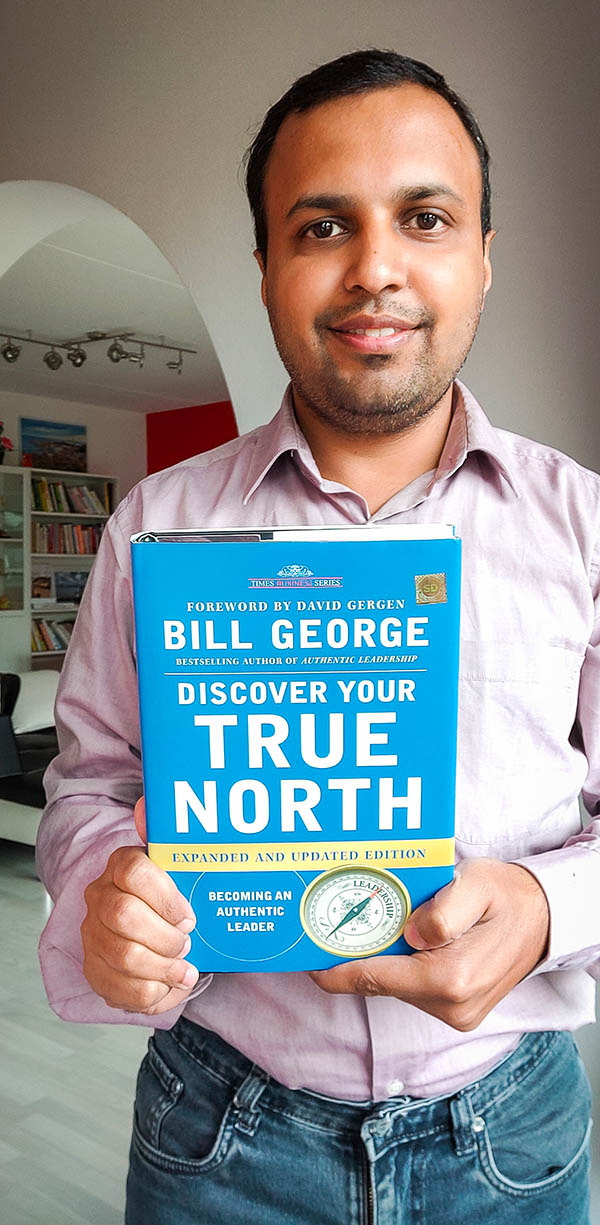
    Discover Your True North by Biill George (2007) is one of my all-time favorite leadership books. This book can help you discover one’s inner compass, develop authentic leadership skills, and uncover your values. It aids in becoming a better leader by keeping you on track and staying grounded.

    Finding Your True North

    The author of True North, Bill George interviewed 125 leaders, only to find that they are not very different from everyone else. He found that they know what the right issues are and give importance to them first. They focus on their True North – their inner compass that guides them to better hone their authentic leadership skills.

    1. Your own life story can inspire youDiscover Your True North - Bill George

    Leaders know and understand that their own life stories have true value. They learn from these experiences. A true leader is genuine, true to his beliefs, and uses his own experiences to motivate others. The key events in one’s life can be a guiding star to find one’s True North.

    Case 1: Howard Schultz, founder of Starbucks. Personal experience and memories of his father carried him along the path to authentic leadership.

    Case 2: Reatha Clark King, former president of the General Mills Foundation. Her struggles as a poor black woman from Georgia in 1940, showed her the way to create opportunities for the poor and to overcome racial and gender discrimination.

    2. Losing sight of your inner compass

    Money, success, acclaim, and rewards can lure leaders astray and lose sight of their inner compass. Bill George suggests that there are five archetypal leaders who get derailed from their path – 

    1. Imposters
    2. Rationalizers
    3. Glory seekers
    4. Loners
    5. Shooting stars

    Case 1: Phillip Purcell, the former CEO of Morgan Stanley. A true imposter archetype used manipulation to climb up the corporate ladder, only to lose his credibility and many talented employees. 

    3. It’s not about how you lead, but about who you help succeed

    Some leaders expect their followers to ‘follow their footsteps’. However, it’s not about gathering supporters to help you get ahead in life, but about motivating others to do their best to succeed and about realizing the true purpose of one’s leadership. Such realization often leads leaders to understand their greater calling through triggering experiences.

    Case 1: Oprah Winfrey’s pivotal interview with Trudy Chase. The interview was a transformation that led her to understand her true purpose in life – to help others along their journey to success.

    Case 2: Steve Rothschild, Vice President of General Mills. Dissatisfied with his leadership skills, he left his position to answer his true calling – helping underprivileged people become financially self-sufficient.

    4. Self-awareness guides the way

    Self-awareness keeps a true leader on track and helps in understanding shortcomings. You must know yourself, understand your strengths and weaknesses, and align them with your capabilities. A true leader can build strong teams with employees who have the skills that he lacks and learns from them. 

    Case1: Bruce Chizen, CEO of Adobe. He used his capabilities and skills to succeed in a role that he felt insecure about.

    Case 2: Ned Barnholt, former CEO of Agilent. He built his team with financially competent team members knowing he lacked accounting skills.

    Self-awareness has a downside too. It can be a blind spot for many leaders.

    Case 3: David Pottruck, former CEO of Charles Schwab. Lack of self-awareness led to others perceiving him as self-serving despite being a hard-working CEO. He had to work hard to face his shortcomings and change perceptions.

    5. Guiding principles and values to align with leadership

    Values and principles, along with self-awareness guide leadership. If a leader has firm values and principles, he will establish authentic leadership skills.

    It is always easier to stick to values and principles in easy times. The challenge is to stand by them even when careers are at stake. It is under extreme pressure that these values will be truly tested and could undergo metamorphosis. 

    Case 1: David Gergen, Presidential Advisor to Richard Nixon, Gerald Ford, Ronald Reagan, and Bill Clinton. Even at a time where his entire career was at stake, he did not stray and stood by his principles.

    Case 2: Narayana Murthy, Founder of Infosys. He stuck to his values of honesty and ethics and saw success without bowing down to corruption.

    6. Inspiration, purpose and, motivation

    Self-aware leaders have a purpose and a goal that is driven by values and principles. Though focused, and fuelled by their capabilities, without the right motivation even the best leaders can only get so far. Authentic leaders go beyond and dig deep into their life experiences for the inspiration to find their true north.

    Case 1: Bob Fischer, Chairman of The Gap. His concern for the well being of the environment was triggered during a fishing expedition on the Feather River that led to him joining the Natural Resources Defence Council (NRDC).

    Discover Your True North - Bill George

    7. The importance of a support system

    Whether it is a mentor, a support group, close relationships with supporting teams, or even close friends and family members, leaders understand that a solid support system is necessary. They understand that it is essential to nourish relationships. They know that their support system is not for making them feel good about themselves, but for challenges with a little bit of tough love.

    Case 1: Dave Dillon of Fry’s Supermarket. He found a mentor in Chuck Fry, the founder of Fry’s Supermarket after Chuck Fry himself decided to walk Dave through a Fry’s Store and hand priceless titbits of experience.

    Case 2: Bill George, the authors of the book, finds that his every Wednesday support group of 30 years is one of the most important sources of the most honest feedback.

    8. Staying grounded and being always integrated 

    True leaders know that they need to integrate their personal and professional life and be the same person at both places. One can be grounded by remembering one’s humble beginnings even during the high points in life. True leaders find a base point where they can return to strike balance and reclaim the perspective of their true goals.

    Case 1: Kris Johnson, former head of global business Medtronic. At the pinnacle of her career at Medtronic, she left and joined a mid-sized venture capitalist company because she was spending too much time away from her family. An essential sacrifice to strike balance.

    Case 2: Akshatha Murthy, Daughter of Infosys CEO Narayana Murthy. She finds her base point in her hometown, Bangalore. She returns regularly to meet her old friends and family to keep grounded.

    Conclusion

    There are many facets to becoming a truly authentic leader. All the great leaders of the world have their inner compass in focus that is guided by their firm values and principles, a sure sense of self-awareness, intrinsic motivation, a strong support system, and a keen sense of grounding.

    Tapping into these facets can make you a truly authentic leader!

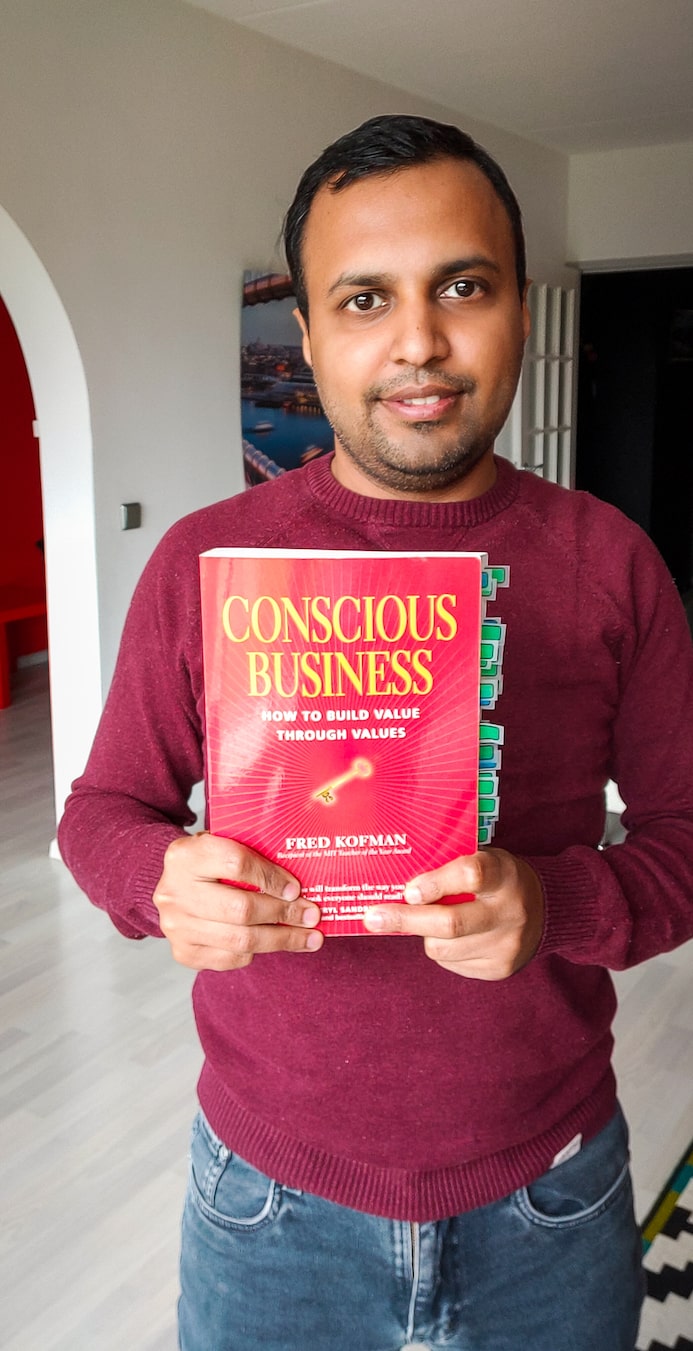
  • Fred Kofman Shows A Different Way of Doing Business – 3 Key Learnings from the book ‘Conscious Business’

    The author of this book, Fred Kofman serves as the Vice President of Executive Development of LinkedIn. As a part of one of his workshops on LinkedIn, he spoke to professionals around the world on ‘Conscious Business’ and seeing the excellent response, went on to write a detailed book on it.

    This book is a guiding light to anyone entering the corporate world, climbing the corporate ladder, or for business leaders and resonates with our times when we don’t associate working with true living and fulfilling our purpose.

    It brings us back to our roots, when we took decisions not just from our mind but also from our heart.

    Conscious Bussiness : How to Build Value Through Values shows us how to do work that our conscience would approve of and would add some real value to society at large.

    The author believes that conscious business is one made from your passions and inner beliefs and aligns well with your values as an individual and as a company. He defines a good business person as one of integrity.

    Conscious businesses attract people and enjoy a loyal customer following for years. More than just aggressive marketing, it is about connecting with the customers on a deeper level and understanding their needs.

    Here are 3 key learnings from this book:

    1. Unconditional Responsibility

    ‘Being’ rather than ‘doing’ is what makes a good leader. A conscious business leader encourages his/her team members to think responsibly by first acting on principles of unconditional responsibility and setting an example.

    When you personally feel responsible for everything happening around you and not just expect and blame others for inefficiency, it motivates the entire team to work as hard as you in meeting the business goals. A good leader reflects on his/her actions and encourages everyone to do that. It is the only way we can avoid mistakes and learn from them.

    Listening to others is also an essential attribute of leadership. If there is a friendly and flexible culture in an organization then the smallest of problems can be solved at the root level before they become serious problems for the whole organization.

    Unconditional responsibility also means that employees can always depend on the leader in times of crisis, the leader should be the driving force to take the company out of such dire occasions and not be someone who may just further delegate work and not participate in the happenings at all.

    2. Impeccable Commitments and Managing Emotions

    All actions should be accountable in an organization. A conscious business emphasizes on the need to stick to commitments and deliver results.

    Commitments should only be made if they are achievable and the people making them are fully invested in them, and not just for appearances’ sake. The company should see and ensure if sufficient time is there to meet them so that employees are not rushed so much that they get exhausted trying to meet the commitments and compromise on the quality of the work.

    The book also talks about managing our emotions in the workplace. Self-awareness and self-acceptance are the first steps to manage our emotions. It is possible that sometimes things will bother you which need not be addressed immediately and which can be solved by just being aware and conscious about our feelings.

    The book also says that even our rational decisions are influenced by our emotions and we should not keep suppressing our emotions. If one feels that an emotion is serious enough to hinder your work, one should go ahead and discuss it with leaders in the company.

    A good leader would understand and empathize with you and would help to reduce your stress. Nothing should be more important to a company than the employee’s well being and longevity in the company. 

    3. Authentic Communication and  Unflinching Integrity

    Fred Kofman, the author of this book, talks a lot about how good communication really bridges the gaps in organizations and provides a healthy work environment. Work is like a second home and what makes a home – a safe place where you can share your feelings with your family. 

    You should be able to do that in the workplace and the onus of that lies on the leaders. If such an environment doesn’t exist, one must not hesitate to express their ideas and inputs which they feel will help the company.

    In all times, integrity is the crucial element of conscious businesses. The ability to stick to our values is often rare, with the rampant corruption and frauds that happen in business, like the Enron scandal or the recent Volkswagen emissions scandal. The companies that follow unlawful or unethical business practices can make a profit temporarily but end up being sued and losing in the long run.

    Consumers today are smart and cannot be fooled easily. A bad reputation can break a successful business empire and no marketing efforts would be able to bring it back after committing unethical practices. Customers today want to be associated with companies that share and stand for their own values.

    The book also teaches us to embrace humility and have patience.

    The 12 Transformations On The Way to Conscious Business

    The author Fred Kofman shares the below 12 transformations which anyone can take to take themselves and their organisation towards being a Conscious Business.

    1. From blaming to owning: stop acting like a mere victim of circumstances out of your control and take charge of your life. (Responsibility)
    2. From winning to meaning: stop pursuing only competitive goals and realize that happiness comes from pursuing a noble purpose through ethical means. (Wisdom)
    3. From knowing to learning: stop trying to prove that you’re always right and open up to new possibilities. (Humility)
    4. From judging to understanding: stop seeing people through your mental filters and put yourself in their shoes. (Compassion)
    5. From avoiding to confronting: stop suppressing uncomfortable information and face reality. (Courage)
    6. From pleasing to truth-telling: stop altering your story to be liked by others and start telling the truth to be liked by yourself. (Honesty)
    7. From controlling to considering: stop telling people what to do and take into account what they want to do. (Respect)
    8. From taking to trading: stop negotiating win-lose and look for ways in which everybody can be better off through an exchange. (Creativity)
    9. From defaulting to delivering: stop defrauding your creditors and honor your promises unconditionally. (Integrity)
    10. From indulging to investing: stop seeking immediate gratification and postpone pleasure for the sake of happiness. (Discipline)
    11. From complying to committing: stop obeying as if you had no choice and choose to do what you do fully. (Commitment)
    12. From bossing to leading: stop managing people through external rewards and punishments and inspire them with a dignifying purpose. (Vision)

    Fred brings leadership language to a level I’ve never seen before. There are examples of dialogue between people with competing priorities which are very practical and show the principles in the book being applied. The book is well-grounded cognitively, emotionally, and spiritually and transcends the business world. Conscious Business provides the principles, practices, and tools to become a real leader, both inside and outside of work.

  • 5 Negotiation Lessons From Never Split The Difference (Even If You Think You Are Not Good At Negotiating)

    Negotiations are everywhere. They don’t just take place in courtrooms and board rooms. Negotiations also take place when we want our children to spend less time watching TV or try to get a business partner to see our point of view. We are continuously negotiating in life. 

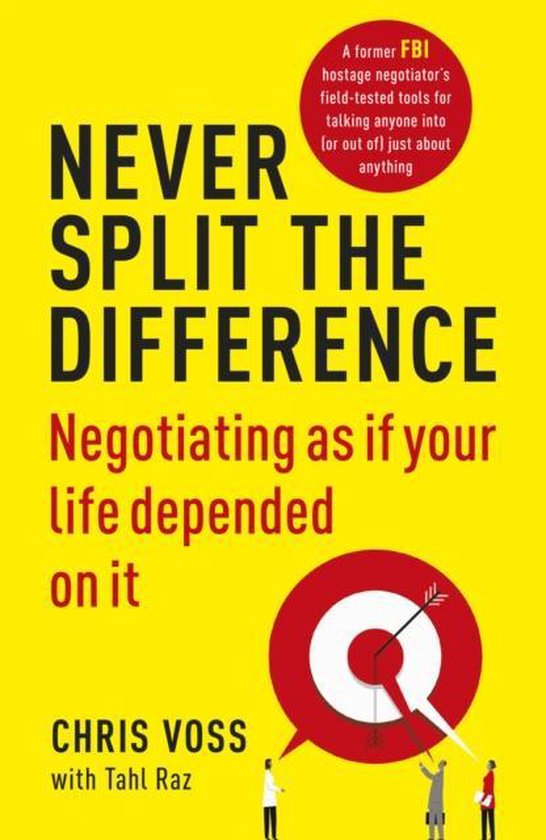
    Never Split The Difference (2016), authored by Chris Voss and Tahl Raz is extensively based on Chris Voss’s experience with negotiation in the FBI. The book highlights many practical skills one needs and can learn for successful negotiation in all walks of life.

    What Is Negotiation?

    Negotiation begins with wanting a desired specific outcome. When two or more people need something from each other, negotiation takes place. But how does one master negotiation and apply it to every aspect of life? 

    Convincing others and dealing with human emotions is an art that needs practicing and developing over time. It requires more than keen intellect, rationality, and logic. The challenge arises because human beings do not make decisions rationally. We are known to act spontaneously and unpredictably due to our primitive instincts and emotions.

    Psychologist Daniel Kahneman’s and economist Amos Tversky’s extensive research found that (contrary to earlier belief stating that humans act in a rational manner and to their own advantage) humans are predisposed to cognitive biases, leading to subconscious irrationalism. They derived more than 150 biases that could affect negotiation abilities due to the complexity of the human mind. 

    In short, all of us make decisions and negotiate based on our emotions much more than we realize. That is why it is very difficult to negotiate with people using only the facts. Chris Voss shows us in his book that everyone, regardless of whether they are your colleague or a bank robber, has a human desire to be heard, to belong, and to feel safe and important.

    Below are 5 of my biggest negotiation takeaways from the book :-

    1. Build Trust & Rapport To Get Information

    To be good at negotiation, one must be adept at procuring accurate information. Without having enough information about the opposite person or the situation, one is likely to lose. Moreover, new information can completely change the equation, therefore one must be able to process the new information and play their cards accordingly.

    To gain more information, a negotiator must gain the opponent’s trust. This must be done tactfully by building rapport and getting the opposite person to divulge information through empathetic conversation rather than interrogative methods.

    The author worked with 24 years with the FBI and was the main kidnapping negotiator for many of these years. Chris Voss discusses a 1993 bank hostage case where the robber fed them wrong information. He informed the police that he and four partners were in the bank, when in fact he was alone. His partners robbed an ATM, while he took the bank hostage and confused the police.

    That’s why you need to establish rapport with your counterpart. One way to do that is to get the other party to talk a lot. As they do, you’ll be able to figure out what they want.

    2. Listen, Mirror, Listen, Repeat

    In negotiations, listening skills are essential. When one pays attention to what the opposing party is saying, it makes the opposite party feel important. Employing ‘active listening’ is important to show empathy and connect at a personal level.

    A technique called mirroring (simply repeating what the person says but with an inquisitive tone) builds rapport. The opposite person feels a sense of importance and makes them feel that their needs are understood and this creates trust. Mirroring helps trust-building and getting vital information from the opponent that the negotiator can use to his advantage.

    In the previous 1993 bank robbery case, when the robber divulged that his driver had bolted, the author kept mirroring to the robber, “Your driver was chased away?” This led the robber to divulge vital information that enabled Voss’ team and the NYPD to apprehend the driver, helping the case.

    The adversary is not the person across the table; the adversary is the situation. — Chris Voss

    3. Use Your Tone of Voice As A Tool

    During negotiations, our tone of voice and body language plays a vital role. The tone of voice that a negotiator uses can determine and guide the direction in which the negotiation heads. Using a slow and soft, but deep voice (also known as the Late-night DJ Voice), seems reassuring to the opponent, and helps the opponent to calm down and in turn share titbits of information. 

    The author, while taking over the bank robbery case from his colleague used this voice to calm down the robber. It prevented the robber from getting unnerved by the change in negotiators and talk further.

    However, different situations need different tones. Unlike negotiations with criminals, closer-to-home situations (like negotiating with a partner or children) require a playful and positive tone, that emanates an easy-going attitude, empathy, and encouragement.  Smiling is an easy way to disarm the opponent and make any conversation more pleasant. When one smiles while talking, the pleasantness of the smile extends naturally to the tone.

    4. Label Emotions To Force Empathy

    A good negotiator understands that the opponent’s emotional state is valid and real for them, even if you don’t agree with it. Essentially, one should try to look at the situation from the perspective of the opponent with empathy. While one does not need to agree with the opponent, using the technique of labeling – telling the opponent the exact emotion they feel and that you understand them. Labeling builds trust and makes the other person listen and communicate better.

    A classic example of labeling can be seen in a 1998 case, when four fugitives, armed, were hiding in an apartment. The author told them that he understood what they were feeling (afraid, scared) and understood their worry about going back to prison. After a few hours, the fugitives surrendered. Through labeling, the author had managed to calm them down enough to think about their situation rationally.

    “Unexpressed negative emotions never die. They fester like an infection” — Chris Voss

    5. Never Rush, Never Push People, Never Compromise

    It is natural to want to reach the end of a negotiation soon. However, rushing through negotiations can result in clouded judgments and a dissatisfying result. When an opponent sets deadlines, good negotiators take their time, digging deeper for more information. It is crucial to remember that most deadlines are relatively random and flexible.

    Negotiators should also avoid accepting a bad deal in haste and should never compromise. This is also known as splitting the difference. Often, deadlines and demands do not necessarily reflect the exact needs and thoughts of the opponent. Therefore, giving in or compromising might not always solve the issue at hand. 

    For example, if a kidnapper has taken a politician as a hostage and demanded a ransom, he might not necessarily be after money. If his intent is to make a political impact, there is no telling if compromising or accepting the terms will lead to release.

    In conclusion…

    One has to be patient during negotiations. The key is to understand the opponent’s needs, situation, and thought process. Negotiators should build trust and listen with empathy. They should use a calm yet empathetic tone to build trust. Finally, never compromise and split the difference, as there is usually a better way which can work for both parties better than the compromise.

  • Descartes’ Error by Antonio Damasio

    Our brain can be perhaps categorized as one of the most important organs in our body. Yet, it is, unfortunately, an organ that we know very little about despite the vast amount of research that has been conducted on it. Since the time of the ancient Greeks, people have talked of mind and body, and reason and emotion as dualities, different, without any dependencies. It was the French philosopher Rene Descartes, after whom the Cartesian Dualism was named.

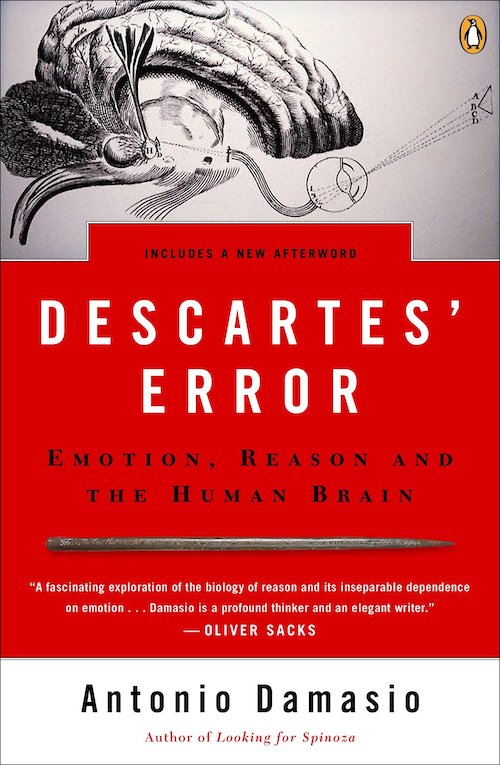
    The concept of mind-body and reason-emotion dualism cannot stand up to scientific reasoning today. This is because unlike 19th-century belief, mind, body, reason, and emotion are inextricably linked. Descartes’ Error (1995) by Antonio Damasio attempts at helping us view and understand the brain in a different light, and how these are all intimately linked.

    Scientists have been studying the varied consequences of brain damage in order to understand how it works, and mapping the exact functions of the brain’s different parts, much like how an engineer dismantles a machine part by part to understand how each part functions.

    Experimental neuropsychologists and neuroscientists have delved deeper into brain studies by examining different case studies, and have made remarkable discoveries, enabling us to know a little more about the vast abyss that our brain is.

    The Case Of Phineas Gage 

    Phineas Gage was a railroad construction foreman in the 19th century, working in Rutland & Burlington Railroad Company in Vermont. Known as a diligent and dependable, and efficient employee, he had one of the most demanding, delicate, and dangerous jobs – to set-up demolition explosive charges. 

    In 1948, Gage met with an unfortunate accident where a sudden explosion sent an iron rod through his skull. The slender rod pierced his left cheek and passed through from the top of his head, landing a few feet away. Shockingly, he survived the accident, as well as was able to sit up a few minutes later and talk. Gage lived for more than a decade after the accident.

    After recovery, while gage showed normal brain functioning in areas of intelligence, cognition, perception, memory, and language, according to his friends, he was no longer the same person he was before. He lost respect for social conventions, started swearing, lying, ignoring sound advice, and became impulsive.

    He never seemed to be able to stick to any goals or follow a plan of action. He would come up with a number of schemes, only to drop them off mid-way. Sadly, Gage lost his job and finally worked as a sideshow in a circus.

    Though scientists did not have Gage’s brain to study, his skull was preserved in the Harvard Medical School. Advanced simulation technology has enabled doctors and scientists to replicate the trajectory of the rod in simulation. They found out that in probability, the ventromedial prefrontal cortex (VPC) of Gage’s brain was damaged in the accident.  

    Elliot: A Real-Life Study

    Elliot (a pseudonym given by the author), another person who suffered damage to the VPC, though due to a brain tumor, like Gage, was a well-to-do, happy businessman, and a father. His symptoms were similar to that of Gage’s – normal to above average functioning of language, abstract moral reasoning, facial recognition, visual perception, memory, and general intelligence, etc., yet displaying questionable practical reasoning skills.

    He struggled to prioritize his tasks in a day, couldn’t make sound business decisions, and spent his time doing work that was absolutely irrelevant. He, like Gage, lost his job, got caught in ill-fated and ill-advised money-making schemes, and ended up unemployed, divorced, and bankrupt. 

    There’s More To Practical Reasoning Than Just VPC 

    Both these cases, along with 12 other cases that were studied by the author and the author’s colleagues confirm the fact that damage to the VPC thwarts practical reasoning abilities. However, considering that there is a difference between correlation and causation, one cannot say that disability in practical reasoning is caused by damage to VPC and the VPC alone.

    While functions are assigned to different parts of the brain, different parts do not function in isolation. Therefore it is possible that damage to two different parts of the brain can result in similar symptoms as that of damage to the VPC; for example, any damage to the anterior cingulate and the amygdala (parts of the limbic system responsible for processing emotion), or damage to the somatosensory cortex responsible for the visceral states such as sensations of the gut, heart, skin, lungs, etc. and functions such as touch, temperature, pain, joint position.

    Therefore to put in an equation –  

    Practical reasoning = the VPC + the limbic system + the somatosensory cortex.

    However, it’s not as simple as arithmetic. That’s because scientists do not know how these big 3 functions together to bring about practical reasoning. 

    Additionally, how do physical sensations and emotions add into the equation of practical reasoning? 

    The author found the answer in an “Aha!” moment during his hypothesis and research on Elliot. He noticed something funny in the manner in which Elliot narrated his life during many of their sessions. Despite his life story being a sad one, filled to the brim with divorce, financial problems, and losing his job, he never displayed any emotions such as sadness, grief, regret, at all. He didn’t show any annoyance either at the endless questions asked either. The author found out that Elliot responded to everyone and everything flatly, without any display of emotions. While he did have bouts of anger, he would go back to being neutral in an instant.

    To study this further, Elliot was subjected to another experiment where he was shown strong emotional pictures, like those of burning houses, injuries. That is when Elliot himself flatly declared that he did not feel any emotions any longer. It was an observation that was seen even in the 12 other patients with damage to the VPC.

     Therefore, in addition to deficits in practical reasoning, they also found flat emotions a symptom in VPC damage.

    How Emotions Work Vis A Vis The Big Three

    With this new information, the author found a correlation between emotions and practical reasoning. It seemed counterintuitive, as, with emotions out of the way, practical reasoning should have thrived.  However, emotions have a lot more value than we think.

    Emotions can be divided into  – 

    • Body State, and 
    • Emotional Body State

    The Body State is the change that a person has inside their body, for example, the joints, internal organs, muscles, etc.  This information is passed on from the brain to the organs and back via electrical and chemical signals.

    The Emotional Body State, on the other hand, is the sensation that we feel in our body when we experience feelings, for example, relaxing muscles, flushed face while feeling happy and blanching, sweating, and nausea when scared.

    Additionally, one can also experience mental images of something that could trigger the emotional body state. These perceptions are representative of anything, such as the sound of a friend’s familiar voice, the memory of the taste of something you ate with the friend, etc., that can trigger an emotional body state.

    When we combine these mental images, the body state, and the emotional body state, we get an emotion. These feelings – positive or negative – are the brain’s way of understanding if something’s bad or good. We call these bad or good emotions.

    In context to Elliot’s life after the tumor and the VPC damage, his emotions were diminished. However, he still experienced emotions such as anger, sadness, fear, happiness, and disgust in flashes, because these are primary emotions that are hardwired into humans from birth.  

    To illustrate let us see how emotional response and practical reasoning take place in situations of fear, and how the big 3 – VPC, Somatosensory cortex, and the limbic system work in tandem.

    A person suddenly sees a slithering snake ahead of him. His brain relays the information of the ‘slithering motion’ to the limbic system, which then registers it as danger. It signals to fire the fear response via a series of biological and neurological changes that shift the emotional body state to fear, and the person experiences cold sweat, shallow breathing, and heart-pounding.

    Next, based on these body states, the somatosensory cortex analyses the situation as dangerous, and signals the body to experience the fear and the person feels scared. This triggers action and the person runs away.

    In this situation, we can see that the VPC isn’t anywhere in the picture yet. It is the reason why people like Elliot can still experience primary emotions. Secondary emotions, being more complicated, are a different matter. 

    The More Complicated Secondary Emotions

    Secondary emotions are developed over time and experiences. These are dependant on the VPC. To understand how we take the same example as above.

    The person sees the snake but is a herpetologist. The snake is a harmless and rare species that delights the person. The delight is a secondary emotion.

    We already know that emotion is a mixture of the body state and the emotional body state, and the mental images that are triggered by these two states. To cite the example above, the images of the snake, the perception of the sound of the slithering, etc. are at play, possibly triggered by previous experiences with snakes, or by reading about them in a book. 

    Our experiences throughout our lives get collected in our brains and thus we are able to make associations with the millions of things we see and feel daily. For example, a memory of a favorite teacher teaching a person about snakes started the association of snakes with a feeling of happiness. Next, a pet store visit with his dad in the past would have made the association stronger. Finally, the experiences as a herpetologist might have been the full blast that made the person so delighted on seeing the snake.

    The somatosensory cortex keeps us aware of the emotional body state whereas the limbic system creates that body state. However, it is the VPC in the prefrontal cortex that ties the two with experiences of secondary emotions.

    The Final Clue To Practical Reasoning

    The big three – somatosensory cortex, the limbic system, and the VPC – come together to make humans experience their secondary emotions in full glory. Yet, the question that still remains is how is practical reasoning affected by secondary emotions?

    In Elliot’s case, during one interview, the author asked Elliot to choose between two likely dates, a few days apart, for their next appointment. Elliot took out his planner and started to enumerate all the possible pros and cons of the two dates. The author did not stop Elliot. He wanted to see how far could Elliot go. After about half an hour, and after considering factors right from other scheduled appointments to the possible weather on those days, the author proposed one of the two. At this, Elliot simply replied, “Fine.” And then left.

    The author noted that decision was not important to Elliot at all. It was just that he was unable to make up his mind. While Elliot was able to think about the choices given to him, he was unable to make the choice, which was all about practical reasoning. 

    If there is a very important consideration to make when given choices, half an hour of thinking seems considerable, however, in trivial situations, it seems like a complete waste of time. Which is exactly what Elliot was unable to get.

    This mystery, of how practical reasoning is affected by secondary emotions, was called the somatic marker hypothesis. The somatic markers are special types of secondary emotions that help in decision-making. Essentially, the secondary emotions – positive or negative – that one feels while trying to arrive at a conclusion help in steering the decision towards either choice.

    When the secondary emotions are negative, we have a ‘gut feeling’ making it easier to take the other choice. However in Elliot’s case, because the somatic markers were missing, he got lost in the possibilities he had to choose from, simply unable to decide because he couldn’t ascertain the positivity or negativity of his secondary emotions.

    Conclusion

    Emotions play an essential role in one’s ability for practical reasoning. thus people are able to make decisions by weighing choices and reasoning on options. Practical reasoning depends on the ability of the brain to read and assess the emotional body state. Therefore, the brain and the body, and emotion and reason all depend on each other to help us make decisions.