brain

  • 5 Research Backed Reasons Taking Regular Breaks Can Help You Get More Done

    If you have a lot to do, take regular breaks. Find out about the counterintuitive advice of taking breaks to get more done.

    Are you surging ahead in life? Is your life becoming too fast for comfort? Why not take a break?

    What did I just say?

    Do you think you have a lot more to achieve and you just can’t afford to take breaks? Does this sound like your life?

    If this looks like your life, you are not alone. Many people find it difficult to switch off from their daily activities. They feel so busy achieving their goals and targets that they do not have time to have a break.

    I am afraid they are grossly mistaken. Research has shown that a break can do wonders to increase your efficiency and productivity. Breaks have a direct and positive relationship with productivity as well as well-being.

    In this article, I will share the 5 benefits of taking regular breaks and 5 ways to take them.

    Understand Science Based Facts About Emotions and Ease Your Shoulders of Their Burden
    Too Much To Do, Take a Break?
    .

    Benefits of Taking Regular Breaks

    .

    1. Helps Our Brain To Focus Better

    Research shows that regular breaks help us to focus; thereby, allowing us to process information in a better way.

    Our brains get tired after continuous work, and taking regular breaks helps our brains to relax. Our brain demands time to rest, regroup, and gather its thoughts. We are then able to focus better when we resume work.

    For example – you do yourself more harm than good if you skip your lunch when you are in the middle of work that demands intense focus. It’s just like how an athlete allows his body to rest after an intense training session.

    2. Helps To Generate New And Creative Ideas

    Research has shown that when we take a break, our brain doesn’t just stop functioning. Instead, it is busy digesting different ideas and making connections between them.

    Have you ever solved a problem, or got a new idea while taking a shower or another non-cognitive activity? That is because our brains make sense of our experiences when it gets a break.

    A brain at rest doesn’t mean an idle brain, and that is why we often get new and creative ideas during a break.

    3. Healthy For Our Mind Snd Body

    Today’s fast-paced work culture takes a heavy toll on our mind and body. Work is the most prominent source of stress and we often run the risk of burnout, without even realizing it.

    Constantly working and not moving much puts us at a higher risk of several diseases like heart ailment, diabetes, and depression. Taking regular breaks to move around can lead to increased energy levels and improved health.

    It also decreases exhaustion by returning our psychical and mental systems to their base levels. Besides, a relaxing break helps a great deal to reset our mood. Thus it reduces stress and promotes our wellbeing.

    “All that is important comes in quietness and waiting.” ― Patrick Lindsay

    4. Helps Us Make Better Decisions

    A well-deserved break allows you to have a good look at the bigger picture and make better decisions. When you are too engrossed in a complex task and your brain gets tired, you are easily distracted from what is important, and you tend to procrastinate. In a state of busyness and overwhelm, you also tend to make poorer decisions.

    When you take a break, you give yourself a chance to reflect on your priorities and goals. Your motivation goes up and you can assess whether you are giving due importance to the right tasks/projects. This will help you make better decisions.

    5. Help Us Do More And Be More Productive in the Long Run

    All of us want to be more productive at work, right? Research proves that taking breaks refreshes our brains, re-energizes us, and improves engagement levels.

    All of the above directly lead to higher productivity over the long term. You might think you can do more in a long day, but you can’t sustain that pace without risking burnout or other health issues. Taking regular breaks and reducing your work hours will make you more likely to sustain that pace for the long term.

    Taking A Break Beside a Canal in Amsterdam
    The Canals in Amsterdam Are My Favorite Location To Take A Small Break
    .

    How To Take Breaks?

    .

    As we have seen, taking small breaks regularly can be of immense value to your health and productivity. Now let’s take a look at 5 different ways we can do that despite our busyness:-

    1. Take a Walk in Nature

    Take a stroll amidst nature. One recent study has shown that it is a wonderful remedy to calm your mind. They call it a “nature pill”.

    By nature, any green area would do – a small park in your neighborhood, or if you have a water body (river, lake) nearby. Personally, I love walking in Amsterdam because the presence of water eases off any stress I might have.

    2. Pomodoro Technique

    This is a method of time management developed in the ‘80s. It breaks down work into time intervals (usually 25 minutes), separated by a short break of 5 minutes. These intervals are called Pomodoros. One can extend the break duration to 15 or 20 minutes after about 4-5 Pomodoros.

    You can give it a try. You may download any Pomodoro timer app on your smartphone and split your workday into short bursts of Pomodoros. Do ensure though that you step up from your desk and do something completely different for the break duration.

    3. Notice What Is Going On Around You

    Being mindful of little things going around you is another way to give your cognitive brain a break. Take a few deep breaths and relax your mind and body.

    Notice the faces of people around you – the smiles and the frowns. Notice the different sounds you can hear – birds chirping, people walking, of a printer or a coffee machine, etc.

    Doing such mini-meditations for even a minute or two has been shown to be helpful.

    4. Take A Small Nap

    A small nap of 10 to 20 minutes during the day is one of the proven ways to rest your brain and increase not just your health and well-being, but also your productivity.

    A Small Nap Can Help Improve Productivity
    A Small Nap Can Help Improve Productivity

    5. Engage Your Right Side of The Brain

    Most of our cognitive tasks which involve thinking and logic happen on the left side of the brain. Another way to give our brains a break is to do something that engages the right side of the brain – which is more creative.

    Drawing, painting, listening to music, or just imagining and visualizing are some of the ways to engage our right-side brain and give our thinking (right side) brain a break.

    .

    Resources

    1. 12 Quick Mini-Meditations to Calm Your Mind and Body
    2. Why Your Brain Needs More Downtime
    3. The Overwhelming Benefits of Power Napping
    4. How to be Happier and More Productive by Avoiding ‘Decision Fatigue’
    5. Is It True That “Movement Is Medicine”?
    6. To Become a Better Writer, Be a Frequent Walker
    7. Research Reveals How to Take a Better Break

  • Why Anger Is The Most Compassionate Human Emotion? And 3 Ways to Use it Productively?

    “Anger is the deepest form of compassion,” poet and philosopher David Whyte wrote.

    Most people do not associate anger with compassion. In fact, at first glance, it looks and feels like the exact opposite of compassion. But as with most emotions, the more attention we pay, the more aware we can be of what our anger is trying to tell us. In this article, I want to present a different take on anger – seeing anger as the most compassionate human emotion. Taking this unusual perspective about anger can reveal a lot of useful insights. Let’s get started.

    On the surface, anger looks like an ugly emotion. The feeling of an intense fire that threatens to burn not just the target of the rage but also ourselves. We have all been through that. It is in those moments when we know we are going to explode, but can do very little to stop it — that we realize the energy of anger. Often we end up spending it destructively (shouting, hand waving, punching a wall).

    Every 2 weeks I share my most valuable learnings from living life fully in my Deploy Yourself Newsletter. Sign up now to download a workbook with 164 Powerful Questions which I use daily in my work and coaching. Allow these questions to transform your life and leadership.

    What is Anger?

    Anger is a natural human emotion. Anger is one of our most primitive biological responses, and everybody experiences it. Anger is a legitimate emotion, and there is nothing wrong with it. As my mom used to say, anger is our inability to deal with what we care about, and the vulnerability that comes along with it. We get angry when we don’t know how to react (to events around us) normally.

    A lot of people see anger as a negative emotion. I wouldn’t categorize anger as negative. Instead, anger can be our guiding light. It can be a mobilization force to deploy ourselves in the face of circumstances. Every time we can do that, it strengthens and helps us behave in a way we can be proud of. Seen this way, anger is a very useful emotion.

    Anger is very useful to avoid and navigate fear and threat when our survival is at stake. The human species would not have survived unless it had been for anger. I’ve never met a human being who doesn’t feel anger. Everybody gets angry at some point in their life. People might have different thresholds for anger. People might react to anger in different ways, but everyone gets angry.

    Anger from Psychological Point of View

    Anger is a secondary emotion. What that means is that it can hide more emotions behind it. For example, anger can hide frustration, sadness, or even grief behind it. Anger is also not a static emotion. Your anger can range from mere irritation, on the one hand, to rage on the other hand. Anger can be triggered suddenly or it can linger deep inside yourself.

    Physical Manifestation of Anger

    Everyone reacts differently to anger, but there are some common physiological changes associated with it. It causes our heart rate and blood pressure to go up, and we feel an adrenaline rush when we get angry. We get a sudden rush of energy and an impulse to react in a particular way – banging our fists, cursing, shouting, venting, throwing things, etc.

    Anger is harmful to your health. It causes stress and anxiety, and it can cause long term harm like heart attack and depression. It is not only harmful to our own health, but it is also harmful to people around us, and our relationships. In anger, we tend to lose control, and we can do things that we might regret later. If we look back in our lives we can all see moments of anger where people have left a trail of destruction behind them.

    Neuroscience Point of View

    The primary function of our brain is to ensure our survival. When it comes to emotions and how we operate on a day to day basis, our brain comprises of 3 partsthe Neocortex (the thinking brain), the Limbic System (the feeling brain), and the Basal Ganglia (the reptilian brain). The Amygdala is the deepest and most critical part of the limbic system. It is most commonly activated when dealing with intense emotions. It triggers what is called the fight or flight response.

    Research proves that when we are emotionally overwhelmed and experience a threat to our physical or psychological safety, our amygdala is triggered before our neocortex (the reasoning part of our brain) even knows about it. When this happens, the amygdala decides our behavior (the fight or flight response) and it is called an “Amygdala Hijack”.

    Anger Short Circuits Our Brain

    This is what happens when we experience physical symptoms like a racing heart, sweating palms, or a shaking body — even in situations with no physical threat. Our ages-old survival mechanism kicks off and makes us react to things primitively before the rational brain has time to think things over.

    This is one of the reasons emotions are good messengers but very bad masters. Our anger can tell us a lot about what we care about, but if we let it take over, it can short circuit the thinking part of our brain. When that happens, we react rather than respond to the situation.

    “The truth will set you free, but first it will piss you off.” ― Joe Klaas

    At the same time, just like any emotion anger can tell us a lot about ourselves. Anger has the power to clarify our thinking and reveal our moral lighthouses. But only if we are willing to listen. There are 3 ways we can use anger productively rather than let it destroy us and our relationships:-

    1) Listening To Anger Reveals What We Care About

    If we pause and reflect, anger can reveal what we deeply care about. For example – I once got angry at my manager. After reflection, I came to understand that the anger was not against the manager but against unfair behaviour. Once I realized that I was able to respond in a better way, and it revealed one of my deepest values to me – fairness and justice.

    The more attention we pay, the more we can be aware of what our anger is trying to tell us. Anger can be our guiding light and a force to deploy ourselves in the world around us in a healthy and productive way rather than destructively. As I mentioned earlier anger is a secondary emotion. It hides many emotions behind it, but we can look deeper and figure out what those emotions are.

    One way we can listen to what anger is trying to tell us is by separating facts from stories and assumptions which we might have made. Our minds can fool us easily. A thought comes into our mind after something happens, and we believe it to be true. In such moments, we can instead stop and validate each assumption which our mind is making before believing it. Whether it is true or not, or is it a story?

    Anger can show us the way ahead, and what needs to change. Because anger tells us what is not okay, what we should not do, or that a deeper investigation is required, about something which is bothering us.

    2) Anger Is An Opportunity To Practice Emotional Intelligence

    In the heat of anger, we stop listening. We are only burning in rage. But after the immediate impulse of the anger is gone, it is an opportunity to practice emotional intelligence. And as with all skills. It gets better with practice and time.

    Anger always comes along with a temptation to react. But seen another way, every time we get angry, it is an opportunity to express ourselves in a way that we can be proud of. Venting out in anger can certainly give us immediate relief, but we often end up damaging relationships and our reputation in the process. Not giving in to that impulse is an opportunity to practice emotional intelligence.

    You might think that when angry, you can’t stop yourself from reacting. And this is why you hate being angry. But the truth is that anger is not the culprit here. Instead, it is you who lacks the ability to understand, reflect, and act responsibly in the face of your anger. Anger provides us with an opportunity to use the energy of our anger productively. When we do so, we strengthen relationships and build a strong reputation backed by responsible behaviour.

    3) Anger is Love, and It Shows Your Commitment

    We often get the most frustrated and angry at those whom we love or care deeply about. The opposite of love is not hate or anger, it is indifference. So when we see people in love fighting, it is not that the relationship is going downhill. Instead, it is a sign that the relationship has a lot of care and sincerity that is often expressed in anger. To expect anger to not arise in love is to not understand love at all.

    You get angry because you care. You get angry because you love somebody, because you love a cause or because you love a certain value. You get angry because you want to reach an important goal or you see a possibility in the future. Something happened which violates that commitment you have to the person or to the cause or to the future goal. That is what makes you angry, and that is what we need to discover.

    Have you noticed that when you are angry, you cannot think of anything else? It is because anger brings tremendous clarity with it, and forces you to focus on the current moment. If we can honor our anger instead of denying it, we can usee its energy. This energy arises because we feel vulnerable in love. If we can see it for what it is, we can use the force of anger to enrich the love which is at the root of anger in the first place.

    Every time you are angry at someone you care about, take a moment to celebrate your commitment to the person or the relationship. Your response can change massively if you keep this commitment in mind in that moment of heat. Your anger is there to serve you and your relationships, but only if you are willing to pause and listen. You get angry because you love. Allow this love to strengthen the relationship rather than weaken it.

    Conclusion

    Understanding anger on a deeper level can be poetically beautiful. Once you learn to stop acting out impulsively and express your anger keeping love and care as the underlying commitment; you can channel it to nurture the relationship. We all feel anger, so in a way, anger connects us all. It is what makes us human.


    References

    1. Amygdala Hijack and the Fight or Flight Response
    2. How to Turn Your Brain from Anger to Compassion
  • Why Our Emotions Can Be Overwhelming? Learn the Neuroscience behind Emotions, and 5 Steps to Deal with Them Effectively

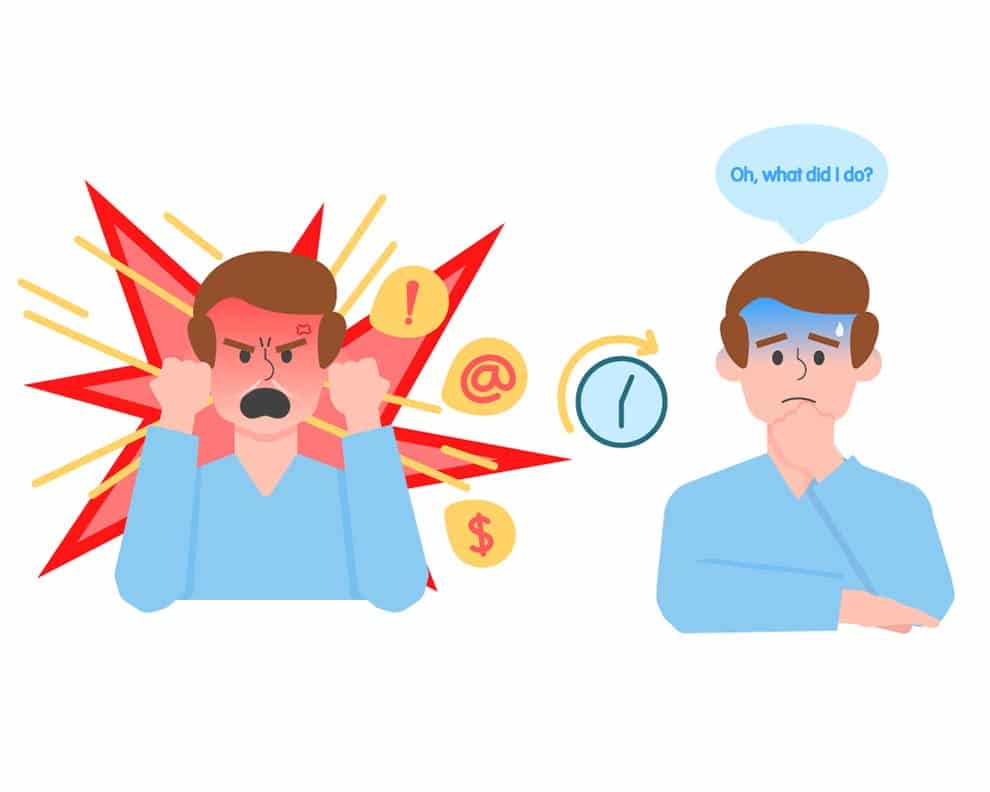
    We all have been in situations where our emotions have overwhelmed us. We all have done something in the heat of the moment that we regretted later. In such situations, our emotions can affect our ability to think and act rationally. We find ourselves unable to think clearly in such a state, and every passing second feels like an added burden. Why does this happen? What can we do to prevent it?

    Since emotions is a topic most people find difficult to talk about with others, it is very common for people to suffer alone in a state of emotional overwhelm. And when it gets too much, we often explode – saying or doing stuff which only makes things worse, and which we end up regretting later on. We all remember the Zidane’s head butt in the 2006 Football World Cup Finals in front of 28 million TV viewers. Zidane’s aggressive reaction got him kicked out of the game, France lost the match and the World Cup, and he later ended regretting up and apologizing for what he did.

    So what is it about emotions that can cause such reactions? And if everyone experiences this at some point in their lives, why is there no available literature or material which can be of help in such situations? It was to find an answer to this very question and to understand our brains better that I started a new journey (or exploration) around 2010. This journey has over the decade involved doing multiple trainings, reading hundreds of books, undergoing courses in psychology and neuroscience, and experimenting and trying out what I learned in my own personal life.

    Understand Science Based Facts About Emotions and Ease Your Shoulders of Their Burden
    Regret After An Emotional Reaction – We All Have Been There

    This article is an attempt to share what I learned about our brains and emotions in simple and easy to understand language, so that the next time any of us feel emotional overwhelm, we know what is happening inside our brain, and how to deal with it better.

    The Neuroscience Behind Emotions

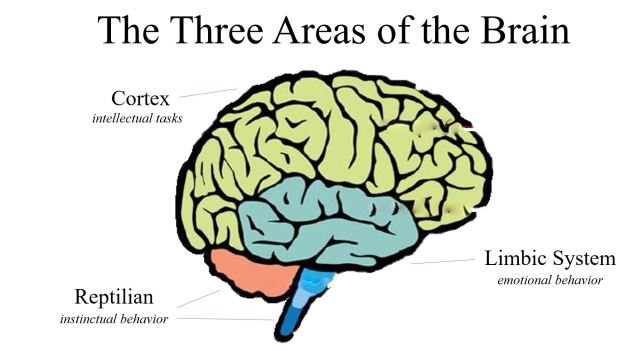
    The primary function of our brains is to ensure our survival. When it comes to emotions and how we operate on a day to day basis, our brain can be divided mainly into 3 parts. These three parts of the brain are:-

    • The Neocortex is the part of the brain where we think consciously and use reason to find our way around problems. When we make logical decisions about the pros and cons of a matter, we are using our neocortex. This is the biggest part of our brains, which is unlike other animals. In most other animals, the neocortex is either very small or completely missing. This is our conscious mind.
    • The Limbic System is the part of the brain which deals with emotions, behavior, motivation, memories, and sensory information. The amygdala (which we will come to later) is a part of the limbic system. The limbic system controls the functions necessary for our survival and self-preservation – both physical and psychological. All our emotions and matters of the heart have a lot to do with our limbic system. This is our subconscious mind.
    • Basal Ganglia is that part of the brain which is responsible for voluntary movements of our body which we don’t think consciously about – like our eye movements, how our internal organs work, and so on. For people with damage to their Basal Ganglia, it is difficult to control their speech and posture. When we instinctively know how to catch a ball or use a scissor, we are using our basal ganglia. It is our unconscious mind.

    Three Areas Of The Brain
    The Three Parts Of The Brain

    The Amygdala Hijack

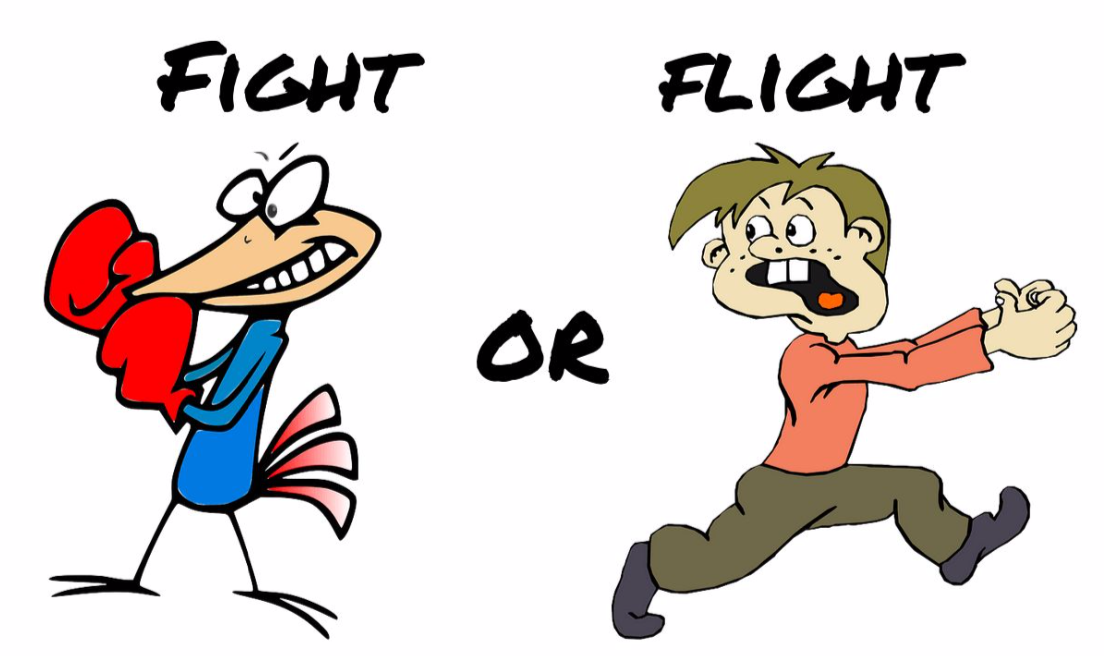
    The Amygdala is the deepest and most critical part of the limbic system. So much of our emotions and behavior are controlled by our amygdala that I am surprised this is not part of our elementary education. It is most commonly known for dealing with fear and triggering what is called the fight or flight response. Research says that when we are emotionally overwhelmed and experience fear (to our physical or psychological safety or to our identity), our amygdala is triggered before our neocortex (the reasoning part of our brain) even knows about it. When this happens, the amygdala decides our behavior (the fight or flight response) and it is called the “Amygdala Hijack”.

    This kind of immediate response triggered by the amygdala can be very useful when we see a tiger coming our way in the forest. It is the amygdala which makes us run without thinking rationally about the pros and cons of running. In those moments, you want to immediately react to ensure survival. The amygdala makes sure that happens. However, it is not only physical fear like seeing a snake or a tiger that can trigger our amygdala. Experiencing anxiety and surprise can also trigger our amygdala, even when there is no physical threat to our well being. In the world we live in today, our amygdala is mostly triggered to ensure our psychological safety rather than our physical safety.

    Our brains have evolved such that our emotions can provide us with what to do without us having to think about it. During an amygdala hijack, it takes over the brain and we immediately react without consulting the thinking part of the brain. It triggers the release of hormones like adrenaline (epinephrine) and cortisol. This is what happens when we explode in anger, or when we experience physical symptoms of fear like a racing heart, sweating palms, or a shaking body even in situations with no physical threat. This survival mechanism makes us react to things before the rational brain has time to think things over.

    This is one of the reasons emotions are good messengers (in the sense that they can tell us a lot) but very bad masters. Our emotions can tell us a lot about what we care about, but if we let them take over, they can short circuit the thinking part of our brain. When that happens, we react rather than respond to the situation, and the resulting action might cause us harm or regret in the future.

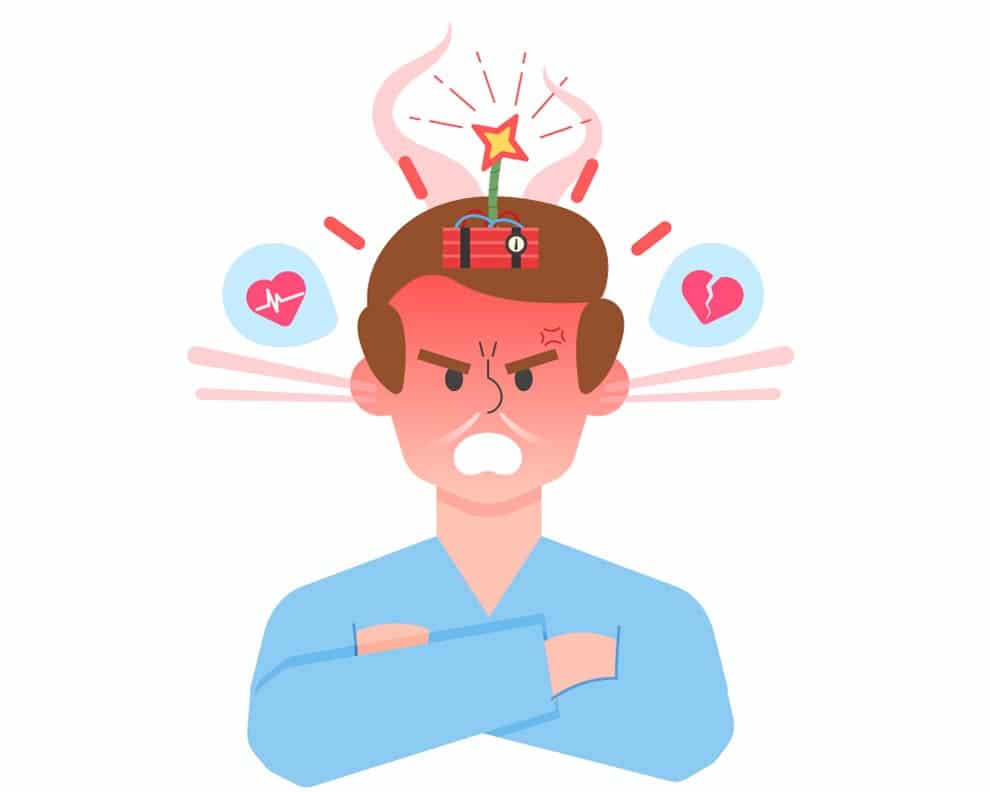
    Suppressing our emotions can cause a lot of damage
    Suppressing our emotions can cause a lot of damage

    Why Do Emotions Hijack our Behaviour and Actions?

    Our brain is always in the process of survival. This survival doesn’t necessarily have to be physical in nature, it can also be emotional. For example – We can experience intense emotions (and an amygdala hijack) when our identity gets hurt. It can happen when we hear something about ourselves which we don’t want to hear or discover some truth which was hidden from us for long. When this happens, we feel fear the same way as we would on seeing a tiger.

    With fear, a fight or flight response is triggered. This is why people fight and kill each other over football matches. This is why people have very strong arguments and express hate and anger over seemingly trivial matters. In all such instances, the reptilian part of our brain takes over and it tries to do its most important job – to survive. The amygdala cuts off the neocortex, which is what makes the human brain stand apart from other animals.

    Needless to say, this kind of living is very effective for surviving, but not so much for thriving in the modern world. It is very difficult to have effective conversations, deal with conflict, and engage emotionally with people around us if we see everything as a threat.

    The good news is that an amygdala hijack is temporary. It can feel scary and helpless, but there are ways to deal with it better. We can do so by understanding how our brain works and planning proactively. When we do so, we develop our emotional intelligence and reduce the frequency of our fight and flight responses.

    Steps to Deal with an Amygdala Hijack

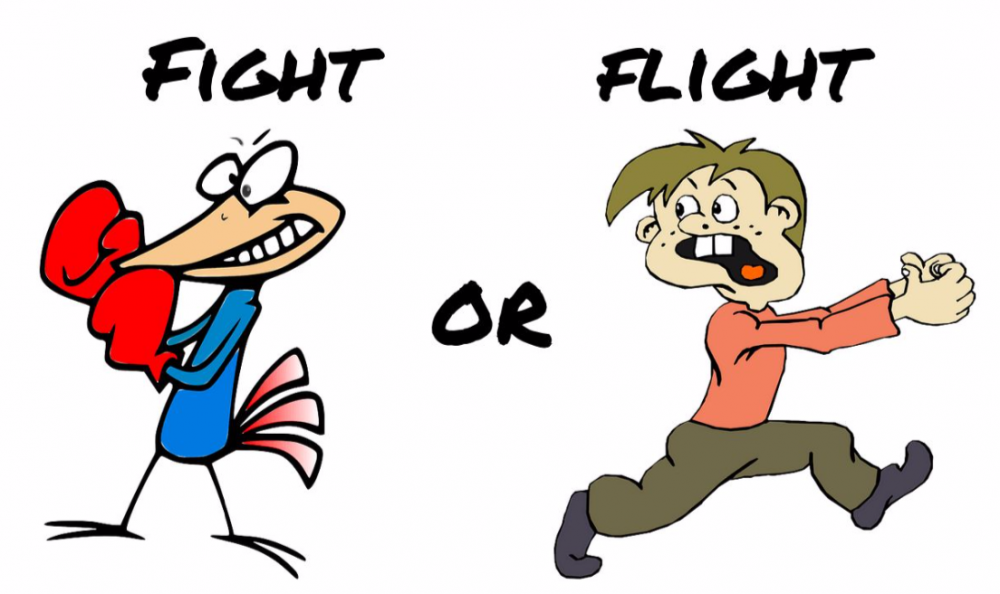
    The Fight or Flight Response
    The Fight or Flight Response

    1. Prevention – The best way to deal with an amygdala hijack is to prevent it from happening. You do that by understanding how our brains and emotions work, and then developing emotional intelligence to pay attention to our emotions as they arise. It is true that emotions bring with them a temptation to react. But it is also true that there is a gap between that temptation and our action. By being more mindful of our emotions, we can learn and train ourselves to engage our neocortex before being sucked into reacting to a particular emotion. You can do that by following step 2.
    2. Don’t Ignore the Emotion. Label and Acknowledge It – If we name the emotions as we experience them, it can help to engage the thinking part of our brain and give us the space to choose our response. Just saying out loud that “I am feeling anger” creates a gap for you to avoid being sucked into an impulsive response. If the emotion is too overwhelming, we can at least ask for a timeout and excuse ourselves from the situation. Once we understand the emotion better, we can come back to deal with the situation in a way we can be proud of.
    3. Understand The Story – Every emotion has a valuable story behind it which can help us understand ourselves better. Understanding what the emotion trying to tell us can reveal our values to us, which can further guide us in deciding a conscious way to respond to it. We can do this self-examination by asking some powerful questions (why am I angry? what do I want? which of my values has been violated? what about this bothers me?) which will also help us develop emotional intelligence.
    4. Creating Space – Once we take a time out and see things in perspective, we can choose better thoughts. We can ask ourselves questions like — Will this issue still matter in a month? In a year? Over time this reduces the probability of having a fight or flight response, as we learn to train ourselves to interrupt the amygdala hijack before it sucks us into any damaging action.
    5. Connect with Our Values and Proactively Decide Our Response – Every emotional reaction can be a good opportunity for us to discover what kind of person we want to be? What are the values we believe in? What is the behavior that we must exhibit to close the gap between our actions today and the ideal way we could have behaved? Whatever actions we take, we have to live with them for the rest of our lives. Our values and purpose will help us choose our actions wisely.

    Whether we manage to deal with an amygdala hijack effectively or not, we can later reflect and use the experience to understand ourselves better. We can recognize and accept our imperfections, and forgive ourselves and others when we need to. This way, we can turn emotions into positive energy and work together for a higher purpose instead of just satisfying our egos. That would be thriving at life instead of just surviving it.

    Resources and References

    1. https://www.psychologytoday.com/files/attachments/51483/handling-the-hijack.pdf
    2. Goleman, D. Emotional Intelligence: Why It Can Matter More Than IQ. New York: Bantam Books, 1995.
    3. Nadler, R.S. Leaders’ Playbook: How to Apply Emotional IntelligenceKeys to Great Leadership, Santa Barbara: Psyccess Press, 2007
    4. How Only Being Able to Use Logic to Make Decisions Destroyed a Man’s Life
    5. What Happens During An Amygdala Hijack