Book Review

  • Tribes by Seth Godin – Marketing Lessons

    In today’s global village, the concept of a ‘tribe’ has become very important. As a word, ‘tribe’ means a group of people that come together (physically or virtually) due to a shared cause, under a leader or leaders who organize and represent the group. A ‘tribe’ is an essential unit of social organization. It can drive change and even resist it. Most importantly, a tribe helps an individual, a company, and a society grow.

    How does a tribe have relevance in the corporate world?

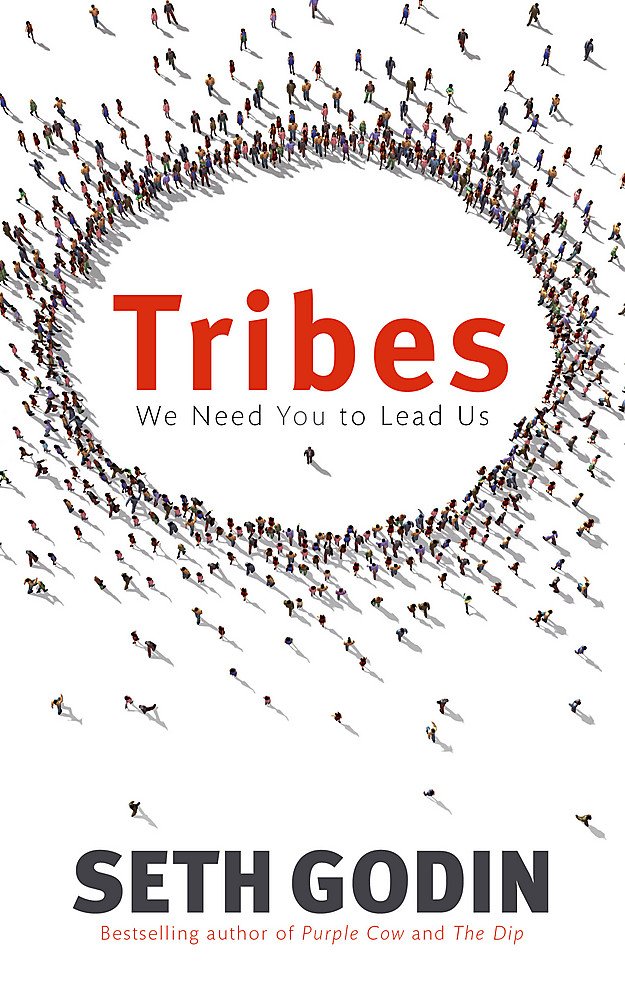
    Seth Godin, in his book Tribes, explains the importance of creating tribes in the corporate world. The book shows organizations how to create a loyal customer following towards their products and services and thereby creating a new status quo in the market.
    Why Do We Need Tribes?

    Humans have a need to socially connect and belong to a larger collective than a family unit. This need stems from the fact that man is social and needs to expand that social circle. Since the beginning of time, man has been a part of a tribe. 

    While in the ancient days, tribes were groups of people in the immediate vicinity which slowly grew to include community, language, and ethnicity. Later it included cultural, religious, and political tribes. Today, a tribe is as far and wide as the Internet, and yet as close and accessible as the smartphone in your hand.

    The definition of the word ‘tribe’ gives us its three main factors – a group of people, shared cause, and a leader. These factors are common to all tribes – big or small – in the world. The shared cause that binds a tribe is the most important factor, because it enables members to internalize their values, ideas, and feelings towards that cause, thus making them driven believers instead of mere followers.

    If we look at Wikipedia that was co-founded by Jimmy Wales, we can see that it is a tribe of over five thousand editors and contributors, who work towards a common vision of communally created, freely available information.

    Today, with the advent of the Internet, tribes have become global eliminating geography as a barrier. Simultaneously, the emergence of social media has shifted the relevance from the size of the tribe to the cause and its method of communication. Therefore, tribes are essential in the corporate world to enable social media to market one’s cause and promote one’s values.

    Creating A Meaningful And Exclusive Tribe

    Why did Nokia not do as well with smartphones as it did earlier?

    The answer is simple. In their success of creating a product that appealed to the masses, they missed out on exclusivity and creating meaning (technological advancement). While in the past Nokia focussed on creating a phone that was cheaper and easily available to everyone. They created a product that would be mediocre and not truly resonate with people, making them love it. Creating a product that is appealing to the masses has been a marketing mantra of the past. 

    Today, the answer lies in exclusivity, a trend that Apple found success in; that works even today. They chose to make a phone that would appeal to a select few. These few loyal customers would promote the product for the sheer love of it, creating a tribe of people who would have a shared cause – to believe in the superiority of the product they use.

    Any product or service needs to have a meaningful story and should resonate and connect with the story of their users. A tribe around a new, exclusive product forms only when a user can meaningfully and personally identify and connect with it.

    Anyone Can Create A Tribe

    When we look at the third component of a tribe – a leader or a chief – we instantly think of a leading figure with exemplary qualities of leading people. However, today, creating a tribe has become as simple as opening a YouTube account and posting videos online.

    Therefore, anyone can create and lead a tribe.

    However, to lead it successfully, there needs to be intense communication not only between the leader and the tribe members but also between individual members of the tribe. Today social media platforms, blogging sites and websites, have made the technology available for the members of a tribe to communicate, share their ideas, and organize. Platforms such as Twitter, Facebook, and Instagram, Pinterest, allows the sharing of ideas, updates as well as discussion boards where all members can align their interests to a common goal.

    If we see the example of Greg Glassman of CrossFit.com, we can see that he created a tribe by making one single platform for fitness fanatics to connect, exchange fitness ideas and programs, and even opt for certification and open CrossFit gym franchises. 

    Meaningful Cause + Will To Lead = Followers

    The formula is simple!

    A person with a ‘willingness to lead’ that finds a group of people who yearn for the same common ‘meaningful’ cause, will be able to gather a group of members or followers. Once a person taps into that existing yearning and creates an opportunity for them to connect, it results in the creating of a movement.

    A movement, as defined by the former U.S. Senator Bill Bradley contains three elements – 

    • The narrative of the future or plan
    • A connection between members and leader, and connection between the members themselves
    • Having something to do.

    A movement needs about 1000 invested members to be called a movement at all. At the same time, it needs a great story that creates a buzz among that group.

    The success of Al Gore’s documentary An Inconvenient Truth started a worldwide movement about climate change. What made the documentary so influential despite the fact that climate change and its effects were not new knowledge?

    Al Gore’s documentary gave like-minded individuals something to talk about, to share, discuss, and have an opportunity to do something. Without a buzzing story and the opportunity to promote change, coupled with Al Gore’s willingness to lead, he would have never created a tribe, let alone be able to lead it.

    It’s Not About Growth

    The obvious (and age old) belief about leading a group with a common cause is to make it grow. Yet, It’s Not About Growth!!

    The most important factor that drives a tribe to success is how close-knit the members of the group are and not how many members are there in it. In comparison to the channel of communication in normal marketing, the channels that tribes offer are much more and thus much more effective. A tribe has 4 main channels of communication – 

    • Leader to members
    • Members to leader
    • Member to member
    • Member to outsider

    Of these, member-to-member communication is most important, because it promotes tightness within the group, strengthening bonds and increasing the feeling of exclusivity. This feeling can also be brought in, by focusing on differences between the insiders and the outsiders.

    Steve Jobs ended up creating a whole bunch of passive rumor sites that were solely discussing new products, and sharing news, increasing the cult feeling.

    Creating Motion From A Vacuum

    The need for change or resisting the change emerges when there is something that is missing from the equation. Therefore, the vacuum that has been created needs a shift, a sense of motion. That is when change begins to take place.

    The leader of a tribe – or say, in an organization – should first be the promoter of change. He should be able to step into the ‘vacuum’ and generate motion – or create a stir. How does one, therefore, become a tribe leader.

    Leaders that generate effective motion, create, mobilize, and maintain a tribe are more than just famous, rich, or great orators, etc. Instead, they are charismatic by the virtue of being generous. The difference lies between being altruistic and authentic or egomaniacal and narcissistic.

    They believe in the inherent value of the cause, even if means giving it out for free. That inherent value lies in spreading the cause to the right potential members who can add value to the tribe and its cause. The fact that Al Gore’s documentary was free for all, made it the starting point of the creation of his tribe!

    More Leaders, Fewer Followers

    Right from the time we are young, we get indoctrinated to follow others. Following parents, teachers, the school rules, are the rules of the society. However, those who always follow never become tribe leaders. 

    To advocate change, create a stir, and change the status quo, we need more leaders. Leaders resist rules and ask questions, understand the reasoning behind movements, and to promote questioning. They are the ones who seek change passionately and find those who seek it with them. Leaders create tribes.

    Organizations need more leaders to advocate change without fear of retribution and damnation of themselves and their tribe. It ensures that there is more dynamism within the organization, yet it offers consistency when it comes to creating a movement towards a shared goal.
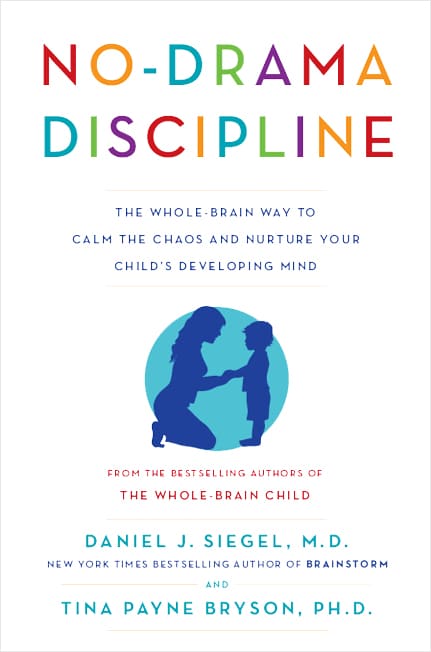
  • No-Drama Discipline – A Communication Guide For Parents From Daniel J. Siegel and Tina Payne Bryson

    No one said that parenting would be a piece of cake. And it isn’t, especially when it comes to disciplining children. As a parent, it sounds natural to use traditional methods of disciplining such as time-outs or spanking. But deep down, all parents know that these have never really helped.

    No-Drama Discipline (2014), by Daniel J. Siegel and Tina Payne Bryson, gives a fresh insight into disciplining children positively, without using traditional negative methods and by understanding the neuroscience of how children’s brains work when parents try to discipline them.  This is a fantastic book for parents that are serious about being the best people they can be for their children. At the end of each chapter are exercises and discussion about the science behind it all.

    In this book, the authors share the below 7 lessons for effective parenting :

    1. The Importance of Learning Lessons

    The conventional tried-and-tested methods of disciplining such as time-outs and spanking rely on punishment and fear. These methods have proven that children focus more on reflecting on how unfair their parents are or become more fearful of their parent’s actions whenever used. They do not emphasize on learning lessons from errors or the development of the child, often resulting in the exact opposite of what the disciplining is intended for.

    To make disciplining fruitful, it should be more proactive, where the goal should be to get the child to cooperate and improve their behavior and eventually, relationship skills. To achieve this, parents need to first connect with their children in order to redirect them towards good behavior.

    Solution: Parents should consider misconduct as teaching and learning opportunities.

    2. Upstairs Brain, Downstairs Brain

    The downstairs brain refers to the lower part of the brain that controls the basic functions of the body such as digestion, breathing, etc. and is well developed in children. On the other hand, the upstairs brain, the cerebral cortex, is responsible for cognition, empathy, and emotions, which is underdeveloped in children. Through the growing years of childhood, our brain forms new neural connections and grows ( a concept known as neuroplasticity – the ability to change physically.)

    Therefore, it is possible to change the brain towards positive experiences by treating misdemeanors as learning opportunities rather than a channel for punishment.

    Solution: Parents can use positive emotions and empathy to help the child’s upstairs brain to develop.

    3. From Reactive To Responsive State

    Children respond positively to communicative discipline. This helps in building stronger and loving bonds between the parent and the child.

    Disciplining works when parents are able to steer children from a reactive state into a receptive state. In a reactive state, the downstairs brain is in control and children often throw tantrums, have a meltdown, and engage in acts such as yelling or screaming, or even get physical. Disciplining the child in this state leads to a feeling of resentment and the situation worsens.

    Solution: Parents should try to get the child into a responsive state, where the child is able to calmly adapt to the situation. This can be achieved via an emotional connection. Creating meaningful emotional connections with children can help in the integration of the brain that promotes neural functions leading to upstairs brain development. While this might not be achieved immediately, patience and empathy will help in the long run.

    4. Comfort, Validation, and Listening

    Creating a connection with children will help parents to strengthen their relationships with them. This connection needs to be nurtured, especially if parents want children to accept their reasoning. It can be created and nurtured by comfort, validation, and listening.

    Children who become unruly, misbehave, or engage in difficult behavior need comfort rather than punishment. The most effective manner in which a parent can comfort a difficult or unruly child is to use non-verbal gestures such as a hug, a pat on the back, or even an encouraging smile. This non-verbal comforting can then be validated by verbal assurance. Parents can encourage the child to talk about the emotion that the child is feeling.

    Solution: Comfort and validation come with connecting, and listening is the key. Parents should listen to their children and reflect on what the child is experiencing. 

    5. Response Flexibility

    Response flexibility refers to a parent’s ability to respond to behavior or situation based on the child’s age, level of mental and social development, and temperament. There are three ways to maintain response flexibility – 

    Keep your own emotions in check – This refers to keeping an eye or examining ones own mental condition before reacting to the child’s behaviour. For example, snubbing a child simply because the parent is irritated will aggravate the situation. Rather the parent should calm down before responding to the child.

    Finding the Why – It is essential to get to the root cause of the child’s behaviour. Knowing the reason behind the misdemeanor will help in redirecting the child and understanding the child’s emotional needs.

    Paying attention to our responses – The way we respond to children when they misbehave makes a big difference. Rather than responding with threats (If you don’t listen…) and snubs, parents should use a positive tone while responding.

    Solution: Maintaining response flexibility and using positive responses also becomes an example of appropriate behaviour for children.

    6. Developing Mindsight Outcomes

    Children need positive emotional experiences that they can relate to. Therefore, parents need to help them develop the ability to use insight coupled with empathy to solve their problems. This ability is known as developing mindsight outcomes.

    Disciplining using mindsight outcomes involves helping the child understand her own emotional experiences by listening and labeling what they feel with an empathetic view. Parents can also ask the child to try to find the solution themselves.

    Solution: Mindsight outcomes help children evaluate their own behavior by either empathetically reiterating them, or by helping them develop a solution for their own problems.

    7. No Lecturing

    Lecturing children always results in defiance, rebellion and makes children feel like victims of injustice. While parents cannot always give in to the demands of their children, a calm explanation of why the parent says no to something is better than a flat-out ‘no’. Such redirecting of behavior also helps children cope with disappointment.

    Another productive method is to allow the child to steer the conversation and voice out what the problem is, and then offer a solution to the incorrect behavior.

    Solution: Redirecting the child to reflect and then provide a solution will ensure positive disciplining and help establish mutual respect.

    Conclusion

    Disciplining children is an opportunity for teaching them positive life-long lessons. Using empathetic reasoning to appeal to their upstairs brain, offering validation and comfort via listening, keeping responses flexible, and helping them develop mindsight outcomes will teach them to consider the impact of their behavior in a more natural way.

    This is a great book for whoever would like to be a better parent. There are no big rules on how to parent but on how to be a better person backed by science, which in turn should improve your relationship with your child too.  It does a good job of explaining psychological terms using laymen’s words.

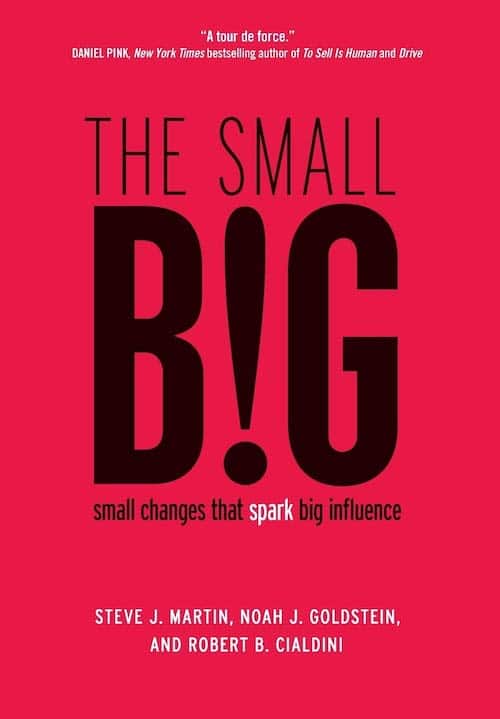
  • The Small Big by Steve J Martin, Noah J Goldstein, and Robert B Cialdini

    Negotiation and persuasion are part of our lives, whether it is as a parent negotiating with a child, or negotiations with a prospective client. Winning the opposite person over doesn’t require more than exercising persuasion tactics that one can easily learn to make a big difference. 

    The Small Big by Steve J Martin, Noah J Goldstein, and Robert B Cialdini, gives us small changes to incorporate in our behaviors for more confidence and success.

    Persuasion Can Impact Commitment

    Persuasion is very important. A small change in persuasive tactics can hugely change behaviours for the better. 

    A lack of persuasion can have expensive consequences, especially when we lose a lot of revenue as a society. For example, in the health care industry DNA, meaning ‘Did Not Attend’ refers to all the patients who have an appointment but do not show up. DNA issues amount to about 800 million pounds of revenue loss in the UK itself. Simply persuading patients to show up for appointments can save the economy a lot of revenue loss. 

    Similarly, late, or absent payments are the reason heavy charges are paid by governments, companies, and consumers alike. Even slight persuasion in the form of detailed information can help change the approach of people.

    Another example is persuading employees in an organization to switch off the light that is not needed. This can impact electrical costs for a company and help the environment at the same time.

    Unfortunately, as simple as these rational measures seem, they fail. However, the science of persuasion believes that a small change in how people are persuaded to follow these simple rules can lead to a big change for the better.

    Therefore, to get employees to remember to switch lights off, a garbage bin can be placed below the lights. This will predispose employees to switch off the lights at the end of the day as they empty the bins.

    The idea is to change the way people perceive their commitments and how they go about acting on them.

    How Changing Environment Can Change Behaviour

    The environment that exists during any negotiation or persuasion makes a big difference to the success of the persuasion. Environments can also affect how responsible a person is depending on the situation.

    An experiment conducted by Keizer of placing advertisements on the bikes of customers in front of a shopping mall showed how people’s behaviors changed depending on the surrounding environment.

    When graffiti was present on the walls of the adjacent alleyway, about 69% of the people threw the pamphlets on the floor. When there was no graffiti, only 33 % threw the pamphlets on the floor and littered the space.

    Another experiment showed that seating arrangements during a group discussion changed the results of the discussion. They found that discussions that focused on what outcome is best and ideal for the group as a whole took place in circular seated groups, whereas square, rectangular or L-shaped arrangements led to discussions where outcomes were influenced more by self-oriented decisions and proposals.

    Similar to seating arrangements and surroundings, different venues can affect negotiations differently. For example, in sports competitions, the home advantage plays an important role. A study conducted on decisions, outcomes, and performance showed that a group with home advantage (the group that was allowed to tailor the negotiation room to suit their needs and comfort), performed better in negotiations than the visitor group.

    Majority Wins!

    When it comes to what influences our thoughts, actions, and behaviors, we have to consider how people we identify with, and the influence of the people around us have (on us). This tendency to get influenced is called social proof.

    The idea used by the UK based company Influence At Work to address the problem of people not paying taxes is a good example of social proof. They decided to include a single sentence in the government reminder letters that many citizens from the same area were paying their taxes on time. The rate of response gathered from the reminders rose from 67% to 79%, and subsequently rose to 83% when the name of the town was included.

    Research on neuroscience has shown that when people make decisions that are in conflict with the consensus, certain parts of the brain that are associated with emotions get activated.

    On the other hand, people tend to distance themselves from groups that don’t like or approve of. An experiment conducted on students showed that about 32% of the student group were more likely to stop following a trend of wearing bracelets when an unpopular group of ‘nerds’ were sporting the trend. There was only a 6% drop in bracelet wearing without the influence of the ‘nerd group’.

    If one needs to influence and bring out desired behaviour, they need to use qualities that the focus group considers good and identifies with.

    Others’ Mistakes Are As Important As One’s Own

    One way to persuading oneself to improve is to keep an eye out for mistakes. By noting and analyzing our own as well as others’ mistakes, we can use these mistakes to our advantage.

    If a leader wants to succeed and better his organization, he should look at the mistakes his competitors made that led to failure, rather than analyze the triumphs. Charlie Munger, Warren Buffet’s investment advisor analyzed and avoided the failed decision of other companies, and made a list of errors and mistakes of others called the inanities list. 

    While it may go against all we have been conditioned to  – that is to learn from others’ successes – Prof. Roy Baumeister and colleagues learned that people focus more on negative information and learn more from it.

    One should understand that mistakes are the stepping-stones to success and that mistakes should never be ignored. Organizational Scientists propounded the EMT – Error Management Model – is more effective than the error avoidance slant. This model, being similar to the Inanities List involves understanding one’s own mistakes, analyzing others’ failures, and then responding appropriately to them. This model is known to improve customer services as well.

    Persuasion and Self-Confidence

    The persuader itself is equally important to changing and influencing behaviors. Making small, yet effective changes in how a persuader portrays oneself can work wonders too. For example, if a person is able to persuade the opposite person that he is an expert, he is 50% closer to be successful at persuasion.

    That is the reason why we tend to listen to the advice given by a financial expert like an economist when we do not have enough knowledge of the subject. This tendency was seen in recent brain-imaging studies, as well as the fact that the areas connected with counter-arguments and critical thinking remained inactive when the expert factor ruled.

    Self-confidence plays a big role in persuasion. This was seen in an experiment conducted on two groups who were going to attend a job interview. The first group was asked to note experiences that made them feel powerful, and the other group was asked to note experiences that made them feel powerless. It was seen that the first group outperformed the second, simply because their confidence levels were elevated.

    At times, however, insecurities, especially articulated insecurity can be very persuasive too. The restaurant review of a food critic that articulated insecurity was more persuasive than another review that said the critic was 100% positive that the restaurant was good. The study showed that people tend to pay more attention when experts are insecure about their topic, making the message delivered more persuasive.

    Motivation and Commitment

    When people get demotivated, they start feeling detached from their jobs. For managers in organizations who need to motivate their team members, they need to understand that people don’t achieve their full potential when they start believing that their contributions are not significant enough.  They need to help their teams be personally committed and introduce the concept of ‘implementation intentions’.

    If we consider the DNA issues faced in the healthcare industry, a simple solution of making patients write their own preferred dates of appointments, made DNA rates fall by 18%. This happened because people were forced to make commitments themselves. It was the perfect use of an ‘implementation intentions’ plan.

    Another good example of an implementation intention plan at work is seen in a study in which some households filled out a voting plan, with details of time and location of voting, and some households not filling any voting plan. The results showed that those who filled out a voting plan were more likely to be present on voting day.

    Intention plans can help us carryout, reinforce, and change behaviour because they make people find motivation in making a commitment.

    Making An Offer Successful

    During any negotiation, along with the environment and the manner of negotiation, making a clear and precise offer first is also a sign of good negotiation skills. Let us take the example of making an offer to a customer. Customers tend to base their negotiations and deals on the first offer that is made to them. They tend to adjust their expected figures even though the first offer exceeds their expectations.

    For example, research has shown that a buyer will tend to finalize a deal closer to the first higher bid a salesman makes. So for example, if a car salesman makes a customer an offer of $5000 when the prospective customer is prepared to pay $2000, the final offer that the customer will settle on will be closer to $5000, due to the anchor effect.

    This also happens because people tend to believe that salesmen are experts in their field and attribute higher pricing to product values that they do have knowledge about.

    Another way to make customers see the value in the first offer is to partner it with an unappealing offer. For example, the chef Antonio Carlucci had a Vespa Scooter for sale along with the pasta and salads on the menu. This is called a perceptual contrast that affects negotiations.

    Giving People Time

    Apart from all the aforementioned tactics, there is one factor that affects negotiations and often tends to result in failure. That factor is time. People sometimes need time to make decisions. Negotiations and persuasion should always take the time factor into account.

    When one thinks of making decisions for or in the future, they involve abstract thinking and take time to consider how one’s own morals and values fit in with the decision making. If the decision fits in, the person is more likely to agree to the negotiation.

    Therefore, if one has to make plans with friends to go out on a particular day, it is better to ask them as early as possible. They will more likely to agree to make a plan if they dint have definite plans in place.

    This concept also works in the opposite. Essentially, for influencing negotiations that are time-bound, giving more time for decision-making could result in failed negotiations.

    Conclusion

    Persuasion is a powerful tool in changing behaviors and impacting commitment. It depends on and is influenced by the environment, by the influences of the majority, by paying keen attention to one’s own and other mistakes, by portraying confidence, by fostering motivation and encouraging commitment, and manipulating the time given to people to make decisions.

    People who want to improve their negotiation skills should focus on making those small yet essential changes in their behaviours.

  • Stumbling On Happiness – Daniel Gilbert Shows Why We Have No Idea How To Make Ourselves Happy

    Why do we make choices and decisions about our future that makes us unhappy? 

    Stumbling on Happiness (2007) by Daniel Gilbert shows the complex manner in which our brain processes information and influences our decision-making process. Through everyday examples, the author explains how we can understand ourselves better and make decisions for happier outcomes.

    The Brain Can Visualize What We Didn’t Saw

    Our brain is wired in a way that it can fill in the missing details that lie beyond what we actually saw. It has the capability of creating the missing picture and construct a complete story through imagination.

    It works in similar ways when it needs to remember past events. The information stored in our memory is so vast, that it only remembers key events. Therefore, our ability to recall the past is always a mix of imagination and reality and not the reality that we have experienced. 

    Example: If we try to recall a memory of a bad experience in a restaurant, the brain will bring forth only key details like an argument with the restaurant manager, the manager apologizing, etc. It will fabricate the rest of the event, like the general set-up of the table, the manager’s facial expressions, etc.

    The brain does this so fast, that we are often unaware that the brain has made up these details.

    Our Brain Predicts Futures

    The brain perceives the immediate future on the basis of past experiences and general knowledge. Once the future is predicted, we cannot see any other alternative to that future. Moreover, we set our mind to believe and trust that it is a good prediction, without considering any other outcome.

    Example: If we are going to visit a friend’s house we have never been to, the brain will fabricate a picture of us enjoying the evening with the set of friends. It will then create images and fill in details of a glass of wine, laughter, etc.  But it will not consider a possibility of heavy rain canceling the visit, or say, a flat tire on the way.

    This happens because we tend to trust the brain’s visuals of a good evening and leave out the negative outcomes. Our brain has the habit of making positive predictions for all our futures, making us blind to any other possibility. We trust our predictions of the future when they are merely a single scenario among many.

    “If you are like most people, then like most people, you don’t know you’re like most people.” — Daniel Gilbert

    Mistakes Happen Because of Emotions

    We tend to believe that our predictions of the future are rational. What we do not realize is that these predictions are largely influenced by our emotional states at that time. 

    The brain has evolved over time to focus on the present (for survival) rather than the future, and our present emotional states influence even our future predictions. Therefore, the future predictions of the brain are rarely reliable.

    Example: If a person wants to create a presentation for work in an angry mood, the brain will be unable to conjure a good outcome. The person will tend to focus on other negative factors such as getting anxious while presenting, mixing up important numbers, etc., and the pessimism may even lead to the person postponing or canceling the work.

    Due to this influence of our emotional states, we tend to make mistakes while making decisions about the future.

    The Brain Places Undue Importance On Price Rather Than Satisfaction

    When it comes to the value of anything, our brain is wired to focus on the value of its price rather than the value of the satisfaction gained. This tendency is true for all commodities and products. However, it is a narrow view that can lead to errors in judgment.

    Example: If we are buying a cup of coffee that costs a dollar more than it used to, we think it is overpriced. We place more value on the increase in price rather than the satisfaction we gain from it. If we compare all the things (like a parking space for five minutes or a pack of gum), that we can get for the same price of coffee of $2.5, we would perceive its value it differently. The brain uses the yardstick of the past value of any product to decide whether it is overpriced or not.

    This applies to many other purchases too. Due to this natural tendency, we make simple errors when money is concerned.

    “Most of us appear to believe that we are more athletic, intelligent, organized, ethical, logical, interesting, open-minded, and healthy-not to mention more attractive than the average person.” — Daniel Gilbert

    Unique Experiences Become Stronger Memories

    The brain is conditioned to memorize unique and strange experiences over the regular and mundane ones. The brain tends to filter out regular happenings in our lives and remembers unique experiences with detail. 

    The brain has evolved to believe that these memories, which we can recall with ease, happen often. The brain makes inferences based on the better, unusual experiences, rather than the whole experience – which might not have been as great as our mind makes us believe. 

    Example: If we spend a week camping in uncomfortable conditions, and towards the end of the trip, we find a $100 bill, the mind will focus on the uniqueness of finding the money rather than the total unpleasant camping experience.

    Therefore, we cannot only trust our memory while making crucial decisions, especially while deciding if we should do the same thing again.

    We Believe Something More If It Benefits Us

    The brain has a tendency to believe information if it is beneficial for us or the society, even if it is untrue.

    Example: Everyone believes that if they have more money, they will be happier. However, this belief is relatively inaccurate. While having more money does make people happy (if they are raising themselves out of poverty), but looking at the larger picture, money does not bring infinite happiness.

    Yet, people believe (and have been believing) in the false myth that more money equals happiness, simply because it is beneficial for not only an individual but for society and the economy as a whole.

    We Often Refrain From Taking Advice From Others

    Our brains are wired to think that we are truly unique individuals. It tends to make us believe that our experiences are unique to us. Therefore, the brain does not think that advice from others will be useful.

    In reality, people have similar experiences and also react to these experiences in a similar manner. Therefore, it is quite possible that solutions can be sought by listening to other people’s experiences and opinions.

    Example: A person planning to quit their job and go on a world tour will tend to keep thinking about the pros and cons of their possible decision. However, if a friend offers advice about traveling, the person will tend to disregard the advice thinking that their situation is different, and the advice irrelevant.

    This tendency can be detrimental to making good decisions.

    “Among life’s cruellest truths is this one: wonderful things are especially wonderful the first time they happen, but their wonderfulness wanes with repetition.” — Daniel Gilbert

    The Brain Regrets Inaction

    The human brain is designed to learn from bad decisions. It has a defense mechanism to look for positive learnings from unpleasant experiences in hindsight.  Additionally, the mind is also wired to regret inaction. This is because, the mind cannot comprehend, and therefore come up with a valid explanation to events that it does not have information for.

    Example: A person will regret not marrying a noble prize winner whereas, will consider marriage to a murderer as a bad decision. The person will, in hindsight, think that they learned something from the bad decision of marrying the murderer, whereas, because he cannot draw conclusions from past experience of marrying a noble prize winner, will regret the decision.

    We often do not know that our brain works in this manner. Therefore, it is better to decide and learn from the mistakes rather than not make the decision at all, and to be stuck in inaction.

    We Have A Built-In Defence Mechanism Against Trauma

    The brain sets in action a peculiar defense mechanism in the event of devastatingly traumatic experiences. It psychologically numbs us from pain to a certain extent, so that we do not get mentally crushed with the grief. This mechanism, however, does not engage for trivial experiences.  It is due to this trait of the brain that we cannot imagine how we will react to extremely traumatic events.

    Example: A person who has just gone through a divorce would start accepting the situation and bounce back faster than expected. At the same time, the same person will fret for days if they lost a phone.

    We are often unaware of this defence mechanism and can make behaviours and decisions that seem strange.

    The Paradox of Choice

    The phrase, ‘being spoilt for choice…’ holds true for our brain. The moment the brain knows that there are alternatives, it is conditioned to explore those alternatives further. On the other hand, not having a choice at all makes our thoughts and decisions unidirectional, forcing the brain to see them in a positive light.

    Example: If we receive a T-shirt as a gift from a friend and know that we have the option of exchanging it, we tend to start looking for reasons to exchange it. However, if there is no choice at all, we will not even think of why we don’t like it. The focus will be on the positive aspects of the gift.

    We do not know that the brain reacts in this manner. Therefore, a lack of choice makes us happier rather than having multiple choices at hand.

    “The bottom line is this: the brain and the eye may have a contractual relationship in which the brain has agreed to believe what the eye sees, but in return the eye has agreed to look for what the brain wants.” ― Daniel M. Gilbert

    The Mystery In The Unexplained Appeals To Our Brain

    There is a special appeal in the unexplained. Not knowing the cause behind anything, compels the brain to try and solve the mystery. The brain gets attracted to these rare, unexplained events eliciting a stronger emotional reaction.

    When we get an explanation for the mystery, the brain loses the appeal. If the mystery is a negative one, then the explanation becomes beneficial, as the brain stops pondering over it and its impact lessens, however, if positive, then the excitement diminishes, robbing us of the happiness of that experience.

    Example: If we receive a mysterious gift from an admirer, we tend to find excitement and happiness in the mystery of it. However, once we know who the admirer is, the excitement dies out. 

    We All Live In Our Own Echo Chambers

    Our minds are conditioned to selective perception and retention. It has a tendency to only retain information which we already believe, ignoring the rest. This is evident in a person’s choice of friends. We tend to make friends with people who are similar to us. 

    Keeping this in mind, seeking advice and opinions from our friends could be biased due to the fact that it will most likely be similar to our own views. Without knowing this trait, we tend to put our faith in these opinions.

    Example: One often finds that they share similar tastes in music with their friends. Therefore if they seek validation of their taste in music, it will be more likely that their friends will give advice that is biased due to these similarities.

    The decisions we make about our future often cause us unhappiness because we are not fully aware of these unconscious processes that the brain is conditioned to follow. Unknowingly, we are susceptible to make errors in decisions leaving us unhappy with the results. 

    We need to pay attention to our cognitive biases in order to understand the way the brain functions. In ‘Stumbling on Happiness’ Professor and author Daniel Gilbert combines psychology, neuroscience, economics and philosophy to show how our imagination is really bad at telling us how we will think when the future finally comes. This book will help you eliminate a lot of noise with some powerful insights drawn from psychological studies.

  • The Infinite Game (2019) by Simon Sinek

    Today’s work culture is fast-paced. Companies rise and fall like dominoes in a chaotic and dynamic business environment. The concept of a big, old company that has been stable for decades is a slowly fading concept. Not many young companies today have what it takes to convert a company into a stable and strong one that has been around for generations.

    The Infinite Game (2019) by Simon Sinek shows that there are more attributes to the growth of a company, its strength, and its stability than finances, stock, share prices, and investors. 

    Today’s leaders need to look to the future and make plans that are ahead of their time. They need to inculcate the habit of long-term thinking and planning and enable their employees to dream into the future that will help them form strong bonds within teams and realize the long-term vision of the company.

    The Infinite Mindset

    To create an infinite mindset within a company, one has to first understand what it actually means. Let us consider a game of football. There is a definite start and stop time. There are rules surrounding the game such as how goals are made. How the winner is decided is also defined and fixed. Football is therefore a finite game.

    Business on the other hand is an infinite game. Apart from the legalities that they need to follow, what players do within those rules is not specified and neither is the start and stop times. Moreover, there is no specified manner in which the winner is decided.

    In an infinite game, the idea is to simply stay in the game for as long as one can. This requires planning different than that of a finite game. It requires an infinite mindset that will enable organizations to think beyond winning into creating an organization that focuses on lasting and on staying on top of the game long-term.

    If we look at Microsoft, Bill Gates wanted to “empower every person and every organization on the planet to achieve more.” While this goal showed an infinite mindset, in the early 2000s, CEO Steve Ballmer applied a finite mindset and focussed on winning more market share. They tried to focus on beating Apple with products such as Zune, to compete with Apple’s iPod. While Apple became famous for innovation and creating new markets, Microsoft’s short-term goals led to a tunnel vision. Due to this they lost focus and were not able to make their mark as a company that innovates.

    The Five Keys To Infinite Mindset

    There are five important keys to creating an infinite mind-set. They are – 

    • Having a just cause
    • Ensuring trusting teams
    • Understanding worthy rivals
    • Preparing for existential flexibility
    • Showing the courage to lead

    Victorinox played the infinite game. Their Swiss Army Knives were a popular product and accounted for almost 95% of the sales of the company. However, after 9/11, the knives were banned from airline cabin luggage. This caused the sales to plummet. 

     In spite of the downfall of sales, CEO Carl Elsener understood that business has its ups and downs. Instead of thinking about the short-term downfall, the company boldly branched out into new markets. They ventured into fragrances, watches, and travel gear, with the Swiss Army Knives accounting for only 35 percent of the sales. This change was a success.

    The company showed that though ups and downs are inevitable, companies have to focus on ‘thinking in generations’ like Victorinox did.

    Having A Just Cause

    A ‘Just Cause’ is an inspiration for the employees of the company to focus on the future. It defines the goals for employees and represents the benefit a business aims at. It is bold, inclusive, and idealistic, and is resilient in the face of change. Many companies mistake a ‘Just Cause’ for a mission to aim at the highest and the best position, in other words, a ‘moon shot’.

    The GPS making company Garmin’s mission statement is, “We will be the global leader in every market we serve and our products will be sought after for their compelling design, superior quality, and best value.” While it seems like a valuable mission statement, talking about becoming a great company, it gives customers importance as an afterthought.

    Since 2007, the company has been on a decline, and now has a third of the value it had in 2007. This happened because they refused to focus on the needs of their customers. While smartphone companies started offering GPS tracking services, Garmin chose to focus its efforts on making their own products, rather than venture into the smartphone market. 

    Capitalism: Then And Now

    When we talk about ‘Just Cause’, one needs to keep in mind the concept and guiding principles of capitalism. Who is more important for the company, the customers, or the shareholders?

    Adam Smith’s The Wealth Of Nations written in the mid 18th century put the interests of the consumer over those of the shareholders. Paving the foundation of capitalism for the next 200 years, the book stated the obvious principles of business – customers are the primary focus of any company.

    In the Mid-20th century, Milton Friedman, a Nobel-Prize winning economist, wrote a highly influential article that moved the focus from customer to shareholder. The article stated that for any free-market enterprise, the primary focus is to make money, and that money belongs to the shareholders of the enterprise.

    The shift of focus was seen more strongly in the 1980s and 1990s, when business plans centered around profit-making, focussing on short-term earnings. The primary focus of business plans revolved around making shareholders happy. And thus, it was not stability, longevity, and quality of service that decided the success of a company, but Wall Street’s numbers that became more important. Therefore, companies focused on boosting their ROI by cutting costs, layoffs, and cutting R&D budgets.

    In the past few decades, however, capitalism has become imbalanced. Stock market investing is at a 20 year low. With the shift in focus from customer to shareholder, the CEO’s and owners are enjoying a 950% earning increase vis. a vis. a mere 11% earnings increase for the average employee. These numbers signify a dangerous trend implying catastrophic market crashes in the future. It seems that Adam Smith had the right idea back then.

    Employees Before Earnings

    If organizations have to focus on longevity and creating an infinite mindset, they have to focus on the will of the people (employees and customers) who are supporting the company. This has, since Friedman’s shareholder-centric capitalism, become virtually impossible. Companies have put so much into making their shareholder happy, that it will take massive changes to go back to Adam Smith’s idea of capitalism.

    Companies need to put their faith back into their employees. This can be done with a strong ‘Just Cause’ of drawing employees into the company’s vision for the future. A company has to respect its employees along with their customers, an endeavor that can be highly rewarding for companies.

    The will of the people of a company can be measured by their morale, and by how inspired and committed they are to the ‘Just Cause’ of the company. Let us look at the examples of Apple and The Container Store.

    Apple made the bold move of giving its retail store employees the same benefits of health care and retirement as their corporate employees enjoyed. This move saw their employee retention rates skyrocket to 90%, while the average industry rate was at 20-30%. This enabled Apple to reduce recruitments costs and see motivated, loyal employees, delivering better services.

    Similarly, The Container Store, after the 2008 recession, needed to find a way to reduce costs. Instead of lay-offs, the company employed an infinite mindset and announced a temporary salary freeze. In a time of people losing jobs, the employees of the company understood the decision and worked hard to find ways to reduce costs for the company. 

    Creating a Culture of Trust

    Companies that focus on profits alone end up having an uninspiring ‘Just Cause’. This can lead to distrust amongst employees along with unethical business practices taking root, thereby reducing business longevity. Without trust, companies see an increase in poor performance and accidents.

    The CEO of Ford Alan Mulally saw a distrusting culture in the company when he came on-board in 2006. The previous CEO was known to berate and fire employees who got him the bad news. Therefore it became the norm to bring only good news to the CEO.

    Mulally knew he had to change the culture of the company and started encouraging employees to bring him all types of news – good and bad – to weekly meetings. He soon broke through the trend when an employee chose to trust him and share problems at the meeting. Mulally applauded the employee’s initiative.

    Without a culture of trust, where the company is aligned with profits rather than its people, unethical business practices take root. In Wells Fargo, an investigation showed that more than 3 million fake bank accounts were created between 2011 and 2016. This had happened because CEO John Stumpf had created a high-pressure sales culture that was untrustworthy. Employees resorted to unethical practices out of the fear of getting fired.

    Understanding Worthy Rivals And Preparing For Existential Flex

    An infinite mindset encourages worthy rivalry. This essentially means, competing with opponents who (due to their superior skills) businesses are forced to improve their own skill levels and techniques.

    Alan Mulally saw that Ford had spent fifteen years losing twenty-five percent of the market share. He was presented with a plan that was a finite-minded one. It involved cutting costs and increasing sales promotions. Mulally decided not to chase market share. Instead, he encouraged his senior management to drive cars made by Lexus and Toyota, to study and understand why these cars were preferred.

    Also when the 2008 recession hit, he chose not to put other competitors in the market out of business. Though Ford was financially stable, he knew that out-competing his rivals meant putting vendors and suppliers (who Ford relied on too) out of business. He chose to support his vendors by supporting his rivals.

    Learning from rivals goes beyond understanding their tips and tricks. At times, business leaders should perform an Existential Flex – a self-prescribed change or even a self-disruption – something that is extremely difficult for a finite minded company to do.

    Steve Jobs, in 1979, saw Xerox’s graphical user interface (GUI) technology. He immediately changed plans and incorporated GUI in his computers. This introduced the point and click the mouse. It also gave users a desktop icon for folders, making it easier for his customers to use his products – without knowing any computer language. He stuck to his ‘Just Cause’ of making computers an empowering tool for as many people as possible, despite warnings that the drastic change could be detrimental. Four years after that, the first Macintosh was released. It took Microsoft four years after that to release Windows 2.0 with a GUI.

    Bold And Courageous Decisions

    A strong ‘Just Cause’ goes beyond just one leader or profits. This very ‘Just Cause’ guides a leader towards the specific purpose the just cause pursues. It takes courage to lead a company towards an infinite mind-set.

    When a leader shows courage, it shows his commitment to the cause thereby setting an example for the employees. At times, this can prove to be a challenge because most CEO’s are promoted from COO (Chief Operating Officer) and CFO (Chief Financial Officer) designations. The day-to-day operations these executives are involved in are finite-minded. They are not prepared to step into the responsibilities of the CEO designation.

    They need to understand that a CEO actually works in the capacity of a Chief Visionary Officer who is the guiding voice and guardian of the ‘Just Cause’. In action, this responsibility helps in alignment with the company’s ‘Just Cause’. For example, the long-running pharmacy and drugstore chain CVS Caremark decided to stop selling cigarettes in their stores despite a loss of cost predictions of about $2 million. This was done to align the company practices with their ‘Just Cause’ of helping people to better health. On the day the announcement was made, the stocks of the company dropped by 1%. However, after a year and a half, the price doubled to a record high. This happened because after they stopped selling cigarettes, the sales of nicotine patches and gum shot up. They even approached by health-focused vendors who had avoided them earlier. This led to a 70%increase in stockholder earnings-per-share over the next three years.

    Conclusion

    The infinite mindset completes a full circle. It begins with a ‘Just Cause’ and endures through creating trusting teams, being inspired by worthy rivals, preparing for the Existential Flex backed by bold and courageous decision-making. It takes companies through a process that helps them to stay in the game and succeed in the long run.

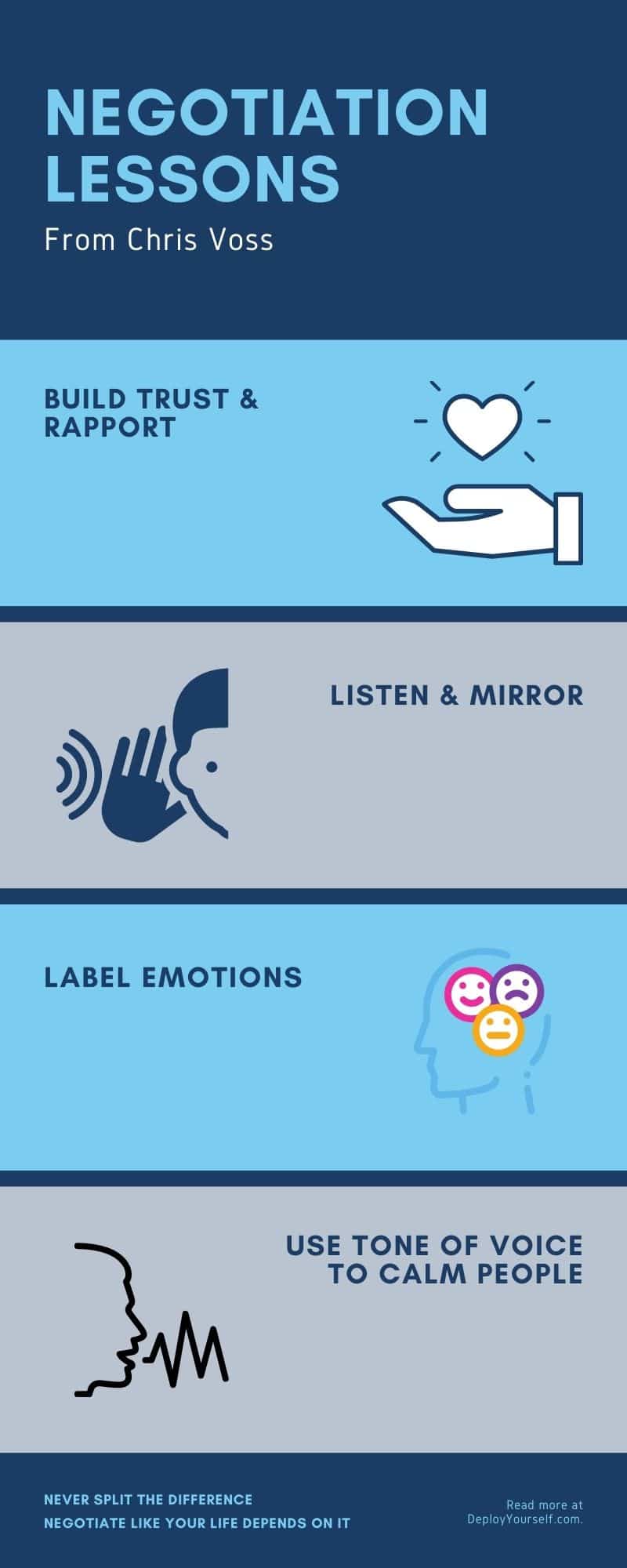
  • 5 Negotiation Lessons From Never Split The Difference (Even If You Think You Are Not Good At Negotiating)

    Negotiations are everywhere. They don’t just take place in courtrooms and board rooms. Negotiations also take place when we want our children to spend less time watching TV or try to get a business partner to see our point of view. We are continuously negotiating in life. 

    Never Split The Difference (2016), authored by Chris Voss and Tahl Raz is extensively based on Chris Voss’s experience with negotiation in the FBI. The book highlights many practical skills one needs and can learn for successful negotiation in all walks of life.

    What Is Negotiation?

    Negotiation begins with wanting a desired specific outcome. When two or more people need something from each other, negotiation takes place. But how does one master negotiation and apply it to every aspect of life? 

    Convincing others and dealing with human emotions is an art that needs practicing and developing over time. It requires more than keen intellect, rationality, and logic. The challenge arises because human beings do not make decisions rationally. We are known to act spontaneously and unpredictably due to our primitive instincts and emotions.

    Psychologist Daniel Kahneman’s and economist Amos Tversky’s extensive research found that (contrary to earlier belief stating that humans act in a rational manner and to their own advantage) humans are predisposed to cognitive biases, leading to subconscious irrationalism. They derived more than 150 biases that could affect negotiation abilities due to the complexity of the human mind. 

    In short, all of us make decisions and negotiate based on our emotions much more than we realize. That is why it is very difficult to negotiate with people using only the facts. Chris Voss shows us in his book that everyone, regardless of whether they are your colleague or a bank robber, has a human desire to be heard, to belong, and to feel safe and important.

    Below are 5 of my biggest negotiation takeaways from the book :-

    1. Build Trust & Rapport To Get Information

    To be good at negotiation, one must be adept at procuring accurate information. Without having enough information about the opposite person or the situation, one is likely to lose. Moreover, new information can completely change the equation, therefore one must be able to process the new information and play their cards accordingly.

    To gain more information, a negotiator must gain the opponent’s trust. This must be done tactfully by building rapport and getting the opposite person to divulge information through empathetic conversation rather than interrogative methods.

    The author worked with 24 years with the FBI and was the main kidnapping negotiator for many of these years. Chris Voss discusses a 1993 bank hostage case where the robber fed them wrong information. He informed the police that he and four partners were in the bank, when in fact he was alone. His partners robbed an ATM, while he took the bank hostage and confused the police.

    That’s why you need to establish rapport with your counterpart. One way to do that is to get the other party to talk a lot. As they do, you’ll be able to figure out what they want.

    2. Listen, Mirror, Listen, Repeat

    In negotiations, listening skills are essential. When one pays attention to what the opposing party is saying, it makes the opposite party feel important. Employing ‘active listening’ is important to show empathy and connect at a personal level.

    A technique called mirroring (simply repeating what the person says but with an inquisitive tone) builds rapport. The opposite person feels a sense of importance and makes them feel that their needs are understood and this creates trust. Mirroring helps trust-building and getting vital information from the opponent that the negotiator can use to his advantage.

    In the previous 1993 bank robbery case, when the robber divulged that his driver had bolted, the author kept mirroring to the robber, “Your driver was chased away?” This led the robber to divulge vital information that enabled Voss’ team and the NYPD to apprehend the driver, helping the case.

    The adversary is not the person across the table; the adversary is the situation. — Chris Voss

    3. Use Your Tone of Voice As A Tool

    During negotiations, our tone of voice and body language plays a vital role. The tone of voice that a negotiator uses can determine and guide the direction in which the negotiation heads. Using a slow and soft, but deep voice (also known as the Late-night DJ Voice), seems reassuring to the opponent, and helps the opponent to calm down and in turn share titbits of information. 

    The author, while taking over the bank robbery case from his colleague used this voice to calm down the robber. It prevented the robber from getting unnerved by the change in negotiators and talk further.

    However, different situations need different tones. Unlike negotiations with criminals, closer-to-home situations (like negotiating with a partner or children) require a playful and positive tone, that emanates an easy-going attitude, empathy, and encouragement.  Smiling is an easy way to disarm the opponent and make any conversation more pleasant. When one smiles while talking, the pleasantness of the smile extends naturally to the tone.

    4. Label Emotions To Force Empathy

    A good negotiator understands that the opponent’s emotional state is valid and real for them, even if you don’t agree with it. Essentially, one should try to look at the situation from the perspective of the opponent with empathy. While one does not need to agree with the opponent, using the technique of labeling – telling the opponent the exact emotion they feel and that you understand them. Labeling builds trust and makes the other person listen and communicate better.

    A classic example of labeling can be seen in a 1998 case, when four fugitives, armed, were hiding in an apartment. The author told them that he understood what they were feeling (afraid, scared) and understood their worry about going back to prison. After a few hours, the fugitives surrendered. Through labeling, the author had managed to calm them down enough to think about their situation rationally.

    “Unexpressed negative emotions never die. They fester like an infection” — Chris Voss

    5. Never Rush, Never Push People, Never Compromise

    It is natural to want to reach the end of a negotiation soon. However, rushing through negotiations can result in clouded judgments and a dissatisfying result. When an opponent sets deadlines, good negotiators take their time, digging deeper for more information. It is crucial to remember that most deadlines are relatively random and flexible.

    Negotiators should also avoid accepting a bad deal in haste and should never compromise. This is also known as splitting the difference. Often, deadlines and demands do not necessarily reflect the exact needs and thoughts of the opponent. Therefore, giving in or compromising might not always solve the issue at hand. 

    For example, if a kidnapper has taken a politician as a hostage and demanded a ransom, he might not necessarily be after money. If his intent is to make a political impact, there is no telling if compromising or accepting the terms will lead to release.

    In conclusion…

    One has to be patient during negotiations. The key is to understand the opponent’s needs, situation, and thought process. Negotiators should build trust and listen with empathy. They should use a calm yet empathetic tone to build trust. Finally, never compromise and split the difference, as there is usually a better way which can work for both parties better than the compromise.

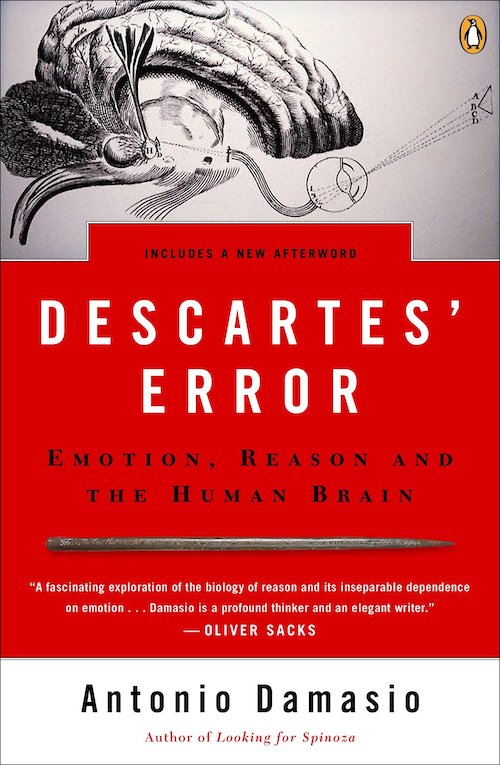
  • Descartes’ Error by Antonio Damasio

    Our brain can be perhaps categorized as one of the most important organs in our body. Yet, it is, unfortunately, an organ that we know very little about despite the vast amount of research that has been conducted on it. Since the time of the ancient Greeks, people have talked of mind and body, and reason and emotion as dualities, different, without any dependencies. It was the French philosopher Rene Descartes, after whom the Cartesian Dualism was named.

    The concept of mind-body and reason-emotion dualism cannot stand up to scientific reasoning today. This is because unlike 19th-century belief, mind, body, reason, and emotion are inextricably linked. Descartes’ Error (1995) by Antonio Damasio attempts at helping us view and understand the brain in a different light, and how these are all intimately linked.

    Scientists have been studying the varied consequences of brain damage in order to understand how it works, and mapping the exact functions of the brain’s different parts, much like how an engineer dismantles a machine part by part to understand how each part functions.

    Experimental neuropsychologists and neuroscientists have delved deeper into brain studies by examining different case studies, and have made remarkable discoveries, enabling us to know a little more about the vast abyss that our brain is.

    The Case Of Phineas Gage 

    Phineas Gage was a railroad construction foreman in the 19th century, working in Rutland & Burlington Railroad Company in Vermont. Known as a diligent and dependable, and efficient employee, he had one of the most demanding, delicate, and dangerous jobs – to set-up demolition explosive charges. 

    In 1948, Gage met with an unfortunate accident where a sudden explosion sent an iron rod through his skull. The slender rod pierced his left cheek and passed through from the top of his head, landing a few feet away. Shockingly, he survived the accident, as well as was able to sit up a few minutes later and talk. Gage lived for more than a decade after the accident.

    After recovery, while gage showed normal brain functioning in areas of intelligence, cognition, perception, memory, and language, according to his friends, he was no longer the same person he was before. He lost respect for social conventions, started swearing, lying, ignoring sound advice, and became impulsive.

    He never seemed to be able to stick to any goals or follow a plan of action. He would come up with a number of schemes, only to drop them off mid-way. Sadly, Gage lost his job and finally worked as a sideshow in a circus.

    Though scientists did not have Gage’s brain to study, his skull was preserved in the Harvard Medical School. Advanced simulation technology has enabled doctors and scientists to replicate the trajectory of the rod in simulation. They found out that in probability, the ventromedial prefrontal cortex (VPC) of Gage’s brain was damaged in the accident.  

    Elliot: A Real-Life Study

    Elliot (a pseudonym given by the author), another person who suffered damage to the VPC, though due to a brain tumor, like Gage, was a well-to-do, happy businessman, and a father. His symptoms were similar to that of Gage’s – normal to above average functioning of language, abstract moral reasoning, facial recognition, visual perception, memory, and general intelligence, etc., yet displaying questionable practical reasoning skills.

    He struggled to prioritize his tasks in a day, couldn’t make sound business decisions, and spent his time doing work that was absolutely irrelevant. He, like Gage, lost his job, got caught in ill-fated and ill-advised money-making schemes, and ended up unemployed, divorced, and bankrupt. 

    There’s More To Practical Reasoning Than Just VPC 

    Both these cases, along with 12 other cases that were studied by the author and the author’s colleagues confirm the fact that damage to the VPC thwarts practical reasoning abilities. However, considering that there is a difference between correlation and causation, one cannot say that disability in practical reasoning is caused by damage to VPC and the VPC alone.

    While functions are assigned to different parts of the brain, different parts do not function in isolation. Therefore it is possible that damage to two different parts of the brain can result in similar symptoms as that of damage to the VPC; for example, any damage to the anterior cingulate and the amygdala (parts of the limbic system responsible for processing emotion), or damage to the somatosensory cortex responsible for the visceral states such as sensations of the gut, heart, skin, lungs, etc. and functions such as touch, temperature, pain, joint position.

    Therefore to put in an equation –  

    Practical reasoning = the VPC + the limbic system + the somatosensory cortex.

    However, it’s not as simple as arithmetic. That’s because scientists do not know how these big 3 functions together to bring about practical reasoning. 

    Additionally, how do physical sensations and emotions add into the equation of practical reasoning? 

    The author found the answer in an “Aha!” moment during his hypothesis and research on Elliot. He noticed something funny in the manner in which Elliot narrated his life during many of their sessions. Despite his life story being a sad one, filled to the brim with divorce, financial problems, and losing his job, he never displayed any emotions such as sadness, grief, regret, at all. He didn’t show any annoyance either at the endless questions asked either. The author found out that Elliot responded to everyone and everything flatly, without any display of emotions. While he did have bouts of anger, he would go back to being neutral in an instant.

    To study this further, Elliot was subjected to another experiment where he was shown strong emotional pictures, like those of burning houses, injuries. That is when Elliot himself flatly declared that he did not feel any emotions any longer. It was an observation that was seen even in the 12 other patients with damage to the VPC.

     Therefore, in addition to deficits in practical reasoning, they also found flat emotions a symptom in VPC damage.

    How Emotions Work Vis A Vis The Big Three

    With this new information, the author found a correlation between emotions and practical reasoning. It seemed counterintuitive, as, with emotions out of the way, practical reasoning should have thrived.  However, emotions have a lot more value than we think.

    Emotions can be divided into  – 

    • Body State, and 
    • Emotional Body State

    The Body State is the change that a person has inside their body, for example, the joints, internal organs, muscles, etc.  This information is passed on from the brain to the organs and back via electrical and chemical signals.

    The Emotional Body State, on the other hand, is the sensation that we feel in our body when we experience feelings, for example, relaxing muscles, flushed face while feeling happy and blanching, sweating, and nausea when scared.

    Additionally, one can also experience mental images of something that could trigger the emotional body state. These perceptions are representative of anything, such as the sound of a friend’s familiar voice, the memory of the taste of something you ate with the friend, etc., that can trigger an emotional body state.

    When we combine these mental images, the body state, and the emotional body state, we get an emotion. These feelings – positive or negative – are the brain’s way of understanding if something’s bad or good. We call these bad or good emotions.

    In context to Elliot’s life after the tumor and the VPC damage, his emotions were diminished. However, he still experienced emotions such as anger, sadness, fear, happiness, and disgust in flashes, because these are primary emotions that are hardwired into humans from birth.  

    To illustrate let us see how emotional response and practical reasoning take place in situations of fear, and how the big 3 – VPC, Somatosensory cortex, and the limbic system work in tandem.

    A person suddenly sees a slithering snake ahead of him. His brain relays the information of the ‘slithering motion’ to the limbic system, which then registers it as danger. It signals to fire the fear response via a series of biological and neurological changes that shift the emotional body state to fear, and the person experiences cold sweat, shallow breathing, and heart-pounding.

    Next, based on these body states, the somatosensory cortex analyses the situation as dangerous, and signals the body to experience the fear and the person feels scared. This triggers action and the person runs away.

    In this situation, we can see that the VPC isn’t anywhere in the picture yet. It is the reason why people like Elliot can still experience primary emotions. Secondary emotions, being more complicated, are a different matter. 

    The More Complicated Secondary Emotions

    Secondary emotions are developed over time and experiences. These are dependant on the VPC. To understand how we take the same example as above.

    The person sees the snake but is a herpetologist. The snake is a harmless and rare species that delights the person. The delight is a secondary emotion.

    We already know that emotion is a mixture of the body state and the emotional body state, and the mental images that are triggered by these two states. To cite the example above, the images of the snake, the perception of the sound of the slithering, etc. are at play, possibly triggered by previous experiences with snakes, or by reading about them in a book. 

    Our experiences throughout our lives get collected in our brains and thus we are able to make associations with the millions of things we see and feel daily. For example, a memory of a favorite teacher teaching a person about snakes started the association of snakes with a feeling of happiness. Next, a pet store visit with his dad in the past would have made the association stronger. Finally, the experiences as a herpetologist might have been the full blast that made the person so delighted on seeing the snake.

    The somatosensory cortex keeps us aware of the emotional body state whereas the limbic system creates that body state. However, it is the VPC in the prefrontal cortex that ties the two with experiences of secondary emotions.

    The Final Clue To Practical Reasoning

    The big three – somatosensory cortex, the limbic system, and the VPC – come together to make humans experience their secondary emotions in full glory. Yet, the question that still remains is how is practical reasoning affected by secondary emotions?

    In Elliot’s case, during one interview, the author asked Elliot to choose between two likely dates, a few days apart, for their next appointment. Elliot took out his planner and started to enumerate all the possible pros and cons of the two dates. The author did not stop Elliot. He wanted to see how far could Elliot go. After about half an hour, and after considering factors right from other scheduled appointments to the possible weather on those days, the author proposed one of the two. At this, Elliot simply replied, “Fine.” And then left.

    The author noted that decision was not important to Elliot at all. It was just that he was unable to make up his mind. While Elliot was able to think about the choices given to him, he was unable to make the choice, which was all about practical reasoning. 

    If there is a very important consideration to make when given choices, half an hour of thinking seems considerable, however, in trivial situations, it seems like a complete waste of time. Which is exactly what Elliot was unable to get.

    This mystery, of how practical reasoning is affected by secondary emotions, was called the somatic marker hypothesis. The somatic markers are special types of secondary emotions that help in decision-making. Essentially, the secondary emotions – positive or negative – that one feels while trying to arrive at a conclusion help in steering the decision towards either choice.

    When the secondary emotions are negative, we have a ‘gut feeling’ making it easier to take the other choice. However in Elliot’s case, because the somatic markers were missing, he got lost in the possibilities he had to choose from, simply unable to decide because he couldn’t ascertain the positivity or negativity of his secondary emotions.

    Conclusion

    Emotions play an essential role in one’s ability for practical reasoning. thus people are able to make decisions by weighing choices and reasoning on options. Practical reasoning depends on the ability of the brain to read and assess the emotional body state. Therefore, the brain and the body, and emotion and reason all depend on each other to help us make decisions.

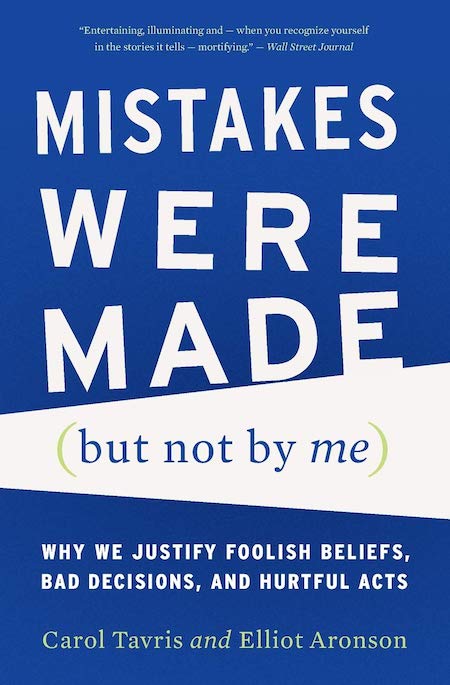
  • Learn The 5 Reasons We Justify Ourselves All The Time From The Book – Mistakes Were Made But Not By Me

    Anyone who has made a mistake in their life has also tried to justify it, even if it is completely their fault and they know it. Nobody likes to admit a mistake and we all try to cover goof-ups. Why do we do this? More importantly, how does this affect our decisions, our interpersonal relationships, and our professional lives?

    Mistakes were made (But not by me) by Carol Travis and Elliot Aronson delves into the tendency of humans to avoid owning up to their mistakes. It reveals that we indulge in self-justification – a habit that can have and has had severe repercussions in the scientific and medical field, in the criminal justice system, and in government dealings and decisions. This psychological tendency not only impacts our decisions but also our relationships.

    Self-justification has several factors behind it. Let’s find out why is it so hard to say ‘I made a mistake’ and really believe it?

    1. Cognitive Dissonance

    Cognitive dissonance is the feeling of unpleasantness that results from two conflicting views or ideas. It leads to self-justification for our actions, ideas, and behaviors. Cognitive dissonance and self-justification of actions lead to habits and development of strongly held beliefs. It is then very difficult to understand the root cause of why a mistake might have happened.

    Example

    A person who continues smoking even after regretting the habit self-justifies, “I don’t smoke much. It’s not affecting my health.” Here, the person has conflicting views – one of smoking and the other of regretting the habit. To resolve the cognitive dissonance, the person justifies their mistake. 

    Another example of cognitive dissonance and self-justification is former U.S. President George W. Bush’s conviction that war with Iraq was the right decision (despite not finding weapons of mass destruction – a justification for the war)

    2. Confirmation Bias And Narrow Mindedness

    How do people justify their mistakes? Backed by years of research, Mistakes Were Made (But Not by Me) explains why we all love to justify ourselves.

    When avoiding cognitive dissonance becomes necessary, people find ways to convince themselves of their justification. They experience confirmation bias – a belief that any evidence is really supporting their view (self-justification), even if there is more evidence that is contrary. People become blind towards any other evidence highlighting their mistake. 

    Example

    In the medical field, mistakes are often justified or even hidden due to confirmation bias. Doctors experience confirmation bias and develop their diagnosis. This leads to them becoming narrow-minded to any other view, or even try to tailor evidence to mirror their original diagnosis, and to satiate their cognitive dissonance.

    3. Morality And The Pyramid Of Choice

    The authors Carol Travis and Elliot Aronson highlight (with backing research) that strong confirmation bias and continuous self-justifications can change perceptions of morality. Perceptions of morality change step-by-step and slowly.

    The pyramid of choice can be explained with an example of two people having the chance to commit adultery.  Both persons are said to be standing atop the pyramid with a bird’s eye view of the repercussions of the choices they will make. 

    Let us consider that both make opposite choices – one decides to commit adultery, and one chooses to remain faithful. They start descending the pyramid, focussing on their respective narrow pathways. As they proceed, they can no longer see the broader perspective of the choices they had earlier. The one committing adultery is convinced that his path is right. On their narrow paths, self-justification and confirmation bias strengthen their beliefs, obscuring their morality in turn.

    Example

    Self-justification is prevalent even in the criminal justice system. Many have been subject to wrongful convictions due to the self-justifying tendency of humans. A study of wrongful convictions in 1989 showed that in Suffolk County, New York resorted to questionable means to obtain evidence for a conviction. This is a classic example of how one loses the thread of morality due to self-justification.

    4. Unreliable Memory

    Self-justification is fed by memory. Many people claim to have a good memory. They are confident of an accurate account of happenings when interrogated. However, this notion is often a misconception. No matter how good one’s memory is, it is always subject to bias that justifies one’s beliefs and behavior in the current situation (and not the actual behavior exhibited at the time the situation unfolded). 

    False memories or fabricated memories of events that have never happened also influence self-justification. The brain believes these false memories (or create them) and convinces a person that their version of what happened is accurate.

    Example

    An author named Binjamin Wilkomirski, wrote a book of his experiences as a child in Nazi concentration camps. Historical analyses of his book revealed that his recount was a fabrication of stories from other sources. It was merely his brains coping mechanism against his troubled childhood. His brain had planted false memories which he believed to be real experiences. A similar example can be found in people who claim to have been abducted by aliens.

    5. The Blame-Game And How It Impacts Relationships

    Whether it is a personal relationship or a professional one, disagreements and mistakes are natural. However, it is self-justification, cognitive dissonance, confirmation bias, and unreliable memory that can take a relationship in a downward spiral. If left unchecked, it can lead to an end to the relationship.

    Self-justification, in a bid to avoid cognitive dissonance, results in placing the blame for mistakes on others. Blame feeds confirmation bias and often result in the demise of relationships even if reconciliation would have been possible. 

    Example

    Self-justification and blame lead to conflicts between governments too, especially in polarised views and at times of conflict. One government justifies its actions by blaming the opposing government, and the other does the same. In the 1979 Iran Hostage Crises, both the U.S. and Iran got into a blame-game over their actions, which were merely responses to the actions of the other.

    The Way Out

    Cognitive dissonance, confirmation bias, blame and self-justification can all lead to destruction. How does one get out of the cycle?

    Ironically, the only way to resolve cognitive dissonance is by admitting one’s mistake. One must let go of confirmation bias and look objectively at the evidence. We must objectively cross-check the validity of facts and not rely only on memory, especially when the stakes are high. We should avoid blaming others, and be receptive to criticism and take it positively.

    Benjamin Franklin said, “It’s the easiest thing in the world for a man to deceive himself.” And books like these help me to reflect on my own behaviour and better understand people around me.

  • The Passion Paradox – Discover The Fascinating Science Behind Passion and Why It Can Be A Double-Edged Sword

    Everyone wants to have a passion that drives them towards success in life. Many self-help books encourage harnessing passion to achieve goals in life. But how do we define passion? What does it mean to have a passion?  According to Brad Stulberg and Steve Magness, the authors of The Passion Paradox (2019), we need to understand passion, it’s working, and how to use its paradoxical mechanisms to successfully achieve goals.

    Passion is defined as ‘having a strong emotion or a feeling about something, a drive to achieve or desire to pursue something fervently’. When it comes to fulfilling our dreams in life, everyone uses the term to denote the ‘relentless pursuit of something we love’. 

    However, passion is not an easily understood concept. It is multi-faceted, having its roots deep in history. Moreover, the paradoxical sides of passion can lead to depression, burn-outs, and destruction. 

    1. The Origins and History of Passion

    Historical connotation and evolution of passion

    The roots of the word lie in the Latin “passio”, which means “suffering” – a reference to Jesus Christ and his suffering. By the middle ages, its meaning of ‘suffering’ was used to describe the suffering of other people, and by the Renaissance period, poets like Geoffrey Chaucer started using the word to describe surging emotions, giving it non-negative connotations. It was William Shakespeare who finally used the term to describe uncontrollable desire and feeling for a person.

    Over the next centuries, people began to apply the word to career choices or activities; eventually leading to the word being used in phrases such as “follow your passion” by the 1970s, giving it the meaning it has in our lives today. 

    Physical connotation of passion 

    Just as its history, the connotations of passion have a negative and a positive aspect in terms of bodily mechanisms and the physical effects it has on us. Passion, as an emotion is regulated by the release of dopamine, a neurochemical, in our body. Unfortunately, this regulatory effect works in the same way dopamine drives drug addiction. Driven by dopamine, passion makes us crave rewards, just as addicts crave drugs.

    Once the reward (or drug) is received, and the craving is satisfied, the hormone dissipates, making us crave for more. Over time, our bodies develop more tolerance for dopamine, making us yearn more. The cycle of yearning, release, craving repeats, increasing our tolerance to a point where rewards (or drugs) stop satisfying us. We crave for higher levels of satisfaction (or doses of drugs), making it a dangerous, vicious cycle.

    2. The Best Kind of Passion

    We need to further analyse the types of passion to understand the effects of passion.

    • Harmonious Passion – Harmonious passions focus on the joy of pursuit of the goal, rather than the reward and final achievement. This helps us to consistently strive towards our goals despite the obstacles; slowly nurturing our passion, and making it stronger in the long run.
    • Obsessive Passion – Obsessive passion focuses on the reward of success rather than the goal itself. Such passion makes individuals lose sight of their original motivations, and lead to unhealthy pursuits. People go to any length to simply experience the thrill of success. They become addicts to the rush of dopamine that they get with external validation. When obsessive passions fail, the drop in levels of dopamine push people towards sinister risks, depression, and destruction.
    • Passion driven by fear – Fear also motivates passion. However, while fear can be a good motivator at the outset, it can lead to the development of stress and other health side effects. For example, fear of failure can drive an individual to work and learn faster, but over time, it can lead to burnout.

    3. Pursuing Passion: Fit Mindset Versus Mastery Mindset

    It is essential to understand how we find passion to nurture it. This brings into perspective the difference between – 

    • The fit mindset, and
    • The mastery mindset

    The fit mindset

    Once we successfully complete a task, we start believing that we have found our passion. We attribute this ‘perfect fit’ to our passion and think that it is the way forward. Researchers call it a ‘fit mindset’ towards passion. While this initially works, passion needs to be nurtured. Unless we do so, we tend to give up the moment we hit an obstacle. 

    What we need to do give up the all-or-nothing aspect of passion and nurture it over time without giving up. The authors Steve and Brad suggest that if after every failure, we go looking for a new passion in life, it will only take us deeper into the cycle of achievement, dopamine release (which we mistake for the ‘perfect fit’), failure, and then craving again.

    The mastery mindset

    Passion should sustain the drive to succeed despite the obstacles we encounter. The mastery mindset focusses on the process of developing passion rather than the end result helping us sustain and cultivate passion over a longer period of time. This way we seek and find pleasure in the smaller achievements that we reach along the way to our goal. 

    While following our passion, failure is inevitable. Failure helps to identify and correct our mistakes. Patience and focus on the smaller achievements in the process give us the needed perspective to continuously improve and become a master at our passion.

    4. Sustaining Passion: Balance and Self-awareness

    One should have a singular focus to achieve mastery in whatever you are passionate about. Once we start following our passion, we tend to go all-in; which requires willpower to maintain a balance between our passion and the rest of our lives. If we go all in, it becomes a self-consuming effort with some amount of suffering. 

    Managing balance in life and our passionate endeavor can throw us into the vicious ‘passion’ cycle and lead to developing unhealthy, obsessive, or fear-driven passions. The trick then is to harness self-awareness. A method where we regularly observe our passions and how they affect our emotions.

    We can also use the step by step approach. This approach requires clear feasibility of following a passion. It requires an understanding and acceptance of failure to follow a passion and a view that we will not find perfection in our endeavours instantly. This helps us in achieving consistency even with obstacles in the way.

    Understanding balance, the need for self-awareness, and using the step by step approach can lead to the sustained development of a passion; one that lasts longer and has a higher rate of success.

    Another important aspect of sustaining passion is knowing when to let go. 

    Following and cultivating passion eventually defines an individual becomes an integral part of their identity. Therefore, letting go of a passion can lead to distress and emotional turmoil. People need to use coping mechanisms to deal with the withdrawal symptoms of letting a passion go. They need to retain the best practices developed over time by following their passions and use them to fuel new passions and pursuits.

    Conclusion

    This book teaches people about passion and how to recognize and cultivate it effectively without giving it the power to consume us by turning into an obsession. Stulberg and Magness thoroughly share what drives passion, what happens when it is all-consuming, and how to find a balance so that one’s passion can be pursued without causing burnout or becoming annoying to others.

    To pursue a passion and avoid its pitfalls, we must give in to the understanding that following passion is self-consuming and requires a veritable amount of sacrifice. Powered with that knowledge, we can pursue passion for the pure joy of it. The Passion Paradox gives us an unusual but important point of view on doing what we love.

  • The 22 Immutable Laws of Branding by Al & Laura Ries

    Between the super successful, top brands leading the markets, and those that fail, there are millions of products that simply go unnoticed. The fate of being unmemorable in a market that is choc-a-block with competitors is a result of the all-too-common mistakes, which most marketing strategists make.

    Al and Laura Ries’ The 22 Immutable Laws of Branding (1998) explains what sets a successful brand apart. The 22 immutable laws that are tried and tested by successful companies, leaders, entrepreneurs, and businessmen teach how to gain an edge over competitors.

    1. The Law Of Expansion

    The law of expansion states that the more a brand expands, the more its focus gets diluted weakening the brand. Therefore, why did Chevrolet end up diluting its brand?

    Whenever we hear the name Chevrolet, we can’t really associate the name with one single image. This is because, for a customer, the name Chevrolet stands for many products, right from small to large and affordable to luxurious.

    The company had started focusing on short-term growth plans and strategies rather than to think of long-term success and brand value. While the short-term plan initially seemed to make the sales soar and the brand a success, in the long run, its sales declined from 1.5 million car sales in 1987 to 0.83 million car sales in 2001, weakening the brand in a span of fifteen years.

    2. The Law Of Contraction

    On the other hand, the law of contraction states that the brand of a company strengthens as it narrows its focus. If we look at the concept of delis today, Subway, founded by Fred DeLuca in 1965, enjoys a prime position in the deli markets, albeit within a niche. 

    Comparing both the laws, we can see that when the concept of delis emerged – a market that offers practically everything, from newspapers, cigarettes and lottery tickets to soups, bagels, sandwiches, muffins, etc. – the delis never managed to capture the nation-wide market and create a strong brand with chains all over, mostly due to the fact that their product categories were so expansive that it became difficult for the companies to focus.

    Subway narrowed the concept of delis to their star product – the sandwich. They enjoy the prime position in that product category even today due to their singular focus.

    3. The Law Of Singularity

    The third law of branding, the law of singularity, deems singular focus on any USP of the product as extremely essential for branding success. Singular focus enables brand names such as Rolex and Prego to become synonymous with the commodity itself – Swiss watches and thick spaghetti sauces respectively.

    Additionally, a brand name such as Walmart, specializing in a number of products, can attain a strong brand name and set itself apart from the rest. Walmart singularly focuses on its company ethos of ‘focusing on low prices’.

    4. Law Of Publicity

    Unlike common belief, there is a vast difference between branding and advertising. While advertising focuses on maintaining brand visibility, it does not help in brand building. Brands are built through publicity. Being a pioneer in the market is just one of the ways to ensure publicity. Without the oxygen of publicity, the bloodstream of brands can never make a place in the market. For example, the name of the first manufacturer of cotton swabs Q-Tips has almost become synonymous with the product name and has been in the public eye since. 

    On the other hand, Miller Regular entered an overly saturated market of beers. With nothing unique about the brand, it failed to gain publicity or consumer interest and disappeared in a year itself.

    5. The Law Of Advertising

    The law states that the purpose of advertising is to protect gains once the brand is launched. Considering that nothing is permanent, every publicity campaign eventually fades with time; and once the hype goes down, companies have to switch to advertising.

    When it comes to advertising, many companies waste their time comparing the superiority of their product to their rivals. However, consumers are not interested in who is better, but want to know who is best!

    A successful advertising campaign focuses on the #1 position. That is why Budweiser is known as the ‘king of beers’ and Goodyear advertises itself as the ‘No.1 in tires’.

    6. The Law Of The Word

    When it comes to branding, companies have a knack for associating a word (a single positive concept) and making it interchangeable with the brand name. That’s what makes brands powerful. For example, when one thinks of ‘prestige’ they immediately think of Mercedes-Benz.

    The law of the word aims at achieving this very effect. It aims at focussing all attention and making the brand synonymous with one word, that distills the essence of a brand. For example, Toyota owns the word ‘reliable’.

    The idea is to own a word association that can resonate with the customers and makes them think of the associated brand every time they hear the word.

    7. The Law Of Category

    Similar to the law of the word, the law of category aims at interchanging the brand name with an entire product category.  A classic example of this is the association of the name Kleenex with all pocket tissues. Here the brand name has replaced the product category name.

    The law states that in branding companies should promote the category itself. Even though promoting the category altogether will also work in favor of competitors, it is a benefit that a company will see in the long run, as it will help in expanding the entire market category.

    8. The Law Of Fellowship

    The law of fellowship states that competition actually works in favor of the brand and creates more business opportunities. If a brand seeks to benefit from the law of category of expanding an entire category, it also works in favor of competing brands, as customers get interested when there is a rivalry between two companies. It draws their attention to the entire product category.

    The rivalry between Coca-Cola and Pepsi is a classic example, where the rivalry of the two companies has drawn attention to and expanded the soft-drinks product category.

    9. The Law Of Credentials

    Credentials play an important role when it comes to branding. This can be seen when we consider two restaurants side-by-side, one practically empty, and one filled to the brim with customers. It is natural that given choice, one would prefer to go and wait in line at the crowded restaurant unless they are hard-pressed for time.

    The law of credentials works when companies stake a claim on authenticity and develop their brand name. If a brand name can successfully place a claim of authenticity to their credentials, then the second and third claims are not very difficult to follow.

    If the more crowded restaurant next claims that they serve the healthiest meal in town, customers will tend to believe their claim as their credentials of being popular work in favor.

    10. Law Of Quality

    It is important that brands walk the walk and talk the talk when it comes to the quality of their products. However, the law of quality states that while ensuring and maintaining quality is important, creating a perception of quality is the trump card.

    Looking at the examples of Coke and Pepsi again one can find that more people say that they prefer Coke to Pepsi. However, numerous blind tastings have shown that Pepsi has a clear edge over Coke.

    This proves that there is actually very little relation between the success of the brand and its quality.

    11. The Law Of Extensions

    Companies love to create extension lines of their products. Hellman’s for example expanded their mayonnaise lines into low-fat, light, and even Avocado-oil mayo. In grocery stores, it is seen that about 90 percent of products are line extensions.

    However, it is also known that about a quarter of the products in stores don’t leave the shelves for more than a month. Therefore, product lines can actually damage a brand.

    The US Beer industry is a classic example. In the 1970s, Budweiser, Miller, and Coors dominated the beer industry with three types of beer. By 2001, they were offering as many as 14 different types of beer that diluted the market with their product lines. This line expansion did virtually nothing towards increasing shares or increasing the consumer base.

    12. The Law Of Consistency

    Line extensions can be used as a savvy way to create a new product category and cater to a gap in the market. Light beer is one such example. However, most brands, prefer to piggyback their extension product on their existing brand, rather than make a new brand altogether. That confuses the customers.

    That is why the law of consistency warns that companies should maintain consistency over time to build strong brands. It means to be more narrowly focused on their prime products and resist the temptation of adding more product lines.

    Volvo, as a brand was consistent with ‘safety’ and known for its strong, solid, middle-of-the-road sedans for three decades. However, when they tried to branch out into flashy sports cars and convertibles, they ended up weakening their brand.

    13. The Law Of Sub-brands

    Just as extensions can backfire and weaken a brand, so can creating sub-brands. Holiday Inn’s creation of their sub-brand Holiday Inn Crowne Plaza – an upmarket luxurious expensive venture – used the same brand name for creating a sub-brand. 

    This risk however backfired as customers outright told them in surveys that the hotel was too expensive for a Holiday Inn. They have since, launched an upscale hotel chain under a completely separate brand name.

    14. The Law Of Siblings

    Adding additional brands to a company can work well, however, they have to be distinct. Known as the ‘family of brands’ strategy, each product brand in the family must have its own identity and its own merits. 

    Time Inc., a behemoth in the magazine publishing industry, already has 7 successful brands. But when they decided to launch a business magazine, they called it Fortune, rather than Time for Business. They gave the magazine its own characteristics and identity. They did the same when they launched Sports Illustrated. The success of these individual brands speaks for the.

    15. The Law Of Borders

    Expanding a product across borders in different countries is also a good way to expand a brand without weakening it. The international expansion allows a brand to expand without dilution, where companies can stick to their original brands and capture a new market, or even introduce a sub-brand or an extension without damaging the original brand.

    16. The Law Of Shape

    Logos are one of the most important aspects of branding. They determine how a customer sees the brand. Creating a clear, clean, and memorable logo can truly set a brand apart.

    The most memorable and visually striking logos are often the ones that are horizontal – in line with our eyes. Getting into specifications, they should be 2.25 units wide and 1 unit tall.

    If we compare the logos of the restaurant chain Arby’s with the car rental company Avis, we see that Arby’s messy vertical logo isn’t as easy on the eyes as Avis’s striking horizontal logo.

    Typography is another factor that can make logos appealing or shabby. While heavily stylized typography can add personality to a logo, it can also make the logo less legible. It is always better to use unembellished simple typography, like the one used by Rolex.

    17. The Law of Colour

    The law of colour is all about contrasting the colour of the background with that of the logo. That said, it is always the advantage of the first brand to enter the market, to choose the best colour signature scheme for their brand. The early bird often gets to use the colour that represents the entire product category, for example, John Deere could choose the colour that represents nature and farming – green.

    Similarly, Coca-Cola chose red to contrast with the brownish-black color of the drink, a luxury that Pepsi did not have. Pepsi’s red and blue combinations weren’t unique and the company had to go to lengths to zero-in on their signature blue color.

    18. The Law Of The Name

    Contrary to Shakespeare’s ‘What’s in a name’, in branding the name of the brand is everything, as choosing it will be one of the most important decisions the company will ever make.

    A good brand name is short and unique. It will decide how customers perceive the brand. If we take Xerox, for example, it was the first plain paper photocopier in 1959. The company became synonymous with advanced technology due to its innovative and superior quality machines. However, despite competitors offering similar quality products by the 2000s, Xerox always had an edge over them due to their small, catchy, unique name.

    19. The Law Of Generics

    Generic names are often forgettable and do not make a brand stand out from the crowd. The health supplement brand Natures Best, Nature’s Secret, and Nature’s Answer do not make for memorable names like McDonald’s or Starbucks.

    The law of generics doesn’t imply that every name has to be unique and invented or have a created meaning. It could also be as simple as taking an ordinary name and putting it out of context in a smart way. For example, the car rental company Budget has cleverly used the work that describes its core USP and made it into its brand name.

    20. The Law Of Company

    The law surrounds creating and maintaining a distinction between the brand name and the name of the company, mostly to avoid confusion. Proctor & Gamble managed to do this very well, where they ensure that the brand name is bold on the front and the company name is a small print on the bottom.

    21. The Law Of Change

    There is a saying when you hit rock bottom, the only way is to go up. And this exactly when a company should consider a change. In other words, when a company stands to lose nothing, when the brand is weak and inconsistent, making a poor impression on the customer’s mind.

    Companies also incorporate change when the profits are high enough to manage lowering prices. While high prices can be used to create a perception of high standards, lowering prices does not indicate a drop in quality. Marlboro always maintained a perception of making high standard expensive cigarettes. However, when they did lower their prices, it was seen as value for money rather than a drop in quality.

    Change can also take place very gradually allowing the brand to evolve. During such cases, it is possible to change the reputation of a brand without really affecting the customer’s perceptions in a jarring manner. For example, Citicorp that once began about 80% of its customers being corporates, incorporated change over a period of 25 years to having about 70% of its customer base in the consumer sector.

    22. The Law of Mortality

    The last law of branding states that all brands have a life cycle and will eventually die, keeping in mind the dynamics surrounding the markets, technology, etc.

    For example, laundry detergents such as Tide overtook products such as Rinso in the mid-20th century. It is therefore in such times where companies should cut losses, and re-enter the market by launching a new brand.

    Companies should also understand and know when the revival of a brand is simply not possible. Moreover, they need to know exactly how cost-ineffective the move could be.

    Final Summary

    In conclusion, we can see that branding is all about perception. It works when a brand manages to create a lasting impression, have a clear conscious mind, be able to clearly distinguish customers.

  • Building a StoryBrand by Donald Miller – Book Review & Summary

    Storytelling has been an intrinsic part of the basic social construct of humanity. Since time immemorial, stories have been at the very crux of communication. They have been used for the purpose of entertainment, imparting cultural values and most importantly they were used to share information.

    Since our childhood, stories shape our minds and therefore shape the people we become. Whether is the much loved Disney movies such as Cinderella or reading books of Sherlock Holmes, Roald Dahl, and Agatha Christie, right down to today’s web series that we all love to binge-watch and podcasts we love to hear, stories have the power to influence our thinking and thus the decisions we make in life.

    Stories are everywhere, in poems, ballads, and even in the 30-second adverts that we watch on TV. Storytelling has been an integral part of marketing and brand building, however, the challenge most people face is to use storytelling effectively.

    Building a StoryBrand (2017) by Donald Miller is a guiding seven-part framework of storytelling that companies can effectively use in their branding and marketing strategies. He emphasizes the word ‘StoryBrand’, a concept of appealing to customers by telling them a story about the brand or product, that they can connect with and create a meaningful relationship with them.

    He focuses on the importance of sending out a clear message to customers. While creating a StoryBrand, it is essential to communicate four important messages to customers – 

    • Who you are?
    • What are you here for?
    • Why should a customer choose your brand or product over any other?
    • How will your product help them flourish and survive?

    Without clearly communicating the answers to these questions, a brand or product will never hit home. Customers should be able to see how your brand or product will help them satisfy their needs, via the communication of your StoryBrand.

    The Seven-Part StoryBrand Framework

    A good story is one that manages to catch the listener’s attention in fleeting seconds. That is the reason why a StoryBrand has to be catchy, especially considering the fact that often, in advertising, a brand or a product gets only seconds to convey the message. Therefore if the consumer gets bombarded with a hodgepodge of news feeds, ads, video clips, and tweets in addition to the regular adverts, they are going to get confused and lose interest. A Story Brand should provide organized information to make it memorable for the consumer.

    The seven-part StoryBrand framework helps making a branding or advertising campaign organised and thus making it a memorable one. The framework includes the following seven parts.

    • Character
    • Problem
    • Guide
    • Plan
    • Call to action
    • Failure 
    • Success

    Loosely put, these seven modules translate into the following summary. 

    The character desires something that is difficult to obtain. This difficulty becomes the problem. As the character tries and wants to give up, a guide enters his life. The guide gives the character a plan to follow and requires a call to action from the character. The character follows the guide’s plan to avoid failure and finally finds success. Any StoryBrand that follows this story format has a BrandScript in place. Let us look at each of these modules individually.

    The Character

    Every story told has a hero in it. Only, in a StoryBrand, the hero or the character isn’t the brand, it is the customer. The story focuses on the needs of the customer, and thus the customer will be able to recall your product and brand when they feel that need.

    Why should one make the customer the character and not the product? This example explains why. A luxury resort chose to focus their story on the hotel rather than the customer. Their website included a long write-up about the hotel’s story. In addition, it included photos of the reception and the restaurant. What failed to focus on was how does the hotel provides luxury service to guests. Therefore, it didn’t tell their customers how their service would fulfill their needs and wants. 

    Then again, simply listing all the services is futile, as it can confuse the customers about what they want. Instead, a great Story Brand should be able to understand that one desire that customers need fulfilling.

    The luxury hotel, for example, realized its error when they were able to understand what was the one thing that their customers wanted. They wanted a place to relax. With this knowledge, they redesigned their website to focus on what about their luxury hotel fulfills the customer’s desire to relax in luxury. They shortened the long text on the website and changed the photographs to show a relaxing massage and spa service, an inviting bath, and tasteful and luxurious linen.

    The Problem

    The next module, the problem, deals with how your product or service is able to solve the customers’ problems. People want to feel understood. In fact, when they look to buy products or choose a service, and they find a product that becomes a solution to their problem, they will immediately choose it. Additionally, even if the StoryBrand mentions the problem itself, customers feel that your service or product attempts to understand them.

    In the StoryBrand, the problem should be the villain of the story. Just as in every story, the hero vanquishes the villain, so will your hero, the product of the story vanquish the villain, the problem that the customers seek a solution to.

    Problems can be internal or external.  An internal problem, for example, a customer not finding time, can be a pressing enough problem, just as an external problem is important. Often, marketing strategies tend to focus on external problems only. Therefore, it is essential that companies, while claiming to solve external problems, appeal to customers by giving solutions, telling them that internal problems can be solved as well.

    For example, a company selling a service of house painting addresses an external problem, that of painting the house. But how will solely focus on the external problem help in the customer choosing the company’s services over their competitors?

    To achieve this, the company can then focus on internal problems of giving the customer information that tells them that their painting services are easy on the budget, or that they specialize in the speed of the job with no mess at all, etc. Once the company is able to appeal to the customers’ internal issues that will be able to stand ahead of the competition.

    The Guide

    Next in the StoryBrand, is the role of the guide. 

    Every hero in practically every story gets in trouble (the problem). Frodo of the Lord Of The Rings had to bear the weight of the One Ring and was tasked with taking it to Mordor. His guide in the story was Gandalf the Grey Wizard who guided him through perils on his path.

    Similarly, in the brand story, the guide is the company, the friend-philosopher-guide who shows the hero (the customer) the right path to success. However, unlike movies and storybooks, where the guide simply appears at the right time; the guide in the StoryBrand has to present himself to the hero at the right time. Additionally, the guide has to be able to effectively and convincingly present for the character. 

    As a guide, there are two values that are of utmost importance – empathy and authority. Showing empathy tells the customer that you, the company, and guide understands the pain of the problem that the customer experiences. Empathy is at the basis of building a foundation of trust. Most importantly, empathy will make customers take your word and advice seriously.

    Authority doesn’t mean being overpowering and condescending. For a guide to have authority, it means that the guide shows competence in guiding the character in the right direction towards success. Moreover, the guide (your company) should be able to prove itself competent time and again for the character (the customer) to put in their trust.

    For example, the company Infusionsoft, includes statistics such as, ‘125,000 customers are satisfied with their service.’ It also mentions the number of awards its marketing software has won. Such statistical and testimonial information enables their customers to see their competence, thereby allowing them to be the authority on the field.

    The Plan

    The next component of the StoryBrand framework is the plan. There are two types of plans that a company can employ to win over customers.

    • The Process Plan: The process plan is the process by which a company shows the customer what to do. the information that the customer receives helps them in eliminating any risk while purchasing. It reduces confusion and helps in retaining the customer.

    An online storage-selling venture needs to give instructions to the customer visiting their website, about how to gauge and identify what storage to buy. For example, they can mention, ‘measure your space, choose the right equipment needed as per your space choice, and build/assemble the storage unit with minimum efforts.’ 

    Such clear process information clears the confusion of the customer without needing them to dig to deep for the information.

    • The Agreement Plan: The agreement plan includes an offering of an agreement to the customer. It is this agreement that will help the customers make their purchase decision.

    For example, a used car dealer CarMax wanted to be able to help customers avoid haggling with difficult salesmen. The company simplified the solution by ensuring that there would be no haggling needed at all and that no buyer would end up with a product that doesn’t meet their expectations.

    The Call-To-Action

    We get bombarded with at least 3000 advertisements on a daily basis. Moreover with online marketing and customer experience becoming more personal, standing out of the crowd is ever more important. The age of sending out your adverts into the world and waiting for customers to pour in is long gone.

    Companies and brands need to seek their customers’ attentions. They have to be able to draw their customers’ attention towards themselves from the hoard of other adverts. How does a product or a brand ensure this?

    This is where the module of call-to-action comes in use.  To make the StoryBrand successful, the customers need to challenges into action. There are two types of call-to-actions – 

    • Direct Call-to-action –  A direct call-to-action is a bold and clear message to customers to come and purchase their products. Advertisements, especially those online and on websites that read, “Purchase Now!” or, “Register Now!” are examples. Such direct call-to-actions are extremely effective and should be used well on websites, so that the customers are kept interested and keep exploring more about the company, brand, product, or service.
    • Transitional Call-to-action: Transitional call-to-actions are the opposite of a direct call-to-action. Such action calls aim at maintaining a friendly relationship with the customer when they choose not to make a purchase. Often, transitional action calls offer a memorable free product or service, for example, a free invitation to attend a webinar on cooking, etc. These action calls aim at creating brand recognition and brand recall when the next the customer needs your product, company or brand to solve their problem again.

    Failure (Or The Fear Of Failure)

    In a framework that is looking towards a positive end for the hero, where and how does failure feature?

    So far we have understood the characters in our story – the hero, the villain, the guide, additionally, we have also seen how the plan and call to action work in the StoryBrand. We have also read earlier, that failure is an inevitable part of the story that will push the hero to succeed. 

    In fact, without the fear of the hero failing in his endeavors, a story doesn’t feel complete. This fear of failure is what makes a story exciting, nail-biting, suspenseful, feel-good, climax, etc. Essentially, without seeing the hero in peril, and waiting for the hero to triumph, a story will never be exciting or enticing.

    Similarly, in the StoryBrand framework, it helps to motivate customers by showing them what they going to lose if they do not buy the product. It is therefore important to list-out the disadvantages (the failure) of not making the purchase.

    When it comes to parting with money, the dissatisfaction of losing money is more than the satisfaction of gaining it. This was an important statement that was proved by behavioral economist, Daniel Kahneman, in his 1979 paper on what drives purchasing behavior.

    Therefore for example, what is the point of a life insurance company that does not list down the losses one faces if they do not buy their insurance? Their advertising often focuses on the negative impact (failure) not buying their services will have, thus playing on the purchase behavior of customers – showing them the failure in order to succeed.

    The Success

    The finale. The “The End!” of the movie, the “…and they happily lived ever after!” of the story. The last module of the StoryBrand framework is a success.

    After dangling the climax of failure over the heads of customers, it is time to use the leveraged feeling of failure to drive the customer towards success. Success is the happy ending that a customer sees when they will make the purchase. Nike, for example, shows its customers a lifestyle of glory, inspiration, and drive to perform – all while selling shoes and athletic gear.

    Showing customers their successful ending requires three strategies towards creating the vision for them – 

    • The Strategy of Status – This strategy works on showing customers how their status will increase with the purchase of the product. For example, the nerdy college boy who transforms into the coolest dude in town after drinking cola.

    Most narratives that show customers how they can up their status, or be a part of a higher status group work towards tantalizing the customer to purchase.

    • The strategy of Completeness – The strategy of completeness focuses on finding fulfillment or, completeness in the end. Every love story where the hero and the heroine triumph and live ‘happily ever after’, works on the strategy of completeness.

    Therefore, for example, as a company that sells skincare products, the focus should be on showing the customer how their lives will be complete by using their skincare products on daily basis.

    • The Strategy of Self-Acceptance and Reaching Potential – The clothing company, American Eagle used normal people, instead of using models wearing their brand all photo-shopped and airbrushed. This move was a step towards self-acceptance. Using this strategy encourages people to use products that help them in understanding what their potential truly is by moving towards self-acceptance.

    Conclusion

    The StoryBrand Framework uses the components of narrative storytelling to create a strategic framework for making their marketing and branding strategies a success time and again. It helps in keeping the customers engaged, creating a feeling of trust with the brand, and maintaining customer loyalty.

  • How To Make Smarter Decisions – Lessons From Poker Champion Turned Author of Thinking In Bets

    Life is like a game of poker. Every decision in life has several factors that influence it, with luck playing its part too. The best decisions in life may not always lead to a desirable outcome. Similarly, decisions that seem totally wrong can turn out to be some of the best decisions in life. 

    But how do we control these variables and make winning decisions in life? In Thinking in Bets, Annie Duke, poker champion turned author, shows

    • how the human mind is wired to outcomes
    • that outcomes are a combination of skill, luck, and unknown information
    • that belief is a developed habit leading to absolute statements
    • that changing habituated decision-making can help perceive outcomes objectively
    • how to improve decision-making skills by enlisting in decision-examining groups
    • the concept of CUDOS
    • how to make decisions by analyzing the past, present, and future

    The Human Mind is Wired to Outcomes

    No one can predict outcomes, just as no one has complete control over all the variables that affect the decisions we make. How does one, therefore, see and analyze mistakes?

    No one can claim to have made 100% correct decisions in life, because variables such as luck and unknown information affect outcomes too. Decision-making is, in fact, more like poker bets, where in spite of unknown variables, we make decisions based on, or bet on, outcomes that have a probability to succeed.

    The human mind is wired to focussing on outcomes. It confuses the decision made with the resulting outcome. Additionally, it attributes the quality of the outcome to the quality of the decision made – a habit that needs examination and change.

    Outcomes are a Combination of Skill, Luck and Unknown Information

    Outcomes are a combination of skill, unknown information, and luck. They are subject to self-serving bias. While one can do nothing about unknown information and luck, one can analyze the outcomes resulting from one’s own decisions – both good and bad.

    Bad decisions are necessary for improvement too. They help us re-assess and utilize our learnings from those decisions. They help in preventing the same errors in future outcomes. This process of learning from previous outcomes and re-assessment of mistakes in decision-making is called outcome fielding.

    Belief is a Developed Habit

    Everybody wants to have good outcomes. For that, we need to, at least, be sure that the decision-making involved is good. We need to believe that we are making decisions that could lead to good outcomes. Over time, our beliefs around decision-making lead to certain ways of reasoning and rejection of anything that contradicts these habits. We start making absolute statements about those beliefs.

    However, one needs to change this habit. This requires questioning and truth-seeking, a practice that is contrary to how humans are wired from evolutionary times. It is naturally difficult for humans to objectively analyze anything that contradicts their beliefs, even if it will lead to a good outcome. Questioning, keeping an open mind, and truth-seeking help in forming objective perceptions and reduces the resistance to change. 

    Changing Decision-Making Habits Can Help Us See Outcomes Objectively

    The necessity for changing decision-making habits, and to derive good outcomes is similar to how we react to bets. When our decisions and resulting outcomes are challenged, we can start by objectively analyzing our decisions and move beyond self-serving bias that limits our perceptions and resists habit-changing. 

    Working on understanding that luck also affects outcomes, we can move beyond the resistance of habituated beliefs. This also helps us perceive the mix of luck and skill more objectively and accept that the quality of decisions not necessarily dictates the quality of outcomes.

    Improve Decision-Making By Seeking The Wisdom Of Crowds

    Changing habits, improving decision-making, and accepting outcomes objectively are not easy tasks. Seeking the help and opinion of a group about decisions made makes habit-changing easier and decision-making better.

    When one seeks help from groups for making decisions, it is easier to be objective and open-minded because one can view others’ decisions more objectively. Continuous feedback from a focus group can lead to us seeing beyond our own resistance or self-serving bias.

    CUDOS

    Seeking the help of decision-examining groups can help only if it is the right group. The working of the group should be clearly defined. Sociologist Merton R. Schkolnick derived a template of guidelines – CUDOS, ideal for a truth-seeking group. 

    • C is for Communism – All the members in the group examining decisions together must share all information – the good and the bad and strive for transparency. Withholding information increases self-serving bias.
    • U is for Universalism – Everyone must use the same standard of evaluation of all information. All decisions, one’s own and others should be viewed objectively to understand and learn how they affect outcomes. Even a bad decision can have valuable lessons for future outcomes.
    • D is for Disinterestedness – Disinterest in the outcome helps in focussing on evaluation of decisions. During the evaluation of decisions, if the focus lies on the outcome, then it is easy to form a bias. Bias leads to habit-forming, diluting the need to analyse decisions objectively and as a result, dilutes the learning.
    • O and S are Organised Scepticism – This includes holding non-confrontational and organised, sceptical arguments during decision evaluation. Organised scepticism helps us improve our decision-making skills.

    Make Decisions by Analysing the Past, Present, and Future

    Sometimes, our present decisions often tend to be made at the expense of our future decisions. While one does not do it all the time, one needs to train the mind to consider the impact our present decisions have on future ones. Training to focus on the long term impact of our decisions can be done by – 

    • Plan future outcomes in the present by evaluating decisions made in the past.
    • Think about how our decisions will make us feel in the future. The evaluation of the present decision makes us feel accountable for future outcomes, motivating us to avoid errors in decision-making.
    • Think backwards. That is, think of a desirable future outcome to make present decisions, keeping in mind uncertainties. We already know the winning outcome. What must we do today to reach the future we want?
    • Pre-mortems are a powerful way to identify potential pitfalls. Premortems imagine failed outcomes and analyze obstacles that could have caused them. This helps in identifying incorrect decisions before they cause a problem in the future.
    • Visual contrasting – the process of visualizing obstacles that keep us from meeting the end goal also help us make better decisions.

    Key Lessons from Thinking in Bets 

    Poker bets might not be everyone’s cup of tea; however, they have a very valuable lesson to teach us. Once we start seeing our decisions as mental bets, we can objectively analyze them. Our decision-making habits get easier to change and we start accepting the fact that decisions are not the only yardstick to measure outcomes.

  • The Science Of Why (2015) by David Forbes – Book Review & Summary

    What is it that makes a consumer choose a particular product over others in the market? This is a question that many in the world of marketing have been trying to answer. While some have theorized and come up with possible answers, many others have been eluded by this question.

    The Science Of Why (2015) by David Forbes, provides guidance to understanding consumers, their buying habits, and provides tools that can help gauge what motivates different types of customers to choose. It is a guide to many who want to rethink their marketing strategies and focus on understanding marketing with a greater depth and perspective.

    The MindSight Matrix

    The MindSight Matrix is a problem-solving marketing tool that enumerates the different motivational factors that drive consumers to buy. It helps marketers understand what is wrong with their strategies and what should they do to ensure that their products get chosen.

    The MindSight Matrix has one main force that drives action, viz. a desire for change. It points out to what kind of change a customer desires when they make a purchase, whether it is a person looking for a gym membership, or an elderly lady looking for comfortable shoes.

    Desired change has 3 main categories – experience, expectation, and outcome.

    • Experience – An experience refers to the desired change a customer looks for in the present moment.
    • Expectation – Expectation refers to the desired change a customer seeks for their future. Marketers need to give customers a vision of how their product will open up new opportunities for them in the future.
    • Outcome – Outcome is the degree of satisfaction a customer gets with their past buying decisions.

    In addition to the desired change, the MindSight Matrix also identifies three types of motivations – Interpersonal motivation, instrumental motivation, and intrapsychic motivation. To understand what motivates customers to buy, marketers have to specify where the change occurs.

    For example, change is either internal, which focuses on how a customer feels about or perceives themselves, and outward-directed change refers to a change that a customer desires in their outward appearance or physical surroundings. 

    Intrapsychic motivation drives all internal change, whereas outward-directed change depends on instrumental or interpersonal motivation. Let us delve deeper into the types of motivations.

    Intrapsychic, Intrapersonal, And Interpersonal Motivation

    To begin with, the three types of desired change interconnect the three types of motivations. Therefore, we can get nine different motivation-change combinations that drive buying behavior.

    1. Intrapsychic Motivation

    Intrapsychic motivation propels purchases that reflect on how a person feels about himself or herself and what they want to say about themselves. 

    For example, if we look at a target market of single mothers managing careers as well as children. Their focus lies in wanting to make healthy food choices for children, as well as enjoy stress-free fast cooking, without resorting to unhealthy fast food. Therefore, a company selling frozen food should target its marketing campaign on the healthy and stress-free characteristics of its product.

    Intrapsychic motivating factors that focus on internal feelings make customers difficult to satisfy. This is because only the customers know what their personal internal desires are. Marketers should respond to the intrapsychic motivations of making the mother feel good when she makes her decision to buy their healthy, yet stress-free products. They should focus on how their customers will feel about their products.

    There are three types of customers that are driven by intrapsychic motivation – security-oriented, identity-oriented, and mastery-oriented.

    • Security-oriented Customers – Security-oriented customers seek safe, reliable, and secure relationships with the products and brands they choose. These customers are not affected by changes in price or quality and focus on the fact that their chosen brand always delivers and provides the safety and security they seek. For example, mothers who buy a particular brand of baby food make their choices based on the safety they feel of that brand.
    • Identity-oriented customers – Identity-oriented customers make buying choices based on the prestige and social status that brands confer upon them. They make identity associations with brands. For example, women who only buy cosmetic products from a Gucci, or men who drive Lamborghinis, make their purchases because the brands reflect who they want to be.
    • Mastery-oriented Customers – For mastery-oriented customers, brands are as important as they are for identity-oriented customers. However, the difference is that they make buying decisions to please themselves, irrespective of the fact that the brand gets then social recognition or not. These customers buy certain brands to master themselves, their hobbies, or their passions. They choose products that of high quality, professional-grade, and innovative. For example, chefs swear by certain brands of utensils because they are the best in the market and help them make professional-grade food.
    1. Instrumental Motivation

    Instrumental motivations are shaped by outcomes and thus affect buying behavior. These customers look for the best products in their category; the ones that are most effective and efficient. Such customers will spend time researching a product before making their buying decision. They will get irritated if the product wastes their time by not providing what the box claims. These customers are also the ones who will go through the efforts of leaving bad reviews if they are not satisfied.

    On the other hand, instrumentally motivated customers appreciate precise information and respond best to honest, simple, and authentic marketing campaigns. The success of dove’s ‘real beauty’ campaign appealed most to instrumentally motivated customers. The campaign appealed to women that there is beauty in simplicity. It made women realize that they don’t need luxury cosmetics to realize that they were beautiful just they were.

    The three types of customers that are driven by instrumental motivation are – empowerment-oriented customers, engagement-oriented customers, and achievement-oriented customers.

    • Empowerment-oriented Customers – Empowerment-oriented customers buy products only when they are sure that they will help them perform better. Their focus lies on improvement and success and gets most influenced by campaigns that use encouraging slogans.

    For example, slogans such as “Unlock your true potential” can help such customers know that their range of skills can improve with the help of the product.

    • Engagement-oriented Customers – While these customers focus on improvement as well, their wants and needs are dictated by innovation, and whether a product wins them the race of owning the best, advanced product before others.

    For example, ads and marketing campaigns that stimulate senses by putting new sounds, experiences, and sensations on show attract engagement-oriented customers. Such customers are drawn to the overall, great experience that a product offers them. Customers who are loyal to certain brands of smartphones such as Apple’s iPhone are examples.

    • Achievement-oriented Customers – These customers are the most difficult to influence and entice. They are competitive by nature and need a product to be challenging rather than simply entertaining. Such customers need to be targeted subtly, yet with a hard-hitting slogan that makes them feel proud to be associated with the product. Maybelline’s “because you’re worth it” slogan achieved this effect.
    1. Interpersonal motivation

    Interpersonally oriented customers thrive on fostering strong relationships with brands, products, stores, or even the salesperson. Their need for loyal relationships and a sense of community and inclusion in brands drives them to make buying decisions. Therefore marketers who wish to tap into interpersonally oriented customers should focus on making them feel valued, like a part of the family. Once they feel that loyalty, nothing can deter them from choosing that product.

    Some interpersonally oriented customers seek nurturance and look for brands that show care for their wellbeing. On the other hand, some interpersonally oriented customers seek to be a part of a reference group in society. They don’t care much for brand names. For example, bikers will tend to spend more on gear and products that will help them identify with serious bikers in their community.

    Such customers often have low self-esteem motivations and buy products to fit within their community. Contrary to low self-esteem customers, high self-esteem customers choose products that enable them to be role models within their reference groups. Therefore, slogans such as “Be the example” will appeal to their strong values, making them buy the product.

    Conclusion

    Marketers and brands should focus on evaluating the types of customers they want to appeal to. Applying the MindSight Matrix and understanding what motivates their target markets will help them craft out truly successful marketing campaigns, ensuring that their products fly off the shelves!

  • Games People Play (1964) by Eric Bernie – Book Review & Summary

    Eric Bernie’s Games People Play (1964) compares human behaviour and relationships to games. It dissects the psychological, manipulative behaviours people unconsciously play with each other and end up alienating close ones. It shows how to escape these self-destructive behaviours and find real intimacy from amidst the bizarre psychological games.

    To understand why people indulge in such behaviour, it is imperative to understand the basics of human psychology. Fist to understand oneself, it is important to know that behaviours have recurring patterns. After conducting thousands of observations, the author found that the three ego states – The Parent, The Child and The Adult influence behaviour.

    The Parent, The Child, And The Adult

    The Parent, The Child, and The Adult are the three ego states that are a system of feelings, behavior, and thoughts that develop as we go through life. Past experiences as well the present situation of a person decide which state influences the current actions of a person.

    For example, children are known to emulate their caretakers. This imitation gives birth to the Parent Ego. Therefore, if a child grows up with parents who shout in anger when the child does something wrong, the child unconsciously emulates this behavior when they grow up. While the parent ego state isn’t always negative, it is an unconscious reproduction of one’s parents’ behaviors.

    The Adult state is the basis of rational thinking, information processing, and talking issues by applying logical thinking. The adult ego state develops when one reflects on childhood experiences and uses the learning to make present decisions. For example, the behavior a person exhibits when their car breaks down and they analyze the engine to figure out how to fix the issue.

    The third ego state – The Child – reflects the natural, instinctive, and spontaneous behavior we are born with. The child ego state brings out our creativity, emotions, and intimacy. While the child state can, over time, get buried beneath the parent and the adult states, it can be coaxed out, or brought out by spontaneous actions. For example, it is the child state that dominates sexual actions, because it is a spontaneous behavior that is not learned or taught by parents.

    The Games People Play

    When the author says ‘games’, he actually means the behaviors that people exhibit. These games are actually predictable interactions between the ego states. For example, when a wife scolds her husband for throwing worn clothes on the couch, we see an exhibition of the Parent-Child ego interaction. On the other hand, when a group of friends is planning a party, we see the Adult ego state in play. In both these examples, the ego states and the goals are clearly visible. However, there are interactions that we see often, where neither the ego states nor the goals are clear. That is when the games are in play.

    Let’s take an example of a man and a woman flirting with each other at a party. He invites the lady to see his record collection. The lady in turn says that she loves records. While on the surface we can see two Adult states having an innocent conversation, beneath the surface two Child states are at play. The goal of sexual intercourse is disguised by the goal of showing and seeing the record collection.

    Here, both, the man and the lady know the game that is in play, however, in many cases people don’t know that they’re playing a game, or part of a game, or even why they are playing it!

    These games, conscious or unconscious, can lead to serious, detrimental circumstances, and thus it is important to be able to understand these real-life relationship games.

    Games That Last A Lifetime

    Real-life games aren’t always like a Monopoly board game that gets over in an hour. Some real-life games last a lifetime and can be deadly serious.

    1. The Game of Alcoholism – Alcoholism (if considered a game) has a specific goal and many hidden motives. Alcoholic behavior is complex. For example, when an alcoholic seeks help, it can is viewed as Adult behavior. However, beneath the surface, the alcoholic is challenging loved ones to try and stop the alcoholism, the underlying work of the Rebellious Child ego state. On the other hand, the loved ones of the alcoholic, though appearing to e in the Adult state reasoning, are actually in the Parent state scolding the Child.
    1. Now I’ve Got You, You Son Of A Bitch – In this game, the main player pounces on even the smallest injustice due to years of underlying, suppressed rage and anger. Even a small incident of getting accidentally overcharged at a grocer will send the person into a fit of anger. Underneath this rage, the person feels secretly delighted for a chance at unleashing the suppressed anger. The grocer in his own game of life could be stuck in his own narrative of unhappiness – that of always being a scapegoat for unfairness. Here, the grocer’s Child ego comes into play making him behave like the naughty child getting scolded every time for a mistake.

    The Games Of Marital Life

    Marriage means compromise. Couples need to find ways to fulfill their conflicting needs within this bubble of compromise, thus becoming a veritable battleground for ego states. The games people play in marital life can destroy even the most solid relationships. Let us look at the marital games people play once the honeymoon period in a marriage is over.

    1. Courtroom – Courtroom is a game that is often played when a marital couple visits a therapist. While on the surface one can see three Adult states in conversation, in actuality it is a Child spouse complaining about the partner. The therapist plays the role of the Parent, condoning the other partner’s behavior and giving the Child-spouse a Parent who validates its complaints.
    1. Frigid Wife – This game is played is often seen among couples, where the wife sexually rouses the husband with certain behaviors (such as walking in the room in lingerie) but rebuffs her husband’s sexual advances accusing him of being obsessed. She plays on the prejudice that all that men want is sex. Here the wife’s Parent ego, and not Adult ego, is at play. When the husband’s Child-ego responds to her sexual advances, the Parent chides the Child.

    Social Games

    We see behavioral games at play in social gatherings or parties. While the more common games such as charades are essentially harmless, there are others that can prove to be devious.

    1. Schlemiel – This game is seen when a guest tries to force forgiveness out of the host by ‘accidentally’ breaking a vase or spilling wine, etc. Here, the guest (Schlemiel) is actually forcing the Parent state of the host to show self-control. Thus the irresponsible Child state of the guest continues to make ‘accidents’ happen and challenges the Parent.
    1. Why Don’t You-Yes But – We often see the situation at a party, where one person seeks an opinion or advice on a problem from the group, but keeps dismissing the solutions given. The group, in this case, aren’t conversing in the Adult state, but are actually, Parent states conversing with a persistent burdened Child who keeps telling them that they can’t help.

    Dangerous Games In The Bedroom

    Many couples indulge in games in the bedroom to enhance their sex lives and have fun. However, some games played within the confines of the bedroom are often psychological, have nothing related to either sex or fun. These games played consciously or unconsciously can end up harming the basic construct of married life.

    Rapo – Rapo is a game that gets played to use sex as a means of exacting revenge. In Rapo, the player, often the female, incites sexual acts and then accuses the partner of assault. The confrontation that follows is perceived as taking place between Adults, however, the interaction is actually taking place between two Child egos. While at first, one Adult seeks compensation for the assault and the second apologizes for going too far in the act, in reality, the violator secretly likes the feeling of being irresistible whereas the accuser feels that their prejudices about the bestial nature of sex are being confirmed.

    The game works on the fundamentals of guilty pleasures, wherein, the accuser gets to have sex guilt-free by placing the blame and responsibility of sex on the violator.

    Uproar – In this game, a fight is used as the premise to diffuse the uncomfortable sexual tension between two people. Take an example of a couple sharing an apartment with a friend. If there is any unwanted sexual tension between one of the partners and the friend, especially if the second is a Frigid Wife, the friend and the partner start a fight to diffuse the sexual tension between them.  When one leaves the house in anger, the aim to be away from each other is achieved.

    Rule-Breaking Games

    Sometimes, people with a tendency to lead a life full of rule-breaking indulge in such games. If we see movies about thieves, criminals, con men, etc., we often feel attracted to their characters, simply due to the dangerous lives they seem to lead.

    1. Cops And Robbers – In Cops and Robbers, the protagonist seems to an Adult ego scheming to live a more luxurious life. However, actually, the goal is to not get caught for the crimes committed. Such people actually want the cops to catch up with them. Thus they leave accidental clues or exhibit arrogant behavior when caught. This confirms their perception of themselves as losers in the game of life.
    1. Want Out – Want Out is a game that is often played by a criminal who does get caught. These criminals sham behavior that shows they want to get out of jail. However, they actually want to stay longer. They tend to take dangerous risks in situations where they know they will get caught. Their Adult behavior that appears to want freedom, is actually the disguised child that prefers to avoid the unpredictability of the outside world.

    Games In Psychotherapy

    With so many games people play in life, one gets the feeling that everyone needs psychotherapy to understand and avoid these games. However, even the field of psychotherapy has many games that are played by the therapists themselves.

    1. Indigence – Often, people visit psychotherapists to fix whatever is wrong in their lives. They discuss a problem and seek ways to fix them, exhibiting Adult behaviors of trying to rationally discuss the issue. However, in actuality, neither, the psychotherapist nor the client wants the psychotherapy to stop. The therapist likes to be the Parent caring for the client’s incompetent Child ego.
    1. I’m Only Trying To Help You – The relationship between a therapist and his client is often about the Parent-Child ego. The Parent (therapist) gives the Child (the client) a solution that they know will not work. When the Child comes back unsuccessful, the Parent takes pleasure in condemning the Child’s incompetence, reinforcing the therapist’s image as a Parent in a world full of incompetent Children.

    A Life Without Games

    Imagine a world where no one played games with each other. How would that world be?

    We know that the games people play make their lives miserable. Therefore why do people continue to play these games?

    To begin with, most people are not aware that they play games. Most of the games develop over a period of time and are invented and played long before we are born. Additionally, every culture, every family, and every relationship has its own set of games played. This is the bane of human psychological intricacies that are extremely complex.

    Moreover, these games have an important function. They help people interact with each other without the need for getting too intimate within relationships. They are used as a means to hide one’s true self by playing different roles. It also allows people to be social without making themselves vulnerable to others. 

    On the flip side though, true human connection relies on intimacy and vulnerability. Therefore, to make true relationships, people need to learn the different games played and drop their masks, exposing their vulnerabilities to others. Paying attention to the minor details in interactions with people can help in developing more honest and meaningful relationships.

    To be ahead in the game of life, it is important to understand that people have an inherent fear of intimacy, and the first step is to lose that fear. By showing others our vulnerable selves, one can help them in dropping their own masks, thereby creating closer relationships and more meaningful connections.

  • Leadership BS by Jeffrey Pfeffer – Fixing Workplaces and Careers One Truth at a Time

    Business and corporate life is a cutthroat world, where perceptions of popular and successful leaders have been created in fiction. While there is no doubt that these leaders have presented phenomenal leadership learning’s for the rest of the world, their climb up the ladder has always been documented in a positive light, leaving the negatives in darkness.

    Leadership BS: Fixing Workplaces and Careers One Truth at a Time (2017) by Jeffrey Pfeffer lifts the veil off the rosy picture that most leadership books and biographies put forth, and gives us an alternative insight into what a nasty business the way up to the top really is.

    Mythical Storytelling

    Who doesn’t want to tell an inspiring tale of a person who rises from the ashes of struggles, only to shine at the top of the business ladder? Well, everyone does, especially since everyone wants to listen! Heroic stories make books sell. Yet they do not give the true picture.

    Take the example of Jack Welch, well-known CEO of General Electric. Books often tend to leave out terms such as ‘GE Jerks’ and ‘rank and yank’ – the former being a name for a type of workers that existed under Welch’s leadership, and the latter, being a system of ranking all employees and firing the bottom 10% year-on-year, irrespective of overall career performance.

    Additionally, literature never mentions the number of pollution lawsuits GE has faced, the price-fixing schemes, or the cases of fraud registered against Welch.

    Such doe-eyed authorship results in two main problems – 

    1. Flawless biographies create utopian legacies. People looking for inspiration from such books give up due to the fact that they can never imagine living up to their legacies.
    1. With this feeling, real change never takes place, because people never realise that successes can be achieved despite imperfections

    Narcissism and Self-Promotion Are Leadership Traits

    Books and leadership gurus talk about qualities such as thirst for knowledge, strong personalities, ambition, trustworthiness, drive to succeed, listening skills, empathy, etc. However, one will never see narcissism or self-promotion as virtues of great leaders. 

    Yet, research has proven that effective and successful leaders have a streak of narcissism and are prone to self-promotion to an extent. Research also suggests that some leaders are not only confident but also arrogant, and believe that they hold a special power over others. 

    Let’s take Donald Trump for example. As a successful businessman and leader, his self-promotion has attracted people to his positive qualities than the negatives, despite the negatives being clear enough for all to see – right down to electing him as the President. 

    It is the bold actions, risk-taking, and overconfidence of such leaders that make people respect them. A similar observation of characteristics can be seen amongst the other presidents of the United States. A study suggested that out of 41 former presidents, those with fearless dominance, narcissism, and persuasiveness received the best evaluations for leadership.

    Phony Over Authenticity

    Another fact that leadership books slide over is that the decision-making process requires heartless decision making too. Leaders need to block out their emotions while making certain decisions, need to play a phony act in some cases, and fake their beliefs in many.

    Helen Rubin, who has worked with many leaders to write biographies, believes that leaders have to put up an act. Sooner or later this act comes naturally to them. Take for CEO of Intel, Andy Grove’s wolf school. It was a workshop designed to toughen up shy managers and involved managers conditioning themselves to be brutal to face.

    Leadership can need ‘a fake it till you make it’ attitude if it takes you up the ladder, keeps you there, and most importantly if that is what is needed for the business to succeed. Authenticity can take a backseat!

    Lies, Lies And More Lies

    It is hard to believe that all leaders follow the principle of truth. George Washington’s famous cherry tree confession is an example that we learn early on in life. However, it has been proven that lying has brought success to many leaders of the past.

    A study showed that people at the top could easily lie, and lie often. This is because people in power have a lesser chance of facing the consequences of lying. Additionally, conflicts can be smoothened over by lying.

    Apple CEO, Steve Jobs, many employees claim had a distorted vision of his company and often invented his own reality.

    Trust Needs To Be Broken

    No literature list of ‘must-have’ leadership qualities can be complete without trust. Yet, trust is a virtue that many leaders lack, and disregard often. 

    A study conducted amongst American workers on trust in 2014 showed paltry results, where only 7% of the study group believed that the senior management was truthful about their actions, only 10% trusted managers to make correct decisions, and only 14% thought that their leaders were ethical and honest.

    Not all breaches of trust can be attributed to the evil schemes of the evil leader.  In fact, it is common knowledge that leaders have to undertake brutal breaches of trust due to unavoidable circumstances in business. Breaking alliances, spying on competitors, dealing with competitors, making abrupt changes in the organization structure, mass lay-offs, etc. are only a few sins committed in the name of business.

    Maintaining The Top Position

    Care and concern for the team and the employee below them is another quality of leaders that gets glorified in books. However, in reality, leaders often use their power to stay in power.

    As discussed earlier, leaders need to appear to be confident and self-promotion is of vital importance. This very fact proves that as a leader, one has to appear flawless – even if it is at the cost of making an innocent person a scapegoat.

    Leaders often tend to deceive, trample, place blame, and slash careers simply to maintain their positions on the top.

    No Reason For Loyalty

    In the corporate world, the top management will almost always protect their power, without any consideration to employees. Mass layoffs are better than the organization losing face by scaling down on office space – is a general perception. Essentially, there is not much credit given to loyalty.

    Moreover, reciprocity and loyalty don’t hold much value in the corporate world. Most organizations put themselves before their employees and consider that loyalty and hard work gets paid for every month-end in the form of a paycheck. This attitude towards loyalty and reciprocity can be attributed to the belief that in business, everything is a transaction, and even loyalty is a move towards some personal gain in the future.

    Observing The Ugly Truth

    Playacting’ is a term in sports such as football or basketball, where players fake injury to simply gain a free kick/throw. Leaders are conditioned to tune in with the benefits of playacting. They know to focus more on observing behavior patterns along with listening to what is being said. This is the reason why socializing outside the workplace has become an essential tool for leaders.

    Machiavelli’s The Prince is a prime example of the protection of the virtuous by immoral means in the name of the greater good. Leadership works on similar principles, especially, finding the least dubious methods to achieving success.

    For example, in Apple, the phrase, ‘You’ve been Steved’ was commonplace for employees who had gotten bullied and/or threatened by Jobs. While it is disconcerting, maybe the ugly truth lies in the fact that Apple’s success wouldn’t have been much without many getting ‘Steved’.

    The Crux Of The Matter…

    The crux of the matter is, while we all have had books on leadership to inspire us, most create flawless, utopian characters that are too hard to follow truly. This literatures completely miss out on reality and often hide the ugly truth behind the CEO’s desk.

    Aspiring leaders of today should, therefore, keep their eyes, ears, and minds open to the fact that leadership isn’t all virtuous and has its fair share of Leadership B.S!!