This is the Leadership Journey series on the Choosing Leadership Podcast.
I believe we all have a lot to learn from each other’s stories – of where we started, where we are now, and our successes and struggles on the way. With this series of interviews, my attempt is to give leaders an opportunity to share their stories and for all of us to learn from their generous sharing. If you know a leader whom you would like to see celebrated on the show, please send me a message on LinkedIn with their name.
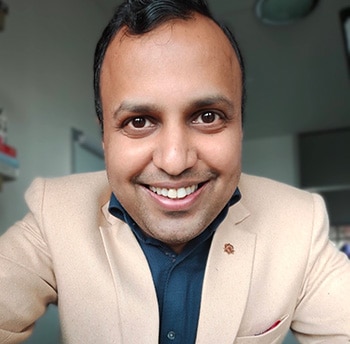
Join us in this insightful conversation with Shak, founder and CEO of VTest, as he shares his journey from being a tester to an entrepreneur.
Shak talks about the inspiration behind starting his software testing company and the invaluable lessons he learned from managing his family business.
With over 20 years of experience in software testing and an MBA in finance, Shak offers unique perspectives on entrepreneurship and leadership.
He discusses the importance of adaptability in today’s rapidly evolving business landscape and shares his vision for scaling up while keeping client value and team satisfaction at the forefront.
Whether you’re an aspiring entrepreneur or a seasoned leader, Shak’s story is sure to inspire and provide valuable insights for your own leadership journey.
“The motivation or the first step came from my wife. She used to be working for a recruitment company in New York that recruitment company was trying to build an application. And then we were like, okay, if you’re building, they definitely want to test it.”
“I always wanted to be an entrepreneur, but obviously we always have that dilemma that fixed salary.”
“The practical part, or let’s say the understanding and the groundwork part of the MBA, I did it at my father’s business, wherein I knew how to manage resources.”
“If you come from a business family, let’s say everything that you do revolves around that business.”
“Scaling up has been on the anvil; there have been merger acquisitions or requests coming in terms of acquiring and so on, but we always kept them on the back seat because we’re like, we try to grow ourselves and we try to work ourselves and then see once we get to that stage.”
“Nothing in terms of exit but definitely creating more value for the client. It’s also an avenue for us to reward our team members.”
“Hitting the dead end is one of the important things in terms of individual growth. We do not want our senior leaders or any of the leaders to themselves they’re dead ends, wherein they will not be able to figure out what they have to do, or whether they are not growing.”
“We do not want to be in that situation. So aligning what the individual wants with what VTEST wants in terms of the VTEST benchmark and the industry benchmark is something that keeps me more engaged in them.”
“In terms of pain point, we typically have the evolving landscape, I would say when things change by the day by the week. Adaptability is one of the challenges.”
“So adaptability is something one of my important, one of my tasks and one of the major of my time goes in finding out or researching or talking to people or talking to senior leaders and connects.”
This is the Leadership Journey series on the Choosing Leadership Podcast.
I believe we all have a lot to learn from each other’s stories – of where we started, where we are now, and our successes and struggles on the way. With this series of interviews, my attempt is to give leaders an opportunity to share their stories and for all of us to learn from their generous sharing. If you know a leader whom you would like to see celebrated on the show, please send me a message on LinkedIn with their name.
Join us in this insightful interview with Manisha Kumar, Chief Operating Officer at Global Hospitals, as she shares her inspiring journey from an engineering background to leading a group of hospitals in India.
With over 12 years of experience in the healthcare industry, including managing hospitals during the challenging times of COVID-19, Manisha offers invaluable insights into leadership, navigating stereotypes, and the importance of intuition in decision-making.
Her story is not just about overcoming challenges, but also about finding strength in diversity and making a real impact in healthcare.
Tune in to gain practical wisdom for your own leadership journey!
“I’ve been in the healthcare industry for over 12 years now, I’ve run a lot of hospitals, large multi specialty hospitals, commissioned hospitals from scratch, managed COVID in the worst of times.”
“I was very interested in finance. So I majored in finance and I was trying for a lot of consulting placements, with McKinsey and the likes.”
“Healthcare was and has been, one of the most unrealized industries; it’s just been up and up.”
“There were a lot of layers of stereotypes for me initially when I entered. I felt that there was some kind of at least an unconscious bias for somebody who didn’t come from a medical background or didn’t have that much experience.”
“I decided to play to my strengths and to deepen my learning curve, I moved out of my strategy role.”
“In healthcare, we are a service industry, and it’s largely people-driven. Whatever digitization, automation, it’s basically a people service industry.”
“I think intuition is very important. So as you were talking about the future, right? This is like there is something ahead for you that you have in your mind. I think more than your mind, if there’s something which is more emotional or more heart-based for you.”
“I think for a leader, three things are very key. One is leading by example, which is what I practice, day in and day out. So I take the first step and then have everybody follow me.”
“First, I’ll tell you about the COVID time. I think then it was very kind of, we had to think out of the box and think on our feet. We really had to invent solutions at times.”
“I try to detach myself from work as far as possible when I’m in my personal space. Because hospitals, we are a 24 by seven environment. It was inevitable for the first five, six years of my work, I would keep getting calls from work, even in the nights, and I’m continuously embroiled in work.”
This is the Leadership Journey series on the Choosing Leadership Podcast.
I believe we all have a lot to learn from each other’s stories – of where we started, where we are now, and our successes and struggles on the way. With this series of interviews, my attempt is to give leaders an opportunity to share their stories and for all of us to learn from their generous sharing. If you know a leader whom you would like to see celebrated on the show, please send me a message on LinkedIn with their name.
Join us as we dive into an insightful conversation with Robin, the COO of Avisi, a software development company.
From his early days as a developer to traveling the globe as a consultant, Robin shares his journey and the valuable lessons he learned along the way.
Discover how he mastered the art of flexibility and communication, crucial skills he acquired during his consulting years.
Robin also opens up about the challenges of leadership, emphasizing the importance of transparency and continuous learning.
With a blend of personal anecdotes and professional wisdom, this episode offers practical advice for anyone navigating the complexities of leadership and business.
You can find Robin van Breukelen at the below links
“As a developer, I always had an interest in seeing more of the project than just simply doing the coding.”
“Flexibility is something that you must have as a consultant. Prepare something, but also be flexible around what you’re gonna find.”
“It’s good to have a plan, but also accept when the fundamentals of your plan have changed.”
“Being a leader is not about pretending to have all the answers, but about being transparent and taking action to make the right choices along the way.”
“Not knowing is the gateway to future learning. If you say ‘I know,’ then there’s no scope for learning.”
“I think if you put in the time, you should be able to learn at least the basics of business. That’s how I came to understand finance.”
“One of the benefits is that I’m someone who really wants to know how things work. When I’m confronted with something I don’t know, I want to learn.”
“One of the foundational elements of our culture is trust. We give team leads a credit card to buy things for their project, trusting them to make the right decisions.”
“While we grow the company, really focusing on nurturing the culture side of the company is gonna be paramount.”
“I’m most grateful for having the opportunity to fail, make bad decisions, and learn from them without being judged by others.”
Allow me to share a story of a conversation with a CEO which happened a few weeks ago.
Me: Hey Jenny (not her real name), I know you’ve been feeling a bit stuck lately with setting ambitious goals for your company. Can you tell me more about what’s been going on?
Jenny: Yeah, it’s been a bit of a struggle. I feel like I’m running in circles. I want to set audacious goals to take my mission forward. But the last few times we did that, we did not hit our goals. So now we are not even setting big goals – which is again a problem. I don’t know what to do. How should I set goals?
Me: Let me ask you this – What does it mean when you hit your goals?
Jenny: Success
Me: And what does it mean to you when you do not hit your goals?
Jenny: It means that we failed as a company – and I failed as a leader. It’s like I’m trapped in this cycle of setting small, safe goals because I’m so afraid of missing the mark.
Me: I totally get where you’re coming from, Jenny. But what if I told you there’s a different way to look at goals?
Jenny: Really? How so?
Me: Well, here is a question for you. This will be a mind-bender so pay attention. How would your life be if success and failure has nothing to do with hitting goals or missing them?
Jenny: What?
Me: How would your life be like if whether you hit your goals or not, it doesn’t mean anything about success and failure? What would become possible for you?
Jenny: but then how would I hold my team accountable? how would I inspire my team? how would I do anything? how…
Me: (interrupting her) slow down. slow down. you are not answering the question I am asking.
Jenny: I get what you are trying to say. That there is no failure and we need to learn from failure. That I need to…
Me: (interrupting her) slow down. you are running ahead. I am not trying to say anything. I am not asking you to do anything – not even to trust me or believe me.
Jenny: uhhh… so what are you telling me?
Me: Nothing. I am asking you a question – How would your life be if success and failure has nothing to do with hitting goals or missing them? Now don’t rush ahead. Stay with the question. Close your eyes and be with this question. Don’t rush ahead to your team or any other concern. Think. Imagine. How would life be?
Jenny: That sounds… freeing. Life would get simple and uncomplicated. But is it practical? I mean, won’t I lose my drive if I’m not constantly pushing myself to succeed? (sounding confused)
Me: slow down. slow down. Can you notice this is so unusual and uncomfortable that you want to rush ahead with – “yeah but” and “what if” and “wouldn’t I”?
Jenny: hmmm… I can see that. (closing her eyes again and with a relaxation on her face) yeah I guess it would be tremendously freeing. I can set whatever goal I like – and fast. And if we don’t hit them, we would just set another goal and keep moving forward. (now almost giggling)…
Me: Wonderful. Thank you for standing in the question and looking at life from there. Now let’s talk about your concerns.
Jenny: (she continues with all her concerns about pushing herself, her team, and succeeding) Wouldn’t I just set totally directionless and unrealistic goals then?
Me: I hear you, Jenny. It’s a common concern. Think about it this way – your goals would not be directionless. they would still be aligned to your mission – the reason you started the company in the first place.
and when you’re driven by your deepest motivations and desires, rather than by a fear of failure or a craving for success, your goals become more meaningful. When you remove the pressure of success and failure, you’re free to pursue your goals from a place of authenticity. You celebrate your wins, but you also celebrate your efforts, regardless of the outcome.
And that actually increases your chances of achieving bigger goals. It’s a paradox and more importantly, the journey becomes more enjoyable whether you hit your goals or not.
Jenny: That’s a complete shift in perspective. But how do I even begin to shift my mindset like that?
Me: It is not just your mindset. This notion of success and failure and that we need to punish ourselves to succeed lives in our nervous system & in our entire culture. That is why it was so difficult to even consider this idea. The power is in staying in that uncomfortable space and taking action from there – not to fight it. Imagine a world where success and failure don’t dictate your every move. What would that look like for you?
Jenny: I guess it would be liberating. I wouldn’t feel so weighed down by the constant pressure to succeed. I see the value. otherwise I keep on doing the usual. and that will only produce the usual results – and with a lot of stress and anxiety.
Me: Exactly. It starts with giving yourself permission to explore the possibility of a world without success and failure. Sit with it, let it sink in. And remember, it’s okay to feel uncomfortable with this idea at first. Change can be daunting, but it’s often where the most growth happens.
Jenny: I suppose it’s worth a shot. I’m tired of feeling trapped by my own fears. I want to feel that sense of freedom and enjoyment in my progress again. I think I need to spend some time reflecting on this. This could change everything.
Me: wonderful, Jenny. I know that takes courage. If you can practice this, it will be a game-changer for you and your company.
Jenny: Thanks, I needed to hear that. (takes a sigh)
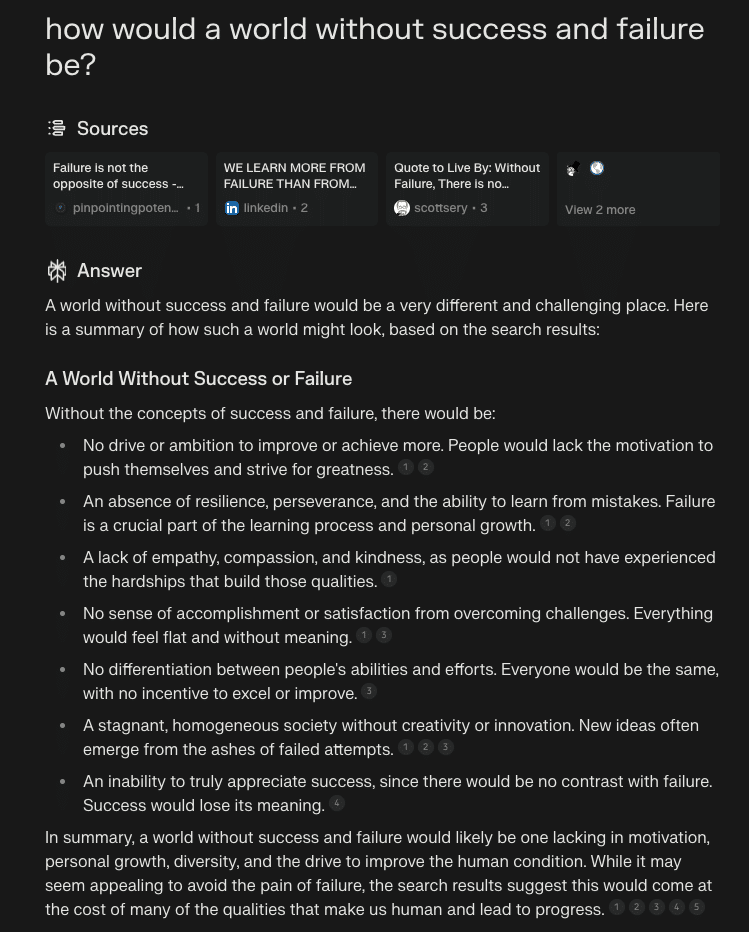
I asked AI about a world without success and failure. Its response shows how much failure and success are part of our culture. The below image is what it responded.
This narrative about chasing success and avoiding failure drives us unconsciously and harms us in ways we can not even imagine. Read the text below about a world without success and failure – yet full of commitment, peace, joy, momentum, and monumental growth and impact on the world around you.
This state is what I help my clients reach – and my results speak for themselves.
The Lie of Success and Failure
Here’s the trap: Success and failure aren’t real. They’re simply words we use to describe an outcome we’ve decided means something. When I’ve promised myself to hit a particular revenue goal or expand my business to a certain level, it’s easy to think that achieving it equals success and missing it equals failure. But in reality, these are just concepts we’ve invented to either boost our ego or knock us down.
I want to take you on a different path—a path where success and failure aren’t the goal. Instead, you lead from purpose, from commitment, from what matters to you. When you do that, you unlock a level of freedom, creativity, and power that’s hard to come by when you’re stuck in the success-failure hamster wheel.
To lead without the burden of success or failure, you need to BE a different kind of leader. You need to be grounded, unwavering in your commitment, and willing to let go of the need for external validation.
Here are the shifts you’ll need to make:
From Proving to Creating: Stop trying to prove yourself through your achievements. Instead, focus on creating something meaningful. Who cares if you’ve built a $100M business if it’s only been about proving your worth? The real game is about creating something that aligns with your values and vision, regardless of the outcome.
From Controlling to Trusting: You can’t control every outcome, but you can control how you show up. Let go of the illusion that you can control success. Trust the process. Trust that you are exactly where you need to be, and the outcomes will take care of themselves.
From Worrying to Acting: Stop wasting time worrying about whether you’ll succeed or fail. The worry kills your ability to perform at your highest level. Instead, focus on what action you can take right now. Don’t worry about the result; just take the next step, and the next, and the next.
From Achievement to Commitment: Your leadership isn’t defined by what you achieve, but by what you commit to. Commit to the process, to the people, to the mission. Achievements will come and go. What remains is the integrity of your commitment.
The Payoff
Leading without the burden of success or failure is liberating. It doesn’t mean you won’t hit big goals—you absolutely will—but you’ll do it with less stress, more creativity, and a deeper sense of fulfillment. When you stop playing the success-failure game, you start living fully in your commitment. And when that happens, magic unfolds. Your energy shifts. You become unstoppable—not because you’re chasing success, but because you’re living out your purpose.
Success is a story. Failure is a story. You are bigger than both.
A World Without Success and Failure
We live in a world defined by success and failure.
All of us want to win. Nobody wants to fail.
Yet, both of them go together.
If there is success in your world,
Fear of failure is also always lurking around.
When we hit our goals, we call that success.
When we miss them, we call that failure.
When we succeed, we rarely enjoy our success.
We try to hold on to it and avoid losing it.
We all know that feeling. Doesn’t feel like “winning”.
And when we fail, we blame and punish ourselves.
We are told that beating ourselves up gives us motivation.
In our world punishment is seen as necessary for success.
And blaming others is just another way of beating oneself up.
Hence we beat ourselves up. Over and over again.
In the long-run, it doesn’t work that way? Does it?
What if we lived in a world without success and failure?
In that world,
When we hit our goals, we hit our goals.
When we miss our goals, we missed our goals.
That’s it. Nothing less. Nothing more.
Most people find difficult to just sit with the above.
Their mind goes crazy with “yeah but’s” and “what if’s”
Can you imagine how Freeing that would be?
To live unburdened, free, and yet fully-immersed.
You can set any goal you want
Not for the high of success
But to create future results that matters to you
Not to avoid failure
But to explore, test and expand your potential
Can you imagine how Fun that would be?
When you hit your goals, you can celebrate and be proud.
You can choose your next goal from freedom rather than anxiety.
And when you do not hit your goals,
You still celebrate your effort and how far you have come
You only look back at the past to learn
Never to beat yourself or others up
You feel the same pride and choose your next goal without fear
Paradoxically
This increases your chances of achieving bigger goals
When you see that hitting your goals or not doesn’t mean anything
Either way
You experience lightness, freedom, and enjoy your progress
Isn’t this what we seem to be chasing in the first place?
I know you want to reject this idea – even the possibility
I know your mind is already full of “why this won’t work”
I know you already know that “this is not practical”
I know you think that “this doesn’t apply to me”
That’s expected. And. For once – sit in the discomfort of this possibility
A world without success and future? If real, how would that be?
You simply go for what you want
Pulled by your deepest motivations & desires
Rather than pushed by a drive for success or fear of failure
How could life be in a world without success and failure?
Give yourself permission to just sit with this possibility.
Give it space. Nothing else is needed.
It takes just two seconds to share this
If you find what I wrote today valuable, it might help others too.
Before you close, who could be the ONE person who would benefit from reading this?
I use cookies on this website to give you the most relevant experience and for analytics purposes. Any personal data collected will never be shared with any third party, or used to spam you. That is my promise. - Sumit By clicking “Accept”, you consent to the use of ALL the cookies.
This website uses cookies to improve your experience while you navigate through the website. Out of these, the cookies that are categorized as necessary are stored on your browser as they are essential for the working of basic functionalities of the website. We also use third-party cookies that help us analyze and understand how you use this website. These cookies will be stored in your browser only with your consent. You also have the option to opt-out of these cookies. But opting out of some of these cookies may affect your browsing experience.
Necessary cookies are absolutely essential for the website to function properly. This category only includes cookies that ensures basic functionalities and security features of the website. These cookies do not store any personal information.
Any cookies that may not be particularly necessary for the website to function and is used specifically to collect user personal data via analytics, ads, other embedded contents are termed as non-necessary cookies. It is mandatory to procure user consent prior to running these cookies on your website.