Welcome to the Deploy Yourself Newsletter by Sumit Gupta. Every two weeks I share about the most valuable books, articles, and stories I encounter. I start each newsletter with my thoughts on coaching and leadership — the two topics which have fascinated me since 2008. You can also read this issue online.
On Coaching
It was 2008, and this was the first time I was working with a coach. I was new to the job and unsure about the task at hand, but somehow the coach showed me a lot of confidence. He said he saw POTENTIAL in me. Ever since, I have been enthralled by the concept of Potential – and its role in enhancing performance. Over the last decade I have come to discover and believe that potential in human beings is a very malleable and elastic concept.
As a leader and a coach over the last decade, I have seen so much untapped potential in people I have worked with. This has taken on a journey to find ways to uncover and unleash this potential, and this process starts with a vote of confidence in your coachee, just like my coach did with me in 2008. Needless to say, I did quite well in that project. As Goethe once said “If We Treat People as If They Were What They Ought To Be, We Help Them Become What They Are Capable of Becoming”. This (seeing potential) has become my maxim for coaching ever since.
These are core human behaviors that play out in all relationships. While the author writes them from the therapy viewpoint, I have found them very useful from the coaching and leadership point of view too.
Watch this video on youtube to know more about this fascinating story of Abraham Wald which I read in the book “How Not To Be Wrong“. The book itself is a wonderful read. It unveils the hidden beauty and logic of the world and shows that math touches everything we do.
The book Rafa by Rafael Nadal, John Carlin shows the different sides of Rafael Nadal – the tennis champion and the human being, and how they are completely at odds with each other. Rafa the human being is insecure, indecisive, is scared of the dark and is fond of his tightly knit family life. Rafa the champion, on the other hand is decisive, ruthless, and the epitome of endurance. It was a fascinating read.
Since ancient times, storytelling has been a widely used art form not only as a tool of entertainment but also to impart information and to motivate and influence people. Many companies today, are harnessing the power of storytelling to motivate behavior and impart value systems among employees.
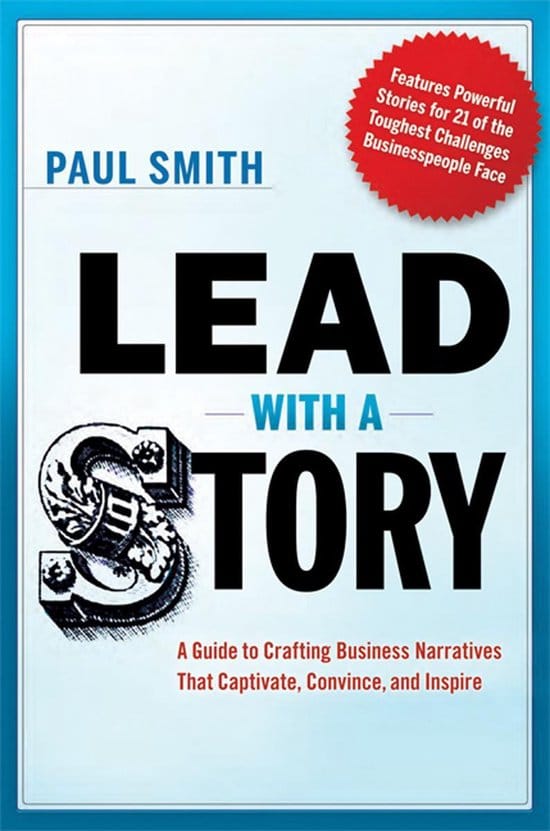
Lead With A Story (2012) by Paul Smith emphasizes the importance that storytelling plays in today’s corporate world. It is a skill that is valuable for executives, managers, and leaders alike and useful for incorporating storytelling to enhance skills. It gives us examples of how stories can benefit organizations as well as what constitutes a good story.
Why Storytelling?
Storytelling for business is not a new concept. A number of successful organizations, right from Nike to Microsoft and Costco to FedEx use corporate storytelling to good use.
Right from the beginning, stories have been used to share and impart knowledge. Before books and before the printing press was invented, the sharing of information was oral – in the form of stories. Storytelling has a number of advantages –
Anybody can learn from stories
To learn from stories, one need not be educated
Age is not a barrier for storytelling
Stories are memorable means of imparting information
They help in retaining information better and faster
Stories can appeal to all types of people.
There are three types of learners and everyone can be classified into at least one category –
Visual Learners – They need imagery for a story to appeal, about 40% of humans are visual learners.
Auditory Learners – The vocabulary aspect of a story appeals to auditory learners. 40% of learners are auditory learners.
Kinetic learners – The other 20% of learners are kinetic learners and the emotions and feelings conveyed by stories appeal to them.
Stories, as we can see, can appeal to and influence all types of people. That makes it a wonderful universal tool for reaching the masses. Additionally, in the corporate world, stories can be strategically used to get information, principles, values, and much more across to employees. Further, we shall see how stories can influence.
The Magic Of Customer Stories
Let us begin with a story.
Ray Brook was visiting Portland for a series of meetings and needed to hire a vehicle from National Car Rental to get to his meetings. At the counter, he realized that his driving license had expired. The company would not be able to legally let him rent a vehicle.
As he waited for his license renewal to come through the next day, the employees of National Car rental agreed to drive him from the meeting to the hotel and to the next meeting too! They also drove him to the DMV to get the license renewed.
The quality of the service provided by the car rental company amazed him, prompting him to write a letter to the CEO of the company, appreciating the efforts and excellent services he received.
The CEO, impressed and proud of his employees, started using the story as an example of exceptional customer service to his staff all over the country. Brook’s experience of customer service soon became the standard of service expected from employees.
This demonstrates the power of a story in motivating employees to ensure great customer service time and again. It also shows why, as customers, it is important to provide feedback on service experiences. Leaders should be on the lookout for exceptional stories to turn into learning opportunities. Simply ensuring that customers have a place to provide feedback can work wonders.
Lead With A Story (2012) by Paul Smith
Values and Culture through Storytelling
How many times have we seen the values of a company being hollow and restricted to a vision, mission, and motto on a presentation?
Storytelling is an excellent medium, through which organizations can help employees understand the true worth of the values and the culture of the company. Additionally, it helps to imbibe, among the employees, a true sense of what is expected from them.
The following P&G employee experience is an excellent example.
During the 2011 Egypt revolution, Rasoul Madidi and his family were stranded in Egypt, trying to leave the country. At the airport, flights were getting canceled due to instability. Madidi called P&G and told them his plight. P&G assured him and his family help and safety, and purchased tickets on five flights, ensuring that he would get to leave the country as soon as possible. They also provided accommodation and supplies post landing. The company put its employee first.
The story shows how the P&G really ‘valued their employees’. P&G also shares stories on their website about new mothers who have benefitted by using the company’s flexible work policy. These stories demonstrate to others that flexibility is embedded in their work culture.
Forging Diversity Through Stories
Leaders and organizations often rack their brains with ‘how to build great working relationships within teams’, especially the ones with diversity and ones where diversity is needed. The answer lies in creating a platform where team members can share personal stories.
The story of a person called Jamie is a classic example. Jamie, the leader of his team, was simply unable to bond with his team members and make friends with them. During one of the bonding sessions at work, Jamie shared the story of his bi-polar brother who had committed suicide. The story brought tears to almost everyone’s eyes and made them change their perceptions about their team leader. They started seeing Jamie as more than just a co-worker and made him more relatable.
Stories can also help people in a team understand the differences in behavior, personality, culture, personal values, etc. of each team member and give them insight into their colleague’s cultures, behaviors, and personalities.
‘Story-fying’ The Company Policy
Have you ever read the entire company policy document that lays out the rules and regulations? It’s a fair possibility that more than 90 percent of the employees do not read this vital document. How does an organization, therefore, ensure that employees are aware of certain rules and regulations, and at least make an attempt to read them?
The Answer: Through stories!
Let’s take another example from P&G. During induction, P&G employees are told a story about two erstwhile employees who were fired due to the abuse of ‘free for training members’ cafeteria services. The two employees would eat free lunch meant for only for trainees on a regular basis. While their sneaking went unnoticed for some time, they finally got caught and were fired.
The story helps outline some important company rules and prompts people to go through the company policy.
Inspiration And Motivation Via Stories
Storytelling is the perfect medium to inspire and motivate employees. Whether motivation and inspiration is needed to finish a tough project or to reinforce the values of perseverance, stories can help a leader cross that additional mile and give his team the needed push.
The story of John Stephen Akhwari, a Tanzanian Olympic Marathon runner is a well known motivational story. Akhwari, in the 1968 Olympics suffered a dislocated knee during the run. Instead of giving up, he continued the agonizing run to the finish, reaching the stadium an hour after the winner. When he was asked why did he continue running despite his injury, he replied, “My country didn’t send me 5,000 miles to start this race, they sent me 5,000 miles to finish it.”
Inspirational and motivational stories of examples within the company can also be used as well. Nothing works like a story that is close to home.
Context, Action, Result
We have seen the ‘why’ and the ‘how’ storytelling is beneficial for corporates. However, what constitutes a good story?
All through primary schooling, we learn that a story contains an introduction, a body, and a conclusion. In the corporate world, the same principles apply. Context, action, and the result are the three main ingredients of a good story.
Context – ‘Context’ refers to the introduction of the story – when and where does the story takes place – and helps the audience understand what is the story about, and whether it is true or hypothetical. The context introduces the protagonist and the antagonist (if any) and places the setting of the story. The context should be relatable and capture the attention of the audience.
Action – Essentially the body of the story, ‘action’ refers to the actual story. It describes the difficult path the protagonist takes to reach a goal or enumerates the failures encountered to finally succeed. The action is the journey of the story towards the finish.
The result – The ‘result’ of the story is its conclusion. The result of the actions of the protagonist has a verifiable outcome. The result always has learning or a moral that the audience learns from and can take home.
Any story that follows a tight context, action, and result is a successful story. However, there are two more vital elements, without which any story will be ineffective.
Elements Of A Good Story
Context, result, and action form the framework of storytelling. However, the two elements of emotion and surprise can help grip the audience’s attention and help the message of the story hit home.
A good, successful story always creates an emotional connection with the audience. However, the story has to appeal to the right emotions to make any impact. For example, a story about valor and bravery is of no use if the idea is to invoke cautiousness among employees, just as an emotional tearjerker will have no appeal if the outcome needed is bravery and candor.
Most emotional stories and their connections can be observed by going through customer surveys of feedback and experiences. These are an organization’s treasure trove of storytelling.
Along with emotion, the element of surprise is very useful to wake-up an audience and to keep their attention in focus. Surprize can be used at the beginning of the story to make the start gripping, in the middle of the story to get the audience to focus, or even at the end to create a climaxing effect to the suspense.
Adding surprise to the end of a story helps in memory consolidation – a phenomenon where the memories are created in the moments following an experience. Storytellers often use memory consolidation by attaching memories to particular stimuli such as adrenalin. The element of surprise ensures that the story remains firmly planted in the audience’s mind.
Conclusion
Storytelling is extremely lucrative for businesses. Right from emphasizing the importance of the company policy to appealing to diverse team members, stories can help leaders and organizations share knowledge, motivate employees, and even build successful teams.
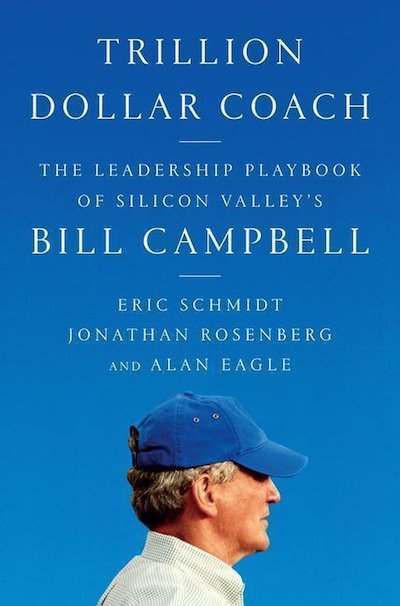
Trillion Dollar Coach (2019) is the story of Bill Campbell. It is an endeavor by Google’s Eric Schmidt, Jonathan Rosenberg, and Alan Eagle, to chart the course of Bill Campbell’s incredible journey as a coach, an excellent businessman, and mentor whose leadership skills; advice and guidance shaped many of Silicon Valley’s stars.
The Story Of An Unorthodox Business Guru
Before we begin with Bill’s exceptional ideas on leadership, management, and team building, let us begin with the simple story of the Silicon Valley Legend. Bill Campbell was born in Homestead, Pennsylvania in 1940 to a physical education teacher; Bill had the fire to make a name for him right from the beginning. He was intelligent and quick-witted and a die-hard football fan.
He joined the Lions, the Columbia University football team when he moved to New York to study economics. He was never built to be a football player though. He is 165 pounds and a mere 5ft10”, which made him the smallest member of the team. However, he quickly earned a nickname ‘Ballsy’, due to his will and fearlessness. In 1961, his captaincy earned the Lions the Ivy League Championship.
Over the next decade, after he moved to Boston College as a football coach, he became an established name in the football-coaching scene and started getting offers from some well-known names, including Joe Paterno from Penn State, one of the top college football coach. However, he gave up the opportunity because, at the same time, he was offered a job by his alma mater, and his loyalty took precedence over everything else.
From The Field To The Valley
He started a job at J. Walter Thompson and his fervor and enthusiasm were on display in the advertising industry as well. His clients loved him and one of them – Kodak managed to pull him out from the agency and place him as the head of consumer products in Europe.
His foray into Silicon Valley began when his long time friend John Sculley, moved from Pepsi to become the CEO of a new start-up called Apple. Bill Campbell accepted the offer because he knew that in the corporate world, his unorthodox background wouldn’t let him climb the corporate ladder any further.
His decision was a great one because, within nine months, he was made VP of Sales. Furthermore, it was in this role, that he made the smartest decision in the history of the company when he was to oversee the launch of Apple’s flagship product – the Macintosh.
He gave the go-ahead for an ad for the Super Bowl in 1984 that took on the dystopian novel by George Orwell – 1984, even though the Apple board did not approve it. His decision to approve the controversial ad paid off, making it a historical moment in the world of advertising by introducing the world to the concept of Super Bowl advertising.
The Winds Of Change
Things started taking a different direction in 1990 when Bill Campbell was chosen to head Claris, the spin-off software venture. However, when Apple decided not to make Claris public, Bill knew that it was time to move on.
He still managed a decade more in the industry before he moved on completely to coaching, mentoring, and business consulting. He lived by his own management rules. His years as a business coach are fondly remembered by some of the stalwarts of Silicon Valley. His coaching was significant in the success of Google and other companies. Here is how he did it!
1. Returning To The Core
Campbell joined Google in 2001 when the company was in the midst of an experiment, where Co-founder Larry Page had decided to do away with the concept of managers from the organization. Bill knew that the ‘disorg’, though successful, wasn’t a sustainable one. After much deliberation and arguments, he suggested that the opinions of those at the receiving end – the engineers – be taken into consideration. The response from the engineers was unanimous. They wanted managers!
According to the engineers, while the freedom was great, they needed managers to resolve stalemates. Moreover, they needed someone with the authority to make tough calls. A 2005 American Journal Of Sociology states that though flat hierarchies work well to imbibe and foster creativity, they do not always result in the successful implementation of those very creative ideas.
Bill Campbell’s answer to how to manage a balance between the two was simple. He suggested looking back at the first basic principles that define the mission and the values of the company.
Trillion Dollar Coach by Bill Campbell
2. Showing Emotions Help Build Relationships
Bill Campbell understood that showing care and concern for the people you work with are signs of an effective leader, irrespective of the common notion that showing emotions at the workplace is a sign of weakness or incompetency.
Sigal Barsade and Olivia O’Neill, in their 2014 study found that organizations that practice emotional openness have lower rates of absenteeism, higher employee satisfaction, and better team performance. Such openness breaks down barriers between personal and professional, creating a more accepting environment.
Bill Campbell was warm and informal with his colleagues and was ever ready to help people in trouble. For example, he visited Steve Jobs every day in the hospital while he was riddled with cancer. In another example, Bill would make board members get out of their chair and clap for a presentation they liked, akin to how a parent appreciates a child, according to Phil Schiller.
Bruce Chizen from Claris adds that Bill’s easygoing cafeteria or elevator conversations were a way to start forging lasting personal relationships with colleagues. While it wasn’t as easy for Bruce, he realized that it wasn’t a difficult habit to imbibe either.
3. The Positives Of Loyalty
Perhaps one of Bill Campbell’s most endearing qualities was his loyalty. Right from the beginning – his loyalty towards his alma mater when he joined as a coach or the fact that Bill was the only prominent leader at Apple who argued against the board’s decision to oust Steve Jobs in 1985 are examples that show how deep that quality ran within his personality.
It was this very quality that got Jobs to hand him the position of Director at Apple from 1997 to 2014. Moreover, it strengthened their relationship. His involvement and loyalty to the company helped Apple bounce back from near bankruptcy on the way to becoming the Apple that we know today.
Similarly, Bill’s words of wisdom and loyalty to friends during the famous Sunday afternoon walks at Palo Alto helped Eric Schmidt’s Google – then a start-up – reach the heights it has reached today.
4. Bias Can Make Talented People Get Ignored
Bill was at the front when it came to ensuring that the best talent always got an opportunity. Deb Biondollilo, the head of HR at Apple then, narrates an incident where Bill was instrumental in ensuring that women got equal opportunities to showcase their mettle.
Bill had noticed that Deb would always take the backseat at the board meetings. One day he encouraged her to get to the front. When she finally plucked the courage to come up front, an executive Al Eisenstat was skeptical until he got the nod from Bill to accommodate her. That was just the beginning of helping women make it to the forefront in a male-dominated workspace.
His views that hiring women translates to more productivity are supported by the 2010 study published in the journal Science. It found that teams having a higher collective IQ and emotional intelligence have more women.
5. Trust Makes Boardrooms Tick
What is trust?
A 1998 Academy of Management Review journal states that ‘trust is all about a willingness to take a chance because you have positive expectations for someone else’s behavior.’
The fact that Al Eisenstat accepted Deb in the forefront of the board meeting, and Deb’s courage to come up front, are classic examples of the fact that both, Al and Deb, trusted Bill’s judgment.
Bill earned people’s trust by simply listening to what they had to say, a method Al Eustace, Google’s computer scientist, calls free form listening. Additionally, he always asked questions. His way of respectfully asking questions made speakers feel a sense of belonging, and autonomy and feel competent. This is what made him a valuable and trustworthy conversation partner.
Bill also understood that trust has the power to turn arguments into positive experiences rather than personal attacks. Trust brings objectivity to a conversation, enabling the people in an argument to give a fair hearing to what is being said.
6. Not Dwelling On Negative Emotional Responses
Eddy Cue, an Apple executive remembers that Bill had a great philosophy – to get emotional responses to setbacks out of the way as fast as possible and to get moving ahead in meetings. He never wasted his time in meetings lamenting about failures.
He employed a technique called problem-focused coping that involved utilizing one’s energy for constructive problem-solving. Essentially, Bill would keep the venting short and move on to finding a viable solution for the problem at hand.
A Different Kind of Memoir
Bill Campbell’s shooting star-like journey in Silicon Valley shows many leaders that the background of a person isn’t a yardstick to success. His insights into management, leadership, and his coaching strategies have helped make some of the world’s resounding successes what they are today.
The authors’ admiration of Campbell and this book is a way to show gratitude – a moral, philosophical, and financial gratitude – is clearly visible in the many tales in the book.
The lines between other traditional departments of an organization and the sales department have become blurred. The function of sales now overlaps the roles and responsibilities of each employee in an organization. Interaction with customers has become a vital role and thus, ensuring that the customers, clients, and vendors have a great experience has become important too.
In fact, selling, or sales has been an integral part of every human life, since time immemorial. The erstwhile barter system has given way to full-fledged, complex sales, advertising, and marketing, and is today, one of the most important functions that are vital to the growth and sustainability of any business, entrepreneurship, and start-up, or corporate.
To Sell Is Human by Daniel Pink is a perfect guide for everyone, arming them with techniques and tools to enhance their selling skills.
The “We Are All In Sales” Ethos
Considering that ‘sales’ is now everybody’s job, incorporating a “we are all in sales” ethos in any business is essential. For example, Atlassian, the enterprise software company, generated more than $100 million in revenues without having any dedicated sales force in the year 2011. How did they manage that?
The answer lies in incorporating an attitude of “selling their business” during every interaction with clients, customers, and vendors. In the United States, entrepreneurs are slated to soon be the majority of the workforce. With this in mind and the fact that start-ups usually cannot afford a sales department, the responsibilities of sales fall on everyone’s shoulders.
Today, the average employee spends 40% of their time convincing, influencing, and persuading others. This is also called non-sales selling, or moving people. In the Ed-Med (education and medical) industries, the largest job sectors in the US today, non-sales selling and moving people is a fast growing concept.
To Sell Is Human by Daniel Pink
The New Tenets Of Sales
Salesmen have had, for some time now, a negative “slick, pushy, used-car salesman” image. Salespeople could get away with anything earlier, especially in the used-car dealerships. This happened just because salespeople had more information about the product than the buyer, and that not making a bad buying decision was the customer’s responsibility (a concept known as caveat emptor or buyer beware).
Today, the Internet has made information available at our fingertips and the ‘information asymmetry’ has reduced. Customers today, can even expose dishonest companies online, damaging their reputation and business.
Today, honesty, transparency, and service have become the new tenets of sales, making customer satisfaction and experience vital to salespeople. This shift can be seen in non-sales selling as well. In the Ed-Med industry, with information easily available online, service is more important.
The New ABC’s
The age-old, ABC’s of selling (Always Be Closing) has given way to a new ABC of moving people – Attunement, Buoyancy, and Clarity.
Attunement – Attunement refers to one’s ability to perceive things from others’ perspectives and then act. How can one, therefore, be attuned?
Attunement does not include empathy, which refers to feeling. While empathy is important on should understand what the opposite person is thinking and apply ‘cognitive perspective-talking’. This implies, that contrary to the belief that ‘sales’ equals ‘extrovert’ behaviour, people should move towards being ambiverts – a blend of introvert and extrovert. This is because classic extroverts cannot se beyond their own perspectives, are not understanding of what the customer thinks, and can actually hurt sales. Ambiverts, however, have the ability to listen and then attune their perspectives to that of their customers.
To be attuned, salespeople should always assume that they are in low-power position because power makes people oblivious to any perspective apart from their own making them stick to their own views. Additionally, subtly mimicking actions, behaviours, and postures of their customers increases the chances of closing deals.
Buoyancy – Rejection in the field of sales isn’t uncommon. However, it is essential that every salesperson stays afloat for the next customer that comes in. Buoyancy is that continuous will to keep selling day-after-day despite rejection. How does a salesman, therefore, keep buoyant during, before, and after rejection?
Interrogating self-talk or asking oneself the question, “Can We fix it?” is a better way to deal with a tough task such as sales, as averse to previously-famed self-motivational declarations like, “I am the greatest and I can do it!” Interrogative self-talk forces one to think of possible solutions and strategies during rejection. Buoyancy keeps a person positive, broadens one’s perspectives, and thus perceive the customers’ problems better. Such an outlook can even help a customer consider the alternative suggestion after an initial rejection.
Buoyancy also implies that salespeople should stay positive even after rejection. It means adopting an attitude where one tells oneself that this rejection is simply temporary and not a permanent feature. One rejection isn’t a personal setback. Seeing the positive in a bad outcome helps people deal with the regular rejection that they face as salespeople.
Clarity – Salespeople are no more the sole custodians of information. Therefore, sales and non-sales persuaders, have to find a new method of moving people.
They need to work with clarity; which means that they should focus on making customers view their situations and needs in a new light. Help customers identify their problems by sifting through the vast amounts of information available to them, rather than seek solutions is more valuable as a sales service.
Once the customers understand the information given, the salesperson should make their sales pitch while comparing their product with another, as comparison helps customers perceive the product they need in a better light. Additionally, giving customers fewer choices and limiting their options increase the chances of sales.
Another way of adding clarity is by offering customers an experience rather than a product. This means that customers respond better to a sales pitch where they get first-hand reviews of the product being used. This means that the information given to customers should be clear and detailed.
Short and Engaging Pitches
We are bombarded with a lot of information from all directions all the time. Most of this information is in the form of advertising and marketing. If we look at Elisha Otis’ effective pitch for his invention in 1853, he cut the cable of an open elevator he was standing upon, at the height of at least 3 stories, in front of a captivated audience.
As they gasped, he didn’t budge. His invention, the automatic safety brake was a success, as was his pith to his audience. If we consider sales pitches today, we know that they have to be faster and shorter than they were in 1853. Considering the modes of communication we have today, they have to be short enough to fit in a Twitter headline or fit an email subject line. For example, President Obama’s 2012 campaign slogan was just one word “Forward.”
In addition to short, pitches need to be engaging, to stand out from the crowd of information we get. Pitches that get the customer involved in developing the pitch and contribute their ideas are often more successful. Such pitches mostly involve the customers answering a question; one that will make them think in favor and this move them. Another trick to make a pitch work is to use the concept of having a rhyme scheme. Rhyming appears to make statements look and feel symmetrical and accurate.
Using Improv In Sales
Often, salespeople rely on scripts – designed to bring about the desired result from customers – to make their pitches. However, with the complexity of sales increasing and being more dynamic in nature, it is essential that salespeople be prepared for sudden changes.
The unscripted ‘improve’ concept revolutionized classic theatre by creating an environment of open-minded interaction. Improv put the focus on listening to others, a skill that is most essential for salespeople to be able to know what their customers want and are thinking.
There are two more vital components of using improv. The first one is to understand that moving people doesn’t happen in a vacuum. Therefore, in the case that a salesperson is working with a partner, they should always try to make the partner look better in from of the customer. This is called a ‘win-win’.
The second component is to use, “Yes, and…” or “Yes, but…” while responding to one’s customer opinions and ideas. Adding an affirmation creates a positive tone and helps a customer understand that the salesperson understands likes their idea, but has a better one to offer.
Personal And Purposeful
Sales, today, is no longer an exchange of goods. It has become more personal and purposeful, and salespeople have to customize the personal experience for each customer. It involves adding a personal touch to the service that the salesperson is providing.
For example, a restaurant owner who puts up his photograph with a contact number for complaints adds a personal touch to his restaurant’s service. It tells customers that he is open to suggestions for improvement. This attitude will make customers come back to the restaurant.
Along with personal, adding purpose to the service and conveying it to customers is essential too. For example, in a study conducted to promote hand hygiene among doctors, it was found that they responded better to patient-oriented “Hand Hygiene Prevents Patients from Catching Diseases” rather than “Hand Hygiene Prevents You from Catching Diseases,” that put the focus on their own health. The first campaign matched the purpose of the doctors – to care for patients. Therefore when it comes to moving people both ‘personal’ and ‘purposeful’ are vital, as selling is after all, human.
Conclusion
Sales and selling have given way to the concept of ‘moving people’. To move people, one has to redefine the ABC’s of sales into the ABC’s of moving people. Additionally, to truly move people in the sales business, as well as those engaging in non-sales selling (essentially everyone these days), can use short and engaging pitches, use improv in sales and ensure that their dealings are personal and purposeful to win over customers in this new era of sales!
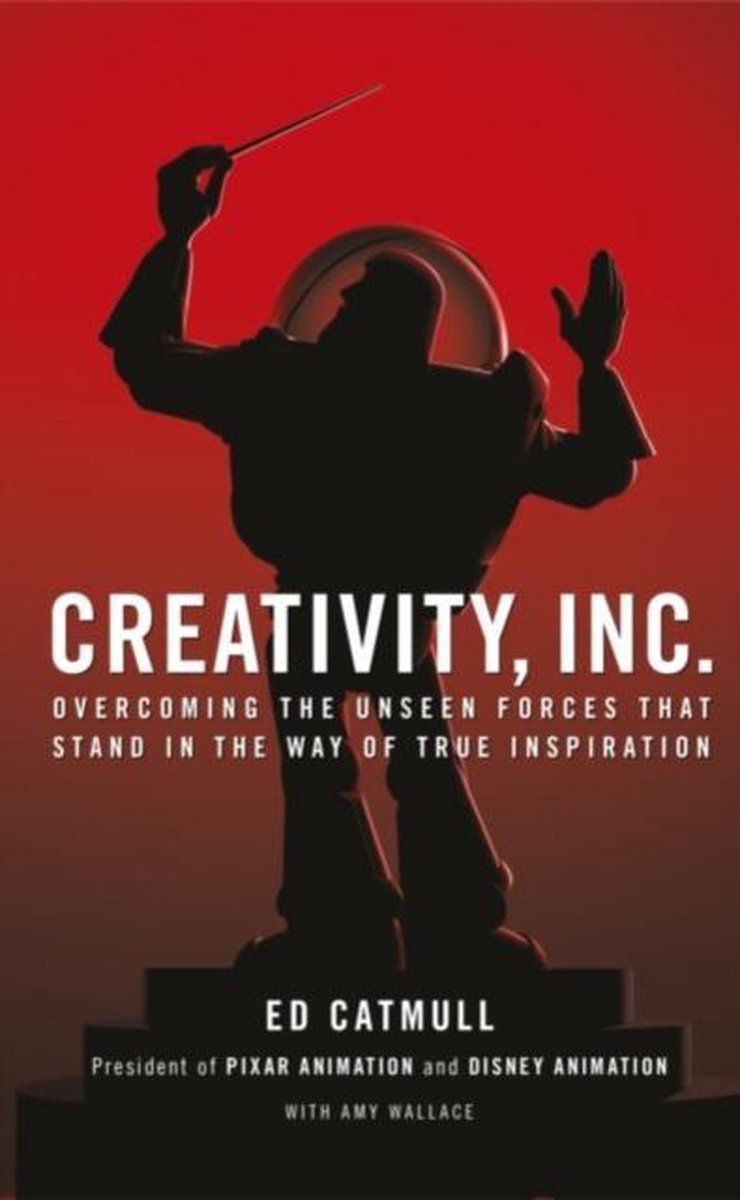
Today, creativity has become an essential component in every facet of work. All organizations expect their employees to employ creative and innovative means to solve tasks at hand, at the time ensuring productivity and profitability.
Creativity, Inc. explores the journey of Ed Catmull, President and co-founder of Pixar, which was later acquired by Disney Animation Studios. He takes us through strategies that will help us understand how to maximize creative potential, achieve excellence in management while minimizing risk and achieving success and profits along the way. Below are my biggest 8 leadership lessons from the book:
Give a good idea to a mediocre team, and they will screw it up. Give a mediocre idea to a great team, and they will either fix it or come up with something better.
1. Get Honest Feedback From Employees
Getting honest opinions and feedback from employees is essential to the successful functioning of any company. Feedbacks and opinions enable the management to understand the direction of the organization and the mood amongst employees. However, hierarchical structures in organizations cannot generate honest feedback from employees.
Companies need to create open systems of feedback between hierarchies where employees can provide their honest opinions without the fear of backlash. For example, in 2013, Pixar started ‘Notes Day’, which enabled employees to share opinions about the company openly. On Notes Day, Pixar shuts down all work for a day to have brainstorming sessions throughout the entire company.
Open feedback systems are great, however, employees need to know that their valuable opinions and feedbacks are worked upon. Often, employees tend to either avoid giving feedback to leadership fearing that their opinions won’t be considered or will be treated with disdain. It is therefore essential that everyone takes ownership of their work. If people own their work, they will take pride in finding successful solutions for problems identified.
Ed, therefore, makes it a point to meet his team members individually to understand the problems they face and makes them comfortable to share opinions with him.
2. Embrace The Fear Of The Unfamiliar And Failure
Some amount of risk-taking is necessary for any job. However, the fear of failure and mistakes makes people risk-averse, and they become reluctant to change or try something new. This fear eventually makes people proceed with caution while making decisions about the future and make them opt for the safer route. This holds true for every stage of life, whether it is for a student learning something new, or for an employee in an organization.
The fear of uncertainty and inflexibility often makes employees and in turn, the organization lose out on unexpected opportunities. During the Pixar and Disney Animation Studios merger, Ed Catmull turned down a carefully conceived two-year plan for the future drafted by the HR of Disney. He knew planning future goals in a structured manner would limit the creative possibilities and opportunities could come their way. He decided to embrace uncertainty instead of structure and went with the Pixar culture – which embraced the unfamiliar and failure.
3. Leaders Should Watch Out For Confirmation Bias
It is a proven fact that we, as humans fall prey to confirmation bias. Confirmation bias refers to the behavior we display where we tend to prefer our own views and information that confirms our opinions. This makes us blind to any other alternatives, even if they are better or even at times, the correct decisions to make.
Managers often tend to fall prey to confirmation bias over certain decisions, simply because of the hierarchy. Managers and leaders in an organization should be wary of confirmation bias and be open to listening to opinions and ideas from others as well.
The norm at Pixar was for the animators to work parallel to the production processes. However, this system of working was time and resource-consuming, resulting in many edits.
The leaders at Pixar implemented an idea given by an employee that the management move animation work to after the production was completed. It proved to be a success and helped in saving the company time, effort, and thus money by reducing the hours per person put in for the job.
When looking to hire people, give their potential to grow more weight than their current skill level. What they will be capable of tomorrow is more important than what they can do today.
4. Go The Extra Mile
Employees need the drive to go the extra mile to ensure consistent top-notch performance. This drive is often seen amongst employees who have an ambitious goal set that they want to achieve. This goal needs to be a goal that drives them to perform collectively.
Moreover, when employees see that their passion for the goal is an important part of the entire process, the drive will push them to work harder and pursue success with fervor.
During the production of Toy Story, some of the staff considered production managers a hindrance to their work. However, despite knowing that the rest of the team has this viewpoint, the production managers were able to ignore the co-workers and pursue their jobs with passion because they knew that their efforts were essential for a successful end result.
5. Hire The Right Team
No matter how great an idea the company has, it can only be successful if the company has the right people working on the idea. Moreover, even the best talent in the pool will be of no use if they cannot work well with each other.
Any organization, to be successful needs to place more importance on hiring a team of people that are able to work harmoniously with each other. It is seen that teams with people from diverse backgrounds tend to be more successful.
The truth is, the cost of preventing errors is often far greater than the cost of fixing them.
6. Trust People To Do What They Are Hired For
No one likes a helicopter manager. In fact, studies have proven that managers who tend to micromanage their teams end up killing creativity as well as the morale of the team.
Pixar has an interesting team called the ‘Braintrust’. It is a team that comprises of Pixar’s film production experts, who review the production process of all films. Nevertheless, it is the decision of the director of the movie to take their advice or not.
Managers should, to an extent allow employees to have the freedom to make necessary decisions. Managers also need to be able to trust their employees to act responsibly with the freedom given to them. The worst thing a manager can do after hiring someone is to tell them how to do their job. If you have hired correctly, leave your people alone and trust them to do their job. They will often end up surprising you with their performance.
Ed Catmull follows a rule to hire only those people he thinks are talented enough. While conventionally, managers and leaders would be insecure to hire their own competition, he finds that it produces the best teams by constantly pushing the bar.
7. Get Back Up Quickly After A Fall
Mistakes are part of life and failures are important learning opportunities. It is therefore essential that organizations have recovery techniques in place to be able to bounce back soon.
Pixar has iterative processes in place that help them accept mistakes and weed them out after each iteration. Moreover, since mistakes are the responsibility of the entire team rather than just one individual, the entire team takes time to analyze and explore their mistakes early on to avoid serious expenses in correcting them at the later stage.
Further, if there is fear in an organization, there is a reason for it—our job is (a) to find what’s causing it, (b) to understand it, and (c) to try to root it out.
8. Create An Culture Of Creativity
Leaders should help to create an environment that boosts creativity and fosters it. Things like incorporating creativity designs in the architecture and interiors of the workplace, giving each employee the freedom to creatively express themselves, and add personal touches to their desks are some ways leaders can create a culture of creativity
Another way to foster creativity in the organization is to incorporate flexibility. Rigid routines lead to boredom and hence inhibit creativity. Organizations should give employees more freedom and flexibility in working in their own styles and pace.
Ed’s Wisdom
Creativity should be at the roots of an organization. Additionally, it should be part of the value system that the organization follows. Archaic strategies and systems of working should be discarded to invite new creative ways of working. Organizations can include more flexibility by ensuring their people function well as a team, by building trust with employees, giving them the freedom to express, and weaving a creative environment and atmosphere into the very fabric of the organization.
I use cookies on this website to give you the most relevant experience and for analytics purposes. Any personal data collected will never be shared with any third party, or used to spam you. That is my promise. - Sumit By clicking “Accept”, you consent to the use of ALL the cookies.
This website uses cookies to improve your experience while you navigate through the website. Out of these, the cookies that are categorized as necessary are stored on your browser as they are essential for the working of basic functionalities of the website. We also use third-party cookies that help us analyze and understand how you use this website. These cookies will be stored in your browser only with your consent. You also have the option to opt-out of these cookies. But opting out of some of these cookies may affect your browsing experience.
Necessary cookies are absolutely essential for the website to function properly. This category only includes cookies that ensures basic functionalities and security features of the website. These cookies do not store any personal information.
Any cookies that may not be particularly necessary for the website to function and is used specifically to collect user personal data via analytics, ads, other embedded contents are termed as non-necessary cookies. It is mandatory to procure user consent prior to running these cookies on your website.