January 2019

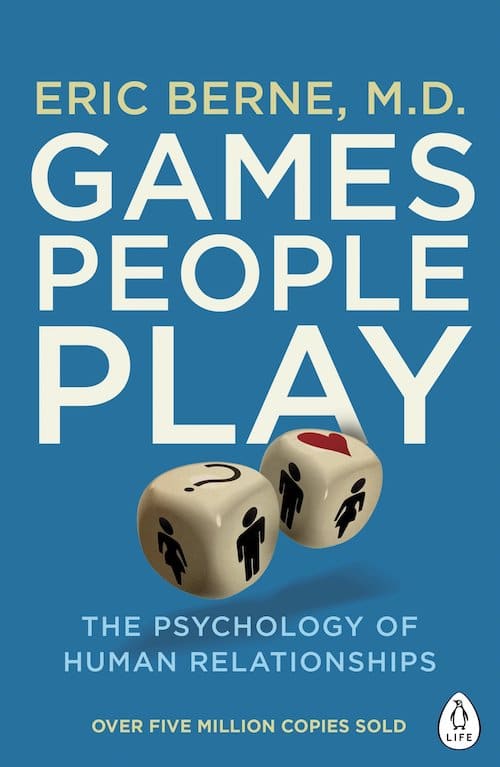
  • Games People Play (1964) by Eric Bernie – Book Review & Summary

    Eric Bernie’s Games People Play (1964) compares human behaviour and relationships to games. It dissects the psychological, manipulative behaviours people unconsciously play with each other and end up alienating close ones. It shows how to escape these self-destructive behaviours and find real intimacy from amidst the bizarre psychological games.

    To understand why people indulge in such behaviour, it is imperative to understand the basics of human psychology. Fist to understand oneself, it is important to know that behaviours have recurring patterns. After conducting thousands of observations, the author found that the three ego states – The Parent, The Child and The Adult influence behaviour.

    The Parent, The Child, And The Adult

    The Parent, The Child, and The Adult are the three ego states that are a system of feelings, behavior, and thoughts that develop as we go through life. Past experiences as well the present situation of a person decide which state influences the current actions of a person.

    For example, children are known to emulate their caretakers. This imitation gives birth to the Parent Ego. Therefore, if a child grows up with parents who shout in anger when the child does something wrong, the child unconsciously emulates this behavior when they grow up. While the parent ego state isn’t always negative, it is an unconscious reproduction of one’s parents’ behaviors.

    The Adult state is the basis of rational thinking, information processing, and talking issues by applying logical thinking. The adult ego state develops when one reflects on childhood experiences and uses the learning to make present decisions. For example, the behavior a person exhibits when their car breaks down and they analyze the engine to figure out how to fix the issue.

    The third ego state – The Child – reflects the natural, instinctive, and spontaneous behavior we are born with. The child ego state brings out our creativity, emotions, and intimacy. While the child state can, over time, get buried beneath the parent and the adult states, it can be coaxed out, or brought out by spontaneous actions. For example, it is the child state that dominates sexual actions, because it is a spontaneous behavior that is not learned or taught by parents.
    The Games People Play

    When the author says ‘games’, he actually means the behaviors that people exhibit. These games are actually predictable interactions between the ego states. For example, when a wife scolds her husband for throwing worn clothes on the couch, we see an exhibition of the Parent-Child ego interaction. On the other hand, when a group of friends is planning a party, we see the Adult ego state in play. In both these examples, the ego states and the goals are clearly visible. However, there are interactions that we see often, where neither the ego states nor the goals are clear. That is when the games are in play.

    Let’s take an example of a man and a woman flirting with each other at a party. He invites the lady to see his record collection. The lady in turn says that she loves records. While on the surface we can see two Adult states having an innocent conversation, beneath the surface two Child states are at play. The goal of sexual intercourse is disguised by the goal of showing and seeing the record collection.

    Here, both, the man and the lady know the game that is in play, however, in many cases people don’t know that they’re playing a game, or part of a game, or even why they are playing it!

    These games, conscious or unconscious, can lead to serious, detrimental circumstances, and thus it is important to be able to understand these real-life relationship games.

    Games That Last A Lifetime

    Real-life games aren’t always like a Monopoly board game that gets over in an hour. Some real-life games last a lifetime and can be deadly serious.

    1. The Game of Alcoholism – Alcoholism (if considered a game) has a specific goal and many hidden motives. Alcoholic behavior is complex. For example, when an alcoholic seeks help, it can is viewed as Adult behavior. However, beneath the surface, the alcoholic is challenging loved ones to try and stop the alcoholism, the underlying work of the Rebellious Child ego state. On the other hand, the loved ones of the alcoholic, though appearing to e in the Adult state reasoning, are actually in the Parent state scolding the Child.
    1. Now I’ve Got You, You Son Of A Bitch – In this game, the main player pounces on even the smallest injustice due to years of underlying, suppressed rage and anger. Even a small incident of getting accidentally overcharged at a grocer will send the person into a fit of anger. Underneath this rage, the person feels secretly delighted for a chance at unleashing the suppressed anger. The grocer in his own game of life could be stuck in his own narrative of unhappiness – that of always being a scapegoat for unfairness. Here, the grocer’s Child ego comes into play making him behave like the naughty child getting scolded every time for a mistake.

    The Games Of Marital Life

    Marriage means compromise. Couples need to find ways to fulfill their conflicting needs within this bubble of compromise, thus becoming a veritable battleground for ego states. The games people play in marital life can destroy even the most solid relationships. Let us look at the marital games people play once the honeymoon period in a marriage is over.

    1. Courtroom – Courtroom is a game that is often played when a marital couple visits a therapist. While on the surface one can see three Adult states in conversation, in actuality it is a Child spouse complaining about the partner. The therapist plays the role of the Parent, condoning the other partner’s behavior and giving the Child-spouse a Parent who validates its complaints.
    1. Frigid Wife – This game is played is often seen among couples, where the wife sexually rouses the husband with certain behaviors (such as walking in the room in lingerie) but rebuffs her husband’s sexual advances accusing him of being obsessed. She plays on the prejudice that all that men want is sex. Here the wife’s Parent ego, and not Adult ego, is at play. When the husband’s Child-ego responds to her sexual advances, the Parent chides the Child.

    Social Games

    We see behavioral games at play in social gatherings or parties. While the more common games such as charades are essentially harmless, there are others that can prove to be devious.

    1. Schlemiel – This game is seen when a guest tries to force forgiveness out of the host by ‘accidentally’ breaking a vase or spilling wine, etc. Here, the guest (Schlemiel) is actually forcing the Parent state of the host to show self-control. Thus the irresponsible Child state of the guest continues to make ‘accidents’ happen and challenges the Parent.
    1. Why Don’t You-Yes But – We often see the situation at a party, where one person seeks an opinion or advice on a problem from the group, but keeps dismissing the solutions given. The group, in this case, aren’t conversing in the Adult state, but are actually, Parent states conversing with a persistent burdened Child who keeps telling them that they can’t help.

    Dangerous Games In The Bedroom

    Many couples indulge in games in the bedroom to enhance their sex lives and have fun. However, some games played within the confines of the bedroom are often psychological, have nothing related to either sex or fun. These games played consciously or unconsciously can end up harming the basic construct of married life.

    Rapo – Rapo is a game that gets played to use sex as a means of exacting revenge. In Rapo, the player, often the female, incites sexual acts and then accuses the partner of assault. The confrontation that follows is perceived as taking place between Adults, however, the interaction is actually taking place between two Child egos. While at first, one Adult seeks compensation for the assault and the second apologizes for going too far in the act, in reality, the violator secretly likes the feeling of being irresistible whereas the accuser feels that their prejudices about the bestial nature of sex are being confirmed.

    The game works on the fundamentals of guilty pleasures, wherein, the accuser gets to have sex guilt-free by placing the blame and responsibility of sex on the violator.

    Uproar – In this game, a fight is used as the premise to diffuse the uncomfortable sexual tension between two people. Take an example of a couple sharing an apartment with a friend. If there is any unwanted sexual tension between one of the partners and the friend, especially if the second is a Frigid Wife, the friend and the partner start a fight to diffuse the sexual tension between them.  When one leaves the house in anger, the aim to be away from each other is achieved.

    Rule-Breaking Games

    Sometimes, people with a tendency to lead a life full of rule-breaking indulge in such games. If we see movies about thieves, criminals, con men, etc., we often feel attracted to their characters, simply due to the dangerous lives they seem to lead.

    1. Cops And Robbers – In Cops and Robbers, the protagonist seems to an Adult ego scheming to live a more luxurious life. However, actually, the goal is to not get caught for the crimes committed. Such people actually want the cops to catch up with them. Thus they leave accidental clues or exhibit arrogant behavior when caught. This confirms their perception of themselves as losers in the game of life.
    1. Want Out – Want Out is a game that is often played by a criminal who does get caught. These criminals sham behavior that shows they want to get out of jail. However, they actually want to stay longer. They tend to take dangerous risks in situations where they know they will get caught. Their Adult behavior that appears to want freedom, is actually the disguised child that prefers to avoid the unpredictability of the outside world.

    Games In Psychotherapy

    With so many games people play in life, one gets the feeling that everyone needs psychotherapy to understand and avoid these games. However, even the field of psychotherapy has many games that are played by the therapists themselves.

    1. Indigence – Often, people visit psychotherapists to fix whatever is wrong in their lives. They discuss a problem and seek ways to fix them, exhibiting Adult behaviors of trying to rationally discuss the issue. However, in actuality, neither, the psychotherapist nor the client wants the psychotherapy to stop. The therapist likes to be the Parent caring for the client’s incompetent Child ego.
    1. I’m Only Trying To Help You – The relationship between a therapist and his client is often about the Parent-Child ego. The Parent (therapist) gives the Child (the client) a solution that they know will not work. When the Child comes back unsuccessful, the Parent takes pleasure in condemning the Child’s incompetence, reinforcing the therapist’s image as a Parent in a world full of incompetent Children.

    A Life Without Games

    Imagine a world where no one played games with each other. How would that world be?

    We know that the games people play make their lives miserable. Therefore why do people continue to play these games?

    To begin with, most people are not aware that they play games. Most of the games develop over a period of time and are invented and played long before we are born. Additionally, every culture, every family, and every relationship has its own set of games played. This is the bane of human psychological intricacies that are extremely complex.

    Moreover, these games have an important function. They help people interact with each other without the need for getting too intimate within relationships. They are used as a means to hide one’s true self by playing different roles. It also allows people to be social without making themselves vulnerable to others. 

    On the flip side though, true human connection relies on intimacy and vulnerability. Therefore, to make true relationships, people need to learn the different games played and drop their masks, exposing their vulnerabilities to others. Paying attention to the minor details in interactions with people can help in developing more honest and meaningful relationships.

    To be ahead in the game of life, it is important to understand that people have an inherent fear of intimacy, and the first step is to lose that fear. By showing others our vulnerable selves, one can help them in dropping their own masks, thereby creating closer relationships and more meaningful connections.

  • How to be Emotionally Intelligent with Written Communication at the Workplace

    Emotions play a big part in our communication in the workplace, either face-to-face or written. The way we express our emotions requires us to be sensitive to others’ emotions. In the same way, we also need to be sensitive to our own emotions and values and respond accordingly. The mastery of our own emotions is a skill that can help us become more productive at work. Working on how we express ourselves can greatly affect how we connect and collaborate with others.

    Expressing ourselves through written communication is a challenging task as we have limited means to express our ideas. Email, chats, and all other sorts of documents in a workplace often focus totally on the subject or topic; which makes it difficult to understand the emotions behind them. However, I feel we need to make space for our emotions, ideas, and thoughts to be freely expressed in any form of communication to build lasting trust and cooperation with our colleagues.

    “People will forget what you said. People will forget what you did. But people will never forget how you made them feel.” – Maya Angelou

    Pros and Cons of Written Communication In The Workplace?

    The digital age has made communication faster and more accessible. We’re able to send messages to people we can’t meet personally in a more efficient manner. Emails and text messages can distribute information to people anywhere in the world while we’re at the comfort of our desk.

    We use written communication in many different situations at the workplace. Some of these situations can be found below :-

    • Sharing important information through emails to different division members
    • Providing feedback on documents sent to us for review
    • Responding to messages asynchronously
    • Requesting permission for vacations leave and other administrative tasks

    These situations can get challenging since you need to fit your message into a certain format and you’re left to express your message often only through text. There are no verbal and nonverbal cues to help you express your thoughts.

    So, where does emotional intelligence fit? Emotional intelligence can help us in phrasing our emotions into words and sentences. The knowledge of our emotions serves as a guide to how we can communicate better with other professionals.

    Communication, in whatever form, is never detached from our personality (thoughts, emotions, beliefs). Even a simple email or letter is already an expression of ourselves. Emotional Intelligence is not just about communicating verbally and listening to others. It is about expressing ourselves clearly regardless of what medium we use for communication.

    Written communication, while it is effective, also has drawbacks. Since messages are limited to written text, they can get lost in translation. The way we choose to express the message can be interpreted differently by the other person. Some parts or the whole intent of the message can be misunderstood.

    When dealing with people, remember you are not dealing with creatures of logic, but with creatures of emotion. – Dale Carnegie

    What Can We Do To Avoid Confusion And Misinterpretation?

    By being careful about a few ideas as listed below, we can make written communication easier for others to process and understand :-

    1. Write messages in simple and short sentences. Written communication is about effectively transferring information. By adopting a simple style of writing, we become more effective since there is less room for misinterpretation.
    2. Ask others if they understand the message you’re expressing. The most effective way to ensure that no miscommunication happens is by confirming the message with others. There’s nothing wrong with asking colleagues if they understood the details you provided.
    3. Be careful about being funny or sarcastic. It’s alright to add some humor to messages, but be sensitive to others who might get offended or misinterpret them.
    4. Avoid emotionally-charged messages. Written communication is not meant for emotional release. Ask yourself if you would have the courage to say the same thing face to face. If not, don’t express it as an email either.
    5. Ask for acknowledgment if you expect something back. Or follow up if you don’t hear back or hear an unsatisfactory response to make things clear.

    When Should We Not Use Written Communication?

    While written communication may be helpful, there are times when its use is not the best choice. Having the presence of mind not to use written communication if the situation calls for it is also being emotionally intelligent. Some situations like those listed below might require a personal conversation instead of written.

    • Discussing sensitive or emotion-loaded discussions – Written communication cannot express the full spectrum of emotions and messages we wish to send to others. Verbal and nonverbal cues are important when talking about sensitive topics to be able to fully express emotions and communicate the message without room for misinterpretation.
    • Personal discussions – Personal discussions often require attention and immediate feedback. The nature of written communication, unfortunately, cannot fit the needs of these important discussions.

    In conclusion, becoming emotionally intelligent requires us to know when and how written communication can be used in a professional setting. Doing it well allows us to capitalize on human relationships and unlock the huge potential when people work together for a common purpose and mission. On the other hand, if not done well, it can also go downhill pretty quickly.

  • Do You Know your Emotional Triggers? And What To Do When You Are Emotionally Triggered?

    “Mastering others is strength. Mastering yourself is true power” – Lao Tzu

    I am sure we’ve all experienced a sudden emotional reaction. It happens when our thinking starts to become clouded, and feelings (of fear, anger, or sadness) overwhelm us. While it’s not always possible to avoid emotional outbursts, there are always better ways of expressing our emotions without suppression or explosion.

    Our emotions play a crucial role in the workplace too. Anybody who tells us otherwise doesn’t understand that human beings are emotional beings, and just because we are at work we can’t expect to not have any emotions at all.

    Teamwork and cooperation rely heavily on each team members’ communication. Here’s where identifying our emotional triggers becomes important. Understanding our own emotions also helps us understand how we can interact better with others. Rather than suppressing or controlling our emotions, we should be able to express our emotions in a way that we can be proud of in the long term, and which just doesn’t give the kind of short term relief an emotional outburst provides. When we are able to do that, we build trust and cooperation with colleagues which in turn translates into better quality work.

    When Do We Become Emotionally Triggered?

    Every one of us is unique. We have our own likes and dislikes, personalities, and habits. We sometimes refer to this as our “identity” as individuals. We all have our own unique and different emotional triggers as part of our identity, and some of us are more sensitive to these emotional triggers than others.

    Our beliefs, values, culture, and past experiences shape how our identity is formed. In a similar fashion, our means of expressing emotions are shaped over time. They are learned and slowly become habits unless we intervene and decide to change them.

    But what causes our emotions to trigger in the first place? There are different factors that can trigger our emotions. Figuratively, emotional triggers are stimuli that can press our hot buttons. Like an Achilles’ heel, we usually try to guard ourselves against these triggers.

    Understand Science Based Facts About Emotions and Ease Your Shoulders of Their Burden
    Do You Know Your Emotional Triggers?

    What Factors Cause Our Emotions to Trigger?

    These triggers can vary from the simplest things in our daily life to more personal ones, but they can be classified into common factors such as the following:

    • Undesirable memories of people, places, and events – Anything that reminds us of a past traumatic experience can be an emotional trigger. These memories evoke strong emotions that might cause us to behave differently.
    • Stress and lack of comfort – Some situations cause our emotions to stir without us knowing why. The loss of comfort and the built-up stress in these situations weaken us and cause our emotions to trigger.
    • Conflicting beliefs, values, and culture – Our emotions often trigger when we feel that our identity is being attacked. While some of us can be aware when this happens, most of us instinctively have our emotions triggered whenever conflicting beliefs arise without us realizing so.
    • Pet peeves and dislikes – The things we dislike, whether or not we’re aware, also trigger our emotions depending on how much we dislike that thing. While pet peeves don’t always trigger strong emotions, these dislikes may weaken our emotional barriers and make us more emotionally vulnerable.

    Once these emotional triggers press our hot buttons, we often become overwhelmed with emotions. As a result, our actions can often end up sending the wrong message. These can strain our relationships with people around us, or give an impression to others which we might not want to convey.

    Knowing what our emotional triggers are is the first step to expressing them wisely. Becoming less vulnerable to emotional triggers requires knowing where our weak spots hide. As we get to know more about ourselves, we learn our emotional triggers and become more skilled in expressing emotions in a way that we can be proud of. When we think of it this way, we can turn our emotions into a strength rather than a weakness.

    How Do You Identify Your Emotional Triggers?

    “But feelings can’t be ignored, no matter how unjust or ungrateful they seem.” – Anne Frank, The Diary of a Young Girl

    We can’t always avoid stressful situations. At work, we face these situations when heated arguments happen and conflicting views arise.  There will always be times when our emotional triggers suddenly act up. Whether we like it or not, we still need to collaborate with different people and their different identities. It all boils down to how we react to what we face.

    range-of-emotions

    To be able to identify our emotional triggers, we must begin with introspection or the process of examining our emotions. Like a river, our emotions flow continuously. Learning what causes the tides of our emotions to change will help us identify our emotional triggers. Our bodies can also help us identify these changes.

    • Start by identifying the physical symptoms of uneasiness and stress. Our body sends warning signals to our brain without us consciously knowing. These signals manifest into physical symptoms that we can identify. Involuntary shaking, sweating, increased heartbeat, and headaches are common symptoms that our mental state is vulnerable. You’ll notice that these physical symptoms arise when we start becoming highly emotional. By mastering this knowledge, we can identify the emotional triggers that cause us discomfort.
    • Notice changes in our behavior. Our actions and mannerisms usually change when our emotional triggers affect us. Changes in the way we interact with certain people or in our routine are also symptoms of a weakened emotional state. In the same way as physical symptoms, we can also learn more about our emotional triggers by noticing patterns in our behavior.
    • Identify common patterns. Learning more about our emotions and emotional triggers requires us to identify some common patterns. We need to know our dominant emotion before, during, and after periods of being highly emotional. Through this method, we can slowly map out how our emotions play out when we are triggered.
    • Reflect on your actions when you became emotionally triggered. There will be situations when you will not know what exactly triggered your emotions even if you’re already aware of some of your emotional triggers. The best way to adapt to these situations is by reflecting on our actions and identifying what we can do to prevent the same situation from happening again.

    What To Do When You Are Emotionally Triggered?

    “He that knows patience knows peace” – Chinese Proverb

    When worst comes to worst, we need to think and act fast and not panic. Below are some ways to avoid acting impulsively and doing something which we would regret later. 

    • Take a break – Take a pause, right where you are. Stop speaking if you are talking and take some deep breaths.  Get present to your body inhaling and exhaling. Let your body calm down and slowly relax. This will help you diffuse the situation as fast as possible. 
    • Get out of the situation (if possible). If it’s an uncomfortable situation that you can get out of, then do so immediately. You’ll know when you need to leave if you’re starting to feel physical symptoms. Removing yourself from the situation gives you a chance to recover. If you can’t get out of the situation, patiently wait for an opening to excuse yourself.
    • Write it all down in a journal. Feelings of blame, justification, guilt, or regret may often linger after having emotional outbursts. What you can do is to write your experience down in a journal. Keep writing until you have nothing left to say or express. Releasing all of the lingering emotions into a journal not only helps you release those emotions but also helps document your progress. P.S. – Don’t send it to anyone. Read it a few times and delete/destroy it.
    • Reflect and continue learning from the experience. Learning about ourselves is a continuing experience. Reflect on what you did and what you can do differently the next time. By reflecting on our past actions, we can always find ways to express our emotions better. 
    • Seek professional help if you need to. There’s nothing to be ashamed of in seeking professional help. This could range from asking a trusted mentor for advice or seeking intervention from a trained doctor. Some of us have grown up with several emotional triggers that greatly affect our daily life, and seeking professional help is sometimes necessary to live a more meaningful life.

    Avoid Intoxication

    Though there is always a temptation of doing so, we must avoid taking drugs and alcohol to feel better or suppress our emotions in the short term. Drugs and alcohol do not only remove so-called “inhibitors” but also weaken our mental state to the point where we become increasingly sensitive to our emotional triggers. What’s worse is that we tend to act more impulsively under the influence of alcohol that can cause harm to our relationships and people close to us.

    In conclusion, the process of controlling our emotions goes hand-in-hand with learning about our true identity. Like how the seasons change, so too does our identity. Different experiences will eventually lead us to learn more about ourselves. Hopefully, this article will guide you in identifying and adapting to new emotional triggers that you’ll discover.

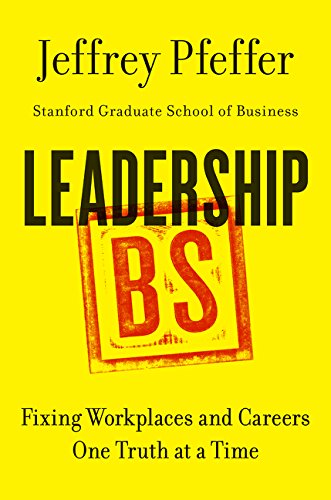
  • Leadership BS by Jeffrey Pfeffer – Fixing Workplaces and Careers One Truth at a Time

    Business and corporate life is a cutthroat world, where perceptions of popular and successful leaders have been created in fiction. While there is no doubt that these leaders have presented phenomenal leadership learning’s for the rest of the world, their climb up the ladder has always been documented in a positive light, leaving the negatives in darkness.

    Leadership BS: Fixing Workplaces and Careers One Truth at a Time (2017) by Jeffrey Pfeffer lifts the veil off the rosy picture that most leadership books and biographies put forth, and gives us an alternative insight into what a nasty business the way up to the top really is.

    Mythical Storytelling

    Who doesn’t want to tell an inspiring tale of a person who rises from the ashes of struggles, only to shine at the top of the business ladder? Well, everyone does, especially since everyone wants to listen! Heroic stories make books sell. Yet they do not give the true picture.

    Take the example of Jack Welch, well-known CEO of General Electric. Books often tend to leave out terms such as ‘GE Jerks’ and ‘rank and yank’ – the former being a name for a type of workers that existed under Welch’s leadership, and the latter, being a system of ranking all employees and firing the bottom 10% year-on-year, irrespective of overall career performance.

    Additionally, literature never mentions the number of pollution lawsuits GE has faced, the price-fixing schemes, or the cases of fraud registered against Welch.

    Such doe-eyed authorship results in two main problems – 

    1. Flawless biographies create utopian legacies. People looking for inspiration from such books give up due to the fact that they can never imagine living up to their legacies.
    1. With this feeling, real change never takes place, because people never realise that successes can be achieved despite imperfections

    Narcissism and Self-Promotion Are Leadership Traits

    Books and leadership gurus talk about qualities such as thirst for knowledge, strong personalities, ambition, trustworthiness, drive to succeed, listening skills, empathy, etc. However, one will never see narcissism or self-promotion as virtues of great leaders. 

    Yet, research has proven that effective and successful leaders have a streak of narcissism and are prone to self-promotion to an extent. Research also suggests that some leaders are not only confident but also arrogant, and believe that they hold a special power over others. 

    Let’s take Donald Trump for example. As a successful businessman and leader, his self-promotion has attracted people to his positive qualities than the negatives, despite the negatives being clear enough for all to see – right down to electing him as the President. 

    It is the bold actions, risk-taking, and overconfidence of such leaders that make people respect them. A similar observation of characteristics can be seen amongst the other presidents of the United States. A study suggested that out of 41 former presidents, those with fearless dominance, narcissism, and persuasiveness received the best evaluations for leadership.

    Phony Over Authenticity

    Another fact that leadership books slide over is that the decision-making process requires heartless decision making too. Leaders need to block out their emotions while making certain decisions, need to play a phony act in some cases, and fake their beliefs in many.

    Helen Rubin, who has worked with many leaders to write biographies, believes that leaders have to put up an act. Sooner or later this act comes naturally to them. Take for CEO of Intel, Andy Grove’s wolf school. It was a workshop designed to toughen up shy managers and involved managers conditioning themselves to be brutal to face.

    Leadership can need ‘a fake it till you make it’ attitude if it takes you up the ladder, keeps you there, and most importantly if that is what is needed for the business to succeed. Authenticity can take a backseat!

    Lies, Lies And More Lies

    It is hard to believe that all leaders follow the principle of truth. George Washington’s famous cherry tree confession is an example that we learn early on in life. However, it has been proven that lying has brought success to many leaders of the past.

    A study showed that people at the top could easily lie, and lie often. This is because people in power have a lesser chance of facing the consequences of lying. Additionally, conflicts can be smoothened over by lying.

    Apple CEO, Steve Jobs, many employees claim had a distorted vision of his company and often invented his own reality.

    Trust Needs To Be Broken

    No literature list of ‘must-have’ leadership qualities can be complete without trust. Yet, trust is a virtue that many leaders lack, and disregard often. 

    A study conducted amongst American workers on trust in 2014 showed paltry results, where only 7% of the study group believed that the senior management was truthful about their actions, only 10% trusted managers to make correct decisions, and only 14% thought that their leaders were ethical and honest.

    Not all breaches of trust can be attributed to the evil schemes of the evil leader.  In fact, it is common knowledge that leaders have to undertake brutal breaches of trust due to unavoidable circumstances in business. Breaking alliances, spying on competitors, dealing with competitors, making abrupt changes in the organization structure, mass lay-offs, etc. are only a few sins committed in the name of business.

    Maintaining The Top Position

    Care and concern for the team and the employee below them is another quality of leaders that gets glorified in books. However, in reality, leaders often use their power to stay in power.

    As discussed earlier, leaders need to appear to be confident and self-promotion is of vital importance. This very fact proves that as a leader, one has to appear flawless – even if it is at the cost of making an innocent person a scapegoat.

    Leaders often tend to deceive, trample, place blame, and slash careers simply to maintain their positions on the top.

    No Reason For Loyalty

    In the corporate world, the top management will almost always protect their power, without any consideration to employees. Mass layoffs are better than the organization losing face by scaling down on office space – is a general perception. Essentially, there is not much credit given to loyalty.

    Moreover, reciprocity and loyalty don’t hold much value in the corporate world. Most organizations put themselves before their employees and consider that loyalty and hard work gets paid for every month-end in the form of a paycheck. This attitude towards loyalty and reciprocity can be attributed to the belief that in business, everything is a transaction, and even loyalty is a move towards some personal gain in the future.

    Observing The Ugly Truth

    Playacting’ is a term in sports such as football or basketball, where players fake injury to simply gain a free kick/throw. Leaders are conditioned to tune in with the benefits of playacting. They know to focus more on observing behavior patterns along with listening to what is being said. This is the reason why socializing outside the workplace has become an essential tool for leaders.

    Machiavelli’s The Prince is a prime example of the protection of the virtuous by immoral means in the name of the greater good. Leadership works on similar principles, especially, finding the least dubious methods to achieving success.

    For example, in Apple, the phrase, ‘You’ve been Steved’ was commonplace for employees who had gotten bullied and/or threatened by Jobs. While it is disconcerting, maybe the ugly truth lies in the fact that Apple’s success wouldn’t have been much without many getting ‘Steved’.

    The Crux Of The Matter…

    The crux of the matter is, while we all have had books on leadership to inspire us, most create flawless, utopian characters that are too hard to follow truly. This literatures completely miss out on reality and often hide the ugly truth behind the CEO’s desk.

    Aspiring leaders of today should, therefore, keep their eyes, ears, and minds open to the fact that leadership isn’t all virtuous and has its fair share of Leadership B.S!!