productivity

  • How I Made My Laziness and Procrastination Productive, and Used It To Read Over 250 Books In the Last 5 Years?

    The dictionary defines procrastination as “the action of delaying or postponing something”. There was a time when I used to believe that procrastination is a bad habit and that only bad or weak people procrastinate. However, after reading a lot of psychology and neuroscience research, I now realize that we are all lazy and procrastinate on important life tasks. I am yet to meet a human being who doesn’t procrastinate.

    Why We Procrastinate?

    We procrastinate when our desire to do something is trumped by anxiety, perfectionism, a fear of failure or not seeing any immediate reward (dopamine hit) for doing the task at hand. This is the psychology behind procrastination. This causes us to postpone things endlessly even when we know they are important.

    I often slip into procrastination when I am working on something important like writing an article, programming software, editing photos, etc. It is so tempting to procrastinate and do something else when the real task is uncomfortable and lacks immediate gratification. Earlier I used to waste that time by intuitively opening up Facebook / social media / news online. Once you open it, it is so easy to get sucked up and 30 to 60 minutes are gone before you realize it.

    “A man who procrastinates in his choosing will inevitably have his choice made for him by circumstance.” – Hunter S Thompson

    Social Media and news websites/apps are designed to hack your brain and keep your attention by using psychological and behavioral tricks. Most of the smartest brains in our world are working for these companies with the aim of making you click more advertisements, watch recommenced videos, and so on. Features in our apps like likes, followers, streaks, and constant notifications are habit-forming and make us want to check these apps again and again.

    The real purpose of these apps is to trigger dopamine-producing actions to give us instant gratification, which can be tremendously addictive. This is basic psychology, but most people have never studied it so they have no idea they are falling victim to an elaborate trap/system to capture and keep their attention.
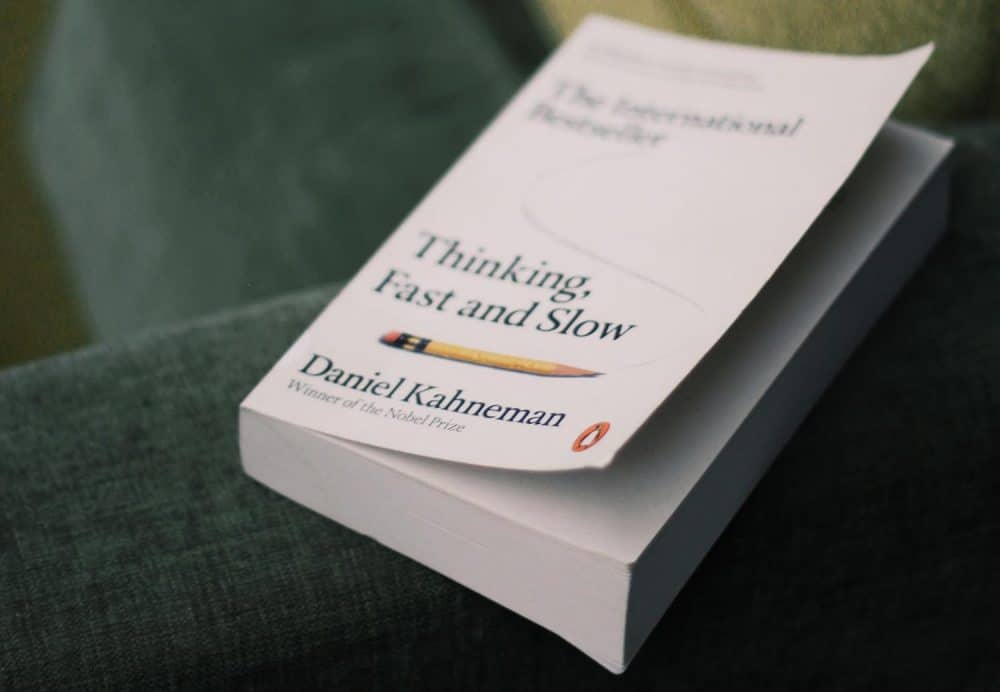
    Understand How Your Brain Works
    Understand How Your Brain Works

    Making Procrastination Productive

    Instead of fighting my procrastination (which I tried a lot), now I kind of hack it in a productive way. By not trying to resist my procrastination, I have been able to get a lot of important tasks done which I earlier believed I never had the time for. It was only much later that I realized this way of doing things is called “Structured Procrastination” by John Perry, who is a professor of Philosophy at Stanford University.

    Earlier, I always wanted to but never used to get enough time to read books. At one time I had around 40 unread books in my home without any time to read them. So I thought of using the time I wasted procrastinating away to read books instead. I decided to read whenever I would slip into procrastination mode.

    I took only 2 steps to achieve this:-

    1. I made slipping into social media/news apps difficult. For this, I turned off all notifications on all my devices – laptops and mobile phones. I also deleted all social media and news apps from my mobile phone and decided to use the browser to open them if I really need to. I also blocked all social media and news websites on my browser by using a browser extension from 5 am to 5 pm – my most productive hours.
    2. I made reading easier by making sure a book is always accessible no matter where and when I need one. I did that by –
      • Having a book I am currently reading on my phone (kindle) so that I read 5-10 pages whenever I have spare time. Ex – waiting in a queue, traveling by bus or metro, etc.
      • Always have a physical book in my backpack so that I can take it out whenever I need to without any effort.
      • Always keep a physical book where I usually am – on my work desk, at my bedside, in my living room, on my home office desk, etc.
      • This way, I always have a book accessible whenever I tend to procrastinate from another important task. It is not uncommon for me to read 4-6 books at the same time (kept in different physical or virtual locations). Usually, I end up finishing these 4-6 books in a month’s time. As soon as one is over, I open a new book for that particular location.

    “A room without books is like a body without a soul.” ― Marcus Tullius Cicero
    “A room without books is like a body without a soul.” ― Marcus Tullius Cicero

    250 Books in 5 Years

    If you want to know how well this method has worked, read on. I did not read more than a couple of books in 2014 and 2015 each. That’s when I realized I need to do something about my procrastination and I started following the above strategy. After this, I have read over 250 books from 2016 onwards (I am writing this in July 2020) using this process (all in reading sessions from minimum 5 to maximum 30 minutes long) without taking out any other dedicated time for reading. Today I read close to 50 books every year this way.

    I would never have imagined this being possible. Even now, as I write this article, there are 6 books which I am reading simultaneously – 4 physical books placed all around my house and 2 e-books (one on my laptop and phone each). I can’t even begin to imagine how much I have learned from all these books I have read in the last 5 years.

    If you are wondering what I usually read, I love to read (auto)biographies of prominent politicians, businessmen, sport stars the most. They are followed by books from my areas of interest – ranging from psychology, neuroscience, computer systems, self-help, entrepreneurship, leadership, coaching, and so on.

    “All I have learned, I learned from books.” ― Abraham Lincoln

    What Does This Mean?

    If you are wondering what is the point of this, it is to realize that we are all flawed and have skills of self-deception, many of them working on a subconscious level. Structured Procrastination is just using a little bit of imagination to work around our most innocent character flaw – procrastination. If you want to implement a similar system, here is what I recommend:

    • Make it difficult to procrastinate in your preferred way. Remove your social media apps, block them in your browser, kill your TV/Netflix connection, or just turn off your wifi while you work on your “important” task.
    • Have an alternate Structured Procrastination activity planned out which is also important but not urgent. This could be reading books, or exercising. It is important to do this pro-actively and not think about when you are procrastinating away from your main activity.
    • Have a goal which is very minimal. For me, it is reading 2-3 pages of a book, which I can do in 5 minutes. For you, it could be doing 5 push-ups wherever you are.
    • Make it easier to do. I did this by having a book always available and within reach. Finding a book that I am reading never takes more than 10 seconds, as I always have a physical or virtual copy within my sight. I have shortcuts for the kindle app all over my phone 😉
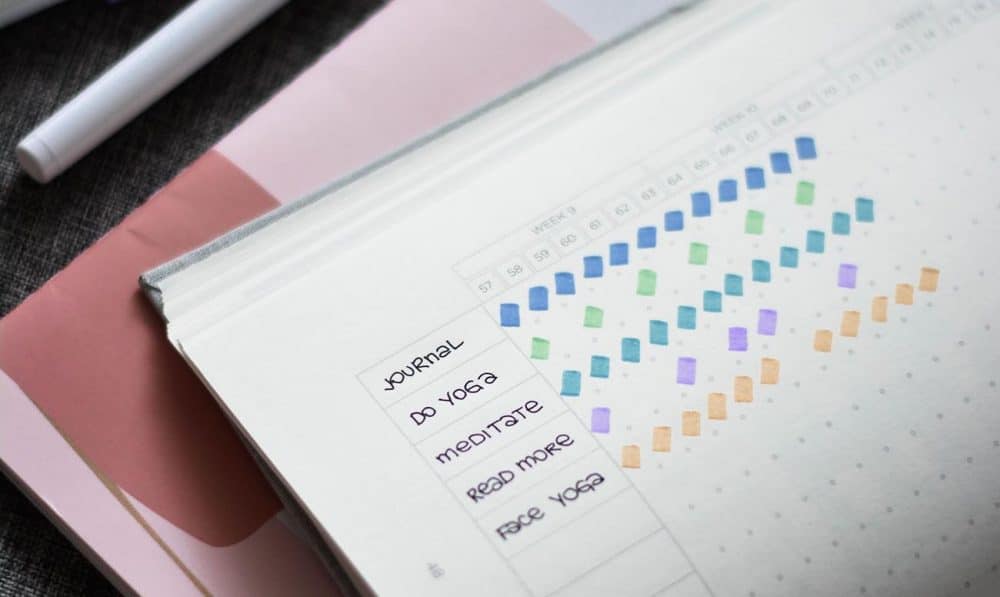
    A Simple Habit Tracker
    A Simple Habit Tracker

    Adapt As You Go

    Everyone is different. What works for me might not work for you. Once you have an initial system in place, adapt it to suit your needs as you go. For me, another recent addition (which I added only a year ago) is to mark my progress in a habit tracker. So every time I complete an activity (that I want to make into a habit), I mark it in a spreadsheet.

    Once I have a streak going, I don’t want to break it, and this way I make my own psychology work for me. This is the same concept of “streaks” which you can find in apps like Strava, Snapchat, Headspace, etc but instead of falling prey to the strategy by the app, you can use it to your own advantage.

    Another unconventional way I have recently added to tackle procrastination – I never leave a reading session at the end of a chapter or a book, as I realize starting something fresh (a new book, a new chapter) takes more mental effort than continuing what you are already midway into.

    So I always start a new book/chapter immediately after I finish one, and I always read 1-2 pages of a new book/chapter before finishing a reading session no matter how small or large that session is. This way, I am never in between books/chapters, and I am always in the continuous process of reading one book after another.


    .

    References

    1. http://www.structuredprocrastination.com/
    2. https://solvingprocrastination.com/why-people-procrastinate/
    3. https://www.nytimes.com/2019/03/25/smarter-living/why-you-procrastinate-it-has-nothing-to-do-with-self-control.html
  • 5 Research Backed Reasons Taking Regular Breaks Can Help You Get More Done

    If you have a lot to do, take regular breaks. Find out about the counterintuitive advice of taking breaks to get more done.

    Are you surging ahead in life? Is your life becoming too fast for comfort? Why not take a break?

    What did I just say?

    Do you think you have a lot more to achieve and you just can’t afford to take breaks? Does this sound like your life?

    If this looks like your life, you are not alone. Many people find it difficult to switch off from their daily activities. They feel so busy achieving their goals and targets that they do not have time to have a break.

    I am afraid they are grossly mistaken. Research has shown that a break can do wonders to increase your efficiency and productivity. Breaks have a direct and positive relationship with productivity as well as well-being.

    In this article, I will share the 5 benefits of taking regular breaks and 5 ways to take them.

    Understand Science Based Facts About Emotions and Ease Your Shoulders of Their Burden
    Too Much To Do, Take a Break?
    .

    Benefits of Taking Regular Breaks

    .

    1. Helps Our Brain To Focus Better

    Research shows that regular breaks help us to focus; thereby, allowing us to process information in a better way.

    Our brains get tired after continuous work, and taking regular breaks helps our brains to relax. Our brain demands time to rest, regroup, and gather its thoughts. We are then able to focus better when we resume work.

    For example – you do yourself more harm than good if you skip your lunch when you are in the middle of work that demands intense focus. It’s just like how an athlete allows his body to rest after an intense training session.

    2. Helps To Generate New And Creative Ideas

    Research has shown that when we take a break, our brain doesn’t just stop functioning. Instead, it is busy digesting different ideas and making connections between them.

    Have you ever solved a problem, or got a new idea while taking a shower or another non-cognitive activity? That is because our brains make sense of our experiences when it gets a break.

    A brain at rest doesn’t mean an idle brain, and that is why we often get new and creative ideas during a break.

    3. Healthy For Our Mind Snd Body

    Today’s fast-paced work culture takes a heavy toll on our mind and body. Work is the most prominent source of stress and we often run the risk of burnout, without even realizing it.

    Constantly working and not moving much puts us at a higher risk of several diseases like heart ailment, diabetes, and depression. Taking regular breaks to move around can lead to increased energy levels and improved health.

    It also decreases exhaustion by returning our psychical and mental systems to their base levels. Besides, a relaxing break helps a great deal to reset our mood. Thus it reduces stress and promotes our wellbeing.

    “All that is important comes in quietness and waiting.” ― Patrick Lindsay

    4. Helps Us Make Better Decisions

    A well-deserved break allows you to have a good look at the bigger picture and make better decisions. When you are too engrossed in a complex task and your brain gets tired, you are easily distracted from what is important, and you tend to procrastinate. In a state of busyness and overwhelm, you also tend to make poorer decisions.

    When you take a break, you give yourself a chance to reflect on your priorities and goals. Your motivation goes up and you can assess whether you are giving due importance to the right tasks/projects. This will help you make better decisions.

    5. Help Us Do More And Be More Productive in the Long Run

    All of us want to be more productive at work, right? Research proves that taking breaks refreshes our brains, re-energizes us, and improves engagement levels.

    All of the above directly lead to higher productivity over the long term. You might think you can do more in a long day, but you can’t sustain that pace without risking burnout or other health issues. Taking regular breaks and reducing your work hours will make you more likely to sustain that pace for the long term.

    Taking A Break Beside a Canal in Amsterdam
    The Canals in Amsterdam Are My Favorite Location To Take A Small Break
    .

    How To Take Breaks?

    .

    As we have seen, taking small breaks regularly can be of immense value to your health and productivity. Now let’s take a look at 5 different ways we can do that despite our busyness:-

    1. Take a Walk in Nature

    Take a stroll amidst nature. One recent study has shown that it is a wonderful remedy to calm your mind. They call it a “nature pill”.

    By nature, any green area would do – a small park in your neighborhood, or if you have a water body (river, lake) nearby. Personally, I love walking in Amsterdam because the presence of water eases off any stress I might have.

    2. Pomodoro Technique

    This is a method of time management developed in the ‘80s. It breaks down work into time intervals (usually 25 minutes), separated by a short break of 5 minutes. These intervals are called Pomodoros. One can extend the break duration to 15 or 20 minutes after about 4-5 Pomodoros.

    You can give it a try. You may download any Pomodoro timer app on your smartphone and split your workday into short bursts of Pomodoros. Do ensure though that you step up from your desk and do something completely different for the break duration.

    3. Notice What Is Going On Around You

    Being mindful of little things going around you is another way to give your cognitive brain a break. Take a few deep breaths and relax your mind and body.

    Notice the faces of people around you – the smiles and the frowns. Notice the different sounds you can hear – birds chirping, people walking, of a printer or a coffee machine, etc.

    Doing such mini-meditations for even a minute or two has been shown to be helpful.

    4. Take A Small Nap

    A small nap of 10 to 20 minutes during the day is one of the proven ways to rest your brain and increase not just your health and well-being, but also your productivity.

    A Small Nap Can Help Improve Productivity
    A Small Nap Can Help Improve Productivity

    5. Engage Your Right Side of The Brain

    Most of our cognitive tasks which involve thinking and logic happen on the left side of the brain. Another way to give our brains a break is to do something that engages the right side of the brain – which is more creative.

    Drawing, painting, listening to music, or just imagining and visualizing are some of the ways to engage our right-side brain and give our thinking (right side) brain a break.

    .

    Resources

    1. 12 Quick Mini-Meditations to Calm Your Mind and Body
    2. Why Your Brain Needs More Downtime
    3. The Overwhelming Benefits of Power Napping
    4. How to be Happier and More Productive by Avoiding ‘Decision Fatigue’
    5. Is It True That “Movement Is Medicine”?
    6. To Become a Better Writer, Be a Frequent Walker
    7. Research Reveals How to Take a Better Break
  • Do You Know the People Behind Your Colleagues? And 5 Reasons Why It Matters

    I stood next to my car door, stunned and frozen in place. I had just walked out of my workplace to leave when a stranger walked up to me and casually handed me a large, white envelope. Divorce papers.

    My children were waiting at a friend’s house for me to fetch them. My mother was in the hospital, and I’d promised to visit that day. I also had a huge work project that needed to be completed.

    How was I going to balance my busy personal life with a crumbling marriage and a high-pressure job?

    Fast forward to six months later. I’m sitting in my office. My new corner office.

    A week ago, I was promoted to the head of my department. I’m living in a new, beautiful home. My kids are happy, healthy, and staying with their dad for the week. My mom is doing better, and I am about to head home, have a glass of wine, and relax.

    How did I even get here? I ask myself.

    As I sit in quiet contemplation, I spot Martha walking past the office window. She smiles and gives me a small wave, both of which I return.

    That’s how I got here. The support of good people, who, until six months ago, were just colleagues. When my life fell apart, they stepped up and helped me through it.

    I offer up a silent thanks for the people who were no longer just colleagues, but friends and loved ones. Without them, who knows where I would be right now.

    How Well Do You Know The People You Work With
    How Well Do You Know The People You Work With

    No matter where you work, you spend most of your time at the office.

    We all know what difference a good and a bad culture make in the workplace (1). The general mood at work affects people’s happiness as well as health.

    There are five main reasons why people leave their current place of work (2). They are:

    • Poor leadership
    • Low salaries
    • Change of career goals
    • No career progression
    • Managers taking credit for their employees’ work (No appreciation)

    When people feel they are treated like resources and not human beings, they don’t like it very much. We all know how it feels like to be treated like machines, hired to just get a job done, and nothing else.

    Tools or People?

    Being treated like tools doesn’t make for a happy mood in the office. Irrespective of where we work and the kind of work we do, we all live very parallel lives. We are all humans – and we are all someone’s children, siblings, parents, spouses, employees, colleagues, and friends. This is true for everybody, no matter what their position at work.

    Modern workplaces are often designed to treat humans as resources or machines to get the maximum out of them, but all of us are more than a tool to be used for a purpose.

    Why Should You Know Your Colleagues Better?

    Well, you don’t have to. But if you do, it will help you make better decisions, create a happier working environment, and be more productive at whatever you do at work. This is especially important if you manage a team of people, as you can have a massive jump in productivity by having a simple paradigm shift of knowing your colleagues better.

    Team dynamics are important, and once you understand that each person’s productivity is tied into everyone else’s productivity, you’ll start to realize how important it is to know them a little deeper – as human beings and not just as cogs of a machine.

    Making Friends At Work Can Make a Huge Difference To Your Wellbeing

    Why Digging Deeper Is Important?

    Would you be able to tell if one of your colleagues was having a bad day (3)? And do you know that just asking that can make a big difference?

    The dynamics of the team you work in are often complex. Everyone has their own likes and dislikes, work ethics, different approaches, and opinions about all kinds of topics. By understanding the people you work with a little deeper, you’ll find it easier to connect and work with your team members.

    Apart from the productivity gain, it’s also great to have friends at work, so that you can discuss things other than work.

    Humanizing Colleagues

    Research today shows that your job becomes more fun and satisfying if you know your colleagues on a personal level. (4)

    We often forget that our team members are human as well and that they have other things going on in their lives. A colleague may, for example, be going through a divorce, or dealing with a sick family member, which would have a massive impact on their work. (5)

    We all have different ways of coping with tragedies, break-ups, and life’s other frustrations. You may have noticed some of the following signs with one of your colleagues:

    • They seem to be distracted, and there’s a sudden increase in errors in their work.
    • They may be unable to focus on tasks, which leads to poor decision-making.
    • They may be taking more time off work.
    • Their health seems to be suffering.
    • They look stressed (6).

    When you see any of these signs, think about how you would feel if you were in their situation? What type of support would you want? If you know your colleagues well, it will be easier for you to be supportive. It will also be easier for them to open up and find a safe space to share.

    You are working in a company and doing business. But you are doing it with people (employees), and for people (customers). If you do not know the people working with you, it becomes all abstract. What is the point of doing business or work, if you can’t connect with people working alongside you on a deeper level?

    “Too many companies believe people are interchangeable. Truly gifted people never are. They have unique talents. Such people cannot be forced into roles they are not suited for, nor should they be. Effective leaders allow great people to do the work they were born to do.” – Warren Bennis

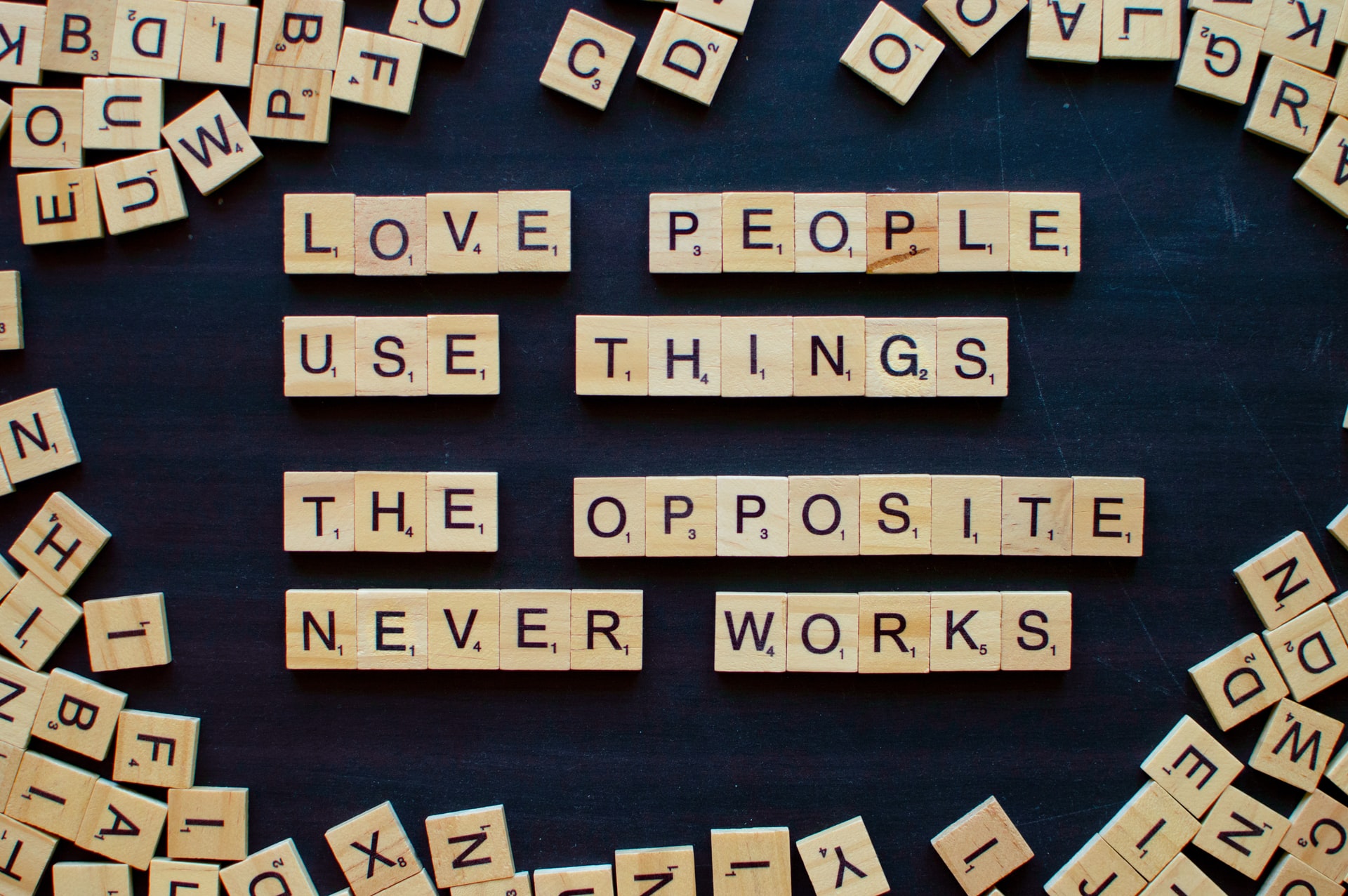
    Love People Use Things

    5 Reasons Knowing The People Behind Your Colleagues Matters

    Getting to know your colleagues personally provides the following benefits:

    1. Makes It Easier to Learn From Others

    Knowing the people behind your colleagues leads to better teamwork. And better teamwork increases the opportunity to learn from each other, as well as coming up with creative solutions.

    2. Decreased Stress Levels At Work

    If you are hating every moment at work, you will be stressed and it will impact your happiness and productivity. The same applies to your colleagues.

    Knowing your colleagues better allows you to support each other and offer a helping hand or a shoulder to lean on. If you are going into the office knowing that you have a supportive team and can have a cup of coffee and talk about what’s bothering you, your stress levels will decrease.

    Less stress at work means more productivity and fun. Which in turn leads to people staying in companies longer.

    3. Increased Sense of Responsibility & Quality of Work

    Having a deeper connection with the people you work with increases our sense of responsibility towards each other and commitment towards the business.

    When you have a closer relationship with your colleagues, you make decisions taking into account the bigger picture. Improved decision making leads to better work quality, which is a win-win for everyone.

    4. Aliveness and Joy

    If we are treated like machines in the workplace, we lose our sense of aliveness. Making an effort to get to know people better gives everyone space to be themselves.

    This affects not only office dynamics, but it spills over to how you deal with people in your lives. Everyone feels better when there’s joy and fun in the office.

    5. Increased Wellbeing In and Out of the Office

    When one area of life is difficult, everything else feels worse. Similarly, if you can improve the quality of your life at work, it spills over into your home life too.

    You are healthier, happier, and more productive if you work with friends and not just colleagues. Despite the hardships or challenges you face at work, you will remember and cherish these moments as you were in the company of friends.

    “Stop taking care of your career. Start taking care of your people. And if you do that, they won’t let you fail.” - Jim Collins
    “Stop taking care of your career. Start taking care of your people. And if you do that, they won’t let you fail.” – Jim Collins

    Conclusion

    If you don’t know the people behind our colleagues, what are you working for? Economic growth, profits, revenues, market share? All those terms become very abstract and disconnected when you don’t work with people you enjoy spending time with.

    With your work, you serve the clients and customers of your business. By knowing your colleagues better, you can directly serve the very people in your office, which leads to all the benefits listed above.

    Are you being treated like a resource or a machine? Are you treating others in your office that way? Now is the time to rethink that and get to know your colleagues as human beings. You will be surprised at the difference it can make – both inside and outside of work.