habits

  • How I Made My Laziness and Procrastination Productive, and Used It To Read Over 250 Books In the Last 5 Years?

    The dictionary defines procrastination as “the action of delaying or postponing something”. There was a time when I used to believe that procrastination is a bad habit and that only bad or weak people procrastinate. However, after reading a lot of psychology and neuroscience research, I now realize that we are all lazy and procrastinate on important life tasks. I am yet to meet a human being who doesn’t procrastinate.

    Why We Procrastinate?

    We procrastinate when our desire to do something is trumped by anxiety, perfectionism, a fear of failure or not seeing any immediate reward (dopamine hit) for doing the task at hand. This is the psychology behind procrastination. This causes us to postpone things endlessly even when we know they are important.

    I often slip into procrastination when I am working on something important like writing an article, programming software, editing photos, etc. It is so tempting to procrastinate and do something else when the real task is uncomfortable and lacks immediate gratification. Earlier I used to waste that time by intuitively opening up Facebook / social media / news online. Once you open it, it is so easy to get sucked up and 30 to 60 minutes are gone before you realize it.

    “A man who procrastinates in his choosing will inevitably have his choice made for him by circumstance.” – Hunter S Thompson

    Social Media and news websites/apps are designed to hack your brain and keep your attention by using psychological and behavioral tricks. Most of the smartest brains in our world are working for these companies with the aim of making you click more advertisements, watch recommenced videos, and so on. Features in our apps like likes, followers, streaks, and constant notifications are habit-forming and make us want to check these apps again and again.

    The real purpose of these apps is to trigger dopamine-producing actions to give us instant gratification, which can be tremendously addictive. This is basic psychology, but most people have never studied it so they have no idea they are falling victim to an elaborate trap/system to capture and keep their attention.
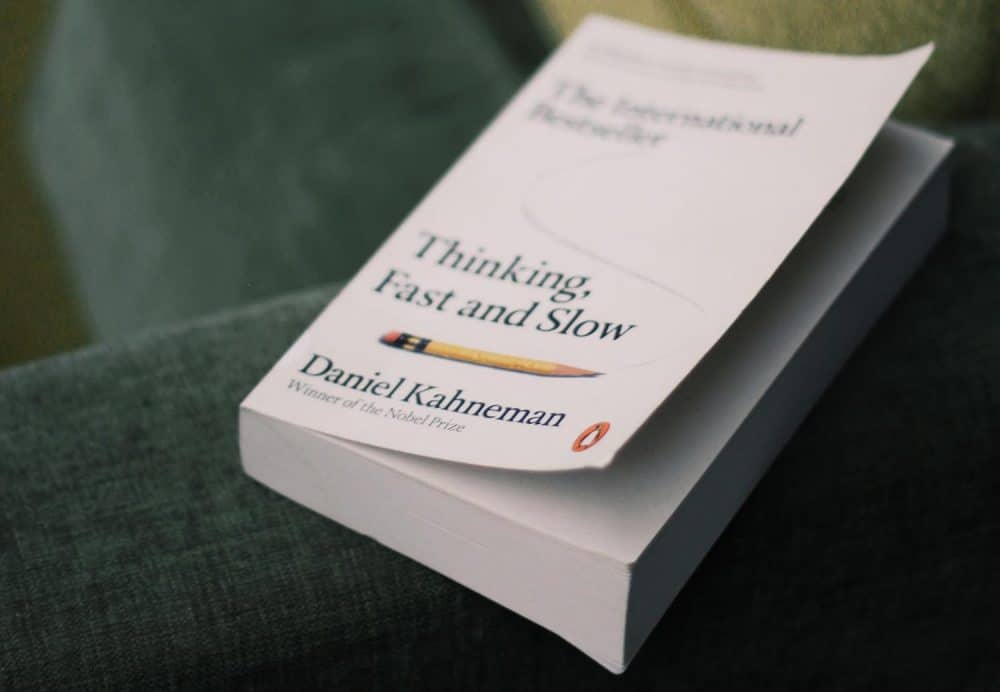
    Understand How Your Brain Works
    Understand How Your Brain Works

    Making Procrastination Productive

    Instead of fighting my procrastination (which I tried a lot), now I kind of hack it in a productive way. By not trying to resist my procrastination, I have been able to get a lot of important tasks done which I earlier believed I never had the time for. It was only much later that I realized this way of doing things is called “Structured Procrastination” by John Perry, who is a professor of Philosophy at Stanford University.

    Earlier, I always wanted to but never used to get enough time to read books. At one time I had around 40 unread books in my home without any time to read them. So I thought of using the time I wasted procrastinating away to read books instead. I decided to read whenever I would slip into procrastination mode.

    I took only 2 steps to achieve this:-

    1. I made slipping into social media/news apps difficult. For this, I turned off all notifications on all my devices – laptops and mobile phones. I also deleted all social media and news apps from my mobile phone and decided to use the browser to open them if I really need to. I also blocked all social media and news websites on my browser by using a browser extension from 5 am to 5 pm – my most productive hours.
    2. I made reading easier by making sure a book is always accessible no matter where and when I need one. I did that by –
      • Having a book I am currently reading on my phone (kindle) so that I read 5-10 pages whenever I have spare time. Ex – waiting in a queue, traveling by bus or metro, etc.
      • Always have a physical book in my backpack so that I can take it out whenever I need to without any effort.
      • Always keep a physical book where I usually am – on my work desk, at my bedside, in my living room, on my home office desk, etc.
      • This way, I always have a book accessible whenever I tend to procrastinate from another important task. It is not uncommon for me to read 4-6 books at the same time (kept in different physical or virtual locations). Usually, I end up finishing these 4-6 books in a month’s time. As soon as one is over, I open a new book for that particular location.

    “A room without books is like a body without a soul.” ― Marcus Tullius Cicero
    “A room without books is like a body without a soul.” ― Marcus Tullius Cicero

    250 Books in 5 Years

    If you want to know how well this method has worked, read on. I did not read more than a couple of books in 2014 and 2015 each. That’s when I realized I need to do something about my procrastination and I started following the above strategy. After this, I have read over 250 books from 2016 onwards (I am writing this in July 2020) using this process (all in reading sessions from minimum 5 to maximum 30 minutes long) without taking out any other dedicated time for reading. Today I read close to 50 books every year this way.

    I would never have imagined this being possible. Even now, as I write this article, there are 6 books which I am reading simultaneously – 4 physical books placed all around my house and 2 e-books (one on my laptop and phone each). I can’t even begin to imagine how much I have learned from all these books I have read in the last 5 years.

    If you are wondering what I usually read, I love to read (auto)biographies of prominent politicians, businessmen, sport stars the most. They are followed by books from my areas of interest – ranging from psychology, neuroscience, computer systems, self-help, entrepreneurship, leadership, coaching, and so on.

    “All I have learned, I learned from books.” ― Abraham Lincoln

    What Does This Mean?

    If you are wondering what is the point of this, it is to realize that we are all flawed and have skills of self-deception, many of them working on a subconscious level. Structured Procrastination is just using a little bit of imagination to work around our most innocent character flaw – procrastination. If you want to implement a similar system, here is what I recommend:

    • Make it difficult to procrastinate in your preferred way. Remove your social media apps, block them in your browser, kill your TV/Netflix connection, or just turn off your wifi while you work on your “important” task.
    • Have an alternate Structured Procrastination activity planned out which is also important but not urgent. This could be reading books, or exercising. It is important to do this pro-actively and not think about when you are procrastinating away from your main activity.
    • Have a goal which is very minimal. For me, it is reading 2-3 pages of a book, which I can do in 5 minutes. For you, it could be doing 5 push-ups wherever you are.
    • Make it easier to do. I did this by having a book always available and within reach. Finding a book that I am reading never takes more than 10 seconds, as I always have a physical or virtual copy within my sight. I have shortcuts for the kindle app all over my phone 😉
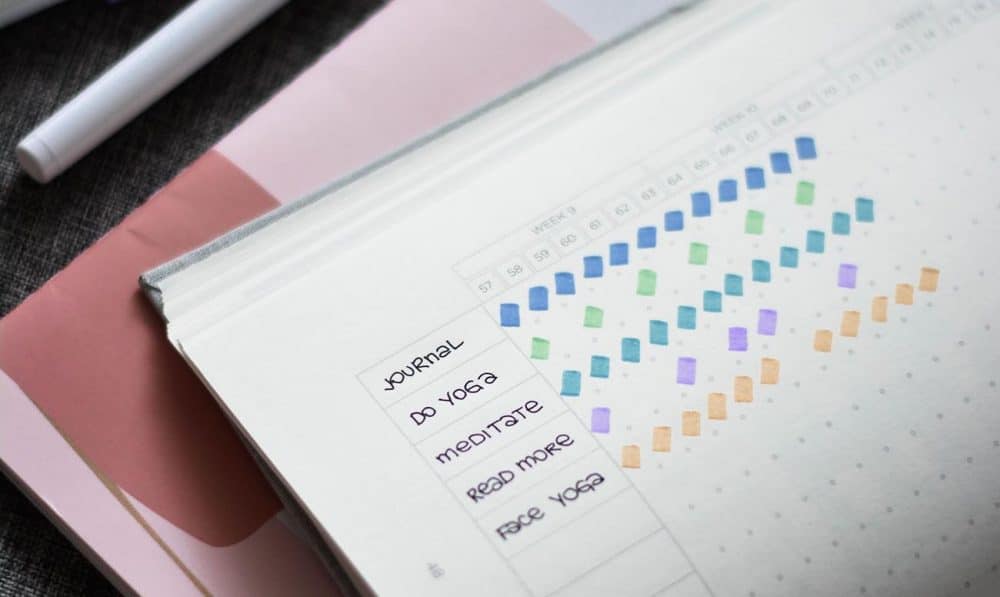
    A Simple Habit Tracker
    A Simple Habit Tracker

    Adapt As You Go

    Everyone is different. What works for me might not work for you. Once you have an initial system in place, adapt it to suit your needs as you go. For me, another recent addition (which I added only a year ago) is to mark my progress in a habit tracker. So every time I complete an activity (that I want to make into a habit), I mark it in a spreadsheet.

    Once I have a streak going, I don’t want to break it, and this way I make my own psychology work for me. This is the same concept of “streaks” which you can find in apps like Strava, Snapchat, Headspace, etc but instead of falling prey to the strategy by the app, you can use it to your own advantage.

    Another unconventional way I have recently added to tackle procrastination – I never leave a reading session at the end of a chapter or a book, as I realize starting something fresh (a new book, a new chapter) takes more mental effort than continuing what you are already midway into.

    So I always start a new book/chapter immediately after I finish one, and I always read 1-2 pages of a new book/chapter before finishing a reading session no matter how small or large that session is. This way, I am never in between books/chapters, and I am always in the continuous process of reading one book after another.


    .

    References

    1. http://www.structuredprocrastination.com/
    2. https://solvingprocrastination.com/why-people-procrastinate/
    3. https://www.nytimes.com/2019/03/25/smarter-living/why-you-procrastinate-it-has-nothing-to-do-with-self-control.html
  • The 7 Most Powerful Investments You Can Make. They Are Not What You Think

    What comes to your mind when you are asked about the most powerful investments you should make? Is it stocks? Is it bonds? Or a new house? Real estate is the safest investment, you might have heard.

    If you ask me, I would say, neither!

    Over the course of my life, with its few successes and numerous failures, I have come to see another type of investment that will give you the maximum returns – investing in yourself.

    All of us want to lead a life of high quality and success, isn’t it? We all want to be satisfied and productive.

    Most of the time when we talk or think about investing, we limit our thoughts to financial investing and to maximize our monetary returns. We believe doing so will maximize the quality of our lives in the long term.

    All that is good thinking, but I have discovered that there are some simple investments we can make in ourselves which we tend to miss or neglect. And for most of these are not even financial. You don’t need to have money to do this kind of investing.

    “Investing in yourself is the best thing you can do. If you’ve got talents, no one can take them from you.” — Warren Buffett

    Investing in yourself is a continuous process. The effort and time you put in to invest in yourself consistently will determine the quality of life you would be leading in the future.

    Below are the 7 most powerful investments you can make:-

    1. Reading Books

    I have discovered books to be like ‘power banks‘ that revitalize the human mind. They pack knowledge, wisdom, and valuable lessons from people who have lived life before us.

    My favorite books are often memoirs of successful people from different fields like business, sports, politics, activism, art, etc. Reading them gives you a whole new perspective of how they looked at life, and their struggles and achievements.

    Books can lead you to locations you have never been to. For example – reading Theodore Roosevelt’s biography by Edmund Morris took me to New York in the late 1800s and early 1900s. They can give you many interesting ideas you never would have thought of otherwise, as you relate and compare your own life to the protagonist of the book.

    Take some time out each day to read books. Audiobooks are also available these days and you can tune into your favorite book even when you are on the move. Reading for just 10 minutes daily would help you finish around 15-20 books every year. Does that sound too difficult?

    2. Foundational Knowledge of How The World Works

    The most successful people are used to thinking and reasoning from First Principles. Some notable example thinkers are inventor Johannes Gutenberg, the Greek philosopher Aristotle, and entrepreneur Elon Musk – the founder of SpaceX and Tesla.

    First Principles Thinking starts with learning about the essentials which are always true – in the world we live in, and how the people in it operate. Subjects like physics, math, economics, and psychology are the foundation of how our world works.

    The laws of physics define how the material world behaves, psychology tells you how human beings behave and how irrational we can be, economics defines how the financial world behaves – the world of money and markets which affect us all, and math is often the foundation of every kind of reasoning and logic.

    Investing time in knowing and understanding these basic foundational subjects, irrespective of your job or industry, will help you make better decisions for you and the people around you.

    You wouldn’t go to a new city without looking at its map. So why would you want to interact with people, handle your money, and live in this physical world without the basic knowledge of psychology, economics, math, and physics?

    “An investment in knowledge pays the best interest.” – Benjamin Franklin

    3. Nurturing ‘Positive’ Habits

    By ‘positive’ habits, I mean the habits that serve you and help you achieve what you want to achieve. As most people do, I have been setting goals for myself – both at work and personal – for most of my life. And as most people discover at some point, I now realize that goals (like new year resolutions) never work – at least not as well as we expect them to.

    Neuroscience and psychology research proves that habits are better than goals when we look for iterative and long term results. Goals require willpower and discipline, and still, the desired result might not be in our control. On the other hand, habits are totally in our control and take little motivation as they become part of our routine.

    The best thing about habits is that once formed, they run in the background without taking our mental cycles, just like many software programs run in the background on your computer. This leaves us free to focus on other important things.

    Habits powerfully influence our behavior. And because of the fact that they work as part of our subconscious, bad habits can be just as damaging as good habits can be beneficial.

    “Habits are powerful but delicate. They can emerge outside our consciousness or can be deliberately designed. They often occur without our permission but can be reshaped by fiddling with their parts. They shape our lives far more than we realize—they are so strong, in fact, that they cause our brains to cling to them at the exclusion of all else, including common sense.” – Charles Duhigg

    Some of the ‘positive’ habits that have been very beneficial to me are:-

    • The habit of reading books in every 5 or 10-minute gap I found in my day, instead of making a goal to read 20 books in a year. Now, I automatically default to reading whenever I have a little time and finish over 40-50 books every year.
    • The habit of writing for 30 minutes as soon as I get up in the morning, vs making a goal of writing 2 articles every week. Writing is still the most painful task I do (from a willpower point of view), and having this simple daily habit means now I don’t worry about the number of articles and just focus on writing right after getting up. Usually, the 30 minutes stretch to 60 minutes, and I have been pretty happy with the outcome.
    • The habit of exercising for at least half an hour every day, instead of making goals like running a marathon or so. Be it walking, cycling, or simple exercises in my living room, I am happy now as long as I do 30 minutes of it. In addition to the attached health benefits, this has broken the monotony of everyday life.
    Invest in Yourself
    Invest in Yourself

    4. Communication and Interpersonal Skills

    No matter what we do for a living, we all work with other human beings. Learning to communicate better is one investment we can all make, and it will produce compounded results over time.

    Understanding how human beings behave, and what it takes to convince, persuade, and influence people is as fundamental a skill as any.

    Make a habit of listening to people and giving them the value they deserve. Understand where they are coming from. Make them feel important. Learn how to put the message across, how to talk to different types of people, and how to express yourself with clarity and purpose.

    Let go of the habit of blaming others or yourself when you mess up. Own up and apologize if you need it. Build the foundations that strengthen every relationship. Focus on relationships instead of negotiating when you talk.

    5. Writing Skills

    Writing could be private (a journal) or public (a blog, book, etc). It is not only a skill to communicate and express yourself, but also to think. As you put your thoughts to paper, it helps you to clarify your thinking and form a comprehensive picture of the topic at hand.

    Research shows that writing makes you healthier and happier. It helps you deal with various difficulties life throws in a way you can be proud of. Writing about what makes you grateful helps your mental health and makes you look at life more cheerfully.

    Powerful Investments in Life

    6. Trusting People by Default

    Trust people when you first meet them. Rather than fear the worst-case scenario, have faith that the best case will turn out to be true.

    Give your energy, time, gratitude, and appreciation to people around you. See it as an investment – in people. Investment in people always tends to come back in life, and in proportions we can’t imagine.

    “Everyone thinks of changing the world, but no one thinks of changing himself.” ― Leo Tolstoy

    7. Knowing What You Stand For

    Just like ships need a compass and a lighthouse to navigate in vast oceans, we all need to understand what we stand for, to guide us in difficult times. Our deepest held values, standards, and boundaries can be that guide and keep us in check.

    When we accept the standards and values others’ have set for us, we surrender our own will and judgment. By figuring out what we stand for, we allow our unique light to shine upon the world.

    Conclusion

    As you must have realized, the above-mentioned ‘investments’ do not cost you much (money). You do not need to spend money to make any of these investments. But, you need to be consistent and invest “brick-by-brick” with your time.

    References

    1. The Health Benefits of Writing about Life Goals – Laura A. King, 2001
    2. Top 11 Scientific Benefits of Writing [INFOGRAPHIC]
    3. Have You Discovered Your Leadership Lighthouse? Why Should You?
  • How to Use The Surprising Power of Compound Interest in Life

    When I was young my mother used to wake me up 5 minutes earlier than I had told her to and made me study any of my school books before getting ready to go to school. I often used to ask her – “how would studying this for just 5 minutes make any difference?” And she would say – “You will know that by the end of the year.” It took me a few years to realize how much my good grades were determined by those 5 minutes of study time daily.

    We all know the power of compound interest when it comes to money. This article will focus on how we all can use the same principle of compound interest in other areas of our life to get enormous gains. Only if we realize, that is.

    Doing something small, which might look very trivial and futile, and doing it regularly without fail – no matter what it is, will take your skills in that area to a totally different level over time. This habit has stayed with me ever since my childhood, and I have used to learn several new skills. Below are a few examples we can make our lives better in just 5 minutes –

    1. Just spend 5 minutes reading a book every day, and by the end of the year, you will have finished many books and you will have many new skills and learnings. I still carry this habit which my mother imbibed in me so many years ago.
    2. Spend 5 minutes exercising every day, and you will be amazed at how much strength and energy you have after a few months.
    3. Getting up Early – If you get up at 8 am and want to move to a 5 am routine, start with just a 5-minute early start. Get up at 7:55 am for a week, and then get up at 7:50 am the next week. In around 9 months, you will be waking up at 5 am without even noticing it.
    4. Write – If you always want to write something but never had the time to do so, just write the topic and title of what you want to write about today. Tomorrow, just write a few bullet points. Over the next few days – take each point and expand it to a paragraph. Within a week, you will have a full-page post ready.
    5. Photography – I was always interested in making better photos and photography, but never used to get the time to do so. After 4 years of buying my DSLR, I finally decided to give 5 minutes to photography daily – whether it is shooting any subject I could find at my home or outside, or reading an article or watching a video about it. Within a couple of years, my photography skills had improved so much that I now take it very seriously and might even do it professionally at some point in the future.

    So think about the things which are not working in your life and career right now or stuff for which you don’t have time. Now, start doing just 5 minutes of it daily, and stick to it.

    Things to Take Care

    While it is easy to do something for just 5 minutes a day, it is also very easy to forget doing your 5-minute task. There are a few things we can do to keep at this habit –
    1. Set a reminder in your phone. Once the alarm goes off, make it a priority to do your 5-minute task.
    2. Watch yourself get better in that skill over time. Celebrate for 5 minutes every now and then, for sticking to the habit and for getting better.