commitment

  • Why Anger Is The Most Compassionate Human Emotion? And 3 Ways to Use it Productively?

    “Anger is the deepest form of compassion,” poet and philosopher David Whyte wrote.

    Most people do not associate anger with compassion. In fact, at first glance, it looks and feels like the exact opposite of compassion. But as with most emotions, the more attention we pay, the more aware we can be of what our anger is trying to tell us. In this article, I want to present a different take on anger – seeing anger as the most compassionate human emotion. Taking this unusual perspective about anger can reveal a lot of useful insights. Let’s get started.

    On the surface, anger looks like an ugly emotion. The feeling of an intense fire that threatens to burn not just the target of the rage but also ourselves. We have all been through that. It is in those moments when we know we are going to explode, but can do very little to stop it — that we realize the energy of anger. Often we end up spending it destructively (shouting, hand waving, punching a wall).

    Every 2 weeks I share my most valuable learnings from living life fully in my Deploy Yourself Newsletter. Sign up now to download a workbook with 164 Powerful Questions which I use daily in my work and coaching. Allow these questions to transform your life and leadership.

    What is Anger?

    Anger is a natural human emotion. Anger is one of our most primitive biological responses, and everybody experiences it. Anger is a legitimate emotion, and there is nothing wrong with it. As my mom used to say, anger is our inability to deal with what we care about, and the vulnerability that comes along with it. We get angry when we don’t know how to react (to events around us) normally.

    A lot of people see anger as a negative emotion. I wouldn’t categorize anger as negative. Instead, anger can be our guiding light. It can be a mobilization force to deploy ourselves in the face of circumstances. Every time we can do that, it strengthens and helps us behave in a way we can be proud of. Seen this way, anger is a very useful emotion.

    Anger is very useful to avoid and navigate fear and threat when our survival is at stake. The human species would not have survived unless it had been for anger. I’ve never met a human being who doesn’t feel anger. Everybody gets angry at some point in their life. People might have different thresholds for anger. People might react to anger in different ways, but everyone gets angry.

    Anger from Psychological Point of View

    Anger is a secondary emotion. What that means is that it can hide more emotions behind it. For example, anger can hide frustration, sadness, or even grief behind it. Anger is also not a static emotion. Your anger can range from mere irritation, on the one hand, to rage on the other hand. Anger can be triggered suddenly or it can linger deep inside yourself.

    Physical Manifestation of Anger

    Everyone reacts differently to anger, but there are some common physiological changes associated with it. It causes our heart rate and blood pressure to go up, and we feel an adrenaline rush when we get angry. We get a sudden rush of energy and an impulse to react in a particular way – banging our fists, cursing, shouting, venting, throwing things, etc.

    Anger is harmful to your health. It causes stress and anxiety, and it can cause long term harm like heart attack and depression. It is not only harmful to our own health, but it is also harmful to people around us, and our relationships. In anger, we tend to lose control, and we can do things that we might regret later. If we look back in our lives we can all see moments of anger where people have left a trail of destruction behind them.

    Neuroscience Point of View

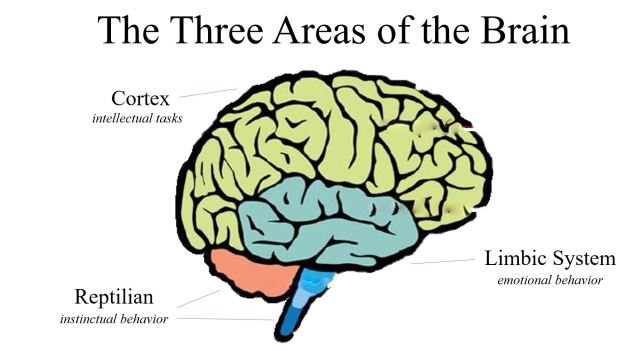
    The primary function of our brain is to ensure our survival. When it comes to emotions and how we operate on a day to day basis, our brain comprises of 3 partsthe Neocortex (the thinking brain), the Limbic System (the feeling brain), and the Basal Ganglia (the reptilian brain). The Amygdala is the deepest and most critical part of the limbic system. It is most commonly activated when dealing with intense emotions. It triggers what is called the fight or flight response.

    Research proves that when we are emotionally overwhelmed and experience a threat to our physical or psychological safety, our amygdala is triggered before our neocortex (the reasoning part of our brain) even knows about it. When this happens, the amygdala decides our behavior (the fight or flight response) and it is called an “Amygdala Hijack”.
    Anger Short Circuits Our Brain

    This is what happens when we experience physical symptoms like a racing heart, sweating palms, or a shaking body — even in situations with no physical threat. Our ages-old survival mechanism kicks off and makes us react to things primitively before the rational brain has time to think things over.

    This is one of the reasons emotions are good messengers but very bad masters. Our anger can tell us a lot about what we care about, but if we let it take over, it can short circuit the thinking part of our brain. When that happens, we react rather than respond to the situation.

    “The truth will set you free, but first it will piss you off.” ― Joe Klaas

    At the same time, just like any emotion anger can tell us a lot about ourselves. Anger has the power to clarify our thinking and reveal our moral lighthouses. But only if we are willing to listen. There are 3 ways we can use anger productively rather than let it destroy us and our relationships:-

    1) Listening To Anger Reveals What We Care About

    If we pause and reflect, anger can reveal what we deeply care about. For example – I once got angry at my manager. After reflection, I came to understand that the anger was not against the manager but against unfair behaviour. Once I realized that I was able to respond in a better way, and it revealed one of my deepest values to me – fairness and justice.

    The more attention we pay, the more we can be aware of what our anger is trying to tell us. Anger can be our guiding light and a force to deploy ourselves in the world around us in a healthy and productive way rather than destructively. As I mentioned earlier anger is a secondary emotion. It hides many emotions behind it, but we can look deeper and figure out what those emotions are.

    One way we can listen to what anger is trying to tell us is by separating facts from stories and assumptions which we might have made. Our minds can fool us easily. A thought comes into our mind after something happens, and we believe it to be true. In such moments, we can instead stop and validate each assumption which our mind is making before believing it. Whether it is true or not, or is it a story?

    Anger can show us the way ahead, and what needs to change. Because anger tells us what is not okay, what we should not do, or that a deeper investigation is required, about something which is bothering us.

    2) Anger Is An Opportunity To Practice Emotional Intelligence
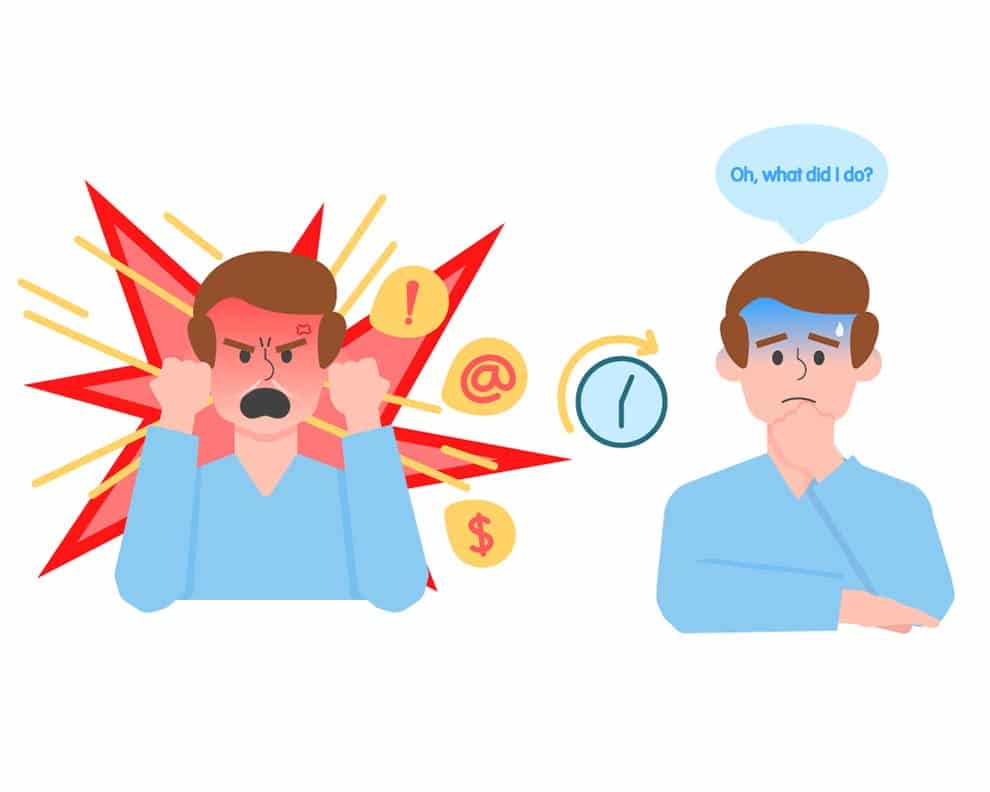
    In the heat of anger, we stop listening. We are only burning in rage. But after the immediate impulse of the anger is gone, it is an opportunity to practice emotional intelligence. And as with all skills. It gets better with practice and time.

    Anger always comes along with a temptation to react. But seen another way, every time we get angry, it is an opportunity to express ourselves in a way that we can be proud of. Venting out in anger can certainly give us immediate relief, but we often end up damaging relationships and our reputation in the process. Not giving in to that impulse is an opportunity to practice emotional intelligence.

    You might think that when angry, you can’t stop yourself from reacting. And this is why you hate being angry. But the truth is that anger is not the culprit here. Instead, it is you who lacks the ability to understand, reflect, and act responsibly in the face of your anger. Anger provides us with an opportunity to use the energy of our anger productively. When we do so, we strengthen relationships and build a strong reputation backed by responsible behaviour.

    3) Anger is Love, and It Shows Your Commitment

    We often get the most frustrated and angry at those whom we love or care deeply about. The opposite of love is not hate or anger, it is indifference. So when we see people in love fighting, it is not that the relationship is going downhill. Instead, it is a sign that the relationship has a lot of care and sincerity that is often expressed in anger. To expect anger to not arise in love is to not understand love at all.

    You get angry because you care. You get angry because you love somebody, because you love a cause or because you love a certain value. You get angry because you want to reach an important goal or you see a possibility in the future. Something happened which violates that commitment you have to the person or to the cause or to the future goal. That is what makes you angry, and that is what we need to discover.

    Have you noticed that when you are angry, you cannot think of anything else? It is because anger brings tremendous clarity with it, and forces you to focus on the current moment. If we can honor our anger instead of denying it, we can usee its energy. This energy arises because we feel vulnerable in love. If we can see it for what it is, we can use the force of anger to enrich the love which is at the root of anger in the first place.

    Every time you are angry at someone you care about, take a moment to celebrate your commitment to the person or the relationship. Your response can change massively if you keep this commitment in mind in that moment of heat. Your anger is there to serve you and your relationships, but only if you are willing to pause and listen. You get angry because you love. Allow this love to strengthen the relationship rather than weaken it.

    Conclusion

    Understanding anger on a deeper level can be poetically beautiful. Once you learn to stop acting out impulsively and express your anger keeping love and care as the underlying commitment; you can channel it to nurture the relationship. We all feel anger, so in a way, anger connects us all. It is what makes us human.


     

    References

    1. Amygdala Hijack and the Fight or Flight Response
    2. How to Turn Your Brain from Anger to Compassion
  • Five Things A Leader Must Do By Default

    In today’s corporate environment, after a few years of doing your job well enough, chances are that you will be asked to step up and lead a team. You trained and studied to be good at your job, and now getting to manage people seems like a reward for a job well done.

    By promoting the good performers to be managers and leaders, people have assumed for centuries that the skills that made you successful as an individual contributor would also make you successful as a manager. If you have led people for any considerable amount of time, you would know how false this assumption is. Yet in the business world, this continues to be the norm.

    Today I want to list down five things which you must do, or are expected to do by default, to be effective as a manager/leader. And it is likely that nobody told you this when you were promoted. I have only figured them out after leading teams for over a decade, and I believe I am on a continuous journey to learn and know more about leadership.

    1. Lead Yourself

    The first thing you must do to be effective as a leader is to lead yourself. Your relationship with your team will be determined more by your trustworthiness than by any other skill or talent you might possess. Trust is the foundation of leadership, and you build trust by leading yourself first – by holding yourself accountable for what you demand from your team. Like any worthwhile endeavor, it takes time, effort, and daily investments to build trust with your team.

    If you want your team members to honour their promises, honour your promises to them. If you ask them to be on time for meetings, you must be on time first. Or you will lose their trust. If you ask them to be respectful to each other, you must respect them first. Or you will lose their trust. If you want them to be humble, you need to exemplify that in your behaviour. If you need them to be honest and sincere, you need to acknowledge your mistakes publicly and make amends for them. You can not lead a team if you can’t lead yourself.

    2. Know Where You are Headed

    When you are leading a team, people will look up to you for providing direction. Having a well-defined purpose clarifies why the team exists in the first place. Coming up with the team’s purpose together with your team will empower them to take decisions that are in the best interest of the team.

    Listening to your team and engaging in a dialogue will allow the team to define and own its purpose. You need to spend time with the team regularly to discuss, revisit, or reshape the team’s purpose. Ensuring each member understands the team’s purpose and their role in the team will empower them to prioritize their tasks effectively.

    3. Be a Coach


    If you have people reporting to you, then you are their coach by default. You don’t have a choice in being their coach as people will approach you anyway. When they are demotivated, when they have a conflict, or when they need help for any other reason; it is your responsibility to listen, understand their concerns, and then coach them to align their personal motivations with the team’s shared purpose and goals. If you can’t do that effectively, it will impact the results the team intends to produce in the future.

    While I assert that you are a coach by default, the skills and conversations required to be a coach don’t come by default. You must invest time and effort in learning and practicing your coaching skills. How well you coach people will be directly proportional to the results the team produces. Investing in learning these skills and making coaching a priority will be your best investment ever.

    4. Demand Commitment and Accountability

    Just as every sport has a certain set of rules, each business team can come up with rules (or standards) which apply to their business and industry. These rules will govern how you work and define success and failure. Examples could be how you treat your colleagues, how complaints are handled, and what boundaries you set in matters important to the team. Once these standards are set, it frees up everyone to exercise their own creativity in making decisions. This gives shape to the ‘culture’ in the team.

    After you set up these standards together with your team, you have to demand them. Of course, for this to work, you have to exemplify them yourself. Holding your team accountable to these standards (or rules) will bring the team members together and set the team up for high performance. The intention behind it is not to punish or penalise people when they slip up, but to ensure an open, fair and supportive culture in the team.

    5. Serve Your People

    I believe that leadership is a privilege, and that each leader is a custodian of the company’s values, beliefs, and ambitions for the future. Leadership will require you to think beyond your own self-interest, and from your team or company’s point of view. In order to lead, you must be willing to serve – to put your team’s interest in front of any individual interests, which might lead you to make some difficult decisions from time to time.

    Leadership is not about power or authority, nor is it about popularity. Leadership is about character – which you will need to express yourself authentically, compassion – which you will need to grow and develop your people, and integrity – which you will need to serve your people with the respect and transparency they deserve.

    I believe that leadership is standing for something bigger than yourselves. You show your team the way, give it what it needs to do the job, and then get out of the way. Your biggest job is to create an environment of respect and accountability, where people have fun and express themselves freely by continuously moving forward towards the team’s goals.

    To sum it up, these five points above are not strategies or tactics which you can incorporate in your leadership style to get better results. These are the bedrock which will give rise to a myriad of strategies and tactics, which in turn will lead to those results. If you try to fake them, your people will call your bluff sooner or later, and you will lose all credibility and trust. An attitude of humble service will enable you to become a better leader, while taking care of your team and company’s needs.

  • Are you Interested? or Are you Committed?

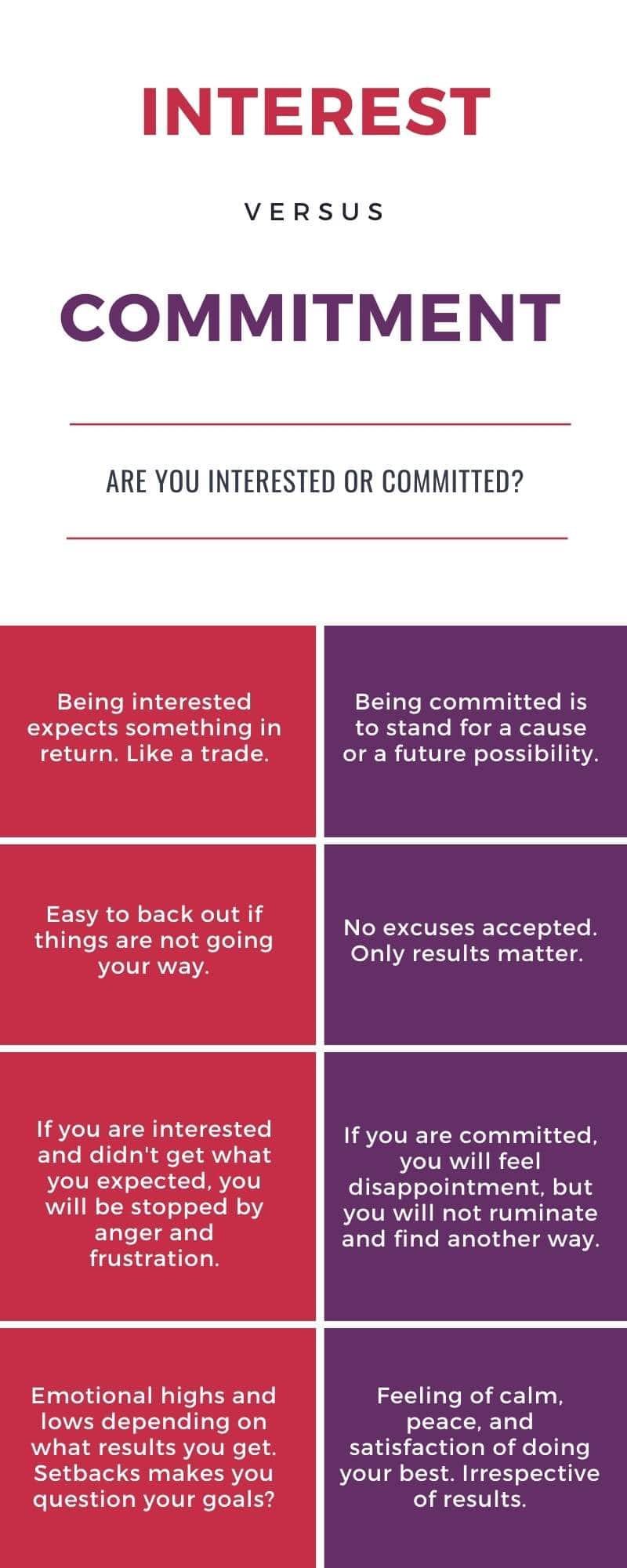
    When one says he is committed to something, does it mean a trade? Does it mean that I will do this or that only if you do some other this or that? Does this commitment expect something in return from the other side? Will the commitment waver if one doesn’t get a response from the other side?

    In my experiences over the years, I have realized that our aim should not, and cannot, be to make our commitment contingent on some external factor. If our commitment wavers because of a lack of response from the other side, then maybe that was not even commitment in the first place.

    That is the difference between interest and commitment. If I am interested in some results, I will take steps to get that result. But it will be very easy to give up (in the case of interest) when circumstances turn averse or not as expected. We no longer see the interest getting fulfilled, so we have every reason to back out. Fair enough.

    But a commitment is bigger, it is a promise you make to yourself (more than anybody else) and then there are no excuses, but only results that matter. For example, a mother has a commitment to her child, and she will even go hungry to feed her child. A mother doesn’t demand fairness from her son, she just loves her, for that is her commitment, irrespective of the situation or whatever obstacles life throws in front of her. As they say, any obstacle will have to go over her dead-body.

    So how do we know if we are committed or just interested? Wait for the tough times as real commitment is only tested in the face of obstacles and conflicts, and that is what reveals the true character of all of us.

    If we can let go of our attachment to the outcomes of our efforts and just focus on the fact that we are committed to doing our best, we are more likely to achieve success regardless of how the world shows up. It will always be tempting to give up when we don’t see the outcomes we expect, and that is the threshold of ‘interested‘ and beyond that, the world of ‘commitment‘ starts.

    Every time we experience being upset, irritated or frustrated, we know our commitment is wavering. The question is, “Can we cross this threshold?

    And once we step into the world of commitment, we experience being calm, happy, at peace and confident, even in the face of harsh challenges. An interested person will get angry at an unexpected result, while a committed person will accept that fully, and take the next necessary action to stay committed to his goals without backing out.

    If I reflect on my life, the times I thought were the toughest have given me the best lessons in life. I am really grateful for them for making me who I am today. These tough times have also taught me that we should not define success by the outcome of one’s results, but by the efforts being put in.

    Being committed gives us the freedom of doing our best, yet be completely fine with the final result not being what we expected. No effort is a failure just because it doesn’t result in an expected outcome. It is a success if we gave our best!

    If we notice carefully, this dilemma comes up in every area of our lives. Look at the things that frustrate you, or you got angry over? Were you interested or committed in that situation?

    If commitment is present any setback would not last long. Be open to life’s little surprises, and experience its beauty when it does that. Allowing these surprises to happen without getting upset is one of the best things we can do to fulfill our commitments.

brain care coaching commitment communication conflict conflicts conversation culture deployyourself deploy yourself emotional intelligence emotions empathy energy feedback freedom future gold habits hope john maxwell language leadership lessons listening performance perspective preparation productive productivity psychological safety purpose questions relationships resolution ryan holiday seth godin simon sinek strengths struggle team trust values words