Coaching

  • Don’t Allow Yourself to Use the Word TIRED

    Recently I was talking to a friend of mine, who has been a state-level Taekwondo Champion for the state of California. She was telling me about her strenuous training program which she used to follow when she was training. Among other things, the one thing which she told me was that she was not allowed to use the word “tired” even if the trainer asked her to do 300 push-ups. She said “tired” was the word which they could use only after they turned 80.

    The Role of Language in Shaping Our World

    Language plays a very important role in how we feel and go about our daily lives. The way we use language can determine the results we produce in the near and distant future. Researchers at Stanford University have proved that the way we use language shape how we see the world.

    It is often said that what you say is what you get. Saying that you are tired will actually make you feel tired and you will have all the symptoms to prove that. But we don’t realize that it was our word which caused it in the first place.

    So when someone asks you “How are you doing?” and you reply with, “I am tired” or “You know how Mondays’ are.“, we are actually contributing towards the impending tiredness or exhaustion by saying these words. The same goes for all the negative thoughts that come into our mind and out of our mouth, like “I don’t have enough money“, “I am not lucky” and so on.
    Language Creates and Generates Too

    Most people understand language to be descriptive and see it as a tool for communication. They are blind to the generative power of language. It is in language that people create their future and their present. Our mental models and unique assessments of the world determine the narrative we create for ourselves, which in turn determine the world we observe, and every action we take thereafter.

    For example – Every time you said yes or no to a request, you were not just communicating, but also creating a future. Your life would be different if you had said No instead of Yes to the various opportunities you said Yes to previously in your life.

    Chalmers Brothers and Vinay Kumar share this story in their book Language and the Pursuit of Leadership Excellence: How Extraordinary Leaders Build Relationships, Shape Culture and Drive Breakthrough Results.

    Two baseball umpires were sitting around talking, and one says, “Old Joe, he’s a great umpire. There’s balls and there’s strikes, and he calls ‘em like they are.” The second umpire then says, “Yeah, Joe’s a great umpire… there’s balls and there’s strikes, but he calls ‘em like he sees ‘em.” Just then Joe walks up and says, “You’re both wrong… there’s balls and there’s strikes, but they ain’t nothin’ till I call ‘em!”

    They add,

    Language conveys commitment, not just information. By understanding your organization as a network of conversations, relationships, and commitments (human beings making and managing commitments), you can open dramatically new possibilities for intervening and improving performance in a wide variety of areas.

    “I am always in conversation. And sometimes other people are involved” – Mark Twain

    Words can Take Power away, or they can Give Power

    Whenever we say something, we increase our belief in it. We give power to outside situations, individuals, and circumstances which is always disempowering. Athletes, like my friend in the example above, are not allowed to use such language because the trainers are aware of this fact.

    On the other hand, when somebody asks you, “How are you doing?” and you reply, “I am doing great!!“, you will actually feel a smile on your face and some adrenaline rushing through your body. It is impossible to say I am doing great without actually feeling good.

    If you are stretching your limits while doing a task, instead of saying “I am tired“, next time try saying, “Let me check my physical limits.“, and you will gain the strength to go that extra mile and achieve the impossible.

    Do you see a connection between what you have been saying and how your life is turning out?

    One of the quickest ways to improve your way of being is to change the words you use, to others and to yourself. When I say words, it includes the spoken words and the unspoken thoughts too.

    Just by changing the words we use, we can release a lot of tension and create joy. So the next time you speak, be aware of the words that come out of your mouth. Be aware of how others’ negative words make you speak out negative words too, and vice versa. Try to catch yourself when in negative emotion and speak powerful words instead.

    Speak words that profit others, depict hope, courage, and inspiration and which create positive images. Then notice the difference in how your surroundings and people react.

    Some of the danger words which we should cut from our vocabulary are –

    1. Should / Could – These words, spoken for ourselves or for others, implies judgment and makes people defensive and tense.
    2. Try / Maybe – These words leave ambiguity and leave an option for you or another to escape commitment in case things get difficult.
    3. Always / Never / Nobody  / Everybody – These words generalize opinions which are rarely the case and can cause people to react unexpectedly.
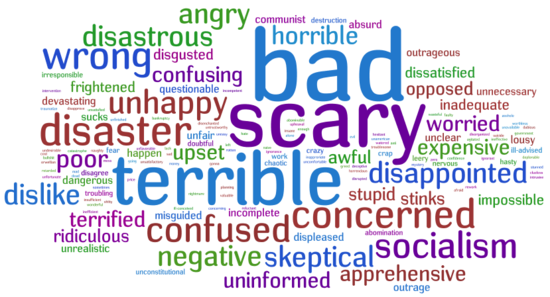
    4. Bad / Disastrous / Terrible – These words spread panic and can lead to more mistakes, stress, and confusion.
    5. Nothing is gonna change / That’s how it is done here – Using such phrases creates a culture of resentment and cynicism which ends up killing all enthusiasm and creativity in people.
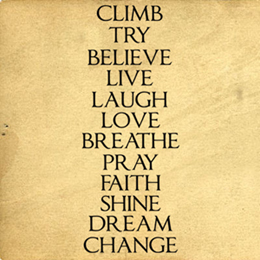
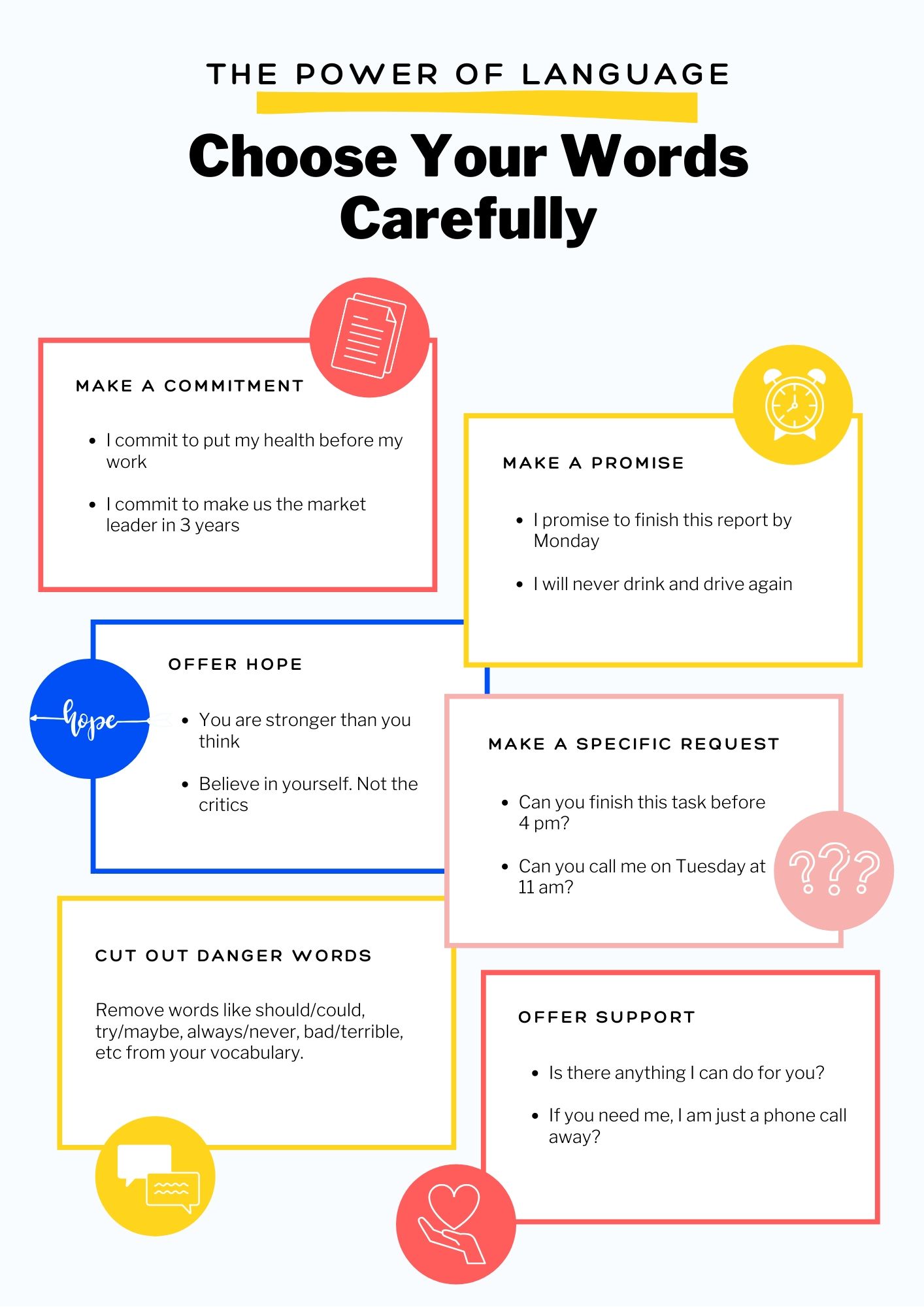
    Instead, you can use powerful words and make them work for you :-

    1. Declare a Commitment. 
      1. I commit to exercising 30 minutes daily.
      2. Let us commit together to make this company the best place to work for.
    2. Make a Promise
      1. I promise to finish this report in two days.
      2. I promise to never drink and drive again.
    3. Make a Specific Request
      1. Can you finish this report before Friday or not?
      2. If you like it, can you share this article on Facebook today?
    4. Offer Support
      1. Is there anything I can do to help you with this task?
      2. I am just a phone call away if you need me.
    5. Offer Hope
      1. You will make it through it. You are stronger than you think.
      2. Believe in yourself, not the critics. I know you will prove them wrong.

    Watch your thoughts, for they become words. Watch your words, for they become actions. Watch your actions, for they become habits. Watch your habits, for they become character. Watch your character, for it becomes your destiny. – Lao Tzu
    So the next time, instead of saying –

    • “I can’t exercise more, I am tired.”, say, “I am not tired, let me do one more round.”
    • “I can’t work outside because I have asthma”, say, “I will work to prove I am bigger than my asthma”
    • “I can’t do this because I don’t have enough money”, say, “How can I earn enough money to start doing this?”
    • “I am not feeling good, it is going to be a bad day”, say, “Today is going to be a great day and I am raring to go”
    • “My life sucks”, say, “Today is a new day. Let’s make the most of it!!”

    Do this and you will see that your days will get brighter and dreams will turn into reality. Break the pattern of using words that suck power out of you, and instead form a new habit of using words that give power to you and the people around you.

  • Why We Should Break the Safety Wall Around Us (to be Happy)

    “It is not because things are difficult that we do not dare, it is because we do not dare that they are difficult. ” – Seneca

    We all have built ‘safety walls‘ around us that are unconscious to us, and are strengthened over time. They determine what we can and cannot do, what we try and what we don’t. Almost all our actions are determined by these safety walls.

    But rather than being safety walls, they are more of a trap where we are stuck in a state of presumed comfort and our every decision is determined by these walls. They make us believe that life is tough outside of these, and there might be unforeseen dangers. So unknowingly, and only in the assumption of some ‘danger‘, we don’t risk going over these walls.

    I have found myself in similar situations many times. No matter how many fake assurances I gave to myself that I was doing good, the fact is that when you are in your comfort zone, you are still while life is zipping by.

    When the world is moving ahead and you are still, you are on a decline.

    If we stay in this zone, over time, our excitement and energy levels begin to come down. We feel more and more lazy and tired each day, and our eating habits (and with it, our belly too) go out of shape pretty soon.

    It might look like life is going on FINE, but in reality, we all know that we are not moving ahead while our limited time on this planet is passing by.

    Be Vulnerable

    The first step towards breaking the aforementioned safety walls around you is to become aware of the fact that you are trapped in your habits. Are these habits and patterns are running your life on auto-pilot? Or are you in control of your life?

    Once you are aware of this trap, you can take steps towards breaking these so-called safety walls and explore the ‘real‘ world outside. If you have to really live (rather than just exist), go outside and be vulnerable – to your fears, anxiety, and become comfortable with them. Only then you will feel liberated and peaceful.

    Outside of these walls, what I have found is that there are opportunities rather than dangers, there is excitement rather than boredom and joy rather than frustrations.

    The brick walls are there for a reason. The brick walls are not there to keep us out; the brick walls are there to give us a chance to show how badly we want something. - Randy Pausch
    The brick walls are there for a reason. The brick walls are not there to keep us out; the brick walls are there to give us a chance to show how badly we want something. – Randy Pausch

    Have Faith

    When you step out of your comfort zone, there will always be a little uncertainty and fear. But consider that these are more of an illusion created by your brain rather than real, and move on ahead. Have faith in life and face your fears by taking small steps.

    It will do two things. One is that you will realize that your fears were more perceived than real, and two, you will expand your comfort zone. Very soon you will be comfortable in situations you weren’t before.

    Dream Big

    In our safety zone, we all tend to believe that we have something to lose if we step out and try something new. But take a moment and think, what do we have to lose?

    We all have our limited time on this planet, and nobody knows when ours is ending. Life is a gift given to all of us, and when we stay in our safety walls, we are just waiting for it to get over rather than truly enjoying whatever it has to offer.

    So do something, almost anything you like and the way you want to do it and see what happens. When you let go of whatever is holding you back, you will experience what real freedom and being alive is about. So dream big, and go for them, step by step.

    If you win, you WIN! If you loose, remember that you didn’t had anything to loose anyways!

    Stay Young, Die Young

    I have always felt that age has nothing to do with being twenty or sixty. I can show you many 80-year-olds more energetic and active than many 20-year-olds. When you step out of your comfort zones, you experience being alive and that is what being young is.

    Wouldn’t you want to stay young all life and die a young man, irrespective of your age? We should all strive to live our lives waiting for Mondays rather than Fridays, waiting for mornings rather than evenings, and waiting for beginnings instead of endings.

    Each day is a gift, and we should be grateful for it every day we wake up. Life is giving us this gift daily, and we must strive to make the most out of these gifts before they run out of. There is not a second to be wasted, not a moment to be spent without feeling alive.

    Make out most of what each moment has to offer. Because we never know when life will stop giving us this gift!

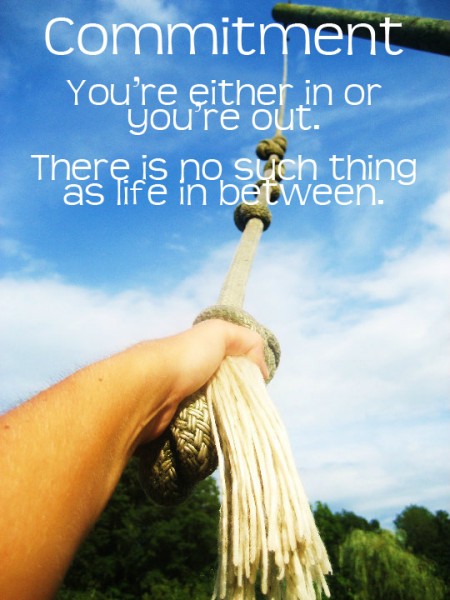
  • Are you Interested? or Are you Committed?

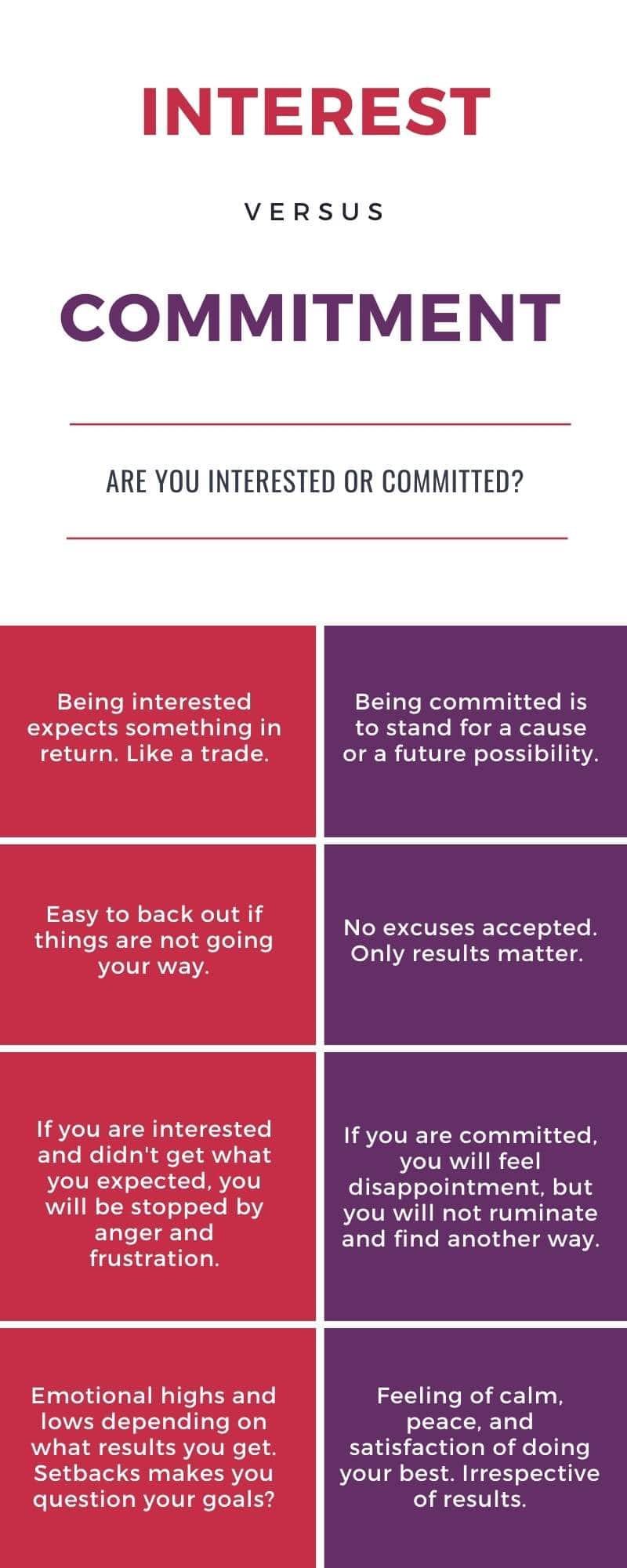
    When one says he is committed to something, does it mean a trade? Does it mean that I will do this or that only if you do some other this or that? Does this commitment expect something in return from the other side? Will the commitment waver if one doesn’t get a response from the other side?

    In my experiences over the years, I have realized that our aim should not, and cannot, be to make our commitment contingent on some external factor. If our commitment wavers because of a lack of response from the other side, then maybe that was not even commitment in the first place.

    That is the difference between interest and commitment. If I am interested in some results, I will take steps to get that result. But it will be very easy to give up (in the case of interest) when circumstances turn averse or not as expected. We no longer see the interest getting fulfilled, so we have every reason to back out. Fair enough.

    But a commitment is bigger, it is a promise you make to yourself (more than anybody else) and then there are no excuses, but only results that matter. For example, a mother has a commitment to her child, and she will even go hungry to feed her child. A mother doesn’t demand fairness from her son, she just loves her, for that is her commitment, irrespective of the situation or whatever obstacles life throws in front of her. As they say, any obstacle will have to go over her dead-body.

    So how do we know if we are committed or just interested? Wait for the tough times as real commitment is only tested in the face of obstacles and conflicts, and that is what reveals the true character of all of us.

    If we can let go of our attachment to the outcomes of our efforts and just focus on the fact that we are committed to doing our best, we are more likely to achieve success regardless of how the world shows up. It will always be tempting to give up when we don’t see the outcomes we expect, and that is the threshold of ‘interested‘ and beyond that, the world of ‘commitment‘ starts.

    Every time we experience being upset, irritated or frustrated, we know our commitment is wavering. The question is, “Can we cross this threshold?

    And once we step into the world of commitment, we experience being calm, happy, at peace and confident, even in the face of harsh challenges. An interested person will get angry at an unexpected result, while a committed person will accept that fully, and take the next necessary action to stay committed to his goals without backing out.

    If I reflect on my life, the times I thought were the toughest have given me the best lessons in life. I am really grateful for them for making me who I am today. These tough times have also taught me that we should not define success by the outcome of one’s results, but by the efforts being put in.

    Being committed gives us the freedom of doing our best, yet be completely fine with the final result not being what we expected. No effort is a failure just because it doesn’t result in an expected outcome. It is a success if we gave our best!

    If we notice carefully, this dilemma comes up in every area of our lives. Look at the things that frustrate you, or you got angry over? Were you interested or committed in that situation?

    If commitment is present any setback would not last long. Be open to life’s little surprises, and experience its beauty when it does that. Allowing these surprises to happen without getting upset is one of the best things we can do to fulfill our commitments.