This is the Leadership Journey series on the Choosing Leadership Podcast.
I believe we all have a lot to learn from each other’s stories – of where we started, where we are now, and our successes and struggles on the way. With this series of interviews, my attempt is to give leaders an opportunity to share their stories and for all of us to learn from their generous sharing. If you know a leader whom you would like to see celebrated on the show, please send me a message on LinkedIn with their name.
What happens when a math and computer science guy stumbles into leadership and realizes he’s completely unprepared?
That’s exactly what happened to Bill Benjamin, now a partner at the Institute for Health and Human Potential, and his journey into emotional intelligence holds powerful lessons for today’s leaders.
In this episode, Bill shares how vulnerability, courage, and connection can transform not just your leadership style, but the very culture of your team.
From handling the “last 8%” tough conversations to building psychological safety in hybrid workplaces, he offers practical insights leaders can apply immediately.
If you’ve ever struggled with feedback, avoided conflict, or wondered how to inspire true accountability, this conversation is one you can’t afford to miss.
This is the Leadership Journey series on the Choosing Leadership Podcast.
I believe we all have a lot to learn from each other’s stories – of where we started, where we are now, and our successes and struggles on the way. With this series of interviews, my attempt is to give leaders an opportunity to share their stories and for all of us to learn from their generous sharing. If you know a leader whom you would like to see celebrated on the show, please send me a message on LinkedIn with their name.
In this episode, Dr. Santosh Honnagunti pulls back the curtain on what it really takes to jump from engineer to CEO without losing your curiosity or your courage.
He shares how mentors, disciplined habits, and a willingness to take risks shaped every major pivot in his career—and how those same ingredients can accelerate yours.
You’ll hear the surprising moments that opened doors, the leadership philosophies that keep his teams empowered, and the mindset that allows him to thrive across industries and continents.
Dr. Santosh also reveals how sports and personal discipline fuel his energy and focus as a leader.
If you’re navigating growth, reinvention, or the pressure to “figure it out,” this conversation will give you the clarity and confidence to take your next bold step.
You can find Dr. Santosh Honnagunti at the links below
Why Your “Competing Commitments” Are Stalling Your Team
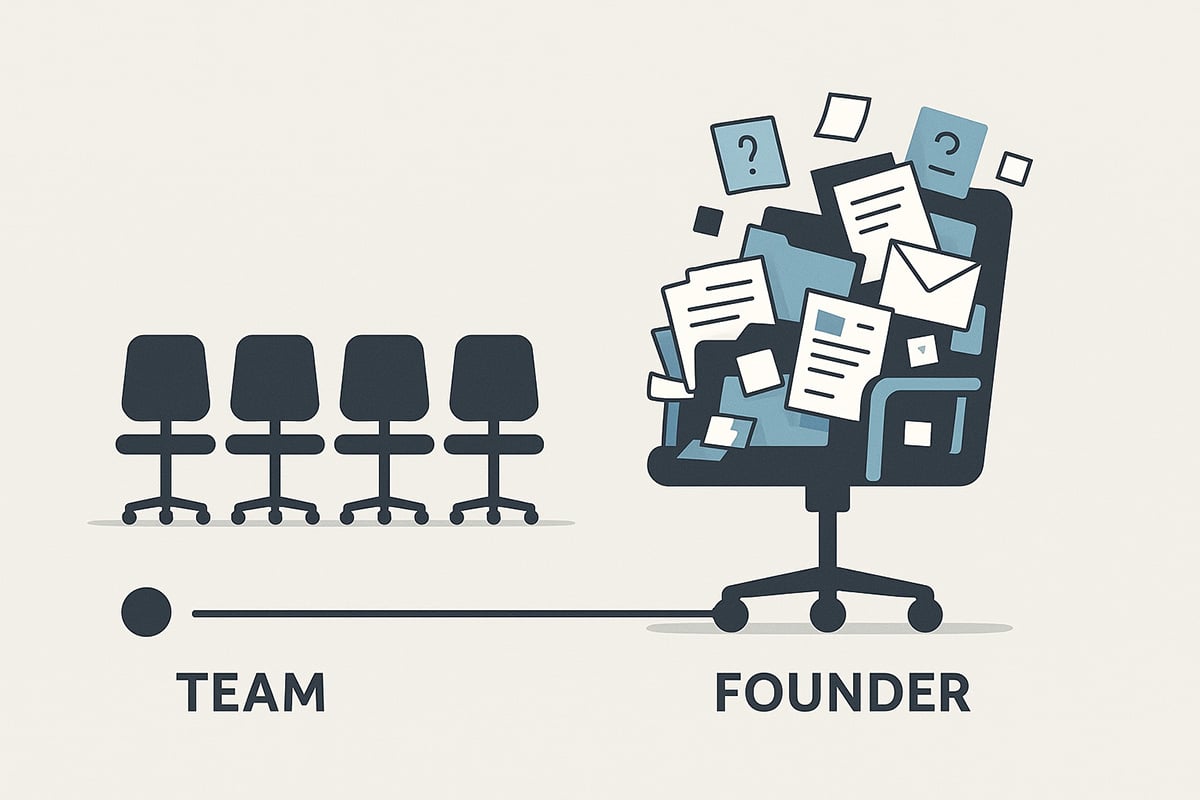
There is a pattern I observe in founders led companies that is quietly stifling their organizations. It is not a lack of skill, and it is not a lack of vision. It is a conflict of identity.
The pattern looks like this: A founder walks into a meeting and casually says, “We should get some case studies from clients.”
To the founder, this is just an idea – a helpful contribution. Whoever hears that idea – no matter how many levels below the founder they sit – treats it as a directive, not an idea.
That directive collides with existing priorities. It creates confusion. It overloads people with tasks that aren’t anchored in a clear problem or purpose. The only real “why” behind it is (when it comes to execution): the founder said so. (even if the founder didn’t mean it like that)
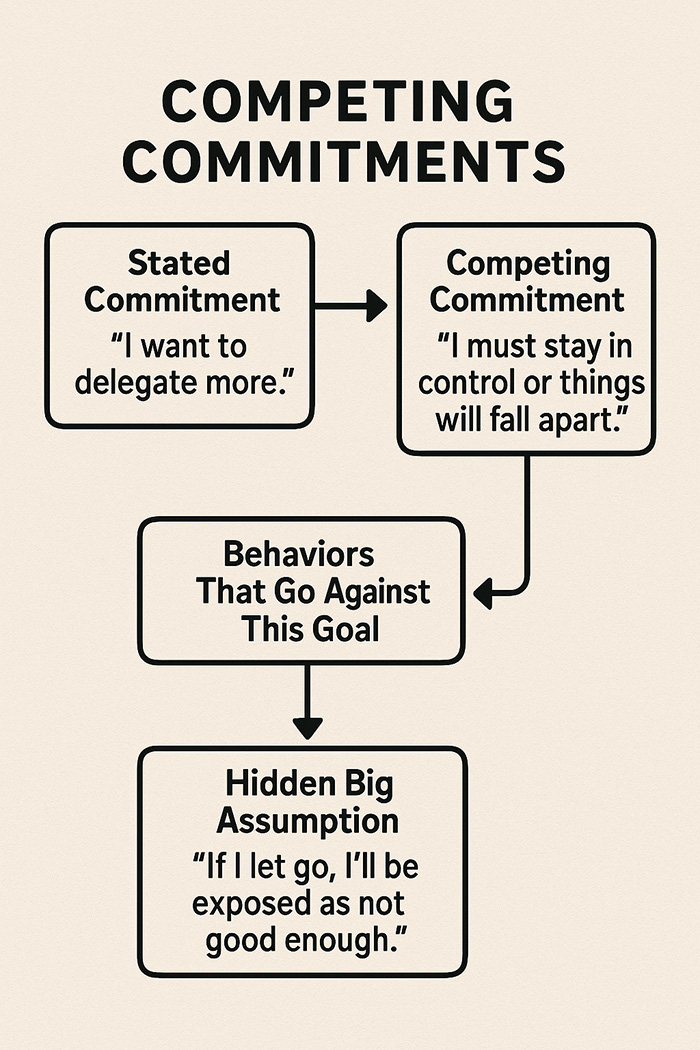
On the surface, this looks like a communication issue. But if we look deeper, we find what organizational psychologists call “Competing Commitments.” You say you are committed to building an autonomous, empowered team. But subconsciously, you are committed to being the person who saves the day.
The outcome – chaos, missed deadlines, lack of clarity, misunderstandings, last-minute firefighting, and the whole company being dependent on the founder to save the day.
So What’s Really Happening?
A founder comes across a single piece of information. Perhaps someone tells them something at a conference. It might be something vague like, “People are talking about your company.”
Instead of slowing down and asking, “Which people? How often? What exactly did they say?”—they treat the information as truth.
From there, everything accelerates. They jump to a conclusion: “This is a problem.” They decide the problem requires action: “This is something we need to deal with.” They decide on a solution: “We need some case studies.”
They decide who should do it – and task them directly. All of this happens before anyone else is involved. Before more data is gathered. Before the actual owner of the problem has any say in defining it. One data point becomes a full-blown directive with organizational weight behind it.
The “Artisan” Identity vs. The EnterpriseBuilder
Chris, owner of Crown Capital, who specializes in transitioning founder-led businesses, describes this perfectly when I recently spoke with him. He notes that many founders get stuck at a specific revenue ceiling because they are running an “Artisan Shop.”
In an Artisan Shop, the founder is the product. They are the best salesperson, the best product designer, and the best problem solver. The business relies entirely on their personal craftsmanship. As Chris points out, “It feels really good to be needed.”
This is the seduction of the Artisan identity. In the early days, your identity was tied to being the engine that made things move. You were the “fixer.” But as the company scales, that same identity becomes a “cul-de-sac”—a dead end where you are running in circles, unable to scale because you cannot scale yourself.
To break through, you have to fundamentally alter your relationship with the company. You must stop viewing the company as an extension of your personal output and start viewing it as a system that you design.
This Isn’t Malicious – The Founders Are Not Doing Anything Wrong
In fact, it’s rooted in something pretty brilliant. To understand why this happens and what can be done about it, you have to begin by looking at how founders see themselves, their role, and their identity. If we treat their actions as a “bad habit to correct,” we miss the point entirely.
Behavior doesn’t change because someone is told to “slow down” or “stop giving solutions.” It changes when they see what’s driving the behavior in the first place. Founders often have commitments running in the background that they don’t fully see:
A commitment to being useful.
A commitment to being helpful.
A commitment to ensuring their people succeed.
A commitment to adding value.
A commitment to being essential.
These commitments got them where they are. However, these are the same commitments that are keeping them stuck now.
Even if a founder says they want empowerment, autonomy, and a team that owns problems end-to-end – their deeper commitment, the one they don’t consciously see, can still run the show. Our competing commitments make all of us run on autopilot.
Why This Is So Hard
Keith Rabois, who helped build PayPal, LinkedIn, and Square, has a useful framework here. He learned it from Peter Thiel. The idea is simple: before you get involved in a decision, consider two things. First, how strong is your conviction about the right answer? Second, how significant are the consequences if you’re wrong?
If the consequences are low and your conviction is low, let your team run with it. If the consequences are high and your conviction is high, get involved. But most founders don’t think this way. They treat every decision like it’s high stakes. They jump in everywhere. And over time, their team learns to wait for permission instead of taking ownership.
The Shift in Being: From Hero to Architect
Changing behavior (e.g., “I will speak less in meetings”) is rarely enough because behaviors are only symptoms that happen downstream of identity (who you are). If you still identify as the “Hero or the Problem Solver” you will inevitably intervene when things get tough.
You have to shift your state of Being.
Chris shares his own painful transition from being a high-net-worth attorney/consultant to a fund manager. As a consultant, he was the product. To move to the next level, he had to enter “The Dip”—a period of discomfort where he had to stop doing the work that made him feel valuable (billable hours, direct client advice) to invent a new identity as an asset allocator.
He had to stop asking, “How do I solve this?” and start asking, “How do I build a system that solves this?”
This is a crisis of ego. It requires accepting that your value is no longer defined by your direct output.
The Cost Nobody Talks About
Here’s what happens when this pattern runs unchecked.
The team stops thinking. They learn that their job isn’t to solve problems—it’s to wait for the founder to tell them what to do.
The best people leave. Not because they don’t believe in the mission, but because they’re tired of being treated like executors instead of leaders.
The founder becomes the bottleneck. Everything runs through them because that’s what the organization has learned to expect.
The founder burns out. They can’t understand why nobody else steps up—when in reality, they’ve trained the whole company not to.
And none of this is visible to the founder. Because from their perspective, they’re just being engaged. Responsive. Helpful.
What This Looks Like in Practice
Next time you hear a piece of information or feel the urge to act, pause. Ask yourself: Am I about to make this my problem to solve?
If the answer is yes, stop. Then ask:
Whose problem is this, really? Not who should solve it — who actually owns this domain?
Separate what happened from what you’re making it mean from what you’ve already decided to do.
What would it look like if I held space instead of solving this?
That might mean bringing the issue to the right person and asking, “What do you make of this?” It means staying engaged without taking over.
This will feel uncomfortable. It’ll feel like you’re not adding value. Like you’re being passive.
You’re not.
You’re teaching your team that they’re capable. You’re building their ownership. You’re creating space for them to rise.
This shift requires new practices that force you to step out of the “Artisan” role.
1. The Bezos Decision Framework
Most founders treat every decision as a crisis that requires their “Hero” identity. Jeff Bezos counters this by distinguishing between Type 1 (irreversible) and Type 2 (reversible) decisions.
The “Artisan” founder treats everything as Type 1. The “Architect” founder realizes that 90% of decisions are Type 2. By recognizing that most doors are two-way, you can suppress the urge to intervene, allowing the team to own the risk and the learning.
2. The Munger Inversion
Chris utilizes a technique from Charlie Munger called “Inversion.” Instead of asking, “How do I help my team succeed?” ask, “What would I do if I wanted to ensure my team remains helpless?”
Answer: I would solve every hard problem for them. I would correct their work before they finish it. I would make every decision myself.
Realization: By doing these things, you are actively sabotaging the autonomy you claim to want.
3. Creating “Thinking Space”
You cannot shift your identity if you are constantly reacting. Chris implemented a rigorous practice of blocking out Thursday afternoons entirely. No meetings, no calls—just “block production time” to think. (My interview with Chris will come out early next year – 2026)
If you are always on the treadmill of execution, you are acting as an employee of your own company, not its leader. You need space to detach from the “doing” so you can work on the “being.”
A New Relationship With Your Business
There’s something else worth naming here. As a company grows, the founder’s relationship with it has to change. What worked at twenty people breaks at two hundred. The intimacy that once held everything together can become the very thing that holds it back.
This isn’t failure. It’s evolution.
The founder who built the startup has to become the leader who builds the institution. And that requires letting go of being needed in the old ways while finding new ways to matter. This is one of the loneliest transitions in leadership. And it’s rarely talked about.
The Audit: To make this shift real, you need a feedback loop.
Find a Truth-Teller: Give a trusted partner permission to interrupt you. “If you see me playing the Hero, call it out.”
The Weekly Reflection: Ask yourself, “What did I take ownership of this week that wasn’t mine?”
You have to let go the loss of your old identity – the one that saved the day, the one that knew all the answers. That version of you was essential to get the company from $0 to $2 million. But that version of you is now the primary obstacle getting from $2 million to $20 million.
Your team doesn’t need a savior. They need a leader who believes they can save themselves.
This is the Leadership Journey series on the Choosing Leadership Podcast.
I believe we all have a lot to learn from each other’s stories – of where we started, where we are now, and our successes and struggles on the way. With this series of interviews, my attempt is to give leaders an opportunity to share their stories and for all of us to learn from their generous sharing. If you know a leader whom you would like to see celebrated on the show, please send me a message on LinkedIn with their name.
In this episode of Choosing Leadership, CEO Benoit Honnart shares how trust and adaptability shaped his journey of leading across cultures and scaling Electra into new markets.
From building bridges between diverse business practices to sustaining quality while expanding globally, Benoit offers practical insights leaders can use today.
He opens up about the power of trust, the art of delegation, and why purpose-driven teams are the future of business.
You’ll also hear a powerful story of resilience as Electra pivoted during COVID-19 to meet urgent community needs while safeguarding jobs.
If you’re navigating growth, cultural complexity, or the challenges of a modern workforce, this conversation will spark ideas and remind you that leadership is always a choice.
There’s a pattern I see in certain companies that’s puzzling at first glance.
The CEO is a very nice and kind person. Genuinely kind. The kind of person people respect deeply and stay loyal to for decades. They’ve built a team of exceptional people around them. Each one of them can be called superstars by any measure.
And yet.
Those superstars play against each other. They form factions. They undermine one another in meetings. They gossip. They politic. They spread negativity behind closed doors. I have now seen it in too many companies to call it a “pattern”.
As a result, the culture suffers. Performance of the company suffers. And if the company suffers, each individual superstar is also suffering. But – alas – they can not see that. They continue pointing fingers at others and getting defensive when a finger is pointed at them. They are all losing – because the company is losing – and yet they think that they are each performing well.
From the outside, it doesn’t make sense. Great leader. Great people. Terrible dynamics.
But when you look closer, it makes perfect sense.
The Question Nobody Wants to Ask
When a team is dysfunctional, the natural instinct is to look at the team.
“These people are too competitive.”
“They have ego problems.”
“They’re not team players.”
But that’s rarely the whole story.
The harder question is: What is the founder or the CEO doing – or not doing – that makes this behavior possible?
Because here’s the thing. Smart people don’t engage in politics for fun. They do it because something in the system rewards it. Or at least doesn’t punish it.
So if you’ve got a team of brilliant people acting like rivals instead of partners, something in the environment is allowing it. And that environment starts at the top.
What’s Really Going On
To understand this, you have to look at how the CEO sees themselves, their role, and their relationship with conflict.
If we treat the team’s behavior as the problem to fix, we miss the point entirely.
The CEO likely has commitments running in the background – commitments they don’t fully see. These commitments feel like virtues. They probably are virtues. But left unexamined, they create the exact conditions for dysfunction. These commitments create a “pattern” of behavior for the founder/CEO that then leads to the pattern we see with the team.
These commitments are what the Harvard psychologist Robert Kegan calls the Competing Commitments (from his & Lisa Lahey’s work on the book “Immunity to Change”) . They are the hidden commitments you made to yourself long ago that now quietly competing with your biggest goals.
Here are some of the competing commitments I find in these companies and their leaders:
(one or many of the below might be applicable for you)
A Commitment to Being Liked
Kind leaders want people to feel good around them. They want to be seen as fair, caring, approachable.
The other side of it? They avoid hard conversations.
When two superstars are at war, the kind CEO might hope it resolves itself. They might talk to each person privately but never bring them into the same room. They smooth things over instead of naming the real issue. They avoid taking sides because someone might get hurt.
The result? Nothing gets resolved. The conflict goes underground. It becomes hallway conversations and political maneuvering instead of direct confrontation.
The CEO thinks they’re keeping the peace. They’re actually teaching the team: We don’t deal with conflict here. You’re on your own.
A Commitment to Being Fair
Kind leaders bend over backwards to be equitable. They don’t want anyone to feel favored or overlooked.
The other side? They refuse to make clear calls.
They won’t publicly say, “This is the direction we’re going.” They won’t back one leader’s approach over another, even when the situation demands it. They keep things open-ended in the name of fairness.
So what do the superstars learn? The CEO won’t decide. Which means I have to win through other means.
That’s when politics becomes rational. If the boss won’t pick a direction, the team will fight it out amongst themselves – through influence, alliances, and undermining each other.
A Commitment to Harmony
Some leaders believe that good teams shouldn’t have conflict. That if people are fighting, something is wrong.
The other side of it? They suppress tension instead of working through it.
They shut down debates too early. They change the subject when things get heated. They privately ask people to “be more collaborative” instead of letting the team wrestle with real disagreements.
The result? The real conversations happen outside the room. People learn that the only way to be heard is through back channels.
That’s not politics because people are bad. It’s politics because the front door is closed.
A Commitment to Loyalty
When a CEO has people who’ve stayed for decades, there’s deep mutual respect there. But it can also become a trap.
The other side of it? They tolerate behavior they shouldn’t because of history.
A superstar who’s been there for fifteen years gets a pass for things that would get someone else fired. The CEO tells themselves, “That’s just how they are.” Or, “They’ve earned the right.”
The rest of the team sees this. And they learn that rules don’t apply equally. That tenure is protection. That power is about relationships, not performance. That’s fertile ground for factions and resentment.
The Painful Truth
Here’s what makes this so difficult.
Every one of these commitments feels like a virtue. Being kind. Being fair. Wanting harmony. Valuing loyalty. Staying above pettiness.
These are good things. They’re probably why people respect this CEO. They’re probably why people have stayed so long.
But taken too far—or left unexamined—they create the conditions for exactly what the CEO hates.
The CEO’s kindness, without clarity and courage, becomes a fertile ground for dysfunction.
Nobody’s being malicious. But the system is producing politics because the leader – without realizing it – has made politics the only viable path.
What Might Be Missing
If I had to name what’s absent, it would be these:
Naming reality.
Sitting the team down and saying, “Here’s what I see happening. The politics. The groupisms. The gossip. It’s not acceptable. And I’m willing to look at how I’ve contributed to it.” Most leaders skip this. They address symptoms. They talk to individuals. They hope things or people will change. It won’t. Someone has to name the thing out loud.
Making hard calls.
Superstars need clarity. They need to know who owns what. Whose strategy wins. Where the boundaries are.
When everything is open for negotiation, people negotiate through power instead of merit. The CEO has to be willing to decide—even when it disappoints someone.
Holding people accountable visibly.
Not in a shaming way. But in a way that signals to the whole team: this behavior has consequences. We don’t do politics here. We don’t tolerate undermining. The founder/CEO has to be willing to say: “This is no longer ok.” or “This can never happen again.”
If accountability only happens in private, the team never sees it. And what the team doesn’t see, the team doesn’t believe.
Having the conversations nobody wants to have.
Bringing two warring leaders into a room and saying, “We’re not leaving until this is resolved.” Letting the discomfort happen instead of smoothing it over. Most kind people avoid this. It feels aggressive. It feels risky. But it’s the only way through.
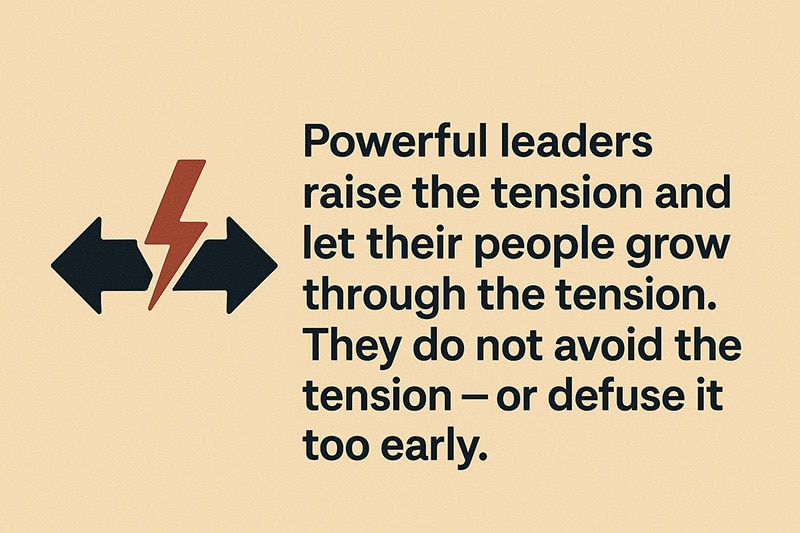
Powerful leaders raise the tension and let their people grow through the tension. They do not avoid the tension – or defuse it too early.
Letting go of someone they care about.
Sometimes, one person is the source. And the CEO knows it. But they can’t bring themselves to act because of history, loyalty, or genuine affection.
So the whole system stays sick to protect one relationship.
This might be the hardest one of all. And often, it’s the one that would change everything.
The Shift
This isn’t about becoming less kind. The world needs kind leaders.
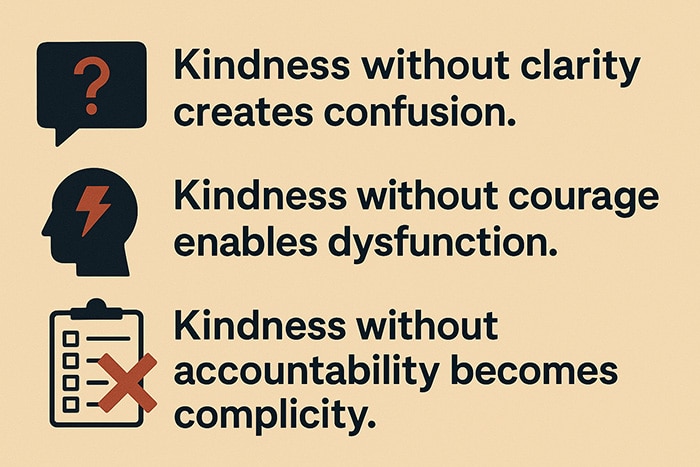
But kindness without clarity creates confusion. Kindness without courage enables dysfunction. Kindness without accountability becomes complicity.
The shift is learning to be both.
Kind and clear. Kind and direct. Kind and willing to make the hard call.
That’s not a contradiction. That’s integration.
And that’s the leader this team of superstars is waiting for.
They don’t need someone who keeps the peace. They need someone who builds the peace – by being willing to disrupt the false comfort of gossip, politics, and rumors.
That’s when everything changes. What are your competing commitments?
This is the Leadership Journey series on the Choosing Leadership Podcast.
I believe we all have a lot to learn from each other’s stories – of where we started, where we are now, and our successes and struggles on the way. With this series of interviews, my attempt is to give leaders an opportunity to share their stories and for all of us to learn from their generous sharing. If you know a leader whom you would like to see celebrated on the show, please send me a message on LinkedIn with their name.
In this episode of Choosing Leadership, Alay Jhaveri opens up about the delicate balance between heart and numbers in leading a growing business.
From running a family enterprise to investing in startups, he shares how adaptability, authenticity, and trust shape his leadership style.
Alay reminds us that while data drives decisions, it’s empathy, respect, and empowerment that truly move teams forward.
He also highlights the importance of building a life beyond business—one that includes family, personal growth, and giving back.
Whether you’re leading a team or steering a company, this conversation will challenge you to rethink how you measure success and inspire you to lead with both vision and humanity.
This is the Leadership Journey series on the Choosing Leadership Podcast.
I believe we all have a lot to learn from each other’s stories – of where we started, where we are now, and our successes and struggles on the way. With this series of interviews, my attempt is to give leaders an opportunity to share their stories and for all of us to learn from their generous sharing. If you know a leader whom you would like to see celebrated on the show, please send me a message on LinkedIn with their name.
In this episode of the Choosing Leadership podcast, Griff Parry, CEO and co-founder of M3ter, shares how he traded a successful corporate career for the uncertain but rewarding path of entrepreneurship.
Griff opens up about starting his first venture in his 40s, the lessons he learned from selling to Amazon, and what it really takes to build something meaningful from scratch.
He offers a candid look at the challenges of leadership—balancing transparency, trust, and the weight of tough decisions—while keeping a clear vision for the future.
If you’ve ever wondered whether it’s too late to take the leap or how to navigate the chaos of scaling a business, Griff’s story will inspire you to think bigger and act bolder.
Tune in for practical insights and the reminder that the entrepreneurial journey is less about perfection and more about progress.
This is the Leadership Journey series on the Choosing Leadership Podcast.
I believe we all have a lot to learn from each other’s stories – of where we started, where we are now, and our successes and struggles on the way. With this series of interviews, my attempt is to give leaders an opportunity to share their stories and for all of us to learn from their generous sharing. If you know a leader whom you would like to see celebrated on the show, please send me a message on LinkedIn with their name.
In this inspiring episode of Choosing Leadership, Adewale Yusuf, founder and CEO of Alt School Africa, shares his bold journey from humble beginnings to leading one of the most ambitious educational missions on the continent.
He opens up about the tough choices behind leaving a successful business to pursue a purpose-driven vision, and the challenges of carrying the weight of leadership when others don’t yet see what you see.
Adewale’s story is a masterclass in resilience, accountability, and staying true to your mission even when the road gets lonely.
Leaders will walk away with practical lessons on vision, mentorship, and building cultures that value impact over handouts.
If you’ve ever wondered how to lead with courage while shaping the future, this conversation will both challenge and inspire you.
Let’s get real for a second (especially if you have a large team)
Every year, organizations spend more than $60 billion on strategic planning and leadership development. Yet McKinsey, Bain, and Harvard Business Review converge on a sobering truth: roughly 70–90% of strategies fail to achieve their intended outcomes. Not because the ideas are wrong, but because execution breaks down.
The evidence is overwhelming. A McKinsey Global Survey on strategy implementation found that only 27% of executives believe their organizations are good at translating strategy into action. A Bain & Company study showed that nearly two-thirds of companies struggle to coordinate across business units once execution begins. And evenHBR reported that coordination failures—not funding or technology—are now the number-one reason transformation initiatives stall.
What’s fascinating is that most leaders still misdiagnose the issue. They call it a “change-management issue,” or a “lack of accountability.” But these are merely symptoms of a deeper dysfunction: a breakdown in the coordination of action—the invisible chain that turns intention into results.
Coordination is the choreography of execution. It’s how commitments are made, tracked, and recovered when they slip. It’s how leaders ensure that promises travel through the organisation without distortion. When this choreography collapses, even brilliant strategies implode under their own complexity.
It’s not your strategy or vision that’s failing. It’s your coordination of human behaviour and action (often also called execution)
You can have the smartest people, the boldest goals, and the most inspiring off-sites — and still, your execution limps. Deadlines slip. Priorities clash. You and your team are all busy and working hard, and yet progress seems slow or stalled.
Every leader knows this feeling. You start the quarter with momentum and clarity. But within weeks, the plan splinters into miscommunication, duplication, and “I thought you meant…” chaos.
That’s not incompetence. That’s a coordination breakdown.
What’s Missing in Most Companies Today
You’ve probably invested heavily in strategy sessions, leadership retreats, or workshops on emotional intelligence. Yet something vital is missing — the shared language and system for making and keeping commitments.
Most organisations run on what I call hope-based execution:
“I’ll try.”
“We should.”
“It’s in progress.”
“Almost done.”
Those phrases sound harmless — but they hide millions of euros in waste, delay, repeated work, and frustration.
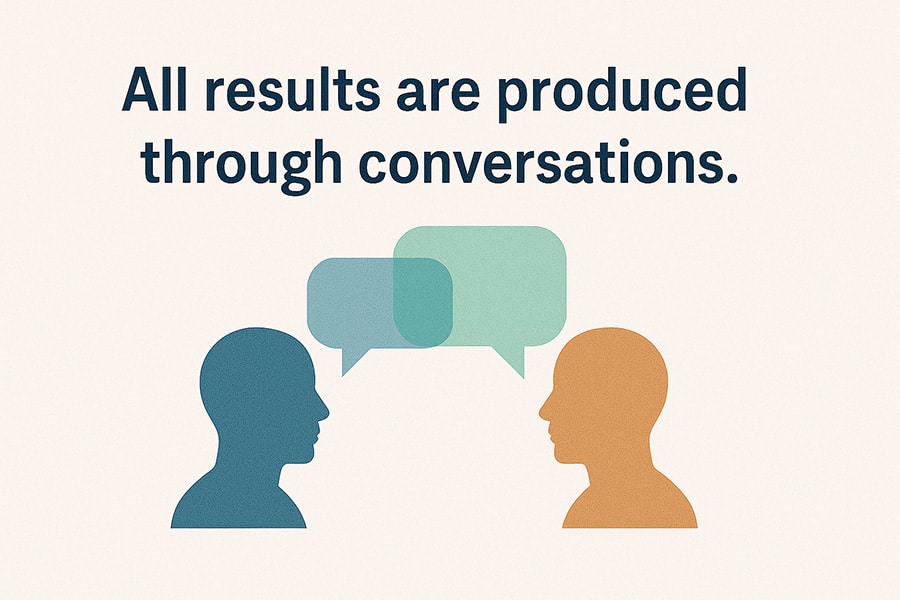
The truth is that all results are produced through conversations. Yet most leaders have never learned how to have the right ones. That’s not a failure of our leaders. That’s a failure of our education system (but that’s a topic for another day).
The problem isn’t that people don’t care. It’s that they don’t know how to have the right conversations in a rhythm that drives action.
Work doesn’t just get done because people want to do it. It gets done when requests, promises, completions and incompletions are tracked, owned and closed.
The truth is: All work is coordination(of human behaviour). And all coordination happens through four simple conversations.
The Conversation for Coordination of Action
Every time something gets done, it follows this invisible loop — whether you realize it or not.
Let’s make it visible. It is the Conversation for Coordination of Action.
This framework—the Conversation for Coordination of Action—comes from decades of research in speech act theory, organizational linguistics, and commitment-based management. It was pioneered by Terry Winograd and Fernando Flores in their groundbreaking 1986 work on how language creates action, not just describes it.
The big insight? Coordination happens through explicit commitments, not assumptions.
There are four conversations in the conversation of coordination of action:
Conversation 1: Making a Clear Request or Offer(creating clarity from chaos)
What’s really happening: You’re creating a possibility out of thin air.
Every coordination of action starts with a request or an offer:
Request: “Can you do X?” (you become the customer of the execution)
Offer: “Can I do X?” (you become the performer of the execution)
Today you’re the customer. Tomorrow you’re the performer. The roles flip constantly – with each request or offer.
This step breaks down because Vague requests = vague results.
❌ “Can you handle this?” ❌ “Can we get this done soon?” ❌ “Let’s try to improve the deck”
These aren’t requests. They’re hopes wrapped in politeness.
Research on commitment-based management shows that unclear requests lead to what organizational psychologists call “fake agreement”—people say yes when they mean maybe, creating a trust debt that compounds over time.
Real-World Example
Broken: “Hey, can you send me the Q4 data when you get a chance?”
Fixed: “Can you send me the Q4 revenue data by Thursday at 3 PM? I need the breakdown by region, formatted as a CSV, so I can include it in Friday’s board presentation.”
Notice the difference:
What (Q4 revenue data)
When (Thursday, 3 PM)
How (CSV, by region)
Why (board presentation context)
The Power Move: The “Conditions of Satisfaction” Checklist
Before making any request, answer:
What specifically do I need?
By when do I need it?
In what format or quality?
Why does this matter? (Context helps people make smart trade-offs)
Specificity isn’t being demanding—it’s being clear. When you’re clear, you give people what they need to succeed.
A vague request is like ordering “something nice” at a restaurant. You’ll get something — but not what you want.
Conversation 2: Negotiation and Promise(creating commitments from wishes)
What’s really happening: You’re testing reality and building trust by creating trustworthy promises.
This is where most leaders chicken out. They make the request, and they want the other person just to say “yes” instead of making sure they get an unequivocal, trustworthy YES that they know they can count upon.
Each request has onlyfour valid responses:
Yes (I commit)
No (I can’t/won’t)
Counteroffer (I can do this instead)
Commit to commit later (I need more info first)
All four are legitimate. All four are respectful. Anything else is a future disappointment waiting for you.
Why This Step Breaks Down
People say “yes” when they mean “maybe” or “no” because:
They don’t want to disappoint you
They’re afraid of looking incompetent
Your culture punishes “no”
They genuinely want to help, but haven’t thought through the reality
Research from organisational behaviour shows that most companies have chronic over-commitment, which leads to burnout, missed deadlines, and erosion of trust.
You can only get a trustworthy promise if people can actually negotiate on what they will do by when.
Real-World Example
Broken: Manager: “Can you get this to me by Friday?” Employee: “Sure!” (internally screaming)
Fixed: Manager: “Can you get this to me by Friday at noon?” Employee: “I’m already committed to the Martinez presentation Friday morning. I can get it to you by Monday at 10 AM, or I can get you a draft Friday afternoon—which works better?”
See what just happened? The employee:
Acknowledged the request
Explained the constraint
Offered two alternatives
Put the decision back in the manager’s court
That’s a real promise. Not a fake one.
The Power Move: The “Four Valid Responses” Script
When someone makes a request, train yourself (and your team) to respond with one of these:
“Yes, I commit to [specific outcome] by [specific time].”
“No, I can’t do that because [reason]. But here’s what I can do: [alternative].”
“I need to check [X] before I can commit. Can I get back to you by [time]?”
“I can do [modified version]. Does that work?”
The unlock: A “no” is a gift. It means someone respects you enough to tell the truth. If your culture punishes “no,” you’ve just bought yourself a factory of resentment and missed deadlines.
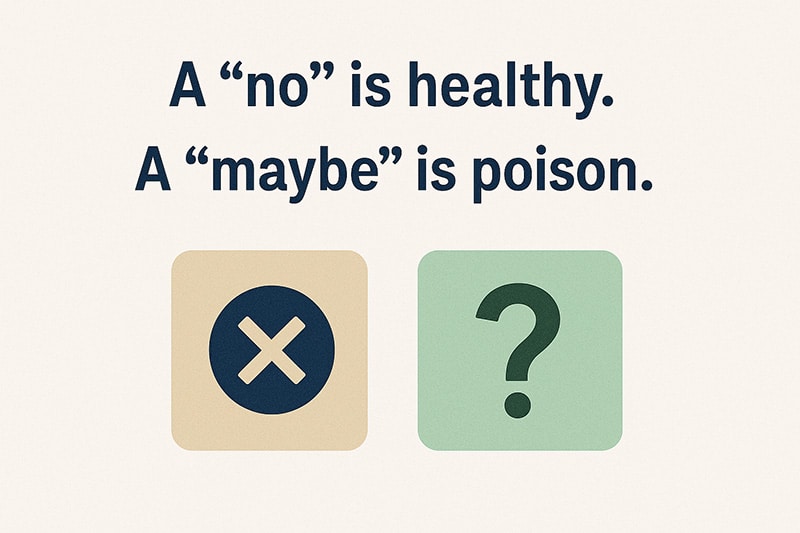
A “NO” is as much a promise as a “YES”. And your role as a leader is not to get YESes but to create trustworthy promises people can count upon – whether they are a YES or NO.A “no” is healthy. A “maybe” is poison.
The other person must have the space to say yes, no, or let’s renegotiate. When there’s a clear promise, trust is built. When there’s fake agreement, resentment brews.
If people can’t say NO to you, their YESes have no value.
Conversation 3: Execution and Declaration of Completion(creating satisfaction)
This is the most invisible breakdown. And it’s everywhere. Someone finishes the work but never declares it’s done. The result?
You’re sitting there waiting. Checking your inbox. Wondering if they forgot. Getting annoyed.
They think they’re a hero. You think they’re slacking. Both of you are wrong – you just didn’t close the loop.
Completion is a speech act. It doesn’t happen until someone says “It’s done.”
But here’s the thing: most people assume that doing the work is enough. It’s not.
Think about it like landing a plane. You don’t just descend and hope for the best. You announce it: “Touchdown. Wheels down.”
That declaration closes the loop. Without it, the loop stays open—and open loops drain trust faster than anything else in an organization.
Real-World Example
Broken: Designer finishes the deck, saves it to Dropbox, goes to lunch. Manager is still waiting three hours later, thinking it’s not done yet.
Fixed: Designer Slacks: “The Q4 deck is done and saved to Dropbox/Projects/Q4-Deck-Final.pptx. All feedback from yesterday’s meeting has been incorporated. Ready for your review.”
Three sentences. Five seconds. Loop closed.
The Power Move: The “Completion Declaration” Template
When you finish something, always include:
“[Task] is complete.”
“It’s located at [place/link].”
“I addressed [key requirements from the original request].”
Optional: “Next steps are [X], or let me know if you need anything else.”
The unlock: Declaring completion isn’t ego, it’s respect. You’re giving the other person certaintynow so they can move forward.
Conversation 4: Assessment and Feedback(learning & closing the loop)
The last conversation is – the customer of the execution declares satisfaction or dissatisfaction, and everyone learns.
Without this last step, loops stay open. Misunderstandings multiply. In research on coordination frameworks, lack of this phase is a major barrier to cross-functional execution.
Without this step:
You repeat the same mistakes
Trust erodes silently
People invent stories about what “good” looks like
Resentment builds
A feedback loop is essential for learning. This is what organizational learning researchers call “double-loop learning”. You’re not just fixing the task, you’re improving the system.
But most leaders skip this step because it feels awkward, unnecessary, or confrontational. (read that again)
Wrong. It’s the most respectful thing you can do.
When you don’t give feedback, people:
Assume you’re unhappy (and invent reasons why)
Think they nailed it (and repeat the same mistakes)
Guess what “good” looks like (and drift further from your expectations)
Research shows that feedback, regardless of content, positively influences performance, motivation, and task engagement. But here’s the catch: it has to actually happen. Teams just… never close the loop. And then wonder why coordination falls apart.
Real-World Example
Broken: Manager reviews the deck, thinks “This is decent, but not quite what I wanted.” Says nothing. Designer thinks they crushed it. Next project, same issues. Slowly, resentment builds and leads to future coflict, “this has happened for the last 3 times” (though I never told you so).
Fixed: Manager responds: “Thanks for getting this done on time. The data visualizations are clear and the flow works. For next time: I need more emphasis on the ‘why it matters’ section—that’s what the board cares about. The current version is 80% there. Can you add one slide that directly addresses ROI implications? That would make it complete.”
Notice:
Acknowledged what worked
Named what needs to change
Made it specific
Gave context (why it matters)
Created a path forward
The Power Move: Acknowledge, Declare Satisfaction, and Make a Fresh Request (if reqd)
Here’s how to do it right:
Acknowledge completion: “You delivered this on time—thank you.”
Declare satisfaction level: “This meets 80% of what I needed” OR “This fully satisfies the request.”
Name specifics: “The [X] part is great. The [Y] part needs [specific change].”
Explain why: “We need [Y] because [context].”
Confirm next steps: “Can you revise [Y] by [time]?” OR “We’re good to move forward.”
The unlock: Feedback isn’t criticism—it’s completion. Both “This nailed it” and “This missed the mark” are acts of respect. Silence is the real disrespect.
Now multiply this loop by hundreds of projects, meetings, and emails inside your company every week.
If your people don’t close these loops, you lose speed, trust, and energy. That’s why execution feels heavy – because thousands of promises are floating around unkept, unacknowledged, or untracked. Or worse, there are no promises – there are only plans, wishes, hopes, and expectations.
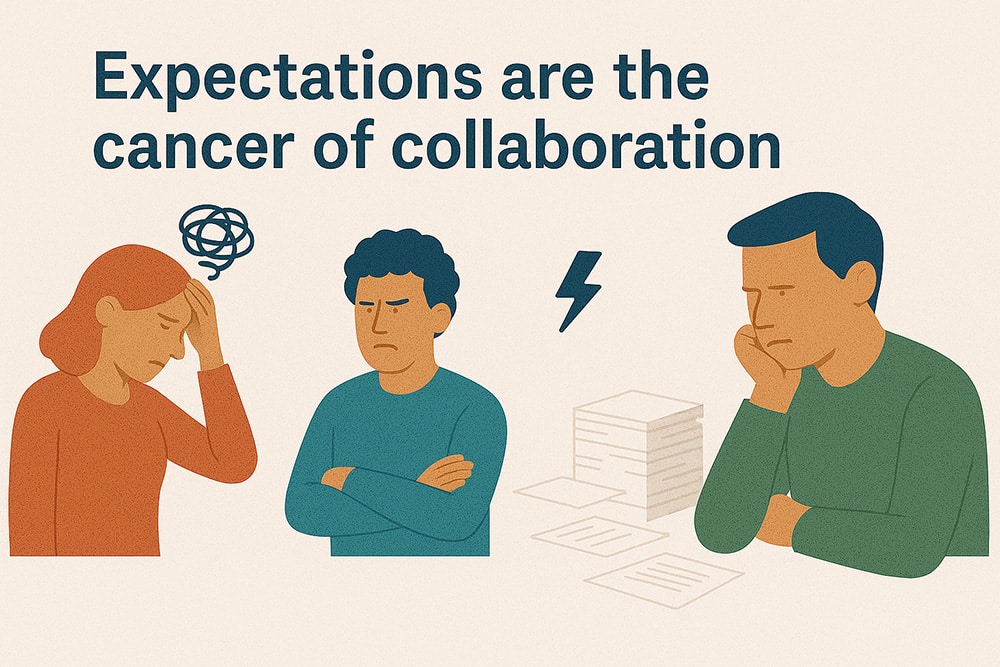
As I often share, Expectations are the cancer of collaboration.
The Hidden Cost of Poor Coordination
Poor coordination isn’t just an organisational headache. It hits hard — financially, culturally, emotionally.
Wasted time & energy: If you’re chasing commitments, running after teams, and slotting in rescue meetings, you’re indirectly paying for all those unclosed loops.
Burnout & bottlenecks: When leaders become the hub of every decision because no one else is coordinating, you become the chokepoint. That’s a leadership trap.
Trust erosion: When people behave like “I’ll try” becomes the norm, you build a culture of maybe, delay, blame. According to research, when alignment is low ~68%, teams believe they’re not moving in the same direction. AchieveIt
Strategy drift: You may have a great vision, but if execution spirals out of coordination control, you don’t just miss targets — you lose competitive position. “More than 70 % of strategic growth plans fail … because execution breaks down.” Strategy Ladders
If you run a €100 M business, even a 2-5 % drag from coordination breakdowns could mean millions in missed margin, customer churn, delayed launches, or wasted talent.
You can’t scale bold visions on vague agreements and open loops. Period.
When you master this conversation, you:
✅ Stop wondering why things aren’t happening (Because you made the invisible visible) ✅ Build a culture where people can say “no” without fear (Which paradoxically increases commitment) ✅ Create accountability that doesn’t feel like surveillance (Because it’s based on mutual promises, not control) ✅ Close loops so fast that momentum becomes your default state (Because nothing stays in limbo)
Why This Matters More in 2025
The world has shifted as remote teams, global functions, rapid tech change are the norm. In this environment:
You need coordination across functions not just alignment within them. Research shows that cross-functional coordination (or lack thereof) is now the core challenge. infeedo.ai
Visibility, accountability and speed matter more than ever. According to McKinsey, the healthiest organisations embed coordination and control and capability and motivation. McKinsey & Company
What Great Leaders Do Differently
Great leaders don’t try to do everything themselves. They install a culture of clean promises.
They train their teams to have these four conversations consciously and explicitly. They build what I call coordination muscle— the ability to move fast without confusion.
They stop saying: “Who’s on this?” and start saying: “Who’s making a promise here, and when will it be complete?”
They don’t confuse motion with progress. They don’t reward “effort” – they reward closed loops (results).
A Simple Example
Let’s say your CMO asks the sales head: “Can you send me your input on the Q2 campaign soon?” That’s a weak request.
A strong one sounds like:
“Can you send your input on the Q2 campaign by Wednesday 5pm so we can finalize the copy on Thursday morning?”
Now the performer can negotiate:
“Wednesday’s tough, but I can send it Thursday morning at 8am.”
That’s a clear promise. When it’s done, they declare completion. The CMO reviews and says, “Yes, this works,” or “Let’s tweak section two.”
That’s a clean coordination loop.
Now imagine 10,000 of those running in your company every week — clean, explicit, complete. That’s not just communication. That’s velocity. That’s the momentum you have been waiting for.
NASA & Apollo Missions Example
During the Apollo missions, NASA engineers lived by one simple rhythm: Request. Confirm. Execute. Verify. No vague “ASAPs,” no half-yeses. Every instruction was a clear commitment, every step was verified out loud. That discipline, not technology, is what put humans on the moon with computers weaker than your phone. The secret wasn’t genius; it was coordination done right.
From Strategy to Execution: The Missing Bridge
Most strategies fail not because they’re wrong. They fail because they die in the space between intention and execution.
Leaders often think their job is to design the “what” and “why.” But the real test of leadership is creating and coordinating the chain of commitment conversations that make results that add value inevitable – and not just effort and time spent.
Your job isn’t to have more meetings. It’s to coordinate human action. And you do that through the conversation for the coordination of action.
This is how high-performing organisations work — not through charisma or chaos, but through clarity and closure.
The Opportunity in Front of You
If you can master this and teach your team to make, keep, and close promises cleanly — everything changes.
Execution accelerates.
Burnout drops.
Trust compounds.
Strategy turns into results.
You are free to zoom out and think bigger while your team executes on the weekly, monthly, and quarterly.
Your company becomes a place where people do what they say and say what they’ll do.
That’s not control. That’s coordination with integrity.
And that, more than any new strategy, is what will separate your company from the rest.
MIT’s Sloan Management Review calls coordination “the missing muscle in modern leadership.” It’s rarely taught, often assumed, and almost always under-practiced. Yet it determines whether strategies live or die in the real world.
The uncomfortable truth? Most leaders don’t have a coordination blind spot. And until that’s addressed, every new strategy is just another expensive rehearsal for failure.
In Simple Words
You don’t need another meeting or more time. You need better conversations. Half the talk, double the promises.
Not more talk — but conversations that coordinate action. Conversations that build trust. Conversations that close loops.
This is the Leadership Journey series on the Choosing Leadership Podcast.
I believe we all have a lot to learn from each other’s stories – of where we started, where we are now, and our successes and struggles on the way. With this series of interviews, my attempt is to give leaders an opportunity to share their stories and for all of us to learn from their generous sharing. If you know a leader whom you would like to see celebrated on the show, please send me a message on LinkedIn with their name.
What if chaos wasn’t something to fear, but the very fuel for your success?
In this episode of the Choosing Leadership podcast, I sit down with Jason Hayes, founder and chairman of Luxury Property LLC, who has built a thriving career by boldly embracing uncertainty.
From disrupting the U.S. real estate market to bouncing back from failed ventures, Jason shares hard-won lessons on adaptability, resilience, and leading with vision.
He opens up about building teams that thrive without hierarchy and how he turns setbacks into strategic advantages.
Whether you’re navigating rapid growth or wrestling with failure, Jason’s story will challenge you to see chaos not as a threat—but as your greatest opportunity.
You built a company, decoded markets, led people smarter than you, and made your way into rooms you once only dreamed of. You’re used to knowing things – and preparing yourself thoroughly before you enter a room.
But when you start chasing the impossible (anything beyond what you currently think is possible) – when you step into the domain where no map exists, no playbook works, and no past can predict the future – your intelligence suddenly stops helping you.
In fact, it might start working against you. Here are 5 reasons why:
1. The Trap of Knowing Too Much
Most founders were raised on a diet of certainty: know the facts, plan the steps, solve the problem. Intelligence thrives on clarity. It needs rules, data, models, frameworks, and feedback loops.
But the impossible—creating what’s never been done before—lives in the exact opposite environment: fog, chaos, ambiguity, and doubt.
When you step into the unknown, your intelligence can’t help you beyond a certain extent because it’s designed to answer known questions. It cannot find answers to things you don’t even know you don’t know.
And no matter who you are or what your achievements or resources are, what you do not know will always be larger than what you do know.
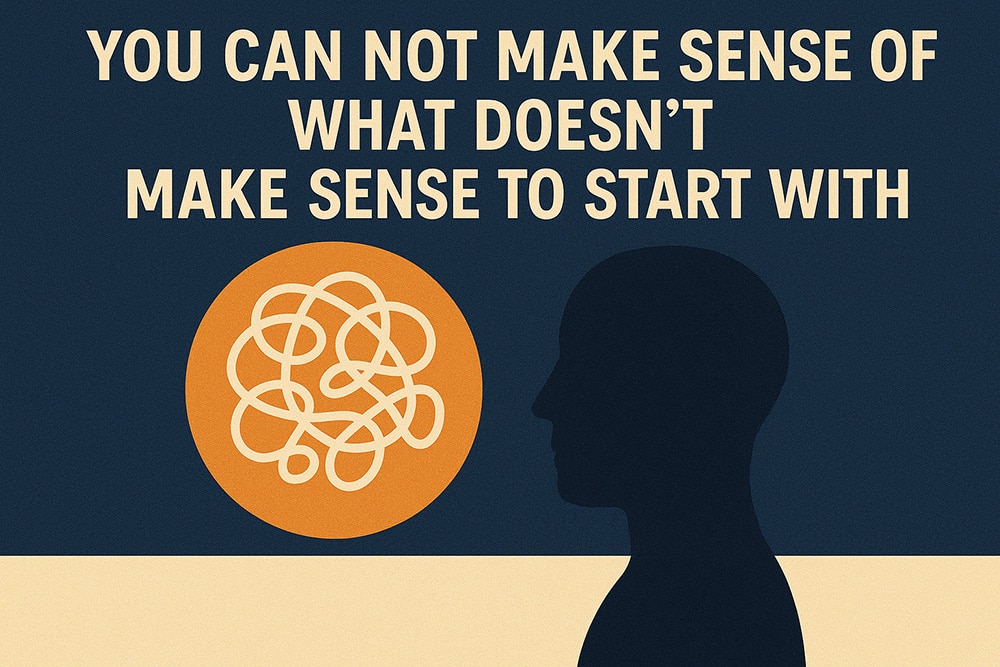
That’s what I call the Intelligence Trap. You start applying logic to what doesn’t make sense in the first place. You analyse and strategise when the answers lie in listeningand discovering. You plan when the answer might lie in asking better questions and staying still until the right answer arises by itself(like an idea you get while walking your dog or while taking a shower).
2. When Intelligence Becomes a Ceiling
The same intelligence that built your success can become the gatekeeper of your next level of success. What got you here won’t get you there. Your intelligence whispers, “Plan, prepare, prove it, be certain.” But the impossible can’t be created with certainty.
You can’t think your way into a miracle. You can only commit your way into it.
When you go after a goal that defies reason—when you compress time, disrupt an industry, or reinvent what’s possible—you’re no longer in the realm of problem-solving. You’ve entered the realm of creation – from scratch. You are not improving on what exists – you are starting from a blank canvas and imagining not planning. That is creation.
And creation doesn’t come from logic. It comes from presence, inspiration, surrender, and trust.
3. The Unknown Has Its Own Language
The unknown doesn’t speak in data. It speaks in intuition, instinct, and insight.
It’s what happens when you move faster than your brain can rationalize, when you make decisions before they make sense.
That’s why the most visionary founders sound insane at first. They are operating beyond analysis. They listen and tune into a signal the intelligent mind can’t detect – you can call it intuition or the universe speaking to you.
The trick is not to abandon your intelligence, but to know when to choose it and when to ignore it.Let it serve you but not run you. That is wisdom.
Because the greater the unknown you enter, the less your intelligence knows what to do. It’s like trying to use a compass on Mars—it spins beautifully, but it points nowhere. (Mars has a very weak, highly spatially variable magnetic field, unlike Earth)
4. Beyond IQ: Enter WQ (Wisdom Quotient)
IQ helps you build systems.
EQ helps you build people & teams.
WQ helps you build realities that don’t yet exist.
WQ is the combination of pattern recognition, trust, paradox, and action without proof. It’s knowing that the next step reveals itself only after you take the current one. When you stop waiting for certainty, the unknown starts to respond and move.
You don’t get to “figure out” the impossible. You have to become the person who moves towards the future will full certainty without ever needing to “figure it out”. You have to become the person willing to be wrong rather than always wanting to be right with your intelligence. (and your brain doesn’t like being wrong – hence the resistance)
When you can, you move from predicting the future to creating it. And that shift demands something intelligence alone can’t deliver: faith, surrender, and the courage to move without evidence or certainty – but with complete conviction and commitment.
This is the Leadership Journey series on the Choosing Leadership Podcast.
I believe we all have a lot to learn from each other’s stories – of where we started, where we are now, and our successes and struggles on the way. With this series of interviews, my attempt is to give leaders an opportunity to share their stories and for all of us to learn from their generous sharing. If you know a leader whom you would like to see celebrated on the show, please send me a message on LinkedIn with their name.
Ryan Howsam’s entrepreneurial journey is a masterclass in resilience, focus, and bold decision-making.
In this candid conversation on the Choosing Leadership podcast, Ryan shares how he rebuilt his life after a crushing business collapse, turning setbacks into stepping stones.
He reveals the lessons behind scaling Staysure, building teams that thrive without you, and why health and mindfulness are just as critical as strategy.
This isn’t just a success story—it’s a roadmap for leaders who want to stay sharp, avoid burnout, and create lasting impact.
If you’ve ever wondered how to turn adversity into your greatest advantage, this episode is for you.
I use cookies on this website to give you the most relevant experience and for analytics purposes. Any personal data collected will never be shared with any third party, or used to spam you. That is my promise. - Sumit By clicking “Accept”, you consent to the use of ALL the cookies.
This website uses cookies to improve your experience while you navigate through the website. Out of these, the cookies that are categorized as necessary are stored on your browser as they are essential for the working of basic functionalities of the website. We also use third-party cookies that help us analyze and understand how you use this website. These cookies will be stored in your browser only with your consent. You also have the option to opt-out of these cookies. But opting out of some of these cookies may affect your browsing experience.
Necessary cookies are absolutely essential for the website to function properly. This category only includes cookies that ensures basic functionalities and security features of the website. These cookies do not store any personal information.
Any cookies that may not be particularly necessary for the website to function and is used specifically to collect user personal data via analytics, ads, other embedded contents are termed as non-necessary cookies. It is mandatory to procure user consent prior to running these cookies on your website.