This is the Leadership Journey series on the Choosing Leadership Podcast.
I believe we all have a lot to learn from each other’s stories – of where we started, where we are now, and our successes and struggles on the way. With this series of interviews, my attempt is to give leaders an opportunity to share their stories and for all of us to learn from their generous sharing. If you know a leader whom you would like to see celebrated on the show, please send me a message on LinkedIn with their name.
In this episode of the Choosing Leadership podcast, Rune Theill, co-founder and CEO of Rockstart, takes us on a candid journey from his early days on a Danish farm to leading a purpose-driven investment platform.
Rune shares how embracing risk and adventure shaped his leadership style, and why building a values-driven culture is essential for long-term impact.
From navigating challenges in leadership to making strategic decisions that align with sustainability, Rune’s story offers invaluable insights for any leader striving to create real change.
Tune in to learn how to lead with purpose, take bold risks, and build a mission-driven team that tackles the world’s biggest challenges.
If you’re ready to rethink your leadership approach, this conversation is a must-listen.
This is the Leadership Journey series on the Choosing Leadership Podcast.
I believe we all have a lot to learn from each other’s stories – of where we started, where we are now, and our successes and struggles on the way. With this series of interviews, my attempt is to give leaders an opportunity to share their stories and for all of us to learn from their generous sharing. If you know a leader whom you would like to see celebrated on the show, please send me a message on LinkedIn with their name.
In this episode, I sit down with Jennifer Vessels, a trailblazing leader who has transformed businesses globally by breaking through the fears that hold leaders back.
From her days pioneering videoconferencing in Silicon Valley to launching her own successful ventures, Jennifer shares powerful insights on embracing change, navigating uncertainty, and leveraging diverse perspectives for growth.
She introduces her PEACE framework—Purpose, Explore, Action, Collaborate, Empower—which has helped countless leaders thrive in today’s fast-paced world.
If you’ve ever felt paralyzed by fear or unsure of how to lead through disruption, this conversation is packed with practical tools and inspiration to guide you through.
Tune in and learn how to turn challenges into growth opportunities and lead with greater impact!
Do you feel stuck? Like no matter what you do, you’re just spinning your wheels? That lack of momentum is costing you more than you think. It’s not just about missing goals or seeing slow growth—it’s killing your potential, draining your energy, and keeping you stuck in a loop of frustration.
When it comes to leadership, momentum is the key to progress. Yet, many leaders find themselves stuck, struggling to move forward. The reasons aren’t always obvious—and I have identified 3 common patterns from my work with ambitious entrepreneurs.
If you’re wondering why you’re not making progress, here are 3 reasons that are holding you back. But more importantly, let’s talk about the cost of staying stuck. The pain of being stagnant. The opportunities you’re missing every single day. And why things need to change—now.
1. You’re Not Dreaming Big and Specific Enough
Most people don’t set goals based on what they truly desire. Instead, they set goals based on what feels achievable or reasonable. What makes it even worse is that they aren’t specific enough. Vague goals kill momentum because they fail to provide clarity or urgency.
Here’s the hard truth: vague goals are the silent killers of your momentum. When you’re not specific and your dreams aren’t big enough, you’re setting yourself up for mediocrity. Every day that you keep your goals unclear, you’re paying the price in frustration and miscommunication with your team.
The Cost of Being Vague
Vague goals don’t just keep you stuck—they create confusion, wasted time, and frustration for your team. Without a clear direction, everyone’s pulling in different directions. Misaligned efforts. Missed deadlines. Endless debates on what “success” even looks like. Your team feels lost, and so do you.
Frustration: When your goals are unclear, your team can’t deliver what you need. They’ll try, but it won’t be right, leading to constant frustration.
Rework: Vague goals mean people will have to redo their work because it wasn’t what you wanted—because you didn’t know what you wanted.
Lost Time: Every day without a specific target is a day lost. How much longer are you willing to waste?
Example:
One client kept saying, “Let’s increase revenue.” Sounds good, right? But the team had no idea what that meant. What kind of revenue growth? By when? Through which strategy? The team was stuck, and nothing moved. Once we broke it down to a specific, measurable goal—“Increase revenue by 10% this quarter by focusing on upselling current clients”—the team knew exactly what to do. Results followed immediately.
The Pain of Small Thinking
Small dreams create small results. If you’re only setting goals you know you can achieve, you’ll never push your boundaries. You’ll never inspire yourself or your team. You’ll wake up every day wondering why things aren’t moving, while deep down, you know you’re capable of so much more.
Start Being Specific Today:
Stop saying “someday” or “as soon as possible.”
Start defining exactly what you want, when you want it, and how you’ll measure success.
Remember that dreaming big doesn’t mean dreaming vaguely. Be bold, but be clear.
2. You’ve Become a Spectator in Your Own Life
Think of this scenario: Why does a pen fall? You could say, “Because of gravity.” That’s the easy answer, but it leaves you powerless to change anything. Instead, try saying, “Because I let it go.” Suddenly, you’re no longer a spectator—you’re a player. You see your role in what happened and understand that you have the power to create a different outcome.
“The market is down, so growth is slow.” “The team isn’t motivated, so projects are delayed.” While these reasons might seem valid, they place you in a passive, spectator role—someone who watches things happen without control.
Let’s be real: when you let external circumstances dictate your outcomes, you’re playing the role of a spectator, not a leader. You’ve given up control. Every time you blame the market, your team, or any outside force, you’re slowly handing over your power.
The Cost of Watching From the Sidelines
Spectators have no momentum because they aren’t driving anything. They’re reacting to life instead of creating it. You tell yourself, “There’s nothing I can do because the market’s tough,” or “It’s just how my team is.” You let yourself off the hook, but deep down, you know it’s costing you.
Stagnation: You’re stuck because you’re not taking action. Watching from the sidelines means you’re not in the game.
Lost Opportunities: While you’re busy blaming external factors, you’re missing out on chances to create real change and momentum.
Powerlessness: The longer you play the spectator, the more powerless you feel. It’s a slow, draining process that saps your confidence and kills your ability to act.
Example:
One client said his team was always late with projects. His excuse? “That’s just how the industry is.” But when we looked deeper, we found the real problem: he hadn’t set clear expectations. He was the reason for the missed deadlines, not the industry. He was watching from the sidelines, not taking responsibility.
Be the Player, Not the Spectator:
Stop blaming circumstances.
Start identifying what you can control and act on it.
Remember: Momentum happens when you take ownership, not when you watch things happen.
3. You’re Being Too Reasonable
Being reasonable might sound like a good thing, but when it comes to momentum, reasonable thinking can be the enemy of bold action.
Here’s something no one tells you: being reasonable is killing your dreams. If you’re only setting “realistic” goals that feel comfortable, you’re not just holding yourself back—you’re dooming yourself to mediocrity.
Momentum doesn’t come from reasonable thinking. Leaders who create massive results start by declaring a future that doesn’t yet exist, then they work backwards to make it happen.
The Cost of Being Reasonable
When you stick to what’s reasonable, you limit yourself to safe, incremental growth. You might achieve modest success, but you’ll never experience the massive breakthroughs that come from bold moves. You’ll stay far from where you really want to be.
Missed Breakthroughs: Playing it safe means you’re missing out on the breakthroughs that only come from taking risks.
Comfort Zone: You’ll stay in your comfort zone—safe but unfulfilled. You’ll wonder why things aren’t changing, but deep down, you know it’s because you’re not pushing yourself.
Lack of Inspiration: When you set goals that feel safe, you rob yourself—and your team—of the chance to get fired up, excited, and passionate about the future.
Example:
Another leader I worked with wanted media coverage for a nonprofit but couldn’t afford ad space. Instead of playing by the rules, they flipped the game and invited media outlets to become partners. The result? Free coverage, brand recognition, and a huge impact. Sometimes, all it takes is flipping the script and daring to be bold.
Stop Playing Safe
Reasonable action doesn’t inspire anyone. They don’t create excitement, and they don’t lead to breakthroughs. Every day you choose to stay reasonable, you’re choosing to stay stuck. You’re choosing small wins over life-changing leaps. You’ll feel the weight of missed potential, knowing you could’ve done more, but didn’t.
Stop Being Reasonable Today:
If you want real momentum, you need to stop playing it safe and take bold, unreasonable actions. Here’s how:
Make Unreasonable Requests: Ask for opportunities, partnerships, or support that feel out of reach. You’ll be surprised at who says yes.
Take a Leap: Instead of inching forward, take one big, bold move that scares you—whether it’s launching that idea, pursuing a massive client, or restructuring your team.
Flip the Game: When the usual path feels limiting, change the rules. Instead of following the typical route, try an unexpected approach that opens up new opportunities.
The Cost Is Real—And It’s Growing Every Day
The cost of staying stuck isn’t just slow progress—it’s the loss of your potential, the missed chances to build something bigger than yourself, and the deep, nagging feeling that you’re not living up to what you’re truly capable of.
What to Do
You already know the pain of not having momentum. The question is, what are you going to do about it?
It’s time to get specific with your goals, start playing as a leader, and stop being reasonable. You don’t have to stay stuck. You can create momentum, but it starts with making bold moves today.
I’m running theImmediate Momentum Challenge, a small, invite-only experience for a few select leaders. You join, declare a bold goal, and by the time it’s over, you’ve taken actions you’ve been avoiding for months. Entry is based on commitment & certain terms.
Have you ever thought you knew something only to realize later how much more there was to learn?
It’s a common trap—especially for leaders. We get so used to needing the answers, being the expert, that we can easily fall into the illusion of knowing. Let’s explore why this is such a dangerous trap and how you can avoid it.
The Comfort of Familiar Labels
For a long time, I knew who I was. I was an engineer. I was an introvert. I was not a coach. These labels felt familiar, safe even. As an engineer, I was comfortable solving complex problems with logic. As an introvert, I avoided the spotlight, staying quiet and unseen. And as someone who knew he “wasn’t a coach,” I knew I wasn’t the kind of person who could help others grow.
But then, reality started chipping away at these “certainties.” I found myself in situations that pushed me outside my comfort zone. People began seeking my advice, wanting my insights, and it forced me to question my labels. What if I could be more than just an engineer? What if being an introvert didn’t stop me from being an impactful leader? It took years of challenging these notions before I embraced a new identity—a coach who stands for other people’s transformation.
Client Example: I once worked with a CEO who was convinced that “I know my team is too complacent.” He was frustrated because he thought he had all the answers, and nothing was changing. When we dug deeper, it became clear that he had never actually listened to his team’s perspectives. They weren’t complacent—they were unclear about the vision. When he dropped the “I know” mindset, he finally heard their concerns, and things started to shift.
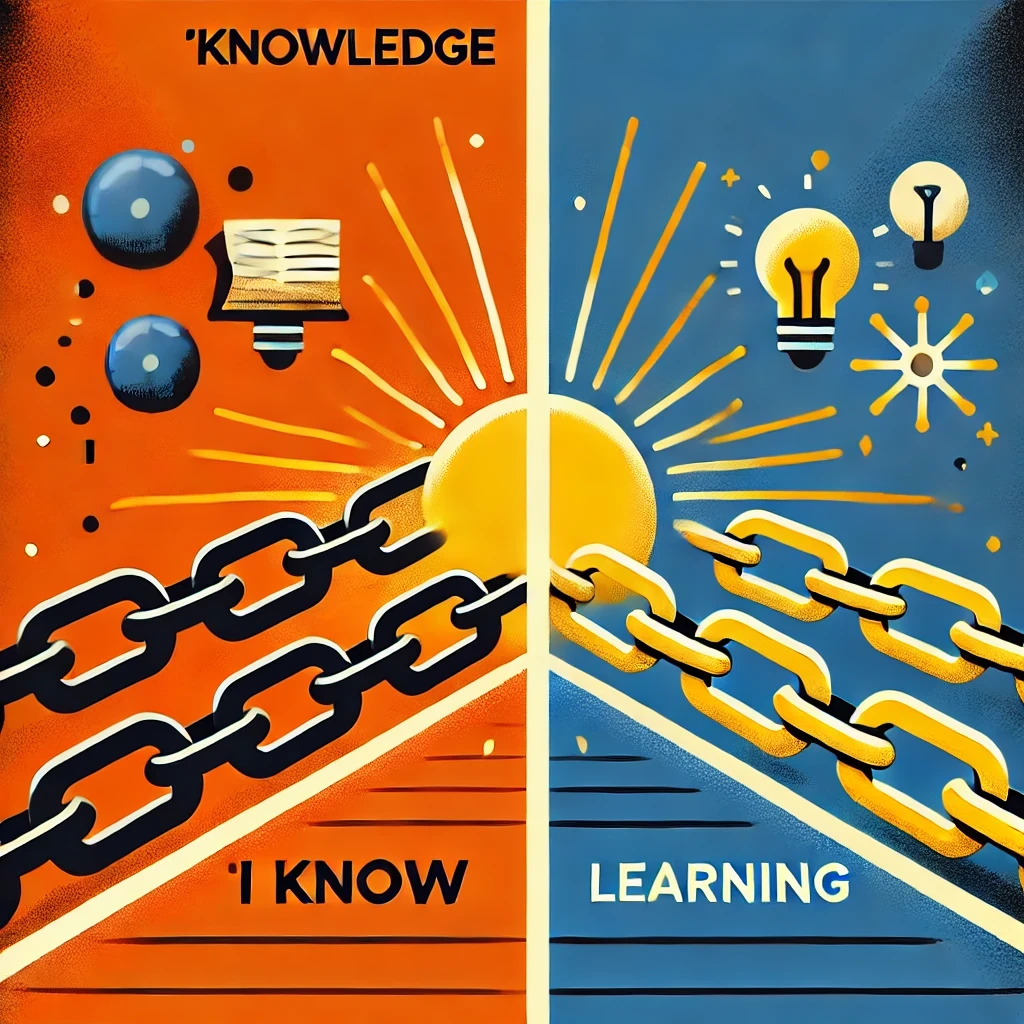
Knowledge is the Enemy of Learning
The Illusion of Knowing
We often believe we have it all figured out, but just like trying to explain how a car engine works in detail, we may quickly find that our knowledge is superficial. It’s an illusion—the illusion of knowing more than we do.
I once had a client, a successful entrepreneur, who believed he “knew” his market inside out. He had been in the industry for over a decade and felt there wasn’t much more to learn. However, when we explored his assumptions, he realized he hadn’t considered how customer needs were evolving.
His once-thriving business had started to plateau, and his unwillingness to question what he “knew” was a big part of the problem. He learned to let go of that certainty, stay curious, and adapt—and his business began to grow again.
Three Ways to Escape the Trap of ‘I Know’
How can we, as leaders, avoid falling into the trap of thinking we know it all? Here are three practical approaches that have worked for me and my clients:
1. Resist the Need to Say, “I Know”
The quickest way to shut down new learning is to utter those words: “I know.” It’s natural to want to be seen as competent and knowledgeable, but this often comes at the cost of genuine understanding.
Example from My Life: In my early days as a coach, I thought I knew what my clients needed without truly listening to them. I remember once giving a client advice before they had even finished explaining their situation. The look of frustration on their face told me everything—I had shut down the opportunity to learn something deeper about their challenges. From that moment on, I committed to listening fully before assuming I had the answer.
2. Stay Curious and Embrace the Unknown
Curiosity is the antidote to the illusion of knowledge. When we think we know something, we stop exploring. But the best leaders are the ones who remain endlessly curious, always looking to dig deeper.
Practical Tip: Pick a topic that feels familiar—maybe it’s something in your industry, a recent trend, or even a challenge in your personal life. Challenge yourself to learn something new about it. Read conflicting views, ask more questions, and engage with it as if you’re a beginner. You might be surprised at what you uncover.
3. Practice Explaining to Others
A great test of your knowledge is whether you can explain it simply. The process of articulating your understanding forces you to confront gaps in your thinking.
Client Story: I had a client who prided himself on his financial expertise. I challenged him to explain his company’s financial strategy to a new hire in plain language. He struggled, realizing that he was hiding behind jargon and buzzwords. This exercise not only helped him understand his own gaps but also made him a much more effective communicator.
Vulnerability as a Path to Growth
One of the most transformative shifts I made was learning to admit when I didn’t know something. As an engineer, admitting I didn’t know was terrifying—it felt like failure. But as a coach, I realized that my willingness to be vulnerable—to say “I don’t know, but let’s find out”—opened up entirely new possibilities for my clients and myself. The same is true for you as a leader. Saying “I don’t know” is not your weakness but your strength.
Your Challenge: The next time you find yourself about to say, “I know,” pause. Ask yourself if you truly do. Could there be more to learn? Could there be another perspective you haven’t yet considered? Lean into that discomfort—it’s where growth happens.
Conclusion
The trap of “I know” is one of the most insidious challenges for leaders. It keeps us comfortable but ultimately stuck. To grow as a leader, you must be willing to let go of certainty, stay curious, and be open to learning, even when it’s uncomfortable. The leaders who thrive are not the ones who claim to have all the answers but those who remain lifelong learners, willing to question themselves and adapt.
Are you ready to let go of what you think you know and discover what’s truly possible for you and your leadership?
As a CEO or an entrepreneur, you carry immense responsibility. You face daily challenges that require you to lead, innovate, and make decisions that impact not only your business but also the lives of those around you.
The higher you rise, the lonelier it can get—and the more you realize you need someone who truly gets you. Someone who can challenge you, support you, and speak the truths that no one else dares to say. Here are five reasons my clients, many of whom are high-performing leaders like you, choose to work with me.
1. Radical Honesty: No Sugar-Coating, Just Truth
The most successful leaders don’t need more yes-men—they need someone who is willing to tell them the truth, even if it’s uncomfortable. That’s where I come in. I provide radical honesty, a kind that cuts through the noise and gets to the core of what’s holding you back.
Example: I once told a client that their current leadership style was not working and that their true potential required them to shut down and start again from scratch. It was a hard conversation, but it led them to build something far more aligned with their vision. Radical honesty isn’t about arrogance; it’s about love, support, and a genuine commitment to your success.
Your Pain Point: You feel like no one tells you the whole truth anymore. Your team is hesitant to share their real thoughts because of your status, and you need someone who isn’t afraid to tell it like it is.
My Promise: I care more about your dreams and goals than I do about staying comfortable or being liked. When you work with me, you will hear what you need to hear, not what you want to hear.
2. Bold Challenges: Break Through Your Limits
Ambition is not the problem—you’ve got plenty of that. The problem is that sometimes, even with your ambition, you stop seeing the bigger possibilities. My job is to challenge you to dream even bigger, to go beyond the limits you might have unknowingly set for yourself.
Example: One client once said, “My goal is to scale from $10M to $20M in revenue.” I looked him in the eye and said, “Why not $100M?” That question changed everything. We worked together to develop leadership presence and strong communication skills that ultimately surpassed his initial goals.
Your Pain Point: You want to dream big, but you also want a guide to push you beyond the horizon that you see for yourself. Sometimes you wonder if you’re playing too small, but no one around you questions it.
My Promise: I will challenge you more than you’ve ever been challenged. Whether that means asking you to fly to Amsterdam for a conversation that redefines your path, or pushing you to make the decisions you’ve been avoiding—I’m here for all of it. I care less about why something might not be possible and more about why it might be.
3. True Depth: Discover Who You Really Are
Exceptional leadership requires deep self-awareness. But this level of awareness isn’t something you can achieve alone. You need a partner who will act as your mirror—someone who will help you see yourself in ways you haven’t yet imagined.
Example: One of my clients used to struggle with understanding how they showed up to their team. Through our work together, they began to realize the impact their words and actions had—both the positive and the negative. They became more present, more effective, and their relationships with their team transformed.
Your Pain Point: You often wonder if you truly know yourself as a leader. You feel that something is missing, but you can’t quite put your finger on it.
My Promise: I’ve been where you are—afraid of being seen, hiding parts of myself to keep the peace. Today, I stand as an example of what’s possible when you embrace your full self. I help you go deep, so you can unlock every aspect of your potential and create a ripple effect that transforms not only your leadership but also your life.
4. Authentic Presence: It’s Not About Impressing, It’s About Being Real
For years, I played small, hiding my true self to keep others happy. I thought I had to be perfect to coach others. But the truth is, authenticity is the bridge that leads to trust. When I stopped trying to impress my clients and started showing up as my full, flawed self, everything changed.
Example: Once, I was distracted during a coaching session because of an argument I had earlier. I chose to share that with my client instead of pretending. He thanked me for my honesty, telling me it made him trust me even more. By being real, I showed him that he could be real too.
Your Pain Point: You’re tired of the façade. You’re tired of feeling like you need to be perfect, like you need to impress people just to be heard.
My Promise: I will show up as my authentic self, and in doing so, invite you to do the same. Our work together will be a place where you can be vulnerable and real—because that’s where true growth happens.
5. Legacy and Deeper Relationships: It’s About More Than Success
Most high achievers eventually ask themselves deeper questions: “Why am I really here? What am I leaving behind?” Success is great, but it’s not everything. True fulfillment comes from the impact you have on the people around you—the legacy you leave.
Example: I’ve helped clients reconnect with their families after years of neglect due to their relentless pursuit of business success. One client told me, “I realized that no amount of money is worth losing the people I love.” Today, he is not only leading a successful business but also being the father and partner he always wanted to be.
Your Pain Point: You’ve achieved great success, but it feels hollow. You know there’s more to life than business metrics and financial wins, but you don’t know how to tap into that deeper purpose.
My Promise: I will help you explore what legacy really means for you. We will work on not just scaling your business but also making a multigenerational impact—one that touches the lives of your team, your family, and everyone who looks up to you.
Vulnerability and Trust: The Foundation of Transformation
The most transformative coaching relationships are built on vulnerability and trust. I bring both to the table—being vulnerable with you, while also being a steadfast leader. I will push you harder than you’ve ever been pushed, and support you more than you’ve ever felt supported.
Your Pain Point: You need someone who can handle the weight of your aspirations, your fears, and your truth—someone you can trust completely.
My Promise: I will be that person. I will always tell you the truth. I will challenge you because I believe in you. And whether we work together for one session or for years, you will always leave feeling more inspired, more capable, and with a greater sense of what’s possible.
These are the reasons CEOs, entrepreneurs, and other high-achieving individuals choose to work with me. You need someone who will tell you the truth, push you beyond your current vision, help you see yourself clearly, be authentic with you, and guide you toward a legacy that truly matters. If this resonates with you, let’s connect and explore how we can turn your boldest visions into reality.
This is the Leadership Journey series on the Choosing Leadership Podcast.
I believe we all have a lot to learn from each other’s stories – of where we started, where we are now, and our successes and struggles on the way. With this series of interviews, my attempt is to give leaders an opportunity to share their stories and for all of us to learn from their generous sharing. If you know a leader whom you would like to see celebrated on the show, please send me a message on LinkedIn with their name.
In this episode, I sit down with O J Adekoya, CEO of Cecure Intelligence, to explore his remarkable journey from tech expert to empowering leader.
O J shares how he transitioned from focusing on technical skills to prioritizing people, crafting a leadership style that’s both visionary and compassionate.
We dive into the challenges he faced as an introvert in leadership and how he deliberately connects with his team to create an environment where they thrive.
His ambitious vision for bridging African tech talent with the global market offers insights for leaders looking to think beyond borders and embrace bold innovation.
If you’re a leader navigating growth, balance, or unlocking your team’s potential, this conversation is packed with inspiration and actionable takeaways..
“Leadership isn’t about technical brilliance alone—it’s about vision and the resolve to empower others.”
“O J Adekoya’s journey from techie to leader is a powerful example of blending personal growth with visionary leadership.”
“Empowering people to thrive, both personally and professionally, lies at the heart of O J’s leadership philosophy.”
“As an introverted leader, O J leverages quiet observation and deliberate connection to build genuine relationships.”
“O J Adekoya is on a mission to provide world-class technical talent from Africa to the global market, bridging a critical educational gap.”
“Leadership is not about position but about choice and impact—creating environments where people wait for Mondays, not Fridays.”
“Choosing leadership means stepping into the unknown, celebrating victories both small and large, and creating lasting impact.”
“O J’s vision for Cecure Intelligence aims to emulate the success of Asian tech giants by elevating African talent on a global stage.”
“Leadership, as O J demonstrates, is about empowering others and fostering environments where personal well-being is valued alongside professional success.”
“From his work as a CEO to his love for gardening, O J Adekoya embodies the balance of nurturing both people and ideas.”
yes – the person sitting in your chair right now, I see you. I get you.
I see the sleepless nights, the endless pressure, the constant balancing act you perform every day. You’ve created something out of nothing—a company, a vision, a team. That alone makes you stand apart. Most people won’t ever know what it takes to do what you’ve done.
But I also see the frustration. The exhaustion. The feeling that no matter how hard you push, you’re not making the progress you want.
And I see something else—a trap that you may not even realize you’ve fallen into.
The Trap of External Reasons and Excuses
Right now, you’re searching for answers outside of yourself. Maybe you think a new strategy will fix it, or a consultant will give you that secret weapon you’ve been missing. Or maybe you believe that the conditions around you—market trends, team issues, limited resources—are the real reason you’re stuck.
Here are some of the most common external reasons leaders lean on:
Market Conditions: “The economy is tough right now,” or “Our industry is changing too fast.”
Lack of Resources: “If only we had more budget,” or “We need more talent on the team.”
Client Demands: “Our clients’ needs are constantly shifting,” or “They’re squeezing our margins.”
Team Dynamics: “My team isn’t delivering,” or “There’s too much turnover.”
Time Constraints: “I don’t have the time to focus on growth with everything going on.”
Board or Investor Pressure: “The board wants me to follow a certain path,” or “Our investors are pushing for faster results.”
These reasons feel legitimate. They sound real because they reflect the complex, chaotic world of running a business. And maybe you’ve even convinced yourself that if only one or two of these things would change, everything else would fall into place.
But here’s the truth: These external reasons are just distractions. They’re taking your focus away from the one thing that actually matters—you.
Leadership is never about having the perfect resources. It is about being “resourceful”.
The Real Problem: Looking in the Wrong Direction
The problem isn’t that the market is unpredictable, or that your team is underperforming, or that your board has other ideas. The problem is where you’re looking for the solution. When you constantly look outside of yourself, you’re missing the point.
Here’s what happens when you chase external solutions:
Temporary Fixes: You might find a quick solution—a new strategy or hire—that gives you a temporary win. But sooner or later, the same problems will come back, just in a different form. You’ll be right back where you started because you haven’t addressed the core issue.
Giving Away Your Power: When you place blame on external factors, you’re giving away control over the situation. You’re telling yourself, “I can’t succeed unless these outside conditions change.” But the truth is, you are the one in control. The leader sets the tone, the pace, and the direction.
Avoiding Responsibility: It’s easier to point to external factors than to look in the mirror. It’s easier to say, “The market is bad,” than to ask, “What am I avoiding? What am I not doing that could change this?”
Looking outside for answers is like rearranging deck chairs on the Titanic. You can move things around, but unless you address the leak, you’re still going to sink.
Why It’s Always About You
Here’s a radical idea: Every situation you’re in, you contributed to creating it.
That’s not to say you’re responsible for every external event, but you are responsible for how you’ve reacted, for the choices you’ve made, and for the environment you’ve built around you. The business, the team, the results—all of it reflects the leadership you’ve brought to the table.
You are not to blame. You did not consciously create the problems that you have. I am not saying that.
I am saying that you can still own the choices you made that led you here. That is responsibility and ownership, not blame.
And if that feels like a hard truth, good. It should. Because until you recognize that you are the common denominator in every problem you’re facing, you won’t be able to fix it.
Why External Success is the Booby Prize
The business results you’re chasing—more revenue, more clients, better margins—they’re important, but they’re not the real prize. They’re the booby prize. They’re the shiny object that keeps you focused on external markers of success while ignoring the deeper work you need to do as a leader.
Here’s the thing: You didn’t start this company just to hit revenue targets. You didn’t pour your heart and soul into this business just to stay afloat. You started it because you had a vision. A gift. A contribution to make to the world. Somewhere along the way, you got caught up in what everybody was telling you, and that vision – your vision – got lost in the shuffle.
But if you’re only chasing results, you’re going to be on an emotional rollercoaster for the rest of your career. Revenue will go up and down. Clients will come and go. Markets will shift. If you’re anchored to those external outcomes, you’ll always be at the mercy of forces you can’t control.
What you can control is who you are as a leader. The steady hand that remains calm no matter what storms come your way. That’s the real work. That’s where you should be focused.
The Work Begins with You
So, how do you get there? How do you stop chasing external solutions and start becoming the kind of leader who can weather any storm?
It starts with asking yourself some tough questions:
How did I create this situation?
What am I avoiding?
What hard truths am I not facing about myself?
What would happen if I took full responsibility for this, instead of blaming external factors?
These questions aren’t easy to answer, but they’re necessary. Because until you take ownership of your role in creating your current reality, nothing will change. You’ll keep spinning your wheels, trying to fix things externally, when the real solution is within you.
The Leader You Were Meant to Be
Look, I get it. You’ve been grinding day in and day out. You’ve been doing everything you can to make this business a success. You’ve been putting out fires, managing crises, and trying to stay afloat. And I see you for all of that.
I am an entrepreneur myself. I have started companies in the past and failed. I get it. and I have great respect of what you do – day in and day out.
But I also see the leader you’re capable of becoming. The one who isn’t thrown by external challenges. The one who leads from a place of strength and conviction. The one who doesn’t chase the next shiny object, but instead builds something lasting, meaningful, and true.
That leader is already inside you. But you have to stop looking outside for answers and start looking at yourself.
Your team deserves better. Your company deserves better. And most importantly, you deserve better. You deserve to lead from a place of purpose and clarity, not from fear or pressure. You deserve to build something that matters, not just something that survives.
The world needs the gift you have to offer. But it can only come from you stepping into the leader you were meant to be.
Building and scaling a company is an adventure. You are on an adventure. And adventures are exciting and fun. It doesn’t have to stress, alienate, and kill you.
My Challenge To YOU
What if—just for a moment—you stopped trying to fit in?
What if you stopped trying to please everyone around you?
What if you stopped second-guessing yourself and shrinking to meet other people’s expectations?
What if, instead, you started speaking from your purpose? From the deep, passionate reason you started this company in the first place?
What if you started asking for what you truly want without apologizing or justifying yourself?
Let me ask you: What do you stand for? Not what your business stands for, not what your brand is about—what do YOU stand for? As a leader, as a CEO, as a parent, as a friend, as a human being? What are the beliefs and values that, deep down, you refuse to compromise on, even when it’s uncomfortable or unpopular?
What are your key PROMISES to your employees, partners, children, colleagues, fellow leaders, spouse – and most importantly – to yourself?
It’s easy to lose sight of those things. It’s easy to get caught up in the day-to-day noise, the expectations, the opinions of others, and the need to be liked or approved of. But what if you stopped listening to that racing mind that tells you to play it safe? What if, instead, you spoke from your heart?
What If You Spoke from What You CARE about?
Remember what drove you to start this company? What do you CARE about most deeply?
Remember the fire that fueled those early days? What if you started speaking from that place again?
Leaders don’t convince people. They don’t beg for approval or give endless justifications for their choices. Leaders inspire. They move people by standing firmly in what they believe, by speaking with conviction, by showing up powerfully and unapologetically.
What if, instead of trying to convince others of your worth, you spoke in such a way that people were left wondering, “Who is this person?” What if you stopped trying to be liked and started being someone worth following?
What if you spoke in such a way that people want to join you because they know deep down that you will create something powerful in the future?
What if people wanted to work with you—not because you’re the CEO, not because they have to—but because you showed them a bigger possibility for themselves? What if they saw in you the kind of leader who makes them believe they can do more, be more, create more?
I am writing this letter because I see that potential in YOU.
What If You Played to Win?
I’m going to ask you something that might make you uncomfortable: Are you playing it safe?
I know you’re doing your best. I know you’re navigating a thousand pressures and responsibilities. But are you playing to win? Or are you just trying to survive, to get through the next quarter, the next deal, the next fire to put out?
What if you gave yourself permission to fall and fail, to take risks that scare you, and to push the limits of what you believe is possible? What if you wore your scratches and bruises with pride instead of fear? Wouldn’t you rather be bruised from playing big than stay perfectly safe and small?
What If You Knew Everything Would Work Out?
Now let’s go even further. Imagine—just for a moment—that everything would work out. Imagine that no matter what risks you took, no matter how far you stretched, everything would be fine. Nothing could go wrong.
What would you do next if you knew it would all turn out well? How would you lead? What decisions would you make? What risks would you take if you weren’t afraid of failure?
The truth is, you don’t need that kind of guarantee. You already have everything you need to lead powerfully. You just have to give yourself permission. Permission to step into your own leadership, to trust your gut, to follow your passion, and to make bold choices even when it’s scary.
What If You Stopped Worrying About What Others Think?
So many leaders hold back because they’re afraid of what others will think. They’re worried about judgment, criticism, or disappointing someone. But what if you stopped caring about that? What if you stopped worrying about what others will say about you and started saying what you actually mean?
Yes, it will be uncomfortable. Yes, it will feel scary. But it will also be worth it.
You’ll start to feel the weight lift off your shoulders. You’ll feel the freedom that comes from being true to yourself. You’ll inspire your team, your clients, your colleagues—not because you’re trying to win their approval, but because you’re living and leading authentically.
You Don’t Need a New Knife—You Need a Steady Hand
So, stop looking for the next tool, strategy, or fix.
Enough of that!!!
Or, keep going and you can come back to this letter next year. Be my guest.
Instead of looking for a new knife or tool, strengthen your hand. Strengthen YOU.
Do the hard work of looking inside, taking responsibility, and growing into the leader who can turn any situation into an opportunity.
Because the real prize isn’t the business results—it’s the leader you become in the process.
You Are Stronger Than You Think
The truth is, you are stronger than you think. You’ve already shown immense strength in building your company and leading through countless challenges. But you have even more in you than you realize. More than just adjusting to the world around you. More than just managing the day-to-day. You don’t need to look for someone else to save you.
You don’t need a savior. You are the leader you’ve been waiting for.
It’s time to own your choices. Own your power. Own your leadership.
Every moment, you’re making a choice. Even when you choose not to act, you’re making a choice to stay where you are. So, why not choose something different? Why not choose to step into the fullness of who you are? Why not choose to lead from your heart, from your purpose, from your deepest values?
Choose Wisely. Choose Leadership. Choose YOU.
This is your moment. Your team, your business, the people around you—they all deserve a leader who is fully alive, fully engaged, fully in their power.
More importantly, you deserve it. You deserve to lead from a place of freedom, purpose, and passion. You deserve to be the leader you know you’re capable of being. You deserve to have fun and enjoy each day on this journey.
Yes, it will be uncomfortable. Yes, it will require courage. But it will also be exhilarating. It will also be transformative. And it will also be worth it.
Your dreams deserve that. Your purpose deserves that. You deserve that.
You have a choice in every moment. Choose yourself. Choose leadership. Choose your power.
Because the world needs what only you can give. And that gift can only come from you stepping fully into your leadership—without apology, without hesitation, without fear.
At the heart of producing results in life and leadership is integrity—the simple yet profound practice of saying what you mean and doing what you say. Integrity is not just about morality or ethics; it’s about effectiveness and workability.
When your actions consistently align with your promises, you become a powerful creator in your world. Every promise you make is a declaration of intent, and when you consistently honor that promise, you begin to see the real power of your word.
If Your Hand Went Rogue?
Imagine if your hand had a mind of its own. It moves when it wants, does what it feels like, and ignores your commands. You try to drink a glass of water, but the hand grabs a pen instead. You reach to shake someone’s hand, but it fumbles into your pocket.
This hand isn’t bad, but it’s no longer useful. It’s unpredictable. You can’t trust it. In fact, it causes more harm than good. Soon, you’d have no choice but to tie it down or, in extreme cases, consider removing it to stop the chaos it causes. The hand is no longer in integrity with the purpose it was designed for.
Now think of promises in your organization like that hand. When people make promises but don’t follow through, it’s like having a rogue hand. It’s not about being bad, but it makes the team or organization unworkable. A promise is a tool—when it’s out of integrity, the whole system starts to fail.
Just like you wouldn’t trust that hand, you can’t trust promises that aren’t kept. Deadlines get missed, projects fall apart, and trust erodes. The organization becomes less effective, like a body trying to function with a hand it can’t rely on.
When promises are out of integrity, the entire organization becomes less usable to the extent its promises are out of integrity. Productivity drops, frustration rises, and trust erodes. Just like the rogue hand, things fall apart.
To fix this, you don’t need to punish the person or cut them off from the team. You need to restore integrity. Have an honest conversation about what went wrong. Clear up the mess, and get back on track.
The Foundation of Leadership: Integrity in Action
As leadership expert Warren Bennis pointed out, “Leadership is the capacity to translate vision into reality.” The bridge between vision and reality is integrity. Without it, your vision remains just a dream. When leaders act with integrity—when they honor their word and follow through on their commitments—they create trust, alignment, and real impact. This is where integrity becomes not just a value but a practical tool for producing results.
Integrity as a Generative Force
Werner Erhard, a pioneering thinker in the field of personal development, introduced a powerful insight about integrity: It is not just a moral stance but a generator of power and performance. Erhard argues that when you consistently honor your word, it creates an unshakable foundation for trust, reliability, and, ultimately, results. He teaches that our integrity is whole and complete when we do what we say, when we say it will be done, and in the way we said we would do it—no excuses.
Promises: The Source of Personal Power
Integrity begins with your promises, and every promise you make is first a promise to yourself. According to Sameer Dua, the power of integrity lies in our ability to take responsibility for our promises and follow through on them, regardless of changing emotions or circumstances. He asserts that when you fail to honor your promises, you diminish your personal power and lose credibility—not only with others but with yourself.
Living in integrity means recognizing that your word is the source of your reality. When you say something will happen, and you commit to making it happen, you are shaping your world in alignment with your declaration. This is where true leadership emerges—when you create results not by chance or luck, but by the force of your integrity.
Three Kinds of Promises
Criminal Promise:
A criminal promise is when you or someone says “yes” to a task or agreement, but internally they already know they won’t deliver on time or at all. For example, someone promises to deliver a task by Monday but already knows they will deliver it on Wednesday and does not communicate this discrepancy. It’s a form of dishonesty since the person knowingly gives their word without the intention to follow through.
Conditional Promise:
A conditional promise is when you or someone commits to something, but their commitment is dependent on external conditions. For example, saying, “I will be on time if there’s no traffic” or “I will do this if everything goes according to plan.” This kind of promise leaves room for excuses when circumstances change, allowing the person to back out of the commitment without taking responsibility.
Committed Promise:
A committed promise is the highest form of promise. In this type, the person is fully dedicated to making it happen no matter what . If they face challenges or realize they cannot fulfill their commitment, they will inform the other party immediately, rather than waiting to be called out on it. This kind of promise builds trust, as the individual takes full responsibility for their word and actions.
Creating Trust and Reliability: Bob Dunham’s View
Bob Dunham, founder of the Institute for Generative Leadership, builds on this by explaining that integrity creates the conditions for trust and reliability in relationships and organizations. When leaders honor their commitments, they set a standard of reliability that others can depend on. Trust becomes the currency that fuels high-performing teams, collaborative environments, and lasting partnerships.
Dunham suggests that the breakdown of trust in teams and organizations often stems from a failure to maintain integrity. This could be something as simple as consistently missing deadlines or failing to deliver on promises. Each breach of integrity, no matter how small, erodes the foundation of trust that is essential for long-term success.
These questions will gently provoke you to see blind spots that are currently producing results in your life that you want to avoid:
Have I said “yes” to any requests because I didn’t want to seem incapable, even though I knew I couldn’t follow through?
Have I ever agreed to a timeline just to avoid confrontation, knowing that I had no intention of meeting it?
Have I ever said “I’ll try” instead of giving a clear commitment, leaving myself an escape route if things get tough?
Am I allowing myself to back out of commitments when a “better” opportunity comes along?
In what situations do I agree to things knowing I’ll probably back out or delay without communicating it clearly?
Am I spending more time fixing problems caused by broken promises than I would if I communicated openly from the start?
What opportunities have I lost because I failed to fully commit, opting instead to make conditional promises that I later dropped?
How much stress, anxiety, or guilt do I experience because of promises I’ve made but can’t or won’t keep?
Integrity is the Path to Mastery: Michael Jensen’s Insights
According to Michael Jensen, one of the leading voices in business ethics, integrity is fundamental to achieving mastery in any field. In his paper “Integrity: A Positive Model,” Jensen argues that integrity is the essence of performance. When individuals and organizations operate with integrity, they are whole and complete, enabling them to perform at their highest levels.
Jensen explains that most people fail to recognize the economic and practical value of integrity. He sees it as not only a personal virtue but also a competitive advantage in business. When you live with integrity, you make fewer mistakes, recover from errors more quickly, and build stronger relationships—all of which lead to better outcomes and sustained success.
A critical aspect of integrity is keeping your word, especially when it’s uncomfortable. Life and leadership are full of situations where it would be easier to back out, make excuses, or shift blame. But true integrity means following through on your commitments, even when it’s tough.
As Sameer Dua emphasizes, “Integrity is not about convenience.” It’s about holding yourself to a standard that transcends your preferences, feelings, and circumstances.
By honoring your word—even when it’s uncomfortable—you build a track record of reliability that people, including yourself, can trust. This reliability becomes the bedrock upon which you build your leadership.
The Power of Promises to Yourself
The first promise you ever make is to yourself. As Werner Erhard and others teach, the promises we make to others are just an extension of the promises we’ve already made to ourselves. When you break a promise to someone else, you’re also breaking a promise to yourself. And when that happens, it undermines your belief in your own ability to create results.
Keeping promises to yourself is an essential part of living in integrity. It starts with the small things: if you say you’re going to wake up early to exercise or make time for your family, do it. These small promises matter because they build a foundation of self-trust. When you trust yourself, you have the confidence to make bigger promises—ones that shape your future and transform your leadership.
What’s Possible is What You Say is Possible
Here’s the most important part: When what you do aligns with what you say, you gain the power to create anything you declare. Imagine this—whatever comes out of your mouth, happens. That’s the power of living in integrity.
Michael Jensen describes this alignment as the key to creating possibility. When your words match your actions, you become a force of creation. Suddenly, the realm of possibility expands because you’ve proven that what you say can be trusted. People around you begin to believe in your word, and more importantly, you begin to believe in your word. In this way, what’s possible is directly tied to what you say is possible.
When you live in this way, you no longer need to wonder if your goals are achievable. You know they are—because you say they are, and you have the integrity to make them happen.
Integrity is more than a value—it’s a tool for creating your world. When you say what you mean and do what you say, you unlock a new level of leadership, trust, and personal power. You become the kind of leader who produces real, tangible results, not by luck or force, but by the sheer power of your word.
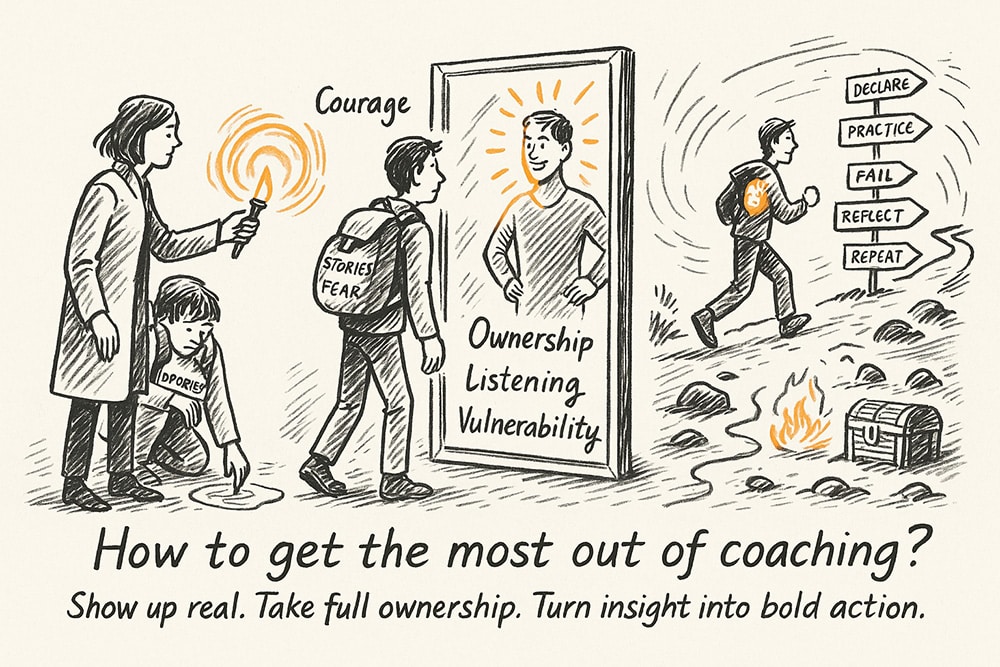
Most people treat coaching like a spa day—a pleasant escape that temporarily feels good before returning to business as usual. But real transformation requires a fundamentally different approach.
The Truth Nobody Wants to Hear
Early in my coaching journey, my coach told me something that changed everything: “Nobody is coming to save you.”
It felt brutal at first. But it was the best news I could receive—because it meant the power to change was entirely within me. The coach isn’t there to fix you; they’re there to challenge you and hold up a mirror to what you’re creating.
The Difference Between Dabbling and Commitment
Why Comfort Is the Enemy of Growth
We’re naturally drawn to comfort—to situations, people, and environments that affirm our existing self-concept and behaviors. But this comfort, while pleasant, is fundamentally incompatible with transformation.
Significant development happens not in your comfort zone but at its edge—where you feel stretched but not broken, challenged but not threatened.
The most successful coaching clients understand this paradox: the discomfort they feel in coaching isn’t a sign that something’s wrong but that something’s working. They learn to distinguish between productive discomfort (which signals growth) and unproductive distress (which signals harm).
The real value of coaching is in how you choose to listen, perceive, and act. It’s not in the coach’s wisdom, but in your commitment to growing as a leader.
Research from Harvard Business Review confirms what I’ve seen in practice: when motivation comes from external sources—a coach’s directives, incentives, or threats—commitment to change is short-lived.
True transformation only happens when you recognize that:
You are already creating the results in your life and business, whether consciously or not
The coach isn’t there to fix things but to illuminate what you’re creating
The power to change your circumstances exists entirely within you
The Courage to Be Uncomfortable
Ultimately, getting the most from coaching requires the courage to be uncomfortable—to voluntarily step into the discomfort of growth rather than remaining in the familiarity of limitation.
This courage isn’t about fearlessness. It’s about feeling the fear and moving forward anyway, trusting that the discomfort of growth serves your larger purpose and potential.
Remember: The moments in coaching that feel most uncomfortable often hold the greatest potential for transformation. Your willingness to lean into productive discomfort—supported by appropriate safety—may be the single most important factor in what you gain from the coaching relationship.
The Ultimate Mindset Shift
The most powerful approach to coaching isn’t asking “What can my coach give me?” but rather “Who must I become to create the results I want?”
This shift from getting to becoming is what separates those who use coaching as a temporary boost from those who experience genuine transformation.
The Coachee’s Role: Owning the Process
1. Own Your Results
You’re already producing every result in your life and business—whether you realize it or not. The overwhelm, the revenue, the team dynamics—you’re creating all of it. Coaching simply brings this into conscious awareness so you can create something different.
A founder I coached blamed demanding clients and market volatility for her stress. When asked, “How are you contributing to your own overwhelm?” she realized she was creating it by refusing to set boundaries. Taking ownership changed everything.
2. Show Up Prepared
Preparation determines 80% of your coaching outcomes. Before each session:
Identify what you’re avoiding: The conversation that makes you most uncomfortable often holds the greatest growth potential
Find the pattern: What keeps repeating despite different circumstances?
Raise the stakes: What’s the cost if nothing changes?
Bring hunger: Connect emotionally to why your growth matters
3. Set Goals That Scare You
Forget SMART goals. Transformational coaching requires TID goals:
Thrilling: Energizes you at a visceral level
Important: Serves something greater than yourself
Daunting: Requires you to grow beyond who you are today
One client didn’t aim to “increase sales by 15%.” She committed to “becoming the kind of leader who builds a million-dollar business while working fewer hours.” That’s the difference.
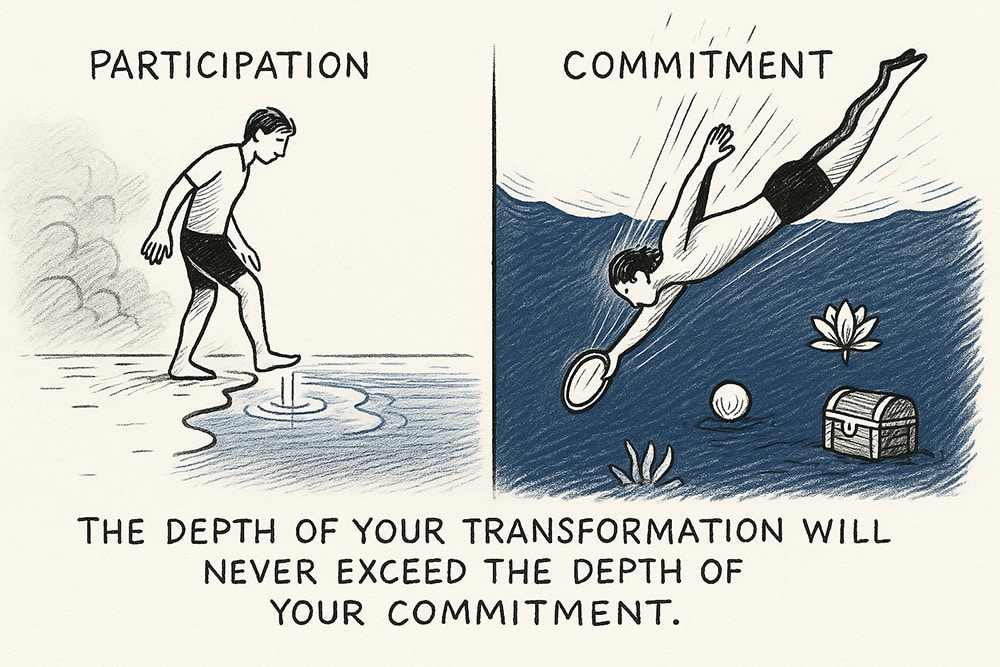
From Participation to Commitment
Most people participate in coaching. Few commit to transformation. Here’s the difference:
You’re just participating if you:
Reschedule sessions when work gets busy
Only implement comfortable suggestions
Want results without discomfort
Keep coaching insights separate from daily decisions
You’re committed when you:
Treat coaching as non-negotiable
Embrace productive discomfort
Extend learning between sessions
Take action even when scared
Let me give you an example: I was coaching a founder who wanted to grow his business from $5M to $10M in annual revenue. At first, he thought it was just a matter of getting better at sales and operations. But through our conversations, he realized that the real challenge was his own fear of stepping up as a leader. He was holding back on making bold decisions because he was afraid of failure and what others might think of him.
Once he took ownership of that fear and realized that he was the one producing the results in his business, things changed. He started leading his team more decisively, took unimaginable risks, and his business started growing—not because of any specific tactic we discussed, but because he shifted how he saw himself as a leader.
Why Preparation Determines 80% of Coaching Outcomes
The quality of your coaching experience depends largely on what you bring to the table. Many people default to surface-level operational issues rather than addressing the deeper patterns that “run” you on autopilot.
To identify your most valuable focus areas, ask yourself these questions during your preparation:
What conversation am I avoiding? Often, the topic that makes you most uncomfortable holds the greatest potential for growth.
Where am I feeling friction? Resistance, frustration, or recurring problems usually point to important development areas.
What’s the problem beneath the problem? If you’re struggling with team performance, the real issue might be your difficulty with direct feedback. If you’re overwhelmed with work, the underlying challenge might be boundary-setting.
What pattern keeps repeating? Look for situations where you keep getting similar results despite different circumstances.
What would make the biggest difference? If you could change just one aspect of your leadership or business approach, what would create the most significant impact?
A client who was struggling with work-life balance initially wanted to discuss time management techniques. During her preparation, she realized the real issue wasn’t scheduling but her inability to say no to new opportunities—stemming from a deeper fear of missing out. This insight completely shifted our focus and led to transformative work on her relationship with sufficiency and self-worth.
Material Outcomes: Just Practice for Real Transformation
Most people come to coaching with a desire for specific material outcomes: more revenue, a stronger team, a successful product launch. And while those goals are important, they’re not the real transformation.
The real transformation is your growth as a leader. The material outcomes are just the practice field where you get to see how much you’ve grown. The true value of coaching is the awareness that you can create any outcome, once you fully step into your role as a leader.
Take this story from one of my clients: He came into coaching wanting to double his company’s revenue. But by the end of our work together, he realized the real transformation was in his leadership. He saw that every decision, every result, was a reflection of how he showed up as a leader. Once he stepped into that, the revenue followed naturally. It wasn’t about hitting a number; it was about realizing that he had the power to create any result he wanted.
The Power of Identity-Based Goals
When you set goals that challenge your identity—not just your calendar or your tactics—you create the conditions for genuine transformation. You stop trying to become a slightly better version of your current self and start evolving into someone new.
As one client who published her book and expanded internationally put it: “I realized I wasn’t just trying to write a book. I was becoming someone who expresses her truth boldly, who claims her expertise without apology, who serves through vulnerability rather than perfection. Once I understood that, the writing became the easy part.”
Remember: The most powerful goals aren’t just about what you’ll achieve. They’re about who you’ll become in the process. And that’s where the true magic of coaching lies.
Ultimately, commitment isn’t something that happens to you—it’s a choice you make repeatedly. Each time you face resistance, each time the path becomes difficult, you have a choice: to participate or to commit.
The clients who experience the most profound transformations make this choice consciously. They decide that their development isn’t optional or conditional—it’s essential to who they are becoming.
As one client who took a stand for herself for the first time and drew boundaries with her husband put it: “I realized I had been treating my growth like a hobby—something I did when it was convenient and comfortable. The breakthrough came when I decided it was non-negotiable, as essential as breathing. That’s when everything changed.”
Remember: The depth of your transformation will never exceed the depth of your commitment. When you shift from participation to full commitment, you create the conditions for extraordinary change.
The Power of Integrity: Saying What You Mean, Doing What You Say
At the heart of transformation is integrity: saying what you mean and doing what you say. This isn’t about morality—it’s about power.
When you consistently honor your word:
You develop unshakeable self-trust
You build momentum through kept promises
You clarify what truly matters
Your commitments become reality
Track every promise you make—to yourself and others. Review them daily. When circumstances change, communicate proactively.
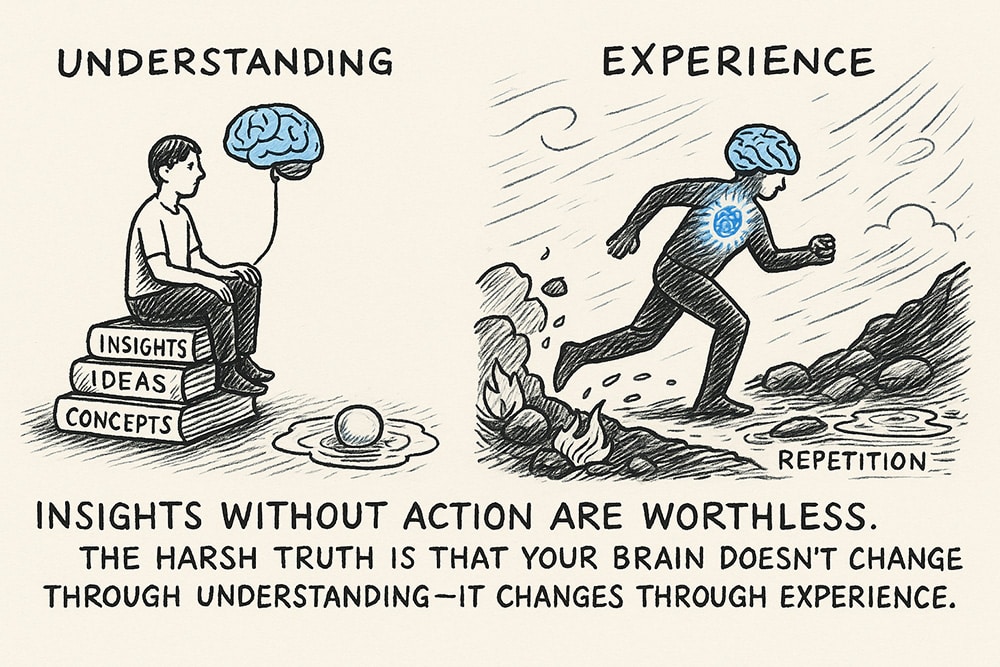
Insights without action are worthless. Your brain doesn’t change through understanding—it changes through experience.
After each session:
Experiment boldly: Try new behaviors, even imperfectly
Reflect deeply: What did you do differently? What impact did you observe?
Document learning: Capture insights to solidify neural pathways
Share with your coach: Don’t wait until the next session
One client reduced meeting time from 12 to 6 hours daily while doubling team productivity. The transformation wasn’t the metrics—it was who he became as a leader. The metrics just reflected that deeper change.
Remember: The true measure of coaching effectiveness isn’t what happens during sessions but what happens between them. Your commitment to the action-reflection cycle is what transforms coaching from an interesting conversation into a catalyst for profound change.
An absurd and dramatic example
Imagine this: You’re walking through a graveyard. Everything seems lifeless. But as you walk, dead bodies begin to rise out of the ground—one by one, they come to life and start asking to work with you, wanting your leadership and insight.
It sounds absurd, right? Completely impossible.
Yet, this is the exact metaphor I use to explain the power we have as leaders. We all have the ability to “create” something out of nothing by changing how we see ourselves and the world around us. Just as those “dead bodies” in the graveyard seem immobile, the challenges or situations in your business may appear stagnant or impossible to change. But when you realize that you are the source of change, you suddenly have the ability to transform the seemingly impossible into new opportunities.
I know this is an overly dramatic example – but I want to make a point – results like the above are available for you from coaching.
The Final Word: You’re the Creator
Stop asking “What can my coach give me?”
Start asking “Who must I become to create the results I want?“
This shift—from getting to becoming—separates temporary boosts from genuine transformation.
The invitation: Will you show up to coaching not seeking improvement but committed to transformation? Will you bring your full self—challenges, aspirations, fears, power—to the process?
If you do, there’s no limit to what you can create. Not because any coach will give you answers, but because you’ll discover your capacity to generate them yourself.
Remember: The power to transform your business, leadership, and life is already within you. The coach simply helps you discover it.
I use cookies on this website to give you the most relevant experience and for analytics purposes. Any personal data collected will never be shared with any third party, or used to spam you. That is my promise. - Sumit By clicking “Accept”, you consent to the use of ALL the cookies.
This website uses cookies to improve your experience while you navigate through the website. Out of these, the cookies that are categorized as necessary are stored on your browser as they are essential for the working of basic functionalities of the website. We also use third-party cookies that help us analyze and understand how you use this website. These cookies will be stored in your browser only with your consent. You also have the option to opt-out of these cookies. But opting out of some of these cookies may affect your browsing experience.
Necessary cookies are absolutely essential for the website to function properly. This category only includes cookies that ensures basic functionalities and security features of the website. These cookies do not store any personal information.
Any cookies that may not be particularly necessary for the website to function and is used specifically to collect user personal data via analytics, ads, other embedded contents are termed as non-necessary cookies. It is mandatory to procure user consent prior to running these cookies on your website.