December 2020

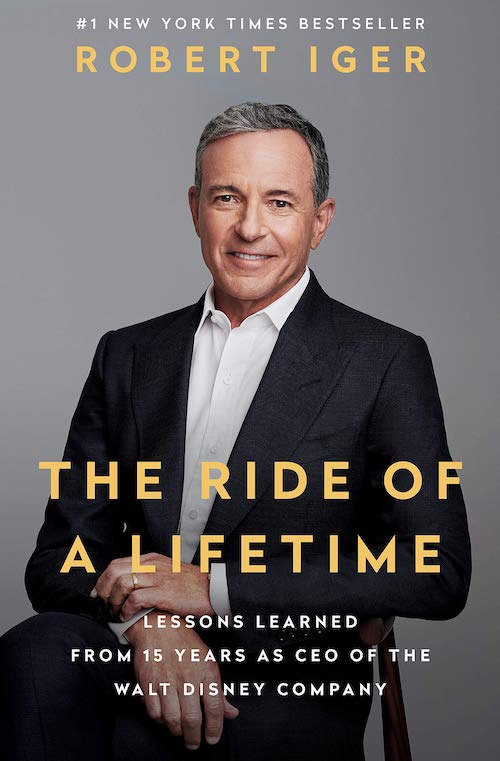
  • The Ride Of A Lifetime by Robert Iger from Disney

    From a small job in production services to becoming the CEO of Disney, Robert Iger has had quite the ride. Excerpts from his life experiences are valuable gems of vision, strategy, and leadership lessons for everyone.

    The Ride Of A Lifetime (2019) describes how Robert Iger saved Disney from the troubled waters it was in, to make it the stupendous success it is today. Iger’s leadership journey shows the importance of taking chances and going with your gut feeling, and that one cannot move ahead without innovation and reinventing oneself.

    The Early Years

    Iger came from humble beginnings. While Iger’s mother was a home-maker, his father was an ad-man and had served in World War II in the US Navy. Being, cleaver and gifted, he helped nurture curiosity in his son. Iger attributes his successes to the traits he inherited from his father. 

    Unfortunately, Iger’s father was diagnosed with manic depression triggered by self-doubt. Years later, when Iger became Disney’s CEO, he took his father to lunch thanking him for all that his father had done, and how grateful he and his mother were to him, in hopes that he would help his father come out of the belief that he had never achieved anything worthwhile. 

    Iger’s foray into the entertainment industry was a matter of luck. His uncle Bob, while recovering from a surgery in 1974, had shared a room with a small-time executive from ABC – the American Broadcasting Company. Bob mentioned to him that his nephew Robert was in search of a job.

    “True authority and true leadership come from knowing who you are and not pretending to be anything else.”
    ― Robert Iger

    The executive got Iger an interview at ABC. Iger got hired at $150/week for a job that required him to be whenever he was needed. That included odd working hours and running errands. He soon got assigned on Frank Sinatra’s The Main Event, a TV concert in New York, where the singer tipped him handsomely. The job offered similar perks and one day, impressed by Iger’s can-do attitude, he was hired at ABC Sports – the company’s most successful division – by an operations supervisor.

    At ABC Sports, Iger was exposed to a completely different work environment. Tailored suits, executive lunches at New York’s best restaurants, and opportunities to mingle with athletes and celebrities taught him a lot about lifestyle.

    It was in ABC Sports that Iger learned a lot from Roone Arledge, who pioneered new techniques in filming such as slow-motion replays and reverse-angle cameras. Iger got one of his life’s most important lessons from Arledge –staying a step ahead of the curve was the only way to survive in business!

    With hard work and smart work, Iger became the VP of ABC Sports at the young age of 34. However, his promotion coincided with Capital Cities Communication buying ABC network for $3.5 billion. Promotions surrounding a shaking event became a recurring pattern throughout Iger’s career.
    Smart Decisions And Trusting The Gut-Feeling

    Every individual comes to a point in life where they have to make decisions that will radically change the future. It is in these times where a person has to, at times, trust their gut feeling and make smart decisions. It is also during such times where one should heed advice that other experienced people give. Iger’s career at ABC after the Cap Cities takeover is proof.

    After the takeover, decisions surrounding expenses led to the stripping away of the expensive perks that the employees at ABC enjoyed. The limos and the first-class flights disappeared and spending accounts shrunk. While these new rules didn’t bother him much, Iger was more bothered by the fact that Dennis Swanson – an outsider, executive was hired to head his department. Iger decided to quit. However, Dan Burke (the then president of ABC) convinced him to stay on.

    Swanson proved to be an excellent boss. His amicable, optimistic, and energetic nature was perfect for Iger to thrive in. Swanson preferred delegation of work and allowed the senior executives to lead projects as long as the budgets were adhered to.

    Iger’s highpoint was the 1988 Calgary Winter Olympics, where he was in charge of the coverage of the event for ABC Sports. Unfortunately, after the first few days of smooth sailing, the Chinook warm winds raised the temperatures and melted the snow and ice on the ski slopes and bobsleigh runs.

    Cancellation of the Olympics could have spelled disaster for the channel without Iger’s improvisation strategy. His team began broadcasting stories of human interest, and America was exposed to different stories of human triumph like that of the eccentric British ski jumper Eddie ‘The Eagle’ Edwards and about the Jamaican bobsleigh team. His smart decision of improvisation earned the network high ratings throughout the event and Iger the presidency of ABC’s entertainment division.

    Taking Chances And Learning From Others Errors

    As the new President of ABC in Hollywood, Iger had more than just shaking off his reputation (as bothersome New York suit in the eyes of his creative team) on his plate. He needed to find the channel a hit that would give them an edge over their closest rival NBC.

    Iger commissioned David Lynch’s Twin Peaks to run on prime time, despite warnings from the creative executives. It was a tough decision, but Iger stood didn’t budge. He took the chance with the left-field murder mystery. The pilot episode saw 35 million viewers! Twin Peaks became one of the channel’s most successful shows after years. 

    It’s another thing that the show’s popularity meandered, as did its plot. However, it was the risk and gamble that focussed the light on Iger. Soon the likes of George Lucas and Steven Spielberg were calling Iger about future projects, cementing Iger’s reputation, making it his career-defining moment.

    As a leader, Iger knew that there are moments where he would need to take a chance and risk a little to succeed. He realized that the channel needed a bold move to shake out of its lull. His boldness won him a promotion to COO, Chief Operating Officer of ABC.

    “You must not let anyone define your limits because of where you come from. Your only limit is your soul.” — Gusteau, Ratatouille

    Disney, Pixar, And The Makings Of A Visionary

    A mere six months after Iger’s promotion, ABC and Disney struck a merger deal in Jan 1996. Despite a successful run in the late ’80s with The Little Mermaid, The Lion King, the Disney theme park and resorts, by the mid-’90s, Disney was in trouble with a bunch of expensive failures and a demotivated creative animation team. They needed a breakthrough.

    During the merger, Eisner insisted that Iger get a new five-year contract, putting him in charge of the Disney media division. Though it was a prestigious designation, Iger considers it as the most unproductive years in his career. 

    Accustomed to ABC’s decentralized culture of freedom within limitations, the absolute top-down hierarchy in Disney was uncomfortable. The other problem was Michael Ovitz, the founder of the Hollywood talent agency CAA. While Ovitz was a gifted agent, he had poor managerial skills. Ovitz’s negative behavior in the boardroom was a very important, instructive, and eye-opening leadership lesson for Iger. He learned what kind of manager he simply would not become.

    Robert Iger understood that learning opportunities present themselves in many ways and come from anywhere. Here, while he learned not to make the same leadership errors Ovitz did, he also understood that learning could also come from people one does not approve of.

    In 1999, Iger was fed-up with the corporate structure at Disney and was planning to quit. Eisner arranged a meeting with Iger; a meeting Iger was sure he was going to be fired in. However, contrary to his expectation, Eisner was promoting him to COO – the number-two position after Eisner in Disney and a position on the board of directors due to Iger’s consistency in work.

    Iger’s move to the number one position, however, happened sooner. Disney was struggling to keep up with the changing face of media and the entertainment world. The only silver lining saving grace was Disney’s partnership with Apple’s Steve Jobs – then the CEO of Pixar Animation Studios. 

    However, it was a relationship that soon soured due to differences between Jobs and Eisner over a five-movie co-production, marketing, and distribution agreement. The issue arose during the development of Toy Story 2. While Jobs counted Toy Story 2 as part of the five-movie agreement, Eisner did not on the basis of the fact that it was a sequel.

    As tensions between the two mounted, the 9/11 attacks caused the markets to crash, forcing Disney’s largest shareholders, the Bass family, to let go of their 135 million Disney shares. Simultaneously, the market crash began to show its effects on tourism affecting the theme park revenue.

    That put Disney in a crisis and led to Eisner making panicked decisions. In a bid to make the most of the Pixar contract, Eisner refused to budge and compromise with Steve Jobs. It led to a public announcement from Jobs that he would never work with Disney again. A few weeks later, Eisner lost the support of 43% of the shareholders, making their decisions quite clear.

    Iger, being second to Eisner was not in a favorable position to be in just when Eisner was ousted by the shareholders. Iger’s job became tough. He had to convince his harshest critics of his abilities. While the others were discussing bringing in a ‘change agent’, Iger consulted an old contact from ABC, a political consultant, and brand manager Scott Miller.

    Miller advised Iger to devise a road map of where the company stands, where Iger would like to take it, and how he wanted to do that as CEO. This led to Iger drafting out a strategy that would eventually help frame the decision-making for the board. He drafted a three-point strategy.

    Firstly, he wanted to prioritize creating memorable characters and movies. In a world where people get an array of choices in entertainment, churning out great branded content was the solution to getting viewers to prioritize spending their time and money on what Disney had to offer.

    Secondly, Iger planned on investing in cutting-edge technology. He wanted to integrate tech in every aspect from production to distribution, making Disney content available in a user-friendly, digital, and mobile manner.

    Finally, he planned to make Disney truly global. That meant, tapping into markets such as India and China, and creating region relevant content. This would help expand the creative horizons. He knew that continuously making content that caters to the same consumer leads to stagnation.

    Armoured with the new strategy, Robert Iger managed to persuade the board of directors and took over as the CEO of Disney in March 2005.

    The Way Ahead

    One of the first things that Bob Iger did as soon as he became the CEO was to call Steve Jobs and repair the relations with Pixar. However, Jobs’s demeanor was as frosty as the deal he offered – to give Disney only a 10% stake in Pixar in exchange for sequel rights of all Disney-Pixar movies. 

    While the deal was absolutely unacceptable, Iger had other plans in mind. He wanted to buy out Pixar. Valued at $6 billion the board members were not in line with the idea. Nevertheless, Iger opined that this was the only way forward.

    At the same time, during the launch of Disneyland in Hong Kong, Iger saw that while there were older Disney characters like The Little Mermaid and Lion King, and Disney-Pixar ones like Toy Story and Finding Nemo represented on floats, Disney characters from the nineties were missing from the picture.

    This disparity was visible in the numbers as well. While Disney lost $400 million during that decade, Pixar was raking in successes due to Ed Catmull and John Lasseter’s pioneering technology and creative content. Iger knew that for Disney’s animation studio to be revived, he needed their expertise.

    Iger approached Jobs about his views on buying out Pixar and expected to be laughed at. Instead, Jobs thought the idea held credibility and by 2006, Disney brought Pixar with the guarantee of Lasseter and Catmull’s creative independence, in return for the technological know-how Pixar had. It was the way ahead for the reinvention of the Disney animation studios and the foundation for some of Disney-Pixar’s highest-grossing family movies including The Incredibles, and Ratatouille.

    Iger’s vision for Disney was of growth and expansion. While Pixar was his first step in acquiring advanced technology and creative know-how, he knew Disney needed the next big adventure.

    Iger turned his sights on Marvel. He knew that Marvel was sitting on a treasure trove that would fit the TV, movies, theme park, and merchandize divisions like a glove. However, the controlling shareholder in Marvel, Ike Perlmutter was a tough nut to crack. Iger approached Steve Jobs for help and Disney bought Marvel in 2009 for $4billion, when Steve Jobs convinced Perlmutter of Iger’s integrity.

    The deal itself was surprising, as it didn’t cover some of Marvel’s well-known superheroes like Spiderman (owned by Columbia Pictures) or Incredible Hulk and X-Men (owned by Fox). Yet it was Iger’s belief that Marvel had enough comics to explore. The over $2 billion box office receipt success of Disney’s Avengers: Endgame is proof enough. It was Iger’s far-sighted decision-making that turned (what many thought to be) a not-so-lucrative deal, into a massive success!

    Today, Disney is changing the cultural face of entertainment. The release of Black Panther in 2018, gave the world an African Superhero and grossed more than a billion at the box office. It resonated culturally with the world. Oprah Winfrey said, “It makes me tear up to think that little black children will grow up with that forever.” 

    It is the mind of a visionary and bold leader that can help break cultural barriers, and create a landmark moment in the entertainment world. 

    It’s kind of fun to do the impossible. – Walt Disney

    Iger’s Love For Innovation

    Iger learned the importance of innovation from ABC’s Roone Arledge – a lesson that guided him when he became the CEO of Disney in 2006. With media content changing rapidly and the introduction of platforms and streaming services, Iger knew that to innovate and stay in business, Disney would have to either make a platform or buy one.

    Iger knew that creating a platform would take years and massive investment. Therefore buying was the only alternative left, and albeit an expensive one, it would enable Disney to venture into the platform markets immediately. 

    Therefore in 2016 August, Disney bought BAMTech Media, a baseball streaming company that had custom-designed the platform for HBO to stream 5 seasons of The Game Of Thrones. What began as a 33% stake has expanded to today’s 75% stake in the company. Iger’s thirst for innovation saw Disney’s own global sports streaming service ESPN+ in 2018 and Disney+ in 2019, Disney’s own on-demand, all Disney-owned, streaming service.

    While it seems like a big risk to pull-out Disney’s TV shows and movies and thereby risking hundreds of millions of dollars in annual licensing fees from streaming services such as Netflix, it is a long-term plan for innovation and reinvention of Disney, by doing away with intermediaries such as distributors and movie theatres. 

    Iger’s vision for Disney’s future profitability and cultural reassurance was sealed with the 21st Century Fox merger deal in March 2019. Disney now owns the rights to all the content of Pixar and Marvel, Fox’s most lucrative X-Men and Fantastic Four franchisesas well as the distribution rights to the famed Star Wars series! 

    For Iger and Disney, the future of entertainment is waiting with arms wide-open!

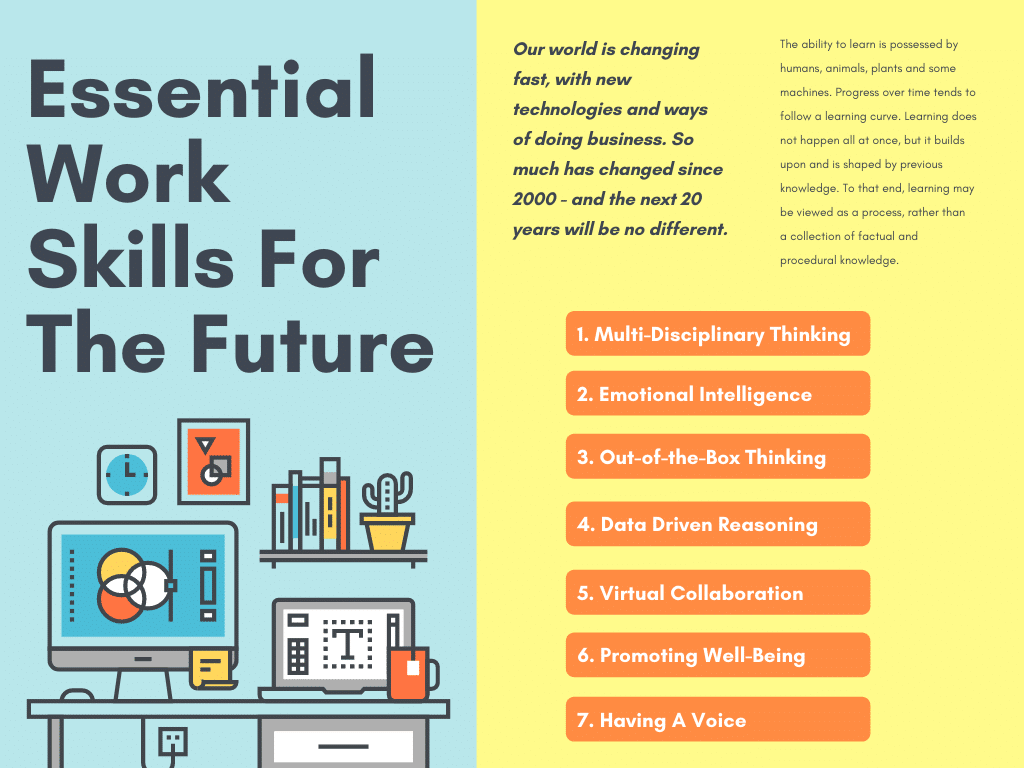
  • 7 Essential Work Skills For The Future – The 2020s And 2030s

    Do you remember a time when you couldn’t ‘Google’ something? Or had to rely on a piece of paper to find your way to a location? Or when ‘social networking’ just meant meeting up with people in real life?

    Our world is changing fast, with new technologies and ways of doing business. So much has changed since 2000 – and the next 20 years will be no different. 

    For instance, you probably cannot imagine carrying around a bulky mobile phone, camera, dictation machine, and PDA (personal digital assistant) all the time, but in 2000, this was commonplace for many professionals. Similarly in the next 20 years, things like 3D printing, Artificial Intelligence, 5G, Virtual and Augmented Reality, and Quantum Computing, will completely change how we work and the way we work. 

    Technologies like the internet, smartphones, and GPS changed the way we work and live. Apps like Whatsapp, Instagram, Netflix, and Google Maps have changed entire industries. Similarly, technological leaps in the next 20 years will not only change what we do but also how we do work, irrespective of which country or industry you work in.

    The coronavirus pandemic has already accelerated this change and helped some technologies like video calling to come to the forefront. People will need to adapt to this constantly changing landscape to stay relevant and perform well. 

    Below are 7 workplace skills everyone will need in in the future – the 2020s and beyond that.

    1. Multi-Disciplinary Thinking

    What differentiates a smart machine from a human brain? It is the human brain’s ability to make sense of things. Multi-disciplinary thinking is the skill that enables us to make sense of things, make the connection between complex things, and foster a curiosity to learn new things. 

    Even with the advent of AI and with machines getting smarter, multi-disciplinary thinking, (or as a university from Phoenix puts it, ‘sense-making skills’) will always be critical in the workplace. And this is the one thing machines can’t do, at least not so far.  

    A multidisciplinary approach involves taking cues from different disciplines or areas, and making connections that most people might miss. You can use this skill to approach problems differently, redefine them, and come up with unique solutions. 

    For instance, if you work as an engineer, in a medical environment, you should have a working knowledge of medicine and health. This will help you plug the gaps between these disciplines, and make connections that others would miss. 

    A biomedical engineer may work with doctors, scientists, and researchers to come to a solution or complete a project. And even though people with different skill sets complement each other, and provide different parts of the jigsaw puzzle – you need someone who can take a multidisciplinary approach and make the connection between the scientific, medical, and technical ways of thinking. 

    Computing pioneer Jaron Lanier says, “if we ask what thinking is so that we can then ask how to foster it, we encounter an astonishing and terrifying answer: we don’t know.”

    No one can know everything, but you can work to understand the big important models in each discipline at a basic level so they can collectively add value in a decision-making process. 

    – Charlie Munger 

    2. Emotional Intelligence

    Emotionally intelligent people have an upper hand in the workplace because they can quickly understand the emotions of those around them, and act accordingly. This helps to de-escalate conflict, motivate your employees and coworkers, and stay on top of your own emotional responses. 

    Being able to regulate your emotions and be seen as an empathetic, sensitive coworker goes a long way towards building your worth as an employee or manager. And as the world grows more multicultural and diverse, empathy and emotional intelligence become even more important

    You could be working with people of different ethnicities, different nationalities and diverse cultures. If you are good at forming strong connections with people, it will go a long way towards cementing your position as a valued collaborator. 

    In addition, a high emotional quotient will help you see when one of your employees or coworkers seems angry, frustrated, or upset. This helps you ward off potential conflict by getting to the root of the situation and acting as a source of support and encouragement for your employee. 

    For instance, if you see a normally competent employee acting unreasonably, you could invite them for a quick chat over coffee or lunch, and try to understand why they’re upset. You could say, “I noticed you haven’t been yourself today, is something bothering you?”

    “When dealing with people, remember you are not dealing with creatures of logic, but creatures of emotion.” – Dale Carnegie

    3. Creative, Out-of-the-Box Thinking

    Your ability to think out of the box and come up with creative solutions is a huge asset to any organisation. And you can be creative in any job – creativity isn’t just limited to artists, musicians and writers. 

    Creativity isn’t just about creating artsy designs or being inventive. If you are able to approach a problem differently from others and connect the dots between different processes to come up with a solution that works, you are creative. Problem-solving is an example of creativity, and so is the ability to arrive at win-win solutions. 

    According to the World Economic Forum, “creativity, innovation, and ideation will be key skills for the workforce of the future. These so-called soft skills, which sit alongside analytical thinking and problem-solving, will replace manual tasks that become automated”. 

    In the 2020s and beyond, it is very important for you to see your coworkers as valued collaborators, not as your competition, and work together to arrive at creative solutions. 

    “With the avalanche of new products, new technologies, and new ways of working, employees are going to have to become more creative in order to benefit from these changes. Robots may help us get to where we want to be faster, but they can’t be as creative as humans (yet).’

    Alex Gray, World Economic Forum senior writer

    For instance, in the 1800s, cars were considered expensive toys for the rich. They were expensive and time-consuming to produce. But a creative and innovative solution by an automobile company apprentice cut down production time from 12 hours to 2 and a half hours and the price of a car from  $850 to $290. 

    This creative solution changed the face of the automobile industry and made the apprentice, a man named Henry Ford, a legend. From being a luxury item, cars became a necessity for the average American. 

    “Logic will get you from A to B. Imagination will take you everywhere.” – Albert Einstein

    4. Logical and Data-Driven Reasoning 

    Critical thinking is a valued skill that very few people have. And it isn’t just about arriving at solutions. Critical thinking includes the ability to think logically, use facts and data to arrive at conclusions, and grasp numbers easily. 

    You can develop this skill by training your mind to solve problems and approach everything like a puzzle to be cracked. In addition to critical thinking skills, those who are good with technical skills like programming, building and understanding algorithms, statistics, probability, and machine learning, will also be in high demand in the workplace. 

    For instance, your company has just launched a new product, but you don’t have any buyers. Logical reasoning skills can help you figure out why – there could be similar products on the market at a better price, your potential buyers may not trust you, or your product could be missing a crucial element that makes it successful. 

    Here are some ways to enhance your logical and reasoning skills; 

    • Learn to think critically. You can do this by questioning ideas and assumptions rather than accepting everything you are told.
    • Try paying attention to how you react in different situations. This will give you a deeper insight into your biases, and your emotional triggers. Analyze every situation and try understanding the reasoning behind your actions. 
    • Avoid judging people and making assumptions. Assumptions lead to unreasonable thinking. Watch out for the times you make assumptions based on flimsy reasons, and try to rely on cold, hard facts each time

    “Logical thinking keeps you from wasting time worrying, or hoping. It prevents disappointment. Imagination, on the other hand, only gets you hyped up over things that will never realistically happen.” – Jodi Picoult

    5. Virtual Collaboration

    The importance of sharing knowledge and collaborating effectively via video calls, emails, and messages, is growing every day, even more so in 2020 – when we are all working from home. 

    Teach yourself how to share knowledge via the written word, and through videos. The workplace of 2020 demands that you be comfortable collaborating, brainstorming, working, and socializing over video calls, and emails. 

    Also, the way people consume information has changed. Many people, particularly of the millennial generation, get 100% of their news from social media, and primarily through videos. No matter what industry you work in, you need to have a decent understanding of how your potential audience consumes content, information, and news, and where they spend most of their time. 

    And it isn’t just to appeal to a target audience, you may have to master the skills of communicating through videos and video calls just to collaborate with your coworkers. Remote work has become the norm, and with good reason. According to a Global Workplace Analytics study, – 36% of workers would choose to work from home over a pay raise.

    Being good at communicating digitally, and at expressing yourself well through videos, has become an essential modern-day workplace skill that everyone needs to have. 

    6. Designing a Holistic Environment That Promotes Wellbeing 

    Work isn’t just limited to productivity, effectiveness, and speed. The workplace is made up of human beings, and the more you look out for their emotional and physical wellbeing, their health, and their motivation levels, the faster and more efficient their work will be. 

    In fact, there is a clear link between happiness and productivity. A study by Oxford University found that happy workers are 13% more productive than others. 

    Work to build an environment where your employees’ and coworkers’ health and emotional wellbeing is prioritized. Check-in with them regularly, and show them that you care about them on a personal level. 

    One way you can do this is by creating helpful ‘nudges’. Nudges are notifications or reminders to remind someone – an employee, a coworker, a manager – of a particular behavior or to trigger an action. 

    For instance, if you are a manager and you hire a new employee, you could set up a nudge to be sent to you reminding you of her 6-month anniversary and make you schedule a check-in meeting. Something as simple as this could positively impact your organization, motivate your employee, and help you keep track of how things are going with all your employees.

    7. Having a Voice

    Having a voice simply means that you are able to express ideas, opinions and even disagree freely. According to a Salesforce survey, employees who have a voice at work, and feel their voice is heard, report feeling 4.6X more empowered to perform their best work. 

    So how exactly can you be confident, overcome your impostor syndrome, and find your voice at work?

    Stand up for what you believe in. Be individualistic, brave, and never be afraid to speak your mind. In today’s world, courage and honesty are highly valued qualities in the workplace. 

    Here a few more ways you can have a strong voice and express yourself at work:

    • Offer Solutions 

    Problem-solving is an important and valued skill in the workplace, and by offering solutions to problems, you can contribute in a meaningful way, while enhancing your value to the organization. 

    • Speak Up in Meetings

    Whether it is asking a question, suggesting an idea or weighing in with your opinion, don’t hesitate to speak up in meetings when you have something to contribute.

    • Ask Yourself How You Can Help 

    Try to think beyond the confines of your role, and see how you can make someone else’s job easier, or help to grow the company. Valuable ideas can come from anywhere, from an intern to the CEO. By going above and beyond, and sharing your best ideas, you make your voice stronger and build credibility. 

    Holding strong opinions and voicing them without fear shows that you are passionate about your work and are strongly committed to a positive outcome. More importantly, when you have a strong voice at work and are able to say what you think and believe, you can promote a more equal, kind, just, and inclusive workplace. 

    Adapting to a Changing World

    The world is changing, and those who don’t adapt quickly will be left behind. You have seen how different 2020 was from the years right before it, and the future will be no different. As the world moves ahead in leaps and bounds, learning these crucial workplace skills will help you stay relevant and be an asset to your organization. 

    References

    1. New Research: How Leading with Equality and Values Impacts Your Business
    2. 5 things you need to know about creativity
    3. 10 Job Skills You’ll Need in 2020 and Beyond
    4. Costs and Benefits
    5. Happy workers are 13% more producti
  • Issue #16, 22 Dec 2020 – The Headlight Analogy

    Welcome to the Deploy Yourself Newsletter. Every two weeks I share about what impactful leadership looks like. I am sending this a couple of days earlier just before the holidays start. I also share the most insightful lessons and stories I encountered in the last two weeks. You can also read this issue online.

    Hey,

    When we are driving at night towards a destination, we turn the car’s headlights on, and we can only see a few meters ahead clearly. Anything beyond what is illuminated by the car’s headlights is completely dark. And there is no guarantees that the road will take us to our destination. The road might be closed ahead, or there might be a diversion, or there might be some other unpredictable obstacle.

    Yet in this uncertainty, we continue driving and eventually reach our destination. Even if we experience obstacles along the way, we don’t just stop and sit on the road. We find an alternate way and continue our journey towards our destination.

    Yet when it comes to our life, why do we always seek complete control? We live in a world where insurance and pension policies, investments, education, business, almost everything is done with an objective to achieve something in the future. While planning for the future has its benefits, I believe we often take it too far and miss the only time we really have, which is “now”, or this very moment.

    Who gave you the guarantee that you will not die tomorrow, next week, or next month? What made you believe that you are going to die at 70 or 80, and not at 20 or 30 or 40. If you don’t believe it, read and watch the news. People are dying every day at all ages. The average age might be 70 or 80, but ask yourself – Do you really want to live your life based on a statistic?

    Instead, turn your headlights on and LIVE NOW. Enjoy whichever phase of life you are in. Be ok with uncertainty of life. See as far ahead as your headlights allow you to see. And have faith that if you find obstacles on the way, you will find another way. Don’t wait for tomorrow if you want to fall in love, travel to your dream destination, or eat that favourite ice-cream of yours. Do it NOW

    Life, by its very nature, is messy and unpredictable. You are not entitled to get anything out of it. Embrace the uncertainty of life and experience real FREEDOM. Go out and play. Learn a new language. Take a new job, or live in different cities/countries and soak in different cultures. Write, paint, or do anything else that makes you experience life rather than draining the life out of you.

    Don’t try to be nice or do what is expected. Don’t live for the gallery. Be authentic. For a change, LIVE for YOURSELF. Let yourself be misunderstood, hated, judged, or whatever, but live by your convictions. 

    It is better to be assassinated by another human being than to be assassinated by death.

    Reply to this email right now if it sparked something in you?

    Articles and Stories Which Have Fascinated Me

    One

    5 Unconscious Ways We Limit Our Own Freedom

    Are you living your life with your hand-brakes on without realizing it? Are you struggling to get the power in your life which you know you can? Do you wonder why your life looks so constrained and limited in this age of freedom and abundance?

    If you allow your unconscious mind to limit your choices in life, you will endlessly worry without finding out if you are on the right path or not. Being scared or feeling anxious about our deep desires is normal (from both the psychological and neuroscience point of view), but the real opportunity and power lie beyond them.

    And the amount of unconscious resistance you face from within can give you a measure of the real potential you have kept locked inside and which is waiting to be unleashed.

    From 5 Unconscious Ways We Limit Our Own Freedom An Article From My Desk

    Two

    My Favorite Reads of 2020

    I have not kept count, but I must have read around 100 books in 2020. This is by far the most I have ready in any year. Here are some of my favorites (in no particular order).

    1. Greenlights by Matthew McConaughey
    2. Mastery by George Leonard
    3. Leadership: In Turbulent Times by Doris Kearns Goodwin
    4. The Promise of a Pencil by Adam Braun
    5. Lincoln by David Herbert Donald
    6. Becoming By Michelle Obama
    7. The Leadership Challenge by James Kouzes & Barry Posner
    8. 12 Rules for Life by Jordan Peterson
    9. Thinking Fast and Slow by Daniel Kahneman
    10. Why We Sleep by Matthew Walker
    11. Influence by Robert Cialdini
    12. Language and the Pursuit of Leadership Excellence by Chalmers Brothers and Vinay Kumar
    13. Bhagavad Gita – translation by MK Gandhi
    14. Conscious Business by Fred Kofman
    15. Conscious Capitalism by John Mackey and Raj Sisodia
    16. The Rise of Theodore Roosevelt By Edmund Morris
    17. Lifespan: Why We Age and Why We Don’t Have To by David Sinclair
    18. A History of the World in 6 Glasses by Tom Standage
    19. Year of Yes by Shonda Rhimes
    20. Tao Te Ching by Lao Tzu / Stephen Mitchell

    That’s it for now. If you have any questions, just hit reply. All the best,

    Sumit

    (Twitter) @SumitGupta
    (LinkedIn) Connect

  • How to Train, Grow, and Manage Your Middle-Level Leaders and Managers?

    Middle management is usually the weakest link in the chain of every organization. A study that gathered data from the most unengaged employees found that middle-level managers form the biggest bulk of the bottom five percent.

    The results are startling, considering they play a key role crucial to the company’s success. They have a direct impact on the well-being of their employees and act as communication conduits for senior managers. When senior management fully supports and trains their middle-level managers, they can bring positive change in the organization.

    However, companies that fail to fully involve mid-level managers while expecting them to implement policies they didn’t have a hand in creating will not achieve their set goals. In many organizations, these managers and their employees are dissatisfied and disengaged. The following are some reasons why.

    They Are Rarely Trained To Do Their Job And Have Badly Trained Managers Themselves

    Middle managers are rarely trained to do their job. According to a study by learning innovator Grovo that involved over 500 middle-level managers from various industries, 98% of surveyed managers felt leaders at their organizations need more training in issues such as time management, employee turnover, professional development, conflict resolution, and project management. 

    Even when present, management training is usually ineffective. The large volume of information makes it almost impossible to remember and apply, and companies rarely do follow-ups to reinforce the training. 

    Top-level managers lack training too. According to a Professor of Management at Vanderbilt Owen Graduate School of Management Ray Friedman, how middle managers treat their subordinates reflects how their bosses treat them. So when their bosses are not properly trained, the effect is felt at all levels. When middle managers have a healthy relationship with their bosses, the effects are passed down the layers.

    There is Increased Pressure to Perform                                                  

    Middle managers are constantly under pressure to perform, which leaves no time for learning. It’s no wonder that a study found that they are the most depressed group in many organizations. The role that middle managers play has undergone major transformations over the last few decades.

    The downsizing, cost-cutting, and restructuring that happen during times of crisis affect middle managers more since they are often blamed for the slack. Apart from the layoffs, middle-level management has experienced major changes that have led to new demands concerning behavior, skills, and competencies. Managers are now expected to become mentors and coaches for their people, and there is increased pressure to perform more than ever.

    They are Always in Meetings

    Middle managers find it hard and exhausting to context-switch across different domains, functions, and skill sets as they go from one meeting to another. This frustration is aggravated when the middle manager is constantly inundated with meetings with no breathing space in their schedules.

    Being in meetings the whole day leaves no time for thinking and casually connecting with people. Managers who spend most of their time attending meetings tend to lose touch with the people they manage over time.

    How to Train and Grow Your Managers? 

    Your company’s bottom line depends on the caliber of managers you have. The way they manage directly impacts the engagement, motivation, and productivity of your people. The buck stops with them. It, therefore, makes sense to help them become excellent at their jobs. The following are a few ideas.

    1. Educate Them About Their Role

    Many managers rarely have a clue of what their role entails as nobody told them what people expect from them and they only had bad examples to follow themselves. Part of the reason is that the majority of managers were promoted to the position after excelling in their previous assignments, and not because they were good in management.

    However, management is a different role altogether and requires a unique set of soft skills that experience in previous roles can’t provide. Such skills include listening, accountability, building relationships, the ability to make sound decisions, and motivating others. Therefore, if your organization is willing to entrust people with management positions, it should also be willing to invest in educating the managers on what is expected of them. 

    2. Train them To Be Better Coaches and Communicators

    A manager’s role primarily involves dealing with people and having conversations. In fact, it would not be wrong to say that leaders get paid to have effective conversations. You should, therefore, educate them to become better coaches and communicators. Proper communication is clear, transparent, and consistent, and it plays a key role in clarifying expectations, building relationships, managing conflict, and giving honest feedback.

    Coaching enables leaders to support their employees to identify their blind spots and confidently go after ambitious goals. Instead of acting as gatekeepers who stand between the frontline employees and their growth, managers should coach their team members to constantly learn and fulfill their potential in their respective roles.

    However, employee development is a continuous process, and you should not do it once or twice a year to tick off an item on a checklist. Coaching should happen regularly at frequent intervals.

    3. Build Trust

    As a leader, you should have very high character and integrity expectations from your managers. Trust is essential for effective leadership since it makes your team feel a sense of belonging and encourages people to work towards a collective purpose.

    According to the Harvard Business Review, employees working in high-trust environments are 76% more engaged and report a 50% higher productivity rate. Without trust, everything else falls apart.  

    Building trust is an ongoing process. When you establish trust with your managers, you should continually nurture it by being transparent, owning mistakes, seeking out feedback, and giving credit where it’s due.

    “We look for three things when we hire people. We look for intelligence, we look for initiative or energy, and we look for integrity. And if they don’t have the latter, the first two will kill you, because if you’re going to get someone without integrity, you want them lazy and dumb.” – Warren Buffett

    4. Be transparent

    Your manager is an essential communication link between top-level management and frontline employees. They provide executives with valuable information about the day-to-day workings of the organization and ensure that information from senior management gets to the employees.

    If the organization fails to bring middle managers onboard by not sharing valuable information with them, the employees will also be out of touch with the organization’s goals and objectives. You should always share honest and transparent information such as company values, mission, goals, progress, successes, and setbacks with your managers so that they can pass it along to the frontline workers.

    Knowing how to communicate is especially important in our ever-changing and dynamic world. The next crisis – a financial crisis or a pandemic as we have seen in 2020, could just be around the corner. Do you managers what essential messages to communicate when the times get tough?

    5. Use a Strengths-Based Approach To Career Development

    Every manager has weaknesses, but they also have innate strengths. Although you should not ignore the weaknesses, studies have shown that focusing on strengths rather than trying to fix mistakes creates more engaged employees and is better for the company’s bottom line.

    Strong leaders allow their managers to manage based on their strengths and support them in areas of their weaknesses. Focusing on weaknesses erodes trust and creates friction. On the other hand, a strengths-based approach leads to faster growth and high positivity in the workplace.
     

    6. Get Each Manager a Coach

    Today’s employees prefer the opportunity for personal growth to financial growth. And over the long term, there is no financial growth possible without personal growth. People no longer want a boss who dictates what to do without giving regular feedback. Instead, people expect a manager who can coach them, value them, and help them build their strengths. A strong leader involves their employees in setting goals and expectations and communicates more openly, honestly, and frequently. 

    As Gallup found out, the number one reason why many employees switch jobs is career growth opportunities. A coach will help your managers grow and see their blind spots. They can give practical advice on how to offer emotionally intelligent support and help them build confidence while dealing with challenges and setbacks which every manager faces.

    Conclusion

    Effective middle-management is critical for your organization’s success. Your manager is responsible for setting goals, motivating employees, and ensuring that the company’s day-to-day activities run smoothly. And as a leader, it is upon you to ensure that they have the necessary tools required to keep your employees engaged and productivity high. 

    This includes giving them the right training to prepare them for their role, building trust, being transparent, and dealing with change. Proper training should educate managers on the importance of their role and teach them to become better coaches and communicators. It should also be current and regularly updated with the latest research and findings, and focus on improving your manager’s strengths rather than fixing their weaknesses.

  • 20 Questions Every Manager Must Ask In One-on-One’s To Help People Find And Do The Best Work Of Their Lives

    As a leader, my most important meetings are my 1-on-1’s with my direct reports. It is the single best investment of my time, and yet I have seen most leaders clueless about its importance.

    These 20 questions will help you turn your 1-on-1 meetings into sources of insights and connection. Insights into the desires and fears of the human being sitting beside you, and an opportunity to create a real human connection based on care, impact, and meaning.

    There is nothing more powerful than asking the right question at the right time. Powerful questions like these can become your prized tools of leverage as a leader and coach. Here they go :

    1. Tell me something I don’t know about you?

      This question never ceases to amaze me. It is such an open-ended question that the answers you get surprises you. This question can reveal a lot that you might not be aware of, about the other person. This question works wonderfully whether you are talking to somebody who is new in your team, or to someone whom you have known for years.
    2. Where do you want to be in the next 1, 5, and 10 years?

      This question provides a window into people’s dreams. You might have to ask a few questions to uncover them, but once you get to know where somebody wants to be in the future, you can use that knowledge as leverage when you assign work to them. This can help you to allow them to do the best work of their lives.
    3. What are you excited about?
    4. What are you worried about?

      These two questions will tell you what the other person cares about. Questions like this will reveal what is important to them in their lives – whether it is their family, their health, a particular hobby, sports, or something else.

      The answer to these questions will help you better deal with future situations when they are overly excited or worried. You will be able to understand what happened that caused them to be excited or worried.
    5. If you were to donate everything you have to a cause or charity, which would it be?
    6. What one word do you want people to use to describe you? What word do you think people currently use?

      The above two questions will make people reveal their most important values. Asking them to come up with one word can be very challenging but it can reveal something very deep and meaningful in their life.
    7. What did you do recently that you are proud of?

      This question will reveal a recent act which the person is proud of. It will reveal what the person values, and will also help them connect with their own values, which often people are unaware of.
    1. When was the last time you told a lie? Why? What would have happened if you had told the truth?

      We all tell lies – in different areas of our lives. And there is nothing right or wrong about them. However, I feel that a totally different outcome/result could be possible if we were to tell the truth in such circumstances.

      Asking this question can reveal hidden possibilities in people’s futures which they themselves might have closed doors on. It shows people alternate options that would become available for people if they were to choose courage over comfort the next time.
    2. What do you want to do that you will be proud of in 5 years’ time?

      We can all work just for the sake of work. Or we can do work which we can remember decades down the line. Work that makes us proud, work that makes an impact, and work that makes a difference. This question will help you figure this out.
    3. How are you special? What makes you stand out?

      I believe we all are unique in our own ways. We all have our strengths and things we do well. However, our work likes to put us into boxes of pre-defined roles and responsibilities.

      As a leader, it is very important to understand what makes each person tick in your team, and what is unique about them? This will help you find work for them that are suited to their strengths, and they have the best chance of succeeding.
    4. When was the last time you stepped out of your comfort zone? What was the result?

      This is another question that touches on the idea of courage. This question can reveal what someone has been missing out on because of a lack of courage. I have seen that when asked this question, people see hidden opportunities for themselves in the future if they were to gather the courage to step out of their comfort zones.
    5. Tell me about your biggest failure in life? Biggest success? What did you learn from the experience?

      We all learn from ups and downs in life. There are moments in everyone’s life when we are forced to re-evaluate our life priorities. Moments like these, which are called ‘crucibles’ by Bill George, the author of Discover Your True North, can reveal a lot about what we value and who we are.
    6. When was the last time you laughed at work?

      If the answer to this question is “too long ago”, you know as a leader you have your task cut out. You need to do something to make the environment more fun. Always being busy at work can make life boring if you don’t have friends at work.

      Life is always more fun, and work is more productive if we have people with whom we can laugh.
    7. If you had the opportunity to get a message across to a large group of people, what would you say?

      Everyone has a message inside of them dying to get out. Everyone wants to say something which they don’t because of certain societal pressures or internal battles.

      Asking this question will help you get that message out, and if you can create a culture where people can express themselves fully without pretensions, engagement and productivity will go up by many notches.
    8. What would your day look like if money was not a concern?

      Often people feel powerless and trapped by money. I have felt that way for a long time, and I have seen that asking this question forces people to think for themselves about what their world would look like if money was not a concern. Ask this question and be amazed by the answers people give.
    9. Who do you look up to? Who are your mentors, both those you know personally and those who inspire you from afar?

      We all have people in life who inspire us and whom we look up to. These could be people we have met, like our parents or our teachers. Or these could be people whom we have known and heard from far, as someone from politics or business. Knowing who people look up to can give an insight into their values and ideals.
    10. What do you do after work? What are your hobbies?

      People have a life after work, and knowing about what keeps them busy at work can help you get a better picture of their personality. I have found that talking to people about their hobbies, and motivating them to do more of it, can increase their engagement and productivity at work.
    11. What are your highest priorities in life? Where does work fit in?

      We all have priorities in life other than work like family, health, a hobby, or volunteering. For some people, work is the number one priority, while for others it is not. Knowing where work fits in someone’s life priorities can help you communicate and coach them accordingly.
    12. As a child, what did you want to do when you grew up?
    13. What in your life is ‘on hold’? Until you lose weight, until you retire, etc. What are you waiting for?

      The above two questions try to bring to the surface deep desires which we might have given up on. We all dream a lot as children but give those dreams up when we are faced with the reality of adult life. However, it doesn’t have to be so, and tapping into those dreams can be a great source of motivation and satisfaction.

      All of us have something in life which we plan to do “one day”. These items are usually on hold and we are waiting for some ideal condition to be met. Asking this question will help you understand people better, and connect with them on a deeper level.
  • Issue #15, 10 Dec 2020 – The One Skill We Could All Learn

    Welcome to the Deploy Yourself Newsletter. Every two weeks I share about what impactful leadership looks like. I also share the most insightful lessons and stories I encountered in the last two weeks. You can also read this issue online.

    Hey,

    Most people become successful because of their ability to focus on doing a particular job well. Whether you are a software developer, a designer, an analyst, or a consultant, you are successful today because you have become very good at doing what you do. However, this laser-focus on finishing projects, and doing them to the best of your ability hardly leaves any time to slow down and relax.

    As the year draws to a close, the skill to celebrate and feel grateful is a skill we can all learn and use a bit more of. Before your hyper-focused mind kicks back in, reserve some time before the end of the year only for yourself. Yes, only for yourself. A time when you can sit alone, celebrate all that you have achieved in life, and express gratitude for all the little wonders and joys in your life.

    Whenever I do this exercise, I’m surprised at how many things I can list. Quickly, I feel relaxed and grateful, which makes life a whole lot more enjoyable.

    If your hyper-active brain is asking for evidence or looking to dismiss the above, there is plenty of research that backs up the fact that gratitude and celebration are powerful tools to improve your well-being and productivity in the long term.

    Reply to this email right now and tell me one thing that you are grateful for in this moment?

    Articles and Stories Which Have Fascinated Me

    One

    How To Use Both Conscious and Subconscious Mind to Solve Your Biggest Problems?

    The human brain is often called the most sophisticated machine in the universe. Be it writing a letter, loving our family members, playing a game, preparing a presentation, or planning for the future – none of these tasks are possible without our brains. Yet isn’t it surprising that our brain doesn’t come with an owner’s guide? Also, our education rarely teaches us how to make the best use of our brains.

    Even though a lot is unknown about how our mind works, there has been considerable progress in neuroscience in the last two decades. If the average human being knows about what we now know about our brains, I believe we can vastly increase our performance in all aspects of our lives.

    Our mind is often categorized into two categories – the conscious and the subconscious. Everywhere where we use rational thought, we are using our conscious mind. The subconscious mind, on the other hand, is where our intuition lies. We might think that when we develop ideas and solve problems, it is only our conscious mind at work. But our subconscious mind also plays a big role in the background.

    This is the part of the mind’s functioning which most people are unaware of.  Even in our lives, we can see that trying too hard to solve a problem can lead to frustration sometimes, yet when we step aside and do something else we can suddenly see the solution. Many scientific discoveries have also been accidental or happen in so called “Eureka” moments.

    Scientists have discovered that taking long walks in nature is one such mind wandering activity that can generate creative insights for problem solvers. There is evidence that spending just a few minutes outside in nature can improve people’s moods and generate positive emotions, which in turn can improve our intuitive idea generation.

    From How To Use Both Conscious and Subconscious Mind to Maximise Creativity And Solve Our Biggest Problems? – An Article From My Desk

    Two

    Solitude and Leadership

    This is one of my favorite leadership essays, and it highlights the role of solitude in the development of any leader. The author William Deresiewicz writes in this essay –

    “Your own reality—for yourself, not for others.” Thinking for yourself means finding yourself, finding your own reality. Here’s the other problem with Facebook and Twitter and even The New York Times. When you expose yourself to those things, especially in the constant way that people do now—older people as well as younger people—you are continuously bombarding yourself with a stream of other people’s thoughts. You are marinating yourself in conventional wisdom. In other people’s reality: for others, not for yourself. You are creating a cacophony in which it is impossible to hear your own voice, whether it’s yourself you’re thinking about or anything else. That’s what Emerson meant when he said that “he who should inspire and lead his race must be defended from traveling with the souls of other men, from living, breathing, reading, and writing in the daily, time-worn yoke of their opinions.” Notice that he uses the word lead. Leadership means finding a new direction, not simply putting yourself at the front of the herd that’s heading toward the cliff.

    I started by noting that solitude and leadership would seem to be contradictory things. But it seems to me that solitude is the very essence of leadership. The position of the leader is ultimately an intensely solitary, even intensely lonely one. However many people you may consult, you are the one who has to make the hard decisions. And at such moments, all you really have is yourself.

    From Solitude and Leadership – An Essay by William Deresiewicz

    That’s it for now. If you have any questions, just hit reply. All the best,

    Sumit

    (Twitter) @SumitGupta
    (LinkedIn) Connect

  • Know What Great Managers Do? A List of 8 Expectations From Managers That Employees Have.

    According to research by Gallup, the most common reason why people leave their jobs is bad managers and bosses. The study, which questioned more than one million working Americans, revealed that 75% of workers who left their jobs did so because of their managers and not necessarily the position itself. No matter how many perks a position offers, people often quit when they don’t enjoy a healthy working relationship with their boss.

    Most people get promoted to management because they did well at their previous non-management job. Just because you excelled in your individual contributor role doesn’t mean you can seamlessly transfer over those skills to a management role. For instance, when an all-star football player becomes a manager after retirement, success is not always replicated in their new role.

    People often forget that management is a totally separate role. Yet, most people are promoted or rewarded with a “management role” for succeeding in their previous role. The skills required to manage a football player or a software engineer are different from being a good football player or a good software engineer.

    Do Managers Even Know What People Expect From Them?

    However, a bad manager is not a bad person. They are just unaware and trapped between a rock and a hard place. Managers are rarely trained or educated about how to do their job well. It’s no wonder that they end up managing people like they were managed. Most of them don’t even understand what management is and what people expect from them.

    Transitioning from an individual role to a manager is one of the most challenging moves you can make in the corporate world. Becoming a manager comes with new responsibilities and requires a new perspective about work and the people involved. It also requires you to form new types of relationships with your former peers, your new colleagues, and other stakeholders.

    Nobody shows new managers how to develop a leadership style that is authentic as well as results-driven. Such disregard for management skills can derail an individual’s career and negatively affect the organization’s productivity. Great managers don’t happen by accident. They learn from their mistakes and invest in developing their skills. I have worked with many great managers myself, and below is what I have learned about people’s expectations from their managers.

    Every 2 weeks I share my most valuable learnings from living life fully in my Deploy Yourself Newsletter. Sign up now to download a workbook with 164 Powerful Questions which I use daily in my work and coaching. Allow these questions to transform your life and leadership.

    A List of 8 Expectations From Managers That Employees Have

    While it is almost never voiced, employees have certain expectations from their managers. The following are expectations you must fulfil when managing any group of people.

    1. Trustworthiness

    Employees want a trustworthy manager. If you don’t measure up, you will not get their best efforts. Trust is the bedrock of any organization’s success because it makes a big part of the organizational culture. Employees are more likely to actualize goals set by leaders they trust and are honest about what is happening in the organization. The best way of developing trust is leading by example and becoming a role model. Be the kind of manager you would expect to have.

    It is easy to bark orders and tell people what to do or how to behave, but you can’t get away with preaching water and drinking wine. If you expect your people to be accountable, you need to hold yourself to a higher standard. So be the first one to uphold company values and hold others accountable who don’t. And yes, don’t consider your position as a license to slack off or use company resources for your own gain. 

    2. Vision

    Employees expect managers to have a clear vision and know where the team is heading. This gives meaning and purpose to their work. Having a purpose motivates and inspires people to keep going in spite of the circumstances – which can be chaotic and dynamic. When faced with obstacles, they are less likely to get demotivated. Your vision, therefore, should be strong enough to carry your team through the tough times that will eventually come. 

    Visionary leadership provides clarity, as people will look up to you for providing direction. You need to spend time with the team regularly to discuss, revisit, or reshape the team’s purpose. Ensuring each member understands the team’s purpose and their role in the team will empower them to prioritize their tasks effectively.

    Everyone wants to contribute to something bigger than themselves and make a difference. Strong leaders and great managers show people how their work impacts the customer and the wider benefits to the industry/society.

    “When corporate executives get really excited, they leverage their learnings against comprehension to revolutionize English.”

    ― Tanya Thompson

    3. Effective Communication

    Effective communication leads to high employee engagement. Therefore, it is imperative to be clear, consistent, and transparent when communicating. Leaders should stop using complicated language or hiding behind jargon. Trust people and share information openly.

    For instance, if you promote an employee, you might want to clarify why you made the choice. Likewise, if there has been a change in strategy, you might want to inform them how the change will impact the team’s objectives. The aim here is to filter out the unnecessary noise around the main message, which could be anything from corporate jargon that could cloud the message to a funny anecdote for the wrong audience.

    Transparent communication is essential for building trust within your team. You should, therefore, communicate with your team openly and honestly. Share what you know when you know it to avoid rumors and misinformation. And when there are no clear answers, communicate the same.

    You should also clarify when the information is subject to change and update it when it does. When you communicate openly and honestly, the message gets home, and employees will consider you more credible and trustworthy.

    4. Psychological Safety

    Make work fun by bringing the team together and creating a safe space where people can be themselves. Building a psychologically safe and inclusive team culture will encourage your employees to voice their opinions without fearing judgment. It will build stronger relationships that foster better collaboration. Moreover, it will inspire creativity and innovation. Consequently, you will have increased employee engagement and even higher performance.

    You can create a psychologically safe environment in the workplace by embracing mistakes. Instead of calling out your employees when they err, give them permission to try and fail and allow them to come up with out-of-the-box ideas and solutions. This will create a culture that encourages learning from mistakes. Such freedom to experiment will also make work both educational and fun. In a safe environment, you don’t have to wear a mask and can be completely honest about what you know and what you don’t.

    5. Career and Professional Development Support

    Employees need continuous career and professional development support beyond the once or twice per year performance cycle. A year is too long a time to wait for feedback, and such evaluation is rarely based on data. Managers also often take a one-sided approach, taking it upon themselves to decide how good or bad an employee did.

    Continuous career and professional development demand that you meet with your employees frequently. It is helpful to inform your employees about your shared goals and objectives and what milestones they need to reach within reasonable time frames. You may want to have frequent team meetings and one-on-one sessions.

    Such meetings should be conversational. Instead of repeating what you already know, ask how the employee is fairing, and how you can help them get better. People are mostly unaware of how they can grow in their careers, and as a coach, you can help them figure this out. These conversations help provide clarity on how best to make meaningful progress.

    6. Coaching

    Employees don’t want someone who just expects results without providing any resources or coaching support. So if you want better results, perhaps it’s time to roll up those sleeves and start coaching. Great managers see coaching as essential to their employees’ growth and development. It helps them become a better version of themselves. Check-in with each member of your team regularly and schedule one-on-ones no matter how busy you are. Use those meetings to learn about their challenges and help people see and overcome their own blind spots.

    Coach people first before offering advice. Coaching enables long term behavior change, while advice is short term. The truth is people already have the answers to their challenges within themselves. Your only task is to help them learn how to find theirs. As a manager, you can see coaching as a tool to empower your people – helping you to take a hands-off approach. Coaching creates a space for people to express their feelings and validate their ideas. It says to them: I see you, I hear you, and I value you.  

    “If you focus on people’s weaknesses, they lose confidence.”

    ― Tom Rath

    7. Strengths-Based Development

    Too often, managers focus on an employee’s weaknesses. However, this approach drains people, and research has proven that strengths-based management works better. Understandably, no employee appreciates it when a manager highlights their weaknesses while ignoring their strengths. At the end of the day, people expect recognition and praise. Accordingly, you have to identify your employee’s talents and passions and focus your energy on improving them. 

    You can start by delegating responsibilities based on strengths. When your employees are doing what they are good at, they will be intrinsically motivated, and their performance will improve as a result. When evaluating this performance, center your performance review conversations on their strengths and how to better them. Also, do not forget to encourage them to align their goals with their strengths. 

    Focusing on weaknesses creates friction which leads to demotivation. Everyone has weaknesses. Who doesn’t? Stop making everyone into the “perfect” this or that. Accept people for who they are. Fixing people takes an “I know better” attitude. Instead “care” for your people. Great managers work together with people to see where learning is needed, rather than imposing their own standards. Focussing on strengths lead to work becoming more fun, in addition to enhanced productivity and employee well-being.

    8. Autonomy in Work and Decision Making 

    A modern employee wants a leader who can coach them and not someone to tell them what to do. Micromanagement often kills motivation and engagement. Checking up on your team members at every chance you get lets them know you lack confidence in their skills and abilities. So instead of telling them what to do, let them take the lead on tasks. And when they get stuck on a project, guide them to figure out the solutions by themselves instead of providing all the answers.

    If you hope to inspire your employees to be the best they can be, allow them to make decisions for themselves. For instance, let them decide how best to get their work done. At the end of the day, all that matters is that they create value for the company. Allowing your people to do what they do best without interference will, however, lead to better results in the long-run.

    In an environment where people are free to make mistakes and failure is embraced as a learning opportunity, employees feel comfortable when trying new things. Give them ownership, so the work is theirs, not yours. This makes their tasks, their projects, and their responsibilities more meaningful.

    Conclusion

    When you are a manager, there is an initial belief that your team will naturally respect you and follow your lead, but nothing could be farther from the truth. On the contrary, it is your actions as a leader that will lead to high productivity, respect, and trust

    If you can’t live by your ideals and your company’s values, you will lose their trust and respect. While management isn’t about you, you must be able to manage yourself first before you can manage others. Ultimately, you want to inspire people and expand their capacity beyond what even they think is possible.

  • 9 High Leverage Skills We Should All Learn (And Why Aren’t We Teaching Them Already?)

    “It’s not only children who grow. Parents do too. As much as we watch to see what our children do with their lives, they are watching us to see what we do with ours. I can’t tell my children to reach for the sun. All I can do is reach for it, myself.” – Joyce Maynard

    From a young age, children are taught various things. However, most of the knowledge is centered on academic progress. There are hardly any courses that teach them the skills for leading a fulfilling and joyful life.

    Conventional knowledge can make a child successful in the professional world years down the line. But to be happy and content, they need to learn a set of skills that can help them no matter the field they step into. I have found that the below 9 skills are rarely taught in our formal education systems, yet are very important.

    These high-leverage skills are important no matter what you do for work, and can amplify the results you produce. Considering how valuable these skills are in my life, I found it very surprising that we don’t teach these skills as part of our formal education. 

    1. The Art of Communication

    Good communication skills are necessary for producing results and breaking down barriers between people. At the same time, the old adage – we have two ears and one mouth- is of great importance. To communicate well, we need to be good listeners first.

    It is ok for two people to disagree on a subject. But disagreement does not have to lead to a conflict or a breakdown in communication. People disagree when they have different perspectives, and it becomes a problem when they get stuck there rather than going deeper to find shared goals.

    How to disagree, understand each others’ points of view, and coming up with a win-win solution that works for both parties is a very important skill irrespective of what you do and where you work. Yet it is never taught and we are left to learn from our own experiences.

    When people care about the other person’s point of view, it leads to a better understanding of their feelings. That results in the development of tolerance and acceptance of others in them. In other words – empathy. Empathy not only helps to bring people together but also results in more fulfilling relationships. 

    2. The Importance of Asking Questions

    I remember that as a kid, I used to have so many questions at all times. No wonder I kept troubling my mother all the time. The range of questions that children come up with is simply amazing! 

    Genuine inquiry can bring about so much learning and knowledge rather than having definite answers or ideas. Questions can open the mind to new ideas. On the other hand, the doors to knowledge get blocked once children grow up and eventually stop asking questions.

    While definite answers lead to the end of learning, a good question heralds the beginning of new learnings and opportunities. Hence asking powerful questions is a very important skill that we are never taught. Instead, we are too obsessed with finding answers that we rarely stop to question.

    3. Being Ok With Not Knowing

    “I see my path, but I don’t know where it leads. Not knowing where I’m going is what inspires me to travel it.” – Rosalia de Castro

    If we genuinely look at the vast universe around us, we will realize our knowledge is minuscule. When we admit “I do not know” it opens up a pathway towards learning. But I have observed that saying “I  do not know” is a tough task for many people, and it is seen as a bad sign – both in school and at work.

    The competitive themes woven in the fabric of modern society does not encourage individuals to admit their ignorance. It teaches us that any gaps in our knowledge should be hidden or filled up at the earliest. However, the person who knows everything is like the proverbial filled cup that can only overflow and not learn anything new.

    By refusing to acknowledge our ignorance we are blocking our passage towards knowledge. Mostly “I do not know” is perceived as a negative statement. But we need to change our outlook and see it with a growth mindset and curiosity. That transforms a person into a true seeker and leads to real self-development.

    To let people explore and find the truth like children, we need to encourage the culture of saying “ I do not know”.

    4. Not Seeking Approval From Others

    Many times, we are busy, consciously or subconsciously, winning approval from others as that makes us happy. But keep in mind that this desire to seek approval from others is a kind of bondage, which kills the freedom to grow and develop as a confident individual.

    The need for approval can lead to fear, anxiety, and stress. This can prevent people from moving beyond their self-imposed boundaries in life. 

    Once people develop self-belief stop worrying about what others think, they are free to create their life the way they want. It is important to teach people that their lives are their own making based on their choices. Opinions and social pressure should not hold back their individuality.

    5. Overcoming Negative Emotions

    Resentment is like drinking poison and then hoping it will kill your enemies.”-  Nelson Mandela

    All of us have been overcome with anger, grudges, or emotional pain at some point in our lives. When we feel wronged or offended, our ego takes the driver’s seat, killing any possibilities for learning.

    The truth is, negative feelings do more damage to ourselves than to the other person. When we let go of the past and move on, there is a sense of peace that rises from within. With no emotional baggage to weigh us down, we can move freely and joyfully through life. It also allows us to focus our time and energy on issues that truly matter to us.

    Just like the waste generated in our households and cities is processed to create energy, we can and must process our emotional waste too. If we know how to deal with our emotions, they can be used to generate productive energy.

    Learning to transform emotional waste into creative energy for a common or higher purpose is a skill. And just like other skills, it can be learned and developed. We can all use our emotional intelligence to make productive use of our emotions. If we can do that, these emotions will stop being “negative” for us. And we will end up with stronger relationships and a better world for all of us – not just you and me.

    6. The Importance of Integrity

    Take a moment to look back and think – Have you always done what was expected of you even when nobody was around to check what you were doing? How many times have you gone back on a promise because you were tired, or not in the mood?

    Integrity is a quality that deeply impacts every other aspect of our lives. This is an age where material success and fame seems more important than integrity.

    The word integrity can mean multiple concepts like honesty, honor, responsibility, and authenticity. But simply said, integrity is doing what you say and saying what you do. Integrity is honoring your word and keeping your promises. Yet we rarely teach people the value of integrity and the high costs associated with not acting in integrity.

    Integrity leads to trust between people, higher self-esteem, better reputation, and bigger results for us. At the same time, a lack of integrity can lead to distrust, anxiety, lack of confidence, and diminished results over the long term.

    Here is something Warren Buffet said- “You’re looking for three things, generally, in a person – intelligence, energy, and integrity. And if they don’t have the last one, don’t even bother with the first two.”

    7. To Remain Balanced Through Life

    “No man has been shattered by the blows of Fortune unless he was first deceived by her favours.” – Seneca

    Life can be a seesaw of success and failure. This can lead to alternative cycles of pain and pleasure. In reality, none of these situations are permanent. We must be careful not to get carried away by them.

    The true nature of human consciousness can be compared with a clear blue sky. The various events of life are the white and dark clouds that pass over that sky. Once we realize our true nature, the passing clouds cannot affect our state of being.

    While failure can lead to anger, frustration, anxiety, and depression, success can lead to arrogance, pride, and egotism. To maintain the right emotional balance, we need to avoid both ends of the spectrum.

    The Bhagavad Gita talks about staying the same in joy and sorrow. It says that the problem does not lie in the joy or sorrow as everyone goes through ups and downs in life. Pairs of opposites are everywhere – in the outside world, and in your mind. But you do not need to be attached to either joy or sorrow. You can learn to stay balanced and act in a constant way irrespective of them.

    8. Stepping Out of the Comfort Zone

    Get out of your comfort zone. Seek discomfort. Make sure the weakest parts of you don’t survive.”- Robert Celner 

    Consider these examples:

    • Richard Branson did not enjoy public speaking and used to get nervous about it. He had to step out of his comfort zone to master the art.
    • An editor fired Walt Disney and remarked that “he lacked imagination and had no good ideas.” Before he built Disneyland, Disney had to face bankruptcy multiple times.

    There are many other celebrities who stepped out of their comfort zones and took risks to accomplish what they believed in. Trying out new things and embracing new ideas is a must when you want to enrich your experience of life. Also, it is fine to face failure in your new path. Every failure can add a new chapter of lessons in the book of life.

    Fear is an effective tool designed by nature for our self-preservation. Even then, overcoming a fearful mind and taking calculated risks is necessary for exploring new horizons in life. The most successful people have faced fear in their lives. But that did not make them compromise with the goals and objectives they considered most important.

    9. Embracing Life in Every Moment

    Children have neither a past nor a future. Thus they enjoy the present, which seldom happens to us.” – Jean de La Bruyère

    Children have a natural ability to be joyful in the present moment. They dance through life and embrace every moment. They take each moment as it happens, and don’t try to control everything as we adults do.

    In reality, the past and the future exist only in our minds. All we have is the current moment. Most of our anxieties, fears, and worries exist in the past and the future. The flutter of life often makes us forget the importance of embracing the present moment- the Now.

    Each day determines the quality of our lives. The innumerable moments that we live make up these days. So happiness is not to be found in the future. Our ability to accept the present moment and make the best out of it determines how happy we are.

    In our constant search for security and safety, we tend to forget that life is inherently unpredictable. Even our best efforts can not ensure that events will turn up the way we want. So it is important to be flexible, which makes us ready to accept and dance along with the various surprises of life.

    Conclusion

    I strongly feel that our education system needs a reform. The 21st century looks vastly different from the last one, yet our schools and classrooms are exactly the same as they were a hundred years ago. We are still teaching our children math and science, and turning them into good workers and engineers.

    While there is nothing wrong with that, most people today don’t work in factories. Today, people work with their brains more than their hands, and talk and interact with people from different continents, cultures, and languages almost every day. Hence, along with math and science, the above mentioned 9 skills like communication and empathy are very important.

    These high leverage skills can be like seeds which can be planted in the minds of children at a very young age. And over time, these seeds can grow into healthy trees which give the fruits of a just, empathetic, and prosperous world – where we succeed together rather than in our own little echo chambers.

brain care coaching commitment communication conflict conflicts conversation culture deployyourself deploy yourself emotional intelligence emotions empathy energy feedback freedom future gold habits hope john maxwell language leadership lessons listening performance perspective preparation productive productivity psychological safety purpose questions relationships resolution ryan holiday seth godin simon sinek strengths struggle team trust values words