February 2020

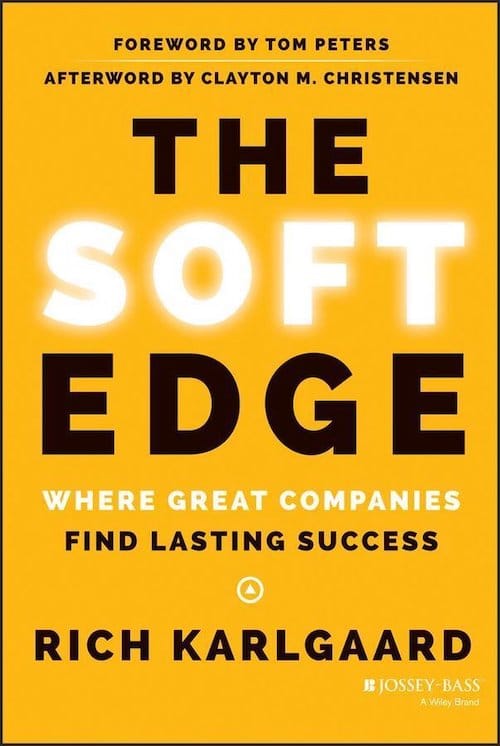
  • The Soft-Edge (2014) by Rich Karlgaard

    The business world can be a ruthless place to survive in. However, there is another forgotten side of this business world – the human side. The human side of an organization, also known as the soft-edge of the company is about attributes that are more cognizant of human relationships.

    Rich Karlgaard’s The Soft-edge (2014) shows the importance the human side has in the business. Furthermore, it charts out the importance of reviving the soft-edge element of business and discusses the five supporting pillars of the soft-edge.

    To understand what exactly Karlgaard means when he discusses ‘soft-edge’, it is imperative to understand the 3 key elements of a successful business. If we consider a business an equilateral triangle, then at its base is a strategy, and the two supporting sides are the ‘hard edge’ and the ‘soft-edge’.

    • Strategy – The strategy of any business forms its base foundation. It includes the plan of functioning, understanding of the market, analysis of competitors, etc.
    • The Hard Edge – The hard edge refers to the actual functioning of the business on a day-to-day basis. The hard edge is the execution of the strategy. The successful running of the hard edge can be measured by figures and statistics such as production speed, logistics, and efficiency of ROI.
    • The Soft-edge – This refers to the deeper meanings that the business communicates to its employees and customers. The soft-edge reflects the values and principles of the organization. It is unquantifiable and is at the crux of the success of a company and clearly defining the difference between a good company and a great one. The soft-edge can, however, be measured to an extent by a companies values, creativity, innovative spirit, and culture.

    Most companies begin with a great strategy and are adept at the hard edge attributes of the business. However, to understand how an organization can bridge the gap between good and great is to make sure that it cultivates and maintains its soft-edge attributes as well.

    There are five important pillars of the soft-edge of a company that are discussed ahead with relevant cases that show how the pillars work.
    Trust

    Trust is the first and most important pillar of the soft-edge. Getting people to trust the company is a tough job and maintaining that trust is even tougher. Trust, both, internal – that is the trust of the employees within the company – and external – meaning the trust of the customers – are equally important.

    According to an international study and research on organizational trust, called the Edelman Trust Barometer, trust in a company affects its reputation more than the quality of the company’s products and services.

    Example 1: The ratio of insurance contracts to assets of Northwestern Mutual – one of America’s largest insurance companies – is 7:1. This proves the amount of trust the customer has in the services and values of the company, considering they are willing to trust the company with their money. This is an excellent example of external trust. 

    Example 2: The network storage company NetApp has been featured a number of times in the Forbes List of best working places and most innovative companies. During a rough patch when they had to cut staff, the executive management team traveled to affected offices and delivered the bad news personally. Their utmost respect for their employees in this regard made the employees work harder during that period in spite of knowing that they could be laid off too. This shows the level of trust the employees have in the company.

    The Smarts

    What makes a company smart? Is it hiring clever people? Or is it staying ahead of the competition? 

    At a glance, it is not possible to ascertain what makes a company smart, yet there is something definite that defines a smart company. And that is the ability of the company to seek continuous improvement in its workings. A smart company is one that isn’t afraid of change and consistently accepts and learns from mistakes. Smart companies not only learn from their own mistakes but learn from the mistakes of other companies too.

    Case 1: David Chang, the chef, and owner of Momofuku (a well know restaurant group), uses the concepts of kaizen and hansei, meaning continuous improvement and acknowledgment of your own mistakes respectively. He uses these principles and gives his staff the freedom to try their own things. This practice helps them learn and come up with new and improved dishes.

    Case 2: Mayo Clinic, the healthcare giant, to inculcate better hospitality skills among its staff, sends them to two of the world’s best companies in the hospitality industry for training. Using the concept of lateral thinking, they ensure that their employees imbibe skills not generally found in the healthcare industry.

    A company has a better soft-edge when it applies smartness in their working processes, learning from competitors and other companies and making inculcating smartness an on-going process.

    Teams

    It is a proven fact that humans function better in smaller groups. That is why our social construct has the concept of family, community, and tribe. Working in smaller groups comes to us instinctively and bring efficiency in communication and processing. In the words of Jeff Bezos, the CEO of Amazon, ‘A development team should be small enough for two pizzas to feed them all.’

    Case 1: Porsche, saw an increase of 19% in their profitability and a four times increase in production after they implemented the strategy of creating mini-teams to focus on improving products and development processes.

    Case 2: SAP, the German software company, saw a reduction in development time from 14.8 months to 7.8 months on an average, after moving to smaller teams of 8 to 12 people after being inspired by the team size changes made by Porsche.

    Apart from size, diversity in teams makes a big difference too. A culturally and ethnically diverse team gets different perspectives from its members. People from different backgrounds working together on a project bring different skills and beliefs to the mix making the team function more effectively.

    Case 3: Tony Fadell, the CEO of Nest Labs, a company that produces smart thermostats, uses the concept of diversity by putting together marketers, engineers, designers, and people from other departments together to work while developing a product. 

    Taste

    How can taste give a company or its product the soft-edge? 

    Taste is an innate aura of intelligence and intrigue that any company or its product and service should exude. It is a quality that cannot be seen but is surely felt by a customer. It gets them excited and makes them feel smart. Taste, though an abstract concept gives a company its soft-edge and should be on the list of must-have strategies.

    Case 1: Tony Fadell of Nest Labs believes in giving his customers a tasteful product, even though it’s just a thermostat. His belief in the concept of taste led to the product not having any buttons, being remotely controlled via Wi-Fi, it comes in bamboo boxes, reinforcing their commitment to the green revolution and reduction of waste. It comes along with a special screwdriver and screws that give customers the freedom to install it wherever they prefer.

    Case 2: The minimalistic design of Apple products comes from the inspiration John Ive found in designer Deiter Rams of Braun, who, in turn, found his inspiration from the Bauhaus School of Design.

    Case 3: Starbucks’ Howard Schultz used the concept of taste to create a product that married the Italian coffee culture with American taste for ambiance. He reinvented the way Americans reinvented coffee.

    Taste is also defined by people’s affinity towards familiar aesthetic designs and objects. Emotions and memories associated with the look and feel of a previously loved product can pave the way for people to have a liking for a new product that emulates these.

    Story

    Stories about a company have the ability to shape peoples’ perceptions about it, and its products. The story gives the company’s brand a purpose. Stories tell people where the company comes from. It also helps describe what the company is aiming at, and how it intends to get there. Apple’s ‘conceptualized and built in a Palo Alto garage’ story has humble beginnings that resonate with people.

    Case 1: Northwestern Mutual holds an annual two-day meeting, wherein over 10,000 financial representatives share stories and experiences. They share challenges and create learning opportunities for others via their failures and successes. 

    The company follows a 10:3:1 rule. The rule states that for every 10 sales calls a rep makes, he will get 3 meetings, out of which he can get one sale. They follow the same principle during recruitment, making possible hires land a sale using the principle. Yes, it is a lengthy process that ups the cost of hiring, but it is a story that the company has maintained, making it part of their identity.

    For a story to add to the soft-edge of the company, it should be simple, with straightforward messages.

    The Human Side Of Business

    The soft-edge isn’t like other business functions and processes. It is in fact, all about the human side of the business. Whether it is taste, trust, team, smart, or story, they all involve refining the human elements that define a company.

    Just like a successful formula race winner needs an excellent engine, precise data, and most importantly human acumen to win the race, an organization cannot succeed without the human side.

    Companies such as Apple, NetApp, and Northwestern stand out from the crowd because they have cultivated their soft-edge. They give precedence to their relationship with employees and customers rather than simply focusing on hard-edge elements such as business processes, capital, and profit.

    Activating the soft-edge for a business or a company involves building trust, being smart by being open to errors and learning from them, creating smaller effective teams, inculcating the habit of having great taste among employees and customers, and finally, crafting an engaging story for the company. Giving these soft-edge attributes more attention is the path to success!
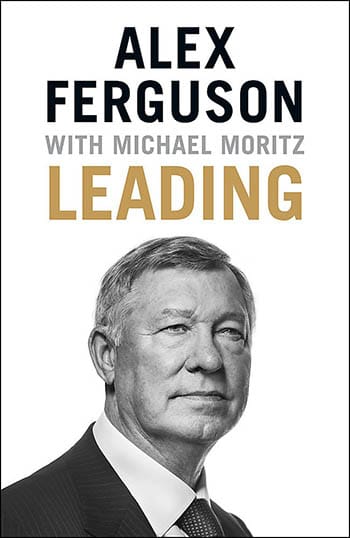
  • Sir Alex Ferguson’s 6 Pearls of Leadership From His 2015 Book Leading

    A dozen trophies to his name, a successful career spanning 27 years, Sir Alex Ferguson is an expert when it comes to leadership, teamwork, and discipline. Co-authored by Michael Mortiz, Sir Alex Fergusson shares his wisdom, observations, and experiences in making Manchester United a trail-blazing team in his book, Leading (2015).

    Though he had star players such as Cristiano Ronaldo, David Beckham, Wayne Rooney, and many more celebrated players on his side, yet, even with changing players over time, the team kept winning.

    The book discusses his celebrated success in the world of sport and the world-class performance of his team. I can see 6 Pearls of Leadership Wisdom in this book:– 

    • The necessity of observation and listening skills
    • The importance of determination and discipline 
    • The value of planning for success
    • Knowing the strengths and weaknesses of your team 
    • The power of ‘being there’ for the team
    • Getting the best out of the teamLeading by Alex Ferguson 2015

    1. The necessity of Observation and Listening Skills

    Experience taught Fergusson that listening is one of the most important skills a leader should have. While being in charge and being the decision-maker, a leader should learn to listen to everyone in the team. The book shows the value of listening to learn new and useful things. A small titbit shared long ago by Notts County manager Jimmy Sirrel about having players contracts expiring at different times, Sir Alex Fergusson has used that knowledge to prevent collusion against the club.

    Next on the list of essential skills, observation gives a leader an edge. When his assistant manager suggested that he watch the training sessions of the team from a distance rather than running the training sessions, he saw an unexpected outcome. He realized that though he could not pay attention to finer details, sitting back and observing enabled him to observe the players and their attitudes, patterns of behavior, and energy levels. 

    2. The importance of Determination and Discipline

    With the sheer mass of talent in the football world, competition is rife. To stay at the top of the competition, a leader, as well as the team, needs to be disciplined and determined to succeed. Ferguson was an extremely disciplined coach. He ensured that the team would strictly follow discipline not only where the game was concerned, but also regarding the dress code, jewelry, haircuts, etc. were concerned. 

    Sir Alex also knew that determination and discipline go hand in hand. He pushed his players to be determined to reach their goals. Cristiano Ronaldo was determined to emerge as the best football player in the world. It was his determination that guided him to preserve discipline and achieve his goal.

    3. Planning for Success

    Planning and preparation accentuate determination and discipline. Beckham, Rooney, and Ronaldo would stay after practice to perfect their free kicks. It was this planning and preparation that enabled David Beckham to score his famous goal from the halfway line in 1996 against Wimbledon – a heavily practiced shot that the world thought to be a miracle!

    Fergusson knew that he had to have good plans and preparation to foster good talent in the team. He structured the team so that they would work hard to get up the ladder to reach the squad. This helped players grow together and know each other’s moves extremely well.

    4. Knowing the Strengths and Weaknesses of your team

    Sir Alex would always maintain balance in the team. For example, his team always had a good mix of young blood as well as seasoned old players. Similarly, his team also comprised of creative and dependable players. This shows the value of team members having complementary skills as their strengths.

    He would also avoid extremes in all aspects of managing his team. He learned from experience that placing extreme expectations on his players only worked to add pressure, leading to weaker performance in a tournament. He saw that consistency comes by knowing the strengths and weaknesses of the team and by avoiding tension caused by extremes.

    5. The Power of ‘Being There’ for your Team

    In one experience, after missing a few training sessions, he got feedback from his players that the energy levels were just not the same without their coach. This gave him an insight into how inspiring his presence was to his team. Over his many years, Ferguson was present at all but three of 1,500 games. 

    6. Getting the Best Out of the Team

    Like all good leaders, Sir Alex Ferguson used praise as a tool to improve performance. They support their people and ensure they have what they need to do their job well, and avoid criticizing them. They use praise to reinforce the right behaviors.

    A leader should know what motivates the team to succeed and how to get the best out of them. Fergusson would always be careful while giving criticisms to his team after performances. He always waited for players to calm down after a match rather than immediately telling his players where they went wrong. Moreover, his criticisms were more encouragement to perform better. He believed that words as simple as ‘well done’ made a huge impact on the confidence of his players.

    Valuable Learnings

    Great leaders have a dynamic role in the performance and success of their team. They tap into the strengths of their players and complement their weaknesses by maintaining a balanced team. As a coach, Sir Alex Ferguson used tools such as observation, determination, discipline, and planning to make a successful team. And finally, a leader must always listen and be there for the team to get the best out of them. This book is informative and essential reading for any leader. And if you are a Manchester United fan, the stories in the book would be especially interesting for you.

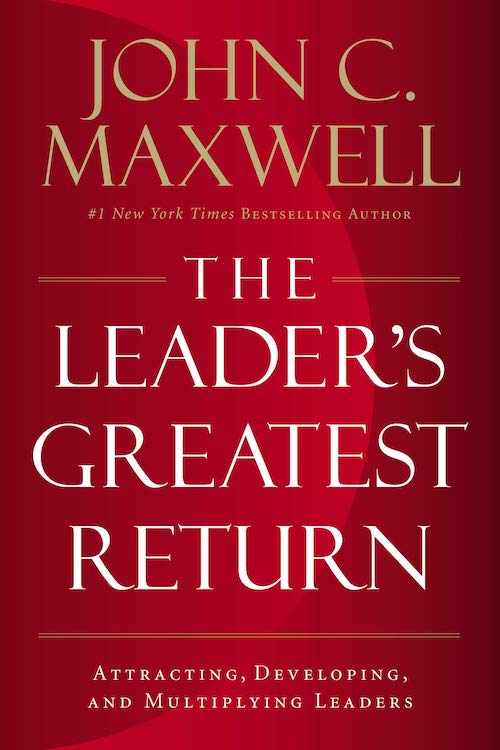
  • The Leader’s Greatest Return (2020) by John C Maxwell

    A strong leadership forms the base of a successful organization. Research has shown that an organization with a strong leadership fare at least 13 times better in areas such as customer satisfaction, product quality, and profit. An organization needs to develop strong leadership to leave a legacy with its employees and its customers. Moreover, the leadership has to ensure that they have a strong legacy that carries the organization towards success.

    The Leader’s Greatest Return (2020) by John C Maxwell is a leadership guide for organizations to be able to build a formidable leadership legacy. It highlights how existing leaders can identify the potential for leadership and help cultivate it. Moreover, it is a guide that helps leaders create a culture within the organization where leaders never stop developing!

    The Power Of Many

    While organizations should have a strong key leader in charge, it is essential for the leader to be able to develop leadership qualities in the team as well. In the words of the management guru Peter Drucker, “No executive has ever suffered because his subordinates were strong and effective.”

    It is impossible for just one person to be in charge of everything that happens in the organization. Additionally, it is also difficult for one leader to be able to solve every problem and execute each and every idea. Thus it is necessary for a leader to be able to delegate the work to others who have potential, which is possible only if the leader builds a strong network of capable leaders.

    Developing a strong network of leaders in an organization adds new perspectives, insights and adds momentum to the growth of an organization.

    Hiring For Leadership

    Leaders in an organization should understand that finding potential leaders is a task that begins right at the starting point. During recruitment! 

    It is essential for leaders to be able to identify the right fit for leadership within the organization, and for that very reason, hiring managers/leaders should be able to identify leadership qualities within an individual at the beginning itself. They should look for individuals with the skills that sync with the goals of the organization and who have a passion to grow.  

    Training one’s team to hire the right fit firstly gives a leader a pool of potential leaders to choose from. Leaders should look for people within this pool who have a knack for taking charge and influencing others in the team to follow. Most importantly, leaders should choose to mentor those who show the willingness to persevere in the face of hardship and defeat.

    Motivation And Developing Habits

    It is important for leaders to keep their team motivated to perform. Similarly, it is also an important task for leaders to be able to keep aspiring leaders in the team invested enough to reach their goals. They need to be motivated and need the power of good habit development to succeed.

    Each person finds motivation in different things in life. Maxwell identified seven common motivations amongst people. He found that most commonly, people are motivated by – 

    • A sense of purpose
    • A need for autonomy
    • The promise of forming relationships
    • Personal and professional growth
    • The desire to master a skill
    • The need for recognition
    • The promise of financial reward

    To motivate potential leaders, these seven motivators can be used effectively. Most people have more than one motivating factor and that gives leaders the flexibility to give their potential leaders what they desire most.

    It is found that motivating factors, especially those that involve tangible benefits, do not continue to motivate or inspire people in the long run. Therefore, it is essential that leaders inculcate good habit formation into their leaders-to-be. Leaders need to show them in these times, that they believe in them, encourage and train them to do the right things by setting examples. Consistent belief, encouragement, and leading by example will lead to consistency in the improvement and thus, lead to habit formation.

    Learning And Connecting With Established Leaders

    Another important responsibility that a leader has towards creating a legacy of leadership in the organization is to ensure they give would-be-leaders plenty of learning opportunities, as well as opportunities for them to create connections with established leaders and in turn, learn from them.

    Learning opportunities and connection development are extremely beneficial not only to the individual but to the organization as a whole. Maxwell describes this as creating a leadership table. A table wherein leaders learn from each other’s triumphs and most importantly failures and exchange important tit-bits that help them all improve their respective leadership skills. 

    Such gatherings are excellent sources of learning for developing leaders as well as excellent sources for potential leaders to benefit from the power of proximity. Leaders-in-training learn to emulate their mentors. Moreover, they find a platform to experience new ways of thinking. They learn to approach problems like leaders and to strategize and apply business tactics like the leaders that influence them. Moreover, they will learn to form valuable connections that will propel them towards success.

    Direction, Freedom And The Tools To Succeed

    Practical experience in life trumps instructions. Research has shown that learning takes place in the form of the 70/20/10 model. It showed that amongst about 200 learners in the study, 70% of the learning took place during the practical, hands-on experience, whereas, 20 percent took place during coaching and feedback sessions. Only 10% of the learning took place during training.

    This proves that gaining practical experience leads to perfecting the job at hand. However, without a proper direction, leaders-in-training will never grow but merely move from one task to another.

    Thus, leaders have to create goals and set them on the path to success. The goals that are set should be challenging and make them think beyond their abilities, yet, they shouldn’t be so distant. Additionally, goals should be measurable and clearly stated, so that they can firstly, be put in writing, and secondly, leaders should be able to clearly determine whether they have been met or not.

    In addition to direction, goal setting, and monitoring, budding leaders also need freedom and encouragement. The role of a leader isn’t only to be a figure of authority and invigilation, but also to provide encouragement and assistance when they seem to be holding back due to the fear of failure.

    Empowerment And Environment

    What is the point if a thoroughbred horse that is trained well is never put in a race? Budding leaders are similar to thoroughbred horses. They need to be empowered to be able to use their learnings and skills. For this, leaders should create a supportive environment.

    As an already established leader, the influence and success as a leader give one the ability to exercise control. However, to truly help create empowerment for leaders-in-training, established leaders should be able to let go of this control for a bit. It essentially relates to leaving the spotlight to make room for the new talent.

    Along with empowering them, a leader’s responsibility also entails creating an environment that is conducive for growth, that encourages budding leaders to share innovative ideas and take initiative, and that encourages collaboration within departments and people. Leaders should enable people to take ownership of tasks, make them accountable for them, and subsequently reward them for good performance. Such a work culture builds a truly empowering workplace.

    Diverse Leadership Teams

    Like we discussed earlier, there is more power in many than one. Therefore it is essential that new leaders build leadership teams that function towards a common goal. A leader, who is developing new leaders in the organization, should ensure that the new leadership team comprises of people who have already demonstrated leadership skills. This ensures that the team can gel well and begin working together immediately.

    Additionally, as a leader and mentor, one has to be very clear and cognizant of what each member of the new team brings to the table. Everyone on the team should also be aware of each other’s strengths. It is the duty of the leader mentor to delegate roles as per their strengths. Additionally, each member should be given enough time to adjust to his or her new roles.

    Finally, leaders should ensure that the new leaders’ personal values are aligned with the values, mission, and vision of the organization. Leaders should communicate and reinforce the values of the organization regularly. Additionally, they should help the new leaders connect their personal values and goals with those of the organization. This ensures that the team, while having diversity, will be on the same page, working towards the goal effectively.

    Passing On The Baton

    A leader is said to have finally arrived when the leader he or she has mentored passes on the legacy of leadership to new, young, and potential talent. Without passing on the baton, an organization can never really win the race.

    The idea here is for leaders to be able to create a veritable line-up of leaders. Think of a football team that has a stellar line-up and a strong reserve as well. It ensures consistent and strong performance, making the team sustainable.

    To be able to achieve this, mentorship should be part of the culture. New leaders should be encouraged to mentor others. They should be shown the ways to handle the reins of mentorship and help others succeed. Teaching and learning should become the natural cycle of leadership in the organization, leading to growth.

    Such a natural cycle of leadership allows people to make time and space for personal growth as well. As a leader, one can be assured of a successful growing leadership when they see the people they have mentored, make way for new talent, mentor others for success, and work towards advancement in the organization.

    Summary

    Finding good leaders can be a challenge. However, creating a work culture wherein leadership building becomes a natural process can enable organizations and leaders to develop more leaders at every level. Empowering others to join the leadership bandwagon and encouraging them to pass on the knowledge is a leader’s greatest return.

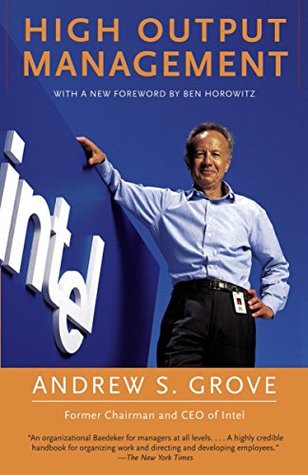
  • High Output Management by Andy Grove – Book Review & Summary

    8 Lessons For Successful Management From The Book

    High Output Management (1995) is your perfect guide for making high-quality managerial decisions, inspiring employees for consistent performance, and most importantly, understanding one’s role as a manager. This book addresses questions such as – 

    • How should the manager of a company learn skills to achieve success? 
    • How to gather the skills necessary to successfully manage a business? 
    • What are the mantras for inspiring team members to enhance their performance consistently?

    1. Understanding the Dynamics of the Business

    Managers face a daunting task. They must make the right managerial decisions, work towards successfully achieving goals, derive profits, and at the same, time keep their team motivated to perform consistently. 

    However, most managers do not know that having a sound understanding of the business takes precedence over everything else. The business is a response to market demands that are met by your product, keeping in mind 

    • timely delivery within a given schedule, 
    • good product or service quality and, 
    • low costs of production. 

    The key facets of understanding the business process are

    • Knowing which is the most important step in their production cycle.
    • Identifying where the pressure points of the business are.
    • Knowing where and when to pull in all resources. 
    • Identifying bottlenecks and providing solutions
    • Understanding effective ways of managing peripheral administrative jobs such as hiring people, managing inventory, etc.

    Most importantly, managers must complete all the above tasks in a timely and cost-effective manner while keeping an eye on production indicators.

    2. Knowing the Performance Indicators

    Keeping an eye out for performance indicators (or key metrics) daily is an important step for all managers. These indicators could be

    • Getting a sales forecast update daily
    • Getting daily inventory levels vis-a-vis the sales forecast
    • Knowing the condition of equipment and being up to date on its functioning
    • Getting a daily update on the team 
    • Having a quality indicator, such as customer or client feedback

    A manager must extract the correct information from these indicators and know how to use them.  These production indicators are interrelated and can be used to examine trends and evaluate the need for any change.

    3. Managing Relationships with the Team

    Collecting information and sharing it with the team using performance indicators is one of the key responsibilities of a manager. This can be done by establishing a good relationship with the team via reports and regular informal conversations. 

    Informal conversations help in building a good relationship, gather necessary information and understand the general mood of individual members of the team. At the same time, ensuring proper reports are delivered and duties are performed on time helps a team member build discipline, comprehend tasks better, and reflect on the work done.

    Building positive and lasting relationships with team members entail supporting the team members to achieve their goals. Furthermore, a good manager should be a role model, helping the team imbibe good organizational values. This guides the whole team toward success. 

    4. Meetings are Essential for Good Management

    Meetings are a necessary medium for managers to conduct all management duties. They can be of two types :-

    • Process-oriented meetings – Process-oriented meetings aim at general discussions surrounding the workings of the team. They are held regularly for the team to catch-up on how the team is doing their job, and if there is anything that can be improved. One-on-one meetings are a classic example of process-oriented meetings.
    • Mission-oriented meetings – Mission-oriented meetings are goal specific and are used to finalize decisions. For example, emergency meetings held to discuss sudden changes in plans.

    Successful managers understand meetings are great tools and use them wisely. They eliminate unnecessary meetings and use meetings to serve the business.

    5. Understand Human Motivation

    Motivation is the key to modern management. A manager must assess if members of the team are lacking in skill, or simply lack the motivation to perform. With the rise in knowledge work and cognitive roles compared to labor-oriented roles in the work environment, it is the responsibility of managers to ensure that tasks are allotted based on the skill of the team member. Additionally, the manager is also responsible to ensure that all members of the team are motivated enough to succeed.

    Therefore, a manager should understand the differences between competency-driven and achievement-driven employees and be able to identify them. 

    • Competence-driven Employees – Such employees find their motivation in competence-driven tasks that help them expand their own skills and knowledge. A manager should help such employees focus on producing tangible results and not only focus on personal skill development.
    • Achievement-driven Employees – These employees are motivated by achieving success. Managers should be able to use their drive for achievement so that they can align their personal success with that of the team.

    6. Importance of Feedback and Support

    An employee is usually motivated with rewards and recognition. Additionally, they need feedback and support from their managers too. While monetary rewards motivate employees to achieve a goal of reaching and maintaining a good standard of living, employees need other meaningful and relevant intrinsic rewards to keep performing.

    Regular support and encouragement via regular feedback can do wonders for all types of employees. Managers should help team members to set new goals and remain motivated to consistently achieve them.

    7. The Importance of Coaching

    Abraham Maslow’s idea of self-actualization sheds light on the concept of what drives people towards consistent achievement. People need challenges to consistently reach their own potential. The need to find their point of self-actualization to take on challenging tasks and achieve success. 

    Therefore, a manager is also responsible for providing team members with an environment where they can reach these goals. A manager must play the role of a coach and know how to grow people to take on bigger and bigger challenges while ensuring their growth and development at the same time.

    However, a manager, like a sports coach, should also be wary of unhealthy competitiveness within a team that can backfire on the performance of the team. 

    8. Finding Your Management Style

    Managing a team is a dynamic process, with an ever-increasing rate of change we face in the world today. Managers must alter and change the way manage based on their learnings from trial and error to find out which style works best in their current situation. These 8 points are the crux of the book High Output Management by Andy Grove of Intel fame.

    TRM – Task Relevant Maturity

    TRM is a variable that gives indications of which style of management could work for a given situation. It measures an employee’s ability to perform tasks by ranking an employee based on their education, training, and experience with their tendencies towards responsibilities and achievement.

    For example, if an employee ranks low on TRM for a task, the manager should layout clear and detailed instructions, while hand-holding the employee to succeed. As the employee gains experience, the manager can reduce their involvement and keep monitoring the progress.

    Conclusion

    Achieving successful managerial skills is a continuous and dynamic process. It entails finding the right management styles, assuming the role of a coach, and using appropriate tools of motivation keeping in mind what the end goal for the organization is. It is a multi-faceted role that needs understanding the business processes, applying various management styles that are relevant to those processes and knowing when to shift between different management styles. High Output Management is one of the most popular management books in the industry.

brain care coaching commitment communication conflict conflicts conversation culture deployyourself deploy yourself emotional intelligence emotions empathy energy feedback freedom future gold habits hope john maxwell language leadership lessons listening performance perspective preparation productive productivity psychological safety purpose questions relationships resolution ryan holiday seth godin simon sinek strengths struggle team trust values words